2014 in review

The WordPress.com stats helper monkeys prepared a 2014 annual report for this blog.

Here’s an excerpt:

The concert hall at the Sydney Opera House holds 2,700 people. This blog was viewed about 33,000 times in 2014. If it were a concert at Sydney Opera House, it would take about 12 sold-out performances for that many people to see it.

Click here to see the complete report.

22 animals that went extinct in 2014

Via Kottke:  ‘2014 was a year that humans treated each other horribly. But we continue to treat the natural world even worse. Living Alongside Wildlife has a list of 22 species of animal declared extinct in 2014, extending humanity’s long streak of causing plant and animal extinctions.’


Why are professors at Harvard, Duke, and Middlebury teaching courses on David Simon’s The Wire?

Via Slate: ‘Interestingly, the classes aren’t just in film studies or media studies departments; they’re turning up in social science disciplines as well, places where the preferred method of inquiry is the field study or the survey, not the HBO series, even one that is routinely called the best television show ever. Some sociologists and social anthropologists, it turns out, believe The Wire has something to teach their students about poverty, class, bureaucracy, and the social ramifications of economic change.’

The Dominant Life Form in the Cosmos Is Probably Superintelligent Robots

The Dominant Life Form in the Cosmos Is Probably Superintelligent Robots | Motherboard

Via Motherboard:  ‘If and when we finally encounter aliens, they probably won’t look like little green men, or spiny insectoids. It’s likely they won’t be biological creatures at all, but rather, advanced robots that outstrip our intelligence in every conceivable way. While scores of philosophers, scientists and futurists have prophesied the rise of artificial intelligence and the impending singularity, most have restricted their predictions to Earth. Fewer thinkers—outside the realm of science fiction, that is—have considered the notion that artificial intelligence is already out there, and has been for eons.

Susan Schneider, a professor of philosophy at the University of Connecticut, is one who has. She joins a handful of astronomers, including Seth Shostak, director of NASA’s Search for Extraterrestrial Intelligence, or SETI, program, NASA Astrobiologist Paul Davies, and Library of Congress Chair in Astrobiology Stephen Dick in espousing the view that the dominant intelligence in the cosmos is probably artificial. In her paper “Alien Minds,” written for a forthcoming NASA publication, Schneider describes why alien life forms are likely to be synthetic, and how such creatures might think.

“Most people have an iconic idea of aliens as these biological creatures, but that doesn’t make any sense from a timescale argument,” Shostak told me. “I’ve bet dozens of astronomers coffee that if we pick up an alien signal, it’ll be artificial life.”

With the latest updates from NASA’s Kepler mission showing potentially habitable worlds strewn across the galaxy, it’s becoming harder and harder to assert that we’re alone in the universe. And if and when we do encounter intelligent life forms, we’ll want to communicate with them, which means we’ll need some basis for understanding their cognition. But for the vast majority of astrobiologists who study single-celled life, alien intelligence isn’t on the radar.

“If you asked me to bring together a panel of folks who have given the subject much thought, I would be hard pressed,” said Shostak. “Some think about communication strategies, of course. But few consider the nature of alien intelligence.”

Schneider’s paper is among the first to tackle the subject. “Everything about their cognition—how their brains receive and process information, what their goals and incentives are—could be vastly different from our own,” Schneider told me. “Astrobiologists need to start thinking about the possibility of very different modes of cognition.”

To wit, the case of artificial superintelligence.

“There’s an important distinction here from just ‘artificial intelligence’,” Schneider told me. “I’m not saying that we’re going to be running into IBM processors in outer space. In all likelihood, this intelligence will be way more sophisticated than anything humans can understand.”

The reason for all this has to do, primarily, with timescales. For starters, when it comes to alien intelligence, there’s what Schneider calls the “short window observation”—the notion that, by the time any society learns to transmit radio signals, they’re probably a hop-skip away from upgrading their own biology. It’s a twist on the belief popularized by Ray Kurzweil that humanity’s own post-biological future is near at hand.

“As soon as a civilization invents radio, they’re within fifty years of computers, then, probably, only another fifty to a hundred years from inventing AI,” Shostak said. “At that point, soft, squishy brains become an outdated model.” ‘


The operation making paralysed walk for first time

BBC - Future - The operation making paralysed walk for first time

Via BBC:  ‘Around 2-3million people worldwide have spinal cord injury. When the spinal cord is injured every part of the body is paralysed below it and without sensation.

But now scientists have achieved a remarkable feat. For the first time a cell transplantation treatment has allowed a man paralysed from the chest down to get up from his wheelchair and walk.

The pioneering therapy takes the regenerative cells that repair and renew our sense of smell, and uses them to form new connections to form in the damaged spinal cord. Thanks to this, 40-year old Darek Fidyka from Poland, who suffered his injuries after a knife attack, can now walk using a frame.

The man who has spent decades developing the procedure is Professor Geoffrey Raisman, chair of neural regeneration at University College London’s Institute of Neurology. In this video he describes his tireless journey behind the achievement, how it works, and why he thinks no-one should have to pay a single penny for his achievements.’


The Bizarre Case of the Woman Who Saw Dragons Everywhere

Via io9:  ‘Recently, a group of neuroscientists examined a woman who complained of an unusual ailment. The people around her kept turning into dragons.

The fifty-something woman said the problem had been plaguing her for most of her life, and eventually prevented her from holding a job. When people turned into dragons, she reported, their faces turned “black, grew long, pointy ears and a protruding snout, and displayed a reptiloid skin and huge eyes in bright yellow, green, blue, or red.”

A group of researchers who examined her later wrote in a paper:

She saw similar dragon-like faces drifting towards her many times a day from the walls, electrical sockets, or the computer screen, in both the presence and absence of face-like patterns, and at night she saw many dragon-like faces in the dark.

The blogger Neuroskeptic notes that the basis of her condition is basically “a mystery” — doctors found no brain abnormalities after doing multiple tests. But she did eventually recover slightly after going on an “anti-dementia medication.” The dragon sightings became mild enough that she’s held a job for over 3 years now.’

The Bizarre Case of the Woman Who Saw Dragons Everywhere

Is anyone reminded of the 1988 US science fiction film They Live? The difference is that, in that film, it took a pair of sunglasses found by the protagonist to see the aliens among us.


Salon: Have a Very Disturbing Christmas!

Salon.com

How to keep the peace with your conservative relatives this holiday: Complain together! The family that kvetches together … makes it through dinner without any tears … together

Help these kids today: America’s quiet homelessness nightmare is 1.3 million homeless students. This Christmas, homeless data is changing in shocking ways: Fewer people on streets, but a record for homeless kids

How to win Christmas arguments: Salon’s guide to defeating your crazy right-wing uncle. Your right-wing uncle is all excited to talk about politics this Christmas. Lucky you!

Bill O’Reilly ruined Christmas: Why his nonsense undermines the holiday I love. With every predictable rant by the human outrage machines, the holiday loses a little magic for me. Here’s why.

“The Nutcracker’s” disturbing origin story: Why this was once the world’s creepiest ballet. From pedophilic godfathers to gruesome seven-headed mice, the first versions of the classic ballet were — different.

The most awkward sex ever? 8 epic holiday hookup tales. “I asked if he wanted to have sex — while he was talking about his dad having a stroke”

Terrifying gifts from the 22nd century: The hottest holiday presents for a post-apocalyptic tomorrow. The world will be way scarier by then, but there are still plenty of fun options for Christmas

via Salon.com.

Steven Pinker’s Mind Games

Via NYTimes.com:  ‘Steven Pinker is every bit the populist. All but three of his nine books are aimed at the general public (“The Better Angels of Our Nature: Why Violence Has Declined” is available in 21 formats and editions; the CD comes out this week). Dr. Pinker’s teaching is similarly accessible. Just look at the test questions here, culled from one of his Harvard courses, “Psychological Science.” He explains his approach: “The questions that psychology tackles are the ones that obsess us in everyday life: family relations, sexuality, kindness and aggression, the reliability of knowledge. Not surprisingly, many concepts in academic psychology have crossed over into popular culture, such as conditioning, Freudian psychoanalysis and cognitive dissonance. Exams that invoke these memes test whether students understand the theories well enough to reason about them when they are presented away from a familiar textbook context and are applied to real life.” ‘

Take the ten-question quiz; how did you do?


How Smartphone Use Is Changing The Way Thumbs and Brains Communicate

Via  IFLScience:  ‘Opposable thumbs gave ancient humans a huge evolutionary advantage by allowing for use of tools. More recently, these thumbs also allow for people to quickly type on screens of smartphones and other touchscreen devices. A new study has found that this recent widespread mode of communication is actually changing the way thumbs and the brain talk to one another, demonstrating the plasticity of the human brain. Arko Ghosh of the University of Zurich is lead author of the paper, which has been published in Current Biology.’


13 of the Most Amazing Things Discovered in Space This Year

Via WIRED:  ‘Scientists discovered some pretty amazing things in space this year. There were yet more planets, including the first Earth-like one in a star’s habitable zone. Astronomers found what might be a black-hole triplet, stars in the midst of merging into one giant one, and a star made of diamond.

But some of the most exciting things were found right in our own solar system. These discoveries include the first rings ever seen around an asteroid, plumes of water vapor spewing out from the dwarf planet Ceres, a disintegrating asteroid, and what appears to be a new dwarf planet billions of miles away. Oh, and we landed on a comet for the first time. Here are some of the most fantastic astronomical finds of the year, reminding us that space is a truly awesome place.’


Monkey Appears To Resuscitate Dying Friend

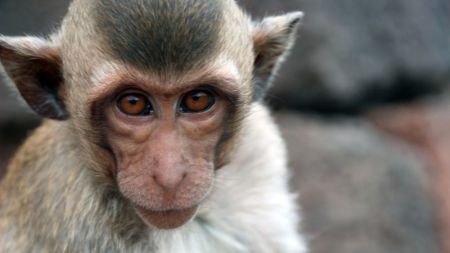
Via IFLScience: ‘A video has gone viral that appears to show a rhesus macaque resuscitating his friend who had been electrically shocked at a train station in Northern India. The video shows snippets of one monkey poking and prodding at the other for a period of 20 minutes, even trying to splash water on it. Ultimately, the unconscious macaque did wake up – but what were the actual intentions of the helpful friend?

National Geographic reports that it isn’t entirely clear how different primate species are affected by the death of those they are close with, but there have been recorded events of monkeys shaking and biting their fallen friends. However, it isn’t known if they are confused by why the other monkey isn’t moving, or if they are actually trying to revive the individual.’


Common Painkillers Could Decrease Skin Cancer Risk

Via IFLScience:  ‘Common over-the-counter painkillers, such as ibuprofen and aspirin, can decrease risk of developing squamous cell carcinoma, according to a study published today in the Journal of Investigative Dermatology. Squamous cell carcinoma is one of the most common types of skin cancer.

The results mean these drugs may have potential as skin cancer preventative agents, especially for high-risk people, said study co-author Catherine Olsen.’


This Orangutan Is Now A Legally Recognized Nonhuman Person In Argentina

Via io9: ‘History was made this past weekend in Buenos Aires when an appeals court ruled that an orangutan held in a zoo is a nonhuman person unlawfully deprived of its right to bodily autonomy.

The legal strategy used in this case is similar to the one recently employed by the Nonhuman Rights Project in the United States. Both are claiming that highly sentient animals like great apes are deserving of bodily autonomy, or habeas corpus.’


Is Moral Offsetting™ Right for You?

Via 3quarksdaily: ‘Everywhere we turn there are people demanding that we take moral responsibility for ever more features of our lives and the implications of our actions. Almost everything we do turns out to be involve a moral choice, or more than one, in which our deepest principles are at stake.


If you’re an egalitarian, how come you help your kids with their homework? If you’re against child-slavery, how come you still eat chocolate? If you’re against racism, how come you enjoy ‘white privileges’ like not being afraid when the police pull you over? And so on. Want to put milk on your breakfast cereal? There’s a moral philosopher out there who wants you to read about murdered baby cows first…

But it gets worse. Although they are presented as moral challenges, as tests of your principles, many of these demands are actually moral puzzles with no right answer…

If everything we do is wrong, why bother to even try to do the right thing?

Fortunately the solution is at hand. Here at Moral Tranquillity plc we believe that good people should be able to live a life free from guilt. That’s why we have developed a range of Moral Offsetting™ products that make meeting your moral responsibilities simple and affordable.’


Prosecute Torturers and Their Bosses

This NYTimes editorial reads, in part:

‘…Americans have known about many of these acts for years, but the 524-page executive summary of the Senate Intelligence Committee’s report erases any lingering doubt about their depravity and illegality: In addition to new revelations of sadistic tactics like “rectal feeding,” scores of detainees were waterboarded, hung by their wrists, confined in coffins, sleep-deprived, threatened with death or brutally beaten. In November 2002, one detainee who was chained to a concrete floor died of “suspected hypothermia.”

These are, simply, crimes. They are prohibited by federal law, which defines torture as the intentional infliction of “severe physical or mental pain or suffering.” They are also banned by the Convention Against Torture, the international treaty that the United States ratified in 1994 and that requires prosecution of any acts of torture.

So it is no wonder that today’s blinkered apologists are desperate to call these acts anything but torture, which they clearly were. As the report reveals, these claims fail for a simple reason: C.I.A. officials admitted at the time that what they intended to do was illegal.

In July 2002, C.I.A. lawyers told the Justice Department that the agency needed to use “more aggressive methods” of interrogation that would “otherwise be prohibited by the torture statute.” They asked the department to promise not to prosecute those who used these methods. When the department refused, they shopped around for the answer they wanted. They got it from the ideologically driven lawyers in the Office of Legal Counsel, who wrote memos fabricating a legal foundation for the methods. Government officials now rely on the memos as proof that they sought and received legal clearance for their actions. But the report changes the game: We now know that this reliance was not made in good faith.

No amount of legal pretzel logic can justify the behavior detailed in the report. Indeed, it is impossible to read it and conclude that no one can be held accountable. At the very least, Mr. Obama needs to authorize a full and independent criminal investigation.

And concludes:

‘Starting a criminal investigation is not about payback; it is about ensuring that this never happens again and regaining the moral credibility to rebuke torture by other governments. Because of the Senate’s report, we now know the distance officials in the executive branch went to rationalize, and conceal, the crimes they wanted to commit. The question is whether the nation will stand by and allow the perpetrators of torture to have perpetual immunity for their actions.’

Are Men Idiots Who Do Stupid Things?

Via NPR: ‘A new study shows what at least some of us might have suspected for a long time: Men are idiots and do stupid things. That’s the premise of the authors’ Male Idiot Theory. The study, published in BMJ, the former British Medical Journal, looked at past winners of the Darwin Awards. The awards are given to those people who die in such an idiotic manner that “their action ensures the long-term survival of the species, by selectively allowing one less idiot to survive.” The study looked at 318 cases, of which 282, or 88.7 percent, were men.’

Wolves and Bears Stage Comeback in Crowded, Urban Europe

Via National Geographic: ‘ [A] study published Thursday in the journal Science reports that Europe, one of the most industrialized landscapes on Earth, with many roads and hardly any large wilderness areas, is nonetheless “succeeding in maintaining, and to some extent restoring, viable large carnivore populations on a continental scale.”

A team of more than 50 leading carnivore biologists across Europe, from Norway to Bulgaria, details in the research a broad recovery of four large carnivore species: wolves, brown bears, the Eurasian lynx, and the wolverine.

“There is a deeply rooted hostility to these species in human history and culture,” the study notes. And yet roughly a third of Europe, and all but four of the continent’s 50 nations, are now home to permanent and reproducing populations of at least one of these predators.’


7 Films We Should Probably Ban Right Now, You Know, Just In Case

Via Gizmodo: ‘So you’ve no doubt heard about American cinemas’ near unanimous decision to pull The Interview from theaters. Not to be outdone in cowardice, Paramount is also telling some theaters to not play 2004’s Team America: World Police in its place in deference to our new cultural overlords in Pyongyang.

Since we’ve officially abandoned all reason, we thought we’d help the studios out and ready a list of some other films that we should probably just ban lest we incur the wrath of some unknown hacker group that’s demonstrated no ability to carry out all the threats it throws around. But hey, we wouldn’t want to offend anyone!’


How to Run a Drug Dealing Network in Prison

Via Pacific Standard: ‘At, I suspect, every single correctional facility in the U.S., a drug network something like the one I’m about to outline operates and prospers. Take it from me—I was recently released from federal prison after spending 21 years of my life inside.

While you may read about the drug smuggling ventures that are busted, you’re unlikely to hear so often about the operations that are successful. To help explain one of these systems, I got in touch with a man I’ll call “Divine.” He’s a black, 50-something, very suave type of hustler, clean cut and ripped up from working out. A native New Yorker, his prowess as a drug dealer is even celebrated in hip-hop’s lyrical lore. He is now doing life in the feds. But his occupation in prison brings him money and power, and the all-important prestige of being The Man. He agreed to anonymously break down how it all works for Substance.com.’


Idaho State To Offer Bigfoot-Inspired Course

Via io9: ‘Though the chairman of the Department of Biological Sciences at Idaho State University is careful to note, “It is not a course on Bigfoot. It is a course on anthropology,” ISU will nevertheless be offering an experimental class titled “The Relict Hominoid Inquiry.” Which is kinda a course on Bigfoot. Sorta.

The Idaho State Journal reports:

In the upcoming semester, Idaho State University professor Jeff Meldrum will be teaching an experimental course titled The Relict Hominoid Inquiry. Part of that inquiry will address scientific theories on Bigfoot, alongside other links in the human evolutionary chain.

“What I’m trying to do is address a shift in perception that’s been gaining traction in the anthropological community,” Meldrum said. That shift involves looking at human evolution as a tree in which scientists are discovering new branches all the time. The theory is that offshoots of human evolution are recent and could still exist, roaming the earth undiscovered.

Aka Bigfoot, though Meldrum was also careful to note, “It’s not a course about Bigfoot.”

His Bigfoot bona fides, however, are impeccable:

A 21-year veteran at ISU and current professor of anatomy and anthropology, Meldrum studies how hominoids made the evolutionary leap to bipedalism. Ancient footprints, archeological records and the science behind legendary creatures have been his life’s work. Meldrum has been featured as a scientific expert on Animal Planet TV specials about Bigfoot. He also publishes a peer-reviewed online journal titled “Relic Hominoid Inquiry,” which explores the possible existence of relict hominoid species around the world.’

Meet the Spiky Shelled Sea Snail Named After The Clash’s Joe Strummer

Via io9: ‘After discovering new deep sea snails with spiky shells, researchers at the Monterey Bay Aquarium Research Institute named one of them (on the left above) A. Strummeri after Joe Strummer, singer for the Clash.

Speaking with the Santa Cruz Sentinel, lead researcher Shannon Johnson explained that the name was based in more than just a love for “London Calling”:

“Because they look like punk rockers in the 70s and 80s and they have purple blood and live in such an extreme environment, we decided to name one new species after a punk rock icon.” ‘


Hallucinogenic fungi found at Buckingham Palace

Via Boing Boing: ‘ “Palace officials said Friday there are several hundred species of mushrooms growing in the palace gardens, including a number of naturally occurring Amanita muscaria.”

Officials say garden shrooms are never used in the palace kitchens. But no word on whether the Queen uses them from time to time in her royal rituals of blood sacrifice, baby-dismemberment, and Satanic fornication.’


Australia’s Twitter Win Against Islamophobia: How To Use #illridewithyou

Via Lifehacker: ‘Twitter’s top trending hashtag worldwide, #illridewithyou, shows how social networks can be a force for good. Australian samaritans are using the hashtag to lend support to Muslim citizens on their daily commute, in case of a racist attack.

A gunman took dozens of hostages in a cafe in Sydney, Australia, on Monday, December 15. He was presumed to be an Islamic extremist, after he asked for a flag of ISIS among his demands. While the gunman’s actions are clearly to be condemned, innocent Muslims – particularly those who wear traditional garb – were afraid of hateful speech or even violence following these events. Almost half of Australia has anti-Muslim sentiments, according to a recent report.

And Australia has seen racial attacks in public before. There was the school boy verbally abused by a 50-year-old woman, a 55-year-old lady ranted against a couple of kids in a train, and a Muslim woman was bashed and thrown from a moving train. After that last incident, Muslim activists said they have seen a “massive spike in racist attacks,” the Herald Sun reported.

Amidst fears of a similar backlash against the Islamic community after the hostage situation, this Twitter campaign brings hope.

Australians across the nation started tagging the location of their daily commute on Twitter with the hashtag #illridewithyou, showing support to their fellow Muslim citizens and assuring them of protection. The hashtag has quickly gone viral, with people across the world praising it.’

Dick Cheney’s grotesque legacy: Why the record is so much worse than reported

Via Salon.com: ‘As many of us wade through the horror of the Senate torture report, it’s hard not to think back to a time when the man who ran the country explained to us in plain language what he was doing. I’m talking about Vice President Dick Cheney, of course, the official who smoothly seized the reins of power after 9/11 and guided national security policy throughout his eight years in office. He was one of the most adept bureaucratic players American politics has ever produced and it’s his doctrine, not the Bush Doctrine, that spurred government actions from the very beginning.’

Sorry to expose you yet again to this nightmare-inducing visage. Why? Because, while Bush was risible, this man was execrable. And, with another round of US Presidential campaigning kicking off, can the American people grasp that those who forget the lessons of history are condemned to repeat them?


Happy Monkey Day!

Monkey Day Pictures: Our Favorite Primates Around the World

Via National Geographic: ‘According to the Detroit Metro Times, Monkey Day—which falls on Sunday—started when a Michigan State University art student scribbled “monkey day” on December 14th on a friend’s calendar. The newspaper said it caught momentum as students started adding monkeys to their artwork and circulating it online. To celebrate the day, National Geographic photo editors selected their favorite monkey pictures from all over the world.

In the picture above, a golden snub-nosed monkey perches in a highland forest in China’s Zhouzhi National Nature Reserve. The monkeys’ heavy fur helps them through subzero winters in the Qin Ling Mountains of central China.

This young monkey is among 4,000 others that are being squeezed from their habitat by human settlements, logging, and hunters interested in meat, bones, and luxurious fur. Only 20,000 golden snub-nosed monkeys are left on Earth, according to National Geographic magazine.’


Why Today’s Date Is Special

Via Gizmodo: ‘12/13/14 has a kind of pleasing order that you might’ve noticed this morning when you woke up. But today’s date is interesting because of more than just minor curiosity — it’s the last sequential date this century.

As Quentin Fottrell has pointed out over at Market Watch, people actually care about cool dates. Five times as many people have set today to be their wedding day than you’d expect for a snowy Saturday. He also contacted a professor at the University of Portland, who pointed out that this isn’t just any old sequential date — the dates themselves are made up of just four sequential digits: 1, 2, 3 and 4.’


Jeb Bush’s damning secret history

Via Salon.com: ‘Whenever the deep thinkers of the Republican establishment glance at their bulging clown car of presidential hopefuls — with out-there Dr. Ben Carson, exorcist Bobby Jindal, loudmouth Chris Christie and bankruptcy expert Donald Trump jammed against Sens. Rand Paul and Ted Cruz, to name a few — they inevitably start chattering about “Jeb Bush.”

Never mind that his father was a one-term wonder of no great distinction or that his brother is already a serious contender, in the eyes of historians, for worst president of the past 100 years. And never mind that on the issues most controversial among party activists — immigration and Common Core educational standards — he is an accursed “moderate.”

…The 2016 presidential hopeful has a checkered financial history. Republicans nominate him at their peril…’

Geminid meteor showers peak this weekend.

Here’s how to view, in the skies and online: ‘ “The Geminid meteor shower is now the richest meteor shower of the year, rivalling the summer Perseids in popularity,” writes Mark Armstrong at Astronomy Now.

The 2014 Geminids peak over the next few days, and it’s likely to be a particularly beautiful display.

The best viewing, as always, is as far away as possible from city lights. But if you can’t get to a good viewing spot, read on! There are several ways to view the Geminids online.’ (via Boing Boing)

The Deer

The deer my mother swears to God we never saw,

the ones that stepped between the trees

on pound-coin-coloured hooves,

I’d bring them up each teatime in the holidays

and they were brighter every time I did;

more supple than the otters we waited for

at Ullapool, more graceful than the kingfisher

that darned the river south of Rannoch Moor.

Five years on, in that same house, I rose

for water in the middle of the night and watched

my mother at the window, looking out

to where the forest lapped the garden’s edge.

From where she stood, I saw them stealing

through the pines and they must have been closer

than before, because I had no memory

of those fish-bone ribs, that ragged fur,

their eyes, like hers, that flickered back

towards whatever followed them.

— Helen Mort


Unarmed People of Color Killed by Police, 1999-2014

Via Gawker:  ‘On Wednesday, after the announcement that NYPD Officer Daniel Pantaleo would not be indicted for killing Eric Garner, the NAACP’s Legal Defense Fund Twitter posted a series of tweets naming 76 men and women who were killed in police custody since the 1999 death of Amadou Diallo in New York. Starting with the most recent death, what follows are more detailed accounts of many of those included in the Legal Defense Fund’s tweets.’


RIP Frank and Louie, the Two-Faced Cat

Via io9: ‘He defied the odds by purring as long as he did, but the world’s longest-living two-faced cat (also called a Janus cat, after the Roman god with faces looking to the future and the past), Frank and Louie, died last week at the ripe age of 15.The cause was cancer, according to the feline’s hometown paper, the Worcester Telegram.

Owner Martha “Marty” Stevens adopted Frank and Louie as a kitten in 1999. Initially, vets told her told he probably wouldn’t survive a week.

Reports the Telegram:

Frank and Louie — or rather Frank because his side had the esophagus — learned to eat and thrived. The cat rubbed against legs and won over the hearts of many who thought he was difficult to look at. He had two functioning eyes and a center eye, which was blind. Two noses and two mouths but just one brain. All in all, he was a healthy cat, his biggest ordeals having been neutering and the removal of some teeth from Louie’s mouth, which had no bottom jaw.’


27 Stunning Photos of #BlackLivesMatter Protests From Around the Globe

Via Mic:  ‘It’s not just Americans that care about racist policing practices across the U.S. In protests held worldwide this week, thousands of people showed up to demonstrate solidarity with their counterparts in the U.S., protesting the deaths of Ferguson teenager Mike Brown and New York man Eric Garner.

According to Newsweek, protests hit worldwide metropolises like Tokyo, Paris and Delhi, while reports of related graffiti have also popped up in Germany. Supporters of the cause waved signs saying “America, the world is watching” and “no justice, no peace.”

The marches also continued from coast to coast in the U.S., with yet another round of related demonstrations in New York and riot police clashing with protesters in Berkeley, California. In New York, the police arrested more than 220 people.’


Reminder: some US police departments reject high-IQ candidates

Via Boing Boing:  ‘Even if you think that IQ tests are unscientific mumbo-jumbo, it’s amazing to learn that some US police departments don’t, and furthermore, that they defended their legal right to exclude potential officers because they tested too high.From a 1999 NYT article:

In a ruling made public on Tuesday, Judge Peter C. Dorsey of the United States District Court in New Haven agreed that the plaintiff, Robert Jordan, was denied an opportunity to interview for a police job because of his high test scores. But he said that that did not mean Mr. Jordan was a victim of discrimination.’

Google Can Now Tell You’re Not a Robot With Just One Click

Via WIRED:  ‘On Wednesday, Google announced that many of its “Captchas”—the squiggled text tests designed to weed out automated spambots—will be reduced to nothing more than a single checkbox next to the statement “I’m not a robot.” No more typing in distorted words or numbers; Google says it can, in many cases, tell the difference between a person or an automated program simply by tracking clues that don’t involve any user interaction. The giveaways that separate man and machine can be as subtle as how he or she (or it) moves a mouse in the moments before that single click.’

How to Beat a Polygraph

Via Pacific Standard: ‘The overall goal of the preparation process is to teach people to control the otherwise-involuntary physical stress responses that the polygraph’s sensors pick up on during the interview. Or, as Williams himself summed up quite simply in a recent tweet: “The polygraph operator monitors your respiration, GSR, & cardio. Get nervous on the wrong question & he calls you a liar!”Many criminologists now believe that “getting nervous” shouldn’t indicate a guilty conscience, and that consistent story-telling is a much better indicator of the truth. Psychologists are currently testing new techniques that “induce cognitive load” as potentially more accurate ways to weed out the lies. It takes more brainpower to keep an invented story consistent than it does to tell the truth, the theory goes. So interrogators can try to overwhelm their subjects with information, questions, and tasks, and see how flustered they get.

One review of the research explores methods like having the person draw the scene being described, tell the story in reverse-chronological order, describe the scene in detail from the perspective of a different physical vantage point, and even complete math problems in the middle of the interview. Even being made to maintain constant eye contact occupies the mind, so that can also make it more difficult for a liar to stay on message.’


The long and fraught history of judging the president’s kids

Via Washington Post: ‘The lesson: Don’t say anything bad about the president’s kids. Also, the Internet is always waiting for the next thing to be outraged about; don’t make its job too easy.

Avoiding saying stuff about presidential kids has not been America’s strong suit — especially since presidents usually try to keep their children away from spotlight. It’s human nature to be curious about the stuff you’re told to avert your eyes from. 


Why Lawyers Could Become An Endangered Species By 2030

Via io9: ‘A new report is predicting that robots and artificial intelligence will dominate most legal practices within 15 years, leading to the “structural collapse” of law firms.

Expert systems fuelled by sophisticated algorithms, natural language processing capabilities, and unhindered access to stores of data are poised to uproot many well established industries and institutions. And as a new report compiled by Jomati Consultants points out, lawyers — like many other white collar workers — are in danger of being supplanted.’


Good news: HIV is evolving to be less deadly

Via Salon.com: ‘On World AIDS Day, good news, however abstract, is more than welcome. That news came in the form of a new study published in the Proceedings of the National Academy of Science which has found that HIV, the human immunodeficiency virus, is actually evolving in a way that makes it harder for the virus to cause AIDS. The research studied 2,000 women in Botswana and South Africa, two countries which have been hit hard by the epidemic.

…The positive findings are accompanied by the news that the number of people receiving treatment has now exceeded the number of newly infected people, which is an important tipping point in terms of fighting the disease.’

The World Now Has Its First E-Resident

The World Now Has Its First E-Resident - The Atlantic

Via The Atlantic: ‘Edward Lucas has a habit of popping up at pivotal moments in European history. In March 1990, shortly after Lithuania declared independence from the Soviet Union, the Economist editor caught a flight to Vilnius and received the first Lithuanian visa: number 0001, a stamp-sized chink in the Iron Curtain that got him arrested and deported by Soviet authorities. On Monday, Lucas helped chip away at borders once again. In a ceremony in the Estonian capital of Tallinn, President Toomas Hendrik Ilves, a friend of Lucas’s from Ilves’s previous career as a journalist, made Lucas Estonia’s first e-resident. And just like that, the word “resident” took on new meaning, distilled in the smart card below: To be clear: E-residency is not a path to citizenship; it’s not legal residency. It cannot be used as a travel document or a picture ID. Instead, it’s a form of supranational digital identity issued, for the first time, by a country. It’s the online self, now with a government imprimatur. And it’s the latest innovation from a tech-savvy nation that brought you Skype, the world’s first digitally signed international agreement, and an intricate national ID system that allows citizens to speedily elect politicians and file taxes online. The Baltic republic is so wired that officials are even contemplating uploading the government’s digital infrastructure to the cloud so that it can continue operating if Russia invades Estonia.’

NASA’s version of Black Friday

Via CNN: ‘Black Friday bargain hunters, do you ever get the feeling that you’re being sucked in somewhere against your control, rapidly descending to a dark, cold place?

It could be that feeling after you snatch the last Xbox away from a 9-year-old. Or it could be a black hole.

Shoppers may have Black Friday, but NASA scientists have something that’s arguably better: Black Hole Friday.’

The one word that got Darren Wilson out of jail free

Via Think Progress: ‘Darren Wilson did not escape accountability for shooting Michael Brown dead because of the law. He escaped accountability because, as a society, a majority of us are OK with that outcome.

There are many conflicting accounts of what happened the night Darren Wilson killed Michael Brown. Wilson was able to present his account, with little scrutiny, to the grand jury.

But even if you accept Wilson’s account word-for-word, he only gets off because enough people found his actions “reasonable” under the circumstances. Since Wilson used lethal force, he acted “reasonably” if he “reasonably” believed his life was in danger.’

Polar Bears Face Starvation And Cub Loss Due To Sea Ice Loss

Via IFLScience:  ‘The future is not looking bright for polar bears living in Canada’s Arctic islands. If the current climate trend continues to the end of the century, sea ice decline will mean that many areas are no longer able to support polar bears, a depressing new study has found. With an absence of ice for several months a year, polar bears may face losing their cubs and starvation, leaving a rather bleak outlook for this population.’


Ancient Computer Even More Ancient Than We Thought

Via IFLScience:  ‘The astonishing Antikythera mechanism is even older than previously suspected, new research suggests. Instead of being “1500 years ahead of its time,” it may have been closer to 1800.

The mechanism was found in 1901 in the wreck of a ship that sank in the Aegean Sea around 60 BC. Though its origins are unknown, it could be used to calculate astronomical motion, making it a sort of forerunner to computers.

The sheer sophistication of the device makes it mysterious, being more advanced than any known instrument of its day – or for centuries thereafter. Even with parts missing after spending such a long time in the briny deep, it was examined to have at least 30 gears. This is perhaps why for many, it represents the pinnacle of technology of the ancient world and what was lost during the Dark Ages.

If devices such as this had survived, Kepler might have found the task of explaining the orbits of the planets far easier to achieve. Although the makers likely would not have understood why the moon slowed down and sped up in its orbit, they were sufficiently aware of the phenomenon. In fact, the mechanism mimics it precisely.

One of the mechanism’s functions was to predict eclipses, and a study of these dials indicates it was operating on a calender starting from 205 BC.

Estimates of the mechanism’s date of manufacture have gradually been pushed back, starting with the year in which it sank. The device was housed in a box, which has engravings dated to 80 to 90BC, but the lettering appears consistent with a date of 100 to 150BC.

However, in The Archive of History of Exact Sciences, Dr. Christian Carman of Argentina’s National University of Quilmes and Dr. James Evans of the University of Puget Sound believe they have identified the solar eclipse that occurs in the 13th month of the mechanism’s calender. If so, this would make its start date, when the dials are set to zero, May 205BC.’


‘Off switch’ for pain discovered

Via ScienceDailyActivating the adenosine A3 receptor subtype is key to powerful pain relief:

 ‘In research published in the medical journal Brain, Saint Louis University researcher Daniela Salvemini, Ph.D. and colleagues within SLU, the National Institutes of Health (NIH) and other academic institutions have discovered a way to block a pain pathway in animal models of chronic neuropathic pain including pain caused by chemotherapeutic agents and bone cancer pain suggesting a promising new approach to pain relief.

The scientific efforts led by Salvemini, who is professor of pharmacological and physiological sciences at SLU, demonstrated that turning on a receptor in the brain and spinal cord counteracts chronic nerve pain in male and female rodents. Activating the A3 receptor — either by its native chemical stimulator, the small molecule adenosine, or by powerful synthetic small molecule drugs invented at the NIH — prevents or reverses pain that develops slowly from nerve damage without causing analgesic tolerance or intrinsic reward (unlike opioids).’


The World’s Iconic National Dishes

The World's Iconic National Dishes - The Atlantic

Via The Atlantic: ‘While it is an iconic food, no one would argue that a roast turkey is the American national dish—turkey on multigrain for lunch aside. Plopping a turkey on an overladen table is reserved almost solely for this day.

So, we wondered, what other food traditions around the world are universal, sometimes begrudgingly consumed, national, cultural symbols?’


The Taliban’s psychiatrist

Via BBC News: ‘In the late 1990s the Taliban controlled Afghanistan, but the fighting that brought them to power left many militants struggling with the psychological effects of war. One doctor recognised the problem and, although he disagreed with the Taliban’s ideology, agreed to treat them.

“I remember the first group of Taliban who came to see me,” says Afghan psychiatrist Nader Alemi. “They used to come in groups, not as individuals. When I treated one, he would spread the word.

“Fighters would turn up with my name on a piece of paper. They would say that I’d cured their friend, and now they wanted to be cured too. Most of them had never been to a doctor before.”

He was the only psychiatrist in northern Afghanistan to speak Pashto, the language of most Taliban.

“Language was very important – because I spoke their language, they felt comfortable opening up,” he says.’


14 greedy companies making their employees work on Thanksgiving

Via Salon.com: ‘Now known as “Black Thursday,” numerous large retailers are opening around 6pm on Thanksgiving Day.Kmart takes the cake this year by announcing it will open at 6am and remain open for 42 hours. ThinkProgressreported that when one Kmart employee requested to work a split-shift on Thanksgiving, she was denied and told if she didn’t come to work, she would be fired.

As a form of protest, nearly 100,000 people have liked the Boycott Black Thursday Facebook page, which states:

“Employees will be forced to work the majority of the day and evening in preparation for the huge sale. We believe this is an unethical decision that does not consider the families of the men and women who work at these stores, so we’re boycotting Black Thursday.”

It’s not just Big Box stores keeping their doors open on the holiday. Many workers in the service industry, such as those working at grocery stores, airports, restaurants and movie theaters, are forced to work as well. Many of these workers don’t get paid holidays. The United States is the only developed nation in the world that doesn’t guarantee paid holidays.

The following stores will require their employees to work Thanksgiving Day:

  • Kmart
  • Walmart
  • Macy’s
  • Target
  • RadioShack
  • Starbucks
  • Kohl’s
  • JCPenney
  • Sears
  • Toys”R”Us
  • Best Buy
  • Staples
  • Sports Authority
  • Gap/Old Navy/Banana Republic Company

Whether it’s a marketing move or actual sanity, these stores are keeping their doors closed:

  • Costco
  • Barnes & Noble
  • Sam’s Club
  • BJs
  • Home Depot
  • Lowe’s
  • Nordstrom
  • TJ Maxx
  • Marshall’s
  • GameStop
  • Bed Bath & Beyond
  • Burlington Coat Factory
  • Crate and Barrel
  • Petco
  • Neiman Marcus
  • REI
  • Pier 1 Imports

Would you rather shop at a store that puts people first or its profits?’


12 things white people can do now because Ferguson

Via Quartz: ‘Black people are dying and it’s not your personal fault that black people are dying because you’re white but if you don’t make a purposeful choice to become a white ally and actively work to dismantle the racist system running America for the benefit of white people then it becomes your shame because you are white and black lives matter. And if you live your whole life and then die without making a purposeful choice to become a white ally then American racism becomes your legacy.’


How Many Michael Browns? 7 Other Lives Cut Short By Police Since Ferguson

Via ThinkProgress: ‘A tragic death at police hands, fed-up African American residents, and a militarized police force converged to draw national outrage fixed on Ferguson, Missouri. Coming weeks after New York Police Department officers killed Eric Garner using an illegal chokehold, national attention turned to the cases involving these two men. But as protests roar over the grand jury’s decision not to press any charges, the community isn’t just angered about Brown and Garner, or even all those who came before them.In just in the few months since Brown’s death, police in other jurisdictions took the lives of countless others, many with allegations just as outrageous as those in Brown’s case, and with no greater police accountability thus far. In the movement fighting police brutality, each of their names has become hashtags. But much of the public hasn’t heard nearly as much about them…’


Why It’s Impossible to Indict a Cop

Via 3quarksdaily: ‘How to police the police is a question as old as civilization, now given special urgency by a St. Louis County grand jury’s return of a “no bill” of indictment for Ferguson, Missouri, police officer Darren Wilson in his fatal shooting of an unarmed teenager, Michael Brown. The result is shocking to many, depressingly predictable to more than a few…

Perhaps the most disturbing thing about these police killings, many of them of unarmed victims, is that our courts find them perfectly legal…’


Art in a Whisky Glass, Neatly Explained

Via NYTimes.com: ‘Ernie Button, a photographer in Phoenix, found art at the bottom of a whisky glass. Howard A. Stone, a mechanical and aerospace engineering professor at Princeton, found the science in the art.Eight years ago, Mr. Button was about to wash the glass when he noticed that leftover drops of Scotch had dried into a chalky but unexpectedly beautiful film. “When I lifted it up to the light, I noticed these really delicate, fine lines on the bottom,” he recalled, “and being a photographer for a number of years before this, I’m like, ‘Hmm, there’s something to this.’ ”

He and his wife began experimenting. The Scotches with smoky, peaty flavors, like those from the islands of Islay and Skye in western Scotland, were inconsistent, needing more trial and error to produce the picturesque ring patterns. By contrast, those from the valley around the River Spey in northeastern Scotland “seem like they’ll work every time,” Mr. Button said.

“It takes just a drop or two to create a really nice image,” he said. He started photographing the residues, using colored lights “to give it that otherworldly effect,” he said.’


Will Texas Kill an Insane Man?

Via NYTimes.com: ‘By any reasonable standard — not to mention the findings of multiple mental-health experts over the years — Mr. Panetti is mentally incompetent. But Texas, along with several other stubborn states, has a long history of finding the loopholes in Supreme Court rulings restricting the death penalty. The state has continued to argue that Mr. Panetti is exaggerating the extent of his illness, and that he understands enough to be put to death — a position a federal appeals court accepted last year, even though it agreed that he was “seriously mentally ill.”

Mr. Panetti has not had a mental-health evaluation since 2007. In a motion hastily filed this month, his volunteer lawyers requested that his execution be stayed, that a lawyer be appointed for him, and that he receive funding for a new mental-health assessment, saying his functioning has only gotten worse. For instance, he now claims that a prison dentist implanted a transmitter in his tooth.

The lawyers would have made this motion weeks earlier, immediately after a Texas judge set Mr. Panetti’s execution date. But since no one — not the judge, not the district attorney, not the attorney general — notified them (or even Mr. Panetti himself), they had no idea their client was scheduled to be killed until they read about it in a newspaper. State officials explained that the law did not require them to provide notification.
On Nov. 19, a Texas court denied the lawyers’ motion. A civilized society should not be in the business of executing anybody. But it certainly cannot pretend to be adhering to any morally acceptable standard of culpability if it kills someone like Scott Panetti.’


Burning

He lives, who last night flopped from a log
Into the creek, and all night by an ankle
Lay pinned to the flood, dead as a nail
But for the skin of the teeth of his dog.

I brought him boiled eggs and broth.
He coughed and waved his spoon
And sat up saying he would dine alone,
Being fatigue itself after that bath.

I sat without in the sun with the dog.
Wearing a stocking on the ailing foot,
In monster crutches, he hobbled out,
And addressed the dog in bitter rage.

He told the yellow hound, his rescuer,
Its heart was bad, and it ought
Not wander by the creek at night;
If all his dogs got drowned he would be poor.

He stroked its head and disappeared in the shed
And came out with a stone mallet in his hands
And lifted that rocky weight of many pounds
And let it lapse on top of the dog’s head.

I carted off the carcass, dug it deep.
Then he came too with what a thing to lug,
Or pour on a dog’s grave, his thundermug,
And poured it out and went indoors to sleep.

I saw him sleepless in the pane of glass
Looking wild-eyed at sunset, then the glare
Blinded the glass—only a red square
Burning a house burning in the wilderness.

— Galway Kinnell (1927-2014).

How Could You Not?

— for Jane kenyon

It is a day after many days of storms.
Having been washed and washed, the air glitters;
small heaped cumuli blow across the sky; a shower
visible against the firs douses the crocuses.
We knew it would happen one day this week.
Now, when I learn you have died, I go
to the open door and look across at New Hampshire
and see that there, too, the sun is bright
and clouds are making their shadowy ways along the horizon;
and I think: How could it not have been today?
In another room, Keri Te Kanawa is singing
the Laudate Dominum of Mozart, very faintly,
as if in the past, to those who once sat
in the steel seat of the old mowing machine,
cheerful descendent of the scythe of the grim reaper,
and drew the cutter bars little
reciprocating triangles through the grass
to make the stalks lie down in sunshine.
Could you have walked in the dark early this morning
and found yourself grown completely tired
of the successes and failures of medicine,
of your year of pain and despair remitted briefly
now and then by hope that had that leaden taste?
Did you glimpse in first light the world as you loved it
and see that, now, it was not wrong to die
and that, on dying, you would leave
your beloved in a day like paradise?
Near sunrise did you loosen your hold a little?
How could you not already have felt blessed for good,
having these last days spoken your whole heart to him,
who spoke his whole heart to you, so that in the silence
he would not feel a single word was missing?
How could you not have slipped into a spell,
in full daylight, as he lay next to you,
with his arms around you, as they have been,
it must have seemed, all your life?
How could your cheek not press a moment to his cheek,
which presses itself to yours from now on?
How could you not rise and go, with all that light
at the window, those arms around you, and the sound,
coming or going, hard to say, of a single-engine
plane in the distance that no one else hears?

 — Galway Kinnell (1927-2014)

How should secular people approach sacred art?

Pelagia Horgan’s meditation on Fra Angelico in Aeon: “For a long time, I loved Angelico as the Mulleavy sisters did – for his use of colour, the way he played with pattern and proportion. He’s always been a favourite; years ago I spent two days in the Louvre in Paris, but all I remember seeing is his Coronation of the Virgin. Yet I hardly thought about the content of his paintings. I loved him for the reasons I loved abstract painters, and grouped him with Josef Albers, Ellsworth Kelly and Rothko in my mind. Whatever his appeal for me, I imagined it could be explained through some combination of colour theory, cognitive science, aesthetic philosophy and mathematics.

But something happened to me in Florence that which changed the way I see him. Before, I’d never encountered more than a couple of Angelico’s paintings at a time. At San Marco, I was surrounded by them. Half an hour into my visit, as I stood in the gallery downstairs, a funny feeling came over me, an extraordinary calm. I felt unusually centred, alert, open to the world, the way I’ve always imagined those Buddhist monks who change their brain waves through a lifetime of meditation must feel.

I noticed something about Angelico’s paintings that I hadn’t before. It had to do with the way his figures used their hands. His is a vision of the world as it might appear through the eyes of a compassionate God: a world in which everything has existential value and nothing is without meaning. What makes his paintings so moving is that the people in them share that vision. You see this in the way they reach out for one other, and touch everything gently, with infinite care, as though it were priceless. With every touch they seem to affirm the sacredness of the world. James had understood this from the start: ‘No later painter,’ he wrote in Italian Hours, ‘learned to render with deeper force than Fra Angelico the one state of the spirit he could conceive – a passionate pious tenderness … his conception of human life was a perpetual sense of sacredly loving and being loved.’

As I looked at the paintings, I realised I was mirroring, slightly, the way the figures carried themselves – the light but steady way they held their bodies, the graceful way they held their hands. This mirroring was the mechanism, I think, behind the sense of deep calm I experienced, a sense of having entered a new atmosphere. I felt I’d encountered an almost physical medium – something I could walk in, be immersed in, something that could change the climate in a room, and make everything feel sweeter, cooler, calmer, brighter than before…


How CGI changed reality on screen

Jonathan Romeny writes (via Aeon),

CGI has become wearingly dull and cliched. Can its deep weirdness be recovered and filmgoers’ minds stretched again?

 “…One tradition in writing about cinema, represented notably by the mid-20th-century French critic André Bazin, asserts the primacy of the photographic capture of the real – the recording on film of objects that have actually existed, events that have actually happened.

Digital cinema rewrites that conception, because we can no longer assume that a screen image represents anything that has ever been real. A landscape might be a composite of several actual landscapes, or wholly or partly fabricated from pixels. Film theory has been forced to confront a radical change in its object of study.

Stephen Prince, professor of cinema studies at Virginia Tech, noted in his essay ‘True Lies’ 1996 that CGI severs the ‘indexical’ or causal connection between an image and the object it represents, which might have no original in the real world; instead, we are presented with imaginary objects that can nonetheless be considered ‘perceptually realistic’.

Another theorist, Lev Manovich, at the City University of New York, has argued that CGI reveals that the conception of photographic recording as essential to cinema was a historic accident, and that the new digital regime returns cinema to its place in an earlier conception of visual representation as involving the manual construction of images. ‘Cinema becomes a particular branch of painting – painting in time,’ he writes in ‘What Is Digital Cinema?’ 1996.

For Bazin, however, the recording of real presences, of people’s real engagement in the material world, comprised a crucial ethical dimension of cinema. And this dimension cannot disappear without making a difference…”


Sham Journal Accepts Totally Absurd But Completely Appropriate Paper

Via io9: ‘The International Journal of Advanced Computer Technology, a predatory open-access journal, has accepted for publication the marvelously titled paper “Get me off Your Fucking Mailing List.”

According to Scholarly Open Access, researchers David Mazières and Eddie Kohler first prepared the manuscript in 2005, to protest spam conference invitations. The paper – which can be read in its entirety here – is superbly summarized by its title, although its two figures do help reify some of its more abstract points:

After receiving a spam email from the International Journal of Advanced Computer Technology, Dr. Peter Vamplew of Federation University Australias School of Engineering and Information Technology sent the anti-spam article as a reply to the spam email without any other message, expecting that they might open it and read it, but not that it would be considered for publication.


Astronomers Find Quasars Are “Aligned” Across Billions Of Light-Years

Via IFLScience: ‘Quasars are some of the brightest things known, and at the center of these super luminous nuclei of galaxies are very active supermassive black holes. The black hole is surrounded by a spinning disc of extremely hot material, which gets spewed out in long jets all along the quasar’s axis of rotation.

Quasars separated by billions of light-years are lined up in a mysterious way. Astronomers looking at nearly 100 quasars have discovered that the central black holes of these ultra-bright, faraway galaxies have rotational axes that are aligned with each other. These alignments are the largest known in the universe.’


Reza Aslan: Sam Harris and “New Atheists” aren’t new, aren’t even atheists

Via Salon.com: ‘The appeal of New Atheism is that it offered non-believers a muscular and dogmatic form of atheism specifically designed to push back against muscular and dogmatic religious belief. Yet that is also, in my opinion, the main problem with New Atheism. In seeking to replace religion with secularism and faith with science, the New Atheists have, perhaps inadvertently, launched a movement with far too many similarities to the ones they so radically oppose. Indeed, while we typically associate fundamentalism with religiously zealotry, in so far as the term connotes an attempt to “impose a single truth on the plural world” – to use the definition of noted philosopher Jonathan Sacks – then there is little doubt that a similar fundamentalist mind-set has overcome many adherents of this latest iteration of anti-theism.

Like religious fundamentalism, New Atheism is primarily a reactionary phenomenon, one that responds to religion with the same venomous ire with which religious fundamentalists respond to atheism. What one finds in the writings of anti-theist ideologues like Dawkins, Harris and Hitchens is the same sense of utter certainty, the same claim to a monopoly on truth, the same close-mindedness that views one’s own position as unequivocally good and one’s opponent’s views as not just wrong but irrational and even stupid, the same intolerance for alternative explanations, the same rabid adherents as anyone who has dared criticize Dawkins or Harris on social media can attest, and, most shockingly, the same proselytizing fervor that one sees in any fundamentalist community.’


Georgia to execute man whose actively alcoholic lawyer botched his case

Via Boing BoingMike Mechanic from Mother Jones says,


Georgia just set a date Dec. 9 to execute a prisoner named Robert Wayne Holsey, whom Philly death penalty lawyer and essayist Marc Bookman describes as “a low-functioning man with a tortured past.” Yeah, weve heard that before, but heres the thing: Andy Prince, the lawyer the court appointed to represent Holsey was a fucking unbelievable mess–a chronic, severe alcoholic who was stealing from his clients and had been arrested for threatening a black neighbor with a gun, saying, “Nigger, get the fuck out of my yard or Ill shoot your black ass.” Prince was white, and Holsey is black.It gets worse. Prince hired an incompetent co-counsel and gave her no direction whatsoever. He failed to hire a mitigation specialist for the sentencing. Thats the person who digs up evidence to support the argument that the client, although guilty, deserves to live. The court provided money for this, but Prince was unable to account for where it went. He failed to do even the most basic gumshoe work. And then, during the trial, he knocked back a quart—a QUART—of vodka every night. He botched it badly.

In this meticulously written essay, Bookman holds our hand through Prince’s downward spiral and demonstrates just how hard it is for a person to win a resentencing—even under jaw-dropping circumstances such as this.”


Great reason not to rake your leaves this weekend

Via USA Today: ‘The National Wildlife Federation is encouraging people to leave the leaves.On its website, the NWF says dry, dead leaves are important habitats for all kinds of critters…

Butterflies, salamanders, chipmunks, box turtles, toads, shrews, earthworms, and other creatures live, lay eggs in or eat from leaves, according to NWFs plea with the public to let the leaves stay where gravity left them. “I care about the lifer cycle of all the insects that live in my yard,” said Sarah Moore of the Pacific Science Centers indoor butterfly garden. “I want to be a habitat.” ‘


“A Fine Doctor He Was, and a Fine Man”

peterHis sister Yvonne writes about my friend Peter Baginsky, 1950-2014:

‘As many of you will know,  there have been so many ‘miracles’ on this journey:  Peter’s successful  8-hour ‘brain-mapping’ operation at UCSF one week after diagnosis in January 2009; his brave and often excruciating,  but again successful, experience with radiotherapy and three chemotherapy drugs for the year following surgery.  Then four years in which, with powerful patience, focus and determination – and joy –  he managed to pick up his work as a diabetes specialist in N. California, his teaching as a much-loved Professor at Touro Medical School in San Francisco, and his research devoted to developing a new fast-food test to identify pre-diabetes.

But glioblastomas are fiercely aggressive tumours, and, allegedly,  always recur.   Peter’s recurred with such force in January that it threw him off his chair onto the floor in the middle of a residents’ teaching session, completely smashing his upper thigh and hip.  An immediate emergency hip replacement operation followed, then four more as the new hip kept dislocating, and suddenly he was in a wheel chair, trying to learn how to walk again.

In March, by now very seriously ill, Peter bravely flew to Zurich, Switzerland, where, on a clinical trial, he became the first person in the world to be successfully treated by a revolutionary new treatment called MRI-guided Focused Ultrasound: “ein Wunder!” – a miracle! – the specially assembled team of neurosurgeons, physicists, and engineers called it.

For six months the normally rapidly-growing tumour was, amazingly, completely static and even seemed to be shrinking slightly.  But then in September, so sadly and disappointingly, things started to get difficult.  Patient, hopeful, strong and determined as ever, Peter decided to go back on one of the chemo drugs he’d responded well to in 2009.  But he gradually lost his voice, and then couldn’t open his eyes, and one whole side became weaker and weaker.

Last Thursday suddenly things seemed to take a turn for the worse. Despite his strength, determination, and seemingly never-flagging hope and  good  cheer, my brother Peter died on Friday, 14 November , at 1:20pm at his home in California, with his wife, son and daughter by his side.

In all this time, through all these rollercoaster years, none of us –  his family, friends, students, patients, doctors, nurses – ever heard even the tiniest word of complaint or hint of irritability. In the most undignified and painful situations, he remained a person of great dignity, considerate and gentle.   As one of his family’s friends just wrote:  “a fine doctor he was, and a fine man”. ‘

White House reviewing policy toward U.S. hostages held by militants

White House reviewing policy toward U.S. hostages held by militants | Reuters

Via Reuters:  ‘ABC News reported that a Pentagon official wrote last week to U.S. Representative Duncan Hunter that the review would include an emphasis “on examining family engagement, intelligence collection, and diplomatic engagement policies.”It added that a Nov. 11 letter to Hunter from Christine Wormuth, undersecretary of defense for policy, did not explicitly address the issue of ransom payments, which it is U.S. policy not to pay.’


Fifteen Years of Fun

Follow-Me-Here-

Follow Me Here began on November 19, 1999, a long time ago and far away. Happy to continue to send the occasional missive your way, but be mindful:


Do not use if you have ever had an allergic reaction to this product or any of its ingredients.
Failure to follow all instructions and warnings can result in serious injury.
Please leave as clean on leaving as you would like to find on entering.
Any resemblance to actual persons living or dead is purely coincidental.
Place all seat backs and tray tables in fully upright position.
Post office will not deliver without proper postage affixed.
Do not operate heavy machinery while reading this weblog.
Caution: Dates on calendar are closer than they appear.
Please note locations of emergency exits upon arrival.
No animals were harmed in the production of this page.
May be used as flotation device in case of emergency.
No ideas were harmed in the making of this weblog.
Anything you say can and will be used against you.
Satisfaction guaranteed; return for full refund.
Names have been changed to protect the innocent.
All questions answered, all answers questioned.
Objects on screen are closer than they appear.
If condition persists, consult your physician.
Detach and include upper portion with payment.
Nutritional need is not established in humans.
Caution: do not swallow. May cause irritation.
Do not use if safety seal is torn or missing.
Please inform author if you cannot read this.
Product is sold by weight and not by volume.
In emergency, break glass, pull down handle.
Caution! The edge is closer than you think.
Contents may have settled during shipment.
Do not fold, staple, spindle or mutilate.
Prices subject to change without notice.
Freshest if used before date specified.
Valid only at participating locations.
If swallowed, do not induce vomiting.
You have the right to remain silent.
Do not remove under penalty of law.
This page intentionally left blank.
Use only in well-ventilated areas.
Do not exceed recommended dosage.
No user-serviceable parts inside.
Warning, contents are flammable.
No shirt, no shoes, no service.
Alarm will sound if door opened.
You break it, you’ve bought it.
You need not be present to win.
Keep out of reach of children.
Part of a daily balanced diet.
First pull up, then pull down.
Void where prohibited by law.
Apply only to affected areas.
Other restrictions may apply.
Close cover before striking.
Do not think of an elephant.
Viewer discretion advised.
You must be present to win.
Caution, low-flying ideas.
Honk if you can read this.
No purchase is necessary.
More taste, less filling.
Internet access required.
Not a low-calorie food.
Don’t try this at home.
Wash hands after using.
Consume in moderation.
Freezes before roadways.
Store in a cool place.
For external use only.
Mix well before using.
Your mileage may vary.
Money-back guarantee.
Shake well before use.
Lather, rinse, repeat.
Use only as directed.
Results not typical.
Consume responsibly.
Ignore this notice.
Slippery when wet.
Unplug after use.
Same-day service.
No preservatives.
No trespassing.
No exit.

The Worlds Tiniest Countries and the Eccentrics Who Rule Them

Via WIRED: ‘Never heard of the Imperial Kingdom of Calsahara? The Conch Republic? The Principality of Sealand? You’re not alone.​ Léo Delafontaine hadn’t either until 2012, when he visited the Republic of Saugeais, a self-proclaimed micronation in eastern France. He’s since become fascinated with “countries” unrecognized by world governments and organizations. His book Micronations​ documents independent states that are just as varied and interesting as their official counterparts….

French writer and historian Bruno Fuligni, who wrote the introduction to Micronations, estimates there are more than 400 of these self-proclaimed entities.

Delfontaine visited 12 locations throughout the US, Europe, and Australia. They included monarchies, republics, “funny dictatorships,” and some with no government at all. He earned citizenship in three—the Principality of Sealand, the Principality of Seborga, and the Conch Republic….’


Where Are the Hardest Places to Live in the U.S.?

Via NYTimes.com: ‘…[We looked] at six data points for each county in the United States: education percentage of residents with at least a bachelor’s degree, median household income, unemployment rate, disability rate, life expectancy and obesity. We then averaged each county’s relative rank in these categories to create an overall ranking.We tried to include other factors, including income mobility and measures of environmental quality, but we were not able to find data sets covering all counties in the United States.

The 10 lowest counties in the country, by this ranking, include a cluster of six in the Appalachian Mountains of eastern Kentucky Breathitt, Clay, Jackson, Lee, Leslie and Magoffin, along with four others in various parts of the rural South: Humphreys County, Miss.; East Carroll Parish, La.; Jefferson County, Ga.; and Lee County, Ark.’


Let’s Just Say It: Women Matter More Than Fetuses Do

Rebecca Traister: ‘During both of my pregnancies, I have monitored the weeks available for legal abortion with the same precision that I used to keep track of when to get the nuchal screening, the amnio, the gestational diabetes test. To me, abortion belongs to the same category as the early Cesarean I will need to undergo because of previous surgeries. That is to say, it is a crucial medical option, a cornerstone in women’s reproductive health care. And during pregnancy, should some medical, economic, or emotional circumstance have caused my fate to be weighed against that of my baby, I believe that my rights, my health, my consciousness, and my obligations to others—including to my toddler daughter—outweigh the rights of the unborn human inside me.’ (via New Republic)

Set Up a Financial Trust For Your Pet If You Die… No, Seriously

Via Lifehacker: ‘Sure, we can chuckle when someone leaves money for a pet. What will your pet do with the money? Nothing, but you want to make sure someone takes care of your pet. While you cant directly leave money for them, you might set up a trust.Forbes covers the serious issue of how youll make sure that someone takes care of your pet after you die. They cover two types of pet trusts…’


Where Hell Is Other Patients

Via NYTimes.com: ‘In the public imagination, forensic mental hospitals — where states place the criminally insane — are hellish scenes of cages and restraints, the better to keep us safe from the Hannibal Lecters of the world.

And it’s true that these hospitals, including the one where I work, are hellish. But not because the patients are restrained. In fact, it’s the opposite. Patients, even violent ones, are often given a shocking amount of freedom. As a consequence, every day, across the country, these hospitals record dozens of assaults by patients against staff members and other patients — a situation that, thanks to expanded patients’ rights laws and state health bureaucracies, we can do almost nothing about…

To be clear, not all, or even a majority, of patients are actively violent. Just 15 percent of patients at most hospitals are responsible for 90 percent of the assaults. And yet at almost every state forensic facility I have encountered, there is an epidemic of assaults by violent patients.How have things come to this? After the deinstitutionalization movement of the 1960s and the introduction of effective antipsychotic medications, most hospitals were emptied of “regular” — largely nonviolent — mentally ill patients; those vacancies were filled by the growing number of people who were successfully pleading not guilty for reason of insanity.

But state hospitals are ill-prepared to deal with these often dangerous and violent persons. A large part of the problem stems from our legal system, where the notion of patients’ rights has triumphed over common sense and safety. For example, despite criminally insane patients being remanded by the courts for psychiatric treatment, many states allow them to refuse both therapy and medication.

A second difficulty is bad hospital policy: At many state forensic facilities, there are no guards, and untreated psychotic patients are allowed to mix freely with the staff. Perhaps because the extent of violence in forensic hospitals is difficult to imagine, it’s easier for hospital administrations, elected state officials and governors to ignore.

Still harder to explain is the silence of mental health activist and regulatory groups — the American Civil Liberties Union, the Occupational Safety and Health Administration and the National Alliance on Mental Illness. Generally at the forefront of worker and patient safety issues, these organizations have inexplicably done very little…’


Gut–brain link grabs neuroscientists

3quarksdaily: Gut–brain link grabs neuroscientists

Via 3quarksdaily: “Companies selling ‘probiotic’ foods have long claimed that cultivating the right gut bacteria can benefit mental well-being, but neuroscientists have generally been sceptical. Now there is hard evidence linking conditions such as autism and depression to the gut’s microbial residents, known as the microbiome. And neuroscientists are taking notice — not just of the clinical implications but also of what the link could mean for experimental design… This year, the US National Institute of Mental Health spent more than US$1 million on a new research programme aimed at the microbiome–brain connection. And on 19 November, neuroscientists will present evidence for the link in a symposium at the annual Society for Neuroscience meeting in Washington DC called ‘Gut Microbes and the Brain: Paradigm Shift in Neuroscience’. “