America’s not a force for good: The truth about our most enduring — and harmful — national myth

Christian Appy writes in Salon.com: ‘My main argument is that the Vietnam War shattered the central tenet of American national identity—the broad faith that the United States is a unique force for good in the world, superior not only in its military and economic power, but in the quality of its government and institutions, the character and morality of its people, and its way of life.

A common term for this belief is “American exceptionalism.” Because that term has been bandied about so much in recent years as a political slogan and a litmus test of patriotism, we need to be reminded that it has deep roots and meaning throughout our history. In many ways the nation was founded on the faith that it was blessed with unrivaled resources, freedoms, and prospects. So deep were those convictions they took on the power of myth—they were beyond debate. Dissenting movements throughout our history did little to challenge the faith.That’s what made the Vietnam War’s impact so significant. Never before had such a wide range of Americans come to doubt their nation’s superiority; never before had so many questioned its use of military force; never before had so many challenged the assumption that their country had higher moral standards.’


What Plants Talk About

Via Modern Farmer: ‘They don’t have mouths, ears or even a brain, but according to some scientists, plants are talking all the time. We just need to understand their language.

Once we do, we may discover that plants routinely exhibit animal-like behavior. What if, as some research indicates, they communicate with each other and their environment? Perhaps plants hunt, scream, share and nurture their young, just like members of the animal kingdom.’


Nightwalking: a subversive stroll through the city streets

Nightwalking: a subversive stroll through the city streets | Books | The Guardian

Matthew Beaumont writes in The Guardian: ‘In an economy in which time, including nighttime, is money, wandering the streets after dark – when most people are sleeping in order to prepare themselves for the next day’s labour – is in symbolic terms subversive. In the aberrant and deviant form celebrated by Dickens in the 19th century, and surreptitiously practised by innumerable others before and since, nightwalking is quintessentially objectless, loitering and vagabond.’


How a Wolf Won Hearts in an Alaska Suburb

How a Wolf Named Romeo Won Hearts in an Alaska Suburb

Via National Geographic: ‘It’s one thing to have a tolerant meeting with a wild wolf that goes on for a matter of minutes. But this went on for six years, so we got to know this wolf, whom we came to call Romeo, as an individual. And he got to know us and our dogs.

For want of a better word, the only thing I can say from a human perspective is that it amounted to friendship. If you wanted to be scientifically correct, it would be “social mutual tolerance.” But it was more than that. The wolf would come trotting over to say hi, and give a little bow and a relaxed yawn, and go trotting after us when we went skiing. There was no survival benefit. He obviously just enjoyed our company.’


Physicists Will Test Existence of Alternate Universes

Via Big Think: ‘Scientist running the world’s biggest physics experiment — the Large Hadron Collider located in Geneva, Switzerland — will soon begin trials that will test for the presence of alternate universes existing in different dimensions of hyperspace.Since detecting the Higgs boson, the so-called God particle, which explains how matter originally obtained mass, the collider has been shut down for two years while undergoing renovations. When it reopens, it will be able to reach energy levels higher than ever before: 13 tera electron volts (TeV). The Higgs boson was discovered at levels of 5.3 TeV.


Quentin Tarantino Lists His 20 Favorite Spaghetti Westerns

Sergio Leone

Sergio Leone

Via Open Culture: ‘Trust a genre-loving auteur like Quentin Tarantino (and one who made his very own Django a few years back) to know Spaghetti westerns inside and out. While even those of us who never turn down the chance to enjoy a good Spaghetti western might struggle to name ten of them, Tarantino can easily run down his personal top twenty:

  • The Good, the Bad, and the Ugly (Sergio Leone, 1966)
  • For a Few Dollars More (Sergio Leone, 1965)
  • Django (Sergio Corbucci, 1966)
  • The Mercenary (Sergio Corbucci, 1966)
  • Once Upon a Time in the West (Sergio Leone, 1968)
  • A Fistful of Dollars (Sergio Leone, 1964)
  • Day of Anger (Tonino Valerii, 1967)
  • Death Rides a Horse (Giulio Petroni, 1967)
  • Navajo Joe (Sergio Corbucci,1966)
  • The Return of Ringo (Duccio Tessar, 1965)
  • The Big Gundown (Sergio Sollima, 1966)
  • A Pistol for Ringo (Duccio Tessari, 1965)
  • The Dirty Outlaws (Franco Rossetti, 1967)
  • The Great Silence (Sergio Corbucci, 1968)
  • The Grand Duel (Giancarlo Santi, 1972)
  • Shoot the Living, Pray for the Dead (Giuseppe Vari, 1971)
  • Tepepa (Giulio Petroni, 1968)
  • The Ugly Ones (Eugenio Martin, 1966)
  • Viva Django! (Ferdinando Baldi, 1967)
  • Machine Gun Killers (Paolo Bianchini, 1968)

You can watch all the trailers of these Spaghetti western masterpieces in the playlist…, created by The Spaghetti Western Database.’

This is a revelation for me. I have always loved Sergio Leone’s films, but I am excited to learn that there is a rich body of work of at least five or six other auteurs of the genre waiting for me out there!


What has neuroscience ever done for us?

English: Şerafeddin Sabuncuoğlu (1385-1468) Po...

Via The Psychologist: ‘Over the past 25 years the pace of progress in neuroscience research has been extraordinary, with advances in both understanding and technology. We might expect that this would stimulate improved understanding and treatment of mental health problems, yet in general this has not been the case. In fact, our standard treatment approaches have barely changed in decades, and still fail many people suffering from mental distress.’


5 Languages That Could Change the Way You See the World

via Nautilus: ‘…The way that different languages convey information has fascinated linguists, anthropologists, and psychologists for decades. In the 1940s, a chemical engineer called Benjamin Lee Whorf published a wildly popular paper in the MIT Technology Review (pdf) that claimed the way languages express different concepts—like gender, time, and space—influenced the way its speakers thought about the world. For example, if a language didn’t have terms to denote specific times, speakers wouldn’t understand the concept of time flowing.

This argument was later discredited, as researchers concluded that it overstated language’s constraints on our minds. But researchers later found more nuanced ways that these habits of speech can affect our thinking. Linguist Roman Jakobson described this line of investigation thus: “Languages differ essentially in what they must convey and not in what they may convey.” In other words, the primary way language influences our minds is through what it forces us to think about—not what it prevents us from thinking about.

These five languages reveal how information can be expressed in extremely different ways, and how these habits of thinking can affect us:

  • A Language Where You’re Not the Center of the World
  • A Language Where Time Flows East to West
  • A Language Where Colors Are Metaphors
  • A Language That Makes You Provide Evidence
  • A Language That Has No Word for “Two” ‘


The Epidemiology and Statistical Mechanics of Zombies

Screenshot of Safari (03-20-15, 11:03:53 pm)

Via arxiv.org: ‘We use a popular fictional disease, zombies, in order to introduce techniques used in modern epidemiology modelling, and ideas and techniques used in the numerical study of critical phenomena. We consider variants of zombie models, from fully connected continuous time dynamics to a full scale exact stochastic dynamic simulation of a zombie outbreak on the continental United States. Along the way, we offer a closed form analytical expression for the fully connected differential equation, and demonstrate that the single person per site two dimensional square lattice version of zombies lies in the percolation universality class. We end with a quantitative study of the full scale US outbreak, including the average susceptibility of different geographical regions.’

Watch For the Aurora Tonight, Even If You’re In the South

by Wendy M. Johnson of Tolsona, Alaska

Via Gizmodo: ‘If you’re like me, you’ve spent years heeding forecasters telling you that the northern lights will DEFINITELY be visible tonight—and then seeing nothing but boring old night sky. Tonight, summon your faith and give it one last shot: There’s a severe geomagnetic storm going on.’


Is It Time for the Jews to Leave Europe?

Via The Atlantic: ‘For half a century, memories of the Holocaust inoculated the Continent against overt anti-Semitism. That period has ended—the recent fatal attacks in Paris and Copenhagen are merely the latest in a mounting tide. Today, right-wing fascist strains of Jew-hatred are merging with a new threat from radicalized Islamists, confronting Europe with a crisis, and its Jews with an agonizing choice.’


Study: 3 Million Whales Were Killed During 20th Century

Via Big Think: ‘…[T]he question at the heart of this new report is, “Can the remaining whales ever recover?” Populations remain low — they’re whales after all, not rabbits — and other threats, such as changes in climate, unstable food supplies, and noise from military sonar, could stunt efforts to restore the population.’


There Is No Global Jihadist ‘Movement’

There Is No Global Jihadist ‘Movement’ — The Atlantic

Via The Atlantic: ‘What’s sometimes referred to as the global jihadist “movement” is actually extremely fractured. It’s united by a general set of shared ideological beliefs, but divided organizationally and sometimes doctrinally. Whether to fight the “near enemy” (local regimes) or the “far enemy” (such as the United States and the West), for example, has been contentious since the 1990s, when Osama bin Laden declared war on the United States. Rivalry among like-minded militant groups is as common as cooperation. Identities and allegiances shift. Groups align and re-align according to changing expectations about the future of the conflicts they’re involved in, as well as a host of other factors, such as competition for resources, leadership transitions, and the defection of adherents to rival groups that appear to be on the ascendant.’


When the Town Stops Burning

Via The Morning News: ‘I first learned about Centralia from my friend Ali. He told me there was an abandoned town in eastern Pennsylvania’s coal country that had been on fire since 1962. A controlled burn at the dump, he said, had somehow reached a coal seam beneath it, and the fire spread. Now it’s big—400 acres—and hotter than 1,000 degrees, eating away at the ground beneath the ground. He told me about sinkholes that had swallowed people, and huge cracks in the earth, and poisonous gases that seeped into buildings.

…Emory told me there were hundreds of other coal fires in the U.S. and a handful more in Pennsylvania. I nodded and said, “Really?” so he’d keep talking, but I didn’t believe him. Turns out, he’s right. The Office of Surface Mining has identified 100 fires burning beneath nine states. There are 45 just in Pennsylvania, though none are as famous as the one in Centralia.’


America’s “Ferguson” confusion: Why the problem has been completely misunderstood

Elias Isquith via Salon.com:  ‘Before I had a chance to peruse the Department of Justice’s long-awaited report on the killing of Michael Brown by former Ferguson, Missouri, police officer Darren Wilson, I had three predictions. The first was that the DOJ would find the city of Ferguson’s finances to be a house of cards built upon a foundation of anti-tax absolutism and white supremacy…

My second prediction about the DOJ report was that it would find the Ferguson Police Department to be rife with bigotry, which would manifest itself most conspicuously through emails filled with the kind of racist “jokes” that many Americans prefer to call “politically incorrect.” I guessed this not because I had any special insight into the office culture of the Ferguson PD, but because the embarrassing disclosure of racist jokes disseminated among employees by email has become a recurring media story throughout the Obama years…

My third and final prediction, meanwhile, was that the media’s coverage of the DOJ report would devote much more attention to the second prediction (the racist emails) than the first (the systemic dysfunction); and that the response on the part of Ferguson’s civilian leadership would similarly concern itself more with “politically incorrect” jokes than with institutional corruption. I imagined that it would play out this way primarily because that’s how it always does.’


Humans Unconsciously Sniff Their Hands After Handshaking

English: A stylised imaged of the handshaking ...

Via io9: ‘Unlike dogs and other animals, humans — for the most part — don’t sniff each other. Well, at least that’s what we thought. A rather unsettling new study from the Weizmann Institute shows that practically all of us sniff our hands after handshaking — a possible sign of social chemosignaling behavior.

The new study, published in the journal eLife, suggests that humans use handshakes to exchange important chemical information — information that can alter our behavior is subtle ways. The researchers came to this conclusion by covertly filming 271 subjects as they they were being greeted in a structured event, some with a handshake and some without.’


Why Our Children Don’t Think There Are Moral Facts

New York Times Tower ny night
Justin P. McBrayer in the New York Times: ‘What would you say if you found out that our public schools were teaching children that it is not true that it’s wrong to kill people for fun or cheat on tests? Would you be surprised?

I was. As a philosopher, I already knew that many college-aged students don’t believe in moral facts. While there are no national surveys quantifying this phenomenon, philosophy professors with whom I have spoken suggest that the overwhelming majority of college freshman in their classrooms view moral claims as mere opinions that are not true or are true only relative to a culture.

What I didn’t know was where this attitude came from…’ (via 3quarksdaily)

Be Careful About Downloading Health Apps — They Lack Regulation

Via Big Think: ‘Jesse Singal from NYMag reports that the mobile app market is an under-regulated mess. While the health market has boomed with step, heart rate, and various other personal wellness trackers, Singal warns that there’s no regulation, which means an app’s accuracy can vary from developer to developer. This lack of consistency or regulation standards among applications brings questions of reliability for users that may depend on sound readings.’

New Chinese character threatens to ‘break the internet’

Via Telegraph: ‘The launch of a new word in China is threatening to break the internet, with the character being shared millions of times despite no-one knowing what it means.

The character, known as “duang”, has appeared more than 8m times on China’s leading social media site Weibo since it emerged a week ago, generating hundreds of thousands of online conversations.

Foreign Policy, the magazine, has now dubbed the character as a “break the internet” viral meme in the same ilk as last year’s image of Kim Kardashian and last week’s multi-coloured dress.

The new character has connections to film star Jackie Chan. A fake advert featuring Chan, who sponsors numerous products in China, appeared on video streaming site Youku for herbal shampoo Bawang, which Chan endorses. At the end of advert, Chan appears to say of the product: “It’s just … it’s just … duang!” ‘


Net Neutrality Wins: What Now?

Via Gizmodo:  ‘It’s a historic day for the internet. The Federal Communications Commission (FCC) just passed the strongest net neutrality rules in this country’s history. This is great news! But let me repeat: The battle for net neutrality is still not over. In a sense, the real battle begins now.’


Three Men Receive Bionic Hands Controlled With Their Minds

Via IFLScience:  ‘The outlook used to be pretty bleak for those who had lost movement in their limbs due to severe nerve damage, but over the last year or so, some incredible advances have been made that are restoring shattered hope for many.

The amazing breakthroughs include spinal cord stimulation that allowed paralyzed men to regain some voluntary control of their legs, a brain implant that enabled a quadriplegic man to move his fingers, and a system that allowed a paralyzed woman to control a robotic arm using her thoughts. Science has definitely been on a roll, but this winning streak isn’t showing any signs of slowing down. Now, the world’s first “bionic reconstructions” have been performed on three Austrian men to help them regain hand function. This technique enabled the newly amputated patients to control prosthetic hands using their minds, allowing them to perform various tasks that most people take for granted.’


The Story Behind Earth’s “Other” Moon And Its Completely Whacked Orbit

Via io9:  ‘As recently as 1997, we discovered that another body, 3753 Cruithne, is a quasi-orbital satellite of Earth.

This simply means that Cruithne doesn’t loop around the Earth in a nice ellipse in the same way as the moon, or indeed the artificial satellites we loft into orbit. Instead, Cruithne scuttles around the inner solar system in what’s called a “horseshoe” orbit.’


Why You Should Find This Plant Absolutely Terrifying

Via io9:  ‘…it look(s) as if it could be in anyone’s garden. A closer picture shows it to be not quite garden friendly. The thing is covered in spikes, especially on the outer edge of those long, thin, dense leaves that crowd around its base. What do you suppose it does with those? Here’s a hint: Puya chilensis has been informally given the name “the sheep-eating plant.” It’s not unusual to find hairy mammals or small birds trapped in the plant’s leaves.

The plant doesn’t eat them directly. It’s not carnivorous. It just lets them die. Their corpses rot (perhaps attracting more animals with their scent) and fertilize the dirt around the plant. Puya chilensis can then absorb the nutrients from the animals it trapped and slowly starved to death, and go on with its happy life.’


Annals of Emerging Diseases

Via CDC:  ‘What is Bourbon virus?

Bourbon virus belongs to a group of viruses called thogotoviruses. Viruses in this group are found all over the world. A few of these viruses can cause people to get sick.

How do people get infected with Bourbon virus?

We do not yet fully know how people become infected with Bourbon virus. However, based on what we know about similar viruses, it is likely that Bourbon virus is spread through tick or other insect bites.

Where have cases of Bourbon virus disease occurred?

As of February 12, 2015, only one case of Bourbon virus disease had been identified in eastern Kansas in late spring 2014. The man who was infected later died. At this time, we do not know if the virus might be found in other areas of the United States.

What are the symptoms of Bourbon virus?

Because there has been only one case identified thus far, scientists are still learning about possible symptoms caused by this new virus. In the one person who was diagnosed with Bourbon virus disease, symptoms included fever, tiredness, rash, headache, other body aches, nausea, and vomiting. The person also had low blood counts for cells that fight infection and help prevent bleeding.’


R.I.P. Sam Houston Andrew

Guitarist for Big Brother and the Holding Company Dies at 73 (NYTimes.com): ‘His death was announced on the band’s website, which said Mr. Andrew had a heart attack 10 weeks ago and underwent open-heart surgery.

Big Brother and the Holding Company was among the first and most successful exponents of the so-called San Francisco sound, an adventurous mix of folk, blues and rock influences fueled by psychedelic drugs. (Others included Jefferson Airplane and the Grateful Dead.)

Mr. Andrew, who founded Big Brother in 1965 with the bassist Peter Albin and shared lead guitar duties with James Gurley, referred to the band’s sound as a “progressive-regressive hurricane blues style.”

…Critics, even while praising Ms. Joplin’s singing, often dismissed Big Brother and the Holding Company in its late-1960s heyday as undisciplined and lacking technique. Mr. Andrew, not surprisingly, saw things differently.

“Big Brother and the Holding Company,” he once said, “was a prime example of a band where the chemistry was right, where the whole was greater than the sum of its parts. You cannot buy or manufacture the natural feeling that was in that band.” ‘

Cheap Thrills (Big Brother and the Holding Com...

I tend to agree with Sam. Big Brother was not merely a backing band for Janis, as clear in the extended back and forth riffing between him and her on numbers such as ‘Ball and Chain’ or ‘Combination of the Two,’ both captured well on Cheap Thrills. Sam, I’m cueing up the LP now. You will be missed.

Our Greatest President-Poet

The Poetry of Richard Milhous Nixon, a slim volume compiled by Jack S. Margolis and published in 1974, stands as a seminal work in verse. Comprising direct excerpts from the Watergate tapes—arguably the most fecund stage of Nixon’s career—it fuses the rugged rhetoric of statesmanship to the lithe contours of song, all rendered in assured, supple, poignant free verse. Below, to celebrate Presidents’ Day, are four selections from this historic chapbook, which has, lamentably, slipped out of print.


THE POSITION

The position is

To withhold

Information

And to cover up

This is

Totally true.

You could say

This is

Totally untrue.


TOGETHER

We are all

In it

Together.

We take

A few shots

And

It will be over.

Don’t worry.

I wouldn’t

Want to be

On the other side

Right now.


IN THE END

In the end

We are going

To be bled

To death.

And in the end,

It is all going

To come out anyway.

Then you get the worst

Of both worlds.

(via Paris Review)

Should We Be Trying to Make Contact with Extraterrestrials?

Via io9:  ‘Another debate popped again this week, one that’s been talked about and argued over for years now—whether we should be actively seeking out and sending messages to habitable planets in the search for life beyond Earth.

Known as Active Seti (Search for Extraterrestrial Intelligence), some researchers and scientists want to continually broadcast messages to known habitable planets in an effort to reach a new alien species. But many disagree. People like Stephen Hawking and Elon Musk think a more measured and thought out approach makes more sense, and that historically, races of people who have happily greeted newcomers quickly found them to be conquerors.

The idea of Active Seti is to encode messages in powerful radio signals and send endlessly for centuries to solar systems with habitable planets. According to The Guardian, Seth Shostak, the director of the Seti Institute, wants to just beam the entire contents of the internet, porn and all, to other star systems.’


Join the Battle for Net Neutrality

Join the Battle for Net Neutrality. The most important FCC vote of our lifetime is about to happen.On Feb 26 the FCC will vote to save net neutrality or let Comcast and other ISPs create Internet slow lanes. Some members of Congress, on behalf of their Cable donors, are trying to stop the FCC from protecting the Internet we love. There isn’t much time to stop them, contact them now.


Why it’s brave to think like a coward

via Aeon: ‘The stigma attached to cowardice has caused terrible harm, most obviously to those who have been made to pay for the alleged ‘crime’. Less obvious, but more pervasive, is the damage done by people who, fearing the shame of cowardice, have acted in reckless, often violent ways. Remembering this should make us less ready to use the label of ‘coward’, especially in the case of someone refusing to use violence…’  – Chris Walsh

People Are Stamping Rising Sea Levels onto Dollar Bills for Climate Change

People Are Stamping Rising Sea Levels onto Dollar Bills for Climate Change | Motherboard

Via Motherboard:  ‘Starting this week, dozens of people will pull out $20 bills to find the White House on the back submerged in water: a striking image that comes as part of a new call to action over climate change.

The project is the last of three “currency interventions” by San Francisco-based artist Joseph DeLappe. In the past, he has call​ed attention to drone warfare and police brutality with similar projects.’

 

Shirley Manson perfectly nails what’s wrong with Kanye

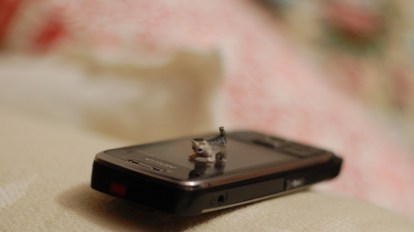
Via Salon.com:  ‘…[W]hat has been largely missing so far from the whole Kayne vs. Beck conversation has been someone to call West out on his apparent need to take umbrage on Beyonce’s behalf. That, however, was taken care of Monday, when Garbage front woman posted an open letter on Facebook. “It is YOU who is so busy disrespecting artistry,” she wrote, adding, “You disrespect your own remarkable talents and more importantly you disrespect the talent, hard work and tenacity of all artists when you go so rudely and savagely after such an accomplished and humble artist like BECK. You make yourself look small and petty and spoilt. In attempting to reduce the importance of one great talent over another, you make a mockery of all musicians and music from every genre, including your own. Grow up and stop throwing your toys around. You are making yourself look like a complete twat.” But where she really nailed it was in her PS, when she observed, “I am pretty certain Beyonce doesn’t need you fighting any battles on her account. Seems like she’s got everything covered perfectly well on her own.”’
Amen.


Here’s A Way To Stop Drones Flying Over Your House, Without A Shotgun

Parrot AR.Drone prototype flyingVia io9:  ‘The ambition of NoFlyZone, a consortium of (small) drone manufacturers, is to create a nationwide database of homeowners and flight permissions. If you don’t want drones to be able to overfly your residence, the solution is simple: enter your house in the online database, and after the next round of firmware updates, drones will be incapable of overflying your property, in the same way that they’re currently banned from the airspace around airports and, uh, the White House.’

Climate Change Threatens to Halt Alaska’s Sled Dog Races

Via Big Think:  ‘NPR’s Emily Schwing reports on some recent climate-change developments that are affecting Alaska’s Yukon Quest and Iditarod sled dog races. Officials and mushers are beginning to wonder how long the state sport will be able to survive these drastic changes with warm temperatures threatening food supplies and the landscape of the race.’


Giving Tea The Blue Bottle Treatment

Giving Tea The Blue Bottle Treatment | Fast Company | Business + Innovation

Via Fast Company:  ‘To understand third-wave tea, it’s helpful to understand third wave coffee, which you could characterize as an obsession with tiny, granular details. First wave coffee meant Folgers. At a second-wave establishment like Starbucks, a patron might request non-coffee additives like soy milk, two pumps of sugar-free vanilla, and their name spelled correctly. Third-wave coffee drinkers are more concerned with process, and the coffee beans themselves: What’s the best extraction method? A pour-over? A vacuum pump? What’s the ideal water temperature? Oh! And if you aren’t using a conical Burr grinder, what are you even doing with your life?

If first-wave tea was Lipton coming to the U.S. at the turn of the 20th century, and the second wave was the spread of mall emporiums like Teavana, third-wave tea in the U.S. is, like its coffee predecessor, a return to form, with an emphasis on purity and accessibility. It’s simply tea, unadulterated and directly sourced from farmers, usually from Asia.’


Prewar Japanese beer posters: the most beautiful ads ever made?

Via Boing Boing:  ‘Japanese beer culture has exploded over the past twenty years… But if we’ve entered the golden age of Japanese beer, we’ve missed the golden age of Japanese beer advertising. That came before the Second World War, a time when, if the advertising industry needed drawing, painting, or lettering, it was done by hand.

Asahi, Kirin, and Sapporo were not known for their richly flavorful product, but could command richly evocative imagery for the posters and postcards that promoted it.

A robust market now exists for these antique pieces of advertising and their suitable-for-framing reproductions. Spend enough time hunting for them, and you’ll start to notice that different brands often used the same pictures: what you’d thought of as “the Asahi girl” might well turn up on a Sapporo poster, and so on.

Now if you’ll excuse me, I seem to have developed a sudden thirst for an ice-cold beverage of some kind.’


What a beheading feels like: The science, the gruesome spectacle — and why we can’t look away

Via Salon.com: ‘Decapitation may be one of the least tor­turous ways to die, but nonetheless it is thought to be painful. Many scientists believe that, however swiftly it is performed, decapitation must cause acute pain for a second or two.

Decapitation in one single motion draws its cultural power from its sheer velocity, and the force of the physical feat challenges that elusive moment of death, because death is presented as instantaneous even though beheadings are still largely inscrutable to science…

Beheading is an extremely bloody business, which is one of the reasons it is no longer used for state executions in the West, even though it is one of the most humane techniques available. Decapitation is faster and more predictable than death by hanging, lethal injection, electric shock or gassing, but the spectacle is too grim for our sensibilities.’


Ray Kurzweil’s Mind-Boggling Predictions for the Next 25 Years

Via Singularity HUB:  ‘By the late 2010s, glasses will beam images directly onto the retina. Ten terabytes of computing power (roughly the same as the human brain) will cost about $1,000.

By the 2020s, most diseases will go away as nanobots become smarter than current medical technology. Normal human eating can be replaced by nanosystems. The Turing test begins to be passable. Self-driving cars begin to take over the roads, and people won’t be allowed to drive on highways.

By the 2030s, virtual reality will begin to feel 100% real. We will be able to upload our mind/consciousness by the end of the decade.

By the 2040s, non-biological intelligence will be a billion times more capable than biological intelligence (a.k.a. us). Nanotech foglets will be able to make food out of thin air and create any object in physical world at a whim.

By 2045, we will multiply our intelligence a billionfold by linking wirelessly from our neocortex to a synthetic neocortex in the cloud.’


How Americans Changed The Way Japanese People Ate Sushi

Via io9:  ‘Nigiri is… a relative newcomer to Japanese cuisine, invented some time during the 19th century. A sushi shop owner named Yohei Hanaya is often credited with created the hand-squeezed nigiri, but he may have just been the most successful early vendor of the dish. But nigiri definitely got its start in Edo, the city which was renamed Tokyo just a few decades later.

While nigiri quickly became the most popular style of sushi in Edo, it did not immediately dominate the sushi landscape as it does today. In his book The Story of Sushi, Trevor Corson credits two events with the rise in popularity of nigiri outside of Tokyo: One is the Great Kanto Earthquake of 1923, which forced many people (including sushi chefs) to leave Tokyo for their hometowns. When the Tokyo sushi chefs opened up sushi restaurants back home, they made Edomae (Edo-style) sushi, with an emphasis on nigiri.

The other event is where the Americans come in…. During the American occupation after World War II, a food rationing program helped the rise of nigiri outside Tokyo…’


How Prohibition Put the Cocaine in Coca-Cola

How Prohibition Put the Cocaine in Coca-Cola - Pacific Standard

Via Pacific Standard:  ‘You may be familiar with the fact that the coca in Coca-Cola was originally cocaine. But did you know that the reason we infused such a beverage with the drug in the first place was because of prohibition? Cocaine cola replaced cocaine wine. In fact, when it was debuted in 1886, it was described as “Coca-Cola: The Temperance Drink.”’


How Hospitals Can Help Stop the Cycle of Youth Violence

How Hospitals Can Help Stop the Cycle of Youth Violence - Pacific Standard

Via Pacific Standard: ‘The idea behind an intervention program in the hospital setting is that, while victims of violence might have other opportunities to connect with social workers or other resources at other times in their lives, the time right when they are recovering from their injuries may be the most crucial. So the people who are surrounding them at that time should be trained to help them make the right choices.’


The Little Albert Experiment: The Perverse 1920 Study That Made a Baby Afraid of Santa Claus & Bunnies

Via Open Culture: ‘The field of psychology is very different than it used to be. Nowadays, the American Psychological Association has a code of conduct for experiments that ensures a subject’s confidentiality, consent and general mental well being. In the old days, it wasn’t the case.

Back then, you could, for instance, con subjects into thinking that they were electrocuting a man to death, as they did in the infamous 1961 Milgram experiment, which left people traumatized and humbled in the knowledge that deep down they are little more than weak-willed puppets in the face of authority. You could also try to turn a group of unsuspecting orphans into stutterers by methodically undermining their self-esteem as the folks who ran the aptly named Monster Study of 1939 tried to do. But, if you really want to get into the swamp of moral dubiousness, look no further than the Little Albert experiments, which traumatized a baby into hating dogs, Santa Claus and all things fuzzy.’

An Illustration of Every Page of Herman Melville’s Moby Dick

Via Open Culture: ‘Throughout the novel, ordinary objects and events—especially, of course, the whale itself—acquire such symbolic weight that they become almost cartoonish talismans and leap bewilderingly out of the narrative, forcing the reader to contemplate their significance—no easy task. Depending on your sensibilities and tolerance for Melville’s labyrinthine prose, these very strange features of the novel are either indispensably fascinating or just plain excess baggage. Since many editions are published with the whaling chapters excised, many readers clearly feel they are the latter. That is unfortunate, I think. It’s one of my favorite novels, in all its baroque overstuffedness and philosophical density. But there’s no denying that it works, as they say, “on many levels.” Depending on how you experience the book—it’s either an incredibly gripping adventure tale, or a very dense and puzzling work of history, philosophy, politics, and zoology… or both, and more besides….

Recognizing the power of Melville’s arresting imagery, artist and librarian Matt Kish decided that he would illustrate all 552 pages of the Signet Classic paperback edition of Moby Dick, a book he considers “to be the greatest novel ever written.” He began the project in August of 2009 with the first page, illustrating those famous first words—“Call me Ishmael”—above. (At the top, see page 489, below it page 158, and directly below, page 116). Kish completed his epic project at the end of 2010. He used a variety of media—ink, watercolor, acrylic paint—and incorporated a number of different graphic art styles. As he explains in the comments under the first illustration, he chose “drawing and painting over pages from old books and diagrams because the presence of visual information on those pages would in some ways interfere with, and clutter up, my own obsessive control over my marks.” All in all, it’s a very admirable undertaking, and you can see each individual illustration, and many of the stages of drafting and composition, at Kish’s blog or on this list we’ve compiled. (You can also find links to the first 25 pages at bottom of this post.) The entire project has also been published as a book, Moby-Dick in Pictures: One Drawing for Every Page, a further irony given the obsessive literariness of Melville’s novel, a work as obsessed with language as Captain Ahab is with his great white nemesis.’

Chinese police ‘salamander banquet’ scandal

Chinese police alleged to have eaten endangered giant salamander at banquet | World news | The Guardian

Via The Guardian: ‘Chinese officials feasting on critically endangered giant salamander turned violent when journalists photographed the luxury banquet, according to media reports.

The 28 diners included senior police officials from the southern city of Shenzhen, the Global Times said in a report which appeared to show a flouting of Beijing’s austerity campaign.

“In my territory, it is my treat,” it quoted a man in the room as saying.

The giant salamander is believed by some Chinese to have anti-ageing properties, but there is no orthodox evidence to back the claim.

The species is classed as “critically endangered” on the International Union for Conservation of Nature’s (IUCN) red list of threatened species, which says the population has “declined catastrophically over the last 30 years”.

“Commercial over-exploitation for human consumption is the main threat to this species,” the IUCN said.


How Lewis Carroll’s Rules of Letter-Writing Can Make Email More Civil

Via Brain Pickings: ‘…(W)hat more humane an act is there than correspondence itself — the art of mutual response — especially amid a culture of knee-jerk reactions that is the hallmark of most communication today? Letters, by their very nature, make us pause to reflect on what the other person is saying and on what we’d like to say to them in response. Only when we step out of the reactive ego, out of the anxious immediacy that text-messaging and email have instilled in us, and contemplate what is being communicated — only then do we stand a chance of being civil to one another, and maybe even kind.’


Best Iain M. Banks Tribute Ever

Via io9: ‘Elon Musk tweeted that he’s naming two SpaceX droneships after Culture ships in Banks’ The Player of Games. One drone ship will be called Just Read The Instructions, and the other will be Of Course I Still Love You.’


Rare And ‘Horrific’: Frilled Shark Startles Fishermen In Australia

Via NPR:  ‘Normally, we wouldn’t call something a living fossil. But the name seems tailor-made for the frilled shark, whose roots are traced to 80 million years ago. Its prehistoric origins are obvious in its primitive body; nearly all of the rare animal’s closest relatives are long extinct.

In the most recent of those 80 million years, the frilled shark has been scaring the bejeezus out of humans who pull it out of the water to find an animal with rows of needle-like teeth in a gaping mouth at the front of its head.

That’s what happened recently off Australia’s coast, where a fishing trawler’s net snagged a frilled shark.

“It was like a large eel, probably 1.5 meters [about 5 feet] long, and the body was quite different to any other shark I’d ever seen,” fisherman David Guillot tells 3AW radio. “The head on it was like something out of a horror movie. It was quite horrific looking.” ‘


Imports of British Chocolate Barred

Chocolate War Bars British Cadbury Eggs From NYC Stores - West Village - DNAinfo.com New York

Via DNAinfo.com:  ‘It’s a war on Cadbury. British businesses in New York City, including the Village’s Tea & Sympathy, are up in arms over a lawsuit preventing them from importing Cadbury eggs and other candies from England…

“It’s just another thing to make everybody miserable, Why are we having a fight about chocolate? I mean, chocolate! … You know what’s behind it, right? Hershey’s doesn’t want people to eat Cadbury’s, because Cadbury’s is so much better, people aren’t going to be buying their filth.” ‘


The Citizen Candidate Movement

Via  Drew Curtis for Governor:“It is a well-known fact that those people who most want to rule people are, ipso facto, those least suited to do it.” – Douglas Adams

We have a theory that we’re about to see a huge change in how elections and politics work. Across the country, we have seen regular citizens stepping up and challenging the status quo built by political parties and career politicians. They have been getting closer and closer to victory and, here in Kentucky, we believe we have a chance to win and break the political party stronghold for good.

We are not politicians. We are Citizen Candidates.

Citizen Candidates evaluate ideas on merit, not on outside influence, campaign contribution sources, or party ideology. They believe a good idea is a good idea, no matter which political party supports it. Citizen Candidates are regular people with common sense. They are capable leaders who would be fantastic elected officials – if they chose to run.

Most don’t. And we can’t blame them.

Political parties have shut out any outsiders from the process. But we think we see another way.

We’re not the only ones either. In just 2014 alone, we saw the following:

– Bob Healey, an educator and political activist, ran for Governor of Rhode Island and won 22% of the vote – and spent just $35 to do it.

– Greg Orman, an entrepreneur and Independent candidate for Senate in Kansas, knocked the Democratic candidate out of the race and was polling close with the Republican incumbent the entire election.

– Columbia Law professor Tim Wu ran a campaign that almost put him on the Lt. Governor ballot for the November 2014 election.

– House of Representatives Majority Whip Eric Cantor was knocked out of the GOP primary by David Brat, a professor from Randolph Macon College.

None of these people were politicians.

All ran for office with the goal of finding a new way to seek elected office. And now we believe there is a path to victory in Kentucky and a chance to shatter the glass permanently. It goes beyond Kentucky though. Win or lose, our plan is to produce a blueprint others can use to get elected – in any state – without party help.

This campaign is important to everyone, not just citizens of Kentucky.

This is our chance. But it takes everyone’s help to make it happen. We are standing up against career politicians, political parties, special interests, and every group that thinks they deserve more influence than you.

Influence money can’t stop the power of citizens when they are unified.

In 2014, 1,000,000 people contacted the FCC in support of net neutrality – a policy that Big Telecom like AT&T and Comcast have been fighting for decades. They have spent hundreds of millions of dollars to fight it, and yet, none of it mattered once a million people voiced their support to the FCC. Now even the President has come out in support of it, addressing the issue in the State of the Union.

If we are ever going to change the tide…

…against special interests and political parties in our electoral process, we need that same kind of overwhelming support. We need more than just your votes. To remain viable in the face of so many forces trying to keep third party candidates out of the election, we need your financial support too. Citizen Candidates can’t raise money from special interest groups – because it doesn’t buy influence. We won’t cater to their demands. We need to raise it from their grassroots supporters, so please donate what you can.

If every voter gave their candidate just $5, special interest money would be powerless.

Not only does your financial support help us stay competitive, it proves legitimacy to the mainstream media. The deck has been stacked against us, but you can change that.

Not only do we want to win this election and shatter the electoral status quo, but we need to produce a blueprint so Citizen Candidates can win in all 50 states without political party support.’


How Ayn Rand Helped Turn the U.S. Into a Selfish, Greedy Nation

Atlas sculpture, New York City, by sculptor Le...

Via Alternet:  ‘Only rarely in U.S. history do writers transform us to become a more caring or less caring nation. In the 1850s, Harriet Beecher Stowe (1811-1896) was a strong force in making the United States a more humane nation, one that would abolish slavery of African Americans.

A century later, Ayn Rand (1905-1982) helped make the United States into one of the most uncaring nations in the industrialized world, a neo-Dickensian society where healthcare is only for those who can afford it, and where young people are coerced into huge student-loan debt that cannot be discharged in bankruptcy.Rand’s impact has been widespread and deep.

At the iceberg’s visible tip is the influence she’s had over major political figures who have shaped American society. In the 1950s, Ayn Rand read aloud drafts of what was later to become Atlas Shrugged to her “Collective,” Rand’s ironic nickname for her inner circle of young individualists, which included Alan Greenspan, who would serve as chairman of the Federal Reserve Board from 1987 to 2006.’


Why You Should Care That The FCC Is Trying To Redefine Broadband

Via Gizmodo:  ‘…(The) FCC is required to “encourage the deployment on a reasonable and timely basis of advanced telecommunications capability [read: broadband] to all Americans”. So if it doesn’t think that enough households have broadband, it can use a selection of tools to ‘encourage’ competition — tools that scare companies like Comcast or TWC.

So it’s clear why the telecoms companies want to keep the definition of broadband down: a lower threshold for broadband keeps regulators off their backs, and allows them to perpetutate the (very valuable) oligopoly that exists in the high-end broadband market.

And, in turn, the position of companies like Netflix and Google, who are advocating for faster broadband speeds, should be equally clear. Faster internet means a better experience for consumers, which means more paying customers for Netflix, and more eyeballs on videos for YouTube.

From an individual’s perspective, there aren’t really any downsides to the bar for ‘broadband’ being moved higher. If the FCC gets its wish, and overnight 25/3 becomes the minimum standard for broadband, the only negative effects will be for telecoms companies that sell internet packages. They’ll be shamed for not offering broadband to wide swathes of America; but more importantly, an ‘entry level’ broadband package will be something you might want to own, rather than a low-price face-saving tool designed to make telcos look good.’


U.S. Supreme Court to Review Oklahoma’s Lethal Injection Drugs

U.S. Supreme Court to Review Oklahoma's Lethal Injection Drugs - The Atlantic


Via The Atlantic: ‘Only one week after refusing to stay Charles Warner’s execution, the justices will now hear his fellow inmates’ appeal on a questionable lethal-injection drug.’


7 Worse Problems For The NFL Than Deflategate

Via WGBH: ”I wish I could say I cared about deflate-gate though. But I don’t. You see the NFL and I already parted ways this summer. I am a serious sports and football fan…. But I just can’t watch the NFL anymore and it’s been tough. I seriously miss watching with friends and family. But I’m also a Political Scientist whose research focuses on issues of equality and public policy in the United States. And the divergence between these concerns and the norms of the NFL just became too untenable. “

​Here’s A Spider So Awful You’ll Wish It Would Only Bite You To Death

Via ​io9: ‘The hackled orb weaver has no fangs. If you’re its prey, that might sound like good news. It’s not. It means that it will kill you in an even more excruciating way than spiders normally do.

The hackled orb weaver spider doesn’t actually have any penetrating teeth, apparently because that gets the delicious business of killing over with too quickly. Instead of paralyzing and liquifying its victims, the orb weaver chooses to do its own personal riff on the Saw movies — it wraps the victim in its silk.

Buried alive, you say? That sounds rather nasty, you say? You know nothing. Because once the orb weaver has its victim surrounded in silk, it keeps going. More and more it wraps. Tighter and tighter it wraps. A single moth gets 460 feet of silk put into its death. How does it finally die? Well, after the spider has broken the insects’ legs and wings to prevent any chance of escape, it concentrates on the head — eventually it wraps its prey so tight that the insects’ own eyes get forced down into its head, killing it.

That’s right, this spider wraps things so tightly that it kills them with their own inward-exploding-eyeballs.’


Scientists moved the Doomsday Clock 2 minutes closer to midnight

Via Salon.com: ‘Thursday morning, the Science and Security Board of the Bulletin of Atomic Scientists moved the hand on the Doomsday Clock 2 minutes later, setting the time to only 3 minutes before midnight. The clock, which symbolically represents Earth’s proximity to disaster, now indicates that the “probability of global catastrophe is very high.”

The Doomsday Clock was created in 1947. It has changed 18 times since then, ranging from two minutes to midnight in 1953 to 17 minutes before midnight in 1991.

It has been at five minutes to midnight since 20112 and the last time it was three minutes to midnight was in 1983, when the Cold War between the United States and the Soviet Union was at its iciest.’


India’s Tigers May Be Rebounding, in Rare Success for Endangered Species

India's Tigers May Be Rebounding, in Rare Success for Endangered Species

Via National Geographic:  ‘More money has been spent on tiger conservation than on preserving any other species in the world, yet wildlife biologists have been seemingly unable to stop the decline of the iconic big cat in the face of poaching and habitat loss.

That appeared to change Tuesday, when the government of India—the country is home to most of the world’s wild tigers—announced preliminary results of the latest tiger census that reveal a surge in the number of the big cats in its preserves over the past seven years.’


Why Should We Still Have to Retrieve Black Boxes from Airplane Crashes?

עברית: קופסאות שחורות

Does anyone know why the information being recorded by the ‘black box’ and the cockpit voice recorder cannot be streamed to an offsite storage site? It seems to me that there ought to be a way to do this even from remote mid-ocean flight routes. We wouldn’t have to wait for the searchers or the divers to locate the devices in the wreckage. I’m sure there’s a good reason this isn’t being done; I just can’t imagine what it might be. Anyone?

We’re Close To Achieving The Second Ever Global Eradication Of A Human Disease

Via IFLScience: ‘Back in 1980, the World Health Organization officially declared that one of the deadliest diseases in human history, smallpox, had been eradicated. This marked the first time that a disease had been completely eliminated from the planet. Achieving this was certainly no mean feat. It took an enormous collaborative effort, mostly involving global vaccination campaigns, surveillance and prevention measures.

Now, amazingly, humanity is tantalizingly close to eradicating the second ever human disease from the planet, and you might not have even heard of it: Guinea worm disease.

Although it’s rarely lethal, which could be why it has not received the attention that it deserves, Guinea worm disease, or dracunculiasis, is utterly horrific and can be permanently debilitating…’


Declinism: is the world actually getting worse?

Declinism: is the world actually getting worse? | Pete Etchells | Science | The Guardian

Via The Guardian: ‘A recent survey suggests that 71% of people think that the world is going to the dogs. Are things actually that bad, or is it a psychological trick of the mind?

Let’s face it, 2015 hasn’t been the most positive of years so far. But is the world really going down the pan? Radio 4’s The Human Zoo kicked off a new series this week, taking a look at “declinism” – the idea that we’re predisposed to view the past favourably, and worry that the future is going to be dire. In a survey run by YouGov for the programme, 71% of respondents said they thought the world was getting worse, and only 5% said that is was getting better. But what’s the reality of the situation?

Declinism is a trick of the mind …

Two lines of psychological research might provide insight into why people might think things are getting worse…’


New evidence for anthropic theory

Via phys.org: ‘Fundamental physics constants underlie life-enabling universe: For nearly half a century, theoretical physicists have made a series of discoveries that certain constants in fundamental physics seem extraordinarily fine-tuned to allow for the emergence of a life-enabling universe. Constants that crisscross the Standard Model of Particle Physics guided the formation of hydrogen nuclei during the Big Bang, along with the carbon and oxygen atoms initially fused at the center of massive first-generation stars that exploded as supernovae; these processes in turn set the stage for solar systems and planets capable of supporting carbon-based life dependent on water and oxygen.

The theory that an Anthropic Principle guided the physics and evolution of the universe was initially proposed by Brandon Carter while he was a post-doctoral researcher in astrophysics at the University of Cambridge; this theory was later debated by Cambridge scholar Stephen Hawking and a widening web of physicists around the world.

German scholar Ulf-G Meißner, chair in theoretical nuclear physics at the Helmholtz Institute, University of Bonn, adds to a series of discoveries that support this Anthropic Principle.

In a new study titled “Anthropic considerations in nuclear physics” and published in the Beijing-based journal Science Bulletin (previously titled Chinese Science Bulletin), Professor Meißner provides an overview of the Anthropic Principle (AP) in astrophysics and particle physics and states: “One can indeed perform physics tests of this rather abstract [AP] statement for specific processes like element generation.”

“This can be done with the help of high performance computers that allow us to simulate worlds in which the fundamental parameters underlying nuclear physics take values different from the ones in Nature,” he explains.’


Alot of Malarkey: Little Boy Who ‘Came Back from Heaven’ Lied

Via People.com: ‘In 2004, Alex Malarkey, who was then 6 years old, was in a car accident with his father, Kevin. The crash left him paralyzed and in a deep coma. It looked like he wouldn’t make it – until Alex woke up two months later with an incredible tale to tell: He had been to heaven.

His account was turned into a best-selling book, The Boy Who Came Back from Heaven, and, later, a TV movie. But it was all a lie.

In an open letter to Pulpit and Pen website published earlier this week, Alex wrote succinctly: “I did not die. I did not go to Heaven.”

He explained: “I said I went to heaven because I thought it would get me attention.” ‘


Supreme Court to Decide Whether Gays Nationwide Can Marry

Via NYTimes.com: ‘The Supreme Court on Friday agreed to decide whether all 50 states must allow gay and lesbian couples to marry. The court’s announcement made it likely that it would resolve one of the great civil rights questions of the age before its current term ends in June.

The justices ducked the issue in October, refusing to hear appeals from rulings allowing same-sex marriage in five states. That surprise action delivered a tacit victory for gay rights, immediately expanding the number of states with same-sex marriage to 24 from 19, along with the District of Columbia.

Largely as a consequence of the Supreme Court’s failure to act in October, the number of states allowing same-sex marriage has since grown to 36, and more than 70 percent of Americans live in places where gay couples can marry.

The pace of change on same-sex marriage, in both popular opinion and in the courts, has no parallel in the nation’s history.

Based on the court’s failure to act in October and its last three major gay rights rulings, most observers expect the court to establish a nationwide constitutional right to same-sex marriage. But the court also has a history of caution in this area.’


2015 is getting an extra second and that’s a bit of a problem for the internet

Via The Verge: ‘On June 30th at precisely 23:59:59, the world’s atomic clocks will pause for a single second. Or, to be more precise, they’ll change to the uncharted time of 23:59:60 — before ticking over to the more worldly hour of 00:00:00 on the morning of July 1st, 2015. This addition of a leap second, announced by the Paris Observatory this week, is being added to keep terrestrial clocks in step with the vagaries of astronomical time — in this case, the slowing of the Earth’s rotation. And it’s a bit of a headache for computer engineers.’


When T.S. Eliot Invented the Hipster

English: T. S. Eliot, photographed one Sunday ...

English: T. S. Eliot, photographed one Sunday afternoon in 1923 by Lady Ottoline Morrell

Via The Atlantic:  ‘January 4th marks 50 years since the death of poet T. S. Eliot. This year also marks the 100th anniversary of one of Eliot’s most famous poems, “The Love Song of J. Alfred Prufrock,” the work that thrust Eliot onto the modernist stage. An embodiment of turn-of-the century angst wrought by a world sucked dry by skepticism, cynicism, and industrialism, Prufrock bears striking similarities to a subculture of mostly white, urban, detached-yet-sensitive young adults at the cusp of our own century. One might say Eliot invented the hipster.

In a keen essay on the hipster at the New York Times, Christy Wampole

Book by T. S. Eliot

describes the urban hipster as nostalgic “for times he never lived himself.” Before he makes any choice,” Wampole explains, the hipster “has proceeded through several stages of self-scrutiny. The hipster is a scholar of social forms, a student of cool. He studies relentlessly, foraging for what has yet to be found by the mainstream.” A pastiche of allusive, retro gadgets, hobbies, clothing, hairstyles, and facial hair—ever increasingly referential—the hipster is “a walking citation.”

In other words, he is J. Alfred Prufrock.’


How Ambient Intimacy Became So Overwhelming

Via Pacific Standard:  ‘Today, with actual friends, brands, publications, and advertising all using the same social channels, it’s more difficult to tell who or what you’re emotionally connecting to than it once was. To solve the dilemma of ambient intimacy, we need to figure out more ways to filter it and to make the possibility of intimacy more useful to us when any entity online can buy access to the spaces we share with friends. The problem has become, how do we be intimate with only the people we actually want to be intimate with online?’


Former TSA Employee: Airport Security is a Farce

Via Big Think: ‘According to Jason Edward Harrington, among the folks who hate TSA the most are its own employees. He of course used to be one of them. In an article originally published at Politico but currently reprinted at The Week, Harrington recounts tales of bitterness and regret working for an agency he calls “a farce.” He speaks of the dreadfully low employee employee morale, the Orwellian bureaucracy that always seemed to have ulterior motives, and the many issues that irked airport travelers, in particular the full body scanners he says everyone in TSA knew were useless.’

An Argument in Favor of Cancer as the Best Way to Die

Former Editor of BMJ Richard Smith (via Big Think): “So death from cancer is the best… You can say goodbye, reflect on your life, leave last messages, perhaps visit special places for a last time, listen to favourite pieces of music, read loved poems, and prepare, according to your beliefs, to meet your maker or enjoy eternal oblivion.

This is, I recognise, a romantic view of dying, but it is achievable with love, morphine, and whisky. But stay away from overambitious oncologists, and let’s stop wasting billions trying to cure cancer, potentially leaving us to die a much more horrible death.”


We Need to Kick Racism Out of Criminal Justice Now

Via Pacific Standard: ‘The failure of the United States criminal justice system to protect non-white people is at an all-time high. The opportunity to correct course is now.’

A Weird Phenomenon That Might Change How We See Neutrinos

Via io9:‘Neutrinos are the ninjas of the universe. They don’t interact with other particles very often, but when they do, they obliterate them. Until now. Scientists have observed a new way that neutrinos interact with the world.’

Happy New Year!

New Year Sunrise

New Year Sunrise

This is the annual update of my New Year’s post, a tradition I started early on on FmH:

I once ran across a January 1st Boston Globe article compiling folkloric beliefs about what to do, what to eat, etc. on New Year’s Day to bring good fortune for the year to come. I’ve regretted since — I usually think of it around once a year (grin) — not clipping out and saving the article. Especially since we’ve had children, I’m interested in enduring traditions that go beyond getting drunk [although some comment that this is a profound enactment of the interdigitation of chaos and order appropriate to the New Year’s celebration — FmH], watching the bowl games and making resolutions.

Marteniza-ball

A web search brought me this, less elaborate than what I recall from the Globe but to the same point. It is weighted toward eating traditions, which is odd because, unlike most other major holidays, the celebration of New Year’s in 21st century America does not seem to be centered at all around thinking about what we eat (except in the sense of the traditional weight-loss resolutions!) and certainly not around a festive meal. But…

Traditionally, it was thought that one could affect the luck they would have throughout the coming year by what they did or ate on the first day of the year. For that reason, it has become common for folks to celebrate the first few minutes of a brand new year in the company of family and friends. Parties often last into the middle of the night after the ringing in of a new year. It was once believed that the first visitor on New Year’s Day would bring either good luck or bad luck the rest of the year. It was particularly lucky if that visitor happened to be a tall dark-haired man.

“Traditional New Year foods are also thought to bring luck. Many cultures believe that anything in the shape of a ring is good luck, because it symbolizes “coming full circle,” completing a year’s cycle. For that reason, the Dutch believe that eating donuts on New Year’s Day will bring good fortune.

“Many parts of the U.S. celebrate the new year by consuming black-eyed peas. These legumes are typically accompanied by either hog jowls or ham. Black-eyed peas and other legumes have been considered good luck in many cultures. The hog, and thus its meat, is considered lucky because it symbolizes prosperity. Cabbage is another ‘good luck’ vegetable that is consumed on New Year’s Day by many. Cabbage leaves are also considered a sign of prosperity, being representative of paper currency. In some regions, rice is a lucky food that is eaten on New Year’s Day.”

The further north one travels in the British Isles, the more the year-end festivities

English: Fireworks over Edinburgh on New Year'...

Fireworks over Edinburgh on New Year’s Eve

focus on New Year’s. The Scottish observance of Hogmanay has many elements of warming heart and hearth, welcoming strangers and making a good beginning:

“Three cornered biscuits called hogmanays are eaten. Other special foods are: wine, ginger cordial, cheese, bread, shortbread, oatcake, carol or carl cake, currant loaf, and a pastry called scones. After sunset people collect juniper and water to purify the home. Divining rituals are done according to the directions of the winds, which are assigned their own colors. First Footing:The first person who comes to the door on midnight New Year’s Eve should be a dark-haired or dark-complected man with gifts for luck. Seeing a cat, dog, woman, red-head or beggar is unlucky. The person brings a gift (handsel) of coal or whiskey to ensure prosperity in the New Year. Mummer’s Plays are also performed. The actors called the White Boys of Yule are all dressed in white, except for one dressed as the devil in black. It is bad luck to engage in marriage proposals, break glass, spin flax, sweep or carry out rubbish on New Year’s Eve.”

Here’s why we clink our glasses when we drink our New Year’s toasts, no matter where we are. Of course, sometimes the midnight cacophony is louder than just clinking glassware, to create a ‘devil-chasing din’.

In Georgia, eat black eyed peas and turnip greens on New Year’s Day for luck and prosperity in the year to come, supposedly because they symbolize coppers and currency. Hoppin’ John, a concoction of peas, onion, bacon and rice, is also a southern New Year’s tradition, as is wearing yellow to find true love (in Peru, yellow underwear, apparently!) or carrying silver for prosperity. In some instances, a dollar bill is thrown in with the other ingredients of the New Year’s meal to bring prosperity. In Greece, there is a traditional New Year’s Day sweetbread with a silver coin baked into it. All guests get a slice of the bread and whoever receives the slice with the coin is destined for good fortune for the year. At Italian tables, lentils, oranges and olives are served. The lentils, looking like coins, will bring prosperity; the oranges are for love; and the olives, symbolic of the wealth of the land, represent good fortune for the year to come.

A New Year’s meal in Norway also includes dried cod, “lutefisk.” The Pennsylvania Dutch make sure to include sauerkraut in their holiday meal, also for prosperity.

In Spain, you would cram twelve grapes in your mouth at midnight, one each time the clock chimed, for good luck for the twelve months to come. (If any of the grapes happens to be sour, the corresponding month will not be one of your most fortunate in the coming year.) The U. S. version of this custom, for some reason, involves standing on a chair as you pop the grapes. In Denmark, jumping off a chair at the stroke of midnight signifies leaping into the New Year. In Rio, you would be plunging into the sea en masse at midnight, wearing white and bearing offerings. In many northern hemisphere cities near bodies of water, they will have a tradition of people plunging into the cold water on New Year’s Day. The Coney Island Polar Bears Club in New York is the oldest cold-water swimming club in the United States. They have had groups of people enter the chilly surf since 1903.

Ecuadorian families make scarecrows stuffed with newspaper and firecrackers and place them outside their homes. The dummies represent misfortunes of the prior year, which are then burned in effigy at the stroke of midnight to forget the old year. Bolivian families make beautiful little wood or straw dolls to hang outside their homes on New Year’s Eve to bring good luck.

In China, homes are cleaned spotless to appease the Kitchen God, and papercuttings of red paper are hung in the windows to scare away evil spirits who might enter the house and bring misfortune. Large papier mache dragon heads with long fabric bodies are maneuvered through the streets during the Dragon Dance festival, and families open their front doors to let the dragon bring good luck into their homes.

The Indian Diwali festival, welcoming in the autumnal season, also involves attracting good fortune with lights. Children make small clay lamps, dipas, thousands of which might adorn a given home. In Thailand, one pours fragrant water over the hands of elders on New Year’s Day to show them respect.

//www.elanguages.org/images/16245' cannot be displayed]Elsewhere:

  • a stack of pancakes for the New Year’s breakfast in France.
  • banging on friends’ doors in Denmark to “smash in” the New Year, where it is also a good sign to find your doorstep heaped with broken dishes on New Year’s morning. Old dishes are saved all years to throw at your friends’ homes on New Year’s Eve.
  • going in the front door and out the back door at midnight in Ireland.
  • making sure the First Footer, the first person through your door in the New Year in Scotland, is a tall dark haired visitor.
  • water out the window at midnight in Puerto Rico rids the home of evil spirits.
  • cleanse your soul in Japan at the New Year by listening to a gong tolling 108 times, one for every sin
  • it is Swiss good luck to let a drop of cream fall on the floor on New Year’s Day.
  • Belgian farmers wish their animals a Happy New Year for blessings.
  • In Germany and Austria, lead pouring” (das Bleigießen) is an old divining practice using molten lead like tea leaves. A small amount of lead is melted in a tablespoon (by holding a flame under the spoon) and then poured into a bowl or bucket of water. The resulting pattern is interpreted to predict the coming year. For instance, if the lead forms a ball (der Ball), that means luck will roll your way. The shape of an anchor (der Anker) means help in need. But a cross (das Kreuz) signifies death.
  • It’s a bit bizarre when you think about it. A short British cabaret sketch from the 1920s has become a German New Year’s tradition. Yet, although The 90th Birthday or Dinner for One is a famous cult classic in Germany and several other European countries, it is virtually unknown in the English-speaking world, including Britain, its birthplace.” (Watch on Youtube, 11 min.)

Some history; documentation of observance of the new year dates back at least 4000 years to the Babylonians, who also made the first new year’s resolutions (reportedly voews to return borrowed farm equipment were very popular), although their holiday was observed at the vernal equinox. The Babylonian festivities lasted eleven days, each day with its own particular mode of celebration. The traditional Persian Norouz festival of spring continues to be considered the advent of the new year among Persians, Kurds and other peoples throughout Central Asia, and dates back at least 3000 years, deeply rooted in Zooastrian traditions.Modern Bahá’í’s celebrate Norouz (”Naw Ruz”) as the end of a Nineteen Day Fast. Rosh Hashanah (”head of the year”), the Jewish New Year, the first day of the lunar month of Tishri, falls between September and early October. Muslim New Year is the first day of Muharram, and Chinese New Year falls between Jan. 10th and Feb. 19th of the Gregorian calendar.

The classical Roman New Year’s celebration was also in the spring although the calendar went out of synchrony with the sun. January 1st became the first day of the year by proclamation of the Roman Senate in 153 BC, reinforced even more strongly when Julius Caesar established what came to be known as the Julian calendar in 46 BC. The early Christian Church condemned new year’s festivities as pagan but created parallel festivities concurrently. New Year’s Day is still observed as the Feast of Christ’s Circumcision in some denominations. Church opposition to a new year’s observance reasserted itself during the Middle Ages, and Western nations have only celebrated January 1 as a holidy for about the last 400 years. The custom of New Year’s gift exchange among Druidic pagans in 7th century Flanders was deplored by Saint Eligius, who warned them, “[Do not] make vetulas, [little figures of the Old Woman], little deer or iotticos or set tables [for the house-elf] at night or exchange New Year gifts or supply superfluous drinks [another Yule custom].” (Wikipedia)

The tradition of the New Year’s Baby signifying the new year began with the Greek tradition of parading a baby in a basket during the Dionysian rites celebrating the annual rebirth of that god as a symbol of fertility. The baby was also a symbol of rebirth among early Egyptians. Again, the Church was forced to modify its denunciation of the practice as pagan because of the popularity of the rebirth symbolism, finally allowing its members to cellebrate the new year with a baby although assimilating it to a celebration of the birth of the baby Jesus. The addition of Father Time (the “Old Year”) wearing a sash across his chest with the previous year on it, and the banner carried or worn by the New Year’s Baby, immigrated from Germany. Interestingly, January 1st is not a legal holiday in Israel, officially because of its historic origins as a Christian feast day.

Auld Lang Syne (literally ‘old long ago’ in the Scottish dialect) is sung or played at the stroke of midnight throughout the English-speaking world (and then there is George Harrison’s “Ring Out the Old”). Versions of the song have been part of the New Year’s festivities since the 17th century but Robert Burns was inspired to compose a modern rendition, which was published after his death in 1796. (It took Guy Lombardo, however, to make it popular…)

Should auld acquaintance be forgot
and never brought to mind?
Should auld acquaintance be forgot
and days of auld lang syne?
For auld lang syne, my dear,
for auld lang syne,
we’ll take a cup of kindness yet,
for auld lang syne.

Should auld acquaintance be forgot
and never brought to mind?
Should auld acquaintance be forgot
and days of auld lang syne?
And here’s a hand, my trusty friend
And gie’s a hand o’ thine
We’ll tak’ a cup o’ kindness yet
For auld lang syne

Here’s how to wish someone a Happy New Year around the world:

  • Arabic: Kul ‘aam u antum salimoun
  • Brazilian: Boas Festas e Feliz Ano Novo means “Good Parties and Happy New Year”
  • Chinese: Chu Shen Tan Xin Nian Kuai Le (thanks, Jeff)
  • Czechoslavakia: Scastny Novy Rok
  • Dutch: Gullukkig Niuw Jaar
  • Finnish: Onnellista Uutta Vuotta
  • French: Bonne Annee
  • German: Prosit Neujahr
  • Greek: Eftecheezmaenos o Kaenooryos hronos
  • Hebrew: L’Shannah Tovah Tikatevu
  • Hindi: Niya Saa Moobaarak
  • Irish (Gaelic): Bliain nua fe mhaise dhuit
  • Italian: Buon Capodanno
  • Khmer: Sua Sdei tfnam tmei
  • Laotian: Sabai dee pee mai
  • Polish: Szczesliwego Nowego Roku
  • Portuguese: Feliz Ano Novo
  • Russian: S Novim Godom
  • Serbo-Croatian: Scecna nova godina
  • Spanish: Feliz Ano Nuevo
  • Swedish: Ha ett gott nytt år
  • Turkish: Yeni Yiliniz Kutlu Olsun
  • Vietnamese: Cung-Chuc Tan-Xuan
  • [If you are a native speaker, please feel free to offer any corrections or additions!]

However you’re going to celebrate, my warmest wishes for the year to come… and eat hearty! [thanks to Bruce Umbaugh for research assistance]