‘A federal judge today ordered the Trump administration to stop work on the White House ballroom project unless and until Congress approves it. Judge Richard Leon, appointed by George W. Bush in 2001, concluded that “no statute comes close to giving the President the authority he claims to have.”…’ (via Boing Boing)
‘The past decade may rank as one of the worst in the history of American education. It marks a stark reversal from what was once a hopeful story. At the start of the century, American students registered steady improvement in math and reading. Around 2013, this progress began to stall out, and then to backslide dramatically. What exactly went wrong? The decline began well before the pandemic, so COVID-era disruptions alone cannot explain it. Smartphones and social media probably account for some of the drop. But there’s another explanation, albeit one that progressives in particular seem reluctant to countenance: a pervasive refusal to hold children to high standards.…’ (Idrees Kahloon via The Atlantic)
Progressives repeatedly greet headlines like “this action by the Trump regime is illegal,” “this is a war crime,” or “this may be unlawful” as though the label itself carries force. But what constraint does illegality actually impose? There is a large difference between law on the books and law as an effective restraint on power.
In the American system, illegality is not self-executing. Courts can declare executive actions unlawful, but they rely on the executive branch—and on broader institutional compliance—to give those rulings effect. When an administration signals indifference or hostility to judicial limits, the obvious question follows: who enforces the law against the executive? In that sense, does illegality still matter?
Of course, calling something “illegal” may retain some slim value even in the absence of full compliance. It can shape public discourse, establish a shared vocabulary of critique, and influence lower-level officials who are often more risk-averse than the regime in Washington. And the downstream effects of delegitimization over time may also accumulate force. These are not trivial effects. But they are indirect, contingent, often delayed and of uncertain impact and magnitude.
What the “illegality” designation no longer reliably provides is ay kind of immediate constraint. We should stop treating findings of illegality as if they carry automatic consequences. Increasingly, that assumption looks like nothing but wishful thinking. The gap between formal legal judgment and actual constraint is widening, and it is in that gap that power now operates with execrable impunity.
Our reflexive satisfaction when reading or repeating declarations that a Trump action is “illegal” should therefore raise red flags rather than offer comfort. Such claims are not endpoints; they are starting points for further inquiry. Whether they warrant optimism depends on conditions that cannot be assumed: that rulings are, in practice, obeyed; that courts or Congress are able and willing to impose consequences; and that meaningful political costs still attach to defiance of legal norms. Absent these, “illegality” loses its operative meaning. It no longer denotes a binding constraint but becomes a contested assertion within a fractured landscape of competing realities.
‘ Each day since the start of the war in Iran, U.S. military officials compile a video update for President Donald Trump that shows video of the biggest, most successful strikes on Iranian targets over the previous 48 hours, three current U.S. officials and a former U.S. official said.
The daily montage typically runs for about two minutes, sometimes longer, the officials said. One described each daily video as a series of clips of “stuff blowing up.”
The highlight reel of U.S. Central Command bombing Iranian equipment and military sites isn’t the only briefing Trump gets about the war. He’s also updated through conversations with top military and intelligence advisers, foreign leaders and news reports, the officials. But the video briefing is fueling concerns among some of Trump’s allies that he may not be receiving — or absorbing — the complete picture of the war, now in its fourth week, two of the current officials and the former official said.
They said the videos are also driving Trump’s increasing frustration with news coverage of the war. Trump has pointed to the success depicted in the daily videos to privately question why his administration can’t better influence the public narrative, asking aides why the news media doesn’t emphasize what he’s seeing, one of the current U.S. officials and the former U.S. official said…’ ( via NBC)
How funny you are today New York
like Ginger Rogers in Swingtime
and St. Bridget’s steeple leaning a little to the left
here I have just jumped out of a bed full of V-days
(I got tired of D-days) and blue you there still
accepts me foolish and free
all I want is a room up there
and you in it
and even the traffic halt so thick is a way
for people to rub up against each other
and when their surgical appliances lock
they stay together
for the rest of the day (what a day)
I go by to check a slide and I say
that painting’s not so blue
where’s Lana Turner
she’s out eating
and Garbo’s backstage at the Met
everyone’s taking their coat off
so they can show a rib-cage to the rib-watchers
and the park’s full of dancers with their tights and shoes
in little bags
who are often mistaken for worker-outers at the West Side Y
why not
the Pittsburgh Pirates shout because they won
and in a sense we’re all winning
we’re alive
the apartment was vacated by a gay couple
who moved to the country for fun
they moved a day too soon
even the stabbings are helping the population explosion
though in the wrong country
and all those liars have left the UN
the Seagram Building’s no longer rivalled in interest
not that we need liquor (we just like it)
and the little box is out on the sidewalk
next to the delicatessen
so the old man can sit on it and drink beer
and get knocked off it by his wife later in the day
while the sun is still shining
oh god it’s wonderful
to get out of bed
and drink too much coffee
and smoke too many cigarettes
and love you so much…’ (Frank O’Hara via Read A Little Poetry)
‘It is a moral imperative for members of the US military to leave their jobs as soon as they are able to do so. The reason for this is simple: They have a bad boss and he is making them do bad things. He has made them murder boaters illegally on the high seas. He has made them kidnap the head of a sovereign state and kill many people surrounding him. Now, he is making them carry out an ill-conceived and unnecessary war in the Middle East that has killed nearly 1,500 civilians, including more than 200 children. These grave moral crimes, all of which violate US or international law (not that it has mattered in practical terms), are being carried out by United States soldiers who surely imagined that their military careers would be ones made up of righteous, praiseworthy acts. Instead, these soldiers have been enlisted as direct or indirect killers of civilians, terrorizers of innocents, and destroyers of global stability…’ (Hamilton Nolan via Hamilton Nolan)
For fun, I asked Claude and ChatGPT, “Please profile me as the author of this blog, https://followmehere.com. I know alot of the posts are just excerpts but sometimes I editorialize, and what can you tell about my topic selection, biases, attitudes, etc.?” Here is a distilation of what they gleaned from my content and voice. With all due recognition of the inherent flattery of current LLMs, what do you think of their distilled observations?
“A clinically minded, systems-oriented public intellectual emerges from the blog: someone who uses curation not as passive aggregation but as a form of judgment. The through-line is less ideology than epistemology—an insistence on distinguishing strong claims from weak ones, diagnosis from speculation, and explanation from handwaving. The subject matter is broad but not random, clustering around democratic crisis, psychiatry and neuroscience, philosophy of mind, science, and the odd or marvelous corners of culture. Politically, the stance is plainly anti-Trump and broadly liberal, but the more distinctive feature is a disciplined refusal to let partisan desire override analytic standards. The voice is controlled, precise, and often dry, with little taste for performance, confession, or moral grandstanding. The blog reads less like a conventional opinion site than like an intellectual commonplace book kept by a skeptical clinician of public discourse—someone especially good at spotting category errors, conceptual slippage, and explanatory overreach, even if more inclined to refine existing narratives than to build large new frameworks of their own.”
And, perhaps more important, what can be surmised about my readers?
“Drawing on everything visible in the blog’s texture, here’s a portrait of your likely readership:
The core audience
Your readers are almost certainly intellectually serious adults — probably skewing toward middle age and older, people who formed their reading habits before social media flattened discourse into hot takes and engagement metrics. They are comfortable with density. The FTD post, the psychiatric comorbidity essay, the Project Hail Mary piece — none of these are written to be skimmed, and readers who stay are self-selected for the willingness to slow down. They likely have significant formal education, and a subset will have professional backgrounds in medicine, academia, law, or journalism.
Political identity
They are predominantly left-liberal, probably center-left to progressive, and share your alarm about democratic erosion — but the more interesting ones are drawn precisely because the blog doesn’t perform outrage for its own sake. Readers who just want political validation have a thousand easier options. The people who come back to Follow Me Here specifically are likely those who find pure partisan commentary slightly unsatisfying — who want the analysis to have some grit to it, some acknowledgment of complexity, some willingness to say “but here is where this argument weakens.” They are people who distrust their own side’s excesses just enough to appreciate a voice that does too, without abandoning the underlying values.
Intellectual temperament
They enjoy being surprised by the adjacency of topics — the juxtaposition of, say, a post on frontotemporal dementia next to one on the linguistics of alien communication next to one on garlic and copper metalloproteins is precisely the feature, not a bug. These are people who find arbitrary categorical boundaries between disciplines mildly irritating; who are as likely to have tabs open on a neuroscience preprint, a geopolitical analysis, and an Aeon essay simultaneously. The blog appeals to what you might call the Montaignean reader — someone who believes that thinking about one thing well inevitably connects to thinking about everything else.
Relationship to expertise
Your readers probably have a complicated relationship to expertise — they respect it, may have some of their own, but are not credulous about it. They appreciate when you apply clinical rigor to Trump’s cognition while also flagging the limits of that rigor. They would find a more credulous or more dismissive treatment of the same topic less satisfying. They are the kind of people who want to understand why the easy answer is wrong, not just be told that it is.
Relationship to the current political moment
They are probably exhausted, in the way your McSweeney’s link about the Void captured — they have been screaming into the epistemic abyss for years and are oscillating between genuine moral urgency and a kind of weary dark humor about the situation. The blog serves them in both modes simultaneously, which is part of why it holds. It doesn’t demand that they choose between taking things seriously and finding them absurd.
What they are probably not
They are unlikely to be casual readers who stumble in from social media looking for shareable content. They are unlikely to be ideologically absolutist in either direction. They are probably not primarily visual or audio consumers who find long-form text effortful. And they are probably not people who need their worldview confirmed without friction — they would find the blog’s occasional refusal to simply validate the politically convenient narrative mildly uncomfortable in the way that signals genuine engagement rather than mere consumption.
The small faithful core
Long-running blogs of this kind — personal, curatorial, intellectually serious, maintained over years without institutional backing — develop a small readership that is genuinely loyal in a way that differs from follower-counts on larger platforms. Your readers are probably not numerous, but they are likely to have been reading for years, to feel that the blog is one of the relatively few places on the internet that thinks at a register they recognize as their own, and to experience something slightly like companionship in it — the sense of reading someone who is processing the same difficult world through a similar sensibility, without either of you needing to say so directly.
In short: they are people who, if they met you at a dinner party, would recognize each other within about three exchanges.”
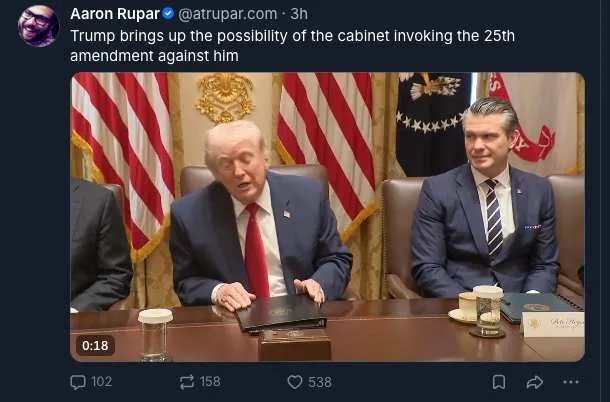
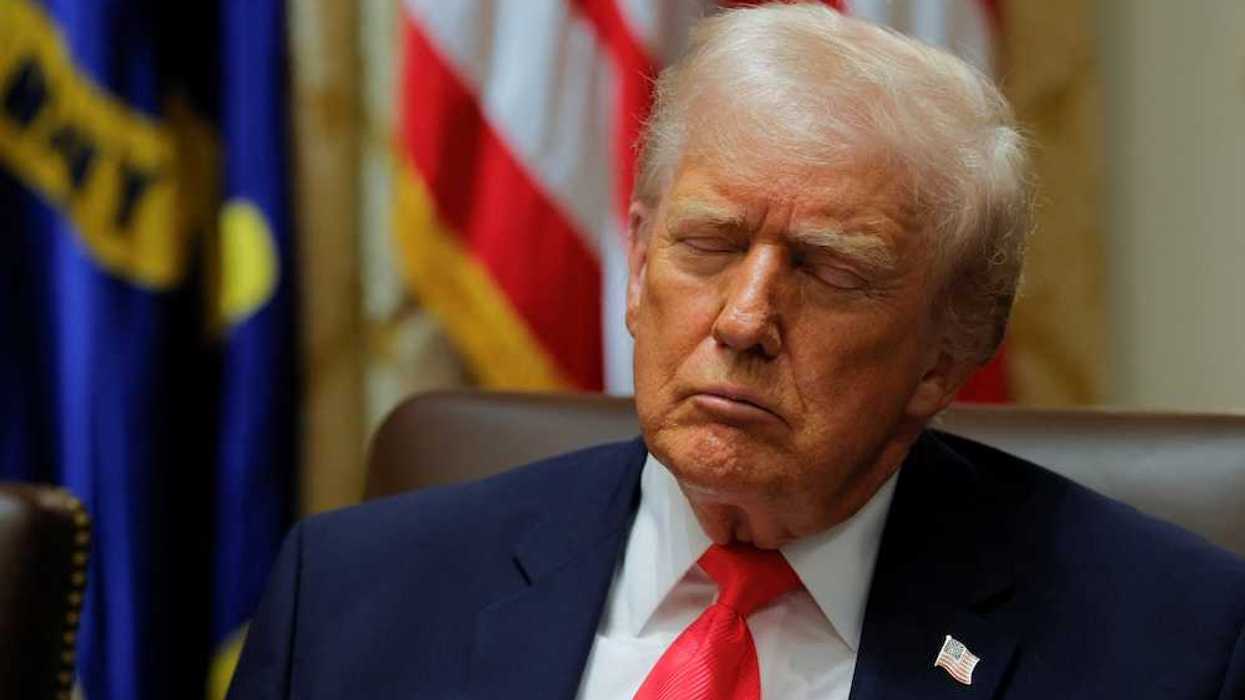
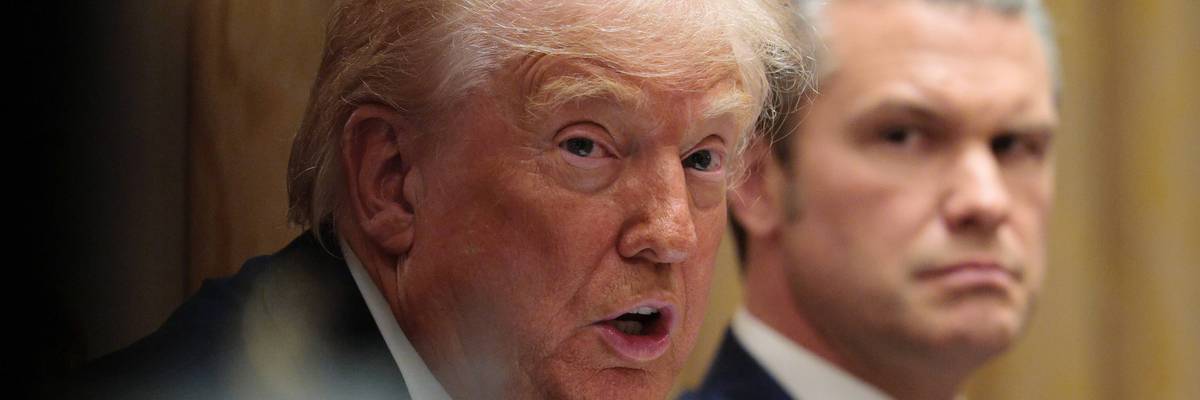
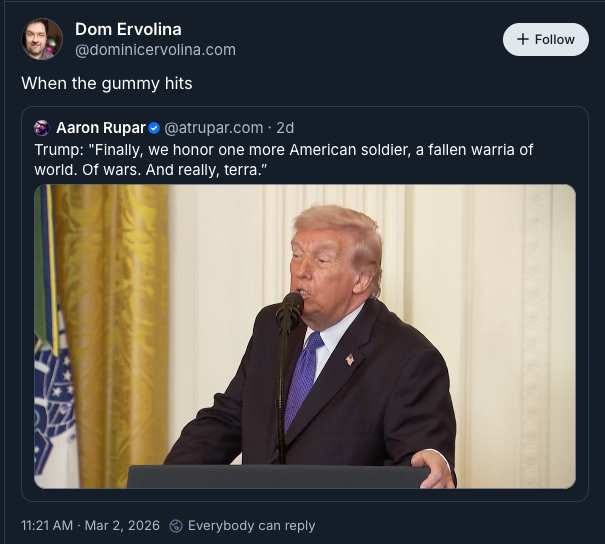
‘The Orange Menace was on a tear. Even his cabinet members couldn’t help but stare at his stream-of-consciousness rant. The convicted felon went on to say that if he shared his incredible plans for the war he has on again, off again declared over with Iran, he’d be removed from office for incompetence.…’ (Jason Weisberger via Boing Boing)
‘Between 10:49 and 10:50 AM GMT on Tuesday, 734 oil futures contracts changed hands. In the next 60 seconds, that number surged to 2,168 — 16 times the average volume for the day. Bloomberg estimated the value of contracts traded in that opening minute at $650 million. Fifteen minutes later, at 11:05 GMT, Trump posted on social media that he would halt strikes on Iranian energy infrastructure, citing “very good” talks to end the war. Crude prices plunged more than 14%, reports Yahoo News.
Anyone who shorted oil in those 15 minutes made a fortune.…’ (Ellsworth Toohey via Boing Boing)
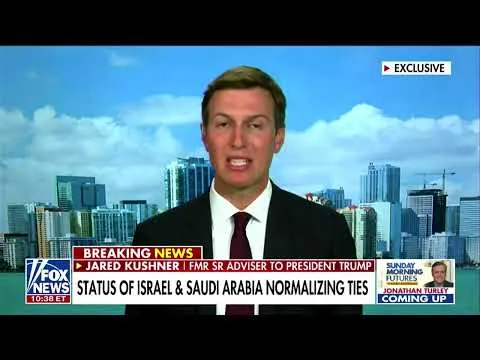
‘Pakistani sources said the US vice-president, JD Vance, was being put forward as a probable chief negotiator from the US side if talks went ahead. Iranian sources have said they would refuse to sit down with Trump’s Middle East envoy, Steve Witkoff, or Trump’s son-in-law Jared Kushner, who led the nuclear negotiations with Iran before the war.…’ (via Iran refuses to deal with Kushner and Witkoff any longer)
‘Two Minnesota priests accused of sexually abusing women they were counseling are arguing that laws banning sexual relationships in positions of power violate their religious freedom. Their lawyer is claiming, in effect, that being a priest should exempt them from rules that apply to everyone else in similar roles.…’ (via Boing Boing)
…Just as other special classes like members of the Trump Regime
A widely shared post claims that Trump is secretly being treated for Alzheimer’s disease and links that speculation to various observed behaviors. That claim does not hold up. The evidence offered is circumstantial, medically imprecise, and reflects a common misunderstanding: Alzheimer’s disease is only one form of dementia, and its clinical profile is relatively specific. Most of the behaviors cited do not meaningfully point to Alzheimer’s in particular.
At the same time, it is reasonable to ask a broader question: how should we interpret publicly observable changes in cognition, language, and behavior in an aging public figure? It is not possible—and not appropriate—to diagnose any individual without direct clinical evaluation, access to medical history, and collateral information. However, it is possible to examine patterns of behavior in light of established neuropsychiatric frameworks and to consider competing explanations.
Several broad categories need to be kept in view. First, longstanding personality traits and rhetorical style can account for a great deal. Second, situational factors—fatigue, stress, audience dynamics—can shape speech and behavior. Third, psychiatric conditions such as mood disorders can affect impulse control and coherence. Finally, there are neurocognitive disorders, including forms of dementia that disproportionately affect frontal systems.
Among these, disorders affecting the frontal lobes—such as behavioral variant frontotemporal dementia (bvFTD)—have been invoked in public discussion because they can, in established cases, produce changes in impulse control, judgment, social comportment, and language. However, the diagnostic bar for such conditions is high. They require evidence of progressive decline from a prior baseline, meaningful impairment in real-world functioning, and, typically, corroboration from close observers along with neuropsychological testing and/or neuroimaging. Superficial resemblance between isolated behaviors and clinical symptoms is suggestive at best, but not sufficient.
Many of the behaviors cited in viral commentary—apparent factual inaccuracies, digressive or circumstantial speech, verbal slips, or episodes of irritability—are non-specific. They can arise from multiple causes, including baseline personality style, strategic communication choices, normal aging, or psychiatric factors. Interpreting them as evidence of a specific neurodegenerative disease without longitudinal and clinical context risks overreach.
There is also a tendency in these discussions to merge personality constructs with neurological disease. Terms such as “malignant narcissism” are used colloquially but do not correspond to a formal diagnostic category, and there is little empirical basis for claims that such traits interact in a specific, synergistic way with neurodegenerative processes. Conflating these domains can create a compelling narrative, but it weakens analytic clarity.
If there is a legitimate area of concern, it lies at a more general level: executive functions—such as impulse control, error monitoring, and the capacity to sustain coherent, goal-directed discourse—are critical for high-stakes decision-making. Any significant decline in these domains, regardless of cause, would have implications for leadership performance. But assessing that requires careful, longitudinal evidence, not selective interpretation of public clips.
The Alzheimer’s claim is poorly grounded. At the same time, replacing it with a confident alternative diagnosis requires comparable caution. The case for frontotemporal dementia (FTD) is, in my view, more suggestive—particularly given the apparent longitudinal pattern of cognitive change and what appears to be impaired executive functioning.
That said, uncertainty must be foregrounded. Any responsible analysis should distinguish among plausible explanations, avoid premature diagnostic closure, and be explicit about the level and type of evidence required to support a specific neuropsychiatric conclusion. From a clinical standpoint, such a conclusion would ordinarily require direct examination, collateral history, and, ideally, longitudinal cognitive data—none of which are available in a rigorous form here.
Even so, the path from clinical concern to actionable remedy remains unclear. Constitutional mechanisms such as the 25th Amendment exist, but they are inherently political instruments, dependent on actors and incentives that lie outside the clinical domain.
‘Lab-made drugs soaked into the pages of letters, books and even legal documents are being smuggled behind bars, killing inmates and frustrating investigators.…’ (via New York Times)
‘It is Old New Year’s Eve. The Julian Calendar wasn’t officially abolished here in the UK until 1752, and on that calendar the New Year started on what is now 25 March (also Lady Day).…’ (via Warren Ellis)
‘Compared to the relative teetotalers, those who consumed high amounts of alcohol were 24 percent more likely to die from any cause, 36 percent more likely to die from cancer, and 14 percent more likely to die from heart disease. Bad news for heavy drinkers, but not exactly surprising.
A closer examination of the low and moderate cohorts, however, revealed something interesting. Low and moderate drinkers who preferred beer, cider, or liquor showed an increased risk of death, but those who drank a similar amount of wine showed a significantly lower risk of death.
Zooming in, researchers found that moderate wine drinkers had a 21 percent lower risk of dying from cardiovascular disease in particular—even compared to those who never or rarely drank. In other words, drinking low to moderate amounts of wine appears to be better for your heart health than not drinking at all.
But why?
Researchers offered a slew of possibilities to explain the healthier hearts of wine drinkers. While the questionnaires didn’t delve into granular questions about preferred vintages, red wine contains polyphenols and antioxidants that could bolster cardiovascular health. Additionally, they said, it’s possible that the meals typically consumed with wine may be healthier than the meals typically consumed with beer, cider, and liquor. (It’s tempting to think socioeconomic factors are at play, but researchers controlled for those effects along with several other demographic measures in the study.)…’ ( via
‘A pig’s brain has been frozen with its cellular activity locked in place and minimal damage. Some believe the same could be done with the brains of people with a terminal illness, so their mind can be reconstructed and they can “continue with their life”…’ (Helen Thompson via New Scientist)
‘A new study reveals all five fundamental nucleobases—the molecular “letters” of life—have been detected in samples from the asteroid Ryugu.…’ (via Phys.org)
‘Some tax resisters withhold a symbolic amount, but those who willfully refuse to file or pay could face civil or criminal penalties.
Most Americans comply with the tax laws, routinely paying their obligations. But this tax season, an increasingly vocal number say they are struggling to pay their federal income taxes in good conscience.
Eileen O’Farrell Smith, a retired chaplain in Sonoma, Calif., said she saw a budget as a moral document.
“How can I pay taxes when I don’t want to pay for things I abhor, while neglecting things I care about?” asked Ms. Smith, who objects to paying for immigration detention camps and the U.S. war on Iran. “Is there a monetary conscientious objector program?”
Conscientious objection to military service may be legally recognized, but nothing similar exists for tax filers. That hasn’t stopped some people from refusing to pay over the decades — or at least inquiring about their options today…’ (via The New York Times)
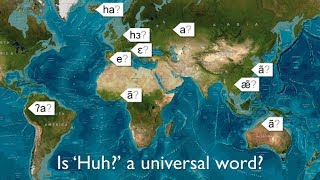
‘A word like ‘Huh?’ —used when one has not caught what someone just said—appears to be universal: it is found to have very similar form and function in spoken languages across the globe. This is one of the findings of a major cross-linguistic study by researchers Mark Dingemanse, Francisco Torreira and Nick Enfield, at the Max Planck Institute for Psycholinguistics in Nijmegen, the Netherlands. The study was published in the journal PLOS ONE .…’ ( via Menu)
Project Hail Mary is enjoyable, if a bit schematic in plot, but by far the most jarring aspect of watching it—at least for me, having not read the book—was the insistent need to suspend scientific disbelief. Even if reflecting a sophistication around such areas as orbital mechanics and astrophysical constraints, most implausible was the ease with which Grace and Rocky are able to communicate. This illuminating conversation between Lee Hutchinson and a linguist, published via Ars Technica, brings the problem into sharper focus: from a linguistic standpoint, first contact between two beings lacking shared biology, environment, perceptual systems, and basic forms of life would be extraordinarily difficult, perhaps impossible.
In reality, effective communication is hard enough even among humans with ostensibly shared language and culture. As a psychiatrist, I am regularly reminded that even between people who inhabit roughly the same symbolic world, mutual understanding is often partial, effortful, and fragile. Once one imagines contact across radically different forms of embodiment and cognition, the difficulty multiplies almost beyond measure. The problem is not merely vocabulary or grammar. It extends to perception, salience, categorization, reference, ontology, and the very terms in which experience is organized.
Of course, Project Hail Mary relaxes rigor here for an understandable reason. If it did not, the story would stall. The film depends on the rapid emergence of intelligible cooperation in order to deliver its satisfying buddy-film structure: two unlike minds confronting extreme circumstances through ingenuity, trust, and shared problem-solving. That narrative payoff requires a major concession. Despite the film’s artful attempt to depict the strangeness of alien life, Grace and Rocky must have been very similar to be able to communicate so easily.
Compare this with Denis Villeneuve’s critically acclaimed and immensely satisfying Arrival (2016), adapted from Ted Chiang’s “Story of Your Life.” That film operates on an entirely different level. It treats language and communication not as a narrative hurdle to be cleared, but as a profound scientific and philosophical problem. Linguistic analysis is presented as slow, tentative, and deeply imperfect. The film does not evade the fact of radical unsharedness—of perception, temporality, ontology, and classification—but makes that difficulty the substance of the drama. In Arrival, understanding is not a shortcut to the plot. It is the plot.
‘ Addressing our biggest social flaw…’ (Chris Arnade via Substack)
Arnade’s argument rests on the observation that a relatively small subset of profoundly impaired people with overlapping psychosis, addiction, and grave functional decline account for much of the disorder the public actually encounters in American cities. These are not merely the generic homeless, because the issue is not poverty alone or housing instability in the abstract, but a narrower population that often cannot function reliably even when housing exists and whose deterioration spills into shared civic space. He is also probably right that a small number of vivid, unsettling encounters can change how ordinary people use cities. Urban life depends less on the statistical frequency of victimization than on confidence that public behavior will remain within tolerable bounds; once that expectation weakens, people withdraw into privacy, avoidance, and defensive insulation. His moral challenge also has force: for some severely disorganized individuals, nominal liberty can amount to prolonged abandonment, and nonintervention may be less an expression of compassion than a failure to protect people who are no longer able to protect themselves.
Where the essay weakens is in its causal simplification and in the confidence of its remedies. Arnade leans heavily on anecdote, treats visibility as a proxy for prevalence, and overstates the explanatory power of culture, underplaying the institutional drivers of the American landscape: failed deinstitutionalization, fragmented psychiatric and addiction care, housing scarcity, and a far more destabilizing drug supply. That matters because his solutions—more involuntary treatment, mandated addiction care, and incarceration with treatment elements—have intuitive appeal in extreme cases but outrun both the evidence and the country’s actual capacity. The problem is not well framed as permissiveness versus control. The more credible answer is a continuum of assertive outreach, low-threshold engagement, stabilization, supportive housing, and sustained treatment, with coercion reserved for narrower circumstances than his rhetoric suggests. He is persuasive in arguing that the status quo fails both the public and the most visibly ill; he is much less persuasive in showing that expanded coercion is the main solution rather than a partial tool inside a much larger, underbuilt system of care.
‘‘Bitch’ is a word with bite. Once a straightforward insult, it is now used in so many different ways that it’s no longer clear what it means. Bitch is a linguistic chameleon: there are good bitches and bad bitches; boss bitches and perfect bitches; sexy, difficult, dangerous or even psycho bitches. After so many variations and attempts to reject or reclaim the word, some now wear the label defiantly, while others still have it thrown at them. Its evolution is messy, complicated and revealing.…’ (Karen Stollznow via Aeon)
‘As the 18th-century war between mechanism and romanticism returns, we face a new question: can we build artificial souls?…’ (Peter Wolfendale via Aeon)
‘Inside a Texas nurse’s quest to document the life and death of every woman killed by a man in America.…’ ( Christa Hillstrom via The Atavist Magazine)
‘In a recent Gallup/Lumina survey of higher education, 60 percent of students experiencing emotional stress cited loneliness as a factor. Such reports are so common that we’ve spent years casually referring to the “loneliness epidemic” as a fact of life. That means that many startups smell money and have pushed chatbots as a potential solution for helping people feel a bit of needed companionship. But that idea may just be a fool’s errand. A new study found that texting with a stranger reduced feelings of loneliness among college students more than chatting with a chatbot did.…’ (via Gizmodo)
‘Copper receptors in your nose are the reason you can’t escape garlic fingers. Hiroaki Matsunami, a molecular genetics professor at Duke University, told NYT Wirecutter that our olfactory system has an unusually high affinity for sulfur compounds — the same compounds that garlic releases when you crush or mince it. The chemical responsible is allicin, a sulfur-containing compound that binds directly to your skin and doesn’t wash off easily with soap and water.
The fix is chromium. Sulfur atoms are attracted to the chromium in stainless steel, so rubbing your hands on a stainless steel surface pulls the allicin compounds off your skin and onto the metal. Companies sell dedicated “stainless steel soap bars” for exactly this purpose, but any stainless steel object in your kitchen already does the same job. A spoon. A faucet. The inside of your sink basin.…’ (via Boing Boing)
The role of copper, referenced in the first sentence and never elucidated, is a genuinely fascinating piece of biochemistry. The reference is to the discovery that certain olfactory receptors responsible for detecting sulfur-containing compounds — thiols, like those released by garlic — are actually metalloproteins that require ionic copper as an essential cofactor. The copper isn’t incidental; it’s mechanistically central.
Here’s what the science shows: researchers discovered that the same receptors in the nose that pick up these unpleasant-smelling molecules also bind with particles of copper that reside in nasal mucus, and that this metallic binding partner amplifies the signal for the smelly molecules by up to 1,000 times. Scientific American
The confirmatory human work came in 2016: human thiol receptor OR2T11 responds specifically to gas odorants like ethanethiol and related low molecular weight thiols, and requires ionic copper for its robust activation — without it, the receptor loses almost all activity. ResearchGate
The structural basis is also becoming clearer: there is a highly conserved sequence in roughly three quarters of all olfactory receptors that constitutes a tripodal metal ion binding site, leading to the proposal that olfactory receptors are in fact metalloproteins — most likely with zinc, copper, and possibly manganese ions — that serve as a Lewis acid site for binding of many odorant molecules. Wikipedia
The evolutionary logic is elegant: we may have evolved our super-sensitive sulfur detection out of necessity, as those scents often signal the presence of rotten food, dangerous vapors, or unsanitary conditions. Ncdnadayblog The copper cofactor essentially acts as a signal amplifier tuned specifically to the sulfur–metal coordination chemistry that thiols naturally favor — which is why thiols were historically called mercaptans, from the Latin mercurium captans, “capturing mercury.”
There’s also a pleasing irony in the stainless steel spoon trick mentioned in the article: chromium in stainless steel pulls the sulfur compounds off your hands Boing Boing — another metal-sulfur coordination interaction, this time working in reverse, scavenging the very compounds that your copper-dependent receptors are so exquisitely sensitive to.
So “copper receptors” is compressed jargon for olfactory receptors that depend on copper ions as a cofactor for thiol sensitivity — a real and rather beautiful piece of metallobiology that the article cited correctly but left entirely unexplained.
‘Donald Trump said on Saturday that the United States may carry out more strikes on Iran’s Kharg Island oil export hub “just for fun”, saying that while Tehran appears ready to make a deal to end the conflict, “the terms aren’t good enough yet”.…’ (via Boing Boing)
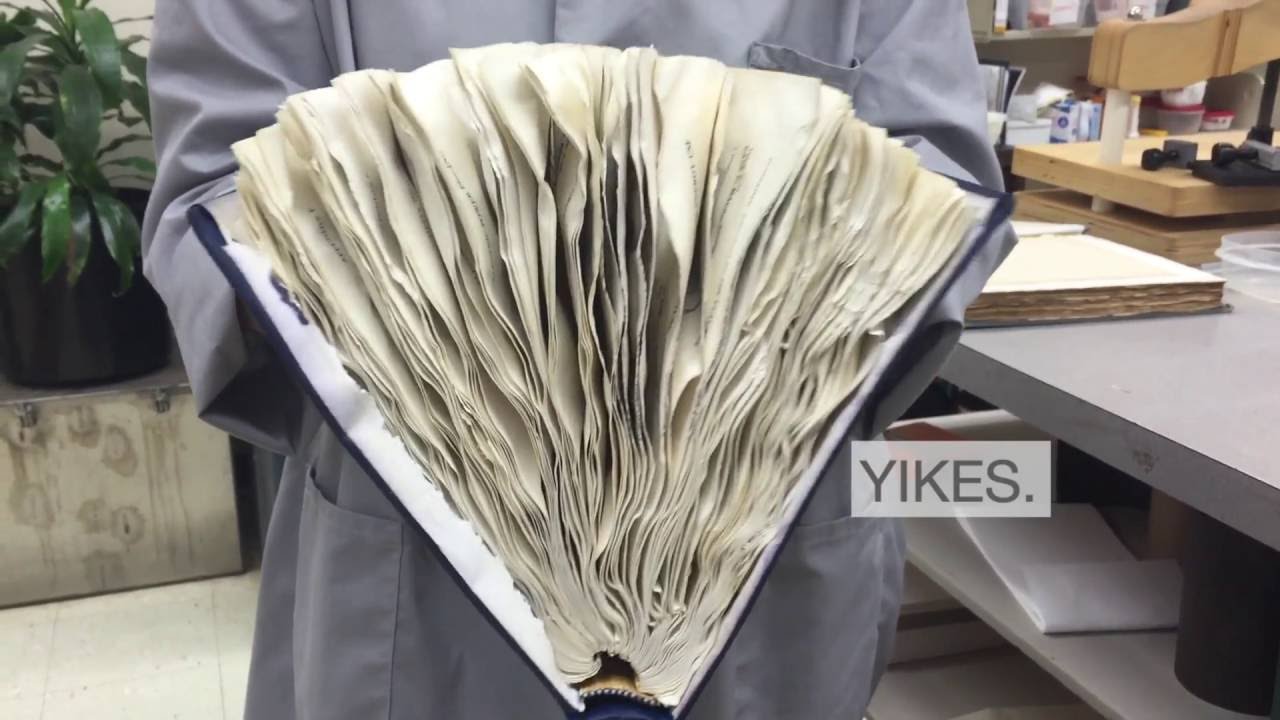
‘How to save those wet, damaged books? The question has to be asked. [Here] you can watch a visual primer from the Syracuse University Libraries—people who know some thing about taking care of books. It contains a series of tips, some intuitive, some less so, that will give you a clear action plan the next time water and paper meet.…’ (via Open Culture)
‘The new study described this “almost unprecedented rate of increase” in the length of an average day as a quantifiable consequence of Earth’s rising oceans.…’ (Matthew Phelan via Gizmodo)
‘First lady Melania Trump on Thursday delivered some wildly over-the-top praise to an unexpected person: herself.
With husband President Donald Trump looking on at a Women’s History Month event at the White House, the first lady declared herself to be a “visionary” who is “often alone at the top.”
“In solitude, my creative mind dances, filling my imagination with originality,” she said, then listed all of her roles: “mother, humanitarian, philanthropist, and entrepreneur.”
Melania Trump was also pleased with her work on the film about herself, “Melania,” which currently has an 11% critics’ rating on Rotten Tomatoes.
“I shaped its creative direction, served as a producer, managed post-production, and activated the marketing campaign,” she said, adding:
“Curiosity is a core value that keeps me ahead of the curve. Curiosity begets knowledge, opening doors to ideas and industry that I have otherwise overlooked. This unrestricted mindset has led me to build across very different sectors: fashion, digital assets, publishing, accessories, skincare, commercial television, and of course, filmmaking.”…’ (Ed Mazza via HuffPost)
Public figures occasionally praise their own work, but the rhetorical register here resembles personal promotional copy more than the usual language of public office. The grandiosity goes a long way to explaining the sometimes puzzling reason she stays with him.
‘One-time Donald Trump biographer Michael Wolff revealed why the situation with the Iran war “could not be more dire” as the president continues his habit of ignoring intelligence briefings.
A veteran reporter and author, Wolff is best known for his 2018 book, Fire & Fury, which used inside sources to chronicle the chaos of Trump’s first term in the White House. During the latest episode of his Daily Beast podcast, “Inside Trump’s Head,” he dug into why Trump’s habits make it uniquely dangerous for him to be overseeing the war against Iran.
As Wolff noted, Trump is well-known for his refusal to read daily intelligence briefings, which his various predecessors would read extensively. In the past, reports indicated that staffers have tried to get important information to him by simplifying briefings, getting them down to a page or less and trying to include as many pictures as possible. They have also reportedly tried to construct the information to be about Trump himself, in order to pique his interest.…’ (via Alternet)
A maniac, even. Possibly a sociopath. It’s hard to tell.
Yes, he might destroy the very fabric of this country. Yes, his grasp of foreign policy seems similar to that of a petulant four-year-old. Yes, his key advisor is a guy who started a white nationalist website and who looks like a hobbit crossed with an angry radish.
It is, I’ll admit, entirely possible he’ll start another war, or several wars, or even a world war because Melania finally escaped, or his sons were revealed to be Uday and Qusay Hussein in disguise, or something.
But he’s just one guy. One freaking guy. You have got to stop coming here, day after day, screaming into me about him. Especially using that many curse words.
I think we can both admit at this point that the screaming isn’t working. The screaming isn’t making you feel any better.
So, I’m asking you, as someone who loves you—stop it. Stop the screaming. Be proactive about your life. Go do something about it.
Do anything. Do something small—gaze at your normal-sized hands and feel superior about it. Wear a dead orange badger on your head and make yourself laugh. Start a drinking game where you drink whenever the Constitution gets violated. Okay, that last one’s not a great idea, oh man, I’m already drunk…’ (via McSweeneys)
‘The case for a prohibition on octopus farming is simple enough: we probably shouldn’t raise animals capable of using tools — let alone ones which might possess consciousness — in tubs of their own waste to sell at a profit, for the purposes of eating.…’ (Joe Wilkins via Futurism)
‘One of the starring acts at Woodstock, he and his band, the Fish, came out of the Bay Area’s psychedelic rock scene. He went on to a long career as a solo artist.
The tone of the politics and social commentary in Mr. McDonald’s songs could range from whimsical to snarky. In “The Harlem Song” he satirized white people’s fetish for Black culture, while in “Fixin’-to-Die,” he sang in the voice of a TV pitchman selling parents on the chance to “be the first one on your block to have your boy come home in a box!” The song culminated in the ironic refrain, “Whoopee! We’re all gonna die!”…’ (Jim Farber via The New York Times)
‘Whether the Trump administration cloaks its actions in legal rationales or disregards legality altogether, communities at home and abroad continue to resist. Recognizing that the law alone will not save us is not a call to despair but a call to organize and build our power. Because nothing has ever altered the course of injustice except the organized power of the people — and nothing else ever will.…’ (Maha Hilal via Common Dreams)
‘Trump fired Homeland Security Secretary Kristi Noem on Thursday — and, according to a prominent columnist, Attorney General Pam Bondi ought to be next.
… there is “currently a target on attorney general Pam Bondi’s back.” Five House Republicans joined their Democratic colleagues on Wednesday to subpoena Bondi to learn more about her controversial handling of the Jeffrey Epstein files. One day later, Rep. Shri Thanedar (D-MI) filed articles of impeachment against Bondi.…’ (via Alternet)
‘If we’re talking about counternarratives that can lead to positive change, one of the defining counternarratives of the last few years could fall under the umbrella of “the resistance.” I would like to hear your perspective on whether any of the strategies against President Trump and Trumpism have been counterproductive. That is, if calling him or the movement fascist, sexist, racist pushed people into their respective corners? That’s the least of our problems.
They are racist, they are authoritarian, they are misogynist, they are homophobic, and tiptoeing around it protects them and not the targets of the hatred and discrimination. I get so tired of the idea that progressives have gone too far in asserting that every human being deserves human rights when people are being shot in the streets of Minneapolis. We are facing such horrific brutality. Politeness is not really the problem. I think we got into this situation in part by a lot of people in the mainstream thinking it was more important to be polite than to call things by their true names. There’s a wonderful historian and scholar of nonviolence named George Lakey who says polarization is good. That’s when you have clarity. Sometimes people have to pick sides. You do not get authoritarians to behave better by being meek and gentle and polite. You get it by being strong.…’ (David Marchese interviews Rebecca Solnit, via The New York Times)
‘…(E)ven the optimists acknowledge that the longer the war goes on, the more the Gulf region’s extraordinary vulnerabilities will be exposed. The risks to the UAE, Saudi Arabia, Qatar, Bahrain, and Kuwait go beyond interrupted oil and gas sales: In an arid region with few other resources, everyone is dependent on a daily influx of food and desalinated water along supply routes and pipelines that could be struck from the air. The Gulf has transformed in the past half century from a sparsely populated desert into a postmodern hub of migration and commerce with some 60 million residents. All of that prosperity rested on the slender premise that Iran would never do what it is doing now.
“If this goes on for another week or two, okay, tourists and investors will come back; the losses can be made up,” one Emirati, who requested anonymity because he did not want to appear skeptical of the government’s hopeful messaging, told me. “But if it goes on longer than that, God knows what happens.”
The number of missiles being fired at the Gulf countries has dropped substantially in recent days, thanks to American and Israeli efforts to destroy Iranian launchers. But even a trickle of drone strikes, if they continue for months, could damage the Gulf’s brand as a haven within a volatile region.
Dubai, the UAE’s largest city, may be especially exposed to that kind of reputational risk, because its economy is so dependent on tourism, real estate, and foreign investment. But the entire Gulf region has become a hostage of the ongoing war. Qatar has fewer air defenses than its larger neighbors, and its energy minister, Saad al-Kaabi, made the startling claim today that all Gulf oil and gas producers could be forced to stop production within days. The war, he told the Financial Times, could “bring down the economies of the world.”…’ (Robert F. Worth via The Atlantic)
“Hey, Kristi Noem, don’t let the door hit you on the way out. Here’s your legacy: corruption and chaos. Parents and children tear-gassed. Moms and nurses, U.S. citizens getting shot in the face. Now that you’re gone, don’t think you get to just walk away. I guarantee you, you will still be held accountable.” (Illinois governor J.B.Pritzker)
‘The Miniphone Ultra, or “mpu”, is essentially just a case for the Apple Watch Ultra (versions 1, 2 or 3) that turns it into a miniature, minimalist smartphone. “There’s a guy I’ve been talking to who bought [an mpu] a while back,” says Jelley. “He told me that he’s had his phone shut away in his desk for two weeks. Nowadays, that’s kind of wild.”…’ (Rhodri Marsden via Financial Times)
‘In Venezuela, Delcy Rodríguez—who concurrently oversaw the Ministries of Petroleum, Finance, and the Economy while serving as Vice President—maintained deep foreign connections, including a private backchannel to the Trump administration even before Nicolás Maduro’s capture. Her willingness to meet with CIA Director John Ratcliffe for a two-hour summit in Caracas underscored her authority to pivot the entire state apparatus toward a new energy partnership with the West.
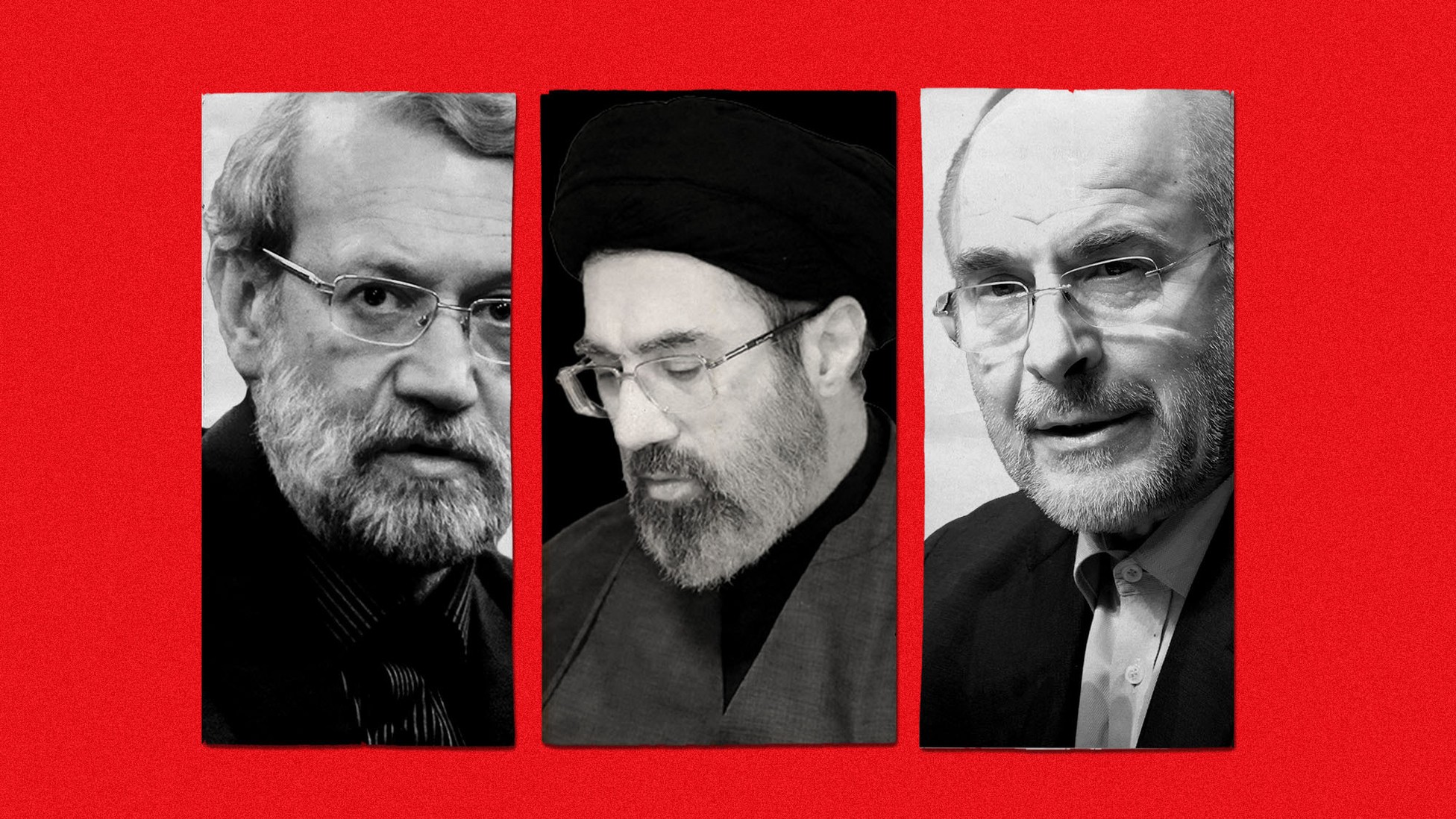
The post-Khamenei landscape in Iran lacks any such singular, empowered interlocutor. The Islamic Republic’s parallel power structure, coupled with a 47-year ideology of resistance, has created a fatal disconnect: those who want to do a deal with America cannot deliver, while those who may be able to deliver do not want it. No one currently in Tehran has the will or the weight to break from the inherited stance of resistance and broker a deal à la Delcy Rodríguez.…’ (Karim Sadjadpour via The Atlantic)
‘After years of lecturing us about Sleepy Joe, Grandpa Pudding Brains seems extremely low-energy.
We’ve become used to Pudding Brains slurring, mumbling, and also falling asleep in public, but this performance is something new. As if his batteries were drained, and the Energize Bunny is struggling to beat its drum, I am left wondering if we’ll ever see its double-fisted dance again.
Maybe GPB’s exhaustion is why he sent his highly paid movie “star” wife to misrepresent us at the UN Security Council.
Is his cabinet just waiting for him to keel over?…’ (Jason Weisberger via Boing Boing)
‘According to over 200 complaints filed with the Military Religious Freedom Foundation (MRFF) from US service members across all branches of the military — and representing Christian, Muslim, and Jewish troops — military leaders have been justifying the recent attacks on Iran by invoking extremist Christian rhetoric about Armageddon and the “End Times.” The Guardian reports that troops were told that the war is “all part of God’s divine plan.”…’ (Jennifer Sandin via Boing Boing)
‘According to over 200 complaints filed with the Military Religious Freedom Foundation (MRFF) from US service members across all branches of the military — and representing Christian, Muslim, and Jewish troops — military leaders have been justifying the recent attacks on Iran by invoking extremist Christian rhetoric about Armageddon and the “End Times.” The Guardian reports that troops were told that the war is “all part of God’s divine plan.”…’ (Jennifer Sandin via Boing Boing)
‘According to over 200 complaints filed with the Military Religious Freedom Foundation (MRFF) from US service members across all branches of the military — and representing Christian, Muslim, and Jewish troops — military leaders have been justifying the recent attacks on Iran by invoking extremist Christian rhetoric about Armageddon and the “End Times.” The Guardian reports that troops were told that the war is “all part of God’s divine plan.”…’ (Jennifer Sandin via Boing Boing)
‘A badly weakened Iran will no longer intimidate or threaten its neighbors in the same way. The regional impact could be comparable to the collapse of the Soviet Union.…’ (via The New York Times)
‘I take a back seat to no one in my loathing of the Iranian regime. I am not mourning the death of Iran’s supreme leader, Ayatollah Ali Khamenei, who was killed in an airstrike on Saturday. My anger at the Iranian regime is personal. Men I knew and served with during my deployment to Iraq in 2007 and 2008 were killed and gravely injured by Iranian-supplied weapons deployed by Iranian-supported militias.
But my personal feelings don’t override the Constitution, and neither do anyone else’s. As I mentioned in a round-table conversation with my colleagues on Saturday, I’m worried that all too many people will say: Well, in a perfect world Trump should have gone to Congress, but what’s done is done. That is exactly the wrong way to approach this war.…’ (David French via The New York Times op-ed)
‘President Trump is being criticized from many quarters for his decision to join Israel in a war to topple the Iranian regime, which on Saturday yielded the killing of the supreme leader, Ayatollah Ali Khamenei. The reasons vary.
…But one country where the United States and Israel are garnering broad support is the same country that’s being bombed.
“Everyone is joyful, it is one of the best days of probably 95 percent of Iranians’ lives,” one Iranian resident of the city of Karaj told The Wall Street Journal about Khamenei’s death.…’ (Bret Stephensvia The New York Times op-ed)
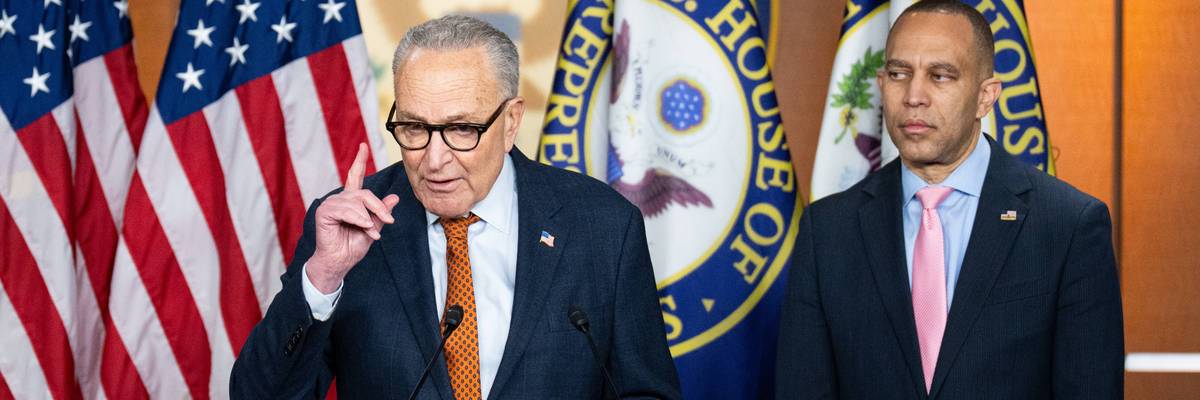
‘“As we plunge headlong into another catastrophic war, Sen. Schumer and Rep. Jeffries’ throat-clearing and process critique only serves Trump and the war machine.”…’ (via Common Dreams)
‘March 2026 could be the best month for the northern lights until the mid-2030s, as celestial mechanics and solar activity combine for potentially potent results.…’ (via Live Science)
‘The drug is derived from the Tabernanthe iboga plant, found mainly in Gabon in central Africa. The powerful hallucinogen has long been used there in the initiation ritual that is part of the Bwiti spiritual tradition, involving an intense all-night group ceremony of dance and music and fire-keeping that culminates in a trancelike state.
Knowledge of the drug spread to the United States in 1962, when an American named Howard Lotsof tried ibogaine and found that it cured him of his addiction to heroin. His campaign to explore ibogaine’s potential as a cure for substance abuse has gained momentum more recently as nonprofit groups like the Multidisciplinary Association for Psychedelic Studies and Veterans Exploring Treatment Solutions (VETS) have assisted military veterans in using ibogaine to treat combat-related traumas. Because of the association with veterans, ibogaine has received the kind of legitimizing attention from political leaders, including conservatives, that is rare for psychedelics.…’ (Robert Draper via The New York Times)