
The Happy City Index 2026 delivers like the embarrassing message: American cities just aren’t very happy places to live…’ (via Vice)
Daily Archives: 12 Apr 26
Viktor Orbán concedes Hungarian election

‘What it means that MAGA’s favorite strongman is out of a job.…’ (via Vox)
Trump’s Mental Status: Existential Threat and Public Health Menace

As a psychiatrist, I have found myself returning to a question that has no entirely satisfactory answer: what can responsibly be said about the mental state of a public figure whom one has never examined? The traditional caution (the “Goldwater rule”) against diagnosing at a distance is well founded. Clinical judgment ordinarily rests on history, direct observation, and, when appropriate, testing. Quite simply, if you do not have a face-to-face treatment relationship with someone, diagnosing them has been considered unethical. But we are no longer in an era of fragmentary exposure. We are confronted instead with a dense, longitudinal public record of speech and behavior. At some point, the question shifts. It is no longer whether isolated lapses occur—they do in everyone—but whether there is a sustained alteration in the organization of thought, language, and impulse. My associate, psychiatrist Henry Abraham , shares similar concerns in this essay. And, I would say, Trump’s condition is a clear existential threat and public health emergency, arguing for forfeiture of such ethical niceties.
From a clinical standpoint, single incidents are uninformative. People misspeak, forget names, lose their train of thought. What carries weight is pattern. Increasing frequency of disorganized or illogical speech, a drift toward vagueness or incoherence, difficulty sustaining a line of thought, and a diminished capacity to anticipate consequences—these are not random errors. They suggest a weakening of higher-order integrative functions. Similarly, while irritability or even cruelty may be longstanding traits, a shift toward more poorly modulated, impulsive, unconstrained expressions of those traits points to something more than personality alone.
In Trump’s case, the relevant question is not whether any given statement can be explained away, but whether the aggregate record reflects such a shift. His speech over time is publicly available in abundance, and it permits comparison. What stands out is not merely content—though that is often striking—but form: increasing circumstantiality, fragmentation, and loss of syntactic and conceptual coherence. At points he appears to lose the thread entirely, substituting associative or idiosyncratic references that are opaque even to sympathetic listeners. Last week, for example, he became cognitively lost during a rally and began talking about the “eight circles” that Biden had filled up with journalists; no one on his staff has been able to explain the reference. His supporters and aides seem increasingly unable to cover for these lapses. These are not gaffes in the ordinary sense. They suggest difficulty maintaining organized thought in real time.
His behavioral pattern shows a parallel change. Longstanding tendencies toward grandiosity, grievance, and attack have become less modulated and more expansive. Trump’s long-established grandiosity has also become more extreme, with Truth Social featuring increasingly bizarre AI-generated imagery, including Trump shaking hands with God. More recently, this culminated—though I use that term cautiously, since there may be worse to come—in the Hitlerian genocidality of his grandiose Easter threat to wipe out Iranian civilization. The issue is not the presence of these traits, but their apparent intensification and disinhibition. Abraham comments, “His paranoia and rage attacks during tweet binges at night and episodes of falling asleep at meetings during the day may be related to episodes of stimulant abuse followed by withdrawal.” Claims that Trump abused Adderall date back to his Apprentice years. More recently, Dr. Jack Brown has pointed to Trump’s dilated pupils, evident in close-up photographs, as a strong indication of substance use. Brown observed that, in a normal individual with healthy eyes in a well-lit room, “the statistical odds of dilated pupils approaches zero.”
Whether one frames this in affective, neurocognitive, or purely behavioral terms, the pattern is not static. Underlying mechanisms—neurodegenerative processes, vascular contributions, effects of sleep disruption, or substance use—remain speculative, since Trump is unlikely to be transparent about impairments or vulnerabilities. Nevertheless, it is difficult to deny that there appears to be a longitudinal decline in coherence, impulse control, and capacity for organized, goal-directed communication.
What follows from such an observation? Here it is easy to become sidetracked into diagnostic debates that, in practical terms, cannot be resolved. The more relevant issue is functional. The presidency is an office that depends heavily on precisely those capacities—sustained attention, coherent reasoning, impulse control, and the ability to anticipate consequences under conditions of stress and incomplete information. If there is credible concern that these capacities are compromised, the problem is not primarily one of nomenclature but of governance.
Thus, there is merit in Abraham’s conclusion that “Instead of dwelling on his psychopathology, the country needs to focus on his behavior. Political power has turned a buffoon into a monster. Political power will be needed to stop him.” Whether this process is vascular dementia or the frontotemporal dementia about which I have previously speculated, we appear to be looking at progressive neurodegeneration. But we cannot wait for nature to take its course. We are already deep in 25th Amendment territory. As Abraham concludes, “that solution now is only a soft drumbeat, but it may grow if the Democrats win the midterms and if they can put the country ahead of fighting amongst themselves.”
At the same time, the clinical lens is not irrelevant; it provides a way of organizing what might otherwise be dismissed as a series of disconnected incidents. The pattern, taken as a whole, is difficult to ignore. Whether the underlying process is neurodegenerative, affective, malignant personality, or something else entirely, the trajectory appears unfavorable. But even that is, in a sense, secondary. The central question is not what to call the condition, nor how it will evolve over time, but what threshold of observable dysfunction a political system is prepared to tolerate in someone occupying its most demanding executive role.

Of course, Trump has insulated himself from meaningful challenge by surrounding himself with individuals unwilling or unable to counter his malignant and often irrational decision-making. This is not reducible to weak personalities. It reflects an emergent system—shaped by converging incentives, fears, identity rewards, and institutional erosion—that reliably selects for compliance.
The current political environment increasingly rewards submission over judgment. Loyalty is no longer anchored in shared, prudent goals but in proximity to power and avoidance of retaliation. The system operates through recognizable psychological mechanisms: fear conditioning (the visible punishment of dissenters), intermittent reinforcement (unpredictable rewards that deepen attachment), reduction of cognitive dissonance (beliefs adjusted to justify behavior), and identification with the aggressor. In combination, these processes produce a closed loop of groupthink.
Structural pressures reinforce this dynamic. Electoral incentives penalize deviation in the eyes of a highly mobilized base, amplified by a media echo system. Career risk is sharply asymmetrical: dissent invites immediate, personal consequences, while resistance offers only diffuse and uncertain benefits unless undertaken collectively. At the same time, institutional norms degrade—truthfulness is undermined, contradiction normalized, oversight politicized, and observers fatigued into disengagement.
The result is predictable: degraded decision quality, volatility, elevated risk-taking, and erosion of institutional credibility. Yet compliance should not be mistaken for agreement. It often reflects adaptation to incentives rather than genuine belief. That distinction matters, because it implies the system is not fully stable.
There are indications of strain among the sycophants (as I often log with glee here on Follow Me Here). The psychological burden of sustained dissonance is not trivial and accumulates over time. Systems of this kind depend on dissent remaining private. If disagreement becomes visible and shared, the underlying incentive structure can shift. And this is particularly true as the electorate is perceived to shift in response to a growing sense they were deceived and betrayed by Trump.
The central problem is therefore not primarily individual failure but systemic design. A durable correction would require reestablishing conditions under which dissent is recognized as fidelity to principles rather than betrayal of a person. That is difficult once institutions have adapted in the opposite direction, but not impossible. The operative question is how to realign incentives so that sound judgment, rather than compliance, again becomes the rational choice.
The War With Iran Offers a Snapshot of Trump World. It’s Not a Pretty Picture
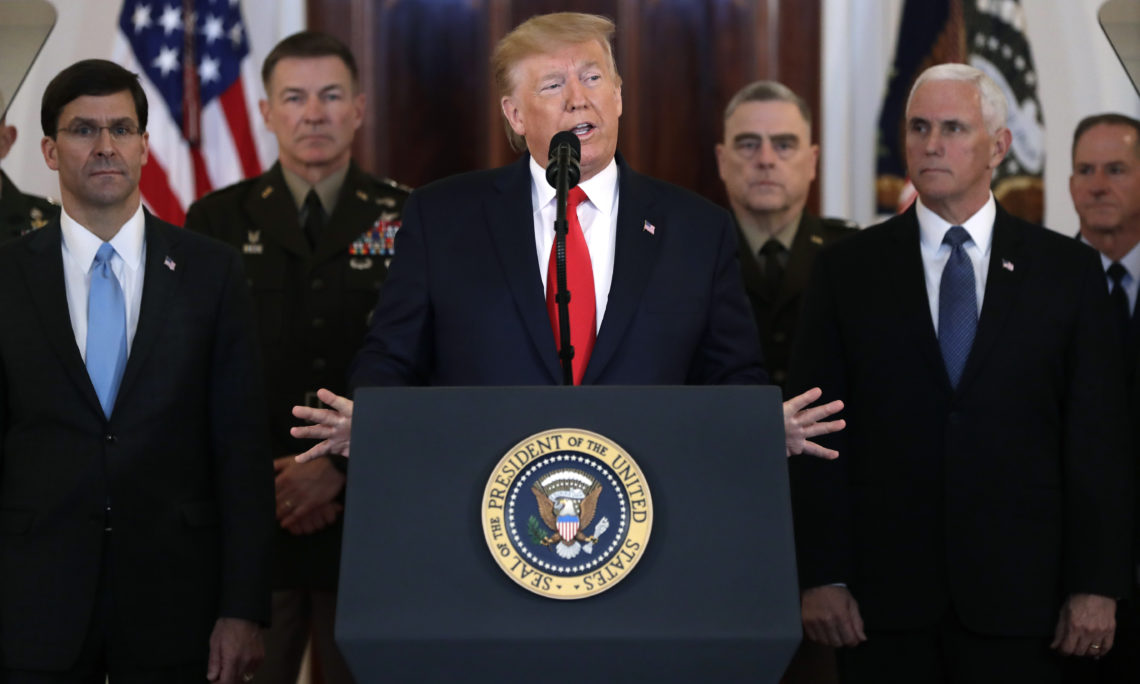
The war reflects an accelerating shift away from a U.S.-led global order—away from rules-based internationalism and toward a transactional, power-centered geopolitics that devalues alliances and asserts the primacy of force and unilateral action. Other major powers, including China, Russia, and regional actors, will be further incentivized to behave in similar fashion. The structural risk of escalation is high and difficult to control, with substantial potential for spillover through regional proxies and maritime choke points. Even limited military action can now cascade with unusual ease into a multi-theater conflict.
The economic consequences will be central, not secondary. There is no longer any meaningful distinction between a conventional war and a generator of global economic shock. Even if the United States secures short-term leverage, it will do so at evident long-term cost. Any immediate gains are likely to be offset by damage to alliances, diminished U.S. credibility, and stronger incentives for other countries to move away from the U.S. sphere of influence. By widening the gap between the United States and both its European allies and major importers of Middle Eastern oil such as China and India, the war will accelerate geopolitical realignment away from the United States. Adversaries may also read the moment as one of inconsistent U.S. commitment and greater American risk-taking, shaped by domestic fragmentation and weak public support for the war.
The larger consequence will be the normalization of a more chaotic international system, with the long-term result being a less stable, less predictable world order. In that sense, the military outcome matters less than the conflict’s structural effect on global politics. (via POLITICO)
Marjorie Taylor Greene Predicts a GOP Bloodbath in the Midterms
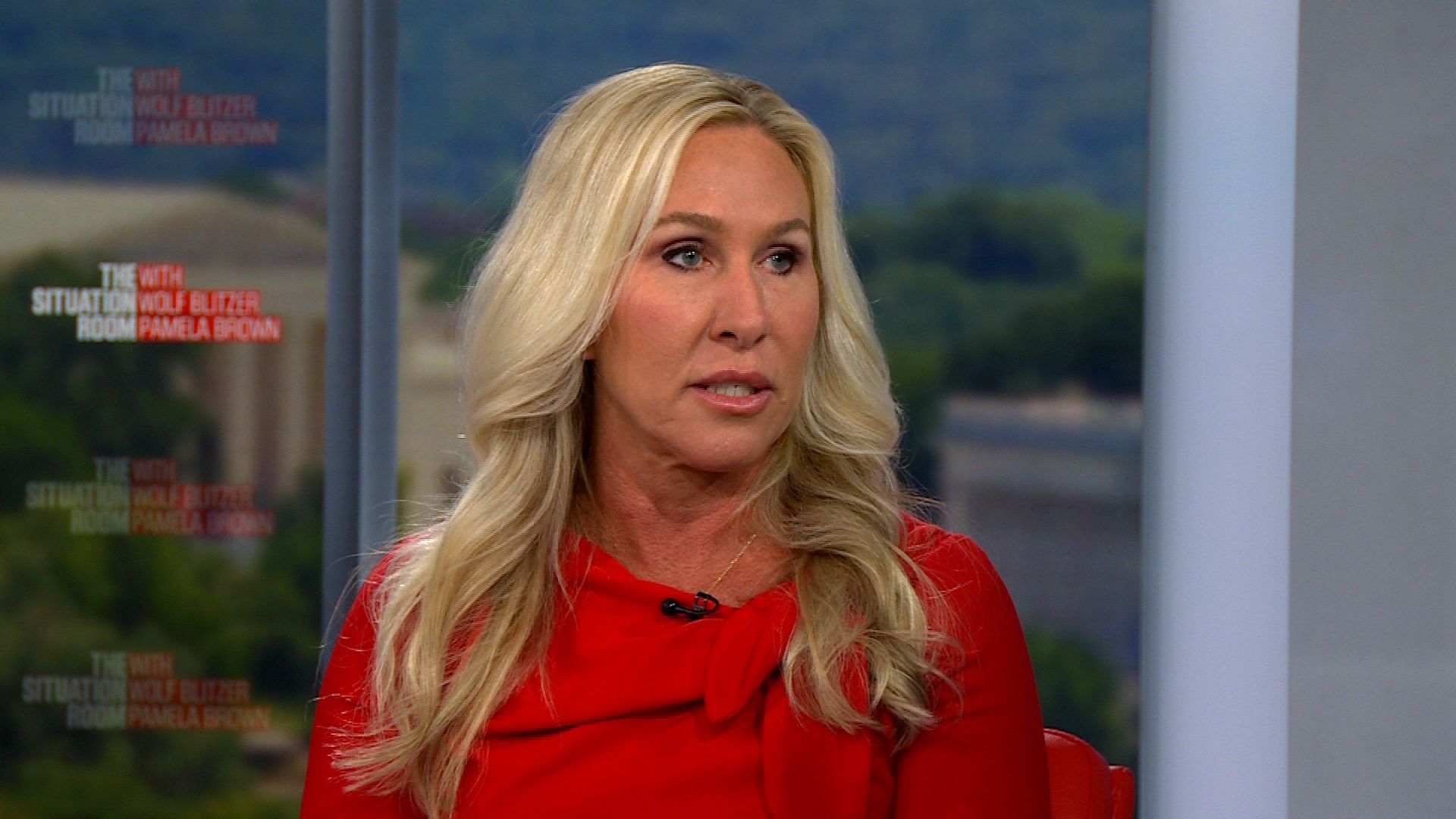
‘Republicans are going to get “slaughtered” in the midterms — losing the House and maybe even the Senate. This prediction isn’t coming from Hakeem Jeffries or Chuck Schumer but from former Republican Congresswoman and MAGA firebrand Marjorie Taylor Greene.
For six years, Greene was one of President Donald Trump’s most loyal allies and became an influential and polarizing voice in the Republican Party. But the Greene-Trump relationship ruptured late last year over her push to release the so-called Epstein files, leading to her abrupt resignation from Congress. Now, she’s one of Trump’s loudest critics, calling his military action in Iran “evil and madness” and endorsing the use of the 25th Amendment to remove him for being unable to fulfill the duties of his office.…’ (via POLITICO)
Survival of the Wittiest
‘Killjoys and scatterbrains might have propelled the evolution of the human species. This is, essentially, the theory proposed by linguist Ljiljana Progovac in a new paper published in PNAS Nexus.
Progovac argues that clever verb-noun compounds like killjoy—which has a bit more punch than joy killer—were the earliest forms of verbal wit and helped the species survive. They enabled our ancestors to both soothe tempers with humor and compete with words rather than with fists. The wittier the human, the more likely that human would survive…’ ( via Nautilus)
