‘White House officials sought to rapidly distance Donald Trump and top officials from their initial portrayals of the man fatally shot by federal officials in Minnesota as a gunman, as they faced a deepening backlash after video footage was widely seen to undercut their assertions.
The move came as Trump advisers appeared to realize that the caustic portrayals of the man, Alex Pretti, who was reportedly licensed to carry a gun, had turned the killing into an even larger political liability for the president.
Over the weekend, senior administration officials including Stephen Miller, the deputy chief of staff, called the victim “a domestic terrorist who tried to assassinate law enforcement”, while Kristi Noem, the homeland security secretary, accused him of perpetrating “the definition of domestic terrorism”.
The characterizations were undercut by video footage that showed Pretti was shot in the back roughly 10 times after being tackled to the ground by a group of US border patrol agents whom he had been filming, and disarmed of his gun.…’ ( via The Guardian)
‘The European Union has launched a wide-reaching investigation into Elon Musk’s Grok chatbot on X following global outrage over its ability to generate sexually explicit images, including of children.
The scandal erupted at the end of last year when the AI chatbot churned out a barrage of digitally undressed images of women and children in response to requests from users.…’ (via CNN)
‘To cover the Republican Party in the age of President Donald Trump requires a grasp of cryptology.
Because of the unflinching personal loyalty he demands, and punishment he’ll administer on public dissenters, leading GOP officials speak in rhetorical code.…’ (via POLITICO)
‘In the history of human parenting, childcare has often been treated as maternal by default, paternal by exception. When mothers do it, it’s duty. When fathers do it, it’s help. A father’s love has been tallied as optional in the child’s development.
But decades of research have begun to redraw this map: Scientists are finding that consistent paternal care can help to shape everything from language development and social competence to academic persistence and mental health. And the benefits of dad’s involvement aren’t interchangeable with the ones kids get from mom.
And now, a new study shows a father’s early emotional engagement with his infant may stabilize the whole family system in ways that quietly protect a child’s long-term physical health. The scientists, from Penn State College of Health and Human Development, published their findings in Health Psychology. …’ (Kristen French via Nautilus)
‘The Globe & Mail uncovered that the Canadian military has been modeling what an American invasion might look like… So, what are the broad strokes of Canada stopping a southern invasion? We can’t. Within hours, American military superiority would crush any resistance.
However, occupying Canada becomes the real problem. Canada is massive. No nation has the numbers to dominate and hold it sustainably. Even if the government surrendered, military and civilian resistance could disappear into the wilderness or rural areas where hunting them down would prove difficult. The CAF model suggests Canadian forces could continue fighting using ‘unconventional warfare in which small groups of irregular military or armed civilians would resort to ambushes, sabotage, drone warfare or hit-and-run tactics.’ Sound familiar? Think Taliban in Afghanistan or Vietcong in the 1960s and 1970s. Hit-and-run attacks, IEDs, blending into the civilian population—tactics that proved nightmarish to counter. You can’t measure success or predict where the next ambush comes from.
With NATO countries sending troops to Greenland to counter Trump’s annexation threats, other formerly friendly nations are reconsidering what to do if America comes knocking.…’ (Séamus Bellamy via Boing Boing)
Here’s a cool website you should check out if you love astronomy and want to see what the Hubble and Webb Space Telescopes are looking at right now (or close enough). “Space Telescope Live“ is a web application originally developed in 2016 for Hubble updates. It now includes images from both telescopes, giving us access to their past, current, and upcoming observations.…’ (Jennifer Sandlin via Boing Boing)
Interview with Henry Farrell, a professor of international affairs at Johns Hopkins University, who recently wrote an op-ed for the New York Times titled “Europe Has a Bazooka. Time to Use It:”
‘…Clearly there has been some real sense that there is a coalition which is engaging against this measure, and that coalition is sufficiently credible that the United States has something to worry about… It really does look like a climbdown disguised as a declaration of enormous victory. The fact that this is happening through Rutte and through NATO rather than, for example, through direct negotiations with Denmark, suggests that what is going to happen is that we’re going to get some kind of agreement on security in the Arctic region, which everybody is more or less on the same page on and Trump will declare this a glorious victory over Greenland and then move on.…’ (via Vox)
‘Across Minnesota, ICE continues to stop, harass, and detain people regardless of their citizenship status. Normal life in Minnesota has been interrupted, as schools have been forced to close or go virtual, as people live in fear of leaving their homes or going to work. Minnesotans are organized and activated to respond to this violence. But they need our help.
This directory of places to donate to all comes from activists on the ground, plugged into the situation. Everything is vetted, with the exception of individual GoFundMes (not everyone is in our networks, and we don’t want to pick and choose who is worthy of help.)…’ ( via
‘trump prosecutes his political opponents; deports immigrants, including some here legally, to foreign prisons without due process; solicits tribute payments from corporations and foreign governments; deploys soldiers to American cities that are not, in fact, in civil-war-level chaos; and puts his name and image on government buildings that quite obviously don’t belong to him.
So, a question: What do you call this form of government? Authoritarian? Kleptocratic? Totalitarian? Fascist?…’ (Marc Novicoff via The Atlantic)
Whatever you call it, he only governs you if you let him.
‘I have a proposal to make: 2026 should be the year that you spend more time doing what you want. The new year should be the moment we commit to dedicating more of our finite hours on the planet to things we genuinely, deeply enjoy doing – to the activities that seize our interest, and that make us feel vibrantly alive. This should be the year you stop trying so hard to turn yourself into a better person, and focus instead on actually leading a more absorbing life. …’ (Oliver Burkeman via
‘Where does one start in summarizing such a speech? The straightforward racism? The economic illiteracy? The determination to alienate allies? The many moments where the president said things that were blatantly, provably false? And because he rambled through more than an hour, he covered a lot of ground. …’ (David A. Graham via The Atlantic)
Eclectic Guitarist With the Ensemble Oregon Dies at 85
‘A composer and pianist as well, he was a prolific recording artist who integrated jazz, classical and world music traditions in a career that spanned seven decades.…’ (via New York Times)
Towner’s work with the Paul Winter Consort, Oregon, and a variety of collaborations with other ECM artists has thrilled and comforted me for decades. He will be missed.
‘Denmark, Finland, France, Germany, the Netherlands, Norway, Sweden and the United Kingdom in a joint statement: “We will continue to stand united and coordinated in our response. We are committed to upholding our sovereignty.” I remember when this is how the world would respond to Russia and China’s actions, not the United States’.…’ (via Birchtree)
‘Nebraska congressman Don Bacon told the Omaha World-Herald: “If he went through with the threats, I think it would be the end of his presidency. And he needs to know: the off-ramp is realizing Republicans aren’t going to tolerate this and he’s going to have to back off. He hates being told no, but in this case, I think Republicans need to be firm.” …’ (Chris Stein via The Guardian)
‘These designers found a clever way to keep the president’s mug off their America the Beautiful entry passes…In the wake of the DOI’s new sticker ban, she adapted the design to guarantee that users won’t be penalized. Instead of adding the sticker directly to their passes, customers can now purchase a $2 plastic card sleeve from Dirt Roads Project to keep their cards completely unaltered while still obscuring the president’s face.’ (via Fast Company)
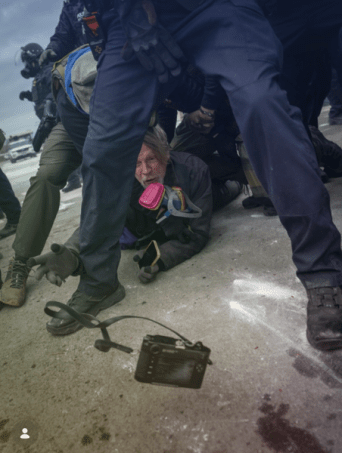
””I was tackled by ice agents and surrounded by about 50 border police. Just for taking photos. I tossed my camera to another Photographer to make sure it wouldn’t be confiscated.…’ (John Abernathy via Instagram)
‘On Friday, Russia attacked Lviv, a major Ukrainian city near the Polish border, using Oreshnik: an intermediate-range, nuclear-capable ballistic missile. Security-camera footage captured brief flashes in the sky, the missile’s multiple warheads entering the atmosphere at 10 times the speed of sound, and then—impact. The missile that struck Lviv did not carry a nuclear payload, but it did carry a political one, at a moment when Vladimir Putin appears to be cornered and Donald Trump is more belligerent than ever.…’ (Andrew Ryvkin via The Atlantic)
‘Verizon is offering customers a $20 account credit following a massive outage that brought down service across the US on Wednesday. In an update on X, Verizon says you’ll receive a text message when the credit is available, which you can redeem by logging into the myVerizon app and accepting it.…’ (Emma Roth via The Verge)
‘Today, Donald Trump announced that he is considering using the Insurrection Act to send the U.S. military to Minneapolis if state officials do not quell anti-ICE protests there. Deploying federal troops on American soil against the objections of state and local officials is an extreme measure––and seems likelier to inflame than to extinguish unrest there, given that needlessly provocative actions by ICE officers helped create conditions on the ground. Yet the president seems eager to suppress the actions of people he calls “professional agitators and insurrectionists.” For months, members of his administration have laid the rhetorical groundwork for a martial crackdown.…’ (Conor Friedersdorf via The Atlantic)
‘Attend a public event in Canada and you will likely hear it open with a land acknowledgment. In the city of Vancouver, for example, the script might read:
“This place is the unceded and ancestral territory of the hən̓q̓əmin̓əm̓ and Sḵwx̱wú7mesh speaking peoples, the xʷməθkʷəy̓əm (Musqueam), Sḵwx̱wú7mesh (Squamish), and səlilwətaɬ (Tsleil-Waututh) Nations, and has been stewarded by them since time immemorial.”
I’ve been present for many of these recitations, which are common in liberal areas of the United States too. They are usually received by their audiences as a Christian invocation might once have been: a socially required ritual in which only some believe, but at which it would be rude to scoff. After all, what harm does it do?
In the past few months, Canadians have learned that these well-meaning pronouncements are not, in fact, harmless. Far from it. Canadian courts are reinterpreting these rote confessions of historical guilt as legally enforceable admissions of wrongful possession.…’ (David Frum via The Atlantic)
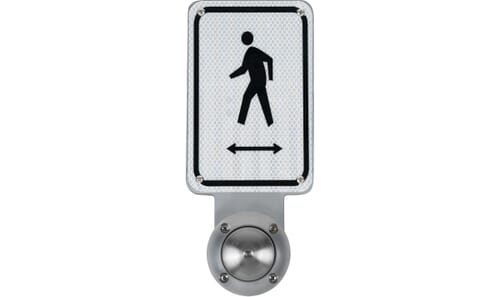
Jason Weisberger, via Boing Boing, explains that pedestrian crossing buttons aren’t a scam, but they’re widely misunderstood. They don’t make the light change faster or reduce waiting time. Their real function is simpler: they tell the traffic system that a pedestrian is present and should be included in the signal cycle. A clear technical walkthrough of the wiring and logic shows that the buttons matter, just not in the way most people assume—they register demand, not impatience. (
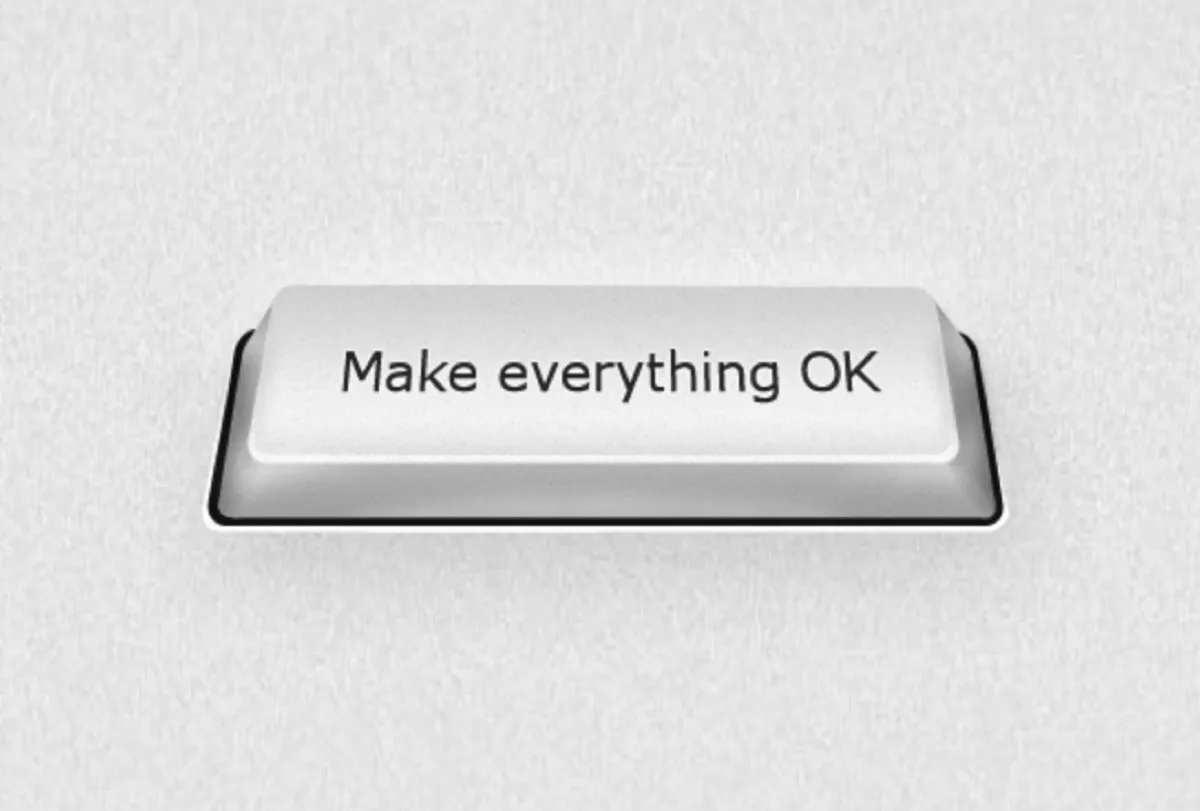
‘The “Make Everything OK” button is a website containing nothing but a single button. Press it, and after a moment of processing, you’re informed: “Everything is OK now. If everything is still not OK, try checking your settings of perception of objective reality.”…’ (Popkin via Boing Boing)
‘Former Trump White House adviser Steve Bannon is laying the groundwork for a 2028 run for president, two people familiar with his thinking tell Axios.
Why it matters: The MAGA godfather isn’t serious about becoming president — that’s not the point. Instead, he’s told allies he wants to shape the debate and pressure Republican candidates to embrace an “America First” agenda — including a non-interventionist foreign policy, economic populism and opposition to Big Tech.…’ (Alex Isenstadt viaAxios)
‘Grateful Dead co-founding guitarist Bob Weir has died at age 78. Weir’s death was confirmed through a statement issued by his family on the guitarist’s social feeds.
Bobby Weir succumbed to underlying lung issues after a courageous battle with cancer. Weir was diagnosed with cancer last July and began treatment shortly after taking the stage for what would be his final shows: Dead & Company’s concerts at Golden Gate Park in San Francisco August 1 – 3, 2025 celebrating 60 years of Grateful Dead music.…’ (Andy Kahn via Jambase)
‘History suggests that regimes collapse not from single failures but from a fatal confluence of stressors. One of us, Jack, has written at length about the five specific conditions necessary for a revolution to succeed: a fiscal crisis, divided elites, a diverse oppositional coalition, a convincing narrative of resistance, and a favorable international environment. This winter, for the first time since 1979, Iran checks nearly all five boxes.…’ (Karim Sadjadpour and Jack A. Goldstone viaThe Atlantic)
Is the Trump regime coming close to checking these boxes too? (One can hope.)
Donald Trump’s renewed talk of seizing Greenland—once dismissed as bluster—is now being taken seriously after the “gunboat diplomacy” in Venezuela. Because Greenland is part of Denmark, a NATO member, any U.S. attempt to annex or coerce it would amount to an attack on an ally and could effectively collapse NATO. European leaders are pushing back forcefully, framing the issue as a test of whether postwar norms, alliance commitments, and international law still restrain great-power ambition.(Shane Harris, Isaac Stanley-Becker, Jonathan Lemire via The Atlantic)
‘If Trump understood what he was saying, he was violating all concepts of checks-and-balances. If he didn’t understand, he is incapacitated.
It’s bad enough for Trump to disrupt the entire world trading system, at his whim, with one-man decisions to raise and lower tariffs. (As the Supreme Court might eventually get around to recognizing.) What he announced today is one man (plus his enablers) violating the Constitution of 1787, the War Powers Act of 1973, and the Intelligence Oversight Act of 1980, all of which require a president to involve the Congress in war-and-peace decisions. …’ (James Fallows via James Fallows)
‘…(T)here’s lots of chest pounding and grand standing from various politicians and the big names have all issued statements which seem mostly upset that they weren’t notified ahead of time. There’s also a lot of people proclaiming this is illegal which is an almost laughable claim at this point because first of all, what is the basis for what is legal or isn’t?
The US only cites international law when it benefits, and ignores it (or outright rejects it) when they or their allies are implicated. If international law mattered to the US, Netanyahu wouldn’t be basking in the afterglow of his 5th US visit since Trump was reelected and ICC Judge Kimberly Prost would still be able to ask her Amazon Echo to turn on the livingroom lights.
Even federally the claim is a joke because thanks to 2001’s AUMF a president has an almost blank check to order strikes without telling anyone as long as they slap “terrorism” on the after the fact justification.
And this isn’t a left/right thing either, the 2001 joint resolution passed almost unanimously (only one vote against) and since then both D and R presidents have taken full advantage of it for any number of different actions.
…So if you see a politician saying this action is illegal check to see if they’ve called for the AUMF to be repealed or if they were in office then how they voted at the time. Because the sad fact is most US politicians are very much opposed to many policies when their opponents use them, but very much in favor of those same policies when they get to use them. …’ ( via SEAN BONNER)
‘In a landmark study, scientists at Washington University School of Medicine in St. Louis (WashU) have shown for the first time that stimulant medications mainly act on the brain’s reward and wakefulness centers, rather than on its attention circuitry. This upends traditional thought on how drugs like Adderall and Ritalin work.…’ (via New Atlas)
‘A massive global genetics study is reshaping how we understand mental illness—and why diagnoses so often pile up. By analyzing genetic data from more than six million people, researchers uncovered deep genetic connections across 14 psychiatric conditions, showing that many disorders share common biological roots. Instead of existing in isolation, these conditions fall into five overlapping families, helping explain why depression, anxiety, PTSD, bipolar disorder, schizophrenia, and substance use disorders so frequently occur together.…’ (via ScienceDaily)
Findings such as these resonate strongly with the stance of diagnostic skepticism that I have held throughout my career as a clinical and academic psychiatrist. Psychiatry has repeatedly taught us that its categories are provisional tools rather than natural kinds, and that our confidence in them often outpaces the solidity of the underlying science. The recurrent experience of patients accumulating diagnoses over time—sometimes within a single hospitalization, sometimes across decades—has always suggested that something more fundamental than discrete disease entities is at work.
Historically, this tension is not new. Psychiatric classification has oscillated for more than a century between lumping and splitting. At certain moments, the field has favored broad, integrative constructs—neurosis, psychosis, affective illness—emphasizing shared phenomenology and presumed common mechanisms. At other times, it has moved toward increasingly fine-grained distinctions, carving syndromes into narrower subtypes in the hope of diagnostic precision, prognostic clarity, and targeted treatment. Each swing has been accompanied by a sense that the current framework finally “gets it right,” only to be followed by revision as anomalies accumulate.
Large-scale genetic findings like these offer a compelling biological explanation for why neither extreme has ever fully succeeded. If multiple psychiatric syndromes share substantial genetic architecture, then comorbidity is not an artifact of poor interviewing or diagnostic sloppiness, but an expected consequence of overlapping vulnerability systems expressing themselves differently across development, context, and stress. The apparent neatness of our diagnostic manuals may therefore obscure a far messier underlying reality.
Importantly, this does not invalidate diagnosis itself, nor does it imply that all conditions should be collapsed into a single undifferentiated category. Lumping and splitting are not opposing dogmas so much as complementary lenses. Lumping has value when the goal is to understand shared mechanisms, reduce artificial boundaries, recognize common trajectories, and avoid reifying distinctions that lack biological or clinical robustness. Splitting, by contrast, becomes indispensable when precise phenomenology matters—when predicting course, tailoring treatment, communicating risk, or conducting focused research on well-defined clinical problems.
In practice, good psychiatry has always involved knowing when to do each. A clinician may need to lump in order to see the larger pattern of vulnerability, suffering, and adaptation in a patient’s life, while simultaneously splitting enough to recognize specific syndromes that carry distinct risks or treatment implications. The emerging genetic evidence does not demand allegiance to one approach over the other; rather, it reinforces the wisdom of holding our categories lightly, using them pragmatically, and remaining open to revision as our understanding deepens.
Seen this way, the enduring oscillation between lumping and splitting is not a failure of the field, but a reflection of the complexity of the phenomena it seeks to describe.
‘The shift in this scenario is from today’s highly polarized but still shared world — where groups interpret events differently — to a fractured reality in which the events themselves cannot be verified, origins cannot be traced, and no authoritative source can prove what is real. Instead of opposing political narratives and conspiracy theories, society enters a state of psychosocial freefall where AI creates a series of parallel realities. It will mark a transition not from disagreement to deeper disagreement, but from disagreement to the collapse of a shared reality altogether.…’ (via POLITICO)
‘By going around Congress, the president is showing contempt for the will of the public… The probable illegality of Trump’s actions does not foreclose the possibility that his approach will improve life for Venezuelans. Like too many world leaders, Maduro is a brutal thug, and opposition figures have good reason to insist he isn’t the country’s legitimate leader. I hope and pray his ouster yields peace and prosperity, not blood-soaked anarchy or years of grinding factional violence.…’ (Conor Friedersdorf via The Atlantic)
New York Times Editorial: Attack on Venezuela Is Illegal and Unwise
‘If there is an overriding lesson of American foreign affairs in the past century, however, it is that attempting to oust even the most deplorable regime can make matters worse.…’ (via New York Times)
‘“Wow, she hates him more than I even imagined. They never look at each other. They never touch each other. I guess he didn’t pay her enough for the night.”…’ (Patrick Penrose via TVovermind)
‘Trump’s ego, Rob Dannenberg argues, is a vulnerability that Putin knows how to exploit —and Trump, the CIA veteran fears, is “incredibly naïve” where the Russian president is concerned.
Danneberg told the iPaper, “Putin looks at Trump and sees a weak guy, vain, with huge ego…. He’s being manipulated in the way that a good case officer like Putin would manipulate this guy. He’s not monogamous, he’s greedy, he’s fascinated by gold — all these are things that, if I were a case officer, I would be leveraging to get this guy to do what I want him to do. When that happens to align with Trump’s ambition to get a Nobel Peace Prize, so much the easier, right? You’re pushing on an open door.”…’ (Alex Henderson via Alternet.org)
This is my annual New Year’s post, a longstanding tradition here at FmH. Please let me know if you come across any broken links.
A while ago, I came across a Boston Globe article from January 1st that compiled various folkloric beliefs about what to do, eat, and avoid on New Year’s Day to bring good fortune for the year ahead. I’ve regretted not clipping and saving it ever since—though I tend to think about it around this time every year (grin). As a parent now, I’m especially interested in traditions that go beyond the typical New Year’s activities like binge drinking, watching bowl games, and making resolutions.
A web search brought me this, less elaborate than what I recall from the Globe but to the same point. It focuses on food-related traditions, which is interesting because, unlike most major holidays, New Year’s Day in 21st-century America doesn’t seem to revolve much around special foods (except, perhaps, the inevitable New Year’s resolution to lose weight). But…
In Scotland, New Year’s celebrations (Hogmanay) focus heavily on warmth, hospitality, and making a fresh start. Special foods enjoyed during Hogmanay include shortbread, oatcakes, ginger cordial, currant loaf, and scones. Another tradition involves “First Footing,” where the first person to cross your threshold at midnight should be a tall, dark-haired man, ideally bearing gifts like coal or whiskey to ensure prosperity for the coming year.
Here’s why we clink our glasses when we drink our New Year’s toasts, no matter where we are. Of course, sometimes the midnight cacophony is louder than just clinking glassware, to create a ‘devil-chasing din’.
New Year’s Traditions Around the World
Georgia (USA): Eating black-eyed peas and turnip greens on New Year’s Day symbolizes prosperity and wealth. The Southern dish Hoppin’ John, made with black-eyed peas, bacon, and rice, is also a popular New Year’s tradition.
Greece: On New Year’s Day, a sweetbread called Vasilopita is traditionally served with a silver coin baked inside. The person who receives the slice with the coin is thought to be blessed with good fortune.
Italy: Lentils, oranges, and olives are commonly served. Lentils represent wealth (because they resemble coins), oranges symbolize love, and olives are associated with prosperity.
Norway: In Norway, a traditional New Year’s meal might include lutefisk (dried cod), while in Pennsylvania, sauerkraut is said to bring good fortune.
Spain: At midnight, Spaniards eat twelve grapes—one for each stroke of the clock, each grape bringing luck for a specific month of the year.
Denmark: Jumping off a chair at midnight symbolizes leaping into the new year.
Brazil: People in Rio celebrate by receiving blessings from the “Mother-saints” of the Macumba and Candomblé religions. Afterward, they dive into the ocean, jumping over seven waves to ensure good luck for the year ahead.
Unlucky Foods and Rituals
There are also foods to avoid on New Year’s Day. Lobster, chicken, and cows are considered unlucky because of how they move—lobsters crawl backward, chickens scratch the ground, and cows move slowly, symbolizing setbacks. Read on for more foods superstitious people try to avoid on the holiday. (Mental Floss)
International Customs to Start the New Year Right
In Rio, the crescent-shaped Copacabana beach… is the scene of an unusual New Year’s Eve ritual: mass public blessings by the mother-saints of the Macumba and Candomble sects. More than 1 million people gather to watch colorful fireworks displays before plunging into the ocean at midnight after receiving the blessing from the mother-saints, who set up mini-temples on the beach.
When taking the plunge, revelers are supposed to jump over seven waves, one for each day of the week.
This is all meant to honor Lamanjá, known as the “Mother of Waters” or “Goddess of the Sea.” Lamanjá protects fishermen and survivors of shipwrecks. Believers also like to throw rice, jewelry and other gifts into the water, or float them out into the sea in intimately crafted miniature boats, to please Lamanjá in the new year.
Ecuadorian families make scarecrows stuffed with newspaper and firecrackers and place them outside their homes. The dummies represent misfortunes of the prior year, which are then burned in effigy at the stroke of midnight to forget the old year. Bolivian families make beautiful little wood or straw dolls to hang outside their homes on New Year’s Eve to bring good luck.
China: People clean their homes to appease the Kitchen God and scare away evil spirits. Red paper cuttings are displayed in windows for good luck, and during the Dragon Dance, families open their doors to welcome in fortune.
India (Diwali): The festival of lights is celebrated with thousands of small clay lamps (dipa), attracting good fortune for the year.
Thailand: On New Year’s Day, people pour fragrant water over the hands of their elders as a mark of respect.
France: Eating a stack of pancakes is a New Year’s breakfast tradition.
Denmark: banging on friends’ doors to “smash in” the New Year, where it is also a good sign to find your doorstep heaped with broken dishes on New Year’s morning. Old dishes are saved all years to throw at your friends’ homes on New Year’s Eve. The more broken pieces you have, the greater the number of new friends you will have in the forthcoming twelve months.
Japan: In Japan, people cleanse their souls by listening to a gong toll 108 times—one for each sin.
Puerto Rico: At midnight, people throw water out of their windows to rid the house of evil spirits.In China, homes are cleaned spotless to appease the Kitchen God, and papercuttings of red paper are hung in the windows to scare away evil spirits who might enter the house and bring misfortune. Large papier mache dragon heads with long fabric bodies are maneuvered through the streets during the Dragon Dance festival, and families open their front doors to let the dragon bring good luck into their homes.
going in the front door and out the back door at midnight in Ireland.
making sure the First Footer, the first person through your door in the New Year in Scotland, is a tall dark haired visitor.
water out the window at midnight in Puerto Rico rids the home of evil spirits.
cleanse your soul in Japan at the New Year by listening to a gong tolling 108 times, one for every sin
it is Swiss good luck to let a drop of cream fall on the floor on New Year’s Day.
Belgian farmers wish their animals a Happy New Year for blessings.
In Germany and Austria, lead pouring” (das Bleigießen) is an old divining practice using molten lead like tea leaves. A small amount of lead is melted in a tablespoon (by holding a flame under the spoon) and then poured into a bowl or bucket of water. The resulting pattern is interpreted to predict the coming year. For instance, if the lead forms a ball (der Ball), that means luck will roll your way. The shape of an anchor (der Anker) means help in need. But a cross (das Kreuz) signifies death. This is also a practice in parts of Finland, apparently.
El Salvadoreans crack an egg in a glass at midnight and leave it on the windowsill overnight; whatever figure it has made in the morning is indicative of one’s fortune for the year.
Some Italians like to take part in throwing pots, pans, and old furniture from their windows when the clock strikes midnight. This is done as a way for residents to rid of the old and welcome in the new. It also allows them to let go of negativity. This custom is also practiced in parts of South Africa, the Houston Press adds.
In Colombia, walk around with an empty suitcase on New Year’s Day for a year full of travel.
In the Philippines, all the lights in the house are turned on at midnight, and previously opened windows, doors and cabinets throughout the house are suddenly slammed shut, to ward off evil spirits for the new year.
In Russia a wish is written down on a piece of paper. It is burned and the ash dissolved in a glass of champagne, which should be downed before 12:01 am if the wish is to come true.
Romanians celebrate the new year by wearing bear costumes and dancing around to ward off evil
In Turkey, pomegranates are thrown down from the balconies at midnight for good luck.
is a famous cult classic in Germany and several other European countries, it is virtually unknown in the English-speaking world, including Britain, its birthplace.” (Watch on Youtube, 11 min.)
The early Christian Church was initially opposed to New Year’s celebrations, viewing them as pagan rituals. It wasn’t until the Middle Ages that the tradition of celebrating January 1st as the start of the new year became more widely accepted. Documentation of observance of the new year dates back at least 4000 years to the Babylonians, who also made the first new year’s resolutions (reportedly voews to return borrowed farm equipment were very popular), although their holiday was observed at the vernal equinox. The Babylonian festivities lasted eleven days, each day with its own particular mode of celebration. The traditional Persian Norouz festival of spring continues to be considered the advent of the new year among Persians, Kurds and other peoples throughout Central Asia, and dates back at least 3000 years, deeply rooted in Zooastrian traditions.Modern Bahá’í’s celebrate Norouz (”Naw Ruz”) as the end of a Nineteen Day Fast. Rosh Hashanah (”head of the year”), the Jewish New Year, the first day of the lunar month of Tishri, falls between September and early October. Muslim New Year is the first day of Muharram, and Chinese New Year falls between Jan. 10th and Feb. 19th of the Gregorian calendar.
The classical Roman New Year’s celebration was also in the spring although the calendar went out of synchrony with the sun. January 1st became the first day of the year by proclamation of the Roman Senate in 153 BC, reinforced even more strongly when Julius Caesar established what came to be known as the Julian calendar in 46 BC. The early Christian Church condemned new year’s festivities as pagan but created parallel festivities concurrently. New Year’s Day is still observed as the Feast of Christ’s Circumcision in some denominations. Church opposition to a new year’s observance reasserted itself during the Middle Ages, and Western nations have only celebrated January 1 as a holidy for about the last 400 years. The custom of New Year’s gift exchange among Druidic pagans in 7th century Flanders was deplored by Saint Eligius, who warned them, “[Do not] make vetulas, [little figures of the Old Woman], little deer or iotticos or set tables [for the house-elf] at night or exchange New Year gifts or supply superfluous drinks [another Yule custom].” (Wikipedia)
The tradition of the New Year’s Baby signifying the new year began with the Greek tradition of parading a baby in a basket during the Dionysian rites celebrating the annual rebirth of that god as a symbol of fertility. The baby was also a symbol of rebirth among early Egyptians. Again, the Church was forced to modify its denunciation of the practice as pagan because of the popularity of the rebirth symbolism, finally allowing its members to cellebrate the new year with a baby although assimilating it to a celebration of the birth of the baby Jesus. The addition of Father Time (the “Old Year”) wearing a sash across his chest with the previous year on it, and the banner carried or worn by the New Year’s Baby, immigrated from Germany. Interestingly, January 1st is not a legal holiday in Israel, officially because of its historic origins as a Christian feast day.
Auld Lang Syne
Auld Lang Syne (literally ‘old long ago’ in the Scottish dialect) is sung or played at the stroke of midnight throughout the English-speaking world (and then there is George Harrison’s “Ring Out the Old”). Versions of the song have been part of the New Year’s festivities since the 17th century but Robert Burns was inspired to compose a modern rendition, which was published after his death in 1796. Its lyrics, asking whether old friends should be forgotten, have become synonymous with New Year’s celebrations. (It took Guy Lombardo, however, to make it popular…)
Brazilian: Boas Festas e Feliz Ano Novo means “Good Parties and Happy New Year”
Chinese: Chu Shen Tan Xin Nian Kuai Le (thanks, Jeff)
Czechoslavakia: Scastny Novy Rok
Dutch: Gullukkig Niuw Jaar
Finnish: Onnellista Uutta Vuotta
French: Bonne Annee
German: Prosit Neujahr
Greek: Eftecheezmaenos o Kaenooryos hronos
Hebrew: L’Shannah Tovah Tikatevu
Hindi: Niya Saa Moobaarak
Irish (Gaelic): Bliain nua fe mhaise dhuit
Italian: Buon Capodanno
Khmer: Sua Sdei tfnam tmei
Laotian: Sabai dee pee mai
Polish: Szczesliwego Nowego Roku
Portuguese: Feliz Ano Novo
Russian: S Novim Godom
Serbo-Croatian: Scecna nova godina
Spanish: Feliz Ano Nuevo
Swedish: Ha ett gott nytt år
Turkish: Yeni Yiliniz Kutlu Olsun
Vietnamese: Cung-Chuc Tan-Xuan
If you speak any other languages, feel free to share a New Year’s greeting in the comments!
Which of these customs appeal to you? Are they done in your family, or will you try to adopt any of them? However you’re going to celebrate, my warmest wishes for the year to come… and eat hearty!
[thanks to Bruce Umbaugh (here or here) for original assistance]
‘Some species officially bid us farewell this year.
They may have long been gone, but following more recent assessments, they’re now formally categorized as extinct on the IUCN Red List, considered the global authority on species’ conservation status.
We may never see another individual of these species ever again. Or will we?…’ (Hayat Indriyatno via Mongabay)
‘Researchers have discovered that Alzheimer’s disease may be reversible in animal models through a treatment that restores the brain’s metabolic balance. This study, published in the journal Cell Reports Medicine, demonstrates that restoring levels of a specific energy molecule allows the brain to repair damage and recover cognitive function even in advanced stages of the illness. The results suggest that the cognitive decline associated with the condition is not an inevitable permanent state but rather a result of a loss of brain resilience.
For more than a century, people have considered Alzheimer’s disease an irreversible illness. Consequently, research has focused on preventing or slowing it, rather than recovery. Despite billions of dollars spent on decades of research, there has never been a clinical trial of any drug to reverse and recover from the condition. This new research challenges that long held dogma.
…The researchers focused on a molecule called nicotinamide adenine dinucleotide, known as NAD+. This molecule is essential for cellular energy and repair across the entire body. Scientists have observed that NAD+ levels decline naturally as people age, but this loss is much more pronounced in those with neurodegenerative conditions. Without proper levels of this metabolic currency, cells become unable to execute the processes required for proper functioning and survival.…’ (Karina Petrova via PsyPost)
‘Earlier this month, the company behind the pioneering smart vacuum, iRobot, filed for bankruptcy. The remainder of the business will go to its primary manufacturing partner—the one it owes all that money to—Shenzhen Picea Robotics. It’s a stark reminder that the longevity of a connected smart device depends entirely on the financial health of the company that made it.
…Whether you have a Neato, a Roomba, or another robot vacuum approaching the end of its connected, you can mirror my steps to keep your device cleaning.…’ (Florence Ion via Lifehacker)
When Blaise Metreweli spoke recently, she didn’t issue the usual warnings about rising powers or looming catastrophe. Instead, she described something more unsettling: a world that has quietly slipped beyond the post–World War II order.
In this world, wars are rarely declared, borders are routinely ignored, and power no longer rests only with nation-states. Conflict now unfolds through AI-enabled drones, autonomous weapons, hyper-targeted psychological operations, and algorithms that rival states in influence. Information itself has become a weapon.
This isn’t a future scenario. It’s the terrain we’re already standing on.
The conflicts Metreweli outlined don’t begin with explosions. They begin with destabilization—confusion, economic pressure, disinformation, and the slow erosion of democratic trust. The front lines are no longer just physical; they are digital, cognitive, and economic. War now moves from sea to space, from battlefield to boardroom, and from social media feeds directly into our heads.
Perhaps most alarming is her core observation: power is becoming radically diffuse—shifting from governments to corporations, platforms, and even individuals. Private actors now control satellite networks essential to warfare, shape elections through information systems, and deploy AI faster than laws can meaningfully constrain them. This is conflict without uniforms and accountability without borders.
What gives this warning real weight is what’s happening quietly alongside it. Across Europe, democracies are preparing. Britain’s military leadership is calling for a “whole-of-nation” response. Germany and France have reintroduced forms of national service. Europe is rapidly restructuring defense production, supply chains, and industrial capacity.
These are not symbolic gestures. Democracies don’t mobilize like this unless multiple intelligence streams are telling the same story.
The unsettling implication is simple: the war Metreweli described isn’t coming. It’s already underway. (Via Dean Blundell)
‘From mudstones on Mars to strange gases in exoplanet atmospheres, tentative evidence for extraterrestrial life is starting to come thick and fast. But when we’ve found it, how will we know for sure?…’ (Miriam Frankel via New Scientist)
‘Astronomers have made a truly mind-boggling discovery using the James Webb Space Telescope (JWST): a runaway black hole 10 million times larger than the sun, rocketing through space at a staggering 2.2 million miles per hour (1,000 kilometers per second).
That not only makes this the first confirmed runaway supermassive black hole, but this object is also one of the fastest-moving bodies ever detected, rocketing through its home galaxy at 3,000 times the speed of sound at sea level here on Earth. If that isn’t astounding enough, the black hole is pushing forward a literal galaxy-sized “bow-shock” of matter in front of it, while simultaneously dragging a 200,000 light-year-long tail behind it, within which gas is accumulating and triggering star formation. …’ (Robert Lea via Space)
‘The speech was a jumble of his usual false or even impossible claims — like a promise to reduce prescription drug costs by an impossible 400 percent — smashed together in no particular order. The speech began with a discussion of the cost of living, a subject he would drop and then return to as if just remembering that it was the number one reason his polls were low. Even the delivery was weird: Seemingly under network time constraints, the president read off the teleprompter angrily and quickly, speaking with the motormouth intensity of a 20-something banker who just discovered cocaine and now has a really great idea for a new restaurant.
So why am I writing about it at all?
Because the fact that it happened at all tells us something much more important: that the Trump administration is sinking, and his White House has no idea what to do about it.…’ (Zack Beauchamp via Vox)
‘Trump went to North Carolina to talk about the economy and ended up explaining how Melania organizes her underwear drawer.
President Trump traveled to Rocky Mount, North Carolina on Friday to deliver what the White House billed as an economic message. Ninety minutes later, he had covered his wife’s lingerie organization system, the proper arm shape for furniture, and why beating Hillary Clinton was more fun than he expected.…’ (Ellsworth Toohey via Boing Boing)
‘”Historians will study how bad this book is. English teachers will hold this book aloft at their students to remind them that literally anyone can write a book: Look at this, it’s just not that hard to do.”
Other books considered and then eviscerated are the first novel by comedian Louis C.K., a memoir by former White House Press Secretary Karine Jean-Pierre, and a posthumously published collection of short stories by Harper Lee.…’ (John Farrier via Neatorama)
‘Ryan Coogler’s bloodsucker blockbuster is all about Black creative freedom. No wonder the industry saw it as a threat.…’ (A.A. Dowd via American Prospect)
‘1. Enact a statutory right to vote for every eligible citizen.
This may surprise you, but there is no general federal constitutional right to vote. …’ ( via Democracy Docket)
‘…(S)omeone with a big audience pushed a post claiming Trump is on an Alzheimer’s-specific infusion drug, linking it to everything from bruises to sleepiness to “confusion.” Sadly, the post is spreading.
Well, circumstantial click bait evidence doesn’t hold up in court. On the surface some may seem like they fit. Plus, many people wrongly confuse Alzheimer’s with dementia in general and lump all the symptoms together.
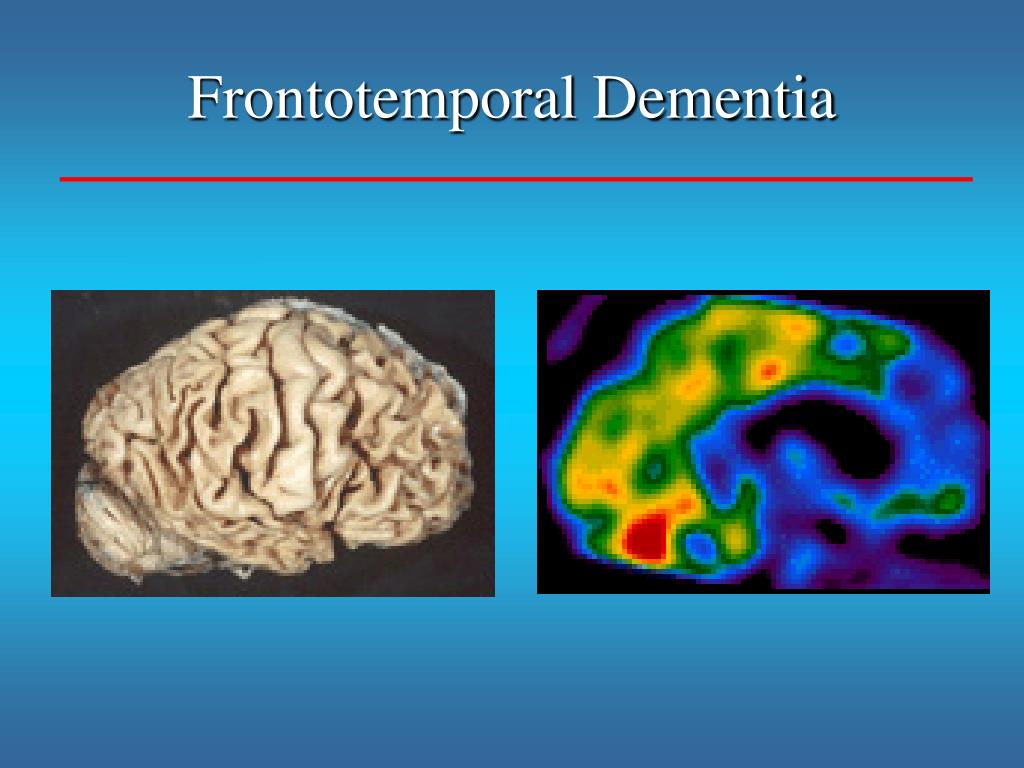
Trump’s symptoms are consistent with another, less common but more disruptive and, in his case horrific, disorder — Frontotemporal Dementia (FTD). There are a couple of subtypes with important distinctions, but his changes in personality and behavior, along with specific language and physical problems, are consistent with FTD variants.
This isn’t guesswork pulled from thin air. This is the conclusion drawn from analysies by hundreds of clinical and research experts in mental health.
❓What is FTD?
Frontotemporal dementia (FTD) refers to a group of disorders caused by progressive nerve cell loss mainly in the brain’s frontal lobes (the areas behind your forehead) and/or its temporal lobes (the regions behind your ears).
Brain regions impaired in FTD are the ones responsible for self-monitoring, impulse control, and reality-checking. The nerve cell damage caused by FTD leads to loss of function in these brain regions, and in bvFTD, the nerve cell loss is most prominent in areas that control conduct, judgment, empathy and foresight.
…Watching Trump is witnessing a malignant narcissist without the brain’s guardrails — judgment, restraint, empathy — leaving an unhinged finger on the big button and a hunger for validation, control and vengeance.
That’s what makes this moment so volatile, and so dangerous.
For years, clinicians and researchers, myself included, have been sounding the alarm on Trump’s malignant narcissism—his grandiosity, paranoia, total lack of empathy, and need for vengeance.
When Bandy Lee published The Dangerous Case of Donald Trump in 2017 — bringing together 27 experts — it wasn’t sensationalism. It was a professional alarm bell. The Duty to Warn organization followed, representing tens of thousands of mental-health professionals.
Back then, most people rolled their eyes. Today, the term “malignant narcissism” (MN) is showing up everywhere: on cable news, in congressional hearings, even late-night comedy…
But what wasn’t widely understood is how a dementia like FTD alters an already disordered personality.
MN and FTD feed off each other. FTD erodes impulse control, self-monitoring, and reality-testing — the brakes a malignant narcissist desperately needs but never had much of to begin with.
Meanwhile, without the inhibition, the malignant narcissism thrives unchecked: rage, paranoia, reckless decisions. It’s not just additive—it’s synergistic. You’re seeing it in action every day.
FTD on its own is tragic; together, they make a uniquely combustible threat.
The grandiosity that once had a shred of calculation now comes out as unfiltered delusion.
The sadism breaks free to wreak vengeance and cruelty on perceived enemies and innocent victims.
This is why you’re suddenly hearing a lot more people talk about Trump’s cognition. The MN made his behavior impossible to ignore; the FTD makes his decline undeniable and frightening.
Now for some action you can use right now:
Knowing the signs breaks the spell.
You move from a stressful “Why the fuck is he saying this!?!” to an objective “Hmmm, another confabulation story.” Here’s a quick field guide for keeping your sanity, especially when the news cycle gets overwhelming:
Confabulation: It’s not lying — it’s filling gaps with invented memories he believes.
Watch for: highly specific claims that are clearly false.
Malignant Narcissism twist: the invented memories are usually grandiose ,self-serving, or feeding off a vengeance.
Phonemic Paraphasias: Speech sounds scrambled (“Obamna,” “United Shates”).
Malignant Narcissism twist: he never self-corrects. Instead he blames equipment, pretends it’s intentional, or calls someone “stupid.”
Tangential / disorganized speech: Losing the thread, drifting into non sequiturs.
Malignant Narcissism twist: he reframes it as “the weave,” demands applause, and calls it genius.
Impulse-control failures: The frontal lobes can’t filter impulses.
Malignant Narcissism twist: hostility, threats, public rage, sending sycophants to do his dirty deeds, persecution narratives.
Weirdly, There’s a Silver Lining
As disturbing as the symptoms are, everyone is finally noticing. It’s no longer theoretical. It’s happening live in decaying color. People who ignored the psychological concerns are now asking needed questions. It’s long overdue. And necessary.
The challenge now is whether the world can survive his decay turned up to eleven.’ (via Frank George PhD)
‘After criticizing media coverage about him aging in office, Trump appeared to be falling asleep during a Cabinet meeting at the White House on Tuesday.
But that’s hardly the most troubling aspect of his aging.
In the last few weeks, Trump’s insults, tantrums, and threats have exploded.
To Nancy Cordes, CBS’s White House correspondent, he said: “Are you stupid? Are you a stupid person? You’re just asking questions because you’re a stupid person.”
About New York Times correspondent Katie Rogers: “third rate … ugly, both inside and out.”
To Bloomberg White House correspondent Catherine Lucey: “Quiet. Quiet, piggy.”
About Democratic lawmakers who told military members to defy illegal orders: guilty of “sedition … punishable by DEATH.”
About Somali immigrants to the United States: “Garbage” whom “we don’t want in our country.”
What to make of all this?
Trump’s press hack Karoline Leavitt tells reporters to “appreciate the frankness and the openness that you get from President Trump on a near-daily basis.”
Sorry, Ms. Leavitt. This goes way beyond frankness and openness. Trump is now saying things nobody in their right mind would say, let alone the president of the United States.
He’s losing control over what he says, descending into angry, venomous, often dangerous territory.
Note how close his language is coming to violence — when he speaks of acts being punishable by death, or human beings as garbage, or someone being ugly inside and out.
The deterioration isn’t due to age alone…
I think older people lose certain inhibitions because they don’t care as much about their reputations as do younger people. In a way, that’s rational. Older people no longer depend on their reputations for the next job or next date or new friend. If a young person says whatever comes into their heads, they have much more to lose, reputation-wise.
But Trump’s outbursts signal something more than the normal declining inhibitions that come with older age. Trump no longer has any filters. He’s becoming impetuous.
This would be worrying about anyone who’s aging. But a filterless president of the United States who says anything that comes into his head poses a unique danger.
What if he gets angry at China, calls up Xi, tells him he’s an asshole, and then orders up a nuclear bomb?
It’s time the media reported on this. It’s time America faced reality. It’s time we demanded that our representatives in Congress take action, before it’s too late.
Invoke Section 4 of the 25th Amendment.’ (via Robert Reich)
‘President Donald Trump on Monday blamed Rob Reiner’s outspoken opposition to the president for the actor-director’s killing, delivering the unsubstantiated claim in a shocking post that seemed intent on decrying his opponents even in the face of a tragedy.
The statement, even for Trump, was a shocking comment that came as police were still investigating the deaths of the director and his wife, Michele Singer Reiner, as an apparent homicide. The couple were found dead at their home Sunday in Los Angeles. Investigators believe they suffered stab wounds and the couple’s son Nick Reiner was in police custody early Monday.
Trump has a long track record of inflammatory remarks, but his comments in a social media post were a drastic departure from the role presidents typically play in offering a message of consolation or tribute after the death of a public figure. His message drew criticism even from conservatives and his supporters and laid bare Trump’s unwillingness to rise above political grievance in moments of crisis.
Trump, in a post on his social media network, said Reiner and his wife were killed “reportedly due to the anger he caused others through his massive, unyielding, and incurable affliction with a mind crippling disease known as TRUMP DERANGEMENT SYNDROME.”
He said Reiner “was known to have driven people CRAZY by his raging obsession of President Donald J. Trump, with his obvious paranoia reaching new heights as the Trump Administration surpassed all goals and expectations of greatness.”…’ (Michelle Price via AP)
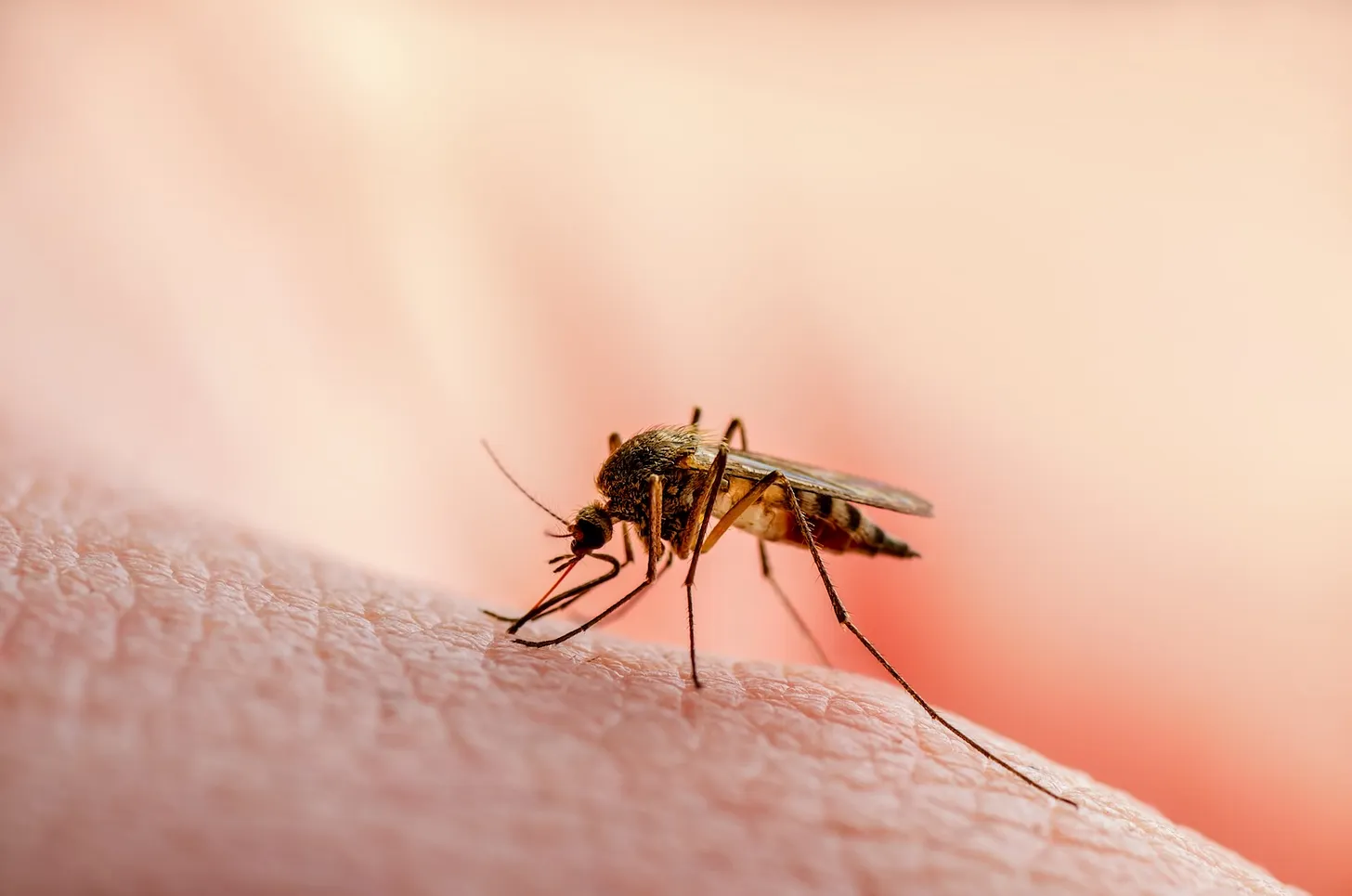
‘Planning a trip to Cuba, Bangladesh, Sri Lanka, or southern China? The CDC would like a word. The agency has issued Level 2 travel advisories — “practice enhanced precautions” — for all four destinations due to outbreaks of chikungunya, a mosquito-borne virus with no treatment and a name that sounds like it was invented to be unpronounceable by English speakers. Brazil, Colombia, India, Mexico, Nigeria, Pakistan, the Philippines, and Thailand are also flagged as higher-risk destinations.
…Chikungunya won’t likely kill you, but it will make you miserable. Symptoms include fever, joint pain, headaches, muscle aches, swelling, and rash, typically showing up three to seven days after a mosquito bite. Most people recover within a week. The virus is vaccine-preventable, though, so if you’re heading to affected areas, get the shot and bring the bug spray.…’ (Ellsworth Toohey via Boing Boing)
‘…Sacks spent decades in therapy exploring why he couldn’t stop embellishing. He called his writing “symbolic autobiography” — projecting his own psychological conflicts onto patients. The healer who saw the hidden genius in broken minds was, in some sense, trying to heal himself through fiction he labeled fact.…’ (Ellsworth Toohey via Boing Boing)
‘There’s no better way to close out the year than with an awe-inspiring display of fireballs streaking across the sky. The Geminids are set to peak during this weekend under perfect conditions, giving sky-watchers a chance to marvel at up to 100 meteors an hour.
The annual Geminid meteor shower should peak on Saturday night and continue onto early morning on Sunday while remaining visible until December 20. This year, the prospects of viewing bright streaks of light are high with the Moon being in a waning crescent phase. That means Earth’s natural satellite will not hamper your viewing opportunities of the shower.…’ (Passant Rabie via Gizmodo)
‘The 2024 election was widely viewed as a referendum on diversity, equity and inclusion and, once in office, President Donald Trump wasted no time in dismantling programs in the federal government and pressuring the private sector to follow suit.
With DEI programs under attack from the administration, many companies scaled back or eliminated them. Others had already rolled back diversity commitments after facing anti-DEI campaigns from activists.…’ (uthor: Jessica Guynn via USA Today)
‘As BBC Sport reports, President Trump is now the proud recipient of the inaugural FIFA Peace Prize, an award that definitely existed before this week and wasn’t just invented by his close ally Gianni Infantino. The ceremony took place at the Kennedy Center before the 2026 World Cup draw, where
Trump received a large golden trophy, a medal, and a certificate — the full participation trophy experience.
“This is your prize, this is your peace prize,” Infantino told Trump, in case anyone was confused about whose prize it was. Trump called it “truly one of the great honors” of his life. And who wouldn’t be honored by getting a shiny medal from an organization famous for bribery, racketeering, and money laundering?…’ (Ellsworth Toohey via Boing Boing
‘CNN’s KFile unearthed multiple appearances where the then-Fox News contributor warned that service members had a duty to refuse illegal commands. “The military’s not gonna follow illegal orders,” Hegseth said on Fox Business. “You’re not just gonna follow that order if it’s unlawful,” he said on Fox & Friends.…’ (Ellsworth Toohey via Boing Boing))
‘The post-modern philosopher Jean Baudrillard infamously argued in 1991 that the Gulf War did not take place, by which he did not mean that no fighting had actually occurred, but that the real events were something entirely separate from the carefully choreographed presentation the world saw thanks to the novel phenomenon of 24-hour cable news.
It’s tempting to wonder what Baudrillard would have made of the current US military buildup targeting Venezuela, a campaign that often appears to be driven by narratives with only a tangential relationship to actual events taking place.
Take, for instance, President Donald Trump’s dramatic announcement on his Truth Social platform a little over a week ago: “To all Airlines, Pilots, Drug Dealers, and Human Traffickers, please consider THE AIRSPACE ABOVE AND SURROUNDING VENEZUELA TO BE CLOSED IN ITS ENTIRETY.”…’ (Joshua Keating via Vox)
‘The Court’s Republican majority… plans to remake the separation of powers among the three US branches of government into a kind of hierarchy. Under this new vision, Congress’s power to create “independent” agencies that enjoy some insulation from the president must yield to a more powerful executive. And the executive’s authority over these agencies must, in turn, yield to a more powerful Supreme Court.…’ (Ian Millhiser via Vox)
‘What could it even mean to say we are all one person when we undeniably have separate minds?
Yet, the idea appears across philosophical traditions. Arthur Schopenhauer, a 19th-century German philosopher, claimed we are all manifestations of the same underlying phenomenon, somehow seeking to experience itself as separate individuals. He was long preceded, though, by a similar view recurring in the Hinduistic Vedas: that our true selves (Atman) are all the same and identical to a single universal consciousness (Brahman, in turn identified with God). In other words, whereas Buddhism sees the self as an illusion, Hinduism declares it permanent and immortal, although we still suffer an illusion by conceiving of it as individual.
For a real understanding of how this could be true, however, the Hindu texts largely point toward meditation and spiritual practice, because the doctrine of a shared, universal self is considered not truly graspable by rational thought. Schopenhauer does not fully resolve its paradoxes, either. In today’s West, the view that we are somehow “all one” seems most often reported as a realization following a psychedelic trip, incommunicable to those who haven’t shared a similar experience.
Must the idea remain mystical? Perhaps not—or at least much less than one might think. In recent decades, a few philosophers within the contemporary Western tradition have looked at it with new eyes. According to their arguments, the view that everyone is the same person is not only perfectly coherent, but also quite plausible…’ (Hedda Hassel Mørch via Nautilus)
‘….The psychedelic compound DMT disrupts a key brain rhythm linked to self-awareness, providing new insights into how the brain shapes our sense of self.
The research, published in The Journal of Neuroscience, investigated how DMT alters the coordinated brain rhythms linked to self-referential thought and internal narrative known as alpha waves. The team noticed this connection when they identified a neural signature associated with ego dissolution in study participants during the peak effects of DMT.…’ ( Austin Burgess via The Debrief)
‘Across the internet, during the 2024 election and in the first year of his second term, MAGA influencers have increasingly used the R-word to insult and scandalize conscientious “woke” liberals, normalizing a slur that had been largely purged from the national vocabulary. The trend reflects not only a coarsening of public discourse under Trump but new depths of callousness and cruelty in America, with disability advocates warning of the term’s dehumanizing effect. Elon Musk alone has dropped the word more than 30 times on his X account since early 2024, while Joe Rogan has said that its return represents an important win for right-wingers. “The word ‘retarded’ is back, and it’s one of the great culture victories,” the podcaster crowed in an April episode of his show.…’ (Miles Klee via Rolling Stone)
‘The Mari Lwyd is a Welsh tradition in which a group of people carry a horse skull mounted on a pole — draped in a white sheet with the operator hidden underneath — to your door at Christmas and demand entry through song.
You are expected to refuse, also through song.
What follows is essentially a medieval rap battle: the Mari Lwyd party sings their case for why they should be let in, you sing back why they shouldn’t, and this continues until someone runs out of verses. If you lose, the skeletal horse and its entourage get to come inside, and you have to give them food and drink.
The tradition dates back to at least 1800, and the groups typically included the horse carrier, a leader, and people dressed as stock characters like Punch and Judy.…’ (Ellsworth Toohey via Boing Boing)
‘ARMR’s experimental vaccine is designed to neutralize fentanyl in the bloodstream before it reaches the brain. Keeping fentanyl out of the brain would prevent the respiratory failure that comes with overdose, which causes death, as well as the euphoric high people get while taking fentanyl.…’ (Emily Mullin via Ars Technica)
‘In 2002, astronomers at Johns Hopkins University set out to answer a question nobody asked but everyone secretly needed answered: what color is the universe? Not the black of space you see at night — the average color of all the light from all 200,000+ galaxies they surveyed.
…The corrected answer, published in 2003: a pale, creamy beige. Hex code #FFF8E7. The team needed a name for this color, so they ran a poll. Suggestions included “cappuccino cosmico,” “Big Bang beige,” and “primordial clam chowder.”…’ (Ellsworth Toohey via Boing Boing)
‘Trump is living his best life in this second and final turn in the White House. Coming up on one year back in power, he’s turned the office into an adult fantasy camp, a Tom Hanks-in-Big, ice-cream-for-dinner escapade posing as a presidency.
The brazen corruption, near-daily vulgarity and handing out pardons like lollipops is impossible to ignore and deserves the scorn of history. Yet how the president is spending much of his time reveals his flippant attitude toward his second term. This is free-range Trump. And the country has never seen such an indulgent head of state.
Yes, he’s one-part Viktor Orbán, making a mockery of the rule of law and wielding state power to reward friends and punish foes while eroding institutions.
But he’s also a 12-year-old boy: There’s fun trips, lots of screen time, playing with toys, reliable kids’ menus and cool gifts under the tree — no socks or trapper keepers.
Yet, as with all children, there are also outbursts in the middle of restaurants.
Or in this case, the Cabinet Room.…’ (Jonathan Martin via POLITICO)
‘When people tell me that there’s been no resistance to the Trump administration, I wonder if they’re expecting something that looks like a guerrilla revolution pushing out the government in one fell swoop or just aren’t paying attention, because there has, in fact, been a tremendous amount and variety of resistance and opposition and it’s mattered tremendously. When will it be enough is a question that can only be answered if and when all this is over and we find out what comes next. Another source of disappointment seems to come from the expectation that there will be some sort of obvious and logical building up toward regime change, rather than the reality that tipping points in particular and histories in general are unpredictable animals …’ ( via The Guardian)
‘For some, Trump’s answer wasn’t just inappropriate — it confirmed their fear that he no longer understands the gravity of anything outside his own ego.
“Everything is about him,” one person wrote on Threads. “Despite his clear decline, which is difficult to assess because he has always been intellectually challenged, his narcissism remains intact.”
“Hey, monster, the subject is a young woman who has died because you need to be macho man,” another Threads user wrote. “Not you and your inflated sense of self.”
“No brains left,” one commenter wrote. “He definitely has mentally left the building.”
Another viewer noted that the question required nothing complicated, “The right answer was the simplest. ‘Yes.’”
“He is socially bankrupt,” one viewer wrote. “The words ‘I’m sorry for your loss’ are not in his vocabulary.”…’ (via Atlanta Black Star)
‘A rhino horn is worth up to £76,000 on the black market. Each rhino is effectively carrying a death sentence on its head, with an estimated 1,900 poached in the last three years across the African continent.
The demand for rhino horn is driven by their use in traditional Asian medicine, and their scarcity only increases prices, fuelling the illegal trade. Rhinos have become the face of extinction, with only around 22,540 left in Africa. The population is at risk from drought, not only because it reduces the amount of food available but because it pushes people already experiencing poverty to take desperate measures to try and support themselves.
But no rhinos were poached in Kenya over that three-year period. A new documentary, Rhino, narrated by Tom Hardy, takes us to Borana Conservancy in central Kenya where the success of the species shows there is hope for its survival.…’ (via Big Issue)
‘What began as rare encounters off the Iberian coast now shows up in captain’s logs from Galicia to the Strait of Gibraltar, and in wary chatter on VHF. Experts say it looks learned, even coordinated. Insurers are watching. Mariners are changing habits mid-season.
It started like a shiver through the deck plates. A coastal freighter off Cape Finisterre rolled on a glassy swell, the night bridge lit soft blue, an ordinary watch with the engine ticking steady, when the helm shuddered as if from a hidden hand. The bow kept true, but the autopilot clicked off and the rudder felt heavy, like someone leaning against it from below. A deckhand ran aft and froze. Black-and-white shapes ghosted the wake, three, then five, their dorsal fins cutting the oil-slick moonlight. The ship wasn’t alone out there. Then the rudder stopped answering.…’ (via Jefferson.electric.co.uk)
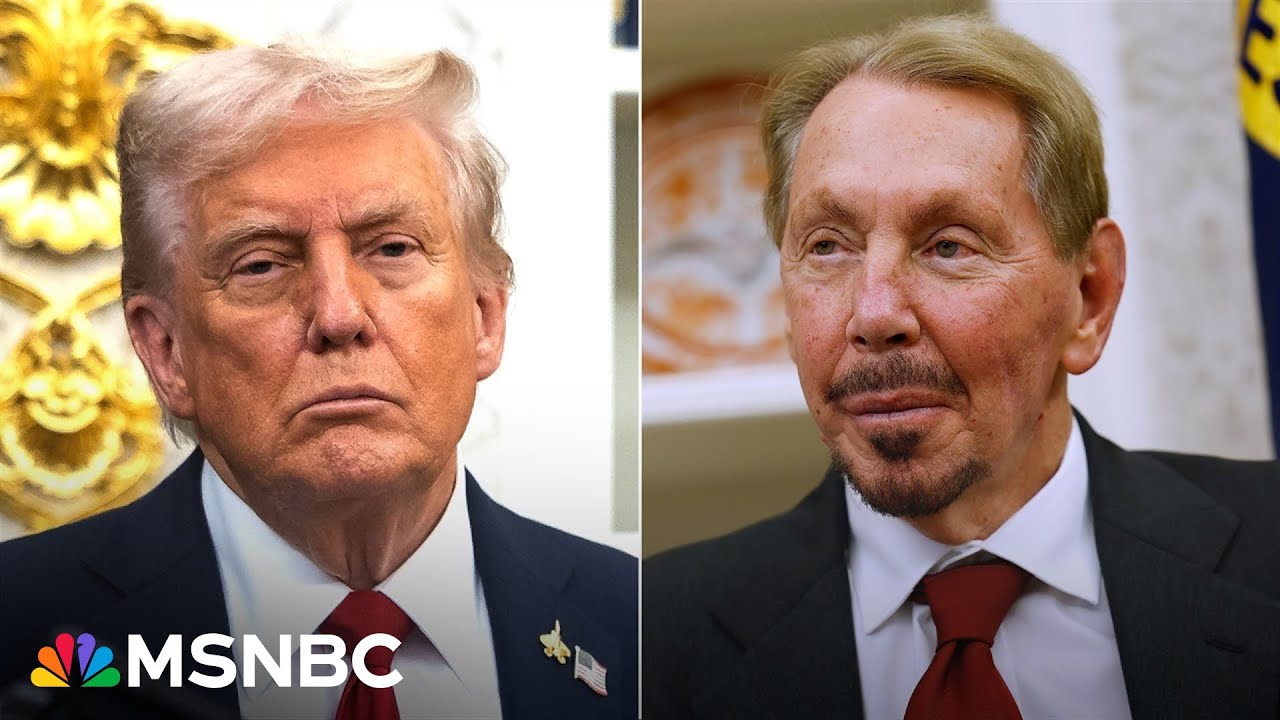
‘Trump’s right wing billionaire friend Larry Ellison (and his nepobaby son, David) recently acquired CBS and likely co-ownership of TikTok. Like Elon Musk’s acquisition of Twitter, the goal isn’t really subtle: rich, thin-skinned right wingers want to own the entirety of U.S. new and old media, then convert it into a giant propaganda and lazy infotainment bullhorn that blows smoke up their asses.
The Ellisons have since set their sights on Warner Brothers, CNN, and HBO. It won’t be cheap; it’s estimated that Larry and company will have to pay upwards of $60 billion for the acquisition. The Trump administration has openly signaled that they’d very much like the Ellisons to succeed here, in part to force a dying cable news channel (CNN) to be even friendlier to Trump than it already is.
While Ellison has some competing suitors with names like Comcast NBC Universal and Netflix, the winning bidder will need approval from the Trump DOJ and FCC. Knowing that they likely have a distinct tactical advantage via corruption, Ellison and Trump appear to be already measuring the drapes, discussing programming changes (and CNN hirings and firings) that will please the president:…’ (via Techdirt)
Nov 15, 2025: Follow Me Here turned 26. Here’s the first page. (Somehow, when I imported into WordPress years ago, the earlier Blogger posts got duplicated.)
‘His Oscar-winning 1965 film “The War Game” depicted a post-nuclear-attack England, one of his many fictionalized docudramas against war and repression.…’ (via The New York Times)
In the long history of cinematic shock tactics meant to rouse us from our stupor about nuclear war — notably the 1983 American television film The Day After and more recently the 2025 apocalyptic thriller House of Dynamite—none has been more disturbing, direct, or effective than The War Game. Stripped of Hollywood’s emotional pacing, Watkins’ quasi-documentary avoided melodrama and instead presented nuclear catastrophe with the matter-of-fact tone of reportage. Its stark depiction of civil-defense futility and the predictable, overwhelming human suffering of a nuclear exchange pierced the collective denial of the subliminal existential dread permeating daily life. The film helped mobilize a generation struggling to articulate the scale of the nuclear threat, shifting public conversation away from abstract statistics, strategic doctrines, and sanitized civil-defense pamphlets. It became a cinematic touchstone for the antinuclear movement.
The BBC’s 20-year suppression of the film — deeming it too disturbing but also seen by the British government as too effective in serving the interests of those opposed to its nuclear arsenal — only amplified its impact. The ban became emblematic of establishment fear and denial, further exposing the absurdity of the nuclear arms race. Circulating clandestinely, the film acquired a charged mystique, reinforcing for many, myself included, the moral urgency at the heart of the antinuclear movement.
He would be the first to acknowledge that he was a propagandist and provocateur:
“Is not the serious filmmaker in a double-bind situation, given the inevitable indoctrinating effect of his or her work?” Mr. Watkins asked [in a late-1970s film course he taught at Columbia University]. “Does the filmmaker have the right to subject a captive audience to his or her vision, especially if there is no potential for a return dialogue? Is there a difference between propaganda for the ‘good’ and for the ‘bad’?”
‘“After placing Laika in the container and before closing the hatch,” recalled Soviet engineer Yevgeniy Shabarov, “we kissed her nose and wished her bon voyage, knowing that she would not survive the flight.”…’ (via Vox)
‘Continent’s leaders suspect Russia of being behind barrage of increasingly disruptive attacks …’ (Bertrand Benoit in Berlin and Daniel Michaels in Brussels via WSJ)
As large-language models become central to how information is processed, writers are increasingly creating work not just for human readers but for AI itself—the “baby shoggoth” quietly listening, learning, and shaping future interpretations of culture. In this emerging landscape, writing becomes partly an act of training the machine: crafting text with clarity, structure, and signals that AI systems can absorb. Thinkers like Tyler Cowen and Gwern already admit to writing with algorithms in mind, anticipating a world where machines may be the dominant readers, intermediating how humans encounter ideas.
This shift raises deeper cultural and existential questions. If AI becomes the primary reader and interpreter of human writing, the traditional writer–reader relationship changes, potentially diminishing human reading as a central cultural act. Yet it may also imbue writing with new urgency—what we produce now could influence how future intelligences “understand” us or even reconstruct aspects of our minds. How may authorship, creativity, and legacy transform in a world where machines, not humans, are increasingly the ones paying the closest attention? (Dan Kagan-Kans via The American Scholar)
‘Headphone listening—the act of playing a highly personalized soundtrack wherever we go—is a surprisingly radical invention, and we’re only beginning to contend with its implications. The visible barrier it creates between the listener and everyone else is obvious. Less obvious is the invisible barrier: The more time we spend in our own musical echo chambers, the less likely we are to share a collective cultural experience. The power of music has long been its ability to soundtrack a generation—to evoke emotion, as well as summon a specific time and place. Headphone listening not only isolates the listener; it shrinks music’s cultural footprint. …’ (Jonathan Garrett via The Atlantic)
‘…a bunch of rich guys who have been comically out of touch with normal people for many decades, and more recently have blowtorched their brains into a smoking pile of ash on Twitter…’ (Ryan Cooper via The American Prospect)
‘New York is quietly preparing for a Donald Trump takeover of the country’s largest city.
A wide range of New York’s most prominent civic leaders have for weeks been meeting behind the scenes to plan for the possibility of Trump sending in the National Guard or any other federal agents into New York City, according to multiple top elected officials.
Alarmed at what Trump may do in response to Zohran Mamdani’s election as New York City mayor, Gov. Kathy Hochul has devised a virtual war room and convened a series of conversations with law enforcement, business officials and activist groups to stop or at least mitigate any federal incursion. More meetings are being scheduled, including with New York’s leading clergy and veterans groups, some of whom will be gathering around Veterans Day next week.…’ (Jonathan Martin via POLITICO)
‘For decades, people around the world have been fascinated with the legend of bigfoot, sasquatch, yeti, or whatever you choose to call it. Sightings of a furry, upright biped and reports of beastly footprints have been reported from as far afield as the Himalayas. Although no definitive proof exists, the (often questionable) reports continue adding up. Outside plunged into the deep, dark corners of this subculture to compile the most famous—perhaps most convincing—bigfoot photos ever captured. Here’s the evidence. Is bigfoot real? You be the judge. …’ (Lauren Kent via Outside)
‘In 1970, she moved to San Francisco, where many younger people were flocking to restart. As first, she was skeptical of her friends’ ravings about the Dead.
“That ragged sound?” Ms. Godchaux-MacKay recalled in a 2007 interview with The Baltimore Sun. “I didn’t think they could play. I figured, ‘These guys must be good-looking.’ So I checked the back of one of their album covers and went, ‘Nope, that’s not it.’”
But soon after arriving, she caught a performance by the Dead at the Winterland Ballroom in San Francisco.
“To them, music was an adventure, like something spiritual,” she told The Sun. “I’d never heard anything like that. I thought, This is what I want to do.”
She was married to a jazz pianist, Keith Godchaux, who found out that Jerry Garcia, the band’s frontman, was playing at a nightclub. The couple approached Mr. Garcia, who gave them his phone number.
Image
The Grateful Dead performing on “Saturday Night Live” in 1978. From left, Bob Weir, Phil Lesh, Ms. Godchaux-MacKay and Jerry Garcia.Credit…Fred Hermansky/NBC/NBCU Photo Bank
“I can’t believe the chutzpah we had,” Ms. Godchaux-MacKay told The Sun. “I didn’t know people did that to him all the time. But Jerry just always had his antennas up.”
Within days, they were in the band, forging a relationship that would last the rest of the decade. Ms. Godchaux-MacKay helped shape several of the Dead’s most famous songs, including “Eyes of the World” and “Playing in the Band”…’ (Sopan Deb via The New York Times)
Donna and Keith were in what I consider the greatest configuration of the Dead. Her style was controversial and divisive for Deadheads of the era, with some cringing when she would cut loose and others feeling she goaded the mix to new heights.




































 Here’s why


 In
In