‘Scientists have tried contacting extraterrestrials with a number of bespoke linguistic systems. But we might be better off using our own languages…’
via WIRED
‘Scientists have tried contacting extraterrestrials with a number of bespoke linguistic systems. But we might be better off using our own languages…’
via WIRED
‘This is a list of fictional stories that, when written, were set in the future, but the future they predicted is now present or past….’
— Read on Wikipedia

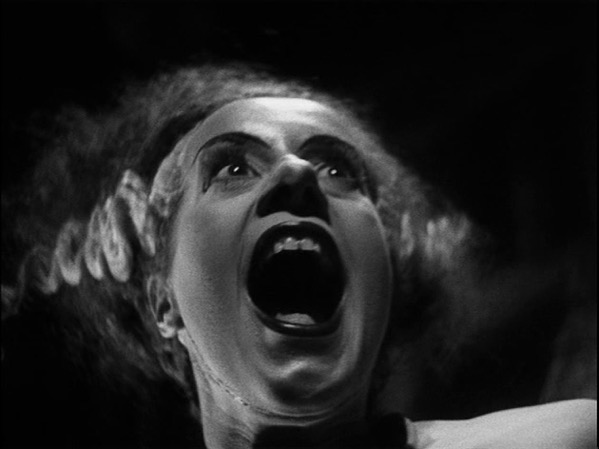
’Screams might seem simple, but they can actually convey a complex set of emotions. The arsenal of human screams has been honed over millions of years of evolution, with subtle nuances in volume, timing and inflection that can signal different things.…’
Via Big Think
’Unlike self-interested humans, ants have a common goal: The colony’s survival.…’
Via Ars Technica
A reprise of my traditional Hallowe’en post of past years:
It is that time of year again. What has become a time of disinhibited hijinx and mayhem, and a growing marketing bonanza for the kitsch-manufacturers and -importers, has primeval origins as the Celtic New Year’s Eve, Samhain (pronounced “sow-en”). The harvest is over, summer ends and winter begins, the Old God dies and returns to the Land of the Dead to await his rebirth at Yule, and the land is cast into darkness. The veil separating the worlds of the living and the dead becomes frayed and thin, and dispossessed dead mingle with the living, perhaps seeking a body to possess for the next year as their only chance to remain connected with the living, who hope to scare them away with ghoulish costumes and behavior, escape their menace by masquerading as one of them, or placate them with offerings of food, in hopes that they will go away before the new year comes. For those prepared, a journey to the other side could be made at this time.
With Christianity, perhaps because with calendar reform it was no longer the last day of the year, All Hallows’ Eve became decathected, a day for innocent masquerading and fun, taking its name Hallowe’en as a contraction and corruption of All Hallows’ Eve.
All Saints’ Day may have originated in its modern form with the 8th century Pope Gregory III. Hallowe’en customs reputedly came to the New World with the Irish immigrants of the 1840’s. The prominence of trick-or-treating has a slightly different origin, however.
The custom of trick-or-treating is thought to have originated not with the Irish Celts, but with a ninth-century European custom called souling. On November 2, All Souls Day, early Christians would walk from village to village begging for “soul cakes,” made out of square pieces of bread with currants. The more soul cakes the beggars would receive, the more prayers they would promise to say on behalf of the dead relatives of the donors. At the time, it was believed that the dead remained in limbo for a time after death, and that prayer, even by strangers, could expedite a soul’s passage to heaven.
Jack-o’-lanterns were reportedly originally turnips; the Irish began using pumpkins after they immigrated to North America, given how plentiful they were here. The Jack-o-lantern custom probably comes from Irish folklore. As the tale is told, a man named Jack, who was notorious as a drunkard and trickster, tricked Satan into climbing a tree. Jack then carved an image of a cross in the tree’s trunk, trapping the devil up the tree. Jack made a deal with the devil that, if he would never tempt him again, he would promise to let him down the tree.
According to the folk tale, after Jack died, he was denied entrance to Heaven because of his evil ways, but he was also denied access to Hell because he had tricked the devil. Instead, the devil gave him a single ember to light his way through the frigid darkness. The ember was placed inside a hollowed-out turnip to keep it glowing longer.
Nowadays, a reported 99% of cultivated pumpkin sales in the US go for jack-o-lanterns.
Folk traditions that were in the past associated with All Hallows’ Eve took much of their power, as with the New Year’s customs about which I write here every Dec. 31st, from the magic of boundary states, transition, and liminality.
The idea behind ducking, dooking or bobbing for apples seems to have been that snatching a bite from the apple enables the person to grasp good fortune. Samhain is a time for getting rid of weakness, as pagans once slaughtered weak animals which were unlikely to survive the winter. A common ritual calls for writing down weaknesses on a piece of paper or parchment, and tossing it into the fire. There used to be a custom of placing a stone in the hot ashes of the bonfire. If in the morning a person found that the stone had been removed or had cracked, it was a sign of bad fortune. Nuts have been used for divination: whether they burned quietly or exploded indicated good or bad luck. Peeling an apple and throwing the peel over one’s shoulder was supposed to reveal the initial of one’s future spouse. One way of looking for omens of death was for peope to visit churchyards
The Witches’ Sabbath aspect of Hallowe’en seems to result from Germanic influence and fusion with the notion of Walpurgisnacht. (You may be familiar with the magnificent musical evocation of this, Mussorgsky’s Night on Bald Mountain.)
Although probably not yet in a position to shape mainstream American Hallowe’en traditions, Mexican Dia de los Muertos observances have started to contribute some delightful and whimsical iconography to our encounter with the eerie and unearthly as well. As this article in The Smithsonian reviews, ‘In the United States, Halloween is mostly about candy, but elsewhere in the world celebrations honoring the departed have a spiritual meaning…’
Reportedly, more than 80% of American families decorate their homes, at least minimally, for Hallowe’en. What was the holiday like forty or fifty years ago in the U.S. when, bastardized as it has now become with respect to its pagan origins, it retained a much more traditional flair? Before the era of the pay-per-view ’spooky-world’ type haunted attractions and its Martha Stewart yuppification with, as this irreverent Salon article from several years ago [via walker] put it, monogrammed jack-o’-lanterns and the like? One issue may be that, as NPR observed,
‘“Adults have hijacked Halloween… Two in three adults feel Halloween is a holiday for them and not just kids,” Forbes opined in 2012, citing a public relations survey. True that when the holiday was imported from Celtic nations in the mid-19th century — along with a wave of immigrants fleeing Irelands potato famine — it was essentially a younger persons’ game. But a little research reveals that adults have long enjoyed Halloween — right alongside young spooks and spirits.’
Is that necessarily a bad thing? A 1984 essay by Richard Seltzer, frequently referenced in other sources, entitled “Why Bother to Save Hallowe’en?”, argues as I do that reverence for Hallowe’en is good for the soul, young or old.
“Maybe at one time Hallowe’en helped exorcise fears of death and ghosts and goblins by making fun of them. Maybe, too, in a time of rigidly prescribed social behavior, Hallowe’en was the occasion for socially condoned mischief — a time for misrule and letting loose. Although such elements still remain, the emphasis has shifted and the importance of the day and its rituals has actually grown.…(D)on’t just abandon a tradition that you yourself loved as a child, that your own children look forward to months in advance, and that helps preserve our sense of fellowship and community with our neighbors in the midst of all this madness.”
That would be anathema to certain segments of society, however. Hallowe’en certainly inspires a backlash by fundamentalists who consider it a blasphemous abomination. ‘Amateur scholar’ Isaac Bonewits details academically the Hallowe’en errors and lies he feels contribute to its being reviled. Some of the panic over Hallowe’en is akin to the hysteria, fortunately now debunked, over the supposed epidemic of ‘ritual Satanic abuse’ that swept the Western world in the ’90’s.
The horror film has become inextricably linked to Hallowe’en tradition, although the holiday itself did not figure in the movies until John Carpenter took the slasher genre singlehandedly by storm. Googling “scariest films”, you will, grimly, reap a mother lode of opinions about how to pierce the veil to journey to the netherworld and reconnect with that magical, eerie creepiness in the dark (if not the over-the-top blood and gore that has largely replaced the subtlety of earlier horror films).
The Carfax Abbey Horror Films and Movies Database includes best-ever-horror-films lists from Entertainment Weekly, Mr. Showbiz and Hollywood.com. I’ve seen most of these; some of their choices are not that scary, some are just plain silly, and they give extremely short shrift to my real favorites, the evocative classics of the ’30’s and ’40’s when most eeriness was allusive and not explicit. And here’s what claims to be a compilation of links to the darkest and most gruesome sites on the web. “Hours and hours of fun for morbidity lovers.”
Boing Boing does homage to a morbid masterpiece of wretched existential horror, two of the tensest, scariest hours of my life repeated every time I watch it:
‘…The Thing starts. It had been 9 years since The Exorcist scared the living shit out of audiences in New York and sent people fleeing into the street. Really … up the aisle and out the door at full gallop. You would think that people had calmed down a bit since then. No…’
Meanwhile, what could be creepier in the movies than the phenomenon of evil children? Gawker knows what shadows lurk in the hearts of the cinematic young:
‘In celebration of Halloween, we took a shallow dive into the horror subgenre of evil-child horror movies. Weird-kid cinema stretches back at least to 1956’s The Bad Seed, and has experienced a resurgence recently via movies like The Babadook, Goodnight Mommy, and Cooties. You could look at this trend as a natural extension of the focus on domesticity seen in horror via the wave of haunted-house movies that 2009’s Paranormal Activity helped usher in. Or maybe we’re just wizening up as a culture and realizing that children are evil and that film is a great way to warn people of this truth. Happy Halloween. Hope you don’t get killed by trick-or-treaters.’
In any case: trick or treat! …And may your Hallowe’en soothe your soul.
It’s sociologically important to document where people believe the supernatural occurs, even if it’s all made up.:If you’ve had a weird unexplainable experience, two guys in Seattle want to help you log it and track it on a global map. I have a new favorite place on the internet, and it is Liminal Earth.
Liminal Earth is a web based mapping tool designed to track the bizarre. Created by Garrett Kelly, co-founder of Hollow Earth Radio, and Jeremy Puma, a Seattle based author, their project “acts sort of like ‘Google Trends’ (which tracks sudden spikes on google search queries) for the collective unconscious,” states their website’s About page. “This map is an extension of that, because we’re trying to see if there are strange places or experiences that are actually quite common but go unnoticed because everyone is afraid to talk about this weird stuff happening to them.”
The idea is simple. It is like Atlas Obscura, but exclusively for UFOs, the supernatural, cryptids, etc.…’
Via VICE
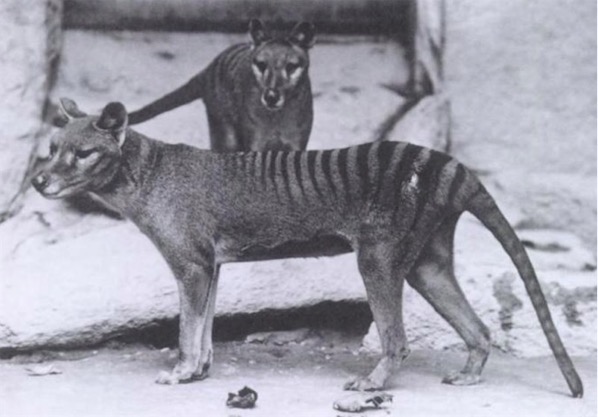
’In 1936, the Tasmanian tiger (Thylacinus cynocephalus) was declared to be extinct. Yet in the last three years, there have been eight reported sightings according to Tasmania’s Department of Primary Industries, Parks, Water and Environment.…’

Via Boing Boing
With all the agonizing about whether the Enfant Terrible’s actions rise to an impeachable level, let us not forget that he is a common criminal as well. A new ProPublica story documents the extent to which Trump inflated the value of his assets when he was trying to borrow money, and deflated the values when he was paying taxes. Both would constitute criminal fraud.
And this Vanity Fair piece strongly suggests that, since the start of his presidency, Trump has been running a massively profitable larcenous insider trading scheme. The story examines massive pattern of suspicious late-day trades in financial markets that seemed to anticipate public policy pronouncements or events and earned the mysterious traders millions in profits. For example
“In the last 10 minutes of trading on Friday, August 23, as the markets were roiling in the face of more bad trade news, someone bought 386,000 September e-minis. Three days later, Trump lied about getting a call from China to restart the trade talks, and the S&P 500 index shot up nearly 80 points. The potential profit on the trade was more than $1.5 billion…”
“Traders in the Chicago pits have been watching these kinds of wagers with an increasing mixture of shock and awe since the start of the Trump presidency …. Are the people behind these trades incredibly lucky, or do they have access to information that other people don’t have about, say, Trump’s or Beijing’s latest thinking on the trade war or any other of a number of ways that Trump is able to move the markets through his tweeting or slips of the tongue? Essentially, do they have inside information?”
Federal market watchdogs, who are supposed to keep an eye on corrupt market manipulation, are doing nothing despite ongoing concerns about this pattern of activity.
‘…Everything that McConnell decides to do will come down to the political ramifications for the Republican Party, and with each passing day Donald Trump becomes more and more of a liability. A bus is ready in the waiting, and he will be more than ready to throw the President under it if necessary.
The moment that Senator McConnell makes the determination that President Trump could cost Republicans their hold of power in the Senate, or cost them even more seats in the House, he along with other members of Republican leadership will urge him to resign, or vote to impeach if he refuses to do so. The fact that support of impeachment continues to grow, while McConnell’s silence gets louder and louder, leads me to believe that he is carefully considering this option. In the end, it will be McConnell, not Pelosi or Democratic Leadership, who could potentially bring Trump’s presidency to an end….’
— Via Medium
‘…Tokarczuk said that humanity needs three inventions: contraception, the internet, and lab-grown meat. While most technofuturism suggests that advancements in machinery and efficiency will automatically solve problems of power, Tokarczuk recognizes that new technologies have to be designed specially to disrupt areas where the powerful have kept a tight grip—whether over the control of women’s reproduction, the free spread of information, or the lives and deaths of animals. (Vegetarianism in Poland is associated with leftist politics; in 2016, the far-right politician Witold Waszczykowski, then the foreign secretary, decried the idea that the world was “destined to evolve only in one direction—towards a new mix of cultures and races, a world of bicyclists and vegetarians.”)
“We live in the midst of a slaughterhouse and manage to ignore that,” Tokarczuk said…’
— Read on New Republic
Twenty-five years ago this month, a software developer sketched a talk bubble for a cute dog and had an epiphany: “Dogs don’t talk in Times New Roman!” So he designed Comic Sans, a zanier, more childlike script for which he took inspiration from comic books and graphic novels.
The font attracted eye rolls and cringes from its inception, and has “long been the default punch line in the design community,” one designer said. And yet, it persists.
The font’s creator, Vincent Connare, has this to say: “If you love Comic Sans you don’t know much about typography. And if you hate Comic Sans you need a new hobby.”
Via New York Times
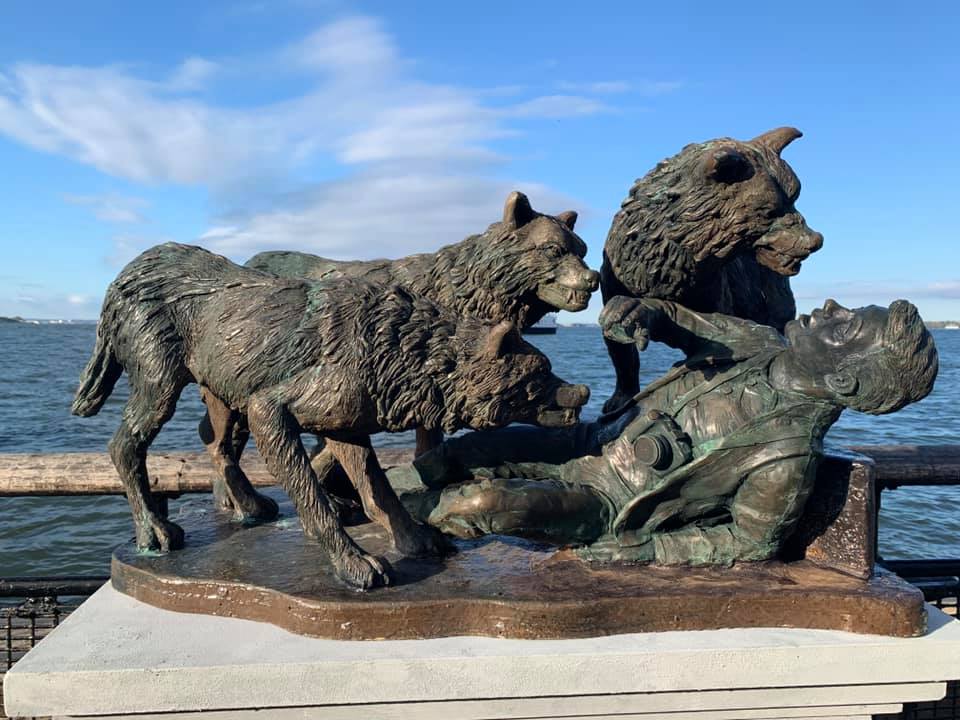
‘It appears that sculptor Joe Reginella has once again erected a memorial statue marking a fictional occurrence in New York City. This time, it’s a story that purports that former Mayor Ed Koch sent wolves into the subways of the city to ward off graffiti artists during his tenure, and according to the Ed Koch Wolf Foundation (who supposedly put up the memorial), the creatures are still the reason behind missing tourists in the Big Apple…’
Joe Reginella’s Memorial Statues Mark Fictional Disasters in NYC
New York sculptor Joe Reginella has fooled countless tourists with his statues scattered across the city, marking events that never actually happened. From a Staten Island Ferry encounter with an octopus to a New York Harbor UFO encounter, the artist’s scenarios use the convincing device of the memorial statue to relay his narratives.
Each statue has its own website, with a backstory, souvenir shop, and tour offers in tow. From the ferry disaster site: “It was close to 4am on the quiet morning of November 22, 1963 when the Steam Ferry Cornelius G. Kolff vanished without a trace. On its way with nearly 400 hundred people, mostly on their way to work, the disappearance of the Cornelius G. Kolff remains both one of New York’s most horrific maritime tragedies and perhaps its most intriguing mystery. Eye witness accounts describe “large tentacles” which “pulled” the ferry beneath the surface only a short distance from its destination at Whitehall Terminal in Lower Manhattan.”

It’s a “loaded question — with no obvious answer”, whether we are talking about a response to a conviction in an impeachment proceeding or a 2020 election defeat, says op-ed writer Thomas Edsall in The New York Times

UC Santa Barbara anthropologist Napoleon Chagnon has died. Chagnon did notable work with remote tribes in the Amazonian rainforest, particularly the Yanomamo “fierce people”, but is perhaps best known for the so-called “Darkness” furor that ripped through the American Anthropological Association (AAA), almost destroying its credibility as an intellectual and professional organization. I previously commented on the controversy here, in 2000.
In 2000, anthropological journalist Patrick Tierney made claims that Chagnon and colleague geneticist James Neel had introduced a potentially fatal contraindicated measles vaccine to the tribe, probably inducing a 1968 epidemic, and then had withheld medical treatments might have saved lives, in the interest of testing “fascistic” eugenic theories. The AAA found the claims credible enough to investigate.
The truth appears to be quite the opposite. In prior fieldwork, Neel had determined that the Yanomamo were alarmingly vulnerable to measles and had personally arranged to bring vaccines with him on May 1968 expedition after consulting experts for advice on which vaccines to use, obtaining instructions about administration, and personally arranging fundraising.
Reportedly, measles had already broken out when the team arrived and, under Chagnon’s logistical leadership, they raced to contain the epidemic although supplies began to run out before everyone could be appropriately vaccinated. What is at stake is whether Neel and Chagnon are remembered as genocidal monsters or humanitarians.
interestingly, Chagnon’s work with the Yanomamo had been criticized by anthropologist within the AAA for perhaps a decade before the furor about the measles epidemic broke. He was subject to anonymous defamation probably spread by the Roman Catholic church because Chagnon had been publicly critical of their missionary work with the tribe. Doctrinal dispute about his theoretical approach also fueled the opposition. After Tierney’s claims about the measles epidemic, an AAA task force formally faulting Chagnon on several counts was accepted by the AAA board in 2002 despite the fact that many other professional and academic institutions were alarmed at the scandalous methodology and conclusions of Tierney’s book. These included the National Academy of Sciences, the American Society of Human Genetics, the International Genetics Epidemiology Society, the Society for Visual Anthropology, and the University of Michigan. In contrast to the AAA board, the voting membership of the organization passed two referenda in 2003 and 2005 by overwhelming margins, condemning the misrepresentation of the 1968 epidemic, criticizing Tierney and his academic supporters, and calling for a complete rescission of the acceptance of the task force report.
Defenders of AAA’s action talk in terms of the legitimacy of exploring ethical issues in anthropological fieldwork such as informed consent, the effects of gift giving, and the representation of vulnerable subjects. They speak of the inquiry into Chagnon and Neel’s work as in the defense of the credibility of American anthropology. Detractors blast the group for taking seriously the work of an uncredentialed journalist whose major claims had already been shown at the outset to be false instead of protecting serious investigators’ right to be fairly represented in the public spotlight and failing to give them a formal invitation to defend themselves in the process of wrecking their reputations.
Despite the membership vote in 2005 to withdraw acceptance of the task force report, the AAA left the report on its website until 2009 when legal action on behalf of Chagnon finally forced them to remove it. Chagnon’s work as “the last of the great ethnographers” was celebrated in an Edge special event convened by Steven Pinker, Daniel Dennett, Richard Dawkins, John Brockman, and other intellectual luminaries.
via Edge.org
’Last year, scientists described neuropsychiatric drug development as “in the midst of a crisis” because of all the mouse findings that fail to translate to people. Of every 100 neuropsychiatric drugs tested in clinical trials — usually after they “work” in mice — only nine become approved medications, one of the lowest rates of all disease categories.
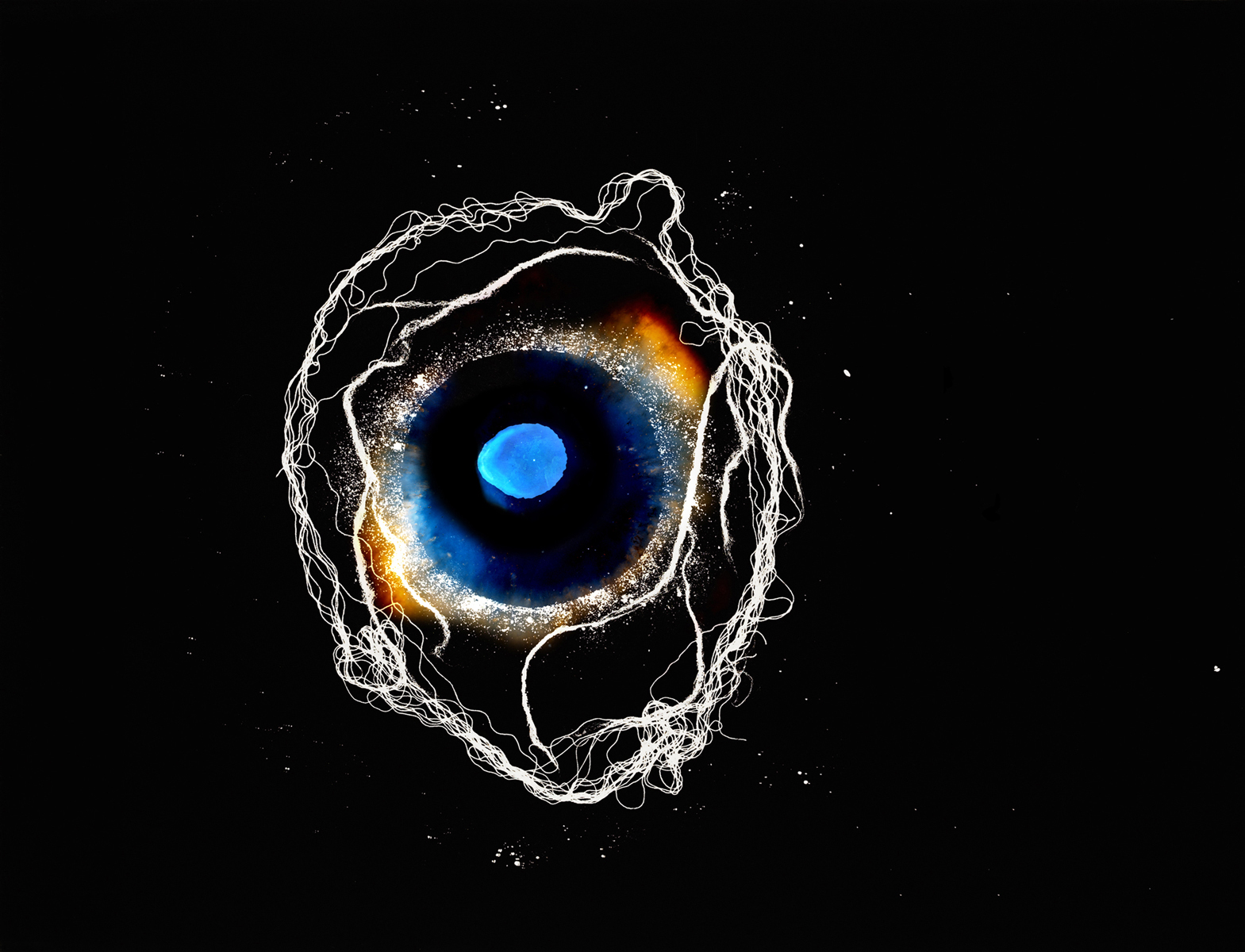
…In the most detailed taxonomy of the human brain to date, a team of researchers as large as a symphony orchestra sorted brain cells not by their shape and location, as scientists have done for decades, but by what genes they used. Among the key findings: Mouse and human neurons that have been considered to be the same based on such standard classification schemes can have large (tenfold or greater) differences in the expression of genes for such key brain components as neurotransmitter receptors.
That makes neurons and circuits connecting brain regions, which were long thought to be essentially identical in mice and people, different in a fundamental way. And it could explain the abysmal record of drug development for neuropsychiatric diseases including schizophrenia, depression, bipolar disorder, and autism.…’
Via STAT
Is this brain cell your ‘mind’s eye’?’Researchers believe they have identified specific neurons that are responsible for conscious awareness. Previous studies have implicated both thalamocortical circuits and cortico-cortico circuits in consciousness. The new study reports these networks intersect via L5p neurons. Directly activating L5p neurons made mice react to weaker sensory stimuli. The researchers say if consciousness requires L5p neurons, all brain activity without them must be unconscious…’
’There’s evidence that the brain’s ability to make subtle distinctions between different chords, rhythms and melodies gets worse with age. So to older people, newer, less familiar songs might all “sound the same.”
But I believe there are some simpler reasons for older people’s aversion to newer music. One of the most researched laws of social psychology is something called the “mere exposure effect.” In a nutshell, it means that the more we’re exposed to something, the more we tend to like it.…’
A childhood friend of Jerry Garcia, Hunter was the band’s primary lyricist and collaborator in Garcia’s songs, responsible for some of the most iconic of the Dead’s mind-bending imagery.
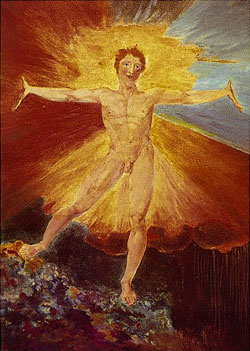
Blake wasseen by most of his contemporaries as eccentric and mediocre. But for all his technical failings, his inventive approach made him one of the greatest graphic artists of all time.
via New Statesman
Canadian researchers say they may have identified the cause of a mystery illness which plagued diplomatic staff in Cuba in 2016. Some reports in the US suggested an “acoustic attack” caused US staff similar symptoms, sparking speculation about a secret sonic weapon.
But the Canadian team suggests that neurotoxins from mosquito fumigation are the more likely cause. The Zika virus, carried by mosquitoes, was a major health concern at the time.
So-called “Havana syndrome” caused symptoms including headaches, blurred vision, dizziness and tinnitus. It made international headlines when the US announced more than a dozen staff from its Cuban embassy were being treated.
Cuba denied any suggestion of “attacks”, and the reports led to increased tension between the two nations.
In July, a US academic study showed “brain abnormalities” in the diplomats. “It’s not imagined, all I can say is that there is truth to be found,” one of the authors said.
The Canadian team from the Brain Repair Centre in Halifax thinks it now has the answer.
Canadian diplomats were affected by similar reactions to US counterparts – though the study noted that the symptoms of the Canadians were more gradual than the “acute, directional… auditory stimulus” in some of the US cases.
The study notes that tests carried out on 28 participants – seven of whom were tested both before and after being posted to Havana – support a diagnosis of brain injury acquired by diplomats and their families while in Cuba.
The patterns of brain injury “all raise the hypothesis of recurrent, low-dose exposure to neurotoxins”, the report said. Specifically, the results were “highly suggestive” of something called cholinesterase inhibitor intoxication.
via BBC News
No horror film auteur could envision and produce something as creepy as a bunch of turkeys spontaneously circling and marching around a dead cat in the road.
via Boing Boing
‘Armalite created the AR-15, sold the rights to Colt in the fifties, and the design long ago emerged from patent and became widely-copied. The AR-15 itself will no longer be made for consumers by Colt, it says. It says they’re just not that popular among consumers and the company needs to focus on institutional sales…
Missing in a lot of the coverage is the fact lots of companies make AR-15s. Colt not making AR-15s is like Sony not making laptops…’
via Boing Boing
Dan Nosowitz writes:
The word “jawn” is unlike any other English word. In fact, according to the experts that I spoke to, it’s unlike any other word in any other language. It is an all-purpose noun, a stand-in for inanimate objects, abstract concepts, events, places, individual people, and groups of people. It is a completely acceptable statement in Philadelphia to ask someone to “remember to bring that jawn to the jawn.”
It is a word without boundaries or limits. Growing up in the suburbs just west of the city, I heard it used mostly to refer to objects and events. In the 2015 movie Creed, a character asks a sandwich maker to “put some onions on that jawn.” But it can get much more complex. It can refer to abstract nouns such as theories; a colleague of Jones routinely refers to “Marxist jawn.” It can also refer to people or groups of people. “Side-jawn,” meaning a someone with whom the speaker cheats on his or her significant other, “is a uniquely Philly thing as far as I can tell,” says Jones. “And not something you want to be.” via Pocket
I’ve run across other all-purpose, or almost-all-purpose, nouns in slang usage. Just last week, I was reading Tana French’s The Witch Elm, populated with a number of characters speaking vernacular Irish English. After being puzzled by several characters’ use of the word yoke, I finally figured out that it seems to serve a virtually identical purpose to jawn as a generic all-purpose substitute for anything. [Can any speakers of Irish English reading this confirm?]
But, of course, the word with perhaps the most widespread similar role in the vernacular as a generic, at least here in the US, is shit. I’m sure all of you speaking English in the US (and Canada??) have heard virtually all of the examples in the “Jawn” article with “shit” substituted for them:
Perhaps one difference is that shit stands in only for things. [Again, Irish English speakers, what about yoke?] The assertion, then, that jawn is “unlike any other word in any other language” may relate to its usage for places, persons or groups of persons as well as things. Can readers come up with other examples of generic nouns that also do so?
Joker’s most vocal critics thus far are concerned that in the United States’s current climate, giving the spotlight to the character emboldens and galvanizes a type of thinking that can inspire mass shooters.

– via Vox
Also: Wikipedia on “incels” (involuntary celibates)
So where did the common idea of hairless, large headed, black-eyed, grey skinned aliens actually come from in the first place?
In a paper presented at the International Conference on Affective Computing and Intelligent Interaction, the researchers describe a method to quantify pain in patients. To do so, they leverage an emerging neuroimaging technique called functional near infrared spectroscopy (fNIRS), in which sensors placed around the head measure oxygenated hemoglobin concentrations that indicate neuron activity. For their work, the researchers use only a few fNIRS sensors on a patient’s forehead to measure activity in the prefrontal cortex, which plays a major role in pain processing. Using the measured brain signals, the researchers developed personalized machine-learning models to detect patterns of oxygenated hemoglobin levels associated with pain responses. When the sensors are in place, the models can detect whether a patient is experiencing pain with around 87 percent accuracy.

via Big Think
However, even if two subjects are measured as having the same levels of neuronal activity in response to a nociceptive stimulus, there is still no way to compare their subjective experiences of the stimulus. Many other factors that might bear on differences in the subjective experience of the pain might not be reflected in differences in graphical readouts of neuronal activity levels, e.g.:
So much for rest in peace.
– via Big Think

— Via Reddit
“A big tree has fallen.”
’For 40 years, the magazine was a guide to Britain’s pulsating underground and a champion of thrilling weirdos. Its closure leaves a chasm in the grassroots music scene…
Take a look at its recent 40th-anniversary edition: it’s like a huge fanzine created by a groovy uncle, occasionally gazing at the mainstream but much happier exploring the margins. Its going out guide is staggeringly broad, revealing a fertile UK festival and gig scene rarely covered by the national press. Features include a dig into Kate Bush’s traditional roots, reports on the qawwali ensembles of Pakistan and a free desert festival in Morocco, plus Scottish folk musician Alasdair Roberts celebrating new artist Burd Ellen’s songs about women. The huge reviews section takes in London’s
, Korean experimentalist Park Jiha and Topic Records’ 80th-anniversary CD. Trendy bells and whistles are few, but it’s a rich treasure trove…’
— Read on The Guardian
I’ve subscribed for most of its forty years. I can’t imagine what my music-listening habits would have been without it.
’Black hole physicists have been excitedly discussing reports that the LIGO and Virgo gravitational-wave detectors recently picked up the signal of an unexpectedly enormous black hole, one with a mass that was thought to be physically impossible.
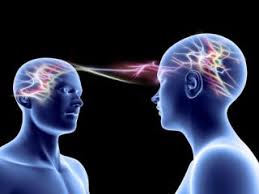
“The prediction is no black holes, not even a few” in this mass range, wrote Stan Woosley, an astrophysicist at the University of California, Santa Cruz, in an email. “But of course we know nature often finds a way.”
Seven experts contacted by Quanta said they’d heard that among the 22 flurries of gravitational waves detected by LIGO and Virgo since April, one of the signals came from a collision involving a black hole of unanticipated heft — purportedly as heavy as 100 suns.…’
Via Quanta Magazine
I have long been interested in the relationship between mirror neurons and some behavioral disorders related to person-perception and the capacity for social relationships . I think the evidence is good that mirror neuron dysfunction plays a role in autistic spectrum disorders including Asperger syndrome. But, because of the mirror neuron system, smiles are literally neurologically contagious, and so are the good feelings associated with them. Via Big Think

’Each chapter explodes a common myth about language. Shariatmadari begins with the most common myth: that standards of English are declining. This is a centuries-old lament for which, he points out, there has never been any evidence. Older people buy into the myth because young people, who are more mobile and have wider social networks, are innovators in language as in other walks of life. Their habit of saying “aks” instead of “ask”, for instance, is a perfectly respectable example of metathesis, a natural linguistic process where the sounds in words swap round. (The word “wasp” used to be “waps” and “horse” used to be “hros”.) Youth is the driver of linguistic change. This means that older people feel linguistic alienation even as they control the institutions – universities, publishers, newspapers, broadcasters – that define standard English.
Another myth Shariatmadari dismantles is that foreign languages are full of untranslatable words. This misconception serves to exoticise other nationalities and cultures, making them sound quaint or bizarre. It amuses us to think that there are 27 words for eyebrow in Albanian. But we only really think this because of our grammar-blindness about Albanian, which can easily form adjectival compounds by joining two words together…
…He also rescues nonstandard forms, such as African American Vernacular English (AAVE), from the routine condescension meted out to them. AAVE misses out the linking “to be” verb (“you late”) but then so do many other languages. The AAVE construction “he be singing” does not mean “he is singing” but “he sings [as a hobby, professionally]”. It is an efficient means of marking the habitual aspect. “Imma” for “I’m going to” is another standard linguistic move: cutting a word or phrase that is just a grammatical marker. “Imma” doesn’t work with the more literal sense of “going to”, which is why you can say “Imma let you finish” (I’m going to let you finish) but not “Imma the shops” (I’m going to the shops).…’
Via The Guardian
Should I be as irked as I am by the frequent use of ‘compliment’ when one really means ‘complement’? This misuse makes me fume whenever I come across it, but it seems that one of the reasons for the mistake is that, in addition to sounding the same, they used to share some meanings (via Dictionary.com). ‘Complement’ is the older word, in use since the 1300s, and meaning ‘to enhance something’ or ‘make it perfect’. ‘Compliment’ hails from the mid-1600s via the Spanish ‘complimiento’ but originates from the same Latin root. Despite the commonalities, the two words have diverged and using one for the other is, frankly, confusion. To ‘compliment’ someone (yes, a person, not something) means ‘to praise’ them or ‘to express admiration for’ them. And please don’t tell me that a misuse so common changes the language and becomes acceptable — things like this are just plain ignorant mistakes:

While I’m here, I’ll just mention the other frequent case of mistaken word identity that really gets to me — the use of ‘tact’ when one really means ‘tack.’
I can’t count the number of times I’ve had someone tell me they caught a typo I missed: I wrote, “take a different tack” when I must have meant “take a different tact.” I’ll admit I sometimes miss typos, but that’s not one of them. It’s possibly the most widely misused phrase I can think of.
“Tack” — the correct word in this context — is actually derived from sailing terminology. The tack is the lower leading corner of the sail; it points the direction the ship is heading. So when a sailboat changes course, it’s changing from one tack to another, or “taking a different tack.”
Tact, on the other hand, really only has one meaning. It’s a keen perception of what is appropriate or considerate. (Think of tactile–>touch–>the right touch.)
via Get edited.
[You are welcome to use the comments section to blow off steam about confusion between other similar words. ]
Jaron Lanier:

You are losing your free will
Quitting social media is the most finely targeted way to resist the insanity of our times
Social media is making you into an asshole
social media is undermining truth
social media is making what you say meaningless
social media is destroying your capacity for empathy
social media is making you unhappy
social media doesn’t want you to have economic dignity
social media is making politics impossible
and social media hates your soul.
Via Amazon.co.uk
’An amateur astronomer caught something spectacular with a backyard telescope Wednesday when he recorded a bright flash on the surface of Jupiter. The biggest planet in the solar system routinely delivers stunning pictures, like those snapped by NASA’s Juno spacecraft, but the unexpected flash has astronomers excited at the possibility of a meteor impact. Ethan Chappel pointed his telescope at the gas giant planet at just the right time, capturing the white spot seen on the lower left side of the planet in the above images on Aug. 7. While it has yet to be confirmed by a second observer, it looks like a large asteroid crashing into the gas giant planet. The flash is brief and quickly fades away, boosting the idea that it was likely caused by an impact.…’
Via CNET
’U.S.-based nuclear experts said on Friday they suspected an accidental blast and radiation release in northern Russia this week occurred during the testing of a nuclear-powered cruise missile vaunted by President Vladimir Putin last year.


The Russian Ministry of Defense, quoted by state-run news outlets, said that two people died and six were injured on Thursday in an explosion of what it called a liquid propellant rocket engine. No dangerous substances were released, it said. Russia’s state nuclear agency Rosatom said early on Saturday that five of its staff members died.
A spokeswoman for Severodvinsk, a city of 185,000 near the test site in the Arkhangelsk region, was quoted in a statement on the municipal website as saying that a “short-term” spike in background radiation was recorded at noon Thursday. The statement was not on the site on Friday.
Two experts said in separate interviews with Reuters that a liquid rocket propellant explosion would not release radiation.
They said that they suspected the explosion and the radiation release resulted from a mishap during the testing of a nuclear-powered cruise missile at a facility outside the village of Nyonoksa.
“Liquid fuel missile engines exploding do not give off radiation, and we know that the Russians are working on some kind of nuclear propulsion for a cruise missile,” said Ankit Panda, an adjunct senior fellow with the Federation of American Scientists.
…“This reminds us of a string of incidents dating back to Chernobyl that call into question whether the Kremlin prioritizes the welfare of the Russian people above maintaining its own grip on power and its control over weak corruption streams.”
…Putin boasted about the nuclear-powered cruise missile in a March 2018 speech to the Russian parliament in which he hailed the development of a raft of fearsome new strategic weapons.
The missile, he said, was successfully tested in late 2017, had “unlimited range” and was “invincible against all existing and prospective missile defense and counter-air defense systems.”
Jeffrey Lewis, director of the East Asia Non-Proliferation Program at the Middlebury Institute of International Studies, said he believed that a mishap occurred during the testing of the nuclear-powered cruise missile based on commercial satellite pictures and other data.
Using satellite photos, he and his team determined that the Russians last year appeared to have disassembled a facility for test-launching the missile at a site in Novaya Zemlya and moved it to the base near Nyonoksa.
The photos showed that a blue “environmental shelter” – under which the missiles are stored before launching – at Nyonoksa and rails on which the structure is rolled back appear to be the same as those removed from Novaya Zemlya.
…[T]he United States sought to develop a nuclear-powered missile engine in the 1950s that spewed radiation.
“It represented a health hazard to anyone underneath it,” he said…’
Via Reuters

’In early July, Bangladesh became the first country to grant all of its rivers the same legal status as humans. From now on, its rivers will be treated as living entities in a court of law. The landmark ruling by the Bangladeshi Supreme Court is meant to protect the world’s largest delta from further degradation from pollution, illegal dredging and human intrusion.
Bangladesh follows a handful of countries that have subscribed to an idea known as environmental personhood. It was first highlighted in essays by University of Southern California law professor Christopher D. Stone, collected into a 1974 book titled Should Trees Have Standing? Toward Legal Rights for Natural Objects. Stone argued that if an environmental entity is given “legal personality,” it cannot be owned and has the right to appear in court.
Traditionally, nature has been subject to a Western-conceived legal regime of property-based ownership, says Monti Aguirre with the environmental group International Rivers.
“That means … an owner has the right to modify their features, their natural features, or to destroy them all at will,” Aguirre says.
The idea of environmental personhood turns that paradigm on its head by recognizing that nature has rights and that those rights should be enforced by a court of law. It’s a philosophical idea, says Aguirre, with indigenous communities leading the charge.
“Many indigenous communities recognize nature as a subject with personhood deserving of protection and respect, rather than looking at it as a merchandise or commodity over which are property rights should be exercised,” she says.
And the movement is growing, she says, though with variations.
…’
Via NPR
Tim Naftali, Clinical associate professor of history at NYU:’The past month has brought presidential racism back into the headlines. This October 1971 exchange between current and future presidents is a reminder that other presidents have subscribed to the racist belief that Africans or African Americans are somehow inferior. The most novel aspect of President Donald Trump’s racist gibes isn’t that he said them, but that he said them in public.

The day after the United Nations voted to recognize the People’s Republic of China, then–California Governor Ronald Reagan phoned President Richard Nixon at the White House and vented his frustration at the delegates who had sided against the United States. “Last night, I tell you, to watch that thing on television as I did,” Reagan said. “Yeah,” Nixon interjected. Reagan forged ahead with his complaint: “To see those, those monkeys from those African countries—damn them, they’re still uncomfortable wearing shoes!” Nixon gave a huge laugh.…’
Via The Atlantic

— Via i.redd.it
“Where I came from” is ionized hydrogen and interstellar dust
The sloughed-off remains of a giant star
Radioactive sparks in sunbeam suspension
“Where I came from” is a long-lost generation of suns
Those that lived and died and scattered their own remains
Nuclear detonations of compact matter, the death spiral plunges of neutron stars
“Where I came from” is the empty depths, the far-flung glints on the cosmic ocean
“Where I came from” is an eddy in an infrared-hot protoplanetary disk
“Where I came from” is a collision of worlds so violent it tore magma from the Earth to coalesce into the Moon
“Where I came from” is the sky, the ground, the sea, the very air we breathe
“Where I came from” is the infinite
“Where I came from” is the Universe
And one day, when I am good and ready, I will go back
— Katie Mack (via Abby)
This one word is a telltale sign Trump is being dishonest:’President Donald Trump told a dramatic story on Twitter last month.

Explaining how he decided to cancel a possible attack on Iran, he wrote, “We were cocked & loaded to retaliate last night on 3 different sights when I asked, how many will die. 150 people, sir, was the answer from a General. 10 minutes before the strike I stopped it…”
This was all so Hollywood that I would have been skeptical regardless of Trump’s choice of words. Because he included one particular word, though, I was almost certain the story was inaccurate in some way.
I’ve fact-checked every word Trump has uttered since his inauguration. I can tell you that if this President relays an anecdote in which he has someone referring to him as “sir,” then some major component of the anecdote is very likely to be wrong.
Lots of people do call Trump “sir,” of course. But the word seems to pop into his head more frequently when he is inventing or exaggerating a conversation than when he is faithfully relaying one. A “sir” is a flashing red light that he is speaking from his imagination rather than his memory.
In poker parlance, it’s a tell.…’
Via CNNPolitics
’…Trump launched a racist Twitter attack against four Democratic congresswomen of color over the weekend, telling Alexandria Ocasio-Cortez, Rashida Tlaib, Ilhan Omar and Ayanna Pressley to “go back” to their home countries. The tweet implies that the congresswomen weren’t born in America, but they all are American citizens. Ocasio-Cortez, Tlaib and Pressley are natural-born US citizens, while Omar was born in Somalia and immigrated to the US when she was young. Telling people of color to “go back to where you came from” is a tactic often used by racists to try to silence blacks and other minorities.
The congresswomen hit back at Trump, with Ocasio-Cortez tweeting that Trump is “angry because you can’t conceive of an America that includes us.” House Speaker Nancy Pelosi and other Democrats also condemned the President. Will members of the Republican Party join the Dems in denouncing Trump’s tweet? No, says CNN’s Stephen Collinson, because most GOP voters and lawmakers are satisfied with the ideological direction of the Trump presidency and are willing to turn a blind eye to his conduct. “The President knows he can trade in such base tactics because he will pay no price in a Republican Party cowed by his fervent political base,” Collinson writes.…’
Via CNNPolitics
An Interview with Åsa Wikforss:
‘Knowledge resistance is “the tendency not to accept available knowledge”, according to the mission statement of the interdisciplinary project “Knowledge Resistance: Causes, Consequences and Cures,” which was awarded a $5.6 million grant from the Swedish Foundation for Humanities and Social Sciences in October 2018. Åsa Wikforss is the project leader. A professor of theoretical philosophy at Stockholm University, she is also a newly-elected member – and the only philosopher – of the Swedish Academy, a prestigious cultural institution of 18 members appointed for life.
In an age of misinformation both online and off, researching knowledge resistance could not be more timely. When senior politicians announce that the people have had enough of experts, it’s not long before a race to the bottom begins, where dangerous myths and misinformation can entrench themselves.
In this interview, we discuss how knowledge resistance manifests itself in popular movements such as anti-vaxxers and climate change deniers, and how we can fight these beliefs gone viral…’
Via IAI TV
‘Researchers have found that organised far-right networks are pushing a conspiracy known as the “great replacement” theory to the extent that references to it online have doubled in four years, with more than 1.5 million on Twitter alone, a total that is rising exponentially.
The theory emerged in France in 2014 and has become a dominant concept of the extreme right, focusing on a paranoia that white people are being wiped out through migration and violence. It received increased scrutiny after featuring in the manifesto of the gunman who killed 51 people in the Christchurch attacks in New Zealand in March.
Guardian Today: the headlines, the analysis, the debate – sent direct to you
Read more
Now the Institute for Strategic Dialogue (ISD), a UK-based counter-extremist organisation, has found that the once-obscure ideology has moved into mainstream politics and is now referenced by figures including US president Donald Trump, Italian interior minister Matteo Salvini and Björn Höcke of the German Alternative für Deutschland (AfD).Tweets from Trump earlier this year, for example, were interpreted by many as making a white nationalist case for his controversial border wall.
Despite its French origins, the ISD’s analysis has revealed that the theory is becoming more prevalent internationally, with English-speaking countries now accounting for 33% of online discussion.
Julia Ebner, co-author of the report at ISD, said: “It’s shocking to see the extent to which extreme-right concepts such as the ‘great replacement’ theory and calls for ‘remigration’ have entered mainstream political discourse and are now referenced by politicians who head states and sit in parliaments.”
She said that of the 10 most influential Twitter accounts propagating the ideology, eight were French. The other two were Trump’s account and the extreme-right site Defend Europa…’
— Read on The Guardian
’Where is the sustained outrage? Why aren’t there constant protests all over the country with each new abomination that comes to light? In short, why aren’t we doing more about all of this?
To be clear, when I say “we,” I’m not talking about those who are unfazed by these developments or inexplicably think it’s all okay. I’m talking about the millions of Americans who find all of it abhorrent and despicable and yet just go on living their lives…’
Via Medium
And:
’Our nation’s massive ignorance and lack of curiosity have led us into crisis. Are we smart enough to survive it?…’
Via Salon
‘In recent weeks, the NRA has seen everything from a failed coup attempt to the departure of its longtime political architect to embarrassing tales of self-dealing by top leaders. The turmoil is fueling fears that the organization will be profoundly diminished heading into the election, leaving the Republican Party with a gaping hole in its political machinery….’
Via POLITICO
The collapse of the NRA would be good enough news to counteract the collapse of MAD Magazine…
‘It’s almost exactly a year ago, to the day, that I got a little angry, and wrote an essay called “Do Americans Understand They’re Beginning to Commit the Legal Definition of Genocide?” The point of my essay, though, wasn’t just to point out that the unthinkable was happening here: it was to warn that even worse was to come, unless that much was taken lethally seriously. So where are we now — exactly a year later? Are we doing any better — or are we doing worse?…’
Via Medium
Austin Kleon:
‘No more climbing mountains for me. There are more interesting views in the foothills….’
Via Austin Kleon
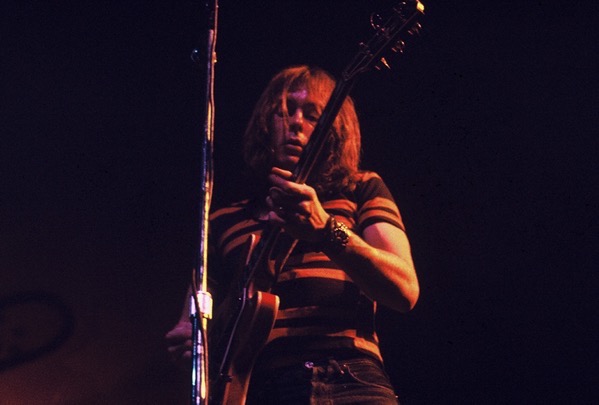
Driving Force Behind Quicksilver Messenger Service Dies at 72:
’Mr. Duncan’s jazz-rooted improvisations and his intricate interplay with the guitarist John Cipollina were crucial elements in Quicksilver Messenger Service’s eclectic chemistry. Although Mr. Cipollina, who died in 1989, was nominally the lead guitarist and Mr. Duncan played rhythm, they constantly traded and blurred those roles.

David Freiberg, the band’s original bassist, called Mr. Duncan Quicksilver’s “engine.” “He was what was holding the band together,” Mr. Freiberg said in an interview. “If he was there, it would work. If he wasn’t, it wouldn’t.”…’
Via The New York Times
In their heyday prior to getting more poppy in the ’70’s, Quicksilver was the hidden gem in the San Francisco psychedelic holy trinity along with the better-known and longer-lived Grateful Dead and Jefferson Airplane. I have always been wistful that I never got to see them perform their intricate ‘snake music’ live (they were not at Woodstock, unlike the Dead and the Airplane). I could listen to the ecstatic sinuous interweave between Cipollina and Duncan forever. My commute to work lasts almost exactly long enough to play the “Who Do You Love?” suite from “Happy Trails” start to finish.
’An international team of experts argues that better care for people experiencing their first manic episode is urgently needed and that more research needs to go into treatment solutions for bipolar disorder.

In a new paper, published in The Lancet Psychiatry journal, the authors describe patchy and inconsistent care, widespread failure to detect bipolar disorder early enough, and a lack of guidance on how to treat people experiencing mania for the first time.…’
Via PsychCentral
As a practicing psychiatrist, I’d like to suggest that the approach of this ‘international team of experts’ may be faulty. This may have something to do with the divide between clinicians and the academic psychiatric pundits, who I would venture to say see far fewer real-world patients.
Bipolar disorder is a condition that can only be properly diagnosed by observing and understanding the longitudinal course of the patient’s presentation over time. Thinking you know what is going on when you take the snapshot view at a moment in time is immensely problematic. It may be clear at the time of a ‘first manic episode’ that a person’s condition declares itself as bipolar disorder but not necessarily. It is often not clear even when faced with the patient in front of you in the moment that what they are experiencing is a manic episode. The symptoms they might display, possibly suggestive of mania — increased energy, decreased sleep, loquaciousness, ambition and confidence, brightening of mood, irritability, agitation and raciness, perhaps some telltale psychotic symptoms — could also be indicative of a number of other illnesses or temperaments when taken in isolation.
‘Better care for people experiencing their first manic episode’ is often not possible precisely because it is not prudent or sometimes not even possible to diagnose it as mania. The mindset of the rapid rush to judgment embodied in the article has arguably played a large part in the epidemic over\diagnosis of bipolar disorder and concomitant rush to overtreatment, to the detriment of our patients.
What to imagine when imagining aliens:

‘The remarkable distributed nervous system of the octopus is discussed at an astrobiology conference….’
Via Big Think

’Several things can be true at once. Without the handicap of sexism, Clinton probably would have won a race that was essentially decided by a rounding error. Misogyny will work against the next female presidential candidate. And yet the people best positioned to lead the Democratic Party are women.
After all, every candidate will have something to overcome. Sanders would have to deal with widespread fear of socialism. Biden demonstrated again on Thursday that he’s ill-equipped to justify much of his long record in public life. Sexism is a disadvantage but it’s not the only one.…’
Via New York Times

’…even by Mr. Trump’s dismal standards, his performance this week before the G-20 summit in Osaka, Japan, should take everyone’s breath away. More than yet another demonstration of his erratic behavior, this was also an object lesson in the dangers of his context-free hostility to the world beyond the United States.
Before arriving in Japan, Mr. Trump had reportedly been musing about withdrawing the United States from the security treaty with Japan signed in 1951 and revised in 1960 — the cornerstone of the alliance between the United States and Japan and a pillar of American foreign policy. On Wednesday, asked about the treaty on Fox News, Mr. Trump sneered, “If Japan is attacked, we will fight World War III.” Then he added: “But if we’re attacked, Japan doesn’t have to help us at all. They can watch it on a Sony television.”
Mr. Trump’s comment demonstrates a strategic cluelessness and historical ignorance that would disqualify a person from even a modest desk job at the State Department.
Though Mr. Trump implied that the security treaty favors Japan, it was largely dictated by the United States.…’
Via New York Times
‘It’s a nightmare scenario: His defeat was “fake news,” and Trump tries to stay in power. Would democracy survive?…’
— Read on Salon
Umair Haque wrote:
‘It’s almost exactly a year ago, to the day, that I got a little angry, and wrote an essay called “Do Americans Understand They’re Beginning to Commit the Legal Definition of Genocide?” The point of my essay, though, wasn’t just to point out that the unthinkable was happening here: it was to warn that even worse was to come, unless that much was taken lethally seriously. So where are we now — exactly a year later? Are we doing any better — or are we doing worse? …’
With a whimsical, irregular trunk and flat-topped evergreen leaves, the Monterey cypress in La Jolla, California, that may have inspired the trees in 7he Lorax fatally fell over last week.
— Read on Atlas Obscura
What even more smarmy condescending pitiful bald faced liar waits in the wings?
‘Sarah Huckabee Sanders, the White House press secretary, is leaving the Trump administration after a turbulent tenure marked by attacks on the media, dissemination of false information, and the near-disappearance of the daily press briefing…’
— Read at Boston Globe
‘President Trump’s latest comments, during an ABC News interview, indicating that he would consider accepting negative material on political opponents from foreign governments, and that he wouldn’t necessarily report the contact to the FBI, are just the latest in a long line of counterintelligence red flags. Trump said, “There isn’t anything wrong with listening.”…’
— Read on CNN
Those of you with more common family names, or with appreciable extended families, may have a hard time seeing the point of this post. But, as I’ve noted before, there are very very few Gelwans. I have always wondered, or you might even say obsessed about, how/if those people with the Gelwan surname I do find are related to me. I have very little in the way of extended family; I envy those who do and thirst for deeper family connection, especially so that my children might come to feel embedded in a broader web. It becomes poignant each year around the holidays, which I imagine you all celebrate with enormous extended family gatherings while we have the four of us around the dinner table.
I subscribe to a Google alert for new ‘Gelwan’ references on the web, and once received a link to this page (gendrevo.ru). Alas, the page is now gone from the web. It appeared to me to be from a Russian genealogy site in which survivors post remembrance pages for their relatives who died in the Holocaust. On my paternal side, the generation of immigrants were my grandparents, in the early 20th century; my father’s older siblings and he were born in the U.S. between 1910-1915. I have always assumed that Gelwan was an Ellis Island anglicization of something else and thus that researching my family’s roots would become squirrelly because the family name of anyone related to me might not have precisely the same pronunciation or spelling. As the part of the world from which my ancestors emigrated shifted back and forth between Slavic and Germanic dominance, between Cyrillic and Roman alphabets, so too did the rendering of family names. I would have to pursue the Gelvans, the Gelmans, and even the Hellmans and who knows what else for relatives. [I may have made this up, but I think I learned somewhere along the way that we are actually distantly related to the Hellman’s mayonnaise family…]
The flip side of that coin is of course that literal ‘Gelwans’ might not be related to me. For example, I found through Googling traces of a Deborah Gelwan who was in the public relations industry in Sao Paulo, Brazil who is referred to on the web. Deborah now lives in Orlando FL and runs a couple of businesses. Maybe I’ll get to see her someday.
When I was a child, a Brazilian tourist with the last name Gelwan, possibly from the same family as Deborah, arrived on our doorstep, having looked up Gelwan in the phonebooks on arriving in New York City. It appears that my parents and the visitor determined that it was unlikely we were related (although I cannot imagine how they did this, as my parents spoke no Portugese and rumor has it this visitor spoke no English). Deborah and I are now Facebook friends but we have not established a family relationship. And there are traces of other Gelwans in Brazil as well. I would at least love to figure out if these South American Gelwans descended from Eastern European immigrants. I am aware that eastern European Jews did go to South America in the diasporas, but I am not sure about Brazil per se.
Similarly, I have reached out to Gelwans in Lebanon — a Claude Gelwan was there but apparently now lives in France — and Iraq but I doubt we are related. It appears to me that Gelwan is a transliteration of a first name, not a family name, in Iraq.
I have discovered several other Gelwans in the New York area where I grew up. Interestingly enough I have long been aware of two brothers, physicians as I am: Jeffrey, a gastroenterologist and Mark, an ophthalmologist. In years past we spoke by phone but cannot establish a common background. I assumed that it might merely be an accident that we share our name, that Gelwan might be a final common pathway of anglicization from diverse unrelated family names in eastern Europe.
Similarly, there is a pharmacist in Brooklyn named Steven Gelwan, who never answered an email from me. Maya Gambarin-Gelwan, I think Steven’s spouse, is yet another New York area physician, at Memorial Sloan-Kettering, with a number of scholarly publications. Never heard from her either. There is a Rebecca Gelwan (my late mother’s name by marriage) who studies, or studied, law in Pennsylvania and posts alot of photos and videos of her new baby (congratulations on the newest Gelwan!) but, again, I can’t figure that we are direct relatives. Along with my brother, that’s two Gelwan attorneys.
Elise Gelwan, I learn, graduated from medical school at the University of Connecticut. Yet another physician Gelwan! There is a Sam or Sami Gelwan (I think they are the same person) in the New York area as well. If I mention all these names in this post, they may get hits when people vanity-search themselves, and they may get in touch, I hope.
LinkedIn, from which I resigned long ago, has thirteen ‘Gelwan’ profiles, including some of the aforementioned but also a Brazilian photographer Jacob Gelwan, and a Miriam Gelwan in Argentina. A Samantha Gelwan is/was a student at Indiana University in Bloomington. A Mohammed Gelwan is an engineer in Egypt.
From time to time I see passenger manifests listing Gelwans who disembarked at Ellis Island in the late 19th or early 20th centuries. I have found the arrival records of my grandfather’s two sisters and alot of other mysterious Gelwans. But where do I go from there? Some 19th century records show Gelwans emigrating from Ireland to Manitoba, but I cannot find Canadian Gelwans today.
I was told that my family originated in Riga, Latvia. Given that, I’ve written to Vladimir, or Wladimir, Gelwan, who I learned was the principal dancer in the Latvian National Ballet and who now runs a ballet school in Berlin, suggesting that we may be related, but have never gotten a reply back. I have seen a picture of Vladimir Gelwan on the web and can even imagine a certain family resemblance, although he’s certainly got the dancer’s grace that I do not. I’m determined to try and drop in on him when next in Berlin. [Do I have any readers in or near Berlin?]
What is it, by the way, with these nonresponses? I don’t know, maybe it’s just me, but a message from afar suggesting the writer might be my relative, with such a rare name, would immediately pique my interest and would surely get a response. Do you think recipients might have worried that my messages represented some kind of con? I don’t want anything from them except connectedness. Is that the problem right there?
Given the waves of upheaval that repeatedly washed over eastern Europe in the 20th century, with ever-changing political hegemony over various regions, large scale displacement of populations, the Holocaust, the destruction of records, the changing of names, etc., conventional genealogical research is not possible. It is not as if there is an established family tree, with records waiting around for the taking, as is the case for many families with western European origins. My father’s older brother, now deceased, once returned to eastern Europe to try to find some of our roots. Despite a reputation for being extremely resourceful, he apparently had no success at all. Lamentably, I cannot find any notes from his research; otherwise I (acknowledged as someone with no lack of resourcefulness myself!) might pick up the trail where he left off, despite the passage of time having added fifty further years of obfuscation.
It has been a little (not much) easier to find information about my mother’s ancestors. She herself, as a young child, emigrated with her family in the 1920’s from Eastern Europe. Several years ago, my son and I visited the small out-of-the-way town of her origin looking for indications of her family, armed with notes from a maternal uncle of mine who had made a similar trip decades before and retracing his steps. Unfortunately (probably because they were a Jewish family), the town hall and the burial grounds held no traces; the Nazis had razed the Jewish cemetery. I discovered when I visited the site that my uncle had been the one to fund the reassembly of the smashed fragments of gravestones into a monument there. There were no Jews left but a non-Jew who lived adjacent to the site of the burial ground kept the key, tended the grounds and let Jewish visitors into the site to see the monument.
My son and I did see the house where my mother had been born; eerily, we had by coincidence parked our rental car right in front of it when we had entered the town center.
We learned that, because of their persecution, the entire family hid from the authorities behind a falsified family name for several generations. Interestingly, that was the same name as a boss of mine, whose family I knew originated from the same region. Instead of being intrigued when I mentioned my discovery to him when I returned from my Eastern European trip, he scoffed. (I think he was appalled at the possibility that we were related.)
I am on Ancestry.com (here is a link to what I know so far of my family tree) and Ancestry keeps notifying me that they’ve discovered someone who is probably a third or fourth cousin. None of the family trees I’ve been directed to seem to intermesh so far. (I wonder how many third or fourth cousins a person has, on average…)
If you have a complicated heritage that will not be easy to trace on a geneology research site, my advice is to embark on a project of tracking down and documenting what you can, as soon as you can. It only disappears over time. Your children and their children may appreciate it if information about their mysterious family origins might one day help them find their place in the world in the face of the increasing rootlessness of modern life.
Perhaps one day someone googling their family name will be linked to this post and wonder how they might be related to Eliot Gelwan. Hurry up, Google, crawl this post and index it!
‘In a world whose absurdity appears to be so impenetrable, we simply must reach a greater degree of understanding among men, a greater sincerity. We must achieve this or perish. To do so, certain conditions must be fulfilled: men must be frank (falsehood confuses things), free (communication is impossible with slaves). Finally, they must feel a certain justice around them…’
‘…Spotting a superposition state’s formation predicts oncoming random event…’
via Ars Technica
‘…Microsoft says mandatory password changing is “ancient and obsolete”. Bucking a major trend, company speaks out against the age-old practice….’
via Ars Technica
‘Scientists have shined a light on one of the creepier denizens of the deep sea, a pitch-black creature that can turn itself into a living lamp called the dragonfish. New research helps explain one of the dragonfish’s more disturbing qualities: its relatively gigantic and translucent teeth.
Deep-sea dragonfish, while rarely more than a half-foot long, are at the top of their food chain in their particular niche, much like sharks, bears, and other apex predators. Its superiority is in no small part thanks to a disproportionately huge jaw, which features sharp, fang-like teeth and allows it to swallow prey up to half its size…’
via Gizmodo
‘…The Oakland City Council on Tuesday voted unanimously to decriminalize magic mushrooms and other psychoactive fungi and plants, ordering law enforcement to stop the prosecution of possession of natural psychedelics. The decision came less than a month after Denver voters approved decriminalization of psilocybin mushrooms, with an initiative that bars the city from using resources to pursue criminal penalties for people over the age of 21 who use or possess psilocybin…
The resolution doesn’t allow for farming or commercial sales of natural psilocybin and clarifies that people who have post-traumatic stress or depression should speak to a doctor before using psilocybin. An amendment also advises that users “don’t go solo” when using psilocybin. The resolution only covers natural psilocybin—not MDMA, LSD, or other synthetic drugs.
As Associated Press points out, psychedelic mushrooms are still illegal under state and federal laws…’
via Gizmodo
’Trump hasn’t made a blatant lunge for dictatorial power. But his intermittent impulses toward autocracy have made it necessary for advisers, Congress and courts to contain him.He argued during his campaign for the efficacy of torture and prosecuting his opponent, Hillary Clinton. He has threatened media whose coverage he found insufficiently admiring, and tried to suppress the Trump-damning book “Fire and Fury.”
He proposed an un-American religious test for immigrants and refugees to ban Muslims; infected the body politic with nepotistic and business-crony appointees; shrugs off Russian meddling in our elections; and discussed a mass roundup-cum-deportation of illegal immigrants…
To top it off, the president plays fawning footsie with real dictators.…’
Via WBUR Cognoscenti
Related: How America could become a dictatorship (Google search)
Ravens get bummed out if they see a feathered friend who’s in a bad mood, according to a study published on Monday in the Proceedings of the National Academy of Sciences.
The adoption of feelings expressed by others is known as “emotional contagion,” and while it’s familiar to humans, it’s not as well understood in other social animals. Examining the phenomenon across species could shed light on the evolution of important abilities such as empathy, according to the study, which was led by Jessie Adriaense, a PhD student at the University of Vienna.…’
Via VICE
’A new paper just published in the Journal of Geology puts forth a new idea: A pair of supernovae ionized our atmosphere to such an extend that lightning became exceptionally common, and burned down the trees in which our ancestors lived.
The paper’s lead author, physicist and astronomer Adrian Melott of the University of Kansas, says, “It is thought there was already some tendency for hominins to walk on two legs, even before this event. But they were mainly adapted for climbing around in trees. After this conversion to savanna, they would much more often have to walk from one tree to another across the grassland, and so they become better at walking upright. They could see over the tops of grass and watch for predators. It’s thought this conversion to savanna contributed to bipedalism as it became more and more dominant in human ancestors.”…’
Via Big Think
Roky Erickson dies aged 71
‘…Erickson’s death was confirmed by his representatives in a statement that described him as a “heroic icon of modern rock’n’roll and one of the best friends the music ever had”. The cause of death had not been released and the representatives appealed for privacy for his family.
ZZ Top’s Billy Gibbons, a long-time friend, said: “It’s almost unfathomable to contemplate a world without Roky Erickson. He created his own musical galaxy and early on was a true inspiration.”
Erickson was the frontman of the 13th Floor Elevators, a psych-rock band from Austin, Texas, where he grew up. Their rollicking debut single, You’re Gonna Miss Me, included on the Nuggets compilation that defines 1960s garage rock, remains one of the most celebrated songs from that scene – REM’s Peter Buck once described it as “Louie Louie, sideways”. It reached No 55 in the US charts and prompted a TV appearance on American Bandstand; Janis Joplin at one point considered joining the band.
The band were advocates of the use of LSD and their work became increasingly expansive – their eight-minute song Slip Inside this House, from their second album, would later be covered by Primal Scream.
Erickson struggled with mental health issues throughout his life, and was frequently treated in hospital for schizophrenia. When he was arrested for marijuana possession in 1969, he chose to be admitted to a psychiatric hospital instead of taking a jail term – he ended up spending three years in a maximum security hospital and was given damaging electric shock therapy. The hospitalisation brought the band’s career to an end, though they reunited for one-off gigs in 1984 and 2015.
Erikcson continued solo, with backing bands including the Aliens and the Explosives, though his mental health continued to suffer and he performed less in the 1980s and 90s. He was married twice and had three children. He told the journalist Nick Kent that he was an alien, something he confirmed to the Guardian in a 2007 interview: “At one time I had it notarised that I was from another planet. By a lawyer.” In 1989, he was arrested for stealing his neighbours’ mail, though the charges were later dropped. His younger brother, Sumner, was given custody of him in 2001.
Improved health meant that he returned to performance, collaborating with bands including Mogwai and Okkervil River. Both acts paid tribute to him on Saturday, the latter describing him as “the most beautifully unique person I’ve ever known and perhaps the most brilliant”.…’
Via The Guardian
West Pointer and journalist Lucian K. Truscott IV, writes:
‘War crimes are unique. Only during a war are you empowered to legally kill other people and given the weapons necessary to kill by the state. But the cases of the soldiers and sailors charged with war crimes have become just another norm for Trump to violate. This time, he has pardoned a murderer, something that no president has ever done. Enemies will remember these things. They will fight harder. They will kill more Americans.
We’ll be paying for Trump and his own war crimes for a very, very long time….’
Via Salon
’WHEN TALKING SPORTS, USING THE wrong terms—referring to a basketball game as a “match,” say, or talking about “points” in baseball—will immediately give you away as a non-aficionado, a person who doesn’t even have a grasp of the basics. But one of the oddest sets of terminology is what to call the uniformed people who make the rule decisions in the course of a sporting event. “This realm of vocabulary is one of the things that can expose you as someone who doesn’t know a ton about a sport, because it’s so unpredictable and so uneven from sport to sport,” says Seth Rosenthal, a writer, producer, and host at the sports publication SB Nation.
Mention the referees at a baseball game or the umpire at a basketball game and it’s clear you know nothing. And that’s perhaps a little unfair because the terminology for sports officials in English makes no sense and has no pattern—or if it does, it’s so riddled with holes as to be pointless. This is not the case in other languages (with one pretty major exception). In English-speaking countries sports officials have a dizzying array of names, without any kind of unifying structure as to the role each plays.
How is it that the United States, England, Australia, and other Anglophone countries have so thoroughly stumbled over what to call our sports officials? Around the world, from France to Japan to Brazil, the naming of sports officials is clear, consistent, straightforward. But in English, it’s more like a trap.…’
Via Atlas Obscura
Cosmological evidence we really might be the center of the universe
’The “Axis of Evil” is a name given to an anomaly in astronomical observations of the Cosmic Microwave Background (CMB). The anomaly appears to give the plane of the Solar System and hence the location of Earth a greater significance than might be expected by chance – a result which appears to run counter to expectations from the Copernican Principle.
The Cosmic Microwave Background (CMB) radiation signature presents a direct large-scale view of the universe that can be used to identify whether our position or movement has any particular significance. There has been much publicity about analysis of results from the Wilkinson Microwave Anisotropy Probe (WMAP) and Planck mission that show both expected and unexpected anisotropies in the CMB. The motion of the solar system, and the orientation of the plane of the ecliptic are aligned with features of the microwave sky, which on conventional thinking are caused by structure at the edge of the observable universe. Specifically, with respect to the ecliptic plane the “top half” of the CMB is slightly cooler than the “bottom half”; furthermore, the quadrupole and octupole axes are only a few degrees apart, and these axes are aligned with the top/bottom divide.
Lawrence Krauss is quoted as follows in a 2006 Edge.org article:
But when you look at CMB map, you also see that the structure that is observed, is in fact, in a weird way, correlated with the plane of the earth around the sun. Is this Copernicus coming back to haunt us? That’s crazy. We’re looking out at the whole universe. There’s no way there should be a correlation of structure with our motion of the earth around the sun – the plane of the earth around the sun – the ecliptic. That would say we are truly the center of the universe.…’
— Via Wikipedia
‘The American form of government is uniquely structured to exacerbate the urban-rural divide — and to translate it into enduring bias against the Democratic voters…’
via 3 Quarks Daily
‘…Mark Sanford was shocked to learn that his former colleague Rep. Justin Amash (R-MI), who last weekend became the sole Republican to call for President Donald Trump’s impeachment, had been formally censured by the House Freedom Caucus.
The Freedom Caucus unanimously voted to condemn Amash, a founding member, on Monday evening for speaking out against Trump, escalating the treatment that Trump critics — like former Sens. Bob Corker and Jeff Flake and even Sanford — have received in the past.
..To outside observers like Sanford, it was a telling moment. The Freedom Caucus was once a group designed to fight against a certain Republican Party groupthink, to promote small-government and constitutionally conservative ideals, but it is increasingly indistinguishable from Trump…’
via Vox
Earlier this week, Judd Legum’s Popular Information newsletter reported that, in recent years, six corporations contributed hundreds of thousands of dollars to the lawmakers behind six-week abortion bans in Georgia, Mississippi, Alabama, Kentucky, Missouri, and Ohio. In an attempt to fight back, consumers across the country have started organizing boycotts.
For a full list of who took money from whom, you should read the entire Popular Information post, but here’s a quick rundown of the corporations involved and which candidates accepted the largest donations:
- AT&T: $196,600 total, including $113,000 to Alabama Governor Kay Ivey and $15,000 to Mississippi Governor Phil Bryant
- Eli Lilly: $66,250 total, including $30,000 to Alabama Governor Kay Ivey and $7,000 to Mississippi House Speaker Philip Gunn
- Walmart: $57,700 total, including $7,000 to Ohio Governor Mike DeWine and $10,000 to Ohio Senate President Larry Obhof
- Pfizer: $53,650 total, including $6,600 to Georgia Governor Brian Kemp and $12,700 to Ohio Governor Mike DeWine
- Coca-Cola: $40,800 total, including $10,000 to Alabama Governor Kay Ivey and $6,600 to Georgia Governor Brian Kemp
- Aetna: $26,600 total, including $6,600 to Georgia Governor Brian Kemp and $5,250 to Ohio Senate President Larry Obhof
via Lifehacker
Xeni Jardin on Boing Boing:’It’s a bad day. But there are things you can do to help the women affected by abortion bans like the one Alabama’s female Republican governor cynically signed into law today, touting the sanctity of life, and forgetting all about the lives of women who will suffer under this abuse of state power.
Here is a thing you can do to help women.
Donate to The Yellowhammer Fund to help the women of Alabama with medical costs, and travel and a place to stay, if they need and/or want an abortion.…’
Via Boing Boing
That movie sound you hear every time something bad is about to happen:‘For almost a century, film composers and sound designers have used a similar sound to create a tension in movies: that long, eerie, sustained tone (or cluster of tones) known best as “the drone of dread.”
Drones can be low- or high-pitched, subtle or cacophonous, and made with a variety of instruments and electronic tools, but the effect is always the same. It instantly produces a sense of anxiety, as if out of thin air.…
[You] can hear it in everything from 2001: A Space Odysseyto The Thing to, more recently, The Dark Knight and The Social Network. This week’s episode of Game of Thrones, in fact, had an obvious drone toward the end that signaled a character’s impending doom…’
Via Quartz
I wish there was something in Alabama worth boycotting.
One afternoon the last week in April
Showing Kai how to throw a hatchet
One-half turn and it sticks in a stump.
He recalls the hatchet-head
Without a handle, in the shop
And go gets it, and wants it for his own.
A broken-off axe handle behind the door
Is long enough for a hatchet,
We cut it to length and take it
With the hatchet head
And working hatchet, to the wood block.
There I begin to shape the old handle
With the hatchet, and the phrase
First learned from Ezra Pound
Rings in my ears!
“When making an axe handle
the pattern is not far off.”
And I say this to Kai
“Look: We’ll shape the handle
By checking the handle
Of the axe we cut with—”
And he sees. And I hear it again:
It’s in Lu Ji’s Wên Fu, fourth century
A.D. “Essay on Literature”-—in the
Preface: “In making the handle
Of an axe
By cutting wood with an axe
The model is indeed near at hand.”
My teacher Shih-hsiang Chen
Translated that and taught it years ago
And I see: Pound was an axe,
Chen was an axe, I am an axe
And my son a handle, soon
To be shaping again, model
And tool, craft of culture,
How we go on.
— Gary Snyder (1983)
‘What you eat matters a lot more than whether it’s local or organic, or what kind of bag you use to carry it home from the store...’
‘Three psychiatrists have written an editorial for the Boston Globe warning that special counsel Robert Mueller’s report on Russian interference in the 2016 presidential election shows more evidence that President Donald Trump is mentally unfit to hold office.
The psychiatrists — Dr. Bandy X. Lee of Yale, Dr. Leonard L. Glass of Harvard Medical School, and Edwin B. Fisher of University of North Carolina-Chapel Hill — argue that Mueller’s report provides a disturbing new window into the president’s behavior, which is frequently marked by impulsive emotional meltdowns.
“The pattern that emerges of the president is one of rash, short-sighted decision-making, without consideration of consequences,” they write. “Reckless, impulsive moves that are self-destructive, despite the intention of self-protection, are characteristic of dangerous impairment. They impede Trump’s capacity to prioritize national security.”
They then quote from sections of the Mueller report that illustrate these behaviors, including his efforts to dangle pardons to potential witnesses and his effort to get Mueller fired as special counsel….’
Via Salon
‘…The work appeared at the site which had been occupied by climate activists since protests began in the capital almost two weeks ago…’
Via The Guardian
Leading the charge away from apocalypse paralysis.
Republican lawyers may be readying jump from sinking ship:
‘…The founders had in mind that the three branches would jealously guard their own prerogatives, so it would be unlikely they would ever allow a president to defy them as blatantly as Trump is doing. Obviously, they didn’t expect such slavish devotion from a president’s allies as we see in the current Congress.
There is one faction of the Republican party that may be peeling off, however, and it’s the faction that Trump has been counting on to keep the Democrats at bay. I’m speaking of conservative lawyers, some of whom seem to feel a bit queasy about what they saw in the Mueller report and Trump’s reaction to it…’
Via Salon
’CAN POEMS TEACH US how to live? What does it mean to approach poetry as a source of self-help? It’s not hard to call to mind examples of poetry that rouse or soothe or refocus a reader, lifting or quieting the mind like a deep breath. Yet much of the poetry encountered in literature classrooms and canonical anthologies may not readily reflect the self that is reading it, and therefore may not readily become a tool of self-improvement. The work of many modernist poets in particular is placed under the banner of “art for art’s sake,” a motto meant to explicitly free such poetry from the responsibility of serving a didactic or utilitarian function. The poems of Wallace Stevens, for instance, are frequently taken to epitomize the kind of high modernist difficulty that in its slippery symbology and ambiguous affect would seemingly resist being reliably employed for any useful purpose.
But Joan Richardson’s How to Live, What to Do: Thirteen Ways of Looking at Wallace Stevens emphatically asserts the practical use-value of poetic difficulty. As is suggested by Richardson’s title (which borrows from a Stevens poem), Stevens is in fact concerned above all with improving the daily lives of his readers.…’
Via Los Angeles Review of Books
I
Among twenty snowy mountains,
The only moving thing
Was the eye of the blackbird.
II
I was of three minds,
Like a tree
In which there are three blackbirds.
III
The blackbird whirled in the autumn winds.
It was a small part of the pantomime.
IV
A man and a woman
Are one.
A man and a woman and a blackbird
Are one.
V
I do not know which to prefer,
The beauty of inflections
Or the beauty of innuendoes,
The blackbird whistling
Or just after.
VI
Icicles filled the long window
With barbaric glass.
The shadow of the blackbird
Crossed it, to and fro.
The mood
Traced in the shadow
An indecipherable cause.
VII
O thin men of Haddam,
Why do you imagine golden birds?
Do you not see how the blackbird
Walks around the feet
Of the women about you?
VIII
I know noble accents
And lucid, inescapable rhythms;
But I know, too,
That the blackbird is involved
In what I know.
IX
When the blackbird flew out of sight,
It marked the edge
Of one of many circles.
X
At the sight of blackbirds
Flying in a green light,
Even the bawds of euphony
Would cry out sharply.
XI
He rode over Connecticut
In a glass coach.
Once, a fear pierced him,
In that he mistook
The shadow of his equipage
For blackbirds.
XII
The river is moving.
The blackbird must be flying.
XIII
It was evening all afternoon.
It was snowing
And it was going to snow.
The blackbird sat
In the cedar-limbs.
— Wallace Stevens (1954)
Andrew Sullivan wrote:
‘We have a president who is an instinctual criminal and liar, who threatens the integrity of our justice system and of our democratic elections, who is incapable of understanding the rule of law, backed by an attorney general who just outright distorted the findings of the special counsel.
What more do we need to know? To refuse to use the one weapon the Founders gave us to remove such a character from office is more than cowardice. It is complicity. It is a surrender to forces which aim to make the world safe for authoritarianism. It may not work. But if we acquiesce, pretend it isn’t happening, or look away, it cannot work. This disgusting man is not just a cancer in the presidency. His presidency is a cancer in our Constitution and way of life. How long do we let this metastasize even further? How long before we take a stand? Mueller has given us the road map. He has done his duty. Now it’s our turn to do ours: “to support and defend the Constitution and laws of the United States of America against all enemies, foreign and domestic.”
There is no qualification in that oath of citizenship.
Impeach Trump now….’
Heather Gudenkauf writes:
‘It’s a delicate and challenging endeavor for a writer to honestly, accurately and respectfully portray brain differences in fictional characters. Below are ten masterfully told works of psychological suspense, featuring protagonists with exceptional psychological characteristics. These heroes and heroines use their cognitive gifts to navigate challenging and oftentimes dangerous circumstances and along the way give readers insight into other, creative ways of thinking….’
Leah Crane writes:
‘The first ever image of a black hole, released on Wednesday, raises several important questions. For a start, we don’t know where exactly the light in the image comes from. Next, can we get a similarly good image of Sagittarius A*, the black hole at the centre of our galaxy? It is changing more quickly than the newly pictured black hole, so getting a clean image is more challenging. Finally, can these images help us understand how general relativity and quantum mechanics fit together? …’
Source: New Scientist
Pankaj Joshi:’Strictly speaking, the system did not see an event horizon, which cannot be seen by definition. Furthermore, although an event horizon necessarily implies a shadow and silhouette, the converse is not true. Nonetheless the observations are still so precise that whatever is casting the shadow must be exotic. No ordinary body could be so small and yet so dark and so massive. A black hole is now the most conservative conclusion. If it is not a black hole, it might be a naked singularity, a type of immensely dense object that I have studied, and that would make a black hole look rather mundane.…’
Via Nautilus
David Cain writes:
‘I unfollowed everybody except accounts who produce tweets I almost always want to see.
This is not the same as following people and businesses you like. That was a big discovery for me: simply liking someone or something isn’t a good reason to follow them on Twitter.
When you start going by whose tweets you like reading, as opposed to who you like for other reasons, you will probably end up following way fewer people.
Mostly, I stuck with:
- People I know in real life (who aren’t in the habit of tweeting about horrible news events they don’t plan to do anything about)
- Local events in my city
- Local shops and businesses I would like to visit more
- Certain kinds of humor
- Certain kinds of discussion about certain topics
This kind of curation is definitely not what Twitter wants you to do, so you’ll have to turn to a third party app to efficiently cull your feed. I used Tokimeiki Unfollow, which cleverly allows you to Marie-Kondo-ize your feed, asking yourself if each account still “sparks joy.”
You’ll know what you feel about a given account when you see its name and avatar. You’ll feel a lot of aversion and indifference, and small moments of joy. When in doubt, unfollow. I was ruthless and regret nothing. It took ten minutes….’
Source: Raptitude
‘…He cheats. He lies. He kicks. And not just his ball—yours, too. He props up a 2.8 handicap that’s faker than WrestleMania 35. He wins tournaments he never even played in. He wins tournaments that weren’t even held.
He does all of this because he has to win. A loss is to Donald Trump what a shower is to the Wicked Witch of the West. He has to win no matter how much cheating, lying, and pencil erasing it takes. He has to win whether you’ve caught him or not. Maybe it was his father beating into his kid brain, Win, win, win. Be a winner, over and over. Maybe it was where he learned the game—Cobbs Creek, a scruffy public course in Philadelphia full of hustlers and con men who taught him to cheat your opponent before he cheats you…’
Via The Atlantic
Stephen Johnson writes:
‘…[A] psychologist might recommend exposure therapy, in which people with specific fears are voluntarily and incrementally exposed to the very things they fear. The goal is to create new positive memories to silence the fearful ones. These are called “extinction memories.”
Scientists have long associated a part of the brain called the amygdala with fear. However, a new study focuses on the hippocampus — a brain region generally associated with memory and spatial navigation — and describes how extinction memories work not by replacing fearful memories, but rather by competing with them. This competition acts in two ways: by decreasing or silencing the activation of fear-inducing neurons and by activating a distinct set of neurons that help to reduce the fear response….’
Source: Big Think
Dakin Andone writes:
‘Nearly 20 years after the mass shooting at Columbine High School captured the nation’s attention, some of the school’s current students are using its legacy to combat gun violence.
Their campaign, #MyLastShot, asks students to put a sticker on their ID or cellphone that indicates their desire for images of their body to be publicized and shared if they are killed as a result of gun violence.“Our country has a history of photography effecting real change,” the campaign’s founder, 17-year-old Kaylee Tyner, told CNN in a phone interview Saturday.
Tyner said she was inspired by Emmett Till’s death, his legacy and how that was connected to the painful imagery of his body….’
Via CNN
Only solution appears to be cessation of use:’It’s no longer illegal to smoke marijuana in 10 U.S. states and its medical use is allowed in 33. In Colorado, it’s been fully legal since 2014, with a variety of THC — the active agent in grass — products available for sale. A new study, however, looks to harsh the buzz: There’s been a dramatic rise in emergency-room visits for cannabinoid hyperemesis syndrome, or CHS.
It’s a condition characterized by stomach pain, extreme nausea, and repeat vomiting. Researchers’ concern is exacerbated by the assumption that if this many people are showing up at ERs, many more are likely to be dealing with it on their own. Part of the appeal of marijuana has always been how unlikely it is that you’ll overdose on it. Doctors don’t yet know exactly what’s going on.…’
Via Big Think
Apparently not an April Fool’s piece.

’Scientists have determined that the way an animal rests—reclining on its back, sprawling on its belly, standing up, or sitting, is determined by primarily by its size. But more importantly, the study authors have provided a large selection of images of animals luxuriating in various ways, and they are delightful…’
Via Gizmodo
/cdn.vox-cdn.com/uploads/chorus_image/image/50709765/flames-red-blue.0.jpg)
Zack Beauchamp:
‘…There will never be a shared sense of reality about what really happened in 2016 or whether Trump obstructed justice during the investigation. No authoritative document could overcome the deep systemic forces that produced this dispute…’
Via Vox

“The Beat poets began the counterculture movement in the arts that is the reason all the artists I know are still here in San Francisco,” said Andrew Sean Greer, a San Francisco-based novelist who won the 2018 Pulitzer Prize for “Less.”
“Ferlinghetti and his friends changed the city from men in gray flannel suits to poets in leaky basements, black and female and queer poets even then,” Greer tells CNN Travel. “We’re a continuation of that hope and rage and art. I still go to Caffe Trieste with a friend to write and Vesuvio to drink and City Lights for poetry.”
As he turns 100 on March 24, both Ferlinghetti and City Lights — which remains a beacon of poetry and progressive thought in San Francisco’s North Beach neighborhood– are celebrating.

City Lights is hosting an open house, galleries are featuring his photographs and paintings and San Francisco Mayor London Breed will declare March 24 Lawrence Ferlinghetti Day. There will also be events in New York City for the Bronxville native, who moved to San Francisco after attending University of North Carolina at Chapel Hill, serving in the US Navy during World War II and graduate school at Columbia University in New York and the Sorbonne in Paris.
“Sunday should be a great day of celebration in Lawrence’s honor,” said punk art surrealist Winston Smith, who designed the controversial Dead Kennedys’ album cover, “In God We Trust, Inc.” in 1981.
“He is so very beloved by his friends and neighbors in North Beach and people all round the world. Putting up with the human race for a full century deserves a reward.”
Via CNN

US licensing of esketamine, a version of the drug ketamine, “could usher in a wave of fast-acting treatments, but experts are worried.”
As a clinical psychiatrist, wrestling with the treatment of severe resistant depressive conditions in my patients, I share some of the concerns about possible side effects, long-term risks and potential associated social ills raised in this Guardian article.
Ketamine has a broad range of brain effects. It is a euphoriant, a hallucinogen, a dissociant, and an anaesthetic in overlapping but different dosage ranges. The article quotes Dr Carlos Zarate, head of experimental therapeutics and pathophysiology at the US National Institute of Mental Health, who conducted the first clinical trial of ketamine for depression in 2006, who says, in part,
“What’s particularly interesting about ketamine is that it has multiple effects throughout different brain biologies… This makes it much more unique than other treatments. Many of the symptom domains seen in depression, but not all, seem to respond to it.”
Zarate and other prominent psychiatrists can perhaps be forgiven for their enthusiasm for what they describe as the first truly novel development in the drug treatment of depression in several decades. However, let’s look at what I see as the absurdity in this comment. ‘Depression’ is a catchall name for biologically diverse conditions and states of mind, and increasingly so in the past few decades as manufacturers have marketed the expansion of the term in order to expand demand for their antidepressant products. Ketamine is far from ‘unique’ in its nonspecificity! If it acts immediately and acts across a range of depressive types and symptoms, it is fairly certain that it is not addressing the underlying pathophysiology of the condition but rather providing a generic ‘feel-good’ effect. To mix metaphors, it is sort of like using a sledge hammer to drive in a thumb tack… and, if it’s the only tool you’ve got, then it pays to see everything as if it is a thumb tack, right? (Certainly, those who sell sledge hammers would have you see it that way!)
Any drug with nonspecific euphoriant effects will make depressed people feel better. Indeed, they make anyone feel better. In this manner of speaking, cocaine and stimulant drugs (‘speed’) ‘treat’ depression. In fact, there is a school of thought (the ‘drug-of-choice’ model, or ‘self-medication hypothesis’) that some proportion of substance abuse patients may be unknowingly treating an underlying psychiatric disorder through their drug use. This extends to other intoxicants such as alcohol and sedative-hypnotics as well. Using nonspecific euphoriants for their antidepressant effects causes immense problems, and the use of ketamine may fall into that category.
The first of these is potential tolerance. This refers to the fact that the brain inures itself over time to the effects of the substance. It is not clear that ketamine will cause physiological tolerance — and there have not been long-enough duration studies to tell — but it is certainly possible. The brain resists being pushed out of its usual range of functioning into a euphoric state. With increasing resistance, it takes more and more of the substance, or more and more frequent administration, to produce the desired effect. One will be chasing one’s tail, so to speak, in a vicious cycle — the more one uses, the more one needs. There may come to be less and less therapeutic benefit or benefit only at such dosage that toxic effects start to predominate. To maintain its antidepressant effect, current guidelines suggest a weekly interval for esketamine treatment. Given the chronicity of some depressive conditions, patients may need to continue treatment over a period of years or even indefinitely. Dosages may need to be higher or treatments more frequent as time goes on. One could imagine that the pharmaceutical industry would welcome such captive audiences requiring open-ended treatment modalities.
Closely related to the development of tolerance is the potential for dependency. Ketamine is probably not physiologically dependency-inducing (“addictive”), in the sense of needing to keep using it to stave off physiological withdrawal (“drug sickness”) upon cessation. But a substance that makes people feel good so quickly is highly reinforcing and may thus be psychologically addictive even if not physically.
Proponents point out that the benefits of treatment may outweigh the risks for patients who have no other options. This begs the question of whether its use will continue to be restricted to patients whose depression is treatment-resistant and has failed other available options. After all, the last innovation in antidepressant development, the introduction of the SSRIs (Prozac and its cousins) in the 1980’s was originally meant to rescue those whose depression was resistant to the treatments of the day (the tricyclics and monoamine oxidase inhibitors). Now they have become the first-line treatments, completely supplanting the older agents in modern psychiatric practice… and some argue that they are inferior antidepressant agents for clinically significant clinical depression. To call them good antidepressants, society has had to accept a vastly expanded definition of depression. This loss of linguistic precision contributes to the ongoing medicalization of everyday life problems, to our detriment.
(I’m talking about the circular reasoning pitfall here. If someone’depression seems happier on ketamine, then ketamine is having an antidepressant effect. And if it is seen as an antidepressant, then anyone who responds to it had depression. And so on.)
I share the misgivings of Dr. Julie Zito, professor of pharmacy and psychiatry at the University of Maryland, who sums it up:
“There’s been a huge expansion in what constitutes depression. There are low-moderate depressives who are going through a divorce or struggling with a new job… What they might really need is counselling. But in the US, we love our pills and simple solutions to very complex problems.”
A further complication of esketamine use may be that, once available in the marketplace, we may be unable to stem its diversion for street use, either for recreational use or unsupervised self-medication for self-diagnosed depression. After all, we haven’t done such a great job with prescription opiates, and it does not appear we have learned much from that.
It is also important to recognize that esketamine was approved after only four relatively small and short-lived clinical trials with decidedly mixed results. As Zito points out,
“The FDA created this new innovative study category, which means they only required one randomised, double-blind placebo-controlled trial, not two, which is usually the criterion for a new drug.”
Furthermore, not only the breadth or duration of the drug’s benefit but its depth are in question. A treatment may be found to be superior to placebo in the sense of demonstrating a statistical toy significant difference on an outcome measure in a clinical trial, but this may not translate into something clinically meaningful to the patient’s life. In other words, this may not be a distinction that makes a difference. Such logically fallacious conclusions are a generic problem in psychopharmacological research. Zito, again, on the ketamine trials:
“They evaluated the efficacy using symptom score change and there was only a three- to four-point improvement on a 60-point scale, which you have to say is very modest. And that is what the whole thing hangs on.”
In the absence of robust and extensive double blind placebo-controlled trials, the interest in ketamine relies heavily, then, on anecdotal and first-person accounts of dramatic improvement. The benefits may derive from suggestion effects — a substance that drastically alters consciousness or subjective experience, as ketamine does, is a strong candidate to mobilize the placebo response, inspiring in the recipient the self-fulfilling prophecy that it is having a powerful effect. I am not entirely scoffing about this; I believe that a good part of the effect of many of the medications we use arises from enlisting the patient in a belief system in which the medication is helping, thus mobilizing their self-healing.
Concerns have repeatedly been raised about effects of ketamine administration such as hallucinations, out-of-body experiences, and fluctuations in blood pressure. Patients receiving esketamine will be required to remain in the clinic or the doctor’s office for two hours of monitoring after each treatment. But people are different; who is to say that someone will be free of risk precisely at the two-hour point? In preapproval studies, there were three suicides in the esketamine group as well as a fourth death in which a patient crashed his motorcycle shortly after dosing. (Hard to say, but did that represent suicidal intent? Impairment of judgment? Or perceptual and coordination problems?)
Of course, the manufacturer asserts that all those events were unrelated to the actions of the drug, but there were no corresponding events in the placebo group. With such a small studied group, certainly this difference may have been statistical accident, and severe depression indubitably carries suicide risk. But there have also been concerns about exacerbation of suicidal tendencies with earlier antidepressants. Going into detail about this concern is the subject for a different essay, but I’ll mention several different potential dangerous mechanisms. First, any side effects that make a person more uncomfortable (e.g. the restlessness and agitation caused by several of the SSRIs) can be the straw that breaks the camel’s back, tipping them over the edge to decide not to endure discomfort any longer. Second, not all symptoms of depression respond to treatment at the same rate. If a person’s depressive lack of energy and paralysis of will improve before their despair does, their motivation to act on their despondency may be mobilized. Third, some drugs, and ketamine as a euphoriant may be among them, may act by lowering inhibitions, including control over latent self-destructive urges.

Advocates of the use of ketamine and esketamine, thus, may be ignoring the fact that the Emperor has no clothes. We know too little about the pathophysiology of depression and too little about the pharmacology of ketamine. Classically, exposition on antidepressants has relied on the ‘monoamine hypothesis’ for the illness and the fact that the drugs address monoamine (primarily norepinephrine and serotonin) deficits. Yet, that has clearly been an incomplete or inadequate explanation. More recently, the focus in depression and just about every other psychiatric condition has turned to a different neurotransmitter, glutamate. There’s a lot of handwaving but we do not have a precise or coherent understanding of how glutamate is implicated in the mechanism of various disorders; certainly nothing that would guide clinical practice. And, surely enough, ketamine is thought of, among other actions, as a glutamate receptor blocker. Post hoc ergo propter hoc?

Similarly, in this post-monoamine world, there is a lot of handwaving interest in the idea that depression treatments may also work by correcting physical damage to nerve cells implicated in depression. Sure enough, the article invokes this ‘neuromythology’:
“…one idea is that (ketamine) triggers the brain to regrow connections between cells that are involved in mood, but no one really knows for sure.”
A complicated set of misgivings. In short, let us hope that ketamine, through its hallucinogenic effect, is not causing us to hallucinate clothes on the Emperor.

’We can’t blame people for giving up on a pet, especially when we don’t have the scaffolding in place to help them. And yet equally, if we say that animals are important to us, that they’re our family, and science demonstrates that they are capable of complex cognitive abilities and emotional states, then relinquishing them, knowing that it might kill them, is morally problematic.
The more we learn about animals – the more we force them into roles of friend, family member, surrogate child – the murkier become our obligations to them.
Maybe the solution is not keep pets at all…”The paradox is that the more we think of animals… as autonomous beings that have emotions and wants, the less right we have to keep them as a pet.” …’
Via Boston Globe
Andrew Sullivan:
‘As far as liberal democracy is concerned, this is an extinction-level event…’
Via New York Mag
’Saving the world from the apocalyptic impact of climate change should be a dream for many Silicon Valley titans concerned about legacy, says David Wallace-Wells, and yet few are dedicating themselves to addressing the catastrophe. Negative emissions technology funded by Bill Gates exists. It would cost $3 trillion per year to operate and would mean human industry could continue at current levels without global warming. That figure sounds astronomical, however global subsidies to fossil fuel industries cost $5 trillion per year.…’
Via Big Think
’President Donald Trump has repeatedly attacked the late Sen. John McCain in the past weeks, for reasons known largely to himself. On Wednesday, Trump escalated his feud with a dead man, launching into an unprompted rant about McCain’s funeral (among other things) during a speech at a tank factory in Lima, Ohio.…’
Via Vox
Steve Calandrillo, Professor of Law, University of Washington:’In an effort to avoid the biannual clock switch in spring and fall, some well-intended critics of DST have made the mistake of suggesting that the abolition of DST – and a return to permanent standard time – would benefit society. In other words, the U.S. would never “spring forward“ or “fall back.”
They are wrong. DST saves lives and energy and prevents crime. Not surprisingly, then, politicians in Washington, California and Florida are now proposing to move to DST year-round.
Congress should seize on this momentum to move the entire country to year-round DST. In other words, turn all clocks forward permanently. If it did so, I see five ways that Americans’ lives would immediately improve.…’
Via Big Think