Science looks for signs we’re not real: “Some say the odds are good that were living in a computer simulation, and a few researchers think they might know how to find out the truth.” (Crave – CNET).

Science looks for signs we’re not real: “Some say the odds are good that were living in a computer simulation, and a few researchers think they might know how to find out the truth.” (Crave – CNET).

A directory of Opt-Out links to stop data brokers from selling your personal information: ‘Data brokers have pioneered advanced techniques to collect and collate information about consumers’ offline, online and mobile behavior. But they have been slow to develop innovative ways for consumers to gain access to the information that companies obtain, share and sell about them for marketing purposes. Now federal regulators are pressuring data brokers to operate more transparently.
In 2012, a report by the Federal Trade Commission recommended that the industry set up a public Web portal that would display the names and contact information of every data broker doing business in the United States, as well as describe consumers’ data access rights and other choices. But, for years the data brokers have been too busy to build a centralized Web portal for consumers. So, we decided to help them out and StopDataMining.me was born!’ (StopDataMining.me).


‘For the past century, an obscure mathematical principle called Zipfs law has predicted the size of mega-cities all over the world. And nobody knows why.’ (io9).

Seymour M. Hersh: “Barack Obama did not tell the whole story this autumn when he tried to make the case that Bashar al-Assad was responsible for the chemical weapons attack near Damascus on 21 August. In some instances, he omitted important intelligence, and in others he presented assumptions as facts. Most significant, he failed to acknowledge something known to the US intelligence community: that the Syrian army is not the only party in the country’s civil war with access to sarin, the nerve agent that a UN study concluded – without assessing responsibility – had been used in the rocket attack.” (LRB 8 December 2013).

‘The German president has become the first major political figure to boycott the Sochi Winter Olympics in February. According to German weekly Der Spiegel, Joachim Gauck last week informed the Kremlin of his decision, which is understood to be a response to the Russian government’s violations of human rights and harrassment of the opposition.Gauck, a former Lutheran pastor who played a key part in the East German protest movement before the fall of the Berlin Wall, has declined any official visits to Russia since coming to office in March 2012 and repeatedly criticised the country’s “deficit of rule of law” and “air of imperialism”. ‘ (The Raw Story).
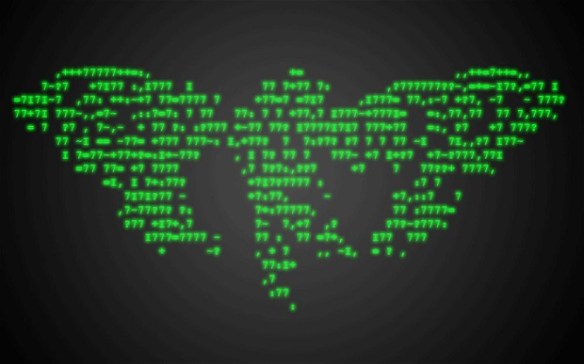
‘…Eriksson didn’t realise it then, but he was embarking on one of the internet’s most enduring puzzles; a scavenger hunt that has led thousands of competitors across the web, down telephone lines, out to several physical locations around the globe, and into unchartered areas of the \”darknet”. So far, the hunt has required a knowledge of number theory, philosophy and classical music. An interest in both cyberpunk literature and the Victorian occult has also come in handy as has an understanding of Mayan numerology.
It has also featured a poem, a tuneless guitar ditty, a femme fatale called \”Wind” who may, or may not, exist in real life, and a clue on a lamp post in Hawaii. Only one thing is certain: as it stands, no one is entirely sure what the challenge – known as Cicada 3301 – is all about or who is behind it. Depending on who you listen to, it’s either a mysterious secret society, a statement by a new political think tank, or an arcane recruitment drive by some quasi-military body. Which means, of course, everyone thinks it’s the CIA…’ (Telegraph.UK)

HIV Reappears in Two Patients Thought to Be Cured: ‘The two male patients seemingly cured of HIV thanks to bone marrow transplants have both begun to show signs of the virus again, according to researchers in Boston.
Dr. Timothy Henrich of Brigham and Womens hospital presented the disappointing news yesterday at an AIDS research conference in Florida, saying that both patients had resumed HIV medications after the virus reappeared. The two patients, both battling HIV for years, had received bone marrow transplants to treat Hodgkins lymphoma, a type of blood cancer. After the transplants, both showed undetectable levels of the HIV virus. The patients agreed to stop taking HIV medications to help researchers determine if the marrow transplant was responsible for the virus disappearing.
When both patients showed undetectable virus levels after several weeks without treatment seven weeks and 15 weeks, respectively, Henrichs team revealed this finding to the medical community. But the virus reappeared in one patient in August, and in the other in November, after eight months with no HIV detected.’ (Gizmodo)

Inspiration To World’, Dies At 95: “Nelson Mandela, who was born in a country that viewed him as a second-class citizen, died Thursday as one of the most respected statesmen in the world.” (NPR). Mournful day. Playing that parlor game, what famous person you would most like to meet, Mandela was one of the first who came to mind. Thinking about whose passing will diminish the world, and me, most, he is high on the list. Madiba is gone. Long live Madiba!.

‘You’re looking at the Grand Canyon completely flooded by clouds, “a once in a lifetime event,” according to park ranger Erin Whittaker. It didn’t only happen once, she says, but two times in only three days’ (Gizmodo).

‘ …“Homeland” has long since abandoned the promise of its first exciting season, when The New Yorker’s Emily Nussbaum hailed it as “the antidote for ‘24.’” For those who may have repressed the memory, “24” was the Fox network’s action-packed, torture-rich, frankly Islamophobic series featuring the unstoppable Jack Bauer, who saved the world at least three times in any given 24-hour period.
“Homeland” was created by two men who were heavily involved with the earlier show, Howard Gordon and Alex Gansa. They seemed to have scaled down the testosterone quite a bit, going so far as to hint in the Showtime series that the US drone program was at least partly responsible for the further radicalization of the Muslim world (and for Brody’s desire to kill the VP).
But season three brings back “American exceptionalism” with a vengeance — a concept author Stephen Kinzer described as “the view that the United States is inherently more moral and farther-seeing than other countries and therefore may behave in ways that others should not.”
Others, of course, might disagree. By all accounts, despite government bans, millions of Iranians are actively using social media; the Supreme Leader, Ayatollah Khamenei has his own Twitter account, and issues fatwas via Facebook. Let’s just hope they’re not all watching “Homeland.” ‘ (Salon)

A recent study showed that more than 90% of depositions of the crucifixion show Jesus with his head turned toward the right, showing the left side of his face. The investigators speculate that artists are betraying an implicit understanding of the neuroscience of emotion — it is generally acknowledged that the left side of the face is more expressive, controlled as it is by the right cerebral hemisphere. However, there are plenty of non-neurological explanations:
‘For one thing, Mary is usually located to Jesus’ right, so maybe he is looking toward her. Or if Jesus is feeling abandoned by God, perhaps he is looking to the right, away from God (Jesus is usually described as being on God’s right-hand side). The saved are also depicted by convention on the right, so Jesus could be looking toward salvation. The number of speculations are almost endless.’ (Wired Science).

‘You’re pretty smart right? Clever, and funny too. Of course you are, just like me. But wouldn’t it be terrible if we were mistaken? Psychologists have shown that we are more likely to be blind to our own failings than perhaps we realise. This could explain why some incompetent people are so annoying, and also inject a healthy dose of humility into our own sense of self-regard.’ (Mind Hacks).

Soviet military dog training school in Moscow Oblast
Exploding Dogs Were Used as Mobile Anti-Tank Mines During World War II (part of my sometime series, The Annals of Human Depravity).
In a tactic pioneered by the Soviets, the dogs (usually Alsatians and also called hundminen or dog mines in German) ‘were trained to carry explosives on their bodies to enemy tanks, where they would then be detonated’ by timer or remote control, with obvious consequences for the animal in question.
Fortunately for the dogs, a number of impracticalities, described in the article, limited the extent and duration of this approach, although various countries including the United States continued to train dogs as suicide bombers until the end of the 20th century and ‘insurgents attempted to use them during the Iraq War. In this case, there’s only one documented case of a bomb actually being detonated while attached to a dog though; protests rose up among Muslims who believe that animals should be killed only for food.’
Other animals have been trained to become wartime munitions delivery systems as well, including cats, birds, rats, camels, donkeys, mules and horses, monkeys and marine mammals. (Gizmodo).

‘There may well be more than 60 billion habitable planets littering the Milky Way, but it’s virtually impossible to make use of that figure. Instead, how about this picture, which shows you how many planets are within 60 light-years of Earth.
In the image, the size of the circle represents the size of the planet, while color indicates the kind of star it orbits: dusky red signifies that it’s spinning around something similar to the Sun, gray means that the star is a different size. Dark circles represent planets the same size as Earth.’ (Gizmodo)
 …So why can’t we stop using it? ‘In my research I have found that social software may inadvertently promote inequality rather than countering it. Metrics, like follower count or number of “likes” on a photo, facilitate this process by rendering social status into something that can be quantified, qualified, and publicized.
The process of what I call “digital instantiation” works similarly toward quantification, qualification, and publicity by rendering users’ lives in piecemeal fashion, unintentionally creating a whole that is larger than the sum of its parts. Social media tools digitize formerly ephemeral pieces of information, like what one had for breakfast, making it possible to create a bigger picture of a person or community’s actions. Once “breakfast” is captured in a Foursquare check-in or Instagram photo, it can be combined, searched, or aggregated with other pieces of information to create mental models of actions, beliefs, and activities. Within this context, social surveillance, or the monitoring of friends’ and peers’ digital information, becomes normal.
While lifestreaming has plenty of social and emotional benefits, it also comes with costs. Lifestreamers must see themselves through the gaze of others, altering their behavior as needed to maintain their desired self-presentation. This constant monitoring against the backdrop of a networked audience creates anxiety and encourages jockeying for status, even as it brings forth new forms of social information.’ (Medium).

‘During the 1990s, a previously little-known concept rapidly became the hottest term in international relations. “Humanitarian intervention”—at its simplest, the use of military force to protect human rights—established itself in the political lexicon following a series of brutal conflicts in Africa and the Balkans.
As with most political concepts, humanitarian intervention became voguish thanks to circumstances. The Soviet Union had collapsed. We hadn’t fully grasped the threat posed by Islamist terrorism. With the expulsion of Saddam Hussein from Kuwait and the relative success of the Israel-Palestinian peace process, even the Middle East seemed uncommonly stable.
Most important, there was an acute awareness in Western countries that our impressive military strength hadn’t deterred some of the worst slaughters of the 20th century. For around 14 weeks in 1994, Rwanda was the site of the most rapacious extermination since the Holocaust, with more than 800,000 Tutsis and moderate Hutus murdered by machete-wielding Hutu extremists. Between 1992 and 1995, the war in Bosnia spawned countless atrocities, such as the massacre of more than 8,000 Muslim men and boys by Serb forces in the town of Srebrenica. To many—especially American Jews—it seemed that these failures showed the hollowness of oft-repeated promises of “never again.”
Humanitarian intervention was the response to these failures. When the United States and the United Kingdom led a “coalition of the willing” to stop the Serb onslaught in Kosovo in 1999—supported by an ideologically broad coalition of liberal internationalists and neoconservatives—it wasn’t to pursue a strategic interest but to arrest yet another episode of ethnic cleansing on European soil. Similarly, when the British intervened in Sierra Leone’s civil war in 2000, the sole purpose was to prevent drug-addled paramilitaries controlled by a psychopath named Foday Sankoh from hacking off the limbs of young children.
The images of those wars—the long columns of refugees, the mass graves, the flowers and candy and cheers that greeted the liberating foreign armies—all seem very distant now. The combined experiences of Iraq and Afghanistan have persuaded many Westerners that any kind of military action, even when it’s undertaken in the defense of basic human rights, is just plain wrong—morally, politically, and strategically.
Thus do we come to the debacle in Syria. Once Syrian President Bashar al-Assad unleashed chemical weapons against his own people, Western policymakers were confronted with a textbook case for humanitarian intervention. In a different context, they might have acted. But there was little domestic backing, even from those who had spoken strongly in the 1990s of “never again.” This lack of support was one critical reason America and its allies caved under Russian pressure, calling off planned air strikes in favor of a dubious diplomatic process guided by Moscow.
Was humanitarian intervention just a passing fad, or can it be resuscitated? Can we ever reach agreement among both liberals and conservatives that military action in defense of human rights is sometimes justified, or are we fated to remain polarized, to the detriment of those under the boot of tyrannical regimes?’ (Slate)

Helium is wasted in floating parade balloons: ‘Back in September, before the U.S. government shut down for a few days, Congress approved a bill that would prevent the National Helium Reserve from shutting down. This might sound minor, but as Miriam Krule and Noam Prywes explained in 2012, we’re quickly running out of helium—a valuable, and nearly impossible to recreate, natural resource. More than just funny voices and balloons, helium is necessary for MRIs, deep-sea diving, and aerospace engineering. So, before you sit down to watch the Thanksgiving Day Parade, take a minute to read their piece…’ (Salon).

“Brian the dog elevated the show’s humor to actual social commentary. Killing him off was a huge mistake…” — Kevin Wong (Salon.com).
‘Having type 2 diabetes may mean you are already on the path to Alzheimer’s. This startling claim comes from a study linking the two diseases more intimately than ever before.’ (New Scientist).

William Saletan: ‘…[P]eople who suspect conspiracies aren’t really sceptics. Like the rest of us, they\’re selective doubters. They favour a world view, which they uncritically defend. But their worldview isn’t about God, values, freedom, or equality. It\’s about the omnipotence of elites.
Conspiracy chatter was once dismissed as mental illness. But the prevalence of such belief, documented in surveys, has forced scholars to take it more seriously. Conspiracy theory psychology is becoming an empirical field with a broader mission: to understand why so many people embrace this way of interpreting history. As you’d expect, distrust turns out to be an important factor. But it’s not the kind of distrust that cultivates critical thinking…’ (Slate, via New Scientist).

‘The kind of boredom you experience most often may be linked to your personality, say researchers.’ (National Geographic)

‘This exceedingly rare triple system, seen when the universe was only 800 million years old [which is cosmic terms is the equivalent to the first 3.8 years of our lives], provides important insights into the earliest stages of galaxy formation during a period known as ‘cosmic dawn,’ when the universe was first bathed in starlight.’ (Gizmodo).

‘When the Queen of Denmark opted to commission the first royal family portrait in almost 125 years, she turned to Thomas Kluge, a largely self-taught Danish portrait painter whose inspirations are said to include Rembrandt and Caravaggio. After four years of work, Kluge\’s finished painting is finally here: an inexplicably creepy portrait that reimagines the royal family as a clan of sadists, transvestites, and malevolent pigmen whose abominable ruttings have brought into the world a brood of Damien-like progeny.’ (Co.Design via Boing Boing)

‘Pilots flying Boeing’s massive 747 Dreamlifter accidentally landed at the wrong airport yesterday, and have been stuck there overnight. The modified jumbo jets hopscotch the world picking up sections of the 787 Dreamliner and flying them to the company’s factories in Everett, Washington and North Charleston, South Carolina. But last night instead of landing at McConnell Air Force Base where the nose sections are made by Spirit Aerosystems, they landed several miles away at Jabara airport. No big deal? Big deal: The runway at Jabara is only 6,101 feet long, a bit shorter than the 747′s normal takeoff requirements…’ (Wired.com).

Something for everyone’s taste:

‘150 is “the approximate number of people you would not feel embarrassed about joining uninvited for a drink if you happened to bump into them in a bar.” 150 is often referred to as the Dunbar number.
Ten years ago, Robin Dunbar studied the sending of Christmas cards in England. He used the count to measure meaningful social connections. The number sent averaged 153.5, precisely what Dunbar expected. He and other researchers kept finding groupings of 150; self-governing communes, offices of Gore-Tex, etc. Dunbar postulates that this is simply the brain’s limit. Sure, there are outliers, but most people top out at 150 relationships…
“Fundamentally, once you go beyond this number of people you can keep in your head, you begin to filter yourself, you change what you share and how much, you put on your public face.” …
Dunbar plotted the size of the neocortex of each type of primate with the size group that it lived in. The bigger the neocortex, the larger the group. To predict human group size, Dunbar supplanted the ratio of the human neocortex into the group. The result? 147.8, roughly 150…
Dunbar says within the 150, there are other interesting numbers. Three to five are our closest friends. The death of any of our 12-15 closest would devastate us….’ (dirjournal.com).
 ..but scientists killed it (Telegraph.UK)

“God doesn’t need our permission to be anywhere” …The separation of church and state is not even worth debating because “God is everywhere” and “doesn’t need our permission to be anywhere.” (Salon.com).

Despite inarguably vast stress levels, multiple measures since the mid-’90s have shown that African Americans are psychologically healthier than Caucasian Americans. The phenomenon is formally described as the “race paradox in mental health”.
And it is not simply a matter of lower rates of diagnosis or detection. More credible speculations have pointed to more supportive family relationships or what are called “fictive kin” relationships, the unofficial family structures that develop in communities not dominated by standard nuclear family structures.
But, in an investigation published last week, Dawne Mouzon, a Rutgers sociologist, dispensed with much of the received wisdom, writing that “neither the quality nor quality of family relationships can explain the race paradox in mental health.” Instead, “it is plausible that African Americans possess other resilience mechanisms (e.g., other social relationships, different types of coping strategies) that I was unable to consider here.” (The Last Word On Nothing).
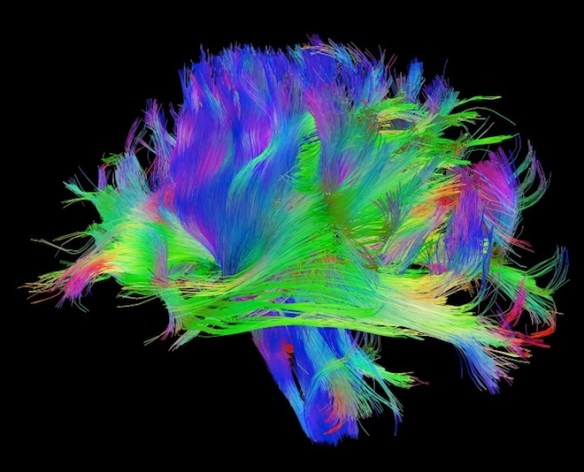
‘It’s a question that’s perplexed philosophers for centuries and scientists for decades: Where does consciousness come from? We know it exists, at least in ourselves. But how it arises from chemistry and electricity in our brains is an unsolved mystery.
Neuroscientist Christof Koch, chief scientific officer at the Allen Institute for Brain Science, thinks he might know the answer. According to Koch, consciousness arises within any sufficiently complex, information-processing system. All animals, from humans on down to earthworms, are conscious; even the internet could be. That’s just the way the universe works.’ (Wired Science).

‘What are the World’s Most Irreplaceable Places? Here are 6 From a Big New List. A new study highlights some of the world’s most critical places essential for species survival.’ (National Geographic)

‘It’s hard to think of a critter that inspires as much hyperbolic hysteria as the brown recluse spider. They’re pretty much universally hated. If you believe the tales, these small arachnids are biting people all day, every day, producing massive, stinking flesh-craters that require months of intensive care and perhaps a prosthetic appendage. Sometimes, it seems these spiders have nothing better to do than hunker down in dark corners throughout North America, waiting for tender human skin to present itself.
Though there are strands of truth in the hype, on the whole, it’s bunk.’ (Wired Science).

No, they don’t “protect our freedoms”: ‘We need not thank the troops for every breath we take. When we do, we reduce our entire existence as free people to something that only exists at the whim of the U.S. military, and suffocate critical thought about the military and what it’s actually doing in the world.’ — Justin Doolittle (Salon).

‘The Florida senator is keynoting a fundraiser for a notorious anti-LGBT rights group.’ (Salon).

Shocked astronomers discover strange new type of space object: ‘The object in these photographs captured by Hubble is not a comet. It’s something that no astronomer has ever seen before, according to NASA: An asteroid with six comet-like tails that isn’t moving like a comet and it’s not made of ice. It’s just hanging up there, rotating like a crazy space spider…’ (Gizmodo).

“It could be the brightest comet in decades, or even centuries, and it\’s coming to visit for the holidays. It might also fizzle out.” (CNET).
‘

The chances of accidentally insulting someone is greater when you travel internationally, thanks to differing customs and ideas of etiquette. Even common hand gestures can signal the wrong thing.
Mental Floss has gathered five hand signals that don’t mean what you might think, depending on the country you’re in. A thumbs up, for example, doesn’t mean “good job” in parts of Latin America, West Africa, Iran, and Sardinia—it’s more like giving someone the finger. Likewise, the peace sign is not so peaceful in the UK, depending on how your palm is turned, and the okay sign does not mean “okay” in the Middle East, Turkey, Germany, or Brazil.
Before you travel to a foreign country, it’s best to review the etiquette and customs, including when it comes to eating. Or, in case of doubt, just to avoid making hand gestures all together.’ (Lifehacker).

‘Watertown, New York is the last place you\’d expect to find a creepy, supernatural mystery. After all, they\’re mostly known as the birthplace of the safety pin and those air fresheners for your car that are shaped like trees – both safe, friendly things. But now, it seems that they’re finally ready to admit that they\’re becoming more well known for their local park’s nasty habit of eating people.
Last week, the city officials erected a sign in the park warning locals of the \”vortex\”. As it turns out, the Mayor himself felt compelled to acknowledge the rumors after digging up some recently declassified information linking Watertown to the infamous Area 51 base in Nevada.’ (Roadtrippers).
 ‘More than 7,000 Americans named John Smith have gone missing. Smith is unchallenged as the most numerous surname in the U.S., some 28 percent ahead of second-place Johnson, according to the U.S. Census Bureau and WhitePages.com. And, based on the most recent available data from these sources, John heads the list of the most frequent first names. And yet, John Smith doesn’t even rank in the top 10 combinations of first and last name in the country. What happened? Where did all the John Smiths go?’ (Slate)
.

‘The U.S. is facing a shortage of a drug widely used for lethal injections. With few options, states are turning to new drugs and compounding pharmacies, rather than overseas companies.
The move is raising safety concerns, and in some cases delaying executions. Other executions are proceeding, however, and advocates are asking whether the use of new drugs violates the inmates’ Eighth Amendment protection from cruel and unusual punishment…’ (NPR)

‘…[T]ime is an emergent phenomenon that comes about because of the nature of entanglement. And it exists only for observers inside the universe. Any god-like observer outside sees a static, unchanging universe…’ (The Physics arXiv Blog — Medium).

‘It is not just a Starbucks’ coffee that you get when you walk through the café doors; it is a Starbucks’ experience. It was after careful psychological research that the company first decided to have white cups with green writing, “tall” lattes, natural materials, and round tables…’ (Whittaker Associates)

Thanks to William Gibson. (The Rockpot).
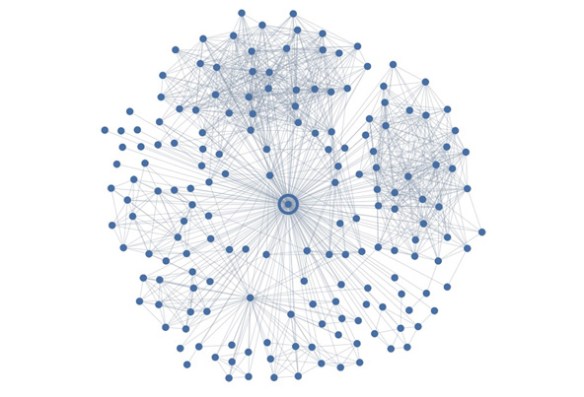
‘So much of social-network analysis confirms what we already know. Relationships that last are ones in which the other person widens our world? Well, yes. Still, it’s kind of nice to have it confirmed with lots of data and algorithms. “We hadn’t had this view of it before,” Mr. Kleinberg observed.’ (NYTimes)

‘The two-sentence horror story has become something of a genre — a super-popular Reddit thread this summer spawned numerous compilations. In honor of Halloween, Salon asked 12 novelists to try their hand at the form. Below are their ghostly, bloody, watery and surprisingly pet-focused forays into darkness.’ (Salon.com).

‘Sunday morning at 6:45AM, folks on the east coast will have a chance to see a very rare hybrid solar eclipse. The last one occurred 150 years ago, and the next one won\’t come until the year 2172, so make sure you set your alarm.
Let\’s talk terminology. An annular eclipse is the \”ring of fire\” type, where a small ring of sunlight shines around the moon. A total eclipse is where the moon blocks the sun completely. The hybrid eclipse has both phases: a ring is briefly visible, then the moon blocks out the sun completely, then (sometimes) the ring reappears. They\’re exceedingly rare — fewer than five percent of eclipses are hybrids.’ (Gizmodo).

‘When humans see a dog wagging its tail, we pretty much equate that with a happy dog. It turns out that a dogs tail may be much more expressive than we realize. Research has shown that happy dogs tend to wag more to the right, while anxious dogs go more to the left. A new study published in the journal Current Biology delves into the question of whether other dogs read this response.’ (CNET).


Der Vampir
‘The myth of the bloodsucking vampire has stalked humans from ancient Mesopotamia to 18th-century Eastern Europe, but it has differed in the terrifying details. So, how did we arrive at the popular image we know, love and fear today? And what truly makes a vampire…a vampire?’ (YouTube).

A reprise of my traditional Hallowe’en post of past years:
It is that time of year again. What has become a time of disinhibited hijinx and mayhem, and a growing marketing bonanza for the kitsch-manufacturers and -importers, has primeval origins as the Celtic New Year’s Eve, Samhain (pronounced “sow-en”). The harvest is over, summer ends and winter begins, the Old God dies and returns to the L of the Dead to await his rebirth at Yule, and the land is cast into darkness. The veil separating the worlds of the living and the dead becomes frayed and thin, and dispossessed dead mingle with the living, perhaps seeking a body to possess for the next year as their only chance to remain connected with the living, who hope to scare them away with ghoulish costumes and behavior, escape their menace by masquerading as one of them, or placate them with offerings of food, in hopes that they will go away before the new year comes. For those prepared, a journey to the other side could be made at this time.
With Christianity, perhaps because with calendar reform it was no longer the last day of the year, All Hallows’ Eve became decathected, a day for innocent masquerading and fun, taking its name Hallowe’en as a contraction and corruption of All Hallows’ Eve.

All Saints’ Day may have originated in its modern form with the 8th century Pope Gregory III. Hallowe’en customs reputedly came to the New World with the Irish immigrants of the 1840’s. The prominence of trick-or-treating has a slightly different origin, however.
The custom of trick-or-treating is thought to have originated not with the Irish Celts, but with a ninth-century European custom called souling. On November 2, All Souls Day, early Christians would walk from village to village begging for “soul cakes,” made out of square pieces of bread with currants. The more soul cakes the beggars would receive, the more prayers they would promise to say on behalf of the dead relatives of the donors. At the time, it was believed that the dead remained in limbo for a time after death, and that prayer, even by strangers, could expedite a soul’s passage to heaven.

English: A traditional Irish turnip Jack-o’-lantern from the early 20th century.
Jack-o’-lanterns were reportedly originally turnips; the Irish began using pumpkins after they immigrated to North AMerica, given how plentiful they were here.
The Jack-o-lantern custom probably comes from Irish folklore. As the tale is told, a man named Jack, who was notorious as a drunkard and trickster, tricked Satan into climbing a tree. Jack then carved an image of a cross in the tree’s trunk, trapping the devil up the tree. Jack made a deal with the devil that, if he would never tempt him again, he would promise to let him down the tree.
According to the folk tale, after Jack died, he was denied entrance to Heaven because of his evil ways, but he was also denied access to Hell because he had tricked the devil. Instead, the devil gave him a single ember to light his way through the frigid darkness. The ember was placed inside a hollowed-out turnip to keep it glowing longer.
Folk traditions that were in the past associated wtih All Hallows’ Eve took much of their power, as with the New Year’s customs about which I write here every Dec. 31st, from the magic of boundary states, transition and liminality.
The idea behind ducking, dooking or bobbing for apples seems to have been that snatching a bite from the apple enables the person to grasp good fortune. Samhain is a time for getting rid of weakness, as pagans once slaughtered weak animals which were unlikely to survive the winter. A common ritual calls for writing down weaknesses on a piece of paper or parchment, and tossing it into the fire. There used to be a custom of placing a stone in the hot ashes of the bonfire. If in the morning a person found that the stone had been removed or had cracked, it was a sign of bad fortune. Nuts have been used for divination: whether they burned quietly or exploded indicated good or bad luck. Peeling an apple and throwing the peel over one’s shoulder was supposed to reveal the initial of one’s future spouse. One way of looking for omens of death was for peope to visit churchyards

The Witches’ Sabbath aspect of Hallowe’en seems to result from Germanic influence, and fusion with the notion of Walpurgisnacht. (Familiar with the magnificent musical evocation of this, Mussorgsky’s Night on Bare Mountain?) Although probably not yet in a position to shape mainstream American Hallowe’en traditions, Mexican Dia de los Muertos observances have started to contribute some delightful and whimsical iconography to our encounter with the eerie and unearthly as well.
What was Hallowe’en like forty or fifty years ago in the U.S. when, bastardized as it has become with respect to its pagan origins, it retained a much more traditional flair? For my purposes, suffice it to say that it was before the era of the pay-per-view ’spooky-world’ type haunted attractions and its Martha Stewart yuppification with, as this irreverent Salon article from several years ago [via walker] puts it, monogrammed jack-o’-lanterns and the like. Related, a 1984 essay by Richard Seltzer, frequently referenced in other sources, entitled “Why Bother to Save Hallowe’en?”, argues as I do that reverence for Hallowe’en is good for the soul.

That would be anathema to certain segments of society, however. Hallowe’en certainly inspires a backlash by fundamentalists who consider it a blasphemous abomination. ‘Amateur scholar’ Isaac Bonewits details academically the Hallowe’en errors and lies he feels contribute to its being reviled. Some of the panic over Hallowe’en is akin to the hysteria, fortunately now debunked, over the supposed epidemic of ‘ritual Satanic abuse’ that swept the Western world in the ’90’s.

The horror film has become inextricably linked to Hallowe’en tradition, although the holiday itself did not figure in the movies until John Carpenter took the slasher genre singlehandedly by storm. Googling “scariest films”, you will, grimly, reap a mother lode of opinions about how to pierce the veil to journey to the netherworld and reconnect with that magical, eerie creepiness in the dark (if not the over-the-top blood and gore that has largely replaced the subtlety of earlier horror films).
In any case: trick or treat!

Velvet Underground Leader and Rock Pioneer Dead at 71: ‘Lou Reed, a massively influential songwriter and guitarist who helped shape nearly fifty years of rock music, died today. The cause of his death has not yet been released, but Reed underwent a liver transplant in May.’ (Rolling Stone obituary)

“I see it as a Broadway for writers,” said Henriette Lazaridis Power, editor of the Drum. “The way Broadway is a loosely defined geographic area of New York and everyone knows that’s where you go to find theater, this is a place where people who want to take in writing in the forms of events will go, and writers will find resources there.” (Boston Globe).
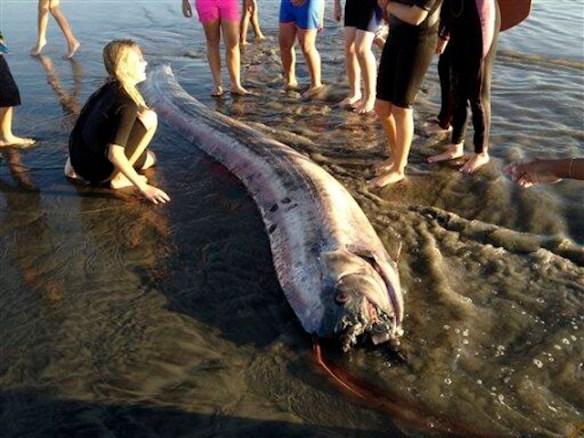
‘For the second time in a week, a rare serpentine oarfish has surfaced on a Southern California beach, NBC reports. The one found Friday afternoon at Oceanside Harbor wasn’t quite as large as the 18-foot behemoth found near Catalina Island. This one was only 13-and-a-half feet long. It weighed an estimated 200 pounds and took 15 people to carry.
That is actually quite small for an oarfish. According to the National Oceanic and Atmospheric Administration, it’s the largest bony fish in the sea and can grow to more than 50 feet long… Little is known about the species, since it’s usually found thousands of feet below the surface…’ (LAist).

‘Time is an illusion – at least in a toy model of the universe made of two particles of light. The experiment shows that what we perceive as the passage of time might emerge from the strange property of quantum entanglement. The finding could assist in solving the long-standing problem of how to unify modern physics.’ (New Scientist).
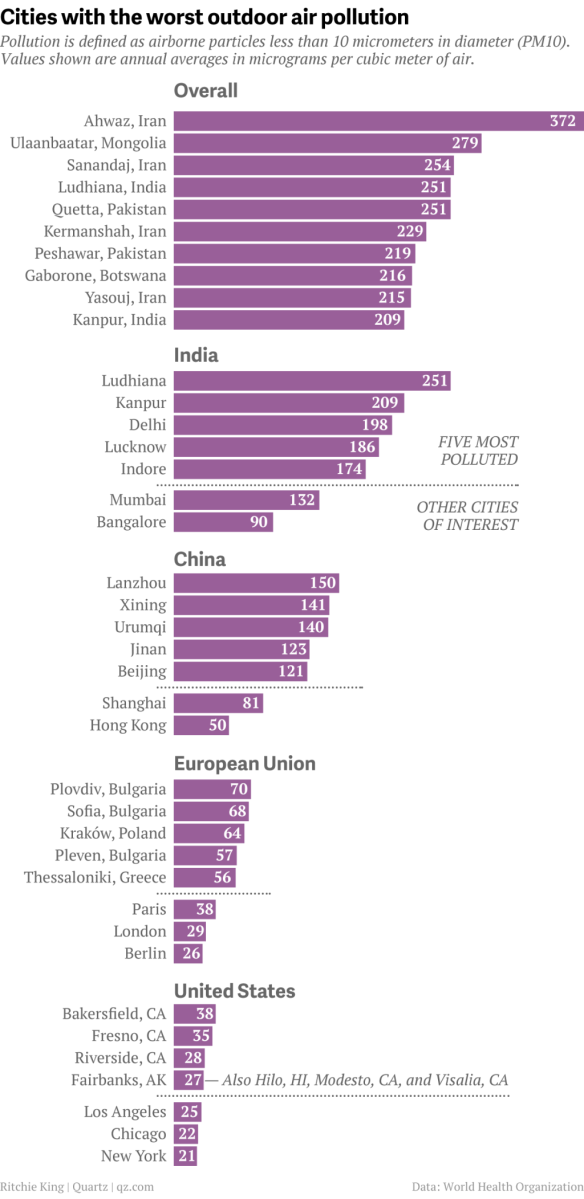
‘As the chart above shows, the cities with the worst air are often not big capitals, but provincial places with heavy industry in them or nearby. Ahwaz, for instance, in southwestern Iran, far outstrips infamously polluted cities like New Delhi or Beijing, with 372 parts per million of particles smaller than 10 micrometers (PM10), compared to the world average of 71. Life expectancy for the city of 1.2 million residents is the lowest in Iran.’ (Quartz).

‘…a disturbing series about the world of street monkeys in the city of Jakarta, created by the Finnish photographer Perttu Saska. Trained and dressed as humans to ask for money to passersby, as is an old Asian tradition, these monkeys have now become real objects, even wearing doll heads to accent mimicry, turning them into real living toys… A cruel phenomenon that leaves a strong sense of unease…’ Ufunk.net)

‘For starters: “The Higgs boson makes absolutely no sense. Why does it exist?” ‘ (Salon.com).

‘Astronomers have found a galaxy 13.1 billion light-years from Earth, making it officially the most distant object ever detected.A faint, infrared speck of light from this ancient galaxy, called z8_GND_5296, was spotted using the Hubble Space Telescope and one of the world\’s largest ground-based telescopes, a ten-meter telescope at Keck Observatory at the summit of Mauna Kea, Hawaii.Light from this baby galaxy began its journey when the universe was about 700 million years old and just emerging from the cosmic mist left over from its birth…’ (via National Geographic).
“The shadow banking system is vastly bigger than regulators had thought, say econophysicists who have developed a powerful new way to measure its hidden impactIn most parts of the world, the banking system is closely regulated and monitored by central banks and other government agencies. That’s just as it should be, you might think.
But banks have a way round this kind of regulation. For the last decade or so, it has become common practice for banks to do business in ways that don’t show up on conventional balance sheets. Before the 2008 financial crisis, for example, many investment banks financed mortgages in this way. To all intents and purposes, these transactions are invisible to regulators.
This so-called shadow banking system is huge and important. Indeed, many economists blame activities that took place in the shadow banking system for the 2008 crash.But the size of the system is hard to measure because of its hidden and impenetrable nature. But today, Davide Fiaschi , an economist at the University of Pisa in Italy, and a couple of pals reveal a powerful and simple way of determining the size of the shadow banking system.
Their conclusions are revealing. They say that the shadow banking system is vastly bigger than anyone had imagined before. And although its size dropped dramatically after the financial crisis in 2008, it has since grown dramatically and is today significantly bigger than it was even then.” (Medium).

“As a wonderful demonstration how media outlets will report the ridiculous as long as ‘neuroscience’ is mentioned, I present the ‘Oreos May Be As Addictive As Cocaine’ nonsense.
According to Google News, it has so far been reported by 209 media outlets, including some of the world’s biggest publications.
That’s not bad for some non-peer reviewed, non-published research described entirely in a single press release from a Connecticut college and done in rats.” (Mind Hacks).
‘Why is the Right so obsessed with pushing revisionist history?’ (Salon.com).

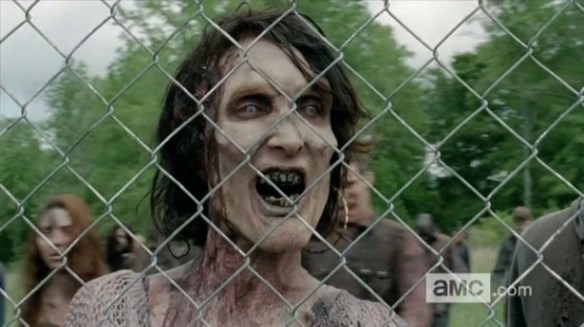
‘The Walking Dead’ brainwashes viewers ‘to participate in this new world order’: ‘The senior managing editor for Health News at the Fox News Channel warned on Thursday that AMC’s hit Zombie television series The Walking Dead was not only “hurting American society,” it was inspiring viewers to “participate in this new world order.”
“Hate me all you want, or call me paranoid and misinformed, but there is one common theme that is pervasive in American pop culture today: violence,” Dr. Manny Alvarez wrote in a column on the Fox News website. “Even more specifically, zombie violence. The idea of a zombie-infested world inspires fantasies of monsters possessed by an uncontrollable rage to kill, and viewers get a thrill imagining what it would be like to participate in this new world order.”
“Even scientists at the National Institutes of Health have spent time creating an apocalyptic how-to guide on dealing with a zombie outbreak,” he continued. “Give me a break. As a doctor and scientist, I know one thing for sure: When you’re dead, you’re dead.” ‘ (The Raw Story).

‘Bradley Garrett, a photographer and researcher with a background in anthropology and archeology, has spent the past five years of his life exploring hidden and forgotten parts of cities all over the world. Sneaking into sewers and bunkers, through metro tunnels and up skyscrapers, Garrett calls his work place-hacking: \”I see the access to secret spatial information available to those willing to dive through the loopholes in the system as akin to virtual hacking.\” These images, selections from his new book Explore Everything, from over 300 locations in eight countries, relays some of the excitement, terror, and wonder that comes with being a serial trespasser.’ (The Atlantic).

‘I hate Microsoft Word. I want Microsoft Word to die. I hate Microsoft Word with a burning, fiery passion. I hate Microsoft Word the way Winston Smith hated Big Brother. Our reasons are, alarmingly, not dissimilar …
Microsoft Word is a tyrant of the imagination, a petty, unimaginative, inconsistent dictator that is ill-suited to any creative writer\’s use. Worse: it is a near-monopolist, dominating the word processing field. Its pervasive near-monopoly status has brainwashed software developers to such an extent that few can imagine a word processing tool that exists as anything other than as a shallow imitation of the Redmond Behemoth. But what exactly is wrong with it?’ — Charles Stross (Charlie’s Diary).
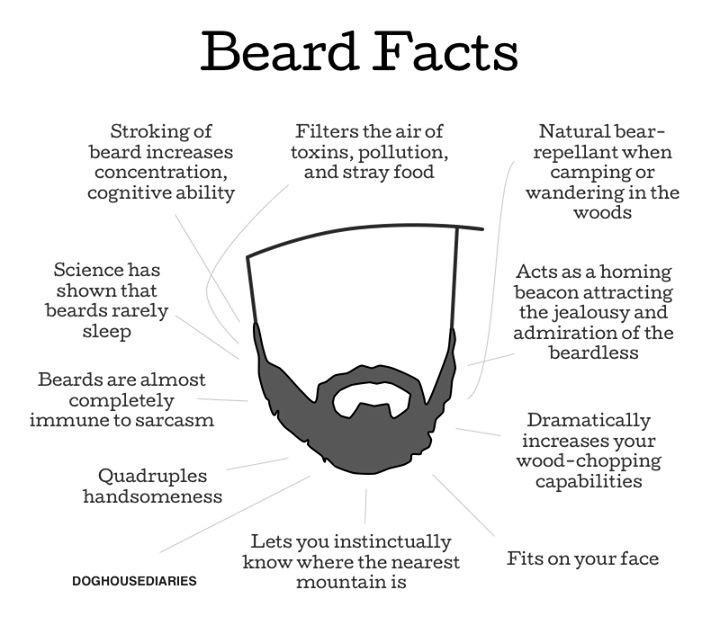
As someone who has not shaved for thirty years, I present this as a public service. All true. (Beard Facts).
 ‘Indulging in a bit of pseudoscience in some instances may be relatively innocuous, but the problem is that doing so lowers your defenses against more dangerous delusions that are based on similar confusions and fallacies. For instance, you may expose yourself and your loved ones to harm because your pseudoscientific proclivities lead you to accept notions that have been scientifically disproved, like the increasingly (and worryingly) popular idea that vaccines cause autism.’ (NYTimes)

“The average Briton gets six-and-a-half hours\’ sleep a night, according to the Sleep Council. Michael Mosley took part in an unusual experiment to see if this is enough…” (BBC News)

“It’s long been known that America’s school kids haven’t measured well compared with international peers. Now, there’s a new twist: Adults don’t either.
In math, reading and problem-solving using technology – all skills considered critical for global competitiveness and economic strength – American adults scored below the international average on a global test, according to results released Tuesday.
Adults in Japan, Canada, Australia, Finland and multiple other countries scored significantly higher than the United States in all three areas on the test. Beyond basic reading and math, respondents were tested on activities such as calculating mileage reimbursement due to a salesman, sorting email and comparing food expiration dates on grocery store tags.” (New York Post).

“Sparkly rocks remind us of an age when women were considered a form of chattel.” — Shannon Rupp (Salon).

‘Malala Yousafzai, the 16-year-old Pakistani advocate for womens rights and access to education, appeared on the Daily Show last night, ahead of Friday’s pending announcement for the 2013 recipient of the Nobel Peace Prize.
Her answer to one of Jon Stewart’s questions left him speechless.’ (Business Insider).
‘Climate scientists sometimes talk about something called “climate departure” as a way of measuring when climate change has really changed things. Its the moment when average temperatures, either in a specific location or worldwide, become so impacted by climate change that the old climate is left behind. Its a sort of tipping point. And a lot of cities are scheduled to hit one very soon.
A city hits “climate departure” when the average temperature of its coolest year from then on is projected to be warmer than the average temperature of its hottest year between 1960 and 2005. For example, lets say the climate departure point for D.C. is 2047 which it is. After 2047, even D.C.s coldest year will still be hotter than any year from before 2005. Put another way, every single year after 2047 will be hotter than D.C.s hottest year on record from 1860 to 2005. Its the moment when the old “normal” is really gone.
A big study, just published in the scientific journal Nature, projected that the Earth, overall, passes climate departure in 2047. The study also projects the year of climate departure in dozens of specific cities. Here, from The Post’s graphics team, is a map of their findings..’ (Wasington Post)
 If you like wonky humor, some of these are excruciatingly funny. Thanks to my friend Paul (who particularly appreciates that I include a bad pun in the email I send out to my department staff at the hospital every morning). (Thought Catalog).

‘Internet, this needs to stop. You keep finding moderately cool things and driving them into the ground, and what you’ve done with “Keep Calm And Carry On” is just the worst.Stop. Now.I saw a bunch of people wearing “Keep Calm It’s The Henderson Family Reunion” shirts at a park recently. That’s not a parody of the poster: it’s “Keep Calm” followed by some random words. There’s no semblance of thought here, it’s just using the font and the words “Keep Calm” because they’ve been used in other places.Which is too bad, because the poster itself is actually pretty cool. The UK government printed 2 million of these during World War II, but never hung them up. They were forgotten for half a century, until one was eventually found in an old box by the owners of Barter Bookstore in northeast England.’ (MakeUseof)

‘A House minority from white districts want to destroy the first black president, and the GOP majority abets them.’ (Salon)

‘Written by the U.S. Army Training And Doctrine Command in 2009, this 60-odd page document PDF was designed to function, in the words of its creators, as “a hip pocket” reference book for soldiers in the field. Categorized by geography, it groups the logos and insignia of “insurgents, terrorists, paramilitary, and other militant groups worldwide.” That includes everything from photos of Russian mafia tattoos to Hezbollah logos, as well as a thorough auxiliary list of branding from the “media wings” of each group.’ (Gizmodo).
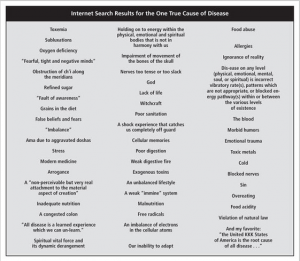
All 52 of them: ‘A few years ago, Harriet Hall googled “The One True Cause of all disease”, just to see what the Internet would come up with. She counted 67 One True Causes before she got bored (52 of them made it into the handy chart above).
Besides making for an amusing anecdote, this little exercise also helps illustrate why there’s a problem with ideologically driven medical treatments — the sort that comes from people who are pushing a lifestyle or a philosophy along with ostensible healthcare. It’s both intriguing and convenient to think that, if we just open the right secret door, we can find the thing that’s actually causing all our problems. The truth, unfortunately, seems to be that our bodies and the world they inhabit are complicated and messy and that lots of of things can lead to disease (doctors typically learn to divide these things into nine different categories, Hall says). In fact, a disease we think of as a single entity can have its roots in more than one thing. All of this is pretty obvious but it’s the kind of obvious that’s worth rubbing our noses in on occasion. If somebody tells you that everything from obesity to bipolar disorder to allergies to cancer all stem from the same root and can be treated or prevented with the exact same treatment, there’s probably good reason to question what they’re telling you.’ (Boing Boing).

‘The United States is one of the largest markets in the world for ivory sales – and it’s killing elephants. There’s a complex and confusing set of laws that criminal networks can easily manipulate to sell ivory from the African elephants who are being slaughtered in droves right now.
Tell the Obama Administration: Lead the global charge to ensure a future for elephants. Ban the sale of ivory in the United States.’ (Wildlife Conservation Society).

‘On June 7, 2007, a Delta II rocket launched from Vandenberg Air Force Base in California. Knowing full well this event was taking place, Air Force Staff Sergeant Eric Thompson, an instructor with the 532nd Training Squadron, figured he knew a place that might provide a better view than usual.’ (Bad Astronomy).

‘By applying what the authors dub “collateral sensitivity cycling,” doctors could kill resistant bacteria by switching to an antibiotic they have become more vulnerable to because of their resistance to the first drug, Sommer explains. The idea of cycling antibiotics dates back to the 1950s, he says, but fell out of favor after the boom in drug development.’ (Wired Science).

‘It’s said that we know more about the surface of the moon than our own oceans, and the same may be true of the lifeforms that inhabit them. Cold seawater and unfathomable pressures create alien landscapes populated by creatures as strange as they are beautiful. They swim through a star-studded sea where, instead of supernovae exploding, the ominous glow of anglerfish lures blink on and off, portending death for a wayward fish; and instead of glimmering stars splashed across the sky, bioluminescent plankton turn the sea a brilliant, twinkling blue.’ (Wired Science).

The Movement to Kill the Apostrophe: ‘Today is the 10th annual National Punctuation Day, a high holiday on nerd calendars across these great United States. Its stated purpose is to be a celebration of underappreciated, misused marks like the semicolon and “the ever mysterious ellipsis.” But a better-known piece of punctuation has been getting some apocalyptic press and deserves attention on this day of celebration: the apostrophe.’ (TIME.com).

“I think what everybody needs to know is that on their 43rd try Republicans will not be successful in defunding Obamacare, and most importantly, we are just beginning, just beginning to catch up to the rest of the industrialized world that guarantees healthcare to all people as a right. Cruz is quite right that once people begin to see that healthcare is a right for human beings. You know what? They like it, and they want more of it. And they do not want to endanger their children, their families. and themselves when an illness comes. Healthcare is a right, and we’re beginning to make some progress.” (Politicus USA).
“Reported sightings of Bigfoot the legendary apelike creature that’s been a favorite of cryptozoologists for decades have abounded for decades. Now, for the first time, someone has created a map showing the places where alleged Bigfoot sightings have occurred.”


“School is the advertising agency which makes you believe that you need the society at it is” — Ivan Illich (Great Findings — Medium).

A Canadian Bohemian Rhapsodizes About String Theory : This is brilliant! 23 y/o musician and budding physicist Tim Blais explains string theory and the quantum theory of everything, a cappella. Robert Krulwich opines:
‘Let me confess right off that I didnt understand anything Tim Blais sings in this video, except that its hard — very hard — erase-the-blackboard-constantly-in-frustration hard — to find a mathematical theory that explains everything in the universe. Thats OK. Im not a physicist, so this isnt my problem. But when Tim produces an Albert Einstein sock puppet having a high-tenor tantrum, I found myself doing a little happy dance.With no apologies to Queen, this is Tims “A Capella Science” take on String Theory set to Bohemian Rhapsody. He calls it “Bohemian Gravity.” Hes 23. He wrote this. He sang this. He designed this. Hes amazing.’
‘The U.S. Centers for Disease Control and Prevention has just published a first-of-its-kind assessment of the threat the country faces from antibiotic-resistant organisms, ranking them by the number of illnesses and deaths they cause each year and outlining urgent steps that need to be taken to roll back the trend.The agency’s overall — and, it stressed, conservative — assessment of the problem:Each year, in the U.S., 2,049,442 illnesses caused by bacteria and fungi that are resistant to at least some classes of antibiotics;Each year, out of those illnesses, 23,000 deaths;Because of those illnesses and deaths, $20 billion each year in additional healthcare spending;And beyond the direct healthcare costs, an additional $35 billion lost to society in foregone productivity.“If we are not careful, we will soon be in a post-antibiotic era,” Dr. Tom Frieden, the CDC’s director, said in a media briefing. “And for some patients and for some microbes, we are already there.” ‘ (Wired Science).
‘The sinister clown that has been appearing on Northamptons streets made another visitation last night.He was pictured in his trademark white make-up and red wig on St Michaels Road waving forlornly with a clown teddy hanging from his other hand.The appearance came after a posting on the Facebook page Spot Northamptons Clown promised the clown would be in town.He said: “To prove im real to all the lovers and doubters, ill see you in town today. Keep those eyes peeled.” ‘ (Northampton News via Boing Boing).

An attractive new explanation of some of spacetime’s most puzzling anomalies revolves around positing regions which are ‘larger on the inside’ than they appear on the outside. (The Physics arXiv Blog).

It’s a very real trip, and it’s actually pretty crowded. (Gizmodo)
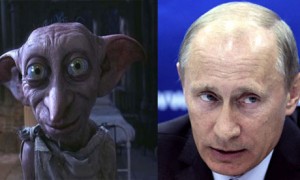
(Boing Boing).

‘If I had a chauffeur, I’d want it to be Tom Vanderbilt. I have no idea if Tom is a good driver, but he has a wealth of compelling, curious, and provocative knowledge about the psychology and science of our lives behind the wheel. He’s the author of the bestselling book Traffic: Why We Drive The Way We Do (And What It Says About Us) that has enlightened everyone from transportation policy groups to road safety consortiums to those of us who just insist that no matter what lane we’re in, the other one is moving faster. Tom gave a fantastic talk at Boing Boing: Ingenuity, our theatrical experience last month in San Francisco, where he imparted wisdom on late merging, the demographics of honking, and highway hypnosis.’ (Boing Boing).
The Meaning of the Loss of Darkness: ‘For Earth’s first 4 billion years of existence, light and dark followed a predictable 24-hour cycle. Across an ever-increasing amount of Earth’s surface, that’s no longer the case. With the advent of artificial lighting came the ability to transform night — inside buildings, under streetlights and neon signs, and in those vast areas where night’s simply not so dark as it used to be.
For journalist Paul Bogard, author of The End of Night: Searching for Darkness in an Age of Artificial Light, one such place his family’s lakeside camp in rural Minnesota. Thirty years ago the nights were pitch-black, the starscapes incandescent. Now there’s a glow at the edge of the horizon, a growing dullness to the stars.“That firsthand experience of a child, standing out on a dock and staring at the Milky Way, stays with you,” said Bogard. “That’s one of the biggest things we’re losing, or have lost, for our kids. More and more people have no idea what it’s like.
”It’s not only lost starscapes that he laments, but darkness itself. WIRED talked to Bogard about what this could mean for humanity’s existential and even physical health.’ (Wired Science).
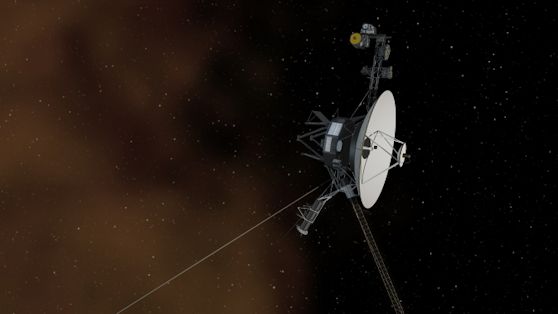
‘NASA’s Voyager 1 spacecraft officially is the first human-made object to venture into interstellar space. The 36-year-old probe is about 12 billion miles (19 billion kilometers) from our sun.
New and unexpected data indicate Voyager 1 has been traveling for about one year through plasma, or ionized gas, present in the space between stars. Voyager is in a transitional region immediately outside the solar bubble, where some effects from our sun are still evident. A report on the analysis of this new data, an effort led by Don Gurnett and the plasma wave science team at the University of Iowa, Iowa City, is published in Thursday’s edition of the journal Science.’ (NASA Science).

Cow Testicle Curry Soup, Phnom Phen, Cambodia
‘At first blush, the oddest thing about a study out this week that linked being a good dad to smaller-than-average testicle size might be that such research happened in the first place.’ (National Geographic).
‘Did gravity, the force that pins us to Earths surface and holds stars together, just shift? Maybe, just maybe. The latest measurement of G, the so-called constant that puts a figure on the gravitational attraction between two objects, has come up higher than the current official value.
Measurements of G are notoriously unreliable, so the constant is in permanent flux and the official value is an average. However, the recent deviation is particularly puzzling, as it is at once starkly different to the official value and yet very similar to a measurement made back in 2001, not what you would expect if the discrepancy was due to random experimental errors.
It’s possible that both experiments suffer from a hidden, persistent error, but the result is also prompting serious consideration of a weirder possibility: that G itself can change. That’s a pretty radical option, but if correct, it would take us a step closer to tackling one very big mystery – dark energy, the unknown entity accelerating the expansion of the universe.’ (New Scientist).
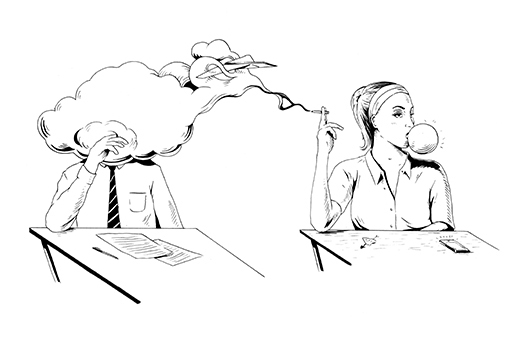
“It’s the most pernicious cliché of our time: Sometimes buzzwords become so pervasive they’re almost inaudible, which is when we need to start listening to them. Disruptive is like that. It floats in the ether at ideas festivals and TED talks; it vanishes into the jargon cluttering the pages of Forbes and Harvard Business Review. There’s a quarterly called Disruptive Science and Technology; a Disruptive Health Technology Institute opened this summer. Disruptive doesn’t mean what it used to, of course. It’s no longer the adjective you hope not to hear in parent-teacher conferences. It’s what you want investors to say about your new social-media app. If it’s disruptive, it’s also innovative and transformational.” (New Republic)
‘This is Eunice aphroditois, also known as the bobbit worm, a mix between the Mongolian death worm, the Graboids from Tremors, the Bugs from Starship Troopers, and a rainbow — but it’s a really dangerous rainbow, like in Mario Kart. And it hunts in pretty much the most nightmarish way imaginable, digging itself into the sea floor, exposing a few inches of its body — which can grow to 10 feet long — and waiting.
Using five antennae, the bobbit worm senses passing prey, snapping down on them with supremely muscled mouth parts, called a pharynx. It does this with such speed and strength that it can split a fish in two. And that, quite frankly, would be a merciful exit. If you survive initially, you get to find out what it’s like to be yanked into the worm’s burrow and into untold nightmares.’ (Wired Science).