
‘It all has to do with how aware we are of being perceived. Does that sound complicated? It’s not. Or are we lying?’ (Digg).

‘It all has to do with how aware we are of being perceived. Does that sound complicated? It’s not. Or are we lying?’ (Digg).

‘If you’ve ever tried counting yourself to sleep, it’s unlikely you did it using the square roots of sheep. The square root of a sheep is not something that seems to make much sense. You could, in theory, perform all sorts of arithmetical operations with them: add them, subtract them, multiply them. But it is hard to see why you would want to.
All the odder, then, that this is exactly what physicists do to make sense of reality. Except not with sheep. Their basic numerical building block is a similarly nonsensical concept: the square root of minus 1.
This is not a “real” number you can count and measure stuff with. You can’t work out whether it’s divisible by 2, or less than 10. Yet it is there, everywhere, in the mathematics of our most successful – and supremely bamboozling – theory of the world: quantum theory.
This is a problem, says respected theoretical physicist Bill Wootters of Williams College in Williamstown, Massachusetts – a problem that might be preventing us getting to grips with quantum theory’s mysteries. And he has a solution, albeit one with a price. We can make quantum mechanics work with real numbers, but only if we propose the existence of an entity that makes even Wootters blanch: a universal “bit” of information that interacts with everything else in reality, dictating its quantum behavior.’ (New Scientist).

Okay, so the entire article is interesting, but what fascinated me most was this factoid in this opening paragraph (emphasis added):
‘China has in the past 30 years become the most urbanized country that has ever existed. More than 450 million Chinese — 1 in 25 people on the planet – live in cities. At least 160 Chinese cities have more than 1 million people, compared to nine in the United States. In a decade, the Chinese government plans to resettle 250 million people into new or existing urban areas.’ (Wired).


‘Many buildings taller than six or seven stories need their own method of supplying water pressure to the floors below. There are thus nearly 20,000 of these tanks in the city, supplying drinking water to hundreds of thousands of people.However, perhaps because of their ubiquity and permanence, it turns out the tanks have been relatively immune from safety inspections.
The New York Times took samples from water tanks in 12 buildings, and eight of them tested positive for coliform—an indicator for the presence of “pathogenic organisms of fecal origin.” Five also came back positive with E. coli. Some tanks arent actually closed to the outside, opening them up to squirrel and bird poop—anecdotes about animals and even homeless people living in the space between the water and the container top abound.
Perhaps more upsetting than that relatively small sample size is the fact that almost half of buildings randomly inspected by the health department couldnt even provide proof that they test their tanks for bacteria at all. Many justify these findings by saying the samples are taken from a thick layer of mud and sediment that rests below the intake pipes—meaning that the water that arrives at your sink isnt actually contaminated. But even a basic knowledge of biology disproves that rationale.
Then there are the chemical contaminants, like an epoxy used by tank-building companies—made from a bisphenol A-based polymer otherwise known as BPA…’ (Gizmodo)

‘An ancient hunter-gatherer whose remains were found in a Spanish cave has a genome surprisingly similar to modern humans. The male, who lived 7000 years ago, had blue eyes and a host of immunity genes that were thought to have evolved later.’ (New Scientist).
![//visualpalate.typepad.com/visual_palate/images/street_lights.jpg' cannot be displayed]](http://visualpalate.typepad.com/visual_palate/images/street_lights.jpg "Street lamps, R.I.P.") I did a web search on this phenomenon because it seems to happen to me most times I walk past a certain street light on my street. I mentioned it to a few friends who, of course, thought I was wacky. Then, taking my cue from the fact that it was one particular lamp post, I began to ask several neighbors on my street (yes, I live on a street where I know and talk to my neighbors; in fact, we have block parties). My rational side suspected that it was a defective lamp which cycles on and off (several commenters in the thread to which this post points offered explanations of how this might work with sodium arc lamps) constantly, and that I was guilty of observer bias for remembering, and generalizing from, those times when it went off as I neared or passed it. (By the way, I am talking about this happening when I am walking down the street, not driving, so the speculation that my car headlights were activating the photocell that turns the lamp off does not apply.) But none of my neighbors had noticed this about that, or any other, street light on our street.
I did a web search on this phenomenon because it seems to happen to me most times I walk past a certain street light on my street. I mentioned it to a few friends who, of course, thought I was wacky. Then, taking my cue from the fact that it was one particular lamp post, I began to ask several neighbors on my street (yes, I live on a street where I know and talk to my neighbors; in fact, we have block parties). My rational side suspected that it was a defective lamp which cycles on and off (several commenters in the thread to which this post points offered explanations of how this might work with sodium arc lamps) constantly, and that I was guilty of observer bias for remembering, and generalizing from, those times when it went off as I neared or passed it. (By the way, I am talking about this happening when I am walking down the street, not driving, so the speculation that my car headlights were activating the photocell that turns the lamp off does not apply.) But none of my neighbors had noticed this about that, or any other, street light on our street.
So should I descend to pseudoscience — do I have some psi power going on? I don’t

have to be thinking about turning the lamp off for it to happen; in fact, I often forget about this, especially in the winter when I am not out walking down the street after dark as much, and am only reminded when I notice the light go out. Or do I put out some kind of EM pulse to which that particular street light is sensitive? Some of the commenters suggest we are “electrical beings” and thus can affect electrical circuitry. Certainly an extrapolation, and I have never noticed it with any other light fixtures or other electrical equipment. And, unlike some of the commenters, I don’t notice the light go on again after I pass. But on the other hand, that light is never already off, it seems, before I approach it, or as I drive up my street.

I am in that cognitively dissonant position of being a skeptic but also having a healthy respect for the power of belief. The lamp post on my street goes right to the heart of that dilemma. After reading other people’s beliefs about their ability to interfere with street lights, I realize mine is a weak case, typically affecting a particular lamp which does not go back on after I have passed. To debunk my doubts, though, I suppose I’ve got to go out one nice summer evening and sit under that particular lamp for a couple of hours and assess whether it is cycling on and off. What do you think?
BTW, here is a good Wikipedia discussion of the phenomenon.

‘When the United States decides to recognize a new government, or an existing country changes its name, Leo Dillon and his team at the State Department spring into action.Dillon heads the Geographical Information Unit, which is responsible for ensuring the boundaries and names on government maps reflect U.S. policy. The team also keeps an eye on border skirmishes and territorial disputes throughout the world and makes maps that are used in negotiating treaties and truces. These days, Dillon says, maritime borders are where much of the action is. The recent political squabbling and military posturing between China and Japan over the tiny islands known as Diaoyu in China and Senkaku in Japan is one potentially worrisome case in point.’ (Wired Science).

Is Step into the Void, a new 12,650-foot (3,856-meter) perch in the French Alps, the scariest? (National Geographic).

‘Syria was once one of the countries where polio was no longer a problem. The government began mandatory, free immunizations in 1964 and declared victory in 1995. But now, polio is back, writes Annie Sparrow in the The New York Review of Books, and she builds a case that Bashar al-Assad is to blame. Imagine if, instead of causing a traffic jam, Chris Christie’s aides had prevented towns that didn’t support him from getting access to basic childhood immunizations. According to Sparrow’s research, that’s exactly what the Assad regime did. And now, children are paying the price.’ (Boing Boing).

‘Overnight, astronomers spotted what may be a very close white dwarf supernova—close in cosmic terms at least. This bright explosion, seen in the M82 “Cigar” galaxy, is roughly 12 million light-years away—close enough to be seen with small telescopes and observed in detail by larger instruments. Even amateur astronomers and astrophotographers can see an explosion this bright and close.
By 08:47 UT (3:47am US EST) on January 22, 2014, astronomers working with the ARC 3.5-meter telescope at the Apache Point Observatory reported they had measured the spectrum of the supernova. Based on that data, they identified it as a probable type Ia supernova, meaning it has little hydrogen, but significant amounts of silicon and other heavier elements.’ (Ars Technica).

‘A program in Salt Lake City decided that it would be smarter — and more humane — to spend $11K/year each to house 17 chronically homeless people and provide them with social workers than it would be to waste the average of $16,670/year per person to imprison them and treat them at emergency rooms. As Nation of Change points out, this commonsense, humane and economically sound way of dealing with homelessness works, unlike the savage approaches taken by other cities (like the Waikiki rep Tom Bowker who smashed homeless peoples’ carts with a sledgehammer, or cities like Tampa, which banned feeding homeless people). Here’s more on Utah’s Housing First program.’ (Boing Boing).

‘If you view Facebook as a plague on social dynamics, you might not be far wrong. Researchers from Princeton University claim that the social network’s popularity has spread like an infectious disease—but, as we slowly become immune to its charms, it will die out.
By comparing the uptake of Facebook to growth curves of epidemics, the scientists claim that—just like the bubonic plague—Facebook will gradually begin to fade away. They go further than that, too, claiming that Facebook will lose 80 percent of its peak user base within the next three years. The researchers write in a paper currently published on the arXiv servers…’ (Gizmodo)

‘Among the many amazing features of our planet this is one I think you should definitely know about: The world largest island within a lake on an island within a lake on an island! Can you picture that? Vulcan point is a small volcanic island within the 2km large Crater Lake of the Taal Volcano on Volcano Island in Taal lake on Luzon Island, Phillippines…’ (Mudfooted.com)

‘ With dietary advice changing and fears about saturated fat’s purported link to heart disease waning, butter spreads are making a comeback at the expense of their more highly processed plant oil substitutes. As noted US nutritionist Marion Nestle tells Bloomberg, “margarine has become a marker for cheap, artificial, unhealthy food.” ‘ (The Verge).
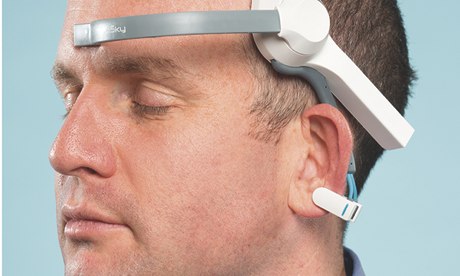
‘A billion-dollar industry has grown up around our desire to be more intelligent. But is it really possible to make yourself smarter?’ (The Guardian).

‘Choir director Alise Ojay’s vocal exercises have been shown to work throat muscles that help silence the snorer within…’ (Smithsonian).

‘We learn all about the common animals when we’re young: dogs, cats, cows, horses, elephants, and on and on. But there are dozens of animals out there that you don’t know about. Not only do you not know about them, but they’re incredibly unique and some are even incredibly adorable. Just take #19 for example. I want one, no matter how illegal that may be.
In no particular order, here are 22 of the most unknown animals that we thought you would be interested in.’ (Viralnova, thanks to Steve).

‘Winnie Byanyima, the Oxfam executive director who will attend the Davos meetings, said: “It is staggering that in the 21st Century, half of the world’s population – that’s three and a half billion people – own no more than a tiny elite whose numbers could all fit comfortably on a double-decker bus.”
Oxfam also argues that this is no accident either, saying growing inequality has been driven by a “power grab” by wealthy elites, who have co-opted the political process to rig the rules of the economic system in their favor.’ (Guardian). Do you think?

‘As of today, the Real ID Act—which will require all US IDs to meet minimum federal security standards—enters the first stage of its multi-year enforcement. That has a lot of people pretty nervous; whether legislators use the term or not, it smells an awful lot like a national ID card… In 2005, President Bush signed an $82 billion military spending bill, part of which went towards creating an electronically readable, federally approved standard for all American ID cards. Currently, each state’s ID card can be wholly different from one another; non-uniform ways of reading means that actually determining if the card is legitimate becomes nearly impossible beyond state lines. Real ID would end that confusion…
While you won’t be required to have it on you at all times or necessarily use it in any non-government-related capacity, the fact that we’ll now have a searchable database of virtually every American citizen could qualify Real ID as a national ID card.
That doesn’t mean that the US is going to turn into a police state overnight, or ever. But concerns do seem to be at least somewhat justified…
15 black sheep [states] are not yet Real ID compliant: Alaska, American Samoa, Arizona, Kentucky, Louisiana, Maine, Massachusetts, Minnesota, Montana, New Jersey, New Mexico, New York, North Marianas, Oklahoma, and Washington State… So what happens to those states if they don’t comply? Their cards will be marked along with a statement that they’re not to be accepted by any federal agency. You also, again, won’t be able to board a plane or access federal services.
Could this be the extent of the government’s regulation on identification cards and their subsequent mass database? Sure! And that would be intrusive but understandable. If the NSA revelations of the last year are any indicator, though, Uncle Sam is going to do what he wants with as much information as he can possibly get. Real ID is just streamlining the process.’ (Gizmodo)

‘…[O]ne of the main claimed innovations in the DSM-5 is that it promotes the use of ‘dimensional‘ or quantitative measures of symptoms. Traditionally the DSM has been about all-or-nothing, categorical diagnoses (“He is depressed”, “She has schizophrenia”). The 5th edition, for the first time, also recommends the use of severity scales.
It’s a move away from digital and in the direction of analogue – such is progress in psychiatry.
In fact, what we might call the ‘dimensional turn’ is more of a statement of intent than anything else. The core of DSM-5 remains the categorical diagnoses – 245 of them, by my count. The dimensional stuff is effectively an appendix. Nonetheless, it’s something.
But why is the DSM promoting symptom scales? Or more to the point, why is it suddenly promoting them now, given that dimensional measures have been used in psychiatry for 60 years? This is where it gets interesting.
The head of the APA’s DSM-5 task force, David Kupfer, stands accused of failing to disclose a conflict of interest which – arguably – means that he has a financial stake in the concept of dimensional assessment.’ (Neuroskeptic)

‘As a treatment, it is remarkably successful. Perhaps the greatest tribute to the people who work in critical care is this simple fact: most people leave intensive care alive – despite being dangerously close to death when they arrive. Through a combination of dedication, decision-making and technology, critical care staff ensure that most people pull through. This is the result of years of careful research that has focused clinical practice on restoring the body\’s functioning as quickly and efficiently as possible.
But recently there has been a dawning realisation that the impact of intensive care extends beyond the survival of the body. Dorothy Wade is based at University College Hospital in London and is one of the country’s few intensive care psychologists. She led a recent study which found that more than half of patients assessed at follow-up had marked psychological difficulties. “We learned that patients were suffering from serious depression or having frightening flashbacks and nightmares to their time in intensive care,” says Wade. “This badly affected their quality of life and also held back their physical recovery from their illness.”
In another study, recently submitted for publication, Wade interviewed patients about the hallucinations and delusions they experienced while in intensive care. One patient reported seeing puffins jumping out of the curtains firing blood from guns, another began to believe that the nurses were being paid to kill patients and zombify them. The descriptions seem faintly amusing at a distance, but both were terrifying at the time and led to distressing intrusive memories long after the patients had realised their experiences were illusory.
Many patients don’t mention these experiences while in hospital, either through fear of sounding mad, or through an inability to speak – often because of medical breathing aids, or because of fears generated by the delusions themselves. After all, who would you talk to in a zombie factory?
These experiences can be caused by the effect of serious illness on the brain, but painkilling and sedating drugs play a part and are now used only where there is no alternative. Stress also adds to the mix but is often caused inadvertently by the way intensive care wards are organised. “If you think about the sort of things used for torture,” says Hugh Montgomery, a professor of intensive care medicine at UCL, “you will experience most of them in intensive care. As a patient, you are often naked and exposed, you hear alarming noises at random times, your sleep-wake cycle is disrupted by being woken up for medical procedures through the night, you will be given drugs that could disorient you, and you will be regularly exposed to discomfort and feelings of threat.” — Vaughan Bell (The Observer).

How One Man Tried to Teach Everyday People to Make Anti-Tank Missiles: ‘Poisons, gasses, missiles, booby traps and bombs—‘The Poor Man’s James Bond’ was a guide to homemade weapons…’ (Medium).

‘An independent Scotland would seek membership in NATO. It would also require that all nuclear weapons be removed from Scottish territory as soon as possible.
If you detect contradiction in those last two tenets, it means you’re paying attention. An independent Scotland would join a military alliance whose security is explicitly underpinned by a tri-nation nuclear umbrella provided by the United States, the U.K. and France while at the same time enforcing its own nuclear-free zone.’ (Medium).

‘Each year a forum for the world’s most brilliant minds asks one question. This year’s drew responses from such names as Richard Dawkins, Ian McEwan and Alan Alda. Here, edge.org founder John Brockman explains how the question came into being and we pick some of the best responses…’ (The Observer) I don’t know why this kicker focused on the likes of Alan Alda and McEwan. The responses of the cutting-edge scientists are the most compelling.

‘Aspartame dominated the artificial sweetener market for 30 years until the introduction of sucralose in 1998. Since then, sucralose has taken over as the most popular, and stevia blends aren’t far behind. That said, over 6,000 drinks, food products, pharmaceuticals and vitamin supplements are still made with aspartame. It’s especially prevalent in diet sodas, low-fat foods, yogurts, cereals, shakes, gums, and some sugar-free foods.
The recipe for aspartame is to combine two amino acids, L-phenylalanine and L-aspartic acid, with a third component called a methyl ester group. All three ingredients have the potential to create serious, chronic neurological problems and are the subject of relentless anecdotal reporting by individuals and warnings by independent health experts. Problems range from headaches to seizures, strokes, tumors and progressive neurological diseases. None of this is officially recognized.
Let’s take a look at each ingredient in aspartame…’ (Blogcritics).

“We are so desperate for jobs in West Virginia we don’t want to do anything that pushes industry out.” (Guernica / A Magazine of Art & Politics).
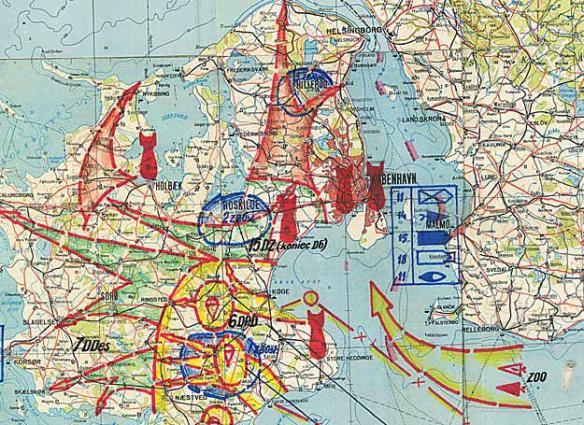
‘This is a plan for the end of the world, dated 1970.
The arrows are armies and the red vertical symbols are nuclear bombs, all part of a part of Cold War contingency plan crafted by the Soviet Union and its Warsaw Pact allies in case of war.
War that would have destroyed civilization…’ (Medium).

‘The pop-culture tuning fork known as the Academy Awards will reveal its film nominations on Thursday, and if the recent Golden Globes win by Her on Sunday for best screenplay is any indication, the film’s writer and director, Spike Jonze, may score his first-ever Oscar win.
But the film, which depicts a man in the not-too-distant future who falls in love with his computer operating system, may be less important as an epic love story and far more relevant as the best and most widely accessible film we’ve seen about … the Singularity…’ (Mashable)

‘ Each year since 1945, the Bulletin of the Atomic Scientists sends a letter to the UN Security Council in which they tell them how close we are from nuclear holocaust using a Doomsday Clock. In 1960 we were two minutes from midnight. Their new 2014 report says we\’re still five minutes from the Apocalypse. “Five minutes is too close,” they say.
The organization—which was founded by some of the researchers who participated in the Manhattan Project—counts with the collaboration of a board of sponsors that includes 18 Nobel laureates to analyze current data to give this estimate. They always give good reasons:
“Speaking at Berlin’s historic Brandenburg Gate in mid-June, President Obama proposed a reduction in the limit on US and Russian deployed strategic nuclear warheads from the current New START level—1,550 warheads on each side—to 1,000.
Obama’s speech came just days after Iran elected a new president, Hassan Rouhani, who quickly changed the tone of the country’s foreign policy, clearing the path for the first direct talks between the United States and Iran in 35 years.
[…]
Around the world, much nuclear material remains unsecured.
Soon after Obama’s Brandenburg Gate speech, Russia offered political asylum to Edward Snowden, the former National Security Agency contractor who leaked US classified documents, creating an international media sensation, and Obama called off a planned summit with Russian leader Vladimir Putin. There appears to have been little movement since on nuclear agreements between the United States and Russia.
China is reported to be modernizing and quantitatively increasing its nuclear arsenal, albeit at a slow pace. India and Pakistan continue to expand their arsenals and stockpiles of fissile materials. Both countries are developing and testing new missiles, many nuclear-capable. India plans to build a nuclear submarine fleet and to develop a ballistic missile-defense system, the deployment of which could destabilize the subcontinent.
Despite authoritative reports that it has a nuclear weapons arsenal, Israel continues a policy of nuclear ambiguity while strenuously trying to scuttle talks on Iran\’s nuclear efforts. In February 2013, North Korea conducted yet another nuclear weapon test, the first under its new leader, Kim Jong-un, and issued a series of military threats, some involving the use of nuclear weapons.” ‘ (Sploid)

‘The scene seems like a storm over a sea of lava somewhere in Mordor, but you are looking at the surface of a failed star—the weather on a brown dwarf based on new data from the Spitzer Space Telescope. It\’s spectacular. Even more so when you think that\’s not water falling from the sky.
Published in a NASA article titled Stormy Stars? NASA\’s Spitzer Probes Weather on Brown Dwarfs, this artist rendering is based on the findings of a study of “44 brown dwarfs as they rotated on their axis for up to 20 hours.” The artists did a great job because the storms must be really spectacular, according to their description:
“Scientists think that the cloudy regions on brown dwarfs take the form of torrential storms, accompanied by winds and, possibly, lightning more violent than that at Jupiter or any other planet in our solar system. However, the brown dwarfs studied so far are too hot for water rain; instead, astronomers believe the rain in these storms, like the clouds themselves, is made of hot sand, molten iron or salts.” ‘ (Sploid)

‘The Air Force announced this afternoon that 37 nuclear missile officers have been implicated in academic cheating scandals and drug rings, and the ongoing investigation may turn up more misdeeds soon.
So far, 11 Air Force on six different bases have been implicated in the drug ring. Three of them are missile launch officers at Minot Air Force Base in North Dakota and Malmstrom Air Force Base in Montana, according to the Washington Post. Those are two of the three U.S. bases that house America’s 450 intercontinental ballistic missiles.
In addition, nearly 20 percent of all the launch officers in charge of ICBMs at Malmstrom cheated or allowed cheating on a job-related certification test, the investigation showed. An estimated 200 officers have had their certifications yanked and will be forced to retake the exam, though it isn’t clear how many officers might lose their jobs.
…The revelations come just weeks after the top general in charge of all U.S.-based nuclear missiles was fired for going on a drunken bender and carousing with foreign women on a mission to Russia. The Air Force has had to push back against that incident, and additional reports that its nuclear missileers are burned out, cynical, and suffering historically low levels of morale. ‘ (Gawker).

‘Although the tap-water ban was lifted in the wake of West Virginia\’s Elk River chemical leak, the long-term ecological impacts of the spill remain uncertain.
On Monday, the 300,000 residents of nine counties in West Virginia were told that they could resume drinking and using their tap water, five days after an estimated 5,000 gallons of the chemical 4-methylcyclohexane methanol (MCMH) leaked into the Elk River near Charleston.
As National Geographic previously reported, MCMH is used as a foaming agent to wash certain types of coal before it is sent to market. The chemical leaked from a 48,000-gallon storage tank owned by Freedom Industries, located about a mile upriver from a drinking water treatment plant operated by West Virginia American Water, affecting the central and southwestern parts of the state. ‘ (National Geographic)

‘ From a wheedling teenager to a road-rager on your tail, most people have been pushed into bad decisions by another’s emotions. Confirming some long-held suspicions, scientists now report a new twist on emotional manipulation: Experiments suggest that men do indeed deliberately anger each other to get what they want…’ (National Geographic)

‘ A controversial auction for a hunting permit in Africa concluded this past weekend in Texas. On Saturday evening the Dallas Safari Club (DSC) awarded the permit—which allows a hunter to kill one black rhinoceros, an endangered species, in Namibia—to the auction’s anonymous winner for a reported $350,000. The club had said it hoped to raise between $250,000 and $1 million… A minister from Namibia was reportedly “jumping up and down in elation at the result because the funds go to conservation efforts in the country.” ‘ (National Geographic)
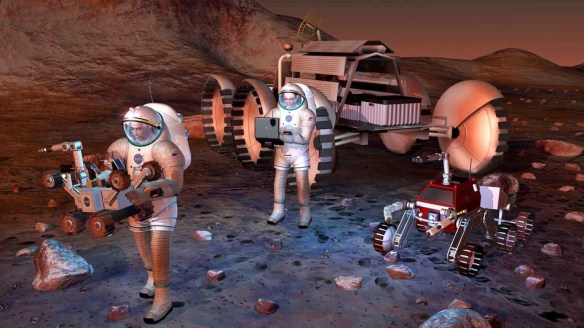
‘The world’s leading space agencies kicked off this year with a bold new plan to put humans on Mars in the coming decades.
At a Jan. 9 meeting of the International Space Exploration Forum in Washington, D.C., countries including the U.S., Japan, China and Russia, as well as the European Union, agreed that putting humans on the red planet should be a longterm joint priority…’ (Mashable)

‘Abstract: The aims of this paper are to narrate and analyze some psychological phenomena that I have perceived in dead people, including evidence of post-traumatic stress disorder (PTSD) in murdered people. The methodology adopted was \”projection of consciousness\” (i.e., a non-ordinary state of consciousness), which allowed me to observe, interact, and interview dead people directly as a social psychologist. This investigation was based on Cartesian skepticism, which allowed me a more critical analysis of my experiences during projection of consciousness. There is strong evidence that a dead person: (i) continues living, thinking, behaving after death as if he/she still has his/her body because consciousness continues in an embodied state as \’postmortem embodied experiences\’; (ii) may not realize for a considerable time that he/she is already dead since consciousness continues to be embodied after death (i.e., \’postmortem perturbation\’ – the duration of this perturbation can vary from person to person, in principle according to the type of death, and the level of conformation), and (iii) does not like to talk, remember, and/or explain things related to his/her own death because there is evidence that many events related to death are repressed in his/her unconscious (\’postmortem cognitive repression\’). In addition, there is evidence that dying can be very traumatic to consciousness, especially to the murdered, and PTSD may even develop.’ (Australian Journal of Parapsychology)
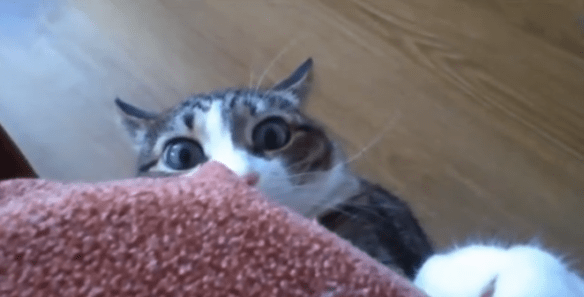
‘ Anthrozoologist John Bradshaw insists that cats really aren’t terribly domesticated and think that humans are the same species as them, but oddly “non-hostile.” ‘ (CNET News).
(OR: Why is Geel so successful at helping those with ‘problems of living’?)
“For more than 700 years its inhabitants have taken the mentally ill and disabled into their homes as guests or ‘boarders’. At times, these guests have numbered in the thousands, and arrived from all over Europe. There are several hundred in residence today, sharing their lives with their host families for years, decades or even a lifetime. One boarder recently celebrated 50 years in the Flemish town, arranging a surprise party at the family home. Friends and neighbours were joined by the mayor and a full brass band.
Among the people of Geel, the term ‘mentally ill’ is never heard: even words such as ‘psychiatric’ and ‘patient’ are carefully hedged with finger-waggling and scare quotes. The family care system, as it’s known, is resolutely non-medical. When boarders meet their new families, they do so, as they always have, without a backstory or clinical diagnosis. If a word is needed to describe them, it’s often a positive one such as ‘special’, or at worst, ‘different’. This might in fact be more accurate than ‘mentally ill’, since the boarders have always included some who would today be diagnosed with learning difficulties or special needs. But the most common collective term is simply ‘boarders’, which defines them at the most pragmatic level by their social, not mental, condition. These are people who, whatever their diagnosis, have come here because they’re unable to cope on their own, and because they have no family or friends who can look after them.” (Aeon).
I recently created an image that shows some of the important events in our natural history…: what our history would look like if, instead of our 13.81 billion years, we simply scaled everything down to fit in just one calendar year. The results are stunning, and do a tremendous job of putting our entire past history into a time perspective that we can relate to.

The funny thing is, that only explains how we got here. What about the other side of the coin: where we’re headed? (Medium).

“At first glance, Hnefatafl (pronounced “nef-ah-tah-fel”) might just look like a knock-off version of chess with Norse helms and impressive beards, but the game is at least 600 years older—already well-known by 400 A.D.—and is perhaps a lot more relevant to the conflicts of the 21st century.” (Medium).

“Nothing induces more rage in others than your taking what you do not deserve and not even noticing.” (Medium).

‘The North Korean leader reportedly gave out copies of Hitler’s ideological tome Mein Kampf to select senior officials recently, according to North Korean watchdog news site New Focus International.
The so-called Nazi bible, written by Hitler while in prison in 1924, was given out in honor of Kim’s birthday in January, the site claims.
“Kim Jong-un gave a lecture to high-ranking officials, stressing that we must pursue the policy of Byungjin (Korean for ‘in tandem’) in terms of nuclear and economic development,” an anonymous source told New Focus International by phone. “Mentioning that Hitler managed to rebuild Germany in a short time following its defeat in WWI, Kim Jong-un issued an order for the Third Reich to be studied in depth and asked that practical applications be drawn from it.”
The gift might be part of a campaign to create a more intimidating persona for the young leader, Shirley Lee, New Focus’s international editor, told the Washington Post. The Post also noted that leadership and nation-building — not anti-Semitism — seemed to be the intended significance of the gift.
Many books are banned in North Korea, according to the Washington Post, and the consequences for owning a banned book can be quite severe. In 2009, a Christian woman who was accused of distributing copies of the Bible was allegedly executed, according to the Associated Press.
While possibly startling to Western countries that opposed Hitler’s actions during World War II, North Korea is not the first country that maintains a healthy appreciation of the German’s leadership skills.
In India for example, Mein Kampf is printed by multiple publishers and is popular among business school students, according to Bloomberg Businessweek.’ (Huffington Post).

Tooting on His Sideways Horn: Amiri Baraka died today at seventy-nine; The Paris Review had the pleasure of publishing several of his poems. Baraka wrote “Pres Spoke a Language” to celebrate the jazz saxophonist Lester Young, but one could just as easily apply its eulogy to the poet himself:
Pres
had a language
and a life, like,
all his own,
but in the teeming whole of us he lived
toooting on his sideways horn

‘…[T]he end to one of the strangest, widest-reaching, and most damaging moral panics in America’s history: the satanic ritual abuse panic of the 1980s and 1990s…? ‘ (Slate)

“His ignorance about this subject is vast”:‘ “I hope he’s on more solid ground with the other things he writes about in the New York Times,” says Dr. Lester Grinspoon of NYT columnist David Brooks. Grinspoon is a Harvard psychiatrist and author of the 1971 book, Marijuana Reconsidered.
Joe Dolce interviewed the 85-year-old Harvard professor emeritus about David Brooks’ widely-ridiculed NYT opinion piece in which Brooks wrote that he’d had fun smoking pot as a youth but believes other people should be punished for smoking pot. ‘ (Boing Boing).

‘The massive flare that erupted from the sun on Tuesday could bring beautiful displays of the Northern Lights as far south as Colorado late on Thursday night and early Friday morning. It was associated with a huge eruption of material called a coronal mass ejection. Now, that material is racing toward Earth and is expected to trigger a strong geomagnetic storm — a disturbance to Earth’s protective magnetic bubble called the magnetosphere. It’s that kind of disturbance that triggers the Northern Lights.
The University of Alaska’s Geophysical Institute predicts that auroral activity will be high on Thursday:Weather permitting, highly active auroral displays will be visible overhead from Inuvik, Yellowknife, Rankin and Igaluit to Juneau, Edmonton, Winnipeg, Thunder Bay and Sept-Iles, and visible low on the horizon from Seattle, Des Moines, Chicago, Cleveland, Boston, and Halifax… There are no guarantees, of course. Clouds could obscure the view, city lights could wash it out, the solar material could arrive earlier or later than forecast, affecting visibility, etc. For the latest updates on what might happen, check the Space Weather Prediction Center...’ (DiscoverMagazine.com). Barring an overcast night, I’m going to be outside tonight, somewhere I can get a dark sky away from city lights, watching and waiting…

“The preoccupation with transition and surgery objectifies trans people. And then we don’t get to really deal with the real lived experiences. The reality of trans people’s lives is that so often we are targets of violence. We experience discrimination disproportionately to the rest of the community. Our unemployment rate is twice the national average; if you are a trans person of color, that rate is four times the national average. The homicide rate is highest among trans women. If we focus on transition, we don’t actually get to talk about those things.” (Salon)

‘Jahi McMath is dead. The 13-year-old was declared brain dead on Dec. 12, three days after a tonsillectomy and adenoidectomy to treat her sleep apnea resulted in “heavy bleeding, cardiac arrest and whole brain death.” The Alameda County coroner’s office issued a death certificate for her. And the New Beginnings Community Center says she “has been defined as a deceased person.” Yet there is no funeral planned for the girl, no memorials in her name. Instead, she has been moved to a facility where she receives “nutritional support, hormones and antibiotics to combat infections,” a place where family attorney Christopher Dolan says she is “going to be treated like the innocent little girl that she is, and not like a deceased body.” But while the recent battle over what to do with what remains of the once vibrant teen has for now been settled, the ethical questions over her case – and of what constitutes life and death – remain.’ (Salon).

‘Simply put: cold spells are a part of climate change, and in fact help to prove that global warming is taking place in the Arctic.’ (PolicyMic).

‘ One of the worst epithets that can be leveled at a politician these days is to call him a “redistributionist.” Yet 2013 marked one of the biggest redistributions in recent American history. It was a redistribution upward, from average working people to the owners of America.
The stock market ended 2013 at an all-time high—giving stockholders their biggest annual gain in almost two decades. Most Americans didn’t share in those gains, however, because most people haven’t been able to save enough to invest in the stock market. More than two-thirds of Americans live from paycheck to paycheck. ‘ (Guernica / A Magazine of Art & Politics)

‘As temperatures fell, some blamed a mysterious polar vortex, but this is a system of winds in the stratosphere that spins around the Arctic and Antarctic during their respective winters, many kilometres above the weather. There is nothing unusual about the polar vortex, according to the UK Met Office. Instead, cold Arctic air has reached North America thanks to a weakened jet stream.’ (New Scientist).

‘ The UK’s proposed new Antisocial Behaviour, Crime and Policing Bill creates a new kind of injunction, the Ipnas (“injunctions to prevent nuisance and annoyance”), which judges can hand down without proof of wrongdoing to anyone over ten, and send them to jail to violate them (kids go to young offenders centres for up to three months). Along with the Ipnas comes “dispersal orders,” which police can use to order anyone to leave any public place for any length of time, for any reason, on their own say-so. As George Monbiot writes in the Guardian “The new injunctions and the new dispersal orders create a system in which the authorities can prevent anyone from doing more or less anything.” ‘ (Boing Boing).

‘On an April day in 2009, bizarre four-inch flames of light were seen hovering above a stone-paved road in the historical city center of L’Aquila, Italy. Shortly after, a cataclysmic magnitude 6.3 earthquake devastated the area reportedly leaving about 300 people dead.
At the time, these light-filled flashes were thought to be a coincidental phenomenon, but now researchers believe they had a direct correlation to the earthquake.
A new study published in Seismological Research Letters says these flashes of light rarely seen before or during earthquakes are caused by naturally occurring electrical processes in certain types of rock.
L’Aquila was one of several places to see such lights before an earthquake. Other instances include the 1906 earthquake in San Francisco, Calif., where locals witnessed a rainbowed light beam above a street right before the temblor, and the 1988 earthquake in Quebec, Canada, where people saw a purplish glowing sphere near the St. Lawrence River 11 days before the quake, according to National Geographic.
The lights can come in “many different shapes, forms, and colors,” study coauthor Friedemann Freund, an adjunct professor of physics at San Jose State University and a senior researcher at NASA’s Ames Research Center, told National Geographic. Not only are there globes of light and flickering flames, but some earthquake lights look like quick bursts of lightning coming straight out of the ground.
Past explanations for these strange colorful lights that preceded earthquakes were UFOs, birds, and planes. The phenomena is rare — it only happens in less than 0.5 percent of earthquakes — which would explain why some witnesses have claimed they were caused by aliens.’ (CNET News).

‘Scientists at Towson University in Towson, Maryland, have identified a practical, yet overlooked, test of string theory based on the motions of planets, moons and asteroids, reminiscent of Galileo\’s famed test of gravity by dropping balls from the Tower of Pisa.
String theory is infamous as an eloquent theoretical framework to understand all forces in the universe —- a so-called \”theory of everything\” —- that can\’t be tested with current instrumentation because the energy level and size scale to see the effects of string theory are too extreme.
Yet inspired by Galileo Galilei and Isaac Newton, Towson University scientists say that precise measurements of the positions of solar-system bodies could reveal very slight discrepancies in what is predicted by the theory of general relativity and the equivalence principle, or establish new upper limits for measuring the effects of string theory.’ (phys.org).

‘Even before the polar vortex put large swathes of the US into a deep freeze, subzero temperatures in Canada were causing frost quakes. A few nights ago, residents around Ontario woke up to mysterious booms—like an explosion or falling tree. Turns it was just the cold.
Like a glass jar of water in the freezer, the ground can crack as liquid water expands while freezing into ice. Frost quakes, or cryoseisms, require a sharp temperature drop: It must be warm enough for water to first saturate the ground and then suddenly cold enough for a quick freeze. The explosions are so loud because frost quakes happen so close to the surface. And as disruptive as they sound, they\’re unlikely to be dangerous.
Frost quakes have also been reported in the midwest and New England, but they are generally quite rare. Environment Canada meteorologist Geoff Coulson told the Toronto Star it was the first he experienced in 30 years.’ (Gizmodo).

‘It’s been 14 years since MAD Magazine’s Don Martin passed away, and if there’s one way you can be sure he’d want to be remembered, it’s with this alphabetical listing of all the weird noises that ever appeared in a Don Martin cartoon.’ (Boing Boing).

‘Lethal temperatures in Minnesota. A frost warning for the Everglades. The North Pole is moving south thanks to climate change.’ (The Daily Beast).

They are no more effective than regular soap and water; they are bad for the environment; they help breed resistant bacterial strains; they may be acting as endocrine disruptors; and they have added negative health consequences. (Smithsonian)
 “…as with all religion, those sects with most in common are the ones who hold the most vicious grudges against one another.” (Gizmodo).
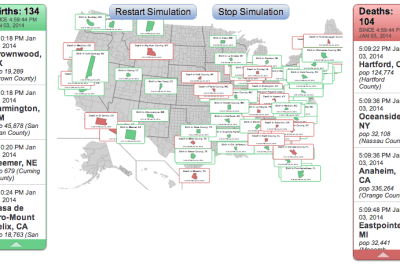
‘ The real-time map is a simulation, providing a qualitative view of births and deaths.
“[The map] can apparently seem to evoke a strange mixture of emotions,” Lyon, the map’s creator, said. “At least for me, it is a bit overwhelming and sobering, and provides some perspective on how big 300 million+ really is. However, if the rates and population counts are correct, something like this is actually happening as I type this. It\s just weird.” ‘ (PolicyMic).

The rich got much richer in 2013 (Bloomberg).

‘Liberals, conservatives, and libertarians unite! If ever there was a time for us to see past our differences in the name of a common cause, that time is now.
As Senator Rand Paul (R-Ky.) announced last night, a movement is afoot for a class action lawsuit against the federal government over the National Security Agency\’s decision to spy on millions of American citizens. The petition on his website has already received thousands of signatures…, with Paul rightly pointing out that “every person in America who has a cell phone would be eligible for this suit.” If any fault can be found with this petition drive, it is the fact that it immediately solicits donations from the plaintiffs for Rand Paul’s personal Political Action Committee, Rand 2016.
This is unfortunate because, although Paul himself is a heavy libertarian conservative, the issue he is championing could — and, more importantly, should — rally Americans of all philosophical persuasions.’ (PolicyMic).

“Science, philosophy and technology run on the model of American Idol – as embodied by TED talks – is a recipe for civilizational disaster…” — Benjamin Bratton (theguardian.com).
‘Martin Krzywinski is an artist. No, wait, he’s a mathematician. Actually, scratch that: he’s both, and he can make the number Pi look insanely beautiful.
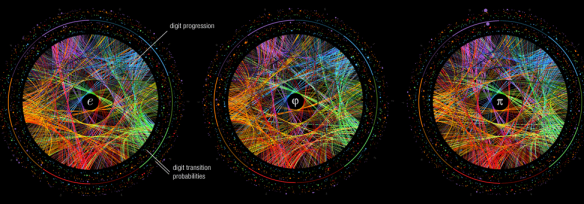
In this video, Numberphile takes a look at his work on visualizing the magical number Pi. Some of them are simple, some are complex; all are beautiful. Sit back and enjoy.’ (Youtube Numberphile via Gizmodo)

‘Recent studies have shown that many vitamins and supplements do little for our health and are a waste of money. This chart will make it abundantly clear how true that is.
In this brilliant chart by David McCandless from 2010, you can see a gorgeous visualization of how many supplements are actually helpful — based on scientific studies — and how many are basically nothing more than snake oil.’ (io9).

…but don’t call this storm ‘Hercules’, as some weather outlets would have you do. The reason is discussed here (Gawker).

Abstract: ‘Time travel has captured the public imagination for much of the past century, but little has been done to actually search for time travelers. Here, three implementations of Internet searches for time travelers are described, all seeking a prescient mention of information not previously available. The first search covered prescient content placed on the Internet, highlighted by a comprehensive search for specific terms in tweets on Twitter. The second search examined prescient inquiries submitted to a search engine, highlighted by a comprehensive search for specific search terms submitted to a popular astronomy web site. The third search involved a request for a direct Internet communication, either by email or tweet, pre-dating to the time of the inquiry. Given practical verifiability concerns, only time travelers from the future were investigated. No time travelers were discovered. Although these negative results do not disprove time travel, given the great reach of the Internet, this search is perhaps the most comprehensive to date.’ (arxiv.org).

“When someone reveals that government officials have routinely and deliberately broken the law, that person should not face life in prison at the hands of the same government. That’s why Rick Ledgett, who leads the N.S.A.’s task force on the Snowden leaks, recently told CBS News that he would consider amnesty if Mr. Snowden would stop any additional leaks. And it’s why President Obama should tell his aides to begin finding a way to end Mr. Snowden’s vilification and give him an incentive to return home.” (NYTimes editorial).
‘ “Duck Dynasty” bigotry still has a sizable audience — but not for long…’ (Salon).

‘This is how the Great Spiral Galaxy of Andromeda would look in the sky if it were bright enough. Sadly, its light is too faint. But imagine seeing that every night. Would you get tired of it? I know I wouldn’t.’ (Gizmodo)

One of the last known photos of the Formosan Clouded Leopard, this vest made of its pelt, underscores the human role in species extinction.
‘Our extinction crisis continues; 2013 allowed us to safely conclude that we will never again see the animals listed below…
It is just unfathomable, if not unconscionable, that we are responsible for causing a single species to completely disappear from the planet forever. Yet, we continue to do so over and over again. Extinct species have no future, they are gone to us and everyone that comes after us.
Let’s hope that our 2014 list is shorter than this year’s.’ (Living Alongside Wildlife)

‘…Democratic drinkers are more likely to sip Absolut and Grey Goose vodkas, while Republican tipplers are more likely to savor Jim Beam, Canadian Club and Crown Royal. That research comes from consumer data supplied by GFK MRI, and analyzed by Jennifer Dube of National Media Research Planning and Placement, an Alexandria-based Republican consulting firm.
The results are fascinating: Analyzing voting habits of those who imbibe, Dube found that 14 of the top 15 brands that indicate someone is most likely to vote are wines.
If you see someone at your New Years party tonight drinking Kendall-Jackson or Robert Mondavi wines, that person is highly likely to vote, and they’re likely to vote Republican. Someone who savors a Chateau Ste. Michelle Merlot, one of Washington State’s top producers, or Smoking Loon, they’re likely to cast ballots for Democrats.
Columbia Crest, Ravenswood, Francis Coppola and Charles Shaw (better known as two-buck Chuck) all produce wines Democrats favor. Fish Eye, Bogle and Franzia drinkers are more likely to lean right…’ (Washington Post).

‘The fact that we’ve kept the number of U.S. states relatively static is nothing short a miracle—there have been hundreds of attempts at state secession over the years. But what if they had all succeeded? This brilliant map depicts that alternative universe, where the U.S. is broken up into 124 different states that stretch from sea-to-shining-sea.’ (Gizmodo).

‘The newest update in the highly disconcerting series of devastating failures that is the Fukushima cleanup effort is troubling to say the least. Tepco has confirmed that (unexplained) plumes of steam have been rising from the mangled remains of Reactor Building 3. In other words, there\’s a chance Fukushima could be in the middle of another meltdown.’ (Gizmodo).

New Year Sunrise
This is the annual update of my New Year’s post, a tradition I started early on on FmH:
I once ran across a January 1st Boston Globe article compiling folkloric beliefs about what to do, what to eat, etc. on New Year’s Day to bring good fortune for the year to come. I’ve regretted since — I usually think of it around once a year (grin) — not clipping out and saving the article. Especially since we’ve had children, I’m interested in enduring traditions that go beyond getting drunk [although some comment that this is a profound enactment of the interdigitation of chaos and order appropriate to the New Year’s celebration — FmH], watching the bowl games and making resolutions.

A web search brought me this, less elaborate than what I recall from the Globe but to the same point. It is weighted toward eating traditions, which is odd because, unlike most other major holidays, the celebration of New Year’s in 21st century America does not seem to be centered at all around thinking about what we eat (except in the sense of the traditional weight-loss resolutions!) and certainly not around a festive meal. But…
Traditionally, it was thought that one could affect the luck they would have throughout the coming year by what they did or ate on the first day of the year. For that reason, it has become common for folks to celebrate the first few minutes of a brand new year in the company of family and friends. Parties often last into the middle of the night after the ringing in of a new year. It was once believed that the first visitor on New Year’s Day would bring either good luck or bad luck the rest of the year. It was particularly lucky if that visitor happened to be a tall dark-haired man.
“Traditional New Year foods are also thought to bring luck. Many cultures believe that anything in the shape of a ring is good luck, because it symbolizes “coming full circle,” completing a year’s cycle. For that reason, the Dutch believe that eating donuts on New Year’s Day will bring good fortune.
“Many parts of the U.S. celebrate the new year by consuming black-eyed peas. These legumes are typically accompanied by either hog jowls or ham. Black-eyed peas and other legumes have been considered good luck in many cultures. The hog, and thus its meat, is considered lucky because it symbolizes prosperity. Cabbage is another ‘good luck’ vegetable that is consumed on New Year’s Day by many. Cabbage leaves are also considered a sign of prosperity, being representative of paper currency. In some regions, rice is a lucky food that is eaten on New Year’s Day.”
The further north one travels in the British Isles, the more the year-end festivities

Fireworks over Edinburgh on New Year’s Eve
focus on New Year’s. The Scottish observance of Hogmanay has many elements of warming heart and hearth, welcoming strangers and making a good beginning:
“Three cornered biscuits called hogmanays are eaten. Other special foods are: wine, ginger cordial, cheese, bread, shortbread, oatcake, carol or carl cake, currant loaf, and a pastry called scones. After sunset people collect juniper and water to purify the home. Divining rituals are done according to the directions of the winds, which are assigned their own colors. First Footing:The first person who comes to the door on midnight New Year’s Eve should be a dark-haired or dark-complected man with gifts for luck. Seeing a cat, dog, woman, red-head or beggar is unlucky. The person brings a gift (handsel) of coal or whiskey to ensure prosperity in the New Year. Mummer’s Plays are also performed. The actors called the White Boys of Yule are all dressed in white, except for one dressed as the devil in black. It is bad luck to engage in marriage proposals, break glass, spin flax, sweep or carry out rubbish on New Year’s Eve.”
Here’s why we clink our glasses when we drink our New Year’s toasts, no matter where we are. Of course, sometimes the midnight cacophony is louder than just clinking glassware, to create a ‘devil-chasing din’.
 In Georgia, eat black eyed peas and turnip greens on New Year’s Day for luck and prosperity in the year to come, supposedly because they symbolize coppers and currency. Hoppin’ John, a concoction of peas, onion, bacon and rice, is also a southern New Year’s tradition, as is wearing yellow to find true love (in Peru, yellow underwear, apparently!) or carrying silver for prosperity. In some instances, a dollar bill is thrown in with the other ingredients of the New Year’s meal to bring prosperity. In Greece, there is a traditional New Year’s Day sweetbread with a silver coin baked into it. All guests get a slice of the bread and whoever receives the slice with the coin is destined for good fortune for the year. At Italian tables, lentils, oranges and olives are served. The lentils, looking like coins, will bring prosperity; the oranges are for love; and the olives, symbolic of the wealth of the land, represent good fortune for the year to come.
A New Year’s meal in Norway also includes dried cod, “lutefisk.” The Pennsylvania Dutch make sure to include sauerkraut in their holiday meal, also for prosperity.
In Spain, you would cram twelve grapes in your mouth at midnight, one each time the clock chimed, for good luck for the twelve months to come. (If any of the grapes happens to be sour, the corresponding month will not be one of your most fortunate in the coming year.) The U. S. version of this custom, for some reason, involves standing on a chair as you pop the grapes. In Denmark, jumping off a chair at the stroke of midnight signifies leaping into the New Year. In Rio, you would be plunging into the sea en masse at midnight, wearing white and bearing offerings. In many northern hemisphere cities near bodies of water, they will have a tradition of people plunging into the cold water on New Year’s Day. The Coney Island Polar Bears Club in New York is the oldest cold-water swimming club in the United States. They have had groups of people enter the chilly surf since 1903.

Ecuadorian families make scarecrows stuffed with newspaper and firecrackers and place them outside their homes. The dummies represent misfortunes of the prior year, which are then burned in effigy at the stroke of midnight to forget the old year. Bolivian families make beautiful little wood or straw dolls to hang outside their homes on New Year’s Eve to bring good luck.
In China, homes are cleaned spotless to appease the Kitchen God, and papercuttings of red paper are hung in the windows to scare away evil spirits who might enter the house and bring misfortune. Large papier mache dragon heads with long fabric bodies are maneuvered through the streets during the Dragon Dance festival, and families open their front doors to let the dragon bring good luck into their homes.
 The Indian Diwali festival, welcoming in the autumnal season, also involves attracting good fortune with lights. Children make small clay lamps, dipas, thousands of which might adorn a given home. In Thailand, one pours fragrant water over the hands of elders on New Year’s Day to show them respect.
 In Germany and Austria, lead pouring” (das Bleigießen) is an old divining practice using molten lead like tea leaves. A small amount of lead is melted in a tablespoon (by holding a flame under the spoon) and then poured into a bowl or bucket of water. The resulting pattern is interpreted to predict the coming year. For instance, if the lead forms a ball (der Ball), that means luck will roll your way. The shape of an anchor (der Anker) means help in need. But a cross (das Kreuz) signifies death.
Some history; documentation of observance of the new year dates back at least 4000 years to the Babylonians, who also made the first new year’s resolutions (reportedly voews to return borrowed farm equipment were very popular), although their holiday was observed at the vernal equinox. The Babylonian festivities lasted eleven days, each day with its own particular mode of celebration.  The traditional Persian Norouz festival of spring continues to be considered the advent of the new year among Persians, Kurds and other peoples throughout Central Asia, and dates back at least 3000 years, deeply rooted in Zooastrian traditions.Modern Bahá’í’s celebrate Norouz (”Naw Ruz”) as the end of a Nineteen Day Fast. Rosh Hashanah (”head of the year”), the Jewish New Year, the first day of the lunar month of Tishri, falls between September and early October. Muslim New Year is the first day of Muharram, and Chinese New Year falls between Jan. 10th and Feb. 19th of the Gregorian calendar.
 The classical Roman New Year’s celebration was also in the spring although the calendar went out of synchrony with the sun. January 1st became the first day of the year by proclamation of the Roman Senate in 153 BC, reinforced even more strongly when Julius Caesar established what came to be known as the Julian calendar in 46 BC. The early Christian Church condemned new year’s festivities as pagan but created parallel festivities concurrently. New Year’s Day is still observed as the Feast of Christ’s Circumcision in some denominations. Church opposition to a new year’s observance reasserted itself during the Middle Ages, and Western nations have only celebrated January 1 as a holidy for about the last 400 years. The custom of New Year’s gift exchange among Druidic pagans in 7th century Flanders was deplored by Saint Eligius, who warned them, “[Do not] make vetulas, [little figures of the Old Woman], little deer or iotticos or set tables [for the house-elf] at night or exchange New Year gifts or supply superfluous drinks [another Yule custom].” (Wikipedia)
 The tradition of the New Year’s Baby signifying the new year began with the Greek tradition of parading a baby in a basket during the Dionysian rites celebrating the annual rebirth of that god as a symbol of fertility. The baby was also a symbol of rebirth among early Egyptians. Again, the Church was forced to modify its denunciation of the practice as pagan because of the popularity of the rebirth symbolism, finally allowing its members to cellebrate the new year with a baby although assimilating it to a celebration of the birth of the baby Jesus. The addition of Father Time (the “Old Year”) wearing a sash across his chest with the previous year on it, and the banner carried or worn by the New Year’s Baby, immigrated from Germany. Interestingly, January 1st is not a legal holiday in Israel, officially because of its historic origins as a Christian feast day.
 Auld Lang Syne (literally ‘old long ago’ in the Scottish dialect) is sung or played at the stroke of midnight throughout the English-speaking world (and then there is George Harrison’s “Ring Out the Old”). Versions of the song have been part of the New Year’s festivities since the 17th century but Robert Burns was inspired to compose a modern rendition, which was published after his death in 1796. (It took Guy Lombardo, however, to make it popular…)
Should auld acquaintance be forgot
and never brought to mind?
Should auld acquaintance be forgot
and days of auld lang syne?
For auld lang syne, my dear,
for auld lang syne,
we’ll take a cup of kindness yet,
for auld lang syne.Should auld acquaintance be forgot
and never brought to mind?
Should auld acquaintance be forgot
and days of auld lang syne?
And here’s a hand, my trusty friend
And gie’s a hand o’ thine
We’ll tak’ a cup o’ kindness yet
For auld lang syne
Here’s how to wish someone a Happy New Year around the world:
- Arabic: Kul ‘aam u antum salimoun
- Brazilian: Boas Festas e Feliz Ano Novo means “Good Parties and Happy New Year”
- Chinese:
Chu Shen TanXin Nian Kuai Le (thanks, Jeff)- Czechoslavakia: Scastny Novy Rok
- Dutch: Gullukkig Niuw Jaar
- Finnish: Onnellista Uutta Vuotta
- French: Bonne Annee
- German: Prosit Neujahr
- Greek: Eftecheezmaenos o Kaenooryos hronos
- Hebrew: L’Shannah Tovah Tikatevu
- Hindi: Niya Saa Moobaarak
- Irish (Gaelic): Bliain nua fe mhaise dhuit
- Italian: Buon Capodanno
- Khmer: Sua Sdei tfnam tmei
- Laotian: Sabai dee pee mai
- Polish: Szczesliwego Nowego Roku
- Portuguese: Feliz Ano Novo
- Russian: S Novim Godom
- Serbo-Croatian: Scecna nova godina
- Spanish: Feliz Ano Nuevo
- Swedish: Ha ett gott nytt år
- Turkish: Yeni Yiliniz Kutlu Olsun
- Vietnamese: Cung-Chuc Tan-Xuan
- [If you are a native speaker, please feel free to offer any corrections or additions!]

However you’re going to celebrate, my warmest wishes for the year to come… and eat hearty! [thanks to Bruce Umbaugh for research assistance]

‘In a feature straight out of the movies, Dr. Rob Jenkins and his team have demonstrated that for sufficiently high-resolution photos, recognizable images of reflected faces of the photographer and bystanders can be retrieved from a subject’s eyes.
The researchers say that in crimes in which the victims are photographed, such as hostage taking or child sex abuse, reflections in the eyes of the photographic subject could help to identify perpetrators. Images of people retrieved from cameras seized as evidence during criminal investigations could be used to piece together networks of associates or to link individuals to particular locations.’ (Kottke).

‘A BBC nature documentary crew has captured footage of young dolphins passing around a pufferfish. They characterize the activity as “careful manipulation” and speculate that the dolphins are getting a small dose of the pufferfish’s neurotoxin in order to enter a “trance-like state.” The documentary was produced by John Downer, a highly nature documentarian, and a zoologist on the crew also confirms the “dolphins get high” hypothesis.’ (Boing Boing).

‘Legendary game designer Chris Crawford …owns 29,216 small plastic beads. Each bead is one of eight colors, and there are 3,652 beads in each color group. One bead represents a single day in Crawford\’s life. Each color group, therefore, represents one decade. The yellow beads are his childhood. The black beads are his teens. The greens are his inexperienced twenties, the oranges his restless thirties, the navy blues his settling forties and so on, all the way up to bead 29,216, which will represent his eightieth birthday.
Chris Crawford owns two jars. One is filled with the beads that represent his past, and the other is filled with the beads that represent his potential future.
Every morning, Crawford takes a bead from the jar that holds his future days and places it into the jar that holds the past. While he performs the ritual he tells himself not to waste the day.’ — Mark Frauenfelder (Boing Boing).

06 Hare’s Psychopathy Checklist-Revised (PCL-R)
‘The most accurately depicted psychopaths in cinema have been identified by a study that has just been published in the Journal of Forensic Sciences…It’s worth noting that the clinical definition of psychopathy is not what most people think – it’s not necessarily someone who is a knife wielding maniac – but suggests someone who has poor empathy, little remorse, and is impulsive and manipulative.
Needless to say, psychopathy is more common in people who are persistently violent, but you don’t need to be violent to be a psychopath.After conducting the analysis the authors note which films they feel have most accurately captured the characteristics of the psychopath.’ (Mind Hacks).

‘Great maps were everywhere in 2013. Some seemed destined to go viral. Some were stunning to see. Others had noble intentions and interesting stories to tell. Lots were made by people who aren\’t professional mappers. Here are some our favorites.’ (Wired Science).

‘Christmas Man. Daddy Christmas. Grandfather Frost. Yule Man. Yule Elder. Yule Gnome. Yule Goat. Father Christmas. Old Man Christmas. Biblical Magi. Christ Child. Christmas Log. All those names are names for Santa Claus in other countries around the world. Calling him just Santa Claus just seems so boring in comparison, doesn\’t it?
This map, popularized on Reddit, shows the name for the person who brings gives to countries around Europe. And I guess it would make sense for other older countries to have some weird ass names for Saint Nick since his origin story there isn\’t as cheery and commercialized as it is here.’ (Sploid).

‘Artists generally like to sign their work. Painters, sculptors, poets, all leave their name as a mark of pride. But when your brush is a scalpel and your canvas is the human body, it’s probably best to avoid that urge. One British surgeon is finding that out, after being suspended for branding his initials on a patient’s liver. These ain’t cattle, doc!
Details are slim on this one, but it seems a surgeon at the Queen Elizabeth Hospital in Birmingham, in England’s West Midlands, used an argon plasma coagulation tool to sear his brand in a patient’s liver. The tool, used to stop bleeding by burning tiny blood vessels shut with a beam of electrically-charged argon gas, can cut up to an inch deep in human tissue.
The surgeon’s signature was discovered by another doctor, who found the initials on the patient’s organ during a different surgery. Now they fear that potentially hundreds of patients are walking around with organs bearing the surgeon’s name. Doctors say the branding leaves only superficial burns, and isn’t likely to cause any harm to the patients. Small solace when you’re walking around with some bonkers doctor’s insignia on your guts.’ (Sploid).

The People You Choose To Follow Agree With You
You’re awesome, so you wouldn’t follow anyone who isn’t. And clearly anyone you think is awesome must be pretty smart, right? …
You’re really smart, so you only check the best news sources. Sure, there are other news sources out there, but your news sources are the most reliable – and the least biased. The news sources you like may occasionally get things wrong, but the news organizations you dislike are completely and utterly dishonest. They deliberately spin things. They can’t be trusted…
The people you follow, and the news sources you like, will of course point out when someone you disagree with says something stupid. …
Embrace Your Bubble! (Makeuseof).

‘Long-time readers of Wired magazine will recognize (with some sentimentality) their “wired/tired/expired” lists at the beginning of each issue. Happily, they ressurected the format for their year-end list. But — judging by the number of “expired” things I like and use — it’s a bittersweet reunion. I am perpetually the person who jumps on trends and ideas as they hit their close. Take their classification of music services, for example:
My beloved iTunes collection is “expired”? And it’s out-hipped by some upstart streaming services like Spotify and Rdio? Geddafuggouttahere.
…Spotify and Rdio probably work really well for people who see music as a transient background interest. But I’m difficult and picky, and music is extremely important to me.’ (Pixel Envy).

‘Do you know which words entered the English language around the same time you entered the world? Use our OED birthday word generator to find out! We’ve scoured the Oxford English Dictionary (OED) to find words with a first known usage for each year from 1900 to 2004. Simply select the relevant decade and click on your birth year to discover a word which entered the English language that year.’ (OED birthday word generator)

‘Bertha, the world’s largest tunneling machine, churning through the rock and mud beneath Seattle, has hit a mysterious roadblock—so mysterious, it is only known for now as “the object.”
The New York Times reports that the machine—300 feet long and 5 stories tall—has ground to a halt. Built precisely not to be stopped by, well, just about anything, Bertha has apparently met her match. But what exactly is it? “Something unknown, engineers say—and all the more intriguing to many residents for being unknown—has blocked the progress of the biggest-diameter tunnel-boring machine in use on the planet,” the NYT writes.’ (Gizmodo).

R.I.P. The Blog, 1997-2013: ‘Sometime in the past few years, the blog died. In 2014, people will finally notice. Sure, blogs still exist, many of them are excellent, and they will go on existing and being excellent for many years to come. But the function of the blog, the nebulous informational task we all agreed the blog was fulfilling for the past decade, is increasingly being handled by a growing number of disparate media forms that are blog-like but also decidedly not blogs.
Instead of blogging, people are posting to Tumblr, tweeting, pinning things to their board, posting to Reddit, Snapchatting, updating Facebook statuses, Instagramming, and publishing on Medium. In 1997, wired teens created online diaries, and in 2004 the blog was king. Today, teens are about as likely to start a blog (over Instagramming or Snapchatting) as they are to buy a music CD. Blogs are for 40-somethings with kids.’ (kottke).

‘Pandora and Endor, eat your hearts out. The first known moon outside of our solar system may have been found, and it seems weirder than we ever could have imagined.
Exomoons have long been predicted to exist – some may even be habitable worlds – but until now, no one had detected any. “This is the first serious candidate from any survey that I am aware of,” says astronomer David Kipping of Harvard University, who was not involved in the discovery.
Unlike the exomoons that feature in the films Avatar and Return of the Jedi, not to mention the moons in our solar system, the new moon and its exoplanet seem to be adrift in the cosmos, far from any star.’ (New Scientist).

‘Narcolepsy is a mysterious disorder that involves sudden, uncontrollable sleepiness, among many other symptoms. On one hand, its cause seems straightforward: people slowly lose a special group of neurons that produce hypocretin, a hormone that keeps us awake.
But what kills the neurons?
Many scientists have long suspected that the immune system is responsible. That would make narcolepsy an autoimmune disease–one in which a person’s immune system turns on their own healthy cells.
There’s been a lot of evidence to support this idea, but a team of scientists from Stanford University have finally found what they describe as a “smoking gun”. People with narcolepsy, and only people with narcolepsy, have a special group of immune cells that targets hypocretin. These cells might be attacking the neurons directly, or acting through an intermediary, or something else altogether. Either way, it’s the first clear, direct sign of autoimmunity.
The study also helps to explain some puzzling quirks about narcolepsy, like why the 2009 swine flu pandemic led to a surge of cases in China, or why one particular vaccine against that strain did the same in Europe.’ — Ed Yong (Not Exactly Rocket Science).

‘Are you slowly killing your houseplants? Probably! But there might be a reason other than neglect why they’re all yellow and wilty: your Wi-Fi router.
An experiment by a handful of high school students in Denmark has sparked some serious international interest in the scientific community.Five ninth-grade girls at Hjallerup School in North Jutland, Denmark, noticed they had trouble concentrating after sleeping with their mobile phones at their bedsides. They tried to figure out why. The school obviously doesn’t have the equipment to test human brain waves, so the girls decided to do a more rudimentary experiment. They placed six trays of garden cress seeds next to Wi-Fi routers that emitted roughly the same microwave radiation as a mobile phone. Then they placed six more trays of seeds in a separate room without routers. The girls controlled both environments for room temperature, sunlight and water. After 12 days, they found the garden cress seeds in the routerless room had exploded into bushy greenery, while the seeds next to the Wi-Fi routers were brown, shriveled, and even mutated…’ (The Daily Dot).

‘Merry—or not-so-merry—Krampus! This beast with Germanic roots is St. Nicholas\’s other half and scares children into being nice, not naughty.’ (National Geographic).
 Ocean Could be Ice Free by 2015: ‘Say goodbye to polar bears and a whole lot of ice. New research suggests the Arctic Ocean could be ice-free by 2015, with devastating consequences for the world. Can it be stopped?
Someone better tell Santa Claus. First it was polar bears that were threatened by global warming. Now it’s reindeer too. As temperatures in the Arctic skyrocket, reindeer are suffering staggeringly large, rapid population losses. “Herds of reindeer have declined by one-third since the 1990s as their access to food sources, breeding grounds and historic migration routes have been altered,” reports the environmental audit committee of the British Parliament.
The entire planet is getting hotter, but the top of the world is warming twice as fast as the global average. One leading expert, Peter Wadhams, a professor of ocean physics at the University of Cambridge, says the Arctic Ocean could be completely free of ice in summer as soon as 2015. An overheated Arctic in turn threatens catastrophic knock-on effects for the rest of the globe, including more extreme weather; faster sea level rise; and a higher chance of accelerating global warming to where it becomes unstoppable—what scientists refer to as “runaway” global warming.’ — Mark Hertsgaard (The Daily Beast).

Tea Party fantasies kill kids: ‘Newtown and Arapahoe shootings keep happening because there’s big money in guns — and outdated myths we must end…’ — Richard Eskow (Salon).

We’d better cooperate: ‘Leroy Chiao is a Chinese-American former NASA astronaut who commanded the International Space Station between 2004 and 2005. He was the first U.S. citizen invited to China’s astronaut training center. As China sends its first rover to the moon, he says it’s time for NASA to reach out and cooperate.‘ (Slate).

‘…Data from the Hubble space telescope suggests that enormous jets of water more than 200 kilometers tall (roughly twice as high as Earth’s atmosphere) may be spurting intermittently from the moon’s surface.
The frozen body Europa is known to have a vast liquid water ocean beneath its cold crust, a potential home for life. Should these newly observed water plumes be tapping into some Europan sea, they could be bringing material to the surface that would otherwise stay hidden. Follow-up observations from Earth or with probes around Europa could sample the fountains, hunting for organic material and perhaps finding evidence of living organisms beyond Earth.
The findings, presented today at the annual meeting of the American Geophysical Union, await independent confirmation. But if the jets are real, the frozen world would join the tiny number of others known to have active jets, including Saturn’s moon Enceladus and Neptune’s moon Triton.’ (Wired Science).




![//www.elanguages.org/images/16245' cannot be displayed]](http://www.elanguages.org/images/16245 "Revelry")


