’“Nobody cared or nobody understood that without this next vial of insulin, I wouldn’t live to see another week,” said 28-year-old Kristen Whitney Daniels.
She started rationing her insulin after she was kicked off her parents’ insurance plan two years ago.
“I can’t really explain how isolating and how terrifying it is,” she said.
She’s now a patient at the Yale Diabetes Center, where a recent Journal of American Medical Association study found one in four patients reported “cost-related underuse.” Dr. Kasia Lipska treats patients at the clinic, and was the study’s lead author. She testified on Capitol Hill last week.
“This vial of insulin cost just $21 when it first came on the market in 1996. It now costs $275,” she said.…’
’In a recent interview, Noam Chomsky gave a short summary of how the modern Republican Party coalition between the rich and the religious, white working class was built, decade by decade.
They have a primary constituency, a real constituency: extreme wealth and corporate power. That’s who they have to serve. That’s their constituency. You can’t get votes that way, so you have to do something else to get votes. What do you do to get votes? This was begun by Richard Nixon with the Southern strategy: try to pick up racists in the South. The mid–1970s, Paul Weyrich, one of the Republican strategists, hit on a brilliant idea. Northern Catholics voted Democratic, tended to vote Democratic, a lot of them working-class. The Republicans could pick up that vote by pretending — crucially, “pretending” — to be opposed to abortion. By the same pretense, they could pick up the evangelical vote. Those are big votes — evangelicals, northern Catholics. Notice the word “pretense.” It’s crucial. You go back to the 1960s, every leading Republican figure was strongly, what we call now, pro-choice. The Republican Party position was — that’s Ronald Reagan, George H.W. Bush, all the leadership — their position was: Abortion is not the government’s business; it’s private business — government has nothing to say about it. They turned almost on a dime in order to try to pick up a voting base on what are called cultural issues.
Same with gun rights. Gun rights become a matter of holy writ because you can pick up part of the population that way. In fact, what they’ve done is put together a coalition of voters based on issues that are basically, you know, tolerable to the establishment, but they don’t like it. OK? And they’ve got to hold that, those two constituencies, together. The real constituency of wealth and corporate power, they’re taken care of by the actual legislation…
Appealing to those fears and issues has been very effective and has been joined in recent years by conservatives and conservative media eroding trust in many of America’s familiar institutions, such as the scientific community, journalism, and government (some of which erosion, to be fair, has been self-inflicted). Keep in mind that as recently as 10 years ago, Republicans believed in climate science until their constituency (aka the wealthy industrialists) steered them away from that path.…’
’…[P]hantom jams are not the fault of individual drivers, but result instead from the collective behavior of all drivers on the road. It works like this. Envision a uniform traffic flow: All vehicles are evenly distributed along the highway, and all drive with the same velocity. Under perfect conditions, this ideal traffic flow could persist forever. However, in reality, the flow is constantly exposed to small perturbations: imperfections on the asphalt, tiny hiccups of the engines, half-seconds of driver inattention, and so on. To predict the evolution of this traffic flow, the big question is to decide whether these small perturbations decay, or are amplified.
If they decay, the traffic flow is stable and there are no jams. But if they are amplified, the uniform flow becomes unstable, with small perturbations growing into backwards-traveling waves called “jamitons.” These jamitons can be observed in reality, are visible in various types of models and computer simulations, and have also been reproduced in tightly controlled experiments.…’
’George Conway appears to have come up with a brand-new scathing nickname for President Donald Trump.
The conservative attorney and frequent Trump critic, who is married to White House counselor Kellyanne Conway, on Thursday repeatedly called his wife’s boss “Deranged Donald.” It seemed to have stuck, with the hashtag #DerangedDonald trending on Twitter.
Conway used the mocking moniker in a series of tweets in which he criticized Trump and also took a swipe at widely watched conservative cable network Fox News, whose prime time hosts staunchly defend the president…’
’A recent uptick in sightings of unidentified flying objects — or as the military calls them, “unexplained aerial phenomena” — prompted the Navy to draft formal procedures for pilots to document encounters, a corrective measure that former officials say is long overdue.
As first reported by POLITICO, these intrusions have been happening on a regular basis since 2014. Recently, unidentified aircraft have entered military-designated airspace as often as multiple times per month, Joseph Gradisher, spokesman for office of the deputy chief of naval operations for information warfare, told The Washington Post on Wednesday. Citing safety and security concerns, Gradisher vowed to “investigate each and every report.” He said, “We want to get to the bottom of this. We need to determine who’s doing it, where it’s coming from and what their intent is. We need to try to find ways to prevent it from happening again.”
Luis Elizondo, a former senior intelligence officer, told The Post that the new Navy guidelines formalized the reporting process, facilitating data-driven analysis while removing the stigma from talking about UFOs, calling it “the single greatest decision the Navy has made in decades.”
[The government admits it studies UFOs. So about those Area 51 conspiracy theories …]…’
The fallout from the Chernobyl nuclear disaster 30 years on:
’Chernobyl was the worst nuclear accident in human history and its legacy is still being felt today. The public is often led to believe that the exclusion zone, a depopulated 20-mile circle around the blown plant, safely contained Chernobyl radioactivity. But there is a second zone in southern Belarus. In it, people lived for 15 years in levels of contamination as high as areas within the official zone until the area was finally abandoned in 1999.
That is just one of the things Kate Brown discovered during the 10 years she spent interviewing doctors, scientists and international officials involved in the Chernobyl disaster and scouring over 20 archives to unearth never-before-seen documents. She talks to Anushka Asthana about the impact of international organisations lying about the disaster and why we should be asking far more questions about the global health effects of radioactivity as we enter a new nuclear age.…’
’In Italy, a team of scientists is using a highly sophisticated detector to hunt for dark matter. The team observed an ultra-rare particle interaction that reveals the half-life of a xenon–124 atom to be 18 sextillion years.…’
’Psychopaths are manipulative, violent, impulsive, and lack empathy — but research suggests that psychopathy may be an evolutionary strategy rather than a disorder.…’
’After selling himself to American voters as the great negotiator and dealmaker, maybe Donald Trump was simply too embarrassed by the truth: He’d been taken advantage of, deeply and systemically, by everyone around him, including by Russia and Vladimir Putin and by his own staff. During the campaign, they grifted him without his knowledge. In the White House, they simply ignored him.
The bottom line of the Mueller report is that if Trump wasn’t guilty of conspiracy, he was simply conned by everyone around him. To a man as egotistical as he is, the reality that everyone was in on the con but him might hurt more than Mueller’s handcuffs.…’
In three decades of advocating for prison abolition, the activist and scholar has helped transform how people think about criminal justice.
’Instead of asking whether anyone should be locked up or go free, why don’t we think about why we solve problems by repeating the kind of behavior that brought us the problem in the first place? [We should] consider why, as a society, we would choose to model cruelty and vengeance.…’
“How are we to account for such glaring defects in the performances of someone who is indisputably one of the most important musicians in the history of jazz?…’
’Legendary jazz trumpeter Miles Davis recorded the second and final session of his seminal album Kind of Blue on April 22nd, 1959. It remains the best-selling jazz album of all time. Its unforgettable solos by Davis, tenor saxophonist John Coltrane, alto saxophonist Cannonball Adderley, and pianist Bill Evans create an ethereal atmosphere; the album continues to be one of the most beloved records in jazz.
Kind of Blue popularized a new approach to improvisation. Rather than basing its five tunes on a rigid framework of changing chords, as was conventional for post-bop music, Davis and Evans wrote pieces with a more limited set of scales in different modes. “Modes” maintain the basic intervals of an underlying major or minor scale, but move the tonic (first note) to one of its other notes, creating different moods or coloration. As this detailed video on modal jazz by Polyphonic explains, this creates a more open network of harmonic relationships. Davis and Evans’s “cooler” approach shifts the musical emphasis from “harmonic rhythm” of post-bop jazz, toward the melodic inventiveness of individual players.
The modal approach to jazz became so popular it changed the way jazz was taught and analyzed.
The modal approach to jazz became so popular it changed the way jazz was taught and analyzed. This has justified the significance of the album for many players and aficionados. Music scholar Samuel Barrett argues, however, that this narrative oversimplifies both the way Kind of Blue was composed and performed, and its true cultural impact.…’
’The Extinction Symbol was created in January 2011 by ESP, an artist from London whose identity is kept secret.[1] It represents the Holocene or Sixth Mass Extinction.
The symbol is described on the Extinction Symbol website as “The circle signifies the planet, while the hourglass inside serves as a warning that time is rapidly running out for many species.”
After its creation the symbol gradually attracted an online following amongst environmentalists and activists. It came to be used by environmental action group Extinction Rebellion, created in 2018, and has been sprayed in removable chalk paint on government buildings during actions to raise environmental awareness in the UK. The aims of Extinction Rebellion go beyond species extinction, including climate change and other issues that could lead to human extinction.…’
’As I understand the House Democrats’ plan, it’s to use the Mueller report to launch investigations, send out subpoenas, and hold public hearings. All of that could lead to revelations that tilt the public toward impeachment, it could prove that the public doesn’t consider these revelations important enough to merit impeachment, or it could simply inform the public to help them make a decision in the 2020 election.
Either way, it keeps the focus on Trump’s crimes and his lies, rather than overwhelming that conversation with a debate over removing Trump from office at a time when there’s no prospect of marshaling the votes to actually remove him from office. It seems like a reasonable strategy to me.…’
’CAN POEMS TEACH US how to live? What does it mean to approach poetry as a source of self-help? It’s not hard to call to mind examples of poetry that rouse or soothe or refocus a reader, lifting or quieting the mind like a deep breath. Yet much of the poetry encountered in literature classrooms and canonical anthologies may not readily reflect the self that is reading it, and therefore may not readily become a tool of self-improvement. The work of many modernist poets in particular is placed under the banner of “art for art’s sake,” a motto meant to explicitly free such poetry from the responsibility of serving a didactic or utilitarian function. The poems of Wallace Stevens, for instance, are frequently taken to epitomize the kind of high modernist difficulty that in its slippery symbology and ambiguous affect would seemingly resist being reliably employed for any useful purpose.
But Joan Richardson’s How to Live, What to Do: Thirteen Ways of Looking at Wallace Stevens emphatically asserts the practical use-value of poetic difficulty. As is suggested by Richardson’s title (which borrows from a Stevens poem), Stevens is in fact concerned above all with improving the daily lives of his readers.…’
’A forensic artist in Scotland has made a hyper realistic model of an ancient dog based on the skull of a dog dug up in Orkney, Scotland, which lived and died 4,000 years ago.
The model gives us a glimpse of some of the first dogs humans befriended.…’
’Warren is the first 2020 presidential candidate to call for Donald Trump’s impeachment as a result of the findings in the redacted Mueller Report released yesterday.
Warren going on the record means every candidate will be put on the spot this weekend regarding impeachment. Things are about to get interesting.…’
‘We have a president who is an instinctual criminal and liar, who threatens the integrity of our justice system and of our democratic elections, who is incapable of understanding the rule of law, backed by an attorney general who just outright distorted the findings of the special counsel.
What more do we need to know? To refuse to use the one weapon the Founders gave us to remove such a character from office is more than cowardice. It is complicity. It is a surrender to forces which aim to make the world safe for authoritarianism. It may not work. But if we acquiesce, pretend it isn’t happening, or look away, it cannot work. This disgusting man is not just a cancer in the presidency. His presidency is a cancer in our Constitution and way of life. How long do we let this metastasize even further? How long before we take a stand? Mueller has given us the road map. He has done his duty. Now it’s our turn to do ours: “to support and defend the Constitution and laws of the United States of America against all enemies, foreign and domestic.”
There is no qualification in that oath of citizenship.
‘It’s a delicate and challenging endeavor for a writer to honestly, accurately and respectfully portray brain differences in fictional characters. Below are ten masterfully told works of psychological suspense, featuring protagonists with exceptional psychological characteristics. These heroes and heroines use their cognitive gifts to navigate challenging and oftentimes dangerous circumstances and along the way give readers insight into other, creative ways of thinking….’
’In short, Mueller did not find evidence that Trump directly colluded with Russia to interfere with the 2016 election — so he probably wasn’t obstructing justice to cover up a secret plot with the Russians.
But that doesn’t exonerate Trump; it’s possible Trump still tried to obstruct an investigation against him just because it might make him, his campaign, or his family look bad or guilty of other crimes. (Crucially, obstruction of justice doesn’t necessarily require an underlying crime.)…’
’Upon hearing he would be investigated, Trump’s first reaction was, “Oh my God. This is terrible. This is the end of my Presidency. I’m fucked.” This is according to the notes kept by Jody Hunt, then-Attorney General Jeff Sessions’s chief of staff.
That exclamation, so far, appears to have been incorrect. The report does not recommend impeachment of Trump or urge his resignation, and as of this writing, it appears unlikely to lead to either. But it’s a startling first response to the news from the president.…’
’Consciousness has long been difficult to define, whether you’re a biologist, neuroscientist, or philosopher. So Frans de Waal looks at what actions humans take that require conscious thought. Comparing them to actions in certain animals suggests consciousness is not a human trait alone.…’
’Luke O’Neil put a call out for his readers’ stories of their loved ones’ capture by Fox News, being overtake by its paranoid, racist conspiracy mindset: he got back a heartbreaking collection of tales of “funny, compassionate” older relatives turning into someone who was “increasingly angry, bigoted, and paranoid” – some people even found their older relatives dead in front of a TV playing Fox.
The stories mostly involve people who saw themselves as “conservative” but who kept any kind of racial animus or other socially unacceptable views to themselves, but whose conservative worldviews were deepened and weaponized, in part by sprawling and aggressive direct-mail ad campaigns for quack remedies, prepper supplies, gold bullion, and so on.
Many of the people transformed by Fox seemed to begin their transformation in 2008, with the election of America’s first Black president, and at the dawn of the financial crisis, when the slow upward redistribution of America’s wealth to the 1% took a precipitous leap.…’
’If two men in a world of more than 7 billion people can provide €300million to restore Notre Dame, within six hours, then there is enough money in the world to feed every mouth, shelter every family and educate every child. The failure to do so is a matter of will, and a matter of system.
The failure to do so comes from our failure to recognise the mundane emergencies that claims lives all around us every single day. Works of art and architectural history and beauty rely on the ingenuity of people, and it is people who must be protected above all else.
Brick and mortar and stained-glass might burn, but they do not bleed, and they do not starve, and they do not suffer. Humans suffer. Everywhere in the world, from Paris to Persepolis, people are suffering. But their suffering is every day. It does not light up a front page, and it does not inspire immediate donations from the world’s wealthiest men.…’
’Researchers who study empathy have noticed that it’s actually really hard to do what we were striving for in my generation: empathize with people who are different than you are, much less people you don’t like. But if researchers set up a conflict, people get into automatic empathy overdrive, with their own team. This new research has scrambled notions of how empathy works as a force in the world. For example, we often think of terrorists as shockingly blind to the suffering of innocents. But Breithaupt and other researchers think of them as classic examples of people afflicted with an “excess of empathy. They feel the suffering of their people.”
Breithaupt called his new book The Dark Sides of Empathy, because there’s a point at which empathy doesn’t even look like the kind of universal empathy I was taught in school. There is a natural way that empathy gets triggered in the brain — your pain centers light up when you see another person suffering. But out in the world it starts to look more like tribalism, a way to keep reinforcing your own point of view and blocking out any others.…’
I’m not really surprised at this finding, as I think connections to our in-group are evolutionarily hardwired and empathy is the currency for those affiliations. But it inherently entails excluding the Other. The conceit of universal empathy attempts to force the human round peg into the square hole.
’A Florida man was killed by “the world’s most dangerous bird” last Friday, becoming one of the few known cases of death-by-cassowary in modern history.
The victim was identified as Martin Hajos, a 75-year-old man who owned a farm near Alachua, according to the Gainesville Sun. On Friday morning, Hajos was rushed to UF Health Shands Hospital “under a trauma alert,” and later succumbed to undescribed injuries.
ADVERTISEMENT
“He was doing what he loved,” said a woman who claimed that Hajos was her fiance.
Emergency responders said that Hajos was killed by a cassowary, a large and flightless relative of the emu with a dangerous reputation and, most notably, weaponized feet punctuated by talons up to five inches long.
Cassowaries are ratites, belonging a group of birds characterized by their inability to fly. Native to tropical forests in Australia and New Guinea, they can reach heights of more than five feet and weigh up to 135 pounds.
“It looks like it was accidental,” Alachua County Fire Rescue deputy chief Jeff Taylor told the Gainesville Sun about the incident. “My understanding is that the gentleman was in the vicinity of the bird and at some point fell. When he fell, he was attacked.”…’
’The brain became a celebrity this week when Ariana Grande shared the results of a scan of her brain seemingly showing signs of severe PTSD:
Is there any science behind this?
Not really.
The source of the scan isn’t clear but I’m 99% sure that the image was taken at one of Dr Daniel Amen‘s controversial clinics. Amen uses similar graphics in his brain scans. If it is an Amen scan, then the ‘blobs’ seen on Grande’s brain represent areas of increased or decreased cerebral blood flow (CBF) as assessed using a method called SPECT. SPECT is a fairly old neuroimaging methodology that forms the heart of Amen’s network of clinics.
Bear in mind that the blobs on an image like this are statistical illustrations. A scan like this is not a photograph or x-ray of structural changes, and without knowing the context in which the scan was taken and the methods used to analyze it, it doesn’t mean much.
Most psychiatrists and neuroscientists would not use SPECT or any other type of brain scan to diagnose PTSD. Dr Amen claims to be able to do so, and in 2015 published a paper reporting on this, but I wouldn’t put much faith in it.…’
’If you grew up in the ’80s and ’90s, have children, or have ever been to a kid’s birthday party, then you’ve probably heard the Canadian crooner’s timeless bangers “Baby Beluga” and “Banana Phone.”
Raffi’s saccharine melodies and lyrics actually read like discrete guides on how to live and love with dignity, starting at childhood. With an adult’s ear, the chorus of Raffi’s biggest hit — “Baby beluga in the deep blue sea / Swim so wild and you swim so free” — appears to be about learning how to individuate while still feeling safe and held by your caretakers. It’s a valuable message, even for adults. The last line of “Everything Grows,” an ode to the universality of the life cycle, is, “Mamas do and papas too / everything grows.” It’s a subtle reminder to parents that while we may be done with the physical part of our growth, emotional growth is a lifelong journey.
But learning to live with dignity means learning about what it’s like to live without it and the nefarious forces that try to take it away. … In recent months, the 70-year-old singer has gained a bit of attention for his active, politically engaged Twitter feed where many posts are accompanied with the dissenter’s slogan du jour: #Resist and #ResistFacism. Raffi’s outspokenness around Trump and his policies goes back to when he was elected. Just last week the singer called Trump unfit for office, racist, and misogynistic. In December he said we must “fight fascism with everything we’ve got.” Seemingly trite, the addition of Raffi’s voice to the American political landscape is actually invaluable — the singer-songwriter is the premier emissary for children and his positions carry with them an incredible weight. And the children, after all, are the future.…’
After 50 years, Angels vacate notorious Greenwich Village headquarters brownstone for new digs in former Baptist church on Long Island.
’“The parties used to be great,” Nancy said. “Until the explosion.” In 1990, a garbage-can firecracker killed a fourteen-year-old boy. Over the years, the East Village Angels both caused and prevented mayhem. In 1994, the Times characterized this mayhem, part “lore and part police reports,” as “countless decibel-cranking parties, LSD-laced misadventures, drug deals, orgies and random acts of violence against passers-by.” In recent years, parking-space tussles resulted in beatings and a shooting; a woman who pounded on the door, screaming, was badly beaten. In 1978, the chapter president, Vincent (Big Vinny) Girolamo, of plaque fame, allegedly pushed his girlfriend off the roof, to her death. (He died, of stab wounds, before he could stand trial.) Innumerable bad vibes were doled out after unwanted bench-sitting, dog-peeing, and photography incidents. But, from the scuzz era to the N.Y.U.-and-condos era, club members also defended their neighbors; the Angels’ block was considered the safest around.
“I haven’t heard anybody say ‘Good riddance,’ ” Janet said.
“I’ll miss the way they decorated at Christmas,” Nancy said.
“They used to break people’s cameras,” Janet said. In the Instagram age, unwanted photography had skyrocketed.…’
‘The first ever image of a black hole, released on Wednesday, raises several important questions. For a start, we don’t know where exactly the light in the image comes from. Next, can we get a similarly good image of Sagittarius A*, the black hole at the centre of our galaxy? It is changing more quickly than the newly pictured black hole, so getting a clean image is more challenging. Finally, can these images help us understand how general relativity and quantum mechanics fit together? …’
Related: An Astrophysicist on on What the Black Hole Image Reveals:
Pankaj Joshi:
’Strictly speaking, the system did not see an event horizon, which cannot be seen by definition. Furthermore, although an event horizon necessarily implies a shadow and silhouette, the converse is not true. Nonetheless the observations are still so precise that whatever is casting the shadow must be exotic. No ordinary body could be so small and yet so dark and so massive. A black hole is now the most conservative conclusion. If it is not a black hole, it might be a naked singularity, a type of immensely dense object that I have studied, and that would make a black hole look rather mundane.…’
’Two F–16s were conducting firing exercises on January 21. It appears that the damaged aircraft actually caught up with the 20mm rounds it fired as it pulled out of its firing run. At least one of them struck the side of the F–16’s fuselage, and parts of a round were ingested by the aircraft’s engine. The F–16’s pilot managed to land the aircraft safely at Leeuwarden Air Base.
The incident reflects why guns on a high-performance jet are perhaps a less than ideal weapon. The Vulcan is capable of firing over 6,000 shots per minute, but its magazine carries only 511 rounds—just enough for five seconds of fury. The rounds have a muzzle velocity of 3,450 feet per second (1050 meters per second). That is speed boosted initially by the aircraft itself, but atmospheric drag slows the shells down eventually. And if a pilot accelerates and maneuvers in the wrong way after firing the cannon, the aircraft could be unexpectedly reunited with its recently departed rounds.…’
‘I unfollowed everybody except accounts who produce tweets I almost always want to see.
This is not the same as following people and businesses you like. That was a big discovery for me: simply liking someone or something isn’t a good reason to follow them on Twitter.
When you start going by whose tweets you like reading, as opposed to who you like for other reasons, you will probably end up following way fewer people.
Mostly, I stuck with:
People I know in real life (who aren’t in the habit of tweeting about horrible news events they don’t plan to do anything about)
Local events in my city
Local shops and businesses I would like to visit more
Certain kinds of humor
Certain kinds of discussion about certain topics
This kind of curation is definitely not what Twitter wants you to do, so you’ll have to turn to a third party app to efficiently cull your feed. I used Tokimeiki Unfollow, which cleverly allows you to Marie-Kondo-ize your feed, asking yourself if each account still “sparks joy.”
You’ll know what you feel about a given account when you see its name and avatar. You’ll feel a lot of aversion and indifference, and small moments of joy. When in doubt, unfollow. I was ruthless and regret nothing. It took ten minutes….’
‘…He cheats. He lies. He kicks. And not just his ball—yours, too. He props up a 2.8 handicap that’s faker than WrestleMania 35. He wins tournaments he never even played in. He wins tournaments that weren’t even held.
He does all of this because he has to win. A loss is to Donald Trump what a shower is to the Wicked Witch of the West. He has to win no matter how much cheating, lying, and pencil erasing it takes. He has to win whether you’ve caught him or not. Maybe it was his father beating into his kid brain, Win, win, win. Be a winner, over and over. Maybe it was where he learned the game—Cobbs Creek, a scruffy public course in Philadelphia full of hustlers and con men who taught him to cheat your opponent before he cheats you…’
’Bruh. I give up, breh. I’m telling you, brah, I endeavored to find a pattern: I wanted so badly to uncover the blueprint or even the architect behind the “Bro,” Bruh,” “Breh,” “Brah” and “Bruv” complex. Which bros used which version, and where, and why. I believed in my gut that bros — even if unbeknownst to themselves — must be adhering to some intrinsic fraternal “Bra-Vinci Code.” For days, I fed myself stories of a cryptograph lying in the depths of a hidden Bro-tlantis that specifically said: This is when you use “Bruh,” instead of “Bro.” Or for that matter, this is when it’s more succinct to use “Breh” instead of “Bruh.” At the very least, I thought, there has to be a specific “Brah” demographic that was at least faintly in contrast to the folks who use “Breh,” or “bruh.”
I wanted clear answers. But I was a fool. The bros are many things, including — even if unbeknownst to themselves — complex. And so, while I did largely find that purveyors of the many masks of “bro” often swing freely from one usage to the next, entangling themselves in a bro-lingo labyrinth, there are still some, albeit mostly overlapping, norms.…’
’Some friendships last a lifetime, but most have a lifespan. In the U.S., best friends tend to last for 10 years on average, says Nicholas Christakis.
In friendships, one person may begin to defect or “free ride”, which causes the other person to choose between cooperation or defection. People tend to choose the latter so they won’t be taken advantage of.
A certain amount of social fluidity, taking a breather from a friendship, can actually make a friendship last longer.…’
’The scientific world is abuzz following recommendations by two of the most prestigious scholarly journals – The American Statistician and Nature – that the term “statistical significance” be retired.
In their introduction to the special issue of The American Statistician on the topic, the journal’s editors urge “moving to a world beyond ‘p<0.05,’” the famous 5 percent threshold for determining whether a study’s result is statistically significant. If a study passes this test, it means that the probability of a result being due to chance alone is less than 5 percent. This has often been understood to mean that the study is worth paying attention to.
The journal’s basic message – but not necessarily the consensus of the 43 articles in this issue, one of which I contributed – was that scientists first and foremost should “embrace uncertainty” and “be thoughtful, open and modest.”…’
Matthew Miller, former Director of the Office of Public Affairs at the Justice Department, writes:
’The attorney general’s actions raise suspicions about whether he is acting primarily to benefit the president because they don’t make sense when viewed through any other lens. Barr is neither inexperienced nor naive, yet when deciding among the several options available to him when he received Mueller’s report, he chose the one course of action that would raise questions about his own integrity and plunge the Justice Department into political controversy.…’
’“Congress has to act,” Trump said. “They have to get rid of catch and release, chain migration, visa lottery, they have to get rid of the whole asylum system because it doesn’t work, and frankly, we should get rid of judges. You can’t have a court case every time somebody steps foot on our ground.”
Trump’s comments marked the second time this week he has urged Congress “to get rid of judges” — a proposal that, thankfully, for those of us who value checks and balances, has little chance of gaining traction now that Democrats control the House.
The president, however, is not even trying to hide the fact he’d like to have the power to summarily deport migrants and asylum seekers, and has already demonstrated a willingness to try and seize emergency powers toward that end.
Later, while Air Force One was on its way to California, Trump posted a tweet in which he characterized the entire “press” as “truly the ENEMY OF THE PEOPLE!”
Trump’s tweet represented an escalation of his anti-press rhetoric. In the past, Trump had been careful to qualify his “enemy of the people” attacks as applying to “THE RIGGED AND CORRUPT MEDIA,” the “Fake News,” or only pertaining to “much of the Media.”…’
’The world’s law enforcement agencies have a terrible blind spot when it comes to far-right, white supremacist terror groups, treating them as unimportant lone wolves despite their prolific and bloody acts of violence.
The pro-Brexit side in the UK has more than its share of murderous right-wing thugs, who were critical to the passage of the initial Brexit vote, going so far as to stab an anti-Brexit MP to death for her political views.
Now, with the future of Brexit in doubt, there’s reason to worry that these terror cells will exact vengeance on the UK. Yesterday, a video surfaced of British soldiers using a picture of Jeremy Corbyn – who could well be the next Prime Minister of Britain – for target practice.
On the same day, the trial of a neo-Nazi who had plotted the murder of an anti-Brexit MEP concluded.
Other soldiers have been recorded cheering for Tommy Robinson, the founder of the English Defense League, a far-right hate group, who is now an advisor to the UKIP, the political party that led the pro-Brexit movement. Priti Patel, a Tory MP, has called Corbyn “a man who sides with terrorists and socialist dictators.” The right-wing terrorist Darren Osborne – who murdered a man when he drove his van onto the pavement in front of the Houses of Parliament – has said that one of his goals was to murder Corbyn, saying “it would be one less terrorist [on] our streets.”…’
First image of black hole to be unveiled next week:
’They’ve captured our imaginations for decades, but we’ve never actually photographed a black hole before – until now.
Next Wednesday, at several press briefings around the world, scientists will apparently unveil humanity’s first-ever photo of a black hole, the European Space Agency said in a statement. Specifically, the photo will be of “Sagittarius A,” the supermassive black hole that’s at the center of our Milky Way galaxy.
But aren’t black holes, well, black, and thus invisible, so none of our telescopes can “see” them? Yes – therefore the image we’re likely to see will be of the “event horizon,” the edge of the black hole where light can’t escape.
Even that will be challenging, however, as the black hole at the center of our galaxy is “shrouded in a thick cloud of dust and gas,” according to Science Alert. Even more confounding is that spacetime around a black hole is “weird.”…’
‘…[A] psychologist might recommend exposure therapy, in which people with specific fears are voluntarily and incrementally exposed to the very things they fear. The goal is to create new positive memories to silence the fearful ones. These are called “extinction memories.”
Scientists have long associated a part of the brain called the amygdala with fear. However, a new study focuses on the hippocampus — a brain region generally associated with memory and spatial navigation — and describes how extinction memories work not by replacing fearful memories, but rather by competing with them. This competition acts in two ways: by decreasing or silencing the activation of fear-inducing neurons and by activating a distinct set of neurons that help to reduce the fear response….’
’Since 2012, paleontologist Robert DePalma has been excavating a site in North Dakota that he thinks is “an incredible and unprecedented discovery”. What’s potentially so special about this site? Fossils from dinosaurs and other animals from thousands of years before the asteroid impact are very hard to come by, leading some to believe that dinosaurs died out before the impact, not because of it. DePalma believes the site preserves, as if in amber, the day, the precise and exact day (and perhaps even the exact hour), that the massive asteroid believed to have caused the extinction of the dinosaurs hit the Earth 65 million years ago.…’
’The tragic deaths of Sydney Aiello and Calvin Desir, teen survivors of the mass shooting at Marjory Stoneman Douglas High School in Parkland, Florida, remind us that for too many survivors, the pain and suffering endure and do not diminish. Instead, they are left reeling in the aftermath with no sense of closure. This is especially true of teens.…’
’…In a world of endless distraction, Mueller kept his focus. It is hard not to see the inquiry as an epic cultural and moral clash between the honorable American and the irredeemably ugly one; between the war-hero public servant and a draft-dodging liar and thug; between elegant, understated class and fathomless, bullhorn vulgarity….
…I’m grateful Mueller did not find a clear-cut case of provable treasonous criminality either on the president’s part or his family’s. The reason I’m relieved is that, however grave the crime, Trump would almost certainly have gotten away with it. In our current politics, there is simply no way for this Senate to convict Trump of an impeachable offense. And so there was always a real danger that this entire ordeal would end with an obviously proven high crime and misdemeanor, a thereby unavoidable impeachment process, and then an inevitable failure to convict in the Senate. And so Trump would become an openly criminal president, a walking inversion of the rule of law, leverage impeachment into his reelection, and our slide into strongman politics would have accelerated still further.…’
‘Nearly 20 years after the mass shooting at Columbine High School captured the nation’s attention, some of the school’s current students are using its legacy to combat gun violence.
Their campaign, #MyLastShot, asks students to put a sticker on their ID or cellphone that indicates their desire for images of their body to be publicized and shared if they are killed as a result of gun violence.
“Our country has a history of photography effecting real change,” the campaign’s founder, 17-year-old Kaylee Tyner, told CNN in a phone interview Saturday.
Tyner said she was inspired by Emmett Till’s death, his legacy and how that was connected to the painful imagery of his body….’
’It’s no longer illegal to smoke marijuana in 10 U.S. states and its medical use is allowed in 33. In Colorado, it’s been fully legal since 2014, with a variety of THC — the active agent in grass — products available for sale. A new study, however, looks to harsh the buzz: There’s been a dramatic rise in emergency-room visits for cannabinoid hyperemesis syndrome, or CHS.
It’s a condition characterized by stomach pain, extreme nausea, and repeat vomiting. Researchers’ concern is exacerbated by the assumption that if this many people are showing up at ERs, many more are likely to be dealing with it on their own. Part of the appeal of marijuana has always been how unlikely it is that you’ll overdose on it. Doctors don’t yet know exactly what’s going on.…’
’This is a map of ARPANET circa May 1973 via David Newbury, who found it among his father’s papers. The first part of ARPANET was built nearly 50 years ago and became the basis of the modern internet. The network was so small in the early days that those circles and squares on the 1973 map represent individual computers and routers, not universities or cities.…’
’Scientists have determined that the way an animal rests—reclining on its back, sprawling on its belly, standing up, or sitting, is determined by primarily by its size. But more importantly, the study authors have provided a large selection of images of animals luxuriating in various ways, and they are delightful…’
’Previous studies have shown that dogs can smell low blood sugar levels in their diabetic owners, along with certain cancers. They can even sniff out malaria in worn socks. Their keen sense of smell allows them to detect the associated changes to a person’s body odor resulting from an illness or health condition, a specific scent scientists refer to as an “olfactory profile.”
Anecdotal evidence suggests dogs are capable of detecting epileptic seizures before they happen—sometimes as much as 5 hours before an attack—but scientists haven’t been able to conclusively prove this, or figure out how our four-legged friends might be able to do it. Dogs might be picking up on cues beyond scent, such as detecting certain behaviors, movements, or postures in their epileptic owners prior to the onset of a seizure. At the same time, an olfactory profile for seizures doesn’t seem entirely plausible, given how variable seizures are in nature, and the specific ways in which each individual is affected.
…The aim of the new study, published today in Scientific Reports and co-authored by Amélie Catala from the University of Rennes in France, was to see if dogs are in fact capable of detecting a general epileptic seizure odor. The results of this preliminary investigation were undeniably encouraging.…’
’Office Depot and [Office Max] tricked customers into buying unneeded tech support services by offering PC scans that gave fake results, according to the Federal Trade Commission. Consumers paid up to $300 each for unnecessary services.
The FTC yesterday announced that Office Depot and its software supplier, Support.com, have agreed to pay a total of $35 million in settlements with the agency. Office Depot agreed to pay $25 million while Support.com will pay the other $10 million. The FTC said it intends to use the money to provide refunds to wronged consumers.…’
’California state lawmakers this week introduced a bill that would grant the state’s health department the power to approve all medical exemptions for childhood vaccinations, revoke fraudulent exemptions, and maintain a database of exemptions and the physicians who issue them.
The bill, SB 276, is designed to thwart the state’s recent problem of “unethical” doctors exempting children from mandatory vaccinations based on dubious or outright bogus medical grounds—often for fees.…’
’During one Scottish woman’s lifetime, she has broken bones, burned her skin, and undergone surgery without feeling any pain—and she didn’t realize she’d been experiencing anything unusual until she was well into her 60s, according to a new case study.
Scientists are interested in people who feel little pain, as they hope to find ways to help those who do suffer from it. In this case, the woman had visited the hospital for a “normally painful” hand surgery but didn’t require any painkillers afterward. Thinking that seemed odd, a team of researchers were able to pinpoint her condition as linked to a pair of genetic mutations.
The woman had previously been diagnosed with arthritis in her hip, which she didn’t feel despite the “severe degree of joint degeneration,” according to the paper. She lived a long life of painlessness before realizing something strange was happening, reporting dental surgeries without anesthesia, painless cuts and broken bones, and even burns in which it took smelling her charred flesh to notice something was amiss. She even told the researchers she could eat scotch bonnet chili peppers with no effects other than a “‘pleasant glow’ in her mouth.” Oh, and she rarely felt any sort of anxiety, depression, fear, or panic—not even during a recent car accident, according to the paper.…’
A number theorist with programming prowess has found a solution to 33 = x³ + y³ + z³, a much-studied equation that went unsolved for 64 years:
’Mathematicians long wondered whether it’s possible to express the number 33 as the sum of three cubes — that is, whether the equation 33 = x³+ y³+ z³ has a solution. They knew that 29 could be written as 3³ + 1³ + 1³, for instance, whereas 32 is not expressible as the sum of three integers each raised to the third power. But the case of 33 went unsolved for 64 years.
Now, Andrew Booker, a mathematician at the University of Bristol, has finally cracked it: He discovered that (8,866,128,975,287,528)³ + (–8,778,405,442,862,239)³ + (–2,736,111,468,807,040)³ = 33.
Booker found this odd trio of 16-digit integers by devising a new search algorithm to sift them out of quadrillions of possibilities. The algorithm ran on a university supercomputer for three weeks straight. (He says he thought it would take six months, but a solution “popped out before I expected it.”)…’
’The Arctic community that’s home to the “doomsday vault” may be warming faster than any other town on Earth. Longyearbyen, Norway, is the world’s northernmost town, just 800 miles from the North Pole. The Svalbard Global Seed Vault — where copies of crop seeds are stored in case of global catastrophe — is located there. But the climate in Longyearbyen is heating up faster there than anywhere else, a Norwegian researcher says, because of accelerated Arctic warming: warmer temps reduce ice and snow cover, causing less sunlight to be reflected and more solar energy to be absorbed. So the vault, which was supposed to be an insurance policy of sorts against disasters like climate change, is being threatened by climate change itself..…’
‘…There will never be a shared sense of reality about what really happened in 2016 or whether Trump obstructed justice during the investigation. No authoritative document could overcome the deep systemic forces that produced this dispute…’
’While foraging for mushrooms is fun, this video affirms that you really shouldn’t go hunting for some unless you’re with someone who really knows what they’re doing.…’
“The Beat poets began the counterculture movement in the arts that is the reason all the artists I know are still here in San Francisco,” said Andrew Sean Greer, a San Francisco-based novelist who won the 2018 Pulitzer Prize for “Less.”
“Ferlinghetti and his friends changed the city from men in gray flannel suits to poets in leaky basements, black and female and queer poets even then,” Greer tells CNN Travel. “We’re a continuation of that hope and rage and art. I still go to Caffe Trieste with a friend to write and Vesuvio to drink and City Lights for poetry.”
As he turns 100 on March 24, both Ferlinghetti and City Lights — which remains a beacon of poetry and progressive thought in San Francisco’s North Beach neighborhood– are celebrating.
City Lights is hosting an open house, galleries are featuring his photographs and paintings and San Francisco Mayor London Breed will declare March 24 Lawrence Ferlinghetti Day. There will also be events in New York City for the Bronxville native, who moved to San Francisco after attending University of North Carolina at Chapel Hill, serving in the US Navy during World War II and graduate school at Columbia University in New York and the Sorbonne in Paris. “Sunday should be a great day of celebration in Lawrence’s honor,” said punk art surrealist Winston Smith, who designed the controversial Dead Kennedys’ album cover, “In God We Trust, Inc.” in 1981. “He is so very beloved by his friends and neighbors in North Beach and people all round the world. Putting up with the human race for a full century deserves a reward.”
US licensing of esketamine, a version of the drug ketamine, “could usher in a wave of fast-acting treatments, but experts are worried.”
As a clinical psychiatrist, wrestling with the treatment of severe resistant depressive conditions in my patients, I share some of the concerns about possible side effects, long-term risks and potential associated social ills raised in this Guardian article.
Ketamine has a broad range of brain effects. It is a euphoriant, a hallucinogen, a dissociant, and an anaesthetic in overlapping but different dosage ranges. The article quotes Dr Carlos Zarate, head of experimental therapeutics and pathophysiology at the US National Institute of Mental Health, who conducted the first clinical trial of ketamine for depression in 2006, who says, in part,
“What’s particularly interesting about ketamine is that it has multiple effects throughout different brain biologies… This makes it much more unique than other treatments. Many of the symptom domains seen in depression, but not all, seem to respond to it.”
Zarate and other prominent psychiatrists can perhaps be forgiven for their enthusiasm for what they describe as the first truly novel development in the drug treatment of depression in several decades. However, let’s look at what I see as the absurdity in this comment. ‘Depression’ is a catchall name for biologically diverse conditions and states of mind, and increasingly so in the past few decades as manufacturers have marketed the expansion of the term in order to expand demand for their antidepressant products. Ketamine is far from ‘unique’ in its nonspecificity! If it acts immediately and acts across a range of depressive types and symptoms, it is fairly certain that it is not addressing the underlying pathophysiology of the condition but rather providing a generic ‘feel-good’ effect. To mix metaphors, it is sort of like using a sledge hammer to drive in a thumb tack… and, if it’s the only tool you’ve got, then it pays to see everything as if it is a thumb tack, right? (Certainly, those who sell sledge hammers would have you see it that way!)
Any drug with nonspecific euphoriant effects will make depressed people feel better. Indeed, they make anyone feel better. In this manner of speaking, cocaine and stimulant drugs (‘speed’) ‘treat’ depression. In fact, there is a school of thought (the ‘drug-of-choice’ model, or ‘self-medication hypothesis’) that some proportion of substance abuse patients may be unknowingly treating an underlying psychiatric disorder through their drug use. This extends to other intoxicants such as alcohol and sedative-hypnotics as well. Using nonspecific euphoriants for their antidepressant effects causes immense problems, and the use of ketamine may fall into that category.
The first of these is potential tolerance. This refers to the fact that the brain inures itself over time to the effects of the substance. It is not clear that ketamine will cause physiological tolerance — and there have not been long-enough duration studies to tell — but it is certainly possible. The brain resists being pushed out of its usual range of functioning into a euphoric state. With increasing resistance, it takes more and more of the substance, or more and more frequent administration, to produce the desired effect. One will be chasing one’s tail, so to speak, in a vicious cycle — the more one uses, the more one needs. There may come to be less and less therapeutic benefit or benefit only at such dosage that toxic effects start to predominate. To maintain its antidepressant effect, current guidelines suggest a weekly interval for esketamine treatment. Given the chronicity of some depressive conditions, patients may need to continue treatment over a period of years or even indefinitely. Dosages may need to be higher or treatments more frequent as time goes on. One could imagine that the pharmaceutical industry would welcome such captive audiences requiring open-ended treatment modalities.
Closely related to the development of tolerance is the potential for dependency. Ketamine is probably not physiologically dependency-inducing (“addictive”), in the sense of needing to keep using it to stave off physiological withdrawal (“drug sickness”) upon cessation. But a substance that makes people feel good so quickly is highly reinforcing and may thus be psychologically addictive even if not physically.
Proponents point out that the benefits of treatment may outweigh the risks for patients who have no other options. This begs the question of whether its use will continue to be restricted to patients whose depression is treatment-resistant and has failed other available options. After all, the last innovation in antidepressant development, the introduction of the SSRIs (Prozac and its cousins) in the 1980’s was originally meant to rescue those whose depression was resistant to the treatments of the day (the tricyclics and monoamine oxidase inhibitors). Now they have become the first-line treatments, completely supplanting the older agents in modern psychiatric practice… and some argue that they are inferior antidepressant agents for clinically significant clinical depression. To call them good antidepressants, society has had to accept a vastly expanded definition of depression. This loss of linguistic precision contributes to the ongoing medicalization of everyday life problems, to our detriment.
(I’m talking about the circular reasoning pitfall here. If someone’depression seems happier on ketamine, then ketamine is having an antidepressant effect. And if it is seen as an antidepressant, then anyone who responds to it had depression. And so on.)
I share the misgivings of Dr. Julie Zito, professor of pharmacy and psychiatry at the University of Maryland, who sums it up:
“There’s been a huge expansion in what constitutes depression. There are low-moderate depressives who are going through a divorce or struggling with a new job… What they might really need is counselling. But in the US, we love our pills and simple solutions to very complex problems.”
A further complication of esketamine use may be that, once available in the marketplace, we may be unable to stem its diversion for street use, either for recreational use or unsupervised self-medication for self-diagnosed depression. After all, we haven’t done such a great job with prescription opiates, and it does not appear we have learned much from that.
It is also important to recognize that esketamine was approved after only four relatively small and short-lived clinical trials with decidedly mixed results. As Zito points out,
“The FDA created this new innovative study category, which means they only required one randomised, double-blind placebo-controlled trial, not two, which is usually the criterion for a new drug.”
Furthermore, not only the breadth or duration of the drug’s benefit but its depth are in question. A treatment may be found to be superior to placebo in the sense of demonstrating a statistical toy significant difference on an outcome measure in a clinical trial, but this may not translate into something clinically meaningful to the patient’s life. In other words, this may not be a distinction that makes a difference. Such logically fallacious conclusions are a generic problem in psychopharmacological research. Zito, again, on the ketamine trials:
“They evaluated the efficacy using symptom score change and there was only a three- to four-point improvement on a 60-point scale, which you have to say is very modest. And that is what the whole thing hangs on.”
In the absence of robust and extensive double blind placebo-controlled trials, the interest in ketamine relies heavily, then, on anecdotal and first-person accounts of dramatic improvement. The benefits may derive from suggestion effects — a substance that drastically alters consciousness or subjective experience, as ketamine does, is a strong candidate to mobilize the placebo response, inspiring in the recipient the self-fulfilling prophecy that it is having a powerful effect. I am not entirely scoffing about this; I believe that a good part of the effect of many of the medications we use arises from enlisting the patient in a belief system in which the medication is helping, thus mobilizing their self-healing.
Concerns have repeatedly been raised about effects of ketamine administration such as hallucinations, out-of-body experiences, and fluctuations in blood pressure. Patients receiving esketamine will be required to remain in the clinic or the doctor’s office for two hours of monitoring after each treatment. But people are different; who is to say that someone will be free of risk precisely at the two-hour point? In preapproval studies, there were three suicides in the esketamine group as well as a fourth death in which a patient crashed his motorcycle shortly after dosing. (Hard to say, but did that represent suicidal intent? Impairment of judgment? Or perceptual and coordination problems?)
Of course, the manufacturer asserts that all those events were unrelated to the actions of the drug, but there were no corresponding events in the placebo group. With such a small studied group, certainly this difference may have been statistical accident, and severe depression indubitably carries suicide risk. But there have also been concerns about exacerbation of suicidal tendencies with earlier antidepressants. Going into detail about this concern is the subject for a different essay, but I’ll mention several different potential dangerous mechanisms. First, any side effects that make a person more uncomfortable (e.g. the restlessness and agitation caused by several of the SSRIs) can be the straw that breaks the camel’s back, tipping them over the edge to decide not to endure discomfort any longer. Second, not all symptoms of depression respond to treatment at the same rate. If a person’s depressive lack of energy and paralysis of will improve before their despair does, their motivation to act on their despondency may be mobilized. Third, some drugs, and ketamine as a euphoriant may be among them, may act by lowering inhibitions, including control over latent self-destructive urges.
Advocates of the use of ketamine and esketamine, thus, may be ignoring the fact that the Emperor has no clothes. We know too little about the pathophysiology of depression and too little about the pharmacology of ketamine. Classically, exposition on antidepressants has relied on the ‘monoamine hypothesis’ for the illness and the fact that the drugs address monoamine (primarily norepinephrine and serotonin) deficits. Yet, that has clearly been an incomplete or inadequate explanation. More recently, the focus in depression and just about every other psychiatric condition has turned to a different neurotransmitter, glutamate. There’s a lot of handwaving but we do not have a precise or coherent understanding of how glutamate is implicated in the mechanism of various disorders; certainly nothing that would guide clinical practice. And, surely enough, ketamine is thought of, among other actions, as a glutamate receptor blocker. Post hoc ergo propter hoc?
Similarly, in this post-monoamine world, there is a lot of handwaving interest in the idea that depression treatments may also work by correcting physical damage to nerve cells implicated in depression. Sure enough, the article invokes this ‘neuromythology’:
“…one idea is that (ketamine) triggers the brain to regrow connections between cells that are involved in mood, but no one really knows for sure.”
A complicated set of misgivings. In short, let us hope that ketamine, through its hallucinogenic effect, is not causing us to hallucinate clothes on the Emperor.
’Fair warning: It may be tough to find some of the 2019 Whiting Award winners on the shelves of your local bookstore. Most of the emerging writers have little more than a single widely published book to their name. A couple of them don’t even have that.
But what the 10 new Whiting recipients lack in publishing credits and international awards, they more than make up for in talent and promise — at least, according to the prize’s judges, who are bestowing $50,000 on each of them in the hopes of giving the winners “a first opportunity to devote themselves fully to writing, and the recognition has a significant impact.”
The winners announced at a ceremony Wednesday night in New York City, listed in alphabetical order, are: poet Kayleb Rae Candrilli, poet Tyree Daye, novelist Hernan Diaz, playwright Michael R. Jackson, nonfiction writer Terese Marie Mailhot, nonfiction writer Nadia Owusu, short fiction writer Nafissa Thompson-Spires, novelist Merritt Tierce, poet Vanessa Angélica Villarreal, and playwright Lauren Yee.…’
’We can’t blame people for giving up on a pet, especially when we don’t have the scaffolding in place to help them. And yet equally, if we say that animals are important to us, that they’re our family, and science demonstrates that they are capable of complex cognitive abilities and emotional states, then relinquishing them, knowing that it might kill them, is morally problematic.
The more we learn about animals – the more we force them into roles of friend, family member, surrogate child – the murkier become our obligations to them.
Maybe the solution is not keep pets at all…”The paradox is that the more we think of animals… as autonomous beings that have emotions and wants, the less right we have to keep them as a pet.” …’
’A new exhibit at the British Museum seems to clear up a longstanding debate. The figure in the painting is not screaming, but hearing a scream.
In a new exhibit titled Edvard Munch: Love and Angst, the museum features a lithograph version of the image that predated the iconic 1893 painting. Scrawled along the bottom is an inscription by the artist: “I felt the great scream throughout nature.”
The cryptic sentence refers to a walk Munch took near a fjord overlooking Oslo. He described it in a diary entry headed “Nice 22 January 1892”: I was walking along the road with two friends – the sun was setting – suddenly the sky turned blood red – I paused, feeling exhausted, and leaned on the fence – there was blood and tongues of fire above the blue-black fjord and the city – my friends walked on, and I stood there trembling with anxiety – and I sensed an infinite scream passing through nature.”
Another bit of supporting evidence: The painting’s original German title was “Der Schrei der Natur,” or “The Scream of Nature.”…’
’After more than two years of criminal indictments and steady revelations about contacts between associates of Donald J. Trump and Russia, we already know a lot about the work done by Robert S. Mueller III, the special counsel investigating Russia’s interference in the 2016 election. Here are the main findings and lines of inquiry and the people involved in each.…’
Ruling: Interior Department violated federal law by failing to take into account the climate impact of its oil and gas leasing…[F]irst time the Trump administration has been held to account for the climate impact of its energy dominance agenda, and it could have sweeping implications for the president’s plan
This is good news, and I’m tickled to learn that it comes from legacy activism. The friend, Yvonne, who pointed me to this development, noted that the case was brought by advocacy group Physicians for Social Responsibility. Nearly forty years ago, both she and I were strongly involved in the disarmament activities of this group, founded by charismatic Australian physician Helen Caldicott. PSR took the stance that the threat of nuclear war was an urgent public health threat and organized large numbers of physicians and other health professionals to make it a core issue. So pleased to learn that Caldicott and PSR are still out there fighting the good fight. Thanks, Yvonne!
’…[K]ey supporters are expressing misgivings as they sour on displays of his abrasive, abusive personality. In recent days, Trump has attacked the late Republican war hero John McCain, his own aide’s staunchly conservative, influential husband George Conway, and an autoworker union boss in Ohio.
…[T]here are signs that some voters in key blocs are expressing misgivings. Here are a few examples…’
’Saving the world from the apocalyptic impact of climate change should be a dream for many Silicon Valley titans concerned about legacy, says David Wallace-Wells, and yet few are dedicating themselves to addressing the catastrophe. Negative emissions technology funded by Bill Gates exists. It would cost $3 trillion per year to operate and would mean human industry could continue at current levels without global warming. That figure sounds astronomical, however global subsidies to fossil fuel industries cost $5 trillion per year.…’
’Real wasabi, Wasabia japonica, is apparently one of the most expensive vegetables to grow. That green stuff you’re eating? Ground horseradish, Chinese mustard, and, you guessed it, green food coloring. Yum.
According to The Atlantic, “Worldwide, experts believe that this imposter combination masquerades as wasabi about 99% of the time.”…’
’President Donald Trump has repeatedly attacked the late Sen. John McCain in the past weeks, for reasons known largely to himself. On Wednesday, Trump escalated his feud with a dead man, launching into an unprompted rant about McCain’s funeral (among other things) during a speech at a tank factory in Lima, Ohio.…’
’As a board-certified toxicologist at a major veterinary diagnostic laboratory, I have had experience working with a broad spectrum of poisoning incidents in all types of animals, including our companions. Recently, our lab has seen an increase in the number of positive tests for marijuana in dogs, many of whom may have accidentally ingested edible forms of marijuana. The American Society for the Prevention of Cruelty to Animals has reported a more than 700 percent increase in calls related to marijuana to its poison center in 2019….
THC is known to be toxic to dogs. According to the Merck Veterinary Manual, common signs of marijuana toxicosis that owners may notice include inactivity; incoordination; dilated pupils; increased sensitivity to motion, sound or touch; hypersalivation; and urinary incontinence. A veterinary exam can reveal depression of the central nervous system and an abnormally slow heart rate. Less common signs include restlessness, aggression, slow breathing, low blood pressure, an abnormally fast heart rate, and rapid, involuntary eye movements. In rare cases, animals can have seizures or become comatose.…’
’Welcome to an equinox on planet Earth. Today is the first day of spring in our fair planet’s northern hemisphere, fall in the southern hemisphere, with day and night nearly equal around the globe. At an equinox Earth’s terminator, the dividing line between day and night, connects the planet’s north and south poles as seen at the start of this remarkable time-lapse video compressing an entire year into twelve seconds. To make it, the Meteosat satellite recorded these infrared images every day at the same local time from a geosynchronous orbit. The video actually starts at the September 2010 equinox with the terminator aligned vertically. As the Earth revolves around the Sun, the terminator tilts to provide less daily sunlight to the northern hemisphere, reaching the solstice and northern hemisphere winter at the maximum tilt. As the year continues, the terminator tilts back again and March 2011 equinox arrives halfway through the video. Then the terminator swings past vertical the other way, reaching the the June 2011 solstice and the beginning of northern summer. The video ends as the September equinox returns.…’
’Every now and then an image appears online which people claim shows a time traveller somewhere they shouldn’t be. But are they just cases of people letting their imaginations run wild?
We’ve rounded up some of the best and most interesting images of time travellers throughout history. Some turned out to be plain fakes or cases of mistaken identities, but others are certainly intriguing.…’
Elizabeth Warren hits it at town hall, but is it realistic?
’To ditch the Electoral College entirely, the US would have to pass a constitutional amendment (passed by two-thirds of the House and Senate and approved by 38 states) — or convene a constitutional convention (which has never been done, but would have to be called for by 34 states). Either method is vanishingly unlikely because each would require many small states to approve a change that would reduce their influence on the presidential outcome.
There is one potential workaround, however: the National Popular Vote Interstate Compact, a clever proposal that uses the Constitution’s ambiguity on electors to its own ends.
A state signing on to the compact agrees that it will pledge all its electors not to its state winner but to the victor in the national popular vote — but only if states controlling 270 or more electoral votes have agreed to do the same. If they do, and everything works as planned, then whoever wins the popular vote will necessarily win the electoral vote too.
It’s an interesting proposal that’s already been enacted into law by 12 states (including the large states of California and New York) and the District of Columbia, which together control 181 electoral votes. But there’s one big obstacle: Most of the states that have adopted it are solidly Democratic, and just one is a swing state.
So unless a bunch of swing states decides to reduce their own power or Republican politicians conclude that a system bringing the power of small and rural states in line with that of big urban centers is a good idea, the compact isn’t going to get the support it needs, as FiveThirtyEight’s Nate Silver has written.…’
’As an experienced airline pilot, aircraft accident investigator and professor of aviation, I know that such major crash investigations are an enormous effort often involving many countries’ governments and input from dozens of industry partners. The inquiries can take months of painstaking work. They often yield important insights that improve flight safety for everyone long into the future. Here’s how an investigation generally goes.…’
Once-fringe phenomenon taking root among the powerful:
’A new book by D.W. Pasulka — professor and chair of the department of philosophy and religion at the University of North Carolina Wilmington — American Cosmic: UFOs Religion, and Technology, focuses not on grassroots investigative societies or marginal cults, but on UFO believers in the halls of power.…’
’A huge fireball exploded in the Earth’s atmosphere in December, according to Nasa. The blast was the second largest of its kind in 30 years, and the biggest since the fireball over Chelyabinsk in Russia six years ago. But it went largely unnoticed until now because it blew up over the Bering Sea, off Russia’s Kamchatka Peninsula. The space rock exploded with 10 times the energy released by the Hiroshima atomic bomb.…’
’While this capability, called magnetoreception, is well known in birds and fish, there is now evidence that our brains are also sensitive to magnetic fields. The researchers from Caltech and the University of Tokyo measured the brainwaves of 26 participants who were exposed to magnetic fields that could be manipulated. Interestingly, the brainwaves were not affected by upward-pointing fields.…’
’A Pennsylvania couple spotted one of the world’s most unusual birds in their backyard feeder. The northern cardinal looked like it was painted down the middle: one half was the brown of a female cardinal, and one half had the bright red plumage of a male. This unusual specimen is called a gynandromorph; half the animal is male and half the animal is female. Gynandromorphy is an extremely rare condition observed in a variety of insects, snakes, crustaceans, and birds.…’
Love to drop F-bombs? Thank the shift to agriculture:
’A new study suggests that the f and v sounds were made easier to pronounce by the change in our diets the invention of farming made possible.
The idea isn’t a new one, but is only now being taken seriously.
Even today, many hunter-gather cultures lack labiodentals in their languages.…’
’This is the first study to explore not only what percentage of people in the general population choose to watch videos of graphic real-life violence, but also why.…’
’The drawing above is Pegasus by Jean-Michel Basquiat. His first art dealer, Annina Nosei, once called it “the most beautiful drawing ever”. I am not going to disagree with her. I’ve only seen Basquiat’s work sporadically, mostly single paintings included in larger exhibitions with Warhols and Harings, but when I saw Pegasus in this short video about the artist’s life & work, it grabbed me, an instant favorite.…’
’W. S. Merwin, a formidable American poet who for more than 60 years labored under a formidable poetic yoke: the imperative of using language — an inescapably concrete presence on the printed page — to conjure absence, silence and nothingness, died on Friday at his home near Haiku-Pauwela, Hawaii. He was 91.…’
Why did he promise me that we would build ourselves an ark all by ourselves out in back of the house on New York Avenue in Union City New Jersey to the singing of the streetcars after the story of Noah whom nobody believed about the waters that would rise over everything when I told my father I wanted us to build an ark of our own there in the back yard under the kitchen could we do that he told me that we could I want to I said and will we he promised me that we would why did he promise that I wanted us to start then nobody will believe us I said that we are building an ark because the rains are coming and that was true nobody ever believed we would build an ark there nobody would believe that the waters were coming
’A team of scientists just demonstrated something that might shock you: Mercury, not Venus, is the closest planet to Earth on average.
The researchers presented their results this week in an article in the magazine Physics Today. They explain that our methods of calculating which planet is “the closest” oversimplifies the matter. But that’s not all.
“Further, Mercury is the closest neighbor, on average, to each of the other seven planets in the solar system,” they write. Wait—what?…’
Steve Calandrillo, Professor of Law, University of Washington:
’In an effort to avoid the biannual clock switch in spring and fall, some well-intended critics of DST have made the mistake of suggesting that the abolition of DST – and a return to permanent standard time – would benefit society. In other words, the U.S. would never “spring forward“ or “fall back.”
They are wrong. DST saves lives and energy and prevents crime. Not surprisingly, then, politicians in Washington, California and Florida are now proposing to move to DST year-round.
Congress should seize on this momentum to move the entire country to year-round DST. In other words, turn all clocks forward permanently. If it did so, I see five ways that Americans’ lives would immediately improve.…’
Doctor couldn’t be bothered to tell him face-to-face:
’Ernest Quintana’s family knew he was dying of chronic lung disease when he was taken by ambulance to a hospital, unable to breathe.
But they were devastated when a robot machine rolled into his room in the intensive care unit that night and a doctor told the 78-year-old patient by video call he would likely die within days.
“If you’re coming to tell us normal news, that’s fine, but if you’re coming to tell us there’s no lung left and we want to put you on a morphine drip until you die, it should be done by a human being and not a machine,” his daughter Catherine Quintana said Friday.
Ernest Quintana died Tuesday, two days after being taken to the Kaiser Permanente Medical Center emergency department in Fremont.…’
’A diver in South Africa survived an experience out of a biblical passage last month when he ended up almost being swallowed by a whale.
Rainer Schimpf, 51, was snorkeling off the coast of Port Elizabeth, South Africa, when he ended up in the path of a Bryde’s whale, which opened his jaws and engulfed him headfirst.
A Message from NRG
Sponsored Video
Watch to learn more
“We were very astonished that out of nowhere this whale came up,” he told Sky News. “I was busy concentrating on the sharks because you want to know if the shark is in front of you or behind you, left or right, so we were very focused on the sharks and their behavior – then suddenly it got dark.”
Schimpf, who has worked as a dive operator for over 15 years, said he was in the water with two others for just a matter of minutes before the whale appeared. He had happened to be with a group recording a sardine run, which is where marine animals such as dolphins, whales, and sharks gather fish into bait balls.
The 51-year-old said once the whale grabbed him, he felt pressure around his body but soon realized he was too big for the whale to swallow him whole which was “kind of an instant relief.”
“So my next thought was that the whale may take me down into the ocean and release me further down, so I instantly held my breath,” he told Sky News. “Obviously he realized I was not what he wanted to eat so he spat me out again.”…’
’Influenza’s shifty nature has thwarted scientists’ efforts to develop a vaccine that could be administered once, or rarely, and provide long-lasting protection against most or all strains. Antiviral drugs like Tamiflu, administered post-infection, can be effective, but some quickly shifting strains soon become resistant to the drugs.
Research published Thursday in Science details the early development of what might eventually become a drug that’s more broadly effective. It’s designed to target areas of the influenza virus that hold constant from strain to strain.…’
’Starting in 2021, Americans, as well as others from visa-free countries, will have to do a little more work before they’ll be able to visit a number of European countries. Now, getting into places like Germany, France, and Spain just requires your U.S. passport, but in a little under two years you’ll also need to apply for entry into those countries and several others before you go. Curious what that means? Here’s a rundown of what you need to know…’

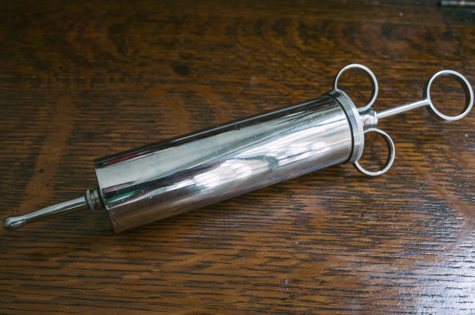
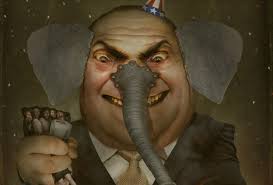 ’In a recent interview, Noam Chomsky gave a short summary of how the modern Republican Party coalition between the rich and the religious, white working class was built, decade by decade.
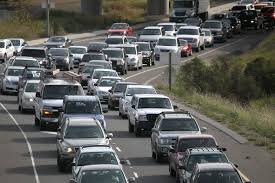 Not one driver’s fault, but everybody’s:
 George Conway appears to have come up with a brand-new scathing nickname for President Donald Trump.
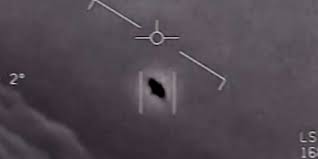 Navy drafts reporting guidelines:
 The fallout from the Chernobyl nuclear disaster 30 years on:
 ’Climate change may be contributing to the penguin population crash at Halley Bay which is “unprecedented in the historical record.”…’
 ’In Italy, a team of scientists is using a highly sophisticated detector to hunt for dark matter. The team observed an ultra-rare particle interaction that reveals the half-life of a xenon–124 atom to be 18 sextillion years.…’
 ’Psychopaths are manipulative, violent, impulsive, and lack empathy — but research suggests that psychopathy may be an evolutionary strategy rather than a disorder.…’
 ’After selling himself to American voters as the great negotiator and dealmaker, maybe Donald Trump was simply too embarrassed by the truth: He’d been taken advantage of, deeply and systemically, by everyone around him, including by Russia and Vladimir Putin and by his own staff. During the campaign, they grifted him without his knowledge. In the White House, they simply ignored him.
 In three decades of advocating for prison abolition, the activist and scholar has helped transform how people think about criminal justice.
 “How are we to account for such glaring defects in the performances of someone who is indisputably one of the most important musicians in the history of jazz?…’
 ’Legendary jazz trumpeter Miles Davis recorded the second and final session of his seminal album Kind of Blue on April 22nd, 1959. It remains the best-selling jazz album of all time. Its unforgettable solos by Davis, tenor saxophonist John Coltrane, alto saxophonist Cannonball Adderley, and pianist Bill Evans create an ethereal atmosphere; the album continues to be one of the most beloved records in jazz.
 ’The Extinction Symbol was created in January 2011 by ESP, an artist from London whose identity is kept secret.[1] It represents the Holocene or Sixth Mass Extinction.
 Ezra Klein:
 Recreated using an ancient skull:
 ’Warren is the first 2020 presidential candidate to call for Donald Trump’s impeachment as a result of the findings in the redacted Mueller Report released yesterday.
 Heather Gudenkauf writes:
 ’The contacts with Russians documented in the report amount to a devastating indictment of Trump’s approach to politics.…’
 ’“If this is what a complete and total exoneration looks like, I’d hate to see a damning report.”…’
 ’In short, Mueller did not find evidence that Trump directly colluded with Russia to interfere with the 2016 election — so he probably wasn’t obstructing justice to cover up a secret plot with the Russians.
 ’Upon hearing he would be investigated, Trump’s first reaction was, “Oh my God. This is terrible. This is the end of my Presidency. I’m fucked.” This is according to the notes kept by Jody Hunt, then-Attorney General Jeff Sessions’s chief of staff.
 ’Consciousness has long been difficult to define, whether you’re a biologist, neuroscientist, or philosopher. So Frans de Waal looks at what actions humans take that require conscious thought. Comparing them to actions in certain animals suggests consciousness is not a human trait alone.…’
 ’Luke O’Neil put a call out for his readers’ stories of their loved ones’ capture by Fox News, being overtake by its paranoid, racist conspiracy mindset: he got back a heartbreaking collection of tales of “funny, compassionate” older relatives turning into someone who was “increasingly angry, bigoted, and paranoid” – some people even found their older relatives dead in front of a TV playing Fox.
 ’If two men in a world of more than 7 billion people can provide €300million to restore Notre Dame, within six hours, then there is enough money in the world to feed every mouth, shelter every family and educate every child. The failure to do so is a matter of will, and a matter of system.
 In fact, it might reinforce tribalism:
 Pseudoscience and Psychobabble:
 ’If you grew up in the ’80s and ’90s, have children, or have ever been to a kid’s birthday party, then you’ve probably heard the Canadian crooner’s timeless bangers “Baby Beluga” and “Banana Phone.”
 After 50 years, Angels vacate notorious Greenwich Village headquarters brownstone for new digs in former Baptist church on Long Island.
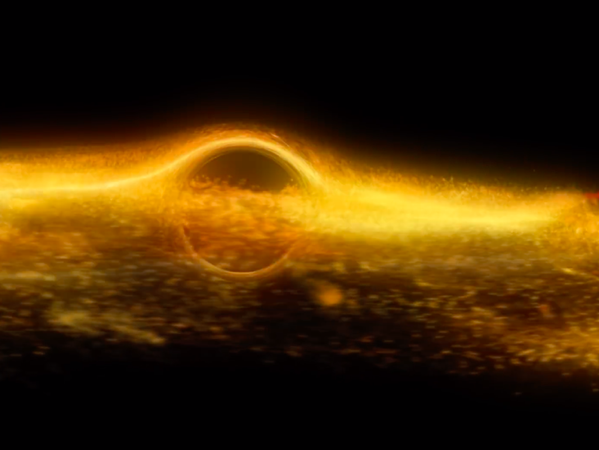 Pankaj Joshi:
 ’Peter Temin says 80 per cent of the population is burdened with debt and anxious about job security
 New version of friendly fire:
 Here’s why…
 The battle to make science more uncertain:
 Matthew Miller, former Director of the Office of Public Affairs at the Justice Department, writes:
 ‘It’s probably fair to say that we’ve spent the last thirty years acting as if we don’t live in a post-Chernobyl world.…’
 ’“Congress has to act,” Trump said. “They have to get rid of catch and release, chain migration, visa lottery, they have to get rid of the whole asylum system because it doesn’t work, and frankly, we should get rid of judges. You can’t have a court case every time somebody steps foot on our ground.”
 57 images:
 ’The world’s law enforcement agencies have a terrible blind spot when it comes to far-right, white supremacist terror groups, treating them as unimportant lone wolves despite their prolific and bloody acts of violence.
 First image of black hole to be unveiled next week:
 Stephen Johnson writes:
 ’Since 2012, paleontologist Robert DePalma has been excavating a site in North Dakota that he thinks is “an incredible and unprecedented discovery”. What’s potentially so special about this site? Fossils from dinosaurs and other animals from thousands of years before the asteroid impact are very hard to come by, leading some to believe that dinosaurs died out before the impact, not because of it. DePalma believes the site preserves, as if in amber, the day, the precise and exact day (and perhaps even the exact hour), that the massive asteroid believed to have caused the extinction of the dinosaurs hit the Earth 65 million years ago.…’
 ’The tragic deaths of Sydney Aiello and Calvin Desir, teen survivors of the mass shooting at Marjory Stoneman Douglas High School in Parkland, Florida, remind us that for too many survivors, the pain and suffering endure and do not diminish. Instead, they are left reeling in the aftermath with no sense of closure. This is especially true of teens.…’
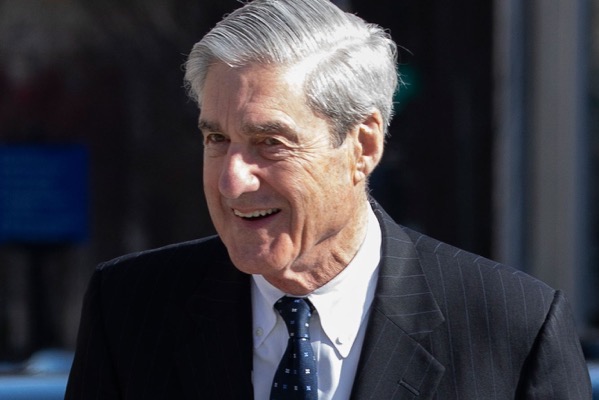 ’…In a world of endless distraction, Mueller kept his focus. It is hard not to see the inquiry as an epic cultural and moral clash between the honorable American and the irredeemably ugly one; between the war-hero public servant and a draft-dodging liar and thug; between elegant, understated class and fathomless, bullhorn vulgarity….
 Only solution appears to be cessation of use:
 ’This is a map of ARPANET circa May 1973 via David Newbury, who found it among his father’s papers. The first part of ARPANET was built nearly 50 years ago and became the basis of the modern internet. The network was so small in the early days that those circles and squares on the 1973 map represent individual computers and routers, not universities or cities.…’
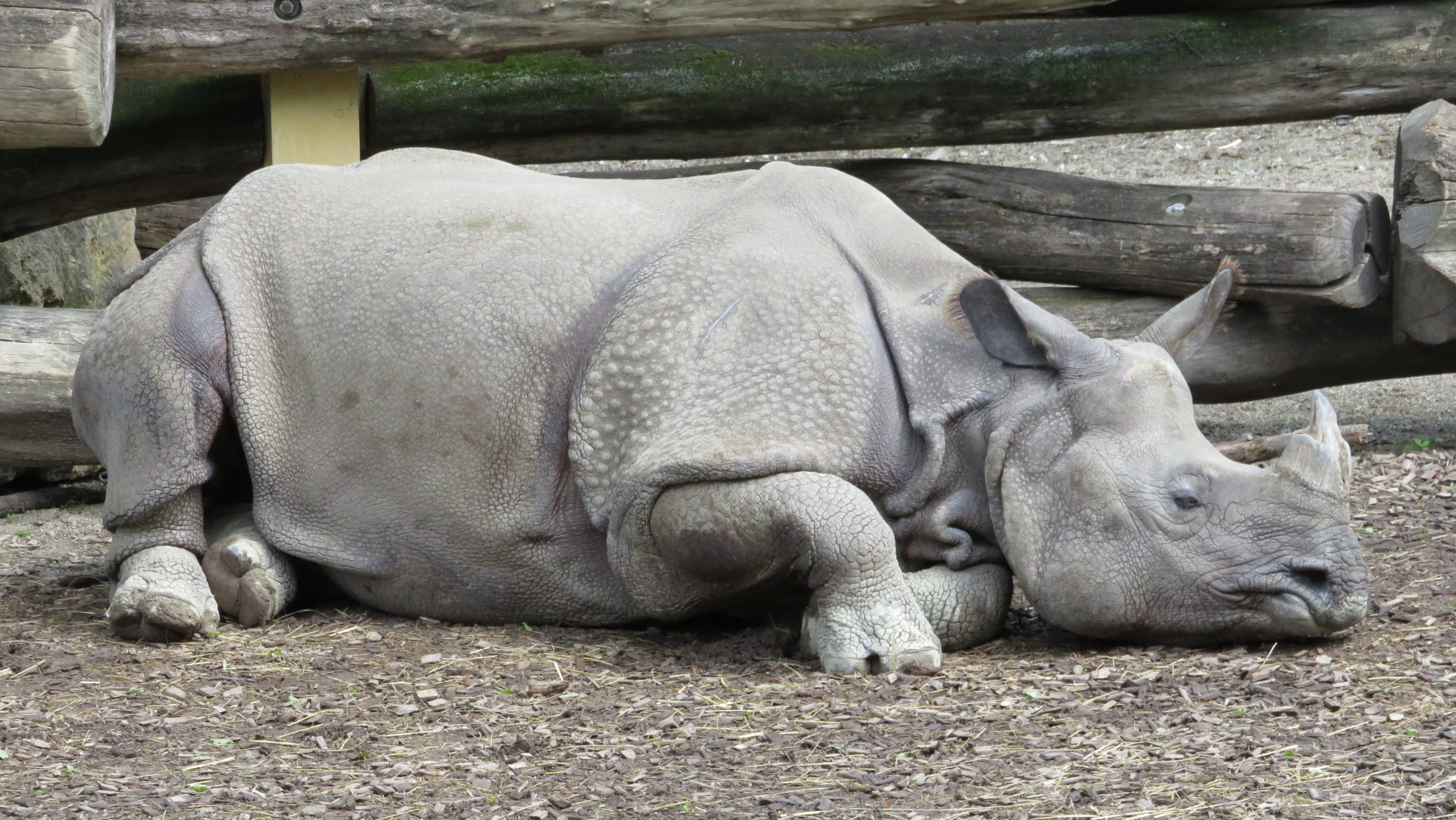
 ’Previous studies have shown that dogs can smell low blood sugar levels in their diabetic owners, along with certain cancers. They can even sniff out malaria in worn socks. Their keen sense of smell allows them to detect the associated changes to a person’s body odor resulting from an illness or health condition, a specific scent scientists refer to as an “olfactory profile.”
 “Infections” found on brand new PCs:
 ’California state lawmakers this week introduced a bill that would grant the state’s health department the power to approve all medical exemptions for childhood vaccinations, revoke fraudulent exemptions, and maintain a database of exemptions and the physicians who issue them.
 ’During one Scottish woman’s lifetime, she has broken bones, burned her skin, and undergone surgery without feeling any pain—and she didn’t realize she’d been experiencing anything unusual until she was well into her 60s, according to a new case study.
 A number theorist with programming prowess has found a solution to 33 = x³ + y³ + z³, a much-studied equation that went unsolved for 64 years:
/cdn.vox-cdn.com/uploads/chorus_image/image/50709765/flames-red-blue.0.jpg)
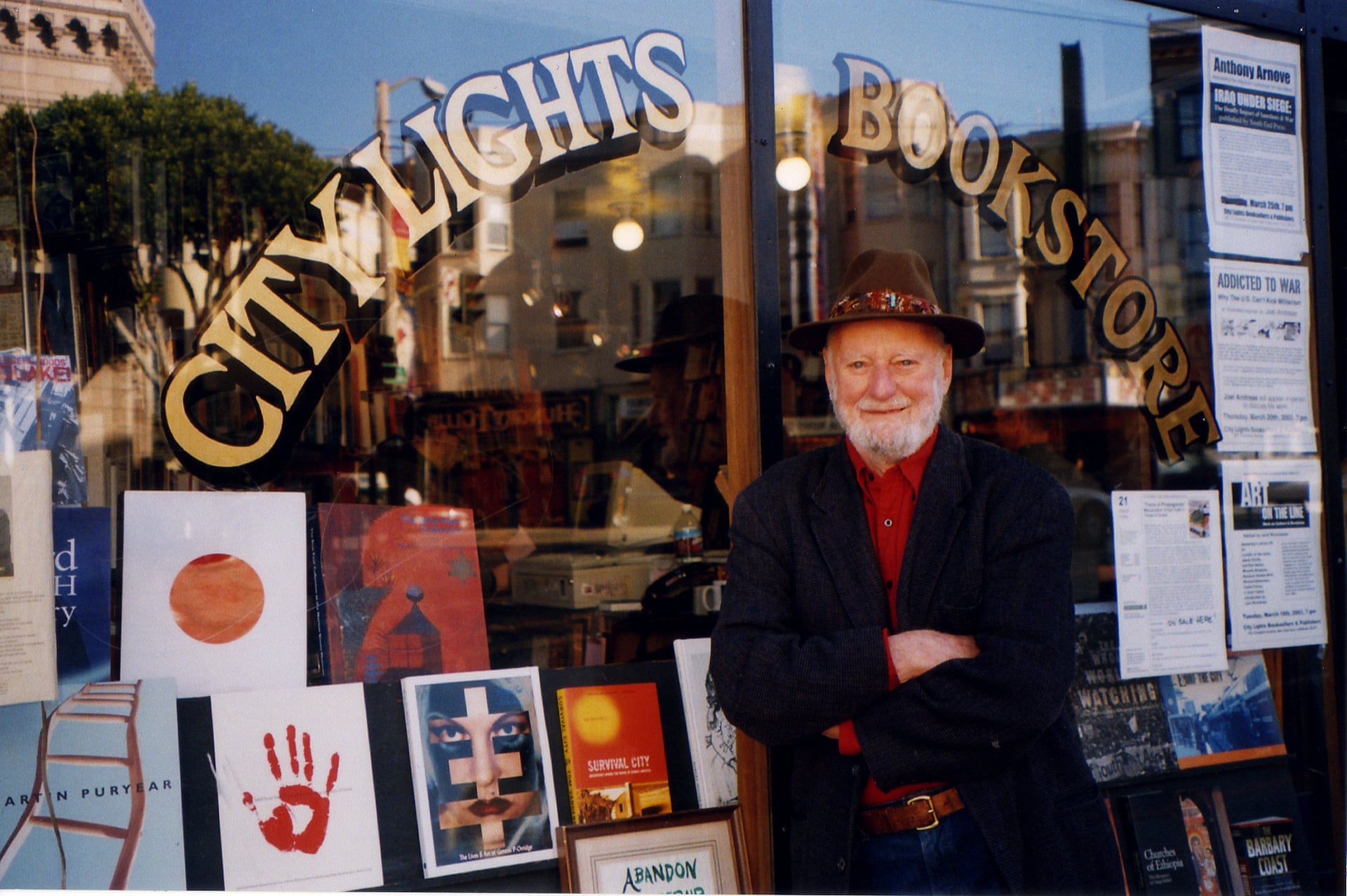



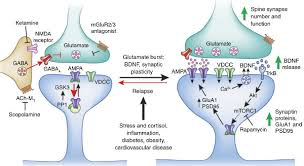
 Whiting Awards Celebrate 10 Emerging Writers:
 Andrew Sullivan:
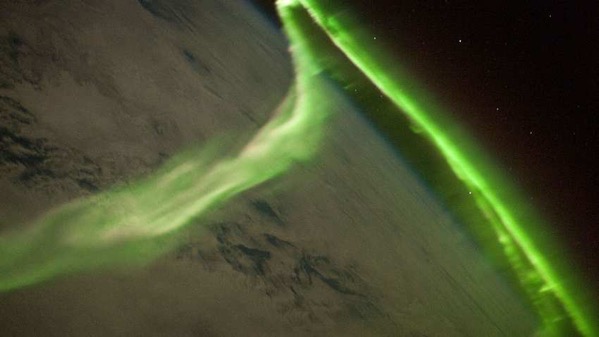 ’The Sun is getting grumpy again after years of relative peace.…’
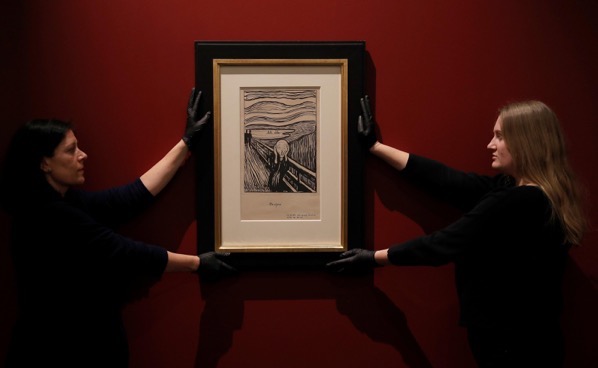 But the real story may be more disturbing:
 ’After more than two years of criminal indictments and steady revelations about contacts between associates of Donald J. Trump and Russia, we already know a lot about the work done by
  Ruling: Interior Department violated federal law by failing to take into account the climate impact of its oil and gas leasing…[F]irst time the Trump administration has been held to account for the climate impact of its energy dominance agenda, and it could have sweeping implications for the president’s plan
 ’…[K]ey supporters are expressing misgivings as they sour on displays of his abrasive, abusive personality. In recent days, Trump has attacked the late Republican war hero John McCain, his own aide’s staunchly conservative, influential husband George Conway, and an autoworker union boss in Ohio.
 ’Saving the world from the apocalyptic impact of climate change should be a dream for many Silicon Valley titans concerned about legacy, says David Wallace-Wells, and yet few are dedicating themselves to addressing the catastrophe. Negative emissions technology funded by Bill Gates exists. It would cost $3 trillion per year to operate and would mean human industry could continue at current levels without global warming. That figure sounds astronomical, however global subsidies to fossil fuel industries cost $5 trillion per year.…’
 ’Real wasabi, Wasabia japonica, is apparently one of the most expensive vegetables to grow. That green stuff you’re eating? Ground horseradish, Chinese mustard, and, you guessed it, green food coloring. Yum.
 ’Some animals, when faced with predators, play dead instead of trying to escape. But for death-feigning to work, a lot of things have to go well.…’
 ’President Donald Trump has repeatedly attacked the late Sen. John McCain in the past weeks, for reasons known largely to himself. On Wednesday, Trump escalated his feud with a dead man, launching into an unprompted rant about McCain’s funeral (among other things) during a speech at a tank factory in Lima, Ohio.…’
 A vet toxicologist explains:
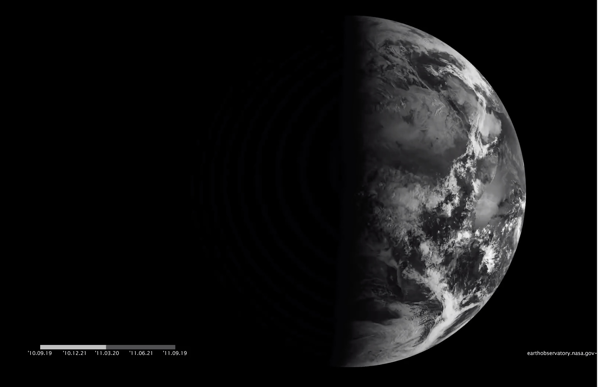 ’Welcome to an equinox on planet Earth. Today is the first day of spring in our fair planet’s northern hemisphere, fall in the southern hemisphere, with day and night nearly equal around the globe. At an equinox Earth’s terminator, the dividing line between day and night, connects the planet’s north and south poles as seen at the start of this remarkable time-lapse video compressing an entire year into twelve seconds. To make it, the Meteosat satellite recorded these infrared images every day at the same local time from a geosynchronous orbit. The video actually starts at the September 2010 equinox with the terminator aligned vertically. As the Earth revolves around the Sun, the terminator tilts to provide less daily sunlight to the northern hemisphere, reaching the solstice and northern hemisphere winter at the maximum tilt. As the year continues, the terminator tilts back again and March 2011 equinox arrives halfway through the video. Then the terminator swings past vertical the other way, reaching the the June 2011 solstice and the beginning of northern summer. The video ends as the September equinox returns.…’
 ’Every now and then an image appears online which people claim shows a time traveller somewhere they shouldn’t be. But are they just cases of people letting their imaginations run wild?
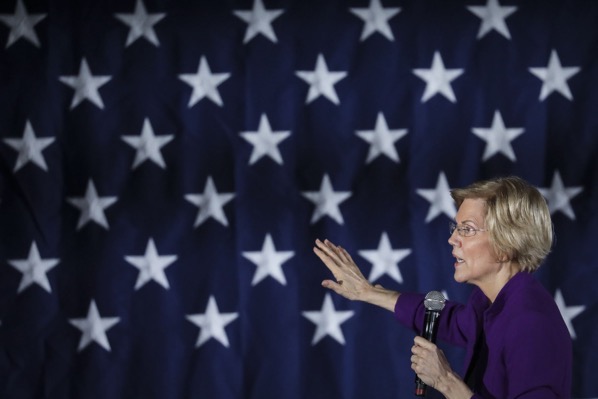 Elizabeth Warren hits it at town hall, but is it realistic?
 ’As an experienced airline pilot, aircraft accident investigator and professor of aviation, I know that such major crash investigations are an enormous effort often involving many countries’ governments and input from dozens of industry partners. The inquiries can take months of painstaking work. They often yield important insights that improve flight safety for everyone long into the future. Here’s how an investigation generally goes.…’
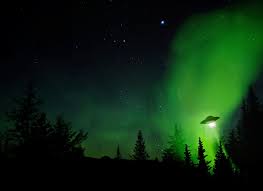 Once-fringe phenomenon taking root among the powerful:
 ’A huge fireball exploded in the Earth’s atmosphere in December, according to Nasa. The blast was the second largest of its kind in 30 years, and the biggest since the fireball over Chelyabinsk in Russia six years ago. But it went largely unnoticed until now because it blew up over the Bering Sea, off Russia’s Kamchatka Peninsula. The space rock exploded with 10 times the energy released by the Hiroshima atomic bomb.…’
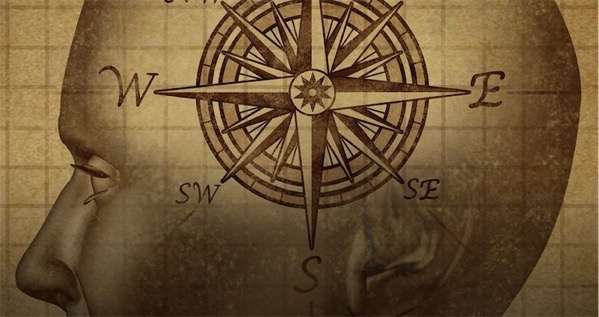 ’While this capability, called magnetoreception, is well known in birds and fish, there is now evidence that our brains are also sensitive to magnetic fields. The researchers from Caltech and the University of Tokyo measured the brainwaves of 26 participants who were exposed to magnetic fields that could be manipulated. Interestingly, the brainwaves were not affected by upward-pointing fields.…’
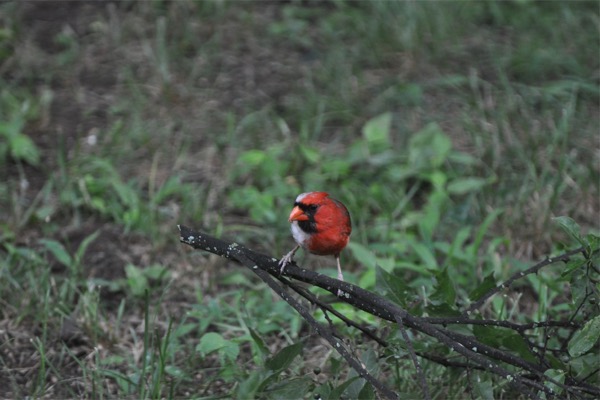 ’A Pennsylvania couple spotted one of the world’s most unusual birds in their backyard feeder. The northern cardinal looked like it was painted down the middle: one half was the brown of a female cardinal, and one half had the bright red plumage of a male. This unusual specimen is called a gynandromorph; half the animal is male and half the animal is female. Gynandromorphy is an extremely rare condition observed in a variety of insects, snakes, crustaceans, and birds.…’
 Love to drop F-bombs? Thank the shift to agriculture:
 ’This is the first study to explore not only what percentage of people in the general population choose to watch videos of graphic real-life violence, but also why.…’


 Poet of Life’s Evanescence Dies at 91:
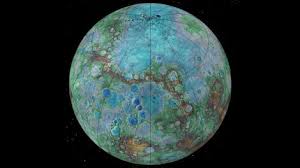 ’A team of scientists just demonstrated something that might shock you: Mercury, not Venus, is the closest planet to Earth on average.
 Steve Calandrillo, Professor of Law, University of Washington:
 Doctor couldn’t be bothered to tell him face-to-face:
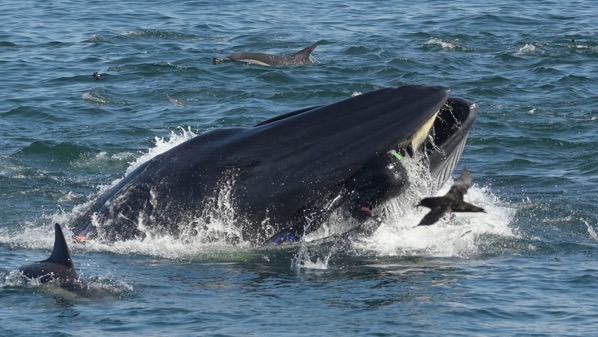 A story of Biblical proportion:
 ’From wild dogs to horned frogs, all manner of animals are still capable of keeping out of our sight, some for over 100 years…’
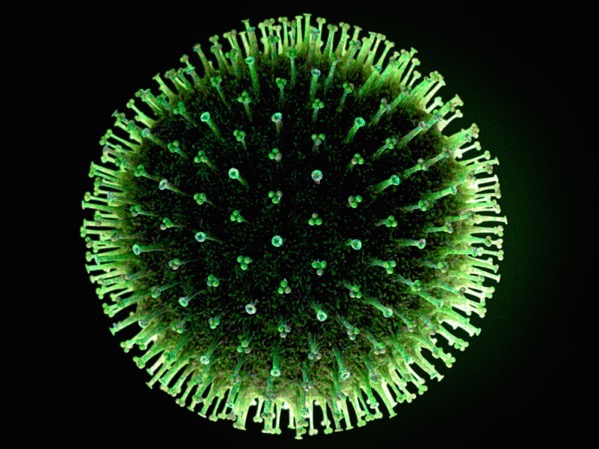 New Approach To Flu Treatment Mimics Antibodies:
 ’Starting in 2021, Americans, as well as others from visa-free countries, will have to do a little more work before they’ll be able to visit a number of European countries. Now, getting into places like Germany, France, and Spain just requires your U.S. passport, but in a little under two years you’ll also need to apply for entry into those countries and several others before you go. Curious what that means? Here’s a rundown of what you need to know…’
