
‘Sosa, the “voice of Latin America” whose music inspired opponents of South America's brutal military regimes and led to her forced exile in Europe, died Sunday, her family said. She was 74.’ (Washington Post obituary)


‘Sosa, the “voice of Latin America” whose music inspired opponents of South America's brutal military regimes and led to her forced exile in Europe, died Sunday, her family said. She was 74.’ (Washington Post obituary)
“Cars so ugly their makers must have surely hung their heads in shame. If you have a strong stomach, read on.” (Ridelust)

Today is the fiftieth anniversary of the debut of Rod Serling’s The Twilight Zone (Wikipedia article).
“Despite his esteem in the writing community, Serling found The Twilight Zone difficult to sell. Few critics felt that science fiction could transcend empty escapism and enter the realm of adult drama. In a September 22, 1959, interview with Serling, Mike Wallace asked a question illustrative of the times: “…[Y]ou’re going to be, obviously, working so hard on The Twilight Zone that, in essence, for the time being and for the foreseeable future, you’ve given up on writing anything important for television, right?” While Serling’s appearances on the show became one of its most distinctive features, with his clipped delivery still widely imitated today, he was reportedly nervous about it and had to be persuaded to appear on camera. Serling often steps into the middle of the action and the characters remain seemingly oblivious to him, but on one notable occasion they are aware he’s there: In the episode “A World of His Own,” a writer with the power to alter his reality objects to Serling’s unflattering narration, and promptly erases Serling from the show.”
I was seven when the show first aired, although at first I was a viewer of something on a competing channel. I no longer recall what it was, perhaps Walt Disney. Within a short while, certainly before the end of the first season. I began to become aware of schoolmates talking about this new show with fascination and devotion. It was the first time I was sensitive to being out of the swing of things, and my insistence I be allowed to watch it was the first time I recall asserting myself against my parents’ preferences for me. The Twilight Zone thus not only played a pivotal role in my coming of age but, I am sure, shaped my lifelong interest in the eerie and macabre.
Here is an episode listing of the original five seasons of the show. If you are old enough, which do you recall? Which was your favorite? I would have to list “It’s a Good Life”, “Nightmare at 20,000 Ft” and, of course, “To Serve Man.”
![[Image 'https://i0.wp.com/wideopenspaces.squarespace.com/storage/Liu%20Bolin.jpg' cannot be displayed]](http://wideopenspaces.squarespace.com/storage/Liu%20Bolin.jpg?__SQUARESPACE_CACHEVERSION=1254358977661)
“Camouflage series by Beijing-based artist Liu Bolin. Covered entirely in paint to blend into their surroundings, each installation can take up to 10 hours of painstaking work…
via wide open spaces.
Sumo, a Maltese terrier, is reported to have bitten him in the stomach in their apartment in the capital, Paris.
Mr Chirac's wife, Bernadette, said the dog had been treated for depression after finding it difficult to come to terms with leaving the Elysee Palace.
via BBC.
Born screaming small into this world-
Living I am.
Occupational therapy twixt birth and death-
What was I before?
What will I be next?
What am I now?
Cruel answer carried in the jesting mind
of a careless God
I will not bend and grovel
When I die. If He says my sins are myriad
I will ask why He made me so imperfect
And he will say 'My chisels were blunt'
I will say 'Then why did you make so
many of me'.
via PoemHunter.

‘ “I don’t relate to the song, to that type of song,” she told The Associated Press in June. “As a teenager, I made the mistake of telling a couple of friends at school that I was the Lucy in the song and they said, ‘No, it’s not you, my parents said it’s about drugs.’ And I didn’t know what LSD was at the time, so I just kept it quiet, to myself.” ‘
(New York Times obit)

“The tenuousness of modern life can make anyone feel overwrought. And in societal moments like the one we are in — thousands losing jobs and homes, our futures threatened by everything from diminishing retirement funds to global warming — it often feels as if ours is the Age of Anxiety. But some people, no matter how robust their stock portfolios or how healthy their children, are always mentally preparing for doom. They are just born worriers, their brains forever anticipating the dropping of some dreaded other shoe. For the past 20 years, [Jerome] Kagan and his colleagues have been following hundreds of such people, beginning in infancy, to see what happens to those who start out primed to fret. Now that these infants are young adults, the studies are yielding new information about the anxious brain.
These psychologists have put the assumptions about innate temperament on firmer footing, and they have also demonstrated that some of us… are born anxious — or, more accurately, born predisposed to be anxious. Four significant long-term longitudinal studies are now under way: two at Harvard that Kagan initiated, two more at the University of Maryland under the direction of Nathan Fox, a former graduate student of Kagan’s. With slight variations, they all have reached similar conclusions: that babies differ according to inborn temperament; that 15 to 20 percent of them will react strongly to novel people or situations; and that strongly reactive babies are more likely to grow up to be anxious.” (New York Times Magazine)
![Reblog this post [with Zemanta]](https://i0.wp.com/img.zemanta.com/reblog_e.png)

‘The Cosmos’ gets autotuned: Carl Sagan’s ‘A Glorious Dawn’, featuring Stephen Hawking. Making cosmology catchy.

Unique or extremely rare circumstances recorded throughout history. The list also includes less rare, but still unusual, deaths of prominent people.

How Superfetation Works: “An Indonesian woman gave birth to a 19-lb. 2-oz. baby behemoth on Sept. 24, but that was only the second weirdest pregnancy tale of the month. The strangest belongs to Julia Grovenburg, a 31-year-old Arkansas woman who has a double pregnancy. No, not twins — Grovenburg became pregnant twice, two weeks apart. Isn’t that supposed to be impossible?
Almost. There have been only 10 recorded cases of the phenomenon, dubbed superfetation. In Grovenburg’s case, she became pregnant first with a girl (whom she has decided to name Jillian) and then two weeks later with a boy (Hudson). The babies have separate due dates — Jillian on Dec. 24, Hudson on Jan. 10. (TIME)
“Airbrushed photographs could be given government health warnings in France to protect women from 'false' images of female beauty.” (Telegraph UK)

The surprising ways that metaphors shape your world: “Drawing on philosophy and linguistics, cognitive scientists have begun to see the basic metaphors that we use all the time not just as turns of phrase, but as keys to the structure of thought. By taking these everyday metaphors as literally as possible, psychologists are upending traditional ideas of how we learn, reason, and make sense of the world around us. The result has been a torrent of research testing the links between metaphors and their physical roots, with many of the papers reading as if they were commissioned by Amelia Bedelia, the implacably literal-minded children’s book hero. Researchers have sought to determine whether the temperature of an object in someone’s hands determines how “warm” or “cold” he considers a person he meets, whether the heft of a held object affects how “weighty” people consider topics they are presented with, or whether people think of the powerful as physically more elevated than the less powerful.” (Boston Globe)
“I had no idea so many people make a hobby of traveling beneath the sea in homemade junkers they call submarines. Here's a few of these DIY subs…” (Tinselman)
Jonah Lehrer: “The irony of fasting is that, although we think we're engaging in act of strict self-control, we're actually making it harder to resist other temptations.” (The Frontal Cortex)

Cryopreservation Unit, by Taryn Simon
London Telegraph article by Salman Rushdie profiling “The Hidden and Familiar”, new collection of photographs by Taryn Simon of some of the world’s most hidden places.

Interesting piece in Prospect by Matthew Taylor about how neuroscientific advances should inform political theory and help take us, as the cliche goes, “beyond left and right.” It makes sense when you think about it, as political debates usually come down to competing notions about human nature.
“Altruism makes us happy. Supportive communities create better people. Inequality and stigma rob us of potential. Good guidance helps us make wise decisions for the long term. All these seem commonsense conclusions, all are now based on evidence. They break the oppressive grip of Homo economicus on the right and the alluring but dangerous myth of human perfectibility on the left. Instead, we are left with the mission of progressive humanism; to develop practical utopias based on the good enough people we really are.”

“You could probably figure out the topic despite the medicalese in the title: “Positive Serum Ethanol Level and Mortality in Moderate to Severe Traumatic Brain Injury.” The study is a retrospective one, based on identifying a set of patients in trauma centers who had been diagnosed with severe brain injuries. Not surprisingly, a number of them had been drinking. The surprise was that the folks with alcohol in the bloodstream had a better survival rate than those who hadn't had a drink, even after correcting for some potential confounding factors. As always, further studies are suggested before we start dispensing vodka shots in the ER.” (Ars Technica)

Loren Coleman: “It’s taken six years, but as of November 1, 2009, the International Cryptozoology Museum will publicly open in a permanent space in downtown Portland, Maine. The three year lease is signed, the fund-raising can begin in earnest, …and the doors are happily being flung open to a new dawn for the world’s only fully public cryptozoology museum…
After first being established in August 2003 via my modest home-based cabinet-of-curiosities in the Libbytown section of the Pine Tree State’s largest city, the International Cryptozoology Museum will have its grand public opening right after Halloween 2009, in downtown Portland, Maine.The museum has found a public home at 661 Congress Street, in the Arts District, just down the street from the world-famous Portland Museum of Art, the Children’s Museum, and the State Theater, next to a local landmark, Joe’s Smoke Shop. Also, it will sit right across from The Fun Box Monster Emporium. What a wonderful neighborhood for a cryptozoology museum!” (Cryptomundo)

“One of the classical problems in quantum mechanics concerns a man and his feline companion. The man has placed his cat in an opaque tank and is slowing pumping it full of poison. Now until the man opens the tank and looks inside, he cannot be sure whether the cat is dead or alive. That is to say, the cat is both dead and alive at the same time. Impossible but such is the nature of the problem that faced this man. The man’s name is Erwin Schrodinger and the problem is that of his Uncertainty Principle.
For nearly a century, his problem has remained a quixotic quest for physicists. Particle physics has always held that matter can only exist at one state in one time. That is why particles are classified as moving with an up or down spin but nothing in between. In recent years that rule has been bent with the superposition of atoms and other nonliving things. Superposition is the term for an object that is not being observed that exists as both possibilities: up and down, dead and alive. This allows physicists to observe the matter in two different states at the same time. However, thus far it has only been done with non-living things. A life-form has never been superimposed. Now, one physicist says he may have an answer.
Oriol Romero-Isart is at the Max Planck Institute for Quantum Physics in Garching in Germany. Along with his team he is proposing a “Schrodinger’s virus” experiment that would follow the same general principles of Schrodinger’s Cat. Using an electromagnetic field created by a laser, the virus would be trapped in a vacuum. Then, using another laser, the virus will be slowed down until it lies motionless in its lowest possible energy state.
Now that the virus is fixed, a single photon is used to put the virus into a superposition of two states, moving and non-moving. Up until the point is measured it is in both states. Only after a measurement is it found to be in one state and one alone. The team has suggested that the tobacco mosaic virus be used. The virus is rod-shaped and measures 50 nanometers wide and approximately 1 micrometer long. There is debate however, whether the virus can truly be classified as “alive.” However the scientists are confident that the treatment could be extended to tiny micro-organisms such as tardigrades who can survive in vacuum for days, making them suitable for the “Schrodinger treatment.”
However, physicists are doubtful about the experiment’s results. Martin Plenio of Imperial College in London says that there is little reason that a virus would behave any differently than a similarly-sized inanimate object. However, there are possibilities in testing large objects such as viruses and molecules. This is because quantum mechanics says that macroscopic objects can enter superposition however, it has never happened. Through these studies, Plenio believes that we will finally be able to bridge the divide between the quantum world and our own macroscopic world.”

“There are over 13,000 McDonald’s restaurants in the US, or about 1 for every 23,000 Americans. But even market penetration this advanced doesn’t mean that McDonald’s is everywhere. Somewhere in South Dakota is the McFarthest Spot, the place in the US geographically most removed from the nearest McD’s (*). If you started out from this location, a few miles north of State Highway 20 (which runs latitudinally between Highways 73 in the west and 65 in the east), you’d have to drive 145 miles to get your Big Mac…” (Strange Maps)
I would like to see an overlay of several maps of this sort, one for each of the major fast food places, one for Walmarts, etc. The cumulative effect, I suspect, would correlate quite well with the quality of life to be expected in various locales.
 (The Awl)

Cory Doctorow: “British Airways has broken new exciting new ground in the race to make flying as awful as possible: they have announced a fee (ranging from £10-60 per passenger) for advance seat selection, explaining that this will be the only way that families and other groups travelling together can be assured that they’ll be sitting next to each other. I wonder what happens if you don’t pay it while flying with a two-year-old in her own seat; do they seat her at the other end of the plane from you and explain to the strangers on either side of her that they’re responsible for her well-being for the duration? …” (Boing Boing)

‘U.S. scientists in the Gulf of Mexico unexpectedly netted a 19.5-foot (5.9-meter) giant squid off the coast of Louisiana, the Interior Department said on Monday, showing how little is known about life in the deep waters of the Gulf.
Not since 1954, when a giant squid was found floating dead off the Mississippi Delta, has the rare species been spotted in the Gulf of Mexico.
Giant squid, which can be 40 feet long, are usually found in deep-water fisheries, such as off Spain and New Zealand.
“This is the first time one has actually been captured during scientific research in the Gulf of Mexico,” he said.’ (Reuters)

The giant squid is an “eat the crew, ask questions later” kind of cephalopod, and motion pictures have rightly depicted it as a very angry animal that’s not given to conversation. To see a giant squid is to be attacked by a giant squid, the saying goes. But, like Tom Cruise between movies, the giant squid is camera-shy. And, just like the diminutive actor, Architeuthis dux spends long periods lurking out of sight, surely up to no good, before bursting forth, tentacles flailing, and exercising its alternate belief system. In Mr. Cruise’s case, the alternate belief system is Scientology. In the giant squid’s case, the alternate belief system is a desire to wrap you in its horrible tentacles and poke you to death with its poisonous beak. There are similarities. Leave giant squid alone.” — Grady Hendrix (Slate)

“Just try having a dinner party today. You’ll have to contend with perfervid vegans, virtuous vegetarians, persistent pescatarians, lamb-phobics, tongue-phobics, veal-rights advocates, the gluten-intolerant, the lactose-intolerant, the shellfish-intolerant, the peanut-intolerant, the spicy-intolerant, and on and on in an ever-fragmenting array. For God’s sake, don’t serve foie gras; a guest might show up wearing a suicide vest and blow the whole party to kingdom come. All this has a lot to do with the decline of traditional manners and the rise of personal assertiveness and the yuppie belief that we can engineer our own immortality. Food matters so much now that it can make tyrants of our dearest friends and neighbors.” (City Journal)
“Absurdist literature, it appears, stimulates our brains. That's the conclusion of a study recently published in the journal Psychological Science. Psychologists Travis Proulx of the University of California, Santa Barbara and Steven Heine of the University of British Columbia report our ability to find patterns is stimulated when we are faced with the task of making sense of an absurd tale. What's more, this heightened capability carries over to unrelated tasks.” (Miller-McCune Online Magazine)

ethereal Sydney scene
“A storm which blew in from the Australian outback blanketed Sydney in a layer of orange dust. Here, residents describe the bizarre and frightening scene.” (BBC

In the past few years, there has been a surge of redevelopment projects for these places, and states have been lowering land prices and pushing for bids to buy. Soon, all of these beautiful structures will fall down to meet their fate of becoming golf courses, condos and strip malls.”
During my psychiatric career, I have worked at several of these now abandoned or demolished-and-redeveloped sites, including Metropolitan State Hospital, Boston State Hospital and Worcester State Hospital. I routinely pass the sites of MSH and BSH. I can’t say that I have ever been back inside in an ‘unofficial’ capacity since their closures, although I am tempted.
![[Image 'https://i0.wp.com/i.dailymail.co.uk/i/pix/2009/09/08/article-1212013-06435781000005DC-710_634x403.jpg' cannot be displayed]](http://i.dailymail.co.uk/i/pix/2009/09/08/article-1212013-06435781000005DC-710_634x403.jpg "'Ghost fleet' near Singapore.")
'Ghost fleet' near Singapore.
“The world's ship owners and government economists would prefer you not to see this symbol of the depths of the plague still crippling the world's economies…” ( Daily Mail )

“Some people feel that nobody should read the book, and some feel that everybody should read it. The truth is, nobody really knows. Most of what has been said about the book — what it is, what it means — is the product of guesswork, because from the time it was begun in 1914 in a smallish town in Switzerland, it seems that only about two dozen people have managed to read or even have much of a look at it.
Of those who did see it, at least one person, an educated Englishwoman who was allowed to read some of the book in the 1920s, thought it held infinite wisdom — “There are people in my country who would read it from cover to cover without stopping to breathe scarcely,” she wrote — while another, a well-known literary type who glimpsed it shortly after, deemed it both fascinating and worrisome, concluding that it was the work of a psychotic.” (New York Times Magazine)
“This summer could come to be known as the summer when baby boomers began to turn to the obituary pages first, to face not merely their own mortality or ponder their legacies, but to witness the passing of legends who defined them as a tribe, bequeathing through music, culture, news and politics a kind of generational badge that has begun to fray.” (New York Times )
The folksinger, one third of Peter, Paul and Mary, has died after a battle with leukaemia, aged 72. Travers was an outspoken supporter of the civil rights and anti-war movements. “I am deadened and heartsick beyond words to consider a life without Mary Travers and honoured beyond my wildest dreams to have shared her spirit and her career,” Noel “Paul” Stookey said. (BBC obituary).

“The power of the imagination is well-known: it’s no surprise that scary music is scarier with your eyes closed. But now neuroscientist and psychiatrist Prof. Talma Hendler of Tel Aviv University’s Functional Brain Center says that this phenomenon may open the door to a new way of treating people with Alzheimer’s, Parkinson’s and other neurological diseases.” (Science Daily)
“The link between deprivation and premature death is as strong today as it was in the early 1900s, according to research published on bmj.com.
The study [was] the first of its kind to directly compare modern deprivation and mortality with conditions a century ago in the whole of England and Wales…” (Science Daily).

He said,”It was the greatest shot I ever hit in my life”. (kottke).
“Fancy a three-day weekend – not just once in a while but week in week out? You may think your bosses would never agree to it, but the evidence suggests that employers, employees and the environment all benefit.” (New Scientist).
But was Rogers right? Before we toss out mainstream discipline, it would be nice to have some evidence. And now we do.
In 2004, two Israeli researchers, Avi Assor and Guy Roth, joined Edward L. Deci, a leading American expert on the psychology of motivation, in asking more than 100 college students whether the love they had received from their parents had seemed to depend on whether they had succeeded in school, practiced hard for sports, been considerate toward others or suppressed emotions like anger and fear.
It turned out that children who received conditional approval were indeed somewhat more likely to act as the parent wanted. But compliance came at a steep price. First, these children tended to resent and dislike their parents. Second, they were apt to say that the way they acted was often due more to a “strong internal pressure” than to “a real sense of choice.” Moreover, their happiness after succeeding at something was usually short-lived, and they often felt guilty or ashamed…” (New York Times )
Steady decline in FmH readership continues. Now ranging between 50-120 visitors per day, with an average of less than 100. This is, of course, exclusive of those following via RSS, but I’m not sure that is a substantial number. To those of you no longer visiting FmH, can you leave a comment (grin) explaining, thanks?
Poet and Punk Rocker Who Wrote ‘The Basketball Diaries’ Dies at 60: “As a teenage basketball star in the 1960s at Trinity, an elite private school on the Upper West Side of Manhattan, Mr. Carroll led a chaotic life that combined sports, drugs and poetry. This highly unusual combination lent a lurid appeal to “The Basketball Diaries,” the journal he kept during high school and published in 1978, by which time his poetry had already won him a cult reputation as the new Bob Dylan.” (New York Times obituary)
Even when I didn’t listen to punk, ‘People Who Died’ was in my regulsr rotation. Time to punch it up on the iPod and add one more name to the list…
‘It got nowhere near the publicity and caused nowhere near the stir of his 1995 essay “Bowling Alone,” about Americans’ increasing social isolation. But more recent work by the Harvard political scientist Robert D. Putnam is perhaps more controversial: his finding (2007 lecture here) that ethnic diversity isn’t an unqualified good — that diversity, “at least in the short run, seems to bring out the turtle in all of us,” as we withdraw from collective life, hunker down in front of the TV and distrust people around us, regardless of skin color.’ (New York Times )

“Electromagnetic pulses — high-altitude bursts of radiation that could disable power grids and cripple modern life over wide areas — are a security concern. But right and left disagree on how plausible, or far-fetched, the threat is.” Idea of the Day Blog – NYTimes.com.

Is Time Disappearing from the Universe? “Remember a little thing called the space-time continuum? Well what if the time part of the equation was literally running out? New evidence is suggesting that time is slowly disappearing from our universe, and will one day vanish completely. This radical new theory may explain a cosmological mystery that has baffled scientists for years.” (Daily Galaxy)
Part 13 comes just in time for 9/9/9, which is ‘666’ upside down. Via Dark Roasted Blend
Lev Grossman: “There was once a reason for turning away from plot, but that rationale has outlived its usefulness. If there's a key to what the 21st-century novel is going to look like, this is it: the ongoing exoneration and rehabilitation of plot.”(WSJ)

“When a building collapses or a train wrecks, specialized rescue teams can extricate trapped people often in a matter of minutes, working with techniques and technology developed over the past two centuries.” (American Heritage)

“A cornucopia of drugs will soon be on sale to improve everything from our memories to our trust in others.” (Prospect)
New phenom: ‘speed-shrinking‘ is like speed dating except you cycle around a room from therapist to therapist. Quickly. (New York Times)
Drugmakers Are Desperate to Find Out.. I became a web friend of Wired writer Steve Silberman because of the uncanny parallelism in our interests, and I usually post blinks to his thoughtful and important pieces. Here, he describes the difficulty drug manufacturers are having in distinguishing the efficacy of medications they are testing from that of the placebos to which they are compared. Perhaps surprisingly, the rates of placebo response seem to be growing, so that the claims for pharmacological effectiveness of their products are harder and harder to make. Big Pharma desperately wants to know why, both to succeed again in establishing the efficacy of the products they are developing and to capitalize on the placebo effect if they can find a way to bring it to market itself.
As Silberman describes, comparison with placebo has long been the gold standard in evaluation of drug efficacy. This has largely made the placebo effect a troublesome enemy of allopathic medicine. This is a weakness of those with a concrete, limited conception of how healing works. In fact, our understanding should be stood on its head. Instead of being a nuisance, the placebo effect may be the basis of most therapeutic effects, both in particular of the ‘magic pills’ we physicians give our patients and, more generally, of the healing relationship per se. I have long found it pitiful that most physicians do not see that much of what they are doing is mobilizing their patients’ intrinsic healing responses through enlisting them in a shared belief system. Of course, those healing responses have a physiological basis themselves. It is only the incredibly naive, for the past thirty or fifty years at least, who still must distinguish ‘mind’ from ‘body’ as if they are separate.
The placebo response may be getting stronger, if indeed it is, because it is more and more difficult to find subjects who are not in the grip of the Big Pharma Big Lie, in this era of TV advertising for prescription drugs and of physicians in the pockets of the manufacturers of the medications they prescribe.
The other reason it may be harder to distinguish pharmacological from palcebo effects is that drug development in the last decade or more has been largely a story of trying to squeeze larger and larger profits out of smaller and smaller distinctions in drug efficacy. There have been relatively few ‘breakthrough’ discoveries in pharmacology that have not been swamped by a rush of competing products consisting of slightly altered molecules claiming to be improvements but in reality serving only to establish or extend patent rights.
This is especially true in my own field of psychiatry. While there are certainly in some cases differences in individual patients’ responses to different medicines in the same class (say, for example, serotonin-reuptake-inhibiting antidepressants or dopamine-blocking antipsychotics). Prescribers, pitifully, trot out one after another drug in the same or similar class when a patient does not do well with an initial choice of medication, subjecting the patient to a futile and prolonged cycle of sequential expectation and disappointment. Even patients who are doing well on a medicatioon are often switched to far more expensive newer analogues which hit the market claiming to be improvements. And these claims are largely written by the ad copyists and marketing specialists rather than the scientists, who by and large cannot demonstrate advantages of their products in head-to-head comparisons with older, tried-and-true gold standard medications.
Finally, although I am not talking merely about the mental health domain when I argue for a broadened conception of how healing works, it is surely true that neurobiological and mental disorders have been one of the last frontiers in pharmaceutical development, and (along with a shift of emphasis to chronic diseases from the acute diseases with which medicine has had its greatest successes) a major focus in drug development in the last two decades or so. The placebo effect is probably at its strongest in the realm of behavioral disorders.
Over and above all the reasons to oppose the execution of guilty offenders, surely the most compelling argument against the death penalty is the possibility likelihood of executing those who are innocent. How much evidence would it take to sway you, if the prospect does not already give you pause? Take a look at David Grann’s examination of the case of Cameron Todd Willingham, put to death after convicted of setting the house fire that killed his two children largely as a result of forensic conclusions which, in the opinion of a number of experts on the investigation of arson, had no credibility. (The New Yorker)

“On the 9th September, a world of property empire building on an unimaginable scale will be launched! A live worldwide game of Monopoly using Google Maps as the game board.”
From Google and Hasbro.

“A virus known to cause leukemia and tumors in animals can be found in some prostate tumors and might be one cause of prostate cancer, U.S. researchers reported on Monday.
They found xenotropic murine leukemia virus-related virus or XMRV in 27 percent of the human prostate tumors they looked at, especially aggressive tumors.” (Reuters)
Click on ‘the film’ (Neurosonics Audiomedical Laboratories)

This blink was sent to me by my son: Hidden agenda, d’you think?
“The most common-sense explanation for teens’ carelessness is that their brains just aren’t developed enough to know better. But new research suggests that in the case of some teens, the culprit is just the opposite: the brain matures not too slowly but, perhaps, too quickly.
In a paper just published in PLoS ONE — a journal of the Public Library of Science — a team led by psychiatrist Gregory Berns of Emory University in Atlanta shows that adolescents who engage in more dangerous activities have white-matter pathways that appear more mature than those of risk-averse youths.” (Time) via noah
Two teams of European scientists say they have discovered new genetic variants associated with Alzheimer’s disease. The variants account for about 20 percent of the genetic risk of the disease, and may lead to a better understanding of its biology, the scientists say.” (New York Times)

Strong, metallic and unique, NASA astronauts say: “There is one smell up here that is really unique though and that is the smell, we just call it ‘the smell of space’.
“I haven’t had a chance to do a spacewalk yet … but when the other guys did and they came back in, … there’s this really, really strong metallic smell.” (Sydney Morning Herald)

But while his headline — “Cheney for President” — provoked guffaws in some quarters, several of the party’s most well-regarded strategists and pollsters are actually taking the idea deadly seriously.
“The Republican Party needs to move forward and build on its past, not return to it,” Alex Castellanos, a frequent CNN analyst and GOP messaging guru, told the Huffington Post via email. “But if the agenda turns to security, Obama is mired in a no-win mess in Afghanistan, and the Obama administration hasn’t created a single job in four years after indebting the nation for generations, maybe Dick Cheney could run on a theme of ‘Change’.” ‘ (Huffington Post)
If this gains enough traction, it would be time to start making emigration plans. And you are laughably mistaken if you assume that the American people would never find the idea appealing enough to make his chances realistic.

“School is starting up soon… It has brought up a whole childhood can of worms regarding my less-than-lovely educational experience, and makes me reflect on issues of social acceptance for neurologically atypical people overall. That leads me to fandom. I can’t help but think neurodiveristy is an area in which science fiction and fantasy fans are a long, long ways ahead of society in general.
A few years ago I attended a panel at Norwescon that was supposed to be about the future of psychology but quickly became a discussion of the neurological make-up of fandom. The lively and engaged discussion covered dyslexia, Asperger’s, ADHD, autism, sensory integration dysfunction, and related topics. The general consensus was that among convention-goers, the percentage of people with such atypical neurology ranged around 60 to 70 percent. Almost all the audience members who spoke identified with one or more of the above, or mentioned a close relative that did.” (Tor.com)

“The Web site Dissertation Haikus has been around for a few years, but it’s enjoying a late-summer surge in popularity. The concept is irresistible. As its creator explains, “Dissertations are long and boring. By contrast, everybody likes haiku. So why not write your dissertation as a haiku?” Why not, indeed! For the writer, the site provides a way to dramatically expand the universe of people with a loose grasp on how you spent several or 10 or 12 years of your life. For the reader, it provides a way to painlessly survey what passes for the cutting edge of knowledge, without having to negotiate precious, colon-hobbled titles or scientific jargon.” (Boston Globe via laurie)
After seeing more than 60 zombie films, Johnathon Williams explains: “If civilization is ever overrun by zombies — which for the purposes of this essay shall be defined as reanimated corpses who feed on the living until they’re dispatched by a gunshot to the head — I know exactly what I will do. I will gather my family and I will take them to Wal-Mart.” (The Morning News)
“After a successful birth, opting not to breast-feed may trigger evolved mourning behaviors.” (Scientific American)
“Entropy can decrease, according to a new proposal – but the process would destroy any evidence of its existence, and erase any memory an observer might have of it. It sounds like the plot to a weird sci-fi movie, but the idea has recently been suggested by theoretical physicist Lorenzo Maccone, currently a visiting scientist at MIT, in an attempt to solve a longstanding paradox in physics.” (Phys.Org)
In other words, time flows both ‘forwards’ and ‘backwards’ but we can only remember one of those unfoldings?
The dearly departed posed as if alive (Mental Floss)

“Two scientists suggest that depression is not a malfunction, but a mental adaptation that brings certain cognitive advantages”. (Scientific American) Evolutionary explanations are appealing, for if depression were not adaptive then why would it be so prevalent across cultures and epochs? Estimates are that between one quarter and one half of the public are clinically depressed at some point in their life.
The suggestion here is that the depressive state, with ruminative thinking, social isolation, and loss of interest in usually pleasurable activities, etc. promotes periods of uninterrupted analytical thinking. This turns some of the therapeutic approaches to depression on their head. Interventions which discourage ruminative thinking might prolong the resolution of a depressive episode. Patients encouraged to amplify on their ruminating, such as journalling, might do better. Perhaps even antidepressant medications might interfere in constructive problem-solving?
I have thought there might be a different evolutionary advantage to depression. After a loss or setback, the depressed person’s lack of energy, motivation and activity act to conserve resources. Their way of thinking about the world, with pessimism and a helpless sense of lack of control over what befalls one, might be more realistic, at least at such a time.

It appears to be a cascade of events kicked off by a picorna virus infection, new research suggests. It was the suspension of a ban on the importation of honeybees into the US about five yeas ago that seems to have laid the groundwork. Popular Science.

‘The movement in this video was developed straight from notes taken while spying on people's actions in …a cafe/bar… They are the first attempts at playing with “found movement.” ‘ (Make Dance Here)

“It succors and drowns human life. And for the last eight years, oil — and the people and places that make it — was my obsession.” (Foreign Policy)
“Never let it be said that publishers don’t research their market. Having surveyed all the fantasy books published by the leading SFF imprints in the US, we are now one step closer to unlocking the greatest mysteries of fantasy cover design. Behold, the legendary Chart of Fantasy Art!” (The Publisher Files)
(A visual survey of the frequency of various cover art elements from all fantasy books published in 2008 by major fantasy publishing houses)

Here’s the crucial part, for me:
‘The new formula does away with the clutter of typical meth labs, and it can turn the back seat of a car or a bathroom stall into a makeshift drug factory. Some addicts have even made the drug while driving.
The pills are crushed, combined with some common household chemicals and then shaken in the soda bottle. No flame is required.
Using the new formula, batches of meth are much smaller but just as dangerous as the old system, which sometimes produces powerful explosions, touches off intense fires and releases drug ingredients that must be handled as toxic waste.
“If there is any oxygen at all in the bottle, it has a propensity to make a giant fireball,” said Sgt. Jason Clark of the Missouri State Highway Patrol's Division of Drug and Crime Control. “You're not dealing with rocket scientists here anyway. If they get unlucky at all, it can have a very devastating reaction.”
One little mistake, such as unscrewing the bottle cap too fast, can result in a huge blast, and police in Alabama, Oklahoma and other states have linked dozens of flash fires this year — some of them fatal — to meth manufacturing.
“Every meth recipe is dangerous, but in this one, if you don't shake it just right, you can build up too much pressure, and the container can pop,” Woodward said.
When fire broke out in older labs, “it was usually on a stove in a back room or garage and people would just run, but when these things pop, you see more extreme burns because they are holding it. There are more fires and more burns because of the close proximity, whether it's on a couch or driving down the road.” ‘(MSNBC via pam)
‘A majority of Americans now see the war in Afghanistan as not worth fighting, and just a quarter say more U.S. troops should be sent to the country, according to a new Washington Post-ABC News poll.’ (Washington Post)

‘The public's “right to starlight” is steadily being eroded by urban illumination that is the bane of astronomers everywhere, says the International Astronomical Union.
The body, which wrapped up an 11-day general assembly in Rio de Janeiro that attracted galaxy-gazers from around the world, argues that authorities should use more unobtrusive lighting in cities and towns.
Such moves would not only free up the night skies to make for easier viewing, but also promote environmental protection, energy savings and tourism, it said in a resolution.’ (ABC Science).
 |
‘ “How does it feel?” Bob Dylan wondered back in 1965, to be on your own, “like a complete unknown.” Now he knows. Two police officers in their 20s asked Mr. Dylan, 68, to provide identification as he took a stroll through Long Branch, N.J., last month, The Associated Press reported.
|
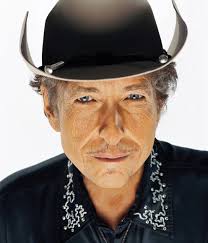 |
The officers were responding to a report from residents that an “eccentric-looking old man” had wandered into their yard, according to ABC News. Mr. Dylan, right, who said he was looking at houses to pass some time before that night’s show with Willie Nelson and John Mellencamp, was not carrying identification, so the officers accompanied him back to his hotel, where concert workers vouched for him. “I’ve seen pictures of Bob Dylan from a long time ago, and he didn’t look like Bob Dylan to me at all,” Officer Kristie Buble told ABC News. “We see a lot of people on our beat, and I wasn’t sure if he came from one of our hospitals or something. He was acting very suspicious. Not delusional, just suspicious.” ‘ (New York Times via abby) |
Too good to pass up posting this anecdote, although I also find it sad. Already, with the fortieth anniversary of Woodstock this weekend, preoccupied with the passage of time and the transience of so much of what I found important in my youth. Of course, another take on this story is to wonder why in the world they were playing Long Branch NJ.

I love cover versions and I love The Covers Project and the concept of the ‘covers chain’. This one has 282 links. You’re sure to find something here that you like.
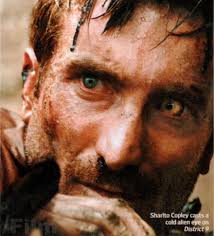
“The two best movies I've seen this summer, District 9 (which I reviewed for Reason here) and The Hurt Locker are both smart, inventive, relatively low budget action films. Both are clearly products of directors with strong, clear, and unusual visions that somehow snuck through the Hollywood production pipeline largely intact. That this is a rarity in American studio filmmaking and even more so in summer action films hardly needs to be said. And as a sometime-critic, regular moviegoer, and devotee of summer movies, both small and large, I rather obviously wish that this weren't true.
Yet I can't agree with Roger Ebert's contention that, essentially, dumb Americans—and in particular, dumb teenagers—are ruining the U.S. film industry. His evidence basically boils down to the box office scores for three films—Transformers 2 and G.I. Joe, which critics hated but made big bucks, and The Hurt Locker, which critics loved but has been comparatively little seen.
Granted, he also complains about the dearth of good satire, the general lack of interest in old media, and the perception of movie critics as an out-of-touch elite (which he agrees they are, but doesn't think that's a bad thing). But all in all, it's pretty thin stuff.
Take, for example, his primary gripe, the relative box office failure of The Hurt Locker: Critically beloved films fall through the cracks all the time, and it's not as if audiences are going out of their way to irritate the nation's critics…” — Peter Suderman
I have to agree with him about the two best films of the summer…
Thoughtful piece by culture critic Bill Wyman (Splice Today). I would be interested in hearing how this analysis strikes insiders in the journalism business.

My family and I are out of town and away from keyboards for awhile, so don’t expect any posts. Speak to you in a couple of weeks. Don’t forget to watch the Perseids on the night of Aug 11-12.

“Increasingly, ideas, images and concepts of the neurosciences are being assimilated into global culture and becoming part of our daily discourses and practices.
Visual and digital technologies of the brain, the widespread dissemination of psychotropic drugs, expanding programs in consciousness studies and other neurotechnologies are having a significant impact on individuals and society.
These ongoing transformations in science and society are deeply pervading popular culture and are appearing in a profusion of media and artistic expanse- from the visual arts to film, theatre, novels and advertisements.
With this website, we explore and document past and current manifestations of this phenomenon and introduce an online platform for the analysis and exchange of cultural projects intersecting neuroscience, the arts and the humanities.”
![[Image 'https://i0.wp.com/science.nasa.gov/headlines/y2009/images/perseids2009/perseid_map2.gif' cannot be displayed]](http://science.nasa.gov/headlines/y2009/images/perseids2009/perseid_map2.gif "Looking northeast around midnight on August 12th")
Looking northeast around midnight on August 12th
‘Earth is entering a stream of dusty debris from Comet Swift-Tuttle, the source of the annual Perseid meteor shower. Although the shower won't peak until August 11th and 12th, the show is already getting underway.
…Don't get too excited, cautions Bill Cooke of NASA's Meteoroid Environment Office. “We're just in the outskirts of the debris stream now. If you go out at night and stare at the sky, you'll probably only see a few Perseids per hour.”
This will change, however, as August unfolds. “Earth passes through the densest part of the debris stream sometime on August 12th. Then, you could see dozens of meteors per hour.”
For sky watchers in North America, the watch begins after nightfall on August 11th and continues until sunrise on the 12th. Veteran observers suggest the following strategy: Unfold a blanket on a flat patch of ground. (Note: The middle of your street is not a good choice.) Lie down and look up. Perseids can appear in any part of the sky, their tails all pointing back to the shower's radiant in the constellation Perseus. Get away from city lights if you can.’ NASA.

This is so wrong. Celebrated reactionary British curmudgeon physician Theodore Dalrymple argues that, because universal healthcare in the UK has such grievous faults, we should abandon the project. He does nothing to make his case, although he is articulate. (WSJ)
“There are many ways to cope with death, but founding an online book club is a pretty unique approach. “When I heard that David Foster Wallace had died, it was like remembering an assignment that had been due the day before,” said Matthew Baldwin. A blogger who regretted never having finished “Infinite Jest,” Baldwin founded InfiniteSummer.org, a Web site and collaborative reading experiment that creates a vast literary support group for completing the late author's 1,079-page tome over the course of this summer.” (Salon)

Registering for an account at any web site almost always requires an email address, and some people like to use a secondary address they don’t really care about instead of their real email address to avoid spam. If you do this, don’t use a Hotmail (Update: or other free webmail) account.
Microsoft shuts down Hotmail accounts that haven’t been logged into after nine months. So if you registered for your Gmail account two years ago and used your Hotmail address as your secondary email address and never logged back in, you’ve put your Gmail account at risk.
Here’s how: If your Hotmail account gets shut down due to inactivity, someone else can open a new one using your Hotmail address. Then, if that someone else requests a password reset from Gmail, it goes to that address, and that someone can get into your primary email account. This is how Twitter employees’ Gmail accounts got broken into last week.” (Smarterware )
“Oxford scientists have created a transparent form of aluminium by bombarding the metal with the world’s most powerful soft X-ray laser. 'Transparent aluminium' previously only existed in science fiction, featuring in the movie Star Trek IV, but the real material is an exotic new state of matter with implications for planetary science and nuclear fusion.” (physorg.com)

“Bill O’Reilly explaining that of course America has lower life expectancy than Canada — we have 10 times as many people, so we have 10 times as many deaths.
I need a drink.” — Paul Krugman (New York Times op-ed)
The only thing not to appreciate about this analysis is the gratuitous digs at Van Morrison.
“The main syntactic problem is to determine whether the fuck is being used as an [sic] pleonastic (semantically empty) direct object of shut or as a pre-head modifier of the preposition phrase (PP) headed by up. (Yes, the up of shut up is a one-word PP. It is not an adverb — all the traditional grammars are flat wrong on that…
I conclude that in colloquial English the NP the fuck (and it does indeed have the form of an NP) can function as a pre-head modifier in a PP, including the light one-word PPs (like up) that are known as particles.” (LanguageLog)
Can anyone think of a construction similar to this use of “…the fuck…” other than “…the hell…”?
![[Image 'https://i0.wp.com/img.ffffound.com/static-data/assets/6/a91575f96f54b7624fca3e58534664a2a81fca60_m.jpg' cannot be displayed]](http://img.ffffound.com/static-data/assets/6/a91575f96f54b7624fca3e58534664a2a81fca60_m.jpg)
via FFFFOUND! | ace..
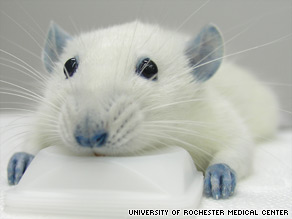
“The same blue food dye found in M&Ms and Gatorade could be used to reduce damage caused by spine injuries, offering a better chance of recovery, according to new research.
Rats injected with BBG not only regained their mobility but temporarily turned blue.
Researchers at the University of Rochester Medical Center found that when they injected the compound Brilliant Blue G (BBG) into rats suffering spinal cord injuries, the rodents were able to walk again, albeit with a limp.” (CNN)
![[Image 'https://i0.wp.com/cache.gawker.com/assets/images/17/2009/07/504x_bad-apples.jpg' cannot be displayed]](http://cache.gawker.com/assets/images/17/2009/07/504x_bad-apples.jpg)
Adam Pash: “Apple just rejected the Google Voice iPhone application from App Store distribution, the most recent in a long line of questionable moves, and the message is clear: If you want a device that won't lock you out of innovation, skip the iPhone“. (Lifehacker)

Robert Krulwich: “Here’s a surprise: Wild crows can recognize individual people. They can pick a person out of a crowd, follow them, and remember them — apparently for years. But people — even people who love crows — usually can’t tell them apart. So what we have for you are two experiments that tell this story.” via NPR (listen).
As the full moon rises
The swan sings
In sleep
On the lake of the mind.
— Kenneth Rexroth (engraved on his tombstone).

“It was built to be impenetrable, from its “super rugged transparent polycarbonate housing” to its intricate double-tabbed lid that would keep campers’ food in and bears’ paws out. The BearVault 500 withstood the ravages of the test bears at the Folsom City Zoo in California. It has stymied mighty grizzlies weighing up to 1,000 pounds in the backcountry of Yellowstone National Park.
But in one corner of the Adirondacks, campers started to notice that the BearVault, a popular canister designed to keep food and other necessities safe, was being compromised. First through circumstantial evidence, then from witness reports, it became clear that in most cases, the conqueror was a relatively tiny, extremely shy middle-aged black bear named Yellow-Yellow.
Some canisters fail in the testing stage when large bears are able to rip off the lid. But wildlife officials say that Yellow-Yellow, a 125-pound bear named for two yellow ear tags that help wildlife officials keep tabs on her, has managed to systematically decipher a complex locking system that confounds even some campers.In the process, she has emerged as a near-mythical creature in the High Peaks region of the northeastern Adirondacks.” (New York Times via abby)
“As government agencies and corporations scramble to cut expenses, one idea gaining widespread attention involves cutting something most employees wouldn't mind losing: work on Fridays. Regular three-day weekends, without a decrease in the actual hours worked per week, could not only save money, but also ease pressures on the environment and public health, advocates say. In fact, several states, cities and companies across the country are considering, or have already implemented on a trial basis, the condensed schedule for their employees.” (Scientific American)

“Lots of folks are already on this, but I wanted to post about the police report for the arrest of Henry “Skip” Gates in Cambridge the other day. Here’s a copy of the police report… The officer is clearly trying to justify the disorderly conduct arrest, which has to involve other people and a public place and cannot be made inside a person’s own house. Even the officer’s own version of events involve him persuading Gates to walk outside so that he could have an excuse to arrest him. Gates had already provided his identification and the officer makes it clear in his report that while he was still inside Gates’s house he knew he was no longer investigating any kind of crime. Gates’s “crime” in the officer’s own report consists solely of loudly accusing the officer of being a racist and asking for his name and badge number. The report makes it clear that the arrest was meant as a retaliation for being yelled at and called a racist, and he really didn’t care that the charge wasn’t going to stick.
…
Out on the streets, this kind of interaction happens all the time: objecting to police treatment when you have, in fact, done nothing wrong gets to you arrested for disorderly conduct or resisting an officer. It does happen to Whites, but it happens a heck of a lot more often to people of color. To me the most frightening thing about this incident are the large number of commenters on some sites who are sure the police have the right to retaliate if you object to their mistreatment of you.”(Scatterplot via walker)
Is this the instance of police misconduct to obsess about? “Interesting as it is to speculate about Henry Louis Gates and the Cambridge Police Department, the attention the case is generating reflects an unfortunate feature of American public discourse: you’ve got someone like Radley Balko who spends the bulk of his career documenting the most grave instances of police misconduct imaginable — including cases that involve the incarceration of innocent people for years on end — and most of even the egregious cases he writes about never break into mainstream conversation, whereas a minor altercation involving a Harvard professor who isn’t even being charged with a crime spawns wall-to-wall media coverage.
Isn’t it notable that six months into his presidency, the most prominent advocacy President Obama has done on behalf of minorities mistreated by police is to stand up for his Ivy League buddy? ” — Conor Friedersdorf (The Daily Dish)
Once every year, the Deer catch human beings. They do various things which irresistibly draw men near them; each one selects a certain man. The Deer shoots the man, who is then compelled to skin it and carry its meat home and eat it. Then the deer is inside the man. He waits and hides in there, but the man doesn't know it. When enough Deer have occupied enough men, they will strike all at once. The men who don't have Deer in them will also be taken by surprise, and everything will change some. This is called “takeover from inside”.

Evan Osnos: “Interesting details are emerging in the Chinese press about the case of Sun Danyong, the twenty-five-year-old employee of Foxconn who committed suicide in Shenzhen last week after being interrogated about a missing prototype for a new iPhone.
The case has thrown an uncomfortable spotlight on past accusations of workplace abuse at Foxconn, which manufactures products for Apple, and the culture of secrecy imposed on Apple’s manufacturers abroad.” (New Yorker)

![[Image 'https://i0.wp.com/www.guzer.com/pictures/square_bike_wheel.jpg' cannot be displayed]](http://www.guzer.com/pictures/square_bike_wheel.jpg)


![[Image 'https://i0.wp.com/graphics8.nytimes.com/images/2009/09/14/arts/14carroll190.jpg' cannot be displayed]](http://graphics8.nytimes.com/images/2009/09/14/arts/14carroll190.jpg "Jim Carroll")

![[Image 'https://i0.wp.com/img.labnol.org/di/large-ipod.jpg' cannot be displayed]](http://img.labnol.org/di/large-ipod.jpg)


