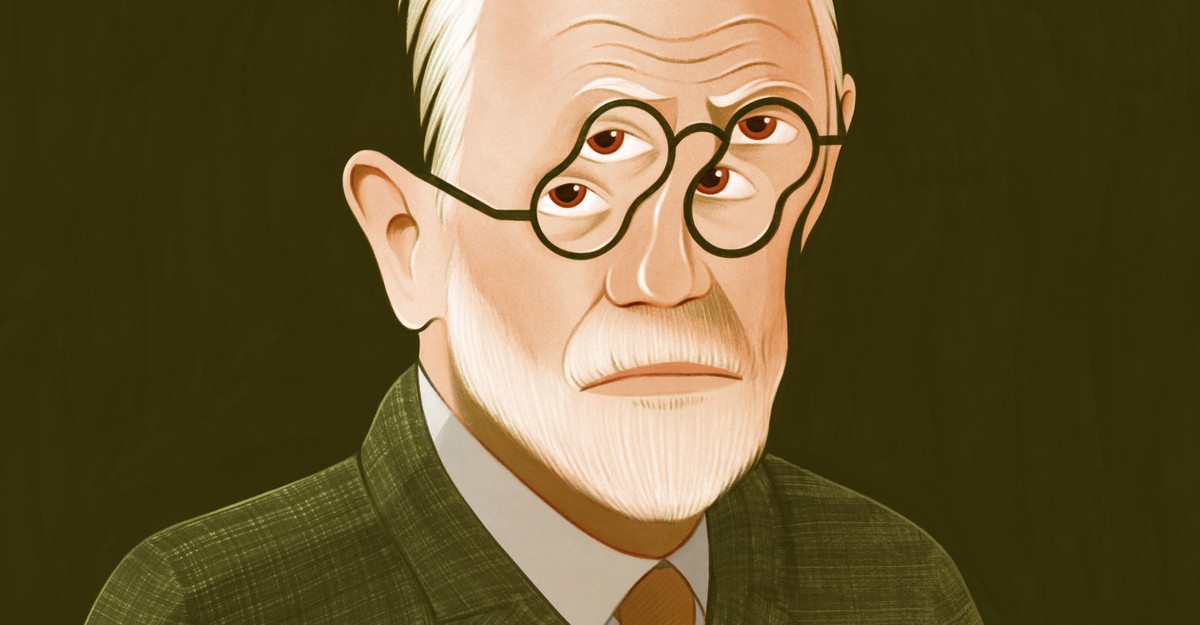
Scott Stossel via The Atlantic:
‘If coroners were to pin an actual time of death on Freudianism, they might specify 1963. That year, the philosopher of science Karl Popper held up psychoanalytic theory as the archetypal instance of what he called “pseudoscience”: Worse than mere bad science, psychoanalysis was, in being untestable, simply not science. Based in large part on the highly speculative interpretation of imperfectly recalled dreams, of all things, psychoanalytic theory was impervious to real scientific inquiry. In presuming to explain everything, Popper pronounced, psychoanalysis explained nothing at all.
So who today would dare attempt a rehabilitation of Freud? And why? To take the second question first, here’s one reason: What has followed Freudianism has not been, by many reckonings, any better. In the 1970s, the mental-health profession fled from such squishy psychological concepts as transference and countertransference, the death drive, and seduction theory—as well as more outlandish ones like penis envy, castration anxiety, and the Oedipal complex—and leaned instead into “biological psychiatry,” which had emerged from the drug discoveries of the 1950s and ’60s.
Physiological notions took hold, such as the “catecholamine hypothesis of affective disorders,” which attributed anxiety and depression to deficits of the neurotransmitters norepinephrine and dopamine. Three decades later, in the 1990s, the “chemical-imbalance theory of depression” arrived, tying depression and other mood disorders to dysregulation of another neurotransmitter, serotonin. Psychoanalysts’ highly subjective assessments gave way to the ostensibly more objective measurements provided by neuroscientific instruments that can capture brain activity, such as EEGs, PET scans, and fMRIs. Doctors turned to genetic testing to help identify various temperament types and emotional predispositions, and relied on standardized questionnaires assessed for their validity in diagnosing mental illness.
In repudiating Freudianism and touting the field’s proper medical grounding, science-based psychiatry confidently predicted that measurable success was soon to come. That’s not what happened. Biological psychiatry “overreached, overpromised, overdiagnosed, overmedicated,” as the Harvard medical historian Anne Harrington put it in 2019. Which raises the question of whether psychiatry has simply exchanged one form of witchcraft for another….’