
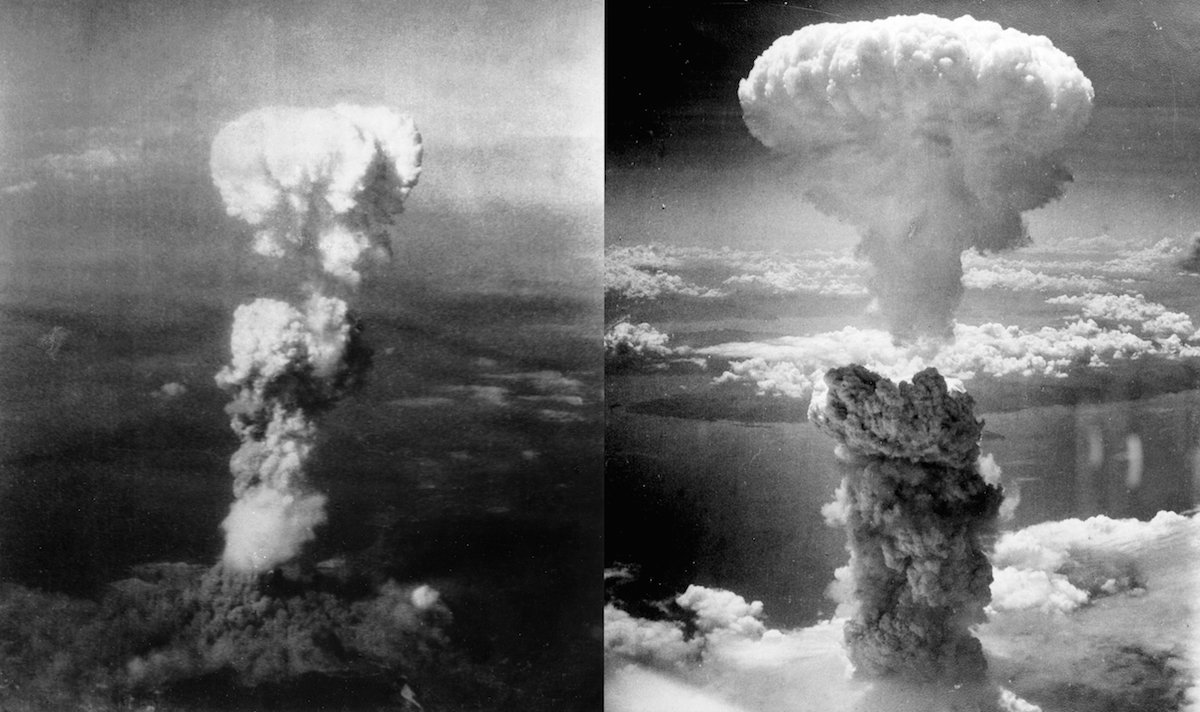
Alan Bellows via Damn Interesting:
‘On 6 August 1945, a number of eyes in the Japanese city of Hiroshima turned skyward at the drone of a US B-29 bomber flying across the cloudless sky, accompanied by two other aircraft. Their arrival was not a surprise; the early warning radar net had detected the incoming planes and an air-raid alert had been issued for the city. But soon the Japanese military realized that only three planes were incoming, and the alert was lifted. The anti-aircraft guns sat silent, and the fighter planes lingered in their hangars. A mere three planes were considered incapable of posing a significant threat, so it was presumed that these craft were weather planes — a precursor to a true attack. The Japanese military opted to conserve their diminishing supplies of munitions and fuel for use against more serious threats.
The sound of the American planes drew the attention of the city’s residents, many of whom were outdoors participating in work programs. A few saw a large parachute unfurl beneath the B-29 before it flew away, but most saw only the flash that soon followed. The events that unfolded that morning on the streets of Hiroshima were recorded by those who survived. These survivors would come to be known as hibakusha — “people exposed to the bomb.”
For those who didn’t see the planes, the sudden flare of harsh light was the first indication that something unusual had happened. In that eerily silent moment, white clouds sprung from the clear blue sky as the Little Boy spilled the destructive equivalent of thirteen thousand tons of TNT over the city, projecting intense radiation in every direction….’
