Tom Vanderbilt: the counterintuitive science of traffic

Cover of "Traffic: Why We Drive the Way W...
Cover via Amazon

‘If I had a chauffeur, I’d want it to be Tom Vanderbilt. I have no idea if Tom is a good driver, but he has a wealth of compelling, curious, and provocative knowledge about the psychology and science of our lives behind the wheel. He’s the author of the bestselling book Traffic: Why We Drive The Way We Do (And What It Says About Us) that has enlightened everyone from transportation policy groups to road safety consortiums to those of us who just insist that no matter what lane we’re in, the other one is moving faster. Tom gave a fantastic talk at Boing Boing: Ingenuity, our theatrical experience last month in San Francisco, where he imparted wisdom on late merging, the demographics of honking, and highway hypnosis.’ (Boing Boing).

No More Night?

 The Meaning of the Loss of Darkness: ‘For Earth’s first 4 billion years of existence, light and dark followed a predictable 24-hour cycle. Across an ever-increasing amount of Earth’s surface, that’s no longer the case. With the advent of artificial lighting came the ability to transform night — inside buildings, under streetlights and neon signs, and in those vast areas where night’s simply not so dark as it used to be.

For journalist Paul Bogard, author of The End of Night: Searching for Darkness in an Age of Artificial Light, one such place his family’s lakeside camp in rural Minnesota. Thirty years ago the nights were pitch-black, the starscapes incandescent. Now there’s a glow at the edge of the horizon, a growing dullness to the stars.“That firsthand experience of a child, standing out on a dock and staring at the Milky Way, stays with you,” said Bogard. “That’s one of the biggest things we’re losing, or have lost, for our kids. More and more people have no idea what it’s like.

”It’s not only lost starscapes that he laments, but darkness itself. WIRED talked to Bogard about what this could mean for humanity’s existential and even physical health.’ (Wired Science).

Voyager 1 Has Left the Solar System

‘NASA’s Voyager 1 spacecraft officially is the first human-made object to venture into interstellar space. The 36-year-old probe is about 12 billion miles (19 billion kilometers) from our sun.

New and unexpected data indicate Voyager 1 has been traveling for about one year through plasma, or ionized gas, present in the space between stars. Voyager is in a transitional region immediately outside the solar bubble, where some effects from our sun are still evident. A report on the analysis of this new data, an effort led by Don Gurnett and the plasma wave science team at the University of Iowa, Iowa City, is published in Thursday’s edition of the journal Science.’ (NASA Science).

Strength of gravity shifts – and this time it’s serious

‘Did gravity, the force that pins us to Earths surface and holds stars together, just shift? Maybe, just maybe. The latest measurement of G, the so-called constant that puts a figure on the gravitational attraction between two objects, has come up higher than the current official value.

Measurements of G are notoriously unreliable, so the constant is in permanent flux and the official value is an average. However, the recent deviation is particularly puzzling, as it is at once starkly different to the official value and yet very similar to a measurement made back in 2001, not what you would expect if the discrepancy was due to random experimental errors.

It’s possible that both experiments suffer from a hidden, persistent error, but the result is also prompting serious consideration of a weirder possibility: that G itself can change. That’s a pretty radical option, but if correct, it would take us a step closer to tackling one very big mystery – dark energy, the unknown entity accelerating the expansion of the universe.’ (New Scientist).

Silicon Valley’s Worst Buzzword

“It’s the most pernicious cliché of our time: Sometimes buzzwords become so pervasive they’re almost inaudible, which is when we need to start listening to them. Disruptive is like that. It floats in the ether at ideas festivals and TED talks; it vanishes into the jargon cluttering the pages of Forbes and Harvard Business Review. There’s a quarterly called Disruptive Science and Technology; a Disruptive Health Technology Institute opened this summer. Disruptive doesn’t mean what it used to, of course. It’s no longer the adjective you hope not to hear in parent-teacher conferences. It’s what you want investors to say about your new social-media app. If it’s disruptive, it’s also innovative and transformational.” (New Republic)

Ocean’s Most Disturbing Predator

‘This is Eunice aphroditois, also known as the bobbit worm, a mix between the Mongolian death worm, the Graboids from Tremors, the Bugs from Starship Troopers, and a rainbow — but it’s a really dangerous rainbow, like in Mario Kart. And it hunts in pretty much the most nightmarish way imaginable, digging itself into the sea floor, exposing a few inches of its body — which can grow to 10 feet long — and waiting.

Using five antennae, the bobbit worm senses passing prey, snapping down on them with supremely muscled mouth parts, called a pharynx. It does this with such speed and strength that it can split a fish in two. And that, quite frankly, would be a merciful exit. If you survive initially, you get to find out what it’s like to be yanked into the worm’s burrow and into untold nightmares.’ (Wired Science).

Earth now has one of solar system’s biggest volcanoes

‘Scientists have discovered a staggering colossus that once spewed fire but now slumbers deep in the Pacific Ocean,… a volcano with a footprint comparable to Olympus Mons on Mars, the largest volcano in the solar system. Covering an area of 120,000 square miles, which makes it about the size of New Mexico or the British Isles, the formation dubbed Tamu Massif is one of the biggest ever found, according to a study led by University of Houston professor William Sager.

Hawaii’s Mauna Loa, the largest active volcano on Earth, is taller than Tamu Massif but has only about 2 percent of its area… Tamu’s summit is roughly 6,500 feet below the ocean’s surface. Most of the formation is thought to be in waters that are nearly 4 miles deep.’  (Crave – CNET).

Death by Higgs rids cosmos of space brain threat

‘The Higgs boson may have the right mass to wreck the universe – hurray! Death by Higgs is the simplest way to do away with a paradoxical menagerie of disembodied intelligent beings that shouldn’t exist, yet remain in the best cosmological models.

What’s more, the end is a comfy 20 or 30 billion years off. “That’s quite a few billion; it’s not like we should rush out and buy life insurance,” says Sean Carroll at the California Institute of Technology in Pasadena, who put forward the idea along with Kimberly Boddy, also at Caltech.

The paradox arose a decade or so ago, when physicists realised their models led to a future filled with Boltzmann brains: fully formed conscious entities that pop out of the vacuum. It sounds bizarre, but there’s nothing to stop matter sometimes randomly arranging itself in just the right way for this to occur. The problem arises when you add in the universe’s accelerating expansion.

This provides limitless time, space and energy for Boltzmann brains to form, even after life as we know it has winked out, causing them to eventually outnumber ordinary consciousnesses. But that would make the brains’ experience of the universe more typical than ours, which is a problem as our understanding of the cosmos assumes that we are typical observers…’ (New Scientist).

Happy Fiftieth Birthday to the Lava Lamp

‘In the mid 1960s, they made their first TV appearance on the set of Doctor Who. Another sci-fi series, The Prisoner, followed and in 1980 Hollywood called – the Craven Walkers were asked to deliver bespoke models to the set of Superman III.

“When did we realise things were going really well? The day a store in Birkenhead phoned to say that Ringo Starr had just been in and bought a lava lamp,” said Ms Baehr.

“Suddenly we thought, ‘Wow, we have hit it.'” ‘ (BBC News).

The History and Psychology of Clowns Being Scary

English: Trúður

‘There’s a word— albeit one not recognized by the Oxford English Dictionary or any psychology manual— for the excessive fear of clowns: Coulrophobia.Not a lot of people actually suffer from a debilitating phobia of clowns; a lot more people, however, just don’t like them.

Do a Google search for “I hate clowns” and the first hit is ihateclowns.com, a forum for clown-haters that also offers vanity @ihateclowns.com emails. One “I Hate Clowns” Facebook page has just under 480,000 likes. Some circuses have held workshops to help visitors get over their fear of clowns by letting them watch performers transform into their clown persona. In Sarasota, Florida, in 2006, communal loathing for clowns took a criminal turn when dozens of fiberglass clown statues—part of a public art exhibition called “Clowning Around Town” and a nod to the city’s history as a winter haven for traveling circuses—were defaced, their limbs broken, heads lopped off, spray-painted; two were abducted and we can only guess at their sad fates.

Even the people who are supposed to like clowns—children—supposedly don’t. In 2008, a widely reported University of Sheffield, England, survey of 250 children between the ages of four and 16 found that most of the children disliked and even feared images of clowns. The BBC’s report on the study featured a child psychologist who broadly declared, “Very few children like clowns. They are unfamiliar and come from a different era. They dont look funny, they just look odd…” ‘ (Smithsonian Magazine).

Scientists Grow Human Brain From Stem Cells

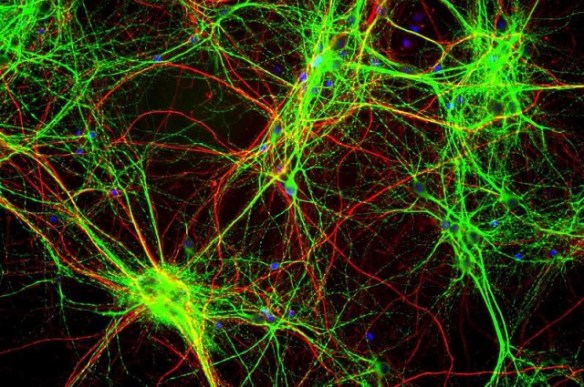
‘Ear, eye, liver, windpipe, bladder and even a heart. The list of body parts grown from stem cells is getting longer and longer. Now add to it one of the most complex organs: the brain.A team of European scientists has grown parts of a human brain in tissue culture from stem cells. Their work could help scientists understand the origins of schizophrenia or autism and lead to drugs to treat them, said Juergen Knoblich, deputy scientific director at the Institute of Molecular Biotechnology of the Austrian Academy of Sciences and one of the papers co-authors.The advance could also eliminate the need for conducting experiments on animals, whose brains are not a perfect model for humans.’ (Mashable).

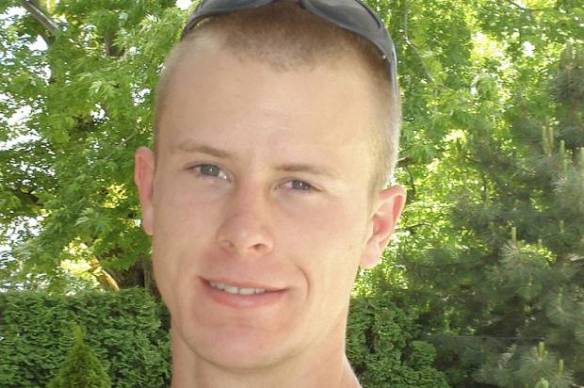
» Pardon Bradley Manning

‘Starkly showcasing the US government officials’ misplaced priorities when it comes to human rights, whistleblower and Nobel Peace Prize nominee Bradley Manning was sentenced to 35 years in prison. The information that Bradley gave to the public exposed the unjust detainment of innocent people at Guantanamo Bay, the true human cost of our wars in Iraq and Afghanistan, and forever changed investigative journalism. There is no evidence that anyone was harmed as a result of the information exposed.Join Amnesty International and the Bradley Manning Support Network in signing a petition to President Obama, demanding that Bradley Manning be given clemency and be released immediately. After having been tortured and abused at Quantico prison for 9 months where he was held in solitary confinement against the recommendations of every health professional who assessed him, and after having already spent more than 1190 days in prison more than 3 years confinement before the trial even began, Bradley Manning should be set free! Uphold your promise Obama: protect whistleblowers!’  Sign the petition and show your support! (Bradley Manning Support Network).

This Optical Illusion Lets You See Your Own Brain Waves

‘The pinwheel-like drawing above is nothing but black and white lines. When you look at it the right way, though, something strange and beautiful happens: it begins to flicker. You may think it’s just a regular old optical illusion at first, but actually, you’re looking at your very own brain waves.

To see the optical illusion takes a little bit of work. Look at the pinwheel shape and then stare at a spot that’s just a few inches away from it. When the pinwheel is in your peripheral vision, you should start to see the center flicker, kind of like a really bright star does. The effect also works as an afterimage. So once you find a spot that gets the flicker going, stare at it for about a minute and then look at a blank white wall. You’ll see the inverse image of the pinwheel, flicker and all.’ (Gizmodo).

Suicide risk could show up in a blood test

‘Could a blood test predict whether a person is at risk of committing suicide? For the first time, a set of proteins in the blood have been linked to suicidal behaviour. People who commit suicide appear to share a number of biological traits, regardless of any underlying conditions. This hints that suicidal behaviour may be a distinct disorder.

To investigate, Alexander Niculescu of Indiana University in Indianapolis and colleagues collected blood from the cadavers of nine men who had bipolar disorder and suicidal tendencies, and nine with bipolar but no suicidal thoughts, and compared levels of all the genes expressed in their blood.

Four genes were expressed at significantly higher levels in the blood of people who had been suicidal. Some proteins that these genes code for are known to be involved in stress and cell death.’ (New Scientist).

Afflicting Computers with Schizophrenia

English: 6 paintings of cats by Louis Wain wit...

‘Computer networks that can’t forget fast enough can show symptoms of a kind of virtual schizophrenia, giving researchers further clues to the inner workings of schizophrenic brains, researchers at The University of Texas at Austin and Yale University have found.

The researchers used a virtual computer model, or “neural network,” to simulate the excessive release of dopamine in the brain. They found that the network recalled memories in a distinctly schizophrenic-like fashion.

Their results were published in April in Biological Psychiatry.

“The hypothesis is that dopamine encodes the importance — the salience — of experience,” says Uli Grasemann, a graduate student in the Department of Computer Science at The University of Texas at Austin. “When there’s too much dopamine, it leads to exaggerated salience, and the brain ends up learning from things that it shouldn’t be learning from.”

The results bolster a hypothesis known in schizophrenia circles as the hyperlearning hypothesis, which posits that people suffering from schizophrenia have brains that lose the ability to forget or ignore as much as they normally would. Without forgetting, they lose the ability to extract what’s meaningful out of the immensity of stimuli the brain encounters. They start making connections that aren’t real, or drowning in a sea of so many connections they lose the ability to stitch together any kind of coherent story.’ (University of Texas News).

Living With Less. A Lot Less.

graham hill (treehugger.com) is currently work...

‘I like material things as much as anyone. I studied product design in school. I’m into gadgets, clothing and all kinds of things. But my experiences show that after a certain point, material objects have a tendency to crowd out the emotional needs they are meant to support.

I wouldn’t trade a second spent wandering the streets of Bangkok with Olga for anything I’ve owned. Often, material objects take up mental as well as physical space.

I’m still a serial entrepreneur, and my latest venture is to design thoughtfully constructed small homes that support our lives, not the other way around. Like the 420-square-foot space I live in, the houses I design contain less stuff and make it easier for owners to live within their means and to limit their environmental footprint. My apartment sleeps four people comfortably; I frequently have dinner parties for 12. My space is well-built, affordable and as functional as living spaces twice the size. As the guy who started TreeHugger.com, I sleep better knowing I’m not using more resources than I need. I have less — and enjoy more.’ — Graham Hill (NYTimes.com).

The milk revolution

‘During the most recent ice age, milk was essentially a toxin to adults because — unlike children — they could not produce the lactase enzyme required to break down lactose, the main sugar in milk. But as farming started to replace hunting and gathering in the Middle East around 11,000 years ago, cattle herders learned how to reduce lactose in dairy products to tolerable levels by fermenting milk to make cheese or yogurt. Several thousand years later, a genetic mutation spread through Europe that gave people the ability to produce lactase — and drink milk — throughout their lives. That adaptation opened up a rich new source of nutrition that could have sustained communities when harvests failed.

This two-step milk revolution may have been a prime factor in allowing bands of farmers and herders from the south to sweep through Europe and displace the hunter-gatherer cultures that had lived there for millennia. “They spread really rapidly into northern Europe from an archaeological point of view,” says Mark Thomas, a population geneticist at University College London. That wave of emigration left an enduring imprint on Europe, where, unlike in many regions of the world, most people can now tolerate milk. “It could be that a large proportion of Europeans are descended from the first lactase-persistent dairy farmers in Europe,” says Thomas.’ (Nature News & Comment).

Aspergers and Autism: Brain Differences Found

Major brain structures implicated in autism.

Major brain structures implicated in autism. (Photo credit: Wikipedia)

‘Children with Asperger’s syndrome show patterns of brain connectivity distinct from those of children with autism, according to a new study. The findings suggest the two conditions, which are now in one category in the new psychiatry diagnostic manual, may be biologically different.

The researchers used electroencephalography (EEG) recordings to measure the amount of signaling occurring between brain areas in children. They had previously used this measure of brain connectivity to develop a test that could distinguish between children with autism and normally developing children.’ (LiveScience)

Trivial finding, consistent with the new pseudo neuroscience. Of course differences are found, as individuals with Asperger’s and autism function very very differently. Tell me something I don’t know. (“Information can be defined as a difference that makes a difference…” — Gregory Bateson)

The NYT can spend multiple paragraphs avoiding quoting a naughty word

Image representing New York Times as depicted ...

Yes, this is old, but it’s on Twitter again today, so it’s new enough: Joe Coscarelli’s perfectly foul-mounted demand that the New York Times let itself quote naughty words, citing the circumlocutory fucking around below as evidence that it is “ridiculously prude with regards to printing curse words.”

Her writing could be earthy, with at least three messages using variations on the two most common swear words.

In one, she responded to a message with a single word, weaving one of them into “unbelievable.”

In another, she said her staff should not take on empty tasks. “You should go,” she said, “but don’t volunteer us for the” scutwork — though she substituted an epithet for the first part of that last word.

Things seem not to have improved since Joe’s 2010 missive, with no fucks or shits in the past year. Plenty of piss, though.

But hey, give The Times some credit: its editors can avoid using the word “torture” with just a single sentence.’ — Rob Beschizza (Boing Boing).

Climate change may make civil wars much more common

Global mean surface temperature difference fro...
Global mean surface temperature difference from the average for 1880–2009 (Photo credit: Wikipedia)

‘As the mercury rises, so too will a tide of human violence, according to a new analysis that puts a fresh spin on the phrase “dangerous climate change”.

Indeed, if societies respond to future warming in the same way as they have responded to historical surges in temperature, the frequency of civil wars could increase by more than 50 per cent by the middle of the century…

The new study is by economists at the University of California, Berkeley, who sought to make sense of a recent explosion of research into the relationship between climate and conflict. Marshall Burke and his colleagues used a meta-analysis of multiple studies, combining the different findings to try to find definitive answers.’ (New Scientist).

Wars, Murders to Rise Due to Global Warming?

Global Warming 1/2

‘The research, detailed in this week’s issue of the journal Science, synthesizes findings scattered across diverse fields ranging from archaeology to economics to paint a clearer picture of how global warming-related shifts in temperature and rainfall could fuel acts of aggression.Though scientists don’t know exactly why global warming increases violence, the findings suggest that it’s another major fallout of human-made climate change, in addition to rising sea levels and increased heat waves.’ ((National Geographic).

NASA Releases Images of Earth Taken from Beyond Saturn by Cassini

In this rare image taken on July 19, 2013, the wide-angle camera on NASA’s Cassini spacecraft has captured Saturn’s rings and our planet Earth and its moon in the same frame. It is only one footprint in a mosaic of 33 footprints covering the entire Saturn ring system (including Saturn itself). At each footprint, images were taken in different spectral filters for a total of 323 images: some were taken for scientific purposes and some to produce a natural color mosaic. This is the only wide-angle footprint that has the Earth-moon system in it.’

slothed.

Blue wave of death caught on camera

‘Death is frequently associated with the colour black, but for some worms the grim reaper comes wearing robes of fluorescent blue.

Hours before it dies, a wave of blue light flows through the body of a flatworm, Caenorhabditis elegans. Now, the biological mechanisms leading up to the flatworm’s death have been studied for the first time – revealing an unexpected source for this blue wave of death.’ (New Scientist).

Town considers licenses for ‘drone hunting’

‘…The town of Deer Trail, Colo., is looking to begin offering “drone hunting licenses” and actually paying rewards to anyone who presents proof that they were able to bring down an unmanned aerial vehicle belonging to the United States federal government, according to reporting by Denver TV station KMGH.

Phillip Steel, the man who drafted the ordinance, as well as other supporters, say it will provide a new source of revenue for the town, but Steel concedes that it’s not exactly like Deer Trail has a drone problem. In fact, he’s never seen one over the town.

“This is a very symbolic ordinance,” he told KMGH. “Basically, I do not believe in the idea of a surveillance society, and I believe we are heading that way.” ‘ (Crave – CNET).

69-year experiment captures pitch-tar drop

‘It took seven decades, but the pitch has finally been caught in the act. Since 1944, physicists at Trinity College in Dublin have been trying to measure the viscosity of pitch tar, a polymer seemingly solid at room temperature, and witness it dripping from a funnel. A drop forms only rarely, but last week a Webcam was on hand to witness the magic moment.

“The viscosity of pitch-tar is calculated to be 230 billion times that of water or 230,000 times the viscosity of honey,” the college’s School of Physics says on the experiment page. “Nobody has ever witnessed a drop fall in such an experiment — they happen roughly only once in a decade!”

The experiment is one of the oldest in the world, but a similar attempt at the University of Queensland in Australia has been going since 1927. It has only yielded eight drops. A Webcam that was poised to record a drop of the Australian pitch in November 2000 malfunctioned, but another drop could fall this year: see the live view here. It could take another century for all the pitch to flow through the funnel.’ (Crave – CNET).

Do You ‘Hate America’?

Bill O'Reilly

Think the U.S. justice system treats African Americans unfairly? Then you “simply hate America” or suffer a “victim mentality,” according to Fox News host Bill O’Reilly.

After highlighting some of the violence that occurred after George Zimmerman was found not guilty of second-degree murder, the Fox News host said Monday night those upset by the verdict could be roughly divided into two groups: those who hated America and those overwhelmed by a victim mentality. (The Raw Story).

Edward Snowden’s yet-unleaked leaks could be USA’s ‘worst nightmare’

“Snowden has enough information to cause harm to the U.S. government in a single minute than any other person has ever had,” says Glenn Greenwald, the Guardian journalist who was first to publish the documents that former NSA contractor Edward Snowden leaked about the US government’s surveillance programs.

“The U.S. government should be on its knees every day begging that nothing happen to Snowden, because if something does happen to him, all the information will be revealed and it could be its worst nightmare.” (Boing Boing).

‘Ender’s Game’ author: Where’s ‘tolerance’ now?

Over the years, “Ender’s Game” author Orson Scott Card has written screed after screed railing against gay marriage. Here’s just a selection: In 1990, he wrote an essay defending a Georgia law against sodomy, even in private. In 2004, he argued that gays have the legal right to marry, just not each other. In 2008, he published a long article arguing that homosexuality is a mental illness and a dysfunction, and that gay marriage would spell the end of democracy in the U.S. In 2012, he argued incorrectly, at least in the U.S. that no laws remained that discriminated against gay people.

In response to this well-documented history, queer geek organization Geeks Out called for a boycott of the upcoming sci-fi film “Ender’s Game,” which is based on Card’s 1985 book, a mainstay of geek teen libraries since its release. “Stand against anti-gay activism and deny Orson Scott Card your financial support by pledging to skip Ender’s Game,” Geeks Out said.

In response, Orson Scott Card recently released a statement to Entertainment Weekly to dismiss the boycott’s position, arguing that the book itself makes no mention of gay rights, and besides, since the Supreme Court recently struck down a key part of the Defense of Marriage Act, the battle is over (it’s not)…’ (CNET).

Understanding Evil

CHRONICLE

The man sitting in front of me is a mass murderer. He is a serial rapist and a torturer. We are chatting about the weather, his family, his childhood. We are sharing drinks and exchanging gifts. The man is in his 80s now, frail and harmless, even charming. Instinctively I like him. It is hard for me to connect him to the monster he was so many decades ago. I think it must be hard for him, too.

…By representing atrocity, are we giving voice, and therefore respect, to the victims who have been silenced? Or are we sensationalizing the private stories of those who have already been violated? When we take evil that is beyond understanding and put it into words, are we bringing healing clarity to the raw confusion of trauma? Or are we falsely packaging and simplifying something that ought never to be reduced, translating inexpressible evil into something common just for the sake of sharing a story?…’ — James Dawes (The Chronicle of Higher Education).

‘Florida’ spelled incorrectly on highway exit ramp sign — twice | The Raw Story


Do you live in the same country as these folks?

‘…[T]ransportation workers were recently getting ready to install a new exit sign on a freeway, and someone realized the word “Florida” was spelled wrong, according to a report on FirstCoastNews.com.The spelling error was printed on the exit sign on Interstate 95 not only once — but twice — the website reported.’ (The Raw Story).

Happy birthday boson! Six outstanding Higgs mysteries

Visual Higgs Boson

‘Happy birthday, Higgs boson! A year ago today, the discovery of the particle credited with giving others mass was announced to a packed and jubilant auditorium at CERN near Geneva, Switzerland. The moment marked the end of a 50-year hunt. But although the boson has been found, there is still plenty we do not know about the celebrated particle. Here are the most interesting unknowns that surround the Higgs boson.’ (New Scientist).

The Connected Brain


Fringe (TV series)

Tom Stafford: “I’m giving at talk at the Edinburgh festival on August 9th, called The Connected Brain. It will be at Summerhall (Fringe Venue 26 during the festival), cost £3, and here is the blurb:

Headlines often ask if facebook is making us shallow, or google eroding our memories. In this talk we will look “under the hood” of research on how digital technology is affecting us. We will try and chart a course between moral panic and techno-utopianism to reveal the real risks of technology and show how we can cement the great opportunities that it presents for the human mind.

The talk will be similar to the one I did in London recently at the School of Life. Ben Martynoga wrote up some details of that talk, which you can find here. The ideas in the talk involve using some examples from the Mind Hacks book to illustrate some principles of how the mind works, looking at the extended mind hypothesis and reminding ourselves of some of the history of moral panics around information technologies, which Vaughan has written so engagingly and often about (thanks Vaughan!). The place I get to, which is where I’m at with my thinking and where I hope to start a discussion with the audience, is that, rather than panic about technology making us dumb, distracted and alone, we need to identify the principles which will help us design technology which makes use smart, able to concentrate and empathetic.” (Mind Hacks).

A Guide To Everything Google Has Been Asked To Censor

The internet is all about the free flow of ideas, right? Collaboration! Discourse! Sharing! The day to day reality of what we do online may not always be quite so idealistic and ideologically motivated, but the open underpinnings are there. Except, of course, when theyre not at all. This visualization, published by Sebastian Sadowski, uses Googles transparency data to visualize all the things the company has been asked to censor.The governments of many countries routinely ask Google to suppress content across sites like Google Search and YouTube. Reasons range from national security, to suicide promotion, and government criticism. There are also categories for “other” and “reason unspecified.” Its interesting to see which countries are better or worse than you thought they would be. And check out that little chunk of mint green “reason unspecified” censorship on the U.S. chart. (Gizmodo).

Escape a Tornado While on the Road by Knowing How Tornadoes Move

“I got this post idea from data visualization expert John Nelson, who posted on his blog the direction in which tornadoes have traveled over the last 63 years. From the data, he discovered that a majority of the tornadoes moved in a northeastern direction, with a handful of them moving east. Knowing this, you have an advantage as far as what direction a tornado will go if you get caught up in the midst of one, and you can drive in a different direction away from the tornado to avoid it.” (Hackerspace).

Want to Understand a Generation? Look No Further Than Its Zombie Movies

Cover of "World War Z: An Oral History of...

World War Z … threw a lot of walking-dead heritage under the bus, but that doesn’t mean it won’t have a place in the ongoing evolution of zombie lore. It’s simply taking the idea of zombies as a surrogate for social anxieties in a new direction — in this case predominantly xenophobia and fears of viral outbreaks. This continues a long and distinguished history of zombie themes standing in for au courant topics like slave rebellion, communism, über-capitalism, technophobia, and globalization. However, how zombie tales—and their fans—deal with these issues has proven as problematic as, well, the problems themselves. Like, for example, the production of zombie ex-girlfriend shooting targets. (Underwire | Wired.com).

Autism Plus Psychosis Equals Mass Murder?

According to a new paper, mass shootings such as Sandy Hook and Aurora may be the result of Autism plus psychosis: A ‘one-two punch’ risk for tragic violence?

The first thing to note about this paper is that it’s in Medical Hypotheses.

I don’t normally take seriously anything that appears in this rather unique journal. This paper is, however, co-authored by Edward Shorter, an eminent historian of psychiatry; his book about it was a big influence on me. So it deserves a fair hearing.

The authors set the scene:

In the recent series of mass murders in Connecticut, Colorado, Norway and elsewhere, a pattern seems to be emerging: young men whose social isolation is so extreme as to verge on autism apparently become prey to psychotic ideation. And under the influence of this ideation they wreak terrible violence.

…What is actually the matter with these young men and how should we as a society conceive their pathology?

The answer, we’re told, is a combination of autism, and psychosis. Autism is not associated with violence per se, but psychosis is – and rates of psychosis are higher in autistics. What’s worse, in such cases, psychotic symptoms may go undiagnosed and untreated because they’re written off as just part of the autism.

(Neuroskeptic).

Female Ohio Democrat Introduces Bill To Regulate The Reproductive Health Of Men

“According to the Dayton Daily News, State Senator Nina Turner introduced SB 307, which requires men to visit a sex therapist, undergo a cardiac stress test, and get their sexual partner to sign a notarized affidavit confirming impotency in order to get a prescription for Viagra and other erectile dysfunction drugs. The bill also requires men who take the drugs to be continually “tested for heart problems, receive counseling about possible side effects and receive information about “pursuing celibacy as a viable lifestyle choice.”” (Addicting Info via Rebecca)

Three habitable worlds found around the same star

‘Aliens could be watching aliens watching aliens. That’s a realistic prospect now that three potentially habitable planets – a record – have been glimpsed orbiting the same star.

Earlier studies had suggested that a nearby star, Gliese 667C, had three planets, only one of which might support life. But the very presence of multiple planets made their precise number hard to tease out.

Now Guillem Anglada-Escudé of the University of Göttingen in Germany and his colleagues have reanalysed the original data and added some new observations. They found evidence for up to seven worlds, including three rocky planets in the star’s habitable zone, where temperatures should suit life.’ (New Scientist).

Is It Possible to Disappear Completely?

How to Disappear Completely and Never Be Found

[Edward] Snowden’s no ordinary traveler. But his globe-hopping around the world made us think: Would it be possible for someone without his connections—in our increasingly connected age—to travel undetected?

Turns out, the answer is probably not.”Snowden could do this because he had a lot of help,” said Norie Quintos, executive editor of National Geographic Traveler. “I think for a typical traveler, it would be very hard to do.

“It’s a felony to use false identification, so you don’t want to go that route. Instead, it’s better if you just make it really, really hard for people to track you down, said Frank M. Ahearn, author of How to Disappear: Erase Your Digital Footprint, Leave False Trails, and Vanish without a Trace. Ahearn spent over 20 years working as an investigator tracking down people who don’t want to be found. He then realized he could make more money helping people who wanted to disappear—actually leave without a trace.’ (National Geographic).

New signs of language surface in mystery Voynich text

A mysterious and beautiful 15th-century text that some researchers have recently deemed to be gibberish may not be a hoax after all. A new study suggests the text shares quantifiable features with genuine language, and so may contain a coded message.

That verdict emerges from a statistical technique that puts a figure on the information content of elements in a text or code, even if their meaning is unknown. The technique could also be used to determine whether there is meaning in genomes, possible messages from aliens or even the signals between neurons in the brain.

The Voynich manuscript has baffled and captivated researchers since book dealer Wilfred Voynich found it in an Italian monastery in 1912. It contains illustrations of naked nymphs, unidentifiable plants, astrological diagrams and pages and pages of text in an unidentified alphabet. (New Scientist).

The Ethical Flap Over Birdsong Apps

“Want to get chummy with a chickadee? There’s an app for that. But is it good for the birds?” (National Geographic).

New Zealand law permits ‘low risk’ designer drugs

“Stoners, pill-poppers and drug regulators everywhere: turn your eyes to New Zealand. The country looks set to adopt new laws permitting the limited sale of some designer drugs for recreational purposes. The legislation is the first in the world to regulate new recreational drugs based on scientific evidence of their risk of harm.” (New Scientist).

Jersey Devil or… something else?

Is this the elusive Jersey Devil as some Redditors have speculated? Perhaps its the dreaded Chupacabras? Or a bastard cousin of the Montauk Monster? The Oklahoma Department of Wildlife Conservation claims its just a furless squirrel. But then, thats what theyd want us to think. (Boing Boing).

Are you donating to one of America’s worst charities?

President Van Rompuy shakes hands with a membe...

Charitable Giving

The Tampa Bay Times has done some excellent investigative reporting on the 50 worst charities in America — organizations that took in more than $1 billion over the past 10 years, and gave almost all of that money to their own staffs and professional solicitors. The series explains how charities like this operate and skirt the regulatory system. But if you’re feeling TLDR, there’s also a PDF that can help you quickly figure out if you’re donating to one of these scams. A large portion of the 50 worst is made up of charities devoted to cancer and veterans’ issues. (Boing Boing).

…Relieved to find out that none of those listed are on my charitable giving list.

Researcher: Lego faces are getting angrier

The number of happy faces on Lego toy mini-figures has been decreasing since the 1990s, and the number of angry faces has increased, giving rise to concerns that children could be affected by the negativity of the toys.

In a study of 3,655 figures produced between 1975 and 2010, Dr Christoph Bartneck, a robot expert at the University of Canterbury in New Zealand, said the manufacturer appeared to be moving towards more conflict-based themes in its toys. Bartneck’s study considered the range of facial expressions across various Lego sets – now often in themes such as Star Wars, pirates or Harry Potter. (The Guardian).

Strange, Glowing Night Clouds Continue to Spread

Just after summer sunsets in northern latitudes, shimmering, wispy clouds appear in the twilight sky. This year, these noctilucent clouds have appeared earlier and farther south than ever before.

Noctilucent clouds exist higher in Earth’s atmosphere than any other cloud type. First observed in 1885 following the eruption of Krakatoa, they were a sight reserved for Earth’s northernmost residents. In recent years, however, their intensity and frequency have increased, often at latitudes previously thought to be too far south for noctilucent clouds to form.

In 2009, scientists from the National Center for Atmospheric Research pointed to the southern creep of noctilucent clouds as an early warning signal for climate change high in the atmosphere. Now, new data from NASA’s cloud-observing AIM satellite supports this possibility. (Wired.com).

The Verizon order, the NSA, and what call records might reveal about psychiatric patients

Patient Recognition Month Poster
It’s Patient Recognition Month

An anonymous weblogger who is a mental health practitioner writes about the potential effect of NSA spying on psychiatric patient confidentiality:

“I started thinking about what those records and metadata could reveal. Because my phone is used mainly for calls to and from patients and clients, can the NSA figure out who my patients are? And could they, with just a query or bit of analysis, figure out when my patients were going into crisis or periods of symptom worsening? I suspect that they can. And because I am nationally and internationally known as an expert on a particular disorder, could the government also deduce the diagnosis or diagnoses of my patients or their family members? Probably.” (PHIprivacy.net).

R.I.P. Writer Iain Banks

Iain Banks, Novelist of Crime and Science Fiction, Dies at 59 - NYTimes.com

Novelist of Crime and Science Fiction Dies at 59:“Iain Banks, a best-selling Scottish novelist whose books ranged from violent crime dramas to interstellar conflicts, died on Sunday in Kirkcaldy, Scotland. He was 59… Mr. Banks had announced in April that he had advanced gall bladder cancer.

Mr. Banks published 28 books in just under 30 years, writing literary fiction under the name Iain Banks and science fiction as Iain M. Banks. Whether space opera or paranoid thriller, his books combined lurid sex and violence, complex story structure, black humor and, frequently, political subtext.” (NYTimes obit)

I am extrememly saddened by this news. I’ve followed Banks for a long time, reading most of his science fiction and non-sci-fi opus and am finishing his last book as we speak.If there is any consolation to his premature death, it was that, given his joie de vivre, he lived 59 years more densely passionately than most of us live 80 or 90. He will be missed.

And here is a brief radio remembrance by his friend and fellow Scottish science fiction writer, Ken Macleod (As It Happens, CBC).

OCD Dogs, People Have Similar Brains

Scientists already knew that people and dogs with their species’ version of OCD—canine compulsive disorder, or CCD—show similar behaviors, respond to the same medications, and have a genetic basis to their disorders.

But for the first time, MRI brain scans of eight CCD-affected Doberman pinschers show that dogs and people also share certain brain characteristics. (National Geographic)

What the NSA Spying Scandal Means to You

“The internet is aflame with the news that the National Security Agency may be spying on phone calls and internet access of American citizens, and the possibility that they’ve partnered with some of the biggest tech companies in the world—Google, Microsoft, Apple, Facebook, Skype, and others—to request and access data directly whenever they want it. Let’s take a look at what exactly is going on, how long it’s been happening, and what—if anything—you can do about it.” (Lifehacker).

Acid trips down memory lane

As LSD turns 70 this year, fear and scorn fog our view of the drug. Fear is to do with the memories of its use in secret CIA mind control experiments on unwitting people in the 1950s. And those who scorn the self-indulgence of modern youth believe laxness tracks back to LSD’s recreational use a decade later, when acid advocate Timothy Leary called on American youth to “turn on, tune in, drop out”.

LSD provided the capstone for a grand European project to explore the psyche that was begun by the poet Goethe, developed by anatomist Jan Purkinje and physicist Ernst Mach, and carried to visionary territory by the psychoanalytic troika of Sigmund Freud, Carl Jung and Sabina Spielrein – only to be nearly wiped out by the rise of National Socialism in Germany.

LSD has become interwoven with modern culture. From Steve Jobs to philosopher Arne Naess, from the computer mouse to “deep ecology”, there’s little in the late-20th century zeitgeist that is acid-free. (New Scientist).

Animal Behaviorist: We’ll Soon Have Devices That Let Us Talk With Our Pets

“We’re fast approaching the point, says Con Slobodchikoff, when computers will help to mediate our communications with animals.” (The Atlantic).

Definitive Proof of Martian Water

Scientists now have definitive proof that many of the landscapes seen on Mars were indeed cut by flowing water.

The valleys, channels and deltas viewed from orbit have long been thought to be the work of water erosion, but it is Nasa’s latest rover, Curiosity, that has provided the “ground truth“.

Researchers report its observations of rounded pebbles on the floor of the Red Planet’s 150km-wide Gale Crater.

Their smooth appearance is identical to gravels found in rivers on Earth.

Rock fragments that bounce along the bottom of a stream of water will have their edges knocked off, and when these pebbles finally come to rest they will often align in a characteristic overlapping fashion.

Curiosity has pictured these features in a number of rock outcrops at the base of Gale Crater. (BBC News)

Leading neuroscientist: Religious fundamentalism may be a ‘mental illness’ that can be ‘cured’

A leading neurologist at the University of Oxford said this week that recent developments meant that science may one day be able to identify religious fundamentalism as a “mental illness” and a cure it.

During a talk at the Hay Literary Festival in Wales on Wednesday, Kathleen Taylor was asked what positive developments she anticipated in neuroscience in the next 60 years.

“One of the surprises may be to see people with certain beliefs as people who can be treated,” she explained, according to The Times of London. “Somebody who has for example become radicalised to a cult ideology – we might stop seeing that as a personal choice that they have chosen as a result of pure free will and may start treating it as some kind of mental disturbance.”

“I am not just talking about the obvious candidates like radical Islam or some of the more extreme cults,” she explained. “I am talking about things like the belief that it is OK to beat your children. These beliefs are very harmful but are not normally categorized as mental illness.” (The Raw Story).

The Paradox of Mental Health: Over-Treatment and Under-Recognition

Mental Health Room Renovations

Among all the conditions in the world of health, mental health occupies a unique and paradoxical place. On the one hand is over-treatment and over-medicalization of mental health issues, often fueled by a pharmaceutical industry interested in the broadening of the boundaries of “illness” and in the creation of more and wider diagnostic categories and thus markets for “selling sickness.” On the other hand exists profound under-recognition of the suffering and breadth of mental health issues affecting millions of people across geographies, which is a global problem. (PLOS Medicine).

The Saddest Tweeters Live in Texas

The town of Beaumont is known as “Texas … with a little something extra.” But the industrial town along the Gulf Coast now has a more dubious distinction: It’s been named the saddest city in America—at least, if you’re measuring sadness on Twitter.

That’s according to a group of researchers at the Vermont Complex Systems Center, who analyzed over 80 million words from more than ten million geotagged tweets written throughout 2011. The results of their study, published Wednesday in the journal PLoS ONE, showed that the happiest tweeters in the U.S. live in Napa, California, and their sad counterparts live mostly in the Rust Belt and along the Gulf Coast border. (National Geographic).

Ask a Bartender: What Cocktail Should Disappear Forever?

I have next to no interest in alcohol and never frequent bars, but I now know what drinks to order if I want my bartender to look down on me. Most despised drink is Long Island Iced Tea, in case you were wondering. Bad things happen to people who order this drink, according to many of the bartenders polled. (Serious Eats)

On the other hand, I can see exactly where these baristas are coming from. (Serious Eats)

Last man alive born in 19th century

With the death in Barbados on Thursday of James Emmanuel ”Doc” Sisnett, at the age of 113 years and 90 days, Jiroemon Kimura, of Japan, has become the last man alive to have been born in the 19th century.

Literally the last man. There are, according to the Gerontolgy Research Group at UCLA, 21 women born before New Year’s Day, 1901, who are still with us, most of them living in the United States or Japan, with others in Europe and Canada.

But while the females born in the reign of Queen Victoria strongly outnumber him, Mr Kimura, born on April 19, 1897, has one record the girls can’t match – not just yet, anyway. At 116, the ”supercentenarian” is the oldest human on the planet. (Sydney Morning Herald via Boing Boing)

Some 100 Species of Fungus Live on Our Feet

Unknown species of fungus from Appalachia.

There’s a fungus among us—a hundred different species in fact—and nearly all take up residence on our feet, according to a study that appears in the journal Nature this week.

Only a few fungi species were found on other body parts known to house fungi—such as behind the ears and on palms—according to the most thorough analysis to date of our fungal “landscape.” (National Geographic)

You Don’t Have to Spend a Ton on a Funeral–Here’s Why

English: W Harbottle & Son, Joiner & Undertake...
English: W Harbottle & Son, Joiner & Undertaker. Complete with Chapel of Rest but soon to be converted into apartments. (Photo credit: Wikipedia)

As the director of Funeral Consumers Alliance, a nonprofit that helps people avoid funeral fraud, I know all about mortuary mythology. (That’s what I call the collective “wisdom” about death, dying, funerals, and dead people.) Most Americans get their information about how to bury the dead from the people we pay to do it for us—not exactly the most disinterested source.

Funeral directors aren’t all crooks and making your living burying the dead is a perfectly respectable career. But they are in business to pay their bills. Even super-savvy shoppers let their brains go on vacation when they buy one of the most emotionally fraught and potential costly services. You don’t walk into the car dealer with a blank check and you shouldn’t do it at the undertaker’s.

Here’s how to get the send-off that fits your tastes and your budget. (Lifehacker)

Annals of the Age of Insanity (cont’d)


North Carolina 2-year-old puts dad’s unattended gun in his mouth and fires: A 2-year-old boy in North Carolina is expected to survive after shooting himself with his father’s gun over the weekend.

Randolph County deputies said that the toddler found the handgun in his parents’ room at their home just outside Asheboro around 2 p.m. on Saturday. The boy put the gun in his mouth and fired it.

According to WGHP, the boy was listed in critical condition Brenner Children’s Hospital in Winston-Salem on Sunday, but was expected to live.

“The bullet missed all the vital arteries there in the neck in the head and also missed the spinal cords, so I said it’s a miracle the child is still with us,” Randolph County Sheriff’s Office Captain Derrick Hill explained to WGHP. (The Raw Story)

R.I.P. Ray Manzarek


Cofounder of The Doors dies at 74 after battle with cancer: …Manzarek, keyboardist and founding member of The Doors, died Monday in Germany after a long battle with cancer, according to a statement on the iconic band’s Facebook page… Manzarek formed the group… with Jim Morrison in 1965 after the two met by chance in Venice Beach, California. He died surrounded by his wife Dorothy and brothers Rick and James in a clinic in Rosenheim, Germany after “a lengthy battle with bile duct cancer,” said the statement. (The Raw Story)

Right-wing radio host: I want to shoot Clinton right in the vagina

Senator Clinton @ Hampton, NH

Fringe right-wing radio host Pete Santilli made disturbing comments about Hillary Clinton last week, calling for sexual violence against the former secretary of state because of her alleged involvement in a bizarre conspiracy theory.

“Miss Hillary Clinton needs to be convicted, she needs to be tried, convicted and shot in the vagina,” he said. “I wanna pull the trigger. That ‘C U Next Tuesday’ has killed human beings that are in our ranks of our service.”

Santilli alleged Clinton was involved in drug trafficking in Arkansas and the killing of U.S. troops overseas.  (The Raw Story)

Suicidal behaviour is a disease, psychiatrists argue

“As suicide rates climb steeply in the US a growing number of psychiatrists are arguing that suicidal behaviour should be considered as a disease in its own right, rather than as a behaviour resulting from a mood disorder.

They base their argument on mounting evidence showing that the brains of people who have committed suicide have striking similarities, quite distinct from what is seen in the brains of people who have similar mood disorders but who died of natural causes.

Suicide also tends to be more common in some families, suggesting there may be genetic and other biological factors in play. What’s more, most people with mood disorders never attempt to kill themselves, and about 10 per cent of suicides have no history of mental disease.

The idea of classifying suicidal tendencies as a disease is being taken seriously. The team behind the fifth edition of the Diagnostic Standards Manual (DSM-5) – the newest version of psychiatry’s “bible”, released at the American Psychiatric Association’s meeting in San Francisco this week – considered a proposal to have “suicide behaviour disorder” listed as a distinct diagnosis. It was ultimately put on probation: put into a list of topics deemed to require further research for possible inclusion in future DSM revisions.” (New Scientist).

New Scientist has by far the best coverage of the core issues around diagnostic revision in psychiatry, as an aside. This issue is yet another challenge to diagnostic categorization. I have long felt that suicidal behavior cuts across labels, that suicidal patients with different diagnoses have more similarities than differences, and there is a dissociation between treatment of the underlying disorder and treatment fo the suicidal behavior. Suicide may have a distinct biocmistry and neurophysiology, or it may be an epiphenomenon of another phenomenon which cuts across diagnoses, namely impulsivity and dyscontrol.

When disaster strikes, it’s survival of the sociable

Vipiteno

With the promise of more and more extreme weather, officials rush to make infrastructure improvements. But they may be ignoring the greatest factor in survivability, a robust social infrastructure among the affected. What can we do, in the face of the ongoing breakdown of community in modern life? (New Scientist)

New Efforts to Overhaul Psychiatric Diagnoses Spurred by DSM Turmoil

‘With the new manual on the eve of its official debut, many experts are already looking beyond it. Some envision a future in which psychiatric diagnoses are based on the underlying biological causes instead of a description of a patient’s symptoms. Others caution that such a single-minded focus on biology ignores important social factors that contribute to mental illness. If there’s any area of agreement it’s this: There has to be a better way.

The DSM is used by doctors to diagnose patients, by insurance companies to decide what treatments to pay for, and by pharmaceutical companies and government funding agencies to set research priorities. The new edition, DSM-5, defines hundreds of mental disorders.

The fundamental problem, according to many of DSM’s critics, is that these definitions don’t carve nature at its joints.

“An obvious, easy example is schizophrenia,” said Peter Kinderman, a clinical psychologist at the University of Liverpool. “If you’re a 52-year-old man who hears voices, you’ll receive a diagnosis of schizophrenia. If you’re a 27-year-old woman with delusional beliefs, you’ll also receive a diagnosis of schizophrenia,” Kinderman said. “Two people can receive the same diagnosis and not have a single thing in common. That’s ludicrous scientifically.”

In most areas of medicine, diagnoses are based on the cause of illness. Heartburn and heart attacks both cause chest pain, but they’re different diagnoses because they have different underlying causes.

‘Two people can receive the same diagnosis and not have a single thing in common. That’s ludicrous scientifically.’

In psychiatry, however, the underlying causes are poorly understood. What doctors now diagnose as schizophrenia may in fact be several disorders with different causes that happen to produce an overlapping set of symptoms. Conversely, two people with the same underlying biology could conceivably end up with two different DSM diagnoses — one with schizophrenia, say, and the other with bipolar disorder…’ (Wired.com)

Although I certainly know how and when to ‘label’ (e.g. to help my patients secure coverage from their insurance companies) I have long been a critic of the DSM, not merely as the 5th edition is released. Diagnostic nihilism is the only way to treat individual patients, given the modern state of psychiatry.

Let’s Fight Big Pharma’s Crusade to Turn Eccentricity Into Illness

My wife reading in bed. And it wasn't because ...

As both a psychiatrist and a confirmed eccentric, this is dear to my heart:

“With an assist from an overly ambitious psychiatry, all human difference is being transmuted into chemical imbalance meant to be treated with a handy pill. Turning difference into illness was among the great strokes of marketing genius accomplished in our time.

All the great characters in myths, novels, and plays have endured the test of time precisely because they drift so colorfully away from the mean. Do we really want to put Oedipus on the couch, give Hamlet a quick course of behavior therapy, start Lear on antipsychotics?

I think not. Human diversity has its purposes or it would not have survived the evolutionary rat race. Our ancestors made it because the tribe combined a wide variety of talents and inclinations. There were leaders high on their own narcissism and followers content enough to be dependent on them; people who were paranoid enough to sniff out hidden threats, compulsive enough to get the job done, and exhibitionistic enough to attract mates. Perhaps the healthiest individuals were those who best balanced all these traits somewhere near the golden mean, but the best bet for the group was to have outliers always ready to step up to the plate as the particular occasion demanded.

I like eccentricity and eccentrics. The word eccentric comes from Greek geometry meaning “out of center.” It entered English as an astronomical description of the rotational paths of the heavenly bodies. Now it is used to describe people who are different — mostly with pejorative connotations, not often enough with admiration for their particular genius.

Nature abhors homogeneity and simply adores eccentric diversity. We should celebrate the fact that most humans are at least somewhat eccentric and accept ourselves as we are, warts and all. Human difference was never meant to be reducible to an exhaustive list of diagnoses drawn carelessly from a psychiatric manual.” (Wired.com)

This is by Allen Frances MD, professor emeritus and former chair of the Department of Psychiatry and Behavioral Science at Duke University School of Medicine. The Chairman of the DSM-IV Task Force and part of the leadership group for previous editions, Frances’ book Saving Normal: An Insider’s Revolt Against Out-of-Control Psychiatric Diagnosis, DSM-5, Big Pharma, and the Medicalization of Ordinary Life was released this week.

New Approach Raises Hope for Development of Heroin Vaccine

Finding vaccines to combat drugs of abuse is an ongoing and challenging quest. The goal is to find compounds that produce antibodies that bind to drugs in the bloodstream, stopping them from entering the brain, and thus eliminating their effects. A heroin vaccine is even more difficult to develop because the drug quickly metabolizes into other active compounds. However, researchers from the Scripps Research Institute in La Jolla, Calif., have tested a new approach that that takes heroin metabolism into account.” (Psychiatric News)