
New Year Sunrise
This is the annual update of my New Year post, a longstanding FmH tradition. Please let me know if you find any dead links:
I once ran across a January 1st Boston Globe article compiling folkloric beliefs about what to do, what to eat, etc. on New Year’s Day to bring good fortune for the year to come. I’ve regretted since — I usually think of it around once a year (grin) — not clipping out and saving the article. Especially since we’ve had children, I’m interested in enduring traditions that go beyond getting drunk [although some comment that this is a profound enactment of the interdigitation of chaos and order appropriate to the New Year’s celebration — FmH], watching the bowl games and making resolutions.

A web search brought me this, less elaborate than what I recall from the Globe but to the same point. It is weighted toward eating traditions, which is odd because, unlike most other major holidays, the celebration of New Year’s in 21st century America does not seem to be centered at all around thinking about what we eat (except in the sense of the traditional weight-loss resolutions!) and certainly not around a festive meal. But…
Traditionally, it was thought that one could affect the luck they would have throughout the coming year by what they did or ate on the first day of the year. For that reason, it has become common for folks to celebrate the first few minutes of a brand new year in the company of family and friends. Parties often last into the middle of the night after the ringing in of a new year. It was once believed that the first visitor on New Year’s Day would bring either good luck or bad luck the rest of the year. It was particularly lucky if that visitor happened to be a tall dark-haired man.
“Traditional New Year foods are also thought to bring luck. Many cultures believe that anything in the shape of a ring is good luck, because it symbolizes “coming full circle,” completing a year’s cycle. For that reason, the Dutch believe that eating donuts on New Year’s Day will bring good fortune.
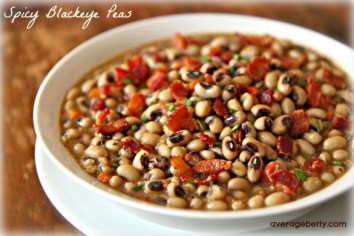
Many parts of the U.S. celebrate the new year by consuming black-eyed peas. These legumes are typically accompanied by either hog jowls or ham. Black-eyed peas and other legumes have been considered good luck in many cultures. The hog, and thus its meat, is considered lucky because it symbolizes prosperity. Cabbage is another ‘good luck’ vegetable that is consumed on New Year’s Day by many. Cabbage leaves are also considered a sign of prosperity, being representative of paper currency. In some regions, rice is a lucky food that is eaten on New Year’s Day.”

Fireworks over Edinburgh on New Year’s Eve
The further north one travels in the British Isles, the more the year-end festivities focus on New Year’s. The Scottish observance of Hogmanay has many elements of warming heart and hearth, welcoming strangers and making a good beginning:
“Three cornered biscuits called hogmanays are eaten. Other special foods are: wine, ginger cordial, cheese, bread, shortbread, oatcake, carol or carl cake, currant loaf, and a pastry called scones. After sunset people collect juniper and water to purify the home. Divining rituals are done according to the directions of the winds, which are assigned their own colors.
First Footing: The first person who comes to the door on midnight New Year’s Eve should be a dark-haired or dark-complected man with gifts for luck. Seeing a cat, dog, woman, red-head or beggar is unlucky. The person brings a gift (handsel) of coal or whiskey to ensure prosperity in the New Year. Mummer’s Plays are also performed. The actors called the White Boys of Yule are all dressed in white, except for one dressed as the devil in black. It is bad luck to engage in marriage proposals, break glass, spin flax, sweep or carry out rubbish on New Year’s Eve.”
 Here’s why we clink our glasses when we drink our New Year’s toasts, no matter where we are. Of course, sometimes the midnight cacophony is louder than just clinking glassware, to create a ‘devil-chasing din’.
 In Georgia, eat black eyed peas and turnip greens on New Year’s Day for luck and prosperity in the year to come, supposedly because they symbolize coppers and currency. Hoppin’ John, a concoction of peas, onion, bacon and rice, is also a southern New Year’s tradition, as is wearing yellow to find true love (in Peru and elsewhere in South America, yellow underwear, apparently!) or carrying silver for prosperity. In some instances, a dollar bill is thrown in with the other ingredients of the New Year’s meal to bring prosperity. In Greece, there is a traditional New Year’s Day sweetbread with a silver coin baked into it. All guests get a slice of the bread and whoever receives the slice with the coin is destined for good fortune for the year. At Italian tables, lentils, oranges and olives are served. The lentils, looking like coins, will bring prosperity; the oranges are for love; and the olives, symbolic of the wealth of the land, represent good fortune for the year to come.
A New Year’s meal in Norway also includes dried cod, “lutefisk.” The Pennsylvania Dutch make sure to include sauerkraut in their holiday meal, also for prosperity.
In Spain, you would cram twelve grapes in your mouth at midnight, one each time the clock chimed, for good luck for the twelve months to come. (If any of the grapes happens to be sour, the corresponding month will not be one of your most fortunate in the coming year.) The U. S. version of this custom, for some reason, involves standing on a chair as you pop the grapes. In Denmark, jumping off a chair at the stroke of midnight signifies leaping into the New Year.
In Rio,
The crescent-shaped Copacabana beach… is the scene of an unusual New Year’s Eve ritual: mass public blessings by the mother-saints of the Macumba and Candomble sects. More than 1 million people gather to watch colorful fireworks displays before plunging into the ocean at midnight after receiving the blessing from the mother-saints, who set up mini-temples on the beach.

When taking the plunge, revelers are supposed to jump over seven waves, one for each day of the week.
This is all meant to honor Lamanjá, known as the “Mother of Waters” or “Goddess of the Sea.” Lamanjá protects fishermen and survivors of shipwrecks. Believers also like to throw rice, jewelry and other gifts into the water, or float them out into the sea in intimately crafted miniature boats, to please Lamanjá in the new year.
In many northern hemisphere cities near bodies of water, people also take a New Year’s Day plunge into the water, although of course it is an icy one! The Coney Island Polar Bears Club in New York is the oldest cold-water swimming club in the United States. They have had groups of people enter the chilly surf since 1903.

Ecuadorian families make scarecrows stuffed with newspaper and firecrackers and place them outside their homes. The dummies represent misfortunes of the prior year, which are then burned in effigy at the stroke of midnight to forget the old year. Bolivian families make beautiful little wood or straw dolls to hang outside their homes on New Year’s Eve to bring good luck.
 In China, homes are cleaned spotless to appease the Kitchen God, and papercuttings of red paper are hung in the windows to scare away evil spirits who might enter the house and bring misfortune. Large papier mache dragon heads with long fabric bodies are maneuvered through the streets during the Dragon Dance festival, and families open their front doors to let the dragon bring good luck into their homes.
The Indian Diwali, or Dipawali, festival, welcoming in the autumnal season, also involves attracting good fortune with lights. Children make small clay lamps, dipas, thousands of which might adorn a given home. In Thailand, one pours fragrant water over the hands of elders on New Year’s Day to show them respect.

- a stack of pancakes for the New Year’s breakfast in France.
- banging on friends’ doors in Denmark to “smash in” the New Year, where it is also a good sign to find your doorstep heaped with broken dishes on New Year’s morning. Old dishes are saved all years to throw at your friends’ homes on New Year’s Eve. The more broken pieces you have, the greater the number of new friends you will have in the forthcoming twelve months.
- going in the front door and out the back door at midnight in Ireland.
- making sure the First Footer, the first person through your door in the New Year in Scotland, is a tall dark haired visitor.
- water out the window at midnight in Puerto Rico rids the home of evil spirits.
- cleanse your soul in Japan at the New Year by listening to a gong tolling 108 times, one for every sin
- it is Swiss good luck to let a drop of cream fall on the floor on New Year’s Day.
- Belgian farmers wish their animals a Happy New Year for blessings.
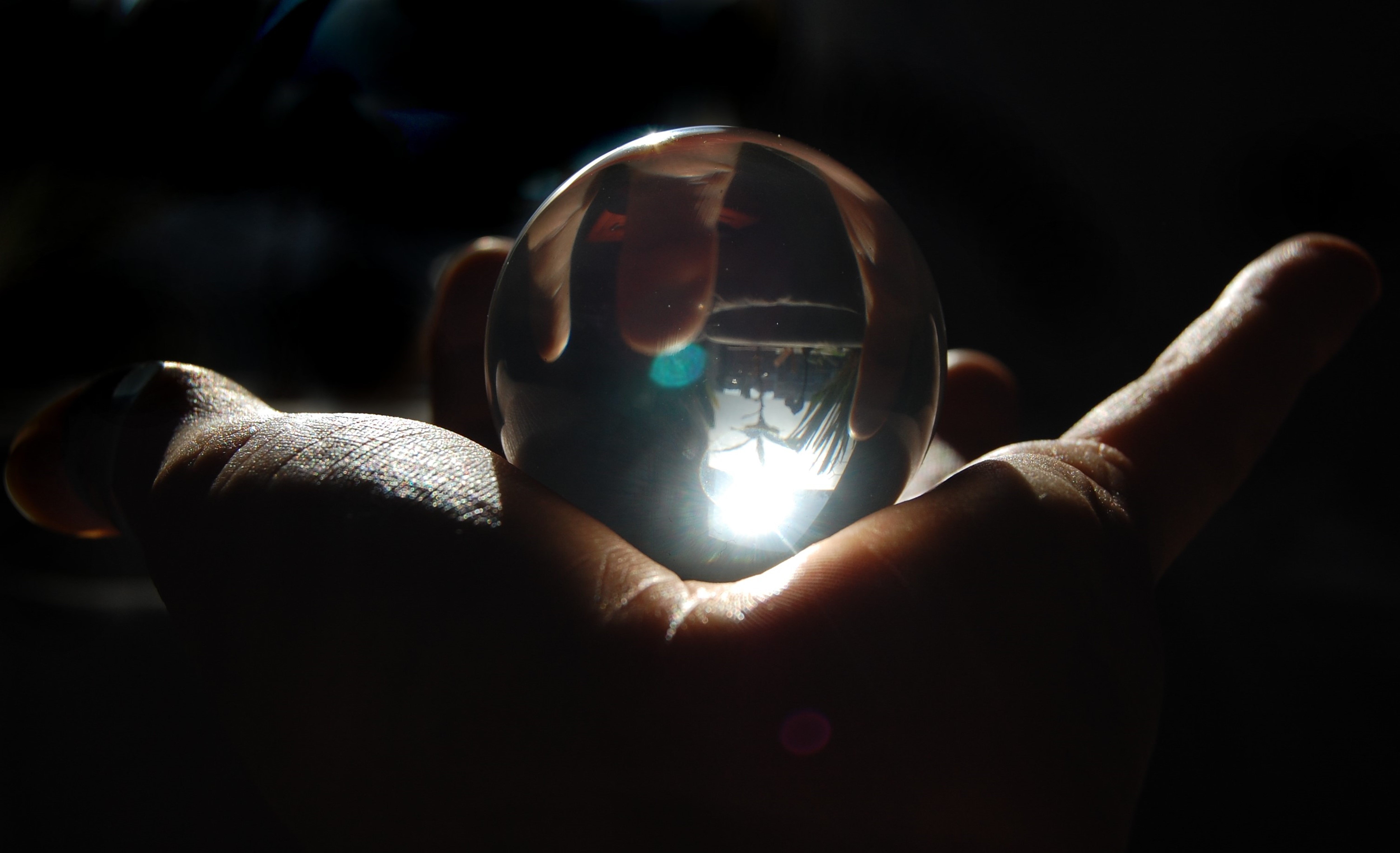 In Germany and Austria, lead pouring” (das Bleigießen) is an old divining practice using molten lead like tea leaves. A small amount of lead is melted in a tablespoon (by holding a flame under the spoon) and then poured into a bowl or bucket of water. The resulting pattern is interpreted to predict the coming year. For instance, if the lead forms a ball (der Ball), that means luck will roll your way. The shape of an anchor (der Anker) means help in need. But a cross (das Kreuz) signifies death. This is also a practice in parts of Finland, apparently.
 El Salvadoreans crack an egg in a glass at midnight and leave it on the windowsill overnight; whatever figure it has made in the morning is indicative of one’s fortune for the year.
- Some Italians like to take part in throwing pots, pans, and old furniture from their windows when the clock strikes midnight. This is done as a way for residents to rid of the old and welcome in the new. It also allows them to let go of negativity. This custom is also practiced in parts of South Africa, the Houston Press adds.
- In Colombia, walk around with an empty suitcase on New Year’s Day for a year full of travel.
- In the Philippines, all the lights in the house are turned on at midnight, and previously opened windows, doors and cabinets throughout the house are suddenly slammed shut, to ward off evil spirits for the new year.
- In Russia a wish is written down on a piece of paper. It is burned and the ash dissolved in a glass of champagne, which should be downed before 12:01 am if the wish is to come true.
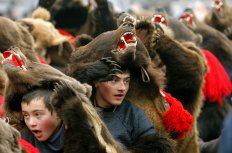 Romanians celebrate the new year by wearing bear costumes and dancing around to ward off evil
- In Turkey, pomegranates are thrown down from the balconies at midnight for good luck.
“It’s a bit bizarre when you think about it. A short British cabaret sketch from the 1920s has become a German New Year’s tradition. Yet, although The 90th Birthday or Dinner for One is a famous cult classic in Germany and several other European countries, it is virtually unknown in the English-speaking world, including Britain, its birthplace.” (Watch on Youtube, 11 min.)
So if the Germans watch British video, what do you watch in Britain? A number of sources have suggested that it is Jools Holland’s Hootenanny, “even though it’s awful and everyone hates it.”
On a related theme, from earlier in the same week, here are some of the more bizarre Christmas rituals from around the world.
Some history; documentation of observance of the new year dates back at least 4000 years to the Babylonians, who also made the first new year’s resolutions (reportedly voews to return borrowed farm equipment were very popular), although their holiday was observed at the vernal equinox. The Babylonian festivities lasted eleven days, each day with its own particular mode of celebration.  The traditional Persian Norouz festival of spring continues to be considered the advent of the new year among Persians, Kurds and other peoples throughout Central Asia, and dates back at least 3000 years, deeply rooted in Zooastrian traditions.Modern Bahá’í’s celebrate Norouz (”Naw Ruz”) as the end of a Nineteen Day Fast. Rosh Hashanah (”head of the year”), the Jewish New Year, the first day of the lunar month of Tishri, falls between September and early October. Muslim New Year is the first day of Muharram, and Chinese New Year falls between Jan. 10th and Feb. 19th of the Gregorian calendar.
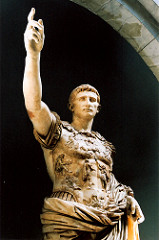 The classical Roman New Year’s celebration was also in the spring although the calendar went out of synchrony with the sun. January 1st became the first day of the year by proclamation of the Roman Senate in 153 BC, reinforced even more strongly when Julius Caesar established what came to be known as the Julian calendar in 46 BC. The early Christian Church condemned new year’s festivities as pagan but created parallel festivities concurrently. New Year’s Day is still observed as the Feast of Christ’s Circumcision in some denominations. Church opposition to a new year’s observance reasserted itself during the Middle Ages, and Western nations have only celebrated January 1 as a holidy for about the last 400 years. The custom of New Year’s gift exchange among Druidic pagans in 7th century Flanders was deplored by Saint Eligius, who warned them, “[Do not] make vetulas, [little figures of the Old Woman], little deer or iotticos or set tables [for the house-elf] at night or exchange New Year gifts or supply superfluous drinks [another Yule custom].” (Wikipedia)
 The tradition of the New Year’s Baby signifying the new year began with the Greek tradition of parading a baby in a basket during the Dionysian rites celebrating the annual rebirth of that god as a symbol of fertility. The baby was also a symbol of rebirth among early Egyptians. Again, the Church was forced to modify its denunciation of the practice as pagan because of the popularity of the rebirth symbolism, finally allowing its members to cellebrate the new year with a baby although assimilating it to a celebration of the birth of the baby Jesus. The addition of Father Time (the “Old Year”) wearing a sash across his chest with the previous year on it, and the banner carried or worn by the New Year’s Baby, immigrated from Germany. Interestingly, January 1st is not a legal holiday in Israel, officially because of its historic origins as a Christian feast day.
Auld Lang Syne (literally ‘old long ago’ in the Scottish dialect) is sung or played at the stroke of midnight throughout the English-speaking world (and then there is George Harrison’s “Ring Out the Old”). Versions of the song have been part of the New Year’s festivities since the 17th century but Robert Burns was inspired to compose a modern rendition, which was published after his death in 1796. (It took Guy Lombardo, however, to make it popular…)
Should auld acquaintance be forgot
and never brought to mind?
Should auld acquaintance be forgot
and days of auld lang syne?
For auld lang syne, my dear,
for auld lang syne,
we’ll take a cup of kindness yet,
for auld lang syne.Should auld acquaintance be forgot
and never brought to mind?
Should auld acquaintance be forgot
and days of auld lang syne?
And here’s a hand, my trusty friend
And gie’s a hand o’ thine
We’ll tak’ a cup o’ kindness yet
For auld lang syne
Here’s how to wish someone a Happy New Year around the world:
- Arabic: Kul ‘aam u antum salimoun
- Brazilian: Boas Festas e Feliz Ano Novo means “Good Parties and Happy New Year”
- Chinese:
Chu Shen TanXin Nian Kuai Le (thanks, Jeff)- Czechoslavakia: Scastny Novy Rok
- Dutch: Gullukkig Niuw Jaar
- Finnish: Onnellista Uutta Vuotta
- French: Bonne Annee
- German: Prosit Neujahr
- Greek: Eftecheezmaenos o Kaenooryos hronos
- Hebrew: L’Shannah Tovah Tikatevu
- Hindi: Niya Saa Moobaarak
- Irish (Gaelic): Bliain nua fe mhaise dhuit
- Italian: Buon Capodanno
- Khmer: Sua Sdei tfnam tmei
- Laotian: Sabai dee pee mai
- Polish: Szczesliwego Nowego Roku
- Portuguese: Feliz Ano Novo
- Russian: S Novim Godom
- Serbo-Croatian: Scecna nova godina
- Spanish: Feliz Ano Nuevo
- Swedish: Ha ett gott nytt år
- Turkish: Yeni Yiliniz Kutlu Olsun
- Vietnamese: Cung-Chuc Tan-Xuan
[If you are a native speaker, please feel free to offer any corrections or additions!]

Which of these customs appeal to you? Are they done in your family, or will you try to adopt any of them? However you’re going to celebrate, my warmest wishes for the year to come… and eat hearty!
[thanks to Bruce Umbaugh (here or here) for research assistance]
Related?
- Lucky Foods for the New Year (wholefoodsmarket.com)
- New Year’s Day food traditions around the world (examiner.com)
- Lucky foods to Eat on New Year’s Day (kasamba.com)
- 10 Good Luck Foods (beatcancer2010.wordpress.com)
- Good luck food for New Year’s Day (mnn.com)
- New Year’s Eve Traditions 3 (languagelearnersandteachers.wordpress.com)
- How to Manifest Good Luck in the New Year (norinedresser.wordpress.com)
- New Year’s foods for prosperity and luck?
- What’s Cooking in January
- Pickle, Peach, Carp Drops Mark New Year
- It’s New Year’s Eve, You’re Drunk and Damnit, You Drove
- Regency Christmas Traditions: Hogmanay (trsparties.com)
 ‘Despite incredible advances in biomedicine, a true cure for HIV has remained elusive. Antiretroviral drugs have transformed HIV into a manageable condition instead of a death sentence. But HIV permanently integrates into the genome of an infected cell and then hides, dormant, in the body, making it nearly impossible to eradicate. Since the 1980s, researchers have been hopeful that gene therapy, in which the body’s genetic material is altered, could provide a new route to treating HIV, and maybe even a cure. Brown’s case made many in the field optimistic, but scientists are still stumped as to exactly how his cure worked.
 …And you can tell:
 Is biodiversity inherently good?
 The arms race between the advertisers and the blockers:
 The past twelve months, contemplated in tree time:
 New York Removes Old Nuclear Fallout Shelter Signs:

 ‘Yuki Tatsumi was working as a waiter in a restaurant when one day, as he was cleaning up a table, he noticed that a customer had intricately folded up the paper chopstick sleeve and left it behind. Japan doesn’t have a culture of tipping but Tatsumi imagined that this was a discreet, subconscious method of showing appreciation. He began paying attention and sure enough noticed that other customers were doing the same thing. Tatsumi began collecting these “tips” which eventually led to his art project: Japanese Tip.
 Dreamlike Animal Portraits By Joachim Munter:
 Nepal’s Last Known Dancing Bears Freed:

 Emerging confirmation the Gov’t has been secretly studying them for years:

 It’s not only that the Chinese restaurants are conveniently open on Christmas. Lacking in religious imagery (unlike, say, Italian restrurants), they were more welcoming to Jews. The Chinese and Jewish immigrant communities on the Lower East Side of New York and in other urban landing zones were in close proximity, and by and large the Chinese did not discriminate against the generally persecuted Jews. In return, Jews embraced the Chinese establishments, which were local, inexpensive, and seen as exotic and urbane.
 ‘If you’ve visited any big city in Japan, you’ve no doubt seen a fair few commuters sleeping on the subway. The more time you spend there, the more places in which you’ll see normal, everyday-looking folks fast asleep: parks, coffee shops, bookstores, even the workplace during office hours. People in Korea, where I live, have also been known to fall asleep in places not normally associated with sleeping, but the Japanese take it to such a level that they’ve actually got a word for it: inemuri (居眠り, a mash-up of the verb for being present and the one for sleeping…’
 Explanation of why isn’t this just a fancy crunchy granola repackaging of “being outside”.
 Just because you’re not a drummer, doesn’t mean that you don’t have to keep time.
 ‘
‘ Trump is playing into North Korea’s hands — and making war more likely.
 So the shortest day came, and the year died,
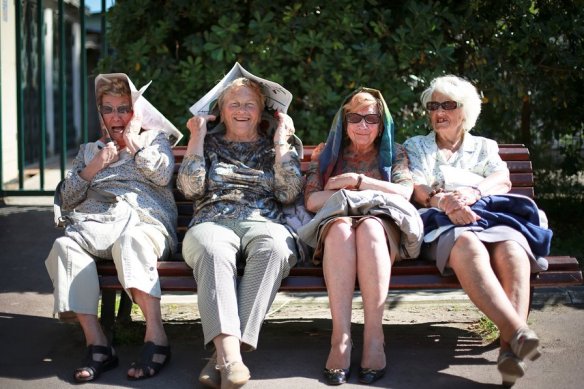 ‘…Though the seniors had worse physical health than their younger brethren, they had better mental health. Also, the long-lived adults were not only stubborn, they were often domineering and needed to feel in control. This could mean that they believed in their ideas and stood by their principles. These super seniors also had a lot of self-confidence and good decision-making capabilities. As Prof. Jeste said, “This paradox of aging supports the notion that well-being and wisdom increase with aging, even though physical health is failing.” …’
 New Technique with Lasers, No Radioactive Waste:
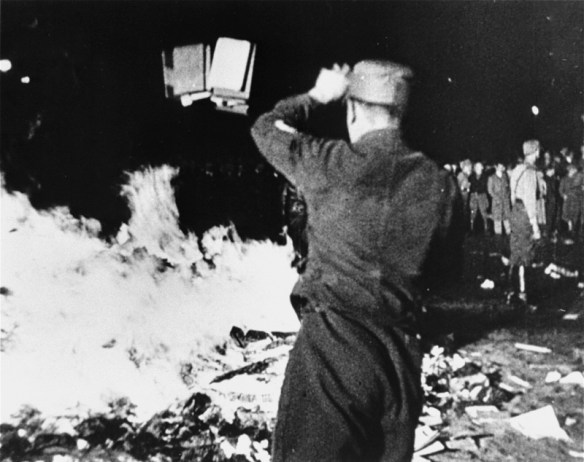 ‘Other forbidden words include “evidence-based,” “fetus,” “transgender,” and “vulnerable.” …’
 ‘Net Neutrality isn’t dead yet
 He tells far more lies, and far more cruel ones, than ordinary people do. According to The Fact Checker’s calculation, President Trump has made more than 1,318 false or misleading statements; the president now averages 5 false or misleading claims per day.
 ‘… “All stories are about wolves,” writes Margaret Atwood in The Blind Assassin. But what is the wolf? If you look at what philosopher Noël Carroll calls its “symbolic biology,” you see an animal taxidermied from myth and history, sculpted into an opponent that man—now primed as hero—can fight. When it comes to wolves, we have so long animalized humans and humanized animals. And though I do not know how to reconcile the pain that either species can bring, I have staked myself to a solemn belief that unsnarling our old metaphors might help. As Jeffrey Moussaieff Masson writes in Beasts: What Animals Can Teach Us About Human Nature: “I do not consider the suffering that prey experiences from a predator a form of cruelty.” The difference between humans and other predators, Masson believes, is choice. The animal predator does not decide to draw blood: he kills so he can stay alive. Humans, of course, are different. This is why most wolf metaphors go slack…’
 Thank you to the good people of Alabama for your sense in repudiating racism, misogyny and fascism.
 ‘Last month, Facebook’s first president Sean Parker opened up about his regrets over helping create social media as we know it today. “I don’t know if I really understood the consequences of what I was saying, because of the unintended consequences of a network when it grows to a billion or 2 billion people and it literally changes your relationship with society, with each other,” Parker said. “God only knows what it’s doing to our children’s brains.”
 Quinn Norton writes:
 ‘New data shows how how emergency rooms take advantage of their market share, at the expense of their patients…’
 Denis Slattery writes:
 ‘…if a Japanese start-up called ALE has its way, a satellite capable of generating artificial meteor showers will be in orbit sometime in the next two years. From 314 miles (500 kilometers) above Earth’s surface, the orbiter will shoot metal spheres the size of blueberries into the upper atmosphere …’
 ‘Shape dynamics leaves us with a countless number of present moments, or Nows.’
 ‘Exoplanets are hot right now. In the popularity sense. Thermally, they’re also cold and medium. But every since the first one was discovered nearly 26 years ago — or 9,457 days as of this writing — we’ve been fascinated by them. Some people are intrigued by the potential any of them may hold for migration from earth should it become inhabitable. Some wonder if other life on our level could be there. And then there’s their most undeniable value: science. If you’ve been having trouble keeping track of what we’ve found so far, the Planetary Habitability Laboratory (PHL) of the University of Puerto Rico at Arecibo has just published their Periodic Table of Exoplanets, which they’ll presumably keep up to date as more of them are found…’
 ‘Trump’s retweets of a British anti-Muslim hate group sound alarms for those who study the propaganda behind some of history’s greatest tragedies…
 ‘…The conceit of “
 ‘…[I]n tying himself to Mr. Moore even as congressional leaders have abandoned the candidate en masse, the president has reignited hostilities with his own party just as Senate Republicans are rushing to pass a politically crucial tax overhaul. Mr. McConnell and his allies have been particularly infuriated as Mr. Trump has reacted with indifference to a series of ideas they have floated to try to block Mr. Moore.
 ‘Former Bosnian Serb army commander known as the ‘butcher of Bosnia’ sentenced to life imprisonment more than 20 years after Srebrenica massacre..’
 ‘In a remote region of Antarctica known as Pine Island Bay, 2,500 miles from the tip of South America, two glaciers hold human civilization hostage.
 ‘…constantly keeping the government in the dark about suspicion-arousing information.
 ‘If you’ve never taken the time to think about how society grooms cult leaders like Manson, or if you just like fascinating stories of Hollywood’s dark underbelly, You Must Remember Manson is a can’t-miss series…’
 ‘Citing “five sources with knowledge of the conversation,” Buzzfeed News reports that National Security Adviser H.R. McMaster called his commander-in-chief an “idiot” and a “dope” during a private dinner with Oracle CEO Safra Catz. Catz has had a notably close relationship with the Trump administration and denied the comments when asked by Buzzfeed…’
 You know you’ve always wanted to open one up.
 Brett Talley…, 36, a Trump nominee for the US District Court for the Middle District of Alabama has never tried a case in his life (he has written more horror novels than he’s tried cases). In fact, he has only practiced law for three years, spending the bulk of his time since law school as a clerk or working for Republican campaigns. The American Bar Association unanimously ruled him “unqualified,” only the fourth such rating since 1989 (and the second under President Donald Trump). He pledged his “support to the NRA [National Rifle Association]; financially, politically, and intellectually” in a 2013 blog post and told the Senate Judiciary Committee that despite the pledge, he would not commit to recuse himself from gun control cases. Talley declined to disclose to Congress, when asked for potential conflicts of interests, that his wife, Ann Donaldson, is not only a White House staffer but chief of staff to the White House counsel, whose office is in charge of picking judicial nominees.
 ‘Physicists aren’t often reprimanded for using risqué humour in their academic writings, but in 1991 that is exactly what happened to the cosmologist Andrei Linde at Stanford University. He had submitted a draft article entitled ‘Hard Art of the Universe Creation’ to the journal Nuclear Physics B. In it, he outlined the possibility of creating a universe in a laboratory: a whole new cosmos that might one day evolve its own stars, planets and intelligent life. Near the end, Linde made a seemingly flippant suggestion that our Universe itself might have been knocked together by an alien ‘physicist hacker’. The paper’s referees objected to this ‘dirty joke’; religious people might be offended that scientists were aiming to steal the feat of universe-making out of the hands of God, they worried. Linde changed the paper’s title and abstract but held firm over the line that our Universe could have been made by an alien scientist. ‘I am not so sure that this is just a joke,’ he told me.
 ‘When Charles Darwin laid out his theory of natural selection in 1859, little could he have imagined that, a good 150 years later, this cornerstone of evolutionary theory might help us form a mental picture of what alien life looks like. But that’s precisely how a group of researchers from Oxford University have done: In a research paper called “Darwin’s Aliens,” they’ve applied Darwin’s theory to alien life, positing that aliens–like humans–adapt to their environment, undergo natural selection, and move from simple to complex life forms. And, by the end, they could plausibly look something like a “colony of Ewoks from Star Wars or the Octomite” pictured above.’
 A liquid is traditionally defined as a material that adapts its shape to fit a container.
 ‘Minuscule blobs of human brain tissue have come a long way in the four years since scientists in Vienna discovered how to create them from stem cells.
 ‘…We’ve certainly come a long way since the ancient Greek atomists speculated about the nature of material substance, 2,500 years ago. But for much of this time we’ve held to the conviction that matter is a fundamental part of our physical universe. We’ve been convinced that it is matter that has energy. And, although matter may be reducible to microscopic constituents, for a long time we believed that these would still be recognizable as matter—they would still possess the primary quality of mass.
 Cosmologist Brian Keating:



 ‘…[W]ith Trump, it confirms a disparity that has been evident for decades: the looming, constant presence of his father, and the afterthought status of his mother…’