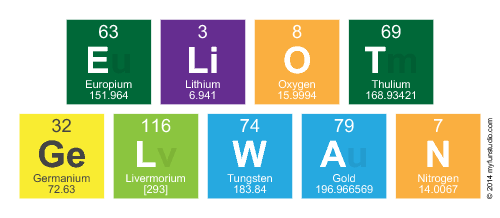
 Those of you with more common family names, or with appreciable extended families, may have a hard time seeing the point of this post. But, as I’ve noted before, there are very very few Gelwans. I have always wondered, or you might even say obsessed about, how/if those people with the Gelwan surname I do find are related to me. I have very little in the way of extended family; I envy those who do and thirst for deeper family connection, especially so that my children might come to feel embedded in a broader web. It becomes poignant each year around the holidays, which I imagine you all celebrate with enormous extended family gatherings while we have the four of us around the dinner table.
I subscribe to a Google alert for new ‘Gelwan’ references on the web, and once received a link to this page (gendrevo.ru). Alas, the page is now gone from the web. It appeared to me to be from a Russian genealogy site in which survivors post remembrance pages for their relatives who died in the Holocaust. On my paternal side, the generation of immigrants were my grandparents, in the early 20th century; my father’s older siblings and he were born in the U.S. between 1910-1915. I have always assumed that Gelwan was an Ellis Island anglicization of something else and thus that researching my family’s roots would become squirrelly because the family name of anyone related to me might not have precisely the same pronunciation or spelling. As the part of the world from which my ancestors emigrated shifted back and forth between Slavic and Germanic dominance, between Cyrillic and Roman alphabets, so too did the rendering of family names. I would have to pursue the Gelvans, the Gelmans, and even the Hellmans and who knows what else for relatives. [I may have made this up, but I think I learned somewhere along the way that we are actually distantly related to the Hellman’s mayonnaise family…]
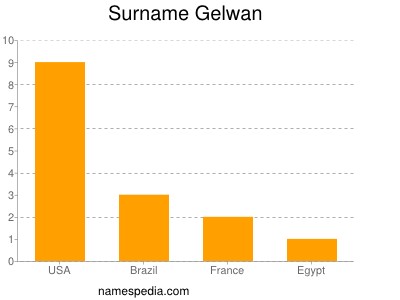 The flip side of that coin is of course that literal ‘Gelwans’ might not be related to me.
  For example, I found through Googling traces of a Deborah Gelwan who was in the public relations industry in Sao Paulo, Brazil who is referred to on the web. Deborah now lives in Orlando FL and runs a couple of businesses. Maybe I’ll get to see her someday.
When I was a child, a Brazilian tourist with the last name Gelwan, possibly from the same family as Deborah, arrived on our doorstep, having looked up Gelwan in the phonebooks on arriving in New York City. It appears that my parents and the visitor determined that it was unlikely we were related (although I cannot imagine how they did this, as my parents spoke no Portugese and rumor has it this visitor spoke no English). Deborah and I are now Facebook friends but we have not established a family relationship. And there are traces of other Gelwans in Brazil as well. I would at least love to figure out if these South American Gelwans descended from Eastern European immigrants. I am aware that eastern European Jews did go to South America in the diasporas, but I am not sure about Brazil per se.
Similarly, I have reached out to Gelwans in Lebanon — a Claude Gelwan was there but apparently now lives in France — and Iraq but I doubt we are related. It appears to me that Gelwan is a transliteration of a first name, not a family name, in Iraq.
I have discovered several other Gelwans in the New York area where I grew up. Interestingly enough I have long been aware of two brothers, physicians as I am: Jeffrey, a gastroenterologist and Mark, an ophthalmologist. In years past we spoke by phone but cannot establish a common background. I assumed that it might merely be an accident that we share our name, that Gelwan might be a final common pathway of anglicization from diverse unrelated family names in eastern Europe.
 Similarly, there is a pharmacist in Brooklyn named Steven Gelwan, who never answered an email from me. Maya Gambarin-Gelwan, I think Steven’s spouse, is yet another New York area physician, at Memorial Sloan-Kettering, with a number of scholarly publications. Never heard from her either. There is a Rebecca Gelwan (my late mother’s name by marriage) who studies, or studied, law in Pennsylvania and posts alot of photos and videos of her new baby (congratulations on the newest Gelwan!) but, again, I can’t figure that we are direct relatives. Along with my brother, that’s two Gelwan attorneys.
  Elise Gelwan, I learn, graduated from medical school at the University of Connecticut. Yet another physician Gelwan! There is a Sam or Sami Gelwan (I think they are the same person) in the New York area as well. If I mention all these names in this post, they may get hits when people vanity-search themselves, and they may get in touch, I hope.
LinkedIn, from which I resigned long ago, has thirteen ‘Gelwan’ profiles, including some of the aforementioned but also a Brazilian photographer Jacob Gelwan, and a Miriam Gelwan in Argentina. A Samantha Gelwan is/was a student at Indiana University in Bloomington. A Mohammed Gelwan is an engineer in Egypt.
From time to time I see passenger manifests listing Gelwans who disembarked at Ellis Island in the late 19th or early 20th centuries. I have found the arrival records of my grandfather’s two sisters and alot of other mysterious Gelwans. But where do I go from there? Some 19th century records show Gelwans emigrating from Ireland to Manitoba, but I cannot find Canadian Gelwans today.
I was told that my family originated in Riga, Latvia. Given that, I’ve written to Vladimir, or Wladimir, Gelwan, who I learned was the principal dancer in the Latvian National Ballet and who now runs a ballet school in Berlin, suggesting that we may be related, but have never gotten a reply back. I have seen a picture of Vladimir Gelwan on the web and can even imagine a certain family resemblance, although he’s certainly got the dancer’s grace that I do not. I’m determined to try and drop in on him when next in Berlin. [Do I have any readers in or near Berlin?]
What is it, by the way, with these nonresponses? I don’t know, maybe it’s just me, but a message from afar suggesting the writer might be my relative, with such a rare name, would immediately pique my interest and would surely get a response. Do you think recipients might have worried that my messages represented some kind of con? I don’t want anything from them except connectedness. Is that the problem right there?
Given the waves of upheaval that repeatedly washed over eastern Europe in the 20th century, with ever-changing political hegemony over various regions, large scale displacement of populations, the Holocaust, the destruction of records, the changing of names, etc., conventional genealogical research is not possible. It is not as if there is an established family tree, with records waiting around for the taking, as is the case for many families with western European origins. My father’s older brother, now deceased, once returned to eastern Europe to try to find some of our roots. Despite a reputation for being extremely resourceful, he apparently had no success at all. Lamentably, I cannot find any notes from his research; otherwise I (acknowledged as someone with no lack of resourcefulness myself!) might pick up the trail where he left off, despite the passage of time having added fifty further years of obfuscation.
It has been a little (not much) easier to find information about my mother’s ancestors. She herself, as a young child, emigrated with her family in the 1920’s from Eastern Europe. Several years ago, my son and I visited the small out-of-the-way town of her origin looking for indications of her family, armed with notes from a maternal uncle of mine who had made a similar trip decades before and retracing his steps. Unfortunately (probably because they were a Jewish family), the town hall and the burial grounds held no traces; the Nazis had razed the Jewish cemetery. I discovered when I visited the site that my uncle had been the one to fund the reassembly of the smashed fragments of gravestones into a monument there. There were no Jews left but a non-Jew who lived adjacent to the site of the burial ground kept the key, tended the grounds and let Jewish visitors into the site to see the monument.
My son and I did see the house where my mother had been born; eerily, we had by coincidence parked our rental car right in front of it when we had entered the town center.
We learned that, because of their persecution, the entire family hid from the authorities behind a falsified family name for several generations. Interestingly, that was the same name as a boss of mine, whose family I knew originated from the same region. Instead of being intrigued when I mentioned my discovery to him when I returned from my Eastern European trip, he scoffed. (I think he was appalled at the possibility that we were related.)
I am on Ancestry.com (here is a link to what I know so far of my family tree) and Ancestry keeps notifying me that they’ve discovered someone who is probably a third or fourth cousin. None of the family trees I’ve been directed to seem to intermesh so far. (I wonder how many third or fourth cousins a person has, on average…)
If you have a complicated heritage that will not be easy to trace on a geneology research site, my advice is to embark on a project of tracking down and documenting what you can, as soon as you can. It only disappears over time. Your children and their children may appreciate it if information about their mysterious family origins might one day help them find their place in the world in the face of the increasing rootlessness of modern life.
Perhaps one day someone googling their family name will be linked to this post and wonder how they might be related to Eliot Gelwan. Hurry up, Google, crawl this post and index it!

’Translation isn’t an easy art at the best of times, but Chris Clarke truly had his work cut out for him when he set out to create an English version of François Caradec’s Dictionary of Gestures.



 Rep. Nadler confirms:
 ’Many cosmopolitan conveniences are connected to Trump donors. What are you going to do?… The nation’s wealthy donor class will continue to fund the president’s racist rallies in exchange for more tax cuts…’
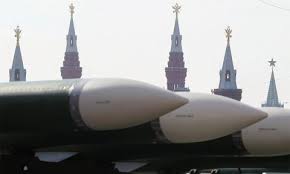 ’U.S.-based nuclear experts said on Friday they suspected an accidental blast and radiation release in northern Russia this week occurred during the testing of a nuclear-powered cruise missile vaunted by President Vladimir Putin last year.
 ’In psychiatry, we do not have diagnostic criteria for a mass murderer, terrorist or violent person. There are psychiatric conditions that may include anger, aggression, impulsivity, violence, or lack of remorse or empathy among their symptoms. But there is no one illness that would be found in all mass murderers, or murderers in general.
 ’Clozapine has been around since 1959 and is the most effective medication for patients with treatment-resistant schizophrenia. Multiple guidelines say that if a person hasn’t responded to any two antipsychotic drugs, or can’t tolerate their side effects, clozapine should be prescribed. These criteria apply to more than 30 percent of people with schizophrenia in the U.S. and yet, clozapine is actually prescribed to only about 4 percent of them.
 ’Mindfulness promotes itself as value-neutral but it is loaded with (troubling) assumptions about the self and the cosmos…’
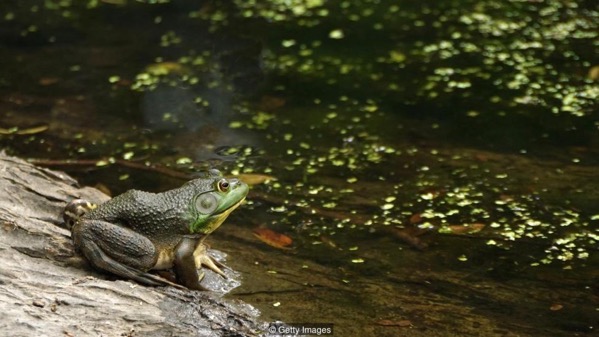 ’With one in every four species facing extinction, which animals are the best equipped to survive the climate crisis? (Spoiler alert: it’s probably not humans).…’
 ’…[N]egative reactions to human-animal hybrids might be based on our need to have a clear boundary between things that are “human” and things that are not. This distinction grounds many of our social practices involving animals, and so threatening this boundary could create moral confusion.…’

 David Wootton, Anniversary Professor of History at the University of York and the author of Power, Pleasure, and Profit: Insatiable Appetites from Machiavelli to Madison and The Invention of Science: A New History of the Scientific Revolution:
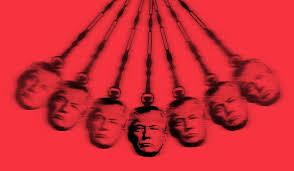 Ronald Aronson: Donald Trump has the most stable approval rating of any president since Harry Truman.
 ’Jenny Odell looks at many different ways of resisting the attention economy, sinking into the reality of our lives, and finding solidarity and agency with others.
 ’The first pirate website in the world to provide mass and public access to tens of millions of research papers:
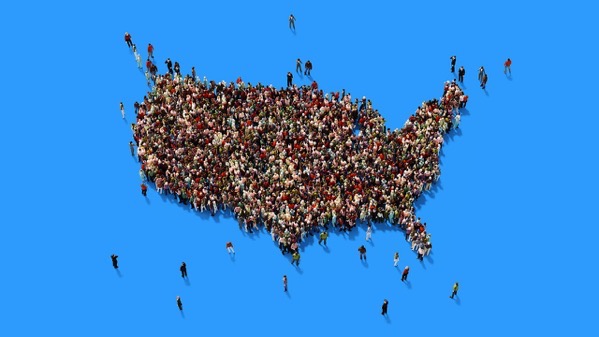 Potentially game-changing National Popular Vote Interstate Compact:
 ’The US military is conducting wide-area surveillance tests across six midwest states using experimental high-altitude balloons, documents filed with the Federal Communications Commission (FCC) reveal.
 Thanks to Google’s AdWords and YouTube videos, it’s easier than ever to sway people’s opinions with social engineering.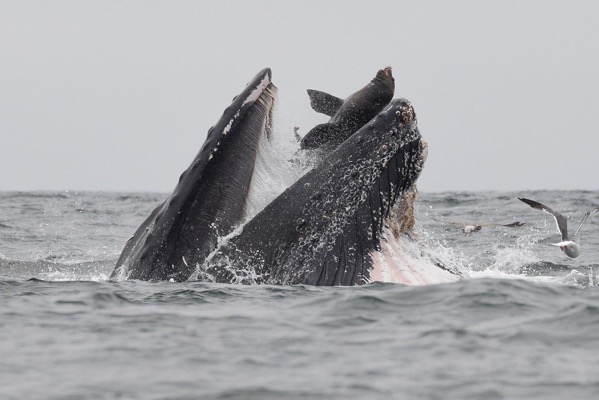

 It’s Sentient:
 100x larger than Fukushima disaster:
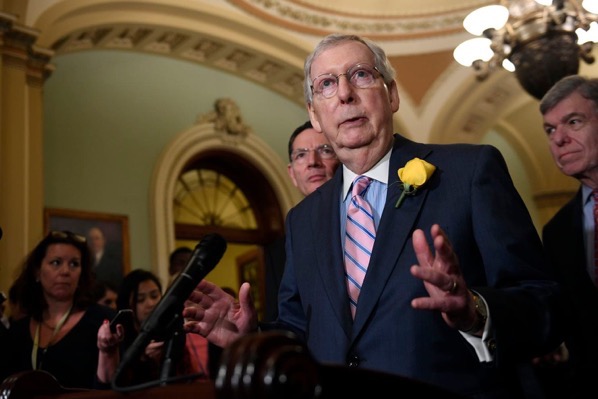 Eugene Robinson:
 “Words matter. And Mr. Trump’s words are dangerous.”:
 Tim Naftali, Clinical associate professor of history at NYU:
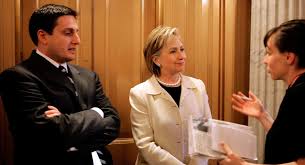 Philippe Reines, former Deputy Assistant Secretary of State, Senior Advisor to Hillary Clinton, and co-host of the “UNREDACTED” podcast on the dsr Network:
 Charles Blow writes in The New York Times:
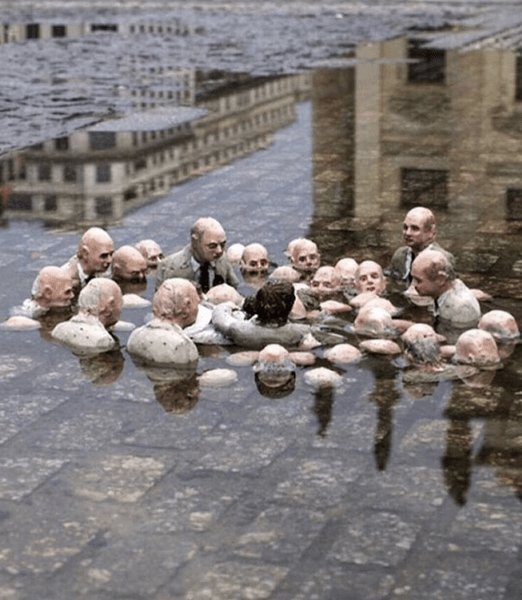 ’Politicians Discussing Climate Change’ by Isaac Cordal Via
  ’Here we see President Trump making the “white power” hand signal while uttering AOC’s name during his speech at Young Conservatives DC summit. It’s the same hand signal that Australian white supremacist Brenton Tarrant flashed in the courtroom after he’d been arrested for murdering 50 people in New Zealand mosques.
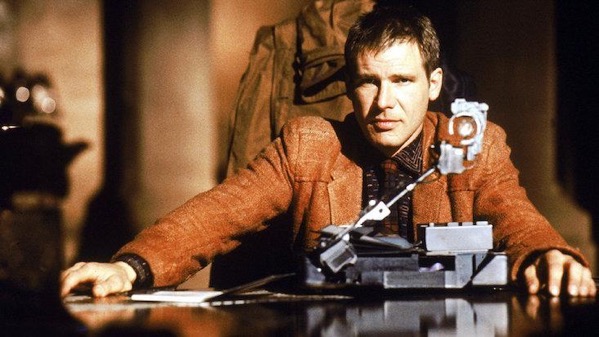 ’Rutger Hauer, the Dutch actor who portrayed Roy Batty in the film Blade Runner, passed away recently. To celebrate his iconic role, we are revisiting this piece on the Voight-Kampff test, a device to detect if a person is really human.
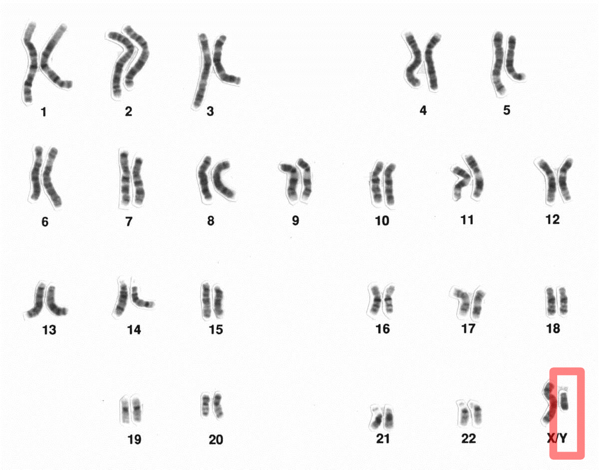 ’The Y chromosome may be a symbol of masculinity, but it is becoming increasingly clear that it is anything but strong and enduring.
 ’Trying to see the world through someone else’s eyes is a great way to build empathy and understanding between people. Turns out, this approach – when taken literally – also works with robots. Researchers from the University of Bourgogne, University of Trento, and their colleagues used a head-mounted display to put people “inside” a robot and then studied their “likeability and closeness towards the robot.”…’
 New Orleans music legend has died.
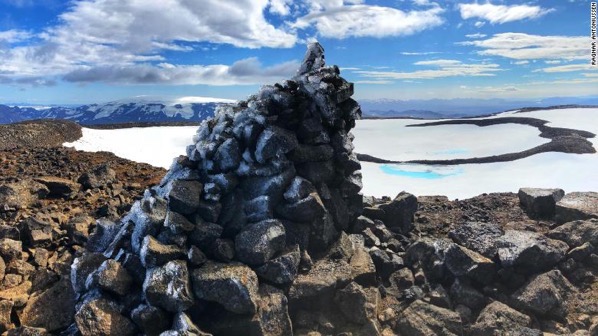 Yes, we are memorializing glaciers now, and no, this is not a joke:
 “Everything happens for a reason”:
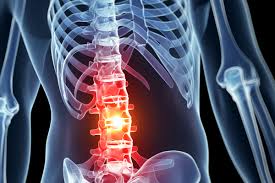 ’Researchers from the University of Michigan recently published a paper in the Proceedings of the National Academy of Sciences that describes an incredible device capable of mitigating — and potentially preventing — spinal cord and brain injuries. “In this work,” said researcher Lonnie Shea in a statement, “we demonstrate that instead of overcoming an immune response, we can co-opt the immune response to work for us to promote the therapeutic response.” By injecting nanoparticles that reduce the body’s immune response, these researchers claim that the severity of such an injury can be significantly reduced, potentially preventing paralysis.…’
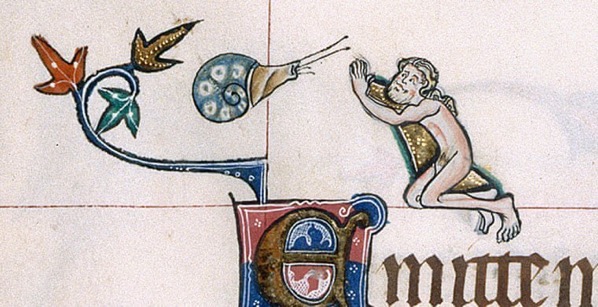 ’We’re no strangers to the delights of the rude drawings that monks doodled in the margins of medieval manuscripts around here, but University of Bonn medievialist Erik Wade’s epic Twitter thread on the astonishing variety of snail-doodles is genuinely next-level.
 ’Trump’s attack on Omar appears to be a preview of his broader 2020 strategy. There is every reason to expect things will get worse.…’
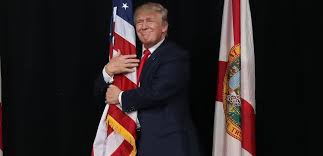 This one word is a telltale sign Trump is being dishonest:
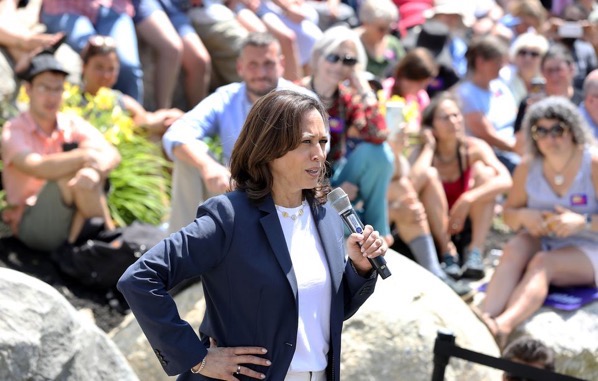 ’“I’ve prosecuted predators,” she said. “And we have a predator living in the White House. He has predatory instincts and a predatory nature.”
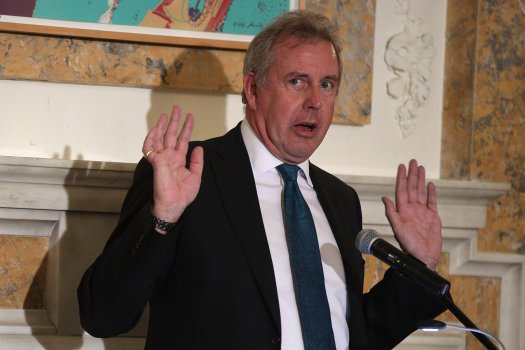 ’British politicians and officials have reacted with outrage to the resignation of their ambassador to the U.S. amid a rift with President Trump over leaked diplomatic cables, with many accusing the President of bullying their government.
 ’The continuous accumulation of carbon dioxide in the planet’s oceans—which shows no sign of stopping due to humanity’s relentless consumption of fossil fuels—is likely to trigger a chemical reaction in Earth’s carbon cycle similar to those which happened just before mass extinction events, according to a new study.
 ’The U.S. president has reportedly asked aides to find a way to weaken the dollar in an effort to boost the economy ahead of the 2020 election. The strength of the greenback has proven a headache for Trump, who’s made reducing the U.S. trade deficit a priority.…’
 Master Of Bossa Nova Dies At 88:
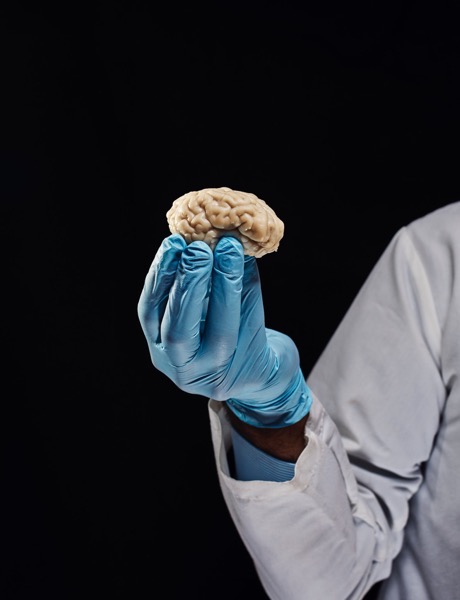 ’If you could restore activity to individual post-mortem brain cells, he reasoned to himself, what was to stop you from restoring activity to entire slices of post-mortem brain?…’
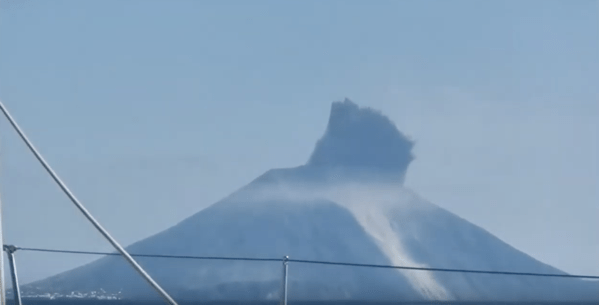 ’The Stromboli volcano erupted on Wednesday and one lucky videographer was able to capture the moment.…’

 ’News continues to worsen for marine mammals on the west coast. In addition to terrible domoic acid poisoning for seals and sea lions, whales are passing away at a record rate.…’
 Books by authors like Neil Gaiman and Gabriel García Márquez have been dismissed as too difficult to adapt. With Netflix offering both time and cash, is that true anymore?:
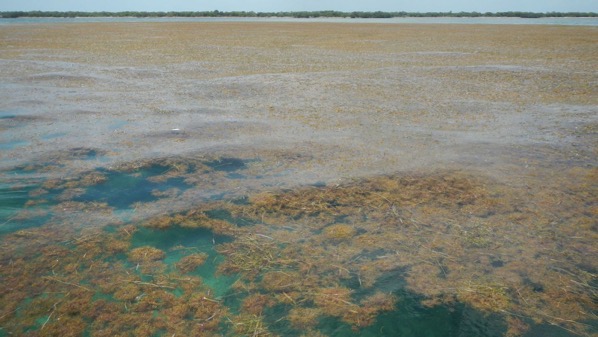 ’Scientists in Florida have detected the largest seaweed bloom in the world. Extending from the Gulf of Mexico to the African coast, the unusually large bloom is threatening marine life and coastal regions, with the researchers warning it’s likely a sign of things to come.
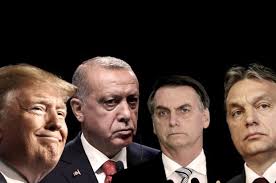 ’Our nation’s massive ignorance and lack of curiosity have led us into crisis. Are we smart enough to survive it?…’
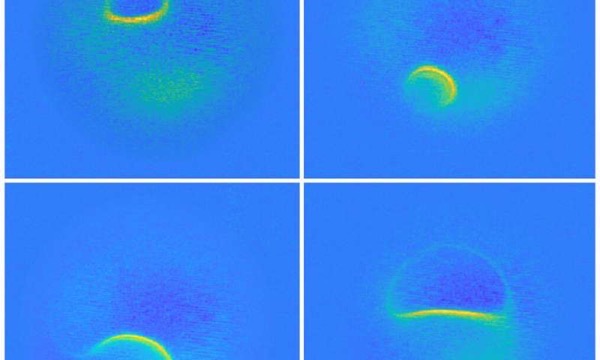 ’Researchers at the Center for Quantum Nanoscience (QNS) within the Institute for Basic Science (IBS) at Ewha Womans University have made a major scientific breakthrough by performing the world’s smallest magnetic resonance imaging (MRI). In an international collaboration with colleagues from the U.S., QNS scientists used their new technique to visualize the magnetic field of single atoms.…’
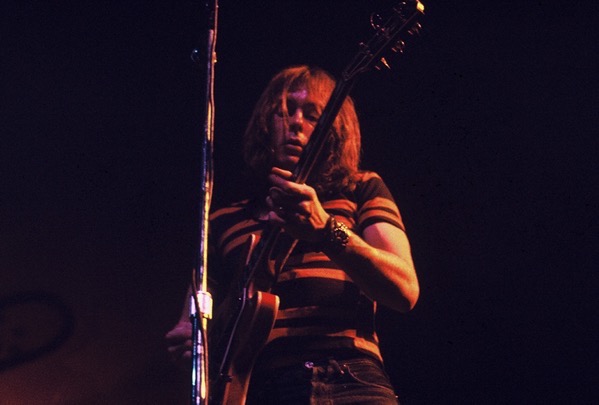 ’Mr. Duncan’s jazz-rooted improvisations and his intricate interplay with the guitarist John Cipollina were crucial elements in Quicksilver Messenger Service’s eclectic chemistry. Although Mr. Cipollina, who died in 1989, was nominally the lead guitarist and Mr. Duncan played rhythm, they constantly traded and blurred those roles.
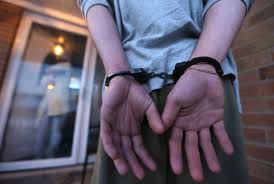 Here’s a better idea:
 Tam Hunt, UC Santa Barbara: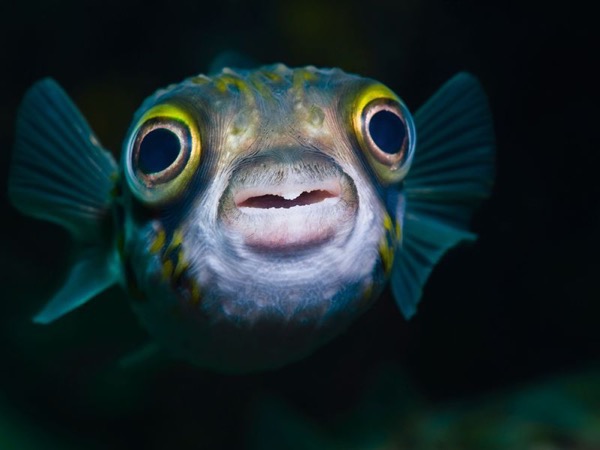
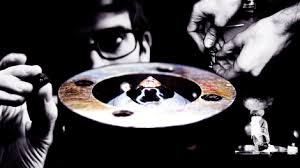 ’Physicist Eugene Paul Wigner predicted more than 80 years ago that hydrogen, the most abundant element in the universe, could turn into an electricity-conducting solid metal at the right temperature and pressure. Scientists have spent decades since attempting to synthesize this material—and may have finally done so.
 ’It happens unexpectedly: a person long thought lost to the ravages of dementia, unable to recall the events of their lives or even recognize those closest to them, will suddenly wake up and exhibit surprisingly normal behavior, only to pass away shortly thereafter. This phenomenon, which experts refer to as terminal or paradoxical lucidity, has been reported since antiquity, yet there have been very few scientific studies of it. That may be about to change.
 ’An international team of experts argues that better care for people experiencing their first manic episode is urgently needed and that more research needs to go into treatment solutions for bipolar disorder.
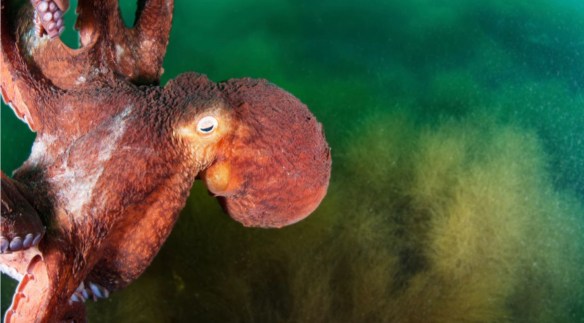 What to imagine when imagining aliens:
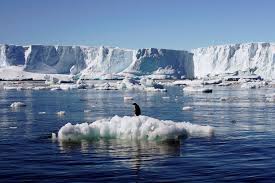 ’The ice sheets in Greenland and Antarctica are remnants of the ice age. They’re also the wild cards of climate science.…’


 ’Predictive Processing and the Nature of Conscious Experience A Conversation with Andy Clark…’


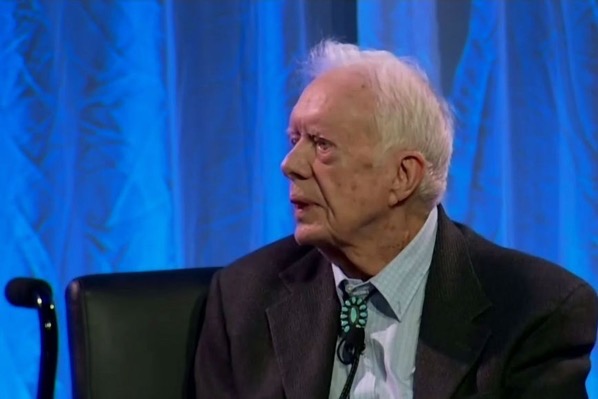 ’“He lost the election, and he was put into office because the Russians interfered on his behalf.”…’

 ’The field that once held hundreds of thousands of scantily clad, mud-soaked spectators is now a verdant meadow intersected by old wooden fences and a parking lot. Some spots have been overtaken by thick vegetation and trees, obscuring important landmarks. The Woodstock site became a protected area in 2017 when it was added to the National Register of Historic Places, but with nature taking its course, the site is beginning to show the passage of time—and by consequence, is attracting the interest of conservationists and archaeologists.…’
 The image shows the classic shape of a volcanic plume rising, and then ash spreading at the top. It’s surrounded by a ring of white clouds, likely either water vapor condensing out of the air or steam from magma entering the water, Simon Carn, a volcanologist at Michigan Tech, said in a NASA Earth Observatory post. Aircraft and satellite data show that the ash could have reached altitudes of 8 to 10 miles.…’
 ’Scientists spotted an elusive giant squid in its deep-ocean habitat in American waters for the first time. These titanic, whale-battling beasts are rarely seen, so this sighting is a thrill for biologists and regular folk alike.
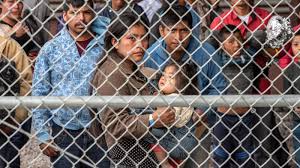 ’Many of us are feeling some combination of despair, outrage, and shock at reports of the conditions at the U.S. southern border. It’s devastating to learn that our government is separating children from their families, cramming people into overcrowded detention cells, and preventing refugees from accessing basic necessities like food, soap, and clean clothing. If you’re asking yourself what you can do to protest the inhumane treatment of individuals and families seeking asylum in the United States, here are some actions you can take right now.…’
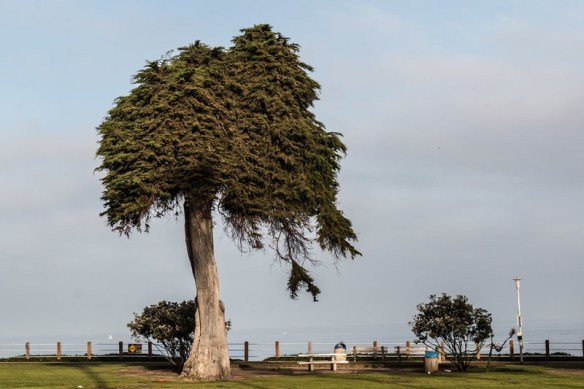 With a whimsical, irregular trunk and flat-topped evergreen leaves, the Monterey cypress in La Jolla, California, that may have inspired the trees in 7he Lorax fatally fell over last week.
