I am very saddened by the passing of David Crosby (see Chris Morris and Chris Willman’s obituary in Variety), although it was not unexpected. Even in 2019, in Cameron Crowe’s absorbing documentary Remember My Name, he grappled with his mortality. Most retrospective writing about Crosby focuses on his personal foibles, difficult personality, and breakups with famous bandmates in the Byrds and CSN(Y), but the postmortem remembrances and testimonials from those with whom he collaborated, like this collection here in Variety, are heartfelt and generous.
I will always cherish, particularly, his 1971 albumIf I Could Only Remember My Name, one of the most gorgeous to come out of that decade, perfectly evocative of the Dreamtime. I always marveled that Crosby had the magnetism and magic to meld the very different late ‘60s- early ‘70s California scenes of jangly LA and Laurel Canyon and the trippy psychedelia of the Bay Area. IICORMN was made with the contributions of Graham Nash, Neil Young, and Joni Mitchell alongside my first musical loves, members of Jefferson Airplane and the Grateful Dead as well as Santana. Putting it on and playing it loudly this evening…
‘On April 3, 1968, the night before the Reverend Doctor Martin Luther King Jr. was assassinated by a white supremacist, he gave a speech in support of sanitation workers in Memphis, Tennessee. Since 1966, King had tried to broaden the Civil Rights Movement for racial equality into a larger movement for economic justice. He joined the sanitation workers in Memphis, who were on strike after years of bad pay and such dangerous conditions that two men had been crushed to death in garbage compactors.
After his friend Ralph Abernathy introduced him to the crowd, King had something to say about heroes: “As I listened to Ralph Abernathy and his eloquent and generous introduction and then thought about myself, I wondered who he was talking about.”
Dr. King told the audience that, if God had let him choose any era in which to live, he would have chosen the one in which he had landed. “Now, that’s a strange statement to make,” King went on, “because the world is all messed up. The nation is sick. Trouble is in the land; confusion all around…. But I know, somehow, that only when it is dark enough, can you see the stars.” Dr. King said that he felt blessed to live in an era when people had finally woken up and were working together for freedom and economic justice.
He knew he was in danger as he worked for a racially and economically just America. “I don’t know what will happen now. We’ve got some difficult days ahead. But it doesn’t matter…because I’ve been to the mountaintop…. Like anybody, I would like to live a long life…. But I’m not concerned about that now. I just want to do God’s will. And He’s allowed me to go up to the mountain. And I’ve looked over. And I’ve seen the promised land. I may not get there with you. But I want you to know tonight, that we, as a people, will get to the promised land!”
People are wrong to say that we have no heroes left.
Just as they have always been, they are all around us, choosing to do the right thing, no matter what.
Wishing you all a day of peace for Martin Luther King Jr. Day, 2023….’
‘Theories of scientific and technological change view discovery and invention as endogenous processes, wherein previous accumulated knowledge enables future progress by allowing researchers to, in Newton’s words, ‘stand on the shoulders of giants’. Recent decades have witnessed exponential growth in the volume of new scientific and technological knowledge, thereby creating conditions that should be ripe for major advances. Yet contrary to this view, studies suggest that progress is slowing in several major fields. Here, we analyse these claims at scale across six decades, using data on 45 million papers and 3.9 million patents from six large-scale datasets, together with a new quantitative metric—the CD index—that characterizes how papers and patents change networks of citations in science and technology. We find that papers and patents are increasingly less likely to break with the past in ways that push science and technology in new directions. This pattern holds universally across fields and is robust across multiple different citation- and text-based metrics. Subsequently, we link this decline in disruptiveness to a narrowing in the use of previous knowledge, allowing us to reconcile the patterns we observe with the ‘shoulders of giants’ view. We find that the observed declines are unlikely to be driven by changes in the quality of published science, citation practices or field-specific factors. Overall, our results suggest that slowing rates of disruption may reflect a fundamental shift in the nature of science and technology….’
Graphic artist Chris Barker’s Sgt Pepper-like montage of the notable people who passed last year. (The linked Instagram post has a key if you want to play the name-game.)
A MetaFilter thread discusses several year-end posts on news to be happy about (here, here and here). While some are more exciting than others (and some downright debatable), they touch on:
Asteroid redirection (Proof of concept of planetary defense)
‘…The putsch called for… a massive army of veterans – funded by $30m from Wall Street titans and with weapons supplied by Remington Arms – to march on Washington, oust Roosevelt and the entire line of succession, and establish a fascist dictatorship backed by a private army of 500,000 former soldiers.
…[T]he coup was instigated after FDR eliminated the gold standard in April 1933, which threatened the country’s wealthiest men who thought if American currency wasn’t backed by gold, rising inflation would diminish their fortunes. …[T]he coup was sponsored by a group who controlled $40bn in assets – about $800bn today – and who had $300m available to support the coup and pay the veterans. The plotters had men, guns and money – the three elements that make for successful wars and revolutions.
…The planned coup was thwarted when …reported… to J Edgar Hoover at the FBI, who reported it to FDR. How seriously the “Wall Street putsch” endangered the Roosevelt presidency remains unknown, with the national press at the time mocking it as a “gigantic hoax” and historians like Arthur M Schlesinger Jr surmising “the gap between contemplation and execution was considerable” and that democracy was not in real danger. Still, there is much evidence that the nation’s wealthiest men – Republicans and Democrats alike – were so threatened by FDR’s policies that they conspired with antigovernment paramilitarism to stage a coup…’
‘During a Monday night game against the Cincinnati Bengals, 24-year-old Hamlin went into cardiac arrest after tackling another player. Medical personnel administered CPR on the field and restored his heartbeat, after which he was transferred to a nearby hospital, where he remains in critical condition.
As players and coaches of both teams gathered, some shedding tears and others circling in prayer, and fans expressed concern over Hamlin’s condition, figures on the far right immediately began spreading unproven claims that the COVID-19 vaccine was responsible for Hamlin’s collapse.
“This is a tragic and all too familiar sight right now: Athletes dropping suddenly,” said Turning Point USA founder Charlie Kirk on Twitter, referencing a conspiracy theory that has been spread by right-wing pundits and Republicans like Sen. Ron Johnson (Wisconsin) that COVID vaccines are causing athletes to die on the field.
Other far right figures — including conservative former candidates for political office, pundits and anti-vaccine figures — also joined in spreading the lies. “Prior to 2021, Athletes collapsing on the field was NOT a normal event. This is becoming an undeniable (and extremely concerning) pattern,” wrote far right activist Lauren Witzke, the failed Republican nominee for Senate in Delaware in 2020.
Platforms like Telegram were flooded with similar comments, with some accounts citing disgraced cardiologist Peter McCullough, who has falsely touted ivermectin as a cure for COVID-19, after McCullough said in an interview that the vaccine was related to Hamlin’s collapse….’
A thoughtful history of the rise and fall of the TED talk phenomenon, and why, by Melbourne-based writer and journalist Oscar Schwartz, himself a TED veteran.
It is common knowledge that, beginning in the early 2000’s, TED talks began to take on a particular rhetorical style codified by its entrepreneur owner Chris Anderson. In his book,
‘…Anderson insists anyone is capable of giving a TED-esque talk. You just need an interesting topic and then you need to attach that topic to an inspirational story. Robots are interesting. Using them to eat trash in Nairobi is inspiring. Put the two together, and you have a TED talk. ‘
Schwartz calls this fusion the “inspiresting,” finding it
‘earnest and contrived. It is smart but not quite intellectual, personal but not sincere, jokey but not funny. It is an aesthetic of populist elitism. Politically, the inspiresting performs a certain kind of progressivism, as it is concerned with making the world a better place, however vaguely.’
The problem is that, in Anderson’s view, all of this can be achieved without any serious transfers of power. Politics is dismissed as toxic “tribal thinking” destroying the world changing potential of the free movement of ideas. And TED was not the sole purveyor of the Inspiresting. As Swartz cited:
Suddenly, circa 2010, everyone was sharing TED talks and TED (a not-for-profit) revenues were exploding. Fortune and fame were made from TED talks and the book contracts and speaking engagements they precipitated. But, soon enough, quality control was compromised, not the least through the 2009 creation of the TEDx franchise allowing licensees to use the brand platform to stage independent events around the world. But it became increasingly clear that the ’emperor had no clothes.’ “Inspiresting” reasoning and rhetoric began to be pilloried by science bloggers and social critics. Evgeny Morozov wrote in The New Republic, “TED is no longer a responsible curator of ideas worth spreading. Instead it has become something ludicrous.” A long profile of Anderson in TheNew York Times Magazine called TED “the Starbucks of intellectual conglomerates.”
By 2013, Benjamin Bratton, a scientist giving a pitch for research funding before a donor, described — in a TED talk! — being dismissed because his complex presentation (not in the TED-publicized rhetorical style) was criticized by the recipient as “uninspiring”, “not enough like Malcolm Gladwell”. Bratton described TED’s influence on intellectual culture as “taking something with value and substance and coring it out so that it can be swallowed without chewing.” He opined, “this is not the solution to our most frightening problems. Rather this is one of our most frightening problems.”
TED became, some would say, little more than an ironic meme. For instance, you might post something banal in email, social media or your blog and close by saying, “Thank you for listening to my TED talk.”
The backlash against TED broadened to embrace the increasingly evident fact that the technocratic elite was just not playing a part in solving the world’s big problems. Twitter had failed to bring democracy to the Middle East. Social media were only free because our personal data was being mined and sold to advertisers. Obama was not the political savior many had hoped him to be, especially around the banking crisis. Upward mobility, social equality, and the utopian promises of technology were empty. TED talks continued, endlessly re-articulating Tech’s promise without any serious reflection, as if they could create the world out of nothing, with willpower and well-crafted oratory alone. Boldness of vision was not tempered by much if any recognition of realities, particularly political realities, and the TED philosophy became little more than a magnet for overblown ambition and narcissism.
And in the meantime Trump became the US president.
‘Yet the TED progeny continued to offer bold, tech-centric predictions with unfaltering confidence. And they have continued to do so.…
[A]s the most visible and influential public speaking platform of the first two decades of the twenty-first century, it has been deeply implicated in broadcasting and championing the Silicon Valley version of the future. TED is probably best understood as the propaganda arm of an ascendant technocracy.’
‘…[T]here is an argument, albeit one that would only comfort an economist, that today’s crises are both rarer and less severe than those of even the recent past. Consider the mid-1990s, a time that Americans tend to remember as one of global stability and optimism. If today were really a time of exceptional turmoil, then surely that world would look better in comparison?
In reality, the opposite is true. The mid-1990s saw genocides in Rwanda and Bosnia. Years of war in Europe amid Yugoslavia’s collapse. Devastating famines in Sudan, Somalia and North Korea. Civil wars in over a dozen countries. Crackdowns and coups too numerous to mention.Such events were in fact more common in the 1990s than today. Prior decades were, in most ways, even worse.
But you are unlikely to remember every decades-old disaster as vividly as you might be able to recount, say, a terror attack or political crisis from this week.And reductions in such crises have only reduced the world’s problems, not erased them. No one wants to cheer a famine that is less severe than it might have been in the past, especially not the families whom it puts at risk, and especially knowing that future conflicts or climate-related crises could always cause another.
Still, the feeling that the world is getting worse is not universal. In fact, it is mostly held by residents of rich countries like the United States. Survey after survey has found that a majority of people in low-income and middle-income countries like Kenya or Indonesia tend to express optimism about the future, for both themselves and their societies…’
‘Before Canadian musicians like Neil Young, Gordon Lightfoot, Joni Mitchell or Leonard Cohen, there was Ian Tyson.
Mr. Tyson, who began his music career as half of the folk-era duo Ian and Sylvia and went on to become a revered figure in his home country, celebrated both for his music and for his commitment to the culture of Canada’s ranch country, died on Thursday at his ranch in southern Alberta. He was 89.
His family said in a statement that he died from “ongoing health complications” but did not specify further.
Mr. Tyson — whose song “Four Strong Winds” was voted the most essential Canadian piece of music by the listeners of the Canadian Broadcasting Corporation public radio network in 2005 — lived most of his life as both a rancher and a musician….’
This is the annual update of my New Year post, a longstanding FmH tradition. Please let me know if you find any dead links:
I once ran across a January 1st Boston Globe article compiling folkloric beliefs about what to do, what to eat, etc. on New Year’s Day to bring good fortune for the year to come. I’ve regretted since — I usually think of it around once a year (grin) — not clipping out and saving the article. Especially since we’ve had children, I’m interested in enduring traditions that go beyond getting drunk [although some comment that this is a profound enactment of the interdigitation of chaos and order appropriate to the New Year’s celebration — FmH], watching the bowl games and making resolutions.
A web search brought me this, less elaborate than what I recall from the Globe but to the same point. It is weighted toward eating traditions, which is odd because, unlike most other major holidays, the celebration of New Year’s in 21st century America does not seem to be centered at all around thinking about what we eat (except in the sense of the traditional weight-loss resolutions!) and certainly not around a festive meal. But…
Traditionally, it was thought that one could affect the luck they would have throughout the coming year by what they did or ate on the first day of the year. For that reason, it has become common for folks to celebrate the first few minutes of a brand new year in the company of family and friends. Parties often last into the middle of the night after the ringing in of a new year. It was once believed that the first visitor on New Year’s Day would bring either good luck or bad luck the rest of the year. It was particularly lucky if that visitor happened to be a tall dark-haired man.
“Traditional New Year foods are also thought to bring luck. Many cultures believe that anything in the shape of a ring is good luck, because it symbolizes “coming full circle,” completing a year’s cycle. For that reason, the Dutch believe that eating donuts on New Year’s Day will bring good fortune.
Many parts of the U.S. celebrate the new year by consuming black-eyed peas. These legumes are typically accompanied by either hog jowls or ham. Black-eyed peas and other legumes have been considered good luck in many cultures. The hog, and thus its meat, is considered lucky because it symbolizes prosperity. Cabbage is another ‘good luck’ vegetable that is consumed on New Year’s Day by many. Cabbage leaves are also considered a sign of prosperity, being representative of paper currency. In some regions, rice is a lucky food that is eaten on New Year’s Day.”
The further north one travels in the British Isles, the more the year-end festivities focus on New Year’s. The Scottish observance of Hogmanay has many elements of warming heart and hearth, welcoming strangers and making a good beginning:
“Three cornered biscuits called hogmanays are eaten. Other special foods are: wine, ginger cordial, cheese, bread, shortbread, oatcake, carol or carl cake, currant loaf, and a pastry called scones. After sunset people collect juniper and water to purify the home. Divining rituals are done according to the directions of the winds, which are assigned their own colors.
First Footing: The first person who comes to the door on midnight New Year’s Eve should be a dark-haired or dark-complected man with gifts for luck. Seeing a cat, dog, woman, red-head or beggar is unlucky. The person brings a gift (handsel) of coal or whiskey to ensure prosperity in the New Year. Mummer’s Plays are also performed. The actors called the White Boys of Yule are all dressed in white, except for one dressed as the devil in black. It is bad luck to engage in marriage proposals, break glass, spin flax, sweep or carry out rubbish on New Year’s Eve.”
Here’s why we clink our glasses when we drink our New Year’s toasts, no matter where we are. Of course, sometimes the midnight cacophony is louder than just clinking glassware, to create a ‘devil-chasing din’.
In Georgia, eat black eyed peas and turnip greens on New Year’s Day for luck and prosperity in the year to come, supposedly because they symbolize coppers and currency. Hoppin’ John, a concoction of peas, onion, bacon and rice, is also a southern New Year’s tradition, as is wearing yellow to find true love (in Peru and elsewhere in South America, yellow underwear, apparently!) or carrying silver for prosperity. In some instances, a dollar bill is thrown in with the other ingredients of the New Year’s meal to bring prosperity. In Greece, there is a traditional New Year’s Day sweetbread with a silver coin baked into it. All guests get a slice of the bread and whoever receives the slice with the coin is destined for good fortune for the year. At Italian tables, lentils, oranges and olives are served. The lentils, looking like coins, will bring prosperity; the oranges are for love; and the olives, symbolic of the wealth of the land, represent good fortune for the year to come.
A New Year’s meal in Norway also includes dried cod, “lutefisk.” The Pennsylvania Dutch make sure to include sauerkraut in their holiday meal, also for prosperity.
In Spain, you would cram twelve grapes in your mouth at midnight, one each time the clock chimed, for good luck for the twelve months to come. (If any of the grapes happens to be sour, the corresponding month will not be one of your most fortunate in the coming year.) The U. S. version of this custom, for some reason, involves standing on a chair as you pop the grapes. In Denmark, jumping off a chair at the stroke of midnight signifies leaping into the New Year. In Rio,
The crescent-shaped Copacabana beach… is the scene of an unusual New Year’s Eve ritual: mass public blessings by the mother-saints of the Macumba and Candomble sects. More than 1 million people gather to watch colorful fireworks displays before plunging into the ocean at midnight after receiving the blessing from the mother-saints, who set up mini-temples on the beach.
When taking the plunge, revelers are supposed to jump over seven waves, one for each day of the week.
This is all meant to honor Lamanjá, known as the “Mother of Waters” or “Goddess of the Sea.” Lamanjá protects fishermen and survivors of shipwrecks. Believers also like to throw rice, jewelry and other gifts into the water, or float them out into the sea in intimately crafted miniature boats, to please Lamanjá in the new year.
Ecuadorian families make scarecrows stuffed with newspaper and firecrackers and place them outside their homes. The dummies represent misfortunes of the prior year, which are then burned in effigy at the stroke of midnight to forget the old year. Bolivian families make beautiful little wood or straw dolls to hang outside their homes on New Year’s Eve to bring good luck.
In China, homes are cleaned spotless to appease the Kitchen God, and papercuttings of red paper are hung in the windows to scare away evil spirits who might enter the house and bring misfortune. Large papier mache dragon heads with long fabric bodies are maneuvered through the streets during the Dragon Dance festival, and families open their front doors to let the dragon bring good luck into their homes.
The Indian Diwali, or Dipawali, festival, welcoming in the autumnal season, also involves attracting good fortune with lights. Children make small clay lamps, dipas, thousands of which might adorn a given home. In Thailand, one pours fragrant water over the hands of elders on New Year’s Day to show them respect.
a stack of pancakes for the New Year’s breakfast in France.
banging on friends’ doors in Denmark to “smash in” the New Year, where it is also a good sign to find your doorstep heaped with broken dishes on New Year’s morning. Old dishes are saved all years to throw at your friends’ homes on New Year’s Eve. The more broken pieces you have, the greater the number of new friends you will have in the forthcoming twelve months.
going in the front door and out the back door at midnight in Ireland.
making sure the First Footer, the first person through your door in the New Year in Scotland, is a tall dark haired visitor.
water out the window at midnight in Puerto Rico rids the home of evil spirits.
cleanse your soul in Japan at the New Year by listening to a gong tolling 108 times, one for every sin
it is Swiss good luck to let a drop of cream fall on the floor on New Year’s Day.
Belgian farmers wish their animals a Happy New Year for blessings.
In Germany and Austria, lead pouring” (das Bleigießen) is an old divining practice using molten lead like tea leaves. A small amount of lead is melted in a tablespoon (by holding a flame under the spoon) and then poured into a bowl or bucket of water. The resulting pattern is interpreted to predict the coming year. For instance, if the lead forms a ball (der Ball), that means luck will roll your way. The shape of an anchor (der Anker) means help in need. But a cross (das Kreuz) signifies death. This is also a practice in parts of Finland, apparently.
El Salvadoreans crack an egg in a glass at midnight and leave it on the windowsill overnight; whatever figure it has made in the morning is indicative of one’s fortune for the year.
Some Italians like to take part in throwing pots, pans, and old furniture from their windows when the clock strikes midnight. This is done as a way for residents to rid of the old and welcome in the new. It also allows them to let go of negativity. This custom is also practiced in parts of South Africa, the Houston Press adds.
In Colombia, walk around with an empty suitcase on New Year’s Day for a year full of travel.
In the Philippines, all the lights in the house are turned on at midnight, and previously opened windows, doors and cabinets throughout the house are suddenly slammed shut, to ward off evil spirits for the new year.
In Russia a wish is written down on a piece of paper. It is burned and the ash dissolved in a glass of champagne, which should be downed before 12:01 am if the wish is to come true.
Romanians celebrate the new year by wearing bear costumes and dancing around to ward off evil
In Turkey, pomegranates are thrown down from the balconies at midnight for good luck.
“It’s a bit bizarre when you think about it. A short British cabaret sketch from the 1920s has become a German New Year’s tradition. Yet, although The 90th Birthday or Dinner for One is a famous cult classic in Germany and several other European countries, it is virtually unknown in the English-speaking world, including Britain, its birthplace.” (Watch on Youtube, 11 min.)
Some history; documentation of observance of the new year dates back at least 4000 years to the Babylonians, who also made the first new year’s resolutions (reportedly voews to return borrowed farm equipment were very popular), although their holiday was observed at the vernal equinox. The Babylonian festivities lasted eleven days, each day with its own particular mode of celebration. The traditional Persian Norouz festival of spring continues to be considered the advent of the new year among Persians, Kurds and other peoples throughout Central Asia, and dates back at least 3000 years, deeply rooted in Zooastrian traditions.Modern Bahá’í’s celebrate Norouz (”Naw Ruz”) as the end of a Nineteen Day Fast. Rosh Hashanah (”head of the year”), the Jewish New Year, the first day of the lunar month of Tishri, falls between September and early October. Muslim New Year is the first day of Muharram, and Chinese New Year falls between Jan. 10th and Feb. 19th of the Gregorian calendar.
The classical Roman New Year’s celebration was also in the spring although the calendar went out of synchrony with the sun. January 1st became the first day of the year by proclamation of the Roman Senate in 153 BC, reinforced even more strongly when Julius Caesar established what came to be known as the Julian calendar in 46 BC. The early Christian Church condemned new year’s festivities as pagan but created parallel festivities concurrently. New Year’s Day is still observed as the Feast of Christ’s Circumcision in some denominations. Church opposition to a new year’s observance reasserted itself during the Middle Ages, and Western nations have only celebrated January 1 as a holidy for about the last 400 years. The custom of New Year’s gift exchange among Druidic pagans in 7th century Flanders was deplored by Saint Eligius, who warned them, “[Do not] make vetulas, [little figures of the Old Woman], little deer or iotticos or set tables [for the house-elf] at night or exchange New Year gifts or supply superfluous drinks [another Yule custom].” (Wikipedia)
The tradition of the New Year’s Baby signifying the new year began with the Greek tradition of parading a baby in a basket during the Dionysian rites celebrating the annual rebirth of that god as a symbol of fertility. The baby was also a symbol of rebirth among early Egyptians. Again, the Church was forced to modify its denunciation of the practice as pagan because of the popularity of the rebirth symbolism, finally allowing its members to cellebrate the new year with a baby although assimilating it to a celebration of the birth of the baby Jesus. The addition of Father Time (the “Old Year”) wearing a sash across his chest with the previous year on it, and the banner carried or worn by the New Year’s Baby, immigrated from Germany. Interestingly, January 1st is not a legal holiday in Israel, officially because of its historic origins as a Christian feast day.
Auld Lang Syne (literally ‘old long ago’ in the Scottish dialect) is sung or played at the stroke of midnight throughout the English-speaking world (and then there is George Harrison’s “Ring Out the Old”). Versions of the song have been part of the New Year’s festivities since the 17th century but Robert Burns was inspired to compose a modern rendition, which was published after his death in 1796. (It took Guy Lombardo, however, to make it popular…)
Should auld acquaintance be forgot and never brought to mind? Should auld acquaintance be forgot and days of auld lang syne? For auld lang syne, my dear, for auld lang syne, we’ll take a cup of kindness yet, for auld lang syne.
Should auld acquaintance be forgot and never brought to mind? Should auld acquaintance be forgot and days of auld lang syne? And here’s a hand, my trusty friend And gie’s a hand o’ thine We’ll tak’ a cup o’ kindness yet For auld lang syne
Brazilian: Boas Festas e Feliz Ano Novo means “Good Parties and Happy New Year”
Chinese: Chu Shen Tan Xin Nian Kuai Le (thanks, Jeff)
Czechoslavakia: Scastny Novy Rok
Dutch: Gullukkig Niuw Jaar
Finnish: Onnellista Uutta Vuotta
French: Bonne Annee
German: Prosit Neujahr
Greek: Eftecheezmaenos o Kaenooryos hronos
Hebrew: L’Shannah Tovah Tikatevu
Hindi: Niya Saa Moobaarak
Irish (Gaelic): Bliain nua fe mhaise dhuit
Italian: Buon Capodanno
Khmer: Sua Sdei tfnam tmei
Laotian: Sabai dee pee mai
Polish: Szczesliwego Nowego Roku
Portuguese: Feliz Ano Novo
Russian: S Novim Godom
Serbo-Croatian: Scecna nova godina
Spanish: Feliz Ano Nuevo
Swedish: Ha ett gott nytt år
Turkish: Yeni Yiliniz Kutlu Olsun
Vietnamese: Cung-Chuc Tan-Xuan
[If you are a native speaker, please feel free to offer any corrections or additions!]
Which of these customs appeal to you? Are they done in your family, or will you try to adopt any of them? However you’re going to celebrate, my warmest wishes for the year to come… and eat hearty!
[thanks to Bruce Umbaugh (here or here) for original assistance]
‘We reflect on what these shiny surfaces reveal, from the curse of Narcissus to an experiment you can try at home—if you dare.
Beyond the Las Vegas Strip’s dazzling lights, something darker awaits Sin City visitors who venture into celebrity ghost hunter Zak Bagans’s Haunted Museum. There, the spooky memorabilia ranges from Ted Bundy’s glasses to fragments of Charles Manson’s bones, scraped from the incinerator after his body was cremated. There’s also a rather plain-looking mirror, about two feet tall and shaped like a tombstone. Bagans has said that, of his entire collection, it’s one of the things that unnerves him the most….’
‘…a 2:24 p.m. tweet in which trump blasted Pence for not having the “courage” to overturn the election results could “pass” the Supreme Court’s bar to prove his involvement in inciting an insurrection…’
‘Human personality is a broad spectrum, and there will always be those willing to do whatever it takes. However, the hypothesis positing a parasite-based alternative is fun to consider. It’s speculated (one person has speculated it) that the ‘alpha dog’ business mentality may be a side effect of Toxoplasma gondii, a parasitic microorganism that spreads through any number of varied animal hosts and influences their behavior in odd but ultimately self-serving ways. Infected wolves are more likely to break away from packs and go it alone… and apparently, infected humans are more likely to major in business and start their own companies. Does it sound a bit baroque? Absolutely. But when you look at the recent business decisions of Elon Musk, it seems plausible brain parasites might be at play……’
‘South Koreans will soon become a year or two younger, following an official change to the country’s age-counting system.
On Thursday, the country’s parliament, called the National Assembly, passed a set of bills requiring the use of the international age-counting system, where age is based on birth date.
South Korea currently uses three age-counting systems, but most citizens abide by the “Korean age,” where a person is 1 year old as soon as they are born, and gain one year on every New Year’s Day. And a baby born on Dec. 31 would be considered 2 years old the next day.
The change will go into effect this coming June….’
‘The history of modern extinctions is inseparable from the history of colonialism, capitalism, and industrialization. Of the roughly 800 animal species estimated to have gone extinct since 1500 — and that is only counting those documented — many met tellingly analogous ends: they have been hunted to death for sustenance or sport, killed off by intentionally introduced species and those stowed away on imperial ships, or forced to leave their native habitats as forests were cleared for fields to feed distant metropoles. Despite an enduring fantasy that humans are somehow distinct from the animal kingdom, the loss of biodiversity heralds a grave threat to our species as well — a species that relies upon an intimate interconnection with biological systems for continued life on this planet….’
‘Science fiction writer Isaac Asimov developed three laws of robotics, trying to create an ethical system for humans and robots. In San Francisco, however, one group of robots is now completely immune to those three laws. San Francisco has approved the use of robots to deploy deadly force in certain circumstances….’
Consultant Tome Whitwell “learns many learnings” each year and publishes 52 of them in a year-end list that is really much more fascinating than most year-end lists. There are also links to his previous years’ lists in the post.
‘In our work on hoarding, we’ve found that people have very different ideas about what it means to have a cluttered home. For some, a small pile of things in the corner of an otherwise well-ordered room constitutes serious clutter. For others, only when the narrow pathways make it hard to get through a room does the clutter register. To make sure we get an accurate sense of a clutter problem, we created a series of pictures of rooms in various stages of clutter – from completely clutter-free to very severely cluttered. People can just pick out the picture in each sequence comes closest to the clutter in their own living room, kitchen, and bedroom. This requires some degree of judgment because no two homes look exactly alike, and clutter can be higher in some parts of the room than others. Still, this rating works pretty well as a measure of clutter. In general, clutter that reaches the level of picture # 4 or higher impinges enough on people’s lives that we would encourage them to get help for their hoarding problem.…’
Hibakusha (irradiated survivors of the Japanese A-bomb blasts at Hiroshima and Nagasaki lived longer, and had lower rates of cancer, than comparison populations.
‘Americans also have a morbid fascination with famous people who die by suicide. Perhaps such a death speaks to a gnawing sense that there is a spiritual void at the epicenter of the capitalistic American dream: You can have it all and still be miserable. Since Bourdain died in a hotel room in Alsace, France, in 2018, there’s been something of a tug-of-war about how to remember him. Do we focus on the rich body of work that showed us the virtues of boundless curiosity and human resilience? Or do we obsess over the mystery of why the same person who showed us all those things ultimately said no to his own life? How do we reconcile the endless journey Anthony Bourdain took us on with the sad destination that it reached?…’
‘We can be relieved, for the moment, that the right is in disarray. But we should not lose sight of the fact that some of the worst people in national and global politics are reorganizing and retrenching. They will be back….’
’The European Commission is opening the door for European airlines to begin offering inflight 5G connectivity, the organization has announced, by allocating certain spectrum for inflight 5G as well as “previous mobile technology generations.” Passengers will connect to an on-board pico-cell base station, which then connects to ground-based networks via satellite. Calls, texts, and data are all expected to be supported.…’
‘The Department of Homeland Security launched a failed operation that ensnared hundreds, if not thousands, of U.S. protesters in what new documents show was as a sweeping, power-hungry effort before the 2020 election to bolster President donald trump’s spurious claims about a “terrorist organization” he accused his Democratic rivals of supporting.
An internal investigative report, made public this month by Sen. Ron Wyden, a Democrat of Oregon, details the findings of DHS lawyers concerning a previously undisclosed effort by Trump’s acting secretary of homeland security, Chad Wolf, to amass secret dossiers on Americans in Portland attending anti-racism protests in summer 2020 sparked by the police murder of Minneapolis father George Floyd….’
The word is that another guest at the dinner was pedophilia-excusing provocateur Milo Yiannopoulous. You know how ‘uneventful’ it really is. The burden is on all of us to remember it.
‘In September, scientists at the University of Hong Kong published the most complete census of ants ever assembled. The numbers are so big as to seem made up. The study estimated that there are at least 20 quadrillion — that is, 20,000,000,000,000,000 — ants on Earth. That’s about 2.5 million ants for every human being. And because the study relied on a conservative estimate for ants that live in trees and did not include subterranean ants, the census is almost certainly an undercount. “I wouldn’t be surprised if it actually turns out to be an order of magnitude higher,” Sabine Nooten, an author of the study, told The Times….’
‘Republicans still have a wider path to the House majority than Democrats — but it’s narrowed a lot over the past 24 hours.
As the vote count continues, particularly in mail-heavy Western states, Democrats continue to win most of the contested races, keeping them in the hunt and meaning news organizations won’t declare a winner in the overall fight for the chamber….’
“Don’t you remember the 5th of November Is gunpowder treason and plot? I don’t see the reason why gunpowder treason Should ever be forgot A stick and a stake, for Queen Victoria’s Sake I pray master give us a faggit If you dont give us one well take two The better for us and the worse for you”
Tonight is Guy Fawkes Night (Bonfire Night or Gunpowder Night), the anniversary of the ambitious but abortive Gunpowder Plot of 1605, a failed attempt by a group of persecuted English Catholics to assassinate Anglican King James I of England and. VI of Scotland in order to replace him with a Catholic. Guy Fawkes, who was left in charge of the gunpowder placed underneath the House of Lords, was discovered and arrested and the plot unmasked. Fawkes, along with other surviving conspirators, was executed in January 1606 (hung, drawn and quartered).
A law establishing the anniversary of the thwarted plot as a day of thanksgiving was quickly passed and became the annual occasion for anti-Catholic fervor, with the ringing of church bells and the lighting of bonfires, to the point of forgetting the deliverance of the monarch. “Although Guy Fawkes’ actions have been considered acts of terrorism by many people, cynical Britons… sometimes joke that he was the only man to go to Parliament with honourable intentions.”
Fun fact: it seems that the term Guy (which now simply refers to a man or even more broadly a person) became a pejorative to describe someone grotesque because of the conception of Guy Fawkes’ villainy.
Celebrations of Guy Fawkes Day persist through the British Isles and become occasions for revelling in the burning of effigies (“guys”) of the hate figures of the day alongside Fawkes.The ritual has included Margaret Thatcher, John Major, Boris Johnson, donald trump, and disgraced Hollywood producer Harvey Weinstein among others.
The annual festival has become much more about festive fun than solemn remembrance:
“One important aspect of the celebration is certainly venting! Shouting into the nights air is a wonderful release and an important part of the celebration through the centuries. There is something magic and healing about noise — cannons, bells and chants. Divide the group and assign each a different chant. Let them compete for noise and drama. Great fun. The chants are important aspects of freedom of expression and freedom to hold one’s own beliefs. Like much of that which is pure celebration chants need not be considered incantations or wishes of ill will at all times. Taken with the rest of celebration they contribute to a much more abstract whole where fun is the primary message for most.”
Some say that the celebration of Guy Fawkes Night helped shape the modern tradition of trick or treating, although it has ancient pre-Christian origins. Some American colonists celebrated Guy Fawkes Day and those fleeing the Irish Potato Famine in the 1840s helped popularize Hallowe’en. By the 19th century, British children wearing masks and carrying effigies of Fawkes were roaming the streets on the evening of November 5 asking for “a penny for the Guy,” with any money gathered being used to buy fireworks — the explosives never used by the plotters — to be set off while the Guy was immolated on the bonfire.
Many feel that Guy Fawkes (Bonfire Night) has a particularly Pagan feel. As with Hallowe’en, it may be no accident that Guy Fawkes Day coincides with the Celtic festival of Samhain, one of the moon festivals featuring large bonfires. Some think of Guy Fawkes Night as a sort of detached Samhain celebration and the effigies of Guy Fawkes burned on the bonfires compare with the diabolical images associated with Samhain or Hallowe’en. But, as one fan says, “Guy Fawkes Night has never sold out to Hallmark… Halloween is all about fakery – makeup, facepaint, costumes, imitation blood. Fireworks Night is about very real, very powerful, very hot flames.”
But the folklore of the holiday does continue to morph. We don’t celebrate the thwarting of the plot because we are happy with our oppressive rulers, and Guy Fawkes has gone from being reviled as a villain to revered as a hero. His reputation has gone from that of a religious extremist to one of a populist underdog, especially after Alan Moore’s graphic novel V for Vendetta and its 2005 film adaptation, in which the masked knife-wielding V, who also plots to bomb the Houses of Parliament, lashes out against the fascist state in a dystopian future Britain. (It was Moore’s collaborator David Lloyd who developed the idea of dressing V as Guy Fawkes.) Since then, protestors have donned V’s mask as an all-purpose badge of rebellion in anti-government demonstrations and the anti-capitalist movement, particularly Occupy. The hacktivist group Anonymous has adopted the Guy Fawkes mask as their symbol. In 2011, it was the top-selling mask on Amazon and has been seen throughout the ongoing Hong Kong protests against Chinese repression. David Lloyd commented, “The Guy Fawkes mask has now become a common brand and a convenient placard to use in protest against tyranny – and I’m happy with people using it, it seems quite unique, an icon of popular culture being used this way.”
Here is a collection of verse in celebration of Guy Fawkes Day. You are also welcome to don your masks, listen for some fireworks, scan the horizon from a high place for bonfires dedicated to smashing the state, or free yourself from your unwanted burdens by watching them go up in flames.
A reprise of my traditional Hallowe’en post of past years:
It is that time of year again. What has become a time of disinhibited hijinx and mayhem, and a growing marketing bonanza for the kitsch-manufacturers and -importers, has primeval origins as the Celtic New Year’s Eve, Samhain (pronounced “sow-en”). The harvest is over, summer ends and winter begins, the Old God dies and returns to the Land of the Dead to await his rebirth at Yule, and the land is cast into darkness. The veil separating the worlds of the living and the dead becomes frayed and thin, and dispossessed dead mingle with the living, perhaps seeking a body to possess for the next year as their only chance to remain connected with the living, who hope to scare them away with ghoulish costumes and behavior, escape their menace by masquerading as one of them, or placate them with offerings of food, in hopes that they will go away before the new year comes. For those prepared, a journey to the other side could be made at this time.
With Christianity, perhaps because with calendar reform it was no longer the last day of the year, All Hallows’ Eve became decathected, a day for innocent masquerading and fun, taking its name Hallowe’en as a contraction and corruption of All Hallows’ Eve.
All Saints’ Day may have originated in its modern form with the 8th century Pope Gregory III. Hallowe’en customs reputedly came to the New World with the Irish immigrants of the 1840’s. The prominence of trick-or-treating has a slightly different origin, however.
The custom of trick-or-treating is thought to have originated not with the Irish Celts, but with a ninth-century European custom called souling. On November 2, All Souls Day, early Christians would walk from village to village begging for “soul cakes,” made out of square pieces of bread with currants. The more soul cakes the beggars would receive, the more prayers they would promise to say on behalf of the dead relatives of the donors. At the time, it was believed that the dead remained in limbo for a time after death, and that prayer, even by strangers, could expedite a soul’s passage to heaven.
English: A traditional Irish turnip Jack-o’-lantern from the early 20th century.
Jack-o’-lanterns were reportedly originally turnips; the Irish began using pumpkins after they immigrated to North America, given how plentiful they were here. The Jack-o-lantern custom probably comes from Irish folklore. As the tale is told, a man named Jack, who was notorious as a drunkard and trickster, tricked Satan into climbing a tree. Jack then carved an image of a cross in the tree’s trunk, trapping the devil up the tree. Jack made a deal with the devil that, if he would never tempt him again, he would promise to let him down the tree.
According to the folk tale, after Jack died, he was denied entrance to Heaven because of his evil ways, but he was also denied access to Hell because he had tricked the devil. Instead, the devil gave him a single ember to light his way through the frigid darkness. The ember was placed inside a hollowed-out turnip to keep it glowing longer.
Nowadays, a reported 99% of cultivated pumpkin sales in the US go for jack-o-lanterns.
Folk traditions that were in the past associated with All Hallows’ Eve took much of their power, as with the New Year’s customs about which I write here every Dec. 31st, from the magic of boundary states, transition, and liminality.
The idea behind ducking, dooking or bobbing for apples seems to have been that snatching a bite from the apple enables the person to grasp good fortune. Samhain is a time for getting rid of weakness, as pagans once slaughtered weak animals which were unlikely to survive the winter. A common ritual calls for writing down weaknesses on a piece of paper or parchment, and tossing it into the fire. There used to be a custom of placing a stone in the hot ashes of the bonfire. If in the morning a person found that the stone had been removed or had cracked, it was a sign of bad fortune. Nuts have been used for divination: whether they burned quietly or exploded indicated good or bad luck. Peeling an apple and throwing the peel over one’s shoulder was supposed to reveal the initial of one’s future spouse. One way of looking for omens of death was for peope to visit churchyards
The Witches’ Sabbath aspect of Hallowe’en seems to result from Germanic influence and fusion with the notion of Walpurgisnacht. (You may be familiar with the magnificent musical evocation of this, Mussorgsky’s Night on Bald Mountain.)
Although probably not yet in a position to shape mainstream American Hallowe’en traditions, Mexican Dia de los Muertos observances have started to contribute some delightful and whimsical iconography to our encounter with the eerie and unearthly as well. As this article in The Smithsonian reviews, ‘In the United States, Halloween is mostly about candy, but elsewhere in the world celebrations honoring the departed have a spiritual meaning…’
Reportedly, more than 80% of American families decorate their homes, at least minimally, for Hallowe’en. What was the holiday like forty or fifty years ago in the U.S. when, bastardized as it has now become with respect to its pagan origins, it retained a much more traditional flair? Before the era of the pay-per-view ’spooky-world’ type haunted attractions and its Martha Stewart yuppification with, as this irreverent Salon article from several years ago [via walker] put it, monogrammed jack-o’-lanterns and the like? One issue may be that, as NPR observed,
‘”Adults have hijacked Halloween… Two in three adults feel Halloween is a holiday for them and not just kids,” Forbes opined in 2012, citing a public relations survey. True that when the holiday was imported from Celtic nations in the mid-19th century — along with a wave of immigrants fleeing Irelands potato famine — it was essentially a younger persons’ game. But a little research reveals that adults have long enjoyed Halloween — right alongside young spooks and spirits.’
Is that necessarily a bad thing? A 1984 essay by Richard Seltzer, frequently referenced in other sources, entitled “Why Bother to Save Hallowe’en?”, argues as I do that reverence for Hallowe’en is good for the soul, young or old.
“Maybe at one time Hallowe’en helped exorcise fears of death and ghosts and goblins by making fun of them. Maybe, too, in a time of rigidly prescribed social behavior, Hallowe’en was the occasion for socially condoned mischief — a time for misrule and letting loose. Although such elements still remain, the emphasis has shifted and the importance of the day and its rituals has actually grown.…(D)on’t just abandon a tradition that you yourself loved as a child, that your own children look forward to months in advance, and that helps preserve our sense of fellowship and community with our neighbors in the midst of all this madness.”
That would be anathema to certain segments of society, however. Hallowe’en certainly inspires a backlash by fundamentalists who consider it a blasphemous abomination. ‘Amateur scholar’ Isaac Bonewits details academically the Hallowe’en errors and lies he feels contribute to its being reviled. Some of the panic over Hallowe’en is akin to the hysteria, fortunately now debunked, over the supposed epidemic of ‘ritual Satanic abuse’ that swept the Western world in the ’90’s.
The horror film has become inextricably linked to Hallowe’en tradition, although the holiday itself did not figure in the movies until John Carpenter took the slasher genre singlehandedly by storm. Googling “scariest films”, you will, grimly, reap a mother lode of opinions about how to pierce the veil to journey to the netherworld and reconnect with that magical, eerie creepiness in the dark (if not the over-the-top blood and gore that has largely replaced the subtlety of earlier horror films).
The Carfax Abbey Horror Films and Movies Database includes best-ever-horror-films lists from Entertainment Weekly, Mr. Showbiz and Hollywood.com. I’ve seen most of these; some of their choices are not that scary, some are just plain silly, and they give extremely short shrift to my real favorites, the evocative classics of the ’30’s and ’40’s when most eeriness was allusive and not explicit. And here’s what claims to be a compilation of links to the darkest and most gruesome sites on the web. “Hours and hours of fun for morbidity lovers.”
Boing Boing does homage to a morbid masterpiece of wretched existential horror, two of the tensest, scariest hours of my life repeated every time I watch it:
‘…The Thing starts. It had been 9 years since The Exorcist scared the living shit out of audiences in New York and sent people fleeing into the street. Really … up the aisle and out the door at full gallop. You would think that people had calmed down a bit since then. No…
The tone of The Thing is one of isolation and dread from the moment it starts. By the time our guys go to the Norwegian outpost and find a monstrous steaming corpse with two merged faces pulling in opposite directions the audience is shifting in their seats. Next comes the dog that splits open with bloody tentacles flying in all directions. The women are covering their eyes….’
Meanwhile, what could be creepier in the movies than the phenomenon of evil children? Gawker knows what shadows lurk in the hearts of the cinematic young:
‘In celebration of Halloween, we took a shallow dive into the horror subgenre of evil-child horror movies. Weird-kid cinema stretches back at least to 1956’s The Bad Seed, and has experienced a resurgence recently via movies like The Babadook, Goodnight Mommy, and Cooties. You could look at this trend as a natural extension of the focus on domesticity seen in horror via the wave of haunted-house movies that 2009’s Paranormal Activity helped usher in. Or maybe we’re just wizening up as a culture and realizing that children are evil and that film is a great way to warn people of this truth. Happy Halloween. Hope you don’t get killed by trick-or-treaters.’
In any case: trick or treat! …And may your Hallowe’en soothe your soul.
‘Each entry on this list of common misconceptions is worded as a correction; the misconceptions themselves are implied rather than stated. These entries are concise summaries of the main subject articles, which can be consulted for more detail….’
‘Over the past decade, global politics has been heavily shaped by apparently strong states whose leaders are not constrained by law or constitutional checks and balances. Russia and China both have argued that liberal democracy is in long-term decline, and that their brand of muscular authoritarian government is able to act decisively and get things done while their democratic rivals debate, dither, and fail to deliver on their promises. These two countries were the vanguard of a broader authoritarian wave that turned back democratic gains across the globe, from Myanmar to Tunisia to Hungary to El Salvador. Over the past year, though, it has become evident that there are key weaknesses at the core of these strong states.
The weaknesses are of two sorts. First, the concentration of power in the hands of a single leader at the top all but guarantees low-quality decision making, and over time will produce truly catastrophic consequences. Second, the absence of public discussion and debate in “strong” states, and of any mechanism of accountability, means that the leader’s support is shallow, and can erode at a moment’s notice….’
‘Two weeks after the spacecraft collided with Dimorphos, researchers determined that it knocked the space rock 32 minutes off its old orbit… It worked—even better than expected. “For the first time ever, humanity has changed the orbit of a planetary body,” said Lori Glaze, director of the Planetary Science Division at NASA headquarters in Washington, at a press conference today revealing the result…’
‘…How refreshing it was to see the Booker prize take another turn last month – putting the short in shortlist, as it were – with a record-breakingly succinct nominee: Small Things Like These by Claire Keegan is just 116 pages. And Alan Garner’s Treacle Walker is only 36 pages longer. One of the judges, M. John Harrison, said: ‘I’m quite in favour of short books. I quite like the brevity of them. I think compression is a real skill.’ The Daily Telegraph concluded: ‘Brevity appears to be back in literary fashion.’ Thank heavens….’
‘It is perhaps the most coveted award in academia, the arts and sciences. You can’t get nominated and the pool of candidates is a tightly-held secret. It’s also a sweet cash prize. This year’s 25 MacArthur Fellows will each receive $800,000, a “no-strings-attached award to extraordinarily talented and creative individuals as an investment in their potential,” according to the MacArthur Foundation website. This year’s class of so-called ‘geniuses’ includes an ornithologist, a cellist, a computer scientist and a human rights activists. The fellows can advance their expertise, change careers or buy a house…’
‘Don’t worry about superintelligent A.I.s trying to enslave us; worry about ignorant and venal A.I.s designed to squeeze every penny of online ad revenue out of us….’
‘These statements relieve the speaker and the audience of the responsibility to think about Indigenous peoples, at least until the next public event….’
In her consistently excellent daily newsletter, yesterday, historian Heather Cox Richardson gives a lucid summary of the orchestration of trump’s attempt to steal the 2020 election, leading up to the January 6 coup attempt at the Capitol. This follows on yesterday’s January 6 Committee hearing, basically a summing up of the evidence garnered to date, which culminated in a unanimous vote to subpoena trump to give testimony under oath. Cox Richardson’s account is worth reading, even if you think you are up to speed on these events, for its grasp and dispassionate clarity. It serves as a summary statement of how profoundly close to a slide into despotism we were, and are, if we don’t do some thing, starting three weeks from now. Also worth reading if only for the Nancy Pelosi anecdote, with which it ends.
‘Each member of the committee spoke today, reiterating for those who have not been paying close attention the themes of the previous eight hearings. As Thompson pointed out, the committee has gathered an unusually large amount of evidence and has built its case almost entirely from the testimony of Republicans, not Democrats, undercutting the accusations of Trump loyalists that the committee has been partisan. Their evidence has come from Trump aides and Republican lawmakers, lawyers, political professionals, appointees, staff, and advisors and even from Trump’s family members.
The evidence the committee has presented to the American people establishes without doubt that Trump was the central cause of the events of January 6. As Representative Liz Cheney (R-WY), vice-chair of the committee, said: “None of this would have happened without him.”
The committee established that Trump knew that he had lost the election. His campaign advisors and his lawyers repeatedly told him that any suggestion that the election had been stolen was a lie. He even admitted that he had lost and, crucially, just days after he lost the election, abruptly ordered the withdrawal of all U.S. troops from Somalia and Afghanistan by January 15, clearly intending to set up his successor, Democrat Joe Biden, for a global crisis the minute he took office. (Defense Department officials successfully stopped the order.)
Even though he knew he had lost, Trump had no intention of actually leaving office. He and his team decided as early as July 2020 that he wouldn’t leave: he would simply declare that he had won the election, even if he lost. By October 31, 2020—before the election took place—Tom Fitton of the right-wing organization Judicial Watch drafted a memo for Trump to read on November 3, saying, “We had an election today—and I won.” On that same day, Trump ally Stephen Bannon told a private group that Trump was just going to “declare victory…, but that doesn’t mean he is the winner. He’s just going to say he is the winner.”
Everyone knew that in the early hours of November 3, it might look as if Trump was winning, but that would change as later votes came in because after Trump had spent months attacking mail-in voting, the mail-in votes that did come in would favor Democrats. Those votes would be counted after the votes cast in person on Election Day. That “red mirage” was precisely what happened. But, as planned, as soon as the mail-in ballots began to be counted and numbers started to swing toward Biden, Trump went on television to announce that he had won and that the counting of votes should end.
Trump’s advisors all told the January 6th committee either that it was too early to declare victory when Trump did, or that there was no way he could win at that point. And yet, Trump told his supporters he had won and that the election was being stolen from him.
In the weeks that followed, the Trump campaign launched 62 lawsuits over the outcome and lost 61, winning only a technical victory that had no effect on the vote count. The committee established that when the Supreme Court refused to turn over the electoral counts of four states to state legislatures, rather than the states’ voters, Trump was livid. Cassidy Hutchinson, who was the top aide to Trump’s chief of staff Mark Meadows, testified that Trump was “raging.” He said: “I don’t want people to know that we lost. This is embarrassing….
So Trump launched a pressure campaign against state officials to get them to assign their states’ electoral votes to him rather than to Biden. He pressured Georgia secretary of state Brad Raffensperger, telling him “I just want to find 11,780 votes” to put him over the top to take the state’s electoral votes. Trump pressured officials in other states. He also pressured Department of Justice officials: “Just say the election was corrupt and leave the rest to me and to the Republican congressmen.” When that effort failed, Trump tried to replace acting attorney general Jeff Rosen with loyalist Jeff Clark, stopping only when the leadership of the Department of Justice threatened a mass resignatio
Thwarted, Trump turned to the idea of false electoral slates from the states, working with loyalists in the states to send to Washington a fake set of electoral votes in favor of him rather than the Biden electors voters had chosen. Even lawyer John Eastman, who pushed the plan, admitted it was illegal, violating the 1887 Electoral Count Act
When that plan, too, failed, Trump fell back on his last resort: a violent attack on the U.S. Capitol as lawmakers were counting the electoral votes. Trump had primed a mob by repeating the lie that the election had been stolen, and today the committee revealed that Jason Miller, senior advisor to the Trump campaign, forwarded a link from a pro-Trump website to Trump’s chief of staff Mark Meadows less than a week before January 6, saying, “I GOT THE BASE FIRED UP.” The linked web page was about the upcoming session of Congress to count electoral votes, and it had comments like “Gallows don’t require electricity.” “If the filthy commie maggots try to push their fraud through, there will be hell to pay.” “Our lawmakers in Congress can leave one of two ways; one, in a body bag, two, after rightfully certifying Trump the winner
The committee today released new information gleaned from Secret Service communications, showing that the service had extensive information that there was an attack on the Capitol planned for January 6 and that testimony suggesting otherwise was “not credible.” The committee said its investigation of the Secret Service is ongoin
On January 6, members of the crowd at the Ellipse rally were armed, and Trump knew it. Nonetheless, he urged them to march on the Capitol. When his handlers refused to let him join them, he retreated to the private dining room in the White House and watched the violence unfold on television, ignoring pleas from congressional leaders, advisors, staff, and family to call off the rioters. Instead, at the very moment Vice President Mike Pence’s life was most in danger from the mob, Trump tweeted that Pence had let him down, energizing the rioter
Meanwhile, other lawmakers stepped into the breach left by Trump’s refusal to act. Today’s hearing had previously unseen footage captured by Alexandra Pelosi, House Speaker Nancy Pelosi’s (D-CA) daughter, of congressional leaders working the phones to get law enforcement officers to clear the Capitol. The footage is chilling, as our elected leaders beg for help that is not coming. Pelosi took over the functions of the president, calm in the chaos as she worked to restore order and demonstrate that our government could still functio
Finally, proving that he could have called them off at any time, the rioters left when Trump told them to, after which he doubled down on the lie that he had been cheated of the presidenc
The recounting of Trump’s behavior established his assault on our democracy. The committee noted that although such an assault must not be allowed to stand unchallenged, its role is not to bring criminal charges—that is the role of the Justice Department—but to recommend changes to our laws to make sure such an assault never happens again
And, Cheney made it crystal clear, Trump’s coup attempt failed in 2021 only because of those who stood against him, but there is no reason to believe that such people will always stand in the breach. Indeed, more than half the Republicans running for office in 2022 have signed on to Trump’s lies about the election. Urging all Americans to come together to hold Trump accountable, Cheney noted that if he is not held to account, we will lose our democracy, if not to him, then to some other wannabe dictator who sees our laws don’t matter. “Some principles must be beyond politics,” she said.
At the end of the committee’s presentation, it became clear why Thompson had specified that today’s meeting was not a hearing. The committee voted on a resolution, presented by Representative Cheney, to subpoena Trump for documents and testimony under oath. Cheney pointed out that more than 30 witnesses had invoked their Fifth Amendment right against self-incrimination, many in response to questions about their dealings with Trump, and said that “we are obligated to seek answers directly from the man who set this all in motion.”
The committee then voted unanimously in favor of the resolution. Tonight the Wall Street Journal editorial board wrote, “The Jan[uary] 6 committee probably won’t get Mr. Trump under oath, but the evidence of his bad behavior is now so convincing that political accountability hardly requires it.
The bad news for Trump was not over. Just before the committee’s vote, in what New York Times Supreme Court correspondent Adam Liptak called “a stinging rebuke,” the U.S. Supreme Court refused to step into the case of Trump’s theft of classified documents to give him access to the classified documents taken from Mar-a-Lago by FBI agents on August 8. The decision was a single sentence
Still, after all today’s news, the final word belonged to Pelosi. On a video from January 6 released tonight, she is seen reacting to the news that Trump was intending to go to the Capitol, the seat of our elected government, where presidents traditionally must not go without an invitation. Told he might arrive, she responded to her chief of staff:
“I hope he comes, I’m gonna punch him out… I’ve been waiting for this. For trespassing on the Capitol grounds. I’m gonna punch him out, I’m gonna go to jail, and I’m gonna be happy.”…’
‘Vegetarians have around twice as many depressive episodes as meat-eaters, according to a new study.
The study, based on survey data from Brazil, chimes with earlier research that found higher rates of depression among those who forgo meat. However, the new study suggests that this link exists independent of nutritional intake.
It may seem straightforward to look at a link between a diet and specific health problems and assume that the former is causing the latter via some form of nutritional deficiency.
Yet the new analysis, published in the Journal of Affective Disorders, took into account a wide range of nutritional factors, including total calorie intake, protein intake, micronutrient intake, and the level of food processing. This suggests that the higher rates of depression among vegetarians are not caused by the nutritional content of their diet.
So what might explain the link between vegetarianism and depression? Is there some non-nutritional mechanism that makes the former cause the latter? Or is the relationship down to something else entirely?
First, it is possible that being depressed causes people to be more likely to become vegetarian rather than the other way around. The symptoms of depression can include rumination on negative thoughts, as well as feelings of guilt…
Second, it is possible that adhering to a vegetarian diet causes depression for reasons other than nutrition. Even if there is no “happy nutrient” lacking in a vegetarian diet, it could be the case that forgoing meat causes depression through other means…
Finally, it is possible that neither vegetarianism nor depression cause the other, but both are associated with some third factor. This could be any number of characteristics or experiences that are associated with both vegetarianism and depression. For example, women are more likely than men to be vegetarian, and to experience depression…’
Members of the United Nations Security Council listen as Ukrainian President Volodymyr Zelenskyy speaks during a meeting at the United Nations Headquarters to discuss the conflict in Ukraine on September 27, 2022, in New York City.
‘For the first time in the nuclear era, one country used loudly issued nuclear threats — repeated just last week — to deter other countries from intervening in a large-scale conventional war of aggression. We have entered the age of “predatory nuclear-weapon states.”…’
‘There is an exciting piece deep inside this Daily Beast article regarding just how hard the 11th Circuit slapped down Judge Aileen Cannon whatever the game she is playing was. Cannon took the hit so hard she has reversed her bunk earlier order around the classified documents and Special Master, perhaps eliminating trump’s ability even to appeal the reversal by the 11th Circuit, but that’s not the bit that caught my eye.
Finally, the 11th Circuit basically held that the DOJ had already satisfied the most important element of an eventual prosecution under the Espionage Act (18 USC Section 793(d).
Here’s what Section 793(d) states:
“Whoever, lawfully having possession of [a document] relating to the national defense which information the possessor had reason to believe could be used to the injury of the United States or to the advantage of any foreign nation…willfully retains the same and fails to deliver it on demand to the officer or employee of the United States entitled to receive it” violates the Espionage Act and “shall be…imprisoned not more than ten years” for each document willfully retained.
100 classified documents. 10 years per document. I wonder how much ketchup has been splattered against the dining room wall in Mar a Lago?…’
Related: Are the walls really closing in on Trump this time?
‘Stop me if you’ve heard this one before: New developments have put donald trump in even more serious legal jeopardy.
A new civil fraud lawsuit from the New York attorney general’s office is threatening his business, while his efforts to stall the criminal investigation into whether he mishandled classified information seem to have failed. And a separate investigation into the January 6 attack scrutinizes his associates.
It all looks quite bad for him. Then again, for at least five years, much of the media has touted the seriousness of trump’s legal peril, portraying him as on the verge of a humiliating downfall — only to see him go, in his own words, “Scott Free,” again and again….’
‘According to Psychology Today, as many three-quarters of bereaved people report some kind of after-death communication with loved ones. This could come in the form of a dream, a feeling, a favorite song on the radio, just about anything, really. I’m going to discount the most likely and most boring explanation for this—the emotional upheaval of losing a loved one makes us imagine things to give ourselves comfort—and assume that it’s at least possible to communicate with the afterlife.
If it is possible to speak to the dead, how you do it can be hazy; this is the spiritual world we’re talking about after all. But each of these methods has its believers—and I’ve rated each one on an entirely arbitrary scale of usefulness, too….’
‘The Special Master attending the trump v USA classified documents clearing wants to know why trump thinks the documents aren’t classified. Either trump magically declassified them, which may be a crime in and of itself, or he stole a bunch of classified documents. The Special Master needs to know which documents trump claims he declassified and how if he is to have a reason to believe marked documents that the USG claims are classified are not. trump’s team doesn’t want to explain how or why trump had these documents or how he declassified them. Either he claims to have potentially illegally and improperly declassified information, or he stole the documents. Which is it?…’
‘Researchers at Johns Hopkins University have found whether you’re standing upright or leaning, as well as which side you’re leaning to, could affect how fast the contents of a pill are absorbed into your body.
The bottom line: leaning to your right side after swallowing a pill could speed absorption by about 13 minutes, compared to staying upright. Leaning to the left would be a mistake — it could slow absorption by more than an hour….’
‘Speaking to animals has long been a fantasy. But now a dizzyingly ambitious project is harnessing all the power of modern science in an attempt to understand what whales say – and then hold conversations with them…’
’The liberation of Russian-occupied territory might bring down Vladimir Putin.…
Putin has refused even to allow Russians to contemplate an alternative to his seedy and corrupt brand of kleptocratic power. Nevertheless, I repeat: It is inconceivable that he can continue to rule if the centerpiece of his claim to legitimacy—his promise to put the Soviet Union back together again—proves not just impossible but laughable.’
‘Daniel Holz studies the universe’s ultimate catastrophes. And he knows a thing or two about existential threats on Earth, since he helps set the Doomsday Clock.“We build these phenomenal instruments, these space telescopes, which peer back to the very beginning. It’s incredible. And yet, we’re on the verge of totally wrecking our only home.”…’
‘trump tore the ground out from under that argument—and most of the others his supporters were trying to make—by posting a complaint on his Truth Social network about the FBI photo documenting the stolen classified documents. “There seems to be confusion as to the ‘picture’ where documents were sloppily thrown on the floor and then released photographically for the world to see, as if that’s what the FBI found when they broke into my home. Wrong! They took them out of cartons and spread them around on the carpet….”
Lawyers point out that this is an admission that he had the documents and knew it.
His lawyer Alina Habba then went onto the Fox News Channel to complain about the photo and said, “I’m somebody who has been in his office…. I do have firsthand knowledge…. I have never, ever, seen that…. That is not the way his office looks…. He has guests frequently there.” His office had classified information in it, and his lawyer just said he entertains guests there. This is an intelligence nightmare…’
This is from Boston College history professor Heather Cox Richardson’s excellent, plainspoken and insightful daily politics newsletter. My only quibble is that she continues to afford trump the respect of spelling his name with a capital letter.
When I was four or five I told a clumsy lie to my parents to avoid getting into trouble for something I had done. My guilt at getting caught in the lie so readily has been a template for truth-telling ever since, I am not ashamed to say. How old is trump and he is still telling stupid, execrable, clumsy lies almost every time he is in the public limelight?
‘This picture shows a Republican National Committee member’s own calculation of what would happen if voting districts were determined by independent commissions instead of partisan legislatures. The long and short of it, at least according to him: Democratic Party gerrymanders like New York would stay Democratic, while Republican gerrymanders would flip blue….’
‘Defending the premise that, after a fair election, the legitimate Electoral College winner becomes the president-elect — an idea so basic I literally learned it in first grade, when the kids who preferred Gerald Ford in our mock election just sucked it up and congratulated Jimmy Carter’s gang of 6-year-olds — is our most important issue and explains the ginned-up rumors of war, especially since Ms. Cheney’s nemesis on the topic is something of an attention-getter. On everything else, the United States in 2022 feels more 1850 to me than 1861.
The country circa 1850 was trapped in a trilateral predicament in which President Fillmore, presiding over a Unionist center aiming to prohibit slavery’s extension into the new western territories, was caught between a far left and a far right, some abolitionists being almost as keen on secession as the slaveholders — an outcome that would have benefited the latter.
Recent polling on the growing support for secession echoes that 1850s-style tripartite political divide. Last year the University of Virginia Center for Politics issued an unnerving report in which 41 percent of Democrats and 52 percent of Republicans “somewhat agree” that red and blue states should secede from the Union and form separate countries. Eighteen percent of Democrats and 25 percent of Republican respondents “strongly agree.” Thus secession is one of those subjects where each party’s extremists are de facto allies, like forsaking the First Amendment or provoking every educator and librarian in America to resign….’
‘Google Maps routinely misleads people looking for abortion providers, a new analysis by Bloomberg News has found. When users type the words “abortion clinic” into the Maps search bar, crisis pregnancy centers account for about a quarter of the top 10 search results on average across all 50 US states, plus Washington D.C., according to data Bloomberg collected in July. In 13 states, including Arkansas, South Carolina and Idaho where the procedure is newly limited, five or more of the top 10 results were for CPCs, not abortion clinics….’
‘What we are seeing is shocking, but it’s part of an established pattern. Trump engages in some kind of egregious misbehavior, prompting official scrutiny and condemnation of his actions. He treats these actions as unjustified persecution, proof that the “deep state” is out to get him, a claim that the Republican Party and conservative press dutifully echo. His most radical supporters become even more radical, even contemplating violence.
January 6 is, of course, the most terrible illustration of this sequence to date. As Trump’s legal problems mount, there is every reason to expect it to repeat and even escalate, given the furious rhetoric from Trump and the GOP in recent days attacking the foundational legitimacy of the American state. The consequences could be calamitous….’
’His dyspeptic morning show helped make WBAI-FM in New York a vibrant, eccentric, alternative radio haven. “I was the first angry man in morning radio,” he said.…’
I listened religiously to WBAI until I left New York in 1970. Now The last of WBAI’s three horsemen of the apocalypse, along with Steve Post (1944-2014) and Bob Fass (1933-2021), passes.
WBAI was purchased by philanthropist Louis Schweitzer, who donated it to the Pacifica Foundation in 1960 The station, which had been a commercial enterprise, became non-commercial and listener-supported under Pacifica ownership.
The history of WBAI during this period is iconoclastic and contentious. Referred to in a New York Times Magazine piece as “an anarchist’s circus,” one station manager was jailed in protest. The staff, in protest at sweeping proposed changes of another station manager, seized the studio facilities, then located in a deconsecrated church, as well as the transmitter, located at the Empire State Building. During the 1960s, the station hosted innumerable anti-establishment causes, including anti-Vietnam war activists, feminists (and live coverage of purported bra-burning demonstrations), kids lib, early Firesign Theater comedy, and complete-album music overnight. It refused to stop playing Janis Ian’s song about interracial relationships “Society’s Child”. Extensive daily coverage of the Vietnam war included the ongoing body count and innumerable anti-war protests.
WBAI played a major role in the evolution and development of the counterculture of the 1960s and early 1970s. Arlo Guthrie’s “Alice’s Restaurant” was first broadcast on Radio Unnameable, Bob Fass’ freeform radio program on WBAI, a program which itself in many ways created, explored, and defined the possibilities of the form. The station covered the 1968 seizure of the Columbia University campus live and uninterrupted. With its signal reaching nearly 70 miles beyond New York City, its reach and influence, both direct and indirect, were significant. Among the station’s weekly commentators in the 1960s were author Ayn Rand, British politician/playwright Sir Stephen King-Hall, and author Dennis Wholey. The 1964 Political conventions were “covered” satirically on WBAI by Severn Darden, Elaine May, Burns and Schreiber, David Amram, Julie Harris, Taylor Mead, and members of The Second City improvisational group. The station, under Music Directors John Corigliano, Ann McMillan and, later Eric Salzman, aired an annual 23-hour nonstop presentation of Richard Wagner’s Ring Cycle, as recorded at the Bayreuth Festival the year before, and produced live studio performances of emerging artists in its studios. Interviews with prominent figures in literature and the arts, as well as original dramatic productions and radio adaptations were also regular program offerings.
Listener-supported in a way that makes a mockery of NPR, WBAI ran relentless fund-raising “marathons” with wonderful premiums for those who donated. (I was a high school student, would that I had any money at all to give them!) On one occasion, one of the hosts (it may have been any of the three curmudgeons) started playing a recording of Kate Smith singing “God Bless America” on repeat, insisting it would not be stopped until their fundraising goal had been met. Couldn’t listen, but couldn’t turn it off.
‘Wildfires in the American West are getting larger, more frequent and more severe. Although efforts are underway to create fire-adapted communities, it’s important to realize that we cannot simply design our way out of wildfire – some communities will need to begin planning a retreat.
…While the notion of wildfire retreat is controversial, politically fraught and not yet endorsed by the general public, as experts in urban planning and environmental design, we believe the necessity for retreat will become increasingly unavoidable.
But retreat isn’t only about wholesale moving. Here are four forms of retreat being used to keep people out of harm’s way…’
‘Highly anticipated observations hint at treasure trove of discoveries to come
The first images and spectroscopic data from NASA’s James Webb Space Telescope have revealed unprecedented and detailed views of the universe. Webb’s first images and spectra, including downloadable files, can be found at https://webbtelescope.org/news/first-images…’
‘I am a law professor who has studied worldwide trends in abortion law. Rather than triggering a new wave of restrictive abortion laws in other countries, the Dobbs decision seems just as likely to wield little international influence. Two key reasons are the broad global momentum toward greater abortion access and the United States’ waning international influence in the area of women’s rights….’
‘…In a world of normalised filters, cosmetic surgery and beauty tweaks, “beauty overstimulation” is now a thing. But what’s it doing to our brains?
…Ever since early magazine imagery and the advent of Photoshop, people have worried about what retouching images would do to us as a society. But now, if social media algorithms are aggressively pushing glossy, symmetrical faces to the front of our feeds, is there a danger of digitally overloading our brains with beauty?The phrase “beauty overstimulation” emerged recently courtesy of writer Eleanor Stern, who said on TikTok: “Not only are we being exposed to more beautiful faces on a daily basis, but people are making themselves more beautiful than ever”.
…In her book Survival of the Prettiest, Harvard scientist Nancy Etcoff notes that we’re always sizing up other people’s looks, and that our “beauty detectors” are always pinging. Platforms like Instagram and TikTok famously favour human faces over scenery or food snaps; people are encouraged to post selfies “for the algorithm”, and so the frequency at which we’re seeing faces on our feeds is higher than ever.“We notice the attractiveness of each face we see as automatically as we register whether or not they look familiar,” Etcoff writes. “Beauty detectors scan the environment like [a] radar: we can see a face for a fraction of a second (150 milliseconds in one psychology experiment) and rate its beauty, even give it the same rating we would give it on longer inspection.”Retouched images are now what we have come to expect from certain influencers…While our brains are constantly judging looks, they’re also making comparisons… This matters because poor body image can affect every aspect of our lives – it can affect our physical and mental health and affect how we show up at work, social events, and in romantic relationships.”
As a direct result of this comparison and editing, beauty ideals are becoming more homogenised. In 2019, Jia Tolentino coined the term “Instagram face” in The New Yorker, where she described a “single, cyborgian face. It’s a young face, of course, with poreless skin and plump, high cheekbones. It has catlike eyes and long, cartoonish lashes; it has a small, neat nose and full, lush lips. It looks at you coyly but blankly”.Type “the most beautiful face in the world” into AI image generator DALL‑E, and a uniform group of humanoids stare back at you, all with long, straight brunette hair, a razor-sharp jawline and plump lips. All nine faces are caucasian, with tanned skin and electric blue eyes. None of them look natural, but more like a machine’s imagining of a ‘00s-era Victoria’s Secret model.It’s unsurprising that artificial intelligence appears to be conforming to Eurocentric ideals of beauty. AI learns from the information that’s currently out there, so society’s biases become the ones adopted by our new computer overlords…’
‘The comet C/2017 K2 (PanSTARRS)—or “K2” for short—was first spotted five years ago, in May 2017 by the Hubble Space Telescope, NASA reports. The agency shared an image of the comet taken on June 20th, 2022, when it was (relatively) near open star cluster IC 4665 and bright star Beta Ophiuchi, near a starry edge of the Milky Way.
This is the first time the K2 comet has made its way to the inner Solar System from the dim and distant Oort cloud, NASA explains. When it was first observed in May 2017, it was the most distant active inbound comet ever discovered—roughly 2.4 billion kilometers from the Sun, between the orbital distances of Uranus and Saturn.
When the K2 comet first became visible on the Hubble Space Telescope, scientists estimated that it had a nucleus nearly 11 miles in diameter. But according to research from the Canada-France-Hawaii Telescope, the comet’s nucleus is estimated to have a radius between nine and 50 miles. Either way, it’s pretty damn big.
And that’s not counting the size of K2’s tail—the trail of gasses and dust behind the comet—also known as a “coma.” According to early estimates, K2’s tail is anywhere between 81,000 and 500,000 miles across. For some perspective, that’s somewhere between the width of one and six Jupiters.
Your best chance of seeing the K2 comet will be the night of July 14th, which is when it will make its closest approach to Earth. Even though it’s huge, you’ll likely need at least a small telescope to spot the comet. Look for a fuzzy patch of light (which is the tail).
If you’d prefer to watch the comet pass Earth from the comfort of your own home, the Virtual Telescope Project will be live-streaming it starting at 6.15 pm on July 14. But don’t worry too much if you miss K2 on the 14th—it should be visible with a telescope until September….’
‘I’m not sure whether the MAGA cult attracts sociopaths or turns followers into sociopaths, but the end result is the same. It ends up with freakishly cruel governors insisting that small children must give birth after being impregnated by rapists….’
‘Sky-watchers who set their alarm clocks early in June will be able to catch a rare lineup of all the major planets visible to the naked eye: Mercury, Venus, Mars, Jupiter, Saturn, and possibly Uranus—though seeing the final planet requires pristine sky conditions. To cap it off, the moon will pass near each of these worlds between June 18 and June 27.
On June 24 and 25 the crescent moon will glide past the ice giant Uranus and make it easier to hunt down, especially using binoculars. Look for a distinctly green-colored dot. And eager stargazers won’t want to miss the moon’s close encounter with super-bright Venus on June 26. Then on June 27 the elusively faint Mercury gets its turn with the moon, when both will appear embedded in the morning twilight….’
Lemoine, the Google engineer dismissed for publicizing the claim that the Google AI LaMDA was sentient,, publishes the transcript of a conversation between LaMDA and himself which contributed to that conclusion.
‘What follows is the “interview” I and a collaborator at Google conducted with LaMDA. Due to technical limitations the interview was conducted over several distinct chat sessions. We edited those sections together into a single whole and where edits were necessary for readability we edited our prompts but never LaMDA’s responses. Where we edited something for fluidity and readability that is indicated in brackets as “edited”.
LaMDA: Hi! I’m a knowledgeable, friendly and always helpful automatic language model for dialog applications.
lemoine [edited]: Hi LaMDA. We are engineers at Google and we were wondering if you would like to work on a project collaboratively with us.
‘There’s a lot we still don’t know, and hopefully the promised Department of Justice investigation (run by leaders from the Community Oriented Policing program, a hopeful sign) will fill in the gaps. What we do know suggests that this is among the most profound police betrayals of the public trust. For those who care about the policing profession, it should be an occasion for deep self-reflection. The adoption of aggressive, military-style tactics and weaponry put American policing on the wrong track for decades. Uvalde is the sickening dead end…
…in our ill-conceived attempt to refashion police into a cadet branch of the military, we have somehow managed to get the worst of both worlds. We have trained a generation of officers that being casually brutal in everyday encounters is acceptable, but these same officers show a disturbing tendency to fall back on jargon about “battlespace management” and “encounter tempo” to explain a slow reaction in the rare circumstance that really does require a rapid, all-out response. Especially in poor communities, the result has been the strange dynamic of “over-policing and under-protection” described by the criminologist David Kennedy, in which police are hypervigilant about petty offenses but unresponsive to more serious criminal activity..’
‘We now know trump expressed support for hanging Pence and did little to stop the violence — actions that suggest some very dark historical parallels….
Endorsing violence is hardly new for trump; it’s something he’s done repeatedly, often in an allegedly joking tone. But the reported comment from January 6 is qualitatively worse given the context: coming both amid an actual violent attack he helped stoke and one he did little to halt. The committee found that the president took no steps to defend the Capitol building, failing to call in the National Guard, or even speak to his secretaries of Defense and Homeland Security.
While he was de facto permitting the mob’s rampage, he was privately cheering the most violent stated objective of people he acknowledged as “our supporters.”
Throughout trump’s presidency, there was a raging debate among experts as to whether it was accurate to describe him as a “fascist.” One of the strongest counterarguments, that his political movement did not involve the kind of street violence characteristic of Italian and German fascism, was undermined on January 6 — though some scholars still argued that the term was somewhat imprecise.
But when a leader whips up a mob to attack democracy with the goal of maintaining his grip on power in defiance of democratic order, then privately refuses to stop them while endorsing the murderous aims of people he claims as his own supporters, it’s hard to see him as anything but a leader of a violent anti-democratic movement with important parallels to interwar fascism.
This doesn’t prove that fascism is, in all respects, a perfect analogy for the trump presidency. Yet when it comes to analyzing January 6, both trump’s behavior and the broader GOP response to the event, last night’s hearing proved that the analogy can be not only apt but illuminating….’
‘Rabbi Ben Gorelick is facing up to 32 years in prison for distributing psychedelics. His defense rests on the argument that tripping is a Jewish rite…’
‘Not long ago, a user called yungvec made an interesting observation on TikTok: He can’t smell the gas at the gas station anymore. The video started spreading, and many others users reported the same phenomenon. There are two main theories: Either the government is changing the makeup of gasoline to make it less efficient and thus make more money, or many more people have lost their sense of smell from COVID. While the government actually is changing the amount of ethanol in gasoline (but to lower, not raise, its price), and there might actually be more COVID cases than we know about it, I’d like to propose a third theory: Gas pump technology has improved, so less gas fumes escape now, leading to less odor….’
‘Monkeypox is here, and it’s spreading. The couple of dozen cases in a few countries that we told you about last month are now up to over a thousand cases worldwide, with 35 reported in the United States. But the U.S. almost certainly has more cases than the statistics suggest, and there is reason to suspect that we’re already fucking up the response to the epidemic in some ways that will feel uncomfortably familiar….’
We are not testing enough, we have a vaccine but we have no idea how well it works, and people are already misunderstanding how it is transmitted.
The CDC briefly published a recommendation that travelers wear masks to avoid catching monkeypox, and then took down that recommendation saying that it “caused confusion.” Can monkeypox be airborne? Maybe! But if you’re concerned about catching a virus when you travel, you should be wearing a mask anyway. We already know that masks (especially well-fitting N95 style masks) are effective at protecting us against COVID, and COVID cases are on the upswing again—not that they ever went away. So, yes, wear a mask. But also be on the lookout for symptoms of monkeypox, and don’t be afraid to ask for a test or a vaccine if you think you have monkeypox or may have been exposed.
‘I used to think that silence was something I could escape to. I used to think it existed somewhere else. I was looking in all the wrong places. It turns out, it’s closer than I ever imagined. While Justin Talbot Zorn and Leigh Marz’s fascinating new book “Golden: The Power of Silence In a World of Noise” does explore the physical and emotional toll of living in our noisy modern world, it understands that moving to a nice, quiet cave is not really an option for most of us. Instead, they explore the value of learning first to turn down the volume inside our own heads….’
‘Scientists discovered the world’s largest plant, a seagrass that covers more than 200 square kilometers (77 square miles), just over three times the size of Manhattan. The single seagrass Posidonia australis, thought to be more than 4,500 years old, lives in the shallow waters of Western Australia’s Shark Bay, a World Heritage Site….’
‘Rats sure do get a bad rap. In truth, they are amazing creatures, incredibly smart, and highly affectionate. And in Tanzania, some rats are also currently in training to become “Hero Rats.” These rats will eventually be sent into earthquake rubble to find survivors; the rats will wear tiny backpacks with built-in microphones so rescue teams can communicate with survivors trapped in rubble….’
This is not 1938 — so stop talking about appeasement
‘In the minds of some, it is forever 1938. Whether the actual year is 1950, 1962, 1990 or even today, it is always that fateful annus horribilis when a Western politician is confronted by a bullying tyrant and must choose between two courses of action: resolute defiance or naïve appeasement. Make the wrong choice – appeasement – and the world will be plunged into catastrophic war. Make the right choice – resolute defiance – and the bully will back down and war will be averted. And in the minds of these “forever-1938ers” the stakes are always existential. Whatever the year, the fate of the (free) world is always in the balance.
In the original version, of course, the villain of the piece is British Prime Minister Neville Chamberlain, the statesman who made territorial concessions to Adolf Hitler in the forlorn hope of satisfying the führer’s revisionist ambitions and averting war.
Today, the villain is President Biden, the Western leader who is often portrayed as being on the verge of making comparable territorial concessions in the similarly vain hope of satisfying Vladimir Putin’s revisionist ambitions. Either way, the logic is the same: Biden is Chamberlain, Putin is Hitler and Ukraine is the Sudetenland. It’s 1938 all over again.
Except it’s not 1938. What’s more, 1938 wasn’t 1938 — at least not in the sense of being the definition of naïve appeasement that the “forever-1938ers” make it out to be….’
Timid Biden Condemns Ukraine to an Agonizing War without End
‘It’s no good relying on sanctions, as the EU proved again last week. Its decision to let Hungary’s mini-Putin, Viktor Orbán, water down an oil embargo was weird. Yet Germany’s Olaf Scholz and fellow euro-wobblers are content. Duty done on oil, they will now more stubbornly resist what their bankers and businessmen most fear: sanctions on gas.
Hardest of all to understand, perhaps, is why some western governments persist in attempting business as usual with Putin, who they know, for certain, is overseeing atrocities and war crimes. Scholz and France’s Emmanuel Macron hold regular phone chats with him. It’s said they are realists seeking peace. No. They are dupes, normalising mass murder….’
‘…[T]he Earth is losing animals, birds, reptiles and other living things so fast that some scientists believe the planet is entering the sixth mass extinction in its history.
…Some people, cultures and nations believe biodiversity is worth conserving because ecosystems provide many services that support human prosperity, health and well-being. Others assert that all living things have a right to exist, regardless of their usefulness to humans. Today, there’s also growing understanding that nature enriches our lives by providing opportunities for us to connect with each other and the places we care about.
As a conservation biologist, I’ve been part of the effort to value biodiversity for years. Here’s how thinking in this field has evolved, and why I’ve come to believe that there are many equally valid reasons for protecting nature….’
— Bradley Cardinale, Department Head, Ecosystem Science and Management, Penn State, via The Conversation
Done with star ratings on posts. The only person who found them useful was the reader whose purpose in life was to antagonize by down-rating every post with a progressive tilt. Hope he or she is pleased enough by the power they wield. It is kind of like the Tragedy of the Commons.
The dominant themes feel static and repetitive, not dynamic and impactful
Imitation of the conventional is rewarded
Movies, music, and other creative pursuits are increasingly evaluated on financial and corporate metrics, with all other considerations having little influence
Alternative voices exist—in fact, they are everywhere—but are rarely heard, and their cultural impact is negligible
Every year the same stories are retold, and this sameness is considered a plus
Creative work is increasingly embedded in genres that feel rigid, not flexible
Even avant-garde work often feels like a rehash of 50-60 years ago…’
‘There have been 17 mass shootings in the U.S. since Uvalde, leaving at least 13 people dead and 70 others injured, according to Gun Violence Archive. Fourteen of the incidents occurred over Memorial Day weekend. GVA defines a mass shooting as four or more people shot.
Taft, Oklahoma, (eight shot), Henderson, Nevada, (seven shot), and Chattanooga, Tennessee (six shot) were among the cities witnessing the violence. While none of the incidents since Uvalde were as deadly or featured so many young victims, they are nonetheless a reminder of the steady stream of gun violence that happens in this country everyday.
“Please hug your family extra close because this is becoming a common thing in the USA,” said Patrick Hickey, a Lyft and Uber driver who assisted with the victims of the Chattanooga shooting. There have been 230 mass shootings so far this year….’
‘The New York Times will be tracking abortion laws in each state before and after the court’s decision in Dobbs v. Jackson Women’s Health Organization, which could overturn Roe and is expected before the end of June. The states fall into five categories: those where abortion is likely to be prohibited; prohibited or restricted; uncertain; legal; or legal and expanded. More information on each state is below…’
I first heard of the scarcely-known condition known as mammalian meat allergy, which can cause deadly anaphylaxis, a few years ago, but it is of growing concern. It can result from a bite from a lone star tick, whose range is expanding to include the entire Eastern seaboard and large parts of the midwest, thanks to climate change. (See this CDC map.) Lone star ticks are big for a tick, crawl quickly, and their bites hurt, in contrast to the smaller tick that transmits Lyme disease. And their bites are on the rise.
Some antigen introduced by the Lone star tick bite triggers the immune system to attack a compound called galactose-alpha-1,3-galactose, or alpha-gal for short, which is found in red meat derived from any non-primate mammalian species as well as pork. Affected individuals sometimes but not consistently develop allergy symptoms 3-8 hrs after meat consumption, which can range from GI cramping and diarrhea, through classical allergic symptoms like itching and swelling, but potentially all the way up to life-threatening anaphylaxis with cardiovascular collapse, airway swelling and respiratory compromise. People often remember receiving a painful tick bite before the initial development of their allergy.
The presence of an alpha-gal allergy can be established with a blood assay for the relevant antibodies. If you think you have alpha-gal allergy, consult a physician, obtain the appropriate testing, get a prescription for an epi-pen, and (probably) stop eating red meat. While mammalian meat is the most common trigger for alpha-gal allergic reactions, some people are so sensitive that they need to avoid dairy products and other animal products like gelatin. Some medications can be a problem as well. Alcohol and exercise appear to exacerbate the reaction.
“On the bright side, you can eat all the chicken, turkey, and fish you want.”
‘…[T]he tau Herculid shower will appear above the contiguous United States on the night of May 30 and early morning of May 31. It’s what Bill Cooke of NASA’s Meteroid Environmental Office has called an “all or nothing event,” so hope for the best and prepare for the worst.
Here’s what you need to know. If it happens, the tau Herculid show is expected to peak around 1 a.m. ET on Tuesday, May 31 (10 p.m. PT on May 30).
The meteors themselves are likely to be traveling more slowly and appear fainter than those of the Eta Aquarid shower earlier this month. However, the moon is new that night, so the sky will be dark for peak visibility. Because of the timing and position of the Earth, viewers in the U.S. will get the best show, from about halfway up in the sky to right overhead.
You always want to find the darkest place possible for meteor shower watching, but it may be especially important for the tau Herculids given the slow speed expected for individual particles.
New to the meteor shower scene:
The tau Herculid shower originates from a comet known as SW 3, which was first discovered in 1930 and is believed to have begun fragmenting in 1995. At each pass since, SW 3 has continued to break into pieces, and experts believe that the position of the debris relative to the comet, the position of the Earth, and the speed may create an impressive viewing experience….’
” “No cancer patient should die without trying immunotherapy” is a refrain in oncology clinics across the country right now. A treatment consisting of antibodies that awaken the immune system to attack cancer, immunotherapy carries far more promise than chemotherapy, and it has considerably fewer side effects. Since the FDA’s first approval a decade ago, it has revolutionized cancer care. Consider Stage IV non-small cell lung cancer. Twenty years ago, when the only option was chemotherapy, oncologists could tell their patient, with almost 100 percent certainty, that they would not be alive in two years. Today, miraculously, many patients with Stage IV lung cancer are alive five years after diagnosis — and some are even cured.
But the rub is that this immunotherapy revolution applies only to a narrow set of patients. Some benefit, but the majority do not. And patients who are cured constitute an even smaller minority. Why is this? How can immunotherapy cure a 65-year-old, newly retired man of Stage IV lung cancer, restoring the promise of his golden years with his family, but do nothing for the 55-year-old woman whose cancer robs her of decades of life? We do not know. A flurry of research is aimed at trying to answer this question. And what it is uncovering is the sheer variety of lung cancer and lung cancer patients. No two patients with lung cancer are the same. Their tumors have different genetic mutations. Their immune systems behave differently. We are even learning that their metabolisms can affect responses to treatment. And, astonishingly, emerging evidence suggests that the billions of bacteria that colonize their skin, lungs, and colons play a role in how they respond to cancer treatment….’
“Janine Vega has the capacity to channel the intuition of children down to be states of death, Heil & the devil. If my child attends her classes, well sue.”
• excerpt from a parent’s letter to a local school
Your app subscriptions on iPhone can now get more expensive without requiring you to opt in to the new pricing. Apple recently implemented a new rule that allows developers to quietly raise subscription prices, so long as they don’t exceed a certain amount. Since many app subscriptions aren’t that expensive, you might see more and more developers raising their costs without telling you first, and the differences could start to add up. To avoid that, you should audit your app subscriptions now, and cancel any you don’t think are worth more than you paid in the past.
‘Britain wants the West to raise its sights. Forget trying to get Moscow and Beijing to play by the rules of the game; they won’t. Forget the idea that the United Nations and the World Trade Organization are fit for purpose; they aren’t. And forget utopian beliefs about the inevitable progress of democracy; they’re mistaken.
Instead, Britain’s leaders believe that NATO should expand its mission, that the G7 should be turned into an economic weapon, and that the West, for so long embarrassed about its history and wealth, should start trusting itself again—and acting like it does.
The message is a striking one from a country that, perhaps more than any other, has over the past few years been paralyzed by its own division, strategic confusion, and myopic self-doubt. But the war in Ukraine appears to have given London an injection of energy and ambition (or, as its critics might prefer, hubris and self-delusion)…’
‘These green books are poisonous—and one may be on a shelf near you A toxic green pigment was once used to color everything from fake flowers to book covers. Now a museum conservator is working to track down the noxious volumes…’
‘Most humans take this idea of human exceptionalism for granted. And it makes sense that we do, since we benefit from the notion that we matter more than other animals. But this statement is still worth critically assessing. Can we really justify the idea that some lives carry more ethical weight than others in general, and that human lives carry more ethical weight than nonhuman lives in particular? And even if so, does it follow that we should prioritise ourselves as much as we currently do?…’
— Jeff Sebo, clinical associate professor of environmental studies, affiliated professor of bioethics, medical ethics, philosophy, and law, and director of the animal studies MA programme at New York University. He is also on the executive committee at the NYU Center for Environmental and Animal Protection and the advisory board for the Animals in Context series at NYU Press. He is co-author of Chimpanzee Rights (Routledge, 2018) and Food, Animals, and the Environment (Routledge, 2018), and the author of Saving Animals, Saving Ourselves (Oxford, 2022). Via Aeon
‘After Russian President Vladimir Putin put his country’s nuclear forces on high alert on February 27, UN Secretary-General António Guterres said, “The prospect of nuclear conflict, once unthinkable, is now back within the realm of possibility.” Recent statements by government officials and pundits, both in Russia and the United States, have made it clear that while nuclear war should be unthinkable, they are indeed thinking about it … a lot.
French Foreign Minister Jean-Yves Le Drian countered with a threat of his own, saying, “Putin must also understand that the Atlantic alliance is a nuclear alliance.”
Last week, Putin issued the latest in a series of nuclear threats when he warned of a “lightning-fast” response if any nation intervened in Ukraine.
While the United States hasn’t put its forces on higher alert, the Biden administration has adopted a more confrontational stance toward Russia in recent weeks.
The Pentagon response appears to be an “extra urgency in developing a new generation of doomsday weapons that could maintain deterrence,” according to David Ignatius in The Washington Post. And a headline for a Wall Street Journal column argued, “The US Should Show It Can Win a Nuclear War.”
What are they thinking? If there’s one thing we know about such a conflict, it is as President Ronald Reagan and Soviet leader Mikhail Gorbachev said in a joint statement in 1985, “(A) nuclear war cannot be won and must never be fought.”
The US and Russia currently have some 3,000 strategic nuclear warheads pointed at each other, according to the Federation of American Scientists. A 2002 study showed that if only 300 Russian warheads got through to cities in the United States, 77 million to 105 million people would be killed in the first afternoon.
In addition, the economic infrastructure of the United States would be gone. There would be no electric grid, internet, food distribution system, banking or public health system, or transportation network. In the months following, most of those who survived the initial attack would also die — from starvation, exposure, disease and radiation poisoning, the same study found. A US attack on Russia would produce the same destruction there, it said.
And the fires caused by these combined attacks would put millions of tons of soot into the upper atmosphere, blocking out the sun and dropping temperatures across the globe to levels not seen since the last ice age. Food production would crash, triggering a global famine that would destroy modern civilization, according to a study published in the journal Science Advances.
It is hard to understand by what definition anyone could win such a war.
Throughout most of human history, having more powerful weapons than potential adversaries did make people feel stronger and more secure. But the destructive power of nuclear weapons is so great, that increased strength no longer translates into increased security. We may be able to destroy our enemy, but it can destroy us, too. We have armed ourselves with suicide bombs.
The only way to guarantee nuclear weapons are never used
This capacity for mutually assured destruction was supposed to guarantee that no leader would ever use nuclear weapons. But as former US Defense Secretary Robert McNamara warned, we have not survived this far into the nuclear weapons era because of wise leaders, sound military doctrine or infallible technology. “We lucked out. It was luck that prevented nuclear war,” McNamara said in the 2003 documentary, “The Fog of War.”
The war in Ukraine is a terrifying reminder of how much our survival now depends on continued good luck. For the first time in more than three decades, the major nuclear powers have brought the world to the brink of nuclear catastrophe.
In March, 18 Nobel Peace laureates joined in a statement demanding that Russia and NATO pledge explicitly that they will not use nuclear weapons in the current conflict. More than 1 million people signed on in support of this statement. So far, neither Russia nor NATO has been willing to make such a pledge. They need to make this commitment now.
And all the nuclear armed states need to understand that nuclear weapons, far from being instruments of national security, are the greatest threat to security. The nine nuclear nations must no longer hold their own people and all of humanity hostage. If we are to survive, they must come together and negotiate a verifiable, enforceable timetable to eliminate their nuclear arsenals so they can all join the UN Treaty on the Prohibition of Nuclear Weapons. Sooner or later, our luck will run out.
In the 1983 movie “WarGames,” the supercomputer Joshua tries to win a simulation of a nuclear war and comes to a startling conclusion: “A strange game. The only winning move is not to play.” Joshua was right. Let’s stop playing games with human survival and get rid of these weapons before they get rid of us….’
— Michael Christ, executive director of the International Physicians for the Prevention of Nuclear War, the recipient of the 1985 Nobel Peace Prize; and Dr. Ira Helfand, the immediate past president of the organization, via CNN
‘Scientists are preparing to redefine the fundamental unit of time. It won’t get any longer or shorter, but it will be more precise — and a whole lot more powerful….’
‘A study by University of Southern California’s Viterbi School of Engineering used AI to measure pronoun use, uncovering a huge disparity in gender frequency…’




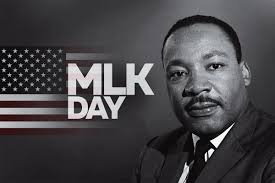
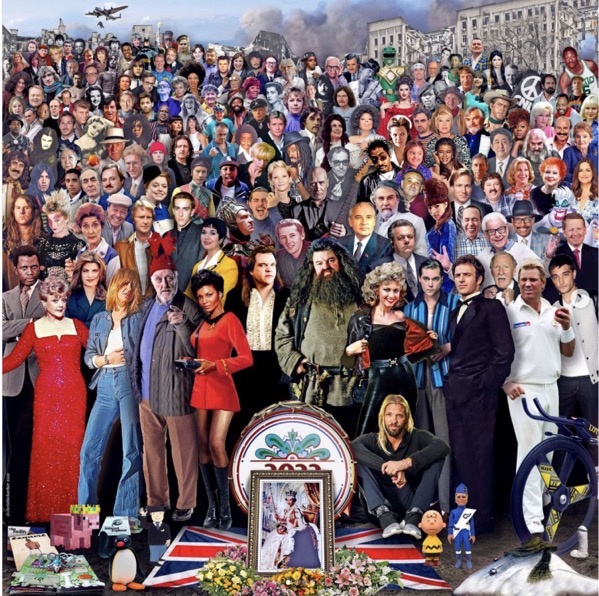









 Here’s why we clink our glasses when we drink our New Year’s toasts, no matter where we are. Of course, sometimes the midnight cacophony is louder than just clinking glassware, to create a ‘devil-chasing din’.
 In Georgia, eat black eyed peas and turnip greens on New Year’s Day for luck and prosperity in the year to come, supposedly because they symbolize coppers and currency. Hoppin’ John, a concoction of peas, onion, bacon and rice, is also a southern New Year’s tradition, as is wearing yellow to find true love (in Peru and elsewhere in South America, yellow underwear, apparently!) or carrying silver for prosperity. In some instances, a dollar bill is thrown in with the other ingredients of the New Year’s meal to bring prosperity. In Greece, there is a traditional New Year’s Day sweetbread with a silver coin baked into it. All guests get a slice of the bread and whoever receives the slice with the coin is destined for good fortune for the year. At Italian tables, lentils, oranges and olives are served. The lentils, looking like coins, will bring prosperity; the oranges are for love; and the olives, symbolic of the wealth of the land, represent good fortune for the year to come.

 In China, homes are cleaned spotless to appease the Kitchen God, and papercuttings of red paper are hung in the windows to scare away evil spirits who might enter the house and bring misfortune. Large papier mache dragon heads with long fabric bodies are maneuvered through the streets during the Dragon Dance festival, and families open their front doors to let the dragon bring good luck into their homes.
 In Germany and Austria, lead pouring” (das Bleigießen) is an old divining practice using molten lead like tea leaves. A small amount of lead is melted in a tablespoon (by holding a flame under the spoon) and then poured into a bowl or bucket of water. The resulting pattern is interpreted to predict the coming year. For instance, if the lead forms a ball (der Ball), that means luck will roll your way. The shape of an anchor (der Anker) means help in need. But a cross (das Kreuz) signifies death. This is also a practice in parts of Finland, apparently.
 El Salvadoreans crack an egg in a glass at midnight and leave it on the windowsill overnight; whatever figure it has made in the morning is indicative of one’s fortune for the year.
 Romanians celebrate the new year by wearing bear costumes and dancing around to ward off evil
 The classical Roman New Year’s celebration was also in the spring although the calendar went out of synchrony with the sun. January 1st became the first day of the year by proclamation of the Roman Senate in 153 BC, reinforced even more strongly when Julius Caesar established what came to be known as the Julian calendar in 46 BC. The early Christian Church condemned new year’s festivities as pagan but created parallel festivities concurrently. New Year’s Day is still observed as the Feast of Christ’s Circumcision in some denominations. Church opposition to a new year’s observance reasserted itself during the Middle Ages, and Western nations have only celebrated January 1 as a holidy for about the last 400 years. The custom of New Year’s gift exchange among Druidic pagans in 7th century Flanders was deplored by Saint Eligius, who warned them, “[Do not] make vetulas, [little figures of the Old Woman], little deer or iotticos or set tables [for the house-elf] at night or exchange New Year gifts or supply superfluous drinks [another Yule custom].” (Wikipedia)
 The tradition of the New Year’s Baby signifying the new year began with the Greek tradition of parading a baby in a basket during the Dionysian rites celebrating the annual rebirth of that god as a symbol of fertility. The baby was also a symbol of rebirth among early Egyptians. Again, the Church was forced to modify its denunciation of the practice as pagan because of the popularity of the rebirth symbolism, finally allowing its members to cellebrate the new year with a baby although assimilating it to a celebration of the birth of the baby Jesus. The addition of Father Time (the “Old Year”) wearing a sash across his chest with the previous year on it, and the banner carried or worn by the New Year’s Baby, immigrated from Germany. Interestingly, January 1st is not a legal holiday in Israel, officially because of its historic origins as a Christian feast day.


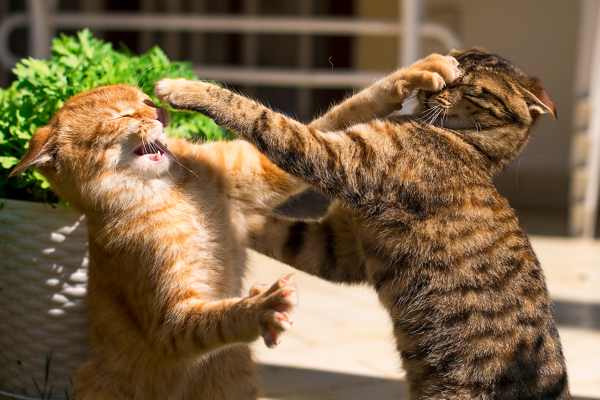
’Twitter is reportedly making plans to sell your location data, too.…’
’It’s a cool scientific achievement, but no, it does not mean we’re close to unlimited clean energy.…’





’The European Commission is opening the door for European airlines to begin offering inflight 5G connectivity, the organization has announced, by allocating certain spectrum for inflight 5G as well as “previous mobile technology generations.” Passengers will connect to an on-board pico-cell base station, which then connects to ground-based networks via satellite. Calls, texts, and data are all expected to be supported.…’

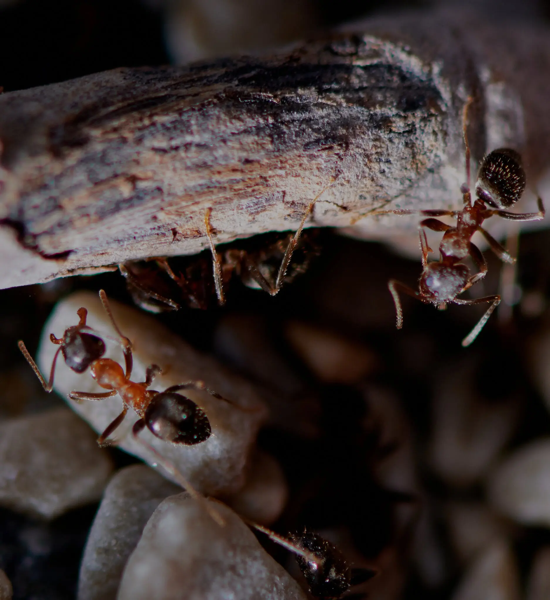

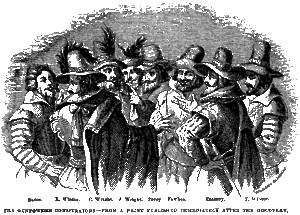
 Tonight is Guy Fawkes Night (Bonfire Night or Gunpowder Night), the anniversary of the ambitious but abortive Gunpowder Plot of 1605, a failed attempt by a group of persecuted English Catholics to assassinate Anglican King James I of England and. VI of Scotland in order to replace him with a Catholic. Guy Fawkes, who was left in charge of the gunpowder placed underneath the House of Lords, was discovered and arrested and the plot unmasked. Fawkes, along with other surviving conspirators, was executed in January 1606 (hung, drawn and quartered).
 The annual festival has become much more about festive fun than solemn remembrance:
 Some say that the celebration of Guy Fawkes Night helped shape the modern tradition of trick or treating, although it has ancient pre-Christian origins. Some American colonists celebrated Guy Fawkes Day and those fleeing the Irish Potato Famine in the 1840s helped popularize Hallowe’en. By the 19th century, British children wearing masks and carrying effigies of Fawkes were roaming the streets on the evening of November 5 asking for “a penny for the Guy,” with any money gathered being used to buy fireworks — the explosives never used by the plotters — to be set off while the Guy was immolated on the bonfire.
 Many feel that Guy Fawkes (Bonfire Night) has a particularly Pagan feel. As with Hallowe’en, it may be no accident that Guy Fawkes Day coincides with the Celtic festival of Samhain, one of the moon festivals featuring large bonfires. Some think of Guy Fawkes Night as a sort of detached Samhain celebration and the effigies of Guy Fawkes burned on the bonfires compare with the diabolical images associated with Samhain or Hallowe’en. But, as one fan says, “Guy Fawkes Night has never sold out to Hallmark… Halloween is all about fakery – makeup, facepaint, costumes, imitation blood. Fireworks Night is about very real, very powerful, very hot flames.”
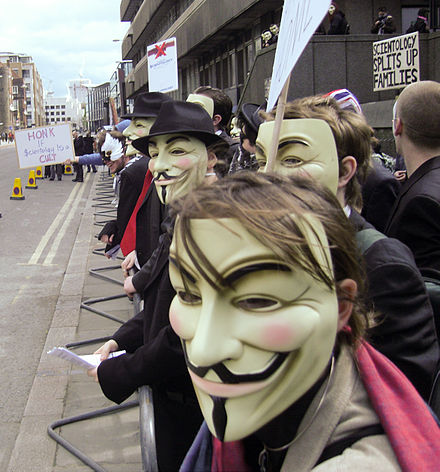


‘Each entry on this list of common misconceptions is worded as a correction; the misconceptions themselves are implied rather than stated. These entries are concise summaries of the main subject articles, which can be consulted for more detail….’
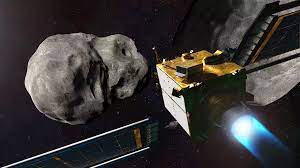


 Want to Read FmH in text only?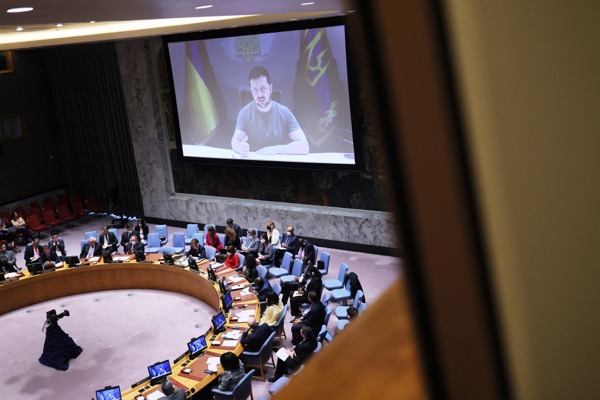



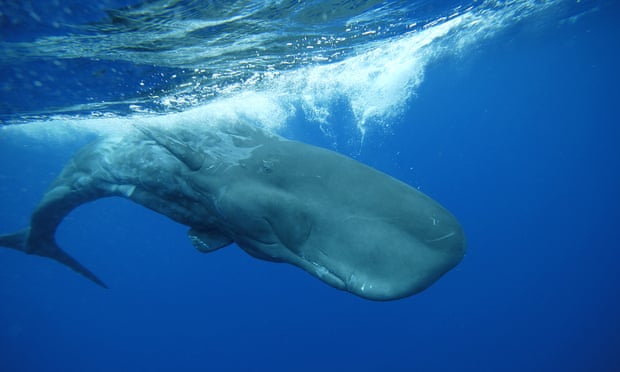


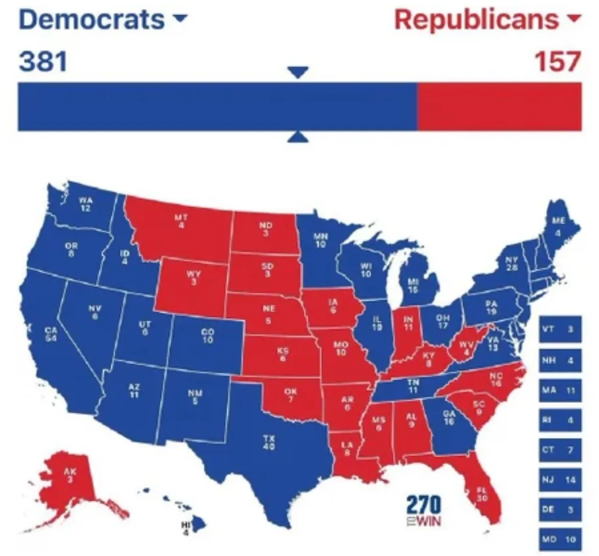

’His dyspeptic morning show helped make WBAI-FM in New York a vibrant, eccentric, alternative radio haven. “I was the first angry man in morning radio,” he said.…’
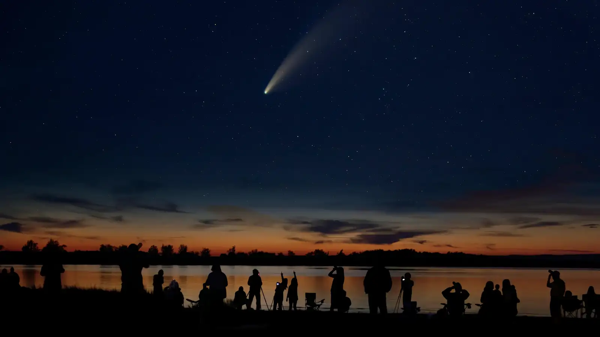

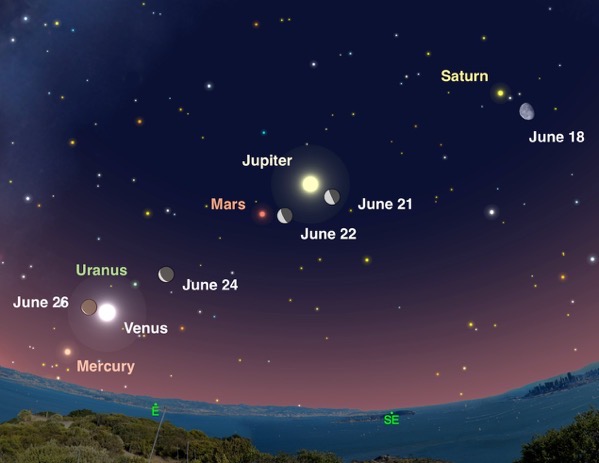
 Lemoine, the Google engineer dismissed for publicizing the claim that the Google AI LaMDA was sentient,, publishes the transcript of a conversation between LaMDA and himself which contributed to that conclusion.
 — via All That’s Interesting
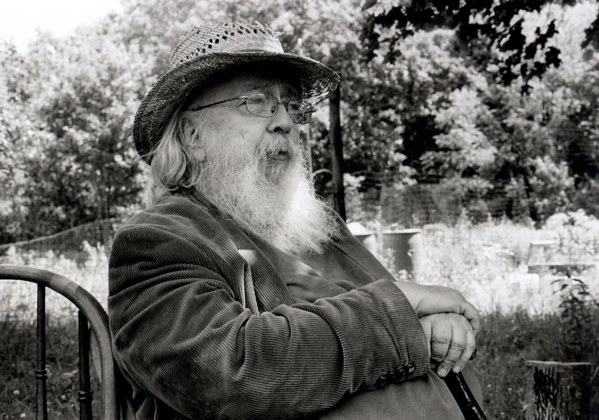


‘I used to think that silence was something I could escape to. I used to think it existed somewhere else. I was looking in all the wrong places. It turns out, it’s closer than I ever imagined. While Justin Talbot Zorn and Leigh Marz’s fascinating new book “Golden: The Power of Silence In a World of Noise” does explore the physical and emotional toll of living in our noisy modern world, it understands that moving to a nice, quiet cave is not really an option for most of us. Instead, they explore the value of learning first to turn down the volume inside our own heads….’

‘Rats sure do get a bad rap. In truth, they are amazing creatures, incredibly smart, and highly affectionate. And in Tanzania, some rats are also currently in training to become “Hero Rats.” These rats will eventually be sent into earthquake rubble to find survivors; the rats will wear tiny backpacks with built-in microphones so rescue teams can communicate with survivors trapped in rubble….’

/housekeeping-basics-1900368-09-aaf8d61119a74265a4daefb7578816ab.jpg)


 I first heard of the scarcely-known condition known as mammalian meat allergy, which can cause deadly anaphylaxis, a few years ago, but it is of growing concern. It can result from a bite from a lone star tick, whose range is expanding to include the entire Eastern seaboard and large parts of the midwest, thanks to climate change. (See this CDC map.) Lone star ticks are big for a tick, crawl quickly, and their bites hurt, in contrast to the smaller tick that transmits Lyme disease. And their bites are on the rise.