A federal judge just discovered a whole new way to place ICE above the law

Ian Millhiser via Vox:

‘It’s the latest chapter in an ongoing saga where Trump administration officials, federal courts eager to shield federal law enforcement officers from justice, and now Texas state officials all work together to ensure that ICE and other law enforcement personnel involved in Trump’s violent crackdown in Minnesota face no legal consequences for their actions….’

New Zero-Cal Sugar Is 3,500x Sweeter Than Sucrose

Carly Cassella via ScienceAlert:

‘The sugary unit developed by Amai was inspired by a naturally occurring fruit in the tropical rainforests of West and Central Africa, called the serendipity berry (Dioscoreophyllum cumminsii), which contains one of the sweetest known proteins on Earth…

The novel sweetener comes in the form of a white powder and can be easily dissolved in liquid.

Sweelin is now available as a sugar substitute for food, beverages, and confectionery in the US, Singapore, and Israel…’

Scientists Hunting Dark Matter Found Something Strange

Katrina Miller via The New York Times:

‘Hundreds of physicists have spent years scrutinizing the data from a detector deep underground, listening for the faintest whisper from a part of the universe that is dark and out of reach. They’re running the LZ Dark Matter Experiment, in search of the invisible substance whose gravity drives the motion of galaxies and stars.

They may have finally found something.

The researchers shared a tantalizing new result on Tuesday in a paper describing a single, tiny nudge of one particle into another. This caused a curious signal to be recorded by the LZ detector, which is at the Sanford Underground Research Facility in South Dakota.

The physicists are careful not to claim that they detected dark matter. But they are saying that the event doesn’t fit the description of any other known particle interaction in the subatomic world….’

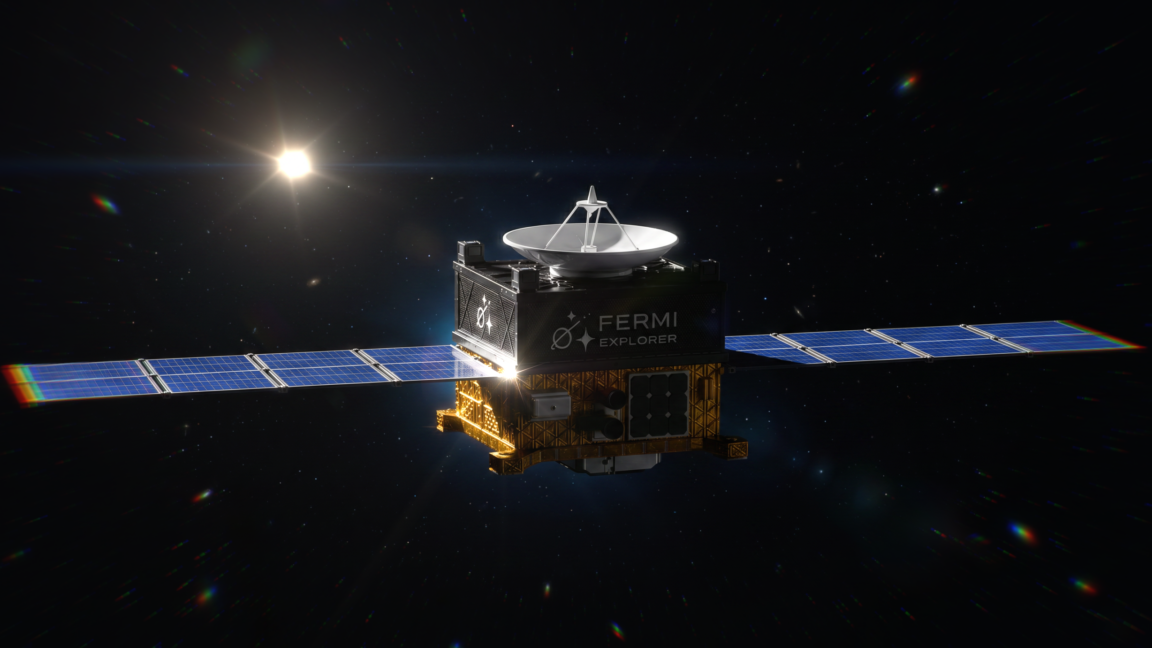
Private group wants to launch “cheapest possible” mission to Alpha Centauri

Eric Berger via Ars Technica:

‘There are, by various estimates, several trillion planets within what is known as the Local Group of galaxies—our closest galaxy neighbors, including our own Milky Way. Many of these planets are within the habitable zone of their stars. So if life finds a way, where are the alien civilizations?

This is the crux of what is known as the Fermi paradox, which posits that if life is fairly common in the Universe, humans should have collected credible evidence for the existence of extraterrestrial civilizations by now. People who think about this paradox believe there may be some “filter” that limits or entirely prevents an advanced civilization from sending out probes or even life-bearing spacecraft to nearby stars…

On Tuesday, Johnston and a handful of other entrepreneurs announced the “Fermi Explorer” mission. In concept, it is simple. They seek to raise $15 million to build a small spacecraft, carrying a 1 kg payload, and launch it to Alpha Centauri such that it reaches that system in fewer than 80,000 years. Why? In conversations about the Fermi paradox, Johnston realized such a mission would knock two “filters” off the list: Species won’t want to send spacecraft beyond their home star, or species will find that interstellar transit is too difficult….’