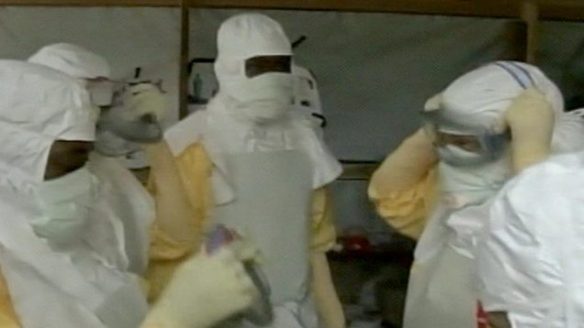
Will Texas Kill an Insane Man?

Via NYTimes.com: ‘By any reasonable standard — not to mention the findings of multiple mental-health experts over the years — Mr. Panetti is mentally incompetent. But Texas, along with several other stubborn states, has a long history of finding the loopholes in Supreme Court rulings restricting the death penalty. The state has continued to argue that Mr. Panetti is exaggerating the extent of his illness, and that he understands enough to be put to death — a position a federal appeals court accepted last year, even though it agreed that he was “seriously mentally ill.”

Mr. Panetti has not had a mental-health evaluation since 2007. In a motion hastily filed this month, his volunteer lawyers requested that his execution be stayed, that a lawyer be appointed for him, and that he receive funding for a new mental-health assessment, saying his functioning has only gotten worse. For instance, he now claims that a prison dentist implanted a transmitter in his tooth.

The lawyers would have made this motion weeks earlier, immediately after a Texas judge set Mr. Panetti’s execution date. But since no one — not the judge, not the district attorney, not the attorney general — notified them (or even Mr. Panetti himself), they had no idea their client was scheduled to be killed until they read about it in a newspaper. State officials explained that the law did not require them to provide notification.
On Nov. 19, a Texas court denied the lawyers’ motion. A civilized society should not be in the business of executing anybody. But it certainly cannot pretend to be adhering to any morally acceptable standard of culpability if it kills someone like Scott Panetti.’


Burning

He lives, who last night flopped from a log
Into the creek, and all night by an ankle
Lay pinned to the flood, dead as a nail
But for the skin of the teeth of his dog.

I brought him boiled eggs and broth.
He coughed and waved his spoon
And sat up saying he would dine alone,
Being fatigue itself after that bath.

I sat without in the sun with the dog.
Wearing a stocking on the ailing foot,
In monster crutches, he hobbled out,
And addressed the dog in bitter rage.

He told the yellow hound, his rescuer,
Its heart was bad, and it ought
Not wander by the creek at night;
If all his dogs got drowned he would be poor.

He stroked its head and disappeared in the shed
And came out with a stone mallet in his hands
And lifted that rocky weight of many pounds
And let it lapse on top of the dog’s head.

I carted off the carcass, dug it deep.
Then he came too with what a thing to lug,
Or pour on a dog’s grave, his thundermug,
And poured it out and went indoors to sleep.

I saw him sleepless in the pane of glass
Looking wild-eyed at sunset, then the glare
Blinded the glass—only a red square
Burning a house burning in the wilderness.

— Galway Kinnell (1927-2014).

How Could You Not?

— for Jane kenyon

It is a day after many days of storms.
Having been washed and washed, the air glitters;
small heaped cumuli blow across the sky; a shower
visible against the firs douses the crocuses.
We knew it would happen one day this week.
Now, when I learn you have died, I go
to the open door and look across at New Hampshire
and see that there, too, the sun is bright
and clouds are making their shadowy ways along the horizon;
and I think: How could it not have been today?
In another room, Keri Te Kanawa is singing
the Laudate Dominum of Mozart, very faintly,
as if in the past, to those who once sat
in the steel seat of the old mowing machine,
cheerful descendent of the scythe of the grim reaper,
and drew the cutter bars little
reciprocating triangles through the grass
to make the stalks lie down in sunshine.
Could you have walked in the dark early this morning
and found yourself grown completely tired
of the successes and failures of medicine,
of your year of pain and despair remitted briefly
now and then by hope that had that leaden taste?
Did you glimpse in first light the world as you loved it
and see that, now, it was not wrong to die
and that, on dying, you would leave
your beloved in a day like paradise?
Near sunrise did you loosen your hold a little?
How could you not already have felt blessed for good,
having these last days spoken your whole heart to him,
who spoke his whole heart to you, so that in the silence
he would not feel a single word was missing?
How could you not have slipped into a spell,
in full daylight, as he lay next to you,
with his arms around you, as they have been,
it must have seemed, all your life?
How could your cheek not press a moment to his cheek,
which presses itself to yours from now on?
How could you not rise and go, with all that light
at the window, those arms around you, and the sound,
coming or going, hard to say, of a single-engine
plane in the distance that no one else hears?

 — Galway Kinnell (1927-2014)

How should secular people approach sacred art?

Pelagia Horgan’s meditation on Fra Angelico in Aeon: “For a long time, I loved Angelico as the Mulleavy sisters did – for his use of colour, the way he played with pattern and proportion. He’s always been a favourite; years ago I spent two days in the Louvre in Paris, but all I remember seeing is his Coronation of the Virgin. Yet I hardly thought about the content of his paintings. I loved him for the reasons I loved abstract painters, and grouped him with Josef Albers, Ellsworth Kelly and Rothko in my mind. Whatever his appeal for me, I imagined it could be explained through some combination of colour theory, cognitive science, aesthetic philosophy and mathematics.

But something happened to me in Florence that which changed the way I see him. Before, I’d never encountered more than a couple of Angelico’s paintings at a time. At San Marco, I was surrounded by them. Half an hour into my visit, as I stood in the gallery downstairs, a funny feeling came over me, an extraordinary calm. I felt unusually centred, alert, open to the world, the way I’ve always imagined those Buddhist monks who change their brain waves through a lifetime of meditation must feel.

I noticed something about Angelico’s paintings that I hadn’t before. It had to do with the way his figures used their hands. His is a vision of the world as it might appear through the eyes of a compassionate God: a world in which everything has existential value and nothing is without meaning. What makes his paintings so moving is that the people in them share that vision. You see this in the way they reach out for one other, and touch everything gently, with infinite care, as though it were priceless. With every touch they seem to affirm the sacredness of the world. James had understood this from the start: ‘No later painter,’ he wrote in Italian Hours, ‘learned to render with deeper force than Fra Angelico the one state of the spirit he could conceive – a passionate pious tenderness … his conception of human life was a perpetual sense of sacredly loving and being loved.’

As I looked at the paintings, I realised I was mirroring, slightly, the way the figures carried themselves – the light but steady way they held their bodies, the graceful way they held their hands. This mirroring was the mechanism, I think, behind the sense of deep calm I experienced, a sense of having entered a new atmosphere. I felt I’d encountered an almost physical medium – something I could walk in, be immersed in, something that could change the climate in a room, and make everything feel sweeter, cooler, calmer, brighter than before…


How CGI changed reality on screen

Jonathan Romeny writes (via Aeon),

CGI has become wearingly dull and cliched. Can its deep weirdness be recovered and filmgoers’ minds stretched again?

 “…One tradition in writing about cinema, represented notably by the mid-20th-century French critic André Bazin, asserts the primacy of the photographic capture of the real – the recording on film of objects that have actually existed, events that have actually happened.

Digital cinema rewrites that conception, because we can no longer assume that a screen image represents anything that has ever been real. A landscape might be a composite of several actual landscapes, or wholly or partly fabricated from pixels. Film theory has been forced to confront a radical change in its object of study.

Stephen Prince, professor of cinema studies at Virginia Tech, noted in his essay ‘True Lies’ 1996 that CGI severs the ‘indexical’ or causal connection between an image and the object it represents, which might have no original in the real world; instead, we are presented with imaginary objects that can nonetheless be considered ‘perceptually realistic’.

Another theorist, Lev Manovich, at the City University of New York, has argued that CGI reveals that the conception of photographic recording as essential to cinema was a historic accident, and that the new digital regime returns cinema to its place in an earlier conception of visual representation as involving the manual construction of images. ‘Cinema becomes a particular branch of painting – painting in time,’ he writes in ‘What Is Digital Cinema?’ 1996.

For Bazin, however, the recording of real presences, of people’s real engagement in the material world, comprised a crucial ethical dimension of cinema. And this dimension cannot disappear without making a difference…”


Sham Journal Accepts Totally Absurd But Completely Appropriate Paper

Via io9: ‘The International Journal of Advanced Computer Technology, a predatory open-access journal, has accepted for publication the marvelously titled paper “Get me off Your Fucking Mailing List.”

According to Scholarly Open Access, researchers David Mazières and Eddie Kohler first prepared the manuscript in 2005, to protest spam conference invitations. The paper – which can be read in its entirety here – is superbly summarized by its title, although its two figures do help reify some of its more abstract points:

After receiving a spam email from the International Journal of Advanced Computer Technology, Dr. Peter Vamplew of Federation University Australias School of Engineering and Information Technology sent the anti-spam article as a reply to the spam email without any other message, expecting that they might open it and read it, but not that it would be considered for publication.


Astronomers Find Quasars Are “Aligned” Across Billions Of Light-Years

Via IFLScience: ‘Quasars are some of the brightest things known, and at the center of these super luminous nuclei of galaxies are very active supermassive black holes. The black hole is surrounded by a spinning disc of extremely hot material, which gets spewed out in long jets all along the quasar’s axis of rotation.

Quasars separated by billions of light-years are lined up in a mysterious way. Astronomers looking at nearly 100 quasars have discovered that the central black holes of these ultra-bright, faraway galaxies have rotational axes that are aligned with each other. These alignments are the largest known in the universe.’


Reza Aslan: Sam Harris and “New Atheists” aren’t new, aren’t even atheists

Via Salon.com: ‘The appeal of New Atheism is that it offered non-believers a muscular and dogmatic form of atheism specifically designed to push back against muscular and dogmatic religious belief. Yet that is also, in my opinion, the main problem with New Atheism. In seeking to replace religion with secularism and faith with science, the New Atheists have, perhaps inadvertently, launched a movement with far too many similarities to the ones they so radically oppose. Indeed, while we typically associate fundamentalism with religiously zealotry, in so far as the term connotes an attempt to “impose a single truth on the plural world” – to use the definition of noted philosopher Jonathan Sacks – then there is little doubt that a similar fundamentalist mind-set has overcome many adherents of this latest iteration of anti-theism.

Like religious fundamentalism, New Atheism is primarily a reactionary phenomenon, one that responds to religion with the same venomous ire with which religious fundamentalists respond to atheism. What one finds in the writings of anti-theist ideologues like Dawkins, Harris and Hitchens is the same sense of utter certainty, the same claim to a monopoly on truth, the same close-mindedness that views one’s own position as unequivocally good and one’s opponent’s views as not just wrong but irrational and even stupid, the same intolerance for alternative explanations, the same rabid adherents as anyone who has dared criticize Dawkins or Harris on social media can attest, and, most shockingly, the same proselytizing fervor that one sees in any fundamentalist community.’


Georgia to execute man whose actively alcoholic lawyer botched his case

Via Boing BoingMike Mechanic from Mother Jones says,


Georgia just set a date Dec. 9 to execute a prisoner named Robert Wayne Holsey, whom Philly death penalty lawyer and essayist Marc Bookman describes as “a low-functioning man with a tortured past.” Yeah, weve heard that before, but heres the thing: Andy Prince, the lawyer the court appointed to represent Holsey was a fucking unbelievable mess–a chronic, severe alcoholic who was stealing from his clients and had been arrested for threatening a black neighbor with a gun, saying, “Nigger, get the fuck out of my yard or Ill shoot your black ass.” Prince was white, and Holsey is black.It gets worse. Prince hired an incompetent co-counsel and gave her no direction whatsoever. He failed to hire a mitigation specialist for the sentencing. Thats the person who digs up evidence to support the argument that the client, although guilty, deserves to live. The court provided money for this, but Prince was unable to account for where it went. He failed to do even the most basic gumshoe work. And then, during the trial, he knocked back a quart—a QUART—of vodka every night. He botched it badly.

In this meticulously written essay, Bookman holds our hand through Prince’s downward spiral and demonstrates just how hard it is for a person to win a resentencing—even under jaw-dropping circumstances such as this.”


Great reason not to rake your leaves this weekend

Via USA Today: ‘The National Wildlife Federation is encouraging people to leave the leaves.On its website, the NWF says dry, dead leaves are important habitats for all kinds of critters…

Butterflies, salamanders, chipmunks, box turtles, toads, shrews, earthworms, and other creatures live, lay eggs in or eat from leaves, according to NWFs plea with the public to let the leaves stay where gravity left them. “I care about the lifer cycle of all the insects that live in my yard,” said Sarah Moore of the Pacific Science Centers indoor butterfly garden. “I want to be a habitat.” ‘


“A Fine Doctor He Was, and a Fine Man”

peterHis sister Yvonne writes about my friend Peter Baginsky, 1950-2014:

‘As many of you will know,  there have been so many ‘miracles’ on this journey:  Peter’s successful  8-hour ‘brain-mapping’ operation at UCSF one week after diagnosis in January 2009; his brave and often excruciating,  but again successful, experience with radiotherapy and three chemotherapy drugs for the year following surgery.  Then four years in which, with powerful patience, focus and determination – and joy –  he managed to pick up his work as a diabetes specialist in N. California, his teaching as a much-loved Professor at Touro Medical School in San Francisco, and his research devoted to developing a new fast-food test to identify pre-diabetes.

But glioblastomas are fiercely aggressive tumours, and, allegedly,  always recur.   Peter’s recurred with such force in January that it threw him off his chair onto the floor in the middle of a residents’ teaching session, completely smashing his upper thigh and hip.  An immediate emergency hip replacement operation followed, then four more as the new hip kept dislocating, and suddenly he was in a wheel chair, trying to learn how to walk again.

In March, by now very seriously ill, Peter bravely flew to Zurich, Switzerland, where, on a clinical trial, he became the first person in the world to be successfully treated by a revolutionary new treatment called MRI-guided Focused Ultrasound: “ein Wunder!” – a miracle! – the specially assembled team of neurosurgeons, physicists, and engineers called it.

For six months the normally rapidly-growing tumour was, amazingly, completely static and even seemed to be shrinking slightly.  But then in September, so sadly and disappointingly, things started to get difficult.  Patient, hopeful, strong and determined as ever, Peter decided to go back on one of the chemo drugs he’d responded well to in 2009.  But he gradually lost his voice, and then couldn’t open his eyes, and one whole side became weaker and weaker.

Last Thursday suddenly things seemed to take a turn for the worse. Despite his strength, determination, and seemingly never-flagging hope and  good  cheer, my brother Peter died on Friday, 14 November , at 1:20pm at his home in California, with his wife, son and daughter by his side.

In all this time, through all these rollercoaster years, none of us –  his family, friends, students, patients, doctors, nurses – ever heard even the tiniest word of complaint or hint of irritability. In the most undignified and painful situations, he remained a person of great dignity, considerate and gentle.   As one of his family’s friends just wrote:  “a fine doctor he was, and a fine man”. ‘

White House reviewing policy toward U.S. hostages held by militants

White House reviewing policy toward U.S. hostages held by militants | Reuters

Via Reuters:  ‘ABC News reported that a Pentagon official wrote last week to U.S. Representative Duncan Hunter that the review would include an emphasis “on examining family engagement, intelligence collection, and diplomatic engagement policies.”It added that a Nov. 11 letter to Hunter from Christine Wormuth, undersecretary of defense for policy, did not explicitly address the issue of ransom payments, which it is U.S. policy not to pay.’


Fifteen Years of Fun

Follow-Me-Here-

Follow Me Here began on November 19, 1999, a long time ago and far away. Happy to continue to send the occasional missive your way, but be mindful:


Do not use if you have ever had an allergic reaction to this product or any of its ingredients.
Failure to follow all instructions and warnings can result in serious injury.
Please leave as clean on leaving as you would like to find on entering.
Any resemblance to actual persons living or dead is purely coincidental.
Place all seat backs and tray tables in fully upright position.
Post office will not deliver without proper postage affixed.
Do not operate heavy machinery while reading this weblog.
Caution: Dates on calendar are closer than they appear.
Please note locations of emergency exits upon arrival.
No animals were harmed in the production of this page.
May be used as flotation device in case of emergency.
No ideas were harmed in the making of this weblog.
Anything you say can and will be used against you.
Satisfaction guaranteed; return for full refund.
Names have been changed to protect the innocent.
All questions answered, all answers questioned.
Objects on screen are closer than they appear.
If condition persists, consult your physician.
Detach and include upper portion with payment.
Nutritional need is not established in humans.
Caution: do not swallow. May cause irritation.
Do not use if safety seal is torn or missing.
Please inform author if you cannot read this.
Product is sold by weight and not by volume.
In emergency, break glass, pull down handle.
Caution! The edge is closer than you think.
Contents may have settled during shipment.
Do not fold, staple, spindle or mutilate.
Prices subject to change without notice.
Freshest if used before date specified.
Valid only at participating locations.
If swallowed, do not induce vomiting.
You have the right to remain silent.
Do not remove under penalty of law.
This page intentionally left blank.
Use only in well-ventilated areas.
Do not exceed recommended dosage.
No user-serviceable parts inside.
Warning, contents are flammable.
No shirt, no shoes, no service.
Alarm will sound if door opened.
You break it, you’ve bought it.
You need not be present to win.
Keep out of reach of children.
Part of a daily balanced diet.
First pull up, then pull down.
Void where prohibited by law.
Apply only to affected areas.
Other restrictions may apply.
Close cover before striking.
Do not think of an elephant.
Viewer discretion advised.
You must be present to win.
Caution, low-flying ideas.
Honk if you can read this.
No purchase is necessary.
More taste, less filling.
Internet access required.
Not a low-calorie food.
Don’t try this at home.
Wash hands after using.
Consume in moderation.
Freezes before roadways.
Store in a cool place.
For external use only.
Mix well before using.
Your mileage may vary.
Money-back guarantee.
Shake well before use.
Lather, rinse, repeat.
Use only as directed.
Results not typical.
Consume responsibly.
Ignore this notice.
Slippery when wet.
Unplug after use.
Same-day service.
No preservatives.
No trespassing.
No exit.

The Worlds Tiniest Countries and the Eccentrics Who Rule Them

Via WIRED: ‘Never heard of the Imperial Kingdom of Calsahara? The Conch Republic? The Principality of Sealand? You’re not alone.​ Léo Delafontaine hadn’t either until 2012, when he visited the Republic of Saugeais, a self-proclaimed micronation in eastern France. He’s since become fascinated with “countries” unrecognized by world governments and organizations. His book Micronations​ documents independent states that are just as varied and interesting as their official counterparts….

French writer and historian Bruno Fuligni, who wrote the introduction to Micronations, estimates there are more than 400 of these self-proclaimed entities.

Delfontaine visited 12 locations throughout the US, Europe, and Australia. They included monarchies, republics, “funny dictatorships,” and some with no government at all. He earned citizenship in three—the Principality of Sealand, the Principality of Seborga, and the Conch Republic….’


Where Are the Hardest Places to Live in the U.S.?

Via NYTimes.com: ‘…[We looked] at six data points for each county in the United States: education percentage of residents with at least a bachelor’s degree, median household income, unemployment rate, disability rate, life expectancy and obesity. We then averaged each county’s relative rank in these categories to create an overall ranking.We tried to include other factors, including income mobility and measures of environmental quality, but we were not able to find data sets covering all counties in the United States.

The 10 lowest counties in the country, by this ranking, include a cluster of six in the Appalachian Mountains of eastern Kentucky Breathitt, Clay, Jackson, Lee, Leslie and Magoffin, along with four others in various parts of the rural South: Humphreys County, Miss.; East Carroll Parish, La.; Jefferson County, Ga.; and Lee County, Ark.’


Let’s Just Say It: Women Matter More Than Fetuses Do

Rebecca Traister: ‘During both of my pregnancies, I have monitored the weeks available for legal abortion with the same precision that I used to keep track of when to get the nuchal screening, the amnio, the gestational diabetes test. To me, abortion belongs to the same category as the early Cesarean I will need to undergo because of previous surgeries. That is to say, it is a crucial medical option, a cornerstone in women’s reproductive health care. And during pregnancy, should some medical, economic, or emotional circumstance have caused my fate to be weighed against that of my baby, I believe that my rights, my health, my consciousness, and my obligations to others—including to my toddler daughter—outweigh the rights of the unborn human inside me.’ (via New Republic)

Set Up a Financial Trust For Your Pet If You Die… No, Seriously

Via Lifehacker: ‘Sure, we can chuckle when someone leaves money for a pet. What will your pet do with the money? Nothing, but you want to make sure someone takes care of your pet. While you cant directly leave money for them, you might set up a trust.Forbes covers the serious issue of how youll make sure that someone takes care of your pet after you die. They cover two types of pet trusts…’


Where Hell Is Other Patients

Via NYTimes.com: ‘In the public imagination, forensic mental hospitals — where states place the criminally insane — are hellish scenes of cages and restraints, the better to keep us safe from the Hannibal Lecters of the world.

And it’s true that these hospitals, including the one where I work, are hellish. But not because the patients are restrained. In fact, it’s the opposite. Patients, even violent ones, are often given a shocking amount of freedom. As a consequence, every day, across the country, these hospitals record dozens of assaults by patients against staff members and other patients — a situation that, thanks to expanded patients’ rights laws and state health bureaucracies, we can do almost nothing about…

To be clear, not all, or even a majority, of patients are actively violent. Just 15 percent of patients at most hospitals are responsible for 90 percent of the assaults. And yet at almost every state forensic facility I have encountered, there is an epidemic of assaults by violent patients.How have things come to this? After the deinstitutionalization movement of the 1960s and the introduction of effective antipsychotic medications, most hospitals were emptied of “regular” — largely nonviolent — mentally ill patients; those vacancies were filled by the growing number of people who were successfully pleading not guilty for reason of insanity.

But state hospitals are ill-prepared to deal with these often dangerous and violent persons. A large part of the problem stems from our legal system, where the notion of patients’ rights has triumphed over common sense and safety. For example, despite criminally insane patients being remanded by the courts for psychiatric treatment, many states allow them to refuse both therapy and medication.

A second difficulty is bad hospital policy: At many state forensic facilities, there are no guards, and untreated psychotic patients are allowed to mix freely with the staff. Perhaps because the extent of violence in forensic hospitals is difficult to imagine, it’s easier for hospital administrations, elected state officials and governors to ignore.

Still harder to explain is the silence of mental health activist and regulatory groups — the American Civil Liberties Union, the Occupational Safety and Health Administration and the National Alliance on Mental Illness. Generally at the forefront of worker and patient safety issues, these organizations have inexplicably done very little…’


Gut–brain link grabs neuroscientists

3quarksdaily: Gut–brain link grabs neuroscientists

Via 3quarksdaily: “Companies selling ‘probiotic’ foods have long claimed that cultivating the right gut bacteria can benefit mental well-being, but neuroscientists have generally been sceptical. Now there is hard evidence linking conditions such as autism and depression to the gut’s microbial residents, known as the microbiome. And neuroscientists are taking notice — not just of the clinical implications but also of what the link could mean for experimental design… This year, the US National Institute of Mental Health spent more than US$1 million on a new research programme aimed at the microbiome–brain connection. And on 19 November, neuroscientists will present evidence for the link in a symposium at the annual Society for Neuroscience meeting in Washington DC called ‘Gut Microbes and the Brain: Paradigm Shift in Neuroscience’. “

Killer whales can learn to “speak dolphin”

Via DiscoverMagazine.com:  ‘[T]his study suggests that, given a chance, different species of cetaceans may be able to learn to communicate with each other. Scientists noticed that killer whales who had spent time with bottlenose dolphins incorporated more clicking and whistles in their vocalizations than other whales, making their “language” a mashup of the two. In fact, one whale was able to learn the sounds taught to a dolphin trained by people! Although we don’t know what these different languages mean, or how much information is being transmitted between the species, it’s clear that these animals are motivated to learn to make each other’s sounds.’


Study: What Your Brain Is Doing When You Really, Really Hate Someone

Via io9:  ‘[Subjects stared] first at the picture of a person the subjects had neutral feelings toward, and then at the picture of someone they hated. The subjects did this while hooked up to an MRI, allowing the researchers to see which parts of the brain were activated and deactivated…

The parts of the brain activated, the medial frontal gyrus, the right putamen, the medial insula, and the premotor cortex, have come to be known as the “hate circuit.” The premotor cortex is one part of the brain that springs into action when people have feelings of aggression. When we hate, at least part of us is preparing for a physical attack. The frontal gyrus deals with self-awareness, and is involved in go/no go decisions. This part of the brain seems to be in league, however tentatively with the premotor cortex. Haters using the “hate circuit,” then, seem to always be wondering if its the right time to move against the object of their hatred.’


Common Pesticides May Be Causing Clinical Depression

Via io9: ‘A landmark 20-year study indicates that 7 pesticides, some widely used, may be causing clinical depression in farmers. The precise reason remains unknown, but researchers suspect its related to the fact that the chemicals—designed to disrupt the nervous systems of insects—are also affecting human neurologic functions.’

And exactly why should anyone be surprised by this news?


Scientists Discover ‘Stupidity Virus’

Via io9:  ‘U.S. scientists studying throat microbes have inadvertently stumbled upon an algae virus that appears to have a slight but measurable detrimental affect on cognitive functioning in humans, including visual processing and spatial orientation. Disturbingly, millions of us could already be infected.’


The Four Types of Sleep Schedules

The Four Types of Sleep Schedules - The Atlantic

Via The Atlantic:  ‘“[O]wls”—people who prefer to wake up late and are more alert in the evenings [are] one of two basic chronotypes, or preferred sleep schedules. The other is “larks,” or crazy people those who prefer early mornings.But now, scientists in Russia are proposing that there are actually four chronotypes: In addition to early and late risers, they say, there are also people who feel energetic in both the mornings and evenings, as well as people who feel lethargic all day.’

I’ve been one of the lucky ones. However, I think one’s sleep type can change with age, and I am clearly losing my ability to burn the candle at both ends.


What Will Be the Coldest Day in Your City This Year?

Via CityLab:  ‘Attention, employees who wish to time their “sick days” with the most frigid, butt-chapping weather: Want to know what portion of your calendar to mark off with a big, red X?Its impossible to identify the exact dates for the coldest time of year, as weather changes constantly, but we can make an educated guess looking back over decades of temperature records. And thats what the folks at NOAAs National Climatic Data Center have done with this illuminating map of bottom-barrel temps throughout the U.S:’


How Your Brain Gaslights You—for Your Own Good

Via Nautilus:  ‘When we look at the world, it certainly feels like we’re seeing things as they really are, our senses measuring reality in an objective way. But numerous experiments have shown that the way we see the world is influenced by what we can do with it.

This way of thinking was pioneered by psychologist James Gibson, who came up with the idea of “affordances”: A ball affords picking up, and a hallway affords walking along it. When we look at a button, we perceive the affordance of pressing it. These are not optical illusions, as such, but changes in how we see the world according to what we want and can do. Here are some fascinating examples.
The perceived height of a balcony is increased if you are afraid of falling. Hills look steeper if you’re elderly, tired, or wearing a heavy backpack; they look less steep after you consume a high-calorie drink. Because descending a hill is more dangerous than going up it, hills look steeper from the top than from the bottom. That’s also why kids on the ground might think a tree is not too high, but after they climb it, they’re not so sure.

Hungry men prefer the looks of women with more weight on them, while men who are full prefer thinner women. We can speculate on the reasons for this. It might be that hunger is associated with lean eating times, and during those times, someone with enough resources to put on weight might be at an advantage to someone who’s thinner. This is supported by the finding that in poor areas, cultural ideals of feminine beauty are heavier than those in more affluent cultures, where the ideal woman is relatively thinner.Food and drinks also look different according to our internal states. Thirsty people see bottles of water as being closer than people who aren’t thirsty. Your need for water makes the bottle look closer to encourage you to reach for it.

In general, we see desirable objects as closer. Dieters see muffins as being bigger than non-dieters do. This raises an interesting question: If people want to diet, then shouldn’t the food look smaller, and less appealing? The answer could be that the changes in perception work according to our subconscious drives, and less by our explicit goals. When you are dieting, you are often at war with yourself. Part of you wants the muffin, and part of you doesn’t. Looks like the part that wants the muffin has more control over your perception.

Threatening things, such as spiders, are also perceived to be closer, and also larger. At first glance, these two findings may seem mysterious, even contradictory: Why would frightening things and desirable things look closer? Certainly your mind isn’t encouraging you to reach out and touch the spider like it is in the muffin case. A desirable thing appearing closer encourages you to try to get it. A frightening thing appearing closer makes an already dangerous situation appear more urgent, encouraging you to get away. Hope and fear are compelling. It’s the middle ground that’s boring. So even though both good and bad things look closer, it makes sense because closeness encourages different behaviors in these cases.

Physiological states, such as low blood glucose, and social states, such as what kinds of friends are nearby, affect our perceptions of the world. We have evolved to manage the resources we have, and our perceptual system helps us do that by changing our perceptions depending on the available resources.’

Learning How Little We Know About the Brain

via NYTimes.com: ‘So many large and small questions remain unanswered. How is information encoded and transferred from cell to cell or from network to network of cells? Science found a genetic code but there is no brain-wide neural code; no electrical or chemical alphabet exists that can be recombined to say “red” or “fear” or “wink” or “run.” And no one knows whether information is encoded differently in various parts of the brain.’

The Brain Makes Its Own Ghosts

A Robot That Makes You Feel Like a Ghost Is Behind You - The Atlantic

Via The Atlantic: ‘In a new study, researchers were able to induce people to feel a presence behind them using a robot, which has implications for understanding schizophrenia and consciousness itself.

The sense of someone near you when no one is actually there is called “feeling of presence” or FOP, apparently, according to a new study in Current Biology that identified the regions of the brain associated with this sensation and, wildly, recreated it in a lab setting.’


How to Check if Your Universe Should Exist

Via WIRED: ‘Many physicists loathe the multiverse hypothesis, deeming it a cop-out of infinite proportions. But as attempts to paint our universe as an inevitable, self-contained structure falter, the multiverse camp is growing.The problem remains how to test the hypothesis. Proponents of the multiverse idea must show that, among the rare universes that support life, ours is statistically typical. The exact dose of vacuum energy, the precise mass of our underweight Higgs boson, and other anomalies must have high odds within the subset of habitable universes. If the properties of this universe still seem atypical even in the habitable subset, then the multiverse explanation fails.’


R.I.P. Tom Magliozzi

One Half of the Jovial Brothers on ‘Car Talk’ Dies at 77: ‘Tom Magliozzi, who with his younger brother, Ray, hosted “Car Talk,” for years the most popular entertainment show on NPR, died on Monday at his home outside Boston. He was 77.The cause was complications of Alzheimer’s disease, NPR said.The weekly hourlong “Car Talk,” which was broadcast for more than 30 years, was ostensibly about mechanical problems with cars, but the format was mainly an excuse for the brothers, known as Click and Clack, to banter with callers about the mysteries of life, as viewed through an automotive prism: Why does a car suddenly stop working? Should I give this clunker one more chance? Why won’t my husband pay for a mechanic to fix our car? (via NYTimes.com).

Why Innocent People Plead Guilty

Via The New York Review of Books: ‘The criminal justice system in the United States today bears little relationship to what the Founding Fathers contemplated, what the movies and television portray, or what the average American believes.

To the Founding Fathers, the critical element in the system was the jury trial, which served not only as a truth-seeking mechanism and a means of achieving fairness, but also as a shield against tyranny. As Thomas Jefferson famously said, “I consider [trial by jury] as the only anchor ever yet imagined by man, by which a government can be held to the principles of its constitution.”

The Sixth Amendment guarantees that “in all criminal prosecutions, the accused shall enjoy the right to a speedy and public trial, by an impartial jury.” The Constitution further guarantees that at the trial, the accused will have the assistance of counsel, who can confront and cross-examine his accusers and present evidence on the accused’s behalf. He may be convicted only if an impartial jury of his peers is unanimously of the view that he is guilty beyond a reasonable doubt and so states, publicly, in its verdict.

The drama inherent in these guarantees is regularly portrayed in movies and television programs as an open battle played out in public before a judge and jury. But this is all a mirage. In actuality, our criminal justice system is almost exclusively a system of plea bargaining, negotiated behind closed doors and with no judicial oversight. The outcome is very largely determined by the prosecutor alone.

In 2013, while 8 percent of all federal criminal charges were dismissed either because of a mistake in fact or law or because the defendant had decided to cooperate, more than 97 percent of the remainder were resolved through plea bargains, and fewer than 3 percent went to trial. The plea bargains largely determined the sentences imposed.’


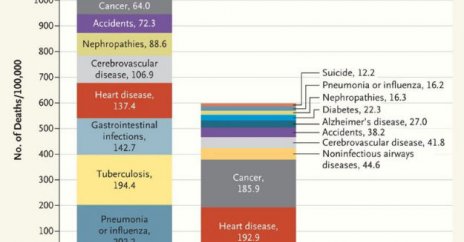
The planet’s deadliest infectious diseases, by country

Via Salon.com: ‘The worst Ebola outbreak in history has killed nearly 5,000 people and infected more than 10,000 in West Africa. In places like Monrovia, Liberia, people are living a nightmare, but if you live anywhere else in the world outside of West Africa — literally, anywhere — your odds of contracting Ebola are somewhere between “very unlikely” and “zero,” even if you went bowling in Brooklyn last week.

Your chance of contracting and dying from a different infectious disease, on the other hand, can be quite high. “Tuberculosis” and “AIDS” aren’t trending on Twitter, but they probably should be.That’s the big lesson of these maps, which use data from the World Health Organization to show you the deadliest infectious diseases around the world.’


Reboot Your iPhone Before Being Detained by Police to Disable Touch ID

Via Lifehacker: ‘The Virginia Circuit Court ruled this week that you dont have to give up your passcode to police if youre detained. Thats great news, but apparently fingerprints are a different story, so if you have Touch ID enabled, you could still be forced to unlock your phone.

Basically, fingerprints don’t fall under the 5th Amendment like a passcode does, so a police officer who cant force you to unlock your iOS device with your passcode could make you do it with your fingerprint. The solution? If you’re detained, reset your iOS device hold the Home and Power button for a few seconds before you have to hand it over. Touch ID doesn’t work on the first boot.’


Brain abnormalities in chronic fatigue patients

Via Neuroscience Stuff:  ‘An imaging study by Stanford University School of Medicine investigators has found distinct differences between the brains of patients with chronic fatigue syndrome and those of healthy people.The findings could lead to more definitive diagnoses of the syndrome and may also point to an underlying mechanism in the disease process.It’s not uncommon for CFS patients to face several mischaracterizations of their condition, or even suspicions of hypochondria, before receiving a diagnosis of CFS. The abnormalities identified in the study, published Oct. 29 in Radiology, may help to resolve those ambiguities, said lead author Michael Zeineh, MD, PhD, assistant professor of radiology.’

Most of us who are dubious about CFS do not question that such a syndrome exists. But I feel it is a faddish diagnosis overused by clinicians and sufferers, sometimes a more acceptable less stigmatizing proxy for depression, sometimes a pretext to explain underachievement. I would venture to say that, if the radiographic changes described in this paper are legitimate, they will only appear in a subset of those currently labelled as having CFS.


Reverence for Hallowe’en: Good for the Soul

Three jack-o'-lanterns illuminated from within...

A reprise of my traditional Hallowe’en post of past years:

It is that time of year again. What has become a time of disinhibited hijinx and mayhem, and a growing marketing bonanza for the kitsch-manufacturers and -importers, has primeval origins as the Celtic New Year’s Eve, Samhain (pronounced “sow-en”). The harvest is over, summer ends and winter begins, the Old God dies and returns to the Land of the Dead to await his rebirth at Yule, and the land is cast into darkness. The veil separating the worlds of the living and the dead becomes frayed and thin, and dispossessed dead mingle with the living, perhaps seeking a body to possess for the next year as their only chance to remain connected with the living, who hope to scare them away with ghoulish costumes and behavior, escape their menace by masquerading as one of them, or placate them with offerings of food, in hopes that they will go away before the new year comes. For those prepared, a journey to the other side could be made at this time.

With Christianity, perhaps because with calendar reform it was no longer the last day of the year, All Hallows’ Eve became decathected, a day for innocent masquerading and fun, taking its name Hallowe’en as a contraction and corruption of All Hallows’ Eve.

All Saints’ Day may have originated in its modern form with the 8th century Pope Gregory III. Hallowe’en customs reputedly came to the New World with the Irish immigrants of the 1840’s. The prominence of trick-or-treating has a slightly different origin, however.

The custom of trick-or-treating is thought to have originated not with the Irish Celts, but with a ninth-century European custom called souling. On November 2, All Souls Day, early Christians would walk from village to village begging for “soul cakes,” made out of square pieces of bread with currants. The more soul cakes the beggars would receive, the more prayers they would promise to say on behalf of the dead relatives of the donors. At the time, it was believed that the dead remained in limbo for a time after death, and that prayer, even by strangers, could expedite a soul’s passage to heaven.

English: A traditional Irish turnip Jack-o'-la...

English: A traditional Irish turnip Jack-o’-lantern from the early 20th century.

Jack-o’-lanterns were reportedly originally turnips; the Irish began using pumpkins after they immigrated to North America, given how plentiful they were here. The Jack-o-lantern custom probably comes from Irish folklore. As the tale is told, a man named Jack, who was notorious as a drunkard and trickster, tricked Satan into climbing a tree. Jack then carved an image of a cross in the tree’s trunk, trapping the devil up the tree. Jack made a deal with the devil that, if he would never tempt him again, he would promise to let him down the tree.

According to the folk tale, after Jack died, he was denied entrance to Heaven because of his evil ways, but he was also denied access to Hell because he had tricked the devil. Instead, the devil gave him a single ember to light his way through the frigid darkness. The ember was placed inside a hollowed-out turnip to keep it glowing longer.

Folk traditions that were in the past associated wtih All Hallows’ Eve took much of their power, as with the New Year’s customs about which I write here every Dec. 31st, from the magic of boundary states, transition and liminality.

The idea behind ducking, dooking or bobbing for apples seems to have been that snatching a bite from the apple enables the person to grasp good fortune. Samhain is a time for getting rid of weakness, as pagans once slaughtered weak animals which were unlikely to survive the winter. A common ritual calls for writing down weaknesses on a piece of paper or parchment, and tossing it into the fire. There used to be a custom of placing a stone in the hot ashes of the bonfire. If in the morning a person found that the stone had been removed or had cracked, it was a sign of bad fortune. Nuts have been used for divination: whether they burned quietly or exploded indicated good or bad luck. Peeling an apple and throwing the peel over one’s shoulder was supposed to reveal the initial of one’s future spouse. One way of looking for omens of death was for peope to visit churchyards

La Catrina – In Mexican folk culture, the Catr...

The Witches’ Sabbath aspect of Hallowe’en seems to result from Germanic influence, and fusion with the notion of Walpurgisnacht. (You my be familiar with the magnificent musical evocation of this, Mussorgsky’s Night on Bald Mountain.)

Although probably not yet in a position to shape mainstream American Hallowe’en traditions, Mexican Dia de los Muertos observances have started to contribute some delightful and whimsical iconography to our encounter with the eerie and unearthly as well. As this article in The Smithsonian reviews, ‘In the United States, Halloween is mostly about candy, but elsewhere in the world celebrations honoring the departed have a spiritual meaning…’

What was Hallowe’en like forty or fifty years ago in the U.S. when, bastardized as it has become with respect to its pagan origins, it retained a much more traditional flair? For my purposes, suffice it to say that it was before the era of the pay-per-view ’spooky-world’ type haunted attractions and its Martha Stewart yuppification with, as this irreverent Salon article from several years ago [via walker] puts it, monogrammed jack-o’-lanterns and the like. One issue may be that, as NPR observed,

“Adults have hijacked Halloween… Two in three adults feel Halloween is a holiday for them and not just kids,” Forbes opined in 2012, citing a public relations survey. True that when the holiday was imported from Celtic nations in the mid-19th century — along with a wave of immigrants fleeing Irelands potato famine — it was essentially a younger persons game. But a little research reveals that adults have long enjoyed Halloween — right alongside young spooks and spirits.’

But is that necessarily a bad thing? A 1984 essay by Richard Seltzer, frequently referenced in other sources, entitled “Why Bother to Save Hallowe’en?”, argues as I do that reverence for Hallowe’en is good for the soul, young or old.

“Maybe at one time Hallowe’en helped exorcise fears of death and ghosts and goblins by making fun of them. Maybe, too, in a time of rigidly prescribed social behavior, Hallowe’en was the occasion for socially condoned mischief — a time for misrule and letting loose. Although such elements still remain, the emphasis has shifted and the importance of the day and its rituals has actually grown.…(D)on’t just abandon a tradition that you yourself loved as a child, that your own children look forward to months in advance, and that helps preserve our sense of fellowship and community with our neighbors in the midst of all this madness.”

Three Halloween jack-o'-lanterns.

That would be anathema to certain segments of society, however. Hallowe’en certainly inspires a backlash by fundamentalists who consider it a blasphemous abomination. ‘Amateur scholar’ Isaac Bonewits details academically the Hallowe’en errors and lies he feels contribute to its being reviled. Some of the panic over Hallowe’en is akin to the hysteria, fortunately now debunked, over the supposed epidemic of ‘ritual Satanic abuse’ that swept the Western world in the ’90’s.

Frankenstein

The horror film has become inextricably linked to Hallowe’en tradition, although the holiday itself did not figure in the movies until John Carpenter took the slasher genre singlehandedly by storm. Googling “scariest films”, you will, grimly, reap a mother lode of opinions about how to pierce the veil to journey to the netherworld and reconnect with that magical, eerie creepiness in the dark (if not the over-the-top blood and gore that has largely replaced the subtlety of earlier horror films).

In any case: trick or treat! …And may your Hallowe’en be soulful.

Related:

We May Have Finally Found a Piece of Amelia Earhart’s Lost Plane

Via Gizmodo:  ‘In 1937, Amelia Earharts plane, the aluminum-clad Electra, disappeared somewhere over the Pacific during the course of her global circumnavigation attempt. Now 77 years later, historians and aviation experts are confident they have found a part of her downed aircraft…

This confirmation has huge implications to the Earhart saga. It would indicate that Earhart and Noonan did not sink to watery graves but rather, more likely, they crash landed the Electra on the flat coral reefs surrounding Nikumaroro atoll and—either one or both, maybe neither—spent the rest of their lives as castaways on that dead speck of dry land in the middle of the ocean with nary a volley ball to keep them company.’

“Dogs and cats have to die”: Stephen Colbert sums up latest insane NRA crusade

“Dogs and cats have to die”: Stephen Colbert sums up latest insane NRA crusade - Salon.com

Via Salon.com:  ‘On Tuesday night Stephen Colbert blasted the NRA for killing a Pennsylvania bill that would have made it illegal to consume meat from household pets.The bill, which was introduced after cat and dog meat were cropping up at local butchers, also contained an amendment about the shooting of pigeons. Enter the NRA, who worried that this amendment would be a “slippery slope” downward to “regulated shooting grounds.”“That’s right,” Colbert said. “In order to protect their right to kill birds, the NRA defeated the anti-pet-eating bill.” ‘ (Link to video).


 

Fox News psychiatrist Keith Ablow calls for “American jihad”

Fox News doctor’s creepy jingoism: Keith Ablow calls for “American jihad” - Salon.com

Via Salon.com:  ‘Fox News “Medical A Team” member Keith Ablow thinks “it’s time for an American jihad.”

Ablow issued his summons in a column he penned for Fox News on Tuesday. Noting that definitions of jihad include “war or struggle against unbelievers” and “a crusade for principle or belief,” Ablow calls on the U.S. to wage a domestic and international jihad to remind Americans and citizens around the world that America is, by definition, exceptional and perfect and noble. Ablow’s jihad entails a mixture of quasi-fascist, jingoistic propaganda; messianic crusades to force other countries to adopt U.S. institutions and political practices; and the installation of puppet regimes around the globe. What could go wrong?’


Are adults adulterating Halloween?

Via NPR:  ‘“Adults have hijacked Halloween,” the Chicago Tribune reported in 2013. “Two in three adults feel Halloween is a holiday for them and not just kids,” Forbes opined in 2012, citing a public relations survey.

True that when the holiday was imported from Celtic nations in the mid-19th century — along with a wave of immigrants fleeing Irelands potato famine — it was essentially a younger persons game. But a little research reveals that adults have long enjoyed Halloween — right alongside young spooks and spirits.’


Ebola — Failures of Imagination

Jody Lanard and Peter M. Sandman: ‘The alleged U.S. over-reaction to the first three domestic Ebola cases in the United States – what Maryn McKenna calls Ebolanoia – is matched only by the world’s true under-reaction to the risks posed by Ebola in Liberia, Sierra Leone, and Guinea. We are not referring to the current humanitarian catastrophe there, although the world has long been under-reacting to that.

We will speculate about reasons for this under-reaction in a minute. At first we thought it was mostly a risk communication problem we call “fear of fear,” but now we think it is much more complicated.

Some of the world’s top Ebola experts say they are worrying night and day about the possibility of endemic Ebola, a situation in which Ebola will continue to spread, and then presumably wax and wane repeatedly, in West Africa.They – and we – find it difficult to understand why Ebola has not yet extended into Cote d’Ivoire, Mali, and Guinea-Bissau. After we drafted this on October 23, a case was confirmed in Mali.

Fewer experts refer publicly to what we think must frighten them even more and certainly frightens us even more: the prospect of Ebola sparks landing and catching unnoticed in slums like Dharavi in Mumbai or Orangi Town in Karachi – or perhaps Makoko in Lagos. Imagine how different recent history might have been if the late Ebola-infected Minnesota resident Patrick Sawyer had started vomiting in Makoko instead of at Lagos International Airport on July 20.’


What the Failure of ISIS to Take Kobani Means

Via TIME:  ‘Earlier this month, U.S. military officers were speaking of ISIS’s “momentum,” and how its string of military successes over the past year meant that quickly halting its advance would likely prove difficult if not impossible. Yet, as far as Kobani is concerned, that seems to be what is taking place.

But that raises the stakes for the U.S. and its allies. Having smothered ISIS’s momentum, an eventual ISIS victory in the battle for Kobani would be a more devastating defeat for the U.S. military than an earlier collapse of the town.

There are concerns that the focus on saving Kobani is giving ISIS free reign elsewhere in its self-declared caliphate—that the U.S., in essence, could end up winning the battle while losing the war.

“The U.S. air campaign has turned into an unfocused mess,” Anthony Cordesman of the Center for Strategic and International Studies wrote Friday. “The U.S. has shifted limited air strike resources to focus on Syria and a militarily meaningless and isolated small Syrian Kurdish enclave at Kobani at the expense of supporting Iraqi forces in Anbar and intensifying the air campaign against other Islamic State targets in Syria.” ‘


Why Is It Illegal to Not Vote in Most of Latin America?

Why Is It Illegal to Not Vote in Most of Latin America? - The Atlantic

Via The Atlantic: ‘Voters in this weekend’s elections in Uruguay and Brazil have something in common: They are legally required to cast a ballot. Both countries have compulsory voting, under which failure to vote is punishable by a fine.

Roughly 30 countries, and nearly a fifth of electoral democracies, have some form of national compulsory voting law on the books, though only some of these laws are enforced. And of these countries, 13 of them are in Latin America.With compulsory voting laws in about half of its countries, Latin America has by far the highest concentration of such laws on any continent.

“It’s been a contentious and hotly debated question,” Michael Shifter, president of the Inter-American Dialogue, an organization focused on Western Hemisphere affairs, told me by email. “Advocates believe a full democracy needs to respond to the views and interests of all citizens. …

Of course, the chief argument against compulsory voting is that it contradicts the freedom associated with democracy. ”These kinds of arguments are presumably applicable all over the world, so why is compulsory voting so prevalent in Latin America specifically?’


In Memoriam, Bassist Jack Bruce 1943 – 2014

via JamBase: ‘We’re sad to report that legendary bassist Jack Bruce has died. Bruce was best known for his work with Eric Clapton and Ginger Baker as a member of seminal rock band Cream in the late 60s. The Scottish native brought a power, flair and old- fashioned sensibility to his bass parts that hadnt been seen until he came along. Jack was also a fine songwriter who co-wrote such storied songs as “Sunshine Of Your Love,” “White Room” and “I Feel Free” with Pete Brown. Bruce died of liver disease according to Press Association.’

The Dalai Lama Will Not Return to Lead Tibet: He Has Something Better in Mind

The Dalai Lama Will Not Return to Lead Tibet He Has Something Better in Mind - Boing Boing

Via Boing Boing: ‘The Dalai Lama set off a firestorm last month by announcing that he will no longer reincarnate in a political role, effectively ending his centuries-old political lineage.It’s the latest in a series of controversial statements about the future of his role—including a hint that his next incarnation may be born outside of Tibet, and may be a woman. And it’s another indicator of a sea change in how the Tibetan diaspora is adapting and revising its traditions for life outside of occupied Tibet. Though the Dalai Lama’s statement was hastily reported in the media as meaning that he will not reincarnate at all, what he’s saying is much more layered: he’s looking to reincarnate as a spiritual leader only, and transition the Tibetan government-in-exile from needing him as a central authority, and towards a democratically-elected committee.’


Why You Shouldn’t Freak Out About Ebola in NYC

“Why you shouldn’t freak out…” yet?

Via Gizmodo: ‘Earlier today, a 33-year-old doctor named Craig Spencer, who had recently spent time treating Ebola in Guinea, tested positive for the disease in New York City. Hed ridden the A train; hed gotten an Uber; he went bowling. It sounds grim. And theres cause for concern. But its not as bad as you think.

We’ve written extensively about why Ebola fears are almost always overblown; a refresher about how the disease is transmitted is below to help keep todays news in perspective. The short version: it requires direct contact, through bodily fluids, of someone who is already symptomatic. That means that if you were on the same subway, rode in the same Uber, or rolled strikes a few lanes down, you have nothing to worry about.’

What Schizophrenia Can Teach Us About Ourselves

Via NOVA Next | PBS: ‘Some scientists are arguing that our new understanding of a particular network in the brain is allowing neuroscientists, psychologists, and psychiatrists—even artists and writers—to understand each other in ways that wouldn’t have made sense ten years ago. Called the default mode network, or DMN, it’s a set of brain regions that are typically suppressed when a person is engaged in an external task (playing a sport, working on a budget), but activated during a so-called “resting state” (sitting quietly, day-dreaming).

“It’s an extremely important platform for any kind of thought that is disengaged from the ‘here-and-now,’ ” says Mary Helen Immordino-Yang, assistant professor of psychology at the University of Southern California’s Brain and Creativity Institute. That includes processing other people’s stories, reflecting on our own lives, planning for the future, or making important decisions. Immordino-Yang says the default mode network is “metabolically expensive.” In other words, when your head is lost in the clouds, your brain is hard at work.The default mode network, which is hyperactive in schizophrenic people, plays an important role in self-reflection, identity, and mind-wandering. Though not the only “resting state” network that’s active when we’re staring off into space, the DMN is unusual in that it is reliable and identifiable, making it easy for scientists to study. Like a web of taut ropes overlaying and intersecting one another, the regions of the DMN–which include the medial prefrontal cortex and the posterior cingulate, both of which are involved in self-awareness, self-reflection, and so on–light up in concert, despite any distance separating them.

When neurologist Marcus Raichle and his colleagues discovered the DMN in 2001, it took the scientific community by surprise. How could rest and self-reflection excite the same brain regions in us all? Why are those regions so intimately correlated? Wouldn’t a brain scan vary more from person to person depending on the content of an individual’s thoughts? It turned out that the DMN has nothing to do with content and everything to do with context. This network is functioning all the time–focusing on a task merely tempers and subdues it.

“This is first time we’ve found a neural system that actually reveals your inner self,” says Susan Whitfield-Gabrieli, a research scientist at MIT. In 2009, she and her colleagues found that in schizophrenic people, the DMN operates on overdrive. When clinically diagnosed patients enter an fMRI scanner and are asked to perform various tasks, the dial on their DMN doesn’t turn down like it should. And when the patients are at rest, their DMN is hyper-connected, buzzing with surplus energy. What’s more, they lack the ability to toggle out of the DMN, this highly self-referential state of being. “They’re actually stuck in their default mode network,” Whitfield-Gabrieli says.’


Paralyzed man walks again after cell transplant

Via BBC News: ‘A paralysed man has been able to walk again after a pioneering therapy that involved transplanting cells from his nasal cavity into his spinal cord.

Darek Fidyka, who was paralysed from the chest down in a knife attack in 2010, can now walk using a frame.

The treatment, a world first, was carried out by surgeons in Poland in collaboration with scientists in London.’

Ebola has already gone airborne

Via Alex Jones’ Infowars: ‘In late 1989, cynomolgus monkeys from the Philippines delivered to Hazleton Research Products’ Primate Quarantine Unit in Reston, Va., began dying at an alarming rate, prompting HRP to euthanize all the monkeys in that shipment, but during the 10 days after the euthanization, other monkeys in separate rooms connected only by air ducts began dying as well, which was attributed to an Ebola strain that went airborne.

“Due to the spread of infection to animals in all parts of the quarantine facility, it is likely that Ebola Reston may have been spread by airborne transmission,” wrote Lisa A. Beltz in the book Emerging Infectious Diseases. “On several subsequent occasions during 1989, 1990 and 1996, Ebola Reston killed monkeys in colonies in the United States.”

“Some of the people at the colony in Texas and several of the workers at the facility in the Philippines also produced antibodies to the virus but did not become ill.”The 1989 incident validates concerns that a new, airborne strain of Ebola could infect humans, and if such a mutated strain already exists, it would easily explain why Ebola is currently spreading so rapidly in Africa.’


Your Microbes Get Jetlag Too

Via IFLScience:  ‘Flying across time zones throws your biological activities out of sync with the time of day. Turns out, your gut microbes have circadian clocks too, and when their daily rhythms are disrupted, that might lead to obesity and metabolic problems for you. These findings are published in Cell this week. ‘


Which Religions Would Have The Hardest Time Accepting Alien Life?

Via io9:

‘At Scientific American, Clara Moskowitz has the transcript from a recent interview with [astronomer David] Weintraub, in which they discuss the implications of extraterrestrial life on humanity’s assorted religious sensibilities. Here’s Weintraub on the difficulties that could be faced by religions that see humans as “the sole focus of Gods attention”:

The religions that see the world through that viewpoint tend to be some of the Christian evangelicals. The Eastern Orthodox Church, a branch of Catholicism, also has that view.There are some people who claim that if God had created extraterrestrials, then there clearly would be words in the Old and New testaments, which we would have already found, that would have said explicitly that God created extraterrestrials—and since those words don’t exist, there can’t be. Well, theres nothing in the Old and New testaments that talks about telephones either, and telephones do seem to exist.

As for which religions would accept the existence of alien life most readily, Weintraub points to the expansive cosmological scope of Buddhism as an indication that practitioners of that belief system “wouldnt be surprised to find life existing in other places.” Mormonism, too, he says, is “pretty interesting”:

There is a clear belief in Mormonism in extraterrestrial life. All Mormons have as a goal to become exalted, to become a god. To become a god you effectively get your own planet with your own creatures on it and youll take good care of them. The only place in the universe where you have the opportunity to become exalted is Earth. Those Mormons that receive the highest level of exaltation will be equals with God and have their own worlds, occupied with living beings seeking their own salvation and immortality. The prophet Joseph Smith taught that these worlds are or will be inhabited by sentient beings. It is everywhere taken for granted. They’re not vague at all. There’s no doubt that the Mormons are comfortable about the idea that there are others on other worlds. They’d be unhappy if we didnt find anybody. But they’d just say we haven’t looked hard enough.

The interview is definitely worth reading in its entirety for the section on whether Jesus saved the Klingons as well as humanity, alone, so check it out over at SciAm. See also the closely related, but very different, question of what effect the discovery of alien life would have on society’s deism.’


Are Tornadoes Starting To Move In Swarms?

Via io9: ‘A new study looking at the last 59 years of tornadoes in the United States reveals something surprising: We have fewer tornadoes today than we used to. But those tornadoes are hitting in a terrifying new way.

Harold Brooks, atmospheric scientist at NOAA, who you may also remember from his io9 Q&A on tornado season, is the lead author of the study, published today in Science. Starting at around 1980, the total number of tornadoes in a year starts to trend downward — at the same time, however, the days when multiple tornadoes struck started to trend upwards.’


From Miasma to Ebola: The History of Racist Moral Panic Over Disease

Via Jezebel: ‘The Western medical discourse on Africa has never been particularly subtle: the continent is often depicted as an undivided repository of degeneration. Comparing the representations of disease in Africa and in the West, you can hear the whispers of an underlying moral panic: a sense that Africa, and its bodies, are uncontainable. The discussion around Ebola has already evoked—almost entirely from Tea Party Republicans—the explicit idea that American borders are too porous and that all manners of perceived primitiveness might infect the West.

And indeed, with the history of American and European panic over regulating foreign disease comes a history of regulating the perception of filth from beyond our borders, a history of policing non-white bodies that have signified some unclean toxicity.’


Lockheed Martin Says Its Made a Big Advance in Nuclear Fusion

Via WIRED: ‘…So far McGuire’s team has built a structure—a few meters long by a meter in diameter—to test its plasma confinement claims. If they can iterate fast enough, they may just be the first to get to a functional nuclear reactor… probably in about 10 years.’

[And just what is Neil Patrick Harris doing moonlighting as a nuclear engineer?]

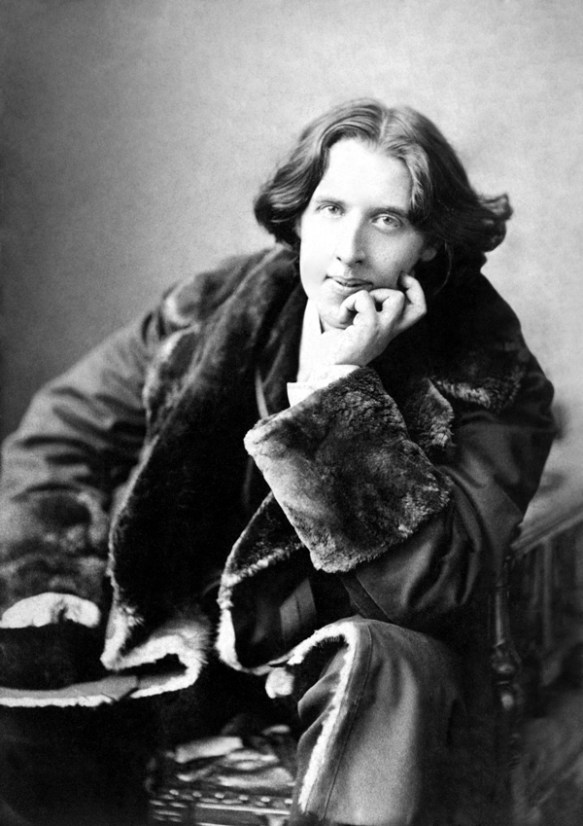
Happy Birthday, Oscar Wilde: A Few Maxims for the Instruction of the Over-Educated

  • Education is an admirable thing. But it is well to remember from time to time that nothing that is worth knowing can be taught.
  • Public opinion exists only where there are no ideas.
  • The English are always degrading truths into facts. When a truth becomes a fact it loses all its intellectual value.
  • It is a very sad thing that nowadays there is so little useless information.
  • The only link between Literature and Drama left to us in England at the present moment is the bill of the play.
  • In old days books were written by men of letters and read by the public. Nowadays books are written by the public and read by nobody.
  • Most women are so artificial that they have no sense of Art. Most men are so natural that they have no sense of Beauty.
  • Friendship is far more tragic than love. It lasts longer.
  • What is abnormal in Life stands in normal relations to Art. It is the only thing in Life that stands in normal relations to Art.
  • A subject that is beautiful in itself gives no suggestion to the artist. It lacks imperfection.
  • The only thing that the artist cannot see is the obvious. The only thing that the public can see is the obvious. The result is the Criticism of the Journalist.
  • Art is the only serious thing in the world. And the artist is the only person who is never serious.
  • To be really medieval one should have no body. To be really modern one should have no soul. To be really Greek one should have no clothes.
  • Dandyism is the assertion of the absolute modernity of Beauty.
  • The only thing that can console one for being poor is extravagance. The only thing that can console one for being rich is economy.
  • One should never listen. To listen is a sign of indifference to one’s hearers.
  • Even the disciple has his uses. He stands behind one’s throne, and at the moment of one’s triumph whispers in one’s ear that, after all, one is immortal.
  • The criminal classes are so close to us that even the policemen can see them. They are so far away from us that only the poet can understand them.
  • Those whom the gods love grow young.

(via Brain Pickings)

No, Bush was not right about Iraq

How conservatives misread new Times bombshell: ‘The right says a new NY Times report on chemical weapons in Iraq vindicates Bush. Even Team Bush disagrees!’ (Via Salon.com).

Related: How Bush opened the door for ISIS

‘One thing is clear: the foreign armies that the U.S. invests so much money, time, and effort in training and equipping don’t act as if America’s enemies are their enemies. Contrary to the behavior predicted by Donald Rumsfeld, when the U.S. removes those “training wheels” from its client militaries, they pedal furiously when they pedal at all in directions wholly unexpected by, and often undesirable to, their American paymasters. And if that’s not a clear sign of the failure of U.S. foreign policy, I don’t know what is.’ (Via Salon.com).

Research shows the rats of NYC are infected with at least 18 new viruses

Research shows the rats of NYC are infected with at least 18 new viruses

Via io9: ‘To work out what kind of diseases the rats of NYC were carrying, the scientists trapped 133 rats at five sites around the city, focussing on those inside residential buildings in particular, for obvious disease-spreading reasons.They then used molecular testing to look for known bacterial pathogens and viruses in the rats’ tissue and excretions.

They found that 15 of the 20 bacterial pathogens they were testing for were present in the rats, as well as one virus, Seoul hantavirus, which causes Ebola-like heamorrhagic fever in humans. This is the first time the virus has been documented in New York City, and the genetic clues in the rats suggest it’s a new arrival.

Perhaps even more interestingly and worryingly, the researchers also found 18 completely new viruses in the rats. None of these have been seen in humans as yet, but the scientists say that transmission is possible.’


Second Nurse with Ebola Flew on Commercial Flight with Fever

A Second Nurse and Second Guesses on Ebola - The Atlantic

Via The Atlantic: ‘The CDC is contacting all 132 passengers who were onboard the Frontier Airlines flight from Cleveland to Dallas on Monday along with a nurse who treated Thomas Eric Duncan before he became the first person to die of Ebola in the U.S. CDC director Dr. Thomas Frieden bluntly told reporters on Wednesday that the nurse “should not have traveled” on the plane because she was one of dozens who were being monitored for exposure to the deadly disease.

…Frieden said all health workers who came in contact with Duncan, who died October 8, would now be restricted from traveling commercially. Still, he said that because the second nurse did not exhibit symptoms on the flight from Cleveland, the risk to other passengers remains “extremely low.” The passengers are being contacted, he said, as “an extra margin of safety.”

Any passengers on Flight 1143, which landed at Dallas-Fort Worth at 8:16 p.m. Central, should call 1-800-CDC-INFO. Frontier Airlines released a statement saying the plane had been cleaned twice before resuming its service.’

The History of the Scary Clown

Via The Atlantic: ‘How, exactly, did clowns go from lovable children’s entertainers to the bewigged, bone-chilling incarnation of evil? The answer is complicated, and spans a period of almost 200 years…’

Related:

Behold, Every Horror Movie on TV This October

Via The Atlantic: ‘October is the most wonderful time of the year for horror fans. TV networks pack their schedules with scares, allowing viewers to create their own horror marathon out of hundreds of different combinations. Below, I’ve put together a calendar of all 300+ horror films set to air on cable for the month—and looking at the list, it’s clear how incredibly versatile the definition of “horror” can be.’

The Scary Truth: Horror Films (Alarmingly) Based on True Stories

Via The Atlantic: ‘These ten horror movies are all inspired by real events—unfortunately.’

Why Do Some Brains Enjoy Fear?

Via The Atlantic: ‘The science behind the appeal of haunted houses, freak shows, and physical thrills.’

‘Annals of Idiocy’ Dept.

Yelling ‘I have Ebola!’ on a bus can get you arrested - The Washington Post

Via The Washington Post: ‘A man wearing a surgical mask and a woman got onto a bus in Los Angeles Monday afternoon. He proclaimed, “I have Ebola!” Moments later, he threw the mask on the ground, and they both got off the bus. Now, the FBI is involved in trying to track down the man, with an investigation being treated as a possible terrorist or criminal threat, according to Los Angeles Metro officials.’