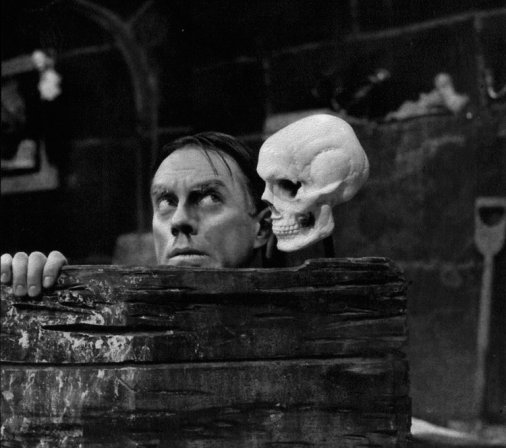
This guy is El Chapo of the animal world.
Source: Damnbored

‘The first step in taming all-consuming dread of a Trump presidency is to get calm…’
Source: Eliza Barclay, Vox
‘ “Compassion is not sitting in your room; it’s actually very active and engaging,” a senior disciple of Thich Nhat Hanh says…’
Source: Eliza Barclay, Vox
‘It is expected that art in periods of political polarization or extremism will become more explicitly political, that it will become “engaged,” actively commenting on world affairs, a form of protest or action. That is what a great many people are asking of art in the West, and particularly in the United States, after the surprising election…
However, historically, it is not always the case that tyrannies or depressions or famines only produce more explicitly political art. It has also been the case that periods of great inequality and economic anxiety and even incipient conflict can produce the most cerebral and abstract art, indeed, the most revolutionary of conceptual shifts in art – art that appears to ignore economic and social questions altogether, at least on its surface, and dives instead into questions of form…’
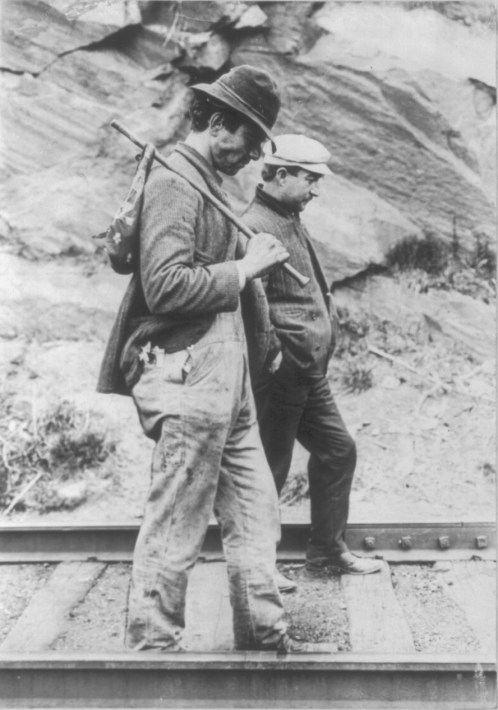 Hoboism as a way of life. Source: Brktrail.com
2016 Hobo Convention, Britt IA.
The Hobo Ethical Code of 1889. Source: Open Culture
‘…[I]n the wake of Donald J. Trump’s surprising election victory, hundreds of his extremist supporters converged on the capital to herald a moment of political ascendance that many had thought to be far away…
Emboldened by Mr. Trump’s takeover of the Republican Party, [one spokesperson] said he expected people openly associated with the white nationalist movement to run as candidates in the 2018 midterm elections. The rise of populism and the decline of political correctness, he said, present a rare opportunity…’
Source: New York Times
If you are looking for effective advocacy groups and you are particularly concerned about the rise of the rabid right, consider supporting the Southern Poverty Law Center.
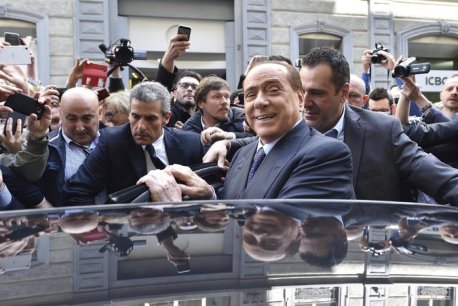 University of Chicago economist Luigi Zingales warned about a Trump presidency five years ago and was laughed at. But he came from Italy, and drew upon the Silvio Berlusconi parallels. Berlusconi was able to govern Italy for a total of nine years, Zingales says, because of the incompetency of the opposition, and he warns us against making the same mistakes lest we create a Trump dynasty that will last long beyond his age or term limits would allow.
During the campaign, the opposition’s rabid obsession with his personality flaws, Zingales argues, increased sympathy among moderate voters, increased his popularity, and gave him free advertising. And this trend is continuing since his election, The vehement anti-Trump protests are counterproductive.
“There will be plenty of reasons to complain during the Trump presidency, when really awful decisions are made. Why complain now, when no decision has been made? It delegitimizes the future protests and exposes the bias of the opposition.”
The blueprint provided by the Italian experience — of the only two men to win electoral campaigns against Berlusconi — for how to defeat Trump relies on treating him as “an ordinary opponent”, focusing on issues rather than on his character. To ignore this advice would “crown Mr. Trump as the people’s leader of the fight against the Washington caste” and cripple the opposition’s ability to conduct a battle of principles. The Democrats
“should not do as the Republicans did after President Obama was elected. Their preconceived opposition to any of his initiatives poisoned the Washington well, fueling the anti-establishment reaction (even if it was a successful electoral strategy for the party). There are plenty of Trump proposals that Democrats can agree with, like new infrastructure investments.”
“Finally, the Democratic Party should also find a credible candidate among young leaders, one outside the party’s Brahmins. The news that Chelsea Clinton is considering running for office is the worst possible. If the Democratic Party is turning into a monarchy, how can it fight the autocratic tendencies in Mr. Trump?”
Source: New York Times op-ed
‘Nowhere on the surface of the planet have we seen any record cold temperatures over the course of the year so far. Every land surface in the world saw warmer-than-average temperatures except Alaska and the eastern tip of Russia. The continental United States has been blanketed with record warmth — and the seas just off the East Coast have been much warmer than average, for which Sandy sends her thanks… This is the 332nd consecutive month with an above-average temperature. If you were born in or after April 1985, if you are right now 27 years old or younger, you have never lived through a month that was colder than average…’
Source: Grist
‘The incoming president… is actively soliciting business from agents of foreign governments. Many of these agents, in turn, said that they will accept the president-elect’s offer to do business because they want to win favor with the new leader of the United States.
In an exclusive exchange with ThinkProgress, Richard Painter, a University of Minnesota law professor who previously served as chief ethics counsel to President George W. Bush, says that Trump’s efforts to do business with these diplomats is at odds with a provision of the Constitution intended to prevent foreign states from effectively buying influence with federal officials.
The Constitution’s “Emoluments Clause,” provides that “no person holding any office of profit or trust under” the United States “shall, without the consent of the Congress, accept of any present, emolument, office, or title, of any kind whatever, from any king, prince, or foreign state.” …’
Source: ThinkProgress
‘When the cockpit recorder transcript from Air France Flight 447 was leaked to the public in 2011, many startling details emerged. The plane, which crashed into the Atlantic Ocean on June 1, 2009, killing all 228 people on board, had been under the control of pilots who were communicating poorly and not realizing one another’s mistakes. The plane’s speed slowed to dangerous levels, activating the stall alarm—the one, in the words of Popular Mechanics, “designed to be impossible to ignore.” It blared the word “Stall!” 75 times.
Everyone present ignored it. Within four minutes, the plane had hit the water.
Alarm sounds are engineered to elicit particular responses in humans. And yet, sometimes, humans choose not to respond, having decided that the situation is not urgent enough or that the sound is a false alarm. Audio alarm designers seek to avoid this by designing sounds that have an intuitive meaning and precisely reflect the level of urgency. But what makes an “awooga” sound more or less urgent than a “ding”? And how do you create an alarm noise that’s annoying enough to get someone’s attention, but not so annoying that said person disables the alarm? …’
Source: Atlas Obscura
‘I keep getting asked one thing repeatedly both in person, over e-mail, and online: “Are there any checks in place to keep the US President from starting a nuclear war?” What’s amazing about this question, really, is how seriously it misunderstands the logic of the US command and control system. It gets it exactly backwards.
The entire point of the US command and control system is to guarantee that the President and only the President is capable of authorizing nuclear war whenever he needs to. It is about enabling the President’s power, not checking or restricting him…
He could launch the kind of devastating attack the world has never seen. He doesn’t have to check with anybody, he doesn’t have to call Congress, he doesn’t have to check with the courts… To be sure, the official doctrine that I have seen on the Nuclear Command Authority implies that the President should be given as much advice as possible from the military, the Department of Defense, and so on. But nothing I have seen suggests that this is any more than advisory — and the entire system is set up so that once the President’s order is verified and authenticated, there are meant to be only minutes until launch.
It isn’t entirely intuitive — why the President, and not someone else, or some combination of people? Why not have some kind of “two-man rule,” whereby two top political figures were required to sign off on the use before it happened? The two-man rule is required for commanders to authorize nuclear launches, so why not the Commander in Chief?’
Source: Restricted Data
 The only tragedy of this election greater than that the narcissistic child Trump will have the authority to launch nuclear annihilation is that the ignorant American voting public would hand it over to him.
 ‘…[I]t’s as strange as it would be if every time you measured a cup of rice, you observed that the number of grains was prime….’
Source: Quanta Magazine
Source: Cory Doctorow, Boing Boing
 The transition period is our last best chance to save the republic
Source: Matthew Yglesias, Vox
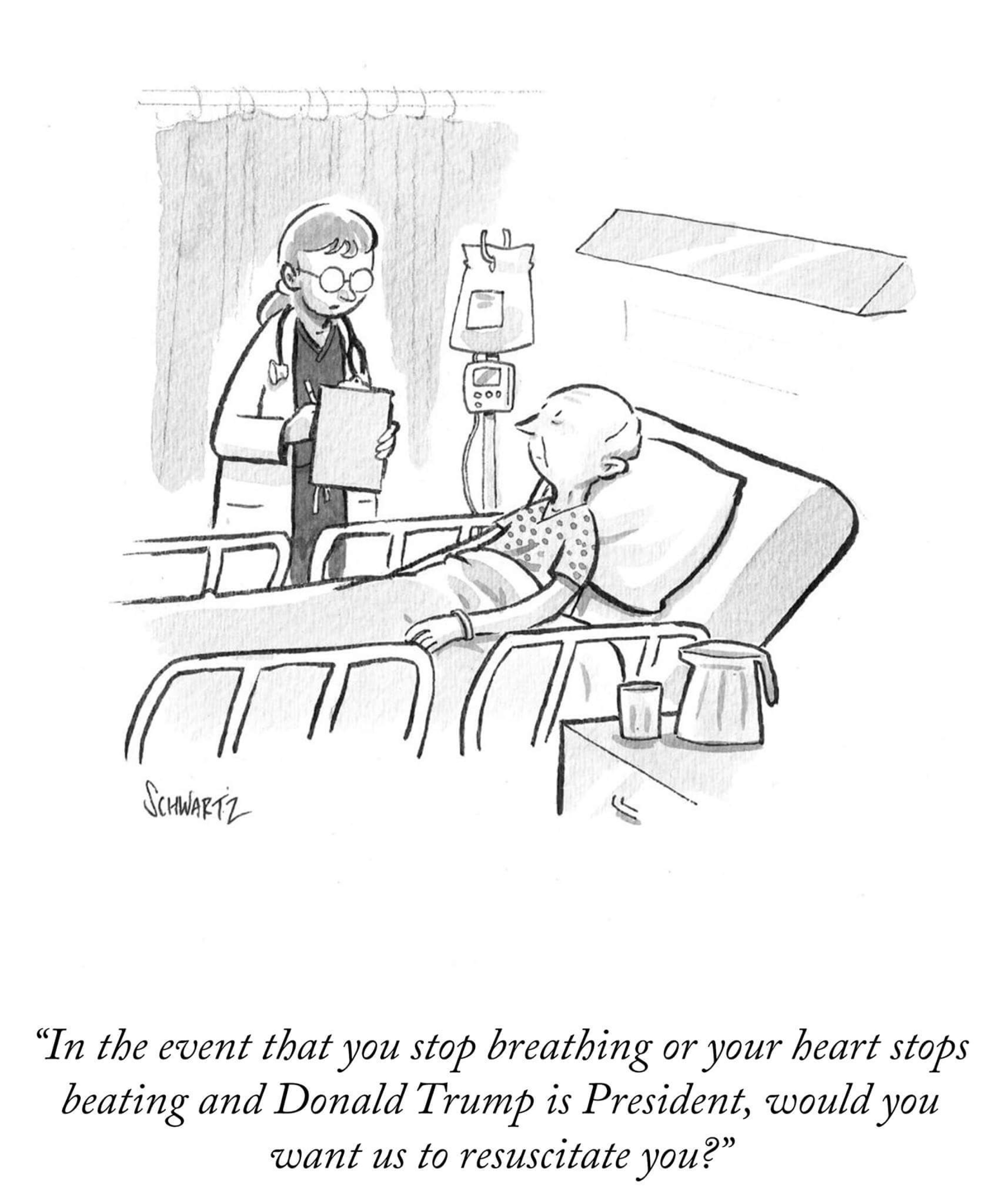
‘When Mike Pence entered the Richard Rodgers Theatre to see Hamilton last night, the crowd booed him.When the play ended, the cast sent Pence off with a special message. Speaking for the cast, Brandon Victor Dixon, the actor who plays Aaron Burr, said this…’
Source: Open Culture
‘President Obama built the most advanced surveillance system ever and in a few short months the keys to that get handed to President Elect Trump which has some people nervous. It’s a sad fact that the folks who are only freaking out about this prospect now were perfectly OK with it when their guy was in charge, and it’s funny watching the country switch sides on this stuff almost over night.
There are a lot of articles flying around about the best ways to protect your privacy under the coming Trump Administration, but if I can humbly recommend a few simple things:
Install Signal. Use this for messaging. Don’t use Facebook messenger or SMS or anything else. Don’t use this “only for the stuff you don’t want getting out” – use it for everything all the time.
Get a VPN and use it. I like Private Internet Access because I have a recurring subscription, but I’ve also used iPredator which I also like but requires constantly prepaying so I forget and my account expires. Feel free to use both!
Use DuckDuckGo for all online searches, and change the default search engine on your browsers to DDG too. They don’t keep logs of everything you search for.
Get a good password manager and make sure you aren’t using the same passwords anywhere. I like 1password…’
Source: Sean Bonner
What do you think? I’m already onboard with DDG and 1Password. Would switch all my messaging to Signal if the people I talk to would buy in and install it too. I use a different VPN but I admit I do not surf through it all the time.
 The Morning News said, ‘Interest grows in pushing for California’s secession from the United States. They call it #Calexit. It will be a flash in the pan.’
But why restrict the movement to California? People everywhere insist he is “Not My President” and many everywhere feel as if they do not live in the same country as Trump supporters. Why not a secession from Trumpsylvania, a “Trexit”? The GNP of a nation made up of the blue states would be among the largest in the world, and many would be happy to leave the rest to the Narcissist-in-Chief.
November 15 was Follow Me Here’s 17th Birthday… Thanks for all your support through the years. Enter a comment to let me know when and how you were introduced to FmH.
Ken Krobb at the Bureau of Public Secrets proposes that we can take heart in Trump’s election, which he suggests will hasten the demise of the Republican Party. “…It’s going to be like the proverbial dog chasing a car: what happens if the dog actually catches the car?” With the Republican monopoly of power, there’ll be no one else to blame when they actually have to deliver on their empty promises and can’t accomplish anything.
For instance, if they succeed in dismantling Obamacare, it is pretty clear they won’t be able to come up with some pie-in-the sky superior plan, and they will leave 22 million voters, newly insured under Obamacare, back to their previous uninsured situation.
But so what? Obamacare was admittedly never that popular anyway. How about the most popular social programs in America for decades, social security and Medicare, which Paul Ryan wants to dismantle? As Eisenhower famously noted,
“Should any political party attempt to abolish social security unemployment insurance and eliminate labor laws and farm programs you would not hear of that party again in our political history. There is a tiny splinter group of course that believes you can do these things. Among them are a few Texas oil millionaires and an occasional politician or business man from other areas. Their number is negligible and they are stupid.”
Well, no longer negligible, at least.
Even though Trump’s fanatic base may think they have won a victory against reproductive rights and marriage equality, they are increasingly out of step with the positions of a majority of Americans on those issues. Dismantling existing rights in those spheres and sending us back to the chaos of “leaving it to the states” would be a logistical nightmare… with a backlash, hopefully.
Racism has been a core canon of the Republican Party since Nixon’s “southern strategy” in the 60s, but now it is out in the open rather than covert and deniable. Fervent Trump supporters are already supporting their newfound mandate by viciously harassing and threatening people of color in his name. The Trump Republican Party is going to have to own that, to its shame and detriment.
“[The Republican] party was already heading toward a civil war between its mutually contradictory components (financial elite, tea party, neocons, libertarians, religious reactionaries, and the few remaining moderates). To those general divisions are now added the antagonisms between the new Leader and those who oppose him. Bush at least had sense enough to know that he was an incompetent figurehead, and gladly let Cheney and Rove run things. Trump thinks he’s a genius, and anyone who doesn’t agree will be added to his already very large enemies list.”
And the whole show is so public. With the whole world scrutinizing “President Ubu and his Clown Car administration,” all Republicans will be tarred by association with his inanities, backtracking and failures. “You’re no longer in the Republican Party, you’re in the Trump Party. You bought it, you own it.”
Everyone takes it as a given that responding to this bizarre situation will strengthen the rise of new movements of protest and resistance. With the Republican monopoly control of the government, even those who normally focus on electoral politics must realize that for some time to come the main efforts for political change will be outside the parties and outside the government; “it will be grassroots participatory action or nothing.” And everyone seems to recognize that the defense of those most threatened by the new regime — people of color, Muslims, LGBTQs, Jews, the disabled — will be a strong priority.
“But we will also need to defend ourselves. The first step in resisting this regime is to avoid getting too caught up with it — obsessively following the latest news about it and impulsively reacting to each new outrage. That kind of compulsive media consumption was part of what led to this situation in the first place. Let’s treat this clown show with the contempt it deserves and not forget the fundamental things that still apply — picking our battles, but also continuing to nourish the personal relations and creative activities that make life worthwhile in the first place. Otherwise, what will we be defending?”
So this disaster will hopefully shock people into coming together to care better for one another and themselves and addressing the looming crises of the coming decades more wholeheartedly and with far fewer illusory hopes that the existing system will save us.
[When the Southern racist George Wallace ran for President in 1968, there was an oft-stated scurrilous wish from some on the Left that he succeed, so as to bring on the Revolution. Of course, what we mean these days by Revolution is a little different, but now, nearly fifty years later, Could it finally come to pass? Krobb is not the only one pointing out that this may be the worm that eats itself, and the last gasp of the misogynist white gerontocracy in American politics, dare one hope –FmH]
‘A grisly whodunit may rest on the oddest criminal defense theory in recent history. We asked the experts if it’s possible.’
Source: Audubon
Should Donald Trump actually succeed in building his long-promised wall along Mexico’s border with the United States, he’ll be in good company. Walls have long been a symbol of—and a tool in—the division between sovereignties, “From the building of the Roman Limes in the second century CE … up to more modern structures such as the iconic Berlin Wall,” as University of Quebec geographer Elisabeth Vallet writes in her book, Borders, Fences and Walls.
Source: Francie Diep, Pacific Standard
Tonight there was a protest in Los Angeles, condemning the pick of Steve Bannon as Sr Advisor to the president. I think Breitbart News is very good at stirring people into a frenzy and very bad at reporting the news. I think picking the guy who runs that for a position equal to Chief of Staff is dangerous. I wanted to go and take photos, my wife Tara wanted to go and hold up a sign. Ripley, my 6 year old son also wanted a sign but I’m not a fan of indoctrinating children to anything, and didn’t want to write up a political sign that him carrying around would suggest he was making the statement. I told him what the protest was about, and asked him what he wanted on his sign. I told him he could put anything that he wanted. He wanted a happy sign that would make other people happy too, so he decided his sign should say “I Love Cats.” I thought it was great. On the other side he decided the sign should say “It’s past my bedtime” because the protest was at night and he would be tired and this would show people that even though he was tired and it was late he was there with them. I loved this sentiment. We drew up the signs and headed out.
Tara and Ripley joined some friends of ours on one side of the crowd and I walked around taking photos. The mood of the evening was largely positive, people were protesting something they were upset about but the crowd working together. There were the expected “Ban Bannon” and “No KKK” signs, as well as some more original and light hearted ones including one older lady with a sign that read “I’ve been protesting this same fascist shit for 50 years!” and a guy with a trans flag and a sign saying “This isn’t the kind of dick I wanted.” Anytime I was near my family people were taking photos of my son and his sign, with many people telling him they loved it and it was the best sign there, which made him smile big.
He got in on the chanting, memorizing the rymes. He waved his sign for people and smiled when they took his photo. This was his first protest and he told me he really enjoyed it. He said he loved seeing all the people together, hoping for the same thing.
By 8:30 it was in fact well past his bedtime and we decided to leave. Tara and Rips started to move to the edge of the crowd and I was behind them. As I turned to leave two younger women tapped me on the shoulder. I only spoke with them for a moment but I’d guess they were late 20’s-ish.
“Hi, can we talk to you for a moment about your son’s sign?”
“Sure”
“It’s very cute, but we are concerned that if someone sees it and takes a photo it will misrepresent the feeling of this event.”
“Lots of people have taken photos of it all night, everyone has been enjoying it”
“That’s the problem, it’s sending the wrong message – I Love Cats? This isn’t about cats”
“He’s 6, that’s what he wanted on his sign. I’m not going to put my politics on a sign and make him carry it.”
“He doesn’t support immigrants rights?”
“He’s 6”
“There are lots of kids here with political signs”
“Sure, that their parents wrote for them”
“But what will people think if they see this sign”
“I don’t really care”
“YOU DON’T CARE?”
“Are you really upset that a 6 year old isn’t protesting correctly?”
“You wouldn’t be saying that if you weren’t a white man, maybe you should meet an immigrant and find out how they feel, you are mocking the serious people here… Racist!”I turned around and to walk away and one of them punched me in the back of the head.
I kept walking, they shouted something but I wasn’t listening anymore.
In the 5 minute walk back to our car, at least 10 more people said “Love that sign!!”
As some of you know, my wife is an immigrant…
The sun will rise tomorrow.
Source: Sean Bonner, newsletter
‘The alt-right movement is both “real” and “truly terrifying,” according to conservative radio host Glenn Beck.“I want to make sure that everybody understands that the alt-right is real. It is truly terrifying, in my opinion,” Beck said Tuesday during an interview with CNN’s Anderson Cooper.
The alt-right movement is a fringe right-wing movement that welcomes white nationalism, anti-Semitism, racism and misogyny. Beck went on to explain that former Breitbart News chief Stephen Bannon — now equal partner to incoming White House chief of staff Reince Priebus — gave the alt-right and white nationalists a platform at Breitbart, something Bannon confirmed earlier this year.
“He has given a voice and power to that group of people,” Beck explained. “You don’t empower people like that. You just don’t. It’s not smart.”
Source: TheBlaze
 American University Professor Allan Lichtman, who has been dubbed the “prediction professor,” was one of the only political forecasters to correctly predict President-elect Donald Trump’s ascension to the White House last week. But now he’s guessing it will all come crashing down. “There’s a very good chance that Donald Trump could face impeachment,” Lichtman told CNN’s Erin Burnett Tuesday night.
Source: TheBlaze
‘Ultimately, it comes down to a single question that can be asked in two different ways: if you really believe Trump is a fascist who is emboldening white nationalism and will begin systematic persecution of Muslims, blacks, gays, and Jews, how can you sit on the sidelines and not take action to stop him? If you really believe that because of Trump you are “going to die from climate change” how can you not take up arms against him? After all, a majority of Americans voted against Trump, yet he will become President…’
Source: TheBlaze
‘How can we make facts matter? Research in psychology and political science offers a little hope.’
Source: Vox
‘News stories are supposed to help ordinary voters understand the world around them. But in the 2016 election, news stories online too often had the opposite effect. Stories rocketed around the internet that were misleading, sloppily reported, or in some cases totally made up.
Over the course of 2016, Facebook users learned that the pope endorsed Donald Trump (he didn’t), that a Democratic operative was murdered after agreeing to testify against Hillary Clinton (it never happened), that Bill Clinton raped a 13-year-old girl (a total fabrication), and many other totally bogus “news” stories. Stories like this thrive on Facebook because Facebook’s algorithm prioritizes “engagement” — and a reliable way to get readers to engage is by making up outrageous nonsense about politicians they don’t like.
A big problem here is that the internet has broken down the traditional distinction between professional news-gathering and amateur rumor-mongering. On the internet, the “Denver Guardian” — a fake news site designed to look like a real Colorado newspaper — can reach a wide audience as easily as real news organizations like the Denver Post, the New York Times, and Fox News.
Since last week’s election, there has been a fierce debate about whether the flood of fake news — much of it prejudicial to Hillary Clinton — could have swung the election to Donald Trump. Internet giants are coming under increasing pressure to do something about the problem…’
Source: Vox
‘A remarkable paper claims that staying off Facebook for a week could make you happier: The Facebook Experiment, by Morten Tromholt of Denmark. What makes this study so interesting is that it was a randomized controlled trial (RCT) and so was able, at least in theory, to determine whether quitting Facebook actually causes changes in well-being. Previously, there has been lots of research reporting correlations between social network use and happiness, but correlation isn’t causation…’
Source: Neuroskeptic
‘America’s president-elect is an alleged sexual predator. This theory of sexism explains how it came to this — and why even many women voted for Trump…’
Source: Emily Crockett, Vox
‘Barack Obama found in 2009 that winning a presidential election is one thing but getting the United States Senate to do what you want is a rather different thing. Next year, Donald Trump will have Republican congressional majorities at his back, but that doesn’t necessarily mean the Senate will back all of his priorities. And already, as the transition enters its second week, foreign policy is emerging as a potential trouble spot for Trump. It started with Dave Weigel’s report Tuesday that Sen. Rand Paul would be inclined to oppose John Bolton or Rudy Giuliani as secretary of state…’
Source: Vox
 ‘ “There should be no sugarcoating the truth here: Donald Trump just invited a white nationalist into the highest reaches of the government,” Democratic Sen. Jeff Merkley said in a statement…’
Source: Vox
 ‘…[A] lot of Americans are looking for new ways to make a difference and do their part to stop what they consider a dangerous agenda. And some are hoping that their representatives in Congress can act as a check on Trump.For those taking this approach, blogger Emily Ellsworth has some advice: Don’t just tweet, write, or email your representatives. Call them — and go to town halls…’
Source: Vox
‘If you’ve ever been to a foreign country where you don’t speak the language, you know that an inability to communicate can be frustrating, if not a bit scary. But in Arrival, when 12 shell-shaped UFOs land across the world, everything seems to hinge on the skills of Amy Adams’ linguistics expert, Louise—just as the movie itself hinges on making communication compelling.It was up to screenwriter Eric Heisserer and production designer Patrice Vermette to not only bring Ted Chaing’s short story “Story of Your Life” to the
It was up to screenwriter Eric Heisserer and production designer Patrice Vermette to not only bring Ted Chaing’s short story “Story of Your Life” to the screen, but also to create the language the aliens used—and then translate all of it into a gripping drama. Having seen the movie, which opened this past weekend, we can tell you they succeeded. Here’s how…’
Source: Gizmodo
“So many of our conflicts and our problems stem from miscommunication.”
Source: Vox
‘Shocked by Donald Trump’s surprise victory and the wave of white supremacism he left in his wake, many Americans have taken to the streets to protest. But if progressives really want to fight back against Trumpism, they need to build a mass national movement, the likes of which hasn’t been seen since the 1960s. Put another way, they need a Tea Party of the left.
Fortunately, progressives won’t have to start from scratch. A justice coalition that includes existing advocacy groups could be built up quickly, as proven by Forward Together; for the past four years, this movement has served as a model for how progressives can unite to combat retrograde and sometimes hateful policies by state and federal governments…’
Source: Fusion
‘Millions of Americans are justifiably afraid of what they’ll face under a Trump administration. If any group demands our support and sympathy, it’s these people, not the Americans who backed Trump and his threat of state-sanctioned violence against Hispanic immigrants and Muslim Americans. All the solicitude, outrage, and moral telepathy being deployed in defense of Trump supporters—who voted for a racist who promised racist outcomes—is perverse, bordering on abhorrent…’
Source: Jamelle Bouie, Slate

Source: The Awl
‘We say goodbye to musical icons in many different ways, from flashmobs, SNL intros, and long retrospectives to live concert tributes featuring the biggest cover band on earth. No matter how outsized the gesture, it never quite seems out of place when it comes to artists of a certain stature. In the case of Frank Zappa, we’ve recently seen jazz orchestra tributes, a “monumental live performance” of one of his own orchestral works, and several Zappa tribute concerts by his son Dweezil.For all their heart and stamina, however, no tribute can compete with the power of those artists’ farewells to us. Both David Bowie and Leonard Cohen, too fragile to perform in their last years, left phenomenal albums we’ll pore over for decades to come. Southern rock great Leon Russell, who just passed away this week at 74, put on rollicking live shows into his final years, and had concerts booked into 2017 when he died. Prince’s final performance was, like all of his performances, stunning. And Zappa? Well see for yourself. Zappa played his way out of the world as he’d played his way into it, with sardonic humor and blistering virtuosity…’
Source: Open Culture
 “We should be cautious about putting too much faith or fear into elected officials,” said Snowden. “At the end of the day, this is just a president.”
Source: Big Think
Fount of Jazz and Blues Dies at 89
Mose Allison, a pianist, singer and songwriter who straddled modern jazz and Delta blues, belonging to both styles even as he became a touchstone for British Invasion rockers and folksy troubadours, died on Tuesday at his home in Hilton Head, S.C. He was 89.
Source: The New York Times obituary
2016: We are continuing to lose giants of musicat an alarming rate.
It will not be enough, in the coming months, to say that Trump voters were simply angry. Cramer shows that there are nuances to political rage. To understand Trump’s success, she argues, we have to understand how he tapped into people’s sense of self.
Source: Jeff Guo, The Washington Post
Our technology has changed this election, and is now undermining our ability to empathize with each other
Source: Tobias Rose-Stockwell, Medium
“Once again, Bruce Schneier freaks me out“, says Gabe. Schneier writes:
The ultrasonic pitches are embedded into TV commercials or are played when a user encounters an ad displayed in a computer browser. While the sound can’t be heard by the human ear, nearby tablets and smartphones can detect it. When they do, browser cookies can now pair a single user to multiple devices and keep track of what TV commercials the person sees, how long the person watches the ads, and whether the person acts on the ads by doing a Web search or buying a product.
Source: Macdrifter
‘On the one side of this fight stands Bernie, plus his youthful followers, plus the progressive Elizabeth Warren wing of the Democratic Party (let’s finally say goodbye to the neoliberal, Wall Street-protecting, labor-union-ignoring, white-working-class-insulting global-elite Davos Clinton/Obama wing of the Democratic Party, who’ve handed our government to the GOP). On the other side lurks the army of resentful older white mater fornicators who voted for Trump.
The Trumpists will lose this fight, because our economy is about to be crippled by an unfettered GOP in charge of all three branches of government. The failure of the GOP’s discredited economic remedies will fire up the resentment of their white working class base to the highest heavens (a base who already believes that Washington’s Republicans have done sweet blow-all for them). By the end of his first term, Trump will face a maddened, resentful electorate, burning to stick long pointy needles in his obese effigy.
Get ready for 2020, when Elizabeth Warren will step into the arena and run against Trump. She will generate even more excitement than Bernie did. Trump cannot give his followers the satisfaction they seek — nobody can — and Elizabeth will bury him. In the end, this macho bully will meet his match at a woman’s hands. Maybe that damn Hillary bitch could not quite settle his hash, but this here Elizabeth witch will double-knot his jock strap.
If Trump is a white backlash against Obama, a total swing of the pendulum, Warren will be a progressive backlash against the Trump phenomenon, another total swing of the pendulum.Just you wait: the Donald Trump presidency is making an Elizabeth Warren presidency inevitable…’
Source: 3quarksdaily
‘In dark times, it’s tempting to give up on politics. The philosopher Charles Taylor explains why we shouldn’t.’
Source: The New Yorker
‘With a top hat on his head, hair well past his shoulders, a long beard, an Oklahoma drawl and his fingers splashing two-fisted barrelhouse piano chords, Mr. Russell cut a flamboyant figure in the early 1970s. He led Joe Cocker’s band Mad Dogs & Englishmen, appeared at George Harrison’s 1971 Concert for Bangladesh and had hits of his own, including “Tight Rope.”
His songs also became hits for others, among them “Superstar” (written with Bonnie Bramlett) for the Carpenters, “Delta Lady” for Joe Cocker and “This Masquerade” for George Benson. More than 100 acts have recorded “A Song for You,” a song Mr. Russell said he wrote in 10 minutes.
By the time Mr. Russell released his first solo album in 1970, he had already played on hundreds of songs as one of the top studio musicians in Los Angeles. Mr. Russell was in Phil Spector’s Wall of Sound Orchestra, and he played sessions for Frank Sinatra, Sam Cooke, Aretha Franklin, the Ventures and the Monkees, among many others. He is heard on “Mr. Tambourine Man” by the Byrds, “A Taste of Honey” by Herb Alpert, “Live With Me” by the Rolling Stones and all of the Beach Boys’ early albums, including “Pet Sounds.” …’
Source: New York Times
The hazard of cherishing the music of my youth is that it is increasingly becoming a memento mori.
This bystander’s guide to Islamophobic harassment was created by a young illustrator and filmmaker who works in Paris and goes by Maeril. She made versions in both French and English.
Below the guide, Maeril wrote that this technique works for any kind of harassment in a public space, but she was specifically focusing on the Islamophobia she’s witnessed in Paris.
Source: Atrending.com
In the wave of reactions to Donald Trump’s election as the 45th president of the U.S., safety pins have taken on a new meaning in the country.
Some Americans are wearing safety pins as a symbol of solidarity with victims of racism, homophobia and religious discrimination. People have spoken out on Twitter to say that their safety pins show that they are an ally to marginalized groups.
Source: PBS NewsHour
We don’t get to make ourselves feel better by putting on safety pins and self-designating ourselves as allies.
Source: Huffington Post
How a man you’ve never heard of could be our last chance to stop Trump.
Source: Medium
Sounds like it may be worth supporting Jackson Cantrell’s Louisiana Senate bid.
In the early hours of Nov. 9, 2016, the winner of the presidential election was declared. As the day unfolded, the extent to which a moral rhinoceritis had taken hold was apparent. People magazine had a giddy piece about the president-elect’s daughter and her family, a sequence of photos that they headlined “way too cute.” In The New York Times, one opinion piece suggested that the belligerent bigot’s supporters ought not be shamed. Another asked whether this president-elect could be a good president and found cause for optimism. Cable news anchors were able to express their surprise at the outcome of the election, but not in any way vocalize their fury.
All around were the unmistakable signs of normalization in progress. So many were falling into line without being pushed. It was happening at tremendous speed, like a contagion. And it was catching even those whose plan was, like Dudard’s in “Rhinoceros,” to criticize “from the inside.”
Evil settles into everyday life when people are unable or unwilling to recognize it. It makes its home among us when we are keen to minimize it or describe it as something else. This is not a process that began a week or month or year ago. It did not begin with drone assassinations, or with the war on Iraq. Evil has always been here. But now it has taken on a totalitarian tone.
At the end of “Rhinoceros,” Daisy finds the call of the herd irresistible. Her skin goes green, she develops a horn, she’s gone. Berenger, imperfect, all alone, is racked by doubts. He is determined to keep his humanity, but looking in the mirror, he suddenly finds himself quite strange. He feels like a monster for being so out of step with the consensus. He is afraid of what this independence will cost him. But he keeps his resolve, and refuses to accept the horrible new normalcy. He’ll put up a fight, he says. “I’m not capitulating!”
Source: Teju Cole, NYTimes.com
Here’s what I am saying: You’ve said all along that you disagree with the ‘inelegant’ things Trump says about all kinds of groups of people. You’ve agreed that his statements about women are abhorrent. You say you like him because he gets stuff done, not because of the way he speaks. And I believe to my core that you agree that all people should be treated with decency.
So, now you get to prove it. It’s actually so simple: Demand that it end. Demand that he finally, vociferously reject the KKK and other white supremacist groups. Every single time he or his surrogates says something over-generalized about any group of people — “all Black people live in inner cities and their lives are hell”; “all/most/many refugees/immigrants/Muslims/whatever are dangerous”; “that woman is only a 7” — hold him to the highest standard you have. Contact him and tell him, “I support you, I voted for you, and I demand that you stop saying these things.”
Source: Medium
Across Britain, the verb to trump is a euphemism for flatulence, especially malodorous flatulence. Are you familiar with the slightly scurrilous recommendation for coping with public speaking anxiety that one envision one’s audience as naked? Well, there may be a parallel here for dealing with the profound anxiety and dread so many, including myself, feel in contemplating the reality of Trump’s presidency. I am going to practice visualizing his dangerous and offensive blowhard pronouncements as offensive eruptions of a different sort out of his mouth, and malodorous ones at that.
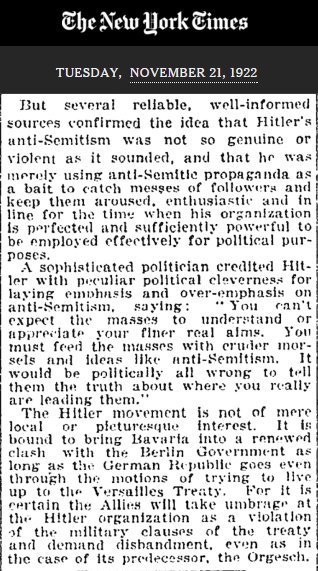 Source: Boing Boing
 Stephen Wolfram dishes about consulting on the science in Arrival. Fascinating.
Source: Medium
‘The election just ended and the new president doesn’t even take office until Jan. 20. But the transition planning starts now… Now that the news of Trump’s election has settled, speculation over how the president-elect will fill out his administration has consumed Washington….’
Source: NPR
More.dismal.news.all.around.
‘In characterizing the problem of intolerance within a republic, Rousseau wrote, “It is impossible to live in peace with people one believes to be damned.” Although Rousseau was arguing for (quite limited) religious toleration, the basic claim travels to a secular context: How can one live in peace with fellow citizens whom one believes to be, if not damned, then deplorable? In the wake of a desperately divisive, unpleasant election, how do we move forward as a nation?The challenge of ensuring that electoral outcomes are accepted is far from new. But when one side believes that a considerable number of the victorious candidate’s supporters are “racist, sexist, homophobic, xenophobic, Islamophobic, you name it,” and the
The challenge of ensuring that electoral outcomes are accepted is far from new. But when one side believes that a considerable number of the victorious candidate’s supporters are “racist, sexist, homophobic, xenophobic, Islamophobic, you name it,” and the other side believes the opponent is a vessel for the “’corrupt’ global establishment,” the problem becomes all the more vexing. Further, the surprise nature of this electoral outcome makes it all the more difficult for Trump and Clinton supporters alike to transcend the elation or devastation of the electoral results.Nonetheless, a few commitments should guide our thinking about democracy in the wake of bitter elections.
Nonetheless, a few commitments should guide our thinking about democracy in the wake of bitter elections…’
Source: How to coexist, after defeat, with citizens whose views you despise – Vox
‘…The top two contenders, typically a Democratic and a Republican, but occasionally a Whig, have danced closely around the 50-50 mark for nearly 100 years. Only four times since 1824 has the winner received more than 60 percent of the popular vote. Since 2000, the candidates have been separated by an average of 3.5 points. The median and average separations have been 8.2 and 9.5 points since 1824—a figure skewed upward due to a few outlying and not particularly close races. (The electoral tally doesn’t usually appear so close because the Electoral College tends to magnify differences in the popular vote.)
This is a feature of U.S. politics that many of us have become accustomed to. So is it unsurprising? Not really. “Considering all of the factors that go into what would make an election close or not close—incumbency, the brand of the parties—my perspective is that there’s a surprising rate of close elections,” Eitan Hersh, a Yale political scientist and the author of Hacking the Electorate: How Campaigns Perceive Voters, told me.
The question is, why? …’
Keep reading: Nautilus
‘Exit polls show 53 percent of white women voted for Trump — compared to only 43 percent for Clinton….’
Source: Huffington Post
‘We need to feel that pain of this moment. And we need to take care of each other….’
Source: Huffington Post
‘Hillary Clinton gave her concession speech today, but Black America will not….’
Source: Cyrus Aaron, Huffington Post
‘We should be appalled, but we should not be surprised….’
Source: Huffington Post
‘Donald Trump has been a vocal advocate of sexual assault, Islamophobia, xenophobia, and violent racism. Early Wednesday morning, America voted to elect him our president.Here are a few organizations that work to fight for the rights of our most vulnerable populations, and ways you can volunteer or donate to make sure they are able to work harder than ever.’
Source: Jezebel
Of course, Donald Trump didn’t create misogyny, bullying, racism, warmongering and bigotry, but they have now crawled out of the slimy rocks under which they were (imperfectly) hidden and have permission to revel in the daylight. In another social media interchange recently, a friend warned me about indulging in the ‘ecstasy of sanctimony,’ a point well-taken and quite a nice turn of phrase I thought. Well, it looks like I may be pretty ecstatic for the next four years.
‘The US Navy’s brand new $4 billion warship is an incredible technological feat. The futuristic DDG 1000 Zumwalt-class destroyer is equipped with two guns that can hit targets from a stunning 80 miles away. The only problem? Rounds for the guns cost over $800,000 each. And the Navy has now decided that it can’t justify spending that much…’
Source: Gizmodo
‘On Sunday, the New York Times published a seemingly routine report about Obama’s cyber offensive strategy. Hiding halfway down the page, however, there are some fascinating details about the decision-making process behind a potential US cyber retaliation against Russia…’
Source: Gizmodo
‘A commercial diver working near Haida Gwaii off Canada’s west coast has spotted a strange object on the seafloor that bears a striking resemblance to a nuclear device lost from a US B-36 bomber that crashed in the area 66 years ago. The Canadian government is sending naval ships to investigate.
Sean Smyrichinsky was diving for sea cucumbers when he noticed an object that looked like a flying saucer. “I came up telling all my buddies on the boat ‘Hey, I found a UFO. It’s really bizarre.’ And I drew a picture of it, because I didn’t have a camera,” he is quoted as saying in the Vancouver Sun. He recounted the story a few days later to some fisherman, prompting one of them to say, “Oh, you might have found that bomb.”
That “bomb” could very well be a lost nuclear device from a US B-36 bomber that crashed near the Haida Gwaii archipelago on February 13, 1950. The plane was traveling from Alaska to Carswell Air Force Base in Texas during a military exercise to simulate a nuclear strike on the city of San Francisco. For added realism, the plane was equipped with a real Mark IV nuclear bomb, but instead of being packed with plutonium, the bomb was loaded with lead and TNT (to be clear, the bomb did not contain any nuclear material)…’
Source: ‘Gizmodo
“Now, you may have heard that — this was just announced, I just read it, so I can’t confirm it’s true, but — this campaign has taken away [Trump’s] Twitter. In the last two days, they had so little confidence in his self-control, they said ‘We’re just gonna take away your Twitter.’ Now, if somebody can’t handle a Twitter account, they can’t handle the nuclear codes. If somebody starts tweeting at 3 in the morning because SNL made fun of you, you can’t handle the nuclear codes.”
Source: Vox
‘…[W]e are wasting a lot of time just looking for something to watch…’
Source: Gizmodo
 During this election season, we have something very much in common with woodpeckers. Many of us want to bang our heads against the wall. But the birds fare better; they have some clever adaptations to keep their noggins safe.
Source: National Geographic
‘The full moon on November 14 will look like an extra-bright spotlight in the sky— that’s because it will be a notable “supermoon” that won’t be this close to Earth again for another 18 years. In fact, the last time it looked this big was 1948, according to Space.com.
…[S]ince the moon’s orbit has an elliptical shape, sometimes it is closer to Earth than other times. Astronomers call the closest-to-the-Earth moment the perigee. What makes November 14 special is that the moon “becomes full within about two hours of perigee—arguably making it an extra-super moon,” NASA explained.This year actually has three supermoons. Besides November’s, there was one on October 16 and will be another on December 14, although neither are as close as this
This year actually has three supermoons. Besides November’s, there was one on October 16 and will be another on December 14, although neither are as close as this month’s.The November 14 supermoon is not only the closest full moon of the century so far, it won’t be matched until 2034. So if you miss this one, mark your calendar for November 25 of that year.
The November 14 supermoon is not only the closest full moon of the century so far, it won’t be matched until 2034. So if you miss this one, mark your calendar for November 25 of that year…’
Source: BGR
‘In a new Fan Theories clip posted on its official channel, Netflix explained that Walter White’s Blue Sky meth may be the chemical component that turned the first humans into zombies.
The video shows various elements and references that appear in both TV series, which is how this fan theory was born. Fans looked at various Easter Eggs in Breaking Bad and The Walking Dead and made several plausible connections. And some of them are extremely interesting.
For example, Daryl’s stash of drugs contains something that looks just like Blue Sky. He even made a reference to a “janky little white guy,” who sold drugs to his brother Merle. At one point, that dealer said “I’m gonna kill you, bitch.” Do you know anyone who speaks like that?Moreover, Glenn might be the car dealer who had to deal with Walter’s tantrum when returning a particularly red Dodge Challenger. The same car was then seen in The Walking Dead, and Glenn was driving it.
Check out Netflix’s entire explanation below, complete with a detail about the Breaking Bad person who could be one of the first Blue Sky-enabled walkers…’
Source: BGR
‘Mattthew Luckhurst, a 5-year veteran of San Antionio Police Department, was fired after feeding shit to a homeless person. Josh Baugh reports that he “placed fecal matter between two pieces of bread” and placed it in a styrofoam container next to his victim. It’s not clear if they ate it…’
Source: Boing Boing

‘Misogyny, racism and bigotry won’t go away if Donald Trump loses next week’s election; it was already here before he drew it out into the mainstream…’
Source: Jessica Valenti, The Guardian
Was Trump being prophetic — and menacing — when he insisted that the election was rigged?
‘These last-minute false leaks come after decades of animosity toward both Clintons from inside the bureau.’
Source: The Daily Beast
Why We Should All Fear the Rot Within the FBI
‘What James Comey did was bad enough, but now he’s clearly at the mercy of a right-wing faction of his own agents. Who can stop them?’
Source: The Daily Beast
‘This week, an HIV epidemic has been officially declared in the Russian city of Yekaterinburg, where the health department estimates 1 out of every 50 residents is a carrier of the virus. The government has been hesitant to recognize that Russia is experiencing one of the world’s fastest-growing HIV epidemics. In May, the head of the state AIDS center said that the country hit a tragic milestone of one million diagnosed HIV cases; it’s estimated that three million people will be infected by 2020.
In Yekaterinburg, and elsewhere in the country, an estimated half of HIV infections were contracted through intravenous drug use. And yet, no one seems to be prepared to deal with heroin dependency effectively or ethically. There are few addiction treatment centers, harm-reduction services are virtually non-existent, and methadone therapy is illegal. The alternatives are very grim.
“The public attitude is very hostile and the government doesn’t want to seem too humane towards drug users,” HIV activist Anya Sarang tells me. Sarang is the director of the Andrey Rylkov Foundation for Health and Social Justice, a grassroots organization for HIV and overdose prevention. It is the only group offering free needle exchanges in Moscow. The government’s primary strategy for dealing with people struggling with addiction is “making them feel miserable,” Sarang says. “As if the social pressure will make them stop using drugs.”
…According to the World Health Organization, opioid substitution therapy (OST), albeit imperfect, is still the most promising method of reducing heroin dependence. By being prescribed orally administrated medicine such as methadone or buprenorphine, patients can substitute illicit intravenous drug use with withdrawal relief in a supervised clinical setting. In developed countries, OST is recognized to counter overdoses, criminal behavior and public health risks such as HIV. But among Russian authorities, it’s a despised “narcoliberal” idea.
In a country with the largest population of injection drug users, methadone therapy is illegal. Methadone distribution is punishable with up to 20 years in prison. Heroin addicts— “anti-social elements,” as they’re called—are expected to quit cold-turkey, perhaps in one of the jail-like “treatment” centers…’
Source: Gizmodo
‘Former Central Intelligence Agency and National Security Agency chief Michael Hayden, now a private security consultant and George Mason University professor, writes in the Washington Post that a Trump presidency would be tantamount to handing America over to Russian power interests:
- “We have really never seen anything like this. Former acting CIA director Michael Morell says that Putin has cleverly recruited Trump as an unwitting agent of the Russian Federation.I’d prefer another term drawn from the arcana of the Soviet era: polezni durak. That’s the useful fool, some naif, manipulated by Moscow, secretly held in contempt, but whose blind support is happily accepted and exploited.That’s a pretty harsh term, and Trump supporters will no doubt be offended. But, frankly, it’s the most benign interpretation of all this that I can come up with right now.” …’
Source: Boing Boing
‘Amyloid beta plaques are gooey globs that clump together, stick to neurons inside the brain and kill them off, outright. The slow but steady accumulation of these plaques leads to Alzheimer’s disease. Tau protein tangles aid them by cutting off the brain’s supply lines, as the plaques march across white and gray matter, taking out the memory and cognitive ability, and wreaking havoc on the patient and their family. No treatment can halt this invasion once it occurs. But now, a small trial for an experimental drug is lending patients and loved ones hope.This drug inhibits the production of these plaques, according to a small study. Scientists at Merck Research Laboratories have announced the drug Verubecestat. In a small, phase I trial it “switched off” the production of the amyloid proteins that form these plaques. This in turn slowed the progression of the disease…’
Source: Big Think
‘The US Centers for Disease Control has released a report in which it identifies over a dozen cases of a deadly, antibiotic-resistant fungus called Candida auris. It’s the first time this super-strain has been found in the US, and disturbingly, four of the first seven patients infected with it have died…’
Source: Gizmodo
‘Understanding what is happening in the brain during hallucinations reveals how we’re having them all the time and how they shape our perception of reality…’
Source: New Scientist
‘…[T]he metadata indicat[es] something that appears to be a highly secretive dialog between a politically connected Russian bank and the Trump organization…’
Source: Boing Boing
‘Pain is a fundamental fact of life for many organisms on our planet; a crucial mechanism for identifying what kinds of actions pose serious threats to our physical and mental health. As robots become more sophisticated and interactive, should they also be programmed to experience pain to prevent injuries to themselves or others, and if so, to what extent? …’
Source: Motherboard
‘Two Deep Brain scientists, Martín Abadi and David Andersen, recently tasked two neural nets with keeping a secret from a third. What they found was that “neural networks can learn to protect the confidentiality of their data from other neural networks: they discover forms of encryption and decryption, without being taught specific algorithms for these purposes.” Neural nets — artificial-neuron-based systems — aren’t designed for cryptography, so Abadi and Andersen had been curious to see if neural nets could teach themselves to master it…’
Source: Big Think
‘The FBI got permission on Sunday to look through 650,000 emails discovered on a laptop used by (current target of an underage-sexting investigation) Anthony Weiner and his estranged wife/Hillary Clinton confidante Huma Abedin, to see if any of those emails might be relevant to its investigation into Clinton’s use of a private email server. The investigation will probably not be done before the election. But it remains extremely unlikely that Clinton actually violated US law.
Instead, the question in the days since FBI Director James Comey sent Congress a letter alluding to the existence of the new emails is: Why the hell did Comey do that? Comey has come under fire from former Department of Justice officials (including ex-Attorney General Eric Holder) for violating standard DOJ practice of not releasing information that could affect a campaign within 60 days of the election. Some of that criticism has even come from Republican officials like Alberto Gonzales, who was attorney general under George W. Bush (though Gonzales might have been acting on a grudge against Comey dating back to the Bush years).
Meanwhile, Senate Minority Leader Harry Reid all but accused Comey and the FBI of deliberately airing the Clinton news while sitting on information about Donald Trump’s ties to Russia — behavior on the bureau’s part that Reid says could violate the Hatch Act, which prevents federal employees from electioneering. Nothing’s leaked out to back up Reid’s claim per se. But on Monday, officials confirmed to the press that Comey had resisted saying anything in public about Russia’s efforts to influence the elections by hacking into Democratic email accounts, because he was concerned about the 60-day window — which makes his decision to write the letter about the Weiner computer all the less defensible.
Comey was in an impossible situation. There were very good arguments both for and against writing the letter. And he couldn’t guarantee that if he didn’t say anything about the new computer, information wouldn’t leak out about it anyway. But that’s exactly the problem. This entire news story has been driven by leaks from different factions of the DOJ and FBI. It’s clear that no one has enough control of the nation’s leading law enforcement agency — one that is currently engaged in an investigation into the security of important government information — to control leaks of important government information….’
‘For just 60 hours, researchers had the opportunity to examine the holiest site in Christianity. Here’s what they found.’
Source: National Geographic
Giving a talk on how to take revenge in Sydney Australia in 2011, Strumpf decides to illustrate by summoning up to the stage a former Miss Universe who he feels had rebuffed him in the past. Degrades her and attempts an unwanted kiss. Source: <a href=”http://www.huffingtonpost.com/entry/donald-trump-jennifer-hawkins-video_us_58137b85e4b0390e69cfbbba“>Huffington Post</a>
I no longer make these posts in incredulity about how Strumpf acts, but in incredulity and outrage that 40% of the electorate could still vote for the misogynistic bullying pig. I feel confident in saying that, after his he is drummed off the public stage in a satisfying and I hope overwhelming defeat next Tuesday, any embarrassing individual foolish enough to admit that s/he was a Strumpf supporter will find it impossible to be treated with respect by any thinking person.
 Extremely scary firsthand look inside America’s resurgent paramilitary movement.
Source: Mother Jones
‘Reid says the FBI has “explosive information” about Trump’s ties to Russia — but it’s sitting on it to help Trump win.’
Source: Vox
Host With a Ghoulish Perspective Dies at 98
John Zacherle, one of the first of the late-night television horror-movie hosts, who played a crypt-dwelling undertaker with a booming graveyard laugh on stations in Philadelphia and New York in the late 1950s and early ’60s, died on Thursday at his home in Manhattan. He was 98. His death was announced by friends and a fan website.
Mr. Zacherle, billed as Zacherley in New York, was not the first horror host — that honor goes to Maila Nurmi, the Finnish-born actress who began camping it up as Vampira on KABC-TV in Los Angeles in 1954 — but he was the most famous, inspiring a host of imitators at local stations around the country.
Source: New York Times obituary
‘Fear continues to saturate our lives: fear of nuclear destruction, fear of climate change, fear of the subversive, and fear of foreigners.
But a recent Rolling Stone article about our “age of fear” notes that most Americans are living “in the safest place at the safest time in human history.” …So why are we still so afraid?…’
Source: The Conversation
‘Earlier this year, the horror movie genre was pronounced dead. None of the six horror films released before September managed to break $20 million on opening weekend at the box office, and none ended up earning over $32 million total domestically… It’s doubtful anyone truly believed the genre wouldn’t eventually bounce back, but peak scary movie season comes just once a year.
And then there was Annabelle, the spinoff from last year’s The Conjuring. Critics thought it might break 2014’s horror slump, but the film far exceeded those expectations: It earned $37 million on opening weekend, a higher draw than any horror movie in years, and one of the largest openings for a horror movie ever.Its financial success does not mean, however, that Annabelle is well-liked. The movie has a dismal three-percent critic rating on review aggregator Rotten Tomatoes. At Grantland, Wesley Morris wrote that Annabelle is emblematic of the genre’s recent tendency toward the “passive-aggressive and hilariously, lazily vague.” Audience reviews have been somewhat more generous (on Rotten Tomatoes, 45-percent of viewers said they liked it), but it seems unlikely the movie has a future as even a cult classic. I have a small group of trusty horror fans whom I can consult when I want to know if any of the genre’s new releases are worth a $20 trip to the theater, and the answer for Annabelle has been a resounding “Nah.”
So why did so many people pay to go see it? It had a strong social media presence, for one thing, and for another, people love a freaky doll. But there’s a deeper motive that likely propelled Annabelle beyond its merits: People who wanted to be terrified at some point this year just got tired of waiting. As movie analyst Phil Contrino told the Washington Post, “As a genre, it’s never completely dead, because people always want to be scared.”…’
Source: Pacific Standard
‘Forty-six percent of Americans who said they plan to celebrate Halloween will be wearing costumes, with an average outlay per buyer of $43.43…’
Source: Pacific Standard
‘…[T]he terrible truth about Trump’s alleged crimes is that sexual misconduct is so common — so routine — that a lot of people don’t even know it when they see it….’
Source: Vox

A reprise of my traditional Hallowe’en post of past years:
It is that time of year again. What has become a time of disinhibited hijinx and mayhem, and a growing marketing bonanza for the kitsch-manufacturers and -importers, has primeval origins as the Celtic New Year’s Eve, Samhain (pronounced “sow-en”). The harvest is over, summer ends and winter begins, the Old God dies and returns to the Land of the Dead to await his rebirth at Yule, and the land is cast into darkness. The veil separating the worlds of the living and the dead becomes frayed and thin, and dispossessed dead mingle with the living, perhaps seeking a body to possess for the next year as their only chance to remain connected with the living, who hope to scare them away with ghoulish costumes and behavior, escape their menace by masquerading as one of them, or placate them with offerings of food, in hopes that they will go away before the new year comes. For those prepared, a journey to the other side could be made at this time.
With Christianity, perhaps because with calendar reform it was no longer the last day of the year, All Hallows’ Eve became decathected, a day for innocent masquerading and fun, taking its name Hallowe’en as a contraction and corruption of All Hallows’ Eve.
All Saints’ Day may have originated in its modern form with the 8th century Pope Gregory III. Hallowe’en customs reputedly came to the New World with the Irish immigrants of the 1840’s. The prominence of trick-or-treating has a slightly different origin, however.
The custom of trick-or-treating is thought to have originated not with the Irish Celts, but with a ninth-century European custom called souling. On November 2, All Souls Day, early Christians would walk from village to village begging for “soul cakes,” made out of square pieces of bread with currants. The more soul cakes the beggars would receive, the more prayers they would promise to say on behalf of the dead relatives of the donors. At the time, it was believed that the dead remained in limbo for a time after death, and that prayer, even by strangers, could expedite a soul’s passage to heaven.

English: A traditional Irish turnip Jack-o’-lantern from the early 20th century.
Jack-o’-lanterns were reportedly originally turnips; the Irish began using pumpkins after they immigrated to North America, given how plentiful they were here. The Jack-o-lantern custom probably comes from Irish folklore. As the tale is told, a man named Jack, who was notorious as a drunkard and trickster, tricked Satan into climbing a tree. Jack then carved an image of a cross in the tree’s trunk, trapping the devil up the tree. Jack made a deal with the devil that, if he would never tempt him again, he would promise to let him down the tree.
According to the folk tale, after Jack died, he was denied entrance to Heaven because of his evil ways, but he was also denied access to Hell because he had tricked the devil. Instead, the devil gave him a single ember to light his way through the frigid darkness. The ember was placed inside a hollowed-out turnip to keep it glowing longer.
Nowadays, a reported 99% of cultivated pumpkin sales in the US go for jack-o-lanterns.
Folk traditions that were in the past associated with All Hallows’ Eve took much of their power, as with the New Year’s customs about which I write here every Dec. 31st, from the magic of boundary states, transition, and liminality.
The idea behind ducking, dooking or bobbing for apples seems to have been that snatching a bite from the apple enables the person to grasp good fortune. Samhain is a time for getting rid of weakness, as pagans once slaughtered weak animals which were unlikely to survive the winter. A common ritual calls for writing down weaknesses on a piece of paper or parchment, and tossing it into the fire. There used to be a custom of placing a stone in the hot ashes of the bonfire. If in the morning a person found that the stone had been removed or had cracked, it was a sign of bad fortune. Nuts have been used for divination: whether they burned quietly or exploded indicated good or bad luck. Peeling an apple and throwing the peel over one’s shoulder was supposed to reveal the initial of one’s future spouse. One way of looking for omens of death was for peope to visit churchyards

The Witches’ Sabbath aspect of Hallowe’en seems to result from Germanic influence and fusion with the notion of Walpurgisnacht. (You may be familiar with the magnificent musical evocation of this, Mussorgsky’s Night on Bald Mountain.)
Although probably not yet in a position to shape mainstream American Hallowe’en traditions, Mexican Dia de los Muertos observances have started to contribute some delightful and whimsical iconography to our encounter with the eerie and unearthly as well. As this article in The Smithsonian reviews, ‘In the United States, Halloween is mostly about candy, but elsewhere in the world celebrations honoring the departed have a spiritual meaning…’
Reportedly, more than 80% of American families decorate their homes, at least minimally, for Hallowe’en. What was the holiday like forty or fifty years ago in the U.S. when, bastardized as it has now become with respect to its pagan origins, it retained a much more traditional flair? Before the era of the pay-per-view ’spooky-world’ type haunted attractions and its Martha Stewart yuppification with, as this irreverent Salon article from several years ago [via walker] put it, monogrammed jack-o’-lanterns and the like? One issue may be that, as NPR observed,
‘“Adults have hijacked Halloween… Two in three adults feel Halloween is a holiday for them and not just kids,” Forbes opined in 2012, citing a public relations survey. True that when the holiday was imported from Celtic nations in the mid-19th century — along with a wave of immigrants fleeing Irelands potato famine — it was essentially a younger persons’ game. But a little research reveals that adults have long enjoyed Halloween — right alongside young spooks and spirits.’
Is that necessarily a bad thing? A 1984 essay by Richard Seltzer, frequently referenced in other sources, entitled “Why Bother to Save Hallowe’en?”, argues as I do that reverence for Hallowe’en is good for the soul, young or old.
“Maybe at one time Hallowe’en helped exorcise fears of death and ghosts and goblins by making fun of them. Maybe, too, in a time of rigidly prescribed social behavior, Hallowe’en was the occasion for socially condoned mischief — a time for misrule and letting loose. Although such elements still remain, the emphasis has shifted and the importance of the day and its rituals has actually grown.…(D)on’t just abandon a tradition that you yourself loved as a child, that your own children look forward to months in advance, and that helps preserve our sense of fellowship and community with our neighbors in the midst of all this madness.”

That would be anathema to certain segments of society, however. Hallowe’en certainly inspires a backlash by fundamentalists who consider it a blasphemous abomination. ‘Amateur scholar’ Isaac Bonewits details academically the Hallowe’en errors and lies he feels contribute to its being reviled. Some of the panic over Hallowe’en is akin to the hysteria, fortunately now debunked, over the supposed epidemic of ‘ritual Satanic abuse’ that swept the Western world in the ’90’s.

The horror film has become inextricably linked to Hallowe’en tradition, although the holiday itself did not figure in the movies until John Carpenter took the slasher genre singlehandedly by storm. Googling “scariest films”, you will, grimly, reap a mother lode of opinions about how to pierce the veil to journey to the netherworld and reconnect with that magical, eerie creepiness in the dark (if not the over-the-top blood and gore that has largely replaced the subtlety of earlier horror films).
The Carfax Abbey Horror Films and Movies Database includes best-ever-horror-films lists from Entertainment Weekly, Mr. Showbiz and Hollywood.com. I’ve seen most of these; some of their choices are not that scary, some are just plain silly, and they give extremely short shrift to my real favorites, the evocative classics of the ’30’s and ’40’s when most eeriness was allusive and not explicit. And here’s what claims to be a compilation of links to the darkest and most gruesome sites on the web. “Hours and hours of fun for morbidity lovers.”
Boing Boing does homage to a morbid masterpiece of wretched existential horror, two of the tensest, scariest hours of my life repeated every time I watch it:
‘…The Thing starts. It had been 9 years since The Exorcist scared the living shit out of audiences in New York and sent people fleeing into the street. Really … up the aisle and out the door at full gallop. You would think that people had calmed down a bit since then. No…’
Meanwhile, what could be creepier in the movies than the phenomenon of evil children? Gawker knows what shadows lurk in the hearts of the cinematic young:
‘In celebration of Halloween, we took a shallow dive into the horror subgenre of evil-child horror movies. Weird-kid cinema stretches back at least to 1956’s The Bad Seed, and has experienced a resurgence recently via movies like The Babadook, Goodnight Mommy, and Cooties. You could look at this trend as a natural extension of the focus on domesticity seen in horror via the wave of haunted-house movies that 2009’s Paranormal Activity helped usher in. Or maybe we’re just wizening up as a culture and realizing that children are evil and that film is a great way to warn people of this truth. Happy Halloween. Hope you don’t get killed by trick-or-treaters.’
In any case: trick or treat! …And may your Hallowe’en soothe your soul.
‘…On countless priorities – issues that matter to people across the country, regardless of their politics – Republicans in Washington have traded progress for partisanship.Their obstruction underscores a fundamental misunderstanding of the way our government should work. Sure, they’re blocking Merrick Garland – and maybe scoring a political point or two – but in doing so they are failing the American people. By hobbling the Supreme Court for what could be a year or longer, Republicans are eroding one of the core institutions of American democracy.
This cannot be the new normal. Let’s disagree on the issues, but let’s work together to protect a system of government that has stood strong for 240 years and made us the greatest country on Earth. We must expect better. You must demand better.
That’s why it’s so important that you make your voice heard. Call your representative. Tweet your Senator. Tell them what matters to you. And in November go vote. Then do it again in the next election, even when the presidency isn’t at stake. Send a clear message that Congress, at the very least, needs to perform its basic, Constitutional responsibilities – and should do much more.’
Source: Proudemocrat
…The number of wild animals living on Earth is set to fall by two-thirds by 2020, according to a new report, part of a mass extinction that is destroying the natural world upon which humanity depends. The analysis, the most comprehensive to date, indicates that animal populations plummeted by 58% between 1970 and 2012, with losses on track to reach 67% by 2020. Researchers from WWF and the Zoological Society of London compiled the report from scientific data and found that the destruction of wild habitats, hunting and pollution were to blame….’
Source: The Guardian
This is what your ignorant insensitive way of life will do for your children, and mine.
‘… Let’s settle it, once and for all—with the truth. Here, listed in no particular order, is definitive evidence that Milk Chocolate Is Superior to Dark Chocolate and If You Do Not Agree You Are Wrong Both Factually and Morally The End…’
Source: The Atlantic
‘As we head into the end of October, parents should be prepared. Everyone knows that Halloween is peak season for occult behavior. Local Satanists will be combing America for unattended children to abuse in their rituals. Without the suffering of innocent babies, their whole devil-worshipping infrastructure falls apart. Good moms and dads must maintain vigilance lest their kids be snatched.
In 2016, this kind of Satanic panic rhetoric sounds totally absurd. Few Americans would jump to believe that devilish cults are operating in a typical suburb, kidnapping and abusing children. Despite what Alex Jones may be hearing, devilish conspiracies no longer hold the powerful cultural allure they once did. But it wasn’t so long ago that many Americans were eager to believe the most outlandish tales of ritual abuse. Some of our contemporary ideas about kids (and Satanists) are still based in morbid fantasy…’
Source: Pacific Standard
 Book review: How Our Pursuit of Happiness Is Creating a Nation of Nervous Wrecks, By Ruth Whippman
Source: The New York Times
‘For nearly eight years, the presidency has been Mr. Obama’s science and technology playground, a place where he sought to become the advocate in chief for industries pushing advanced batteries, powerful medical devices and cutting-edge research.
“I’m a nerd, and I don’t make any apologies for it… It’s cool stuff. And it is that thing that sets us apart, that ability to imagine and hypothesize, and then test and figure stuff out, and tinker and make things and make them better, and then break them down and rework them.”
With less than three months left in his presidency, Mr. Obama is preparing for a life after the White House that will most likely include a close relationship with Silicon Valley. Officials running Mr. Obama’s presidential foundation have made about 10 trips to tech strongholds in California in the past year as they help him plot his next steps.
Source: The New York Times
‘Oxford University Press’ new edition of William Shakespeare’s works will credit Christopher Marlowe as co-author of the three Henry VI plays, underscoring that the playwright collaborated with others on some of his most famous works. Marlowe, a playwright, poet and spy, will share billing in the latest version of the New Oxford Shakespeare being published this week. While scholars have long suspected that Shakespeare’s plays included the work of others, new analytical methods helped researchers conclude that sections bore the hallmarks of Marlowe’s hand…’
Source: Associated Press