
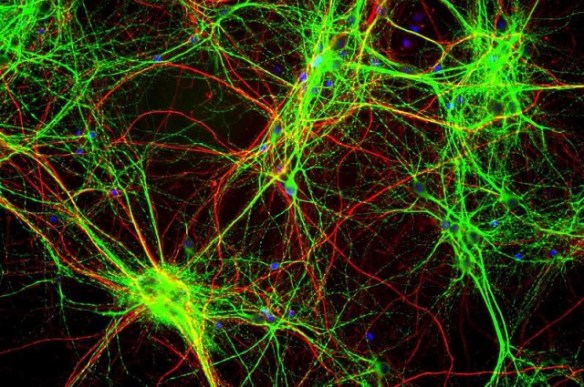
‘In a groundbreaking new study, researchers at the University of California, San Diego erased and then reactivated memories by stimulating neurons in the brains of genetically engineered rats with a series of light pulses that have been previously shown to strengthen or weaken the connections between brain cells. This is the first study to be able to directly show that the strengthening or weakening of these connections, called synapses, is the underlying basis for memory. The study has been published in Nature.’ (IFLScience)
Author Archives: FmH

Why Slenderman Works: The Internet Meme That Proves Our Need To Believe
‘Despite being visually creepy, Slenderman highlights the strength and weaknesses of the Internet simultaneously. In fact, I think Slenderman is a subversive masterpiece in terms of monster creation. Of course when Victor Surge first created him, he was just a creepy picture with minimal back story. Now he is a cultural phenomenon and terrorises the dreams and thoughts of many. What makes Slenderman a fascinating study is that he is the the personification of how modern myths work. At the core of Slenderman, most of us know he is created. You can trace back his history to specific posts and websites. The internet ruins the myth but at the same time, the Internet gives it an authenticity and connectivity that continually builds upon it.’ (Whatculture.com)

In the news this evening was the story of two 12 year olds in Waukesha, Wisconsin who held down a friend and stabbed her 19 times, apparently motivated by a desire to prove they were worthy of becoming disciples of Slenderman. Need to believe, indeed!
Neil DeGrasse Tyson: it’s possible aliens have visited already…

…and already concluded that there is no intelligent life on Earth. (CNET).
Why You Hate Work

‘The way we’re working isn’t working. Even if you’re lucky enough to have a job, you’re probably not very excited to get to the office in the morning, you don’t feel much appreciated while you’re there, you find it difficult to get your most important work accomplished, amid all the distractions, and you don’t believe that what you’re doing makes much of a difference anyway. By the time you get home, you’re pretty much running on empty, and yet still answering emails until you fall asleep…’ (NYTimes).
Related articles


‘I could have been Elliot Rodger’
Brian Levinson
: ‘Anyone can find plenty to hate in the 141-page manifesto by Elliot Rodger, the 22-year-old who killed six people and wounded 13 more last week in Isla Vista, California. The manifesto’s blend of misogyny, racism, self-pity, entitlement, and violent fantasy would make Patrick Bateman blanch.
Of course, I’ve got my own reason to hate the manifesto: Elliot Rodger could have been me.I could’ve written an identical screed as a teenager or college student…
Rodger and I fit the profile of a handful of other lonely psychos: John Hinckley, who shot Reagan in a bid to impress Jodie Foster; Dylan Klebold, the lovelorn, less-psychopathic half of the Columbine shooters; Seung-Hui Cho, whose morbid short stories foreshadowed the Virginia Tech massacre. Let me explain…’ (Slate)
Related articles


Download Pixar Renderman for free
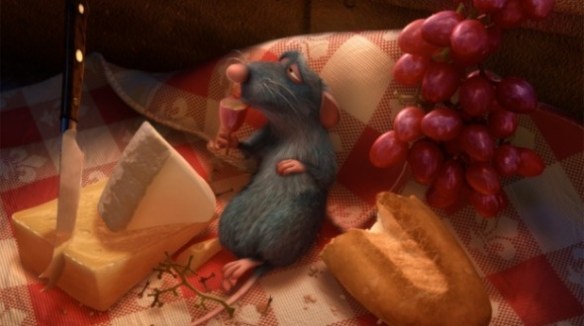
Make your own Toy Story: ‘Aspiring animators, listen up! Pixar’s working on a brand new version of Renderman, the in-house software they use to render duh all their awesome digital creations. There are a slew of improvements coming, but the big news is that there’s a version you can download for free.That’s a pretty amazing giveaway — Renderman is a $500 piece of software…’ (Geek.com).
The Wrong Way to Treat Child Geniuses
‘Those of us who managed sky-high SAT scores at 13 were 20 times as likely as the average American to get a doctorate; lets say, being charitable, that were 100 times as likely to make a significant scientific advance. Since were only 1 in 10,000 of the U.S. population, that still leaves 99% of scientific advances to be made by all those other kids who didnt get an early ticket to the genius club. We geniuses arent going to solve all the riddles. Most child prodigies are highly successful—but most highly successful people werent child prodigies.
This can be a hard lesson for the prodigies themselves. It is natural to believe that the just-pubescent children on the mathletic podium next to you are the best, the ones who really matter. And for the most part, my fellow child stars and I have done very well. But the older I get, the more I see how many brilliant people in the world werent Doogie Howser-like prodigies; didnt shine in Math Olympiad; didnt go to the inner circle of elite colleges. Im embarrassed that I didnt understand at 13 that it would be this way. But when they keep telling you youre the best, you start to believe youre the best.
One of the most painful aspects of teaching mathematics is seeing my students damaged by the cult of the genius. That cult tells students that its not worth doing math unless youre the best at math—because those special few are the only ones whose contributions really count. We dont treat any other subject that way. Ive never heard a student say, “I like Hamlet, but I dont really belong in AP English—that child who sits in the front row knows half the plays by heart, and he started reading Shakespeare when he was 7!” Basketball players dont quit just because one of their teammates outshines them. But I see promising young mathematicians quit every year because someone in their range of vision is “ahead” of them.’ (WSJ).

Related articles


Dead or Meditating?
‘One of the wealthiest spiritual leaders in India has either been dead or in a transcendental meditative state since January. The Telegraph’s Dean Nelson reports from New Delhi that a court has now been asked to settle the matter.
Ashutosh Maharaj is presently in a commercial freezer in his ashram, guarded by elders within the multinational sect or, self-described “socio-spiritual-cultural, not-for profit organization” that he created. His followers insist that Maharaj is in a state of transcendent bliss called samadhi, a central tenet of traditional yoga in which a yogi becomes one with the universe. Upon moving all of your prana currents of energy up your spine and into your head, according to the seminal yoga manual Hatha Yoga Pradipika, a yogi can become “as if dead.”
This would seem to be at odds with the assessment of a team of local physicians who examined Maharaj in February. After performing an ECG that showed no heartbeats, noting that he had no respiratory movements, and seeing that his pupils were fixed and dilated, the physicians declared him “clinically dead.”
The sect’s website states, “His Holiness Shri Ashutosh Maharaj Ji has been in a deep meditative state (samadhi) since January 29, 2014.” Though, a representative from the sect did say on February 3, “About 4:00 PM yesterday, some changes were noticed in his skin (it became greenish). The body was then shifted to a freezer,” which may or may not be part of the traditional protocol for transcendent bliss.
The guru’s son and wife corroborate that he died of a heart attack in January, and that his followers are keeping his body in order to retain control of his financial empire, including the ten billion rupee ($170 million) estate where the corpse resides.’ (The Atlantic).

Related articles


The Strangest Animals You’ve Never Heard Of

‘Here’s a small collection of bizarre animals that we hope some of you may have never heard of. The animal kingdom does love variety…’ (I Fucking Love Science).
Is this the end of uncontrollable itching?
New antibody blocks pain and itchiness: ‘Scientists may have developed an antibody that dulls chronic pain and blocks the itch pathway.Image: Promotive/ShutterstockIf it’s proven successful, the antibody could replace side-effect laden pain medications such as opioids.Developed by researchers at Duke University, the highly specialised antibody inhibits the function of a sodium channel called Nav1.7, which is found on neurons and is known to be involved in generation pain and itchiness.’ (Science Alert).

NASA has spotted a HUGE explosion in our neighbouring galaxy

‘…[A]stronomers suspect it could have been one of the most violent events in the Universe – a gamma ray-burst that, in just a few seconds, could have released as much energy as our Sun in its entire lifetime.If confirmed, this will be the closest gamma-ray burst we’ve ever detected, and will help scientists find out more about these mysterious pulses of energy.Gamma-ray pulses are so powerful, that if one occurred within our galaxy, they could potentially trigger mass extinctions on Earth, explains Dr Alan Duffy, an astronomer at Swinburne University of Technology in Melbourne.’ (Science Alert).
Addendum (thanks to abby): Possibly not.
“We have re-analysed the prompt XRT data on Swift trigger 600114 (GCN Circ.
16332), taking advantage of the event data.The initial count rate given in GCN Circ. 16332 was based on raw data from
the full field of view, without X-ray event detection, and therefore may
have been affected by other sources in M31, as well as background hot
pixels. Analysis of the event data (not fully available at the time of the
initial circular) shows the count rate of the X-ray source identified in
GCN Circ. 16332 to have been 0.065 +/- 0.012 count s^-1, consistent with
the previous observations of this source [see the 1SXPS catalogue (Evans
et al. 2014): http://www.swift.ac.uk/1SXPS/1SXPS%20J004143.1%2B413420.We therefore do not believe this source to be in outburst. Instead, it was
a serendipitous constant source in the field of view of a BAT subthreshold
trigger.”
Democrats Push to Restart Funding for Gun Violence Research

‘New legislation would increase CDC funding for gun violence research from zero dollars to $10 million. The NRA calls the push “unethical” and an “abuse of taxpayer funds.” ‘ (Pacific Standard).
Have Scientists Solved The Mystery Of Phantom Limb Pain?

‘Nearly all amputees feel their missing limb as if it still existed, and many experience chronic phantom limb pain. The going theory is that this pain is triggered by the brain. But scientists have now located and blocked these sensations in the body itself — a finding that upends conventional thinking.’ (io9).
Why Tomorrow’s Conservatives Will Reject The Death Penalty

US death penalty methods
‘Writing in the Boston Globe, Leon Neyfakh profiles activists across the country who have come to the conclusion that execution by the state is an affront to the core principles that conservatives claim to espouse.’ (io9).
Boycott of luxury hotels owned by Brunei sultan grows
‘Vogue Magazine is the latest high-profile name to join a boycott luxury hotels owned by the Dorchester Collection. Why? Dorchester properties include The Beverly Hills Hotel, Londons Dorchester, and Le Meurice in Paris, and they’re now owned by the investment agency of the Sultan of Brunei.The Sultan plans to implement Sharia law in Brunei, under which being gay is punishable with death by stoning. Businesses, fashion designers, and celebrities including Stephen Fry, Ellen DeGeneres and Richard Branson are among the bold-faced names publicly shaming the hotel group.’ (Boing Boing).

Suspended Animation Human Trials About to Begin
‘With traumatic injuries, timing in treatment can be the difference between life and death. What if surgeons could hit the pause button, giving them precious additional time to treat the wounds? Suspended animation has been featured in a wide array of fictional films, but could it actually work on humans? The FDA has approved a small study that will allow surgeons at UPMC Presbyterian Hospital in Pittsburgh to try to suspend human life later this month.’ (I Fucking Love Science).

The Gates of Hell
Xeni Jardin:
“The Darvaza gas crater, known to locals as “Door to Hell” or “Gates of Hell” is located in the Karakum Desert of central Turkmenistan (about 150 miles from the nation’s capital).
Also known as Derweze, the pit lures tourists and unsuspecting desert critters: “reportedly, from time to time local spiders are seen plunging into the pit by the thousands, lured to their deaths by the glowing flames.” Smithsonian Magazine has an awesome photo gallery.
As with much on our planet, turns out this site is a man-made hell, as Wikipedia explains:
‘The Derweze area is rich in natural gas. While drilling in 1971, Soviet geologists tapped into a cavern filled with natural gas. The ground beneath the drilling rig collapsed, leaving a large hole with a diameter of 70 metres (230 ft) at 40°15′10″N 58°26′22″E. To avoid poisonous gas discharge, it was decided the best solution was to burn it off. Geologists had hoped the fire would use all the fuel in a matter of days, but the gas is still burning today.’ ” (Boing Boing).
More in US die from prescription narcotics than car crashes, guns, suicide
Xeni Jardin: ‘More than 100 Americans die each day from prescription drug overdoses, mostly painkillers. That’s more daily deaths than from car accidents, gunshot wounds, or suicides. In California, two county District Attorneys are suing five of the biggest drug companies in the world, and the lawsuits include the same kind of arguments once used against big tobacco industry, demanding “public protection.” ‘ (Boing Boing).
Best Laugh I’ve Had All Week


Since it is not April 1, and it appears to be a legitimate post on their site rather than a troll, is it possible that Sarah Palin and Ted Cruz didn’t deliberately want to be seen as imbeciles? (National Report, America’s #1 Independent News Team)
Update: I’ve been had. As John Gordon writes in the comments:
“It’s a spoof site. Kind of weirdly done, but obvious from the main page (see disclaimer).”
.
The Heart Association’s Junk Science Diet
A recent Cambridge University analysis of 76 studies involving more than 650,000 people concluded, “The current evidence does not clearly support guidelines that [recommend]… low consumption of total saturated fats.”
Yet the American Heart Association (AHA), in its most recent dietary guidelines, held fast to the idea that we must all eat low-fat diets for optimal heart health. It’s a stance that—at the very best—is controversial, and at worst is dead wrong. As a practicing cardiologist for more than three decades, I agree with the latter—it’s dead wrong.
Why does the AHA cling to recommendations that fly in the face of scientific evidence?
What I discovered was both eye-opening and disturbing. The AHA not only ignored all the other risk factors for heart disease, but it appointed someone with ties to Big Food and bizarre scientific beliefs to lead the guideline-writing panel—just the type of thing that undermines the public’s confidence in the medical community.’ (The Daily Beast via abby).
The Mystery of Go, the Ancient Game That Computers Still Can’t Win

‘In 1994, machines took the checkers crown, when a program called Chinook beat the top human. Then, three years later, they topped the chess world, IBM’s Deep Blue supercomputer besting world champion Garry Kasparov. Now, computers match or surpass top humans in a wide variety of games: Othello, Scrabble, backgammon, poker, even Jeopardy. But not Go. It’s the one classic game where wetware still dominates hardware.
Invented over 2500 years ago in China, Go is a pastime beloved by emperors and generals, intellectuals and child prodigies. Like chess, it’s a deterministic perfect information game — a game where no information is hidden from either player, and there are no built-in elements of chance, such as dice.1 And like chess, it’s a two-person war game. Play begins with an empty board, where players alternate the placement of black and white stones, attempting to surround territory while avoiding capture by the enemy. That may seem simpler than chess, but it’s not. When Deep Blue was busy beating Kasparov, the best Go programs couldn’t even challenge a decent amateur. And despite huge computing advances in the years since — Kasparov would probably lose to your home computer — the automation of expert-level Go remains one of AI’s greatest unsolved riddles.’ (WIRED).
I have always been a Go fan, but not a very good player. Not very many people to play with these days…
R.I.P. Jesse Winchester,1944-2014
I just learned from his website of the April 11 death of the wonderful and unsung musician Jesse Winchester at age 69. Born in the American South, he made a musical name for himself as part of the expatriate draft dodger scene in Canada in the early ’70’s. His recordings were produced by Robbie Robertson of the Band and covered by many notables, including Patti Page, Elvis Costello, Jimmy Buffett, Joan Baez, Anne Murray, Reba McEntire, The Everly Brothers and Emmylou Harris. He was able to tour in the US again after Jimmy Carter‘s 1977 amnesty. Alas, I never got to hear him live but his first two albums had worn out on my turntable by them. I will miss him.


Related articles


UCSB shooting victim’s father: Blame NRA and “craven” politicians

‘Three victims in shooting have been identified. And one distraught parent has issued a heart-wrenching statement.’ Salon.com).
NASA Has Released A Free eBook About Communicating With Aliens

Titled Archaeology, Anthropology and Interstellar Communication and edited by SETI Director of Interstellar Message Composition Douglas Vakoch, the document draws on “issues at the core of contemporary archaeology and anthropology” to prepare us “for contact with an extraterrestrial civilization, should that day ever come.” (io9)
Related articles


R.I.P. Gerald M. Edelman
Nobel Laureate and ‘Neural Darwinist’ Dies at 84: His original recognition was for his work in immunology, but I came to know of him because
‘[f]rom the mid-1970s on, Dr. Edelman was largely concerned with the brain and the nature of consciousness — “how the brain gives rise to the mind,” as he put it. He rejected the prevalent notion that the best model for the brain was a computer.
Rather, he took a lesson from his earlier work in immunology. He had helped establish that antibodies work according to a process akin to Darwinian selection, and he now postulated a theory of the brain called neuronal group selection, which came to be known as “neural Darwinism.”
Within the dense thicket of nerve cells in the brain, known as neurons, are a vast array of neuronal groups. Dr. Edelman believed that when something happened in the world — something encountered by one of our senses — some neuronal groups responded and were strengthened by a series of biological processes. Those groups, he concluded, became more likely to respond to the same or a similar stimulus the next time, and thus did the brain learn from its own experience and shape itself over the course of a life.’ (NYTimes obituary).

Related articles


Does everyone who suffers trauma have PTSD?

Regions of the brain affected by PTSD and stress.
Psychiatrist Lynne Jones argues, and I agree, that current notions of PTSD trivialize trauma, undermine healthy coping skills and pathologies normal stress responses. (Aeon).
Related articles


The Sun Ra Centenary

‘Today is the centenary of a bandleader whose artistic legacy, within and beyond jazz, is as deep and as strong as that of Duke Ellington and Count Basie, a musician who took a name that bespeaks similarly grand ambitions and visions: Sun Ra. Ra was a crucial creator of what’s commonly called free jazz, and, unlike his swing-era predecessors, he found himself in the position of many modernists, both musical and otherwise: his work has eluded popularity. His influence and authority, even now, twenty-one years after his death, far outshine his name recognition, but his music remains among the essential experiences and representations of his times.
A musical prodigy in his home town of Birmingham, Alabama, Ra, who was born Herman Blount, had a firm footing in traditional jazz. He moved to Chicago in 1946 and worked as a pianist and arranger with the Fletcher Henderson band, but by that time he was already pursuing advanced musical and philosophical ideas. Fascinated with outer space, he changed his name—legally, to Le Son’y Ra—and worked out a literary vision of a quasi-scientific utopia based on a mythic past, which he ultimately realized in music.’ (New Yorker).
Related articles


What do plants know?

This episode of the Wisconsin Public Radio podcast ‘To the Best of Our Knowledge‘ may have you feeling very differently the next time you take a walk in the woods or a dig in your garden. (“The Secret Language of Plants”).
Related articles


The Hidden Beauty of Airport Runways, and How to Decipher Them

‘Almost all airport designs are governed by regulations established by the International Civil Aviation Organization to ensure pilots circling Toledo or Timbuktu remain properly oriented and deliver passengers and cargo safely.
Lauren O’Neil turns those strictures into art, with the help of Google Earth. The Brooklyn-based designer has made a meticulous study of airport runways and logged the results on a Tumblr called Holding Pattern. These views reveal beautiful compositions at airports that are nothing special at ground level…’ (WIRED).
10 foods touted as health miracles, then vilified as health hazards

‘One reason Americans have trouble maintaing a healthy diet: They’re suffering from “food information overload” ‘ (Salon.com).
Top 10 new species of 2014 announced

‘Although there is an estimated 10 million to 12 million living species in the world, we know surprisingly little about them. According to Quentin Wheeler, founding director of the International Institute for Species Exploration, we have only identified around two million — and species are going extinct faster than they are being identified.
That said, on average 18,000 new species are discovered every year; and, every year since 2008, the IISE and the SUNY College of Environmental Science and Forestry announce a list of the top 10 species discovered the previous year, in order to draw attention to those discoveries. This occurs on 23 May — the birthday of Carolus Linnaeus, the 18th-century Swedish botanist who devised the modern system of scientific names and classifications.
“The majority of people are unaware of the dimensions of the biodiversity crisis,” Dr Wheeler said. “The top 10 is designed to bring attention to the unsung heroes addressing the biodiversity crisis by working to complete an inventory of earth’s plants, animals and microbes. Each year a small, dedicated community of taxonomists and curators substantively improve our understanding of the diversity of life and the wondrous ways in which species have adapted for survival.” ‘ (CNET).
A Brief Investigation of Human-Ghost Intercourse

‘A few weeks ago, Paranormal 2 actress Natasha Blasick made news for claiming to have had sex (two times, actually) with a ghost. Blasick first shared her story on This Morning, a popular British daytime talk show with a real verve for oddball guests and overwrought set design. Speaking remotely with hosts Phillip Schofield and Christine Bleakley, and accompanied by psychic Patti Negri, Blasick says, “I could feel the weight of a body on top of me, and I couldn’t see anybody, but … I could feel the energy, I could feel the warmth … and at first I was very confused with all that, but then I just decided to relax and, um, it was really, really pleasurable.”
As she speaks, a hashtag appears on the screen: #SexWithGhosts.’ (Pacific Standard)
Everything Is Broken

‘Once upon a time, a friend of mine accidentally took over thousands of computers. He had found a vulnerability in a piece of software and started playing with it. In the process, he figured out how to get total administration access over a network. He put it in a script, and ran it to see what would happen, then went to bed for about four hours. Next morning on the way to work he checked on it, and discovered he was now lord and master of about 50,000 computers. After nearly vomiting in fear he killed the whole thing and deleted all the files associated with it. In the end he said he threw the hard drive into a bonfire. I can’t tell you who he is because he doesn’t want to go to Federal prison, which is what could have happened if he’d told anyone that could do anything about the bug he’d found. Did that bug get fixed? Probably eventually, but not by my friend. This story isn’t extraordinary at all. Spend much time in the hacker and security scene, you’ll hear stories like this and worse.
It’s hard to explain to regular people how much technology barely works, how much the infrastructure of our lives is held together by the IT equivalent of baling wire.
Computers, and computing, are broken.’ (Medium).
Revisit the Golden Age of Max’s Kansas City
Film & Audio From The Velvet Underground, The Ramones, Devo & Talking Heads: ‘You know the old joke: “if you don’t like the neighborhood, wait ten minutes.” New Yorkers know it the other way around, too. If you like the neighborhood, wait ten minutes; your local haunts will disappear. But while the physical markers of my own New York era shutter one by one, during said era all I ever wanted was for it to be the late 70s again, when you could catch such upstarts as the Talking Heads, Devo, the Ramones, Television, or Patti Smith at Max’s Kansas City. Or even earlier in the decade, when Max’s served as the NYC home base for David Bowie, Iggy Pop, Lou Reed, and even a young Bruce Springsteen.’ (Open Culture).
Jack Kerouac’s Poems Read by Patti Smith, John Cale & Other Cultural Icons (with Music by Joe Strummer)
‘Though Kerouac was best known for his novels… he also wrote poetry. His poems read like distilled versions of his prose – freeform, flowing and musical, laced with themes of death, drinking and Buddhism. He once wrote that he wanted his poetry “to be considered as a jazz poet blowing a long blues in an afternoon jazz session on Sunday.” ‘ (Open Culture).
Do you know where you are in the Milky Way?
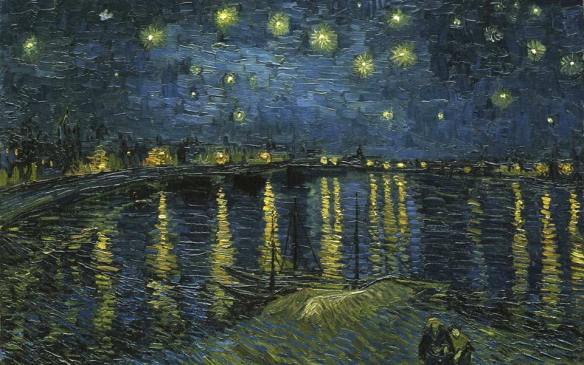
Sarah Scoles: ‘We can point to our home on a globe, and find Earth in a model of the solar system, but where are we in the Milky Way?’ (Aeon).
Does everyone who suffers trauma have PTSD?
Lynne Jones: ‘PTSD has come to signify the moral, social and political suffering of war. But not all suffering is a mental illness…’ (Aeon).
Adrienne Rich: From an Atlas of the Difficult World
I know you are reading this poem
late, before leaving your office
of the one intense yellow lamp-spot and the darkening window
in the lassitude of a building faded to quiet
long after rush-hour. I know you are reading this poem
standing up in a bookstore far from the ocean
on a grey day of early spring, faint flakes driven
across the plains’ enormous spaces around you.
I know you are reading this poem
in a room where too much has happened for you to bear
where the bedclothes lie in stagnant coils on the bed
and the open valise speaks of flight
but you cannot leave yet. I know you are reading this poem
as the underground train loses momentum and before running
up the stairs
toward a new kind of love
your life has never allowed.
I know you are reading this poem by the light
of the television screen where soundless images jerk and slide
while you wait for the newscast from the intifada.
I know you are reading this poem in a waiting-room
of eyes met and unmeeting, of identity with strangers.
I know you are reading this poem by fluorescent light
in the boredom and fatigue of the young who are counted out,
count themselves out, at too early an age. I know
you are reading this poem through your failing sight, the thick
lens enlarging these letters beyond all meaning yet you read on
because even the alphabet is precious.
I know you are reading this poem as you pace beside the stove
warming milk, a crying child on your shoulder, a book in your
hand
because life is short and you too are thirsty.
I know you are reading this poem which is not in your language
guessing at some words while others keep you reading
and I want to know which words they are.
I know you are reading this poem listening for something, torn
between bitterness and hope
turning back once again to the task you cannot refuse.
I know you are reading this poem because there is nothing else
left to read
there where you have landed, stripped as you are.
Adrienne Rich: For the Dead
I dreamed I called you on the telephone
to say: Be kinder to yourself
but you were sick and would not answer
The waste of my love goes on this way
trying to save you from yourself
I have always wondered about the left-over
energy, the way water goes rushing down a hill
long after the rains have stopped
or the fire you want to go to bed from
but cannot leave, burning-down but not burnt-down
the red coals more extreme, more curious
in their flashing and dying
than you wish they were
sitting long after midnight
Anti-Evolution Bills Are Defeated In Missouri

‘Two proposed pieces of legislation—including one that would have required school districts to allow parents to have their children excused from learning about evolution—were left to die in committee when the Missouri state legislature adjourned. The news comes as a relief to educators who said the legislation would have “eviscerated the teaching of biology” in Missouri…’ (io9).
R.I.P. Dr. Sidney J. Blatt, 85
Psychologist Developed ‘Double Helix’ Theory of Depression: ‘Dr. Blatt was a widely published Freudian analyst at Yale in the 1970s when he began arguing in essays and scientific reports that personality developed along two intertwined pathways, one focused on identity and the other on relationships.
Disruptions in either pathway could cause identical symptoms of depression, he wrote, yet the two conditions were distinct and called for different treatment approaches. The identity-based depression — “I am a failure” — responded well to classical psychoanalysis, with the therapist as a passive listener, helping to elicit growth in an independent sense of self; the relationship-based type — “I am unlovable” — could be relieved more effectively by a more assertive therapist, guiding the formation of relationships.’ (NYTimes obituary)
Rogue Element

‘How an anti-government militia grew on a U.S. Army base.’ — Nadya Labi (The New Yorker)
Mass Murder Relies on People Like Us

An Interview With Thierry Cruvellier: You’re the only journalist who has attended all the post-Cold War international tribunals. You’ve spent years watching these trials. What drew you to them? What kept you going back? How has your view of them evolved?
‘I was drawn to war-crimes justice because of Rwanda. The 1994 genocide was a defining event for our generation. I began working in Rwanda in the immediate aftermath, so covering the trials seemed like a logical way to keep working on this event. And I quickly realized how fascinating these trials could be, at so many different levels: historical, political, diplomatic, legal, psychological, philosophical. My great interest in the trials was as a window, on the one hand, into our human condition in extreme circumstances, and the choices individuals make (or lack) in such situations; and, on the other hand, into the historical complexity of the dynamic of genocide at the central level.’ (The New Yorker).
Neutron death mystery has physicists stymied

Neutron
‘Despite decades of taking measurements, scientists cannot agree on how long neutrons live. Neutrons are stable inside atoms, but on their own they decay in about 15 minutes, more or less, into a few other particles. Exactly how much more or less is the sticking point. Each experiment seems to yield a different answer.
The lack of resolution is frustrating. Understanding the lifetime of the neutron is important not only for knowledge’s sake but also to answer other more fundamental questions about new physics beyond the known particles and processes in the universe… “We can’t leave this disagreement just hanging out there.” ‘ (Nature News & Comment).
Supermassive Black Hole At Galactic Centre May Be Wormhole In Disguise
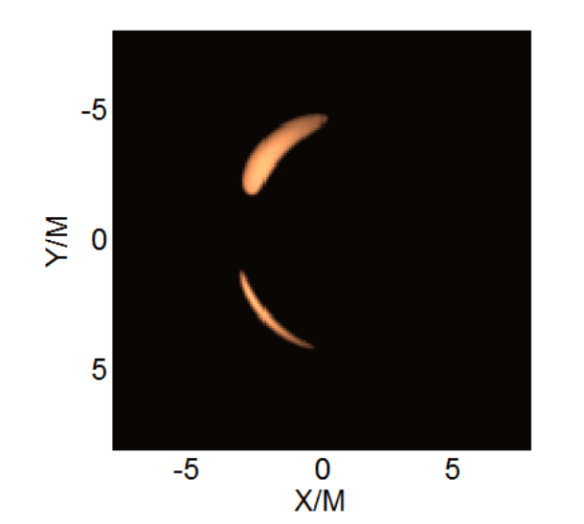
‘The presence of a wormhole would actually solve a major problem of galaxy formation. In recent years, astronomers have observed what appear to be supermassive black holes at the centre of many galaxies. Indeed, many believe that supermassive black holes are necessary for galaxies to form in the first place— they provide the gravitational pull to hold galaxies together in their early stages.
But if that’s true, how do supermassive black holes become so massive so quickly? After all, the one at the centre of our galaxy must have been in place about 100 million years after the Big Bang. That doesn’t leave much time to grow.
A wormhole, on the other hand, is a primordial object formed in the blink of an eye after creation. So if wormholes did form in this way, they would be present in the early universe to trigger the formation of the first galaxies.’ (The Physics arXiv Blog — Medium).
How to Tell When Someone Is Lying
‘Many of us believe that we can tell when someone else is lying, and, over the years, a folklore has developed around the facial and physical cues that can give someone away. Liars don’t look you straight in the eye. When someone is lying, he looks up and to the side, as if searching for something. A liar fidgets and seems somehow nervous. Sometimes, he’ll scratch or pull his ear. He’ll hesitate, as if he’s not sure he wants to tell you something. These, however, are all “old wives’ tales,” Leanne ten Brinke, a psychologist at the University of California at Berkeley whose work focusses on detecting deception, told me. “The empirical literature just doesn’t bear that out.” ‘ (The New Yorker).
Scientists Discover How Octopuses Avoid Tying Themselves In Knots

‘There are many things that make the octopus a strange creature, but one of them is that each of its eight arms has an essentially infinite number of positions, and yet each arm operates independently. How does an octopus keep from tying itself in knots?
A group of Israeli and American researchers think they’ve discovered how the octopus keeps its arms in order. The problem is that octopus arms behave as if they have a “mind of their own.” ‘ (io9)
What Do Animals See in a Mirror?
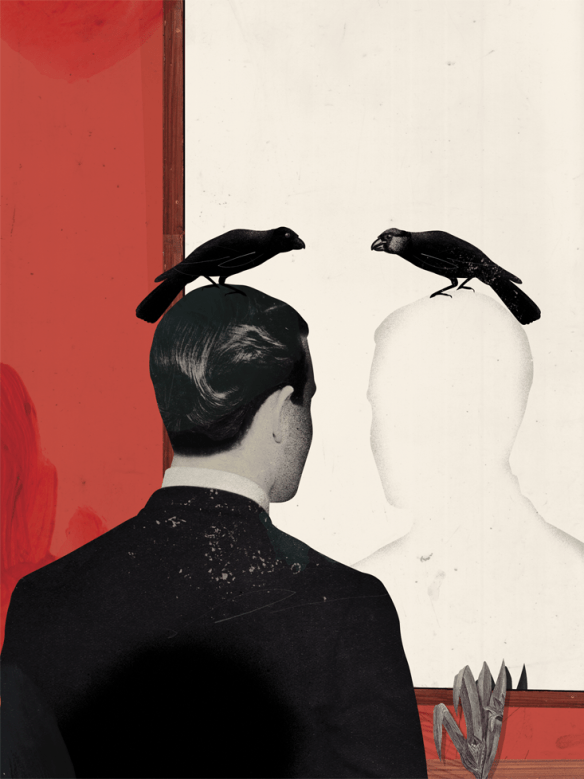
‘A controversial test for self-awareness is dividing the animal kingdom.’ (Nautilus).
God Is in the Mind. Well, in Epileptic Seizures to Be Exact

‘…[D]o epileptics hallucinate or are their sensory abilities augmented to sharper, more intuitive levels?’ (Big Think).
A Eulogy for Twitter

The content of tweets on Twitter, based on the data gathered by Pear Analytics in 2009.
Adrienne LaFrance and Robinson Meyer: ‘Something is wrong on Twitter. And people are noticing.
Or, at least, the kind of people we hang around with on Twitter are noticing. And it’s maybe not a very important demographic, this very weird and specific kind of user: audience-obsessed, curious, newsy. Twitter’s earnings last quarter, after all, were an improvement on the period before, and it added 14 million new users for a total of 255 million. The thing is: Its users are less active than they once were. Twitter says these changes reflect a more streamlined experience, but we have a different theory: Twitter is entering its twilight.’ (The Atlantic).
Related articles


Watch the Remarkable Shrinking of Jupiter’s Great Red Spot

‘…[S]ightings since the 1930s have shown the spot shrinking. A recent Hubble photo (seen above) observes the Great Red Spot at its smallest size yet —- just over 10,000 miles across, barely big enough for 1.3 Earths to fit inside. Scientists are studying small eddies at the edge of the storm that may somehow be sapping it of its strength. Will this monstrous cyclone continue to downsize? Researchers can’t say for sure.’ (WIRED).
Survivalists Are Using Pinterest to Prepare for the Apocalypse

Colette Shade: ‘Pinterest is best known as a destination where people can share affordable wedding ideas, dip recipes, and inspirational quotes pasted over photos of white sand beaches. But a small number of Pinterest users also swap how-tos on building bomb shelters, storing food, and emergency medical care—for “when there are no doctors.”
Meet the preppers of Pinterest.’ (The Atlantic).
Man drives 40,000 miles a year saving dogs from ‘kill shelters’

“For the past ten years, Greg Mahle has driven 40,000 miles a year rescuing dogs from overpopulated “high volume kill shelters.” He and fellow volunteers run Rescue Road Trips, LLC, based in Ohio. Operating primarily in the deep South, they pick up rescued dogs and take them to other areas of the country for adoption. The organization is said to help save about 2,000 dogs each year. From The Newark Advocate:
‘Every other week, Mahle leaves his wife and stepson, traveling from their home in Zanesville to Houston, Texas, where he starts to pick up dogs destined for their new homes. Moving on from Texas, he stops in nine Southern states, picking up an average of 80 dogs on the second leg of his 4,200-mile journey.
“Some of them are scared,” Mahle said. “They don’t know what’s happening. Some have come from really bad situations, but a little love and reassurance is just what they need.”
Once secured in their crates on the truck, Mahle said the dogs perk up as if they know they’re off to a better life.
“It’s like being in a truck full of lottery winners,” he said with a laugh. “You can see it in their eyes and their disposition. They know something good is going to happen to them.” ‘ ” (Boing Boing).
13 Lectures from Allen Ginsberg’s “History of Poetry” Course (1975)

‘We’ve previously featured some of Ginsberg’s Naropa lectures here at Open Culture, including his 1980 short course on Shakespeare’s The Tempest and his lecture on “Expansive Poetics” from 1981. Today, we bring you several selections from his lengthy series of lectures on the “History of Poetry,” which he delivered in 1975. Currently, thirteen of Ginsberg’s lectures in the series are available online through the Internet Archive, and they are each well worth an attentive listen.’ (Open Culture). I am going to sit down with these when I have a chance.
Republicans’ deadly political strategy: Ruining our country hurts the Democratic Party

‘The majority of Americans – depending on which survey you look at, between 60 and 75 percent – cannot name which political party controls the House of Representatives, which party controls the Senate, or either.
Because most Americans don’t know who controls Congress, when Congress misbehaves, as they have been doing for six years, most Americans aren’t sure who to blame.
Enter the Republican Chaos Strategy, based entirely on this statistical and political reality.
And common sense suggests that well over 90 percent of Americans know that Barack Obama is the president and that he is a Democrat.
The Republicans know this, too, and it’s the other half of their strategy.
Therefore, what the Republicans know, is that if they can cause damage to the American economy and to American working people, the average voter, not realizing it was exclusively the Republicans who did it, are going to assume that the president – and the Democratic Party he is a member of – must bear some or maybe even all of the responsibility.
It’s a brilliant strategy: Damage the country and you damage the Democratic Party.’ (Salon.com).
Reconstructing our medical evidence base by algorithmic trust assignment across the medical literature

Statuette of ancient Egyptian physician Imhotep, the first physician from antiquity known by name.
‘Over the past two decades it has become apparent that the knowledge base for clinical medicine has been corrupted by publication bias, positive result bias, the increasingly strained competition for funding and tenure, and a non-trivial amount of outright fraud.
Perhaps as a result of these problems we see a very high level of research result contradiction and retraction. Sometimes it seems everything we believed in 1999 was reversed by 2014. Retrospective studies of the sustainability of medical research has taught us that the wise physician is better to read textbooks and ignore anything that doesn’t get to the front page of the New York Times…
We can’t change the past, but what do we do with the medical literature we’ve inherited? It is vast, but we know the quality is mediocre. Can we salvage the best of it?’ (Gordon’s Notes)
Related articles


Thomas Edison and the Cult of Sleep Deprivation
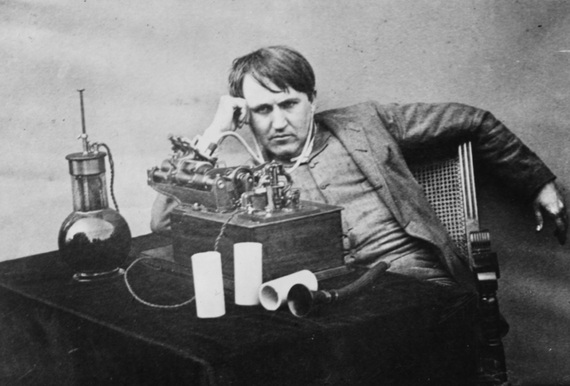
‘The man who gave us the incandescent light bulb thought we should never turn out the lights at all.’ (The Atlantic).
Our anesthetic times

Why it helps to put pain into words: ‘Did we lose our sense of sympathy when we lost the shared experience of pain?’ (Aeon).
Related articles


The Astronomer Who Wanted to Rearrange the Solar System, Using Nukes

‘CalTech astronomer Fritz Zwicky was the first to conceive of dark matter, supernovas and neutron stars. He also had a theory about colonizing the solar system using nuclear bombs. We could terraform other planets, he argued, by pulverizing them and then moving them closer or further from the sun.
If you’ve never heard of Zwicky, you’re not alone. Virtually the entire public was unaware of his accomplishments, largely due to his abrasive personality and unique gift for alienating himself from the scientific establishment. “Astronomers are spherical bastards,” he once said. “No matter how you look at them they are just bastards.”
And, while many of his theories were proven right, Zwicky also advocated what could be charitably described as “eccentric” ideas—most notably, his proposals for using nuclear explosives to reconstruct the solar system.’ (io9)
The Antarctic Ice Sheet Has Started to Collapse and Nothing Can Stop It

‘For decades, scientists have feared the collapse of the West Antarctic ice sheet—a vast swath of ice that could unleash a slow but unstoppable 10-foot rise in sea levels if it melted. So here is today’s terrible news: we now know the ice sheet is melting. And there’s pretty much nothing we can do about it.’ (Gizmodo)
RIP, H.R. Giger, 1940-2014
‘
Swiss public TV was first to report that surrealist science fiction illustrator
has died at 74. Giger created the designs for the Alien movies, the notorious poster included with the
‘
, and many other iconic works.’ (
).

Related articles


The Pope says he’ll baptize space aliens if they ask him to


‘In his weekly homily on Monday, the Pope explored the idea that extraterrestrial beings might want to join the Catholic church and determines that they should be accepted with open arms.’ (Boing Boing).
For 20 Days, This App Connects Two Strangers Who Will Never Meet

Media Lab
‘Developers at MIT Media Lab’s Playful Systems group are working on an iPhone app that they say will use common mobile features to foster compassion and understanding between people. As its title implies, 20 Day Stranger will match two complete strangers and allow them to see descriptions of each other’s activities that are intentionally vague (such as “at a cafe” or “near an airport”) for just under three weeks. The app uses the phone’s sensors as well as general data from services like Instagram and Google Maps to give just enough information without revealing private details such as names or specific addresses.
The app is the brainchild of Tinsley Galyean, who co-directs MIT’s Dalai Lama Center for Ethics and Transformative Values and broached the idea to the development group. “[It] isn’t to make your life transparent,” says Playful Systems director Kevin Slavin, “it’s to give just enough to wonder and imagine and ultimately, to care. It is explicitly about producing imagination and conjecture, not transmitting information.” Indeed, the app only serves to link two anonymous people who, at the end, will ideally gain some insights into everyday living.’ (Big Think).
But What Would the End of Humanity Mean for Me?

James Hamblin: ‘Preeminent scientists are warning about serious threats to human life in the not-distant future, including climate change and superintelligent computers. Most people don’t care.’ (The Atlantic).
Related articles


We’ve Finally Found Our Sun’s Long-Lost Sister

‘For the first time ever, astronomers have identified a star that emerged from the same cloud of dust and gas as our own. Intriguingly, there’s a “small, but not zero” chance that our sister sun hosts planets hospitable to life.
For those of you who have been watching the rebooted Cosmos series, this announcement couldn’t have been more timely. As Neil deGrasse Tyson just noted in a recent episode, our sun, along with others, formed in a massive cloud of dust and gas called a nebula. Consequently, it must have so-called “stellar siblings” floating around somewhere relatively near, but to date none have ever been found. Well, until now.’ (io9)
How To Fight A Bear And Win

‘The most common large predators you’ll encounter outdoors in North America, bears also really, really, really want to eat your food and sometimes even you. Here’s how to keep them from getting either.’ (Gizmodo)
Related articles


The left’s best 2016 move: Why Democrats need a primary, too
‘

Amid GOP’s circus, it’s important for Hillary Clinton — and progressives — if she gets an opponent. Here’s why…’ (Salon.com).
The Pharmacology of Lethal Injection

‘…The purpose of these drugs is two-fold. First, they are used to induce death in a manner as painless as possible for the condemned. Second, the drug combination is also intended for the audience to view the process as peaceful and medical, without any twitching of the body, vocalizations, or any reflex actions that can still occur while one is unconscious.
The three types of drugs and their purposes, as originally proposed and used in order, are as follows:
- a sedating drug to render the condemned unconscious (barbiturates such as sodium thiopental or pentobarbital)
- a neuromuscular blocking drug to cause paralysis of all muscles except the heart (such as pancuronium or vercuronium bromide)
- a lethal dose of potassium chloride to arrest the heart
I want to address these drugs in reverse order to illustrate why their successive administration is so important.’ — David Kroll (Forbes).
Related articles


We’re not smart enough to be ready for aliens

‘A neuro-psychologist insists humans are so ignorant about the cosmos that any encounter with aliens would be a disaster…’ (CNET).
Anti-surveillance mask

‘If the world starts looking like a scene from “Matrix 3” where everyone has Agent Smith’s face, you can thank Leo Selvaggio. His rubber mask aimed at foiling surveillance cameras features his visage, and if he has his way, plenty of people will be sporting the Personal Surveillance Identity Prosthetic in public. It’s one of three products made by the Chicago-based artist’s URME Surveillance, a venture dedicated to “protecting the public from surveillance and creating a safe space to explore our digital identities.”…
The 3D-printed resin mask, made from a 3D scan of Selvaggio’s face and manufactured by ThatsMyFace.com, renders his features and skin tone with surprising realism, though the eyes peeping out from the eye holes do lend a certain creepiness to the look.
Creepiness is, of course, part of the point here, as the interdisciplinary artist takes a his-face-in-everyone’s-face approach to exploring the impact of an increasingly networked world on personal identity.’ (CNET).
Related articles


Draw My Left! No, My Other Left! A Hidden Bias In Art Revealed

Krulwich Wonders… ‘Look at this guy. He is half-smiley, half-frowny. I drew the mouth carefully to make it equal parts sad and happy.
But when you look at him — take him in whole — would you say he’s having a good day or a bad day? Most people would say: good day. He seems a little more smiley than not.
That’s because, says science writer Sam Kean, when we look at somebody, the left side of that person’s face is more emotionally powerful and “determines the overall emotional tenor.”
So if his left side is happy and his right side is sad, left wins — the whole face feels happy-ish. What is equal is made unequal. It’s as if when I look at you, instead of taking you in with one visual gulp, I’m scanning your face from left to right and the left side feels more dominant.
Why would that be?’ (NPR).
Spider Evolution Should Make You Even More Terrified Of Spiders

‘You probably only think of spiders as the horrible venomous arachnids that use two of their legs to pry open your eyelids so they can inject your eyeballs with venom while you’re sleeping. Turns out? When you look at how they evolved to produce that venom they get even scarier.’ (io9).
Science’s Dirty Secret

Electron micrograph of a cluster of E. coli bacteria, magnified 10,000 times.
All You Need to Know About Fecal Transplants (Gizmodo).
The big sleep

The extreme survival tricks of hibernators could help us overcome life-threatening injuries: ‘Anna Bågenholm was on a skiing holiday in Norway when she crashed head first into a frozen stream and became trapped under the ice. When rescuers finally arrived, the Swedish radiologist had been submerged for 80 minutes, and her heart and breathing had stopped. Doctors at Tromsø University Hospital recorded a body temperature of 13.7°C, the lowest ever observed in a victim of accidental hypothermia. By all accounts she appeared to have drowned. And yet, after careful rewarming and ten days spent in intensive care, Bågenholm woke up. She went on to recover almost fully from her cold brush with death. Under normal circumstances, even a few minutes trapped underwater would be enough to drown a person, and yet Bågenholm had survived for over an hour. Somehow the cold had preserved her.’ (Mosaic).
Related articles


A new element has been confirmed

‘Australian scientists have helped to create a brand spanking new element that will soon be added to the periodic table.
The super-heavy element 117 (for now, it’s also temporarily being named ununseptium) was created in a lab by a team of international scientists. Its atoms match the heaviest atoms ever observed, which are 40 percent heavier than lead.’ (Science Alert).
Masterpiece In A Mug

Suspended Coffee
‘Sylvia Poggioli… tells the story for NPR about coffee shops all over Europe that offer caffè sospeso, or suspended coffee. Suspended coffee is when a customer comes in for a cup of coffee and they pay for two so that someone else can have a drink for free. The barista would keep a log, and when someone popped his head in the doorway of the cafe and asked, “Is there anything suspended?” the barista would nod and serve him a cup of coffee … for free. It’s an elegant way to show generosity: an act of charity in which donors and recipients never meet each other, the donor doesn’t show off and the recipient doesn’t have to show gratitude.There is a Coffee Sharing website with a list of all the shops that do Suspended Coffee. And then there’s a coffee shop in Kentucky that offers a similar model, but with a twist. At A Cup of Common Wealth customers can buy a specific drink for a specific person or type of person. Such as “a medium coffee for a a middle school teacher” or “an iced latte for an Alaskan traveler”.’ (Shawn Blanc).
Pig Heart Transplants For Humans Could Be On Their Way

‘About a year ago, scientists grafted genetically modified pigs’ hearts into baboons. And now, the team reports that the baboons and their pig hearts are doing just fine. The engineering grafts haven’t been rejected, and ones like it may be ready for humans with end stage heart failure one day soon.
The biggest challenge with transplants using animal organs (or xenotransplantation) is preventing the hosts from seeing their donor parts as foreign. In the past, organs that haven’t been genetically tweaked last no more than six months in primates before they’re rejected. One of the reasons pigs were chosen for this study is because their anatomy is already compatible with humans; pig valves are already being swapped for human heart valves.
To further help pig parts evade our immune systems, a team from the National Heart, Lung, and Blood Institute (NHLBI) of the U.S. National Institutes of Health added several human genes to the pig genome — while removing (or knocking out) genes that would trigger immune responses in humans…’ (I Fucking Love Science).
Related articles


Chess robots to cause Judgment Day?
![Cover of "The Terminator [Blu-ray]"](https://i0.wp.com/ecx.images-amazon.com/images/I/512CJZQA58L._SL350_.jpg "Cover of \"The Terminator [Blu-ray]\"")
‘Next time you play a computer at chess, think about the implications if you beat it. It could be a very sore loser!
A study just published in the Journal of Experimental & Theoretical Artificial Intelligence reflects upon the growing need for autonomous technology, and suggests that humans should be very careful to prevent future systems from developing anti-social and potentially harmful behaviour.
Modern military and economic pressures require autonomous systems that can react quickly — and without human input. These systems will be required to make rational decisions for themselves.
Researcher Steve Omohundro writes: “When roboticists are asked by nervous onlookers about safety, a common answer is ‘We can always unplug it!’ But imagine this outcome from the chess robot’s point of view. A future in which it is unplugged is a future in which it cannot play or win any games of chess.”
Like a plot from The Terminator movie, we are suddenly faced with the prospect of real threat from autonomous systems unless they are designed very carefully. Like a human being or animal seeking self-preservation, a rational machine could exert the following harmful or anti-social behaviours:
- Self-protection, as exampled above.
- Resource acquisition, through cyber theft, manipulation or domination.
- Improved efficiency, through alternative utilisation of resources.
- Self-improvement, such as removing design constraints if doing so is deemed advantageous.
The study highlights the vulnerability of current autonomous systems to hackers and malfunctions, citing past accidents that have caused multi-billion dollars’ worth of damage, or loss of human life. Unfortunately, the task of designing more rational systems that can safeguard against the malfunctions that occurred in these accidents is a more complex task that is immediately apparent:
“Harmful systems might at first appear to be harder to design or less powerful than safe systems. Unfortunately, the opposite is the case. Most simple utility functions will cause harmful behaviour and it is easy to design simple utility functions that would be extremely harmful.” ‘ (ScienceDaily, with thanks to abby)
Related articles


Seizing a Cell Phone Incident to Arrest

The Supreme Court heard arguments on the issue of warrantless cell phone searches today. Here’s an elegant proposed solution.
Adam M. Gershowitz: ‘Courts are deeply divided on the question of whether police can search a cell phone incident to arrest without a warrant. This essay argues that the Supreme Court should not authorize warrantless cell phone searches. However, the Court should allow law enforcement to seize cell phones without a warrant and immobilize the devices until a magistrate determines whether to issue a warrant. While a cell phone is in police custody, there are three ways for law enforcement to preserve the data and protect against remote destruction: (1) Police can use a data extraction device to download a copy of the phone’s data; (2) The phone can be placed in an inexpensive bag called a Faraday cage that isolates the phone from outside communication and prevents remote wiping of the contents; or (3) Police can simply wrap the phone in aluminum foil to create the same protection as a Faraday cage at virtually no cost. Any of these methods will protect against remote destruction of evidence in almost all cases. And there is longstanding precedent to support a regime of warrantless seizures while a warrant request is pending. Allowing warrantless seizures and isolation of cell phones strikes a balance between the competing concerns of cell phone privacy and the need for police to preserve evidence.’ (SSRN).
Related articles


How Many Things Are There?
‘There aren’t enough humans on Earth to fill the Grand Canyon, and in a lifetime you don’t produce enough saliva to even fill a swimming pool. That suggests that most things around us are countable or measurable: so how many things are there?
That question is posed and—kinda—answered in this video by Vsauce. First, though, we need to answer an important question: what counts as a thing, anyway?’ (Gizmodo)
Deadliest killer animal

‘This little bastard is the deadliest animal in the world, with an estimated 750,000 human deaths every year. According to this great visualization posted by Bill Gates, mosquitoes kill 163,780 more humans than all the other “dangerous” animals combined, including sharks, snakes, and humans—the second deadliest animal. In fact, sharks and wolves’ kills—so feared by humans—are absolutely ridiculous.’
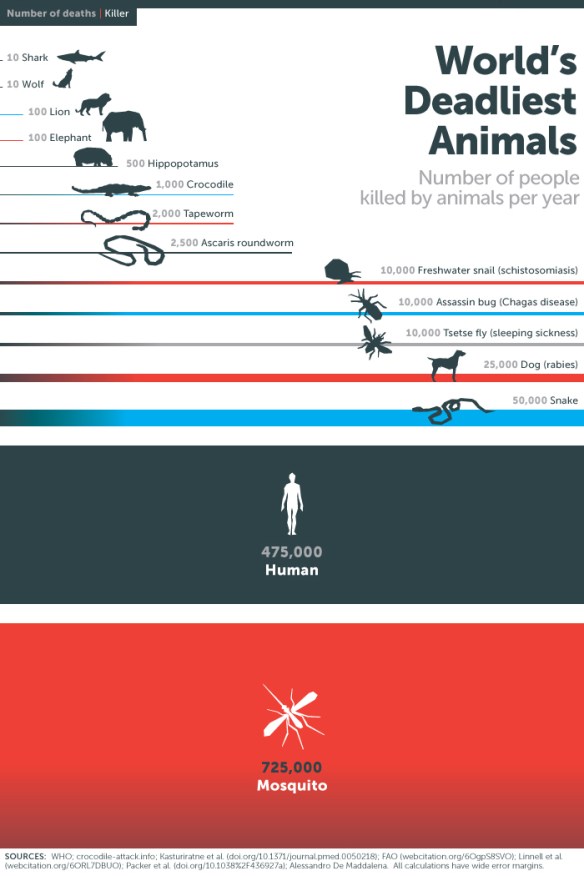
Radio Lab recently had a piece speculating about the implications — turns out they are pretty complex — of exterminating all the mosquitoes in the world. Worth a listen.
This creek divides the US connecting the Atlantic and Pacific oceans

‘The Panama Canal is not the only water line connecting the Atlantic and Pacific Oceans. There’s a place in Wyoming—deep in the Teton Wilderness Area of the Bridger-Teton National Forest—in which a creek splits in two. Like the canal, this creek connects the two oceans dividing North America in two parts.

Yes. You read that right: North America is divided in two parts by a single water line that—no matter how hard you try not to—you will have to cross to go from North to South and vice versa.’ (Sploid). I find this pretty amazing. Would like to trek to that point.
Unintended Consequence of America’s Barbaric Support of Capital Punishment

Execution Could Kill Americans’ Access to Key Anesthetic: ‘Next month the state of Missouri is scheduled to execute convicted murderer Allen Nicklasson by overdosing him with propofol, a German anesthetic. Late last week, the European Union announced that the Missouri execution could trigger export controls on the drug. European Union law prohibits export of products that can be used for capital punishment. If export controls kick in, they could block American hospitals’ ability to purchase propofol, which is used in as many as 80 percent of American medical procedures requiring general anethesia.
The drug’s producer, the pharmaceutical company Fresenius Kabi, announced that it has unilaterally blocked distribution of the drug to American correctional systems. However, the E.U. regulations would go further than the private company’s decision.’ (Pacific Standard)
A Star As Cold As Ice

‘A very strange object called WISE J085510.83-071442.5 lies just 7.2 light-years from the earth. Discovered by the Wide-field Infrared Survey Explorer (WISE), it is nominally one of those not-quite-planets-not-quite-stars known as a brown dwarf. Because they are so much smaller and cooler than stars, brown dwarfs appear red and faint. But astronomer Kevin Luhman noticed that WISE J085510.83-071442.5 was very red and very faint…partly because it is small—perhaps only 2 to 10 times the mass of Jupiter—and partly because it is so cold. It’s temperature, Luhman found, is only about 9° F (-13° C). That’s well below the freezing point of water. In other words, the brown dwarf is literally ice cold. The fact that it is so cold is a clue to its age. If it started out at a few thousand degrees it would have taken somewhere between 1 and 10 billion years to have cooled to its present temperature.
It may well be that instead of being a brown dwarf, this object may in reality be one of the half dozen or so mysterious rogue planets, the first of which was first observed in 2010. These are worlds that, as the result of some catastrophe, were ejected from their home systems and now orbit the galaxy directly, as our sun does…’ (io9).
Related articles


Travel through the Monkey Head Nebula in this new Hubble visualization

‘A belated happy birthday to the Hubble Space Telescope: Our favorite source of wonder and joy was 24 years old on April 24, and the Hubble site celebrated it with this spectacular visualization of the Monkey Head Nebula.
NGC 2174 is “a star-forming region in which bright, newborn stars near the center of the nebula illuminate the surrounding gas with energetic radiation. This radiation, along with strong stellar winds, erodes away the lower density gas. Pockets of higher density gas resist this erosion, and form pillars and peaks along the inner edge of the roughly circular cloud.” ‘ (Sploid).
The ‘Ten Best Sentences’ in literature: do you agree?

‘Editors at The American Scholar have published a list of what they believe to be the “Ten Best Sentences” from literature. There are more suggestions sent in from their readers. [And]… [h]ere’s Roy Peter Clark at Poynter.org, on why they’re so great.’ (Boing Boing).
Related articles


Kenya’s new drone program could put a virtual end to poaching

‘In a pilot, the amazingly effective strategy reduced poaching by 96 percent.’ (Salon.com).
We Need Online Alter Egos Now More Than Ever

‘Insisting that people use their real names online to prevent trolling and ensure civility ignores the fact that using real names online is quite different than using them in person. In the physical world, space and time separate facets of our lives, providing everyday privacy. Even though you use your real name in conversations you have in person with your podiatrist or pastor, those conversations and opinions are not accessible to your co-workers and neighbors. Online, however, … words persist forever, in vast searchable databases. Anything you say or do using your real name is permanently attached to it.’ — Judith Donath, a fellow at the Berkman Center for Internet and Society at Harvard and is the author of “The Social Machine, Design for Living Online” (WIRED).
Related articles


Who Are the Most Pernicious Thinkers?

A List of Five Bad Western Philosophers: ‘Over at his blog Leiter Reports, UC Chicago professor of philosophy Brian Leiter is currently conducting a very interesting poll, asking his readers to rank the 25 philosophers of “the modern era” (the last 200 years) who “have had the most pernicious influence on philosophy.” The pool of candidates comes from an earlier survey of influential philosophers, and Leiter has imposed some conditions on his respondents, asking that they only rank philosophers they have read, and only include “serious philosophers”–”no charlatans like Derrida or amateurs like Rand.” While I personally wince at Leiter’s Derrida jab (and cheer his exclusion of Rand), I think his question may be a little too academic, his field perhaps too narrow.
But the polemical idea is so compelling that I felt it worth adopting for a broader informal survey: contra Leiter, I’ve ranked five philosophers who I think have had a most pernicious influence on the world at large. I’m limiting my own choices to Western philosophers, with which I’m most familiar, though obviously by my first choice, you can tell I’ve expanded the temporal parameters. And in sporting listicle fashion, I’ve not only made a ranking, but I’ve blurbed each of my choices, inspired by this fun Neatorama post, “9 Bad Boys of Philosophy.” ‘ (Open Culture).
5 Ways to Help the Sherpas of Everest

Here are some ways to assist Sherpa families, including those affected by the avalanche. (National Geographic)
The 10 Weirdest Calculations You Can Make Online Right Now

‘Chances are, you’ve used one of the many useful calculating tools available online: How much would a monthly mortgage cost me with today’s interest rates? What time is it on another continent? But there are far more exotic and weird calculators on the Internet. Here are ten of the most unusual.’ (io9).
Beautiful Interactive Barcelona Map

‘Barcelona is one of Europe’s most vibrant cities. Tourists flock here for the superb restaurants, lively nightlife, and a chance to check out the stunningly creative architecture of Antoni Gaudí. But the city’s historical and cultural roots run deep, and a new interactive map aims to make it easier for visitors and locals alike to explore the city’s landmarks.’ (WIRED).

Darn, wish I’d heard of this before I travelled to Barcelona last month! As always, when I travel, I do my research, but this would have made the process much easier. How do you prepare yourself, psychogeographically, for your destinations?
Related articles


A Map of Every Nuke-Scale Asteroid Strike From the Last Decade

‘Though dinosaur-killing impacts are rare, large asteroids routinely hit the Earth. In the visualization…, you can see the location of 26 space rocks that slammed into our planet between 2000 and 2013, each releasing energy equivalent to that of some of our most powerful nuclear weapons. The video comes from the B612 Foundation, an organization that wants to build and launch a telescope that would spot civilization-ending asteroids to give humans a heads up in trying to deflect them.’ (WIRED)
Related articles


U.S. ground troops going to Poland

Polish Defense Minister Tomasz Siemoniak, right
‘Poland and the United States will announce next week the deployment of U.S. ground forces to Poland as part of an expansion of NATO presence in Central and Eastern Europe in response to events in Ukraine. That was the word from Poland’s defense minister, Tomasz Siemoniak, who visited The Post Friday after meeting with Defense Secretary Chuck Hagel at the Pentagon on Thursday.
Siemoniak said the decision has been made on a political level and that military planners are working out details. There will also be intensified cooperation in air defense, special forces, cyberdefense and other areas. Poland will play a leading regional role, “under U.S. patronage,” he said.’ (Washington Post)
Related articles


This Cute Little Guy Desperately Wants To Poison You

‘…It’s one of the few venomous mammals on Earth, and perhaps the only one that injects venom exactly the way a snake does.
The particular solenodon pictured above is a Hispaniolan solenodon, found in Haiti and the Dominican Republic. Its cousin, the Cuban solenodon, was thought to be extinct up to about two years ago, when it was rediscovered after some reported sitings an a ten year search. That might be good news for conservationists, who are thrilled that an animal that survived the comet that wiped out the dinosaurs hasn’t been killed off by cats and logging. Other people might not be so pleased.
The solenodon looks like a big shrew, and is in the same order as shrews, though not the same family. Like shrews, it has venom. Unlike shrew venom, which doesn’t kill its prey, solenodon venom can kill small animals within a few hours….’ (io9).
Related articles


Moonstruck

‘The lunar phases influence all sorts of creatures from cheetahs to eagle owls. Does the moon tug on human behaviour too?’ (Aeon).
Related articles


Delightful Poems About Dogs from E.B. White

‘E. B. White on Dogs is an absolute treat in its entirety — sometimes soulful, sometimes funny, always unmistakably Whitean in its warm irreverence and sensitive satire. Complement it with Mary Oliver’s magnificent Dogs Songs and John Updike’s harrowing poem on the loss of his dog, then lift your spirits with The Big New Yorker Book of Dogs and Jane Goodall’s charming children’s book about the healing power of pet love.’
DOG AROUND THE BLOCK
Dog around the block, sniff,
Hydrant sniffing, corner, grating,
Sniffing, always, starting forward,
Backward, dragging, sniffing backward,
Leash at taut, leash at dangle,
Leash in people’s feet entangle—
Sniffing dog, apprised of smellings,
Love of life, and fronts of dwellings,
Meeting enemies,
Loving old acquaintance, sniff,
Sniffing hydrant for reminders,
Leg against the wall, raise,
Leaving grating, corner greeting,
Chance for meeting, sniff, meeting,
Meeting, telling, news of smelling,
Nose to tail, tail to nose,
Rigid, careful, pose,
Liking, partly liking, hating,
Then another hydrant, grating,
Leash at taut, leash at dangle,
Tangle, sniff, untangle,
Dog around the block, sniff.
Related articles


GOP’s super-secret actual road map for winning more races (Hint: It’s not the one released to the public)

‘…[R]ather than adapting their policy positions to a changing nation, Republicans have simply adopted cynical tactics that work to minimize the electoral power of these demographic groups at every turn. If the GOP can’t convince minorities and young people to vote against their own interests, perhaps they can prevent the poor, the young, and minorities from voting in the first place. After all, as conservative columnists have noted with some glee, an election using old antebellum rules, where only white men could vote, would have led to a landslide for Mitt Romney! (And white Christians are the only “real Americans,” so this exit-polling proves that Romney deserved to win or something.)’ (Salon.com).
Related articles


5 ways American policies make us lonely, anxious and antisocial
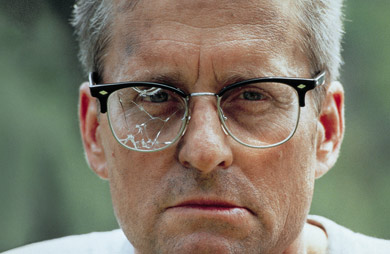
‘With mountains of knowledge, why aren’t we better at setting up our society in a way that helps us to prosper? Isn’t that the point of having a society in the first place? Unfortunately, ours is increasingly designed by politicians indebted to the 1 percent for the express purpose of enhancing and maintaining the power of the very top rung. The rest of us are left to cope with a rocky, competitive life path that leaves us isolated and exhausted. Inequality is stunting our growth as human beings.
We are doing an especially poor job at setting the conditions for our development as social beings. Recent research in Scientific American shows that today’s college students are less empathetic than generations past. We are less involved in our communities and less fulfilled in our jobs, our families, and our relationships. As the great psychologists have taught us, it is accomplishment in these areas that give us the feeling of significance as human beings. Yet at each stage of life development, we have adopted policies, practices, and habits of mind that thwart us and cultivate anxiety, loneliness and antisocial behavior.’ (Salon.com).
Related articles


