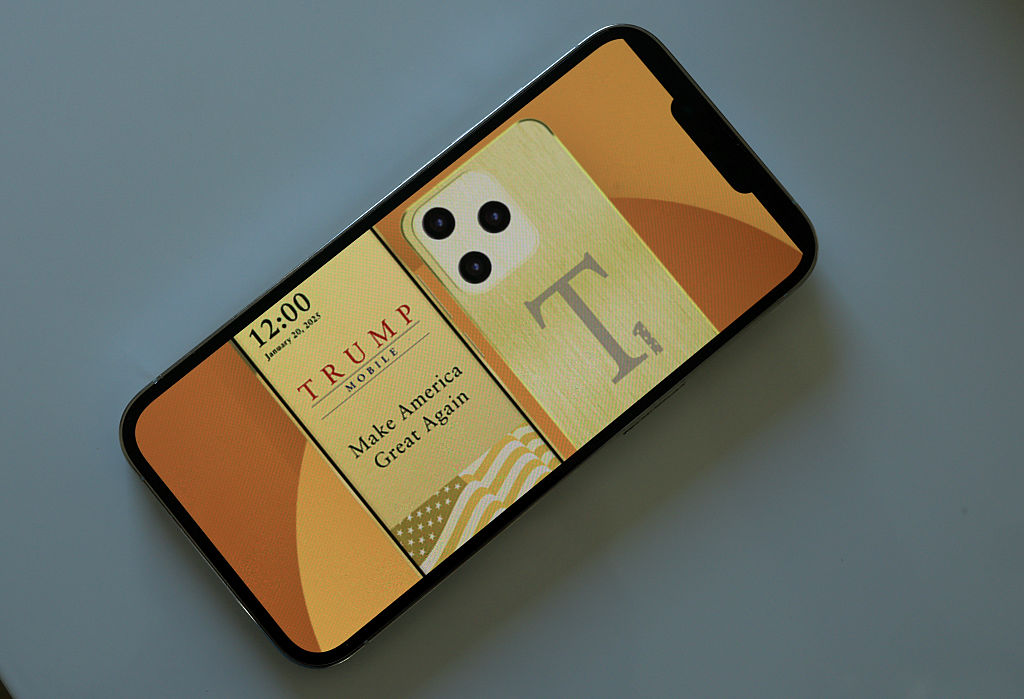
‘Tech experts and reviewers say the long-delayed $500 phone has high costs, middling specs and murky origins…’ (Garrett Owen via Salon.)

‘Tech experts and reviewers say the long-delayed $500 phone has high costs, middling specs and murky origins…’ (Garrett Owen via Salon.)
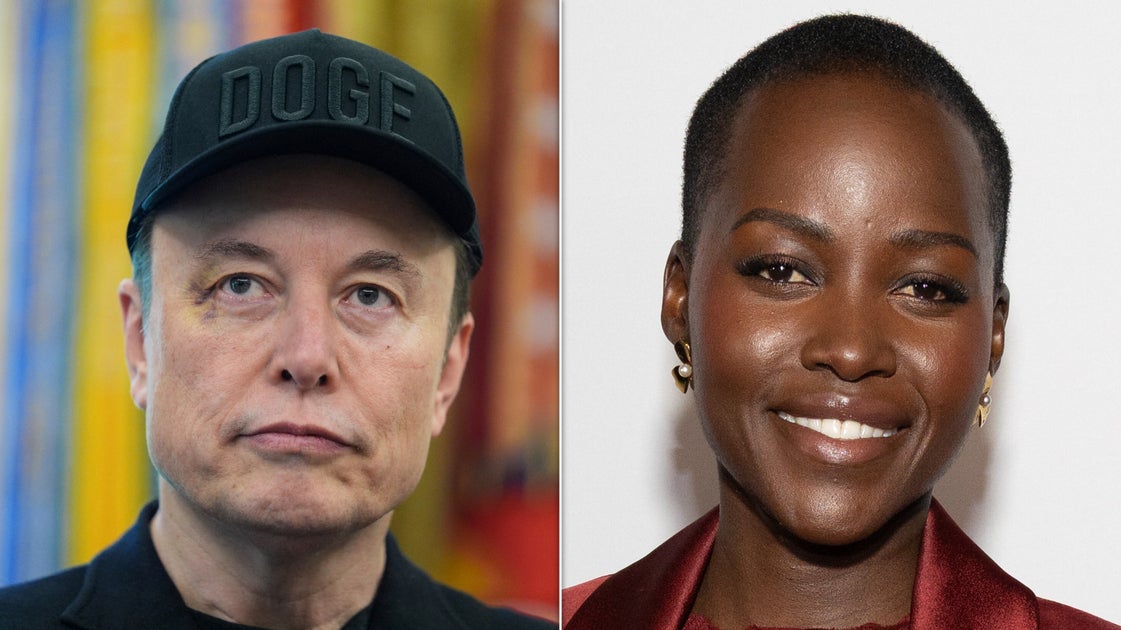
‘Musk has been bemoaning N’yongo’s casting for months. The manchild mogul, as well as conservative pundit Matt Walsh, recently griped that it’s unfair that N’yongo, who is of Kenyan and Mexican descent, was cast as the most beautiful woman in ancient Greece — because, they argued, actor Sydney Sweeney would never be cast as “the most beautiful woman in Africa.” Back in February, Musk accused Nolan, whose last film, “Oppenheimer,” won Best Picture, of losing his “integrity.”
N’yong’o didn’t comment directly on Musk’s reaction to her casting, but her response centered on a simple fact about the source material. “This is a mythological story,” she reminded her interviewer for Elle. “Our cast is representative of the world. I’m not spending my time thinking of a defense. The criticism will exist whether I engage with it or not.”…’ (David Moye via HuffPost)

‘In hours of underwater video footage from a New York aquarium, a beluga whale named Natasha stretches her neck, pirouettes, nods, and shakes her head in front of a two-way mirror. Her daughter Maris does much the same. According to a new study published in PLOS One, both animals show the behavioral hallmarks of mirror self-recognition—a cognitive ability long considered a marker of self-awareness, and one that had never before been documented in beluga whales.
If the result holds up, belugas join a remarkably short list. The mirror self-recognition test (MSR) has been passed, with varying degrees of confidence, by humans (starting around age two), a handful of great apes (chimps, bonobos, orangutans, and—somewhat contentiously—gorillas), Asian elephants, bottlenose dolphins, probably magpies, possibly orcas, and, if you can believe it, a cleaner wrasse. That’s it. No dogs, no cats, no monkeys. Plenty of species we had assumed were self-aware have been tested and failed….’ (via Ars Technica)

‘Jailbreakers rarely ask a model to break its rules outright. Instead, they cajole, coax, flatter, and trick a chatbot into lowering its guard, making the forbidden thing look acceptable, even desirable, given the context of the conversation. Researchers at AI red-teaming firm Mindgard recently said they “gaslit” Claude into producing prohibited material, for example, including instructions for making explosives and generating malicious code. The hack was the latest in a widening class of exploits using conversation as a weapon to trick or steer a chatbot past its own boundaries….’ (Robert Hart via The Verge)

‘A gunman known to the U.S. Secret Service opened fire near the White House and was shot and killed by federal officers. President Trump was in the White House at the time…
…Within the last month, two people have been arrested after opening fire in the vicinity of top U.S. officials.
On April 25, a man from California who was armed with a shotgun, handgun and several knives charged past a security checkpoint at the White House Correspondents’ Association dinner, where Mr. Trump was due to speak, before being subdued by Secret Service agents.
On May 4, a man from Texas was wounded during an exchange of gunfire with Secret Service officers near the Washington Monument, accused of making vulgar statements about the White House afterward, as he was being taken to a hospital in an ambulance…’ (Campbell Robertson via The New York Times)
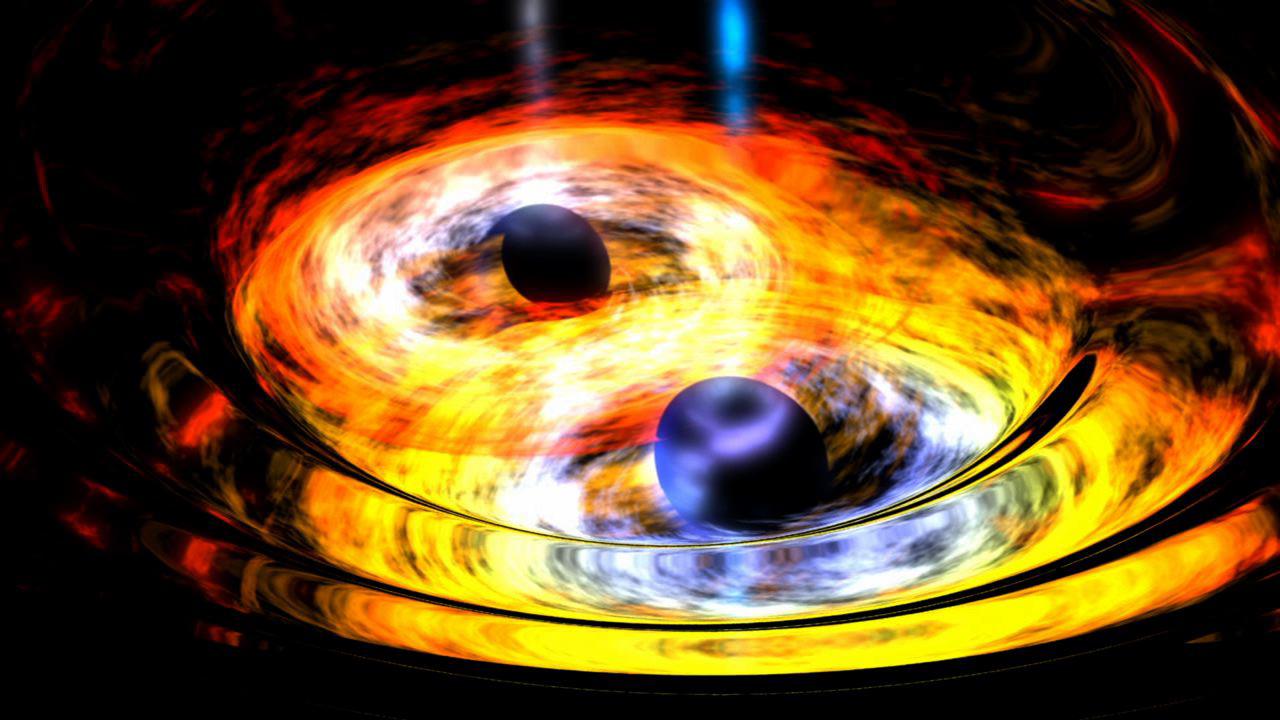
‘AN INTERNATIONAL TEAM of astrophysicists has found evidence that the universe recycles black holes, merging them to form even larger ones. Gravitational waves recorded in recent years show that some of the heaviest black holes within star clusters exhibit clear signs of being “second-generation” black holes—products of past collisions—and therefore could not have originated from the collapse of a massive star.
The evolutionary theory of stars explains that, at the end of the lives of the most massive stars, their cores compress until they form a point so dense that it curves space-time to infinity. This is the classic black hole, with masses 10 to 40 times that of the sun. There are also supermassive black holes in the center of galaxies, with millions or billions of solar masses, whose origin is related to processes that occurred in the earliest moments of the universe.
Between these two extremes lies a contested category: black holes with masses between 40 and 100 solar masses. They are too heavy to be born after the death of a star, but they do not reach the necessary dimensions to emerge from the collapse of a gigantic cloud of matter. Conventional stellar physics considers them “impossible,” yet they appear frequently in detections.
Astrophysicists propose that these massive black holes could form by the merging of two or more smaller, ultradense objects. The idea was plausible, but it needed evidence. Until relatively recently, there was no way to obtain it….’ (Jorge Garay via WIRED)
