 Nicholas Bagley:
‘A couple of weeks ago, my wife (also a law professor) and I wrapped up the final session of a seminar that we co-taught called Contagion. We wanted to offer an introduction to the outbreaks of infectious disease that have reshaped American life and law.
…Really more of a book club than a formal class, we focused on a different disease each time we met: cholera, Spanish flu, polio, AIDS, SARS, and Ebola.
…The class …had a surprising coherence. Every disease provokes its own unique dread and its own complex public reaction, but themes recurred across outbreaks:
- Governments are typically unprepared,, and resistant to taking steps necessary to contain infectious diseases, especially in their early phases.
- Local, state, federal, and global governing bodies are apt to point fingers at one another over who’s responsible for taking action. Clear lines of authority are lacking.
- Calibrating the right governmental response is devilishly hard. Do too much and you squander public trust (Swine flu), do too little and people die unnecessarily (AIDS).
- Public officials are reluctant to publicize infections for fear of devastating the economy.
- Doctors rarely have good treatment options. Nursing care is often what’s needed most. Medical professionals of all kinds work themselves to the bone in the face of extraordinary danger.
- In the absence of an effective treatment, the public will reach for unscientific remedies.
- No matter what the route of transmission or the effectiveness of quarantine, there’s a desire to physically separate infected people.
- Victims of the disease are often thought to deserve the affliction, especially when those victims are mainly from marginalized groups.
- We plan, to the extent we plan at all, for the last pandemic. We don’t do enough to plan for the next one.
- Historical memory is short. When diseases fall from the headlines, the public forgets and preparation falters.
Not every one of those themes was present for every disease; the doughboys who died of the Spanish flu, for example, were not thought to deserve their fate. But the themes were persistent enough over time to establish a pattern.
The books we assigned were outstanding. If you want to learn about the intersection of infectious disease, history, and public health, you could do worse than to start with them:
- Charles Rosenberg, The Cholera Years: The United States in 1832, 1849, and 1866.
- Alfred W. Crosby, America’s Forgotten Pandemic: The Influenza of 1918.
- David Oshinsky, Polio: An American Story.
- Randy Shilts, And the Band Played On.
- Thomas Abraham, Twenty-First Century Plague: The Story of SARS.
- David Quammen, Ebola: A Natural and Human History of a Deadly Virus.
- Laurie Garrett, Ebola’s Lessons: How the WHO Mishandled the Crisis….’
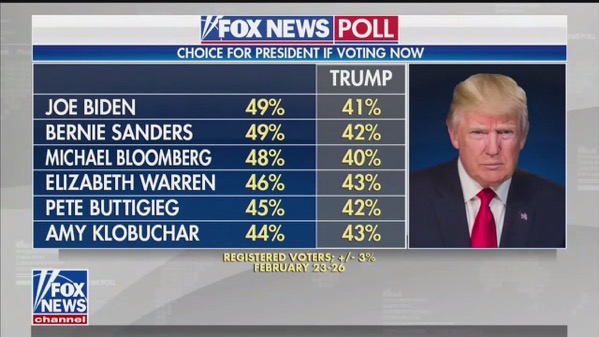 ’President Donald Trump lashed out on Friday at the network that normally covers him so favorably over a new national poll that shows him losing hypothetical head-to-head popular vote matchups against all six of the top Democratic presidential candidates.…’
 ’In China, the death rate has been reported as zero in children under 10 and very low, 0.2 percent, in healthy adults. Unfortunately, the rate is far higher, as high as 14.8 percent, in the sick and elderly (though as is always the case in outbreaks like this, it is hard to know how many of these older and often chronically ill hospitalized patients died with COVID–19, not of COVID–19). The reported overall death rate of 2 percent is essentially a weighted average of these numbers.
 ’Wednesday’s briefing was arguably the most abnormal moment yet in a profoundly abnormal presidency.
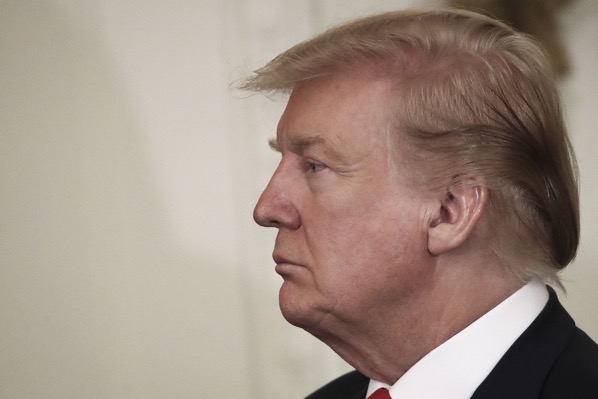 ’Is Trump a symptom or a disease? And if he’s a symptom, what’s the underlying sickness?…’
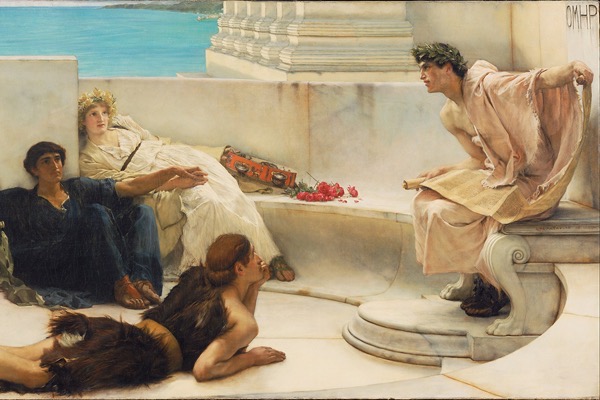 Scholars once doubted that pre-literate peoples could ever have composed and recited poems as long as the Odyssey. Milman Parry changed that.…’
 ‘Testing people who are already extremely sick is an imperfect strategy if people can spread the virus without even feeling bad enough to stay home from work.
 Robin Varghese:
 Lucian Truscott IV:
 Barbara McQuade, Former U.S. attorney for the Eastern District of Michigan:
 ’Mount Shasta in California has become a nexus of conspiracy theories and unusual events. The latest viral sensation from the area has been a UFO-shaped object that appeared in the skies above the potentially active volcano peak of 14,179 feet on the morning of February 12th.
 ’Research suggests the practice supplies a bevy of benefits, from improved mental performance to greater emotional control. Self-talk is most beneficial when it combines thought and action or reinforces an instructional framework.…’

 Phil Christman:
  A
A  ’There are plenty of reasons for slow Wi-Fi. Here’s how to be sure an unethical internet service provider isn’t one of them.…’
 ‘I would tell them that I could look at myself in the mirror and have a full blown telepathic conversation with myself without opening my mouth and they responded as if I had schizophrenia. One person even mentioned that when they do voice overs in movies of people’s thoughts, they “wished that it was real.”…’
 ‘Search lists of U.S. Catholic clergy that have been deemed credibly accused of sexual abuse or misconduct….’
 ’CNN’s chief legal analyst Jeffrey Toobin suggested “the real lesson” of President Donald Trump’s clemency blitz on Tuesday was “a story of creeping authoritarianism.”
 ’The extraordinary claim was made at Westminster magistrates court before the opening next week of Assange’s legal battle to block attempts to extradite him to the US, where he faces charges for publishing hacked documents. The allegation was denied by the former Republican congressman named by the Assange legal team as a key witness.
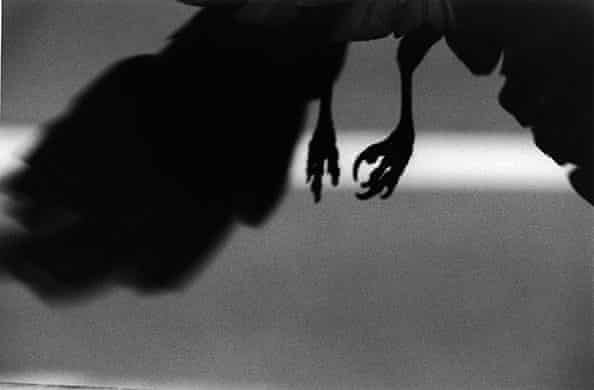 ’’The depth of solitude in these photographs makes me shudder,’ runs the afterword to Ravens, a little-known photobook by Japanese artist Masahisa Fukase. Full of darkness and foreboding, the British Journal of Photography (in 2010) nevertheless named it the best photobook of the past 25 years ……’
 ’Families are photographing death at home. These photos may feel jarring on Facebook, but the practice itself has a long history.…’
 ’Do recent explanations solve the mysteries of aerodynamic lift?…’
 These findings suggest that something about congenital blindness may protect a person from schizophrenia. This is especially surprising, since congenital blindness often results from infections, brain trauma, or genetic mutation—all factors that are independently associated with greater risk of psychotic disorders.
 How taboo language turned the wolf into a monster:
 Rogue waves — enigmatic giants of the sea — were thought to be caused by two different mechanisms. But a new idea that borrows from the hinterlands of probability theory has the potential to predict them all….’
 ‘Adding online ratings is contributing to a feedback industrial complex…’
 What if everything you think you know about politics is wrong? What if there aren’t really American swing voters—or not enough, anyway, to pick the next president? What if it doesn’t matter much who the Democratic nominee is? What if there is no such thing as “the center,” and the party in power can govern however it wants for two years, because the results of that first midterm are going to be bad regardless? What if the Democrats’ big 41-seat midterm victory in 2018 didn’t happen because candidates focused on health care and kitchen-table issues, but simply because they were running against the party in the White House? What if the outcome in 2020 is pretty much foreordained, too?…’
 “PITY THE NATION” (After Khalil Gibran)
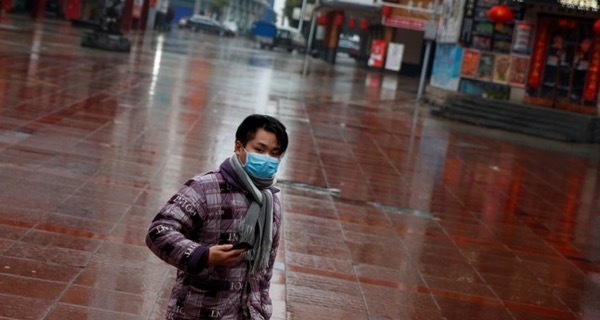 A 71-year-old Chinese woman infected with the new coronavirus tested negative for the virus 48 hours after Thai doctors administered a cocktail of anti-virals used to treat flu and HIV, Thailand’s health ministry said Sunday.
 ’In
’In 
 ’Disney heiress Abigail Disney spoke out in two-dozen tweets Saturday about the late Kobe Bryant’s 2003 rape allegations.
  ’At Singapore’s ArtScience Museum, the 2219:Future Reimagined exhibition “ invites visitors to explore our world as it changes over the next 200 years.” The first room of the exhibition is titled “Mitigation of Shock, Singapore,” based on a previous installation in London by the design studio.
  ’Bruce Levine in
 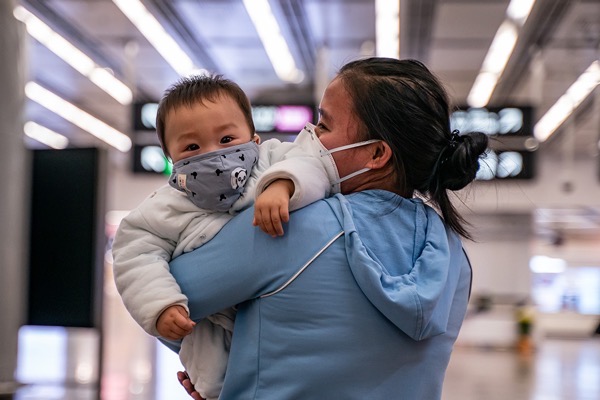 ‘…Such Diseases are Political as Well as Biological’:
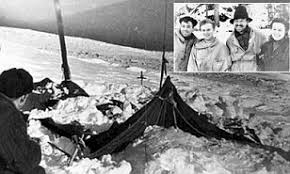 ’An unsolved mystery such as the Dyatlov Pass incident would no doubt rile up truthers in the United States, but the Russian obsession with the incident is above and beyond American internet-forum debates on Area 51 and the chupacabra. Whereas U.S. conspiracy theories often develop on the fringes of public life—a line that has admittedly been blurred in the Donald Trump era—conspiracy-mongering is mainstream in Russia, a country in which 57 percent of the population believes the Apollo moon landings were a hoax.…’
 ’You’ve heard about all the microscopic plastic in our water supply. But did you know there are ways to limit how much you ingest?…’
 Being There:
 “It’s Orwellian, is what it is…”: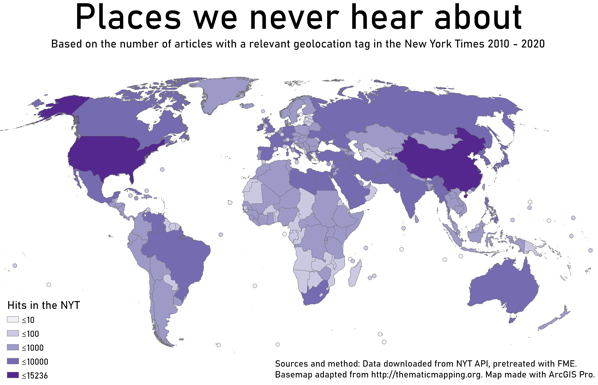
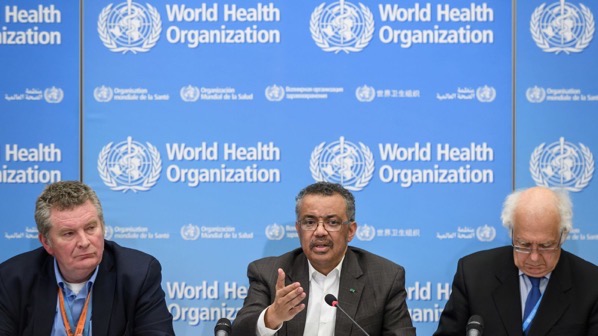
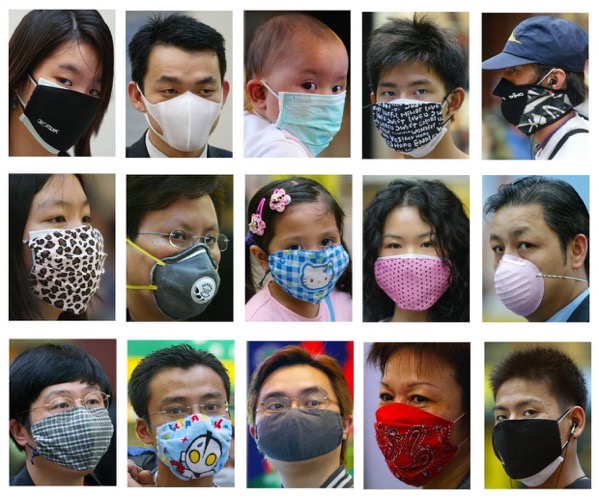 The reality is that the woven-cloth surgical masks provide minimal protection from environmental viruses anyway. (Surgeons use them to protect patients from their mouth-borne germs, not the other way around.) But the masks’ actual prophylactic utility is, in a way, secondary to other reasons they’re being worn, which is why they’re likely to become more common in the future—even among non-Asians….
 From the chief political correspondent at Politico, a