
Via Big Think: ‘Well, we’re about a week into the @POTUS era so here’s what we now know:
Obama’s not a big fan of the men’s rights movement.
He still doesn’t care for the Cubs.
Tweeting at him may or may not get you entered into a scary White House database.
Really, that’s about it….’
Author Archives: FmH


The right’s big gun lie
Via Salon.com: ‘Debunking the phony case that more guns will stop crime: The NRA and some researchers claim we just need more good guys with guns. The math shows they’re all dead wrong…’

Ireland Votes to Approve Gay Marriage, Putting Country in Vanguard
Via NYTimes.com: ‘Ireland became the first nation to approve same-sex marriage by a popular vote, sweeping aside the opposition of the Roman Catholic Church in a resounding victory Saturday for the gay rights movement and placing the country at the vanguard of social change.
With the final ballots counted, the vote was 62 percent in favor of legalizing same-sex marriage, and 38 percent opposed….’

Related articles


5 Pros And Cons Of Leaving Your Child In The Wilderness
Chris Bucholz via Cracked.com: ‘Despite the perfectly healthy and sane number of times I’ve taken my child for a walk through the deepest, darkest part of the woods, I’ve never even come close to losing him in there. But, as my psychiatrist loves to ask me, what if? What’s the worst that could happen? To find out, I turned to the ever-growing number of books and movies featuring feral children that I’ve extensively collected while giggling over the past year, and I pored through them looking for common themes. The next time my shrink smugly asks about my woods/children practices, I’ll be ready with an answer….’


“The 5 Coolest Superpowers The Religious Right Thinks I Have”
Belinda Carroll via Cracked.com: ‘When we in the gay community got our “Now That You Are Queer” welcome packet, it never said how much responsibility came with it. It implied that being gay was just a matter of having great sex, awesome parties, and some light weather-changing capabilities. We in no way realized that we were going to cause some of the largest disasters in human history….’

Beware of These Pricing Tricks Retailers Use to Fool Your Brain
Via Lifehacker: ‘Retailers are darn good at inventing tricks to separate us from our money. Whether it be through the price points they choose, how they market their products, or their discounting techniques, they are experts at getting inside our brains and influencing our buying decisions. Here are a few of the most popular pricing tricks retailers’ use, along with some easy ways to fight back…’

Cleveland cops shot at 2 unarmed black people 137 times. No one is going to prison for it.
Via Vox: ‘A Cleveland police officer on Saturday was found not guilty of two counts of voluntary manslaughter for taking part in a 2012 shooting that killed two unarmed suspects, the Associated Press’s Mark Gillespie reported.
Michael Brelo, who is white, was one of several police officers who fired nearly 140 bullets into a car occupied by Timothy Russell and Malissa Williams, both of whom were black and unarmed, following a police chase that involved more than 100 officers. Brelo was the only officer charged for the shooting, so none of the cops involved will be convicted unless someone else is charged.
The chase and shooting prompted a US Department of Justice investigation that found a pattern of abuse and misuse of force at the Cleveland Police Department.
The Justice Department will review the shooting and verdict in another investigation’

7 ways Bernie Sanders could transform America
He may not capture the Democratic nomination, but the
Via Salon.com:‘He may not capture the Democratic nomination, but the Vermont senator still has a chance to reshape the party.’

Manifesto: The Mad Farmer Liberation Front
Love the quick profit, the annual raise,
vacation with pay. Want more
of everything ready-made. Be afraid
to know your neighbors and to die.
And you will have a window in your head.
Not even your future will be a mystery
any more. Your mind will be punched in a card
and shut away in a little drawer.
When they want you to buy something
they will call you. When they want you
to die for profit they will let you know.So, friends, every day do something
that won’t compute. Love the Lord.
Love the world. Work for nothing.
Take all that you have and be poor.
Love someone who does not deserve it.
Denounce the government and embrace
the flag. Hope to live in that free
republic for which it stands.
Give your approval to all you cannot
understand. Praise ignorance, for what man
has not encountered he has not destroyed.Ask the questions that have no answers.
Invest in the millennium. Plant sequoias.
Say that your main crop is the forest
that you did not plant,
that you will not live to harvest.
Say that the leaves are harvested
when they have rotted into the mold.
Call that profit. Prophesy such returns.Put your faith in the two inches of humus
that will build under the trees
every thousand years.
Listen to carrion – put your ear
close, and hear the faint chattering
of the songs that are to come.
Expect the end of the world. Laugh.
Laughter is immeasurable. Be joyful
though you have considered all the facts.
So long as women do not go cheap
for power, please women more than men.
Ask yourself: Will this satisfy
a woman satisfied to bear a child?
Will this disturb the sleep
of a woman near to giving birth?Go with your love to the fields.
Lie down in the shade. Rest your head
in her lap. Swear allegiance
to what is nighest your thoughts.
As soon as the generals and the politicos
can predict the motions of your mind,
lose it. Leave it as a sign
to mark the false trail, the way
you didn’t go. Be like the fox
who makes more tracks than necessary,
some in the wrong direction.
Practice resurrection.— Wendell Berry (1973)
9 questions about the Illuminati you were too afraid to ask
Via Vox: ‘Will the Illuminati kill me for reading this article? If they do still exist, you already know too much.’

Related articles


Ruth Bader Ginsburg officiated a same-sex wedding, and everyone’s looking for clues
Via Vox: ‘The month before a huge Supreme Court decision on same-sex marriage is expected, Supreme Court Justice Ruth Bader Ginsburg presided over a same-sex wedding, and her words and gestures are being scrutinized for hints of how the case might come out.The New York Times’s Maureen Dowd was a guest at the wedding of Shakespeare Theatre Company artistic director Michael Kahn and New York architect Charles Mitchem. After the ceremony, Dowd wrote in her column that Ginsburg had pronounced the two men married by the powers vested in her by the Constitution of the United States, and that she’d emphasized the word “Constitution” and given “a sly look.”‘

Annals of the Age of Idiocy (cont’d)
Via Vox: ‘Forty-six states now have laws that explicitly ban texting while driving. But smartphones can distract drivers in many other ways, too, a new survey commissioned by AT&T shows.While it found that texting was the most common distraction, lots of drivers said they emailed, browsed the internet, checked Facebook, took selfies or other photos, or even video chatted while driving’

Starting to think differently about animal rights
Via Vox: ‘Americans increasingly think that animals should have the same rights as people, according to Gallup polling on the issue.’

Please let David Letterman go
Via Salon.com: ‘From “Mad Men” to “Sopranos,” our obsession with endings gets everything backwards. We debate them to death, but there are no perfect endings. We’d enjoy our favorite shows more if we accepted that. ‘

How Alabama taught its children to be racists
Via Boing Boing: ‘Many Baby Boomers who grew up in Alabama learned the: ‘history of their state from a racist 1957 textbook called Know’ Alabama. John Archibald of AL.com presented some samples…’

The Neuromancer Movie Lives Again

The Neuromancer Movie Lives Again (io9). As one of my favorite visionary novels of all time, I can’t decide if I’m over-the-top excited about this or dreading it.
Giant ice shelf in Antarctica will be gone within the decade
Via The Verge: ‘Antarctica‘s once-massive Larsen B Ice Shelf is melting rapidly, and will likely be entirely gone by the end of this decade, according to a new report from NASA. A team led by Ala Khazendar of NASA’s Jet Propulsion Laboratory (JPL) found the shelf is developing large cracks while its tributary glaciers rapidly disintegrate.”Although it’s fascinating scientifically to have a front-row seat to watch the ice shelf becoming unstable and breaking up, it’s bad news for our planet,” Khazendar said in a statement. “This ice shelf has existed for at least 10,000 years, and soon it will be gone.” ‘

Related articles


Four Quasars in One Nebula: An Incredible Astronomical First
Via Motherboard: ‘[A] team led by cosmologist Joseph Hennawi has discovered four of these objects—a quasar quartet—huddled together in a nebula 10 billion light years away. This is the first time such a large gaggle of quasars has ever been imaged, and according to Hennawi team, the odds of finding such an event are 10 million to one.’

Related articles


How Big Pharma Can Save Antibiotics From Superbugs
Via WIRED: ‘[The] problem of a lack of commercial investment in antibiotics can be solved relatively quickly and without a dramatic increase on what governments and private patients spend on antibiotics globally today (approximately $40 billion US dollars a year)…’

Related articles


Can We Just Save This Adorable Parrot for Christ’s Sake?
via WIRED: ‘Almost half of New Zealand’s native bird species are now extinct, while a particularly bizarre bird is teetering on the edge: the kakapo. It is the world’s only flightless parrot. It can live 100 years. Its sex life is best described as … involved. And there are just 126 left in the wild…’

Millions of missing galaxies were swallowed up by other galaxies
via New Scientist: ‘Millions of ancient galaxies thought to be all but extinct today seem to have been hiding in plain sight, concealed by discs of stars stolen from other galaxies. Even our own Milky Way may be hiding one in its centre.’

What you need to know about Congressional surveillance “reforms”
via Salon.com: ‘Officials are touting the USA Freedom Act as an end to government phone surveillance. The truth is more complicated.’

Maybe Our Ancestors Knew The Real Secret Of A Good Night’s Sleep
via io9: ‘I have a friend who says three in the morning is the time we all spend laying awake, staring at darkness, and thinking about all the mistakes we’ve made in our lives. Everyone reading this knows that she’s right. But it doesn’t need to be this way. We could use this time productively, the way our ancestors did.
The concept of first sleep and second sleep is a very old one. As the light waned in the evenings, people would go to bed and sleep for about four hours. In the middle of the night, they’d wake up and stay awake for a few hours. People would usually use this time for quiet recreation. They’d talk a bit, eat a little, perhaps read or pray, and most people agreed that this was the best time for married couples to roll around on the mattress.
After a few hours, they’d get sleepy once again and settle back down to sleep. The second sleep would see them through until dawn, when they’d get up and take on their day. It’s easy to see why the concept of two sleeps was popular. Instead of being dead tired at the end of the day, you could fall into bed and sleep for a few hours before waking up and having fun. It would allow a more complete break between one day and the next, a little bubble of “me time” between working days. And it might eliminate those three o’clock thoughts.’

A Plane Took a Wrong Turn and Ended Up in a Cloud of Antimatter
via Gizmodo: ‘Where the hell did the antimatter come from? That’s what atmospheric scientist Joseph Dwyer has been trying to figure out for the past six years, after his research plane accidentally flew through a thunderstorm into a cloud of antimatter in 2009…’
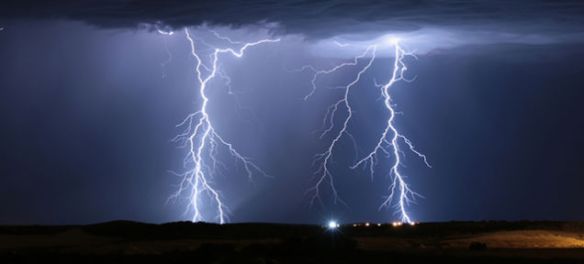
This synesthetic website turns words into drum beats
via The Verge: ‘I mean, the headline says it all really. This is a website you go to and type something in and then that something gets turned into a drum beat. You can literally stick any words you like into it — famous words, rude words, long words, made-up words, you get the idea. The whole project is the creation of developer Kyle Stetz and follows in a long line of musical-keyboard-procrastination tools. (See also Daft Punk keyboard and Patatap.) You’d be mad not to at least type your name in.’

How to Get Birth Control Without Your Insurance Illegally Charging You
via Lifehacker: ‘Under the Affordable Care Act, you should be able to get any approved type of birth control without a co-pay. But many insurers are charging anyway—sometimes because of loopholes, and sometimes they’re just plain breaking the law. Here’s what you can do.’

We’re boring our kids in school: an easy reform will help
via Salon: ‘Students have a rich world available to them to develop and train their minds. It’s not school — but it could be…’

Beware Simple Stories
via MacDrifter: ‘I’ll tell you a secret that is likely to make me a pariah among the nerds. I don’t like Malcolm Gladwell or Seth Godin or really most of the TED genre of pop culture factoids. I’m sure they are all fine upstanding citizens of the world but their brand of storytelling does not appeal to me. I avoid most science journalism as I avoid life-hack mythology. This is my problem with pop science and the cult of science tourism. It is too final. Too conclusive. Too bite-sized. These morsels of facts are portrayed as in-depth studies. They are wrapped with a crudely drawn distribution curve on the cover and published to a tourism market anxious to become the indisputable happy hour experts on the psychology and physics of self-driving cars. They lead to unearned certainty in our wold views and act as bludgeons against later course corrections. I’m skeptical of big problems with small answers.’

Hersh: Everything We Were Told About Osama bin Laden’s Killing Was a Lie

The newest Seymour Hersh blockbuster in the London Review of Books has one big claim: virtually the entire story of Osama bin Laden’s death was an elaborate fiction.
Bin Laden wasn’t hiding out in Abbattobad, as we’ve been told—he was effectively under house arrest, placed there under guard by Pakistan’s security services with financial help from the Saudis. We didn’t track down his address through diligent intelligence work—a Pakistani informant ratted him out to the CIA in exchange for the $25 million reward. And we didn’t kill him in a firefight—he was abandoned by his Pakistani guards and gunned down in cold blood by U.S. troops. The whole operation was supposed to remain secret, with bin Laden’s death publicly chalked up to a drone strike, but an unexpected helicopter crash at the site of the raid forced the U.S. to concoct a complex symphony of lies. According to Hersh. The article, if you believe its almost entirely anonymous sourcing (not that there’s anything wrong with anonymous sources!), casts the Obama White House’s account of the operation as a frantic and harried cover-up designed to valorize a “homicide,” as one anonymous commando put it. Though the Hersh account is by no means new—Hersh fails to credit her, but national security writer R.J. Hillhouse wrote a blog post in 2011 that included substantially the same claims, and generated some mainstream press accounts—his stature in the spook world and track record with previous stories means his account is getting traction. Here are the U.S. lies about the raid, as catalogued by Hersh… (more, via Gawker)
This Shade Of Purple Can Ruin Your Life
via io9:‘This is Ruhemann’s purple, and you can probably figure out, from the picture, the legal reasons it will ruin your life. Now let’s talk about the chemistry behind that…’

Moose Are Dying in Horrible Ways Due to Climate Change
via Motherboard: ‘In Northeast Minnesota, moose numbered about 8,000 a decade ago. Today, that number is roughly 3,500. As new evidence unspools, one clear thread has emerged: in years of warmer, shorter winters, the moose are plagued by health problems. It’s a trend that can be seen across the United States.’

Loretta Lynch is a win for the police state, says Glenn Greenwald
Glenn Greenwald via Boing Boing: “She is essentially a fairly conservative, pro-security state, pro-penal state federal prosecutor who has spent her career supporting and upholding this evil system of mass incarceration. To cheer her simply because of the historic nature of her appointment — which, of course, is significant, her being the first African-American woman to serve in that position — without regard to the things that she’s actually going to do in pursuit of these policies, I think is mind-numbingly irrational.
I do think Eric Holder was pretty horrible in lots of important areas; but in other areas, he was actually quite good — like civil rights enforcement and advocating for more equity and fairness in the criminal justice system. I don’t expect Loretta Lynch to be [that way]…”

What Animals Are Likely to Go Extinct First Due to Climate Change
via National Geographic: ‘One in six species could disappear as the climate warms over the next century, with animals and plants in South America particularly hard hit while those in North America would face the lowest risk, according to a major new analysis published Thursday…’

Diet fads are destroying us
Diet fads are destroying us: ‘Paleo, gluten-free and the lies we tell ourselvesThe author of The Gluten Lie on our fruitless search for clean living, and why we’re so quick to scoff at science…’ (Salon.com).

You’re underestimating your plants
via Salon.com: ‘Plants are intelligent, argues scientist Stefano Mancuso. And it’s time we start treating them accordingly…’

R.I.P. Ruth Rendell
NYTimes obituary: Novelist Who Thrilled and Educated Dies at 85:‘Ms. Rendell was a prolific writer of intricately plotted mystery novels that combined psychological insight, social conscience and teeth-chattering terror.’

Along with Ian Rankin, Denise Mina, and Val McDermid, one of my favorite noir authors.
Astronomers discover largest known structure in the universe is … a big hole
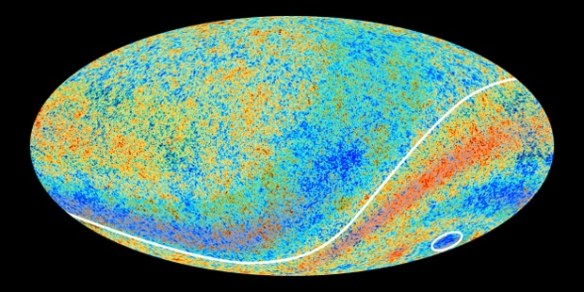
via The Guardian: ‘Astronomers have discovered what they say is the largest known structure in the universe: an incredibly big hole (circled, at lower right in map above).
The “supervoid”, as it is known, is a spherical blob 1.8 billion light years across that is distinguished by its unusual emptiness.
István Szapudi, who led the work at the University of Hawaii at Manoa, described the object as possibly “the largest individual structure ever identified by humanity”.
Its existence only emerged thanks to a targeted astronomical survey, which confirmed that around 10,000 galaxies were “missing” from the part of the sky it sits in.
Szapudi’s team was intentionally searching for the void because they believed that it could explain previous observations showing that part of the sky is unusually cool.’
Editing Human Embryos: So This Is Happening
Carl Zimmer via The Loom: ‘Earlier this week, Chinese researchers reported that they edited the genes of human embryos using a new technique called CRISPR. While these embryos will not be growing up into genetically modified people, I suspect this week will go down as a pivotal moment in the history of medicine. David Cyranoski and Sara Reardon broke the news today at Nature News. Here I’ve put together a quick guide to the history behind this research, what the Chinese scientists did, and what it may signify.’

UNESCO Intangible Heritage
via UNESCO: ‘The Representative List of the Intangible Cultural Heritage of Humanity is made up of those intangible heritage elements that help demonstrate the diversity of this heritage and raise awareness about its importance. In 2008 the Committee incorporated 90 elements (formerly proclaimed Masterpieces) into the Representative List and from 2009 to 2014, it inscribed 224 new elements for an overall number of 314 elements on the Representative List.’

The M7.8 Earthquake In Nepal Is Going To Be Really, Really Nasty
Via io9: ‘A major shallow earthquake hit near Kathmandu in Nepal just before noon on Saturday local time. Between high population densities, intense prolonged shaking, unstable slopes, and inadequate buildings, this has the makings of a very nasty disaster.’
via Gizmodo: ‘There are a few important ways you can contribute to the Nepal earthquake relief effort from anywhere in the world with an internet connection.’

I’m praying for all my friends in Kathmandu.
Related articles


Are Two Giant Black Holes About to Collide?
Via National Geographic: ‘A collision between two giant black holes is the most titanic smashup astronomers can imagine. Nobody’s ever seen it happen—but if a new report in Astrophysical Journal Letters is correct, they might not have long to wait….
When that happens, says Einstein’s General Theory of Relativity, the collision should release a powerful burst of gravitational waves—ripples in the very fabric of spacetime itself. Physicists have built enormous instruments to detect those waves, which would be a ringing confirmation of the theory.’

Gorilla Cracks Glass Window At Zoo After Little Girl Beats Chest
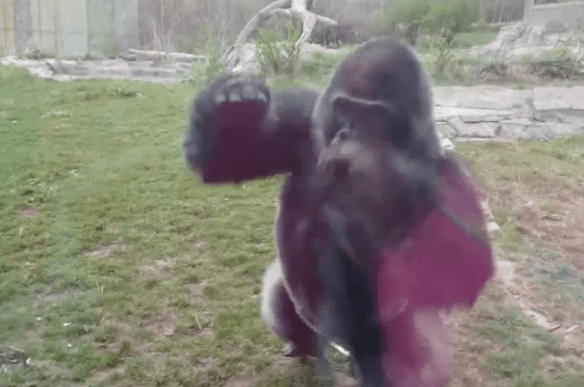
Via IFLScience: ‘For Kijito—the 375-pound male gorilla—it may have just been a matter of mixed signals. What the girl found funny, the gorilla deemed aggressive. Officials at Omaha’s Henry Doorly Zoo said that no one was in danger, even when the pane of glass cracked.
“Shortly before this, we were telling the kids [the gorillas] could not break [the glass],” said Kevin Cave, the father in the video, to Omaha World-Herald. “They will never believe us again.” ‘
The GOP’s pathetic money groveling
Via Salon.com: ‘Why the Republican nomination will go to the highest bidder.’

Search for the Loch Ness Monster from your couch
Via The Verge: ‘On the 81st anniversary of the iconic Surgeon’s Photograph — the fake image claiming to show the head and neck of the Loch Ness Monster — Google Maps will now let you search for Nessie yourself. Street View has been updated to include imagery of the 23-mile-long Loch Ness in Scotland, and Google even sent a team of divers into the depths of the nearly 800-foot-deep loch to capture underwater images of the legendary lake. Is the Loch Ness Monster real? Is it resting at the bottom of Loch Ness? The answer to your questions may now be hidden in a Street View image.’

Monster or not, Loch Ness is one of my favorite spots on earth, so this is good news.
The Problem With Satisfied Patients
Via The Atlantic: ‘When Department of Health and Human Services administrators decided to base 30 percent of hospitals’ Medicare reimbursement on patient satisfaction survey scores, they likely figured that transparency and accountability would improve healthcare. The Centers for Medicare and Medicaid Services (CMS) officials wrote, rather reasonably, “Delivery of high-quality, patient-centered care requires us to carefully consider the patient’s experience in the hospital inpatient setting.” They probably had no idea that their methods could end up indirectly harming patients…

Patient-satisfaction surveys have their place. But the potential cost of the subjective scores are leading hospitals to steer focus away from patient health, messing with the highest stakes possible: people’s lives.’
Why don’t our brains explode at movie cuts?
Via Aeon: ‘With a cut, a filmmaker can instantaneously replace most of what is available in your visual field with completely different stuff. This is something that never happened in the 3.5 billion years or so that it took our visual systems to develop. You might think, then, that cutting might cause something of a disturbance when it first appeared. And yet nothing in contemporary reports suggests that it did.’

Dark Chocolate Is Not Good for You, and Also Sucks
Via Gawker:
“Oh, your dark chocolate only has 70% cacao? You poor thing. I only eat 97% cacao fair trade raw vegan organic helper monkey picked chocolate that’s been through the digestive system of a spotted African cat.”

The dystopian lake filled by the world’s tech lust
Via BBC: ‘Hidden in an unknown corner of Inner Mongolia is a toxic, nightmarish lake created by our thirst for smartphones, consumer gadgets and green tech, discovers Tim Maughan.’

How Psychiatrists Are Failing the Patients Who Need Them Most
Via Bloomberg Business: ‘A growing number of mental health-care providers are filling their practices with easy-to-treat, cash-paying patients — and leaving the desperately ill with few options…’
Republican Senators Just Voted To Sell Off Your National Forests
Via Gizmodo: ‘Our public lands — including National Forests, wildlife refuges and wilderness areas — are arguably our greatest treasure. Well, almost every Republican Senator just voted to sell them to the highest bidder. This is what you can do about it.’

Ted Cruz is dangerous: Why liberals scoff at his campaign at their peril
Via Salon.com:
‘Since Ted Cruz first announced his candidacy, much has been made of his chances of winning, his arrogance and his extreme conservative views. But most of the controversy over his candidacy centers on his lying.It is no surprise to any of us that politicians lie. We generally assume they stretch the truth to get elected, to denigrate their political foes, and to bolster their images. But Cruz may just represent one of the biggest liars in recent history. In fact, he may be a whole new form of political liar.
The Daily Beast reports that, “Cruz’s Politifact track record for publicly asserted falsehoods is the second-highest among front-runners, totaling 56 percent of all statements they’ve looked at.” And Matthew Rozsa tell us that “Googling ‘Ted Cruz lies’ pulls back an astonishing 7,890,000 results, and on Twitter, the two phrases are basically synonymous.”
The trouble with this angle on Cruz’s misstatements is that it presumes that Cruz is, in fact, lying. But lying depends on the liar knowing that what he is saying is false. Cruz shows no signs of such awareness. As Ann Marie Cox points out in her survey of Cruz’s lies, there’s more going on here than just a politician’s twisting of the truth or a partisan spin on data. She wonders whether it is time to take seriously the idea that he really believes what he is saying. “There are objective falsehoods that show Cruz could just be looking at a different set of data. Other, more telling whoppers show that Cruz isn’t just looking at different data, he’s living in a different universe.”
That different universe is Cruz’s world of misinformation. He doesn’t lie because lying would require that he actually know the truth. And that is what makes Cruz an even greater threat to the health of our democracy than all of his lies put together. Cruz represents a turn in GOP politics where political beliefs operate more like religious fervor than reasoned inference.’

6 modern-day Christian terrorist groups our media conveniently ignores
Via Salon.com: ‘The Southern Poverty Law Center (SPLC) recently released an in-depth report on terrorism in the United States. Covering April 2009 to February 2015, the report (titled “The Age of the Wolf”) found that during that period, “more people have been killed in America by non-Islamic domestic terrorists than jihadists.” [Although] “the jihadist threat is a tremendous one,” … law enforcement, the SPLC stressed, are doing the public a huge disservice if they view terrorism as an exclusively Islamist phenomenon.’

A Chart Of The Most Common Colors In Paintings Over The Last 200 Years
Via io9: ‘Next time you’re strolling through a museum, pay attention to just the colors of the paintings and the years. Notice anything? Paintings have been getting progressively bluer.
Or, to put it another way, blue is becoming “the new orange,” says Martin Bellander, who put together this chart analyzing color usage in over 120,000 paintings. To make this visualization, he scraped data and images from the BBC’s database of famous paintings through the centuries and analyzed which colors predominated.
Orange is, indeed, far and away the most used color in paintings through the 19th century, and then the usage of other colors — blue, in particular — start to creep upwards so that by our own time, the color spread is fairly evenly spread across the spectrum. Why exactly this happened isn’t clear. But just as interesting is the question of how far we can expect it to go: Will the current state of more-or-less color equilibrium hold, or will a similar chart a few centuries from now show blue sweeping the field, just like orange used to?’

Great advice from Marshall McLuhan:
Via Boing Boing: ‘Read only the right-hand page of serious books. “If it’s a frivolous, relaxing book, I read every word. But serious books I read on the right-hand side only because I’ve discovered enormous redundancy in any well-written book, and I find that by reading only the right-hand page this keeps me very wide awake, filling in the other page out of my own noodle.” ‘

Mice are tiny, quiet singers, according to science
Via Salon.com: ‘Male mice sing ultrasonic love songs to woo mates according to a new study published Wednesday in the journal Frontiers of Behavioral Neuroscience. In fact, the mice perform long, complex strings of syllables the same way as song birds.
“Those songs are really high in pitch, above 50 kilohertz, and are not audible to humans,” said Jonathan Chabout, a postdoctoral fellow at Duke University. “When we pitch them down and play back at real speed, it sounds like a bird.” ‘
A Watershed Moment for Tech Activism
Via Motherboard: ‘Indiana’s new “religious freedom” law has ignited a national firestorm of protest—and the tech industry is leading the fight.
The new law, which critics say opens the door to discrimination against lesbians, gays, bisexuals, and transgender people, has prompted many leading tech companies to engage in corporate activism on social issues with a newly emboldened intensity, according to LGBT advocates.
“The tech industry’s opposition to this bill is unprecedented,” said Fred Sainz, vice president at Human Rights Campaign, a leading LGBT advocacy group. “Never before have so many tech firms spoken out so loudly against such discriminatory actions.”
Gov. Mike Pence of Indiana says his state’s law is designed to provide legal protection against government action that “substantially” burdens religious freedom. But critics call the measure a bald-faced attempt to legitimize discrimination by allowing businesses to refuse service to LGBT people on “religious” grounds.
The fierce backlash against Indiana’s new law underscores how national attitudes are rapidly changing on the issue of gay rights, and highlights how important LGBT equality has become for some of the country’s most influential tech companies.’

Related articles


Where Did April Fools’ Day Come From?
Via Big Think: ‘Many conflicting theories exist that try and pinpoint the origins of the holiday everyone in your office hates you for. Of all these theories, the most likely root of what we now know as April Fools’ Day dates back to Pope Gregory XIII, who reigned — or if reign isn’t the right word — who pope’d from 1572 to 1584. I’m sure you’re familiar with the calendar hanging on your wall that starts in January, ends in December, and consists of seemingly arbitrary amounts of days per month. You can thank Pope Greg for that. His Gregorian calendar replaced the Julian Calendar in 1582.
One major change with the calendar switch was that New Year’s Day moved from the end of March to the beginning of January. As Tech Times notes, those who didn’t get the memo about the change of date and celebrated the old New Year’s Day at the end of March were thus deemed, naturally, April fools.

I mean, I like chocolate like the next person, but…
Via Salon.com: ‘In 2007, Belgian chocolatier Dominique Persoone decided that guests at a party he catered for the Rolling Stones were too hip to eat their desserts with their mouths. So, he invented the “chocolate shooter” — a little line of cocoa powder designed to get you a little high and keep you tasting chocolate for hours.
Since then, Persoone has sold over 25,000 chocolate shooters and with it, established a super obnoxious trend.
“The mint and the ginger really tinkle your nose,” said the 46-year-old of the spices present in the shooter. “Then the mint flavor goes down and the chocolate stays in your brain.”
Unsurprisingly, this is not good for you. Stop doing it.’

[Just a thought: could the appeal of this have something to do with dyslexia?]
Why Is My Dog Such a Picky Pooper?
Via WIRED: ‘Here’s what people tend to forget about dogs (and a number of other animals): Elimination fulfills both a physiological purpose and a social one. Whether the deed is done in an open field, the middle of the street, a neighbor’s doorstep, or a bed of ivy, dogs are not just expelling bodily waste; they are depositing piles of really interesting information on the ground.’

Do You Suffer From ‘Exploding Head Syndrome’?
You’re Not Alone (va io9): ‘New findings indicate nearly one in five college-age students has been startled awake by an abrupt, loud noise that doesn’t actually exist. Known as “exploding head syndrome,” the psychological condition appears to be more common and disruptive than previously thought.
Some of you may already be familiar with exploding head syndrome (EHS). I know I’ve experienced this on at least one or two occasions, and it’s not pleasant. It’s characterized by an exceptionally loud noise in the head (sometimes described as “an explosion” in the head), usually during sleep-to-wake or wake-to-sleep transitions. Though benign, it can be extremely stressful.
Here’s what Washington State University psychologist Brian Sharpless, a sleep disorder expert and lead author of a recent study study on the prevalence of EHS among college undergraduates, told me about the condition:
Exploding head syndrome episodes by themselves are harmless. They can cause problems with a relatively small number of people if episodes happen too frequently, regularly disturb sleep, or if people react to them in unhealthy ways (e.g., by becoming really anxious before bedtime or fearing that something more serious may be wrong with them).’

The World’s Most Famous Musicians Just Hosted a Bonkers Press Conference
Via Gawker: ‘Only a few minutes ago, the entire music industry stood on a stage in a collective display of how rich and out of touch they are. They think you are willing to pay up to double the price of other streaming music services to pay for their streaming music service, because they are crazy.
Imagine this: canceling your Spotify subscription, and paying $20 for a Tidal subscription instead. It’s more expensive because it’s “higher quality” and “artist-owned,” which is important because Usher, Daft Punk, and Madonna have been living in wretched penury for far too long, and it’s time for people to give back. The modern-day Our Gang (which counted among its members not only the aforementioned supernovas, but also Rihanna, Nicki Minaj, Kanye West, Chris Martin, and Jack White) held a “keynote” to promote Tidal, the already extant European streaming company Jay Z recently purchased for $56 million because he’s bored.

America’s not a force for good: The truth about our most enduring — and harmful — national myth
Christian Appy writes in Salon.com: ‘My main argument is that the Vietnam War shattered the central tenet of American national identity—the broad faith that the United States is a unique force for good in the world, superior not only in its military and economic power, but in the quality of its government and institutions, the character and morality of its people, and its way of life.

A common term for this belief is “American exceptionalism.” Because that term has been bandied about so much in recent years as a political slogan and a litmus test of patriotism, we need to be reminded that it has deep roots and meaning throughout our history. In many ways the nation was founded on the faith that it was blessed with unrivaled resources, freedoms, and prospects. So deep were those convictions they took on the power of myth—they were beyond debate. Dissenting movements throughout our history did little to challenge the faith.That’s what made the Vietnam War’s impact so significant. Never before had such a wide range of Americans come to doubt their nation’s superiority; never before had so many questioned its use of military force; never before had so many challenged the assumption that their country had higher moral standards.’
What Plants Talk About
Via Modern Farmer: ‘They don’t have mouths, ears or even a brain, but according to some scientists, plants are talking all the time. We just need to understand their language.
Once we do, we may discover that plants routinely exhibit animal-like behavior. What if, as some research indicates, they communicate with each other and their environment? Perhaps plants hunt, scream, share and nurture their young, just like members of the animal kingdom.’

Nightwalking: a subversive stroll through the city streets
Matthew Beaumont writes in The Guardian: ‘In an economy in which time, including nighttime, is money, wandering the streets after dark – when most people are sleeping in order to prepare themselves for the next day’s labour – is in symbolic terms subversive. In the aberrant and deviant form celebrated by Dickens in the 19th century, and surreptitiously practised by innumerable others before and since, nightwalking is quintessentially objectless, loitering and vagabond.’

How a Wolf Won Hearts in an Alaska Suburb
Via National Geographic: ‘It’s one thing to have a tolerant meeting with a wild wolf that goes on for a matter of minutes. But this went on for six years, so we got to know this wolf, whom we came to call Romeo, as an individual. And he got to know us and our dogs.
For want of a better word, the only thing I can say from a human perspective is that it amounted to friendship. If you wanted to be scientifically correct, it would be “social mutual tolerance.” But it was more than that. The wolf would come trotting over to say hi, and give a little bow and a relaxed yawn, and go trotting after us when we went skiing. There was no survival benefit. He obviously just enjoyed our company.’

Physicists Will Test Existence of Alternate Universes
Via Big Think: ‘Scientist running the world’s biggest physics experiment — the Large Hadron Collider located in Geneva, Switzerland — will soon begin trials that will test for the presence of alternate universes existing in different dimensions of hyperspace.Since detecting the Higgs boson, the so-called God particle, which explains how matter originally obtained mass, the collider has been shut down for two years while undergoing renovations. When it reopens, it will be able to reach energy levels higher than ever before: 13 tera electron volts (TeV). The Higgs boson was discovered at levels of 5.3 TeV.

Quentin Tarantino Lists His 20 Favorite Spaghetti Westerns
Sergio Leone
Via Open Culture: ‘Trust a genre-loving auteur like Quentin Tarantino (and one who made his very own Django a few years back) to know Spaghetti westerns inside and out. While even those of us who never turn down the chance to enjoy a good Spaghetti western might struggle to name ten of them, Tarantino can easily run down his personal top twenty:
- The Good, the Bad, and the Ugly (Sergio Leone, 1966)
- For a Few Dollars More (Sergio Leone, 1965)
- Django (Sergio Corbucci, 1966)
- The Mercenary (Sergio Corbucci, 1966)
- Once Upon a Time in the West (Sergio Leone, 1968)
- A Fistful of Dollars (Sergio Leone, 1964)
- Day of Anger (Tonino Valerii, 1967)
- Death Rides a Horse (Giulio Petroni, 1967)
- Navajo Joe (Sergio Corbucci,1966)
- The Return of Ringo (Duccio Tessar, 1965)
- The Big Gundown (Sergio Sollima, 1966)
- A Pistol for Ringo (Duccio Tessari, 1965)
- The Dirty Outlaws (Franco Rossetti, 1967)
- The Great Silence (Sergio Corbucci, 1968)
- The Grand Duel (Giancarlo Santi, 1972)
- Shoot the Living, Pray for the Dead (Giuseppe Vari, 1971)
- Tepepa (Giulio Petroni, 1968)
- The Ugly Ones (Eugenio Martin, 1966)
- Viva Django! (Ferdinando Baldi, 1967)
- Machine Gun Killers (Paolo Bianchini, 1968)
You can watch all the trailers of these Spaghetti western masterpieces in the playlist…, created by The Spaghetti Western Database.’

This is a revelation for me. I have always loved Sergio Leone’s films, but I am excited to learn that there is a rich body of work of at least five or six other auteurs of the genre waiting for me out there!
What has neuroscience ever done for us?
Via The Psychologist: ‘Over the past 25 years the pace of progress in neuroscience research has been extraordinary, with advances in both understanding and technology. We might expect that this would stimulate improved understanding and treatment of mental health problems, yet in general this has not been the case. In fact, our standard treatment approaches have barely changed in decades, and still fail many people suffering from mental distress.’

5 Languages That Could Change the Way You See the World
via Nautilus: ‘…The way that different languages convey information has fascinated linguists, anthropologists, and psychologists for decades. In the 1940s, a chemical engineer called Benjamin Lee Whorf published a wildly popular paper in the MIT Technology Review (pdf) that claimed the way languages express different concepts—like gender, time, and space—influenced the way its speakers thought about the world. For example, if a language didn’t have terms to denote specific times, speakers wouldn’t understand the concept of time flowing.
This argument was later discredited, as researchers concluded that it overstated language’s constraints on our minds. But researchers later found more nuanced ways that these habits of speech can affect our thinking. Linguist Roman Jakobson described this line of investigation thus: “Languages differ essentially in what they must convey and not in what they may convey.” In other words, the primary way language influences our minds is through what it forces us to think about—not what it prevents us from thinking about.
These five languages reveal how information can be expressed in extremely different ways, and how these habits of thinking can affect us:

- A Language Where You’re Not the Center of the World
- A Language Where Time Flows East to West
- A Language Where Colors Are Metaphors
- A Language That Makes You Provide Evidence
- A Language That Has No Word for “Two” ‘
The Epidemiology and Statistical Mechanics of Zombies
Via arxiv.org: ‘We use a popular fictional disease, zombies, in order to introduce techniques used in modern epidemiology modelling, and ideas and techniques used in the numerical study of critical phenomena. We consider variants of zombie models, from fully connected continuous time dynamics to a full scale exact stochastic dynamic simulation of a zombie outbreak on the continental United States. Along the way, we offer a closed form analytical expression for the fully connected differential equation, and demonstrate that the single person per site two dimensional square lattice version of zombies lies in the percolation universality class. We end with a quantitative study of the full scale US outbreak, including the average susceptibility of different geographical regions.’

Related articles


Here’s What Could Happen If Antarctica’s Ice Is Melting From Below
Via Gizmodo: ‘A study published in Nature Geoscience finds that warm seawater is likely getting under an East Antarctica glacier and melting it from below. If the glacier’s ice shelf melts, runway melting could cause another 11 feet of sea-level rise—that’s on top of previous estimates.’

Watch For the Aurora Tonight, Even If You’re In the South
by Wendy M. Johnson of Tolsona, Alaska
Via Gizmodo: ‘If you’re like me, you’ve spent years heeding forecasters telling you that the northern lights will DEFINITELY be visible tonight—and then seeing nothing but boring old night sky. Tonight, summon your faith and give it one last shot: There’s a severe geomagnetic storm going on.’

Related articles


“How to Become Gluten Intolerant” from the “How to Be Ultra Spiritual” dude
Via Boing Boing: “Being gluten intolerant means you are entitled to tell people about the offensive things that happen to you if you eat gluten. Because they’re not gluten free, they’re obligated by law to listen.”

Disclaimer to my gluten-intolerant readers: I recognize that the verdict is not in on the reality of non-celiac gluten intolerance.
Is It Time for the Jews to Leave Europe?
Via The Atlantic: ‘For half a century, memories of the Holocaust inoculated the Continent against overt anti-Semitism. That period has ended—the recent fatal attacks in Paris and Copenhagen are merely the latest in a mounting tide. Today, right-wing fascist strains of Jew-hatred are merging with a new threat from radicalized Islamists, confronting Europe with a crisis, and its Jews with an agonizing choice.’

Study: 3 Million Whales Were Killed During 20th Century
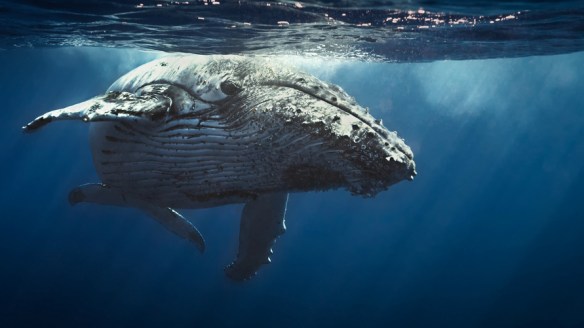
Via Big Think: ‘…[T]he question at the heart of this new report is, “Can the remaining whales ever recover?” Populations remain low — they’re whales after all, not rabbits — and other threats, such as changes in climate, unstable food supplies, and noise from military sonar, could stunt efforts to restore the population.’
There Is No Global Jihadist ‘Movement’
Via The Atlantic: ‘What’s sometimes referred to as the global jihadist “movement” is actually extremely fractured. It’s united by a general set of shared ideological beliefs, but divided organizationally and sometimes doctrinally. Whether to fight the “near enemy” (local regimes) or the “far enemy” (such as the United States and the West), for example, has been contentious since the 1990s, when Osama bin Laden declared war on the United States. Rivalry among like-minded militant groups is as common as cooperation. Identities and allegiances shift. Groups align and re-align according to changing expectations about the future of the conflicts they’re involved in, as well as a host of other factors, such as competition for resources, leadership transitions, and the defection of adherents to rival groups that appear to be on the ascendant.’

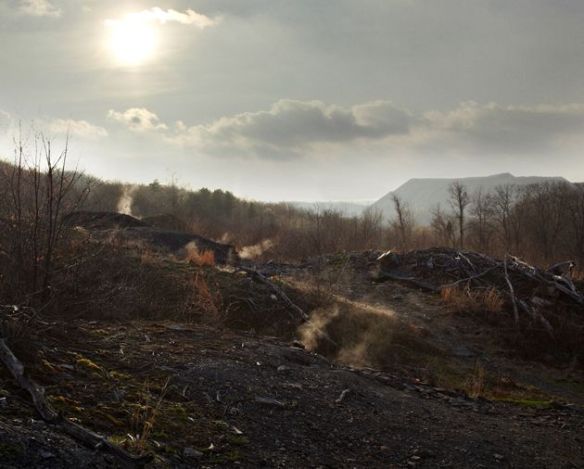
When the Town Stops Burning
Via The Morning News: ‘I first learned about Centralia from my friend Ali. He told me there was an abandoned town in eastern Pennsylvania’s coal country that had been on fire since 1962. A controlled burn at the dump, he said, had somehow reached a coal seam beneath it, and the fire spread. Now it’s big—400 acres—and hotter than 1,000 degrees, eating away at the ground beneath the ground. He told me about sinkholes that had swallowed people, and huge cracks in the earth, and poisonous gases that seeped into buildings.
…Emory told me there were hundreds of other coal fires in the U.S. and a handful more in Pennsylvania. I nodded and said, “Really?” so he’d keep talking, but I didn’t believe him. Turns out, he’s right. The Office of Surface Mining has identified 100 fires burning beneath nine states. There are 45 just in Pennsylvania, though none are as famous as the one in Centralia.’
America’s “Ferguson” confusion: Why the problem has been completely misunderstood
Elias Isquith via Salon.com: ‘Before I had a chance to peruse the Department of Justice’s long-awaited report on the killing of Michael Brown by former Ferguson, Missouri, police officer Darren Wilson, I had three predictions. The first was that the DOJ would find the city of Ferguson’s finances to be a house of cards built upon a foundation of anti-tax absolutism and white supremacy…
My second prediction about the DOJ report was that it would find the Ferguson Police Department to be rife with bigotry, which would manifest itself most conspicuously through emails filled with the kind of racist “jokes” that many Americans prefer to call “politically incorrect.” I guessed this not because I had any special insight into the office culture of the Ferguson PD, but because the embarrassing disclosure of racist jokes disseminated among employees by email has become a recurring media story throughout the Obama years…
My third and final prediction, meanwhile, was that the media’s coverage of the DOJ report would devote much more attention to the second prediction (the racist emails) than the first (the systemic dysfunction); and that the response on the part of Ferguson’s civilian leadership would similarly concern itself more with “politically incorrect” jokes than with institutional corruption. I imagined that it would play out this way primarily because that’s how it always does.’

Humans Unconsciously Sniff Their Hands After Handshaking
Via io9: ‘Unlike dogs and other animals, humans — for the most part — don’t sniff each other. Well, at least that’s what we thought. A rather unsettling new study from the Weizmann Institute shows that practically all of us sniff our hands after handshaking — a possible sign of social chemosignaling behavior.
The new study, published in the journal eLife, suggests that humans use handshakes to exchange important chemical information — information that can alter our behavior is subtle ways. The researchers came to this conclusion by covertly filming 271 subjects as they they were being greeted in a structured event, some with a handshake and some without.’

Why Our Children Don’t Think There Are Moral Facts
Justin P. McBrayer in the New York Times: ‘What would you say if you found out that our public schools were teaching children that it is not true that it’s wrong to kill people for fun or cheat on tests? Would you be surprised?I was. As a philosopher, I already knew that many college-aged students don’t believe in moral facts. While there are no national surveys quantifying this phenomenon, philosophy professors with whom I have spoken suggest that the overwhelming majority of college freshman in their classrooms view moral claims as mere opinions that are not true or are true only relative to a culture.
What I didn’t know was where this attitude came from…’ (via 3quarksdaily)

Be Careful About Downloading Health Apps — They Lack Regulation
Via Big Think: ‘Jesse Singal from NYMag reports that the mobile app market is an under-regulated mess. While the health market has boomed with step, heart rate, and various other personal wellness trackers, Singal warns that there’s no regulation, which means an app’s accuracy can vary from developer to developer. This lack of consistency or regulation standards among applications brings questions of reliability for users that may depend on sound readings.’

New Chinese character threatens to ‘break the internet’
Via Telegraph: ‘The launch of a new word in China is threatening to break the internet, with the character being shared millions of times despite no-one knowing what it means.
The character, known as “duang”, has appeared more than 8m times on China’s leading social media site Weibo since it emerged a week ago, generating hundreds of thousands of online conversations.
Foreign Policy, the magazine, has now dubbed the character as a “break the internet” viral meme in the same ilk as last year’s image of Kim Kardashian and last week’s multi-coloured dress.
The new character has connections to film star Jackie Chan. A fake advert featuring Chan, who sponsors numerous products in China, appeared on video streaming site Youku for herbal shampoo Bawang, which Chan endorses. At the end of advert, Chan appears to say of the product: “It’s just … it’s just … duang!” ‘

Many Animals—Including Your Dog—May Have Horrible Short-Term Memories
Via National Geographic: ‘Dogs may forget an event less than two minutes after it happened, according to a new study.’

Net Neutrality Wins: What Now?
Via Gizmodo: ‘It’s a historic day for the internet. The Federal Communications Commission (FCC) just passed the strongest net neutrality rules in this country’s history. This is great news! But let me repeat: The battle for net neutrality is still not over. In a sense, the real battle begins now.’
Here’s How A Mob Of Sheep Could One Day Save Your Life
Via io9: ‘When a crowd needs to pass through a small doorway – an emergency exit, for example – the opening can quickly become obstructed. Recently, researchers have been using sheep to understand how they might mitigate this potentially catastrophic bottleneck effect.’

Three Men Receive Bionic Hands Controlled With Their Minds
Via IFLScience: ‘The outlook used to be pretty bleak for those who had lost movement in their limbs due to severe nerve damage, but over the last year or so, some incredible advances have been made that are restoring shattered hope for many.
The amazing breakthroughs include spinal cord stimulation that allowed paralyzed men to regain some voluntary control of their legs, a brain implant that enabled a quadriplegic man to move his fingers, and a system that allowed a paralyzed woman to control a robotic arm using her thoughts. Science has definitely been on a roll, but this winning streak isn’t showing any signs of slowing down. Now, the world’s first “bionic reconstructions” have been performed on three Austrian men to help them regain hand function. This technique enabled the newly amputated patients to control prosthetic hands using their minds, allowing them to perform various tasks that most people take for granted.’

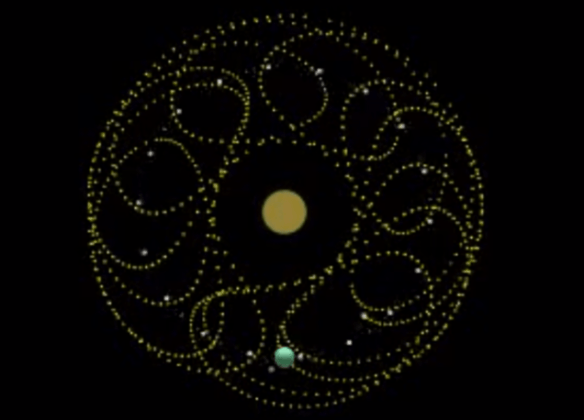
The Story Behind Earth’s “Other” Moon And Its Completely Whacked Orbit
Via io9: ‘As recently as 1997, we discovered that another body, 3753 Cruithne, is a quasi-orbital satellite of Earth.
This simply means that Cruithne doesn’t loop around the Earth in a nice ellipse in the same way as the moon, or indeed the artificial satellites we loft into orbit. Instead, Cruithne scuttles around the inner solar system in what’s called a “horseshoe” orbit.’
Rats remember acts of kindness, and then reciprocate
Via io9: ‘A study published this week in Biology Letters showed rats remember who is nice to them and return the favor later. National Geographic calls it “the first evidence of direct reciprocation in nonhumans.” ‘

This Neuroscientist Says He’ll Do a Human Head Transplant Very Soon
Via Gizmodo: ‘An Italian neuroscientist who has been advocating for head transplants now wants to make one actually happen. He’ll be announcing a project at a surgical conference later this year. Here’s how the proposed human head transplant will work—supposedly…’

Chicago police are running a horrifying CIA-style black site out of a warehouse
Via The Verge: ‘The worst policies from the war on terror are now in our backyard…’
Why You Should Find This Plant Absolutely Terrifying
Via io9: ‘…it look(s) as if it could be in anyone’s garden. A closer picture shows it to be not quite garden friendly. The thing is covered in spikes, especially on the outer edge of those long, thin, dense leaves that crowd around its base. What do you suppose it does with those? Here’s a hint: Puya chilensis has been informally given the name “the sheep-eating plant.” It’s not unusual to find hairy mammals or small birds trapped in the plant’s leaves.
The plant doesn’t eat them directly. It’s not carnivorous. It just lets them die. Their corpses rot (perhaps attracting more animals with their scent) and fertilize the dirt around the plant. Puya chilensis can then absorb the nutrients from the animals it trapped and slowly starved to death, and go on with its happy life.’

“People are really getting angry”

Via Salon.com: ‘How Bernie Sanders just electrified Iowa — and what it means for ’16 . At an under-the-radar town hall in Des Moines, Sanders had the crowd begging for more. Here’s why it matters.’
We are all dick-measurers now

Via Salon.com: The Oscars and awards-season devalue and pervert art: ‘ “Boyhood” or “Birdman”? Beck or Beyoncé? Who cares. We must stop turning creativity into another dumb competition…’
We must offend religion more
Via Salon.com: ‘ Islam, Christianity and our tolerance for ancient myths, harmful ideas: Our enduring deference to religion, despite its toxicity and phony explanations for the cosmos, lets it survive.’

Annals of Emerging Diseases
Via CDC: ‘What is Bourbon virus?
Bourbon virus belongs to a group of viruses called thogotoviruses. Viruses in this group are found all over the world. A few of these viruses can cause people to get sick.
How do people get infected with Bourbon virus?
We do not yet fully know how people become infected with Bourbon virus. However, based on what we know about similar viruses, it is likely that Bourbon virus is spread through tick or other insect bites.
Where have cases of Bourbon virus disease occurred?
As of February 12, 2015, only one case of Bourbon virus disease had been identified in eastern Kansas in late spring 2014. The man who was infected later died. At this time, we do not know if the virus might be found in other areas of the United States.
What are the symptoms of Bourbon virus?
Because there has been only one case identified thus far, scientists are still learning about possible symptoms caused by this new virus. In the one person who was diagnosed with Bourbon virus disease, symptoms included fever, tiredness, rash, headache, other body aches, nausea, and vomiting. The person also had low blood counts for cells that fight infection and help prevent bleeding.’

Marriage Proposal by Physics Paper
“My boyfriend of 7 years and I are both physicists. Heres how he proposed to me.”
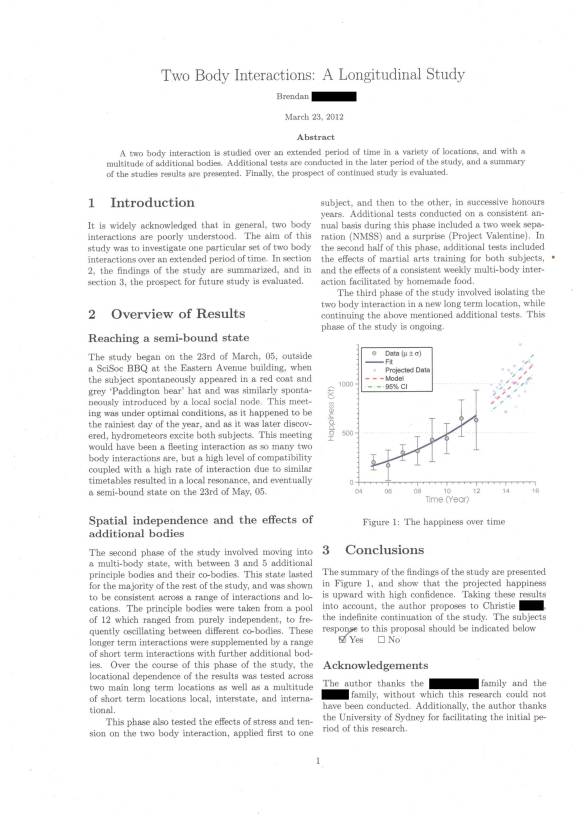
(Imgur via Boing Boing)
R.I.P. Sam Houston Andrew
Guitarist for Big Brother and the Holding Company Dies at 73 (NYTimes.com): ‘His death was announced on the band’s website, which said Mr. Andrew had a heart attack 10 weeks ago and underwent open-heart surgery.
Big Brother and the Holding Company was among the first and most successful exponents of the so-called San Francisco sound, an adventurous mix of folk, blues and rock influences fueled by psychedelic drugs. (Others included Jefferson Airplane and the Grateful Dead.)
Mr. Andrew, who founded Big Brother in 1965 with the bassist Peter Albin and shared lead guitar duties with James Gurley, referred to the band’s sound as a “progressive-regressive hurricane blues style.”
…Critics, even while praising Ms. Joplin’s singing, often dismissed Big Brother and the Holding Company in its late-1960s heyday as undisciplined and lacking technique. Mr. Andrew, not surprisingly, saw things differently.
“Big Brother and the Holding Company,” he once said, “was a prime example of a band where the chemistry was right, where the whole was greater than the sum of its parts. You cannot buy or manufacture the natural feeling that was in that band.” ‘


I tend to agree with Sam. Big Brother was not merely a backing band for Janis, as clear in the extended back and forth riffing between him and her on numbers such as ‘Ball and Chain’ or ‘Combination of the Two,’ both captured well on Cheap Thrills. Sam, I’m cueing up the LP now. You will be missed.
Related articles


Our Greatest President-Poet
The Poetry of Richard Milhous Nixon, a slim volume compiled by Jack S. Margolis and published in 1974, stands as a seminal work in verse. Comprising direct excerpts from the Watergate tapes—arguably the most fecund stage of Nixon’s career—it fuses the rugged rhetoric of statesmanship to the lithe contours of song, all rendered in assured, supple, poignant free verse. Below, to celebrate Presidents’ Day, are four selections from this historic chapbook, which has, lamentably, slipped out of print.
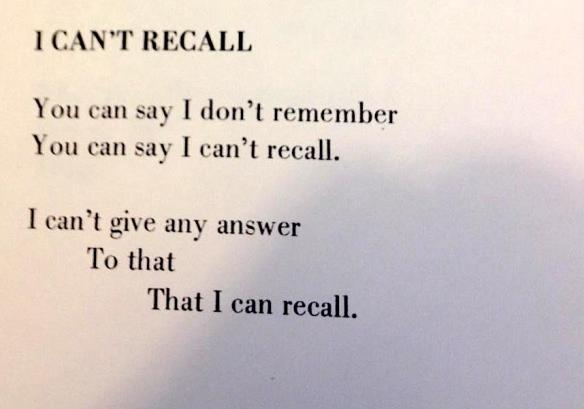
THE POSITION
The position is
To withhold
Information
And to cover up
This is
Totally true.
You could say
This is
Totally untrue.
TOGETHER
We are all
In it
Together.
We take
A few shots
And
It will be over.
Don’t worry.
I wouldn’t
Want to be
On the other side
Right now.
IN THE END
In the end
We are going
To be bled
To death.
And in the end,
It is all going
To come out anyway.
Then you get the worst
Of both worlds.
(via Paris Review)
Should We Be Trying to Make Contact with Extraterrestrials?
Via io9: ‘Another debate popped again this week, one that’s been talked about and argued over for years now—whether we should be actively seeking out and sending messages to habitable planets in the search for life beyond Earth.
Known as Active Seti (Search for Extraterrestrial Intelligence), some researchers and scientists want to continually broadcast messages to known habitable planets in an effort to reach a new alien species. But many disagree. People like Stephen Hawking and Elon Musk think a more measured and thought out approach makes more sense, and that historically, races of people who have happily greeted newcomers quickly found them to be conquerors.
The idea of Active Seti is to encode messages in powerful radio signals and send endlessly for centuries to solar systems with habitable planets. According to The Guardian, Seth Shostak, the director of the Seti Institute, wants to just beam the entire contents of the internet, porn and all, to other star systems.’
Join the Battle for Net Neutrality
Join the Battle for Net Neutrality. The most important FCC vote of our lifetime is about to happen.On Feb 26 the FCC will vote to save net neutrality or let Comcast and other ISPs create Internet slow lanes. Some members of Congress, on behalf of their Cable donors, are trying to stop the FCC from protecting the Internet we love. There isn’t much time to stop them, contact them now.
