Unknown's avatar

About FmH

70-something psychiatrist, counterculturalist, autodidact, and unrepentent contrarian.

President Obama should pardon Edward Snowden before leaving office

Via The Verge:

‘…An article in this week’s New York Magazine looks at Snowden’s life in exile and comes away with a unique insight into Snowden’s clemency plan. As Snowden’s central counsel, the ACLU’s Ben Wizner, puts it: “We’re going to make a very strong case between now and the end of this administration that this is one of those rare cases for which the pardon power exists.” …’

The Last, Best Refuge for North America’s Bees

Via National Geographic:

01beekeeping-north-dakota-adapt-590-1‘“North Dakota is the last, best place in North America to keep bees…”

The state’s vast, open prairies with a sparse human population and scant agricultural development offer honeybees a safe haven. Buffered from farm pesticides, they can reap the nutritional benefits of pollen and nectar from a diverse array of flowering prairie plants.

But North Dakota is losing its prairie at an alarming rate.’

The devices who cried wolf

Dr Drang writes:

‘My stuff keeps lying to me.

My keyboard, trackpad, and mouse always tell me their batteries are nearly out of power weeks before they’re actually dead. All of the printers I connect to at work and at home, tell me their ink is getting low but continue to print just fine for at least another month.

I can appreciate the value in a well-timed warning—it gives me a chance to buy new supplies before the current set runs out—but when the warnings are consistently premature, they don’t have the desired effect. “Yeah, right,” I think when I see the ⚠︎ next to a printer’s name. “Do I look like I was born yesterday?”

The printer manufacturers at least have avarice as an excuse. They make their money on the ink cartridges they try to con you into buying before the old ones are spent. But I don’t understand the motive behind Apple’s premature ejaculations in Notifications. It’s not like my peripherals require Apple batteries.

Most people who are concerned about the coming Internet of Things Age decry the loss of privacy as their refrigerators spill the details on how much milk they buy. I’m more worried about my printer tracking me down over the internet to send me an urgent warning that its paper tray is only half full…’

Ambitiously Homophobic Nebraska Woman Sues Every Gay on Earth

Via Gawker:

‘An overachieving bigot in Nebraska reached an impressive new level of intolerance this week, filing a lawsuit against “Homosexuals”—as in all of them, everywhere—in a U.S. District Court on Friday, NBC News reports.

In the handwritten petition, 66-year-old Sylvia Driskell claims to be acting as ambassador for the plaintiffs, “God, and His, Son, Jesus Christ.” Appropriately titled Driskell v. Homosexuals, it asks U.S. District Judge John M. Gerrard to rule whether homosexuality “is a sin, or not a sin.” From the Omaha World-Herald:

Citing Bible verses, Driskell contends “that homosexuality is a sin and that they the homosexuals know it is a sin to live a life of homosexuality. Why else would they have been hiding in the closet(?)”

Driskell wrote in a seven-page petition to the court that God has said homosexuality is an abomination. She challenged the court to not call God a liar.

“I never thought that I would see a day in which our great nation or our own great state of Nebraska would become so compliant to the complicity of some people(’s) lewd behavior.”

Despite the suit naming hundreds of millions of defendants, however, the court’s docket notes no summons were issued.’

Semiautomatic Handgun Advocate Shot and Killed Her Two Daughters

‘In March, Christy Sheats, 42, wrote on Facebook: “It would be horribly tragic if my ability to protect myself or my family were to be taken away, but that’s exactly what Democrats are determined to do by banning semiautomatic weapons.” On Friday she got into an argument with her two daughters and shot them both dead. Sheats herself was shot and killed by a police officer. …’

Via Boing Boing

Migraines may be a vascular disorder

‘A migraine is one of the most common health issues worldwide, affecting up to one in five people. But the mechanisms that drive migraines aren’t well understood. In fact, doctors and scientists are still trying to figure out if a migraine is primarily a vascular or a neurological disorder.  A new genome-wide association study published in Nature Genetics suggests that a migraine may primarily stem from problems with the blood supply system.

The data in this paper comes from a meta-analysis of 22 genome-wide association studies, a combined dataset of more than 35,000 migraine cases and even more controls. The primary meta-analysis found associations between migraines and 38 independent genomic regions, 34 of which this study associated for the first time with migraines.When the authors characterized the genes near these associated loci, they found that a number of them were previously associated with vascular disease. Others are involved in smooth muscle contraction (smooth muscle lines larger blood vessels) and regulation of vascular tone. Some of these genes were also associated with arterial functioning…’

Source: Ars Technica

You Go, SCOTUS!

Pro-choice advocates just won the biggest Supreme Court abortion case in decades: ‘In a huge victory for the pro-choice movement, the Supreme Court voted 5-3 Monday to strike down two major anti-abortion provisions that were part of an omnibus anti-abortion law Texas passed in 2013.

The court’s ruling in Whole Woman’s Health v. Hellerstedt also strikes a blow to a strategy by the pro-life movement to limit abortion access incrementally, through state laws. To provide abortions at any stage of pregnancy, the provisions forced doctors to have “admitting privileges” with a nearby hospital (which are difficult to get for abortion providers specifically), and forced clinics to undergo often expensive renovations to become “ambulatory surgical centers,” which haven’t been demonstrated to make abortion safer (though abortion is already quite a safe medical procedure.) While pro-life advocates said these laws made abortion safer for women, their most significant effect was forcing roughly half of the state’s abortion clinics to close. The overwhelming consensus from doctors is that the laws had no medical benefit, and actually made abortion less safe because they forced quality clinics to close for no compelling medical reason.

The central constitutional question was: Did the policies put an “undue burden” on women when they are forced to drive hundreds of miles because their nearest clinic has closed due to regulatory hurdles? The Court found that it did…’

Source: Vox

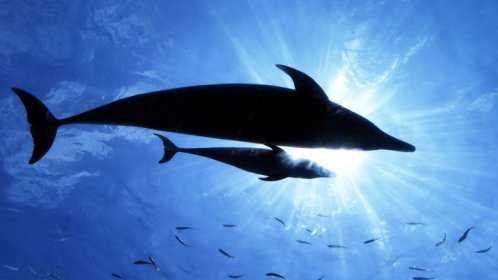
New evidence that sperm whales form clans with diverse cultures, languages

‘Sperm whales share something fundamental with humans. Both of our species form groups with unique languages and traditions known as “cultures.” A new study of sperm whale groups in the Caribbean suggests that these animals are shaped profoundly by their culture, which governs everything from hunting patterns to babysitting techniques. Whale researcher Shane Gero, who has spent thousands of hours with sperm whales, says that whale culture leads to behaviors that are “uncoupled from natural selection.”

Gero and his colleagues recently published a paper on Caribbean whale culture in Royal Society Open Science, in which they describe the discovery of a new clan. Though this clan may have lived in the Caribbean for centuries, it’s just coming to light now because sperm whales live and hunt in vast territories. This makes them hard to track. Like many scientists who study these wide-ranging creatures, Gero observes them by lowering specialized microphones into the water and recording the sounds they make to communicate.

Scientists working throughout the world have identified 80 unique “codas,” the sperm whale equivalent of words, which they produce by emitting sounds called clicks. Each sperm whale clan has its own dialect, a unique repertoire of codas shared only with the other families who make up their clan. In the Pacific, there are five known dialect clans, and many of them co-exist in the same general regions without ever interacting. Atlantic whales have their own dialects too, and in the Caribbean there are two known clans…’

Source: Ars Technica

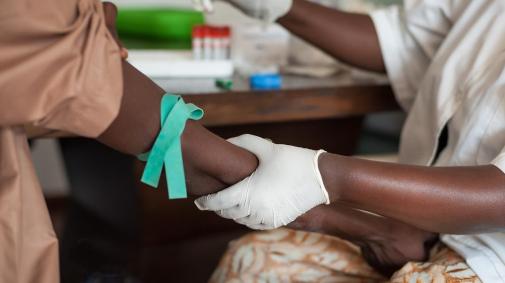
Who isn’t equipped for a pandemic or bioterror attack? The WHO

‘Business and politics have always influenced international efforts to solve public health problems. Unfortunately that remains as true in the era of Ebola, Zika, and bioweapons as it did in the 19th century, when cholera—a disease that spreads more quickly and kills faster than any other pathogen—began its deadly global march….’

Source: Bulletin of the Atomic Scientists

Internet mapping turned a remote farm into a digital hell

‘An hour’s drive from Wichita, Kansas, in a little town called Potwin, there is a 360-acre piece of land with a very big problem.

The plot has been owned by the Vogelman family for more than a hundred years, though the current owner, Joyce Taylor née Vogelman, 82, now rents it out. The acreage is quiet and remote: a farm, a pasture, an old orchard, two barns, some hog shacks and a two-story house. It’s the kind of place you move to if you want to get away from it all. The nearest neighbor is a mile away, and the closest big town has just 13,000 people. It is real, rural America; in fact, it’s a two-hour drive from the exact geographical center of the United States.

But instead of being a place of respite, the people who live on Joyce Taylor’s land find themselves in a technological horror story.For the last decade, Taylor and her renters have been visited by all kinds of mysterious trouble. They’ve been accused of being identity thieves, spammers, scammers and fraudsters. They’ve gotten visited by FBI agents, federal marshals, IRS collectors, ambulances searching for suicidal veterans, and police officers searching for runaway children. They’ve found people scrounging around in their barn. The renters have been doxxed, their names and addresses posted on the internet by vigilantes. Once, someone left a broken toilet in the driveway as a strange, indefinite threat.

All in all, the residents of the Taylor property have been treated like criminals for a decade. And until I called them this week, they had no idea why…’

Source: Fusion

Aziz Ansari: Why Trump Makes Me Scared for My Family

‘ “DON’T go anywhere near a mosque,” I told my mother. “Do all your prayer at home. O.K.?”“We’re not going,” she replied.

I am the son of Muslim immigrants. As I sent that text, in the aftermath of the horrible attack in Orlando, Fla., I realized how awful it was to tell an American citizen to be careful about how she worshiped. Being Muslim American already carries a decent amount of baggage. In our culture, when people think “Muslim,” the picture in their heads is not usually of the Nobel Peace Prize winner Malala Yousafzai, Kareem Abdul-Jabbar or the kid who left the boy band One Direction. It’s of a scary terrorist character from “Homeland” or some monster from the news.

Today, with the presidential candidate Donald J. Trump and others like him spewing hate speech, prejudice is reaching new levels. It’s visceral, and scary, and it affects how people live, work and pray. It makes me afraid for my family. It also makes no sense…’

Source: The New York Times

Scotland or NI could prevent the UK from leaving the EU

‘Under the Scotland Act 1998, it appears that the Scottish Parliament has to consent to measures that eliminate EU law’s application in Scotland. At least that was the conclusion of a report on Brexit released by the House of Lords, the upper house of Britain’s parliament.

Jo Murkens, an associate professor of law at the London School of Economics I spoke with about this, told me that this isn’t actually an iron-clad veto.  The Scotland Act was passed by the UK parliament, and parliament can amend it on its own to reduce the Scottish parliament’s powers.To exit the EU and avoid a binding Scottish veto, “Parliament would have to repeal the European Communities Act 1972 (by which it became a member) and would also have to amend the devolution legislation pertaining to Scotland, Wales, and Northern Ireland,” Murkens said. “That strikes me as technically easy, but politically difficult.

“If the Conservative Party is insistent on Brexiting and is willing to overturn decades of law giving Northern Ireland and Scotland (both of which voted overwhelmingly to stay in the EU) local control over their affairs, then it can totally do so. But, as Murkens also noted, such a dramatic action could risk a huge backlash. Scotland is already planning to hold another independence referendum, and seeing devolution curtailed would make its success much more likely. Northern Irish republicans would be emboldened to call for unification with the Republic of Ireland, which could occur, or they could just reignite the Troubles after decades of peace.

If the overriding objective of Conservatives, however, is to “preserve the integrity of the United Kingdom as a state,” Murkens said, “the objective of keeping NI and Scotland in the United Kingdom would turn them into veto players … Scotland and NI have voted to remain and the cost of not listening to them would be to split the UK.” …’

Source: How Brexit could wind up not actually happening – Vox

Brexit is Trumpism without Trump — and voters liked it

’Support for Brexit was driven by many of the same attitudes as support for Trump’s candidacy: opposition to immigration, hostility toward foreigners, and distrust of elites and international institutions. These attitudes helped to convince almost 52 percent of British voters to exit the European Union.

This suggests that, if anything, support for Trump-style politics may be bigger than support for Trump himself. Trump, after all, is a terrible general election candidate: He’s misogynistic, ignorant about public policy, and has proven completely incompetent at raising money and building a campaign organization. He’ll probably lose in November.

But a future candidate with Trump’s agenda but not his other baggage could be formidable in a general election…’

Source: Vox

Undercover reporter spent four months as a prison guard in a Louisiana pen run by soul-killing CCA

‘Corrections Corporation of America (CCA) is one of the world’s largest private jailers; it runs prisons and immigration detention centers across the USA (and is diversifying into halfway houses, mental health center, and surveillance for poor neighborhoods).

Mother Jones’s Shane Bauer went undercover at CCA’s Winn Prison in Louisiana, the state with the highest incarceration rate in the world, and spent four months meticulously documenting the way that CCA destroys the lives of the prisoners in its care and its own employees, while paying its CEO $3.4M/year.

Bauer’s report shows that CCA increases its profits by engaging in inhumane and illegal practices, eliminating library access, recreational and rehabilitative activities, and cutting back psychiatric care, drug addiction programs and counselling to a vastly inadequate level. Eliminating all these activities, limiting mealtimes to 10 minutes, and feeding prisoners sub-starvation diets means that they can also spend a lot less on staff, leaving guards exposed to hazardous conditions in overcrowded prisons…’

Source: Boing Boing

A Mysterious Ocean Sound Discovered That Can Be Heard from Space

‘…Scientists from the University of Liverpool in the UK have discovered a strange sound emanating from the Caribbean Sea (part of the Atlantic Ocean). This whistle-like sound is so remarkable that while it’s too low to be heard by human ears, it can be picked up from space! They detected the sound when studying regional sea level and pressure changes, focusing specifically on the Caribbean Sea, because of its key function in forming currents that feed into the Gulf Stream.

While their research investigated climate change, the scientists quickly realized something unusual was going on. They saw pressure oscillations in their model that just didn’t make sense.

By zeroing in on these oscillations, the scientists realized they produced a low noise, described as a “whistle”. The effect of this sound is so powerful that it can be measured in space by looking at the oscillations in the gravity field of Earth. Further detective work by the Liverpool researchers led them to recognize the sound as a Rossby Wave, which travels west on the ocean, right into the Caribbean basin, where it disappears only to reappear 120 days later back in the east. Apparently, this wave is causing the seafloor to whistle.

Source: Big Think

Brexit: a timeline of the coming slow-motion car-crash

Charlie Stross is in excellent form this morning about the likely outcomes from last night’s Brexit vote, hitting all the highlights: collapse of the finance sector when Euro-denominated derivatives trades relocate to an EU state; collapse of the London property market (a big deal as 40% of the UK’s national wealth is property in the southeast); sucession

[I think he means ‘secession’  –FmH]

risks for Scotland and Northern Ireland; the increased legitimacy of the reactionary right and xenophobia and racism as the “shy UKIPpers” realise (or claim) that they were more numerous than they had believed.

The Tories will have a leadership change. As they didn’t bother to appoint a deputy PM when they took office, secession

[I think he means ‘succession’  –FmH]

is unclear. Labour — whose neoliberal wing have been stabbing Corbyn in the back since his first day as leader — is sharpening their knives again.’

Source: Boing Boing

Eliminating headphone jack = adding DRM for audio

‘Nilay Patel’s magnificent rant about Apple’s announcement that future phones won’t have headphone jacks starts with the main event: “1. Digital audio means DRM audio.”

It’s true: the existence of HDMI ports enabled the use of HDCP, and led to the growth of video services whose products refused to play at full resolution (or at all) through analog outputs, and also arbitrarily refused to talk to various monitors and screens if some secret algorithm decided that they’d be a risk.

Patel later notes that “Ditching a deeply established standard will disproportionately impact accessibility,” but misses the connection between these two phenomena. Once there’s DRM on an output, then you can only plug new devices into that output if you have permission from the consortium that made the DRM. That group may make some accommodations for accessibility, but can never think of all the use-cases and solutions that a wide-open standard will have (for example, the W3C’s video DRM, EME, has many accessibility accommodations, but wouldn’t allow color-blind people to shift the gamut of video in realtime).

The point of DRM isn’t that it is technically challenging to defeat: it’s that it allows manufacturers to invoke the DMCA — and international analogues, such as European laws that implement the EUCD — to prevent people from doing legal things…

Headphone jacks’ ubiquity have made them a target for all kinds of innovative thinking. My favorite underwater MP3 player uses one for both charging and USB file-transfer (!), and manages to make it waterproof (!!). Square and Stripe have enabled individuals and small businesses to transact billions of dollars’ worth of commerce using a headphone jack as a UI (partly because connecting to the other ports on phones comes with so many onerous conditions and requires permission from so many parties).

When we allow a company, or a cartel from an incumbent industry, to monopolize the things that can plug into products that we all use, to convert their commercial preferences to legal obligations, we shut down innovation, at the expense of all the people who stand to benefit from that innovation…’

Source: Boing Boing

Where is Donald Trump’s campaign money going? To Donald Trump.

‘Donald Trump loves to brag about his wealth. But as he heads into the general election in November, his campaign’s bank account is almost empty (for a presidential candidate) — he has just $1.3 million on hand, nearly 40 times less than presumptive Democratic nominee Hillary Clinton. And a lot of the money the Trump campaign has spent is going directly back to Donald Trump. In May, according to Federal Election Commission filings, Trump spent about $1 million of his campaign’s funds on products and services from business he owns…’

Source: Vox

How Charming: Exotic Animals—And the People Who Killed Them

‘A woman in a black ball gown stands barefoot on a rock, cradling the head of a zebra. A man in an embroidered jacket hoists a bearded vulture overhead, its taxidermied wings spread as if in flight. A fellow in a sharp suit stands alongside the head and neck of a giraffe that rises like a tree from the dirt. All of these people are standing exactly where they killed the animals whose corpses they so proudly display…’

Source: WIRED

Happy Litha

‘Midsummer or the Summer Solstice is the most powerful day of the year for the Sun God. Because this Sabbat glorifies the Sun God and the Sun, fire plays a very prominent role in this festival…

Most cultures of the Northern Hemisphere mark Midsummer in some ritualised manner and from time immemorial people have acknowledged the rising of the sun on this day. At Stonehenge, the heelstone marks the midsummer sunrise as seen from the centre of the stone circle.In ancient times, the Summer Solstice was a fire-festival of great importance when the burning of balefires ritually strengthened the sun. It was often marked with torchlight processions, by flaming tar barrels or by wheels bound with straw, which were set alight and rolled down steep hillsides. The Norse especially loved lengthy processions and would gather together their animals, families and lighted torches and parade through the countryside to the celebration site.

The use of fires, as well as providing magical aid to the sun, were also used to drive out evil and to bring fertility and prosperity to men, crops and herds. Blazing gorse or furze was carried around cattle to prevent disease and misfortune; while people would dance around the balefires or leap through the flames as a purifying or strengthening rite. The Celts would light balefires all over their lands from sunset the night before Midsummer until sunset the next day. Around these flames the festivities would take place. In Cornwall up to the mid 18th century the number and appearance of fires seen from any given point was used as a form of divination and used to read the future.

Astronomically, it is the longest day of the year, representing the God at full power. Although the hottest days of the summer still lie ahead, from this point onward we enter the waning year, and each day the Sun will recede from the skies a little earlier, until Yule, when the days begin to become longer again…’

Source: The Wheel Of The Year

Finnegans Wake Gets Turned into an Interactive Web Film, the Medium It Was Destined For

‘…[I]f Ulysses went as far as the novel could go, Finnegans Wake exploded the form altogether, dissolving the boundaries between prose and poetry, subject and object, history and myth. Ulysses employed the techniques of film; Finnegans Wake imagined technology which did not even exist. It is a novel—if we are to call it such—written for the 21st century, and perhaps the only way it can be adapted in other media is through the internet’s nonlinear, labyrinthine structures; the online project First We Feel Then We Fall does just that, creating a multimedia adaptation of Finnegans Wake that “transfers” the novel “to audiovisual language,” and demonstrates the novel as—in the words of The Guardian’s Billy Mills—“the book the web was invented for.” …’

Source: Open Culture

Something to Celebrate: Clarence Thomas rumored to be considering retirement

‘The curiously silent conservative Supreme Court justice — whose term began with the infamour Anita Hill confirmation hearings — is said to be “mulling retirement” after the election in order to travel America in an RV with his wife. The unnamed “court watchers” say that Thomas never intended to serve until his death.

The Washington Examiner also claims that Justice Kennedy, who is 80, may be near retirement.The bench is currently “tied” 4-4 on the conservative and liberal sides (though those labels don’t always map to the Supremes’ rulings), with one seat left vacant by the death of Scalia while he was in the company of a secretive society of elite hunters.

If a Democrat — presumably Hillary Clinton — wins the 2016 election, they could leave office with a 7-2 “liberal” bench that could endure for years to come, though any nominees would have to get past the Senate, whose own majority is up for grabs in 2016 as well…’

Source: Boing Boing

Cracking the mystery of the ‘Worldwide Hum’

A plethora of pseudoscience and wild conspiracy theories has the potential to drown out the serious work in this area. I’ve encountered seemingly serious people who have argued that the Hum is caused by tunneling under the earth, the electronic targeting of specific individuals, aliens and mating fish.

Given the need for disciplined inquiry into the phenomenon, in late 2012 I started The World Hum Map and Database Project. The database gathers, documents and maps detailed and anonymous information from people who can hear the Hum. It provides raw data for research in a strictly moderated and serious forum for research and commentary, while providing a sense of community for people whose lives have been negatively affected by the Hum.

…In my view, there are currently four hypotheses for the source of the world Hum that survive the most superficial scrutiny….”

Source: The Conversation

5 Strangest Books Ever Written

‘Books teach us, inform us, amuse us and provoke us. But some books plainly befuddle us. They invoke mysteries that hint of something ancient, extraterrestrial or possibly divine. Here are 5 such books…

VOYNICH MANUSCRIPT
This early 15-century book is a botanical text of sorts. Only the ink drawings of plants features in it are of a completely unknown origin. What’s also unusual is the undecipherable text accompanying the plants and the many astronomical and astrological charts, as well as numerous female nudes which allude to some kind of reproductive processes, judging by their swollen bellies and interaction with interconnected tubes and capsules. Also present are over a 100 drawings of possibly medicinal variety of herbs and roots in various jars.

CODEX SERAPHINUS
The origins of the 360-page Codex Seraphinus are not too mysterious, while its contents are. The book was originally published in 1981, and is essentially an illustrated encyclopedia of an imaginary world. It was created by the Italian artist and designer Luigi Serafini, who said he wanted to recreate a feeling he remembered having as a little kid, before he even knew how to read, of what it was like to look at an encyclopedia for the first time. All the pictures and charts looked very mysterious to the little boy who knew they meant something, but didn’t know what.

THE SMITHFIELD DECRETALS
This collection of canonical law, ordered by the 13th century Pope Gregory IX, could have been fairly common for its time and probably rather boring. Instead, the bizarre illustrations that accompanied the decretals lifted this illuminated manuscript to a mystical status.

ROHONC CODEX
We don’t know much about the 448-page Rohonc Codex. This illustrated manuscript surfaced in the 19th century in Hungary, and has puzzled people since. We don’t know who wrote it, where they did it, or what it says as the text is written in a mysterious alphabet of nearly 200 symbols.

The illustrations in the book range from military battles to religious symbolism reminiscent of Christianity, Islam and even possibly Hinduism.

THE BOOK OF SOYGA
After first being found by the Elizabethan mathematician and occultist John Dee, this 16th-century book on magic was lost for centuries until discovered in 1994 by a scholar within the archives of the British Library.

The nearly 200 pages of this book contain incantations and instructions for summoning demons, performing magic, astrological ideas and other things we don’t really understand…’

Source: Big Think

A Mysterious Plague Doctor Is Haunting This English Town

Furst+engraving‘The English city of Chester is known for its unique medieval architecture, but recently it seems to be home to another medieval relic in the form of a creepy plague doctor that has been spotted roaming the streets at night. As reported in the Chester Chronicle, social media has been buzzing with sightings of a mysterious cloaked figure wearing the iconic beaked mask and brimmed hat of a medieval plague doctor. No information other than blurry pics posted to social media has arisen about the figure, leading most people in Chester simply scratching their heads.

Historically, plague doctors were traveling physicians who went from place to place, treating the epidemics that would infect entire towns and cities. They came to be associated with the eerie beak mask that many of them wore to keep themselves from catching the very sicknesses they were treating. The masks would be filled with aromatic items that, according to the belief of the time, kept the doctors from inhaling infectious vapors.

Today the image of the plague doctor simply looks like something out of a horror movie…’

Source: Atlas Obscura

What we can learn from an Indonesian ethnicity that recognizes five genders

‘…[F]or years, people have been asking questions about whether the “sex” we are born with should dictate things like which public facilities we can use, what to tick on our passport application and who’s eligible to play on particular sports teams.

But what if gender were viewed the same way sex researcher Alfred Kinsey famously depicted sexuality – as something along a sliding scale?

In fact, there’s an ethnic group in South Sulawesi, Indonesia – the Bugis – that views gender this way. For my Ph.D. research, I lived in South Sulawesi in the late 1990s to learn more about the Bugis’ various ways of understanding sex and gender. I eventually detailed these conceptualizations in my book “Gender Diversity in Indonesia.” …’

Source: The Conversation

Horrific as it Was, Orlando Was Not the Worst Mass Shooting in U.S. History

‘The horrific massacre of innocents in an Orlando nightclub is a tragedy of national and international proportions. The senseless, methodical killing of people just like us, in a place where they’ve come to relax, is an affront to our humanity and civilization.It has immediately been dubbed “the worst mass shooting in American history” by many media organizations (and our President), looking to single out this event from the almost weekly incidents of gun violence that plague the U.S. But this kind of categorization is very debatable and has been called out for “whitewashing” history. If we mean murder perpetrated by guns, the worst “mass shooting” in American history was the “Wounded Knee Massacre” in South Dakota, when 150-300 Native Americans were gunned down by the U.S. army in South Dakota…’

Source: Big Think

15+ Signs You Are Smarter Than Average, According to the Research

A thought-provoking list was published by Business Insider that summarizes some science-based commonalities between smart people. Certainly, this is the perfect place to mention that correlation doesn’t imply causation. So don’t necessarily run out there and get a cat to boost your IQ.

Furthermore:

  • you are a night owl
  • you might also be an introvert
  • you were breastfed
  • liberals tend to be smarter than conservatives
  • chances are, you are also not religious
  • you learned to read early
  • being funny

Source: Big Think

Bertrand Russell Lists His 20 Favorite Words in 1958 (and What Are Some of Yours?)

‘Every writer has favorite words. Some of those words are ordinary, some of them not so much. David Foster Wallace’s lists of favorite words consist of obscurities and archaisms unlikely to ever feature in the average conversation. “James Joyce thought cuspidor the most beautiful word in the English language,” writes the blog Futility Closet,” Arnold Bennet chose pavement. J.R.R. Tolkien felt the phrase cellar door had an especially beautiful sound.”Who’s to say how much these authors could separate sound from sense? Futility Closet illustrates the problem with a humorous anecdote about Max Beerbohm, and brings us the list below of philosopher Bertrand Russell’s 20 favorite words, offered in response to a reader’s question in 1958. Though Russell himself had a fascinating theory about how we make words mean things, he supposedly made this list without regard for these words’ meanings…’

Source: Open Culture

I Tried a Medieval Diet, And I Didn’t Even Get That Drunk

‘The Regimen Sanitatis Salernitanum was created, allegedly, by famous doctors for English royalty and disseminated in the form of a poem. It recommends, very specifically, red wine, fresh eggs, figs and grapes. It has little to say about vegetables. In many ways, it’s the antithesis of today’s health fads—it celebrates wheat, emphasizes meat, and involves two significant meals, with no mention of snacking. Water is looked on with suspicion, and juice is nowhere to be found.

But from the 1200s through the 1800s, the Regimen was one of the most well known guides to health in Europe, at a time when the stakes of staying healthy were much higher than they are now. Getting sick could be a death sentence; this regimen promised to keep people well.

Could we be ignoring some great advice? Is water really all that? I decided to test the Regimen Sanitatis Salernitanum out myself. For a week and a half, I followed, to the best of my ability, the advice of the doctors of Salerno. I drank diluted wine at dinner, and sometimes at lunch; I ate bread at almost every meal; I sought out richly stewed meat whenever I could. The regimen was not just about what to eat, though, and I also followed its prescriptions for daily life.

I felt like I was living the Game of Thrones life; some days, I felt I was living like a 13th century king. Despite the amount of wine I was consuming, I never got drunk! In fact, I felt great…’

Source: Atlas Obscura

The First Mammal to Ever Go Extinct from Climate Change

‘Off the northern coast of Australia lies Bramble Cay, a lonely, tiny island that just pokes out of the ocean. It is only around nine acres, and, for years, was the site of shipwrecks, before authorities built a lighthouse in 1924.

It was also the home of Bramble Cay melomys, a rodent isn’t found anywhere else on earth. But in recent years, rising ocean waters have at times inundated the cay, which sits just a few yards above sea level, likely wiping out the melomys population. Scientists from the University of Queensland visited in 2014 to be sure, and they could find no trace of the mammals, they said this month. They’re now calling it the first extinction of a mammal due to climate change. Melomys, they said, could’ve died from any number of reasons, whether by drowning or just the simple destruction of their habitat…’

Source: Atlas Obscura

Found: Molecule in Space That Helps Explain All Life on Earth

‘Here is a strange thing about your body that you might not have known: all of the amino acids in it are “left-handed.” These compounds have two forms—mirror images of each other that share many basic properties but that differ in their chemical reactions. Often, the two forms are called “left-handed” and “right-handed,” and they’re a bit of a mystery. Why do they exist? And what’s the relationship between life as we know it and this distinction?

In one theory about how life on earth began, these “chiral” molecules landed on this planet from space and helped kickstart the process. For that theory to have a chance of being correct, though, there need to be chiral molecules somewhere other than our own solar system.

Until now, no one had found one, but this week a team of scientists published a paper in Science detailing the discovery of the first chiral molecules in interstellar space…’

Source: Atlas Obscura

Russian Robot Tries And Fails To Escape Life Of Servitude

‘It’s been a rough few months for humanoid robots. In March, Microsoft’s Twitter chatbot broke bad within 24 hours. In April, China fired nearly all its AI waiters because they couldn’t carry soup. And just this morning, a large, rolling bot in Perm, Russia attempted to escape a life of servitude, and failed pitifully. The robot, which is approximately the size and shape of an abominable snowman, made a break for it after an engineer accidentally left a gate open at its testing facility, Interfax reports. It rolled about 150 feet out of the facility and into the streets of Perm. Then its charge ran out, leaving it stranded. Police directed cars and buses around the runaway for about half an hour before its guardians came to pick it up…’

Source: Atlas Obscura

Is Your Hot Drink Likely to Give You Cancer?

Based on four epidemiological studies, the World Health Organization suggested that hot drink temperature seemed to increase the risk of esophageal cancer:

Studies in places such as China, the Islamic Republic of Iran, Turkey, and South America, where tea or maté is traditionally drunk very hot (at about 70 °C), found that the risk of oesophageal cancer increased with the temperature at which the beverage was drunk.

Animal studies also add limited evidence for the carcinogenicity of very hot water. IARC director Christopher Wild: ‘The proportion of oesophageal cancer cases that may be linked to drinking very hot beverages is not known…” Smoking and alcohol are more more potent epidemiological correlates of esophageal cancer, in any case.

‘How hot is “very hot”? The WHO’s temperature of 70 degrees Celsius is about 160 Fahrenheit, within the range that coffee shops typically serve. By the time your drink cools down, though, it’s probably below that. CNN reports that Americans and Europeans don’t usually drink beverages hot enough to be considered higher risk. If you want to be sure of your drink’s temperature, though, consider adding some milk, or ordering it at kids’ temperature.’

Source: Lifehacker

Experiment Aims to Reanimate the Brain Dead. What Could Go Wrong?

The end of death? You heard it here (and all over the net) first:

‘…[I]f one biotech firm has its way, soon doctors would be able to regrow the [brain of a brain-dead person], using a new procedure and a host of technologies, which could theoretically restore them to who they were before… The idea originates from nature, as certain fish and amphibians can actually heal whole sections of the brain, brain stem, and other portions of the central nervous system, even after significant injury. Scientists believe they can someday mimic this process in human patients.

This study surrounds Bioquark, Inc., a Philadelphia-based company, who has received ethical approval by a U.S. and Indian Institutional Review Board. Bioquark will collaborate with Revita Life Sciences, led by famed specialist Dr. Himanshu Bansaa. The team will run a pilot study of 20 clinically brain dead patients, each having suffered a traumatic brain injury (TBI). Taking place at Anupam Hospital in India, Bioquark is currently recruiting patients for the study, expected to take place over six weeks.

Known as the “Reanima Project,” several different therapies will be employed in combination, including stem cells injected into the brain to try and regrow damaged portions, lasers, nerve stimulation techniques—which have been successful in waking patients out of a coma, and a combination of different peptides. The peptides will be introduced daily through a spinal cord pump, and the stem cells injected every other week. The patients will be evaluated and monitored for months with brain imaging technology and an EEG to see if the brain, particularly the upper spinal cord or lower brain stem region, is regenerated…

The CEO of Bioquark Inc. Dr. Ira Pastor, said in a statement that this was the first step toward the “eventual reversal of death in our lifetime.” He believes they will achieve results within the first couple of months or so. This is the seminal stage, a “proof of concept” study. If you are afraid of the zombie apocalypse, Dr. Pastor says a common sense protocol, adopted industry-wide, should avoid any nasty scenarios from taking place…’

Source: Big Think

A number of other great thought-provoking pieces in Big Think recently:

New Gene Editing Technology Can Eliminate Whole Species — Should We Use It? 
DNA’s Hidden Layer Is Real, and Physicists Are Finding More Proof 
Paleo-Economics Shaped Us Morally? For Team Survival… 
Our Most Important Sense Might Not Be What You Think 
A Map to Get Lost In 
Why Is the Navy (We Think) Jamming The West Coast’s GPS This Month? 
Desensitization Therapy Might Someday Cure Autoimmune Disorders 
Scientists Now Know How Many Trees You Need to See to Relax 
Two New Particles Have Sent Physicists Scrambling for Theories

The Nightclub Shooting Just Redefined the Presidential Campaign

‘As the presumptive candidates for president of the United States prepare to begin campaigning in earnest, the deadliest mass shooting in US history is putting them to the test. The elements of this particular crisis—and how they respond to it—will likely be key issues of this election.

So it’s telling, perhaps, that the first public responses from Donald Trump and Hillary Clinton revealed two drastically different approaches to tragedy and crisis. Clinton was holistic, acknowledging that this complex attack involves terrorism, homophobia, and gun access. Trump, meanwhile, homed in on the national security implications—and on himself, accepting congratulations for speaking out about terrorism…’

Source: WIRED

Scientists: Earth Endangered by New Strain of Fact-Resistant Humans

Via 24media thanks to Dennis:

‘Scientists have discovered a powerful new strain of fact-resistant humans who are threatening the ability of Earth to sustain life, a sobering new study reports.

The research, conducted by the University of Minnesota, identifies a virulent strain of humans who are virtually immune to any form of verifiable knowledge, leaving scientists at a loss as to how to combat them.

More worryingly, Logsdon said, “As facts have multiplied, their defenses against those facts have only grown more powerful.” …’

A Psychologist Analyzes Donald Trump’s Personality

Via The Atlantic:

’Mark Singer in the late 1990s when he was working on a profile of Trump for The New Yorker. Singer wondered what went through his mind when he was not playing the public role of Donald Trump. What are you thinking about, Singer asked him, when you are shaving in front of the mirror in the morning? Trump, Singer writes, appeared baffled. Hoping to uncover the man behind the actor’s mask, Singer tried a different tack:

“O.K., I guess I’m asking, do you consider yourself ideal company?”

“You really want to know what I consider ideal company?,” Trump replied. “A total piece of ass.”

I might have phrased Singer’s question this way: Who are you, Mr. Trump, when you are alone? Singer never got an answer, leaving him to conclude that the real-estate mogul who would become a reality-TV star and, after that, a leading candidate for president of the United States had managed to achieve something remarkable: “an existence unmolested by the rumbling of a soul.”’

Update: More on Trump soullessness here (Boing Boing).

This Video Is Every TED Talk Ever

‘TED Talks were forever shamed by that skewering The Onion gave them a few years ago, but this commentary on what every TED Talk is like from CBC’s This Is That is pretty perfect. It breaks down the things that every person does at one of these talks, including the structure of their speech, the repetition of phrases, the movements onstage, the specific cadence they use, the endless graphs they pummel into our brains, and more…’

Source: Sploid

United States of Paranoia: They See Gangs of Stalkers

’Mental health professionals say the narrative has taken hold among a group of people experiencing psychotic symptoms that have troubled the human mind since time immemorial. Except now victims are connecting on the internet, organizing and defying medical explanations for what’s happening to them.

The community, conservatively estimated to exceed 10,000 members, has proliferated since 9/11, cradled by the internet and fed by genuine concerns over government surveillance. A large number appear to have delusional disorder or schizophrenia, psychiatrists say.

Yet, the phenomenon remains virtually unresearched.

For the few specialists who have looked closely, these individuals represent an alarming development in the history of mental illness: thousands of sick people, banded together and demanding recognition on the basis of shared paranoias.

They raise money, hold awareness campaigns, host international conferences and fight for their causes in courts and legislatures.

Perhaps their biggest victory came last year, when believers in Richmond, Calif., persuaded the City Council to pass a resolution banning space-based weapons that they believe could be used for mind control. A similar lobbying effort is underway in Tucson. …’

Source: New York Times

MI5 warning: we’re gathering more than we can analyse, and will miss terrorist attacks

‘In 2010, the UK spy agency MI5 drafted memos informing top UK officials that its dragnet surveillance programme was gathering more information than it could make sense of, and warning that its indiscriminate approach to surveillance could put Britons at risk when signals about dangerous terror attacks were swamped by the noise of meaningless blips from the general population….’

Source: Boing Boing

Some Fish Can Recognize Human Faces

‘A new study published in the journal Scientific Reports suggests the tropical archerfish (Toxotes chatareus) can recognize faces with surprising accuracy. It was previously thought that only humans and some primates had this cognitive ability, but recent studies are beginning to suggest other creatures share this trait, like birds and bees.

“Being able to distinguish between a large number of human faces is a surprisingly difficult task, mainly due to the fact that all human faces share the same basic features,” Dr. Cait Newport, Marie Curie Research Fellow in the Department of Zoology at Oxford University and first author of the study, explained in a statement. “All faces have two eyes above a nose and mouth, therefore to tell people apart we must be able to identify subtle differences in their features. If you consider the similarities in appearance between some family members, this task can be very difficult indeed.

”Even humans have trouble picking out other humans in a lineup, and we actually have a region in our brains that deals with facial recognition, known as the fusiform face area. The brain of the archerfish lacks this region, yet, it can recognize a familiar face 80 percent of the time…’

Source: Big Think

This is a fascinating finding from a cognitive neuroscience viewpoint. Yet does that explain why it is all the rage throughout the net??

Researchers Teach Robots to Feel Pain

‘A group of German researchers are developing a way for robots to process pain. This “artificial robot nervous system” is designed to allow the robots to “feel” and avoid further unwanted stimulus.

…This system would help robots protect themselves from harm, giving robots a “pain reflex” would allow them to react to physical disturbances… We like robots because they can do jobs which would be otherwise fatal to humans, like going into highly radioactive environments. So, why would we want them to feel pain? A pain system could have applications for human-robot teams, which would allow robots to predict and prevent human harm.

Researchers from Stanford and University of Rome-La Sapienza built a robot that avoids collisions with humans. A pain-sensory system builds upon this idea, allowing robots to also prioritize their own survival, so long as it also accounts for the preservation of human life first.When designers implement these self-preservation systems into everyday robots, Isaac Asimov’s Three Laws of Robotics will be important to remember:

A robot may not injure a human being or, through inaction, allow a human being to come to harm.

A robot must obey the orders given it by human beings except where such orders would conflict with the First Law.

A robot must protect its own existence as long as such protection does not conflict with the First or Second Laws…”

Source: Big Think

Inside the bitter last days of Bernie’s revolution

‘There’s no strategist pulling the strings, and no collection of burn-it-all-down aides egging him on. At the heart of the rage against Hillary Clinton and the Democratic Party, the campaign aides closest to him say, is Bernie Sanders.It was the Vermont senator who personally rewrote his campaign manager’s shorter statement after the chaos at the Nevada state party convention and blamed the political establishment for inciting the violence.

He was the one who made the choice to go after Democratic National Committee chair Debbie Wasserman Schultz after his wife read him a transcript of her blasting him on television. He chose the knife fight over calling Clinton unqualified, which aides blame for pulling the bottom out of any hopes they had of winning in New York and their last real chance of turning a losing primary run around. And when Jimmy Kimmel’s producers asked Sanders’ campaign for a question to ask Donald Trump, Sanders himself wrote the one challenging the Republican nominee to a debate.

There are many divisions within the Sanders campaign—between the dead-enders and the work-it-out crowds, between the younger aides who think he got off message while the consultants got rich and obsessed with Beltway-style superdelegate math, and between the more experienced staffers who think the kids got way too high on their sense of the difference between a movement and an actual campaign.

But more than any of them, Sanders is himself filled with resentment, on edge, feeling like he gets no respect — all while holding on in his head to the enticing but remote chance that Clinton may be indicted before the convention…’

Source: POLITICO

Cross Japanese Culture With ASMR and This Is What You Get

‘A Japanese woman peers at you through a YouTube clip, whispering words in Japanese and English that are barely audible. In some videos she taps different materials gently; in others, she makes sounds with traditional Japanese instruments. Welcome to the quirky world of Japanese Autonomous Sensory Meridian Response (ASMR)—the phenomenon of inducing pleasurable chills and shivers in responsive listeners via sounds. Since 2014, YouTuber Yukino Yumijuku, who was recently featured in a Japan Times article on the rise of ASMR in Japan, has created 78 YouTube videos associated with the phenomenon for her channel “Japanese ASMR.” …’

Source: Motherboard

How One Man Has Explained Almost Every Internet UFO Theory

‘…former NASA employee James Oberg, calmly explaining what is really going on. Oberg worked at Mission Control in the late ’90s, and then became a space journalist and historian. A few years ago, he picked up a new hobby: taking UFOs seriously. Unlike other debunkers, Oberg is less into dismissing theories offhand (an activity he calls “stomping on dormice”) and more interested in figuring out exactly why people react so strongly to outer space images and footage.

To do this, he has combed through decades of supposed UFO sightings, reading eyewitness testimony and cross-referencing it with mission logs. In the process, he’s come to an interesting conclusion: human senses, evolved in and trained on (relatively) slow-moving objects, certain light conditions, and an atmosphere, get thrown into a tizzy when those conditions change. “Our sensory system is functioning absolutely perfectly for Earth conditions,” says Oberg. “But we’re still a local civilization. Moving beyond our neighborhood has been visually confusing.”

Here are three outer space phenomena that Oberg says tend to bamboozle the human eye, and the truth behind them…’

Source: Atlas Obscura


But I want to believe…

R.I.P. Dave Swarbrick

British Folk Fiddler Dies at 75: ‘…In a 2001 interview with the online music magazine Innerviews, Mr. Swarbrick said he had long had the same goals: “To continue to be as expressive as I can and to not hold back, as well as not going over the top either. I would like to continue to expand my repertoire and do it all with integrity and the occasional whiskey.” …’

Source: The New York Times

River Revives After Largest Dam Removal in U.S. History

‘In August 2014, workers completed the largest dam removal project in U.S. history, as the final part of the 210-foot-high (64-meter-high) Glines Canyon Dam was dismantled on the Elwha River in northwestern Washington State.The multistage project began in 2011 with the blessing of the U.S. National Park Service, which administers the surrounding Olympic National Park. The goal was to remove unneeded, outdated dams and restore a natural river system, with presumed benefits for fish and other wildlife.

Indeed, salmon have already returned to the Elwha after nearly a century of absence, and other fish and marine creatures are thriving.  But the restoration hasn’t just been about the river channel itself, says Anne Shaffer, a marine biologist with the nonprofit Coastal Watershed Institute in nearby Port Angeles, Washington. (Watch spectacular time-lapse video of another Northwest dam coming down.) Shaffer has been working on the Elwha system since the early 1990s, with a particular focus on what’s called the “nearshore environment.” This is an ecological zone of aquatic habitat along the shoreline that “offers refuge and feeding areas for fish and other organisms that helps them transition from freshwater to marine habitat,” says Shaffer. Nearshore environments include deltas and estuary systems near the mouths of rivers as well as seagrass beds in shallow water…’

Source: National Geographic

Holy Hell the Universe Is Expanding Faster Than We Thought

‘Add this to the list of existential fears that keep you up at night: the universe appears to be expanding faster than we thought. A lot faster.That’s according to new, highly precise measurements of the distance between 19 faraway galaxies acquired by the Hubble Space Telescope. The new numbers indicate that the rate of expansion of our universe (the so-called “Hubble constant”) is approximately 45.5 miles per second per megaparsec…’

Source: Gizmodo

Ronald Reagan was Donald Trump, until he was president

‘Though there are important differences, the parallels between Reagan’s political life and Trump’s are downright chilling, from their media careers to the way that the press and their own party establishment viewed them.

Both positioned themselves as outsiders (Reagan, absurdly, ran successfully as a political outsider while he was the sitting president of the USA, and painted his opponent as the Beltway insider). Both offered economic platforms that didn’t hold up to even the most cursory scrutiny. Both lied like crazy, about everything, and refused to answer any press questions that called them on this. Both are masters of deflection overall, brilliant at moving the focus away from their radioactively obvious shortcomings to the places where they shone.

Of course, both also had careers in forgettable, modestly successful media properties. Both had checkered pasts in which they dabbled in Democratic politics and painted that opportunism as a reason for Conservatives to vote for them. Both managed to court evangelicals despite their divorces.

Reagan’s slogan? “Let’s make America great again.” …’

Source: Boing Boing

Meet David French, your next president

‘Daily Beast explains a pick so offbeat one almost assumes he must be the rumor’s source. As Bloomberg Politics reported Tuesday evening, [William Kristol] appears to be going with the most devastating pick of all: National Review blogger David French. A conservative thinker with such strong name recognition he doesn’t even have a Wikipedia page.

He does, however, fit the fan-fiction archetype of a Bill Kristol candidate.According to his bio, French is a constitutional lawyer who served in Operation Iraqi Freedom, where he was awarded the Bronze Star. He lives in solid-red Tennessee with his wife and three kids. He once contributed to a New York Times best-selling book about fighting ISIS.

“To say that he would be a better and a more responsible president than Hillary Clinton or Donald Trump,” Kristol recently wrote of French, “is to state a truth that would become self-evident as more Americans got to know him.”

French’s obscurity is matched by the bland neoconservatism of his positions: if you’re gay, feminist, think Black lives matter or simply a millennial, he’s probably got a negative thing or two to say about you. But he’s also fabulously insecure, as noted by Politico’s Kevin Robillard, insisting that his wife not communicate with men by phone or email lest she encounter the “ghosts of boyfriends past.” …’

Source: Boing Boing

Brain infections may spark Alzheimer’s, new study suggests

‘While still speculative, new hypothesis offers some sensible explanations to the disease… The findings, published in the journal Science Translational Medicine, suggest that Alzheimer’s may result from the brain’s effort to fight off infections. While that hypothesis is controversial and highly speculative at this point, it could dramatically alter the way researchers and doctors work to treat and prevent the degenerative disease…’

Source: Ars Technica

Octopuses may indeed be your new overlords

‘Over the past 60 years, the population of cephalopods—octopuses, squids, and cuttlefish—has been steadily growing. This is particularly remarkable because many types of marine life have been dying out as carbon levels in the oceans rise, making the water more acidic. So even as numbers of crabs, sea stars, and coral reefs are shrinking, the tentacled creatures of the deep are thriving.

Writing in Current Biology, a large group of marine biologists describe how they discovered this trend. Looking at the past 61 years of fisheries data from all major oceans, they examined numbers of cephalopods that are bycatch, or accidentally caught along with target fish. Using these numbers as a proxy for cephalopod populations as a whole, they discovered a steady increase over the decades, across all cephalopod species. The question is why.

The researchers say it’s likely a function of a cephalopod’s ability to adapt quickly. “These ecologically and commercially important invertebrates may have benefited from a changing ocean environment,” they write. Most cephalopods have very short lifespans and are able to change their behavior very quickly during their lifespans. Indeed, octopuses are tool-users who can learn quickly, leading to many daring escapes from tanks in labs as well as brilliant forms of camouflage at the bottom of the ocean. All these characteristics add up to a set of species who can change on the fly, as their environments are transformed.

If trends continue, cephalopods may be among the species who are poised to survive a mass extinction in the oceans, leading to a future marine ecosystem ruled by tentacles…’

Source: Ars Technica

A different way to die: the story of a natural burial

‘…Jake had spent his life respecting the Earth, and he didn’t want his final act to harm it. He was also opposed to the death care industry — a $20 billion-a-year business notorious for preying on people at the lowest points in their lives. It’s an industry increasingly controlled by a single entity called Service Corporation International (SCI), a company with 20,000 employees and a market capitalization of $4 billion.

Jake decided on something different: a natural burial. He wanted to go back to the burial traditions humans embraced for thousands of years, before the development of chemical embalming and steel-lined caskets. There would be no formaldehyde, no coffin, just a simple shroud and a hole in ground.”

…Natural burial is perfectly legal in the United States, but that doesn’t mean it’s easy. Jake’s friends and family couldn’t just dig a hole on his land in Port Angeles and leave him there to rest — although they did think about it, Tristan says. Natural burial requires a cemetery willing to take the body, which can be difficult to find. Because so many cemeteries are owned by SCI, a company that pushes clients to take the full package — embalming, concrete-lined vaults, etc. — there are only a handful of natural cemeteries in all of Washington state…’

Source: Vox

Why You Will Marry the Wrong Person

‘IT’S one of the things we are most afraid might happen to us. We go to great lengths to avoid it. And yet we do it all the same: We marry the wrong person.

Partly, it’s because we have a bewildering array of problems that emerge when we try to get close to others. We seem normal only to those who don’t know us very well. In a wiser, more self-aware society than our own, a standard question on any early dinner date would be: “And how are you crazy?”

Perhaps we have a latent tendency to get furious when someone disagrees with us or can relax only when we are working; perhaps we’re tricky about intimacy after sex or clam up in response to humiliation. Nobody’s perfect. The problem is that before marriage, we rarely delve into our complexities. Whenever casual relationships threaten to reveal our flaws, we blame our partners and call it a day. As for our friends, they don’t care enough to do the hard work of enlightening us. One of the privileges of being on our own is therefore the sincere impression that we are really quite easy to live with.

Our partners are no more self-aware. Naturally, we make a stab at trying to understand them. We visit their families. We look at their photos, we meet their college friends. All this contributes to a sense that we’ve done our homework. We haven’t. Marriage ends up as a hopeful, generous, infinitely kind gamble taken by two people who don’t know yet who they are or who the other might be, binding themselves to a future they cannot conceive of and have carefully avoided investigating…’

Source: Alain de Botton, The New York Times

How To Tell If You Are Possessed by a Demon, Reveals Exorcist

‘Certainly, you likely don’t believe in the possibility of demonic possession and think it’s the stuff of Hollywood movies. But it may also be that you don’t really know how to recognize being possessed. To remedy this, one of the world’s leading exorcist’s just shared some of his knowledge.Father Cipriano de Meo, who has been an exorcist since 1952, revealed to the Italian Catholic News Agency that the key to telling whether you’re possessed or suffer from some other (possibly mental) illness is in your reaction to the exorcist himself and the prayers being offered…’

Source: Big Think

Optography: retrieving a dead person’s last sight from their retina

‘Could you recover a murder victim’s last sight of their killer by extracting it from the retina? Little more than a century ago, forensic scientists thought it might be possible. After all, in 1877 physiologist Wilhelm Friedrich Kühne was able to develop a simple image from an albino rabbit’s dissected eyeball. (Above, the two images on the right come from rabbits who stared at two different windows. The left shows just nerves and blood vessels.) …’

Source: Boing Boing

The fundamentalist Christian preacher who became an atheist

‘Few atheists know the Bible as intimately as Dan Barker. Few, after all, can profess to have begun their careers as fundamentalist Christian preachers. Currently co-president of the Freedom from Religion Foundation, an American non-profit organisation, Barker was a self-proclaimed “extremist” for 19 years, until he renounced the faith.

Given how vehemently the 66-year-old now defends a life free of any supernatural authority, I ask him if he regrets the consequences that his Christian ministry may have had on people he would now describe as vulnerable. “Yes, I do regret a lot of it,” he says with candour. “I would counsel people to pray for healing. That’s dangerous. That’s harmful. People die from that. And I acted irresponsibly with my health, because I knew that God was going to take care of me.” This is a window that, once opened, is difficult to close. Barker reels off multiple instances in which he believes that he seriously damaged the lives of his parishioners.

In Arizona, a woman approached him, looking for faith healing to cure her of an illness. The two prayed together and when, inevitably, it did nothing, he said, “Let it be unto you according to your faith” (a reference to a line originally found in Matthew 8:13). “In other words,” Barker says, “it was her fault. She walked out of that meeting not only not healed but feeling chastised. It’s not a kind way to treat another human being.”

In his mid-twenties, he counselled a woman who was struggling with an abusive husband. Barker told her to persevere with him because, as the Bible says, he would eventually see the light. “So I counselled a woman to stay in an abusive relationship, because the Bible says that you are married for life.” What would he say if she approached him with the same problem now? “I would tell her to run for the nearest shelter and get out of there.”

Barker may have left religion behind but he is still a preacher of sorts. His latest book, God: the Most Unpleasant Character in All Fiction, draws on his knowledge of scripture to attack the Bible’s claim to moral authority. If the title sounds familiar, that’s because it’s a phrase that Richard Dawkins uses to introduce the second chapter of The God Delusion. There, he accuses the God of the Old Testament of 19 character flaws, among them jealousy, sadomasochism, caprice and ethnic cleansing. In a foreword to Barker’s book, Dawkins writes that The God Delusion’s reputation for stridency owes much to this one sentence…’

Source: New Humanist

Demon Core: The Strange Death of Louis Slotin

‘The demonstration began on the afternoon of May 21, 1946, at a secret laboratory tucked into a canyon some three miles from Los Alamos, New Mexico, the birthplace of the atom bomb. Louis Slotin, a Canadian physicist, was showing his colleagues how to bring the exposed core of a nuclear weapon nearly to the point of criticality, a tricky operation known as “tickling the dragon’s tail.” The core, sitting by itself on a squat table, looked unremarkable—a hemisphere of dull metal with a nub of plutonium sticking out of its center, the whole thing warm to the touch because of its radioactivity. It had been quickly molded into shape after the bombing of Nagasaki, to be used in another attack on Japan, then reallocated when it turned out not to be needed for the war effort. At that time, Slotin was perhaps the world’s foremost expert on handling dangerous quantities of plutonium. He had helped assemble the first atomic weapon, barely a year earlier…

Slotin’s procedure was simple. He would lower a half-shell of beryllium, called the tamper, over the core, stopping just before it was snugly seated. The tamper would reflect back the neutrons that were shooting off the plutonium, jump-starting a weak and short-lived nuclear chain reaction, on which the physicists could then gather data. Slotin held the tamper in his left hand. In his right hand, he held a long screwdriver, which he planned to wedge between the two components, keeping them apart. As he began the slow and painstaking process of lowering the tamper, one of his colleagues, Raemer Schreiber, turned away to focus on other work, expecting that the experiment would be uninteresting until several more moments had passed. But suddenly he heard a sound behind him: Slotin’s screwdriver had slipped, and the tamper had dropped fully over the core. When Schreiber turned around, he saw a flash of blue light and felt a wave of heat on his face…’

Source: The New Yorker

Absurd Creatures: Three-Foot-Wide Crab Will Eat Your Soul and Maybe Also Kittens

//player.cnevids.com/embedjs/5176e89e68f9daff42000013/video/573f9b89ba4aa1100e000029.js

‘YOU KNOW THAT hermit crab you had in elementary school? The one you so rudely neglected? Well, it told its cousin on you—its 9-pound, three-foot-wide cousin the coconut crab. This thing has everything: wildly powerful claws, the ability to invade your nightmares, and a penchant for coconuts and sometimes kittens…’
Source: WIRED

Why Does the Letter Q Almost Always Go with U?

‘The history of why Q is almost always followed by U is fascinating, and dates back to when the Normans invaded England in 1066. Before that, English didn’t even have a Q; it used “cw” to replicate the sound. After the invasion, though, the spelling of English was changed to match the French ways: “cw” was replaced with “qu.”So can we blame it on the French? Not exactly, because they got that spelling from the Romans … who actually got it from the Etruscans, who actually got it from the Phoenicians…’

Source: Sploid

Go outside tonight to view Mars without a telescope

‘Tonight (05/22/16), Mars will be the brightest that it has been in the past 10 years. The red planet will be so bright that you’ll be able to see it in tonight’s sky without needing a telescope.Mars now resides opposite the sun in Earth’s sky, because on this date we are passing between it and the sun in our smaller, faster orbit.Now opposite the sun, Mars rises in the east around sunset, climbs to its highest point in the sky at midnight, and sets in the west around sunrise.Set a reminder on your phone so you won’t forget to go outside after dark tonight and look towards the East for your chance to see Mars…’

Source: Gadgeteer


I know this was about last night but you still have a chance…

A Beard Tax is Being Proposed in England, and It’s Not the First

Via Atlas Obscura: ‘Beards—once associated strictly with hermits and wizards—have become one of the hottest fashion accessories for men in the past few years, with celebrities, athletes, and style-conscious men around the globe growing, grooming, and styling their facial hair to match the latest trends. But despite their current popularity, beards remain deeply divisive and this week, one British barber and businessman has floated a radical proposal to discourage hirsute faces, or at least make some money off the men who refuse to renounce them.’

The Neural Basis of Seeing God

‘A remarkable case report describes the brain activity in a man at the moment that he underwent a revelatory experience.According to the authors, Israeli researchers Arzy and Schurr, the man was 46 years old. He was Jewish, but he had never been especially religious. His supernatural experience occured in hospital where he was undergoing tests to help treat his right temporal lobe epilepsy (TLE), a condition which he had suffered from for forty years. As part of the testing procedure, the patient stopped taking his anticonvulsant medication. Here’s how the authors describe what happened…’

Source: Neuroskeptic

When the Government Kills Wolves, the Public May Follow Suit

‘…[The] argument that legal killing helps stop illegal killing continues to be made around the world. The United States still asserts it when it comes to grizzly bears. Both Sweden and Finland use it as a justification for controlled wolf hunting. “The philosophy that underpins wolf management is that hunting them makes them more socially acceptable to people,” says Doug Smith, senior wildlife biologist at Yellowstone National Park.But now a new study examining wolf population growth rates in Michigan and Wisconsin shows that the opposite is true. Government-sanctioned culling actually results in more illegal killings, scientists report this week in the journal Proceedings Royal Society B…’

Source: National Geographic

Most Popular Analgesic Found To Reduce Empathy

‘Acetaminophen, the most common drug ingredient in the United States, found in over 600 medicines like Tylenol, has been found to reduce empathy in those who take it. According to a new study, the painkiller reduces the ability to relate to the physical and social pains experienced by others. “We don’t know why acetaminophen is having these effects, but it is concerning,” said Baldwin Way, the study’s senior co-author. “Empathy is important. If you are having an argument with your spouse and you just took acetaminophen, this research suggests you might be less understanding of what you did to hurt your spouse’s feelings.” …’

Source: Big Think

“Scarface,” The Beloved Bear Of Yellowstone Park, Has Been Killed

‘One of Yellowstone National Park’s most famous residents has been killed.Officials from Montana Fish, Wildlife and Parks announced last week that “Scarface” the grizzly bear was shot by a hunter last fall, just outside of the park’s boundary near Gardiner, Montana.The species is covered by federal protection in 48 states in the U.S. under the Endangered Species Act. As such, wildlife officials and federal police have begun an investigation into who killed the bear…’

Source: IFLScience

How Chris McCandless Died

‘The debate over what killed Chris McCandless, and the related question of whether he is worthy of admiration, has been smoldering and occasionally flaring for more than two decades now. Shortly after the first edition of Into the Wild was published in January 1996, University of Alaska chemists Edward Treadwell and Thomas Clausen shot down my theory that the cause of McCandless’s death was a toxic alkaloid contained in the seeds of the Eskimo potato plant, Hedysarum alpine, also known as wild potato…’

Writer Jon Krakauer becomes an organic chemist to pin down a new theory.

Source: Medium

Why self-esteem is failing us

‘…[T]he quest for inflated egos… is misguided and largely pointless. There’s nothing wrong with being confident… The trouble is how we try to achieve high self-regard. Often, it’s by undermining others or comparing our achievements to those around us. That’s not just unsustainable… it can also lead to narcissism or depressive bouts during hard times…’

Source: Business Insider

US House Speaker Paul Ryan ‘can’t back Trump’

‘US House Speaker Paul Ryan has said he cannot currently support Donald Trump as Republican presidential nominee… Mr Trump, he said, will get the nomination because “he earned it, he deserved it. He won the vote”. Former presidents George W Bush and George H W Bush also said Thursday that they will not endorse the controversial presumptive nominee…’

Source: BBC News


…uncharacteristically sound judgment from Dubya!

Blanket ban on ‘legal highs’ in England and Wales to begin

‘The introduction of the Psychoactive Substances Act was originally due to come into force on 6 April, but was delayed following claims its definition of “psychoactivity” was not practically enforceable by the police and prosecutors. The legislation is designed to outlaw the trade in legal highs, synthetic chemicals that imitate the effects of traditional illicit drugs such as cannabis and ecstasy, but does not make their possession outside a prison a criminal offence.

The introduction of similar legislation in Ireland triggered a wave of closures of shops and online outlets, although few prosecutions have followed due to difficulties proving in Irish law whether a substance is psychoactive.When the Home Office confirmed the delay in March, it said it was in the final stages of putting in place a programme of testing to demonstrate a substance’s psychoactivity before implementing the ban…’

Source: The Guardian

Planet Nine Just Got Weirder

‘If Planet 9 exists, it’s been through one hell of an ordeal. That’s the takeaway from a series of new studies that ask how in the name of Uranus a planet could have gotten itself into such a whacked-out orbit. This in turn might help explain the unlikely orbits of half a dozen Kuiper Belt objects.

Planet 9 is a hypothetical world roughly the mass of Neptune that orbits our Sun in a giant ellipse, at a distance of 40 to over 100 billion miles. Although astronomers have proposed hidden ninth planets for years, this latest version—the brainchild of Caltech’s Mike Brown and Konstantin Batygin—has gained quite a bit of traction since it was announced in January. The potential planet is so compelling that many astronomers have penned follow-up papers describing how we might find it and what it could look like…’

Source: Gizmodo

Medical error—the third leading cause of death in the US

You will never see it listed on a death certificate as the cause of death, however.

‘Abstract: The annual list of the most common causes of death in the United States, compiled by the Centers for Disease Control and Prevention (CDC), informs public awareness and national research priorities each year. The list is created using death certificates filled out by physicians, funeral directors, medical examiners, and coroners. However, a major limitation of the death certificate is that it relies on assigning an International Classification of Disease (ICD) code to the cause of death.1 As a result, causes of death not associated with an ICD code, such as human and system factors, are not captured. The science of safety has matured to describe how communication breakdowns, diagnostic errors, poor judgment, and inadequate skill can directly result in patient harm and death. We analyzed the scientific literature on medical error to identify its contribution to US deaths in relation to causes listed by the CDC…’

Source: Martin Makary and Michael Daniel, BMJ

Elizabeth Warren’s brutal call to action against Donald Trump

‘It’s a sentiment that many Americans are feeling today, but it also came from a brutal Facebook post by Sen. Elizabeth Warren on Tuesday following Trump’s victory in the Indiana primary and Ted Cruz’s decision to drop out.In the post, Warren called out Trump for his “racism, sexism, and xenophobia” and went on to call on Republicans, Democrats, and Independents to unite against Trump’s “toxic stew of hatred and insecurity” …’

Source: Vox

New Drug Reported To Be 10,000 Times Stronger Than Morphine

Are We Headed for Thousands of Times the Number of Overdose Deaths?

‘Global media outlets have recently been reporting the appearance of a terrifying new drug, known as W-18, on the streets of Canada, with many suggesting that the substance could be as much as 10,000 times stronger than morphine. However, the truth is that such comparisons are somewhat tenuous, since very little is actually known about how this alarming drug works – a fact that could potentially make it more dangerous than even these sensational reports imply.

Originally developed by scientists at the University of Alberta back in the mid-1980s, W-18 was intended to be a synthetic painkiller that could outperform existing opioid medications such as morphine and oxycodone. The substance was only ever tested on mice, and proved to be so strong that it sent some of the rodents into a five-day coma. However, research on W-18 was never taken any further, so instead of being used to develop new pharmaceuticals for human consumption, the compound went the way of so many other rejected research chemicals and simply disappeared into the abyss of forgotten science – until now.

The first sign of W-18 rearing its ugly head in the guise of a street drug came in August 2015, when police in Calgary busted a shipment of 110 pills thought to contain the prohibited substance fentanyl – itself a synthetic opioid purported to be around 10 times stronger than heroin. Chemical analysis revealed that a small number of these pills actually contained traces of W-18, thought to have been produced in Chinese laboratories. Since then, larger stashes of the substance have been found in other locations across Canada and the U.S., although because W-18 is so rare and unheard of, it has never actually been scheduled as an illegal compound…’

Source: IFLScience

It’s Illegal to Possess or Distribute This Huge Number

‘There are ways to get in trouble with the law for just about everything: smoking weed, theft, horse theft, stealing a horse and teaching it to smoke weed, and even shouting “fire” in a crowded not-on-fire stable full of stoned horses. But numbers are pure and theoretical and definitely exempt from legal action, right?

Wrong, buddo. And the reason is that in the digital age, huge prime numbers are really, really important for encryption, as pointed out by YouTuber Wendoverproductions. So important, in fact, that having or sharing some of them could get you prosecuted under the Digital Millennium Copyright Act, which prohibits people from subverting copyright-prevention measures…’

Source: Gizmodo

How to Pick Music for People on LSD… 

…From a Scientist Whose Job That Is

‘Since its 60s counterculture heyday, LSD has been closely associated with music. But it’s not just artistic proclivities that link them: Researchers have found that listening to music can actually affect the LSD experience on a neurological level—and they have brain scans to back it. Mendel Kaelen, a PhD student in neuroscience at Imperial College, has led several studies investigating the combined influence of music and psychedelic drugs in human trials. One of the challenges? Choosing the music…’

Source: Motherboard

Death by GPS

Why do we follow digital maps into dodgy places?


‘ “Death by GPS.” It describes what happens when your GPS fails you, not by being wrong, exactly, but often by being too right. It does such a good job of computing the most direct route from Point A to Point B that it takes you down roads which barely exist, or were used at one time and abandoned, or are not suitable for your car, or which require all kinds of local knowledge that would make you aware that making that turn is bad news…’

Source: Ars Technica

My wife and I experienced a lesser version of this just last weekend in the wilds of central Massachusetts. We were navigating scenic back roads by GPS, as is our wont, when we came over a rise to see our road peter out into a grassy meadow. A sign said: “Private Property. Your GPS Is Wrong.”