‘Researchers report up to 80% of people diagnosed with adult onset ADHD likely do not have the condition. For the 20% of adults who may have ADHD, doctors may have missed the condition during childhood, the researchers conclude…’

Source: Neuroscience News
In my psychiatric practice, I began treating adult ADHD in the ’80’s, soon after it was recognized that the disorder, heretofore thought to affect children and adolescents only, could persist into childhood, albeit with a slightly modified picture as one aged. It was a necessary criterion for diagnosing it in an adult that it had begun in childhood, even if not recognized at the time. As the disorder was popularized, I turned away many people seeking to have their underperformance in life validated by an ADHD diagnosis — and usually seeking to be prescribed stimulants — because a careful look back revealed that they had shown no signs of having had the disorder as children. Unfortunately, this distinction has been lost in the decades since, resulting in an epidemic of overdiagnosis and unjustified treatment in adults. (The reprehensible epidemic of overdiagnosis of ADHD in children is a different matter.) It warms my heart to see some credible research bearing on the issue. However, I might quibble on the basis of my clinical experience with the inflated assertion that “20% of adults may have ADHD.”
 JAMES GORMAN writes:
 Peter Overby writes:
 Camila Domonoske writes:









 ‘It’s a familiar problem: you leave the house and while closing the door, the question whether the stove was turned on or off pops up in your head. Although annoying, this problem could easily be solved by turning around and taking a second look. This simple example illustrates an important form of thinking: metacognition or the ability to monitor ones’ own mental states. Before turning around, you assess whether you remember the state of the stove. Once you realize that you don’t remember, you seek additional information. Importantly, in humans, this monitoring process is very flexible and can be applied to all sorts of thoughts, not just the ones about your stove. Researchers from the Max Planck Institute for Evolutionary Anthropology and the University of St. Andrews asked what great apes would do when they are confronted with such a situation…’







 ‘Why they’re not quitting: “You have no idea how much crazy stuff we kill.” …’
 ‘Even if no one—inside or outside of the federal government—takes Donald Trump seriously, he could still cause a great deal of damage…’

 ‘Many presidential appointees face an agonizing choice—leave the president with fewer restraints on his darker impulses, or stay to serve the republic even if it costs their integrity…’
 Press Secretary Sarah Huckabee Sanders confirmed that Friday was Bannon’s last day. Source:





 ‘President Drumpf is, objectively speaking, a threat to the safety and security of the United States. And perhaps nothing demonstrated that better than when Drumpf started a tweetstorm that sent the Pentagon into a panic yesterday. The US military spent nine full minutes wondering if the president was about to start a war with North Korea…’





 Sarah Sentilles writes:
 Emily Esfahani Smith writes:
 ‘For months, many of Trump’s opponents have warned against allowing the president’s thuggishness to be “normalized.” Alas, that isn’t an option. Americans “normalized” Trump by sending him to the White House. But the degradation of the presidency didn’t begin with him. …’


 I have long been fascinated by rogue waves, finding them to be the stuff of nightmares (literally; as a child I had recurring dreams about being in the path of one). Well, now it appears there are rogue troughs as well:
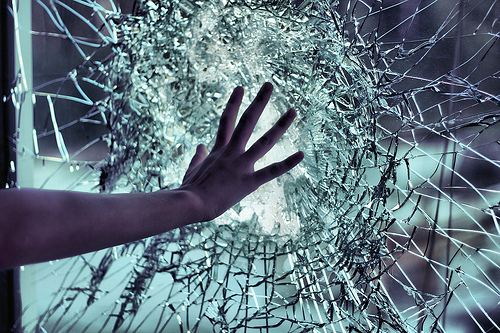 ‘With 30 pages of handwritten calculations, Duke postdoctoral fellow Sho Yaida has laid to rest a 30-year-old mystery about the nature of glass and “disordered” materials at low temperatures. They may in fact be a new state of matter …’