
- Image via CrunchBase
‘The award-winning music service that’s taken Europe by storm will soon be landing on US shores. Millions of tracks ready to play instantly, on your computer and your phone. Sign up to get your invite now’ – (via Spotify).

‘The award-winning music service that’s taken Europe by storm will soon be landing on US shores. Millions of tracks ready to play instantly, on your computer and your phone. Sign up to get your invite now’ – (via Spotify).

‘Two years before Ellington died, in 1972, Yale University held a gathering of leading black jazz musicians in order to raise money for a department of African-American music. Aside from Ellington, the musicians who came for three days of concerts, jam sessions, and workshops included Eubie Blake, Noble Sissle, Dizzy Gillespie, Charles Mingus, Max Roach, Mary Lou Williams, and Willie (the Lion) Smith. During a performance by a Gillespie-led sextet, someone evidently unhappy with this presence on campus called in a bomb threat. The police attempted to clear the building, but Mingus refused to leave, urging the officers to get all the others out but adamantly remaining onstage with his bass. “Racism planted that bomb, but racism ain’t strong enough to kill this music,” he was heard telling the police captain. (And very few people successfully argued with Mingus.) “If I’m going to die, I’m ready. But I’m going out playing ‘Sophisticated Lady.’ ” Once outside, Gillespie and his group set up again. But coming from inside was the sound of Mingus intently playing Ellington’s dreamy thirties hit, which, that day, became a protest song, as the performance just kept going on and on and getting hotter. In the street, Ellington stood in the waiting crowd just beyond the theatre’s open doors, smiling.’ (The New Yorker)

‘The hidden track dates all the way back to The Beatles’ Abbey Road, which includes “Her Majesty,” a 23-second unlisted song at the end of the album’s second side. Since then, many bands have surprised their fans with secret songs, though many of them are merely discordant noise or otherwise eminently forgettable. Sometimes, though, these tracks are hidden gems that deserve to be heard. For that reason, we decided to put together a list of the very best hidden tracks, and listened to dozens of them to find the standouts.’ (The Top 13)

Abstract: “A variety of neurological problems have affected the lives of giants in the jazz genre. Cole Porter courageously remained prolific after severe leg injuries secondary to an equestrian accident, until he succumbed to osteomyelitis, amputations, depression, and phantom limb pain. George Gershwin resisted explanations for uncinate seizures and personality change and herniated from a right temporal lobe brain tumor, which was a benign cystic glioma. Thelonious Monk had erratic moods, reflected in his pianism, and was ultimately mute and withdrawn, succumbing to cerebrovascular events. Charlie Parker dealt with mood lability and drug dependence, the latter emanating from analgesics following an accident, and ultimately lived as hard as he played his famous bebop saxophone lines and arpeggios. Charles Mingus hummed his last compositions into a tape recorder as he died with motor neuron disease. Bud ‘Powell had severe posttraumatic headaches after being struck by a police stick defending Thelonious Monk during a Harlem club raid.’ Neurological problems of jazz legends. (J Child Neurol. 2009)
Paul Westerberg on the passing of Alex Chilton: “How does one react to the death of one’s mentor?” (New York Times op-ed)
Why Music Sounds Worse (NPR)
Singer and Songwriter Dies at 45: Vic Chesnutt, whose darkly comic songs about mortality, vulnerability and life’s simple joys made him a favorite of critics and fellow musicians, died Friday in a hospital in Athens, Ga., a family spokesman said. He was 45 and lived in Athens.
He had been in a coma after taking an overdose of muscle relaxants earlier this week.
Mr. Chesnutt had a cracked, small voice but sang with disarming candor about a struggle for peace in a life filled with pain. A car crash at age 18 left him partly paralyzed, and he performed in a wheelchair.
The accident, he has said, focused him as a songwriter, and it became the subject of some of his earliest recordings. “I’m not a victim/Oh, I am an atheist,” Mr. Chesnutt sang in “Speed Racer,” from his first album, “Little,” produced by Michael Stipe of R.E.M. and released in 1990.
In a recent interview on the public radio show “Fresh Air,” he told Terry Gross: “It was only after I broke my neck and even like maybe a year later that I really started realizing that I had something to say.”
Although he never had blockbuster record sales, Mr. Chesnutt was a prolific songwriter who remained a mainstay on the independent music circuit for two decades, making more than 15 albums.
Musicians flocked to work with him: he recorded with the bands Lambchop, Widespread Panic and Elf Power, as well as the jazz guitarist Bill Frisell, and in a recent burst of creative activity he made two albums with a band that included Guy Picciotto of Fugazi and members of the Montreal indie-rock group Thee Silver Mt. Zion.
Because of Mr. Chesnutt’s fondness for simple guitar chords — after his accident his fingers could no longer form the jazzier ones, he has said — his work was often described as a variant of folk-rock. But the sound of his albums changed with their revolving collaborators, from stark recordings of Mr. Chesnutt alone to finessed full-band arrangements.
…He sings about suicide in “Flirted With You All My Life,” from his recent album “At the Cut,” describing death as a lover he must break up with because his accomplishments in life are incomplete:
When you touched a friend of mine I thought I would lose my mind
But I found out with time that really, I was not ready, no no, cold death
Oh death, I’m really not ready.
(New York Times obituary)
“James Gurley, who played guitar in Big Brother and the Holding Company, the psychedelic rock band that brought Janis Joplin to fame, died on Sunday at his home in Palm Desert, Calif. He was 69. One of the central groups of San Francisco’s fertile mid-1960s rock scene, Big Brother and the Holding Company took blues-based songs on long, strange, electric trips that often featured Mr. Gurley’s protracted solos. In an interview in 2007 with The Desert Sun, in Palm Springs, Calif., Mr. Gurley said that his approach was inspired by the music of John Coltrane.” (New York Times obituary)

BlueBeat.com has them for an unbelievable $.25 a track, as well as free unlimited streaming. Hope it’s legal.

‘Sosa, the “voice of Latin America” whose music inspired opponents of South America's brutal military regimes and led to her forced exile in Europe, died Sunday, her family said. She was 74.’ (Washington Post obituary)

‘ “I don’t relate to the song, to that type of song,” she told The Associated Press in June. “As a teenager, I made the mistake of telling a couple of friends at school that I was the Lucy in the song and they said, ‘No, it’s not you, my parents said it’s about drugs.’ And I didn’t know what LSD was at the time, so I just kept it quiet, to myself.” ‘
(New York Times obit)
The folksinger, one third of Peter, Paul and Mary, has died after a battle with leukaemia, aged 72. Travers was an outspoken supporter of the civil rights and anti-war movements. “I am deadened and heartsick beyond words to consider a life without Mary Travers and honoured beyond my wildest dreams to have shared her spirit and her career,” Noel “Paul” Stookey said. (BBC obituary).
Poet and Punk Rocker Who Wrote ‘The Basketball Diaries’ Dies at 60: “As a teenage basketball star in the 1960s at Trinity, an elite private school on the Upper West Side of Manhattan, Mr. Carroll led a chaotic life that combined sports, drugs and poetry. This highly unusual combination lent a lurid appeal to “The Basketball Diaries,” the journal he kept during high school and published in 1978, by which time his poetry had already won him a cult reputation as the new Bob Dylan.” (New York Times obituary)
Even when I didn’t listen to punk, ‘People Who Died’ was in my regulsr rotation. Time to punch it up on the iPod and add one more name to the list…
 |
‘ “How does it feel?” Bob Dylan wondered back in 1965, to be on your own, “like a complete unknown.” Now he knows. Two police officers in their 20s asked Mr. Dylan, 68, to provide identification as he took a stroll through Long Branch, N.J., last month, The Associated Press reported.
|
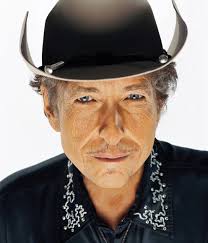 |
The officers were responding to a report from residents that an “eccentric-looking old man” had wandered into their yard, according to ABC News. Mr. Dylan, right, who said he was looking at houses to pass some time before that night’s show with Willie Nelson and John Mellencamp, was not carrying identification, so the officers accompanied him back to his hotel, where concert workers vouched for him. “I’ve seen pictures of Bob Dylan from a long time ago, and he didn’t look like Bob Dylan to me at all,” Officer Kristie Buble told ABC News. “We see a lot of people on our beat, and I wasn’t sure if he came from one of our hospitals or something. He was acting very suspicious. Not delusional, just suspicious.” ‘ (New York Times via abby) |
Too good to pass up posting this anecdote, although I also find it sad. Already, with the fortieth anniversary of Woodstock this weekend, preoccupied with the passage of time and the transience of so much of what I found important in my youth. Of course, another take on this story is to wonder why in the world they were playing Long Branch NJ.

I love cover versions and I love The Covers Project and the concept of the ‘covers chain’. This one has 282 links. You’re sure to find something here that you like.

John Dawson is dead at 64: “Dawson, a singer and songwriter whose band New Riders of the Purple Sage began as a country-rock offshoot of the Grateful Dead but had a long life of its own, died on Tuesday in San Miguel de Allende, Mexico, where he lived. He was 64.
…Mr. Dawson, known as Marmaduke, founded New Riders of the Purple Sage in 1969 with David Nelson and Jerry Garcia, whom Mr. Dawson had known from Mother McCree’s Uptown Jug Band Champions, a Grateful Dead predecessor formed in 1964. Mr. Dawson was looking for a band to perform his country-inflected songs, and Mr. Garcia was eager for a project in which he could indulge his newest musical obsession, pedal-steel guitar.
… Mickey Hart and Phil Lesh of the Grateful Dead were briefly members, and New Riders became one of the Dead’s regular opening acts, its country-leaning sound complementing the older band’s psychedelic folk-rock.
The group’s formal association with the Grateful Dead did not last long: Mr. Hart and Mr. Lesh departed before New Riders’ self-titled debut album was released in 1971, and Mr. Garcia left shortly thereafter. But the band remained closely connected to many of the top psychedelic groups of the era: Mr. Nelson had played guitar in Big Brother and the Holding Company, and Spencer Dryden, formerly of Jefferson Airplane, joined as drummer in late 1970.
New Riders released a dozen albums into the early ’80s. One, “The Adventures of Panama Red,” from 1973, went gold, and a track from that album, “Panama Red” — a novelty song about marijuana, not so thinly veiled — became a staple. With Mr. Garcia and Robert Hunter, the longtime Grateful Dead lyricist, Mr. Dawson also wrote the song “Friend of the Devil,” which appears on the Grateful Dead’s 1970 album “American Beauty.” ” (New York Times obituary)
There has been much web speculation at times past that he was suicidal (Google search). In a total vacuum about autopsy findings, I wonder if it is reasonable to speculate about whether he took his own life, as troubled as he evidently was mentally, and with incredible mounting financial woes.

Former Member of Wilco Dies at 45 (NY Times Obituary).

Danger Mouse And Sparklehorse Team Up With David Lynch: “…Dark Night Of The Soul is an album and the songs were written by Danger Mouse and Sparklehorse, though the myriad singers featured on each track also had a big hand in composing and producing the work. The album was initially going to be packaged with a book of photos taken by David Lynch. But now there’s word that the music may never be officially released at all.
An unnamed spokesperson for Danger Mouse says that “due to an ongoing dispute with EMI” the book of photographs will “now come with a blank, recordable CD-R. All copies will be clearly labeled: ‘For legal reasons, enclosed CD-R contains no music. Use it as you will.'”
You can order the book, sans music, from the official Dark Night Of The Soul Web site. In the meantime, you can hear the entire album here on NPR Music as an Exclusive First Listen.
I’ve listened to the record all the way through at least a dozen times, and can confirm that Dark Night of the Soul delivers in every way you’d hope for. It’s beautiful but haunting, surreal and dark, but sometimes comical and affecting, with ear-popping, multilayered production work. It just gets more mesmerizing with every listen.
In addition to Danger Mouse and Sparklehorse, other artists appearing on Dark Night of the Soul include James Mercer of The Shins, The Flaming Lips, Gruff Rhys of Super Furry Animals, Jason Lytle of Grandaddy, Julian Casablancas of The Strokes, Frank Black of the Pixies, Iggy Pop, Nina Persson of The Cardigans, Suzanne Vega, Vic Chesnutt, David Lynch, and Scott Spillane of Neutral Milk Hotel and The Gerbils. (NPR)

Brian Eno: “…everything other than the recorded music is becoming the valuable part of what artists sell”. (Prospect)
“Veterans of the original Woodstock festival, including Levon Helm, Paul Kantner and Country Joe McDonald, have organized a scheduled flashback of sorts: they and several other musicians who performed at that 1969 concert will play a new show on Aug. 15 to celebrate the festival’s 40th anniversary, The Associated Press reported. The new concert, whose lineup also includes the Woodstock alumni Big Brother and the Holding Company, Ten Years After, Canned Heat and Mountain, will be held at the Bethel Woods Center for the Arts in upstate New York, where the first Woodstock festival took place. Mr. Helm, who played at Woodstock as a member of the Band, will be appearing with his Levon Helm Band, and Mr. Kantner, who performed at Woodstock with Jefferson Airplane, will appear at the anniversary concert with the upgraded Jefferson Starship.” (New York Times) I think I’ll skip it this time. Wonder how many in the audience will be veterans of the real thing? And does anyone know if Max Yasgur is still alive?

Springsteen leads Seeger 90th birthday tribute (Reuters). Elsewhere around the country, for example here in Cambridge, MA, people are coming together at folk clubs to sing out in celebration. Happy birthday and many happy returns, Pete, you are an American cultural treasure.

“It goes without saying that the frequency of standing ovations devalues their significance. As Gilbert and Sullivan put it in “The Gondoliers,” When everyone is somebodee/Then no one’s anybody! Just as important, it also points to a lack of true engagement on the part of the spectators. At a preview performance of “Blithe Spirit” last week, I sat next to a man who laughed loudly and mechanically at every line in the play. Whenever an actor said something really funny, he raised his hands above his head and clapped. It was as though I were sitting next to a living laugh track — except that the man’s tic-like reaction to the show was anything but alive.
Booing, on the other hand, sends a different message, one that isn’t necessarily all bad. Francesca Zambello‘s deliberately provocative Met production of “Lucia di Lammermoor” was booed when it opened in 1992. “It isn’t fun to be booed,” Ms. Zambello later told me, “but sometimes it’s also a badge of success.” Why? Because the people who booed Ms. Zambello’s “Lucia” and Ms. Zimmerman’s “Sonnambula,” unlike the ones who spring to their feet at the end of a third-rate musical, were making it clear that they’d paid attention to what they saw and heard. No, they didn’t care for it, but at least they were involved with it, and such involvement can be the first step toward a deeper, more thoughtful response. “As soon as I detest something,” the music critic Hans Keller once said, “I ask myself why I like it.” Keller’s words may seem paradoxical, but in fact they’re wise. While anger may turn out to be love in disguise, indifference is rarely anything more than indifference.” — Terry Teachout via WSJ


“Download a free 10-song sampler of the artists featured by NPR Music at the South by Southwest music festival in Austin, TX this month. Click the link below and the songs will automatically begin downloading into your iTunes account.” via NPR Music.

“Rock-band worship is nothing new, of course, but the relationship between Darnielle and his fans has its own special hue. This is not the mass, global adulation of arena bands like U2. Nor is it fandom as lifestyle as practiced by Dead Heads. It’s the confessional-indie-troubador-and-his-flock-of-disciples model of Nick Drake, the Smiths, and Rufus Wainwright. Like those musicians and their tribes, Darnielle and his acolytes share an unusually intimate, and often pained, bond. Mountain Goats fans tend to have an air of sadness about them, and because Darnielle sings so openly and candidly about his own difficulties, he connects with his audience on a level that few artists are able to reach (the band is called the Mountain Goats, plural, but the group—and the fuss over them—is entirely about Darnielle). Darnielle sings about what his fans feel but can’t articulate. He’s their hero, but he’s also their soulmate, the one person in the world who understands them. That’s why Stephen Wesley and the legions of fans like him can’t get enough of the Mountain Goats. And that burden is crushing Darnielle.” via New York Magazine.
![[Image 'https://i0.wp.com/graphics8.nytimes.com/images/2009/02/17/arts/rone.span.jpg' cannot be displayed]](http://graphics8.nytimes.com/images/2009/02/17/arts/rone.span.jpg "Nedra Talley, Estelle Bennett, Phil Spector and Ronnie Bennett, 1963")
‘For a few years in the mid-1960s Estelle Bennett lived a girl-group fairy tale, posing for magazine covers with her fellow Ronettes and dating the likes of George Harrison and Mick Jagger. Along with her sister and their cousin Nedra Talley, she helped redefine rock ’n’ roll femininity.
The Ronettes delivered their songs’ promises of eternal puppy love in the guise of tough vamps from the streets of New York. Their heavy mascara, slit skirts and piles of teased hair suggested both sex and danger…
But Ms. Bennett’s death last week at 67 revealed a post-fame life of illness and squalor that was little known even to many of the Ronettes’ biggest fans. In her decades away from the public eye she struggled with anorexia and schizophrenia, and at times she had also been homeless, said her daughter, Toyin Hunter.’ via NYTimes.

“We just listened to the track in full, and it’s not bad per se – that is, provided you dig batshit, emotionally jarring music, where children sing about Easter shopping at Walmart. It also features plenty of oompah horns and bagpipes, so at least it’s multiculturally offensive. (That’s not even mentioning the Dracula organ dirges, either.)” via Houston Press.

The New York Times Magazine profiles one of my favorites, ‘force of nature’ Neko Case:
In part because of the inexpensiveness and flexibility of digital technology, the universe of independent singer-songwriters is constantly expanding. But in that universe, Neko Case is near the center. She is to many what she herself would call “the Man!” Her last CD, an often surreal and melodically inventive collection of songs called “Fox Confessor Brings the Flood,” rose to No. 54 on the Billboard chart and ended up selling 200,000 copies. And publications like Rolling Stone and Spin and The Stranger, along with a growing cadre of intense, often lovesick fans, have lionized Case’s singing voice as uniquely clear and powerful. It may not vibrate as much as she would like, but it’s not the angel-sweet sound of Alison Krauss, either — it has real richness and body. And on her new CD, “Middle Cyclone,” to be released in March by Anti- (a division of the punkish label Epitaph that features all their artists who aren’t punk), Case displays a wide vocal and emotional range only intermittently present on her six previous recordings and in her regular releases with the Canadian power-pop band the New Pornographers. She has often been described as a belter, a force of nature, a kind of vocal tornado. So this increased admixture of playfulness, delicacy and orchestral effects strikes you as the kind of variegation that artists — and species — make in order to survive and thrive.

“Each post takedown occurred on a blog hosted by the Google-owned Blogger platform, the publishing system used by the majority of mp3 sites, particularly those founded prior to 2007, when the open-source WordPress software became the vogue. Google, the bloggers believe, has quietly changed the methods by which it enforces its user agreement. Whereas in the past, a blog owner would receive a warning before a post’s removal, Google is now simply hitting the delete button.” via Los Angeles Weekly.

Fifty years ago today: On February 3, 1959, a small-plane crash near Clear Lake, Iowa, United States killed, along with the pilot of the plane, Buddy Holly, Ritchie Valens, and “The Big Bopper” (J. P. Richardson). , Twelve years later, Don McLean, in his song “American Pie” dubbed it The Day the Music Died.

“John Martyn, a Scottish singer and guitarist whose gentle mix of folk and jazz and innovative use of electronic effects have influenced a broad range of musicians since the 1970s, died on Thursday in Kilkenny, Ireland. He was 60.
The cause was complications of pneumonia, said Jim Tullio, his longtime record producer.
Mr. Martyn emerged from the London folk scene of the mid-1960s with a crisp and distinctive guitar style, but he had his greatest impact in the ’70s with albums that took that sound in new directions. Inspired in part by the slow-burning, mystical jazz of the American saxophonist Pharoah Sanders, he devolved a keen sense of texture and atmospherics, transforming ballads into sensuous rhapsodies.
Making novel use of the Echoplex and other devices in songs like “Glistening Glyndebourne” (1971), he manipulated the sound of his acoustic guitar, making it pulse and throb hypnotically, an effect widely imitated throughout the ’70s and ’80s.
Although his music never had a wide appeal, Mr. Martyn released more than 20 albums and has been emulated by generations of musicians.” via NYTimes Obituary.
Solid Air and Grace and Danger have always been in heavy rotation in my listening. Today, they will be on continuous shuffle…

‘ “Souvenir de Chine,” a video by the Swiss electronic duo Larytta, features mice, ducks, chickens, and parakeets: We assume that none of them were injured along the way. But, like us, they must have been mighty confused.’ via Very Short List.

“The somber, elegiac tones before President Obama’s oath of office at the inauguration on Tuesday came from the instruments of Yo-Yo Ma, Itzhak Perlman and two colleagues. But what the millions on the Mall and watching on television heard was in fact a recording, made two days earlier by the quartet and matched tone for tone by the musicians playing along.
The players and the inauguration organizing committee said the arrangement was necessary because of the extreme cold and wind during Tuesday’s ceremony. The conditions raised the possibility of broken piano strings, cracked instruments and wacky intonation…” via NYTimes.
![//www.music.usb.co.il/images/The_Times_They_Are_a_Changin.jpg' cannot be displayed]](https://i0.wp.com/www.music.usb.co.il/images/The_Times_They_Are_a_Changin.jpg "The Times They Are A'Changin'")
‘William Zantzinger, the white Maryland tobacco farmer immortalized in a Bob Dylan song for the 1963 killing of a black Baltimore barmaid, has died. Zantzinger, inebriated from a night on the town, struck Hattie Carroll with a cane when she was slow bringing him a bourbon. Carroll, a 51-year-old mother of 11 children, died from a brain hemorrhage 8 hours later. Zantzinger was convicted of manslaughter and served 6 months. Dylan recorded “The Lonesome Death of Hattie Carroll” in 1964.’
via Newser [thanks, walker].

Oh no. I had been listening to my Delaney and Bonnie albums again the past few years, with incredible enjoyment, especially 1971’s Motel Shot (look at these “& Friends” in “Delaney and Bonnie & Friends”: Duane Allman – guitar; Joe Cocker – vocals; Kenny Gradney – bass; John Hartford – banjo, fiddle; Eddie James – guitar; Jim Keltner – drums; Bobby Keys – saxophone; Dave Mason – guitar; Gram Parsons – guitar, vocals; Carl Radle – bass; Leon Russell – piano, keyboards; Clarence White – guitar, vocals; Bobby Whitlock – vocals!!) and the 1970 live on tour disc with Eric Clapton (who joined their band after they opened for Blind Faith and he felt they blew Blind Faith away). They are in heavy rotation in my iTunes library. I’m deeply saddened to hear this.
Possibly related posts: (automatically generated)

“Head bangers stuck between rock and a hard bass — Patton and McIntosh 337: a2825 — BMJ (Abstract):
Objective To investigate the risks of mild traumatic brain injury and neck injury associated with head banging, a popular dance form accompanying heavy metal music.
Design Observational studies, focus group, and biomechanical analysis.
Participants Head bangers.
Main outcome measures Head Injury Criterion and Neck Injury Criterion were derived for head banging styles and both popular heavy metal songs and easy listening music controls.
Results An average head banging song has a tempo of about 146 beats per minute, which is predicted to cause mild head injury when the range of motion is greater than 75°. At higher tempos and greater ranges of motion there is a risk of neck injury.
Conclusion To minimise the risk of head and neck injury, head bangers should decrease their range of head and neck motion, head bang to slower tempo songs by replacing heavy metal with adult oriented rock, only head bang to every second beat, or use personal protective equipment.”

Virtuoso guitarist and leading figure in Britain’s 60’s folk revival: “Graham drew on a range of influences, including jazz, classical, Indian and Arabic music. …[I]t was Graham’s unusual family background — his mother was from South America, his father from a remote Scottish island — and access to blues records through his work at the British Library that decisively shaped his sound.
”Davy started unusual alternate tunings for guitars that really caught on,” according to Dick Boak, the artist relations manager at C.F. Martin & Co., the famous U.S. guitar maker. ”He influenced Paul Simon, of course, and John Renbourn, and Laurence Juber, and many others. Just about anybody who has anything remotely to do with finger-style guitar has to in some way pay tribute to Davy.” “
via New York Times.
![//www.efi.group.shef.ac.uk/labels/various/ella3530.gif' cannot be displayed]](https://i0.wp.com/www.efi.group.shef.ac.uk/labels/various/ella3530.gif "Gravichords, Whirlies and Pyrophones...CD accompanying the book by Bart Hopkin")
My friend of almost forty years, Bart Hopkin, was in town this week giving a talk to the MIT Media Lab. He is the founder-editor of EMI, which was a journal for many years and is now a website for the design and appreciation of unusual instruments. He is himself an builder of unusual instruments, each of them beautiful, whimsical or outrageous, and each exploring a design issue or deep principle of music-making or what we think of as music. The site has photos of some of his instruments and links to his recorded music.
Although the boundaries have progressively loosened over the years, he has always had a prejudice in favor of acoustic instruments to the exclusion of electronic. At first it seemed a little odd that he was invited to talk to the Media Center. But the Media Center is all about interface design and Bart’s fascination with unusual instruments entails a preoccupation with interface in a creative endeavor. So it ended up making sense. The audience was entranced by the talk. It occurred to me that, as far as I recall, I had never blinked to his site. Enjoy, both producers and consumers of music among you.
Experimental Musical Instruments Home Page.
![//graphics8.nytimes.com/images/2008/12/02/arts/03odetta_600a.JPG' cannot be displayed]](http://graphics8.nytimes.com/images/2008/12/02/arts/03odetta_600a.JPG "Odetta, RIP")
Voice of Civil Rights Movement Dies at 77: “The critic called her “a majestic figure in American music, a direct gateway to bygone generations that feel so foreign today.”

“More than 40 years after Christians were infuriated by the Beatles’ claim that they were “more popular than Jesus”, the Roman Catholic Church has made peace with the Fab Four.”
via Telegraph.UK
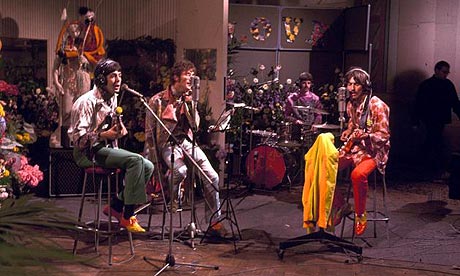
“For Beatles fans across the world it has gained near mythical status. The 14-minute improvised track called ‘Carnival of Light’ was recorded in 1967 and played just once in public. It was never released because three of the Fab Four thought it too adventurous.
The track, a jumble of shrieks and psychedelic effects, is said to be as far from the melodic ballads that made Sir Paul McCartney famous as it is possible to imagine. But now McCartney has said that the public will have the chance to judge for themselves.”
via The Observer


Freudian folksinger: 1961 Reprise Records LP by a beatnik folksinger disciple of Burl Ives and Josh White includes such psychoanalytic ditties as “Will to Fail”, “Repressed Hostility Blues’, and “It Must Be Something Psychological”. The mp3s of selected songs are available at the WFMU site. (WFMU’s Beware of the Blog)
Freudian folksinger: 1961 Reprise Records LP by a beatnik folksinger disciple of Burl Ives and Josh White includes such psychoanalytic ditties as “Will to Fail”, “Repressed Hostility Blues’, and “It Must Be Something Psychological”. The mp3s of selected songs are available at the WFMU site. (WFMU’s Beware of the Blog)
![[Image 'https://i0.wp.com/graphics8.nytimes.com/images/2010/03/19/arts/19chilton_CA0/19chilton_CA0-articleInline.jpg' cannot be displayed]](http://graphics8.nytimes.com/images/2010/03/19/arts/19chilton_CA0/19chilton_CA0-articleInline.jpg)
![[Image 'https://i0.wp.com/graphics8.nytimes.com/images/2009/12/26/nyregion/26chesnutt_CA0/articleInline.jpg' cannot be displayed]](http://graphics8.nytimes.com/images/2009/12/26/nyregion/26chesnutt_CA0/articleInline.jpg "Vic Chesnutt, R.I.P.")
![[Image 'https://i0.wp.com/graphics8.nytimes.com/images/2009/12/25/arts/25gurley_CA0/articleInline.jpg' cannot be displayed]](http://graphics8.nytimes.com/images/2009/12/25/arts/25gurley_CA0/articleInline.jpg "James Gurley, R.I.P.")

![[Image 'https://i0.wp.com/graphics8.nytimes.com/images/2009/09/14/arts/14carroll190.jpg' cannot be displayed]](http://graphics8.nytimes.com/images/2009/09/14/arts/14carroll190.jpg "Jim Carroll")

