
‘Some of the worms Semenov cataloged with his photography were

previously undiscovered, and scientists have started the process of

identifying them.

Imagine all the other undiscovered terrors living in the deep.’ (Mashable).

‘Some of the worms Semenov cataloged with his photography were
previously undiscovered, and scientists have started the process of
identifying them.
Imagine all the other undiscovered terrors living in the deep.’ (Mashable).

‘…[W]hat’s possible? Mashable spoke to Todd Curtis, former aviation safety engineer at Boeing and creator of AirSafe.com, to find out.’ (Mashable).

‘Why Blair Witch remains one of the most frightening films ever made is precisely because of what all those so-called “reality” techniques don’t show. The found-footage and the first-person camera and even the low budget actually enabled a lack of information that allowed our imagination to fill in the blanks. It was the standard ghost story we’d all grown up with, but we were able to annotate it with whatever version of that story that had terrified us when we were seven. We wanted to believe. And we did. Some of us a little too much.’ (Gizmodo).


John R. MacArthur: ‘As a presidential contest between Hillary Clinton and Jeb Bush in 2016 appears ever more likely, it’s a good moment to ask what alternative exists to lying down and letting such a campaign drown the body politic.
Time is short. The queen of cynics, New York Times columnist Maureen Dowd, already has pronounced her gorgon’s judgment on the inevitability of Hillary versus Jeb. “The looming prospect of another Clinton–Bush race makes us feel fatigued,” yawns the perpetually bored Dowd, who, on the contrary, relishes a future of easy columns mocking America’s two leading political dynasties.
What about the rest of us? Is it inevitable that we swallow the nomination of

the neo-liberal Clinton, whose support of Bush’s Iraq madness (not to mention Obama’s Afghan and Libyan stupidity) and her husband’s recklessly pro-“free trade,” pro-banker, pro-deregulation politics ought to send reasonable liberals fleeing? Is it predestined that principled conservatives accept the anointment of the thoroughly fraudulent Jeb, whose support of his brother’s interventionist folly, along with his own outrageous meddling as governor of Florida to “rescue” brain-dead Terri Schiavo, should give pause to even the greediest oil baron seeking patronage from a Republican administration?’ (Harper’s Magazine).

‘Can dogs survive nuclear fallout? Indeed they can.
In 1958, American scientists were stunned to find a canine survivor of the disastrous Castle Bravo test—the largest ever U.S. nuclear detonation. It also took a little politicking with American Airlines to rescue the pooch.
For science.
…If it wasn’t for [Ernest Williams, a trustee at the National Atomic Testing Museum in Las Vegas], the atomic dog would have been left stranded on a contaminated Pacific atoll.’ (Medium).
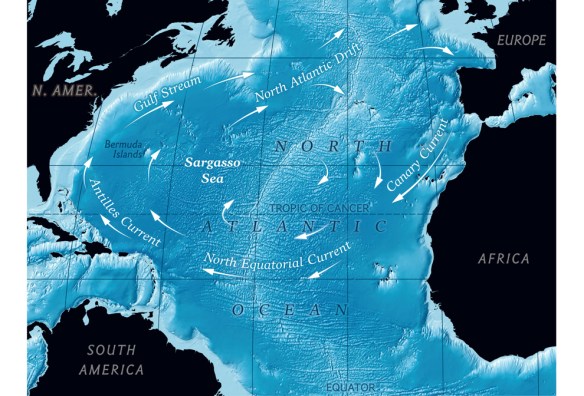
‘Five countries signed an agreement this week committing to the protection of the Sargasso Sea, which occupies a vast stretch of the North Atlantic Ocean around Bermuda.
The Sargasso has long attracted the attention of conservationists and scientists because it hosts a rich diversity of wildlife, including leatherback sea turtles, humpback whales, and bluefin tuna. The animals eat and take shelter in a seaweed called sargassum, which floats in massive quantities in the area—some say it looks like a golden, floating rain forest—and gives the sea its name.
Fishing and shipping traffic threatens to unravel this biologically rich ecosystem, on top of broader threats like climate change and ocean acidification.
The new nonbinding agreement on the Sargasso, called the Hamilton Declaration, is a first for the high seas.’ (National Geographic).

‘Les Moonves, the CEO of CBS, the country’s most powerful TV broadcaster, is threatening to take his network off the air. And that’s not such a bad idea.
On Tuesday, Moonves told CBS-owned CNet that his TV network could move to an internet direct-subscription model if the U.S. Supreme Court rules in favor of Aereo, the service that lets you grab TV airwaves with a personal antenna for viewing on your PC, tablet, or phone…
[T]he case for an all-subscription model makes a surprising amount of sense – especially when you consider that paying a la carte for what you watch is TV’s inevitable future. By going all-subscription now, the big networks would have a chance to define that future rather than becoming its victims.’ (Wired.com).
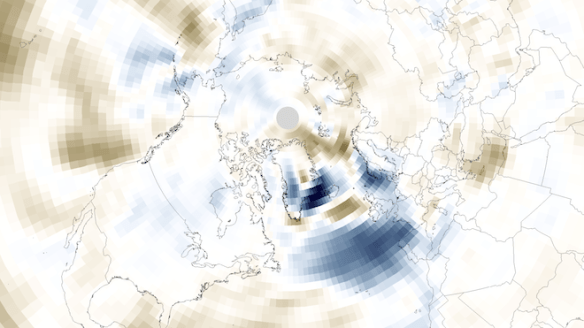
‘Move over, thundersleet and frost quake and all you other weird winter weather names. The undisputed, undefeated heavyweight champion of the climate-changed world is: bombogenesis!
This delicious buzzword, which is a portmanteau of “bomb cyclogenesis” and refers to the sudden intensification of storms after a rapid drop in atmospheric pressure, has been tumbling off lips this polar vortex winter. In the latest Science Graphic of the Week, you can see why.’ (Wired Science).

Greatest. blueshift. ever: ‘A giant black hole may have hurled a star cluster toward us at record speed ‘ (Scientific American).

‘Beltway writers have recently tried to outdo themselves with breathless profiles of a “new” Paul Ryan, deeply concerned about the poor. I’ve warned repeatedly that Ryan’s views on poverty are just warmed-over Reaganism, and now we have proof. McKay Coppins’ piece “Paul Ryan Finds God” should have revealed that his God is no longer Ayn Rand but Charles Murray, the man who put a patina of (flawed) social science on Reagan’s lyrical lie, “We fought a war on poverty, and poverty won.”
But let me explain all of what it means to cite Charles Murray in 2014. Murray is so toxic that Ryan’s shout-out must be unpacked. First, Rep. Barbara Lee is absolutely right: Ryan’s comments about “inner city” men who are “not even thinking about working or learning the value and the culture of work” are, in fact, “a thinly veiled racial attack,” in the congresswoman’s words. “Let’s be clear, when Mr. Ryan says ‘inner city,’ when he says, ‘culture,’ these are simply code words for what he really means: ‘black.’” ‘ (Salon.com).

The company can start bidding for new leases as soon as next week (Salon.com).

“An extremely rare albino chimero coast redwood tree is growing in the small Sonoma County town of Cotati. Federal regulators say the tree must be chopped down because the genetically mutated redwood is too close to a proposed set of new railroad tracks. Preservationists are hoping to raise public awareness and save the tree. The tree is believed to be one of fewer than 10 albino chimero redwood trees in the world.” — Mark Frauenfelder (Boing Boing).

‘Miles O’Brien, science correspondent for PBS NewsHour, has produced a series of three must-see investigative reports revisiting the Fukushima nuclear crisis in Japan. His stories explore how the radiation leaks triggered by the earthquake and tsunami are continuing to affect life there, and beyond.’ — Xeni Jardin (Boing Boing). Xeni, who is Miles O’Brien’s significant other, ends her post by letting us know that Miles recently suspended his reporting career after he lost his left arm in an accident while on assignment in the Philippines, but that he is healing well.
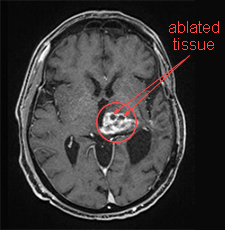
I am ecstatic! One of my closest friends, with an inoperable and highly malignant recurrent brain tumor, has experienced considerable regression of the tumor mass, recovery of function (and lengthening of life) with the experimental application of a noninvasive technique for focused ablation of the tumor (without opening the cranium) with ultrasound. The technique is called MrgFUS, “magnetic-resonance-guided focused ultrasound”, for short. This is the first time it has been used in this way anywhere in the world. Here is the press release. I’ll forgive the investigators their bragging rights in light of the result!
Related: Ted Talks on Focused Ultrasound

‘ESO’s Very Large Telescope Interferometer has revealed the largest yellow star — and one of the ten largest stars found so far. This hypergiant has been found to measure more than 1300 times the diameter of the Sun, and to be part of a double star system, with the second component so close that it is in contact with the main star. Observations spanning over sixty years, some from amateur observers, also indicate that this rare and remarkable object is changing very rapidly and has been caught during a very brief phase of its life.’ (ESO).

‘I don’t even know what I’m looking at here. I think I see some eyes and a beak attached some oversized head attached to the body of a spider. It’s a pelican spider.
“They look like little birds,” says Hannah Wood of the University of California, Davis. The spider’s body is about the size of a grain of rice, with a front segment that has evolved into a stretched “neck” with a little round “head” on top. (The mouth is actually at the bottom of the “neck”). And a pair of jawlike fanged projections called chelicerae folds down against the neck, where a pelican would tuck its beak.
Fuck you, nature. Fuck. You.’ (Sploid).

‘To finally put an end to the age-old edibility debate, a team of students led by microbiology professor Anthony Hilton looked at the transfer of E. coli and Staphylococcus aureus (or the bacteria that causes Staph infection) from a variety of indoor floor types (carpet, laminate, and tiled surfaces) to a variety of foods (toast, pasta, cookies, ham, dried fruit, and last but not least a “sticky dessert”). Each tested round of contact lasted between three and 30 seconds.
In what will surely be validating news to five-second rule champions everywhere, the researchers found that “time is a significant factor in the transfer of bacteria from a floor surface to a piece of food.” It’s not just the precious seconds your meal spends on the ground that matters, though; the type of flooring also plays a pretty big role. For instance, food dropped on carpet is the least likely to pick up bacteria, while food that sits on a hardwood floor for over five seconds is almost guaranteed to pick up something unpleasant—and it’s a moist food item, forget about it.’ (Gizmodo)

‘When Henrik Ehrsson tells me that his latest study is “weird”, I pay attention. This is a man, after all, who once convinced me I was the size of a doll, persuaded me that I had three arms, and ripped me out of my own body before stabbing me in the chest. Guy knows weird.
Ehrsson’s team at the Karolinska Institute in Stockholm specialises in studying our sense of self, by creating simple yet spectacular illusions that subvert our everyday experiences. For example, it seems almost trite to suggest that all of us experience our lives from within our own bodies. But with just a few rods, a virtual reality headset, and a camera, Ehrsson can give people an out-of-body experience or convince them that they’ve swapped bodies with a mannequin or another person.
These illusions tell us that our sense of self isn’t the fixed, stable, hard-wired sensation that it seems. Instead, our brain uses the information from our senses to continuously construct the feeling that we own our own bodies. Feed the senses with the wrong information, and you can make the brain believe all manner of impossible things.
Loretxu Bergouignan joined Ehrsson’s team in 2009. She had been studying memory, and she wanted to know if that brittle sense of self is important for encoding our experience. After all, we take in all the events of our lives from inside our own bodies. As Bergouignan writes, “There is always an “I” that experiences the original event, and an I that re-experiences the event during the act of remembering.” If she put someone through an out-of-body illusion, could they still make new memories? Is that first-person perspective of the world important for storing information about it?’ — Ed Yong (Not Exactly Rocket Science).

‘A first-of-its-kind study that measured activity in dogs’ brains finds a key region only lights up when the animal is exposed to the smell of a familiar human being. Other dogs—even familiar ones—do not produce the same response.
“It is tempting to conclude that (this) response represents something akin to a positive emotional response to the scent of a familiar human,” writes the research team led by Gregory Berns of Emory University. Their study—including their speculative discussion of whether that’s truly the case—is in the journal Behavioural Processes.’ (Pacific Standard).

‘ “So you’re going to take LSD.” Thus begins a how-to manual by Lisa Bieberman, who was then a 25-year-old Harvard graduate and former assistant to Richard Alpert (aka Ram Dass) and Timothy Leary (aka Nixon’s “Most Dangerous Man in America”) in their famed LSD experiments. Published in 1967, the year before the hallucinogen was criminalized, the pamphlet was recently unearthed by Psychedelic Frontier, a blog for the “consciousness expansion” community.
Bieberman seems to have been an ardent but surprisingly down-to-earth acid adherent, and earnest about her task. This guide for beginners is mainly addressed to practical matters to promote the best possible “LSD session.” She is eager to correct disinformation (LSD does not make you think you can fly) and to dispel romantic illusions (LSD does not make you smarter, more creative or a better person). And because she believes that LSD’s benefits are almost entirely emotional or spiritual in nature—and that therefore you and your companions should stay in one room, sit still and say nothing—her advice leans heavily on what NOT to do…’ (Substance.com).
David Foster Wallace’s 1994 Syllabus: ‘…[David Foster] Wallace was perhaps one of the most careful (or care-full) writers of his generation. …[So] you might just have to admire the fine art of his syllabi. Well, so you can, thanks to the University of Texas at Austin’s Harry Ransom Center, which has scans available online of the syllabus for Wallace’s intro course “English 102-Literary Analysis: Prose Fiction” , along with other course documents. These documents—From the Fall ’94 semester at Illinois State University, where Wallace taught from 1993 to 2002—reveal the professionally pedagogical side of the literary wunderkind, a side every teacher will connect with right away.
…[I]f you squint hard, you’ll see under “Aims of Course” that Wallace quotes the official ISU description of his class, then translates it into his own words:
In less narcotizing words, English 102 aims to show you some ways to read fiction more deeply, to come up with more interesting insights on how pieces of fiction work, to have informed intelligent reasons for liking or disliking a piece of fiction, and to write—clearly, persuasively, and above all interestingly—about stuff you’ve read.
…Wallace’s choice of texts is of interest as well—surprising for a writer most detractors call “pretentious.” For his class, Wallace prescribed airport-bookstore standards—what he calls “popular or commercial fiction”—such as Jackie Collins’ Rock Star, Stephen King’s Carrie, Thomas Harris’s The Silence of the Lambs, and James Elroy’s The Big Nowhere. The UT Austin site also has scans of some well-worn paperback teacher’s copies, with the red-ink marginal notes, discussion questions, and underlines one finds behind every podium…’ (Open Culture).

‘As their centennial approaches, it’s time to remember why the National Parks are so worth protecting.’ (Pacific Standard)
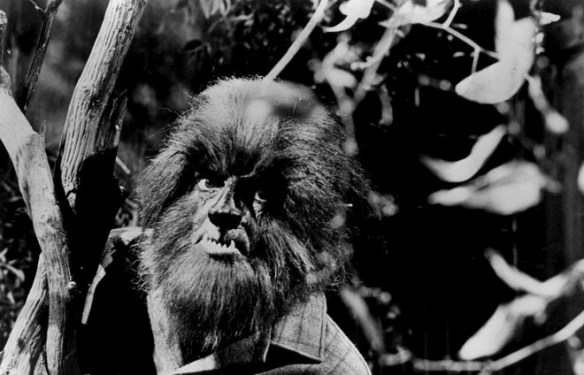
‘…In the psychiatric literature, the werewolf hallucinations and delusions the patient was experiencing are broadly classified as clinical lycanthropy, or lycomania. Because the “extremely rare” disorder has not received much academic scrutiny and is “poorly understood,” Blom recently took it upon himself to perform a rigorous multi-lingual search of historical documents and medical databases for any references to or extant case records on the condition between 1850 and May 2012.
Though the resulting analysis, published this month in the History of Psychiatry, only unearthed 13 case descriptions that satisfied the definition of “clinical lycanthropy proper,” the paper traces the evolution of the illness and provides a detailed description of symptoms, treatments, and divergent theories about its causes…’ (Pacific Standard).
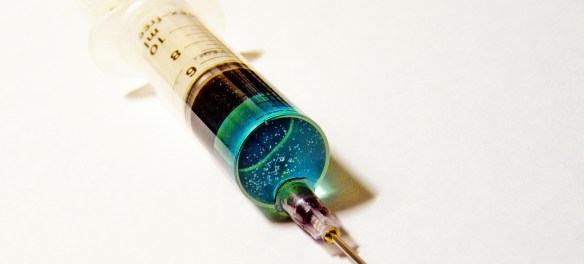
‘Besides the fact that manufacturers sterilize the needles (so no real extra effort is needed), other sterilization procedures are also used in these executions for good reason.
You see, a stay of execution may happen at the last minute. If this happens, but then the condemned later dies from infection, a wrongful death suit could be filed against the state -a suit the state would likely lose.’ (Gizmodo).

‘Although some people are horrified by the idea of cooking lobsters alive or the practice of tearing claws from live crabs before tossing them back into the sea, such views are based on a hunch. We know very little about whether these animals — or invertebrates in general — actually suffer. In Elwood’s experience, researchers are either certain the animals feel pain or certain they don’t. “Very few people say we need to know,” he says.’ (Washington Post).

‘Our great shame is that we forget the past, or perhaps simply refuse to learn from it. We have traveled this path before. We have seen the worst of times for our most vulnerable citizens, for people who fought for many years for modest gains, only to see the self-interest of a powerful few whisk those gains away.’ — Paul Buchheit (Salon.com).

‘There’s some tentative science to suggest that the polar vortex may have been linked to climate change. There’s a near scientific consensus that the burning of coal and other fossil fuels is contributing to climate change — not to mention a host of public health threats. Hence the reason why environmental rules are expected to force about 6 percent of the nation’s coal capacity into retirement by 2020.
The way the coal industry sees it, however, this winter’s brutal weather demonstrates exactly why we should be calling for more, not less, dirty energy.’ (Salon.com).

‘The case wasn’t about bike paths per se — it was about whether or not the federal government retains its control over land that had been granted to railroad companies once it’s been abandoned. But the decision undermines a federal “rails to trails” program, threatening the more than 1,400 bike and nature trails it’s created since its inception in 1983.’ (Salon.com).

5 ways the assault is about way more than abortion: ‘The GOP remains, as ever, a party that appeals largely to white men and married white women while falling further out of step with everyone else. While spitting vitriol about reproductive healthcare certainly alienates women voters and their allies, being vindictive about poverty, civil rights and other issues virtually annihilates the GOP’s chances of expanding its base….’ (Salon.com).

Why you should care about the kakapo: ‘Conservationists in New Zealand are celebrating after an extremely rare kakapo chick hatched from a cracked egg held together by nothing more than tape and glue. The bird joins a global kakapo population of just 125 birds – but what makes these animals so unique and why are they worth saving?

‘The United States Geological Survey (USGS) issued a press release yesterday indicating that the magnitude 5.7 earthquake that struck Prague, Oklahoma in 2011 was unintentionally human-induced.
The USGS claims that the magnitude 5.0 earthquake triggered by waste-water injection the previous day “trigger[ed] a cascade of earthquakes, including a larger one, [which] has important implications for reducing the seismic risk from waste-water injection.”
Injection wells are considered by some to be the most environmentally sound method of disposing of waste-water — which is a byproduct of both hydrofracking and conventional oil production — because they use the earth itself to both filter and contain the pollution.
The decade-long explosion of energy-producing facilities in the central United States has, according to a recent article in the journal Geology, led to an 11-fold increase in the number of earthquakes occurring in areas that are typically tectonically calm, including Arkansas, Texas, Ohio, and Colorado in the past four years alone…’ (The Raw Story).

How can we practice religion if we can’t discriminate? ‘The “liberty” crowd, led by Ross Douthat of the Times, braces itself for persecution of its views.’ (Salon.com)

“It’s unimaginable that a woman acting in self-defense, who injured no one, can be given what amounts to a life sentence,” Free Marissa Now spokeswoman Helen Gilbert said in a statement on the proposed sentence. “This must send chills down the spine of every woman and everyone who cares about women and every woman in an abusive relationship.” (Salon.com).
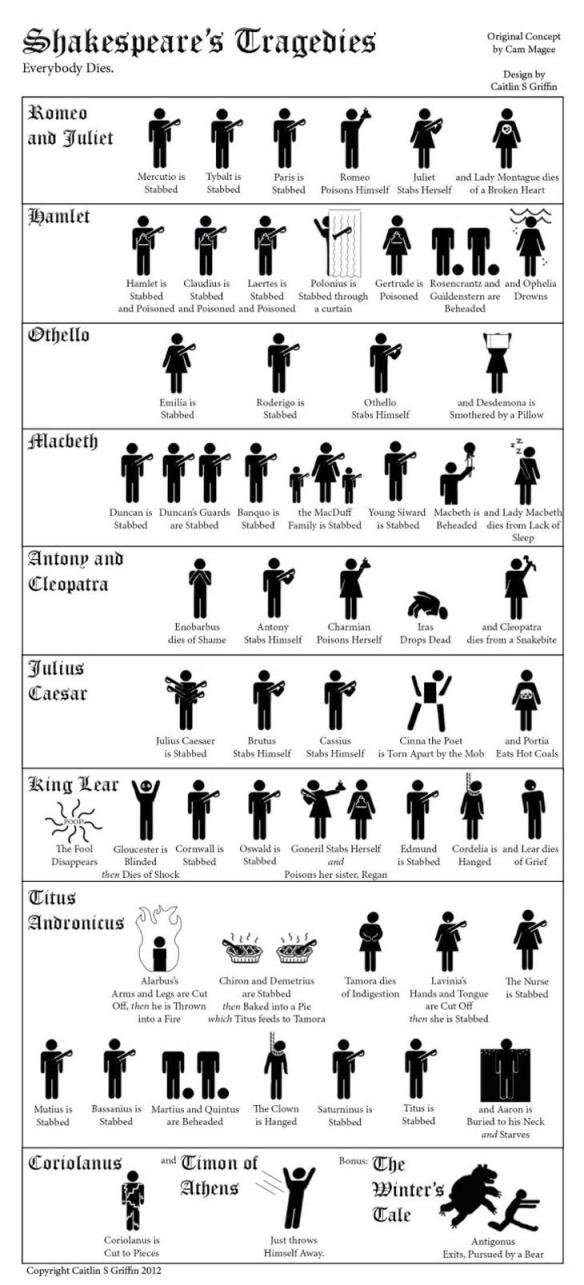
‘Cam Magee and Caitlin S. Griffin created a infographic that crosses Shakespeare with the people from bathroom signs. It shows every death from the tragedies, plus one of the most famous stage directions ever, from The Winter’s Tale: “Exit, pursued by a bear.” ‘ (io9).

‘The fact is that Russia’s Ukraine move is an act of weakness, not strength — an act, as Kerry aptly characterized it, anachronistic in both moral and strategic terms. The fact that Russia is trying something like this exposes the country’s global strategy as fundamentally mismatched to 21st century realities. There isn’t a new Cold War.’ (ThinkProgress).

‘Western leaders are stunned because they haven’t realized Russia’s owners no longer respect Europeans the way they once did after the Cold War. Russia thinks the West is no longer a crusading alliance. Russia thinks the West is now all about the money.’ — Ben Judah (POLITICO Magazine).
‘BOISE, Idaho — TO the chief counsel of the Idaho State Legislature:
In light of the bill permitting guns on our state’s college and university campuses, which is likely to be approved by the state House of Representatives in the coming days, I have a matter of practical concern that I hope you can help with: When may I shoot a student?’ (NYTimes op ed).
‘How a rebel psychologist challenged one of the 20th century’s biggest—and most dangerous—ideas…’ (Medium).

‘A team of oddball inventors claim they are developing a headset that translates a canine’s thoughts into words.’ (Salon.com).

Acclaimed French Filmmaker Is Dead at 91: I was obsessed with ‘L’Annee Derniere a Marienbad’ for several years… (NYTimes.com obit).
Kevin Underhill, the very funny lawyer behind Lowering the Bar, a very funny law-blog, has published a book of weird laws through the ages, called The Emergency Sasquatch Ordinance and Other Real Laws That Human Beings Have Actually Dreamed Up, Enacted, and Sometimes Even Enforced…
Humanity’s inventiveness in making dumb rules is really boundless. Underhill’s snarky commentary brings to life such rules as:
* Ala. § 34-6-7, which forbids secret passages leading from billiard rooms
* Ark. HR Con Res 1016, which sets out the official possessive form of Arkansas (it’s “Arkansas’s”)
* Ga. Code Ann § 43-43A-I, which establishes that a pay toilet is not a coin-operated amusement
* Or. HR Con Res 12, which sets out Oregon’s official state microbe (brewer’s yeast!)
* Tex. penal code § 43.23(g) which exempts Texas lawmakers from the state’s five-device-limit on sex-toys
* Australia’s Goods and Services Tax Act § 165-55, which gives tax commissioners the power to “treat a particular event that actually happened as not having happened;” and “Treat a particular event that did not actually happen as having happened” (and a lot more contrafactual goodness)
* Lei No 3.770 of Mato Grosso do Sul, Brazil, which requires cellular phone companies to extend a 50% discount on airtime to stutterers
* German Civil Code §§960-61, 962, 963 and 964, which set out the rules requiring beekeepers to chase after their errant swarms, rules for adjudicating the mingling of swarms chased by more than one beekeeper; and rules for removing your swarming bees from other beekeepers’ hives…’ (Boing Boing).


‘Perfect icebreakers to jumpstart a conversation are difficult to come by. Fortunately, there’s no shortage of depressing facts that are a surefire way to get people talking. Regale fellow party-goers with tales of the world’s loneliest animal, or bring down the mood with some harrowing statistics regarding our favorite medical practice.’ (Mashable).

‘To the country at large, he insisted on remaining a breezy entertainer with all the gravitas of a Jimmy Durante or Dean Martin. Fortunately, that image is now being deeply reëxamined. This month, the publication of Thomas Brothers’s “Louis Armstrong: Master of Modernism” and the Off Broadway opening of Terry Teachout’s “Satchmo at the Waldorf” (which follows his 2009 biography, “Pops: A Life of Louis Armstrong,” which was reviewed in the magazine by John McWhorter) provide a rich, nuanced picture of what was behind Armstrong’s public face.’ (The New Yorker).

‘People in a vegetative state showed signs of awareness after electric brain stimulation – and minimally conscious people were able to communicate again…’ (New Scientist).
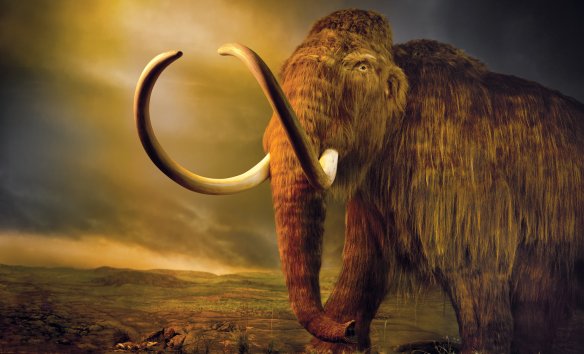
‘Bringing extinct animals back to life is really happening — and it’s going to be very, very cool. Unless it ends up being very, very bad.’ (NYTimes Magazine).

‘Storms lashing the British coast last month revealed a strange new sight off the west coast of Wales, near the village of Borth: the stumps of hundreds of tree trunks, rising out of the sand, like broken teeth.
Could this be part of Cantre’r Gwaelod, a mythical kingdom believed to have disappeared beneath the waves thousands of years ago? Has Wales’s very own Atlantis been found?’ (National Geographic).
‘NASA astronomers nearly doubled the number of alien worlds known to humanity on Wednesday, reporting the discovery of 715 planets located in nearby solar systems.
The discoveries bring the total number of known planets outside our solar system—so-called exoplanets—to roughly 1,700.
Launched in 2009, NASA’s $591 million Kepler Space Telescope has now discovered most of the planets orbiting nearby stars.
“We’ve hit the motherlode; we’ve got a veritable exoplanet bonanza,” says Kepler co-leader Jack Lissauer of NASA’s Ames Research Center in Moffett Field, California.
The newly announced exoplanets reinforce the view that most solar systems around sunlike stars have smaller-size planets.
Most of those planets range in width from Earth-size (on the smaller side) to Neptune-size (on the larger). That’s quite a change from the Jupiter-size planets that were often spotted orbiting nearby stars during the early planet searches that started in 1995.’ (National Geographic).

‘The practice is impractical as well as immoral. It harms prisoners, costs too much, and leads to more crime.’ (Slate.com)

‘Musical preferences have become increasingly uniform across the country, but there are still some pretty strong regional preferences. This map breaks down those distinctive preferences along state lines.
The map is the work of Paul Lamere, who used musical data from 250,000 listeners through streaming service The Echo Nest, where he’s the Director of Developer Platform.
What it’s not, however, is a map of the most popular music in each state, which tends to crossover quite a bit between individual states. It’s the most distinctive music, the music that’s listened to more in that particular state than anywhere else in the rest of the country.’ (io9).

‘Johnathan was on death row when we fell in love. Nothing could have prepared me for witnessing his execution…’ (Salon.com).
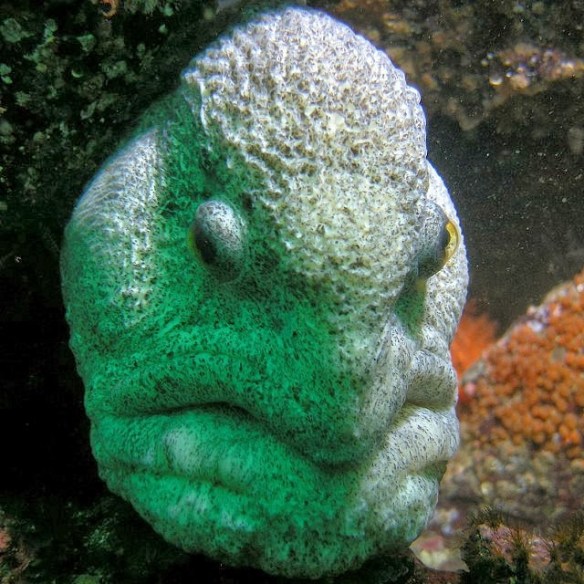
‘Wolf eels are pretty ugly in general, but this one—this one is the one that the rest of the wolf eels make fun of in school.’ (Gizmodo).

‘Out-group homogeneity bias exists in almost all societies, and almost all subgroups of societies. No matter who a person is, or who they are friends with, turn to get them to look at some other group and they’ll say, “They’re all the same.” The other people in someone’s group of friends, co-workers, or acquaintances are wildly different individuals. All other groups are locked in a stultifying or even threatening homogeneity. At its most pernicious, out-group homogeneity bias affects how people look at other races or the people in other countries. Insiders are a group of individuals, each with their own hopes and dreams. The outsiders are a teeming mass, barely distinguishable from one another. In lighter situations, it can be nothing more than a human trait worth a bit of a chuckle. One study of sororities on a college campus found that each sorority thought they were more diverse than every other sorority.’ (io9)

‘A longshot push to get the professional association of US psychologists to consider banning its members from providing aid to military interrogations failed on Friday, but gathered enough support to make supporters optimistic about a follow-on effort in August.
A resolution brought by University of Dallas psychologist Scott Churchill to add the interrogations ban to the agenda of the American Psychological Association’s (APA) legislative body received the support of 53% of representatives to the group’s biannual convention.
That didn’t clear the two-thirds threshold required to add the proposed ban to the agenda for this weekend’s conference. But the simple majority showing prompted Nadine Kaslow, the APA president, to express her openness to adding consideration of the proposed ban to the body’s next meeting.’ (theguardian.com).

We Must Start Treating It Like One of the World’s Deadliest Diseases: ‘A report says loneliness is more deadly than obesity – the challenge now is to help lonely people connect.’ (Alternet).
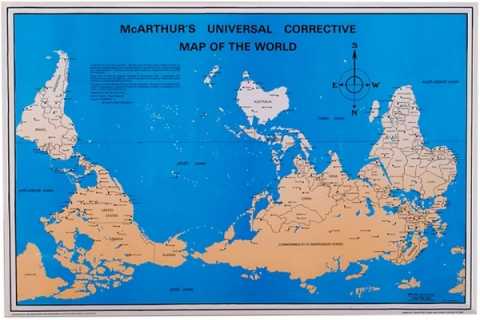
‘Early Egyptian maps show south as up. In medieval European maps, east replaced it. Now north is always on top. Blame Byzantine monks and Majorcan Jews.’ (Al Jazeera America).

‘It was found in Baja California, in the water, scuttling about. It’s an isopod — a many legged, many jointed, bottom-crawler, related to prawns and crabs and it happily eats dead things. Scavengers aren’t that particular about what’s for dinner. When they find it, they eat it.
This particular isopod was big, almost a foot long, weighing over 2 pounds. In 2007, it was taken from Mexican waters and brought to the Toba Aquarium on the east coast of Japan, where it was displayed as “Giant Isopod No. 1.” At Toba, they don’t name their animals Freddy or Hiroto. They give them scientific-ish numbers. No. 1 was the first of eight captive isopods, but it was about to become the most famous animal at the aquarium.’ (Krulwich Wonders… : NPR).

‘People born with Down syndrome have always been considered to be incurably developmentally delayed—until now. In the past few years a number of laboratories have uncovered critical drug targets within disabled chemical pathways in the brain that might be restored with medication. At least two clinical trials are currently studying the effects of such treatments on people with Down syndrome. Now geneticist Roger Reeves of Johns Hopkins University may have stumbled on another drug target—this one with the potential to correct the learning and memory deficits so central to the condition.’ (Salon).

We’re mad because people should be better: “Anger is really a sign of hope — and belief that the world can, and must, be better than it is…” — Alain de Botton (Salon).

‘If the bloodshed in Kiev turns into civil war, the conflict will have a ripple effect across the European Union…’ (Salon)

The skinny on the dairy paradox: ‘It’s enough to make you weep into your skinny latte. The “dairy fat paradox” is the suggestion that if you opt for low-fat versions of dairy products you are more likely to become obese than people who eat full-fat versions.
Two recent studies have added weight to this idea. A Swedish study of 1782 men in the Scandinavian Journal of Primary Health Care says that consumption of full-fat dairy products is correlated with a lower risk of developing central obesity – excessive weight gain around the abdomen. A separate and more recent meta-analysis of 16 relevant studies in the European Journal of Nutrition echoes the weight-gain link.
Jon White asks US nutritionist Walter Willett of Harvard School of Public Health for his views on the evidence…’ (New Scientist).
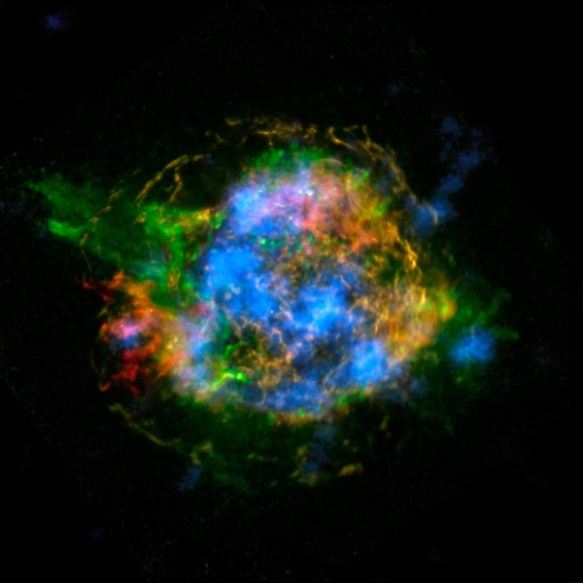
‘For the first time, we have telescopes strong enough to see the radioactivity at the heart of the supernova known as Cas A. What scientists have seen there helps unravel the mystery of how a star dies.’ (CNET).

‘…[I]n the small town of Weesp, in Holland—that bastion of social progressivism—at a dementia-focused living center called De Hogeweyk, aka Dementiavillage, the relationship between patients and their care is serving as a model for the rest of the world.’ (Gizmodo)

‘When the Universe came into being, it was a kind of hot soup of elementary particles—and now scientists believe it could have been rumbling with thunder caused by Higgs boson bubbles.
This video, created by researchers at the University of Helsinki in Finland, shows a visualization of how the early Universe could have formed.’ (Gizmodo)

‘Although Professor Bax’s decoding is still only partial, it has generated a lot of excitement in the world of codebreaking and linguistics because it could prove a crucial breakthrough for an eventual full decipherment.
“My aim in reporting on my findings at this stage is to encourage other linguists to work with me to decode the whole script using the same approach, though it still won’t be easy. That way we can finally understand what the mysterious authors were trying to tell us,” he added.
“But already my research shows conclusively that the manuscript is not a hoax, as some have claimed, and is probably a treatise on nature, perhaps in a Near Eastern or Asian language.” ‘ (beds.ac.uk).


‘…The whole planet is getting warmer, which means that temperature zones are shifting. Warmer areas are expanding, pushing cooler zones closer to the North and South Poles, so that the meadow, the forest, the tundra, the desert, the plains — wherever you live — your ecosystem is beginning to shift. Over the decades, the climate you prefer has started to migrate away from you, which raises an intriguing question: “If I’m standing in a landscape,” asked Stanford ecologist Scott Loarie a few years ago, “how far do I have to travel in order to change my temperature” – to get back to the climate that suits me? Loarie, Chris Field, and their colleagues at the Carnegie Institution for Science gathered all the data they could from climate change studies in order to measure “temperature velocity,” or, as Scott put it in a podcast at the time, “How fast is temperature change sweeping across the Earth’s surface?”
In 2009, they came up with an answer, published in the science journal, Nature. As a global average, they said, temperatures are changing at a rate of 0.42 kilometers — or roughly, a quarter mile a year, which means that if you are standing on a patch of earth, climate zones are moving at a rate (on average) of about 3.8 feet every day.’ (Krulwich Wonders… NPR).

‘Science tells us that taking most vitamins is worthless — but here’s a few that buck the trend…’ — Joseph Stomberg, Smithsonian.com (Salon).
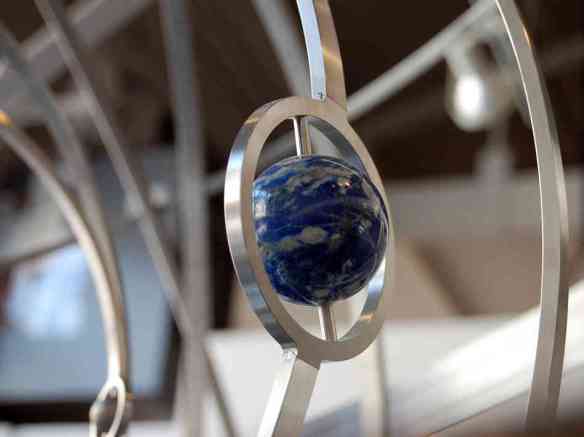
‘…[T]here are some actual events that are actually scheduled to actually happen in the next 1,000 years. They are also, of course, subject to change without notice. So open up your calendars and mark these dates in the coming millennium…’ (The Protojournalist : NPR).

‘When we peer into the fog of the deep future what do we see – human extinction or a future among the stars?’ (Aeon)

‘Scientists used to scan the skies for messages from alien civilisations. Now they go looking for their ruins…’ – Paul Gilster (Aeon)

‘A major earthquake wouldnt just be disastrous in its own right — it could trigger an even deadlier chain reaction.’ (Salon.com).
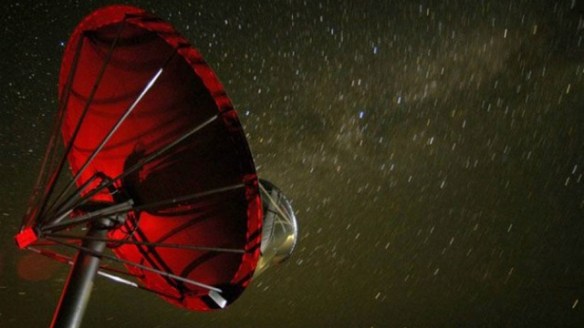
‘If SETI is giving us no evidence of extraterrestrials, maybe it’s because we’re looking on too large a scale. What if, in other words, truly advanced intelligence, having long ago taken to non-biological form, finds ways to maximize technology on the level of the very small? Thus de Garis’ interest in femtotech, a technology at the level of 10-15 meters. The idea is to use the properties of quarks and gluons to compute at this scale, where in terms of sheer processing power the improvement in performance is a factor of a trillion trillion over what we can extrapolate for nanotech.’ (Gizmodo).
 America’s double standard on politicizing the Olympics: ‘I hate my sports mixed with jingoism, but it’s the only way to get them these days in the United States. To be sure, this isn’t exclusively an American problem, but I’m an American viewer watching American television, so it’s my problem, whether I want it to be or not. The sanitization of American politics in sport, like the celebration of militarism, illuminates the profound connection between corporate sponsorship and plutocratic governance.’ (Salon.com).

‘What do Beethoven, David Bowie, Green Day, Mozart, *NSYNC, Pete Seeger, Michael Jackson, Ray Charles, The Beatles, Bob Dylan, Duke Ellington, The Supremes, Rihanna, and many others all have in common? The Andalusian Cadence! Also known as the Diatonic Phrygian Tetrachord–sometimes written as i-bVII-bVI-V (or, in the key of A, the descending sequence A, G, F, E)–this sequence of four notes, this musical pattern, chord progression, or bass line shows up throughout the ages in all styles and genres, underlying music that ranges from sad to joyful, delicate to badass.
David Garland has assembled more than 50 recordings of music from over five centuries to vividly make the case that this four-note progression, the Andalusian Cadence, is the world’s most-used musical sequence.’ (WNYC).


Why Sochi’s “above and beyond” what we’ve seen before: ‘Dave Zirin, author of “Bad Sports,” tells Salon about graft, LGBT activism, Putin and why athletes will defy him…’ (Salon.com).
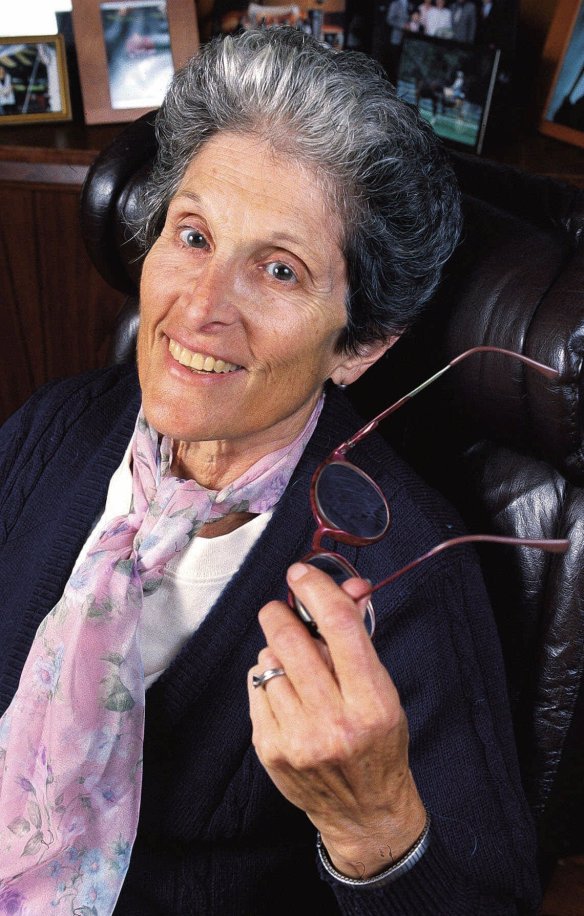
Pulitzer-Winning Poet With a Naturalist’s Precision Dies at 88: ‘Maxine Kumin, a Pulitzer Prize-winning poet whose spare, deceptively simple lines explored some of the most complex aspects of human existence — birth and death, evanescence and renewal, and the events large and small conjoining them all — died on Thursday at her home in Warner, N.H. She was 88.Her death was announced by her daughter Judith Kumin, who said that her mother had been in declining health for the last year and a half.The author of essays, novels, short stories and children’s books as well as poetry, Ms. Kumin pronounced KYOO-min, like the spice was praised by critics for her keen ear for the aural character of verse — the clash and cadence of meter, the ebb and flow of rhyme — and her naturalist’s eye for minute observation.’ (NYTimes obituary)

‘It seems the Loch Ness Monster has left the building — that is, if she was ever in it.
For 18 months there have been no confirmed sightings of the supposed being, said to reside in the second largest body of water in Scotland. It’s the longest period of time without a Nessie sighting in nearly 90 years, the BBC reports.’ (Mashable)

‘If artificial intelligence is the way of the future, then we should probably prepare for the worst… Because who really knows what these little guys are capable of?’ (Mashable)

‘After dimming for the last few decades, the North Star is beginning to shine brightly again. And over the last two centuries, the brightening has become rather dramatic.
“It was unexpected to find,” Scott Engle of Villanova University in Pennsylvania told SPACE.com. Engle investigated the fluctuations of the star over the course of several years, combing through historical records and even turning the gaze of the famed Hubble Space Telescope onto the star.
Scientists have known since the early 20th century that the familiar star was part of a pulsating class known as Cepheid variables; its variations were suspected as early as the mid-1800s. But unlike most Cepheid variables, the pulses of Polaris are very small.
“If it had not been so popular as the North Star, we likely wouldn’t have known it was a Cepheid until modern times,” Engle said. ‘ (Mashable)

‘Researchers from Brigham and Women’s Hospital (BWH) have found that exposure to short wavelength, or blue light, during the biological day directly and immediately improves alertness and performance. These findings are published in the February issue of Sleep.
“Our previous research has shown that blue light is able to improve alertness during the night, but our new data demonstrates that these effects also extend to daytime light exposure,” said Shadab Rahman, PhD, a researcher in BWH’s Division of Sleep Medicine and lead author of this study. “These findings demonstrate that prolonged blue light exposure during the day has an an alerting effect.” ‘ (EurekAlerts).
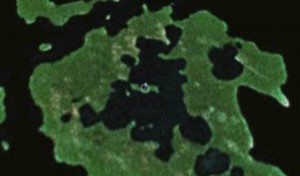
This is an update on a post here from last week. The world truly is fractal:
‘Contained within the borders of Canada are: the world’s largest island in a lake on an island; the world’s largest island in a lake on an island in a lake; and the world’s largest island in a lake on an island in a lake on an island.’ (Boing Boing).

‘So ask your vet why they think the drugs your animal is being given will work. We’re going to have to confront our own psychological biases, here: research shows that people prefer confident advice, sometimes even when we know those giving it have been wrong before. And good answers to these questions will inevitably be hedged with caveats about the small number of studies that have been done, and their limitations. If all you get from your vet is a bland assurance that they’ve been doing this for years, and see great results, get them to talk you through the scientific evidence. If they can’t do so, that should be a warning sign: It might be time to look for another vet.’ (Medium).

‘It happens to nearly everyone: A song — let’s say Abba’s “Waterloo” — is stuck in your head and just won’t go away.
Now science has not one but three ways to dig that dreaded earworm out. And none of them are too surprising, as researchers surveyed 18,000 residents of Finland and England and reported their findings in the journal PLOS One.
Researchers at the University of London found that earworm victims say you can listen to the complete song or sing it; you can just not let it bother you, or you can try using another song to shove out the offending tune.’ (wfaa.com Dallas – Fort Worth).

‘The urge to characterize dogs as like ourselves speaks to our ignorance and to the failure of imagination. As humans who control the arena of judgment, we cannot brook the humility demanded in confronting what we cannot understand, what we do not know.’ (Boston Review).
‘…[T]here is something quite hollow about the ideal of a happy, balanced life—a life unruffled by anxiety… [U]nderneath our quest for vibrant health lurks a tragic kind of discreet death: the demise of everything that is eccentric and messy about human life. Our society sells us the quick fix: If you get a cold, take some decongestants; if you get depressed, take some antidepressants; and if you get anxious, take those tranquilizers. But what are we supposed to take when we lose our character?’ — Mari Ruti, professor of critical theory at the University of Toronto (The Chronicle of Higher Education).

‘Last week, the Pew Research Center released its survey on America’s reading habits. Depending on whom you asked, the survey either exposed the age of illiteracy or revealed the rise of the literati. Those tearing their tunics and pulling their hair bemoaned that 24 percent of adults did not read a single book last year; others sang praises to the heavens that 76 percent of adults still read books.
…
However, the most critical measure of our reading culture is not necessarily the amount read, in whatever format, but the ability to read. Last April, the United States Department of Education and the National Institute of Literacy found that 32 million Americans, or about 14 percent of the population, cannot read, while almost a quarter of American adults read below a fifth-grade level. In fact, literacy rates in America haven’t risen much in two decades.’ (Pacific Standard)

‘Designing your own narcotics online isn’t just easy—it can be legal too. How do we know? We did it.’ (Medium).

‘This image… shows the best places to hide in case of a nuclear blast, part of a recent government guide about what to do in case of a nuclear detonation. It’s scary to see that the US is still actively considering this risk.’ (Sploid).
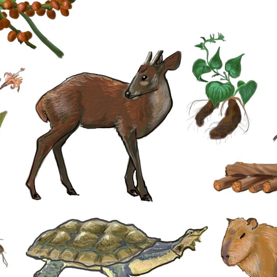
‘We are not biologically identical to our Paleolithic predecessors, nor do we have access to the foods they ate. And deducing dietary guidelines from modern foraging societies is difficult because they vary so much by geography, season and opportunity…’ (Scientific American).

‘Things that can hurt you just by looking at them are science fiction and fantasy, right? Well, not quite.’ (Digg).

‘It all has to do with how aware we are of being perceived. Does that sound complicated? It’s not. Or are we lying?’ (Digg).
‘If you’ve ever tried counting yourself to sleep, it’s unlikely you did it using the square roots of sheep. The square root of a sheep is not something that seems to make much sense. You could, in theory, perform all sorts of arithmetical operations with them: add them, subtract them, multiply them. But it is hard to see why you would want to.
All the odder, then, that this is exactly what physicists do to make sense of reality. Except not with sheep. Their basic numerical building block is a similarly nonsensical concept: the square root of minus 1.
This is not a “real” number you can count and measure stuff with. You can’t work out whether it’s divisible by 2, or less than 10. Yet it is there, everywhere, in the mathematics of our most successful – and supremely bamboozling – theory of the world: quantum theory.
This is a problem, says respected theoretical physicist Bill Wootters of Williams College in Williamstown, Massachusetts – a problem that might be preventing us getting to grips with quantum theory’s mysteries. And he has a solution, albeit one with a price. We can make quantum mechanics work with real numbers, but only if we propose the existence of an entity that makes even Wootters blanch: a universal “bit” of information that interacts with everything else in reality, dictating its quantum behavior.’ (New Scientist).

Okay, so the entire article is interesting, but what fascinated me most was this factoid in this opening paragraph (emphasis added):
‘China has in the past 30 years become the most urbanized country that has ever existed. More than 450 million Chinese — 1 in 25 people on the planet – live in cities. At least 160 Chinese cities have more than 1 million people, compared to nine in the United States. In a decade, the Chinese government plans to resettle 250 million people into new or existing urban areas.’ (Wired).

‘Many buildings taller than six or seven stories need their own method of supplying water pressure to the floors below. There are thus nearly 20,000 of these tanks in the city, supplying drinking water to hundreds of thousands of people.However, perhaps because of their ubiquity and permanence, it turns out the tanks have been relatively immune from safety inspections.
The New York Times took samples from water tanks in 12 buildings, and eight of them tested positive for coliform—an indicator for the presence of “pathogenic organisms of fecal origin.” Five also came back positive with E. coli. Some tanks arent actually closed to the outside, opening them up to squirrel and bird poop—anecdotes about animals and even homeless people living in the space between the water and the container top abound.
Perhaps more upsetting than that relatively small sample size is the fact that almost half of buildings randomly inspected by the health department couldnt even provide proof that they test their tanks for bacteria at all. Many justify these findings by saying the samples are taken from a thick layer of mud and sediment that rests below the intake pipes—meaning that the water that arrives at your sink isnt actually contaminated. But even a basic knowledge of biology disproves that rationale.
Then there are the chemical contaminants, like an epoxy used by tank-building companies—made from a bisphenol A-based polymer otherwise known as BPA…’ (Gizmodo)

‘An ancient hunter-gatherer whose remains were found in a Spanish cave has a genome surprisingly similar to modern humans. The male, who lived 7000 years ago, had blue eyes and a host of immunity genes that were thought to have evolved later.’ (New Scientist).
![//visualpalate.typepad.com/visual_palate/images/street_lights.jpg' cannot be displayed]](http://visualpalate.typepad.com/visual_palate/images/street_lights.jpg "Street lamps, R.I.P.") I did a web search on this phenomenon because it seems to happen to me most times I walk past a certain street light on my street. I mentioned it to a few friends who, of course, thought I was wacky. Then, taking my cue from the fact that it was one particular lamp post, I began to ask several neighbors on my street (yes, I live on a street where I know and talk to my neighbors; in fact, we have block parties). My rational side suspected that it was a defective lamp which cycles on and off (several commenters in the thread to which this post points offered explanations of how this might work with sodium arc lamps) constantly, and that I was guilty of observer bias for remembering, and generalizing from, those times when it went off as I neared or passed it. (By the way, I am talking about this happening when I am walking down the street, not driving, so the speculation that my car headlights were activating the photocell that turns the lamp off does not apply.) But none of my neighbors had noticed this about that, or any other, street light on our street.
I did a web search on this phenomenon because it seems to happen to me most times I walk past a certain street light on my street. I mentioned it to a few friends who, of course, thought I was wacky. Then, taking my cue from the fact that it was one particular lamp post, I began to ask several neighbors on my street (yes, I live on a street where I know and talk to my neighbors; in fact, we have block parties). My rational side suspected that it was a defective lamp which cycles on and off (several commenters in the thread to which this post points offered explanations of how this might work with sodium arc lamps) constantly, and that I was guilty of observer bias for remembering, and generalizing from, those times when it went off as I neared or passed it. (By the way, I am talking about this happening when I am walking down the street, not driving, so the speculation that my car headlights were activating the photocell that turns the lamp off does not apply.) But none of my neighbors had noticed this about that, or any other, street light on our street.
So should I descend to pseudoscience — do I have some psi power going on? I don’t

have to be thinking about turning the lamp off for it to happen; in fact, I often forget about this, especially in the winter when I am not out walking down the street after dark as much, and am only reminded when I notice the light go out. Or do I put out some kind of EM pulse to which that particular street light is sensitive? Some of the commenters suggest we are “electrical beings” and thus can affect electrical circuitry. Certainly an extrapolation, and I have never noticed it with any other light fixtures or other electrical equipment. And, unlike some of the commenters, I don’t notice the light go on again after I pass. But on the other hand, that light is never already off, it seems, before I approach it, or as I drive up my street.

I am in that cognitively dissonant position of being a skeptic but also having a healthy respect for the power of belief. The lamp post on my street goes right to the heart of that dilemma. After reading other people’s beliefs about their ability to interfere with street lights, I realize mine is a weak case, typically affecting a particular lamp which does not go back on after I have passed. To debunk my doubts, though, I suppose I’ve got to go out one nice summer evening and sit under that particular lamp for a couple of hours and assess whether it is cycling on and off. What do you think?
BTW, here is a good Wikipedia discussion of the phenomenon.

‘When the United States decides to recognize a new government, or an existing country changes its name, Leo Dillon and his team at the State Department spring into action.Dillon heads the Geographical Information Unit, which is responsible for ensuring the boundaries and names on government maps reflect U.S. policy. The team also keeps an eye on border skirmishes and territorial disputes throughout the world and makes maps that are used in negotiating treaties and truces. These days, Dillon says, maritime borders are where much of the action is. The recent political squabbling and military posturing between China and Japan over the tiny islands known as Diaoyu in China and Senkaku in Japan is one potentially worrisome case in point.’ (Wired Science).

Is Step into the Void, a new 12,650-foot (3,856-meter) perch in the French Alps, the scariest? (National Geographic).


