
‘Sylvia Poggioli… tells the story for NPR about coffee shops all over Europe that offer caffè sospeso, or suspended coffee. Suspended coffee is when a customer comes in for a cup of coffee and they pay for two so that someone else can have a drink for free. The barista would keep a log, and when someone popped his head in the doorway of the cafe and asked, “Is there anything suspended?” the barista would nod and serve him a cup of coffee … for free. It’s an elegant way to show generosity: an act of charity in which donors and recipients never meet each other, the donor doesn’t show off and the recipient doesn’t have to show gratitude.There is a Coffee Sharing website with a list of all the shops that do Suspended Coffee. And then there’s a coffee shop in Kentucky that offers a similar model, but with a twist. At A Cup of Common Wealth customers can buy a specific drink for a specific person or type of person. Such as “a medium coffee for a a middle school teacher” or “an iced latte for an Alaskan traveler”.’ (Shawn Blanc).
Pig Heart Transplants For Humans Could Be On Their Way

‘About a year ago, scientists grafted genetically modified pigs’ hearts into baboons. And now, the team reports that the baboons and their pig hearts are doing just fine. The engineering grafts haven’t been rejected, and ones like it may be ready for humans with end stage heart failure one day soon.
The biggest challenge with transplants using animal organs (or xenotransplantation) is preventing the hosts from seeing their donor parts as foreign. In the past, organs that haven’t been genetically tweaked last no more than six months in primates before they’re rejected. One of the reasons pigs were chosen for this study is because their anatomy is already compatible with humans; pig valves are already being swapped for human heart valves.
To further help pig parts evade our immune systems, a team from the National Heart, Lung, and Blood Institute (NHLBI) of the U.S. National Institutes of Health added several human genes to the pig genome — while removing (or knocking out) genes that would trigger immune responses in humans…’ (I Fucking Love Science).
Related articles


Chess robots to cause Judgment Day?
![Cover of "The Terminator [Blu-ray]"](https://i0.wp.com/ecx.images-amazon.com/images/I/512CJZQA58L._SL350_.jpg "Cover of \"The Terminator [Blu-ray]\"")
‘Next time you play a computer at chess, think about the implications if you beat it. It could be a very sore loser!
A study just published in the Journal of Experimental & Theoretical Artificial Intelligence reflects upon the growing need for autonomous technology, and suggests that humans should be very careful to prevent future systems from developing anti-social and potentially harmful behaviour.
Modern military and economic pressures require autonomous systems that can react quickly — and without human input. These systems will be required to make rational decisions for themselves.
Researcher Steve Omohundro writes: “When roboticists are asked by nervous onlookers about safety, a common answer is ‘We can always unplug it!’ But imagine this outcome from the chess robot’s point of view. A future in which it is unplugged is a future in which it cannot play or win any games of chess.”
Like a plot from The Terminator movie, we are suddenly faced with the prospect of real threat from autonomous systems unless they are designed very carefully. Like a human being or animal seeking self-preservation, a rational machine could exert the following harmful or anti-social behaviours:
- Self-protection, as exampled above.
- Resource acquisition, through cyber theft, manipulation or domination.
- Improved efficiency, through alternative utilisation of resources.
- Self-improvement, such as removing design constraints if doing so is deemed advantageous.
The study highlights the vulnerability of current autonomous systems to hackers and malfunctions, citing past accidents that have caused multi-billion dollars’ worth of damage, or loss of human life. Unfortunately, the task of designing more rational systems that can safeguard against the malfunctions that occurred in these accidents is a more complex task that is immediately apparent:
“Harmful systems might at first appear to be harder to design or less powerful than safe systems. Unfortunately, the opposite is the case. Most simple utility functions will cause harmful behaviour and it is easy to design simple utility functions that would be extremely harmful.” ‘ (ScienceDaily, with thanks to abby)
Related articles


Seizing a Cell Phone Incident to Arrest

The Supreme Court heard arguments on the issue of warrantless cell phone searches today. Here’s an elegant proposed solution.
Adam M. Gershowitz: ‘Courts are deeply divided on the question of whether police can search a cell phone incident to arrest without a warrant. This essay argues that the Supreme Court should not authorize warrantless cell phone searches. However, the Court should allow law enforcement to seize cell phones without a warrant and immobilize the devices until a magistrate determines whether to issue a warrant. While a cell phone is in police custody, there are three ways for law enforcement to preserve the data and protect against remote destruction: (1) Police can use a data extraction device to download a copy of the phone’s data; (2) The phone can be placed in an inexpensive bag called a Faraday cage that isolates the phone from outside communication and prevents remote wiping of the contents; or (3) Police can simply wrap the phone in aluminum foil to create the same protection as a Faraday cage at virtually no cost. Any of these methods will protect against remote destruction of evidence in almost all cases. And there is longstanding precedent to support a regime of warrantless seizures while a warrant request is pending. Allowing warrantless seizures and isolation of cell phones strikes a balance between the competing concerns of cell phone privacy and the need for police to preserve evidence.’ (SSRN).
Related articles


How Many Things Are There?
‘There aren’t enough humans on Earth to fill the Grand Canyon, and in a lifetime you don’t produce enough saliva to even fill a swimming pool. That suggests that most things around us are countable or measurable: so how many things are there?
That question is posed and—kinda—answered in this video by Vsauce. First, though, we need to answer an important question: what counts as a thing, anyway?’ (Gizmodo)
Deadliest killer animal

‘This little bastard is the deadliest animal in the world, with an estimated 750,000 human deaths every year. According to this great visualization posted by Bill Gates, mosquitoes kill 163,780 more humans than all the other “dangerous” animals combined, including sharks, snakes, and humans—the second deadliest animal. In fact, sharks and wolves’ kills—so feared by humans—are absolutely ridiculous.’
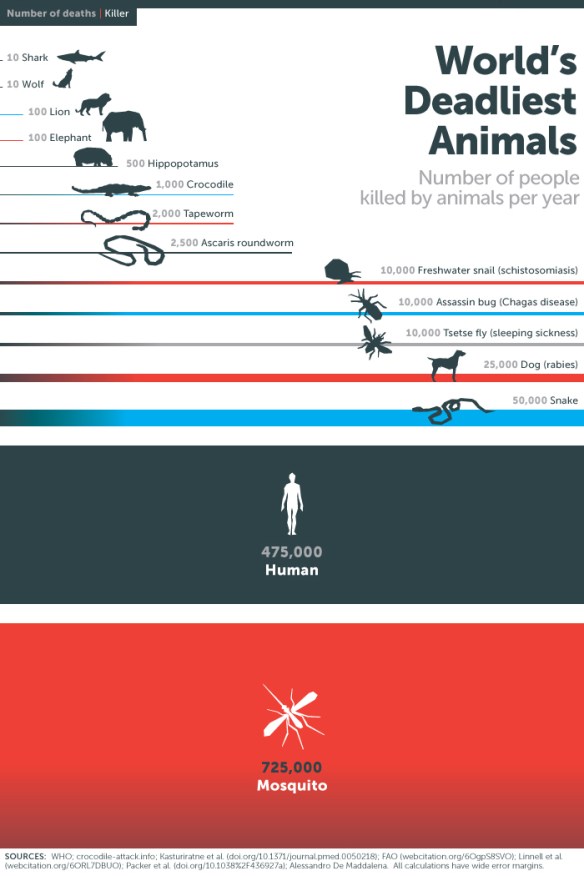
Radio Lab recently had a piece speculating about the implications — turns out they are pretty complex — of exterminating all the mosquitoes in the world. Worth a listen.
This creek divides the US connecting the Atlantic and Pacific oceans

‘The Panama Canal is not the only water line connecting the Atlantic and Pacific Oceans. There’s a place in Wyoming—deep in the Teton Wilderness Area of the Bridger-Teton National Forest—in which a creek splits in two. Like the canal, this creek connects the two oceans dividing North America in two parts.

Yes. You read that right: North America is divided in two parts by a single water line that—no matter how hard you try not to—you will have to cross to go from North to South and vice versa.’ (Sploid). I find this pretty amazing. Would like to trek to that point.
Unintended Consequence of America’s Barbaric Support of Capital Punishment

Execution Could Kill Americans’ Access to Key Anesthetic: ‘Next month the state of Missouri is scheduled to execute convicted murderer Allen Nicklasson by overdosing him with propofol, a German anesthetic. Late last week, the European Union announced that the Missouri execution could trigger export controls on the drug. European Union law prohibits export of products that can be used for capital punishment. If export controls kick in, they could block American hospitals’ ability to purchase propofol, which is used in as many as 80 percent of American medical procedures requiring general anethesia.
The drug’s producer, the pharmaceutical company Fresenius Kabi, announced that it has unilaterally blocked distribution of the drug to American correctional systems. However, the E.U. regulations would go further than the private company’s decision.’ (Pacific Standard)
A Star As Cold As Ice

‘A very strange object called WISE J085510.83-071442.5 lies just 7.2 light-years from the earth. Discovered by the Wide-field Infrared Survey Explorer (WISE), it is nominally one of those not-quite-planets-not-quite-stars known as a brown dwarf. Because they are so much smaller and cooler than stars, brown dwarfs appear red and faint. But astronomer Kevin Luhman noticed that WISE J085510.83-071442.5 was very red and very faint…partly because it is small—perhaps only 2 to 10 times the mass of Jupiter—and partly because it is so cold. It’s temperature, Luhman found, is only about 9° F (-13° C). That’s well below the freezing point of water. In other words, the brown dwarf is literally ice cold. The fact that it is so cold is a clue to its age. If it started out at a few thousand degrees it would have taken somewhere between 1 and 10 billion years to have cooled to its present temperature.
It may well be that instead of being a brown dwarf, this object may in reality be one of the half dozen or so mysterious rogue planets, the first of which was first observed in 2010. These are worlds that, as the result of some catastrophe, were ejected from their home systems and now orbit the galaxy directly, as our sun does…’ (io9).
Related articles


Travel through the Monkey Head Nebula in this new Hubble visualization

‘A belated happy birthday to the Hubble Space Telescope: Our favorite source of wonder and joy was 24 years old on April 24, and the Hubble site celebrated it with this spectacular visualization of the Monkey Head Nebula.
NGC 2174 is “a star-forming region in which bright, newborn stars near the center of the nebula illuminate the surrounding gas with energetic radiation. This radiation, along with strong stellar winds, erodes away the lower density gas. Pockets of higher density gas resist this erosion, and form pillars and peaks along the inner edge of the roughly circular cloud.” ‘ (Sploid).
The ‘Ten Best Sentences’ in literature: do you agree?

‘Editors at The American Scholar have published a list of what they believe to be the “Ten Best Sentences” from literature. There are more suggestions sent in from their readers. [And]… [h]ere’s Roy Peter Clark at Poynter.org, on why they’re so great.’ (Boing Boing).
Related articles


Kenya’s new drone program could put a virtual end to poaching

‘In a pilot, the amazingly effective strategy reduced poaching by 96 percent.’ (Salon.com).
We Need Online Alter Egos Now More Than Ever

‘Insisting that people use their real names online to prevent trolling and ensure civility ignores the fact that using real names online is quite different than using them in person. In the physical world, space and time separate facets of our lives, providing everyday privacy. Even though you use your real name in conversations you have in person with your podiatrist or pastor, those conversations and opinions are not accessible to your co-workers and neighbors. Online, however, … words persist forever, in vast searchable databases. Anything you say or do using your real name is permanently attached to it.’ — Judith Donath, a fellow at the Berkman Center for Internet and Society at Harvard and is the author of “The Social Machine, Design for Living Online” (WIRED).
Related articles


Who Are the Most Pernicious Thinkers?

A List of Five Bad Western Philosophers: ‘Over at his blog Leiter Reports, UC Chicago professor of philosophy Brian Leiter is currently conducting a very interesting poll, asking his readers to rank the 25 philosophers of “the modern era” (the last 200 years) who “have had the most pernicious influence on philosophy.” The pool of candidates comes from an earlier survey of influential philosophers, and Leiter has imposed some conditions on his respondents, asking that they only rank philosophers they have read, and only include “serious philosophers”–”no charlatans like Derrida or amateurs like Rand.” While I personally wince at Leiter’s Derrida jab (and cheer his exclusion of Rand), I think his question may be a little too academic, his field perhaps too narrow.
But the polemical idea is so compelling that I felt it worth adopting for a broader informal survey: contra Leiter, I’ve ranked five philosophers who I think have had a most pernicious influence on the world at large. I’m limiting my own choices to Western philosophers, with which I’m most familiar, though obviously by my first choice, you can tell I’ve expanded the temporal parameters. And in sporting listicle fashion, I’ve not only made a ranking, but I’ve blurbed each of my choices, inspired by this fun Neatorama post, “9 Bad Boys of Philosophy.” ‘ (Open Culture).
5 Ways to Help the Sherpas of Everest

Here are some ways to assist Sherpa families, including those affected by the avalanche. (National Geographic)
The 10 Weirdest Calculations You Can Make Online Right Now

‘Chances are, you’ve used one of the many useful calculating tools available online: How much would a monthly mortgage cost me with today’s interest rates? What time is it on another continent? But there are far more exotic and weird calculators on the Internet. Here are ten of the most unusual.’ (io9).
Beautiful Interactive Barcelona Map

‘Barcelona is one of Europe’s most vibrant cities. Tourists flock here for the superb restaurants, lively nightlife, and a chance to check out the stunningly creative architecture of Antoni Gaudí. But the city’s historical and cultural roots run deep, and a new interactive map aims to make it easier for visitors and locals alike to explore the city’s landmarks.’ (WIRED).

Darn, wish I’d heard of this before I travelled to Barcelona last month! As always, when I travel, I do my research, but this would have made the process much easier. How do you prepare yourself, psychogeographically, for your destinations?
Related articles


A Map of Every Nuke-Scale Asteroid Strike From the Last Decade

‘Though dinosaur-killing impacts are rare, large asteroids routinely hit the Earth. In the visualization…, you can see the location of 26 space rocks that slammed into our planet between 2000 and 2013, each releasing energy equivalent to that of some of our most powerful nuclear weapons. The video comes from the B612 Foundation, an organization that wants to build and launch a telescope that would spot civilization-ending asteroids to give humans a heads up in trying to deflect them.’ (WIRED)
Related articles


U.S. ground troops going to Poland

Polish Defense Minister Tomasz Siemoniak, right
‘Poland and the United States will announce next week the deployment of U.S. ground forces to Poland as part of an expansion of NATO presence in Central and Eastern Europe in response to events in Ukraine. That was the word from Poland’s defense minister, Tomasz Siemoniak, who visited The Post Friday after meeting with Defense Secretary Chuck Hagel at the Pentagon on Thursday.
Siemoniak said the decision has been made on a political level and that military planners are working out details. There will also be intensified cooperation in air defense, special forces, cyberdefense and other areas. Poland will play a leading regional role, “under U.S. patronage,” he said.’ (Washington Post)
Related articles


This Cute Little Guy Desperately Wants To Poison You

‘…It’s one of the few venomous mammals on Earth, and perhaps the only one that injects venom exactly the way a snake does.
The particular solenodon pictured above is a Hispaniolan solenodon, found in Haiti and the Dominican Republic. Its cousin, the Cuban solenodon, was thought to be extinct up to about two years ago, when it was rediscovered after some reported sitings an a ten year search. That might be good news for conservationists, who are thrilled that an animal that survived the comet that wiped out the dinosaurs hasn’t been killed off by cats and logging. Other people might not be so pleased.
The solenodon looks like a big shrew, and is in the same order as shrews, though not the same family. Like shrews, it has venom. Unlike shrew venom, which doesn’t kill its prey, solenodon venom can kill small animals within a few hours….’ (io9).
Related articles


Moonstruck

‘The lunar phases influence all sorts of creatures from cheetahs to eagle owls. Does the moon tug on human behaviour too?’ (Aeon).
Related articles


Delightful Poems About Dogs from E.B. White

‘E. B. White on Dogs is an absolute treat in its entirety — sometimes soulful, sometimes funny, always unmistakably Whitean in its warm irreverence and sensitive satire. Complement it with Mary Oliver’s magnificent Dogs Songs and John Updike’s harrowing poem on the loss of his dog, then lift your spirits with The Big New Yorker Book of Dogs and Jane Goodall’s charming children’s book about the healing power of pet love.’
DOG AROUND THE BLOCK
Dog around the block, sniff,
Hydrant sniffing, corner, grating,
Sniffing, always, starting forward,
Backward, dragging, sniffing backward,
Leash at taut, leash at dangle,
Leash in people’s feet entangle—
Sniffing dog, apprised of smellings,
Love of life, and fronts of dwellings,
Meeting enemies,
Loving old acquaintance, sniff,
Sniffing hydrant for reminders,
Leg against the wall, raise,
Leaving grating, corner greeting,
Chance for meeting, sniff, meeting,
Meeting, telling, news of smelling,
Nose to tail, tail to nose,
Rigid, careful, pose,
Liking, partly liking, hating,
Then another hydrant, grating,
Leash at taut, leash at dangle,
Tangle, sniff, untangle,
Dog around the block, sniff.
Related articles


GOP’s super-secret actual road map for winning more races (Hint: It’s not the one released to the public)

‘…[R]ather than adapting their policy positions to a changing nation, Republicans have simply adopted cynical tactics that work to minimize the electoral power of these demographic groups at every turn. If the GOP can’t convince minorities and young people to vote against their own interests, perhaps they can prevent the poor, the young, and minorities from voting in the first place. After all, as conservative columnists have noted with some glee, an election using old antebellum rules, where only white men could vote, would have led to a landslide for Mitt Romney! (And white Christians are the only “real Americans,” so this exit-polling proves that Romney deserved to win or something.)’ (Salon.com).
Related articles


5 ways American policies make us lonely, anxious and antisocial
‘With mountains of knowledge, why aren’t we better at setting up our society in a way that helps us to prosper? Isn’t that the point of having a society in the first place? Unfortunately, ours is increasingly designed by politicians indebted to the 1 percent for the express purpose of enhancing and maintaining the power of the very top rung. The rest of us are left to cope with a rocky, competitive life path that leaves us isolated and exhausted. Inequality is stunting our growth as human beings.
We are doing an especially poor job at setting the conditions for our development as social beings. Recent research in Scientific American shows that today’s college students are less empathetic than generations past. We are less involved in our communities and less fulfilled in our jobs, our families, and our relationships. As the great psychologists have taught us, it is accomplishment in these areas that give us the feeling of significance as human beings. Yet at each stage of life development, we have adopted policies, practices, and habits of mind that thwart us and cultivate anxiety, loneliness and antisocial behavior.’ (Salon.com).
Related articles


7 horrific crimes that aren’t crimes any more for America’s most powerful

‘…[T]he members of the national security state, unlike the rest of us, exist in what might be called “post-legal” America. They know that, no matter how heinous the crime, they will not be brought to justice for it. The list of potentially serious criminal acts for which no one has had to take responsibility in a court of law is long, and never tabulated in one place. Consider this, then, an initial run-down on seven of the most obvious crimes and misdemeanors of this era for which no one has been held accountable:
- Kidnapping…
- Torture…
- The destruction of evidence of a crime…
- The planning of an extralegal prison system…
- The killing of detainees in that extralegal system…
- Assassination…
- Perjury before Congress…
Mind you, the above seven categories don’t even take into account the sort of warrantless surveillance of Americans that should have put someone in a court of law, or the ways in which various warrior corporations overbilled or cheated the government in its war zones, or the ways private contractors “ran wild” in those same zones. Even relatively low-level crimes by minor figures in the national security state have normally not been criminalized. Take, for example, the private surveillance of and cyberstalking of “love interests,” or “LOVEINT,” by NSA employees using government surveillance systems. (Salon.com).
Related articles


It’s the End of the World as We Know It . . .
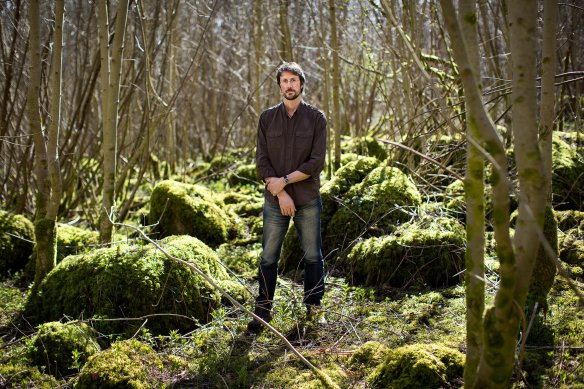
. . . and He Feels Fine: A portrait of Paul Kingsnorth and the Dark Mountain Project, a.k.a. the “crazy collapsitarians.”
‘For Kingsnorth, the notion that technology will stave off the most catastrophic effects of global warming is not just wrong, it’s repellent — a distortion of the proper relationship between humans and the natural world and evidence that in the throes of crisis, many environmentalists have abandoned the principle that “nature has some intrinsic, inherent value beyond the instrumental.” If we lose sight of that ideal in the name of saving civilization, he argues, if we allow ourselves to erect wind farms on every mountain and solar arrays in every desert, we will be accepting a Faustian bargain.’
(NYTimes.com via abby).
Related articles


Chart-Busters?
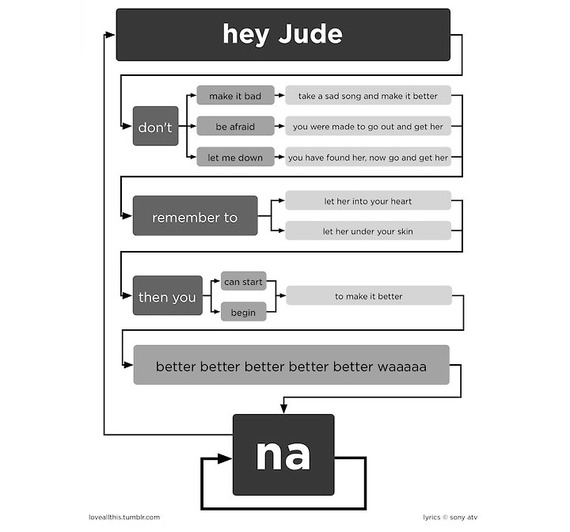
Robinson Meyer and Alex Madrigal face off in The Atlantic about whether songs should be flow-charted.
Related articles


Statue Of A Homeless Jesus Startles A Wealthy Community

‘A new religious statue in the town of Davidson, N.C., is unlike anything you might see in church. The statue depicts Jesus as a vagrant sleeping on a park bench. St. Alban’s Episcopal Church installed the homeless Jesus statue on its property in the middle of an upscale neighborhood filled with well-kept town homes. Jesus is huddled under a blanket with his face and hands obscured; only the crucifixion wounds on his uncovered feet give him away.
The reaction was immediate…’ (NPR). Happy Easter!
We are not #BostonStrong
 Stop turning tragedies into slogans! ‘At a ceremony to honor the victims of that tragedy, Vice President Biden said that we Bostonians are “living proof that America can never be defeated. So much has been taken from you, but you have never given up.”
America’s eternal invincibility aside, it’s undeniable that the victims of last year’s bombings show impressive resilience and strength in coping with such a disgusting day.
But what’s so strong about the rest of us?
…While intended as shows of solidarity, the actual effect of such catchphrases could be much more problematic.’ (Salon.com).
Annals of the Age of Depravity (cont’d.)

The dark world of animal “crush” films: ‘A Florida arrest reveals a disturbing genre — and how hard it is to punish the perpetrators…’ (Salon.com).
Related articles


Paul Krugman: U.S. is starting to “set new records” for inequality
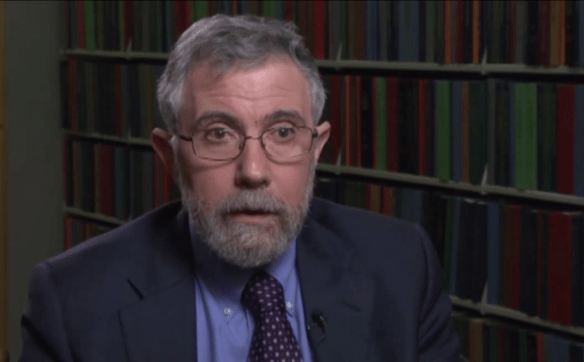
‘The New York Times columnist and award-winning economist says America may be the most unequal society ever.’ (Salon.com).
What We Know About the First Earth-Sized Planet In a Habitable Zone

‘When you’re looking for alien life, the best place to look is somewhere like Earth; the only place we know of that life exists. Kepler-186f, the first Earth-sized planet to be found in the habitable zone of a star, is the best bet we’ve ever found.
We’d heard details about this find a little while back, but now NASA has come out with the full announcement which adds more juicy information:
Kepler-186f is 1.1 times the size of Earth. Due to its size and location, it’s likely to be rocky. It’s (probably) not some gaseous ball. It’s 500 lightyears away from Earth. Scientists hypothesize it is at least several billion years old.
Its years are 130 days long and it gets one-third the energy from its star that Earth gets from the sun. So it’s chilly. On the chillest end of the habitable zone. At noon on Kepler-186f, its sun would be about as bright as ours is an hour before sunset. It has four brother planets, though none of them are habitable. They fly around their sun once every four, seven, 13 and 22 days, so they are way too close and too hot for life.’ (io9)

Want To Spot Earth’s First Cousin? Look For the Swan in the Sky
‘The Kepler-186 system is in the constellation Cygnus, which stargazers will know as the easy-to-spot swan in the northern hemisphere’s summertime sky. From here on Earth, some 500 light years away, we can’t see Kepler-186f at all. But you can still look in its direction. You won’t see how awesome Cygnus is by just looking up. Molecular dust clouds in the region form a veil called the Great Rift, which makes it hard to see anything more than a hint of what’s happening there. And, oh, is it happening. Cygnus is home to the Kepler system and our newly discovered first-cousin planet, but the constellation is also known for being a major star factory.’ (The Atlantic).
Nobody lives here:
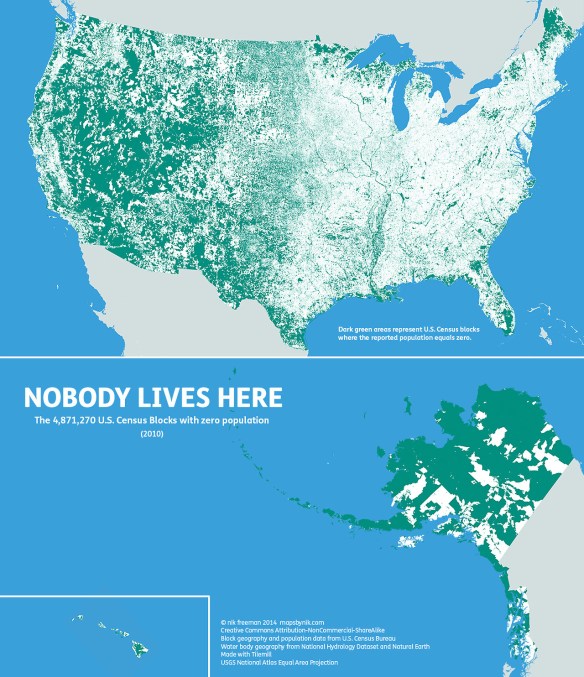
The nearly 5 million Census Blocks with zero population:
‘A Block is the smallest area unit used by the U.S. Census Bureau for tabulating statistics. As of the 2010 census, the United States consists of 11,078,300 Census Blocks. Of them, 4,871,270 blocks totaling 4.61 million square kilometers were reported to have no population living inside them. Despite having a population of more than 310 million people, 47 percent of the USA remains unoccupied.
Green shading indicates unoccupied Census Blocks. A single inhabitant is enough to omit a block from shading…’ (mapsbynik).
HOWTO equip your drug-dealing operation

‘Buy one part of the set — say, an AWS-100 digital scale — and Amazon’s “what other customers bought” feature will tell you the rest you need.’ (Boing Boing).
Should Dzhokhar Tsarnaev be Executed?
‘…[A] quick glance at the history of the federal government and capital punishment should provide a clear answer: no.’ — Jonathan Zimmerman, professor of education and history at New York University Salon.com).
10 most endangered (and unique) birds on the planet

‘Some are clumsy (kakopo), others majestic (Christmas Island frigatebird), all are fighting for their survival.’ (Salon.com).
Wow, scientists reveal a new moon forming on the edge of Saturn’s rings

‘For the first time in history, scientists are witnessing the formation of a new moon in our solar system. NASA’s Cassini spacecraft has detected a new moon forming in the edge of Saturn’s rings. Astronomers around the world are amazed about this incredible find, which they have named Peggy.*
It’s really exciting to see this happening in real time. Carl Murray—lead author of the paper describing Peggy—says that “we have not seen anything like this before. We may be looking at the act of birth, where this object is just leaving the rings and heading off to be a moon in its own right.” According to Cassini Project Scientist Linda Spilker at the Jet Propulsion Laboratory in Pasadena, California, “witnessing the possible birth of a tiny moon is an exciting, unexpected event.” ‘ (Gizmodo).
Administration Acknowledges that Obama Lets N.S.A. Exploit Some Internet Flaws,

‘Stepping into a heated debate within the nation’s intelligence agencies, President Obama has decided that when the National Security Agency discovers major flaws in Internet security, it should — in most circumstances — reveal them to assure that they will be fixed, rather than keep mum so that the flaws can be used in espionage or cyberattacks, senior administration officials said Saturday.
But Mr. Obama carved a broad exception for “a clear national security or law enforcement need,” the officials said, a loophole that is likely to allow the N.S.A. to continue to exploit security flaws both to crack encryption on the Internet and to design cyberweapons.’ (NYTimes).
The Oldest Living Things in the World

A Decade-Long Photographic Masterpiece at the Intersection of Art, Science, and Philosophy: ‘For nearly a decade, Brooklyn-based artist, photographer, and Guggenheim Fellow Rachel Sussman has been traveling the globe to discover and document its oldest organisms — living things over 2,000 years of age. Her breathtaking photographs and illuminating essays are now collected in The Oldest Living Things in the World (public library) — beautiful and powerful work at the intersection of fine art, science, and philosophy, spanning seven continents and exploring issues of deep time, permanence and impermanence, and the interconnectedness of life.’ (Brain Pickings).
Related articles


Boston’s New Edgar Allan Poe Statue Is Going to Be Epic

‘This is a clay model of the final design for the life-size statue of Edgar Allan Poe that will be unveiled on October 5, 2014 at 2pm, at the corner of Boylston Street and Charles Street South in Boston, which is also named “Edgar Allan Poe Square.” It’s got Poe with his coat flapping in the wind, a suitcase, and raven heralding his arrival. Stefanie Rocknak’s design was selected out 265 other artists from 42 states and 13 countries with the proposal for “Poe Returning to Boston”…’ (io9).
How To Watch This Week’s Total Lunar Eclipse
‘
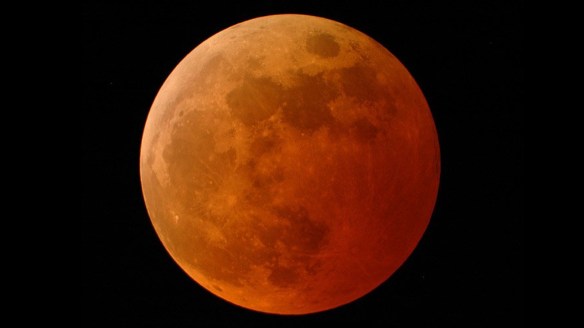
Late Monday night/early Tuesday morning will be an incredible time for skygazing. Not only is Mars bigger and brighter than it’s been in more than six years, you’ll also be able to witness the first total lunar eclipse of 2014. Here’s how to watch.’ (io9)
‘You’ve never seen sci-fi like this’

‘Under the Skin’ review: ‘Starring Scarlett Johansson as an alien creature trolling the streets for human prey, it’s a mesmerizing and haunting film that refuses to concern itself with traditional genre or even narrative conventions. The result is an unforgettable piece of art-house sci-fi that may alienate audiences used to the hyperkinetic spectacle that dominates most screens, but those that are able to slip under its spell will enjoy one of the most striking theatrical experiences this year.’ (The Verge).
A Pyramid in the Middle of Nowhere Built To Track the End of the World

‘A huge pyramid in the middle of nowhere tracking the end of the world on radar, just an abstract geometric shape beneath the sky without a human being in sight: it could be the opening scene of an apocalyptic science fiction film, but it’s just the U.S. military going about its business, building vast and other-worldly architectural structures that the civilian world only rarely sees.
The Library of Congress has an extraordinary set of images documenting the Stanley R. Mickelsen Safeguard Complex in Cavalier County, North Dakota, showing it in various states of construction and completion. And the photos are awesome.’ (Gizmodo).
“You ventured far with your torch”

Hondros (left) and friends
Here is a tribute to a great man, photojournalist Chris Hondros, killed this week in Libya (Committee to Protect Journalists).
Under the Influence

How did enlightenment thinkers distinguish between ‘drugs’ and ‘medicines’? And how should we? ‘…[T]he same novel sensory effects that made substances such as tobacco, opium and cannabis desirable to global consumers also made them fascinating for the earliest experimental scientists. But what did those drugs mean – for them, and for us? How did our modern binary between ‘illicit drug’ and ‘valuable medicine’ come into being?’ – Benjamin Breen (Aeon).
Crying baby seal found lost deep in a Swedish city

‘Some people found a baby seal crying for attention far away from the open sea, deep in the city of Sundsvall, in eastern Sweden. Apparently, instead of calling some emergency service, they just filmed her with their cellphones. A sad sign of the times, I guess…’ (Gizmodo)
Watch freaky oarfish frolic in the Sea of Cortez

‘Oarfish are freaky sea dragons. …[T]he fish usually live far down in the ocean — at depths up to 3000 feet. It’s relatively rare to catch them at a depth where humans have easy access. In this video, you can see tourists with a Shedd Aquarium travel program interacting with a couple of 15-feet-long oarfish in the Sea of Cortez. Definitely stick around to about 1:40 in the video, where you get some stunning underwater close ups of the oarfish.’ (Boing Boing).
Is This the Happiest Photo Ever Made?

‘Most of us have come upon it many, many times throughout our lives. But when was the last time any of us really saw it? Like so many of Alfred Eisenstaedt’s most storied photographs, this one flirts with sentimentality — but avoids that ignoble fate by virtue of its energy, and its immediacy. This is not a depiction of manufactured emotion, but a masterfully framed instant of authentic, explosive spirit.’ (LIFE.com, via kottke).
Global Rankings Study Depicts an America in Warp Speed Decline

‘From access to healthcare and education, gender equality, attitudes toward immigrants and minorities, the U.S. looks like a second-rate nation…’ (Alternet).
LHC spots particle that may be new form of matter

‘A long-sought fugitive has been caught at the world’s largest particle accelerator. Experiments at the Large Hadron Collider confirm that a provocative particle called Z(4430) actually exists – and it may be the strongest evidence yet for a new form of matter called a tetraquark.
Quarks are subatomic particles that are the fundamental building blocks of matter. They are known to exist either in groups of two, forming short-lived mesons, or in threes, forming the protons and neutrons that make up atomic nuclei. Researchers have suspected for decades that quarks might also bind together in quartets, forming tetraquarks, but they have not been able to do the complicated quantum calculations necessary to test the idea.’ (New Scientist).
Related articles


Has the NSA Been Using the Heartbleed Bug as an Internet Peephole?
‘Though security vulnerabilities come and go, this one is deemed catastrophic because it’s at the core of SSL, the encryption protocol so many have trusted to protect their data. “It really is the worst and most widespread vulnerability in SSL that has come out,” says Matt Blaze, cryptographer and computer security professor at the University of Pennsylvania. But the bug is also unusually worrisome because it could possibly be used by hackers to steal your usernames and passwords — for sensitive services like banking, ecommerce, and web-based email — and by spy agencies to steal the private keys that vulnerable web sites use to encrypt your traffic to them.’ (WIRED).
A living organ has been regenerated for the first time

‘Scientists have successfully regenerated an elderly organ in a mouse using a drug that targets gene activity. Get excited.’ (Science Alert).
David Foster Wallace: Five Common Word Usage Mistakes

David Foster Wallace (Photo credit: Steve Rhodes)
Do you care about the quality of your writing? ‘Here is DFW’s 2002 Pomona College handout on five common word usage mistakes for his advanced fiction writing class.’ (Farnam Street via kottke)
Related articles


America Isn’t Ready for Colbert to Replace Letterman

‘First of all, congratulations to Colbert. Second of all, this is not gonna go well.’ (WIRED).
Should Gay-Marriage Opponents Be Treated Like Racists?

Conor Friedersdorf: ‘Opposition to gay marriage can be rooted in the insidious belief that gays are inferior, but it’s also commonly rooted in the much-less-problematic belief that marriage is a procreative institution, not one meant to join couples for love and companionship alone.
That’s why it’s wrong to stigmatize all opponents of gay marriage as bigots, even if (like me) you’d find unobjectionable the forced resignation of a CEO who used anti-gay slurs, or declared that gays are inferior humans, or sought to deny gays even benefits unrelated to the definition of marriage, like the ability to be on a life partner‘s insurance. My position has always been that civil unions are not enough—that gays ought to have full marriage equality. But the pro-civil-union, anti-gay-marriage faction is instructive. Opposition to interracial marriage never included a large contingency that was happy to endorse the legality of black men and white women having sex with one another, living together, raising children together, and sharing domestic-partner benefits as long as they didn’t call it a marriage.
Does that clarify the inaptness of the comparison?’ (The Atlantic).
Related articles


Is the Dog Poo Problem Solvable?

‘The results of a new comprehensive feces audit of eight well-trodden dog-walking thoroughfares and a national survey of dog walkers in the United Kingdom suggest the problem may be much more complicated than imagined.’ (Pacific Standard)
Getting High on HIV Medication

‘In 1998, the antiretroviral drug efavirenz was approved for treatment of HIV infection. Though the drug was highly effective, patients soon began to report bizarre dreams, hallucinations, and feelings of unreality. When South African tabloids started to run stories of efavirenz-motivated rapes and robberies, scientists began to seriously study how efavirenz might produce these unexpected hallucinogenic effects. Hamilton Morris travels to South Africa to interview efavirenz users and dealers and study how the life-saving medicine became part of a dangerous cocktail called “nyaope.” ‘ (VICE).
Related articles


The truth about little white lies

Why they’re actually more dangerous than you think: “By lying, we deny our friends access to reality—and their resulting ignorance often harms them in ways we did not anticipate. Our friends may act on our falsehoods, or fail to solve problems that could have been solved only on the basis of good information.” — Sam Harris in his 2013 book Lying (Four Elephants Press).
…By how much do we lie? About 10 percent, says behavioral economist Dan Ariely in his 2012 book The Honest Truth about Dishonesty (Harper)…. Lying, Ariely says, is not the result of a cost-benefit analysis. Instead it is a form of self-deception in which small lies allow us to dial up our self-image and still retain the perception of being an honest person. Big lies do not…’ (Salon.com).
Annals of Emerging Disease

“One of the most challenging outbreaks we have ever faced”: ‘Over 100 people in Guinea and Liberia have died in West Africa’s Ebola outbreak, the World Health Organization said Tuesday, calling it “one of the most challenging Ebola outbreaks that we have ever faced.”
In Guinea, there have been 157 suspected cases, 67 of which have been confirmed, and 101 deaths. In neighboring Liberia, there have been 21 cases, of which 5 have been confirmed, along with 10 deaths. There have been no confirmed cases yet in Sierra Leona, Ghana or Mali, although Sierra Leone has two “probable” cases. Of Mali’s nine suspected cases, the results back so far, from two, have been negative.’ (Salon.com).
Reasons London Is the Worst Place Ever

‘Dictionary dude Samuel Johnson famously said that when a man tires of London, he’s tired of life. You might have heard a British cabbie who now lives in the suburbs relay that snippet to you. What the pocket-wisdom smart-asses who quote that to you every time you complain about airborne death particles and ATMs that charge you three dollars to access your own money don’t realize, is that while Johnson was a clever guy, he spent his life afflicted with Tourette’s syndrome. Which means your man probably spent as much time spouting involuntary bullshit as he did snappy witticisms.
The thing is, most people in London are tired of life. You’ve only got to witness the queues in the Westfield multistorey or the reaction to a crying baby on the Tube to realize that this is a city that exists permanently at the end of its rope. People can live in London and be simultaneously tired of it, because—unlike in Mr. Johnson’s time—London is no longer a few cobbled streets and a big old prison. It’s the last metropolis in a sinking country on a starving continent, an island within an island oozing out into the Home Counties like an unstoppable concrete oil spill.’ (VICE United States).
Reasons San Francisco Is the Worst Place Ever
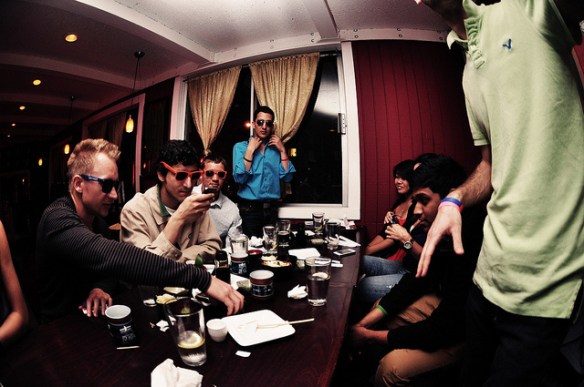
‘In New York, Wall Street people know they’re pricks. In Los Angeles, Hollywood people are too stupid to know they’re pricks. In San Francisco, tech bros think they’re saving the world with their crackpot schemes aka “start-ups.” They’re the fucking worst.’ (VICE United States).
A ’64 Quake Still Reverberates
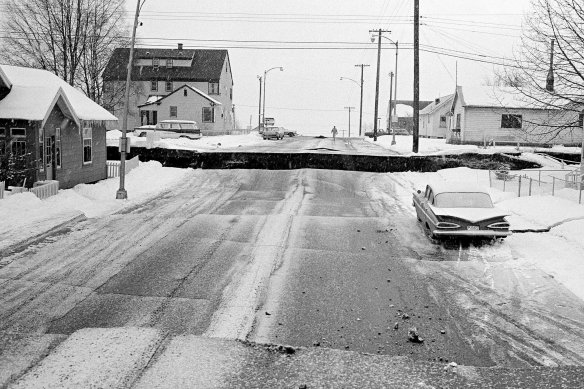
‘When a strong earthquake rocked northern Chile on April 1, scientists were quick with an explanation: It had occurred along a fault where stresses had been building as one of the earth’s crustal plates slowly dipped beneath another. A classic low-angle megathrust event, they called it.
Such an explanation may seem straightforward now, but until well into the 20th century, scientists knew relatively little about the mechanism behind these large seismic events. But that all changed when a devastating quake struck south-central Alaska on March 27, 1964, nearly 50 years to the day before the Chilean quake.’ (NYTimes).
Related articles


The End of Night

The health effects of a world without darkness: ‘An eternal electric day is creeping across the globe, but our brains and bodies cannot cope in a world without darkness…’ – Rebecca Boyle (Aeon).
Related articles


These 5 Foods Will Be Harder to Grow in a Warmer World
‘The reality of climate change has already hit farms, ranches, and orchards around the globe, according to the latest report from the UN’s Intergovernmental Panel on Climate Change. While some crops will grow better in a warmer world, the report found that the negative impacts—including widespread crop damage, smaller harvests, and higher food costs—far outweigh any upsides.
The report predicts that yields of major food crops like corn, wheat, and rice are likely to start decreasing by 2030 and will continue to decline by up to 2 percent a decade.
No particular crops are likely to disappear any time soon… [but] five bellwether foods… could be especially challenging to grow in a changing climate:’ avocados, almonds, grapes, milk and tree fruits (such as cherries and apples). (

‘If you injure an insect, should you kill it or let it live?’

Periodic Table Writer
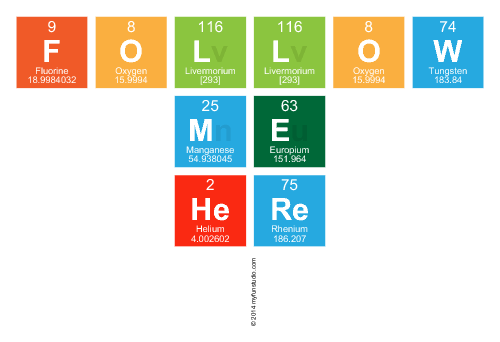 Write your own text using the chemical elements of the periodic table and download as …PDF or PNG… A very simple algorithm is used to automatically select symbols: (bath becomes BaTh), add a ‘|’ sign between symbols to force a break: (B|ath becomes BAtH). (Periodic Table Writer)
8 hours of airliners departing from Los Angeles in one single photo

‘Los Angeles architectural photographer Mike Kelley posted this awesome image of almost all the departures and some of the arrivals at LAX during a period of eight hours last Sunday.’ (Gizmodo).
R.I.P. Peter Matthiessen

Author and Naturalist Is Dead at 86. “[His] nonfiction explored the remote endangered wilds of the world and whose fiction often placed his protagonists in the heart of them.” (NYTimes.com).
Related articles


The Lost World of Stefan Zweig

‘Wes Anderson’s new film The Grand Budapest Hotel does much to bring Zweig’s particular brand of elegiac to the screen. Once one of the world’s most celebrated living writers, Zweig had lapsed into an undeserved obscurity, and Anderson goes far to resurrect a wondrous sensibility. From Zweig’s almost cloying candy-colored atmospheres — virtually tailor-made for Anderson’s brand of visual whimsy — to the inevitability of global catastrophe, casting a pall over even the happiest moments of domestic comfort, The Grand Budapest Hotel manages to capture nearly all of Zweig’s most striking qualities. Yet the film’s final tragedies — the rise of a (spoiler alert!) Nazi-esque regime in the fictional republic of Żubrówka, the 11th-hour execution of the hotel’s effete concierge, the untimely death due to illness of our young protagonist’s new bride — veer from Zweig’s sensibility in the grandness of their scale, a grandness much more evocative of Hollywood than of Vienna in the 1930s.
What The Grand Budapest Hotel forgets, and what Zweig never does, is that what humans do, and leave undone, is no less catastrophic at the hearth than it is on the battlefield.’ (LA Review of Books)
Related articles


Dolphin Talk and Human Credulity

‘It appears to have been just bad luck that one British newspaper, The Independent, chose April 1 as the day to publish James Vincent’s science report about a significant animal-to-human communication breakthrough.
I hope it worries animal researchers at least as much as it worries me that I had to do some reading around and cross-checking to be sure that the report wasn’t an Onion-style April Fool’s Day hoax. But I found that The Daily Mail had already reported on the same finding on March 27, so I’m quite sure both newspapers are serious.’ (The Chronicle of Higher Education).
The Pernicious Rise of Poptimism

Music Critic
‘Should gainfully employed adults whose job is to listen to music thoughtfully really agree so regularly with the taste of 13-year-olds? Poptimism is a studied reaction to the musical past. It is, to paraphrase a summary offered by Kelefa Sanneh some years ago in The New York Times in an article on the perils of “rockism”: disco, not punk; pop, not rock; synthesizers, not guitars; the music video, not the live show. It is to privilege the deliriously artificial over the artificially genuine. It developed as an ideology to counteract rockism, the stance held by the sort of critic who, in Sanneh’s words, whines “about a pop landscape dominated by big-budget spectacles and high-concept photo shoots” and reminisces “about a time when the charts were packed with people who had something to say, and meant it, even if that time never actually existed.” ‘ (NYTimes.com).
Fire + Tornado = Fire Tornado
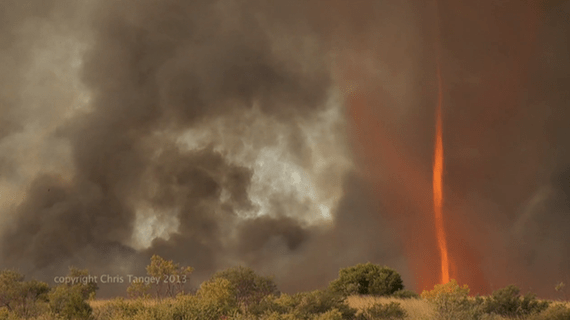
When wildfires combine with wild winds, beautiful—and terrifying—things can happen. (The Atlantic).
Mega-Donors Are Now More Important Than Most Politicians…Again

John D. Rockefeller
‘Quick: Name a senator who served between the Civil War and World War I. Struggling? Now name a tycoon who bought senators during the same period. J.P. Morgan, John D. Rockefeller … it’s easier.
And for good reason. The tycoons mattered more.
In the post-McCutcheon world, the 0.1 percent are far more important than most candidates. The press needs to treat them that way and subject their views to scrutiny.’ – Peter Beinart (The Atlantic).
Related articles


‘Coffee Flour’: The Java You Can Eat

‘Making coffee is a complex thing. Long before the stuff makes it to your cup/glass/comically large thermos, it must be converted—from fruit to bean. Doing that requires that the fruit (the “cherries”) be harvested from “spindly, bush-like” coffee plants. The cherries must then be processed, their beans extracted from their pulp. The beans must then be dried, roasted, and otherwise converted into the thing most of us know as “coffee.”
This process is not only labor-intensive; it is is also wasteful. It results in, among other things, much of the coffee cherry being discarded.
Out in (yep) Seattle, there’s a startup, CF Global, that is trying to reclaim the coffee cherry. Its big idea is this: to take the remnants of the process that turns the coffee bean into a beverage … and turn them into food.
The result of this? Coffee Flour, a food ingredient that’s made from discarded coffee cherries. You take the pulp that gets separated from the coffee been in that initial extraction process and then dry it and mill it—the results being a flour that can, CF Global says, mimic traditional flour. Coffee Flour, the company claims, can be used in pasta and baked goods. It can work as a dry rub for meats. It can bring coffee flavor to sauces. It can even be used in energy drinks.’ (The Atlantic).
Astronomers Publish Study On Extraterrestrial Zombies

‘While some scientists fritter away their time searching for extraterrestrial life, two astronomers have performed a genuine public service for Earth by calculating the likely number of nearby planets inhabited by the undead.’ (io9)
Why Does It Matter If Homo sapiens Had Sex With Neanderthals?

‘Evidence has been piling up for a while that early humans in Europe had children with the Neanderthals who had been living there for probably 500 thousand years before humans arrived. Very few Neanderthal genes are left in humans today, so what difference does it make? A lot, both genetically and philosophically.’ (IO9).
Peter Matthiessen’s Homegoing

An evocative and well-crafted portrait of one of my favorite writers, Peter Mattheissen, who is soon to take his leave of us. (NYTimes Magazine).
Conservative filmmaker Pat Dollard: “Time for Americans to start slaughtering Muslims in the streets”
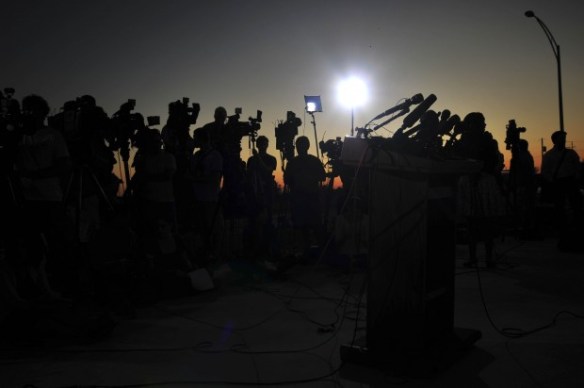
‘A Breitbart contributor, and former agent to director Steven Soderbergh, gave this disgusting response to Ft. Hood… The comment came as news swept Twitter of a shooting at the Fort Hood military base in Texas, where former Army psychiatrist Nidal Malik Hasan killed 13 people in 2009. The offending tweeter, Pat Dollard, himself tweeted news of the shooting as it broke, before making the aforementioned hideous statement (which, perhaps surprisingly, he has not deleted at the time of this writing).’ (Salon.com).
Will Living on Mars Drive Us Crazy?

‘Six humans are in Hawaii, testing the psychological effects of life on another planet.’ – Megan Garber (The Atlantic).
De-Extinction Brings Dead Species Back to Life

Passenger pigeon
With technology reminiscent of Jurassic Park, scientists plan to revive long-extinct species like the passenger pigeon. (Utne Reader)
Related articles


The Arctic: Where the U.S. and Russia Could Square Off Next

‘Russia isn’t only pursuing its territorial ambitions in Ukraine and other former Soviet states. It’s particularly active in the Arctic Circle, and, until recently, these efforts engendered international cooperation, not conflict. But the Crimean crisis has complicated matters.’ – Uri Friedman (The Atlantic).
Welcome to the Torture Apologist Renaissance

‘Like the proverbial crook who returns to the scene of the crime, the architects of the Bush administration’s torture program are suddenly ubiquitous in its defense. Oddly enough, it doesn’t seem to be a coordinated effort. It’s just coincidence, mixed with the understandable belief that no negative repercussions will follow from doing so.’ (The Wire).
What Winter Will Be Like In 100 Years

‘One of the upsides to the seemingly endless winter of 2014 was that you had time to think. And to ask futuristic questions, such as: What will the American Winter of 2114 be like?’ (The Protojournalist : NPR).
A List of Books
’13 “Top 100 Books” lists combined and condensed into one master list, for the benefit of your reading pleasure. 623 books in all — can you collect them all?’ (A List of Books)
How To Donate Your Voice To Someone Who Can’t Speak
 ‘Here’s a good deed you can do without parting with a single thing. Synthetic voices for people who have lost the ability to speak only come in generic types—think of Stephen Hawking‘s voice—but one fascinating project wants to build custom voices for each person. To do that they need your help: specifically, a recording of your voice.
VocalID is the brainchild of two speech scientists, who are turning their research into a much larger project. Voice is intensely personal and, like a prosthetic leg or arm, it makes sense it should be customized to each person.
Here’s how it works—and don’t worry, this does not mean someone will be walking around with the same voice as you out there:
After recording a couple hours of audio in, say, a quiet room with an iPhone, you send it to VocalID, where a program called ModelTalker chops it up into the basic units of speech that can be recombined as novel words and sentences. In that same step, characteristics of the patient’s voice—based on what limited sounds they can make—are blended in to the donor’s to create a whole new one. You can listen to how it works out on VocalID’s website.
VocalID is still in its beginning stages, and they’re looking for help from everyone including voice donors, financial support, and programmers. A priority is making voice donation even easier, cutting down recording time, especially for kids. But as it stands already, your voice is just about the easiest thing to donate.’ (Gizmodo)
Do psychiatrists think everyone is crazy?
‘A diagnosis of mental illness is more common than ever – did psychiatrists create the problem, or just recognise it?’ — Joseph Pierre, health sciences clinical professor of psychiatry at the University of California, Los Angeles, and co-chief of the Schizophrenia Treatment Unit at the West Los Angeles VA Medical Center (Aeon).
New Big Bang Evidence Suggests Presence of Alternate Universes

‘The same research that revealed the first-ever direct evidence of Big Bang inflation earlier this week also suggests the presence of alternate universes.
So, universes just like our own, except separate? Not exactly. Miriam Kramer explains:
The new research also lends credence to the idea of a multiverse. This theory posits that, when the universe grew exponentially in the first tiny fraction of a second after the Big Bang, some parts of space-time expanded more quickly than others. This could have created “bubbles” of space-time that then developed into other universes. The known universe has its own laws of physics, while other universes could have different laws, according to the multiverse concept.‘ (Gizmodo).
The World’s Largest Telescope Is Finally Getting Underway
‘

It’s been almost five years since Gizmodo first reported on the Thirty Meter Telescope, a mega-telescope with a resolution ten times that of the Hubble. Now, it seems the long-delayed project’s time has come: Hawaii has agreed to lease a parcel of land for the telescope, and officials say construction could begin as soon as April.
The TMT dates back to the 1990s, when the idea was first broached by a group of California scientists. In the years since, their idea has taken on the details of a real plan: An almost 100-foot-wide mirror made up of just less than 500 segments, ensconced on a astronomy park atop a dormant volcano called Mauna Kea, where it will do everything from detect light from the earliest stars to search out evidence of dark matter.’ (Gizmodo).
Moral Injury: The Hidden Epidemic of the War Veteran
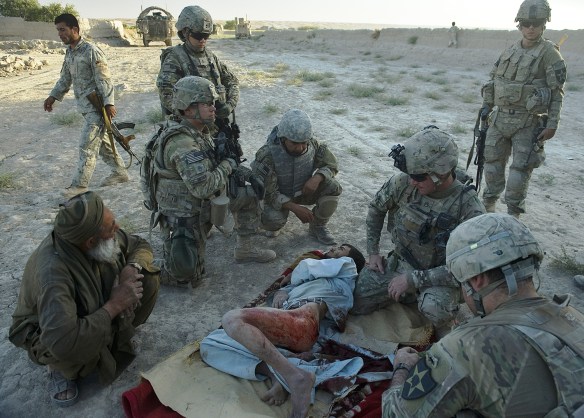
‘Are the young Americans who volunteer for military service prepared for the ethical ambiguity that lies ahead? Can they be hardened against moral injury? Should they be?’ (The Huffington Post).
Exploring literature’s most sinister syllable

‘Sherlock Holmes’s mortal nemesis was Professor Moriarty.
Harry Potter’s nemesis was Voldemort.
Doctor Who had a nemesis named Morbius. So did Spider-Man. Morbius was also the name of the antagonist in The Forbidden Planet.
Frodo Baggins went through the mines of Moria to get to Mordor, where he met Sauron, who, as great a villain as he was, started out as the lieutenant of Morgoth, the original and darkest villain in the world of Tolkien’s Middle Earth.
H.G. Wells sent his time traveller into the future to encounter a cave-dwelling evil race called the Morlocks. He also created an evil genius called Dr. Moreau.
King Arthur was betrayed by Mordred.
The really scuzzy city in Terry Pratchett’s Discworld series is Morpork.
So what’s the deal with “mor”? Is there something to the syllable that suits it for melancholy, darkness, and villainy?’ (The Week).
4 Miles Over Britain Pilot Is Sucked Out; Crew Holds On Tight

‘The pilot of a passenger plane was partly sucked out of the cabin window onto the nose cone of the jet today after its windshield blew out at 23,000 feet. But he was saved by crew members who clung to his ankles for 15 minutes until the co-pilot landed the plane safely in southern England.
Several of the aircraft’s 81 passengers said they watched in horror as crew members frantically wrestled to pull Capt. Timothy Lancaster back into the cockpit. The plane went into a dive, but with half of Mr. Lancaster’s body hanging outside the co-pilot flew the aircraft to Southampton Airport, 70 miles southwest of London.’ (New York Times).
The Toxins That Threaten Our Brains

‘Leading scientists recently identified a dozen chemicals as being responsible for widespread behavioral and cognitive problems. But the scope of the chemical dangers in our environment is likely even greater. Why children and the poor are most susceptible to neurotoxic exposure that may be costing the U.S. billions of dollars and immeasurable peace of mind.’ (The Atlantic).
Why the Big Bang Discovery Is Even More Important Than You Think

‘As you’ve probably heard, yesterday a team of scientists identified evidence of cosmic inflation right after the Big Bang, a finding which helps explain how the entire Universe originated. Amazing as that sounds, it’s way more important than you even imagine.
To truly grasp the significance, let’s start with what exactly it is that the Harvard team found. Forget analogies about ripples in ponds or whatever other over-simplified guff you’re read. Here’s what actually happened.’ (Gizmodo).
How Biotech Could Make Life in Prison a Living Hell
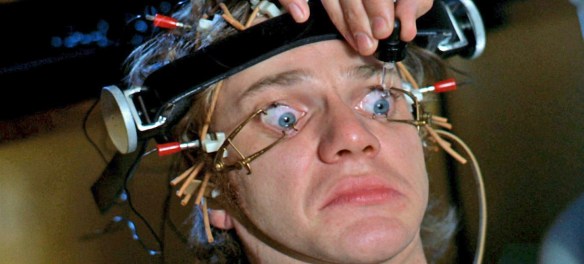
‘At the University of Oxford, a team of scholars led by the philosopher Rebecca Roache has begun thinking about the ways futuristic technologies might transform punishment. In January, I spoke with Roache and her colleagues Anders Sandberg and Hannah Maslen about emotional enhancement, ‘supercrimes’, and the ethics of eternal damnation. What follows is a condensed and edited transcript of our conversation…’ (Gizmodo).
New-Car Smell: Formaldehyde, Which Makes You Sick
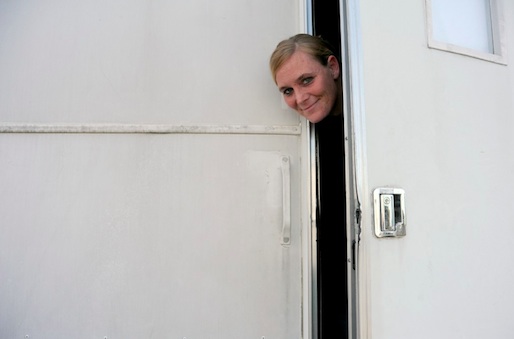
‘In the course of his research on the New Orleans trailer park culture that developed in the wake of Hurricane Katrina, Oxford anthropologist Nick Shapiro stumbled on something unexpected. At 250 square feet, the FEMA-issued mobile homes were scarcely fit to live in, but there was one thing about them that, for their occupants, represented the height of luxury: a scent evocative of the interior of a new car. This smell was also making them sick.’ (New Republic).
Woods Around Chernobyl Are Unable to Decay

‘Like a landscape of the undead, the woods outside Chernobyl are having trouble decomposing. The catastrophic meltdown and ensuing radiation blast of April 1986 has had long-term effects on the very soil and ground cover of the forested region, essentially leaving the dead trees and leaf litter unable to decompose. The result is a forest full of “petrified-looking pine trees” that no longer seem capable of rotting.
Indeed, Smithsonian reports, “decomposers—organisms such as microbes, fungi and some types of insects that drive the process of decay—have also suffered from the contamination. These creatures are responsible for an essential component of any ecosystem: recycling organic matter back into the soil.” …’ (Gizmodo).
Related articles

All the aircrafts that have mysteriously vanished since 1948
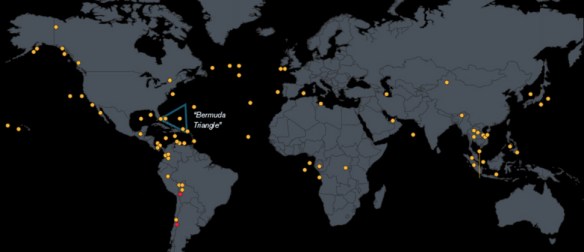
‘As this Bloomberg map shows, Malaysian flight 370 is not the first flight to mysteriously disappear. 83 flights have vanished since 1948—80 of them never to be found again (the dots in yellow). This map only includes flights capable of carrying more than 14 passengers.
Some more curious stats:
- Five planes were missing in the famous Bermuda Triangle.
- The DC-3 is the airplane with the higher count of disappearances: 19.
- The average number of people missing: 13.
- The average number of vanished flight per year: 1.2.’ (Gizmodo).
Related articles


Beers Implicated in Emergency Room Visits

‘Nationwide, roughly a third of all visits to emergency rooms for injuries are alcohol related. Now a new study suggests that certain beverages may be more likely to be involved than others.
The study, carried out over the course of a year at the Johns Hopkins Hospital in Baltimore, found that five beer brands were consumed most often by people who ended up in the emergency room…’ (NYTimes.com). Before you click through to the article, can you guess?
Related articles


NASA study: civilisation headed for ‘irreversible collapse’?

Natural and social scientists develop new model of how ‘perfect storm’ of crises could unravel global system (theguardian.com).
10 Recipes for Guaranteed Unhappiness

‘How come we keep getting lost on our way to happiness and yet many of us are masters in the “art” of unhappiness?
To cut a long story short, here they are:
- Be, act and feel a victim!
- Be angry, you have reasons!
- Control everything, all the time!
- Do everything perfectly all the time!
- Please everyone!
- Be convinced that life is a jungle where only lions thrive!
- Be busy!
- Always be dissatisfied!
- Trust no one!
- Always expect the worst!’ (Medium).
