Research Explains Why Your Shoelaces Are Always Coming Undone

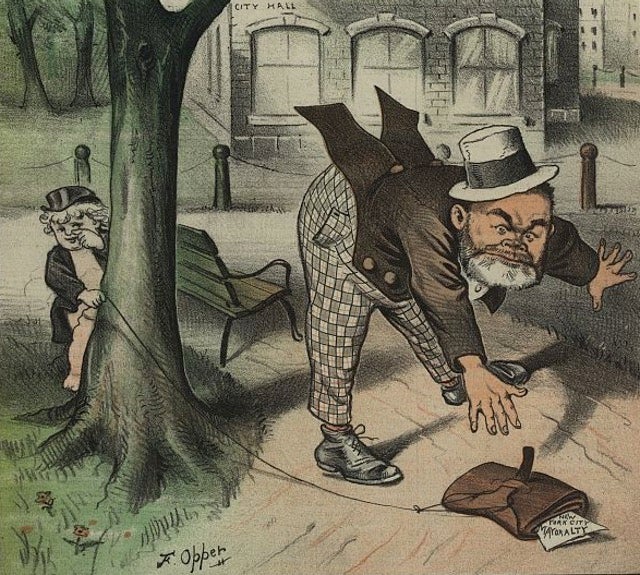
‘There are a number of forces at play that contribute to the spontaneous untying of shoelaces, according to the study published in Proceedings of the Royal Society A on Tuesday. Daily-Diamond and his co-researchers were able to figure this out by recording a high-speed video of someone running on a treadmill until their shoelaces untied. From there, they were able to build a working hypothesis, which they tested with further experiments…’

Source: Motherboard

Better yet, the research points to a modification in your shoe-tying methodology that will keep them tied significantly longer.

R.I.P. Mark Hawthorne, a Man of Few Words Except, ‘I Hate You’

“For many journalists, there is life after The New York Times.

Few, however, have led a life as strange and rich as Mark Hawthorne did. Better known as the beloved and respected “Hate Man” of Berkeley, Calif., Mr. Hawthorne died this month at 80 after living for decades on the streets of Berkeley and in People’s Park. His death became international news when it was reported by The Guardian.

An admission of hate, for Mr. Hawthorne, was a necessary prelude to love.

“He had come to believe that dialogue, understanding or trust between people can only be established if they admit what separates them, or, as he put it, why they hate each other,” Michael T. Kaufman, Mr. Hawthorne’s best friend at The Times, wrote about their reunion, in 1990, after more than two decades apart. “Negative emotions, he insisted, are true and real, while positive feelings are intrinsically hypocritical.”

“As we sat together, once more enjoying conversation and argument,” Mr. Kaufman recalled, “students would occasionally approach and good-naturedly call out, ‘I hate you.’ My friend would reply, ‘I hate you, too.’ …”

Source: New York Times obituary

Trump team on the defensive; Democrats stop fawning

Tommy Christopher writes:

‘Donald Trump’s decision to launch airstrikes on a Syrian airfield was hailed by many corporate media and foreign policy establishment types, but in addition to the myriad questions surrounding the motivation and constitutionality of Trump’s unilateral action, the ineffectiveness of the strike is becoming the story. According to multiple reports, flights from the airbase resumed on Friday, a day after the strikes. …’

Source: Shareblue

The ‘untranslatable’ emotions you never knew you had

‘Have you ever felt a little mbuki-mvuki – the irresistible urge to “shuck off your clothes as you dance”? Perhaps a little kilig – the jittery fluttering feeling as you talk to someone you fancy? How about uitwaaien – which encapsulates the revitalising effects of taking a walk in the wind?

These words – taken from Bantu, Tagalog, and Dutch – have no direct English equivalent, but they represent very precise emotional experiences that are neglected in our language. And if Tim Lomas at the University of East London has his way, they might soon become much more familiar.

Lomas’s Positive Lexicography Project aims to capture the many flavours of good feelings (some of which are distinctly bittersweet) found across the world, in the hope that we might start to incorporate them all into our daily lives. We have already borrowed many emotion words from other languages, after all – think “frisson”, from French, or “schadenfreude”, from German – but there are many more that have not yet wormed their way into our vocabulary. Lomas has found hundreds of these “untranslatable” experiences so far – and he’s only just begun.

Learning these words, he hopes, will offer us all a richer and more nuanced understanding of ourselves. “They offer a very different way of seeing the world.”

 Lomas says he was first inspired after hearing a talk on the Finnish concept of sisu, which is a sort of “extraordinary determination in the face of adversity”. According to Finnish speakers, the English ideas of “grit”, “perseverance” or “resilience” do not come close to describing the inner strength encapsulated in their native term. It was “untranslatable” in the sense that there was no direct or easy equivalent encoded within the English vocabulary that could capture that deep resonance.

Intrigued, he began to hunt for further examples, scouring the academic literature and asking every foreign acquaintance for their own suggestions. The first results of this project were published in the Journal of Positive Psychology last year.

Many of the terms referred to highly specific positive feelings, which often depend on very particular circumstances:

  • Desbundar (Portuguese) – to shed one’s inhibitions in having fun
  • Tarab (Arabic) – a musically induced state of ecstasy or enchantment
  • Shinrin-yoku (Japanese) – the relaxation gained from bathing in the forest, figuratively or literally
  • Gigil (Tagalog) – the irresistible urge to pinch or squeeze someone because they are loved or cherished
  • Yuan bei (Chinese) – a sense of complete and perfect accomplishment
  • Iktsuarpok (Inuit) – the anticipation one feels when waiting for someone, whereby one keeps going outside to check if they have arrived

But others represented more complex and bittersweet experiences, which could be crucial to our growth and overall flourishing.

  • Natsukashii (Japanese) – a nostalgic longing for the past, with happiness for the fond memory, yet sadness that it is no longer
  • Wabi-sabi (Japanese) – a “dark, desolate sublimity” centred on transience and imperfection in beauty
  • Saudade (Portuguese) – a melancholic longing or nostalgia for a person, place or thing that is far away either spatially or in time – a vague, dreaming wistfulness for phenomena that may not even exist
  • Sehnsucht (German) – “life-longings”, an intense desire for alternative states and realisations of life, even if they are unattainable

In addition to these emotions, Lomas’s lexicography also charted the personal characteristics and behaviours that might determine our long-term well-being and the ways we interact with other people.

  • Dadirri (Australian aboriginal) term – a deep, spiritual act of reflective and respectful listening
  • Pihentagyú (Hungarian) – literally meaning “with a relaxed brain”, it describes quick-witted people who can come up with sophisticated jokes or solutions
  • Desenrascanço (Portuguese) – to artfully disentangle oneself from a troublesome situation
  • Sukha (Sanskrit) – genuine lasting happiness independent of circumstances
  • Orenda (Huron) – the power of the human will to change the world in the face of powerful forces such as fate

You can view many more examples on his website, where there is also the opportunity to submit your own…’

Source: BBC – Future (via David)

Can the President read?

…’When Donald Trump hosted Saturday Night Live in 2015, none of the regulars were happy about it, according to an interview with Killam in Brooklyn Magazine… But here’s an observation from Killam about Trump that brings us to a serious question.

“What you see is what you get with him, really,” he said. “I mean, there was no big reveal. He struggled to read at the table read, which did not give many of us great confidence. Didn’t get the jokes, really. He’s just a man who seems to be powered by bluster.”

It’s an interesting question, which has been asked before. In news reports of how briefings unfolded before recent air strikes on Syria, multiple accounts say Trump asked for more pictures, no text…’

Source: Boing Boing

Top Democrats Are Wrong: Trump Supporters Were More Motivated by Racism Than Economic Issues


‘Since Donald Trump’s shock election victory, leading Democrats have worked hard to convince themselves, and the rest of us, that his triumph had less to do with racism and much more to do with economic anxiety — despite almost all of the available evidence suggesting otherwise…

Look, I get it. It’s difficult to accept that millions of your fellow citizens harbor what political scientists have identified as “racial resentment.” The reluctance to acknowledge that bigotry, and tolerance of bigotry, is still so widespread in society is understandable. From an electoral perspective too, why would senior members of the Democratic leadership want to alienate millions of voters by dismissing them as racist bigots? …

Philip Klinkner, a political scientist at Hamilton College and an expert on race relations, has pored over the latest data from the American National Election Studies (ANES), and tells me that “whether it’s good politics to say so or not, the evidence from the 2016 election is very clear that attitudes about blacks, immigrants, and Muslims were a key component of Trump’s appeal.” For example, he says, “in 2016 Trump did worse than Mitt Romney among voters with low and moderate levels of racial resentment, but much better among those with high levels of resentment.”

The new ANES data only confirms what a plethora of studies have told us since the start of the presidential campaign: the race was about race. Klinkner himself grabbed headlines last summer when he revealed that the best way to identify a Trump supporter in the U.S. was to ask “just one simple question: is Barack Obama a Muslim?” Because, he said, “if they are white and the answer is yes, 89 percent of the time that person will have a higher opinion of Trump than Clinton.” This is economic anxiety? Really?

Other surveys and polls of Trump voters found “a strong relationship between anti-black attitudes and support for Trump”; Trump supporters being “more likely to describe African Americans as ‘criminal,’ ‘unintelligent,’ ‘lazy’ and ‘violent’”; more likely to believe “people of color are taking white jobs”; and a “majority” of them rating blacks “as less evolved than whites.” Sorry, but how can any of these prejudices be blamed on free trade or low wages? …’

Source: The Intercept

The Outrage of Bipartisan Praise for Trump’s Bombing of Syria

Instantly falling behind Trump as he ejaculates with Cruise missiles ensures that he keeps doing so: There is no more reliable factor to reflexively unite people behind any leader than war, and Trump now sees how true that is. The same political leaders who have spent the months since his election denouncing him as a mentally unstable inept Fascist and an unprecedented threat to democracy are now lauding him uncritically for his missile attack on Syrian government targets. Even if you are someone who on principle wanted the US to attack Assad, shouldn’t your view that Trump is a fool and a monster prevent endorsement of this war with this Commander-in-Chief?

And, as always in war, the American media is immediately converted into state media. In the first 24 hours after, the five leading US newspapers had eighteen op-ed pieces in praise of, and zero in opposition to, the attack.

The unexamined questionable claim that this attack serves humanitarian goals exerts such a powerful appeal that it overrides all rational considerations. The Trump blockade on refugees fleeing the horrors of the civil war gives the lie to any sentiment for the victims of the gas attacks, though, doesn’t it? The US does not blow things up for altruistic reasons, it does so when it believes there will be some self-serving benefit, but we always want to believe that our bombs and missiles will be filled with love, help, and freedom. In the last two months, Trump has ordered a commando raid in Yemen that has massacred children and dozens of innocent people, bombed Mosul and killed scores of civilians, and bombed a mosque near Aleppo that killed dozens.

While Trump said it was in the “vital national security interest of the United States to prevent and deter the spread and use of deadly chemical weapons”, there is no conceivable self-defense pretext for Trump’s action. The greatest threat it solves is that to Trump’s infantile ego, instantly giving him the media respect he craves with his most popular action since he took office, changing the indubitable perception of disarray in his administration as his popularity rating continues its steady downward crawl. Trump himself had accused Obama in 2012 of preparing to start a new war in response to falling poll numbers. Instantly falling behind Trump as he ejaculates with Cruise missiles ensures that he keeps doing so. As NPR Pentagon correspondent Tom Bowman observed, “This action is a feel-good kind of thing for Trump. Blow away aircraft; you don’t kill any Russians, and that’s it. It’s good optics.”

Those who voice opposition to the bombing campaign are met with two predictable and pervasive toxic conceits driving American decision-making: that we must “Do Something” and “Look Strong,” predicated on the false and dangerous premise that the US military can and should solve every world evil. Democratic policy-makers are in thrall to these same principles. Critics have spent months claiming Trump is a traitorous puppet of Putin’s unwilling to defend US interests and that anyone who refuses to confront the Russians or their proxies like Assad is a sympathizer of or a servant to foreign enemies. Thus, they have no ability or desire to oppose Trump’s wars. Even those Democrats who have criticized the bombing campaign have done so on process issues rather than on the merits – with very few exceptions such as Rep. Ted Lieu and Rep. Tulsi Gabbard.

And even the procedural objections to this action have been cowardly and inept. Is no one concerned that he was able to order this attack without any democratic debate, not to mention Congressional approval? The action was without even the pretext of anti-terrorist legal justification Obama drew upon through the 2001 Authorization to Use Military Force when he started bombing ISIS in Syria.

Jack Goldsmith, a Harvard professor and former George W. Bush lawyer, said, “I can imagine the smile on Trump administration officials’ faces when they figured out that they would both enforce a red line that Obama wouldn’t and rely on Obama administration legal thinking to provide cover for doing so.”

The Congressional abdication of war-making authority to an all-powerful imperial presidency has been jointly built by both parties and handed to Trump gift-wrapped.

The autocratic presidency only works in the hands of a clever and moral man. One of Obama’s best decisions, and one of which he said he was very proud, was his resistance to bipartisan demands that he use military force against Assad. In contrast, we knew where Trump’s morality stood long before he was elected, with his explicit vows to commit war crimes — torturing detainees and purposely murdering the families of terrorists.

US war fever waits for nothing. Wanting conclusive evidence before we drop bombs is roundly condemned as support for evil. The chemical weapons claim rapidly became the gospel truth even though questioned in multiple world capitals. How do you know whether there really was a sarin gas attack and, if there was, that the Assad government was responsible? Susan Rice just two months ago boasted to NPR: “We were able to get the Syrian government to voluntarily and verifiably give up its chemical weapons stockpile.” Canadian PM Justin Trudeau, for one, had urged an investigation to determine what had actually happened before any action was undertaken in response. No US allies could be enlisted to cooperate and give broader legitimacy to the action. Britain, for example, “said it would not participate if asked,” the Washington Post reported.

Trump made it clear that this was a limited action designed to punish and warn Assad for the use of chemical weapons rather than the start of a new war to remove him. But crossing a line with our aggression often quickly becomes impossible to contain. And I am skeptical that Congress would demand a role in deciding on any wider effort, or that they would prevail if they did. As Glenn Greenwald summarized it:

‘Ultimately, what is perhaps most depressing about all of this is how, yet again, we see the paucity of choice offered by American democracy. The leadership of both parties can barely contain themselves joining together to cheer the latest war. One candidate – the losing one – ran on a platform of launching this new war, while the other – the victor – repeatedly vowed to avoid it, only to launch it after being in office fewer than 100 days. The one constant of American political life is that the U.S. loves war. Martin Luther King’s 1967 denunciation of the U.S. as “the greatest purveyor of violence in the world today” is more accurate than ever.’

#notmypresident #notmeinfuhrer

Cannibalism Study: People Are Not That Nutritious

‘Note to the prehistoric party planner: One dead mammoth can feed 25 hungry Neanderthals for a month, but cannibalizing a human would provide the crowd with only a third of a day’s calories.

Essentially, you’re a walking lunch.

A new look at the nutritional value of human flesh shows that, compared with other Paleolithic prey animals, humans weren’t especially packed with calories for their size…’

Source: National Geographic

U.S. strikes Syrian military airfield

First direct assault on Assad government

‘The U.S. military launched approximately 50 cruise missiles at a Syrian military airfield late on Thursday, in the first direct American assault on the government of President Bashar al-Assad since that country’s civil war began six years ago.The operation, which the Trump administration authorized in retaliation for a chemical attack killing scores of civilians this week, dramatically expands U.S. military involvement in Syria and exposes the United States to heightened risk of direct confrontation with Russia and Iran, both backing Assad in his attempt to crush his opposition…’

Source: Washington Post

The infant tyrant strikes. As my friend Rich Kubelka comments, “Agent Orange tips off his master, Putin, per the “deconfliction” agreement, & Putin tells Assad to scramble the jets at that airfield. End result? We’ve just bought $44.5 million worth of potholes… And AO gets to look like a tough guy…”

Or, as per Vox:

‘What’s crucial here is that Trump’s justification for launching the strike isn’t to end the Syrian civil war, or even to slow down Assad’s killing of his country’s civilians. It is a “targeted” strike designed as punishment for one specific crime: the use of chemical weapons.

 The core problem with any proposed plan for intervention against Assad has always been the risk that it could get wildly out of hand, dragging the US deeper into the Syrian conflict than it was prepared to go and potentially making the already incredibly complex and bloody war even worse. Any serious intervention in Syria also carried the very real risk of killing Russian soldiers, who are in Syria helping Assad, thus potentially sparking conflict with a powerful, nuclear-armed enemy.

The Trump administration is trying to avoid this kind of open-ended commitment. By going out of his way to emphasize that this US strike targeted the exact airbase from where the chemical attack was launched, Trump is making it crystal clear that the strike is designed as a specific punishment for the recent chemical attack — and not a broader effort aimed at striking Assad until he stops bombing civilians or leaves power.

The goal isn’t to stop the bloodshed in Syria, but rather to send a message to Assad (and potentially other rogue states) that chemical weapons use is out of bounds…’

#notmypresident

R.I.P. Joanne Kyger

Beat Generation Poet Dies at 82:

“The shape of the day, the words of the moment, what’s happening around me in the world of interior and exterior space — these are my writing concerns,” Ms. Kyger explained in a statement to the Foundation for Contemporary Arts in New York in 2005.

Joanne Kyger, a prolific poet whose works, inspired by natural wonders and Zen Buddhism, distinguished her as one of the few women embraced by the Beat Generation writers’ fraternity, died on March 22 at her home in Bolinas, Calif. She was 82.

The cause was lung cancer, her husband, Donald Guravich, said.

Along with Diane di Prima, Anne Waldman and several others, Ms. Kyger made her mark not only as a writer, but also as a member of the male-dominated post-World War II cultural movement personified by William S. Burroughs, Lucien Carr, Neal Cassady, Allen Ginsberg, Herbert Huncke, Gary Snyder and Jack Kerouac.

(It was Kerouac who, to characterize his generation, appropriated the musical term, which he interpreted as nonconformist and upbeat.)

In her “Night Palace,” from 2003, she wrote:

“The best thing about the past
is that it’s over”
When you die.
you wake up
from a dream
that’s your life.
Then you grow up
and get to be post -human
in a past that keeps happening
ahead of you

Source: New York Times obituary

This Test Could Settle the Loch Ness Monster Mystery Once and For All

‘Neil Gemmell is a geneticist at the University of Otago whose lab focuses on ecology and conservation. His group uses what’s known as environmental DNA to monitor marine biodiversity, which with a few liters of water allows them to detect traces of thousands of species. The same technique, he proposes, might be used to determine whether Scotland’s Loch Ness has anything unusual swimming around in it—say, for example, a mysterious giant monster…’

Source: Gizmodo

Senate Democrats have the votes to filibuster Gorsuch

‘Senate Democrats have the 41 votes they need to filibuster Donald Trump’s Supreme Court nominee, Neil Gorsuch.

On Monday afternoon, Sen. Chris Coons (D-DE) told reporters that he would be joining the Democratic filibuster against Gorsuch’s nomination.

Senate Majority Leader Mitch McConnell (R-KY) has said he would respond to a filibuster by rewriting the Senate’s rules so that Supreme Court justices need 51 rather than 60 votes to be confirmed. That rule change — called the “nuclear option” on Capitol Hill — would allow Gorsuch to be confirmed without Democratic votes.

Still, Senate Democrats and left-wing activists have sought to force McConnell to use the nuclear option rather than lay down their arms prematurely. Like other Democrats, Coons stressed that he would filibuster Gorsuch in large part because of McConnell’s refusal to give President Barack Obama’s Supreme Court nominee, Merrick Garland, a Senate hearing after Justice Antonin Scalia died in February of last year…’

Source: Vox

WHO: Depression Is Now the Leading Cause of Ill Health Worldwide

‘Depression has become the leading cause of ill health and disability across the world, now affecting more than 300 million people globally, the World Health Organization said Thursday. However, half of people suffering from depression don’t get treatments they need to live healthy, productive lives.The worldwide depression rates increased 18 percent between 2005 and 2015, according to the WHO. Yet, there still exists a stigma associated with the condition, as well as a lack of support in many countries for those suffering from mental disorders…’

Source: NYMag

Happy 1st of April

Everyone hates April Fools’ Day — so why does it endure? The 500-year history of a troll holiday. (The Verge)

And why and how did it come to be associated with April 1st? (Digg)

This Is the Only Good April Fools’ Joke So Everybody Else Can Shut Up (Motherboard)

Horrific April Fool’s Pranks of the 19th Century, and more (Gizmodo)

(Although there is a significant value to April Fool’s Day. As Jay Kuo tweeted, this is the only day of the year that people critically evaluate what they read on the web before accepting it as true!)

The Emergence of the Hive Mind

‘The research was conducted by Nicholas Christakis and James Fowler, and was derived from data collected by the Framingham Heart Study, which has been tracking the vital statistics and psychological states of the residents of one Massachusetts town for over five decades. The researchers were initially interested in the impact of social contacts on health habits, and the richness of the Framingham data allowed them to track the long-term behavior of more than 12,000 individuals.

The results, as reported in Connected: The Surprising Power of Our Social Networks and How They Shape Our Lives, were startling, and have further undermined modernity’s presumptions about the individual as a rational and self-reliant decision maker. As clearly tracked on the researchers’ graphs, health habits spread rapidly through the separate social networks of the Framingham population: Whom one knew strongly affected what one chose to do—overeat or not, smoke or not—and highlighted the power of emulation in human behavior. Further study showed that the influence of these social networks was not limited to health decisions..

Our misery or happiness, our good or bad health, and our indifference or commitment to political participation, are not only contagious; according to Christakis and Fowler, they are mysteriously influenced at a distance by the decisions of people we never meet. The persistence of this influence within the social networks could be traced through “three degrees of separation,” so that the habits of a man’s sister’s neighbor’s wife had a statistically significant effect on his own behavior. If she quit smoking, though out of sight and out of mind, his chances of doing the same were increased by nearly a third…’

Source: 3quarksdaily

The Funnier You Are, the Sooner You Die?

‘Comedians use a lot of death-related terminology both on-stage and off. Terms like “I died up there” (bad performance) or “I murdered the crowd” (good performance) are pretty commonplace. But according to a recently published study by the International Journal of Cardiology and the the Australian Catholic University, the funnier you are, the more likely you are to die.

The study compared the median ages of death of three groups — dramatic actors, comedic actors, and stand up comedians — and found that, on average, stand up comedians are two times more likely to die younger than their thespian counterparts. Stand up comedians die on average 2.5 to 3 years before dramatic actors, and 2 years before comedic actors.

The real kicker is that the higher ranked comedian you were (according to the crowd-based ranking over at Ranker) the more likely you are to die: for each 10 points higher you were (towards the number 1 ranked comedian) there was a 7% increased risk of you dying. For example, compared to the 150th ranked stand-up comedian, the 50th was 70% more likely to die.*

It should be noted that many stand up comedians tend to be solitary performers who travel alone a lot, and that depression in comedic performers is hardly a new phenomenon…’

Source: Big Think

Coming for you in Klaipeda, Lithuania

‘If you ever visit the quaint seaside town of Klaipeda in Lithuania, beware of the black ghost… [I]f you’re prone to nightmares, it’s surely something out of one your very worst. The immense bronze sculpture, known as the Juodasis Vaiduoklis in Lithuanian, is 7.8 feet tall… Sculpted by Svajunas Jurkus and Sergejus Plotnikovas, the mysterious figure holds a lantern in one hand, as his long, sinister fingers grip the dock. Located near the Memel castle remains, the black ghost is a reminder of not only Lithuanian legend but of Klaipeda’s own folklore and history. Legend has it that one evening in 1595, one of the Memel Castle guards, Hans von Heidi, while walking around the docks, saw a hooded ghostly figure…’

Source: Design You Trust

A short guide to conversations with extraterrestrials

‘China completed the construction of one of the largest radio telescopes on the planet in July. The craft will scan space for extraterrestrial signals. For centuries, humanity has dreamt of making contact with other worlds. From the most zany to the most serious, these attempts have been based on a common representation: this radical Other would be a pure, cold and logical intelligence. So that in wishing to greet the Martians humans have learned … to speak to the machines.’

Source: Finn Brunton, Le Monde diplomatique, August 2016

How philosophy came to disdain the wisdom of oral cultures

‘As it happens, there are few members of primary oral cultures left in the world. And yet from a historical perspective the great bulk of human experience resides with them. There are, moreover, members of literate cultures, and subcultures, whose primary experience of language is oral, based in storytelling, not argumentation, and that is living and charged, not fixed and frozen. Plato saw these people as representing a lower, and more dangerous, use of language than the one worthy of philosophers.

Philosophers still tend to disdain, or at least to conceive as categorically different from their own speciality, the use of language deployed by bards and poets, whether from Siberia or the South Bronx. Again, this disdain leaves out the bulk of human experience. Until it is eradicated, the present talk of the ideal of inclusion will remain mere lip-service…’

Justin E. H. Smith is a professor of history and philosophy of science at the Université Paris Diderot – Paris 7. He writes frequently for The New York Times and Harper’s Magazine. His latest book is The Philosopher: A History in Six Types (2016).

Source: Aeon Ideas

The Fanged Fish That Drugs Its Enemies With Opioids

‘Not unlike the ant-decapitating fly and the satanic leaf-tailed gecko, the fang blenny’s name does not disappoint. This tiny fish wields two massive teeth that it uses to gouge chunks out of much larger fish and, in a bind, scrap its way out of the grasp of a predator. And one particular group of fang blenny even injects venom, just like a snake, to give its attackers that extra what-for.

That’s all very, very bizarre behavior for a fish—behavior that today gets even more bizarre. In the journal Current Biology, researchers have revealed what makes the fang blenny’s venom so unique: It’s packed with opioid peptides, which target opioid receptors, much like heroin and morphine do in the human brain. Unlike with snakes or stingrays or the infamous lionfish, the venom doesn’t incapacitate the victim with pain. Instead, it sends the fish’s blood pressure plummeting, messing with its coordination and giving the blenny a chance to escape…’

Source: WIRED

Famous Monsters of Filmland’s 1965 guide to home monster makeup

Cory Doctorow writes:

‘The Do-It-Yourself Monster Make-Up Handbook is a 1965 classic: Famous Monsters of Filmland founder Forrest Ackerman tapped movie makeup legend Dick Smith to create guides for turning yourself into any of three Martians, two kinds of werewolf, a “weird-oh,” a “derelict,” a ghoul, a mummy, Frankenstein’s monster, Quasimodo, Mr Hyde, “split face,” and more…’
Source: Boing Boing

What George W. Bush Really Thought of Trump’s Inauguration

Yashar Ali writes:

‘Bush’s endearing struggle with his poncho at the event quickly became a meme, prompting many Democrats on social media to admit that they already pined for the relative normalcy of his administration. Following Trump’s short and dire speech, Bush departed the scene and never offered public comment on the ceremony.

But, according to three people who were present, Bush gave a brief assessment of Trump’s inaugural after leaving the dais: “That was some weird shit.” All three heard him say it.

A spokesman for Bush declined to comment. …’

Source: New York Magazine

William Powell, ‘Anarchist Cookbook’ Writer, Dies at 66

William Powell was a teenager, angry at the government and the Vietnam War, when he walked into the main branch of the New York Public Library in Manhattan in 1969 to begin research for a handbook on causing violent mayhem.

Over the next months, he studied military manuals and other publications that taught him the essentials of do-it-yourself warfare, including how to make dynamite, how to convert a shotgun into a grenade launcher and how to blow up a bridge.

What emerged was “The Anarchist Cookbook,” a diagram- and recipe-filled manifesto that is believed to have been used as a source in heinous acts of violence since its publication in 1971, most notably the killings of 12 students and one teacher in 1999 at Columbine High School in Littleton, Colo.

Throughout his manual, Mr. Powell fashioned a knowing voice that suggested broad experience in warfare, sabotage or black ops, mixed with an extremist’s anti-establishment worldview.

“As almost everyone knows, silencers are illegal in virtually all the countries of the world,” he wrote before describing how to build a silencer for a handgun, “but then a true revolutionary believes that the government in power is illegal, so, following that logic, I see no reason that he should feel restricted by laws made by an illegal body.”

He declared that his book was an educational service for the silent majority — not the one identified by President Richard M. Nixon as his middle-American constituency, but the disciplined anarchists who were seeking dignity in a world gone wrong. To them, he offered how-to plans for weaponry and explosives as well as drugs, electronic surveillance, guerrilla training and hand-to-hand combat — a potent mix that attracted the attention of the Federal Bureau of Investigation.

The book found a big audience. More than two million copies have reportedly been sold, and still more have been downloaded on the internet.

Source: New York Times obituary

‘Power Must Be Taken’: Excerpts From ‘The Anarchist Cookbook’

‘In 1971, William Powell published “The Anarchist Cookbook,” a collection of recipes for drugs, weapons, bombs and other forms of mayhem. He saw the book as a manifesto and guide for would-be revolutionaries, while the authorities saw it as a potential threat; the Federal Bureau of Investigation maintained files on the book for years.Mr. Powell died in July, but his death did not become widely known until this month, with the release of “American Anarchist,” a documentary film about him.Here are excerpts from “The Anarchist Cookbook,” courtesy of Delta Press, its most-recent publisher…’

Source: New York Times

White House refuses to condemn murder of black man by white supremacist

Judd Legum:

‘James Harris Jackson, a 28-year-old white supremacist from Baltimore, traveled to New York City and brutally murdered Timothy Caughman, a 66-year-old black man, with a sword.
On Monday, April Ryan, Washington bureau chief for American Urban Radio Networks, asked Press Secretary Sean Spicer if the White House had anything to say about this hate crime.
Spicer repeatedly refused to saying anything specific about the murder, stating that he was “not going to reference any particular case before the DOJ right now.” He later added the he didn’t “know all the details.” …’

Source: ThinkProgress

Diabetes drug could be the first to reverse the disease

Andy Coghlan:

‘A daily pill that restores the body’s sensitivity to insulin may make it easier to control the diabetes boom in rich nations where obesity is on the rise. Stephanie Stanford of the University of California, San Diego, and her team have found that giving mice with diabetes a drug that affects insulin signalling restores their ability to control their blood sugar levels.

The drug was given daily, by mouth, and did not seem to have any side effects in the mice. The animals had developed the condition after a high-fat diet had made them obese. …’

Source: New Scientist

“I grew up in the Westboro Baptist Church. Here’s why I left”

Mark Frauenfelder:

‘Megan Phelps-Roper was born into the Westboro Baptist Church. In this TED Talk, she explains what’s it like to grow up within a group of people who exult in demonizing … everyone else. She shares her personal experience of extreme polarization, along with some sharp ways we can learn to successfully engage across ideological lines…’

Source: Boing Boing

Menopausal women become pregnant with their own eggs

‘Two women thought to be infertile have become pregnant using a technique that seems to rejuvenate ovaries, New Scientist can reveal. It is the first time such a treatment has enabled menopausal women to get pregnant using their own eggs.

“I had given up hope on trying to get pregnant,” says one of the women, WS, who is now six months pregnant. “To me, it’s a miracle.”

The approach is based on the apparent healing properties of blood. Kostantinos Sfakianoudis and his colleagues at the Genesis Athens Clinic in Greece draw blood from their patients and spin it in a centrifuge to isolate platelet-rich plasma. This has a high concentration of the cell fragments usually involved in blood clotting, and is already used to speed the healing of sports injuries, although its effectiveness for this purpose is unclear. …’

Source: Jessica Hamzelou, New Scientist

Long-Sought Research Deregulation Is Upon Us

‘It has been a 40-year labor: Regulatory systems are not easy to undo. Nevertheless, in January the federal government opened the door for universities to deregulate vast portions of research in the social sciences, law, and the humanities. This long-sought and welcome reform of the regulations requiring administrative oversight of federally funded human-subject research on college campuses limits the scope of institutional review board, or IRB, management by exempting low-risk research with human subjects from the board’s review…’

Source: 3quarksdaily

Deep Disagreements and Argumentative Optimism

‘We all have had moments when we feel that those with whom we disagree not only reject the point we are focused on at the moment, but also reject our values, general beliefs, modes of reasoning, and even our hopes. In such circumstances, productive critical conversation seems impossible. For the most part, in order to be successful, argument must proceed against the background of common ground. Interlocutors must agree on some basic facts about the world, or they must share some source of reasons to with they can appeal, or they must value roughly the same sort of outcome. And so, if two parties disagree about who finished runners-up to Leister City in their historic BPL win last year, they may agree to consult the league website, and that will resolve the issue. Or if two travelers disagree about which route home is better, one may say, “Yes, your way is shorter, but it runs though the traffic bottleneck at the mall, and that adds at least ten minutes to the journey.” And that may resolve the dispute, depending perhaps on whether time is what matters most.

But some disagreements invoke deeper disputes, disputes about what sources are authoritative, what counts as evidence, and what matters. Such disputes quickly become argumentatively strange. And so if someone does not recognize the authority of the soccer league’s website about last year’s standings, it is unclear how a dispute over last year’s runners-up to Leister City could be resolved. What might one say to a disputant of this kind? Does he trust news sites, television reporting, or Wikipedia entries concerning the BPL? Does he regard the news sites and the league website as reliable sources of information concerning this year’s standings or when the games are played? What if our interlocutor in the route-home case doesn’t see why the quickest route is preferable to the shortest? Maybe our traveling companion regards our hurry-scurry as a part of a larger social problem, or maybe wants to enjoy the Zen of a traffic jam. Sometimes a disagreement about one thing lies at the tip of a very large iceberg of composed of many other, deeper, disagreements.

The puzzle about deep disagreement is whether or not reasoned argument works at all in them. There is a widely held view, perhaps at the core of deliberative views of democracy, and certainly central to educational programs that emphasizing critical thinking, that well-run argument is at least not pointless, and often even productive. And many hold that it’s important to practice good argumentation, especially in cases of deep disagreement. Call this view argumentative optimism. The trouble for this optimism is that as disagreements run progressively deeper, it grows increasingly difficult to see how argument could have any point at all; this, in turn, encourages us to regard interlocutors as targets of incredulity, bemusement, and  perhaps even contempt or hatred. There’s little, many think, one can argue or say that is going to rationally resolve certain disagreements. In the end, it all may come down to who’s got better propaganda, more money, or, perhaps, the better weapons. Call this view argumentative pessimism…’

Source: 3quarksdaily

Comparing First and Final Scenes

‘This fantastic video on Vimeo (below) from Jacob T. Swinney could be the best five minutes you’ll spend today. It shows the opening and closing scenes of famous movies, displayed side by side. I’ve written a few posts here about beginnings and at least one post about endings. But once you have your story finished, whether it’s a piece of fiction or creative nonfiction, take some time to compare the first page or so to the last. What is the first image you’ve created for the reader and what is the final image you’re leaving behind?’

Source: Tracy Staedter

Opioid Addiction Is Eroding the Life Expectancy of Trump’s Core Supporters

‘…As first highlighted by Princeton economists in 2015, the death rate for non-Hispanic, white Americans has been climbing since the late 90s. For decades, death rates (the number of deaths in a given population) have dropped for Americans overall, and middle-aged whites were no exception. Each year, on average, the death rate dropped by 2 percent.

But in 1998, something flipped, and while the death rates for everyone else—including black, Hispanic, and Asian Americans—continued to steadily drop, the death rates for middle-aged white Americans start to creep up: 0.5 percent a year, every year.

They’ve been dubbed “deaths of despair,” due to the high number of overdose and suicide deaths. Those same economists, Anne Case and Angus Deaton, have now published a follow-up report where they’ve attempted to untangle the cause of this epidemic. While many experts supposed it’s linked to a worsening economy and lower incomes, Case and Deaton say their analysis shows it’s not so simple.

“The story is rooted in the labor market, but involves many aspects of life, including health in childhood, marriage, child rearing, and religion,” the researchers wrote. “Although we do not see the supply of opioids as the fundamental factor, the prescription of opioids for chronic pain added fuel to the flames, making the epidemic much worse than it otherwise would have been.” …’

Source: Motherboard

Rep. Devin Nunes’s latest stunt could make Trump’s Russia problem worse

‘The latest stumble came Friday, when Nunes abruptly canceled a planned public hearing with top former national security officials about Russian interference in the 2016 election. The House panel was originally scheduled to hear from President Obama’s former Director of National Intelligence James Clapper, former CIA Director John Brennan, and former acting Attorney General Sally Yates on Tuesday. But Friday morning, Nunes abruptly pushed back the hearing…

Nunes’s behavior shows that the House Intelligence Committee’s investigation is already being impaired by partisan warfare. That could help fuel calls for a special prosecutor or a select committee where both parties would have subpoena powers. Nunes, in other words, could wind up paving the way for exactly the things he and Trump most want to stave off…’


Source: Vox

6 ways President Trump tried to spin his total defeat on health care

1) How legislating works

2) If your bill fails because not enough people in your party will vote for it, it’s the other party’s fault

3) Obamacare is failing, and when it does, Democrats will be begging for a bipartisan deal

4) The Republican Party is complicated

5) He really wanted to do tax reform anyway

6) Anyway, this crushing defeat is actually for the best

Source: Vox

Public entomologists struggle with an epidemic of delusional parasitosis

Cory Doctorow writes:

‘Dr Gale Ridge is a public entomologist at the Connecticut Agricultural Experiment Station, where an average of 23 people a day call, write or visit; an increasing proportion of them aren’t inquiring about actual insects, they’re suffering from delusional parasitosis, and they’re desperate and even suicidal.

Nancy Hinkle, a colleague of Gale’s, professor of veterinary entomology at the University of Georgia in Athens, estimates that she spends “a couple of hours every day” dealing with “the invisible bugs.”

The entomologists’ jobs are confounded by the possibility that the weird “bugs” aren’t delusional. The world of arthropods is sufficiently weird that it’s hard to rule out a rare or unknown bug causing mischief; not to mention the complications of industrial de-humidifiers that make “the room buzz with static electricity” that feels like bugs crawling on your skin. Then there are the well-meaning MDs who mistake their patients’ scratch-marks for bug bites.

The entomologists have learned to stage interventions with their “clients'” families, bringing them together to explain the realities of insect behavior, to bring them to the gradual understanding that their problems are real, but the bugs are not.

Not addressed in the story, but very interesting: why the sharp increase in delusional parasitosis? Is it a reduction in the public health services that would have intercepted these people before they got to the entomologists? Is it scare-stories about bedbugs and lyme disease? Aggressive hand-sanitizer ads with their subtext of lurking, dangerous dirtiness? …’

Source: Boing Boing

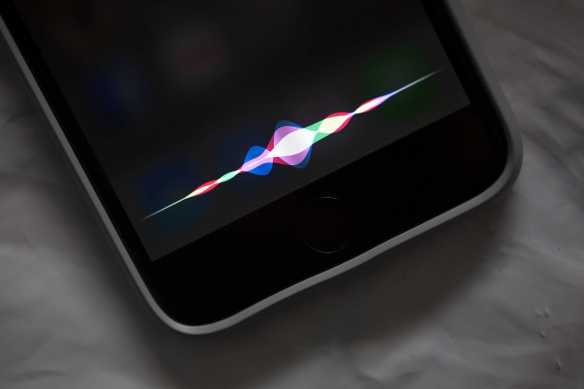
Police warn you not to fall for ‘Siri 108’ prank

‘The Sheriff’s office of Harris County, Texas has posted a message on its official Facebook page, pleading with people not to fall for a social media prank in which they’re encouraged to say “108” to Siri.

That’s because the number prompts Siri to dial 9-1-1, or the emergency phone number of whichever country they are in at the time.“

…“This viral prank is becoming increasingly popular on social media, with various speculation as to what the command does. The command, in fact, will instruct Siri to call emergency services, which could potentially tie up emergency lines.”

The reason the 108 code dials emergency services is because it is India’s equivalent of 9-1-1. To protect iPhone users, Apple embedded various international emergency numbers into Siri, with the numbers redirecting to whatever your local number may be. That means that saying “9-1-1” in the U.K. will dial the equivalent number 9-9-9, even if a visitor didn’t know that.

Unfortunately, 108 isn’t particularly well known by Texas youths, apparently, which is why it’s turned out to be fairly easy to trick people into dialing it. Saying the number does give you a few seconds to cancel the call, but evidently enough people aren’t doing this that it’s causing a problem…’

Source: Cult of Mac

Trump Targets 17-Year-Old Girl’s Cat Site

‘A 17-year-old only identified as Lucy tells The Hollywood Reporter that her website, trumpscratch.com, attracted the attention of the White House after receiving only about 1,200 visitors. She built the site as a joke while she was applying for web developer jobs back in February. It allows users to hit Trump in the face with cat paws while the rickroll music plays. Yeah, it’s basically a meme singularity.

On March 1st she received her first cease and desist letter from Trump’s lawyers. They claim that she was infringing Trump’s “internationally known and famous” trademark. The idea being that he really only sells two things: his name and bullshit.

So, Lucy says she changed the domain name to kittenfeed.com and assumed this nonsense was over. But soon she received another letter demanding that she remove a link to an anti-Trump t-shirt on Amazon. She complied and added some scratches to Trump’s face as you hit him as well as text that reads, “Trump seems tough at first, but he gets weaker with every scratch.” She hasn’t heard anything from them since. The White House hasn’t responded to multiple requests for comment.

“I really just want people to be aware that this is a president who’s clearly more concerned about what people think of him than doing things of substance,” Lucy tells THR.

Trump’s inability to let the tiniest slight go is legendary. But this is ridiculous. And the Streisand Effect is in full swing. The site’s now up to 219,000 visitors and rising.

It’s certainly possible that the President’s lawyers are just doing this on their own while he focuses on feuding with Arnold Schwarzennegar. But even then, this is ridiculous. CNN reported tonight that “the FBI has information that indicates associates of President Donald Trump communicated with suspected Russian operatives to possibly coordinate the release of information damaging to Hillary Clinton’s campaign.” One would think his lawyers would have plenty of bigger issues to tackle at the moment.’

Source: Gizmodo

Meet the Humans Debating Whether or Not We Should Contact Aliens

‘Going beyond SETI, the new organization METI plans to send a message intended for extraterrestrials. But leading scientists and experts including Stephen Hawking are not so sure this is a good idea.

Doug Vakoch started METI International with the goal of sending messages to aliens, hoping to make some kind of contact. But scientists and cosmologists are split on the issue. John Gertz, the head of an initiative dedicated to the search for intelligent life, warns that proactively making contact could spark a diplomatic crisis. Even Stephen Hawking has weighed in on the debate. Should we call out to ET, or watch and wait? …’

Source: Motherboard

Falsum Style Guide: Resis⊥ ⊥rump

‘The falsum “⊥” (Upside down T, Uptack or Eet) is a symbol used in various mathematic disciplines, but throughout them it shares the meaning of “arbitrary contradiction” and “false.” Wiktionary further defines falsum as meaning  “an untruth, falsehood, fraud, deceit, lie; forgery.”

The upside-down T aspect also obviously refers to a rejection of Trump, his hatred, fear, and policies. It’s literally the inverse of the first letter of his name…

I believe this is a powerful symbol for us to rally around. And we need a symbol…’

Source: Falsum Resist Style Guide

Report: FBI evidence suggests Trump associates and Russians may have coordinated to sink Clinton

‘CNN just dropped a bombshell report about President Donald Trump’s potential ties to Russia:

  • “The FBI has information that indicates associates of President Donald Trump communicated with suspected Russian operatives to possibly coordinate the release of information damaging to Hillary Clinton’s campaign, US officials told CNN.”

There are a lot of unanswered questions in this. Who were the Trump associates and Russian officials? How exactly did these different people communicate and possibly coordinate? Is CNN’s report even reliable, given that it cites anonymous US officials? …’

Source: Vox

A veteran GOP strategist explains why conservative elites put up with Trump’s lies and corruption

‘A lot of weird stuff happened over the past seven days in American politics that might make President Trump’s party skeptical of him. The Trump administration provoked a minor international incident with the United Kingdom by accusing its surveillance agency of complicity in an illegal scheme to subject Trump’s campaign to surveillance. The directors of the FBI and the National Security Agency, plus the chairs of the congressional intelligence committees, rebuked the president for lying about these surveillance issues. Trump also provoked a minor international incident with Germany by accusing Angela Merkel’s government of being somehow in debt to NATO.

Somewhat separately, the FBI confirmed the existence of an open counterintelligence investigation dealing with members of Trump’s campaign. And they confirmed, of course, that Russia interfered in the 2016 election campaign in hopes of electing Donald Trump president, perhaps realizing that he’d be likely to provoke unnecessary fights with key American allies.

Yet for all that, Trump continues to enjoy the overwhelming support of the institutional Republican Party and the American conservative movement, and this quote obtained by Philip Rucker and Ashley Parker explains why:

“All that really matters this week is Gorsuch moving forward and the House passing step one of Obamacare repeal,” said Scott Reed, a veteran Republican strategist who works for the U.S. Chamber of Commerce. “All the rest is noise.” …’

Source: Vox

Small RNA identified offering clues for quieting “voices” of schizophrenia

The effectiveness of most if not all existing antipsychotic medications in stopping auditory hallucinations and other psychotic symptoms depends on blocking the action of the neurotransmitter dopamine at a class of dopamine receptors in the brain called D2. (This is undoubtedly an oversimplification but it is the basis of most therapeutic approaches to schizophrenia and other psychotic illnesses.)

However, blockade of D2 receptors cannot be limited to the region of the brain where the dopamine activity causes psychotic symptoms, and furthermore the existing drugs affect other neurotransmitters as well, causing distressing and morbid side effects.

What if, instead of blocking D2 receptors, it were possible simply to decrease the numbers of D2 receptors in the pertinent brain areas? Researchers at St Jude’s Children’s Research Hospital reported in Nature Medicine that they have done just that (in a mouse model) with a piece of RNA that regulates the body’s manufacture of the protein constituting the D2 receptor. This promises a potentially cleaner, more effective and more tolerable therapy for voices and other psychotic distress.


Source: Neuroscience Stuff Tumblr

Where to Hide If a Nuclear Bomb Goes Off In Your Area

‘This is advice I hope you never need but should know anyway. A nuclear attack is everybody’s worst nightmare, and the immediate aftermath is just as bad, if not worse, than the explosion itself.


You’ll know a nuclear bomb went off near you if there’s a sudden flash of bright, white light, which may or may not give you flash blindness if you’re within 50 miles or so of ground zero. If that bright, white blindness eventually clears up, and you don’t suddenly feel at peace, you’re alive. Other signs of a nuclear blast include near instant first-degree to third-degree burns if you’re within 10 miles or so, and of course, the trademark mushroom cloud looming over the skyline.

Here’s what you should do if you survive the initial blast…’

Source: Lifehacker

Trump to House Republicans: “Many of you will lose your seats” if health care plan doesn’t pass

‘Did President Donald Trump just threaten members of his own party?

In a meeting with House Republicans Tuesday morning, Trump attempted to convince the remaining critics of the GOP health care bill to support the legislation when it goes to the House floor for a full vote on Thursday. Over the past two weeks, multiple health industry groups and Republicans had come out against the bill. Monday night, Republicans released a revised draft, which included specific provisions aimed at winning the support of moderates in the GOP’s New York delegation such as Reps. Chris Collins and Claudia Tenney.

According to two reporters covering the Tuesday meeting, Trump insinuated that those Republicans who voted against the bill could lose their seats in the next election…’

Source: Vox

Remarkable slowdown in global CO2 emissions and 5 ways to think about it

This is such potentially hopeful news in the face of my environmental despair, but will it be undone by 4 years of braindead Trump policy?

‘…[O]ver the past three years, something genuinely shocking has happened. Global CO2 emissions from energy have stayed flat, even as the world economy has kept chugging along, according to a new report by the International Energy Agency. It’s the first time that’s happened without a sharp economic slowdown (as in the early 1980s).

This pause in CO2 emissions growth, the IEA says, was driven by “growing renewable power generation, switches from coal to natural gas, improvements in energy efficiency, as well as structural changes in the global economy.” Notably, US energy-related emissions fell 1.6 percent in 2016, thanks to the ongoing shift from coal to cleaner natural gas, wind, and solar. Chinese coal consumption appears to be declining (though stats can be unreliable there), led by a shift away from heavy industry. And Europe’s emissions stayed flat last year.

This is a big deal! But we’re still a long, long way from getting a handle on global warming. So here are five ways to think about this chart…’

Source: Vox


How Buddhist Monks Offset 40 Million Tons of Greenhouse Gases

‘A newly released study shows that by eating a vegetarian diet, Buddhists in China annually prevent roughly 40 million tons of greenhouse gases from entering the atmosphere. That’s the equivalent of 9.2% of all the greenhouse gases produced each year by France.

…[T]he study, by Ampere A. Tzeng from Arizona State, was published in the Journal of Contemporary Buddhism. Called “Vegetarian Diets: A Quantitative Assessment,” it may provide further impetus for a trend that’s already underway: More and more Buddhists are going vegetarian. In Tibetan Buddhism, a number of voices have spoken out in favor of eliminating animals from one’s diet, including the head of the Kagyu school, and “the world’s happiest man,” Buddhist monk Matthieu Richard…’

Source: Big Think

Disappointed by Paris, Some Tourists Need Psychiatric Hospitalization

‘Paris Syndrome sounds like a condition a college freshman that has read too many Jane Austen books might develop. While the name implies something young and idealized, it can be a very serious disorder that, in the tourist season of 2011, affected twenty tourists visiting the city of lights, according to The Atlantic.

The idea of Paris is a perfect one: used in the backdrop of romantic movies, or to show how heavenly a perfume might smell in commercials. Paris is an alleged heaven on earth. Bridges are pictured over shimmery rivers in front of romantic sunsets, and when a person goes they expect to have a lovely honeymoon experience. Paris Syndrome exists specifically because there is a distance between reality and those expectations.

Paris Syndrome, which on average affects about a dozen tourists per year, hurts Japanese travelers more than anyone else. It has become such a problem that the Japanese Embassy in the city itself created a hotline for the very purpose of helping out its citizens. The line is available 24 hours a day, and aims to help those flustered by their unmet expectations. The hotline helps tourist get past their culture shock, or even seek hospitalization for those that need it…’

Source: Big Think

This ‘Ghost Plane’ Crash Is One Of The Weirdest Mysteries Of 2017

‘U.S. and Canadian authorities are rightfully spooked following a plane crash in Ontario, Canada on Wednesday night. What’s got them shook? There’s absolutely no trace than anybody actually went down with the plane, sparking one of the weirdest mysteries of the year so far.

The alleged “ghost plane” was a rented Cessna 172 based out of Michigan, which went down into the snow near the north shore of Lake Superior around 11:30 p.m. on Wednesday night near Marathon, Ontario, according to AVweb.com.

The spooky part is that local police reported no sign of a pilot at the crash site. There were no footprints or tracks of any kind in the snow and the crashed plane was empty. Evidently it had crashed after running out of fuel while on autopilot, which was still engaged in the wreckage…’

Source: Jalopnik

A new definition would add 102 planets to our solar system — including Pluto

‘In a giant exhibit hall crowded with his colleagues, [Kirby Runyon, a planetary scientist at Johns Hopkins University,] is attempting to reignite the debate about Pluto’s status with an audacious new definition for planet — one that includes not just Pluto, but several of its neighbors, objects in the asteroid belt, and a number of moons. By his count, 102 new planets could be added to our solar system under the new criteria.’

Source: The Washington Post

Thinking Critically About Animal Rights

Nathan Nobis, a philosophy professor at Morehouse College in Atlanta, recently published Animals and Ethics 101: Thinking Critically About Animal Rights. A well-reviewed introduction to animal ethics, the textbook (created to accompany an online course on the same subject) evaluates the arguments for and against various uses of animals, including:

  • Is it morally wrong to experiment on animals? Why or why not?
  • Is it morally permissible to eat meat? Why or why not?
  • Are we morally obligated to provide pets with veterinary care (and, if so, how much)? Why or why not?

You can buy the paperback on Amazon for $5.99 or Kindle for $2.99. But Nobis has also made the text available free online, under a Creative Commons license. You can download it in multiple formats here.

Source: Open Culture

Happy Ostara

‘As Spring reaches its midpoint, night and day stand in perfect balance, with light on the increase. The young Sun God now celebrates a hierogamy (sacred marriage) with the young Maiden Goddess, who conceives. In nine months, she will again become the Great Mother. It is a time of great fertility, new growth, and newborn animals.

The next full moon (a time of increased births) is called the Ostara and is sacred to Eostre the Saxon Lunar Goddess of fertility (from whence we get the word estrogen, whose two symbols were the egg and the rabbit. The Christian religion adopted these emblems for Easter which is celebrated on the first Sunday after the first full moon following the vernal equinox. The theme of the conception of the Goddess was adapted as the Feast of the Annunciation, occurring on the alternative fixed calendar date of March 25 Old Lady Day, the earlier date of the equinox. Lady Day may also refer to other goddesses (such as Venus and Aphrodite), many of whom have festivals celebrated at this time.

The Christian religion adopted these emblems for Easter which is celebrated on the first Sunday after the first full moon following the vernal equinox. The theme of the conception of the Goddess was adapted as the Feast of the Annunciation, occurring on the alternative fixed calendar date of March 25 Old Lady Day, the earlier date of the equinox. Lady Day may also refer to other goddesses (such as Venus and Aphrodite), many of whom have festivals celebrated at this time.’

Source: Wicca.com

The risk of a single 5-day opioid prescription, in one chart

‘Now that it’s clear opioid painkillers have helped cause the worst drug epidemic in history, health experts are scrambling to figure out when dependency on these powerful prescription drugs starts — and how to prevent it.

A new study from the Centers for Disease Control and Prevention looked at the relationship between the number of days of someone’s first opioid prescription and their long-term use. It found that that number has a huge impact: Patients face an increased risk of opioid dependency in as few as four days of taking the drugs.

As you can see in the chart below, opioid prescriptions longer than five days in length significantly increased the likelihood of continued opioid use both one and three years later…’

Source: Vox

How ‘Dutch Trump’ Geert Wilders Won by Losing the Netherlands Vote

‘Dutch far-right politician Geert Wilders lost by a significant margin in Wednesday’s elections, but his brother said the Netherlands shouldn’t be too quick to celebrate: Losing was exactly what Wilders wanted. And, although his Dutch Freedom Party (PVV) was overtaken by the ruling center-right People’s Party for Freedom and Democracy (VVD), Wilders still poses a grave threat.

In fact, according to Paul Wilders, losing the bid to become prime minister may be the optimal electoral outcome for Geert, who has campaigned on a platform of leaving the European Union, tolerating “fewer Moroccans,” imposing a “head rag tax” on hijab-wearing women, and paying settled Muslims to leave the Netherlands—promises on which it would be difficult to deliver…’

Source: The Atlantic

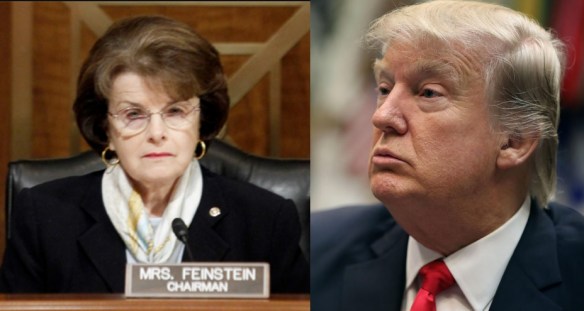
Senator Feinstein Just Hinted Trump Is Headed Towards Impeachment

“Well, we have a lot of people working at this. Technical people. And I think he’s gonna get himself out. I think sending sons to another country to make a financial deal for his company and then have that covered with government expenses — I think those government expenses should not be allowed… We are working on a bill that will do that now. We’re working on a couple of bills that would deal with conflict of interest. It’s difficult because this is a field that relates to some extent to the Emoluments Clause of the Constitution. And there’s no preceding legislation to do this. But we’ve got good people looking at it. And we’re going to some of the ethicists along the line.I’ve been doing what I do for a long time and I’ve never seen anything like this.”

Source: Occupy!

A Tweet, a Strobe and a Seizure. Now, an Arrest.

‘When the journalist Kurt Eichenwald opened an animated image sent to him on Twitter last December, the message “You deserve a seizure for your posts” appeared in capital letters along with a blinding strobe light. Mr. Eichenwald, who has epilepsy, has said he immediately suffered a seizure.

On Friday, the F.B.I. said it had arrested and charged a man for sending the electronic file, though the agency did not immediately release the suspect’s name or specify the criminal charges.

The unusual case has shown how online tools can be deployed as weapons capable of physical harm. Mr. Eichenwald said the attacker used the strobe light knowing that the visual elements were likely to lead Mr. Eichenwald, who has publicly discussed his epilepsy, into a seizure.

Steven Lieberman, Mr. Eichenwald’s lawyer, has argued that the use of the strobe light in a GIF, or moving graphic, was akin to sending an explosive or poison in the mail.’

Source: New York Times

Stop Social Media Strip Searches

‘Homeland Security officials have started asking people to unlock their phones and computers and log into their social media accounts at routine border crossings, and Congress could make that practice permanent.

We need to stop this threat to our basic privacy rights before handing over all of your most personal information becomes as commonplace as removing your shoes to fly.

Let’s draw a line — sign the urgent petition: “Demanding warrantless access to our phones and computers at the border is an invasion of privacy and weakens our security. Ban this practice immediately.” …’

Source: New rules at the airport could force you to hand over your phone and passwords

Physicists Are Closing in on Intriguing Evidence For a Fifth Force Of Nature

The idea that inertial and gravitational mass are the same is known as the weak equivalence principle. It became a crucial issue when Einstein formulated his theory of general relativity around 1912-16, which rested on the central idea that the acceleration caused by gravity is the same as the acceleration of an object subject to the same force in free space. If that’s not true, general relativity won’t work.“

The equivalence principle is one of the basic assumptions of general relativity,” says Stephan Schlamminger, who works at the Mecca of high-precision measurement, the National Institute of Standards and Technology in Gaithersburg, Maryland. “As such, it should be thoroughly tested. Tests of the equivalence principle are relatively cheap and simple, but could have a huge impact if a violation was found. It would be careless not to perform these experiments.

”If the weak equivalence principle fails, then there are two possibilities. Either Newton’s expression for the force of gravity between two masses (which is also what general relativity predicts if gravity and speeds are not extreme) is slightly inaccurate and needs tweaking. Or gravity might be fine as it stands—but there might be a new, fifth force that makes it look different. That fifth force would add to the four we already know to exist: gravity, electromagnetism, and the strong and weak nuclear forces that govern the interactions of subatomic particles inside atomic nuclei.

Whether we think about “modified gravity” or a fifth force is, says Fischbach, in the end just a semantic distinction. Either way, says Feng, there is “no reason at all that there can’t be a fifth force that we have not noticed until now.”

Source: Nautilus

The secret plan for the days after the Queen’s death

‘The Queen is Britain’s last living link with our former greatness – the nation’s id, its problematic self-regard – which is still defined by our victory in the second world war. One leading historian, who like most people I interviewed for this article declined to be named, stressed that the farewell for this country’s longest-serving monarch will be magnificent. “Oh, she will get everything,” he said. “We were all told that the funeral of Churchill was the requiem for Britain as a great power. But actually it will really be over when she goes.” …’

Source: The Guardian

In any case, if you hear Sabres of Paradise’s Haunted Dancehall playing on the radio, go to a news source immediately.

The Oxford comma: A Maine court settled the grammar debate over serial commas with a ruling on overtime pay for dairy-truck drivers 

As an Oxford commadian, I consider this an important victory.

‘A Maine court ruling in a case about overtime pay and dairy delivery didn’t come down to trucks, milk, or money. Instead, it hinged on one missing comma.Delivery drivers for local milk and cream company Oakhurst Dairy have been tussling with their employers over whether they qualify for overtime. On March 13, a US court of appeals determined that certain clauses of Maine’s overtime laws are grammatically ambiguous. Because of that lack of clarity, the five drivers won their appeal and were found eligible for unpaid overtime. The case now can be heard in a lower court.

The profoundly nerdy ruling is also a win for anyone who dogmatically defends the serial comma…’

Source: Quartz


Trump goes feral on Muslim ban ruling, vows to destroy 9th Circuit court, crowds: “Lock Her Up!”

‘Donald Trump reacted to a Hawaii court’s smackdown on his “watered-down” (his words) travel ban with a full-on fascist rant in Tennessee, where he rallied the crowds into screaming “lock her up” about Hillary Clinton, then attacked the U.S. judicial system.

…In a rambling speech, President Trump called revised travel ban `unprecedented judicial overreach,’ and more or less vowed to destroy the United States Court of Appeals for the Ninth Circuit…’

Source: Boing Boing

Rare Nuclear Test Films Saved, Declassified, and Uploaded to YouTube

‘From 1945 until 1962, the United States conducted 210 atmospheric nuclear tests—the kind with the big mushroom cloud and all that jazz. Above-ground nuke testing was banned in 1963, but there are thousands of films from those tests that have just been rotting in secret vaults around the country. But starting today you can see many of them on YouTube.

Lawrence Livermore National Laboratory (LLNL) weapon physicist Greg Spriggs has made it his mission to preserve these 7,000 known films, many of them literally decomposing while they’re still classified and hidden from the public.

According to LLNL, this 5-year project has been tremendously successful, with roughly 4,200 films already scanned and around 750 of those now declassified. Sixty-four of the declassified films have been uploaded today in what Spriggs is calling an “initial set.” …’

Source: Gizmodo

Creepiness

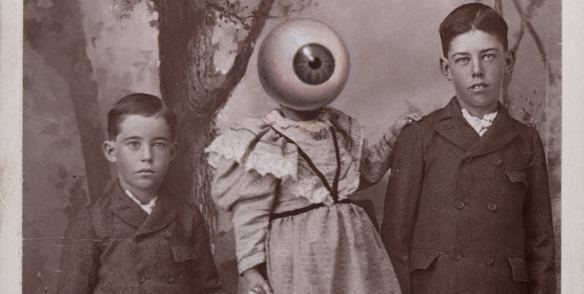
big-eye-girl-and-boys-1There has been very little writing or research about this experience. A 2016 study by  Francis McAndrew and Sarah Koehnke, published in New Ideas in Psychology,  is the only one you will find if you Google the topic. It seems to find creepiness to be a variant of anxiety and bases the distinction between the creepy and the anxiety-provoking largely on the ambiguity, as opposed to the certainty, of the threat in the former:

‘…[G]etting “creeped out” is a response to the ambiguity of threat and that it is only when we are confronted with uncertainty about threat that we get the chills.

For example, it would be considered rude and strange to run away in the middle of a conversation with someone who is sending out a creepy vibe but is actually harmless; at the same time, it could be perilous to ignore your intuition and engage with that individual if he is, in fact, a threat. The ambivalence leaves you frozen in place, wallowing in discomfort.

This reaction could be adaptive, something humans have evolved to feel, with being “creeped out” a way to maintain vigilance during a situation that could be dangerous.’

A recent episode of the podcast Stuff to Blow Your Mind dissected the concept of the creep and took a similar tack.

I was surprised that this conception of the creepy never mentions another deeply innate aversive emotion distinct from fear or anxiety — namely disgust or repulsion, which I think plays a part in the experience of creepiness which cannot be ignored.

Let’s start with the ‘origin myth’. The concept of creepiness may have arisen from a visceral experience. Someone or something is creepy if it “gives us the creeps.” This sensation is distinct from the visceral experience of fear, which involves autonomic arousal. When we are creeped out, we are not merely afraid. As I experience it, creepiness combines the spine-tingling and the sickening or queasy. It is not simply a variant of fear, but somewhere between fear and disgust and, I would argue, often much closer to the latter.

There are various reasons we find something aversive. If it presents a threat to our safety or bodily integrity, it stimulates anxiety and the ‘fight or flight’ syndrome. Regardless of whether it is a definite danger or merely one of sufficient likelihood, it stimulates the same reaction. There is no different emotional experience associated with an ambiguous threat, if it crosses some probability threshold of threat assessment. Thus, on its own, I find the idea that the distinction between the fearful and the creepy is based merely on the ambiguity of the threat an insufficient explanation.

In contrast, disgust operates to make us avoid those things that might make us physically ill rather than those that might simply harm or injure us. Unlike fear, disgust is protecting us against our own appetites. A food or a sexual encounter is pleasant, but if we are not protected by disgust we will not avoid creepy foods or sexual encounters which might sicken us. Sexual violence is violence done to us in the course of an act we are otherwise prone to enjoy, whereas the same is not true of nonsexual violence like a mugging. That is the basis of the studies and thinkers that find the essence of creepiness to be in the ambiguity of the threat, as  discussed above. The threat when we are repulsed by something is ambiguous because our aversion is struggling with our own appetite to something similar to those things that normally attract us, in a way it does not when we are simply afraid of something.

Although equally aversive in purpose, disgust is a distinct experience from fear, serves a distinct purpose, and developed evolutionarily as a distinct mechanism with a distinct neurobiology. In several psychological typologies of basic emotion, e.g. those of Robert Plutchik or Paul Rozin, disgust is distinct from other emotions such as fear, anger and sadness; it is a different archetypical emotion. Paul Ekman says that it invokes a distinct and characteristic facial expression, one of the universal facial expressions of emotion. Physiologically, while fear causes tachycardia and hypertension, disgust drops the heart rate and blood pressure. Changes in skin conductance and respiratory control differentiate the two states as well.

Functional MRI studies have correlated the experience of disgust with the activation of the anterior insula, quite distinct from fear, whose neural correlates include various cortical regions and the amygdala. Lesions of the anterior insula lead to deficiencies in experiencing disgust and also in recognizing it in others. It would be interesting to do fMRI studies of subjects exposed to something they find creepy and see if the consequent neural activation is closer to the fear experience or the disgust experience.

Behavioral studies have found that disgust is elicited, across cultures, by: bodily products and secretions; spoiled foods; disease-bearing animals; visible dirt; violations of the body envelope (blood, gore, mutilation); visible signs of infection or bodily distortion; death and decay. The aversion to pathogens inspired by disgust has been referred to as the behavioral element of the body’s immune system, causing us to avoid contracting disease or contamination rather than having to fight it once infected or contaminated.

In the zombie oeuvre, doesn’t the zombie become creepier and creepier the more decayed and disgusting s/he is? The reanimated newly dead, at first, are merely threatening, not creepy.

Social norms function to protect us from harm, and there are distinct but equally important social norms against both* violent antisocial behavior* and against uncleanliness and disease. The threateningly creepy person, as opposed to the merely threatening one, threatens to violate different social norms which have more to do with contamination and impurity than merely dangerous antisocial behaviors. These are an important, if covert, source of many of our social mores, as argued forcefully in Mary Douglas’ masterful Purity and Danger. Disgust thus has a role in enforcing certain forms of morality. Disgust functions to apply to social contaminants as well as physical ones, inspiring social avoidance as well as other aversions. We shun or expel the moral reprobate much as we avoid a physically disgusting stimulus like a pool of vomit. We refer to criminals with such terms as “slime” or “scum.” The creep, I would argue, is someone who inspires moral disgust.

Some of the cultural differences in what is disgusting — and what is found creepy — can thus obviously be seen in terms of the distinct social norms across cultures. It is perhaps no accident, from this point of view, that the ostracized lowest class in Indian society are “untouchable.” Creepiness may entail a flavor of ethnic otherness. This should be seen in light of the danger of impurity — often, the ethnic other has been seen as unclean and diseased. (If greasy hair is seen as the creep’s attribute, it is because his appearance inspires disgust of his dirtiness and potential disease, I would argue. ) Indeed, research has shown that people more sensitive to disgust tend to make stricter moral judgments. They find their social in-group more attractive and have more negative attitudes toward others. Interestingly, in some studies people of different political persuasions have different fMRI activity patterns in response to disgusting images even if reporting similar conscious reactions to the images. In one study, the reaction to a single image could predict a person’s political persuasion with 95% accuracy.

FMRI studies also show that, when viewing images of people from stigmatized groups that inspire disgust (homeless, drug addicts), subjects have reciprocally reduced activation of brain regions associated with the experience of empathy. Stereotyping, xenophobia, and dehumanizing of the outsider may be based on the neurology of disgust or creepiness. Ethicist Martha Nussbaum, for example (From Disgust to Humanity), argues that the “politics of disgust” supports sexism, racism and antisemitism and that disgust is employed to enforce oppression. She and others argue that it is urgent that reactions of disgust to social others be rebutted.

Women more often react to others as creepy. Studies have shown that women generally report greater disgust than men as well, especially regarding sexual disgust. Interestingly, disgust rises during pregnancy, perhaps mediated by increasing levels of progesterone. (Do innate differences in sensitivity to disgust correlate with progesterone levels even in nonpregnant individuals?) Some have conjectured that this behavioral avoidance (“behavioral immunity”) is a compensation for the pregnant mother’s need to dial down her immune system so as not to attack or reject the embryo. As the immune system is weakened, disgust becomes a more important line of defense.

Matt Damon Reads Howard Zinn’s “The Problem is Civil Obedience,” a Call for Americans to Take Action

‘Say, for example, that a gang of obscenely rich mercenaries with questionable ties and histories had taken power with the intent to destroy institutions so they could loot the country, further impoverish and disempower the citizenry, and prosecute, imprison, and demonize dissidents and ethnic and religious minorities. Such a scenario would cry out, one might think, for civil action on a never-before-seen scale. Millions, one might imagine, would either storm the castle or refuse to obey the commands of their new rulers. We might describe this situation as a topsy-turvy turn of events, should, say, such an awful thing come to pass. Topsy-turvy is exactly the phrase Howard Zinn used in his characterization of the U.S. during the Vietnam War, when he saw a situation like the one above, one that had also obtained, he said, in Hitler’s Germany and Stalin’s Russia.’

Source: Open Culture

Spicer: Trump didn’t mean wiretapping when he tweeted about wiretapping

‘The White House on Monday walked back a key point of President Donald Trump’s unsubstantiated allegation that President Barack Obama wiretapped his phones in Trump Tower during the 2016 election.

Namely, White House press secretary Sean Spicer said Trump wasn’t referring to wiretapping when he tweeted about wiretapping.

“I think there’s no question that the Obama administration, that there were actions about surveillance and other activities that occurred in the 2016 election,” Spicer said. “The President used the word wiretaps in quotes to mean, broadly, surveillance and other activities.”

6 days later, no more clarity from Trump on wiretapping claimsWiretapping is a narrowly defined surveillance activity that involves tapping into “a telephone or telegram wire in order to get information,” according to Merriam-Webster dictionary.

Spicer also said that Trump was referring to the Obama administration broadly — and not accusing Obama of personal involvement — when he tweeted that “Obama had my ‘wires tapped’ in Trump Tower” and accused Obama of being a “bad” or “sick guy.” …’

Source: CNNPolitics.com

Diet Reduces Risk of Postpartum Depression

‘A dietary supplement kit, created to counter mood-altering brain changes linked to depression, virtually eliminated the “baby blues” among women in a new study at Toronto’s Centre for Addiction and Mental Health (CAMH).

Postpartum blues are common among women after giving birth. However, when severe, they substantially increase the risk of clinically diagnosed postpartum depression, which affects 13 per cent of new mothers and is the most common complication of child-bearing.The study, published in the Proceedings of the National Academy of Sciences (PNAS), was led by Dr. Jeffrey Meyer, who heads the Neuroimaging Program in Mood & Anxiety in CAMH’s Campbell Family Mental Health Research Institute.

The study, published in the Proceedings of the National Academy of Sciences (PNAS), was led by Dr. Jeffrey Meyer, who heads the Neuroimaging Program in Mood & Anxiety in CAMH’s Campbell Family Mental Health Research Institute…’

Source: Neuroscience News

An Artist Turned NYC’s ‘See Something, Say Something’ Ads Into a Powerful Commentary on Fear

More power to you, from one hater of the “See something…” messages to another:

‘It’s easy to be paranoid in 2017. We’ve got Wikileaks telling us just how much power the CIA has over our devices. We have a government pretending Russia did not, and is not, hacking our political system. And on the ground, racism and implicit bias have fueled a spike in hate crimes—resulting in the deaths of brown and black people across the country.

But there’s a difference between fear and vigilance, and only one works in our favor as a democratic country. Fear drives people to react—pull the trigger, scapegoat entire communities, describe the wrong suspect. Vigilance, on the other hand, assumes that power belongs to the people, and places a magnifying glass on any loopholes in that process.

A New York City’s artist drove that message home in a two-car installation. The artist, The Gothamist reported, altered the usual “If You See Something, Say Something” message with some fine print: “Stay awake, not afraid. Scared people are easy to manipulate. #Resist.” Another one says, “Call your representatives. Tell them you’re watching.” …’

Source: Motherboard

‘Protect Us From This Dangerous President,’ 2 Psychiatrists Say

These are friends and mentors of mine and two of the most preeminent psychiatrists in America.

To the Editor:

‘Soon after the election, one of us raised concerns about Donald Trump’s fitness for office, based on the alarming symptoms of mental instability he had shown during his campaign. Since then, this concern has grown. Even within the space of a few weeks, the demands of the presidency have magnified his erratic patterns of behavior.In particular, we are struck by his repeated failure to distinguish between reality and fantasy, and his outbursts of rage when his fantasies are contradicted. Without any demonstrable evidence, he repeatedly resorts to paranoid claims of conspiracy.

Most recently, in response to suggestions of contact between his campaign and agents of the Russian government, he has issued tirades against the press as an “enemy of the people” and accusations without proof that his predecessor, former President Barack Obama, engaged in partisan surveillance against him.

We are in no way offering a psychiatric diagnosis, which would be unwise to attempt from a distance. Nevertheless, as psychiatrists we feel obliged to express our alarm. We fear that when faced with a crisis, President Trump will lack the judgment to respond rationally.

The military powers entrusted to him endanger us all. We urge our elected representatives to take the necessary steps to protect us from this dangerous president.

JUDITH L. HERMAN MD

ROBERT JAY LIFTON MD

Dr. Herman is a professor of psychiatry at Harvard Medical School. Dr. Lifton is a lecturer in psychiatry at Columbia University and professor emeritus at CUNY.’

Source: NYTimes.com

Critic: “21 Movies I’m Embarrassed to Admit I Love”

Germain Lussier wrote (Source: 21 Movies I’m Embarrassed to Admit I Love):

‘We all have them. Our guilty pleasure movies. Movies we like that we don’t like to tell other people. Films that bring us unbridled joy while making others cringe in pain. Films so many people hate but you just, somehow, for whatever reason, love. This is my list. Here are 21 movies that I’m embarrassed I like at all, let alone as much as I do, in alphabetical order…’

I have seen five of the movies on this list and am not embarrassed to say that I liked all five. Moreover, I agree with Lussier that one — Cloud Atlas — was overwhelmingly good, not at all a guilty pleasure but a pure pleasure. But perhaps that was because David Mitchell’s book, from which it is adapted, is even more of a pure pleasure, on my list of the very best modern novels. It is one of those books about which I say that the most likely reason you did not like it is that you did not really understand it.

(PS: Beyond the five I have seen, I cannot conceive of having any desire to waste my time seeing any of the other films on the list.)