Unknown's avatar

About FmH

70-something psychiatrist, counterculturalist, autodidact, and unrepentent contrarian.

Physicists Successfully Tie the Very First Quantum Knots

‘Theoretical physicists have been predicting that it should be possible for knots to form in quantum fields for decades, but nobody could figure out how to accomplish this feat experimentally. Now an international team has managed to do just that, tying knots in a superfluid for the very first time by manipulating magnetic fields.

… It’s tough to visualize these exotic objects, but they are essentially particle-like rings or loops in a quantum field connected to each other exactly once. A mathematician might not consider these structures to be true knots; typically a knot is defined as a knotted circle, like a pretzel, while a rubber band would be considered an “un-knot.” Hall and Möttönen prefer to think of their structures as knotty solitons….’

Source: Gizmodo

New Solution to Fermi Paradox Suggests Alien Life Goes Extinct Early

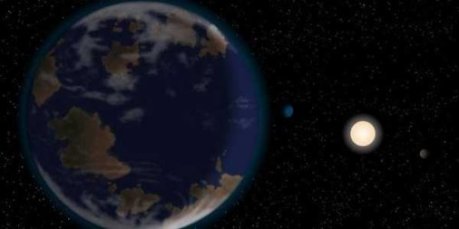
‘We have yet to discover a single trace of alien life, despite the extremely high probability that it exists somewhere. This contradiction is popularly known as the Fermi Paradox. A new theory attempts to solve this conundrum by suggesting that habitable planets are quite common in our galaxy, but nascent life gets snuffed out very quickly.

An oft-cited solution to the Fermi Paradox—that is, the lack of observational evidence that our galaxy has been colonized by an extraterrestrial civilization—is the Great Filter hypothesis. Devised by Robin Hanson of George Mason University, this theory suggests that some kind of cosmic-wide obstacle is preventing life from developing beyond a certain stage. Trouble is, we’re not entirely sure if this Great Filter actually exists, or what it looks like.

Some astrobiologists look to our planet’s ancient past and point to the presence of three possible filter points: the emergence of reproductive molecules, simple single-celled life, or complex single-celled life. If we could prove that any one of these critical evolutionary steps are true, that would be exceptionally good news—it would imply that the Great Filter is behind us. On the other hand, some pessimistic futurists fear that the Great Filter looms ahead of us, an event that will likely come in the form of a self-inflicted existential catastrophe…’

Source: Gizmodo

“The Animals are Leaving”

One by one, like guests at a late party
They shake our hands and step into the dark:
Arabian ostrich; Long-eared kit fox; Mysterious starling.

One by one, like sheep counted to close our eyes,
They leap the fence and disappear into the woods:
Atlas bear; Passenger pigeon; North Island laughing owl;
Great auk; Dodo; Eastern wapiti; Badlands bighorn sheep.

One by one, like grade school friends,
They move away and fade out of memory:
Portuguese ibex; Blue buck; Auroch; Oregon bison;
Spanish imperial eagle; Japanese wolf; Hawksbill
Sea turtle; Cape lion; Heath hen; Raiatea thrush.

One by one, like children at a fire drill, they march outside,
And keep marching, though teachers cry, “Come back!”
Waved albatross; White-bearded spider monkey;
Pygmy chimpanzee; Australian night parrot;
Turquoise parakeet; Indian cheetah; Korean tiger;
Eastern harbor seal ; Ceylon elephant ; Great Indian rhinoceros.

One by one, like actors in a play that ran for years
And wowed the world, they link their hands and bow
Before the curtain falls.


— Charles Harper Webb (2006)

Annals of Emerging Disease

Via The New York Times: : What You Need to Know About Zika Virus: This tropical virus is newly spreading in the Western Hemisphere and has just had its first demonstrated North American case. Pregnant women should be warned that there seems to be a link between exposure of babies in utero and microcephaly at birth.

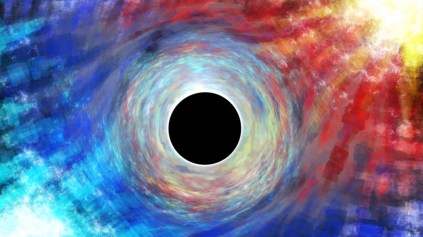
Black Hole Sun Could Support Bizarre Life on Orbiting Planets

Via New Scientist:

‘A black hole sun could be friendlier than you might expect. Planets orbiting a black hole – as they do in the film Interstellar – could sustain life, thanks to a bizarre reversal of the thermodynamics experienced by our sun and Earth.

According to the second law of thermodynamics, life requires a temperature difference to provide a source of useable energy. Life on Earth exploits the difference between the sun and the cold vacuum of space, but what if you flip the temperatures around, with a cold sun and a hot sky?’

Let’s Just Say It: the Republicans Are the Problem

Via The Washington Post:

‘Rep. Allen West, a Florida Republican, was recently captured on video asserting that there are “78 to 81” Democrats in Congress who are members of the Communist Party. Of course, it’s not unusual for some renegade lawmaker from either side of the aisle to say something outrageous. What made West’s comment — right out of the McCarthyite playbook of the 1950s — so striking was the almost complete lack of condemnation from Republican congressional leaders or other major party figures, including the remaining presidential candidates…’

Boy’s Response to Blasphemy Charge Unnerves Many in Pakistan

Via The NY Times we learn that a boy accused of blasphemy by the imam of his mosque, on the basis of a misunderstanding, returned to the mosque bearing his self-severed right hand on a tray. Said imam has fled, fearing repercussions for inciting passions to such an extent. Both the boy and his family feel his action was a loving statement of his devotion to the prophet. This is so wrong on so many levels, as abby commented in pointing me to this coverage. We live in such a sick, sick world.

Barring Donald Trump From Britain?

Via NY Times, although they have no power to do so (it is actually up to the Home Secretary), the British Parliament has been debating two petitions to bar Donald Trump from Great Britain on the basis that his anti-Muslim rhetoric violates British bans on hate speech.

Sense about Science

‘Sense About Science works with scientists and members of the public to change public debates and to equip people to make sense of science and evidence.

Sense About Science responds to hundreds of requests for independent advice and questions on scientific evidence each year. We chase down dodgy science and mobilise networks of scientists and community groups to counter it. We also invite scientists to publish corrections of misreported research in our ‘For the record’ section.

Where we are constantly fire-fighting on a particular issue, we work with scientists and members of the public to draw out the underlying assumptions and to address misconceptions. Examples of this can be seen in the Making Sense of… series and other projects.

Underpinning this, Sense About Science runs programmes to promote general understanding of scientific evidence, such as use of statistics, the process of peer review and how to design a fair test to see whether medicines work.Sense About Science’s campaigns involve wide collaboration across society to make a permanent difference across all areas of our work and to create an environment that supports open public discussion about scientific research, free from intimidation, hysteria and political pressure…’

Source: Sense about Science

Sounds worthwhile. However, while I think that evidence-based conclusions are better than conjecture and assumptions, research findings are only as good as the studies that generated them. In behavioral health, “evidence-based practice” often leads us down the garden path.

A world divided: Elites descend on Swiss Alps amid rising inequality

‘Just 62 people, 53 of them men, own as much wealth as the poorest half of the entire world population and the richest 1 percent own more than the other 99 percent put together, anti-poverty charity Oxfam said on Monday.Significantly, the wealth gap is widening faster than anyone anticipated, with the 1 percent overtaking the rest one year earlier than Oxfam had predicted only a year ago.Rising inequality and a widening trust gap between people and their political leaders are big challenges for the global elite as they converge on Davos for the annual World Economic Forum, which runs from Jan. 20 to 23…’

Source: Reuters (via Boing Boing)

The people of MLK’s sermons, in one graphic

‘Martin Luther King Jr. often used characters in his sermons. Given that he was a Baptist preacher, they were usually biblical figures, like the 12 apostles, Moses, and Lazarus. But he also drew from a wide array of innovative thinkers, both ancient and contemporary…

I looked through 13 well-known King sermons, which admittedly is not comprehensive. But the sermons span from 1953 when he was a guest preacher at his uncle’s Second Baptist Church in Detroit to a handful in 1968, right before his assassination. I think these 82 people give a decent of idea of the people he included as characters in his sermons…’

Source: Vox

The Case of the So-Called Alien Megastructure Just Got Weirder

‘[T]he weird, flickering star known as KIC 8462852 still isn’t sitting right with astronomers. In fact, it just got a lot weirder.Ever since KIC 84628532 was spotted in the Kepler Space Telescope’s dataset, astronomers have puzzled over what the heck could be responsible for the star’s logic-defying light curve. Over four years of observational data, KIC 8462852 flickered erratically, its light output sometimes dropping by as much as 20%. That’s highly unusual stellar behavior, and it can’t be explained by a transiting planet.Some astronomers proposed that KIC 8462852 might be occluded by a swarm of comets. Others suggested aliens…’

Source: Gizmodo

What is 10 miles across, but brighter than the Milky Way?

‘Right now, astronomers are viewing a ball of hot gas billions of light years away that is radiating the energy of hundreds of billions of suns. At its heart is an object a little larger than 10 miles across. And astronomers are not entirely sure what it is. If, as they suspect, the gas ball is the result of a supernova, then it’s the most powerful supernova ever seen…’

Source: ScienceDaily

What the Mast Brothers Scandal Tells Us About Ourselves

tastingbarNot that I have ever or would ever do this, but as a lover of chocolate it concerns me tremendously. (This is part of my “Emperor-has-no-Clothes” occasional feature.) If you have ever shelled out for a $2000-a-pop chocolate tasting (or even, probably, a $10-$15 chocolate bar), you have probably been ripped off. The world of high-end chocolate appears to involve systematic deception about the bean-to-bar myth and, in general,  the sourcing, production value and quality of the product they push. But with recent muckraker revelations, it seems to be all unravelling.

What does it tell us about our captivity to consumer culture? As the saying goes, fool me once, shame on you. But fool me twice…

‘Our delight at their downfall truly reveals how we as a consumer culture lie to ourselves about being consumers of culture.’

Via Eater

Yale Medical School Professors Are Starting a Psychedelic Meetup

‘The Yale School of Medicine announced Monday that it has formed a study group to explore the re-emerging field of psychedelic science, focusing on the clinical applications of psychedelic drugs in treating mental illnesses.

The field of study is currently experiencing a resurgence after decades of stigmatization beginning in the 1970s, when psychedelics were classified as “drugs of abuse.” Recent studies have rehabilitated psychedelics as potentially therapeutic drugs, including clinical trials that utilize psilocybin, the active compound in hallucinogenic mushrooms, as a therapeutic aid in the treatment of anxiety, addiction, and to make you feel really fucking good; MDMA as a useful tool in the treatment of PTSD and social anxiety caused by autism; and LSD for people suffering from anxiety caused by serious illness.

The Yale discussion group, dubbed the Yale Psychiatry and Psychedelics Group or YPPG, hopes to delve into some of the underlying neurological questions that have yet to be fully explored.

“I’m very interested in how you can study these things,” said Peter H. Addy, PhD, one of the group’s organizers. “This early work that’s been done suggests potential for a number of clinical applications, but we need to learn more about how the brain works, and perhaps how consciousness works. There’s some promise, but it’s not really a subject that a lot of people are experts in.” …’

Source: Motherboard

R.I.P. Paul Bley

9e8d891e38cb8ca2a39500589f561

Via The New York Times:
Adventurous Jazz Pianist Dies at 83: ‘Paul Bley, an obdurate and original pianist who began his career playing bebop and eventually became a major force in experimental jazz, died on Sunday at his home in Stuart, Fla. He was 83…’


Related:

Thanks to reader David Anderson, I was pointed to some thoughts about Bley from the mindblowing guitarist Nels Cline:

‘When I was working at the record store back when, there was a painter who came in all the time to buy jazz records, which he listened to while he worked. We would often end up in discussions and gently heated bouts of opinion regarding records, and I was always trying to get him to get into Paul Bley. But he always said the same thing: “His stuff is just too…COOL for me”, by which I think he meant both cool as in hip and cool as in icy.

There is no doubt in my mind that Paul Bley was, musically-speaking, the hip kind of cool. Just take a listen and look at the man circa 1966! But icy?… I think “considered” is what describes what may be mistaken for “icy” – his cogent use of space, dissonance, all with a decidedly bluesy, neo-Ellington inflection – which is just fucking cool, yes. But beyond these coolness considerations, I feel drawn into a very personal world, an intimate state of reverie informed by highly developed musicality and restrained yet palpable emotion. Maybe you can dig what I am saying – if you listen…’

…and if you read the whole thing.

Which U.S. President Would Win In a Mass Knife Fight to the Death?

‘One of my most-visited sites on the web is Reddit.com, and one of my favourite subreddits is HistoricalWhatIf, an online community that debates historical hypotheticals. Earlier today someone asked the question, In a mass knife fight to the death between every American President, who would win and why? Someone beat me to the obvious answer that a final showdown would see Andrew Jackson, Abraham Lincoln, and Teddy Roosevelt doing a dagger-wielding version of a Mexican standoff, so I took it too far and walked through how I thought every president would turn out…’

Source: Face in the Blue

4 New Elements Complete 7th Row of Periodic Table

‘…The International Union of Pure and Applied Chemistry has verified the discovery of four super-heavy elements, completing the seventh row of the periodic table. It’s an exciting day for chemists.

The new elements were discovered by teams of scientists from Russia, Japan, and America. These will be the first elements added since 114 (Flerovium) and 116 (Livermorium) were added to the table in 2011.The trick to “finding” these elements isn’t so much in searching for them as it is in creating them. The new elements, given the atomic numbers 113, 115, 117, and 118 are synthetic — they do no occur naturally.

…Eventually, the laws of physics may halt the progression of creating new elements. But for now, there are four new elements that need proper names. The IUPAC will formally announce the finalized names this summer….’

Source: Big Think

The science of craving

‘The reward system exists to ensure we seek out what we need. If having sex, eating nutritious food or being smiled at brings us pleasure, we will strive to obtain more of these stimuli and go on to procreate, grow bigger and find strength in numbers. Only it’s not as simple in the modern world, where people can also watch porn, camp out in the street for the latest iPhone or binge on KitKats, and become addicted, indebted or overweight. As Aristotle once wrote: “It is of the nature of desire not to be satisfied, and most men live only for the gratification of it.”

Buddhists, meanwhile, have endeavoured for 2,500 years to overcome the suffering caused by our propensity for longing. Now, it seems, Berridge has found the neuro-anatomical basis for this facet of the human condition – that we are hardwired to be insatiable wanting machines.

If you had opened a textbook on brain rewards in the late 1980s,  it would have told you that the dopamine and opioids that swished and flickered around the reward pathway were the blissful brain chemicals responsible for pleasure. The reward system was about pleasure and somehow learning what yields it, and little more.

So when Berridge, a dedicated young scientist who was more David than Goliath, stumbled upon evidence in 1986 that dopamine did not produce pleasure, but in fact desire, he kept quiet. It wasn’t until the early 1990s, after rigorous research, that he felt bold enough to go public with his new thesis. The reward system, he then asserted, has two distinct elements: wanting and liking (or desire and pleasure). While dopamine makes us want, the liking part comes from opioids and also endocannabinoids (a version of marijuana produced in the brain), which paint a “gloss of pleasure”, as Berridge puts it, on good experiences. For years, his thesis was contested, and only now is it gaining mainstream acceptance.

Meanwhile, Berridge has marched on, unearthing more and more detail about what makes us tick. His most telling discovery was that, whereas the dopamine/wanting system is vast and powerful, the pleasure circuit is anatomically tiny, has a far more fragile structure and is harder to trigger…’

And another little tidbit that illustrates the gist of it:

“One of the key things in pleasure”, says Kringelbach, whose default timbre sits just above whisper level, “is that it comes in cycles.” Wanting and liking wax and wane like candle flames. The hungry, wanting state before a meal could be studded with moments of pleasure from a social encounter, or anticipation of good food.  Then, as we eat, pleasure dominates, but wanting still crops up – more salt, a drink of water, a second helping. Before long, the satiety system steps in to render each mouthful less delicious until we stop. If we switch to another food – dessert, cheese, petits fours – we can prolong the pleasure until we’re stuffed, although we may regret it.

Source: Intelligent Life magazine

10 Maps That Will Change How You View the World

Via IFLScience:

‘Maps are one of those things you can lose yourself in for hours. Since their humble origins as scribbles in the sand thousands of millennia ago, maps have been useful companions during the development of human culture and society. Now, in an age of seemingly endless information, maps are more abundant, advanced and fascinating than ever before.

How Obama Sees Terrorism

Via The Atlantic:

‘Obama is a kind of Fukuyamian. Like Francis Fukuyama, the author of the famed 1989 essay “The End of History,” he believes that powerful, structural forces will lead liberal democracies to triumph over their foes—so long as these democracies don’t do stupid things like persecuting Muslims at home or invading Muslim lands abroad. His Republican opponents, by contrast, believe that powerful and sinister enemies are overwhelming America, either overseas (the Rubio version) or domestically (the Trump version).

For them, the only thing more terrifying than “radical Islam” is the equanimity with which President Obama meets it. And, to their dismay, that equanimity was very much on display on Sunday night…’

Happy New Year from Netflix, fool

Via AL.com: it seems Netflix streamed an early, false New Year’s countdown so you could celebrate with your kids and get them off to bed before the ball really dropped. (Although, as parents age, it would seem that they need to beware that their kids don’t turn the tables and do it to them!)

Billy Collins: Some Days

Some days I put the people in their places at the table,
bend their legs at the knees,
if they come with that feature,
and fix them into the tiny wooden chairs.

All afternoon they face one another,
the man in the brown suit,
the woman in the blue dress,
perfectly motionless, perfectly behaved.

But other days, I am the one
who is lifted up by the ribs, then lowered into the dining room of a dollhouse
to sit with the others at the long table.

Very funny,
but how would you like it
if you never knew from one day to the next if you were going to spend it
striding around like a vivid god,
your shoulders in the clouds, or sitting down there amidst the wallpaper,
staring straight ahead with your little plastic face?


Source: Academy of American Poets

New Year’s Customs and Rituals

New Year Sunrise

New Year Sunrise

This is the annual update of my New Year’s post, a tradition I started early on on FmH. Please let me know if you find any dead links:

I once ran across a January 1st Boston Globe article compiling folkloric beliefs about what to do, what to eat, etc. on New Year’s Day to bring good fortune for the year to come. I’ve regretted since — I usually think of it around once a year (grin) — not clipping out and saving the article. Especially since we’ve had children, I’m interested in enduring traditions that go beyond getting drunk [although some comment that this is a profound enactment of the interdigitation of chaos and order appropriate to the New Year’s celebration — FmH], watching the bowl games and making resolutions.

Marteniza-ball

A web search brought me this, less elaborate than what I recall from the Globe but to the same point. It is weighted toward eating traditions, which is odd because, unlike most other major holidays, the celebration of New Year’s in 21st century America does not seem to be centered at all around thinking about what we eat (except in the sense of the traditional weight-loss resolutions!) and certainly not around a festive meal. But…

Traditionally, it was thought that one could affect the luck they would have throughout the coming year by what they did or ate on the first day of the year. For that reason, it has become common for folks to celebrate the first few minutes of a brand new year in the company of family and friends. Parties often last into the middle of the night after the ringing in of a new year. It was once believed that the first visitor on New Year’s Day would bring either good luck or bad luck the rest of the year. It was particularly lucky if that visitor happened to be a tall dark-haired man.

“Traditional New Year foods are also thought to bring luck. Many cultures believe that anything in the shape of a ring is good luck, because it symbolizes “coming full circle,” completing a year’s cycle. For that reason, the Dutch believe that eating donuts on New Year’s Day will bring good fortune.

blackeye_peas_bowl_text
Many parts of the U.S. celebrate the new year by consuming black-eyed peas. These legumes are typically accompanied by either hog jowls or ham. Black-eyed peas and other legumes have been considered good luck in many cultures. The hog, and thus its meat, is considered lucky because it symbolizes prosperity. Cabbage is another ‘good luck’ vegetable that is consumed on New Year’s Day by many. Cabbage leaves are also considered a sign of prosperity, being representative of paper currency. In some regions, rice is a lucky food that is eaten on New Year’s Day.”

English: Fireworks over Edinburgh on New Year'...

Fireworks over Edinburgh on New Year’s Eve

The further north one travels in the British Isles, the more the year-end festivities focus on New Year’s. The Scottish observance of Hogmanay has many elements of warming heart and hearth, welcoming strangers and making a good beginning:

“Three cornered biscuits called hogmanays are eaten. Other special foods are: wine, ginger cordial, cheese, bread, shortbread, oatcake, carol or carl cake, currant loaf, and a pastry called scones. After sunset people collect juniper and water to purify the home. Divining rituals are done according to the directions of the winds, which are assigned their own colors. First Footing:The first person who comes to the door on midnight New Year’s Eve should be a dark-haired or dark-complected man with gifts for luck. Seeing a cat, dog, woman, red-head or beggar is unlucky. The person brings a gift (handsel) of coal or whiskey to ensure prosperity in the New Year. Mummer’s Plays are also performed. The actors called the White Boys of Yule are all dressed in white, except for one dressed as the devil in black. It is bad luck to engage in marriage proposals, break glass, spin flax, sweep or carry out rubbish on New Year’s Eve.”

Here’s why we clink our glasses when we drink our New Year’s toasts, no matter where we are. Of course, sometimes the midnight cacophony is louder than just clinking glassware, to create a ‘devil-chasing din’.

In Georgia, eat black eyed peas and turnip greens on New Year’s Day for luck and prosperity in the year to come, supposedly because they symbolize coppers and currency. Hoppin’ John, a concoction of peas, onion, bacon and rice, is also a southern New Year’s tradition, as is wearing yellow to find true love (in Peru and elsewhere in South America, yellow underwear, apparently!) or carrying silver for prosperity. In some instances, a dollar bill is thrown in with the other ingredients of the New Year’s meal to bring prosperity. In Greece, there is a traditional New Year’s Day sweetbread with a silver coin baked into it. All guests get a slice of the bread and whoever receives the slice with the coin is destined for good fortune for the year. At Italian tables, lentils, oranges and olives are served. The lentils, looking like coins, will bring prosperity; the oranges are for love; and the olives, symbolic of the wealth of the land, represent good fortune for the year to come.

A New Year’s meal in Norway also includes dried cod, “lutefisk.” The Pennsylvania Dutch make sure to include sauerkraut in their holiday meal, also for prosperity.

In Spain, you would cram twelve grapes in your mouth at midnight, one each time the clock chimed, for good luck for the twelve months to come. (If any of the grapes happens to be sour, the corresponding month will not be one of your most fortunate in the coming year.) The U. S. version of this custom, for some reason, involves standing on a chair as you pop the grapes. In Denmark, jumping off a chair at the stroke of midnight signifies leaping into the New Year.
In Rio,

The crescent-shaped Copacabana beach… is the scene of an unusual New Year’s Eve ritual: mass public blessings by the mother-saints of the Macumba and Candomble sects. More than 1 million people gather to watch colorful fireworks displays before plunging into the ocean at midnight after receiving the blessing from the mother-saints, who set up mini-temples on the beach.

When taking the plunge, revelers are supposed to jump over seven waves, one for each day of the week.

This is all meant to honor Lamanjá, known as the “Mother of Waters” or “Goddess of the Sea.” Lamanjá protects fishermen and survivors of shipwrecks. Believers also like to throw rice, jewelry and other gifts into the water, or float them out into the sea in intimately crafted miniature boats, to please Lamanjá in the new year.

In many northern hemisphere cities near bodies of water, people also take a New Year’s Day plunge into the water, although of course it is an icy one! The Coney Island Polar Bears Club in New York is the oldest cold-water swimming club in the United States. They have had groups of people enter the chilly surf since 1903.

Ecuadorian families make scarecrows stuffed with newspaper and firecrackers and place them outside their homes. The dummies represent misfortunes of the prior year, which are then burned in effigy at the stroke of midnight to forget the old year. Bolivian families make beautiful little wood or straw dolls to hang outside their homes on New Year’s Eve to bring good luck.

1cdd196c97bc4886c7d0b3a9c1b3dd97In China, homes are cleaned spotless to appease the Kitchen God, and papercuttings of red paper are hung in the windows to scare away evil spirits who might enter the house and bring misfortune. Large papier mache dragon heads with long fabric bodies are maneuvered through the streets during the Dragon Dance festival, and families open their front doors to let the dragon bring good luck into their homes.

The Indian Diwali, or Dipawali, festival, welcoming in the autumnal season, also involves attracting good fortune with lights. Children make small clay lamps, dipas, thousands of which might adorn a given home. In Thailand, one pours fragrant water over the hands of elders on New Year’s Day to show them respect.

//www.elanguages.org/images/16245' cannot be displayed]Elsewhere:

  • a stack of pancakes for the New Year’s breakfast in France.
  • banging on friends’ doors in Denmark to “smash in” the New Year, where it is also a good sign to find your doorstep heaped with broken dishes on New Year’s morning. Old dishes are saved all years to throw at your friends’ homes on New Year’s Eve.
  • going in the front door and out the back door at midnight in Ireland.
  • making sure the First Footer, the first person through your door in the New Year in Scotland, is a tall dark haired visitor.
  • water out the window at midnight in Puerto Rico rids the home of evil spirits.
  • cleanse your soul in Japan at the New Year by listening to a gong tolling 108 times, one for every sin
  • it is Swiss good luck to let a drop of cream fall on the floor on New Year’s Day.
  • Belgian farmers wish their animals a Happy New Year for blessings.
  • In Germany and Austria, lead pouring” (das Bleigießen) is an old divining practice using molten lead like tea leaves. A small amount of lead is melted in a tablespoon (by holding a flame under the spoon) and then poured into a bowl or bucket of water. The resulting pattern is interpreted to predict the coming year. For instance, if the lead forms a ball (der Ball), that means luck will roll your way. The shape of an anchor (der Anker) means help in need. But a cross (das Kreuz) signifies death. This is also a practice in parts of Finland, apparently.

  • El Salvadoreans crack an egg in a glass at midnight and leave it on the windowsill overnight; whatever figure it has made in the morning is indicative of your fortune for the year.
  • Some Italians like to take part in throwing pots, pans, and old furniture from their windows when the clock strikes midnight. This is done as a way for residents to rid of the old and welcome in the new. It also allows them to let go of negativity. This custom is also practiced in parts of South Africa, the Houston Press adds.
  • In Colombia, walk around with an empty suitcase on New Year’s Day for a year full of travel.
  • In the Philippines, all the lights in the house are turned on at midnight, and previously opened windows, doors and cabinets throughout the house are suddenly slammed shut, to ward off evil spirits for the new year.
  • In Russia a wish is written down on a piece of paper. It is burned and the ash dissolved in a glass of champagne, which should be downed before 12:01 am if the wish is to come true.
  • aptopix-romania-bear-ritual-89ecd02b044cc9131Romanians celebrate the new year by wearing bear costumes and dancing around to ward off evil
  • In Turkey, pomegranates are thrown down from the balconies at midnight for good luck.


It’s a bit bizarre when you think about it. A short British cabaret sketch from the 1920s has become a German New Year’s tradition. Yet, although The 90th Birthday or Dinner for One is a famous cult classic in Germany and several other European countries, it is virtually unknown in the English-speaking world, including Britain, its birthplace.” (Watch on Youtube, 11 min.)

So if the Germans watch British video, what do you watch in Britain? A number of sources have suggested that it is Jools Holland’s Hootenanny, “even though it’s awful and everyone hates it.

On a related theme, from earlier in the same week, here are some of the more bizarre Christmas rituals from around the world. 

Some history; documentation of observance of the new year dates back at least 4000 years to the Babylonians, who also made the first new year’s resolutions (reportedly voews to return borrowed farm equipment were very popular), although their holiday was observed at the vernal equinox. The Babylonian festivities lasted eleven days, each day with its own particular mode of celebration. The traditional Persian Norouz festival of spring continues to be considered the advent of the new year among Persians, Kurds and other peoples throughout Central Asia, and dates back at least 3000 years, deeply rooted in Zooastrian traditions.Modern Bahá’í’s celebrate Norouz (”Naw Ruz”) as the end of a Nineteen Day Fast. Rosh Hashanah (”head of the year”), the Jewish New Year, the first day of the lunar month of Tishri, falls between September and early October. Muslim New Year is the first day of Muharram, and Chinese New Year falls between Jan. 10th and Feb. 19th of the Gregorian calendar.

The classical Roman New Year’s celebration was also in the spring although the calendar went out of synchrony with the sun. January 1st became the first day of the year by proclamation of the Roman Senate in 153 BC, reinforced even more strongly when Julius Caesar established what came to be known as the Julian calendar in 46 BC. The early Christian Church condemned new year’s festivities as pagan but created parallel festivities concurrently. New Year’s Day is still observed as the Feast of Christ’s Circumcision in some denominations. Church opposition to a new year’s observance reasserted itself during the Middle Ages, and Western nations have only celebrated January 1 as a holidy for about the last 400 years. The custom of New Year’s gift exchange among Druidic pagans in 7th century Flanders was deplored by Saint Eligius, who warned them, “[Do not] make vetulas, [little figures of the Old Woman], little deer or iotticos or set tables [for the house-elf] at night or exchange New Year gifts or supply superfluous drinks [another Yule custom].” (Wikipedia)

The tradition of the New Year’s Baby signifying the new year began with the Greek tradition of parading a baby in a basket during the Dionysian rites celebrating the annual rebirth of that god as a symbol of fertility. The baby was also a symbol of rebirth among early Egyptians. Again, the Church was forced to modify its denunciation of the practice as pagan because of the popularity of the rebirth symbolism, finally allowing its members to cellebrate the new year with a baby although assimilating it to a celebration of the birth of the baby Jesus. The addition of Father Time (the “Old Year”) wearing a sash across his chest with the previous year on it, and the banner carried or worn by the New Year’s Baby, immigrated from Germany. Interestingly, January 1st is not a legal holiday in Israel, officially because of its historic origins as a Christian feast day.


Auld Lang Syne (literally ‘old long ago’ in the Scottish dialect) is sung or played at the stroke of midnight throughout the English-speaking world (and then there is George Harrison’s “Ring Out the Old”). Versions of the song have been part of the New Year’s festivities since the 17th century but Robert Burns was inspired to compose a modern rendition, which was published after his death in 1796. (It took Guy Lombardo, however, to make it popular…)

Should auld acquaintance be forgot
and never brought to mind?
Should auld acquaintance be forgot
and days of auld lang syne?
For auld lang syne, my dear,
for auld lang syne,
we’ll take a cup of kindness yet,
for auld lang syne.

Should auld acquaintance be forgot
and never brought to mind?
Should auld acquaintance be forgot
and days of auld lang syne?
And here’s a hand, my trusty friend
And gie’s a hand o’ thine
We’ll tak’ a cup o’ kindness yet
For auld lang syne

Here’s how to wish someone a Happy New Year around the world:

  • Arabic: Kul ‘aam u antum salimoun
  • Brazilian: Boas Festas e Feliz Ano Novo means “Good Parties and Happy New Year”
  • Chinese: Chu Shen Tan Xin Nian Kuai Le (thanks, Jeff)
  • Czechoslavakia: Scastny Novy Rok
  • Dutch: Gullukkig Niuw Jaar
  • Finnish: Onnellista Uutta Vuotta
  • French: Bonne Annee
  • German: Prosit Neujahr
  • Greek: Eftecheezmaenos o Kaenooryos hronos
  • Hebrew: L’Shannah Tovah Tikatevu
  • Hindi: Niya Saa Moobaarak
  • Irish (Gaelic): Bliain nua fe mhaise dhuit
  • Italian: Buon Capodanno
  • Khmer: Sua Sdei tfnam tmei
  • Laotian: Sabai dee pee mai
  • Polish: Szczesliwego Nowego Roku
  • Portuguese: Feliz Ano Novo
  • Russian: S Novim Godom
  • Serbo-Croatian: Scecna nova godina
  • Spanish: Feliz Ano Nuevo
  • Swedish: Ha ett gott nytt år
  • Turkish: Yeni Yiliniz Kutlu Olsun
  • Vietnamese: Cung-Chuc Tan-Xuan

[If you are a native speaker, please feel free to offer any corrections or additions!]

Which of these customs appeal to you? Are they done in your family, or will you try to adopt any of them? However you’re going to celebrate, my warmest wishes for the year to come… and eat hearty!

[thanks to Bruce Umbaugh for research assistance]

“Worst environmental disaster since 2010 BP oil spill” is ongoing

Methane gas has been leaking from a storage facility in California’s Aliso Canyon since October 2015 at a rate of 110,000 pounds per hour. You can see the plume in this infrared video shot on December 17, 2015. So far, 1,700 homes have been evacuated. The Southern California Gas Company thinks it will be able to stop the leak “by late February or late March.”

Source: Boing Boing

2015 in Scandals: Cosby to Sheen and beyond

Via The Wrap:

‘Like any year, 2015 had its share of salacious, lurid and gasp-inducing stories. Some of them momentarily outraged us, while the others are still gnawing at our consciousness like a lingering nightmare.

In an effort to put everything in perspective, The Wrap has ranked this year’s most notable scandals, based on the fame of the person at the center of the scandal and the egregiousness of the offense…’

This Giant Salamander Isn’t 200 Years Old, But It’s Still Super Rare

Via National Geographic:

‘If you’re ever wading through a river in China and step on something squishy, take care—you might be standing on Andrias davidianus, the largest amphibian on Earth.

This is exactly what Chinese media sources say happened last week when a fisherman discovered a Chinese giant salamander in a cave outside the city of Chongqing (map).The gentle giant weighs 114 pounds (53 kilograms) and stretches over 4.5 feet (1.4 meters) long, according to the Chinese state-run publication People’s Daily Online.

Believing the salamander to be ill, the fisherman contacted the authorities, which captured the animal and transferred it to a facility for “protection and further study.”  While some subsequent news reports cite anonymous experts claiming the animal may be more than two centuries old, these estimates are at odds with what scientists know about the species. “It is a big salamander, and they grow slowly,” says Theodore Papenfuss, a herpetologist and researcher at the University of California, Berkeley, “but the oldest I’ve heard of is 50 years, and that was in captivity.” ‘


As Sea Levels Rise, Are Coastal Nuclear Plants Ready?

Via National Geographic:

‘Just east of the Homestead-Miami Speedway, off Florida’s Biscayne Bay, two nuclear reactors churn out enough electricity to power nearly a million homes. The Turkey Point plant is licensed to continue doing so until at least 2032. At some point after that, if you believe the direst government projections, a good part of the low-lying site could be underwater. So could at least 13 other U.S. nuclear plants, as the world’s seas continue to rise. (See maps below.) Their vulnerability, and that of many others, raises serious questions for the future…’

Were medieval magicians experimental scientists?

Via Prospect Magazine:

‘The role of the magic tradition in the inception of science is complex but to present the two as antithetical is wrong. They were in many respects mutually supportive and even hard to distinguish. Magic as an intellectual endeavour can be seen as largely sober and systematic. Even the tricksier “popular” magic of the showman or mountebank was closely allied to practical technologies and mechanical skill. And if it had a tendency to patch together ad hoc explanations for puzzling phenomena, magic wasn’t doing much more than modern science continues to do; what has changed is the rigour with which such “explanations” are now scrutinised.

As historian William Eamon has argued, Renaissance “natural magic” was “the science that attempted to give rational, naturalistic explanations” for why things happened, and natural magicians, like modern scientists, believed that “nature teemed with hidden forces and powers that could be imitated, improved on, and exploited for human gain.” To its advocates, this art was the most potent means of dispensing with the supernatural intervention of demons and God in the day-to-day operation of nature…’


Could the LHC have found the graviton?

Via New York Times:

‘At the end of a long chain of “ifs” could be a revolution, the first clues to a theory of nature that goes beyond the so-called Standard Model, which has ruled physics for the last quarter-century.

It is, however, far too soon to shout “whale ahoy,” physicists both inside and outside CERN said, noting that the history of particle physics is rife with statistical flukes and anomalies that disappeared when more data was compiled…’

White Supremacists (and Vlad Putin) Are Loving Donald Trump’s Presidential Campaign

re0osl0nwqowycmnth9nVia VICE:

‘Donald Trump’s statement last week that he would like to ban all Muslims from entering the United States was met with resounding and predictable outrage from nearly all quarters of society, with many condemning the plan as racist, unconstitutional, or just plain wrong.


White supremacists, on the other hand, were thrilled.
Don Black, a former Klu Klux Klan leader who runs the white supremacist website Stormfront.org, said he noted a spike in visits to his site after Trump unveiled his proposed Muslim ban. Trump “has clearly been a benefit to us,” Black said, referring to his community of white supremacists.


“There’s an insurgency among our people that has been seething for decades that have felt intimidated and demoralized,” he added. “The Trump candidacy has changed all that.” ‘

Related: Vladimir Putin on Trump:

“He is a very outstanding man, unquestionably talented… It’s not up to us to judge his virtue, that is up to US voters, but he is the absolute leader of the presidential race.”

Researchers Have Pinpointed The Most Lightning-Struck Spot On Earth

Via IFLScience:

‘They say lightning never strikes twice, although whoever “they” are might want to have a rethink. New research presented at the American Geophysical Union Fall Meeting suggests that one spot in a Venezuelan lake receives a bolt of lightning on 297 days out of 365 each year.Lake Maracaibo has long been known for its high levels of electrical activity, and earlier this year entered the Guinness Book of World Records as Earth’s lightning hotspot. However, the new data, presented by Rachel Albrecht of the University of Sao Paulo, pinpoints the exact spot on the lake that attracts the highest number of bolts, Live Science reports…’


Do Eurosatellite companies turn a blind eye to ISIS use of their technology?

How is ISIS able to use telecommunications and the Internet so effectively to market itself and recruit supporters, in a part of the world where infrastructure has been largely destroyed? Der Spiegel reports that European companies may be knowingly providing the organization’s Internet access by satellite dish and could cut it off easily.

Why do the satellite companies not take action to stop ISIS’ access? Building a satellite, launching it into orbit and operating the satellite are extremely costly, and the investment must be recouped quickly since the average operating life of a satellite is only 15 years. That might explain why European firms plead ignorance about the use of their products by terrorist groups. Further down the supply chain, the business is quite lucrative for Turkish resellers of European satellite technology who have a captive market in Syria and can set their prices quite high. They cautiously insist that they provide their equipment only to commercial partners and have no idea who the end users in Syria are. Some admit that, because modern satellite terminals are small, compact and mobile, illicit use cannot be ruled out. However, it is fairly clear that, in ISIS-controlled regions of Syria, it is the local ISIS leaders, or emirs, who decide who will be allowed Internet access.

It would be easy for satellite service operators — with one click, essentially — to eliminate access where they harbor suspicions. And, if they are suspicious, they have the capability to monitor the nature of the traffic going through their networks. It is possible, of course, that they do monitor this data and that they are sharing that information with intelligence services, a speculation upon which no one interviewed by Der Spiegel was willing to comment. But, if Western security services have been listening in for years, why has ISIS been able to grow and to plan its acts of terror, some of them in the West, with so little apparent hindrance for so long? (thanks, abby)

Sublime public domain illustrations from old books

Via Boing Boing:

Old Book Illustrations is a search engine and browseable library of—you’ve guessed it!—the engraved illustrations and litho prints found in old books. Choose the type of illustrations you want to see: animals or people, landscapes, buildings, etc. Choose your favorite illustrators from a list: Gustave Doré, John Leech, Charles H. Bennett…[and] Find illustrations by the title of the book or periodical in which they were published: Æsop’s fables, Punch, L’Illustration…The scans are high-resolution (though it appears the scanned items are sometimes worse-for-wear) and most come with lots of details about their original creation and printing…’


Antidepressant Use During Pregnancy Increases Risk of Autism in the Offspring

Via JAMA Pediatrics:

‘Use of antidepressants, specifically selective serotonin reuptake inhibitors, during the second and/or third trimester increases the risk of ASD in children, even after considering maternal depression. Further research is needed to specifically assess the risk of ASD associated with antidepressant types and dosages during pregnancy.’

Unlike the ignorant rumor-mongering of the anti-vaccination crowd, this important finding appears to be evidence-based and is plausible, since SSRI exposure in utero might disrupt the formation of CNS circuitry.


Photographs Capture What Life is Like in One of the World’s Dirtiest Pits

Via Gizmodo:

‘In the wake of the Paris Climate Agreement, it is pretty shocking to see these photographs taken in the Shanxi province in Northern China. Shanxi is the leading producer of coal in the most populated country in the world, with about 260 billion metric tons of coal deposits, a third of China’s total. The region produces more than 300 million metric tones of coal annually, and heavily depends on coal mining and burning coal for energy. That makes Shanxi is one of the most polluted areas in China…’


Hell-in-a-Handbasket Dept (cont’d)

Experts baffled to learn that 2 years olds are being prescribed psychiatric drugs

‘In 2014, US doctors wrote ~20,000 prescriptions for risperidone, quetiapine and other antipsychotics for children under the age of two; a cohort on whom these drugs have never been tested and for whom there is no on-label usage. The NYT spoke to “a dozen experts in child psychiatry and neurology” and not one of them could explain why anyone would prescribe these meds to small children. Some hypothesized that the drugs were actually intended for an uninsured or underinsured parent, but at least some parents report visiting their family doctors for help with toddlers’ tantrums, sleep problem or lethargy and coming out with a scrip for powerful antipsychotic meds that caused disturbing side-effects in their kids. They say that their doctors didn’t warn them of these effects, nor advise them that the use was untested.’

Source: Boing Boing

“Something bad is happening. Something really dangerous is going on.”

‘The dark power of words has become the defining feature of Mr. Trump’s bid for the White House to a degree rarely seen in modern politics, as he forgoes the usual campaign trappings — policy, endorsements, commercials, donations — and instead relies on potent language to connect with, and often stoke, the fears and grievances of Americans.

The New York Times analyzed every public utterance by Mr. Trump over the past week from rallies, speeches, interviews and news conferences to explore the leading candidate’s hold on the Republican electorate for the past five months. The transcriptions yielded 95,000 words and several powerful patterns, demonstrating how Mr. Trump has built one of the most surprising political movements in decades and, historians say, echoing the appeals of some demagogues of the past century’

Source: The New York Times

End the Gun Epidemic in America – New York Times

‘…It is a moral outrage and a national disgrace that civilians can legally purchase weapons designed specifically to kill people with brutal speed and efficiency. These are weapons of war, barely modified and deliberately marketed as tools of macho vigilantism and even insurrection. America’s elected leaders offer prayers for gun victims and then, callously and without fear of consequence, reject the most basic restrictions on weapons of mass killing, as they did on Thursday. They distract us with arguments about the word terrorism. Let’s be clear: These spree killings are all, in their own ways, acts of terrorism.

Opponents of gun control are saying, as they do after every killing, that no law can unfailingly forestall a specific criminal. That is true. They are talking, many with sincerity, about the constitutional challenges to effective gun regulation. Those challenges exist. They point out that determined killers obtained weapons illegally in places like France, England and Norway that have strict gun laws. Yes, they did.But at least those countries are trying. The United States is not. Worse, politicians abet would-be killers by creating gun markets for them, and voters allow those politicians to keep their jobs. It is past time to stop talking about halting the spread of firearms, and instead to reduce their number drastically — eliminating some large categories of weapons and ammunition.

It is not necessary to debate the peculiar wording of the Second Amendment. No right is unlimited and immune from reasonable regulation.Certain kinds of weapons, like the slightly modified combat rifles used in California, and certain kinds of ammunition, must be outlawed for civilian ownership. It is possible to define those guns in a clear and effective way and, yes, it would require Americans who own those kinds of weapons to give them up for the good of their fellow citizens…’

Source: New York Times front page editorial

The Arctic Circle Was Warmer than Alturas, California, on Sunday

‘It’s difficult to ignore the impacts of climate change. Especially when Barrow, Alaska, a town that sits at the top of the world, just above the Arctic Circle, was warmer than the California city of Alturas. On Sunday morning, the National Weather Service for Sacramento tweeted that the Northern California city of Alturas was witnessing below-freezing temperatures of minus 3 degrees Fahrenheit while Barrow’s was at a balmy 3 degrees…’

Source: Big Think

The Reason Government Scientists Aren’t Allowed to Study Gun Violence Is Truly Disturbing

‘On the Wednesday of the shooting in San Bernadino, only a few hours before the event took place, doctors went to Capitol Hill asking Congress to end the ban on gun violence research. They presented a petition signed by over 2,000 doctors nationwide, protesting a 1996 ban that prevents the Center For Disease Control from studying gun violence.

The ban was made after a CDC-funded study revealed that having a gun in the home increases the likelihood of homicide and suicide. The NRA convinced Congress that the CDC was using its power to advocate gun control, and Congress quickly cut funding for gun-related research. It wasn’t exactly a ban on all research, per se, but the amendment was worded in such a confusing and vague way that no one knew for certain what was permitted. This created a climate of fear and intimidation with CDC researchers, with “no federal employee was willing to risk his or her career or the agency’s funding to find out” if they could study gun violence…’

Source: Big Think

Microdoses of LSD and mushrooms as an alternative to Adderall (or coffee!)

Via Boing Boing:

’Self-experimenters, inspired by a 2011 presentation by The Psychedelic Explorer’s Guide author James Fadiman, are taking tiny “sub-perceptual” doses of LSD and psilocybin to encourage workplace creativity and give them pep and a positive outcome in life overall…

For best results, Fadiman recommends microdosing every fourth day, taking the drug in the morning and then sticking to your usual daily routine. His correspondents have told him regular microdosing has alleviated a bevy of disorders, including depression, migraines and chronic-fatigue syndrome, while increasing outside-the-box thinking. “Microdosing has helped me come up with some new designs to explore and new ways of thinking,” (one advocate) says. “You would be surprised at how many people are actually doing it. It’s crazy awesome.” …’

Ben Carson’s campaign made a U.S. map and put a bunch of states in the wrong place

Via The Washington Post:

’Happy Geography Awareness Week! Recognizing that “too many young Americans are unable to make effective decisions, understand geo-spatial issues, or even recognize their impacts as global citizens,” National Geographic created this annual observance to “raise awareness to this dangerous deficiency in American education.”

Ben Carson’s presidential campaign inadvertently underscored this point Tuesday night, when it took to social media to share a map of the United States in which five New England states were placed in the wrong location. The campaign deleted the Twitter and Facebook posts Wednesday morning after media outlets and social media users pointed out the error.’

Billy Collins: “This Much I Do Remember”

OLYMPUS DIGITAL CAMERA

It was after dinner.
You were talking to me across the table
about something or other,
a greyhound you had seen that day
or a song you liked,
and I was looking past you
over your bare shoulder
at the three oranges lying
on the kitchen counter
next to the small electric bean grinder,
which was also orange,
and the orange and white cruets for vinegar and oil.
All of which converged
into a random still life,
so fastened together by the hasp of color,
and so fixed behind the animated
foreground of your
talking and smiling,
gesturing and pouring wine,
and the camber of your shoulders
that I could feel it being painted within me,
brushed on the wall of my skull,
while the tone of your voice
lifted and fell in its flight,
and the three oranges
remained fixed on the counter
the way stars are said
to be fixed in the universe.
Then all the moments of the past
began to line up behind that moment
and all the moments to come
assembled in front of it in a long row,
giving me reason to believe
that this was a moment I had rescued
from the millions that rush out of sight
into a darkness behind the eyes.
Even after I have forgotten what year it is,
my middle name,
and the meaning of money,
I will still carry in my pocket
the small coin of that moment,
minted in the kingdom
that we pace through every day.


Source: barbara

Edison’s Last Breath at the Henry Ford Museum

‘Housed in the Henry Ford museum is a test tube said to hold Thomas Edison’s last breath…

Even great industrialists have heroes. Such was the case of Henry Ford and his idol Thomas Edison…

It’s no surprise that Ford wanted something to remember Edison by after he passed away in 1931. As the legend goes, Ford asked Thomas Edison’s son Charles to sit by the dying inventor’s bedside and hold a test tube next to his father’s mouth to catch his final breath. Ford was a man with many eccentricities (as was Edison) including some interest in reanimation and spiritualism, and some say that he was attempting to capture Edison’s soul as it escaped his body in hopes of later reanimating the inventor…’

Source: Atlas Obscura

Coffee Tied to Lower Risk of Dying Prematurely

“More good news on coffee: A large study has found that drinking coffee is associated with a reduced risk of dying from heart disease and certain other causes. Researchers followed more than 200,000 doctors and nurses for up to 30 years. The participants had periodic physical examinations and completed questionnaires on diet and behavior, including their coffee habits. The study is in Circulation….”

Source: NYTimes.com

Follow Me Here… (est. 11/15/99)

“I am the world crier, & this is my dangerous career… I am the one to call your bluff, & this is my climate.” —Kenneth Patchen (1911-1972)

… celebrating sixteen years of a dangerous career, today. Thanks for following me.


Cell Phone Location Tracking Laws By State

‘Location records can reveal an enormous of information about a person, especially with the proliferation of smartphones that constantly track our whereabouts. Because privacy laws haven’t kept up with advances in technology, police have long claimed the authority to access this information from cell phone companies without warrants.

That’s changing. While Congress and the Supreme Court haven’t yet weighed in on whether a warrant should be required for location information, little by little, state legislatures and lower courts are expanding privacy protections for more and more Americans.

That does mean, however, that the status of your privacy protections depends on where you are. For example, your location information is protected in Montana, but not in Georgia. In Illinois, police need a warrant to know where you are right now, but not where you were last week. In California, your location information is protected against warrantless search by state and local police, but not by federal authorities. In other states, we’re still waiting for rulings, and in Florida, state and federal courts are at odds on the matter.

The map [above] details the status of cell phone location tracking laws by state. Click on any highlighted state for more information….’

Source: American Civil Liberties Union

Behold the Most Extensive Face Transplant in Medical History

‘A firefighter from Mississippi whose face became disfigured during a rescue attempt is the recipient of the world’s most extensive face transplant. The 41-year-old now bears the face of a 26-year-old man who recently died in an extreme cycling accident.As reported in Reuters, the 26-hour surgery was performed by a 150-person medical team (!) from New York University…’

Source: Gizmodo

You Won’t Live to See the Final Star Wars Movie

‘If everything works out for Disney, and if you are (like me) old enough to have been conscious for the first Star Wars film, you will probably not live to see the last one. It’s the forever franchise.Kathleen Kennedy, who oversees the Star Wars franchise for Lucasfilm, has produced 93 films in her career.

These new movies won’t just be sequels. That’s not the way the transnational entertainment business works anymore. Forget finite sequences; now it’s about infinite series. Disney also owns Marvel Comics, and over the next decade you can expect 17 more interrelated movies about Iron Man and his amazing friends, including Captain America: Civil War, two more Avengers movies, another Ant-Man, and a Black Panther (not to mention five new TV shows)…’

Source: WIRED

Here’s a map of every state refusing to accept Syrian refugees

‘In the wake of Friday’s deadly terrorist attacks in Paris, more than twenty US governors have said they won’t allow Syrian refugees to resettle in their state. As of Monday afternoon, 23 governors had issued statements saying they would bar Syrian refugees from settling in their states, citing fears that violent extremists will masquerade as refugees in order to gain entry to the United States…’

Source: Vox

Did the media ignore the Beirut bombings? Or did readers?

‘If social media is an expression of public sentiment, then it seems significant that perhaps the most widely shared tweet on Friday’s terror attacks in Paris was not about Paris at all but rather was about another terror attack, earlier that week, in Beirut:

No media has covered this, but R.I.P to all the people

that lost their lives in Lebanon yesterday from Isis attacks

— Jackjonestv (@jackjonestv) November 14, 2015

…[What] is most striking to me about this tweet, now shared by well over 50,000 people, is that it’s wrong: The media has, in fact, covered the Beirut bombings extensively.The New York Times covered it. The Washington Post, in addition to running an Associated Press story on it, sent reporter Hugh Naylor to cover the blasts and then write a lengthy piece on their aftermath. The Economist had a thoughtful piece reflecting on the attack’s significance. CNN, which rightly or wrongly has a reputation for least-common-denominator news judgment, aired one segment after another on the Beirut bombings. Even the Daily Mail, a British tabloid most known for its gossipy royals coverage, was on the story. And on and on.

Yet these are stories that, like so many stories of previous bombings and mass acts of violence outside of the West, readers have largely ignored…’

Source: Vox

The surprising reason why ISIS may be lashing out: because it’s losing

‘Some analysts worry that as ISIS suffers battlefield losses, it may shift more of its energy away from the battlefield and into international terror attacks like what happened in Paris. ISIS is losing ground in Syria and IraqOn the ground in Iraq and Syria, ISIS has in fact been stalled and in many places even turned back. According to Will McCants, the head of the Brookings Institution’s Project on US Relations With the Islamic World, ISIS “lost something like 25 percent of their territory” since its peak last summer.By the end of June 2015, ISIS had lost nearly 10 percent of the remaining territory it held at the beginning of the year…’

Source: Vox

Why is English so weirdly different from other languages?

‘English speakers know that their language is odd. So do people saddled with learning it non-natively. The oddity that we all perceive most readily is its spelling, which is indeed a nightmare. In countries where English isn’t spoken, there is no such thing as a ‘spelling bee’ competition. For a normal language, spelling at least pretends a basic correspondence to the way people pronounce the words. But English is not normal.

Spelling is a matter of writing, of course, whereas language is fundamentally about speaking. Speaking came long before writing, we speak much more, and all but a couple of hundred of the world’s thousands of languages are rarely or never written. Yet even in its spoken form, English is weird. It’s weird in ways that are easy to miss, especially since Anglophones in the United States and Britain are not exactly rabid to learn other languages. But our monolingual tendency leaves us like the proverbial fish not knowing that it is wet. Our language feels ‘normal’ only until you get a sense of what normal really is.

There is no other language, for example, that is close enough to English that we can get about half of what people are saying without training and the rest with only modest effort. German and Dutch are like that, as are Spanish and Portuguese, or Thai and Lao. The closest an Anglophone can get is with the obscure Northern European language called Frisian: if you know that tsiis is cheese and Frysk is Frisian, then it isn’t hard to figure out what this means: Brea, bûter, en griene tsiis is goed Ingelsk en goed Frysk. But that sentence is a cooked one, and overall, we tend to find that Frisian seems more like German, which it is.

We think it’s a nuisance that so many European languages assign gender to nouns for no reason, with French having female moons and male boats and such. But actually, it’s us who are odd: almost all European languages belong to one family – Indo-European – and of all of them, English is the only one that doesn’t assign genders that way.

More weirdness? OK. There is exactly one language on Earth whose present tense requires a special ending only in the third‑person singular. I’m writing in it. I talk, you talk, he/she talk-s – why just that? The present‑tense verbs of a normal language have either no endings or a bunch of different ones (Spanish: hablo, hablas, habla). And try naming another language where you have to slip do into sentences to negate or question something. Do you find that difficult? Unless you happen to be from Wales, Ireland or the north of France, probably.

Why is our language so eccentric? Just what is this thing we’re speaking, and what happened to make it this way? …’

Source: linguist John McWhorter, in Aeon

The perfect response to people who blame Islam for ISIS – Vox

‘There has been and will continue to be mounds of scholarly research and debate on what role, if any, Islam and Islamism play in ISIS’s actions and its worldview. But, when it comes to the question of blame that will be sadly prevalent in the coming days, I have found that one of the most effective and to-the-point contributions is this 30-second clip from historian Reza Aslan, responding to hostile questions on CNN suggesting that Muslims are inherently violent… Aslan’s point is simple and correct: religions are big and diverse, and people get out of them what they bring into them…’

Source: Vox

This reminds me of the discussion, in a book I recently read about the 13th century Mongol conquests, about the horrific numbers of deaths for which they were responsible. The author considered the historical debate about whether this was a barbarian Mongol thing and concluded, quite rightly I think, that, no, it was a human thing of which they were just, for various reasons, very effective practitioners.

Why are John Kerry and the French president calling ISIS “Daesh”?

‘In his statement describing the Paris attacks as an “act of war” against France, President François Hollande said the war “was waged by a terrorist army, a jihadist army, by Daesh, against France.” John Kerry also referred to Daesh in Vienna at an international conference on Syria. This is not a term most Americans are familiar with, but it’s part of a larger dispute — largely between western governments and western media outlets — over how to refer to the group we call ISIS. One that puts the strategic agenda of governments against the goals of clear communication…’

Source: Vox

Humans are Not Unique in Use of Personal Names

‘While numerous species use signals of one kind or another to communicate—vervet monkeys, for example, make alarm calls to warn about predators, and honey bees use a complicated dance to describe food location and quality—these sorts of messages are innate. Parrotlets, dolphins, and humans on the other hand, actually create their own signature handles—they’re not inborn. “We don’t find this much in other animals,” says Vincent Janik, a biology professor at St. Andrews University. “We have very few examples of learned signals invented for a purpose.”

That purpose, as far as researchers can tell, is to manage animals’ social relationships. Invented, name-like cries occur very rarely in the animal kingdom—yet, remarkably, the creatures that use them are incredibly different from each other. Then again, given that names, and the relationships they help to forge, are the foundation of an individual’s social world, it isn’t surprising that these three unrelated species independently developed them.

For those animals that use them, names play into pretty much every stage of relationship building, from mating to cooperation to higher levels of group dynamics. It starts with an introduction, usually an exchanging of personal labels. Parrotlets offer their signature call when meeting a new peer, dolphins broadcast their signature whistles when passing or joining another group at sea, [just as] humans—typically with a handshake or other gesture—introduce themselves with their respective monikers…’

Source: Nautilus

This Galaxy Cluster Is Home to the Most Powerful Explosion Since the Big Bang

‘Astronomers have compiled a stunning composite image of an extraordinarily large explosion that’s being powered by one of the largest supermassive black holes known to science.

The blast is located in galaxy cluster MS 0735.6+7421, which is located 2.6 billion light-years from Earth. As reported in ABC Science, the explosion, an active galactic nucleus (AGN) eruption that has been ongoing for the last 100 million years, is being fueled by a supermassive black hole that’s over 10 billion times the mass of our Sun…’

Source: Gizmodo

Solving the ‘Hardest Logic Puzzle Ever’

‘Three gods A, B, and C are called, in some order, True, False, and Random. True always speaks truly, False always speaks falsely, but whether Random speaks truly or falsely is a completely random matter. Your task is to determine the identities of A, B, and C by asking three yes-no questions; each question must be put to exactly one god. The gods understand English, but will answer all questions in their own language, in which the words for “yes” and “no” are “da” and “ja,” in some order. You do not know which word means which.

Always up for a challenge, I sat down on my couch, pen and paper in hand, confident I could conquer the puzzle in two hours tops. It seemed to me that all I had to do was start by coming up with three questions at once and then work out their consequences. I asked A, for example, whether B was True; asked B whether A was True; and asked C whether he was True. Hours later, having asked the gods every yes and no question I could think of, I understood how the puzzle got its name. Clearly my questions weren’t compelling the gods to answer the way I wanted them to.

Frustrated, I went in search of enlightenment. The master atop the mountain turned out to be Boolos, who solved the puzzle in 1996. How he did it turns out to be one of the best lessons in logic and truth I have ever received. If you’d like to give the puzzle a try yourself, you can stop reading here. Good luck! If you succeed, you have my congrats. But if you don’t, come on back and you can go over Boolos’ solution with me below…’

Source: 3quarksdaily

Patient’s Brain Colonized by Alien Cancer

‘In a case that doctors are describing as “crazy,” a 41-year-old Colombian man was found to host cancerous tapeworm tumors in his brain and other bodily organs. The man, who recently died of complications arising from HIV, was first diagnosed back in 2013. Doctors struggled to make sense of the tumors disbursed throughout his body, the cells of which were uncharacteristically small, densely packed — and apparently not human. Further analysis by the U.S. Centers for Disease control confirmed that the patient had contracted the cancerous cells from the tapeworm, Hymenolepis nana, and that owing to his compromised immune system, the tumors were allowed to flourish. The details of this extraordinary case can now be found in the latest edition of The New England Journal of Medicine.’

Source: Gizmodo

Read the Entire Comic Book Adaptation of T.S. Eliot’s “The Love Song of J. Alfred Prufrock”

‘Two years ago, we highlighted for you the beginning of a promising project — Julian Peters’ comic book adaptation of T.S. Eliot’s 1910 poem “The Love Song of J. Alfred Prufrock.” At the time of our post, Peters had only completed the first nine pages of his adaptation…

Happily… we can now find out where Peters took the rest of the project. The adaptation is now complete. 24 pages in total. All now on display on Peters’ website here.’

Source: Open Culture

Related Content:

T.S. Eliot’s Radical Poem “The Love Song of J. Alfred Prufrock,” Read by Anthony Hopkins and Eliot Himself

Listen to T.S. Eliot Recite His Late Masterpiece, the Four Quartets

T.S. Eliot Reads Old Possum’s Book of Practical Cats & Other Classic Poems (75 Minutes, 1955)

Bob Dylan Reads From T.S. Eliot’s Great Modernist Poem The Waste Land

Which Is Your Favorite Thunderword?

Cover of
‘Joyce described [Finnegans Wake] as a downwards parabola into sleep, or as a tunnel going through a mountain. As HCE moves through the dream, the “thunderwords” track his movement. There are 10 thunderwords, the first 9 of 100 letters each, the last of 101, for a total of 1,001–tales of a thousand and one nights, appropriate for this book of sleep.

As each thunderword leads into another part of the book, it fits into Joyce’s usage of Vico‘s philosophy to tell the story. Each thunderword leads to a new cycle and a deeper part of sleep, and a deeper, more muddled state in HCE’s mind (where the “mudmound” of his body fades from view and even the acrostics for HCE become muddled, as hec, ech, etc.). Thunder itself was important in Vico’s philosophy as a motivating force and a symbolic marker of events in history.

“There are ten thunders in the Wake. Each is a cryptogram or codified explanation of the thundering and reverberating consequences of the major technological changes in all human history. When a tribal man hears thunder, he says, ‘What did he say that time?’, as automatically as we say ‘Gesundheit.’ ” — Marshall McLuhan.’

Source: FinnegansWiki

Here are the ten thunderwords, hyperlinked to their places in the FW text:

“HoodsOff 2015″ in full effect as Anonymous publishes the names of KKK members — including four sitting US senators

‘The ongoing war between the online hacktivist group Anonymous and the Ku Klux Klan took another turn Monday with the release of the identities those infamous hoods are meant to obscure — a list that includes North Carolina Senator Thomas Tillis, Texas Senator John Cornyn, George Senator John Hardy Isakson, and Indiana Senator Dan Coats.

The exact nature of these senators’ affiliations was not revealed, and another “unhooded” politician — Lexington, Kentucky Mayor Jim Gray — took to Twitter to vigorously deny any association with the racist organization. Knoxville, Tennessee Mayor Madeline Rogero also denied having connections, writing on Facebook that “I’m not even sure this is worth responding to, but for the record: There is a list circulating online purporting to ‘out’ elected officials as members of the KKK. For reasons unfathomable to me or anyone who knows me, my name is on the list.” ‘

Source: Salon.com

Watch This Harrowing Account of What It’s Like to Die From a Snakebite

‘In 1957, American herpetologist Karl P. Schmidt was bitten by a poisonous boomslang snake. With no anti-venom available—and mistakenly believing he hadn’t received a fatal dose—he proceeded to do what any diligent scientist would do: he kept a detailed diary chronicling the last agonizing hours of his life.This fascinating video of Schmidt’s “Death Diary” was produced by ScienceFriday. But be warned, the descriptions in the video are quite graphic and disturbing…’

Source: Gizmodo

What Kind of Person Loves Scary Movies? 

‘The question of why people like horror has been well-discussed, and tend to hinge on the idea that some people enjoy the rush of adrenaline in a protected atmosphere or the sharp contrast between terror and then relief. But for every person with a season pass to ScareHouse, there are probably five who couldn’t be dragged, even kicking and screaming, into a horror movie. The more interesting question is, then: what predicts which camp you find yourself in?’

Source: Motherboard