‘[A]n internal memo from United Airlines … told reservation agents, “If a customer does not want to fly to the airport, use your empowerment to offer acceptable alternatives such as Fort Lauderdale Airport (FLL) or Miami International Airport (MIA).”
In a statement to Inc., United confirmed that the report was not accurate. “United customers are able to make changes to a ticket without a fee for many reasons. However, our policy doesn’t allow for changes because of an airport’s name or three letter code,” a spokesperson said….’
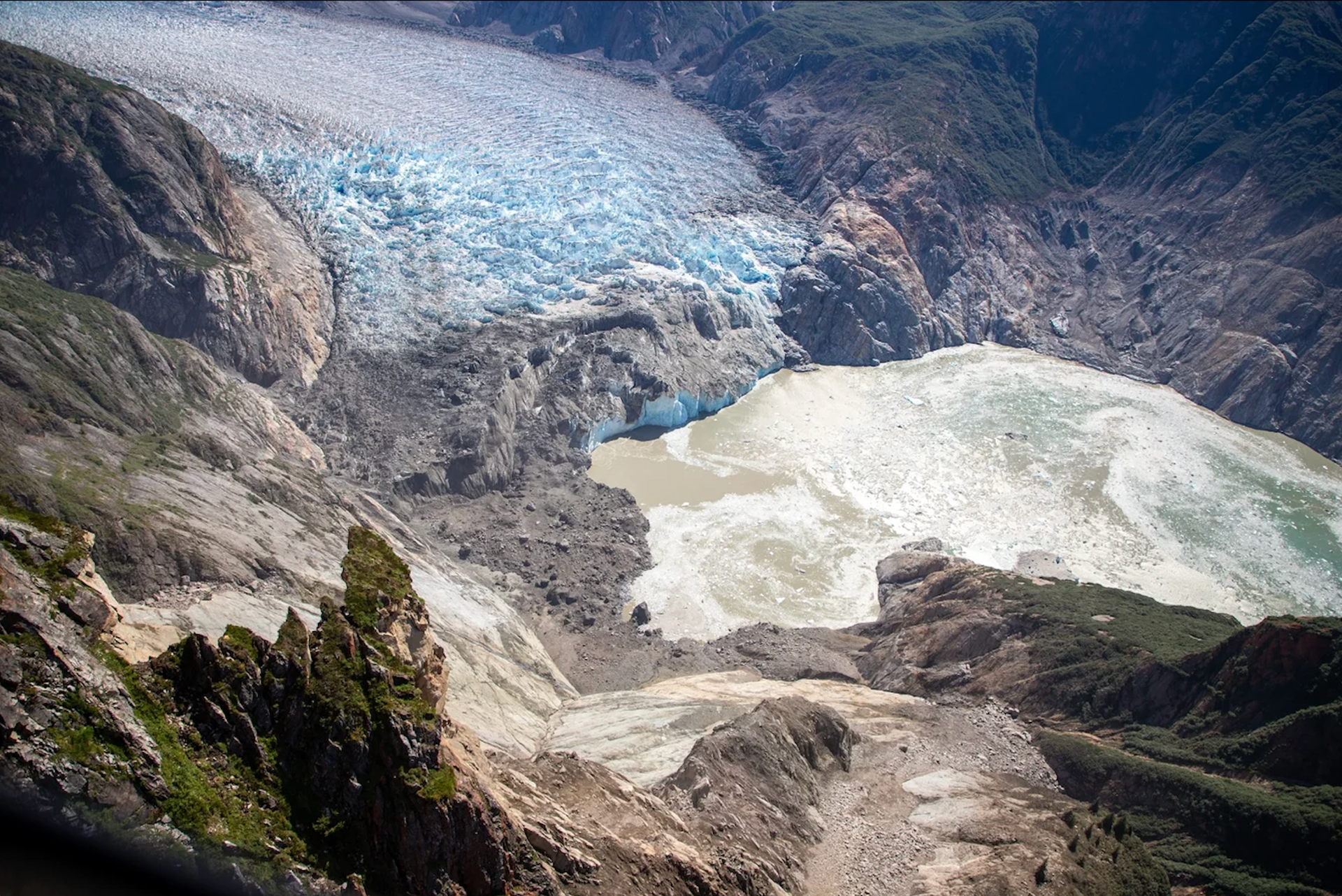
‘It’s tough to comprehend a wave taller than the Empire State Building.
Yet that’s exactly what scientists believe thundered through Alaska’s Tracy Arm in August of 2025.
Newly released helicopter footage offers one of the clearest looks yet at the aftermath of the massive landslide-triggered mega-tsunami, revealing a landscape permanently reshaped by one of the largest waves ever documented….’
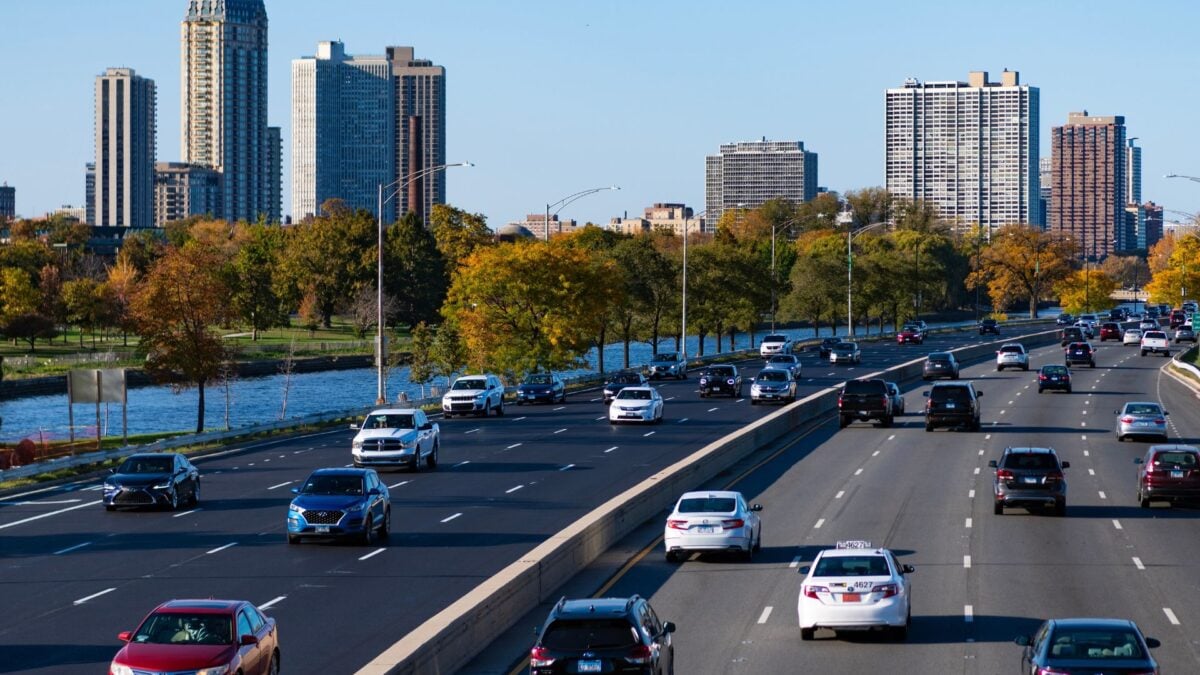
‘If only there were a simple way for drivers of gas-powered cars to cut down their fuel costs while also reducing planet-warming carbon emissions.
A new study says there is. The findings, published Thursday in the journal Communications Sustainability, show that if U.S. drivers of gas-powered passenger vehicles actually drove the speed limit, it could save an average of 6.7 million gallons of gas, 57,000 tons of carbon dioxide (CO2) emissions, and $22 million per day, based on fuel costs during the study period. That’s equivalent to taking about 5.5 million cars off the road, according to the researchers.
While it may feel like speeding shaves a significant amount of time off your commute, the study suggests that driving at or below the speed limit lengthens commute times by just 54 seconds per day, or 6.3 minutes per week, based on the average daily driving distance of 28.6 miles (46.03 kilometers).’
The Fermi Paradox asks, “Where is everybody?” Even with modest propulsion, a technological civilization could spread across much of the galaxy in a geological instant, yet we see no evidence that this has occurred.
One proposed solution, Geoffrey Landis’s “percolation model,” emphasizes the geometry and probability of settlement spreading through a network of stars. Each colony has some probability of founding additional colonies, and spacecraft have a limited effective range. Below a critical propagation probability, colonized systems form finite clusters rather than a galaxy-spanning network. Expansion therefore leaves persistent voids, potentially including our region. Cultural divergence and declining expansionist motivation could further increase this unevenness.
This essay proposes a biological mechanism that might lower the probability of successful propagation. If each colony is founded by a subset of the population of its parent colony, genetic diversity may decline at each successive step. After several iterations, distant colonies could become sufficiently homogeneous that reduced genetic resilience would leave them vulnerable to environmental catastrophe or disease. Repeated local extinctions could further reduce the species’ total genetic diversity, producing a self-limiting cycle of expansion and collapse. Large regions of the galaxy might therefore remain uncolonized, and our apparent isolation could reflect our location within one such void.
The hypothesis faces substantial objections. Reduced genetic diversity does not necessarily entail a proportionate loss of fitness or resilience. Founding populations could be selected specifically to preserve diversity, while cryopreserved gametes, embryos, genetic material, or digital genome sequences could carry far more variation than the living crew alone (as in Nolan’s Interstellar, for example). This assumes, moreover, that extraterrestrial reproduction depends on genetic mechanisms broadly analogous to ours. Expansion might also proceed in parallel rather than as a single serial chain, allowing multiple lineages to preserve or recombine diversity. Sufficiently advanced biotechnology may largely decouple an interstellar civilization from the reproductive bottlenecks that constrain the dispersal of terrestrial species upon which this essay is based.