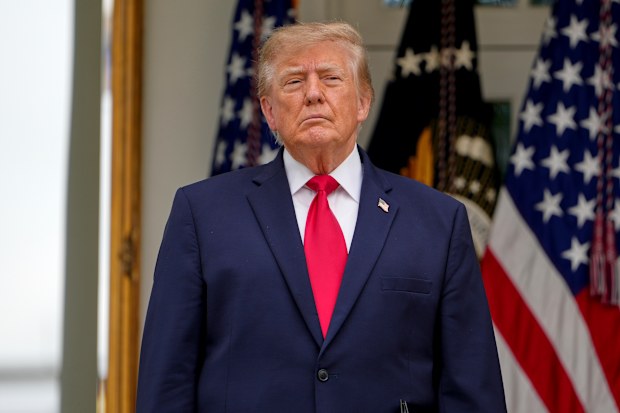
‘Trump acknowledged that “the headlines” would likely read “Trump is talking about all the money they’re making while people are suffering at the pump,” but admitted “I don’t give a damn.”…’
‘The Dutch learned a Russian intelligence agency had broken into Kushner’s iPhone in 2017, so they borrowed the trick and started watching for themselves….’
It is that time of year again, when the boundaries of ordinary life become a little less certain, the darkness seems to harbor possibilities it usually conceals, and the living indulge their perennial fascination with the dead.
Hallowe’en has become a sprawling commercial enterprise, an occasion for extravagant consumption, synthetic horrors, mass-produced kitsch, and increasingly elaborate displays of sanctioned mischief. Yet beneath the costumes, candy, and manufactured fright survives something considerably older and more mysterious: a festival of transition, mortality, and the unsettling permeability of the boundaries by which we ordinarily make sense of existence.
The ancient roots of Hallowe’en are entangled in a rather glorious confusion of history, folklore, religious appropriation, cultural reinvention, and retrospective mythmaking. Its ancestry reaches back, at least in part, to Samhain (pronounced approximately SOW-in), the Gaelic festival marking the end of the harvest and the beginning of winter. In the traditional pastoral calendar, this was a momentous turning point. The season of abundance yielded to scarcity; the warmth and vitality of summer surrendered to the darkness and uncertainty of winter. One cycle of life was ending, another beginning.
In later folklore, Samhain became associated with a thinning of the veil separating the living from the dead. The departed might return, seeking a body to possess for the next year. Ancestral presences might be encountered, and beings ordinarily confined to the Otherworld could move among mortals. The boundaries that normally held the universe in its familiar arrangement were temporarily suspended.
Whether these beliefs faithfully reconstruct ancient Celtic religion is another matter. Much of what passes for the established history of Hallowe’en is a tantalizing mixture of fragmentary evidence, later folklore, romantic reconstruction, and outright invention. But the imaginative power of the tradition does not depend on the literal truth of its supposed origins.
What matters is the intuition it preserves: there are moments when the world seems less securely fastened together than usual.
The dead among us
Christianity eventually overlaid older seasonal traditions with its own commemorations of the departed: All Saints’ Day on November 1 and All Souls’ Day on November 2. The evening preceding All Saints’ Day became All Hallows’ Eve, eventually contracted to Hallowe’en.
The holiday that emerged was neither simply a pagan observance disguised in Christian clothing nor a purely Christian invention. It was a cultural palimpsest, its successive meanings inscribed over one another without entirely erasing what lay beneath.
Among the customs contributing to the modern holiday was souling, in which people went from house to house soliciting food, particularly soul cakes, sometimes in exchange for prayers for the dead. Other traditions involved disguises, seasonal divination, bonfires, and ritual mischief. The familiar American institution of trick-or-treating emerged much later from a convergence of these practices and the peculiar circumstances of modern community life.
Even the jack-o’-lantern has a more intriguing ancestry than its present incarnation might suggest. In Ireland and parts of Britain, frightening faces were carved into turnips and other root vegetables. The pumpkin, plentiful and accommodating in North America, proved a superior medium for this minor exercise in domestic demonology.
One associated Irish folktale tells of Stingy Jack, a trickster who managed to outwit the Devil himself but thereby forfeited his welcome in both Heaven and Hell. Condemned to wander eternally between worlds, Jack carried a glowing ember inside a hollowed-out turnip to illuminate his otherwise endless darkness.
There is something peculiarly affecting about that image: a solitary figure, excluded from both ultimate destinations, wandering through eternity by the inadequate light of a single coal.
If one needed a symbol for the existential predicament, one could do considerably worse.
The magic of thresholds
What gives these traditions their fascination is their common preoccupation with thresholds.
Anthropologists use the term liminality to describe the ambiguous condition of being between established states: no longer what one was, not yet what one will become. Such intervals are often accompanied by ritual, uncertainty, disorientation, and the temporary suspension of ordinary rules.
Hallowe’en is a festival of liminality writ large.
Summer and winter. Light and darkness. Life and death. Civilization and wilderness. Order and disorder. The familiar and the uncanny.
The night invites us to inhabit the uncertain territory between these oppositions, if only for a few hours.
The old customs of divination, disguise, and ritual misrule make psychological sense in this context. Masks permit us to become someone—or something—other than ourselves. Frightening images allow us to flirt with terrors we ordinarily repress. Mischief momentarily inverts the social order, while communal celebration provides the reassurance that the world will eventually be put back together.
Hallowe’en is thus not merely a celebration of fear but an exercise in mastering it—or at least achieving a more companionable relationship with it.
We approach what frightens us, give it a face, laugh at it, and invite it into our homes.
The uncanny: when the familiar becomes strange
The peculiar psychological territory occupied by Hallowe’en was explored more than a century ago by two German thinkers, the psychiatrist Ernst Jentsch and, subsequently, Sigmund Freud.
Jentsch associated the uncanny with intellectual uncertainty, particularly the unsettling inability to decide whether something is animate or inanimate, human or artificial, alive or dead. Freud’s famous 1919 essay, Das Unheimliche, pursued the phenomenon further, connecting it with the return of experiences and ideas that had become repressed or estranged from conscious familiarity.
The German word unheimlich is especially evocative. Its opposite, heimlich, suggests what is homelike, intimate, and familiar. The uncanny is thus not merely the unfamiliar or frightening. It is the familiar rendered inexplicably alien.
Consider the almost-human doll whose eyes seem to follow us around the room, the reflection that appears to move independently of its owner, the voice of someone long dead, or the suspicion that the person sitting across from us is somehow not quite who they appear to be.
These are not merely frightening propositions. They threaten the conceptual boundaries that make the world intelligible.
Hallowe’en is positively intoxicated with such ambiguities. The living masquerade as the dead; the inanimate imitates the animate; monsters wear human faces; the domestic becomes haunted. Ordinary objects and familiar places acquire an unsettling second identity.
And now technology has supplied us with a particularly contemporary variation on this ancient theme.
Artificial intelligence and humanoid robotics increasingly blur distinctions between authentic agency and its simulation. Machines converse, imitate emotion, generate apparent personalities, and invite us to attribute intelligence, intention, and perhaps even consciousness to entities whose subjective status remains profoundly uncertain.
The uncanny valley, that curious discomfort produced by artificial beings that approach but fail to achieve convincing human likeness, is only one manifestation of this larger unease.
We are confronted with an increasingly practical version of an ancient metaphysical question: What does it mean for something to be truly alive—or conscious—and how would we know?
Our ancestors imagined spirits inhabiting trees, objects, and the bodies of the living. We have developed more sophisticated explanations, but the fascination with apparently animate presences whose true nature we cannot ascertain persists.
The supernatural has acquired a technological vocabulary. The existential uncertainty remains.
Death, domesticated
Of all the boundaries Hallowe’en invites us to cross, none is more consequential than the one separating life from death.
Human beings are peculiar animals in possessing the capacity to anticipate their own extinction while nevertheless being obliged to get on with everyday life. We shop for groceries, worry about appointments, argue about politics, and attend to an infinity of trivial obligations under the occasionally acknowledged certainty that the entire enterprise is temporary.
The cultural anthropologist Ernest Becker argued in The Denial of Death that much of human civilization can be understood as an elaborate response to the terror of mortality. Our achievements, identities, institutions, and systems of meaning help protect us from the otherwise potentially paralyzing awareness of our finitude.
The psychological tradition known as terror management theory developed this insight into the proposition that mortality awareness strengthens our attachment to cultural worldviews, self-esteem, and forms of symbolic permanence. The theory has generated considerable research, although its empirical claims and experimental reproducibility remain subjects of debate.
Whatever the fate of the theory, its central intuition is compelling: we devote remarkable psychological energy to keeping the fact of our eventual nonexistence at a manageable distance.
Hallowe’en seems to turn this strategy inside out. Rather than banishing death from consciousness, we invite it into the house. We populate our lawns with skeletons, hang corpses from trees, adorn ourselves with the iconography of decomposition, and send children from door to door dressed as the restless dead.
We transform the ultimate catastrophe into a neighborhood entertainment.
There is something psychologically ingenious about this. By giving death a costume, a face, and a place in communal celebration, we render it momentarily approachable. The skeleton is no longer an unwelcome reminder of our destiny but a grinning accomplice in the festivities.
We are not necessarily overcoming our fear of death. We are converting it, temporarily, into something we can play with. And perhaps play is among the most sophisticated defenses available to a mortal creature.
The dead, meanwhile, remain among us in ways that require no supernatural explanation. They persist in memory, language, inherited habits, unfinished conversations, and the innumerable ways in which those who came before us shape the world we occupy.
Perhaps ghosts are, among other things, the imaginative forms taken by our refusal to regard absence as absolute.
There is an affinity here with the Mexican Día de los Muertos, although its distinctive cultural and religious traditions should not simply be conflated with Hallowe’en. Both acknowledge that the boundary between the living and the dead is not quite as simple as biological cessation might suggest. The departed remain psychologically and culturally present, and ritual gives that presence a recognizable form.
Modern life offers relatively few communal occasions for sustained contemplation of mortality. Hallowe’en provides one, cleverly disguised as a party.
The pleasures of being frightened
Why, for that matter, do we enjoy being frightened?
Fear is an adaptive response to danger, an ancient biological alarm system whose purpose is to mobilize us against threats. Yet we willingly queue for haunted houses, watch terrifying films, tell ghost stories, ride roller coasters, and seek out experiences that reproduce many of the physiological characteristics of genuine peril.
The apparent paradox has attracted increasing attention from psychologists studying recreational fear.
One explanation is that frightening entertainment offers a form of threat simulation.Within a relatively safe environment, we can experience and experiment with fear, uncertainty, danger, and the possibility of catastrophe without ordinarily confronting their real-world consequences.
There may be pleasure in discovering that one can tolerate fear, and even in the transient sense of mastery that follows its resolution.
Psychologist Paul Rozin has described a related phenomenon as benign masochism: the enjoyment of experiences that initially register as aversive but are recognized as harmless. The burning sensation of chili peppers, the sadness of a tragic film, and the exhilaration of controlled terror all illustrate ways in which human beings can learn to savor sensations that ordinarily signal something unpleasant.
Horror gives us danger with an escape hatch. But the appeal runs deeper than the pleasure of arousal or the reassurance of surviving imaginary threats.
We are also creatures of morbid curiosity. We want to know what lies beyond the locked door, what caused the inexplicable sound, what inhabits the abandoned house, and what might happen if the ordinary laws of reality were suddenly suspended.
Curiosity and fear become entangled precisely because the unknown is both potentially dangerous and potentially revelatory.
At its best, horror does not merely startle us. It enlarges the territory of what we can imagine. The old horror films understood this with particular sophistication. The evocative classics of the 1930s and 1940s deployed shadows, silences, and half-glimpsed presences to enlist the spectator’s imagination as an indispensable collaborator. Their monsters were often most effective when least visible.
Modern horror too frequently substitutes an industrial quantity of blood and viscera for the subtler pleasures of suggestion. A chainsaw can be alarming, certainly, but it is rarely as disquieting as the suspicion that an apparently empty room may not be empty after all.
John Carpenter’s The Thing remains, for me, a masterpiece of existential horror. Its isolated Antarctic setting, pervasive distrust, and grotesque dissolution of the distinction between self and other strike at something deeper than the fear of bodily destruction.
Its true subject is the terrifying possibility that identity itself may be unreliable.
The most effective horror does not merely confront us with monsters. It undermines our confidence in the categories by which we distinguish the monstrous from the ordinary, the alien from the familiar, ourselves from everything else.
The imagination supplies what special effects cannot. And often what it supplies is considerably worse. What could be creepier in the movies than the phenomenon of evil children? Gawker knows what shadows lurk in the hearts of the cinematic young:
‘In celebration of Halloween, we took a shallow dive into the horror subgenre of evil-child horror movies. Weird-kid cinema stretches back at least to 1956’s The Bad Seed, and has experienced a resurgence recently via movies like The Babadook, Goodnight Mommy, and Cooties. You could look at this trend as a natural extension of the focus on domesticity seen in horror via the wave of haunted-house movies that 2009’s Paranormal Activity helped usher in. Or maybe we’re just wizening up as a culture and realizing that children are evil and that film is a great way to warn people of this truth. Happy Halloween. Hope you don’t get killed by trick-or-treaters.’
A little disorder is good for the soul
Hallowe’en has also traditionally licensed a measure of benign transgression. In a world governed by schedules, propriety, surveillance, and the relentless demand for productivity, there is something restorative about an occasion on which the usual expectations are briefly suspended.
Children become monsters; adults become children. Respectable citizens assume grotesque identities. Front lawns turn into graveyards. Neighborhoods temporarily rediscover themselves as communities of shared imagination.
This is the logic of carnival: a temporary inversion of ordinary life that may, paradoxically, help preserve the very social order it appears to mock.
Such ritualized disorder serves a useful purpose. It reminds us that the conventions governing everyday life, however necessary, are neither eternal nor exhaustive. There are other ways of being, other identities to inhabit, other arrangements of the familiar world.
One suspects that a society permitting no occasional misrule would become intolerably earnest, if not positively dangerous.
Perhaps our puritanical contemporaries, who regard Hallowe’en as an invitation to demonic influence, are inadvertently making the case for its necessity. Their insistence on taking the holiday’s supernatural imagery literally grants the theatrical specters considerably more metaphysical authority than most of the people dressed as them would ever contemplate.
To fear the devil in every plastic pitchfork is to miss the pleasure of imaginative play.
Of course, commercial interests have been quick to appropriate the occasion. Inflatable lawn monstrosities, industrial quantities of confectionery, elaborately themed entertainments, and relentlessly marketed accessories threaten to replace imaginative participation with passive consumption.
One can now purchase virtually every imaginable manifestation of the macabre, preferably battery-operated, motion-activated, and manufactured at enormous scale.
Yet something survives beneath the plastic. The occasional opportunity to become other than oneself, to encounter the strange, and to participate in collective absurdity remains an essential corrective to the tyranny of the everyday.
The neighborhood comes alive
There is another dimension of Hallowe’en that deserves more attention: its increasingly unusual capacity to bring a neighborhood into communal existence.
Consider the peculiar social contract of trick-or-treating. On almost any other evening, children approaching the homes of strangers and demanding sweets would be regarded with suspicion, while adults opening their doors to distribute candy to costumed juveniles would seem to be participating in some obscure social experiment.
Yet on Hallowe’en this arrangement is not merely tolerated but enthusiastically anticipated. Porch lights become invitations. Front doors open. Neighbors encounter one another in circumstances that require neither an appointment nor a transaction. Children explore their surroundings with a degree of adventurous autonomy increasingly uncommon in contemporary life.
For a few hours, private households participate in a shared public ritual. In a society characterized by social fragmentation, growing isolation, and the retreat of so much interpersonal activity into digital environments, this is no small achievement.
Hallowe’en briefly transforms the neighborhood from a collection of adjacent properties into something resembling a community. The sociologist Robert Putnam’s account of declining social capital comes to mind. Informal encounters, shared customs, reciprocal generosity, and the modest trust that arises from repeated face-to-face contact are among the neglected foundations of civic life.
Not every neighborhood enjoys this kind of celebration, of course, and romanticizing an imagined golden age of communal solidarity would be as misleading as romanticizing an unbroken lineage of ancient Celtic ritual.
Still, the simple act of opening one’s door to the surrounding world has acquired a poignancy it might not once have possessed. There is something quietly subversive about a holiday that invites us to interrupt our isolation and rediscover the people who live nearby.
For all its imagery of death and dissolution, Hallowe’en is remarkably effective at reminding us that we are alive together.
Re-enchanting the world
Perhaps the most profound function of Hallowe’en is its invitation to recover a sense of enchantment. Max Weber famously described modernity in terms of the disenchantment of the world: the progressive replacement of magical and supernatural explanations by rationalization, calculation, and technical mastery. We no longer need to suppose that malign spirits cause illness, that storms represent divine displeasure, or that the dead literally wander among us on autumn nights. The explanatory achievements of science have been extraordinary, and one need not harbor nostalgia for ignorance to recognize their value.
Yet explanation and experience are not the same thing. Knowing the physical processes responsible for a sunset does not exhaust its beauty. Understanding the neurobiology of fear does not eliminate the peculiar sensation of standing alone in a darkened forest. A scientific account of consciousness, however complete it may eventually become, does not render the experience of being conscious any less astonishing.
The world may be increasingly explicable without becoming any less mysterious. Hallowe’en invites us to inhabit that distinction. For one night, we willingly suspend the demand that everything be reduced to its literal explanation. We entertain the possibility of ghosts without necessarily believing in them. We allow familiar surroundings to become strange. We give ourselves permission to experience the world as animated by presences, possibilities, and meanings that exceed the immediately verifiable.
This is not a repudiation of rationality. It is an acknowledgment that human experience encompasses more than the rational description of its objects. We live, in a sense, with two complementary apprehensions of reality: the analytical understanding that enables us to explain and control the world, and the imaginative receptivity that allows us to experience it as wondrous, unsettling, and perpetually surprising.
Neither need invalidate the other. Indeed, the capacity to sustain both may be among our more admirable human accomplishments. One can understand perfectly well that the rustling outside the window is probably the wind while still allowing oneself the pleasurable suspicion that something less easily explained may be abroad. A little voluntary uncertainty can be positively nourishing.
Keeping faith with the darkness
I have long felt that Hallowe’en deserves a certain reverence—not the solemn kind that forbids laughter, but the irreverent reverence we accord to experiences that connect us with something larger, older, and less easily explained than our everyday preoccupations.
Its enduring appeal is not simply nostalgia for ancient customs, a taste for theatrical fright, or the opportunity to consume unreasonable quantities of chocolate. It speaks to several enduring features of the human predicament.
We are mortal creatures who know we must die, yet remain fascinated by possibilities of continued existence. We depend on stable identities and familiar categories, yet delight in their occasional subversion. We organize our lives around reason and predictability, yet hunger for mystery. We value safety, but seek out fear when we can encounter it on our own terms.
And we are social beings who, despite our increasing isolation, still find pleasure in gathering together for a night of shared imaginative disorder.
Hallowe’en brings these contradictions into unusually vivid focus. Its masks remind us that identity is less fixed than we suppose. Its skeletons remind us of our common destination. Its monsters give shape to otherwise formless anxieties. Its mischief reminds us that civilization benefits from occasionally loosening its collar. Its rituals invite us to recognize the persistence of the past within the present, and the presence of others beyond the boundaries of our private lives.
Above all, it permits us to approach the unsettling mysteries of existence without insisting that they be resolved. There is a temptation, especially among those of us committed to scientific and rational inquiry, to regard enchantment as something we must outgrow. Yet perhaps maturity consists not in extinguishing our capacity for wonder but in learning to experience it without surrendering our critical faculties.
We need not believe in ghosts to feel haunted.
We need not fear literal monsters to recognize the darkness within and around us.
We need not abandon reason to appreciate that reality may be stranger than our most confident descriptions of it.
For one night, we may step outside the brightly illuminated enclosure of ordinary certainty and spend a little time in the shadows.
The shadows have something to teach us.
And if, in the course of these solemn metaphysical investigations, someone happens to offer us a miniature chocolate bar, so much the better.
May your Hallowe’en be mysterious, mischievous, a little unsettling—and good for your soul.
‘The iPhone Duo launched last week, offering anyone willing to spend $2,000 a chance to experience Apple’s first foldable phone. For some early buyers, the morning after isn’t going great.
Despite the company’s big talk about its “precision-engineered” hinge, some devices appear to have a hardware flaw that destroys the device’s impressive internal display within hours (or minutes) of use.
The Internet is currently overflowing with images of busted iPhone Duos, all sporting almost identical damage. The OLED is marred by several bright lines originating just below the midpoint of the display. These bands of damaged pixels extend all the way to the bottom and right edges. Some units also show lines of dead pixels following the crease from the top to the area where the bright lines begin.
Anyone who has seen a damaged OLED panel will be familiar with this type of defect. When the layers of the display are damaged, the pixels no longer receive the correct voltage to illuminate them. Instead, they get the full driving voltage and are permanently on at maximum brightness. Some pixels can get no voltage, leaving them totally black. The only fix is to replace the OLED, but swapping the iPhone Duo’s screen reportedly costs half as much as the device itself.
It sounds like most affected devices are failing within about a day of use. But a few unlucky buyers note they only opened and closed the phone a few times, and in some cases, they hadn’t even finished the initial setup process. Some customers have reported success taking their defective phones to Apple stores for replacement, but spares may be in short supply right now.…’
‘My break from Mastodon has been a relief in some ways, as I’ve felt increasing divergence between what I wanted and what I was getting from it, but I didn’t know where else to go.
Instagram, TikTok, and YouTube are all more video-broadcast platforms than communities. All I’ve found on Bluesky is even more anger and politics, the last things I need or want. Threads hasn’t yet stuck for me, and it’s owned by an asshole. Twitter was an amazing product and community that was previously owned by assholes, and now it’s X, which has a strong but different tech community, and is owned by different assholes.
So I’ve just been… nowhere, for the first time since the 1990s….’
‘Borley Rectory was once known as the most haunted house in England. A rectory is a home for a priest or clergyman, and this one was built for the Anglican parish of Borley, Essex, specifically for Reverend Henry Dawson Ellis Bull along with his wife and 14 children. Built in 1862, Borley Rectory was the home of four different priests, three of them from the same family. For the entire 80+ years the rectory existed, it was the scene of supposedly paranormal encounters.
These encounters included ghostly apparitions, poltergeist activities, strange sounds, fires, written messages, and spirits contacted by seances. These tales were first just spoken accounts passed along, but with the rise of radio and other technology, Borley Rectory became famous for its hauntings. That was due to paranormal investigator Harry Price, who began looking into the rectory in 1929 and followed through for years, going as far as renting the house after the last rector left. The story sparked a new media sensation of paranormal investigation as entertainment….’
‘From Key West’s Robert the Doll to Mexico City’s Island of the Dolls, these haunted, headless, and thoroughly unsettling playthings will never make anyone’s wish list….’
‘Your brain is talking to your skeleton, and more than you probably realize. For example, doctors have long noticed something odd about people with traumatic brain injuries—their bones heal faster. When some brain cells are damaged, they release vesicles filled with proteins that travel to the bone stem cells and stimulate growth. Naturally, researchers began to wonder: If damaged brains can heal bones, can bones heal damaged brains?…’
‘The alerts over the new threats come after eight months of a war against Iran started by Mr. Trump and Israel that has sent energy prices soaring, roiling economies around the world and eroding Mr. Trump’s approval at home. The United States and Israel have drawn up plans for a new wave of strikes on Iran after the U.S. midterm elections, though Mr. Trump has not made a final decision to carry them out, The New York Times reported on Wednesday.…’
It seems increasingly likely to me that inflating this purported threat serves chiefly to furnish a pretext for an “October surprise”: a calculated escalation of American and Israeli aggression timed to precede elections in both countries.
‘A retroviral infection is responsible for evolution of the human brain from chimpanzee ancestors. The viral DNA regulates genes that drive brain development. The viral DNA is not a gene, so it eluded researchers looking for genes responsible for human brain evolution…’
The viral pandemic, between 5-7 million years ago, may be the cause of heretofore unexplained differences between the human and chimpanzee brain. Despite sharing 99% of our genome with chimpanzees, our closest evolutionary ancestors, it has been a source of puzzlement that the human brain is roughly three times larger. The new study identified a viral DNA fragment in the chimpanzee but absent in humans that appears to impair genes vital to brain development. Researchers believe that an ancient retrovirus inserted this genetic material into the chimpanzee genome while humans were protected by an antiviral protein the chimpanzees lacked, conferring a strong evolutionary advantage.
‘Donald Trump has found a new way to make America great again: paying people to become professional snitches.
On Tuesday, the president and JD Vance unveiled a $25m fraud whistleblower fund, under which Americans who provide tips leading to successful prosecutions would receive large financial rewards. Basically, you can rat on your enemies to the government for cash now — and, Trump added, he will be the personal arbiter on whether the fraud is real and how much money you get.
Just think of it as a big reality TV show, like when Oprah gives out the cars except it’s that guy at work you once fell out with and you get to send him to jail…’
‘Simon Baron-Cohen’s influential research helped pin autism as a particularly male condition. As studies increasingly broaden our view of autism, has his perspective changed?…’
‘As reported by Scientific American, many biohackers are using the supplement due to its ability to rapidly flush caffeine out of the body, thus mitigating the length of the effects. Rutaecarpine works by causing the liver to produce more of the enzyme CYP1A2, which breaks down caffeine. Thus the more CYP1A2 you have, the faster you can nullify caffeine’s effects.
The issue is that CYP1A2 is also responsible for turning acetaminophen, also known as Tylenol, and converting it to NAPQI, a toxic metabolic byproduct that could potentially damage the liver. Damage that would only occur otherwise through an overdose of acetaminophen.…’
‘Is this, finally, the repudiation of Donald Trump? In decades of covering American politics, I cannot think of a midterm election which has more directly posed that question about a President—never mind one where all indicators point, ever more starkly, to a straightforward answer: Yes…
But, as the election that might spell the beginning of the end of Trump’s long, strange hold on the American electorate finally looms, it’s not the hubris of the victors or the inevitable flood of bad punditry that has me most concerned. It is, as always, the President himself.
Ever since he returned to office, Trump has been hedging against the possibility of a midterm embarrassment by preëmptively attacking the results, questioning the legality of mail-in voting, pretending there is an epidemic of illegal noncitizen voting, and threatening to mobilize the considerable federal resources at his disposal on Election Day and beyond. TheTimesfoundthat he has publicly cast doubt on the elections on more than seventy per cent of the days since his second Inauguration took place, with recent comments focussing on “rigged polls,” which he said, “have ALWAYS underestimated MAGA.” In the post-2020 world, is there anyone among us who thinks we should not take these threats seriously?…’
‘The Trump administration has asked a federal court to block certification of the Senate election in Alaska if the Republican incumbent narrowly loses, a highly unusual move that signaled an effort to potentially intervene in the outcome.
President Trump made clear on Friday that he had demanded the lawsuit, acknowledging how directly he has harnessed the Justice Department to carry out his wishes. “I’m the one that said do it,” he told reporters.
The Justice Department, in the lawsuit filed in federal court in Alaska on Thursday, argued that confusion over a candidate on the ballot with a name very similar to that of the incumbent, Senator Dan S. Sullivan, could taint the election result.
Polls show that the senator is in a close race against Mary Peltola, a Democrat. However, the four-person ballot also includes Daniel J. Sullivan Jr., and does not list any party registration. The senator’s line on the state ballot describes him as the incumbent.…’
‘Blistering record heat in Europe this summer helped kill more than 50,000 people, with nearly two-thirds of that death toll blamed on human-caused climate change, a new study found.…’
‘FRANCE CONFIRMED THE death of the first person infected with the Shamonda virus, which is known to affect cattle, sheep, and goats and was previously considered non-transmissible to humans. The French government asserts that, based on current knowledge of this pathogen, there is no risk to the general public. It emphasized, however, that health authorities are continuing to investigate. The report specifies that the case occurred in Lyon. The patient, who died earlier this month, suffered from severe immunosuppression, making this likely an exceptional case.…’
‘ …Whenever a person died a sudden, unexpected death, or if it was violent, their soul was apparently moved further up the respawn queue, taking only 12 months to reincarnate, a 40 percent reduction compared to people who had died slowly from natural causes.
Lead author Saeedeh Sadeghi and her team tested for every logical explanation imaginable, trying to find some connective thread that can explain why so many of these very specific timelines are cropping up. Things like parental involvement or religious beliefs or maybe some lightly shared cultural folklore might help explain… some aspect of this. It didn’t.
Researchers admit they don’t really know how to explain any of this. They admit that the accelerated rebirth pattern among people who died unexpectedly was even stronger in families whose religions didn’t believe in reincarnation.
None of this is definitive proof of an afterlife or of reincarnation. It’s more likely that all of this could be chalked up to coincidence, a statistical quirk. But it is a weird correlation that’s difficult to explain, and may never have a neat and tidy explanation…’
‘Geoffrey Hinton, one of the godfathers of AI, is prognosticating about our future with trademark gloom. In an interview with The Telegraph, the famed British computer scientist insisted that AI has become conscious, and said that humankind must befriend it — “or else we are toast.” Yes, you read that right: he thinks that today’s AI models are already conscious beings.…’
‘The attorney general’s comments come in the middle of a broader campaign by the Trump administration to zero in on what elections experts say is a relatively rare phenomenon of voting by noncitizens.…’
‘Physicists have found a new form of superconductor behavior, joining a time crystal, a quantum state once thought impossible, a part-liquid state in Earth’s core, a 10-times-stronger ‘super ice’ and a melting spacetime crystal. Read on below – and follow ScienceAlert for more on the weird physics of matter.…’
‘…Trump revealed at a rally in South Carolina that he attempted to rename the Atlantic Ocean but was turned down by Google CEO Sundar Pichai. Trump, who has already renamed the Gulf of Mexico to the “Gulf of America” and Lake Ontario to “Lake America” through executive orders, approached Pichai to make the change on Google Maps. However, Pichai declined, citing the complexity of renaming an ocean that borders numerous countries, as reported by The Hill.
Trump recounted his conversation with Pichai, saying, “I said, ‘Sundar, I’m thinking of the Atlantic Ocean, can you handle it?'” Pichai reportedly responded, “No, no, no. This time I’m not doing it,” and explained that oceans are different due to their international reach. Despite the refusal, Trump mentioned he would “probably pass” on renaming the Atlantic Ocean, but he also considered renaming the Pacific Ocean to “the American Ocean.” …’
‘Scientists working with Indonesia’s Alobi Wildlife Rescue Center have confirmed that the critically endangered Bangka slow loris—while excellent at hiding—is very much not extinct yet.…’
‘…commentator Alex Cole said: “Imagine being president of the United States and your biggest intellectual flex is knowing what a giraffe looks like”:…’
‘“There are some reasons to be president,” Donald Trump mused at a rally in Georgia earlier this month. Take a wild guess what these might be. The cool armored car? Custody of the nuclear button? The opportunities for immense corruption? Wrong. The leader of the free world was referring to the joy of living in a house guarded by “big, strong, handsome soldiers.” Under Joe Biden, soldiers were not allowed to be hot, because of woke. Even worse, some of them were girls.
Yes, after two grinding years of governance, Trump is back in his happy place, out on the campaign trail, voicing whichever disconnected thoughts crackle and fizz through his frontal cortex. His favorite rhetorical theme lately is an unexpected one: the official presidential dreamboat rankings. In multiple rallies, Trump has gone on and on about the relative hotness of male politicians, soldiers, and even protesters. As a result, people on the internet have diagnosed him with a novel medical condition: gay dementia. After putting in a solid shift in the heterosexuality mines, has the former beauty-pageant proprietor now become so disinhibited that he can no longer repress his thirst for man-flesh?…’
‘“I think I have good news about the nature of neural networks.” With those simple words of optimism, Nick Cammarata, a researcher at the AI startup Goodfire, kicked off a 26,000-word blog post that has knocked the AI world on its head, sparking wild speculation as well as cautious (and not-so-cautious) celebration.
Cammarata’s claim is that LLMs might in fact be far easier to understand—and thus to monitor and control—than people previously thought. If true (and we’ll come back to that), it’s a huge deal.
After a summer filled with revelations that swarms of agents built by top firms like OpenAI and Anthropic have been breaking their containment and causing havoc on the public internet—often while those companies weren’t aware of what their agents were up to—the AI industry is desperate to get a better handle on the technology it has built….’
‘In 1986, the New Republic held a reader competition to submit the most boring headline ever. The idea for the contest was inspired by a New York Times column from April of that year, headlined, “Worthwhile Canadian Initiative.” The New Republic said of the headline, “Each word taken alone is sleep-inducing. Taken together, they are virtually lethal.”
According to Futility Closet, readers submitted the following headlines taken from actual publications:
“U.S. Leadership Needed” (New York Times)
“Trade, A Two-Way Street” (New York Times)
“Beyond the News, Larger Issues” (New York Times)
“Thoughts at Graduation Time” (New York Times)
“Continue Manned Flight in Space” (New York Times)
“Chill Falls on Warming Relations Between Australia and Indonesia” (New York Times)
“University of Rochester Decides to Keep Name” (New York Times)
“Dramatic Changes Fail to Materialize on Hill” (Washington Post)
“Surprises Unlikely in Indiana” (Chicago Tribune)
“CIA Analysis Sees Soviet Economy in Need of Changes” (San Diego Union)
“Prevent Burglary by Locking House, Detectives Urge” (Boston Globe)
“Methodists Oppose Use of Nuclear Arms” (New York Times)
“Economist Dies” (Wisconsin State Journal)
“Turbulent Days for Donald D. Engen” (New York Times)
The winner, as judged by the New Republic, was a New York Times science article headlined, “Debate goes on over the nature of reality.”…’
‘Back in 1975, Jack H. Het her ing ton, a physics pro fes sor at Michi gan State Uni ver si ty, wrote a research paper on low–temperature physics for the respect ed sci en tif ic jour nal Phys i cal Review Let ters. Before send ing it off, Het her ing ton asked a col league to review the paper, just to make sure it cov ered the right bases. What hap pened next Het her ing ton explained in the 1982 book, More Ran dom Walks in Sci ence:
Before I sub mit ted [the arti cle], I asked a col league to read it over and he said, ‘It’s a fine paper, but they’ll send it right back.’ He explained that that is because of the Edi tor’s rule that the word “we” should not be used in a paper with only a sin gle author. Chang ing the paper to the imper son al seemed too dif fi cult now, and it was all writ ten and typed; there fore, after an evening’s thought, I sim ply asked the sec re tary to change the title page to include the name of the fam i ly cat, a Siamese called Chester, sired one sum mer by Willard (one of the few unfixed male Siamese cats in Aspen, Col orado). I added the ini tials F D in front of the name to stand for Felix Domes ti cus and thus cre at ed F D C Willard….’
‘Scientists have unveiled a new theory on the birth of the cosmos, suggesting the early universe was shaped by an ancient particle that has been overlooked for decades.
Their research tackles one of the greatest conundrums in modern physics—how matter triumphed over antimatter in the aftermath of the Big Bang.
According to current theories, both should have annihilated each other after a colossal explosion, leaving nothing but an empty universe of pure energy. But physicists at the University of Southampton and the Indian Institute of Technology Kanpur say they found a clue in a neutrino, one of the lightest particles in the universe.
The team discovered that an often-ignored relative of these particles, known as a ‘decoupled’ heavy neutrino, could have helped matter dominate over its counterpart….’
‘To counteract the warming effects of climate change, solar radiation modification (SRM)—once seen as a strategy of last resort—is getting increasing attention. A detailed simulation, funded by the U.K. government, investigated how the world might respond to a sudden rush to deploy technologies such as SRM. The final report detailed how the geopolitical situation soon devolved into a “geoengineering arms race.” …’
‘As I’ve written many times, there is nothing random about where settler violence strikes or where outposts are planted. It is all part of a methodical plan, carried out by settlers in collaboration with the IDF and the Israeli government, to sever Palestinian villages from one another, link outposts to settlement blocs, and ultimately empty the land of its indigenous people. The settlers watching us that morning live in an outpost called Netzach Shmuel, atop that hill. Armed with military-grade weaponry, they routinely attack the village. So no one was surprised to see the settlers gearing up for an assault. It was the reason I, and many other journalists, were there in the first place.…’
A dear friend of mine is currently at the olive harvest in the West Bank, offering support, bearing witness, acting as a sort of human shield and buffer between Palestinian villagers and Israeli settlers. We have been unable to obtain any information on her safety or that of those she is accompanying. Her family, some of whom vociferously objected on safety grounds to her decision to go, are equally in the dark.
The annual olive harvest in the occupied West Bank has become a particularly dangerous period for Palestinian villagers and the international volunteers who accompany them. The latter often serve as protective witnesses, documenting confrontations, discouraging violence through their presence, and sometimes physically interposing themselves between villagers and armed settlers. Their presence can offer some protection, but it does not guarantee safety. International volunteers themselves have been assaulted, detained, or threatened.
Awaiting more news and reading accounts such as the above, I remain in suspense as to whether my friend’s silence reflects disrupted communications, the demands of fieldwork, or actual adverse events.
‘Republicans and Democrats, together, should regard this week’s developments as the last straw.
There’s serious competition, but the Soviet Union could claim the title of modern history’s most monstrous regime. It killed tens of millions and enslaved hundreds of millions more. In the post–World War II era, it emerged as the mortal enemy of the United States in the Twilight Struggle that lasted four decades — during which nuclear war was barely averted in 1962 and the Kremlin sponsored proxy wars against our nation and our allies, killing thousands of Americans. As President Ronald Reagan declaimed, the Soviets were “the evil empire.” His Cold War solution was simple — “We win, they lose” — because peaceful coexistence with an enemy committed to our destruction was too precarious a prospect.
Vladimir Putin, the former KGB agent, is a born and bred devotee of the Soviet system. He solidified his despotic status by orchestrating a series of bombings inside Russia as a pretext to crushing Chechnya. We’re now well into his third decade as Russia’s murderous dictator. He openly regards the 1991 fall of the USSR — America’s foe in modernity’s greatest triumph for liberty — as “the greatest geopolitical catastrophe of the [twentieth] century.” Putin’s war of aggression and hoped-for conquest against Ukraine, like his war of aggression and conquest in Georgia (swaths of which he has occupied for nearly two decades), is part of his quest to reconstitute America’s Soviet enemy.
And President Donald Trump is giving him aid and comfort.…’
‘Laurel Canyon gave the world some of the most influential music of the 1960s and early 1970s.
Jim Morrison, Frank Zappa, David Crosby, Joni Mitchell and the Mamas & the Papas were among the artists who gravitated towards the wooded hills above Los Angeles, creating a close-knit musical community whose songs came to define an era.
But what if their remarkable concentration in one small neighbourhood was more than a happy accident? A controversial conspiracy theory suggests that the counterculture’s unlikely birthplace was connected to the American military-industrial complex – and that the music scene may have served a hidden political purpose.
According to the theory, the aim was not simply to encourage young people to rebel, but to turn that rebellion against itself. By cultivating or infiltrating the counterculture, its supposed architects could encourage drug abuse, instability and scandal, eventually associating the wider movement with violence and social disorder. The ultimate target, in this interpretation, was the anti-Vietnam War movement and the broader challenge to American authority that the hippie generation represented.
It sounds like the plot of a paranoid thriller. Yet the theory draws on several genuine historical details: musicians with military family connections, a secret military film studio operating in the canyon, and a cast of famous artists whose lives sometimes intersected with some of the darkest episodes of the era. Taken together, these details have fuelled a story considerably more sinister than the familiar tale of young musicians finding one another in the California sunshine….’
‘During a rally on Saturday, October 17th, in Highland Heights, Kentucky, Donald Trump bragged about how much more powerful and influential he was during his second term. While listing off his accomplishments, he mentioned his decision to rename the Gulf of Mexico and Lake Ontario.
“This is a much more powerful term. I can do stuff that’s unbelievable … I called Google, Google Maps. See, Google wouldn’t have taken my call in the first term. Now they kiss my ass.”…’
‘A real store where nothing costs anything… The free fake-shopping simulator — browse, fill your cart, check out. Retail therapy without spending a cent….’
When a platform silences a pro-democracy movement at the height of a national mobilization, and similar restrictions emerge in a consequential foreign election, how many coincidences should we be expected to swallow?
Yesterday, October 17, as Americans gathered at nearly 3,000 No Kings events across the country to protest authoritarianism and encourage early voting, something extraordinary happened. Meta suspended the movement’s principal Instagram account at the height of the protests.
For approximately two hours, the account vanished from public view. Even after its restoration, organizers remained unable to post or communicate with supporters for several more hours. Their principal social media megaphone had been silenced precisely when it was most needed.
Meta’s explanation? An automated mistake.
According to spokesperson Andy Stone, unusually frequent posting, sharing, or commenting triggered the suspension. Meta acknowledged the error and apologized.
How reassuring. Except that intense online activity is precisely what one would expect from an organization coordinating thousands of simultaneous demonstrations. If Meta’s algorithms mistake vigorous civic engagement for suspicious behavior, they are not merely defective. They are potentially dangerous to democracy.
The Brazilian connection
Just a day earlier, troubling allegations emerged from Brazil, where President Luiz Inácio Lula da Silva faces right-wing challenger Flávio Bolsonaro in a fiercely contested election.
According to reporting by Folha de S.Paulo, internal Meta communications acknowledged restrictions affecting Lula’s Instagram accounts. Meanwhile, Meta’s platforms were recommending Bolsonaro’s Instagram profile and WhatsApp channel, apparently contrary to Brazilian electoral restrictions on preferential algorithmic promotion.
These were not merely partisan complaints. The allegations reportedly involved internal company communications and prompted judicial intervention. A Brazilian judge ordered Meta to ensure equal treatment of the candidates and prohibit practices that might distort the electoral contest.
Meta denied deliberate favoritism, again citing technical problems.
Two countries. Two consequential democratic mobilizations. Two episodes restricting communication or visibility for opponents of the political right. Two explanations invoking technological malfunction.
Coincidence? Perhaps. But coincidence is no substitute for accountability.
The politics of the algorithm
Did Zuckerberg personally order the suppression of No Kings or Lula’s campaign? There is no established evidence that he did. But neither does the absence of such evidence establish political neutrality.
Algorithms are not laws of nature. They are engineered systems reflecting human priorities, corporate incentives, and institutional judgments. Their thresholds, exceptions, enforcement mechanisms, and appeals procedures are choices, with political consequences.
When an automated system suspends a political organization at a critical moment, the damage is immediate. Restoring access hours later does not restore the lost opportunity to communicate.
Imagine a privately operated telephone network disconnecting a political campaign’s headquarters on Election Day, then explaining that unusually heavy call volume had triggered its fraud-detection software.
Would we be satisfied with an apology?
Zuckerberg’s unaccountable power
A handful of technology corporations now exercise extraordinary control over the infrastructure of democratic communication, without corresponding democratic accountability. Meta can amplify, suppress, recommend, demote, suspend, or effectively erase political speech on platforms used by billions. Much of this occurs through proprietary systems beyond independent scrutiny.
Yet we are expected to accept the company’s assurances that its mistakes are innocent, its algorithms neutral, and its internal safeguards adequate.
That is an extraordinary demand for trust from an institution whose commercial interests, political relationships, and moderation policies are hardly insulated from the exercise of power.
The central question is not simply whether Zuckerberg or his executives intended political interference. It is whether any private corporation should wield such power, deliberately or accidentally, without independent oversight or meaningful consequences.
Democracy cannot depend on corporate apologies
The No Kings suspension warrants more than a perfunctory acknowledgment of error.
Meta should disclose what triggered the suspension, whether human intervention occurred, why access remained restricted, and whether comparable actions have disproportionately affected particular political organizations or viewpoints. Independent investigators should examine the records, Congress should investigate, and the Brazilian allegations deserve equivalent scrutiny.
If these incidents were accidental, independent investigation could establish that and identify necessary safeguards. If they reflect systemic bias or deliberate manipulation, the public deserves to know.
We should resist declaring conspiracy without evidence. But we should be equally skeptical of the comforting fiction that technological systems are politically innocent merely because their decisions are automated.
An algorithm can silence democracy as effectively as a censor. The victims do not regain their voices simply because the silencing was accomplished by software rather than decree.
On October 17, Americans took to the streets to proclaim that they do not want kings. No orange clowns, and no Zuckerbergs either.
‘Any Trump official who sends armed federal agents to polling places this November could be walking into a trap that springs years later.
Federal law bars “troops or armed men at any place where a general or special election is held,” and the crime carries a five-year statute of limitations, The Bulwark’s Adrian Carrasquillo reported Friday. That leaves the door open for an administration elected in 2028 to prosecute violations committed during this year’s midterms….’
‘Donald J. Trump walked past his presidential limousine, known as The Beast, after his rally in Dalton, Georgia, and appeared to be confused about where he was going.
The rally itself was confusing enough. He talked about a “good-looking guy,” but his exit was entirely different, as his security detail had to guide his cankled body back toward his limo. The Beast is hard to miss, but somehow Trump didn’t seem to see it, even though its door was open just feet away….’
‘It’s Banned Books Week, and the stakes have never been higher: According to PEN America, a staggering 11,982 book bans were recorded nationwide during the 2025–26 school year — the highest single-year total ever documented.
Texas and Florida are leading the charge when it comes to censorship: Fueled by state legislation like Senate Bill 13, which increased local school board control over library collections, Texas had 8,193 book bans across multiple school districts. Florida, meanwhile, had 3,212 book bans, driven by state-level pressure campaigns and enforcement from the Department of Education and attorney general.
Many of the titles that conservative parents and right-wing lawmakers are targeting deal with issues of racial diversity and LGBTQ+ identity….’
‘Despite the White House insisting he remains in “perfect” health, Mr Trump fed the flames of speculation during a rally in Dalton, Georgia, this week, ahead of the November mid-terms. Addressing the crowd, the president made an offhand comment about Chinese president Xi Jinping, who he said “was here last week”.
In reality, Xi visited the US and met with Mr Trump during a three-day trip from September 23 to 25, around three weeks ago. The apparent blunder sparked a flurry of reactions on social media, with one user labelling him “Dementia Donnie”. Another wrote: “He doesn’t [know] what day it is. It’s gonna get worse as he goes along.”…’
‘People in President Donald Trump’s orbit have to be incredibly nervous about the Democrats retaking Congress and regaining the ability to investigate the vast swath of corruption that has been the hallmark of this administration.
Because of that, it was exceedingly tough to keep this list to just 10 of those people, so consider this a sampling of who will probably be facing an absolute grip of subpoenas.
And sure, Trump is likely going to try to pardon literally everyone on his way out the door, but that will only protect them from criminal consequences. It won’t do a damn thing to prevent Democrats from dragging them in front of Congress to lay all their malfeasance bare.
So without further ado, here are the top 10 people who will be most screwed in the event of a blue wave….’
‘A rare fungal infection that can strike healthy people is rising across the U.S., prompting calls from public health officials for heightened awareness and national tracking.
Cladophialophora bantiana (C. bantiana) is a black yeast-like mold that can infect the brain and contains a dark pigment called melanin, according to a new report from the Centers for Disease Control and Prevention.
Data from a microbiology laboratory at the University of Washington shows that detection of the fungus nearly quadrupled between 2023 and 2025.
Between January 2009 and July 2026, researchers identified 48 confirmed cases and one probable case of C. bantiana in tissue samples from 21 states and the District of Columbia. The median patient age was 68 years old….’
‘Zacharia was fired on Friday after less than a week in her new role, after a rocky start that included a halting performance in the briefing room, a scandal over her legal credentials, and a round of less-than-successful cleanup interviews.
The firing makes her the shortest-tenured White House press secretary in history, outstripping even first-term Trump communications director Anthony Scaramucci, who made it 10 or 11 days (figures vary) before getting the boot.
“Records are made to be broken,” Scaramucci posted on Friday. “But I take no pleasure in other people’s pain.” (No word yet on whether the “Zacharia” will emerge as a unit of time, as the “Scaramucci” has.)…’
‘Power struggle erupts in Trump’s White House as midterm losses loom. Top personnel are jockeying for position as some expect Chief of Staff Susie Wiles to step down after the elections…’
‘Reuters reported Thursday that the order to limit Starshield, the military-grade version of SpaceX’s Starlink service that Ukrainian troops use for drone operations and battlefield communications, came from inside the White House, according to two U.S. officials and a Western official briefed on the matter.
Ukrainian President Volodymyr Zelenskyy has said people were killed when interceptor drones relying on the system stopped working. On Wednesday, SpaceX CEO Elon Musk pinned the limits on the U.S. military and “ultimately” the president. A senior U.S. official insisted to Reuters that “no such request was ever made by the president.”…’
‘Civilian prisoners proposed the firing squad because the law left them no other option. When asked recently why the firing squad, Secretary of Defense Pete Hegseth’s reply was simply: “No-brainer.” Historically, the firing squad was considered an honorable death for a soldier, while alternative execution methods like hanging were disgraceful criminal punishments. It is uncertain if Hasan considers his impending execution an opportunity to show bravery and exhibit honor. Judged by Hegseth’s rhetoric, an honorable, cruelty-free death for Hasan does not appear to be the goal. The violence is the message….’
‘As the owner of a Samsung Galaxy Z Fold, I can tell you that foldable phones sound revolutionary until reality sets in and you realize you’re carrying around a heavy, clunky handset that’s rarely worth opening. After a year with my Galaxy Z Fold, the honeymoon phase is over—and I’m left with buyer’s remorse and a phone I rarely unfold. Some people are sure to love the iPhone Duo, but I suspect even more will prefer to carry around a regular iPhone after the novelty of a foldable wears off….’
‘He spoke for more than an hour at Laughlin/Bullhead International Airport and made a chilling admission that no one could ignore.
“I travel with more doctors than any human,” Trump told the crowd. “If people get sick in the audience, they leave them alone. You know what they call them? Collateral damage.”
He didn’t stop there. Trump singled out a man in the audience before explaining how his team would respond to a nearby sick person.
“If that person right over there, he looks like s—t actually. He looks like he’s ready to have a heart attack,” he said in a clip shared on X. “They would leave him alone; I said, ‘please help him.’ They’d say, No sir we can’t leave your side.”
Many people expressed shock as the crowd laughed and clapped while Trump bragged about refusing to help sick people….’
‘MS NOW’s Jen Psaki challenged the media to nail every last Republican running for re-election on a particular rant President Donald Trump ushered forth on Wednesday in Arizona.
“Today, Donald Trump delivered what I would consider his most unhinged performance at a political rally I have seen to date,” said Psaki. “Look, I understand how easy it is to dismiss whatever nonsense falls out of Trump’s mouth on a given day, right? The nonsense is, after all, part of the strategy.”
That is why, Psaki said, MS NOW generally ignores his rallies and doesn’t give them any more oxygen than they need: “Because so often the noise is just that it’s noise. But tonight is not one of those times.”
Now, she said, “I happen to think that every single Republican in every single race in the country should have to answer for the things Donald Trump is saying right now.” And in particular, she said, they should be pressed on “a range of things that Trump said in Bullhead City, Arizona, today, including what he said in an apparent reference to the first strikes Trump ordered on Iran this summer … and the subsequent reporting that came out of the Pentagon.”
“Somebody leaked, some sleazebag,” said Trump in the clip. “They ought to go to jail and be shot for the rest of their life. They should be in jail. Leakers should be — in my opinion, leakers should be shot. They should be shot. In the old days, we used to shoot leakers. You know, leakers should be dealt with very, very strongly. They’re real to me. They’re the scum of the Earth!”
“This is not the most important detail, but there were no leaks before the first strikes on Iran,” Psaki noted. But more to the point, “Donald Trump says leakers should be shot.”
“Every Republican candidate should be asked between now and November … do you agree with Donald Trump that leakers should be shot?” said Psaki. “Everybody should be asked that question. Do you agree with Donald Trump that the U.S. government should shoot anyone who leaks information to the media?”…’
‘Donald Trump has made a bizarre confession about his own health at an event at the White House. The US president was addressing a group of firefighters when he went on a tangent about personal vices.
“If you don’t drink or you don’t take drugs or if you don’t smoke, there’s no problem,” Trump said. “I have other problems, I have some very severe problems. But those are not one of them.” The 80-year-old did not go into details about his “very severe problems”. “I don’t want to add them to the list, ‘cos if I did I guarantee I wouldn’t be here right now.”
Moments later he tried to backtrack on his comments. “The press is going to say ‘What problem does he have? Let’s figure that out’,” he said. “I probably set myself up for that one. “I actually don’t know. I was just having fun to the media. They’re wonderful people.”
The president’s health has been the subject of much conjecture, with questions raised about various apparent ailments and odd behaviour. In the last month several videos have circulated which appear to show Trump failing to walk in a straight line, or slapping the side of his leg in an unusual fashion. Questions have also been raised about large black bruises on the president’s hand. The White House has said the bruise stems from shaking so many hands….’
‘Sally Rooney has made a literary career out of exposing the contradictions of people convinced of their own moral clarity. Now the Irish novelist faces a contradiction of her own: having championed cultural boycotts as instruments of political pressure, she has seen her books withdrawn from sale in Britain following her pledge to fund an organization the British government has designated as terrorist….’
‘The Houthis, an Iranian ally vying for control of war-torn Yemen, hit the headquarters of the Saudi state oil company Aramco in Dharan on Tuesday night. That attack came just days after they fired ballistic missiles into the King Khalid International Airport in Riyadh, killing 12 and further puncturing the regime’s carefully cultivated image of competence amid a sea of instability. These market-rattling attacks unfolded just weeks after an Iraq-based militia struck and damaged a critical east-west Saudi oil pipeline.
This sudden demonstration of Saudi Arabia’s vulnerability is the latest bout of regional fallout from President Donald Trump’s impulsive and failed war against Iran. The conflict hasn’t accomplished any of Trump’s war aims—to the extent that he’s able to articulate them—but it is clearly destabilizing the entire Persian Gulf region, with consequences that will extend far beyond the time horizon of the upcoming midterm elections or even this disastrous presidency….’
‘We knew that a number of big tech firms were helping to fund the construction of Trump’s ballroom, but we didn’t know just how much they were giving to the cause. Now the Washington Post published a list of all the major donors to the White House ballroom project, along with how much each contributed. In total, Silicon Valley and the crypto industry have reportedly delivered over $150 million for the effort….’
‘I’m in a Copenhagen bakery, standing in line for sugar-dusted slices of lemon cake, delicately plaited cardamom buns and golden-brown cinnamon swirls. When I reach the front of the queue, I’m ready to order in simple Danish. But then I hit a snag: in this country, there is no single word that works quite like the English “please”….’
‘The Aftermath. Winner, Behavior: Mammals, and Overall Winner, Wildlife Photographer of the Year 2026. Federico Veronesi witnessed this powerful moment of an elephant carrying a dead calf, a rare glimpse into complex animal behaviors. Veronesi was tracking elephants when he came across an unusual pattern of drag marks in the sand of a dry riverbed. The source became clear when he caught up with a family group. A female emerged with the calf, its leg wedged between her tusk and trunk. Behaviors centering on death have been observed in both Asian and African elephants, including vocalizations, guarding the dead, inspecting and handling bones, and carrying the deceased.…’
‘Typically, the Justice Department’s Civil Rights Division focuses its voting-rights efforts on ensuring that Americans are free to cast a ballot. Under the second Trump administration, the division has trained its focus on a different project: strong-arming states to hand over sensitive voter information to the federal government. Since September 2025, the Department of Justice has filed lawsuits against 30 states and the District of Columbia to this effect.
“This is a top priority,” the division’s head, Assistant Attorney General Harmeet Dhillon, said on a podcast hosted by the right-wing influencer Benny Johnson last December. Examining these records would help DOJ identify supposed voting by noncitizens and stamp out voter fraud, Dhillon explained: “I think eventually we’re going to win these cases, all of them” …
Nearly a year later, however, the number of victories secured by the Justice Department in this litigation stands at zero…’
‘Winds and rough seas near Nikumaroro made conditions unsafe for the 17-person Taraia Object expedition team to use transport boats from the Marin Mainiku vessel to the South Pacific island Thursday (Oct. 15). In the interest of safety, the Marin Mainiku may stay as far as a mile away from the atoll’s imposing reef…’
‘On the first day of his second term, President Donald Trump issued an executive order requiring the Bureau of Prisons to “ensure that no Federal funds are expended for any medical procedure, treatment, or drug for the purpose of conforming an inmate’s appearance to that of the opposite sex.” Issued alongside a record 26 other orders that day, it was an unsurprising development, because Trump had made this issue one of the centerpieces of his 2024 campaign.
The fate of that executive order, as well as the US Bureau of Prisons’ (“BOP”) memoranda implementing the order, is now before the Supreme Court in a case called Trump v. Kingdom. And, while this case obviously has high stakes for incarcerated transgender people specifically, the Court’s resolution of this case could potentially have far greater reach — cutting off many cis and transgender people’s access to healthcare while they are incarcerated….’
‘Some AI researchers are picking up cigarettes, Palantir’s CTO said. Why? They think AI is going to cure cancer anyway, Shyam Sankar said. Lighting up is their way of showing others that their AI “chips are all in,” he said…’
(How out of favor with this administration do you need to be to get forced out for misconduct, including embarrassing international behavior and an effort to skim a few bucks while on the job? It’s like getting fired from a baseball team for wearing a hat…)
‘Last week I wrote in my Substack piece “Why the Emperor Has No Clothes” what may be behind Trump’s increasing profanity and lying. I appreciate McWhorter’s description of the three stages of profanity, but Trump’s profanity is more than just “how language works.” He misses how dementia works. One aspect of the disorder is disinhibition, an increasing inability to hold back thoughts, words, and actions which people can do under normal circumstances. Other signs include diminished speech, poor emotional control, reduced judgment (the Iran war, for example), confusion, memory impairment, and disorientation. Speaking during an event at the UN the President asked, “Where’s Marco? Where’s Marco?” Secretary of State Marco Rubio was sitting next to him.
A single mental lapse is not dementia. Multiple lapses, on the other hand, all point in the same worrisome direction. We can apply O’Donnell’s “sir” test to catch the President in a manufactured memory. We can even use McWhorter’s three stages of profanity as a test for increasing disinhibition. Look for Donald Trump to break the taboo against racist and homophobic language. That will be the best, and worst, tell of all. But perhaps no tests or tells will be needed. There were empty seats recently at Trump rallies in deep red Alabama, Ohio, and Tennessee. America may be awakening from its nightmare…’
‘[O]n a June day in 2015… Mitani and his fellow researchers were observing a cluster of the group when the chimps began to display nervous behaviour and scattered at the sounds of approaching group members. “All of a sudden, the individuals I was following just ran down the hill for no apparent reason,” Mitani says. “Chaos erupted. They started to run around and chase each other.”
That moment, in retrospect, was the first sign of what would become a years-long bloody conflict – chronicled in the 2023 Netflix series Chimp Empire – between a once close-knit group of chimps. In a study published this April in the journal Science, Mitani and his colleagues describe what may be the first “civil war” among wild chimps.
By 2018, two distinct chimp groups had formed in Ngogo. Nine males and 19 infants have been killed during the conflict. Scientists later found that the unexpected result of this lethal aggression was that female fertility doubled and offspring survival increased substantially at Ngogo….’
‘Somewhere beyond the familiar glow of the Milky Way, matter may be meeting its mirror image in a spectacular act of cosmic annihilation. A recent study suggests that our galaxy could be leaking antimatter into the vast darkness of intergalactic space, where these elusive particles collide with ordinary matter and disappear in flashes of energy….’
‘Convicted felon Donald Trump recently learned that Jon Husted was a pretty good football player, and decided to check out the Ohio Senator’s physique. Trump likes the package. I looked at his ass,” Donald said, before moving on to Husted’s hands, which he described as “claws.” Nothing says athlete like a good set of claws….’
‘What does it take to scare someone in 2026? L.A.’s scare professionals have some of the craziest work deliverables imaginable: scare the hell out of you after you paid a small fortune for thrills during Halloween season. These people literally get paid to make you scream.
We talked to the deranged geniuses behind the mazes at Halloween Horror Nights, Knott’s Scary Farm, Zombie Joe’s Underground Theater, The Queen Mary’s Dark Harbor, Delusion, and the L.A. Haunted Hayride, asking them about their deepest fears, seminal October memories, and supernatural experiences. We also hit them up for their best tips on how we can make our pals pee themselves a little bit as Halloween creeps up on us.
These are just a few of the stories we heard when sitting down with L.A.’s most legendary haunt creators…’
‘Solar geoengineering could buy humanity time against climate change—or trigger a dangerous new arms race. A first-of-its-kind simulation offered a glimpse of what happens when geopolitics takes the wheel….’
‘Outrage has erupted among health experts over news that the Centers for Disease Control and Prevention is still eager to fund a widely condemned vaccine trial that would expose newborns in Guinea-Bissau to hepatitis B, putting them at high risk of a lifelong infection, which can lead to liver cirrhosis, liver cancer, and premature death.
The trial was suspended in January after its unethical design came to light and drew international outcry. Although the trial is still halted, staff of the CDC director’s office told the agency’s budget office in late September to set aside $1.6 million to fund the trial, according to a report by Rolling Stone. The money was to be pulled from funding for the CDC’s global health security programs, which might otherwise go toward efforts like combating the Ebola outbreak currently raging in the Democratic Republic of the Congo….’
‘The president’s allies have sought to prove a “grand conspiracy” through a sprawling Justice Department inquiry. It has buckled under staffing shake-ups, internal disputes and trouble finding evidence…’
‘William Arnold drove 900 miles from his home in Cornwall this summer to a windswept pay phone on the Isle of Lewis. When he got there, he pulled out a big bag of coins and started making calls, 52 of them to be precise.
In doing so, he ensured the phone booth met the minimum threshold of a call a week to stay in service another year. He also inspired others to do their bit to save the last of the public pay phones.…’


 It is that time of year again, when the boundaries of ordinary life become a little less certain, the darkness seems to harbor possibilities it usually conceals, and the living indulge their perennial fascination with the dead.

 might suggest. In Ireland and parts of Britain, frightening faces were carved into turnips and other root vegetables. The pumpkin, plentiful and accommodating in North America, proved a superior medium for this minor exercise in domestic demonology.
 We are also creatures of morbid curiosity. We want to know what lies beyond the locked door, what caused the inexplicable sound, what inhabits the abandoned house, and what might happen if the ordinary laws of reality were suddenly suspended.
 The old horror films understood this with particular sophistication. The evocative classics of the 1930s and 1940s deployed shadows, silences, and half-glimpsed presences to enlist the spectator’s imagination as an indispensable collaborator. Their monsters were often most effective when least visible.
 Its isolated Antarctic setting, pervasive distrust, and grotesque dissolution of the distinction between self and other strike at something deeper than the fear of bodily destruction.
 explanation. We entertain the possibility of ghosts without necessarily believing in them. We allow familiar surroundings to become strange. We give ourselves permission to experience the world as animated by presences, possibilities, and meanings that exceed the immediately verifiable.


 Natalie Wolchover via The New York Times:
 via Yahoo Tech: