‘The Florida senator is keynoting a fundraiser for a notorious anti-LGBT rights group.’ (Salon).


‘The Florida senator is keynoting a fundraiser for a notorious anti-LGBT rights group.’ (Salon).

Shocked astronomers discover strange new type of space object: ‘The object in these photographs captured by Hubble is not a comet. It’s something that no astronomer has ever seen before, according to NASA: An asteroid with six comet-like tails that isn’t moving like a comet and it’s not made of ice. It’s just hanging up there, rotating like a crazy space spider…’ (Gizmodo).

“It could be the brightest comet in decades, or even centuries, and it\’s coming to visit for the holidays. It might also fizzle out.” (CNET).
‘

The chances of accidentally insulting someone is greater when you travel internationally, thanks to differing customs and ideas of etiquette. Even common hand gestures can signal the wrong thing.
Mental Floss has gathered five hand signals that don’t mean what you might think, depending on the country you’re in. A thumbs up, for example, doesn’t mean “good job” in parts of Latin America, West Africa, Iran, and Sardinia—it’s more like giving someone the finger. Likewise, the peace sign is not so peaceful in the UK, depending on how your palm is turned, and the okay sign does not mean “okay” in the Middle East, Turkey, Germany, or Brazil.
Before you travel to a foreign country, it’s best to review the etiquette and customs, including when it comes to eating. Or, in case of doubt, just to avoid making hand gestures all together.’ (Lifehacker).


‘Watertown, New York is the last place you\’d expect to find a creepy, supernatural mystery. After all, they\’re mostly known as the birthplace of the safety pin and those air fresheners for your car that are shaped like trees – both safe, friendly things. But now, it seems that they’re finally ready to admit that they\’re becoming more well known for their local park’s nasty habit of eating people.
Last week, the city officials erected a sign in the park warning locals of the \”vortex\”. As it turns out, the Mayor himself felt compelled to acknowledge the rumors after digging up some recently declassified information linking Watertown to the infamous Area 51 base in Nevada.’ (Roadtrippers).
 ‘More than 7,000 Americans named John Smith have gone missing. Smith is unchallenged as the most numerous surname in the U.S., some 28 percent ahead of second-place Johnson, according to the U.S. Census Bureau and WhitePages.com. And, based on the most recent available data from these sources, John heads the list of the most frequent first names. And yet, John Smith doesn’t even rank in the top 10 combinations of first and last name in the country. What happened? Where did all the John Smiths go?’ (Slate)
.

‘The U.S. is facing a shortage of a drug widely used for lethal injections. With few options, states are turning to new drugs and compounding pharmacies, rather than overseas companies.
The move is raising safety concerns, and in some cases delaying executions. Other executions are proceeding, however, and advocates are asking whether the use of new drugs violates the inmates’ Eighth Amendment protection from cruel and unusual punishment…’ (NPR)

‘…[T]ime is an emergent phenomenon that comes about because of the nature of entanglement. And it exists only for observers inside the universe. Any god-like observer outside sees a static, unchanging universe…’ (The Physics arXiv Blog — Medium).

‘It is not just a Starbucks’ coffee that you get when you walk through the café doors; it is a Starbucks’ experience. It was after careful psychological research that the company first decided to have white cups with green writing, “tall” lattes, natural materials, and round tables…’ (Whittaker Associates)

Thanks to William Gibson. (The Rockpot).
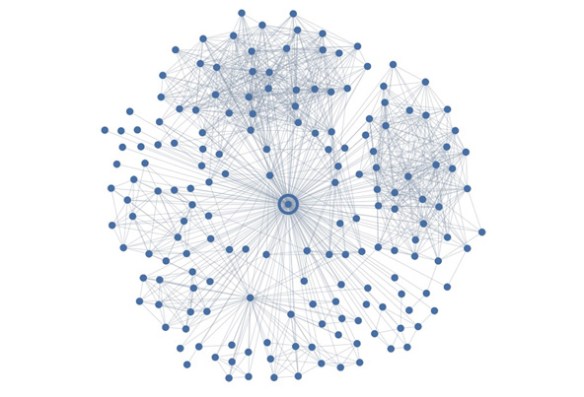
‘So much of social-network analysis confirms what we already know. Relationships that last are ones in which the other person widens our world? Well, yes. Still, it’s kind of nice to have it confirmed with lots of data and algorithms. “We hadn’t had this view of it before,” Mr. Kleinberg observed.’ (NYTimes)

‘The two-sentence horror story has become something of a genre — a super-popular Reddit thread this summer spawned numerous compilations. In honor of Halloween, Salon asked 12 novelists to try their hand at the form. Below are their ghostly, bloody, watery and surprisingly pet-focused forays into darkness.’ (Salon.com).

‘Sunday morning at 6:45AM, folks on the east coast will have a chance to see a very rare hybrid solar eclipse. The last one occurred 150 years ago, and the next one won\’t come until the year 2172, so make sure you set your alarm.
Let\’s talk terminology. An annular eclipse is the \”ring of fire\” type, where a small ring of sunlight shines around the moon. A total eclipse is where the moon blocks the sun completely. The hybrid eclipse has both phases: a ring is briefly visible, then the moon blocks out the sun completely, then (sometimes) the ring reappears. They\’re exceedingly rare — fewer than five percent of eclipses are hybrids.’ (Gizmodo).

‘When humans see a dog wagging its tail, we pretty much equate that with a happy dog. It turns out that a dogs tail may be much more expressive than we realize. Research has shown that happy dogs tend to wag more to the right, while anxious dogs go more to the left. A new study published in the journal Current Biology delves into the question of whether other dogs read this response.’ (CNET).


Der Vampir
‘The myth of the bloodsucking vampire has stalked humans from ancient Mesopotamia to 18th-century Eastern Europe, but it has differed in the terrifying details. So, how did we arrive at the popular image we know, love and fear today? And what truly makes a vampire…a vampire?’ (YouTube).

A reprise of my traditional Hallowe’en post of past years:
It is that time of year again. What has become a time of disinhibited hijinx and mayhem, and a growing marketing bonanza for the kitsch-manufacturers and -importers, has primeval origins as the Celtic New Year’s Eve, Samhain (pronounced “sow-en”). The harvest is over, summer ends and winter begins, the Old God dies and returns to the L of the Dead to await his rebirth at Yule, and the land is cast into darkness. The veil separating the worlds of the living and the dead becomes frayed and thin, and dispossessed dead mingle with the living, perhaps seeking a body to possess for the next year as their only chance to remain connected with the living, who hope to scare them away with ghoulish costumes and behavior, escape their menace by masquerading as one of them, or placate them with offerings of food, in hopes that they will go away before the new year comes. For those prepared, a journey to the other side could be made at this time.
With Christianity, perhaps because with calendar reform it was no longer the last day of the year, All Hallows’ Eve became decathected, a day for innocent masquerading and fun, taking its name Hallowe’en as a contraction and corruption of All Hallows’ Eve.

All Saints’ Day may have originated in its modern form with the 8th century Pope Gregory III. Hallowe’en customs reputedly came to the New World with the Irish immigrants of the 1840’s. The prominence of trick-or-treating has a slightly different origin, however.
The custom of trick-or-treating is thought to have originated not with the Irish Celts, but with a ninth-century European custom called souling. On November 2, All Souls Day, early Christians would walk from village to village begging for “soul cakes,” made out of square pieces of bread with currants. The more soul cakes the beggars would receive, the more prayers they would promise to say on behalf of the dead relatives of the donors. At the time, it was believed that the dead remained in limbo for a time after death, and that prayer, even by strangers, could expedite a soul’s passage to heaven.

English: A traditional Irish turnip Jack-o’-lantern from the early 20th century.
Jack-o’-lanterns were reportedly originally turnips; the Irish began using pumpkins after they immigrated to North AMerica, given how plentiful they were here.
The Jack-o-lantern custom probably comes from Irish folklore. As the tale is told, a man named Jack, who was notorious as a drunkard and trickster, tricked Satan into climbing a tree. Jack then carved an image of a cross in the tree’s trunk, trapping the devil up the tree. Jack made a deal with the devil that, if he would never tempt him again, he would promise to let him down the tree.
According to the folk tale, after Jack died, he was denied entrance to Heaven because of his evil ways, but he was also denied access to Hell because he had tricked the devil. Instead, the devil gave him a single ember to light his way through the frigid darkness. The ember was placed inside a hollowed-out turnip to keep it glowing longer.
Folk traditions that were in the past associated wtih All Hallows’ Eve took much of their power, as with the New Year’s customs about which I write here every Dec. 31st, from the magic of boundary states, transition and liminality.
The idea behind ducking, dooking or bobbing for apples seems to have been that snatching a bite from the apple enables the person to grasp good fortune. Samhain is a time for getting rid of weakness, as pagans once slaughtered weak animals which were unlikely to survive the winter. A common ritual calls for writing down weaknesses on a piece of paper or parchment, and tossing it into the fire. There used to be a custom of placing a stone in the hot ashes of the bonfire. If in the morning a person found that the stone had been removed or had cracked, it was a sign of bad fortune. Nuts have been used for divination: whether they burned quietly or exploded indicated good or bad luck. Peeling an apple and throwing the peel over one’s shoulder was supposed to reveal the initial of one’s future spouse. One way of looking for omens of death was for peope to visit churchyards

The Witches’ Sabbath aspect of Hallowe’en seems to result from Germanic influence, and fusion with the notion of Walpurgisnacht. (Familiar with the magnificent musical evocation of this, Mussorgsky’s Night on Bare Mountain?) Although probably not yet in a position to shape mainstream American Hallowe’en traditions, Mexican Dia de los Muertos observances have started to contribute some delightful and whimsical iconography to our encounter with the eerie and unearthly as well.
What was Hallowe’en like forty or fifty years ago in the U.S. when, bastardized as it has become with respect to its pagan origins, it retained a much more traditional flair? For my purposes, suffice it to say that it was before the era of the pay-per-view ’spooky-world’ type haunted attractions and its Martha Stewart yuppification with, as this irreverent Salon article from several years ago [via walker] puts it, monogrammed jack-o’-lanterns and the like. Related, a 1984 essay by Richard Seltzer, frequently referenced in other sources, entitled “Why Bother to Save Hallowe’en?”, argues as I do that reverence for Hallowe’en is good for the soul.

That would be anathema to certain segments of society, however. Hallowe’en certainly inspires a backlash by fundamentalists who consider it a blasphemous abomination. ‘Amateur scholar’ Isaac Bonewits details academically the Hallowe’en errors and lies he feels contribute to its being reviled. Some of the panic over Hallowe’en is akin to the hysteria, fortunately now debunked, over the supposed epidemic of ‘ritual Satanic abuse’ that swept the Western world in the ’90’s.

The horror film has become inextricably linked to Hallowe’en tradition, although the holiday itself did not figure in the movies until John Carpenter took the slasher genre singlehandedly by storm. Googling “scariest films”, you will, grimly, reap a mother lode of opinions about how to pierce the veil to journey to the netherworld and reconnect with that magical, eerie creepiness in the dark (if not the over-the-top blood and gore that has largely replaced the subtlety of earlier horror films).
In any case: trick or treat!
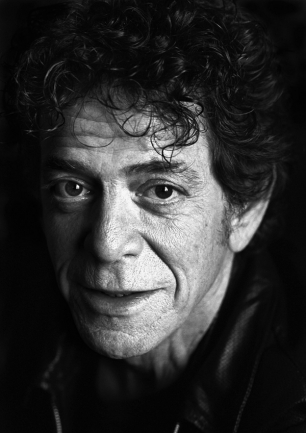
Velvet Underground Leader and Rock Pioneer Dead at 71: ‘Lou Reed, a massively influential songwriter and guitarist who helped shape nearly fifty years of rock music, died today. The cause of his death has not yet been released, but Reed underwent a liver transplant in May.’ (Rolling Stone obituary)

“I see it as a Broadway for writers,” said Henriette Lazaridis Power, editor of the Drum. “The way Broadway is a loosely defined geographic area of New York and everyone knows that’s where you go to find theater, this is a place where people who want to take in writing in the forms of events will go, and writers will find resources there.” (Boston Globe).
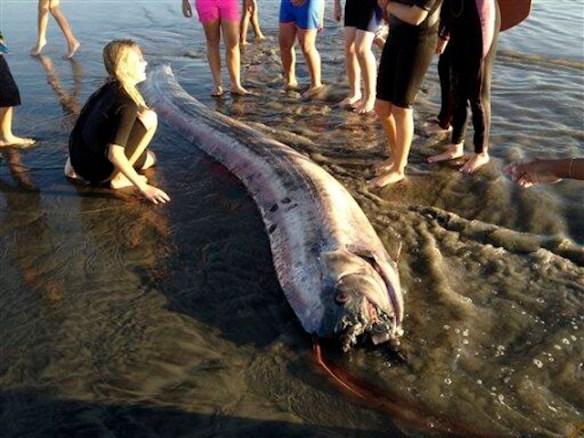
‘For the second time in a week, a rare serpentine oarfish has surfaced on a Southern California beach, NBC reports. The one found Friday afternoon at Oceanside Harbor wasn’t quite as large as the 18-foot behemoth found near Catalina Island. This one was only 13-and-a-half feet long. It weighed an estimated 200 pounds and took 15 people to carry.
That is actually quite small for an oarfish. According to the National Oceanic and Atmospheric Administration, it’s the largest bony fish in the sea and can grow to more than 50 feet long… Little is known about the species, since it’s usually found thousands of feet below the surface…’ (LAist).

‘Time is an illusion – at least in a toy model of the universe made of two particles of light. The experiment shows that what we perceive as the passage of time might emerge from the strange property of quantum entanglement. The finding could assist in solving the long-standing problem of how to unify modern physics.’ (New Scientist).
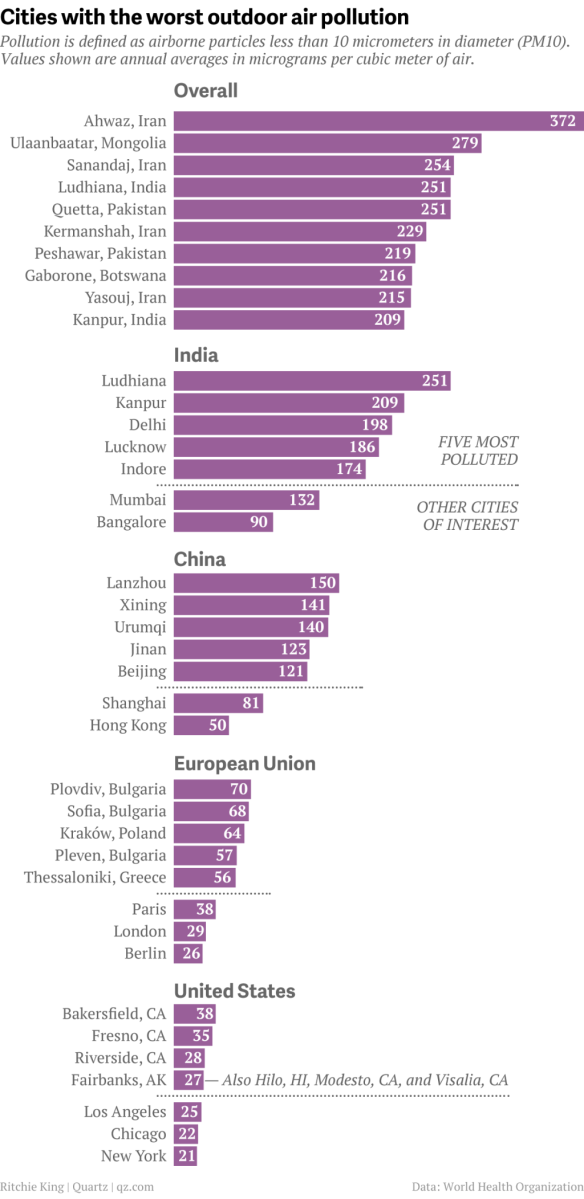
‘As the chart above shows, the cities with the worst air are often not big capitals, but provincial places with heavy industry in them or nearby. Ahwaz, for instance, in southwestern Iran, far outstrips infamously polluted cities like New Delhi or Beijing, with 372 parts per million of particles smaller than 10 micrometers (PM10), compared to the world average of 71. Life expectancy for the city of 1.2 million residents is the lowest in Iran.’ (Quartz).

‘…a disturbing series about the world of street monkeys in the city of Jakarta, created by the Finnish photographer Perttu Saska. Trained and dressed as humans to ask for money to passersby, as is an old Asian tradition, these monkeys have now become real objects, even wearing doll heads to accent mimicry, turning them into real living toys… A cruel phenomenon that leaves a strong sense of unease…’ Ufunk.net)
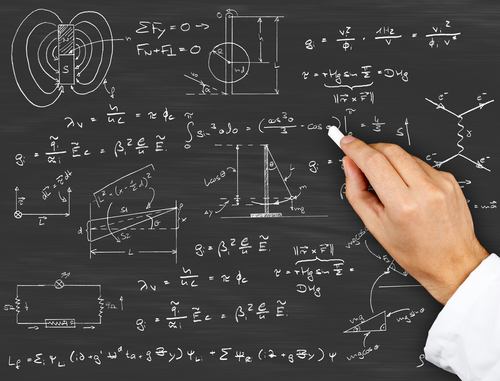
‘For starters: “The Higgs boson makes absolutely no sense. Why does it exist?” ‘ (Salon.com).
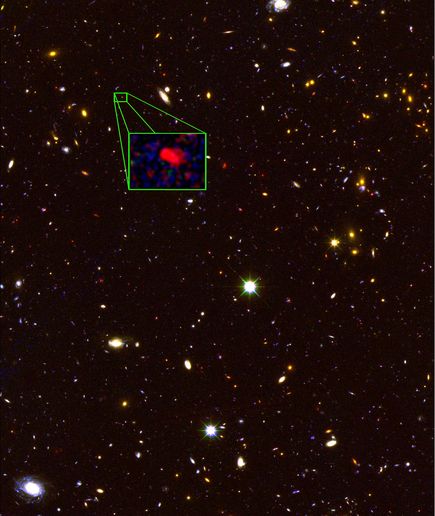
‘Astronomers have found a galaxy 13.1 billion light-years from Earth, making it officially the most distant object ever detected.A faint, infrared speck of light from this ancient galaxy, called z8_GND_5296, was spotted using the Hubble Space Telescope and one of the world\’s largest ground-based telescopes, a ten-meter telescope at Keck Observatory at the summit of Mauna Kea, Hawaii.Light from this baby galaxy began its journey when the universe was about 700 million years old and just emerging from the cosmic mist left over from its birth…’ (via National Geographic).
“The shadow banking system is vastly bigger than regulators had thought, say econophysicists who have developed a powerful new way to measure its hidden impactIn most parts of the world, the banking system is closely regulated and monitored by central banks and other government agencies. That’s just as it should be, you might think.
But banks have a way round this kind of regulation. For the last decade or so, it has become common practice for banks to do business in ways that don’t show up on conventional balance sheets. Before the 2008 financial crisis, for example, many investment banks financed mortgages in this way. To all intents and purposes, these transactions are invisible to regulators.
This so-called shadow banking system is huge and important. Indeed, many economists blame activities that took place in the shadow banking system for the 2008 crash.But the size of the system is hard to measure because of its hidden and impenetrable nature. But today, Davide Fiaschi , an economist at the University of Pisa in Italy, and a couple of pals reveal a powerful and simple way of determining the size of the shadow banking system.
Their conclusions are revealing. They say that the shadow banking system is vastly bigger than anyone had imagined before. And although its size dropped dramatically after the financial crisis in 2008, it has since grown dramatically and is today significantly bigger than it was even then.” (Medium).

“As a wonderful demonstration how media outlets will report the ridiculous as long as ‘neuroscience’ is mentioned, I present the ‘Oreos May Be As Addictive As Cocaine’ nonsense.
According to Google News, it has so far been reported by 209 media outlets, including some of the world’s biggest publications.
That’s not bad for some non-peer reviewed, non-published research described entirely in a single press release from a Connecticut college and done in rats.” (Mind Hacks).
‘Why is the Right so obsessed with pushing revisionist history?’ (Salon.com).

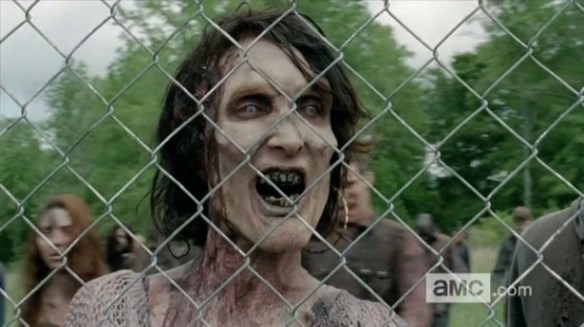
‘The Walking Dead’ brainwashes viewers ‘to participate in this new world order’: ‘The senior managing editor for Health News at the Fox News Channel warned on Thursday that AMC’s hit Zombie television series The Walking Dead was not only “hurting American society,” it was inspiring viewers to “participate in this new world order.”
“Hate me all you want, or call me paranoid and misinformed, but there is one common theme that is pervasive in American pop culture today: violence,” Dr. Manny Alvarez wrote in a column on the Fox News website. “Even more specifically, zombie violence. The idea of a zombie-infested world inspires fantasies of monsters possessed by an uncontrollable rage to kill, and viewers get a thrill imagining what it would be like to participate in this new world order.”
“Even scientists at the National Institutes of Health have spent time creating an apocalyptic how-to guide on dealing with a zombie outbreak,” he continued. “Give me a break. As a doctor and scientist, I know one thing for sure: When you’re dead, you’re dead.” ‘ (The Raw Story).

‘Bradley Garrett, a photographer and researcher with a background in anthropology and archeology, has spent the past five years of his life exploring hidden and forgotten parts of cities all over the world. Sneaking into sewers and bunkers, through metro tunnels and up skyscrapers, Garrett calls his work place-hacking: \”I see the access to secret spatial information available to those willing to dive through the loopholes in the system as akin to virtual hacking.\” These images, selections from his new book Explore Everything, from over 300 locations in eight countries, relays some of the excitement, terror, and wonder that comes with being a serial trespasser.’ (The Atlantic).

‘I hate Microsoft Word. I want Microsoft Word to die. I hate Microsoft Word with a burning, fiery passion. I hate Microsoft Word the way Winston Smith hated Big Brother. Our reasons are, alarmingly, not dissimilar …
Microsoft Word is a tyrant of the imagination, a petty, unimaginative, inconsistent dictator that is ill-suited to any creative writer\’s use. Worse: it is a near-monopolist, dominating the word processing field. Its pervasive near-monopoly status has brainwashed software developers to such an extent that few can imagine a word processing tool that exists as anything other than as a shallow imitation of the Redmond Behemoth. But what exactly is wrong with it?’ — Charles Stross (Charlie’s Diary).
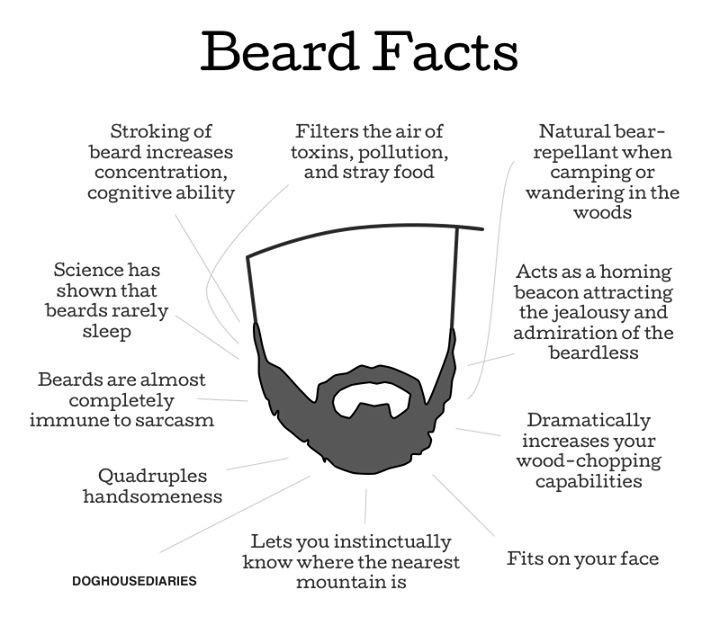
As someone who has not shaved for thirty years, I present this as a public service. All true. (Beard Facts).
 ‘Indulging in a bit of pseudoscience in some instances may be relatively innocuous, but the problem is that doing so lowers your defenses against more dangerous delusions that are based on similar confusions and fallacies. For instance, you may expose yourself and your loved ones to harm because your pseudoscientific proclivities lead you to accept notions that have been scientifically disproved, like the increasingly (and worryingly) popular idea that vaccines cause autism.’ (NYTimes)

“The average Briton gets six-and-a-half hours\’ sleep a night, according to the Sleep Council. Michael Mosley took part in an unusual experiment to see if this is enough…” (BBC News)

“It’s long been known that America’s school kids haven’t measured well compared with international peers. Now, there’s a new twist: Adults don’t either.
In math, reading and problem-solving using technology – all skills considered critical for global competitiveness and economic strength – American adults scored below the international average on a global test, according to results released Tuesday.
Adults in Japan, Canada, Australia, Finland and multiple other countries scored significantly higher than the United States in all three areas on the test. Beyond basic reading and math, respondents were tested on activities such as calculating mileage reimbursement due to a salesman, sorting email and comparing food expiration dates on grocery store tags.” (New York Post).

“Sparkly rocks remind us of an age when women were considered a form of chattel.” — Shannon Rupp (Salon).

‘Malala Yousafzai, the 16-year-old Pakistani advocate for womens rights and access to education, appeared on the Daily Show last night, ahead of Friday’s pending announcement for the 2013 recipient of the Nobel Peace Prize.
Her answer to one of Jon Stewart’s questions left him speechless.’ (Business Insider).
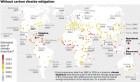
‘Climate scientists sometimes talk about something called “climate departure” as a way of measuring when climate change has really changed things. Its the moment when average temperatures, either in a specific location or worldwide, become so impacted by climate change that the old climate is left behind. Its a sort of tipping point. And a lot of cities are scheduled to hit one very soon.
A city hits “climate departure” when the average temperature of its coolest year from then on is projected to be warmer than the average temperature of its hottest year between 1960 and 2005. For example, lets say the climate departure point for D.C. is 2047 which it is. After 2047, even D.C.s coldest year will still be hotter than any year from before 2005. Put another way, every single year after 2047 will be hotter than D.C.s hottest year on record from 1860 to 2005. Its the moment when the old “normal” is really gone.
A big study, just published in the scientific journal Nature, projected that the Earth, overall, passes climate departure in 2047. The study also projects the year of climate departure in dozens of specific cities. Here, from The Post’s graphics team, is a map of their findings..’ (Wasington Post)
 If you like wonky humor, some of these are excruciatingly funny. Thanks to my friend Paul (who particularly appreciates that I include a bad pun in the email I send out to my department staff at the hospital every morning). (Thought Catalog).

‘Internet, this needs to stop. You keep finding moderately cool things and driving them into the ground, and what you’ve done with “Keep Calm And Carry On” is just the worst.Stop. Now.I saw a bunch of people wearing “Keep Calm It’s The Henderson Family Reunion” shirts at a park recently. That’s not a parody of the poster: it’s “Keep Calm” followed by some random words. There’s no semblance of thought here, it’s just using the font and the words “Keep Calm” because they’ve been used in other places.Which is too bad, because the poster itself is actually pretty cool. The UK government printed 2 million of these during World War II, but never hung them up. They were forgotten for half a century, until one was eventually found in an old box by the owners of Barter Bookstore in northeast England.’ (MakeUseof)

‘A House minority from white districts want to destroy the first black president, and the GOP majority abets them.’ (Salon)

‘Written by the U.S. Army Training And Doctrine Command in 2009, this 60-odd page document PDF was designed to function, in the words of its creators, as “a hip pocket” reference book for soldiers in the field. Categorized by geography, it groups the logos and insignia of “insurgents, terrorists, paramilitary, and other militant groups worldwide.” That includes everything from photos of Russian mafia tattoos to Hezbollah logos, as well as a thorough auxiliary list of branding from the “media wings” of each group.’ (Gizmodo).
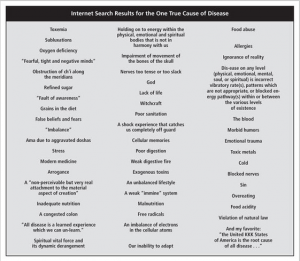
All 52 of them: ‘A few years ago, Harriet Hall googled “The One True Cause of all disease”, just to see what the Internet would come up with. She counted 67 One True Causes before she got bored (52 of them made it into the handy chart above).
Besides making for an amusing anecdote, this little exercise also helps illustrate why there’s a problem with ideologically driven medical treatments — the sort that comes from people who are pushing a lifestyle or a philosophy along with ostensible healthcare. It’s both intriguing and convenient to think that, if we just open the right secret door, we can find the thing that’s actually causing all our problems. The truth, unfortunately, seems to be that our bodies and the world they inhabit are complicated and messy and that lots of of things can lead to disease (doctors typically learn to divide these things into nine different categories, Hall says). In fact, a disease we think of as a single entity can have its roots in more than one thing. All of this is pretty obvious but it’s the kind of obvious that’s worth rubbing our noses in on occasion. If somebody tells you that everything from obesity to bipolar disorder to allergies to cancer all stem from the same root and can be treated or prevented with the exact same treatment, there’s probably good reason to question what they’re telling you.’ (Boing Boing).

‘The United States is one of the largest markets in the world for ivory sales – and it’s killing elephants. There’s a complex and confusing set of laws that criminal networks can easily manipulate to sell ivory from the African elephants who are being slaughtered in droves right now.
Tell the Obama Administration: Lead the global charge to ensure a future for elephants. Ban the sale of ivory in the United States.’ (Wildlife Conservation Society).

‘On June 7, 2007, a Delta II rocket launched from Vandenberg Air Force Base in California. Knowing full well this event was taking place, Air Force Staff Sergeant Eric Thompson, an instructor with the 532nd Training Squadron, figured he knew a place that might provide a better view than usual.’ (Bad Astronomy).

‘By applying what the authors dub “collateral sensitivity cycling,” doctors could kill resistant bacteria by switching to an antibiotic they have become more vulnerable to because of their resistance to the first drug, Sommer explains. The idea of cycling antibiotics dates back to the 1950s, he says, but fell out of favor after the boom in drug development.’ (Wired Science).

‘It’s said that we know more about the surface of the moon than our own oceans, and the same may be true of the lifeforms that inhabit them. Cold seawater and unfathomable pressures create alien landscapes populated by creatures as strange as they are beautiful. They swim through a star-studded sea where, instead of supernovae exploding, the ominous glow of anglerfish lures blink on and off, portending death for a wayward fish; and instead of glimmering stars splashed across the sky, bioluminescent plankton turn the sea a brilliant, twinkling blue.’ (Wired Science).
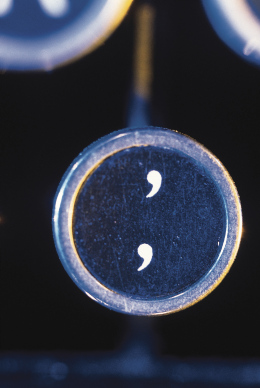
The Movement to Kill the Apostrophe: ‘Today is the 10th annual National Punctuation Day, a high holiday on nerd calendars across these great United States. Its stated purpose is to be a celebration of underappreciated, misused marks like the semicolon and “the ever mysterious ellipsis.” But a better-known piece of punctuation has been getting some apocalyptic press and deserves attention on this day of celebration: the apostrophe.’ (TIME.com).

“I think what everybody needs to know is that on their 43rd try Republicans will not be successful in defunding Obamacare, and most importantly, we are just beginning, just beginning to catch up to the rest of the industrialized world that guarantees healthcare to all people as a right. Cruz is quite right that once people begin to see that healthcare is a right for human beings. You know what? They like it, and they want more of it. And they do not want to endanger their children, their families. and themselves when an illness comes. Healthcare is a right, and we’re beginning to make some progress.” (Politicus USA).
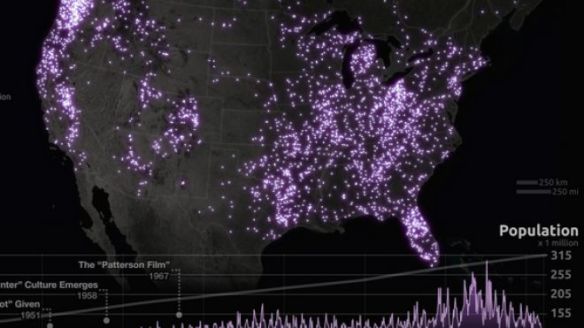
“Reported sightings of Bigfoot the legendary apelike creature that’s been a favorite of cryptozoologists for decades have abounded for decades. Now, for the first time, someone has created a map showing the places where alleged Bigfoot sightings have occurred.”

“School is the advertising agency which makes you believe that you need the society at it is” — Ivan Illich (Great Findings — Medium).
A Canadian Bohemian Rhapsodizes About String Theory : This is brilliant! 23 y/o musician and budding physicist Tim Blais explains string theory and the quantum theory of everything, a cappella. Robert Krulwich opines:
‘Let me confess right off that I didnt understand anything Tim Blais sings in this video, except that its hard — very hard — erase-the-blackboard-constantly-in-frustration hard — to find a mathematical theory that explains everything in the universe. Thats OK. Im not a physicist, so this isnt my problem. But when Tim produces an Albert Einstein sock puppet having a high-tenor tantrum, I found myself doing a little happy dance.With no apologies to Queen, this is Tims “A Capella Science” take on String Theory set to Bohemian Rhapsody. He calls it “Bohemian Gravity.” Hes 23. He wrote this. He sang this. He designed this. Hes amazing.’
‘The U.S. Centers for Disease Control and Prevention has just published a first-of-its-kind assessment of the threat the country faces from antibiotic-resistant organisms, ranking them by the number of illnesses and deaths they cause each year and outlining urgent steps that need to be taken to roll back the trend.The agency’s overall — and, it stressed, conservative — assessment of the problem:Each year, in the U.S., 2,049,442 illnesses caused by bacteria and fungi that are resistant to at least some classes of antibiotics;Each year, out of those illnesses, 23,000 deaths;Because of those illnesses and deaths, $20 billion each year in additional healthcare spending;And beyond the direct healthcare costs, an additional $35 billion lost to society in foregone productivity.“If we are not careful, we will soon be in a post-antibiotic era,” Dr. Tom Frieden, the CDC’s director, said in a media briefing. “And for some patients and for some microbes, we are already there.” ‘ (Wired Science).
‘The sinister clown that has been appearing on Northamptons streets made another visitation last night.He was pictured in his trademark white make-up and red wig on St Michaels Road waving forlornly with a clown teddy hanging from his other hand.The appearance came after a posting on the Facebook page Spot Northamptons Clown promised the clown would be in town.He said: “To prove im real to all the lovers and doubters, ill see you in town today. Keep those eyes peeled.” ‘ (Northampton News via Boing Boing).

An attractive new explanation of some of spacetime’s most puzzling anomalies revolves around positing regions which are ‘larger on the inside’ than they appear on the outside. (The Physics arXiv Blog).

It’s a very real trip, and it’s actually pretty crowded. (Gizmodo)
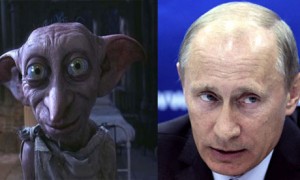
(Boing Boing).

‘If I had a chauffeur, I’d want it to be Tom Vanderbilt. I have no idea if Tom is a good driver, but he has a wealth of compelling, curious, and provocative knowledge about the psychology and science of our lives behind the wheel. He’s the author of the bestselling book Traffic: Why We Drive The Way We Do (And What It Says About Us) that has enlightened everyone from transportation policy groups to road safety consortiums to those of us who just insist that no matter what lane we’re in, the other one is moving faster. Tom gave a fantastic talk at Boing Boing: Ingenuity, our theatrical experience last month in San Francisco, where he imparted wisdom on late merging, the demographics of honking, and highway hypnosis.’ (Boing Boing).
The Meaning of the Loss of Darkness: ‘For Earth’s first 4 billion years of existence, light and dark followed a predictable 24-hour cycle. Across an ever-increasing amount of Earth’s surface, that’s no longer the case. With the advent of artificial lighting came the ability to transform night — inside buildings, under streetlights and neon signs, and in those vast areas where night’s simply not so dark as it used to be.
For journalist Paul Bogard, author of The End of Night: Searching for Darkness in an Age of Artificial Light, one such place his family’s lakeside camp in rural Minnesota. Thirty years ago the nights were pitch-black, the starscapes incandescent. Now there’s a glow at the edge of the horizon, a growing dullness to the stars.“That firsthand experience of a child, standing out on a dock and staring at the Milky Way, stays with you,” said Bogard. “That’s one of the biggest things we’re losing, or have lost, for our kids. More and more people have no idea what it’s like.
”It’s not only lost starscapes that he laments, but darkness itself. WIRED talked to Bogard about what this could mean for humanity’s existential and even physical health.’ (Wired Science).
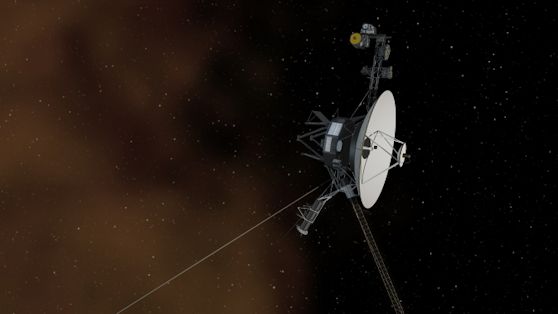
‘NASA’s Voyager 1 spacecraft officially is the first human-made object to venture into interstellar space. The 36-year-old probe is about 12 billion miles (19 billion kilometers) from our sun.
New and unexpected data indicate Voyager 1 has been traveling for about one year through plasma, or ionized gas, present in the space between stars. Voyager is in a transitional region immediately outside the solar bubble, where some effects from our sun are still evident. A report on the analysis of this new data, an effort led by Don Gurnett and the plasma wave science team at the University of Iowa, Iowa City, is published in Thursday’s edition of the journal Science.’ (NASA Science).

Cow Testicle Curry Soup, Phnom Phen, Cambodia
‘At first blush, the oddest thing about a study out this week that linked being a good dad to smaller-than-average testicle size might be that such research happened in the first place.’ (National Geographic).
‘Did gravity, the force that pins us to Earths surface and holds stars together, just shift? Maybe, just maybe. The latest measurement of G, the so-called constant that puts a figure on the gravitational attraction between two objects, has come up higher than the current official value.
Measurements of G are notoriously unreliable, so the constant is in permanent flux and the official value is an average. However, the recent deviation is particularly puzzling, as it is at once starkly different to the official value and yet very similar to a measurement made back in 2001, not what you would expect if the discrepancy was due to random experimental errors.
It’s possible that both experiments suffer from a hidden, persistent error, but the result is also prompting serious consideration of a weirder possibility: that G itself can change. That’s a pretty radical option, but if correct, it would take us a step closer to tackling one very big mystery – dark energy, the unknown entity accelerating the expansion of the universe.’ (New Scientist).
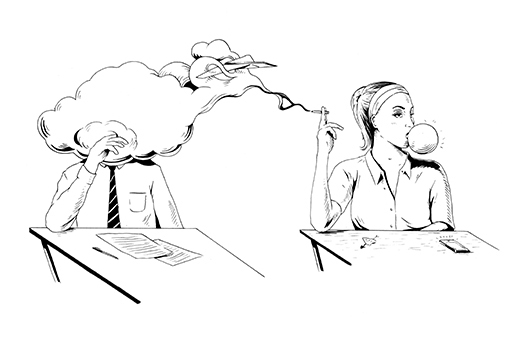
“It’s the most pernicious cliché of our time: Sometimes buzzwords become so pervasive they’re almost inaudible, which is when we need to start listening to them. Disruptive is like that. It floats in the ether at ideas festivals and TED talks; it vanishes into the jargon cluttering the pages of Forbes and Harvard Business Review. There’s a quarterly called Disruptive Science and Technology; a Disruptive Health Technology Institute opened this summer. Disruptive doesn’t mean what it used to, of course. It’s no longer the adjective you hope not to hear in parent-teacher conferences. It’s what you want investors to say about your new social-media app. If it’s disruptive, it’s also innovative and transformational.” (New Republic)
‘This is Eunice aphroditois, also known as the bobbit worm, a mix between the Mongolian death worm, the Graboids from Tremors, the Bugs from Starship Troopers, and a rainbow — but it’s a really dangerous rainbow, like in Mario Kart. And it hunts in pretty much the most nightmarish way imaginable, digging itself into the sea floor, exposing a few inches of its body — which can grow to 10 feet long — and waiting.
Using five antennae, the bobbit worm senses passing prey, snapping down on them with supremely muscled mouth parts, called a pharynx. It does this with such speed and strength that it can split a fish in two. And that, quite frankly, would be a merciful exit. If you survive initially, you get to find out what it’s like to be yanked into the worm’s burrow and into untold nightmares.’ (Wired Science).
- An Iranian Jew prays in a synagogue in Shiraz.
‘Iran’s president purportedly tweets message to Jews in Iran and abroad… Iran is home to about 25,000 Jews, the largest Jewish population in the Middle East outside Israel.’ (National Geographic)
‘Scientists have discovered a staggering colossus that once spewed fire but now slumbers deep in the Pacific Ocean,… a volcano with a footprint comparable to Olympus Mons on Mars, the largest volcano in the solar system. Covering an area of 120,000 square miles, which makes it about the size of New Mexico or the British Isles, the formation dubbed Tamu Massif is one of the biggest ever found, according to a study led by University of Houston professor William Sager.
Hawaii’s Mauna Loa, the largest active volcano on Earth, is taller than Tamu Massif but has only about 2 percent of its area… Tamu’s summit is roughly 6,500 feet below the ocean’s surface. Most of the formation is thought to be in waters that are nearly 4 miles deep.’ (Crave – CNET).
‘The Higgs boson may have the right mass to wreck the universe – hurray! Death by Higgs is the simplest way to do away with a paradoxical menagerie of disembodied intelligent beings that shouldn’t exist, yet remain in the best cosmological models.
What’s more, the end is a comfy 20 or 30 billion years off. “That’s quite a few billion; it’s not like we should rush out and buy life insurance,” says Sean Carroll at the California Institute of Technology in Pasadena, who put forward the idea along with Kimberly Boddy, also at Caltech.
The paradox arose a decade or so ago, when physicists realised their models led to a future filled with Boltzmann brains: fully formed conscious entities that pop out of the vacuum. It sounds bizarre, but there’s nothing to stop matter sometimes randomly arranging itself in just the right way for this to occur. The problem arises when you add in the universe’s accelerating expansion.
This provides limitless time, space and energy for Boltzmann brains to form, even after life as we know it has winked out, causing them to eventually outnumber ordinary consciousnesses. But that would make the brains’ experience of the universe more typical than ours, which is a problem as our understanding of the cosmos assumes that we are typical observers…’ (New Scientist).
A son’s search for his Amazonian mother: ‘David Goods parents come from different countries – hardly unusual in the US where he was raised. But the 25-year-olds family is far from ordinary – while his father is American, his mother is a tribeswoman living in a remote part of the Amazon. Two decades after she left, David realised he had to find her.’ (BBC News).

‘In the mid 1960s, they made their first TV appearance on the set of Doctor Who. Another sci-fi series, The Prisoner, followed and in 1980 Hollywood called – the Craven Walkers were asked to deliver bespoke models to the set of Superman III.
“When did we realise things were going really well? The day a store in Birkenhead phoned to say that Ringo Starr had just been in and bought a lava lamp,” said Ms Baehr.
“Suddenly we thought, ‘Wow, we have hit it.'” ‘ (BBC News).
‘There’s a word— albeit one not recognized by the Oxford English Dictionary or any psychology manual— for the excessive fear of clowns: Coulrophobia.Not a lot of people actually suffer from a debilitating phobia of clowns; a lot more people, however, just don’t like them.
Do a Google search for “I hate clowns” and the first hit is ihateclowns.com, a forum for clown-haters that also offers vanity @ihateclowns.com emails. One “I Hate Clowns” Facebook page has just under 480,000 likes. Some circuses have held workshops to help visitors get over their fear of clowns by letting them watch performers transform into their clown persona. In Sarasota, Florida, in 2006, communal loathing for clowns took a criminal turn when dozens of fiberglass clown statues—part of a public art exhibition called “Clowning Around Town” and a nod to the city’s history as a winter haven for traveling circuses—were defaced, their limbs broken, heads lopped off, spray-painted; two were abducted and we can only guess at their sad fates.
Even the people who are supposed to like clowns—children—supposedly don’t. In 2008, a widely reported University of Sheffield, England, survey of 250 children between the ages of four and 16 found that most of the children disliked and even feared images of clowns. The BBC’s report on the study featured a child psychologist who broadly declared, “Very few children like clowns. They are unfamiliar and come from a different era. They dont look funny, they just look odd…” ‘ (Smithsonian Magazine).
This map displays key sites and potential U.S. targets. (The Daily Beast)
‘Ear, eye, liver, windpipe, bladder and even a heart. The list of body parts grown from stem cells is getting longer and longer. Now add to it one of the most complex organs: the brain.A team of European scientists has grown parts of a human brain in tissue culture from stem cells. Their work could help scientists understand the origins of schizophrenia or autism and lead to drugs to treat them, said Juergen Knoblich, deputy scientific director at the Institute of Molecular Biotechnology of the Austrian Academy of Sciences and one of the papers co-authors.The advance could also eliminate the need for conducting experiments on animals, whose brains are not a perfect model for humans.’ (Mashable).
‘ “As I transition into this next phase of my life, I want everyone to know the real me,” Manning said. “I am Chelsea Manning. I am a female. Given the way that I feel, and have felt since childhood, I want to begin hormone therapy as soon as possible.’ (Washington Post).

How many uncontacted tribes are still left? Have they really had no contact with the outside world? Are there guidelines for how best to approach such tribes? Why would tribes choose to end their isolation? (New Scientist).
‘Starkly showcasing the US government officials’ misplaced priorities when it comes to human rights, whistleblower and Nobel Peace Prize nominee Bradley Manning was sentenced to 35 years in prison. The information that Bradley gave to the public exposed the unjust detainment of innocent people at Guantanamo Bay, the true human cost of our wars in Iraq and Afghanistan, and forever changed investigative journalism. There is no evidence that anyone was harmed as a result of the information exposed.Join Amnesty International and the Bradley Manning Support Network in signing a petition to President Obama, demanding that Bradley Manning be given clemency and be released immediately. After having been tortured and abused at Quantico prison for 9 months where he was held in solitary confinement against the recommendations of every health professional who assessed him, and after having already spent more than 1190 days in prison more than 3 years confinement before the trial even began, Bradley Manning should be set free! Uphold your promise Obama: protect whistleblowers!’ Sign the petition and show your support! (Bradley Manning Support Network).
‘The pinwheel-like drawing above is nothing but black and white lines. When you look at it the right way, though, something strange and beautiful happens: it begins to flicker. You may think it’s just a regular old optical illusion at first, but actually, you’re looking at your very own brain waves.
To see the optical illusion takes a little bit of work. Look at the pinwheel shape and then stare at a spot that’s just a few inches away from it. When the pinwheel is in your peripheral vision, you should start to see the center flicker, kind of like a really bright star does. The effect also works as an afterimage. So once you find a spot that gets the flicker going, stare at it for about a minute and then look at a blank white wall. You’ll see the inverse image of the pinwheel, flicker and all.’ (Gizmodo).
‘Officials, including NSA Director Keith Alexander, have assured the public that the government knows the scope of the damage, but two separate sources briefed on the matter told NBC News that the NSA has been unable to determine how many documents he took and what they are.’ (NBC Investigations).
‘Birds cannot read road signs, but they know that some roads have higher speed limits than others. They will take off further away from an approaching car on a faster road than on a slower road – regardless of the speed of the car.’ (New Scientist).
‘Could a blood test predict whether a person is at risk of committing suicide? For the first time, a set of proteins in the blood have been linked to suicidal behaviour. People who commit suicide appear to share a number of biological traits, regardless of any underlying conditions. This hints that suicidal behaviour may be a distinct disorder.
To investigate, Alexander Niculescu of Indiana University in Indianapolis and colleagues collected blood from the cadavers of nine men who had bipolar disorder and suicidal tendencies, and nine with bipolar but no suicidal thoughts, and compared levels of all the genes expressed in their blood.
Four genes were expressed at significantly higher levels in the blood of people who had been suicidal. Some proteins that these genes code for are known to be involved in stress and cell death.’ (New Scientist).

‘For some, it is a short mental step from “my end is imminent” to “the end of everything is imminent.” Call it apocalyptic narcissism.’ (The Chronicle Review)
Pianist and Composer Dies at 79: ‘Cedar Walton, a pianist who distinguished himself as both an accompanist and a soloist, and who wrote some of the most enduring compositions in modern jazz while a member of Art Blakey’s Jazz Messengers in the early 1960s, died on Monday at his home in Brooklyn. He was 79.’ (NYTimes.com obituary)
Colin Robinson’s advice for the 81% of Americans who believe they have a book in them: Don’t let it out!. (The Guardian)
‘A fuzzy, fog-dwelling mammal is the first carnivore found in the Western Hemisphere in three decades, a new study says.’ (National Geographic).
‘Computer networks that can’t forget fast enough can show symptoms of a kind of virtual schizophrenia, giving researchers further clues to the inner workings of schizophrenic brains, researchers at The University of Texas at Austin and Yale University have found.
The researchers used a virtual computer model, or “neural network,” to simulate the excessive release of dopamine in the brain. They found that the network recalled memories in a distinctly schizophrenic-like fashion.
Their results were published in April in Biological Psychiatry.
“The hypothesis is that dopamine encodes the importance — the salience — of experience,” says Uli Grasemann, a graduate student in the Department of Computer Science at The University of Texas at Austin. “When there’s too much dopamine, it leads to exaggerated salience, and the brain ends up learning from things that it shouldn’t be learning from.”
The results bolster a hypothesis known in schizophrenia circles as the hyperlearning hypothesis, which posits that people suffering from schizophrenia have brains that lose the ability to forget or ignore as much as they normally would. Without forgetting, they lose the ability to extract what’s meaningful out of the immensity of stimuli the brain encounters. They start making connections that aren’t real, or drowning in a sea of so many connections they lose the ability to stitch together any kind of coherent story.’ (University of Texas News).

What was behind the sudden boom of apparitions in late 19th century America? (The Smart Set).
‘I like material things as much as anyone. I studied product design in school. I’m into gadgets, clothing and all kinds of things. But my experiences show that after a certain point, material objects have a tendency to crowd out the emotional needs they are meant to support.
I wouldn’t trade a second spent wandering the streets of Bangkok with Olga for anything I’ve owned. Often, material objects take up mental as well as physical space.
I’m still a serial entrepreneur, and my latest venture is to design thoughtfully constructed small homes that support our lives, not the other way around. Like the 420-square-foot space I live in, the houses I design contain less stuff and make it easier for owners to live within their means and to limit their environmental footprint. My apartment sleeps four people comfortably; I frequently have dinner parties for 12. My space is well-built, affordable and as functional as living spaces twice the size. As the guy who started TreeHugger.com, I sleep better knowing I’m not using more resources than I need. I have less — and enjoy more.’ — Graham Hill (NYTimes.com).
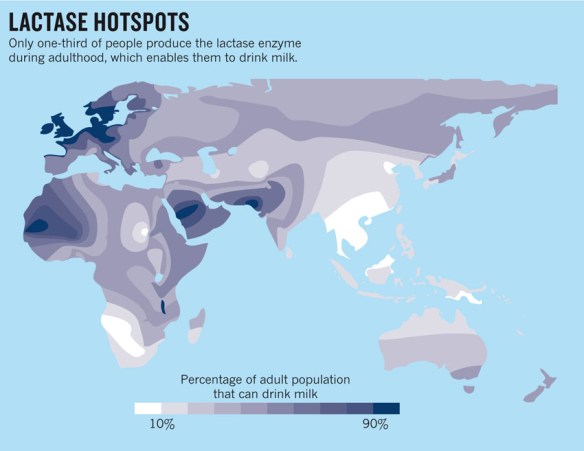
‘During the most recent ice age, milk was essentially a toxin to adults because — unlike children — they could not produce the lactase enzyme required to break down lactose, the main sugar in milk. But as farming started to replace hunting and gathering in the Middle East around 11,000 years ago, cattle herders learned how to reduce lactose in dairy products to tolerable levels by fermenting milk to make cheese or yogurt. Several thousand years later, a genetic mutation spread through Europe that gave people the ability to produce lactase — and drink milk — throughout their lives. That adaptation opened up a rich new source of nutrition that could have sustained communities when harvests failed.
This two-step milk revolution may have been a prime factor in allowing bands of farmers and herders from the south to sweep through Europe and displace the hunter-gatherer cultures that had lived there for millennia. “They spread really rapidly into northern Europe from an archaeological point of view,” says Mark Thomas, a population geneticist at University College London. That wave of emigration left an enduring imprint on Europe, where, unlike in many regions of the world, most people can now tolerate milk. “It could be that a large proportion of Europeans are descended from the first lactase-persistent dairy farmers in Europe,” says Thomas.’ (Nature News & Comment).

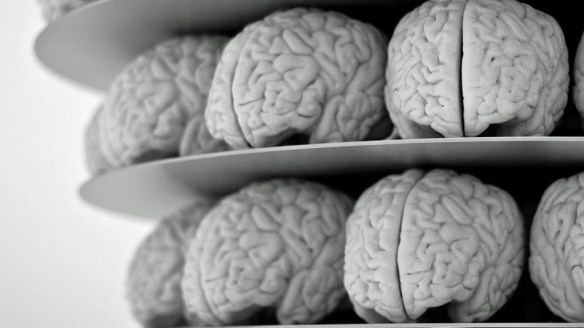
Major brain structures implicated in autism. (Photo credit: Wikipedia)
‘Children with Asperger’s syndrome show patterns of brain connectivity distinct from those of children with autism, according to a new study. The findings suggest the two conditions, which are now in one category in the new psychiatry diagnostic manual, may be biologically different.
The researchers used electroencephalography (EEG) recordings to measure the amount of signaling occurring between brain areas in children. They had previously used this measure of brain connectivity to develop a test that could distinguish between children with autism and normally developing children.’ (LiveScience)
Trivial finding, consistent with the new pseudo neuroscience. Of course differences are found, as individuals with Asperger’s and autism function very very differently. Tell me something I don’t know. (“Information can be defined as a difference that makes a difference…” — Gregory Bateson)
‘

Yes, this is old, but it’s on Twitter again today, so it’s new enough: Joe Coscarelli’s perfectly foul-mounted demand that the New York Times let itself quote naughty words, citing the circumlocutory fucking around below as evidence that it is “ridiculously prude with regards to printing curse words.”
Her writing could be earthy, with at least three messages using variations on the two most common swear words.
In one, she responded to a message with a single word, weaving one of them into “unbelievable.”
In another, she said her staff should not take on empty tasks. “You should go,” she said, “but don’t volunteer us for the” scutwork — though she substituted an epithet for the first part of that last word.
Things seem not to have improved since Joe’s 2010 missive, with no fucks or shits in the past year. Plenty of piss, though.
But hey, give The Times some credit: its editors can avoid using the word “torture” with just a single sentence.’ — Rob Beschizza (Boing Boing).
- Global mean surface temperature difference from the average for 1880–2009 (Photo credit: Wikipedia)
‘As the mercury rises, so too will a tide of human violence, according to a new analysis that puts a fresh spin on the phrase “dangerous climate change”.
Indeed, if societies respond to future warming in the same way as they have responded to historical surges in temperature, the frequency of civil wars could increase by more than 50 per cent by the middle of the century…
The new study is by economists at the University of California, Berkeley, who sought to make sense of a recent explosion of research into the relationship between climate and conflict. Marshall Burke and his colleagues used a meta-analysis of multiple studies, combining the different findings to try to find definitive answers.’ (New Scientist).
‘The research, detailed in this week’s issue of the journal Science, synthesizes findings scattered across diverse fields ranging from archaeology to economics to paint a clearer picture of how global warming-related shifts in temperature and rainfall could fuel acts of aggression.Though scientists don’t know exactly why global warming increases violence, the findings suggest that it’s another major fallout of human-made climate change, in addition to rising sea levels and increased heat waves.’ ((National Geographic).
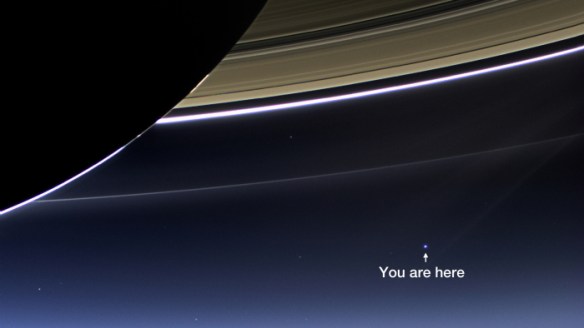
In this rare image taken on July 19, 2013, the wide-angle camera on NASA’s Cassini spacecraft has captured Saturn’s rings and our planet Earth and its moon in the same frame. It is only one footprint in a mosaic of 33 footprints covering the entire Saturn ring system (including Saturn itself). At each footprint, images were taken in different spectral filters for a total of 323 images: some were taken for scientific purposes and some to produce a natural color mosaic. This is the only wide-angle footprint that has the Earth-moon system in it.’

Amid Royal Baby Name Wait, Asking if Names Affect Life: Psychologists probe the fascinating ways our names impact us. (National Geographic).
‘Death is frequently associated with the colour black, but for some worms the grim reaper comes wearing robes of fluorescent blue.
Hours before it dies, a wave of blue light flows through the body of a flatworm, Caenorhabditis elegans. Now, the biological mechanisms leading up to the flatworm’s death have been studied for the first time – revealing an unexpected source for this blue wave of death.’ (New Scientist).
‘…The town of Deer Trail, Colo., is looking to begin offering “drone hunting licenses” and actually paying rewards to anyone who presents proof that they were able to bring down an unmanned aerial vehicle belonging to the United States federal government, according to reporting by Denver TV station KMGH.
Phillip Steel, the man who drafted the ordinance, as well as other supporters, say it will provide a new source of revenue for the town, but Steel concedes that it’s not exactly like Deer Trail has a drone problem. In fact, he’s never seen one over the town.
“This is a very symbolic ordinance,” he told KMGH. “Basically, I do not believe in the idea of a surveillance society, and I believe we are heading that way.” ‘ (Crave – CNET).
‘It took seven decades, but the pitch has finally been caught in the act. Since 1944, physicists at Trinity College in Dublin have been trying to measure the viscosity of pitch tar, a polymer seemingly solid at room temperature, and witness it dripping from a funnel. A drop forms only rarely, but last week a Webcam was on hand to witness the magic moment.
“The viscosity of pitch-tar is calculated to be 230 billion times that of water or 230,000 times the viscosity of honey,” the college’s School of Physics says on the experiment page. “Nobody has ever witnessed a drop fall in such an experiment — they happen roughly only once in a decade!”
The experiment is one of the oldest in the world, but a similar attempt at the University of Queensland in Australia has been going since 1927. It has only yielded eight drops. A Webcam that was poised to record a drop of the Australian pitch in November 2000 malfunctioned, but another drop could fall this year: see the live view here. It could take another century for all the pitch to flow through the funnel.’ (Crave – CNET).