Top 50 scariest horror movies of all time

(Boston.com).

Vampires: Folklore, fantasy and fact

The Vampire Deutsch: Der Vampir

Der Vampir

‘The myth of the bloodsucking vampire has stalked humans from ancient Mesopotamia to 18th-century Eastern Europe, but it has differed in the terrifying details. So, how did we arrive at the popular image we know, love and fear today? And what truly makes a vampire…a vampire?’ (YouTube).

Happy Samhain

Three jack-o'-lanterns illuminated from within...

A reprise of my traditional Hallowe’en post of past years:

It is that time of year again. What has become a time of disinhibited hijinx and mayhem, and a growing marketing bonanza for the kitsch-manufacturers and -importers, has primeval origins as the Celtic New Year’s Eve, Samhain (pronounced “sow-en”). The harvest is over, summer ends and winter begins, the Old God dies and returns to the L of the Dead to await his rebirth at Yule, and the land is cast into darkness. The veil separating the worlds of the living and the dead becomes frayed and thin, and dispossessed dead mingle with the living, perhaps seeking a body to possess for the next year as their only chance to remain connected with the living, who hope to scare them away with ghoulish costumes and behavior, escape their menace by masquerading as one of them, or placate them with offerings of food, in hopes that they will go away before the new year comes. For those prepared, a journey to the other side could be made at this time.

With Christianity, perhaps because with calendar reform it was no longer the last day of the year, All Hallows’ Eve became decathected, a day for innocent masquerading and fun, taking its name Hallowe’en as a contraction and corruption of All Hallows’ Eve.

All Saints’ Day may have originated in its modern form with the 8th century Pope Gregory III. Hallowe’en customs reputedly came to the New World with the Irish immigrants of the 1840’s. The prominence of trick-or-treating has a slightly different origin, however.

The custom of trick-or-treating is thought to have originated not with the Irish Celts, but with a ninth-century European custom called souling. On November 2, All Souls Day, early Christians would walk from village to village begging for “soul cakes,” made out of square pieces of bread with currants. The more soul cakes the beggars would receive, the more prayers they would promise to say on behalf of the dead relatives of the donors. At the time, it was believed that the dead remained in limbo for a time after death, and that prayer, even by strangers, could expedite a soul’s passage to heaven.

English: A traditional Irish turnip Jack-o'-la...

English: A traditional Irish turnip Jack-o’-lantern from the early 20th century.

Jack-o’-lanterns were reportedly originally turnips; the Irish began using pumpkins after they immigrated to North AMerica, given how plentiful they were here.

The Jack-o-lantern custom probably comes from Irish folklore. As the tale is told, a man named Jack, who was notorious as a drunkard and trickster, tricked Satan into climbing a tree. Jack then carved an image of a cross in the tree’s trunk, trapping the devil up the tree. Jack made a deal with the devil that, if he would never tempt him again, he would promise to let him down the tree.

According to the folk tale, after Jack died, he was denied entrance to Heaven because of his evil ways, but he was also denied access to Hell because he had tricked the devil. Instead, the devil gave him a single ember to light his way through the frigid darkness. The ember was placed inside a hollowed-out turnip to keep it glowing longer.

Folk traditions that were in the past associated wtih All Hallows’ Eve took much of their power, as with the New Year’s customs about which I write here every Dec. 31st, from the magic of boundary states, transition and liminality.

The idea behind ducking, dooking or bobbing for apples seems to have been that snatching a bite from the apple enables the person to grasp good fortune. Samhain is a time for getting rid of weakness, as pagans once slaughtered weak animals which were unlikely to survive the winter. A common ritual calls for writing down weaknesses on a piece of paper or parchment, and tossing it into the fire. There used to be a custom of placing a stone in the hot ashes of the bonfire. If in the morning a person found that the stone had been removed or had cracked, it was a sign of bad fortune. Nuts have been used for divination: whether they burned quietly or exploded indicated good or bad luck. Peeling an apple and throwing the peel over one’s shoulder was supposed to reveal the initial of one’s future spouse. One way of looking for omens of death was for peope to visit churchyards

La Catrina – In Mexican folk culture, the Catr...

The Witches’ Sabbath aspect of Hallowe’en seems to result from Germanic influence, and fusion with the notion of Walpurgisnacht. (Familiar with the magnificent musical evocation of this, Mussorgsky’s Night on Bare Mountain?) Although probably not yet in a position to shape mainstream American Hallowe’en traditions, Mexican Dia de los Muertos observances have started to contribute some delightful and whimsical iconography to our encounter with the eerie and unearthly as well.

What was Hallowe’en like forty or fifty years ago in the U.S. when, bastardized as it has become with respect to its pagan origins, it retained a much more traditional flair? For my purposes, suffice it to say that it was before the era of the pay-per-view ’spooky-world’ type haunted attractions and its Martha Stewart yuppification with, as this irreverent Salon article from several years ago [via walker] puts it, monogrammed jack-o’-lanterns and the like. Related, a 1984 essay by Richard Seltzer, frequently referenced in other sources, entitled “Why Bother to Save Hallowe’en?”, argues as I do that reverence for Hallowe’en is good for the soul.

“Maybe at one time Hallowe’en helped exorcise fears of death and ghosts and goblins by making fun of them. Maybe, too, in a time of rigidly prescribed social behavior, Hallowe’en was the occasion for socially condoned mischief — a time for misrule and letting loose. Although such elements still remain, the emphasis has shifted and the importance of the day and its rituals has actually grown.…(D)on’t just abandon a tradition that you yourself loved as a child, that your own children look forward to months in advance, and that helps preserve our sense of fellowship and community with our neighbors in the midst of all this madness.”

Three Halloween jack-o'-lanterns.

That would be anathema to certain segments of society, however. Hallowe’en certainly inspires a backlash by fundamentalists who consider it a blasphemous abomination. ‘Amateur scholar’ Isaac Bonewits details academically the Hallowe’en errors and lies he feels contribute to its being reviled. Some of the panic over Hallowe’en is akin to the hysteria, fortunately now debunked, over the supposed epidemic of ‘ritual Satanic abuse’ that swept the Western world in the ’90’s.

Frankenstein

The horror film has become inextricably linked to Hallowe’en tradition, although the holiday itself did not figure in the movies until John Carpenter took the slasher genre singlehandedly by storm. Googling “scariest films”, you will, grimly, reap a mother lode of opinions about how to pierce the veil to journey to the netherworld and reconnect with that magical, eerie creepiness in the dark (if not the over-the-top blood and gore that has largely replaced the subtlety of earlier horror films).

In any case: trick or treat!

Related:

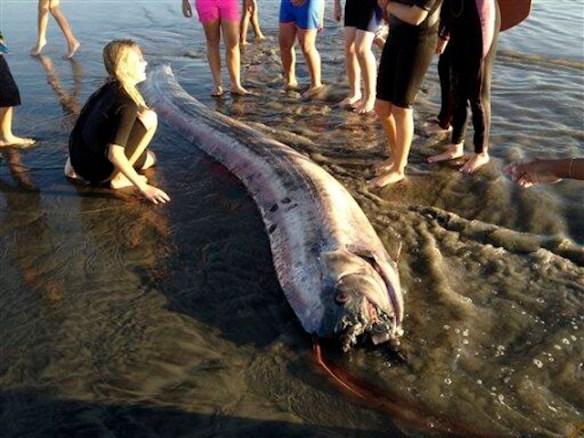
Second Sea Serpent In A Week Washes Ashore

‘For the second time in a week, a rare serpentine oarfish has surfaced on a Southern California beach, NBC reports. The one found Friday afternoon at Oceanside Harbor wasn’t quite as large as the 18-foot behemoth found near Catalina Island. This one was only 13-and-a-half feet long. It weighed an estimated 200 pounds and took 15 people to carry.

That is actually quite small for an oarfish. According to the National Oceanic and Atmospheric Administration, it’s the largest bony fish in the sea and can grow to more than 50 feet long… Little is known about the species, since it’s usually found thousands of feet below the surface…’ (LAist).

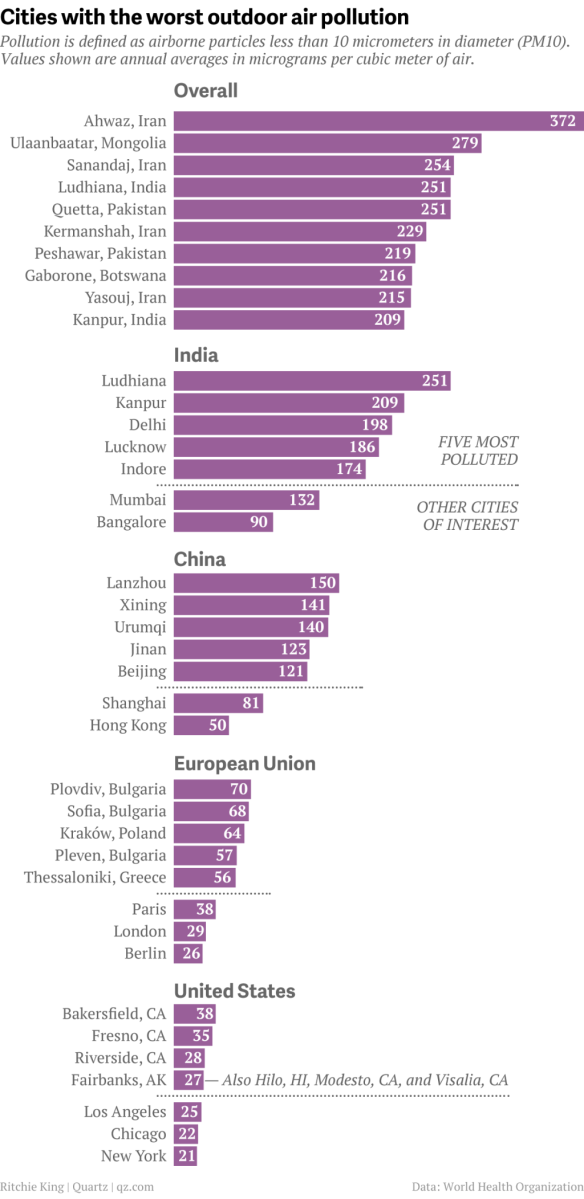
Here are the world’s worst cities for air pollution, and they’re not the ones you’d expect

‘As the chart above shows, the cities with the worst air are often not big capitals, but provincial places with heavy industry in them or nearby. Ahwaz, for instance, in southwestern Iran, far outstrips infamously polluted cities like New Delhi or Beijing, with 372 parts per million of particles smaller than 10 micrometers (PM10), compared to the world average of 71. Life expectancy for the city of 1.2 million residents is the lowest in Iran.’ (Quartz).

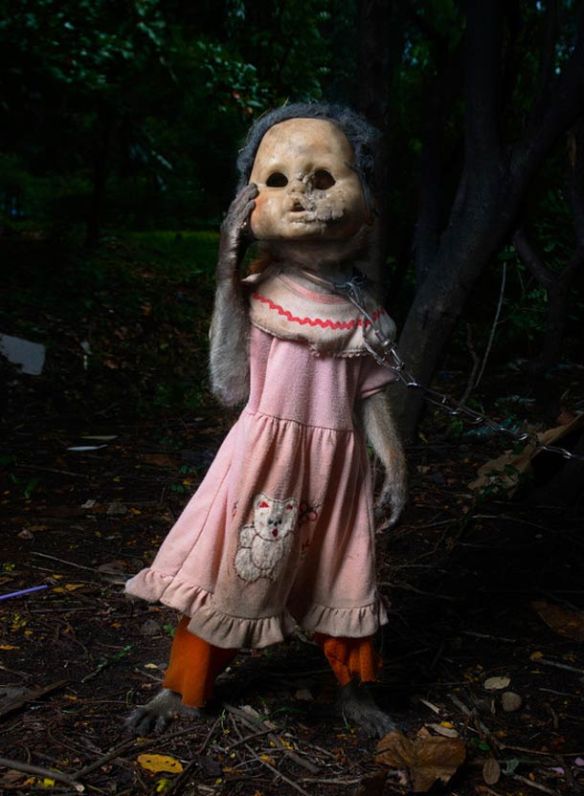
The disturbing world of the Street Apes in Jakarta

‘…a disturbing series about the world of street monkeys in the city of Jakarta, created by the Finnish photographer Perttu Saska. Trained and dressed as humans to ask for money to passersby, as is an old Asian tradition, these monkeys have now become real objects, even wearing doll heads to accent mimicry, turning them into real living toys… A cruel phenomenon that leaves a strong sense of unease…’ Ufunk.net)

Astronomers Discover the Most Distant Galaxy Yet

‘Astronomers have found a galaxy 13.1 billion light-years from Earth, making it officially the most distant object ever detected.A faint, infrared speck of light from this ancient galaxy, called z8_GND_5296, was spotted using the Hubble Space Telescope and one of the world\’s largest ground-based telescopes, a ten-meter telescope at Keck Observatory at the summit of Mauna Kea, Hawaii.Light from this baby galaxy began its journey when the universe was about 700 million years old and just emerging from the cosmic mist left over from its birth…’ (via National Geographic).

The True Size of the Shadow Banking System Revealed

“The shadow banking system is vastly bigger than regulators had thought, say econophysicists who have developed a powerful new way to measure its hidden impactIn most parts of the world, the banking system is closely regulated and monitored by central banks and other government agencies. That’s just as it should be, you might think.

But banks have a way round this kind of regulation. For the last decade or so, it has become common practice for banks to do business in ways that don’t show up on conventional balance sheets. Before the 2008 financial crisis, for example, many investment banks financed mortgages in this way. To all intents and purposes, these transactions are invisible to regulators.

This so-called shadow banking system is huge and important. Indeed, many economists blame activities that took place in the shadow banking system for the 2008 crash.But the size of the system is hard to measure because of its hidden and impenetrable nature. But today, Davide Fiaschi , an economist at the University of Pisa in Italy, and a couple of pals reveal a powerful and simple way of determining the size of the shadow banking system.

Their conclusions are revealing. They say that the shadow banking system is vastly bigger than anyone had imagined before. And although its size dropped dramatically after the financial crisis in 2008, it has since grown dramatically and is today significantly bigger than it was even then.” (Medium).

Scraping the bottom of the biscuit barrel

“As a wonderful demonstration how media outlets will report the ridiculous as long as ‘neuroscience’ is mentioned, I present the ‘Oreos May Be As Addictive As Cocaine’ nonsense.

According to Google News, it has so far been reported by 209 media outlets, including some of the world’s biggest publications.

That’s not bad for some non-peer reviewed, non-published research described entirely in a single press release from a Connecticut college and done in rats.” (Mind Hacks).

Fox News believes ‘dead is dead’


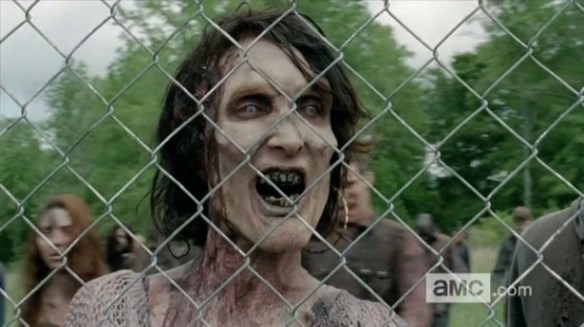
 ‘The Walking Dead’ brainwashes viewers ‘to participate in this new world order’: ‘The senior managing editor for Health News at the Fox News Channel warned on Thursday that AMC’s hit Zombie television series The Walking Dead was not only “hurting American society,” it was inspiring viewers to “participate in this new world order.”

“Hate me all you want, or call me paranoid and misinformed, but there is one common theme that is pervasive in American pop culture today: violence,” Dr. Manny Alvarez wrote in a column on the Fox News website. “Even more specifically, zombie violence. The idea of a zombie-infested world inspires fantasies of monsters possessed by an uncontrollable rage to kill, and viewers get a thrill imagining what it would be like to participate in this new world order.”

“Even scientists at the National Institutes of Health have spent time creating an apocalyptic how-to guide on dealing with a zombie outbreak,” he continued. “Give me a break. As a doctor and scientist, I know one thing for sure: When you’re dead, you’re dead.” ‘ (The Raw Story).

Adventures of a Serial Trespasser

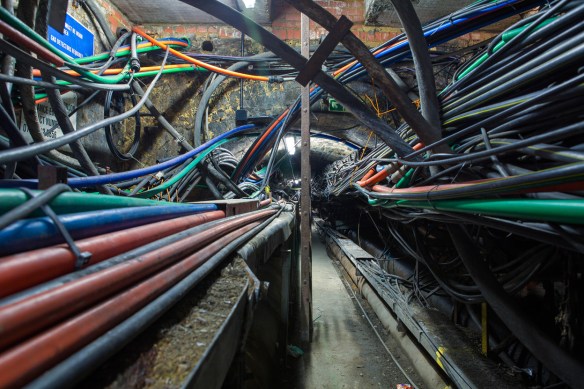
‘Bradley Garrett, a photographer and researcher with a background in anthropology and archeology, has spent the past five years of his life exploring hidden and forgotten parts of cities all over the world. Sneaking into sewers and bunkers, through metro tunnels and up skyscrapers, Garrett calls his work place-hacking: \”I see the access to secret spatial information available to those willing to dive through the loopholes in the system as akin to virtual hacking.\” These images, selections from his new book Explore Everything, from over 300 locations in eight countries, relays some of the excitement, terror, and wonder that comes with being a serial trespasser.’ (The Atlantic).

Why Microsoft Word must Die

‘I hate Microsoft Word. I want Microsoft Word to die. I hate Microsoft Word with a burning, fiery passion. I hate Microsoft Word the way Winston Smith hated Big Brother. Our reasons are, alarmingly, not dissimilar …

Microsoft Word is a tyrant of the imagination, a petty, unimaginative, inconsistent dictator that is ill-suited to any creative writer\’s use. Worse: it is a near-monopolist, dominating the word processing field. Its pervasive near-monopoly status has brainwashed software developers to such an extent that few can imagine a word processing tool that exists as anything other than as a shallow imitation of the Redmond Behemoth. But what exactly is wrong with it?’ — Charles Stross (Charlie’s Diary).

The Dangers of Pseudoscience

‘Indulging in a bit of pseudoscience in some instances may be relatively innocuous, but the problem is that doing so lowers your defenses against more dangerous delusions that are based on similar confusions and fallacies. For instance, you may expose yourself and your loved ones to harm because your pseudoscientific proclivities lead you to accept notions that have been scientifically disproved, like the increasingly (and worryingly) popular idea that vaccines cause autism.’ (NYTimes)

“US adults are dumber than the average human”

Dumb and Dumberer: When Harry Met Lloyd

“It’s long been known that America’s school kids haven’t measured well compared with international peers. Now, there’s a new twist: Adults don’t either.

In math, reading and problem-solving using technology – all skills considered critical for global competitiveness and economic strength – American adults scored below the international average on a global test, according to results released Tuesday.

Adults in Japan, Canada, Australia, Finland and multiple other countries scored significantly higher than the United States in all three areas on the test. Beyond basic reading and math, respondents were tested on activities such as calculating mileage reimbursement due to a salesman, sorting email and comparing food expiration dates on grocery store tags.” (New York Post).

These are the cities that climate change will hit first

‘Climate scientists sometimes talk about something called “climate departure” as a way of measuring when climate change has really changed things. Its the moment when average temperatures, either in a specific location or worldwide, become so impacted by climate change that the old climate is left behind. Its a sort of tipping point. And a lot of cities are scheduled to hit one very soon.

A city hits “climate departure” when the average temperature of its coolest year from then on is projected to be warmer than the average temperature of its hottest year between 1960 and 2005. For example, lets say the climate departure point for D.C. is 2047 which it is. After 2047, even D.C.s coldest year will still be hotter than any year from before 2005. Put another way, every single year after 2047 will be hotter than D.C.s hottest year on record from 1860 to 2005. Its the moment when the old “normal” is really gone.

A big study, just published in the scientific journal Nature, projected that the Earth, overall, passes climate departure in 2047. The study also projects the year of climate departure in dozens of specific cities. Here, from The Post’s graphics team, is a map of their findings..’ (Wasington Post)

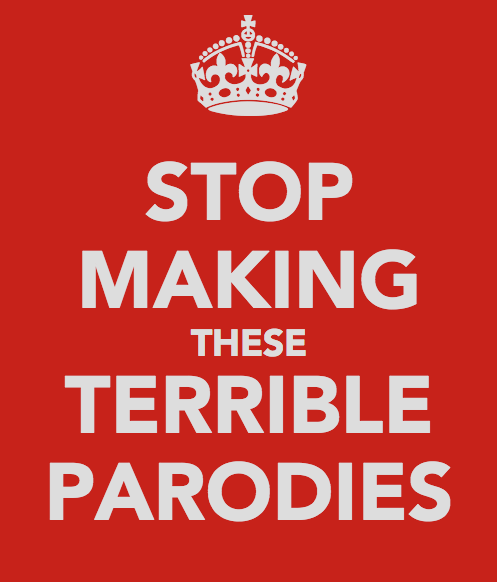
Keep Calm: This Is Why We Can’t Have Nice Things, Internet.

‘Internet, this needs to stop. You keep finding moderately cool things and driving them into the ground, and what you’ve done with “Keep Calm And Carry On” is just the worst.Stop. Now.I saw a bunch of people wearing “Keep Calm It’s The Henderson Family Reunion” shirts at a park recently. That’s not a parody of the poster: it’s “Keep Calm” followed by some random words. There’s no semblance of thought here, it’s just using the font and the words “Keep Calm” because they’ve been used in other places.Which is too bad, because the poster itself is actually pretty cool. The UK government printed 2 million of these during World War II, but never hung them up. They were forgotten for half a century, until one was eventually found in an old box by the owners of Barter Bookstore in northeast England.’ (MakeUseof)