

‘The most important reason a second trump term would be far more dangerous than his first is that if he does win this year, trump will have triumphed with the electorate’s full knowledge that he has been criminally charged with 88 felonies and convicted of 34 of them (so far); that he has promised to “appoint a real special prosecutor to go after the most corrupt president in the history of the United States of America, Joe Biden, and the entire Biden crime family”; that he intends to “totally obliterate the deep state” by gutting civil service protections for the 50,000 most important jobs in the federal work force, a central tenet of what he calls his “retribution” agenda….’ (Thomas Edsall in The New York Times)
Opinion: Senator Chris Murphy (D-CT) Warns Democrats of a Crisis Unfolding Beneath Their Noses

‘America’s leaders — from both parties — have long been guided by what’s often called the neoliberal consensus: the idea that “barrier-free international markets, rapidly advancing communications technology and automation, decreased regulation and empowered citizen-consumers would be the keys to prosperity, happiness and strong democracy,” as Mr. Murphy put it. More simply, it’s a shared assumption that what’s good for markets is good for society.
This assumption shapes our politics so deeply that it’s almost invisible. But the idea that modern life is a story of constant economic and technological progress steadily making the world a better place has stopped lining up with how Americans feel. You can look at statistics about suicide, depression, overdoses and declining life expectancy. You can point to the fact that roughly 70 percent of wild animals on Earth have disappeared since 1970 or examine the astonishingly pervasive sense of loneliness that now seems to color so many American lives. But no statistics really capture the feeling, shared by growing numbers of Americans, that the world is just getting worse….’ (James Pogue in The New York Times)
trump Shares AI-Generated Images Claiming Swifties Are Supporting Him

‘A week after falsely claiming Kamala Harris’ campaign used AI to inflate crowd sizes, trump is now posting AI-generated photos of Taylor Swift fans endorsing him….’ (WIRED)
The Pentagon Is Planning a Drone ‘Hellscape’ to Defend Taiwan

‘The US Defense Department’s grand strategy for protecting Taiwan from a massive Chinese military offensive involves flooding the zone with thousands of drones….’ (WIRED)
Inside the Turbulent, Secret World of the AP3 Militia

‘Rounding up migrants. Lists of “friendly” sheriffs. Debating political assassinations. Internal messages reveal AP3’s journey from Jan. 6 through the tumultuous lead-up to the 2024 election. One member predicts: “It’ll be decided at the ammo box.”…
…A portrait emerges of a group alternating between focused action and self-destructive chaos and facing a schism over whether political engagement can still address our nation’s problems — or whether violence is the only option. It can be hard to discern the line between bluster and imminent threat in the messages, a perennial struggle for FBI agents who monitor paramilitary groups. But some senior AP3 members grew so alarmed that they quit, scared by the number of people, even high-level leaders, advocating acts of terror…’ (ProPublica)
‘Idiot,’ ‘Dope,’ ‘Moron’: trump’s aides’ insults

‘President donald trump has hurled numerous insults at Democrats, the news media and even those in his own party.
But the president has also been on the receiving end, including from people who work in his administration.
“Fear: trump in the White House,” by Bob Woodward, is the latest book to detail chaos in the president’s immediate orbit. Excerpts were published Tuesday and immediately brought to mind several disparaging comments that trump’s staff is reported to have made about the commander in chief…’ (POLITICO)
Researchers discover an entirely new way to treat anxiety
Roughly a third of all Americans experience an anxiety disorder at some point in their lives. These ailments include general anxiety disorder, severe phobias, panic disorder, social anxiety disorder, and post-traumatic stress disorder. They’re often treated with mental health therapy or medications.
For instance, benzodiazepines are a class of anti-anxiety drugs that are generally effective and well-tolerated; however, they come with problematic drawbacks. They can be addictive, interact dangerously with certain other drugs, and often trigger wide-ranging side effects such as drowsiness, confusion, headache, nausea, and tremors.
These drugs work by enhancing the activity of receptors that respond to an inhibitory neurotransmitter called gamma-aminobutyric acid (GABA). GABA reduces the excitability of neurons throughout the nervous system, essentially slowing down most bodily processes. This global deceleration also triggers the benzodiazepines’ calming effect. Familiar brand names of the drug include Valium, Xanax, Ativan, and Klonopin.
The NINDS team wondered if there was a better, more precise way to treat anxiety — one that wouldn’t trigger body-wide side effects. So, they stressed out mice until the animals developed clear signs of chronic anxiety when compared to their healthy, unstressed companions. For example, they were less willing to explore new areas, engaged in more repetitive behaviors, and avoided social interactions.
It was almost as if the researchers found an off-switch for anxiety in the mouse brain.
The researchers then searched for differences between the brains of anxious and unstressed mice. They noticed that levels of two neurotransmitter proteins, Neuroligin2 and GABA, were markedly decreased in the anxious mice. Already aware of GABA’s ability to lessen anxiety, they focused on Neuroligin2. With further probing, the researchers determined that chronic stress enhances the activity of a protein called Src kinase, triggering a cascade of effects called a signaling pathway that results in less circulating Neuroligin2. They wondered, Would suppressing Src kinase’s activity help alleviate the rodents’ anxiety?
To find out, Pandey, Lu, and their colleagues injected the anxious mice with an Src-inhibiting therapeutic called PP2 once daily for seven days. The effects were astounding. With less Src activity, its corresponding signaling pathway slowed to a standstill, resulting in higher Neuroligin2. Outwardly, the animals’ anxious behaviors disappeared. Moreover, there were no noticeable adverse effects. It was almost as if the researchers found an off-switch for anxiety in the mouse brain….’ (Big Think)
World’s largest freshwater fish caught in Cambodia

‘A fisher in Cambodia has caught what scientists say is the world’s largest recorded freshwater fish, a giant stingray.
Captured on June 13, the stingray measured almost four metres (13 feet) from snout to tail and weighed slightly less than 300kg (660lbs), according to a statement on Monday by Wonders of the Mekong, a joint Cambodian-US research project….’ (Al Jazeera)
Almost 70 swing state officials are pro-trump election deniers: Report
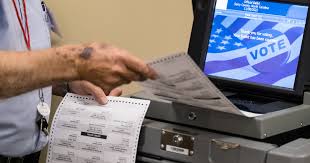
‘Journalist penned list of swing state officials who are election deniers
Officials part of ‘a decentralized network of pro-trump Republicans’…’ (News Nation Now)
John Oliver Clowns JD Vance For Giving ‘Worst Possible Answer’ To A ‘Pretty Easy Question’

‘The “Last Week Tonight” host said donald trump’s running mate “continues to underwhelm” before tossing to a clip of what he described as the “worst possible answer” to a “pretty easy question.”
“You have been criticized as being a little too serious, a little angry sometimes. What makes you smile? What makes you happy?” asked Fox 2 Detroit’s Charlie Langton on Wednesday.
“Well, I smile at a lot of things including bogus questions from the media, man,” replied Vance as he proceeded to laugh.
He continued, “I mean, look, I think if you watch, if you watch a full speech that I give, I actually, I’m having a good time out here and I’m enjoying this. But, look, sometimes you got to take the good with the bad. And right now, I am angry about what Kamala Harris has done to this country and done to the American southern border.”
Oliver had a question of his own for Vance after seeing the clip.
“Is he alright?” Oliver asked….’ (HuffPost Entertainment)
This amazing drone video details what it’s like to summit Mount Everest

‘In just 4 minutes, you can see all the majesty of Everest…’ (The Manual)
From Everest Base Camp (17598′) to the summit (29032′). Making the unimaginable imaginable apparently with an off-the-shelf DJI Mavic 3 Pro drone.
Devastating New Poll Is Worst News Yet for J.D. Vance and trump

‘donald trump made a big mistake picking J.D. Vance as his running mate….’ (The New Republic)
Photos of JD Vance in drag resurface at worst possible time for gay-hating VP wannabe

‘The office of JD Vance, Donald Trump’s pick for Vice President, has declined to deny that an old photo shows Vance in women’s clothing….’ (Queerty)
More on JD Vance:
Trump’s Millennial VP Pick Left a Facebook Pic Up of Himself Passed Out Drunk in College (Futurism.com)
There Are 4 ‘Malicious Extraterrestrial Civilizations’ in Milky Way, Researcher Estimates

‘Stephen Hawking famously said sending messages from Earth into deep space could get human civilization destroyed: “If aliens ever visit us, I think the outcome would be much as when Christopher Columbus first landed in America, which didn’t turn out very well for the Native Americans.”
Hawking’s words have often been used to discourage the practice of METI, which is Messaging Extraterrestrial Intelligence. But how many “malicious” alien civilizations are there? And what are the chances any message we sent into our own galaxy would be received by an evil alien civilization? There is precious little research on this topic, and very few scientists have even posited a guess.
A new thought experiment attempts to at least venture a guess in hopes that other scientists will begin to take METI more seriously, and will try to determine how dangerous it actually is to try to contact alien civilizations.
According to this paper, which the author admits has “some limitations,” there are roughly four “malicious extraterrestrial civilizations” in the Milky Way, and we could likely send out 18,000 interstellar messages to different exoplanets in our galaxy and the probability of ensuring our own destruction would still be about the same as Earth being hit by a “global catastrophe asteroid.”…’ (VICE)
100 Little Ideas
‘A list of ideas, in no particular order and from different fields, that help explain how the world works…’
Makes You Think
‘A few lines I came across recently that got me thinking…’
Morgan Housel is a partner at Collaborative Fund (“Our mission is to identify and support companies that live at the intersection of for-profit & for-good.”) and author of the book The Psychology of Money.
trump’s Private Anger Over Kamala’s Poll Surge Takes an Ominous Turn

‘With trump venting that Kamala Harris’s success shows he’s being cheated, a prominent Never Trumper explains why we need to start thinking now about another coup attempt….’ (The N)ew Republic)
Opinion | What Will It Take for Hollywood to Grow Up?

‘If there’s been one dominant message in 21st-century American artistic culture, it’s that you have permission — permission to consume nothing but superhero movies, Barbie, pop music by a recent Disney Channel star; permission to never eat your cultural vegetables; permission to never expand your cultural palate or stretch your attention span.
This permission may seem freeing. But when paired with ruthless, profit-maximizing market forces, it’s contributed to the death of grown-up entertainment….’ (Freddie deBoer, New York Times)
Theoretical Physicists Say 90% Chance of Societal Collapse Within Several Decades

‘Two theoretical physicists specializing in complex systems conclude that global deforestation due to human activities is on track to trigger the “irreversible collapse” of human civilization within the next two to four decades.
If we continue destroying and degrading the world’s forests, Earth will no longer be able to sustain a large human population, according to a peer-reviewed paper published this May in Nature Scientific Reports. They say that if the rate of deforestation continues, “all the forests would disappear approximately in 100–200 years.”…’ (VICE)
New Theory: Conscious Reality Is Only a Memory of Unconscious Actions
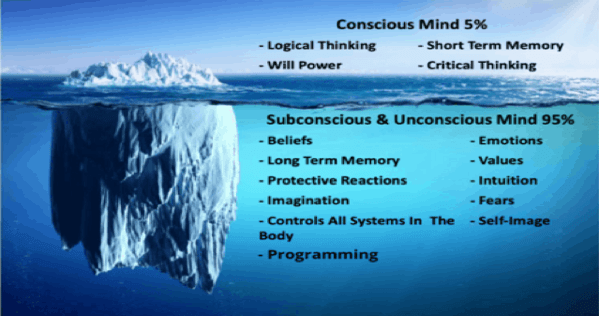
‘“We perceive the world as a memory,” the authors of a recent paper wrote. “In other words, technically, we are not consciously perceiving anything directly.”…’ (VICE)
The reveal behind trump’s bizarre hair
Can’t hide it, bud, no matter how ridiculously vain you are.
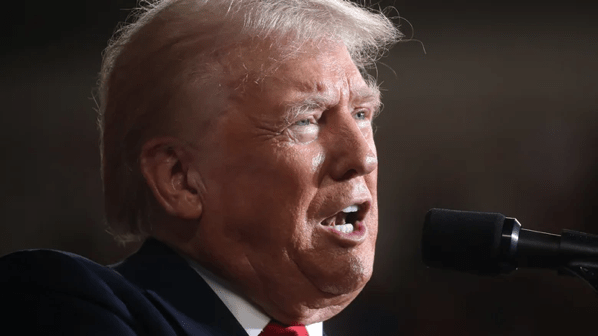
‘Once President Joe Biden stepped out of the 2024 presidential race, former President Donald Trump became the oldest presidential nominee in the history of the United States. With a title like that, one might think that Trump believes age is just a number. In reality, though, the second-time presidential hopeful has often poked fun at Biden for his age over the years; even though the President is only three years Trump’s senior. It doesn’t take a hair and makeup expert to know that between his signature combover and unwavering penchant for bronzer, Trump often tries to make himself look younger than he is. Unfortunately, a recent photo of the former president at a campaign rally proves that you can’t hide your age with wispy hair alone.
On August 3, at the Georgia State University Convocation Center in Atlanta, Georgia, Trump hit the rally stage to pump up the audience about his 2024 campaign. Yet, his infamously strange hairstyle wasn’t looking its best. A photo from the event revealed his typically concealed receding hairline as well as his bright white roots. Trump’s 70s have surely been his worst hair decade, so we can’t say we’re surprised to see the signs of aging that are hiding beneath his sparse locks and makeup….’ (The List)
Report: trump calls Harris a “bitch”

‘Former President trump has been in a foul mood the past few weeks and has repeatedly called Vice President Harris a “bitch” in private, the N.Y. Times’ Maggie Haberman and Jonathan Swan report.
Why it matters: Axios has written extensively about this as the girls vs. boys election, with Democrats crushing the women’s vote. trump advisers privately concede his misogynistic language is deeply problematic, and something they worry he will unload in a public debate to his detriment….’ (Axios)
New fascist book unabashedly argues liberals are subhuman
…blurbed by jd vance
‘In a normal political environment, there would be little need to pay attention to a new book by the far-right provocateur Jack Posobiec, who is probably best known for promoting the conspiracy theory that Democrats ran a satanic child abuse ring beneath a popular Washington pizzeria. But “Unhumans,” an anti-democratic screed that Posobiec co-wrote with the professional ghostwriter Joshua Lisec, comes with endorsements from some of the most influential people in Republican politics, including, most significantly, vice-presidential candidate JD Vance.
The word “fascist” gets thrown around a lot in politics, but it’s hard to find a more apt one for “Unhumans,” which came out last month. The book argues that leftists don’t deserve the status of human beings — that they are, as the title says, unhumans — and that they are waging a shadow war against all that is good and decent, which will end in apocalyptic slaughter if they are not stopped. “As they are opposed to humanity itself, they place themselves outside of the category completely, in an entirely new misery-driven subdivision, the unhuman,” write Posobiec and Lisec….’ ( via New York Times )
See the Perseids and Southern Delta Aquariids in a Stunning Double Meteor Shower
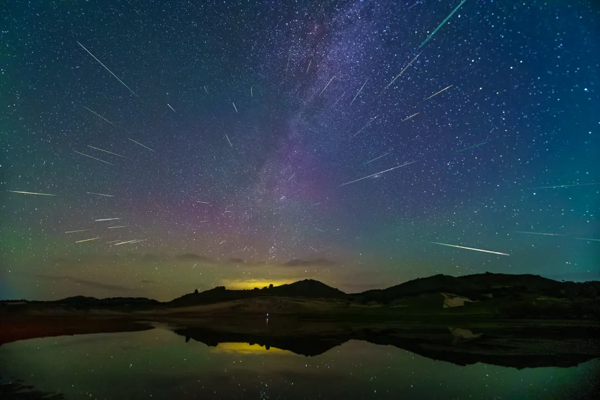
‘Across the Northern Hemisphere, August will see beautiful displays of meteors. Here’s everything you need to know to enjoy them….’ (WIRED)
The Real Origin of trump’s Hannibal Lecter Obsession

‘The deeper you go, the less sense it makes….
donald trump’s “late, great Hannibal Lecter” routine may be his most breathtaking incoherent rant. Yes, he has claimed that magnets don’t work underwater, and musing about whether he’d rather die by shark or electrocution is a regular part of his stump speech. But trump’s tirade about the fictional serial killer stands apart for several reasons. First, it is exceptionally weird. Second, it is profoundly wrong on multiple levels. And third, trump thinks it’s so smart and funny that he will not stop repeating it.
Critics say the 1991 film The Silence of the Lambs “teeters on the edge between psychological study and all-out horror.” The same is true of the presidential tirade it inspired. On a basic level, we know the awful truth about what trump is doing: He’s demonizing migrants. But since the Republican National Convention, people have been dropping wild theories about why trump is going about that nefarious goal by heaping praise on a make-believe cannibal…
‘ (New York)
trump says if he’s elected, “you won’t have to vote anymore”

‘At the Republican National Convention, trump made a brief, scripted, obviously disingenuous call for “unity,” and much of the media treated it as a major “pivot” to a more moderate, inclusive candidate. This anticipated pivot has been a joke for eight years, but the media keeps falling for it.
Yet on Friday, trump made a statement of his Fascist, authoritarian intent if elected, saying that if he gets into office, his supporters “won’t have to vote anymore,” and the media mostly yawned. Whether it’s because they just think this is “trump being trump,” or you have to take what he says “seriously but not literally,” or if you call him on it he’ll just backtrack, this didn’t get a tiny fraction of the attention it deserves….
While he’s never actually made even a modicum of a “pivot” to moderation, he has, in fact, led an insurrection in an attempt to stay in office despite losing an election. Since then, he and his team have been systematically laying the legal and logistical groundwork to ensure that the strategies that failed in 2021 will succeed in 2029. There is every reason to believe that he is deadly serious and that if he gets into the White House, no fair election will ever get him or his MAGA cultists out…’ (Boing Boing)
Biden to push for constitutional amendment next week to reverse trump immunity decision

‘In a reversal from the president’s longstanding resistance to changes to the high court, Biden said on Wednesday that Supreme Court reform would be among his top priorities for the remainder of his term in office. Biden announced Sunday that he would not seek re-election after mounting pressure from Democratic Party officials who asked him to step aside after his widely panned debate performance in June.
The president is expected to propose setting term limits for justices on the Supreme Court, which would require a constitutional amendment, and establishing an enforceable code of ethics, which could be enacted by Congress, Politico reported.
Biden is also likely to voice support for a constitutional amendment that would limit immunity for presidents and certain other officeholders after the court ruled in July that presidents cannot be prosecuted for “official acts” during their time in office. The court’s ruling stemmed from a case concerning former president trump….’ (Fox News)
If elected to a second term, will donald trump end American democracy?
‘He will try.
Many of you wouldn’t deny this, and even take it for granted. I am asking you not to take it for granted, to take seriously what it means to say that one party’s candidate will not try to cripple our system of free and fair elections, and one party’s candidate is guaranteed to. How high do his odds of success have to be before you treat this as a genuine emergency?…’ ( Adam Gurri via Liberal Currents )
Biden Drops Out of Presidential Race, Endorses Kamala Harris:

(The New York Times). As I said below, I think of this as a selfless act in defense of democracy. trump was no ‘hero’ simply because he stood up on a podium and got his ear grazed by a would-be assassin’s bullet (would not have been a “hero” even if it had been on target!) but this is an act of heroism by a great man.
Reading the coverage so far, it is not clear how definitive the endorsement of Harris is. Possibilities swirl about. I read James Carville’s scheme for regional mini-primaries with interest. Flights of fancy like drafting Michelle Obama or Hilary Clinton (although not herself much younger than Biden) should not be dismissed. I don’t think we should rule out an open convention simply because it would be “chaotic.” After all, the will of the people is supposed to be — as long as it results in defeating the despotic, egotistical and imbecilic multiply-convicted felon and serial rapist put up by the shell of the Republican Party.
Witness the Blaze Star: A Rare Nova Explosion Visible from Earth

‘Astronomers and stargazers eagerly await a once-in-a-lifetime event that can occur at any moment now. They expect to see a star explode by September, and it will be visible from Earth, so we can all watch.
T Coronae Borealis, also called the Blaze star, is a binary star system about 3,000 light years away and consists of one white dwarf and one red giant. The white dwarf accretes hydrogen from the red giant. When enough accumulates, it triggers a thermonuclear explosion, causing the star to become significantly brighter in the night sky for a short time.
Astronomers expect the explosion to occur before September 2024, and during its peak, you should be able to see it without a telescope for several days and over a week with one. It will take place in the constellation Corona Borealis, which is between the constellations Hercules and Boötes, and it can be a good idea to familiarize yourself with the location before the event so it will be easier to find when it does….’ (GeekSided)
Who Goes Nazi?
‘In 1934, Dorothy Thompson became the first American journalist to be expelled from Nazi Germany for writing critically & unfavorably about the regime and its leader, Adolf Hitler:
He is formless, almost faceless, a man whose countenance is a caricature, a man whose framework seems cartilaginous, without bones. He is inconsequent and voluble, ill-poised, insecure. He is the very prototype of the Little Man.
Back in America as one of the most famous journalists and women of her time, she spent the rest of the 30s and early 40s trying to warn the nation of fascism both here and abroad. In 1941, she wrote a piece for Harper’s Magazine called Who Goes Nazi?, in which she muses about which guests at a party would become Nazis….’ ( via Kottke )
MAGA Enters Racist Meltdown Mode Over J.D. Vance’s Wife

‘The past week has seen an outpouring of hate from the far right over the wife of Republican vice presidential nominee J.D. Vance. The unremarkable fact that Vance is married to Usha Vance, a woman of Indian heritage, has become a fixation for white nationalists online.
Following Monday’s announcement of Vance as Trump’s running mate, white nationalist “groyper” Nick Fuentes seemed to enter a meltdown on his broadcast, saying, “What kind of man marries somebody that isn’t a Christian? What kind of man marries somebody named Usha? Clearly, he doesn’t value his racial identity, his heritage. Clearly, he doesn’t value his religion. He doesn’t marry a woman that professes Jesus Christ? What does that say about him?”
Jaden McNeil, another white nationalist activist, posted a picture of Vance, his wife, and their newborn with the caption, “I’m sure this guy is going to be great on immigration.” Other prominent far-right accounts have similarly bemoaned Vance’s multiracial family, with replies awash in bigotry. “There is an obvious Indian coup taking place in the US right before our eyes,” whined far-right conspiracy theorist Stew Peters.
Considering the flagrant racism of the far right, this reaction may not shock, but it certainly appalls. It’s a reminder that there are factions of Trump’s base that view diversity in their party, and the country, with horror. (Recall Ann Coulter telling Vivek Ramaswamy that she would not vote for him because he is Indian.)…’ (The New Republic)
Stephen King posts eerie reminder of why trump picked new VP

‘If anyone knows how to make your skin crawl, it’s Stephen King. And he just posted a bone-chilling reminder of why ex-president donald trump chose a new VP running mate.
“Just a reminder that the reason he has to pick a new VP is because his own supporters tried to kill his last one,” the master of horror posted yesterday….’ (Boing Boing)
1 in 3 Americans OK with Military Rule

‘Do you wonder why so many people seem unfazed by trump’s dictator aspirations? As reported in The New Republic, a recent Pew Research Center study reveals that nearly a third of Americans have no objection to military rule or an authoritarian leader.
How did we end up in this bizarre reality where people are lining up to have their freedoms taken away? Experts say it’s about feeling safe and cozy in a world that’s changing too fast for their liking. Joe Pierre, a UCSF professor, explains that when people feel threatened, “Authoritarianism and a ‘strongman’ leader who’s willing to trample over civil rights can sound like a very appealing solution.”…’ (Boing Boing)
Rep. Raskin sounds alarm on extensive “target list” from trump’s “secretary of retribution”

‘Rep. Jamie Raskin of Maryland is sounding the alarm on an extensive “Deep State target list” that donald trump’s self-proclaimed “secretary of retribution” has compiled.
Hoping to enlist “constitutional” sheriffs to arrest anti-trumpers — including journalists, politicians, former U.S. Capitol Police employees, and their families — MAGA’s retired Army Reserve Ivan Raiklin has created a list of 350 people to target, according to Raw Story. And he envisions “live-streamed swatting raids” as part of the process.
“This is a deadly serious report,” Raskin told Raw Story. “A retired U.S. military officer has drawn up a ‘Deep State target list’ of public officials he considers traitors, along with our family members and staff. His hit list is a vigilante death warrant for hundreds of Americans and a clear and present danger to the survival of American democracy and freedom.”…’ (Boing Boing)
Do the right thing
Quote
Sorry I may have called the assumptions behind the calls for Biden to pull out of the race anti-Democratic or pro-authoritarian.  but I don’t think that is really important. Say all you will about how accurate public opinion polls are but the overwhelming evidence is that Biden cannot defeat convicted felon, twice impeached demagogue and proto-dictator trump. Mr. Biden, it may not be fair but it seems a fact of life no matter how stubborn you are about staying in the race. As someone who himself is aging demonstrably I know it is not fair but it is a fact of life. History will remember you as a good president and perhaps an extraordinary one if you save the Republic by giving up on your aspirations for a second term.
The Antidemocratic Uprising Against Joe Biden
‘The Democratic Party held 57 primaries and caucuses; voters in all 50 states, the District of Columbia, and five U.S. territories had their say, as did Democrats abroad. Joe Biden won 87 percent of the total vote. He lost one contest, in American Samoa, to the little-known Jason Palmer. Suddenly, there are cries in the Democratic Party that, as goes a single territorial caucus, so should the nation.
I worked in five presidential campaigns for Republicans and helped elect Republican senators and governors in more than half of the country. For decades, I made ads attacking the Democratic Party. But in all those years, I never saw anything as ridiculous as the push, in the aftermath of last week’s debate, to replace Joe Biden as the Democratic nominee. For many in the party, the event raised genuine concerns about the incumbent’s fitness for a new term. But a president’s record makes a better basis for judgment than a 90-minute broadcast does. Biden has a capable vice president, should he truly become unable to serve. The standard for passing over Democratic voters’ preferred nominee should be extraordinarily high—and has not been met.
The fundamental danger of Donald Trump is that he’s an autocrat who refuses to accept the will of the voters. So the proper response is to throw out millions of votes, dump the overwhelming choice, and replace him with someone selected by a handful of insiders? What will the message be: “Our usurper is better than your usurper”?
…’ ( Stuart Stevens via The Atlantic )
TikTok health misinformation is rampant. Here’s what you can do.

‘There’s always the possibility that something will compel social media platforms to take some responsibility and actually do something to protect the public from misinformation. But in the meantime, please listen to that faint buzzing noise you now hear almost constantly. It’s your bullshit meter, it’s working harder than ever — and your health could depend on whether you’re paying attention….’ (Vox)
Will Biden recover from his debate debacle?
 “There are … ways in which Biden and his allies can stop his bad night from turning into curtains for his political career”, writes POLITICO, and offers pointers as to what to watch to see if he can pull it off. Watch the polls but know that they might over start his nosedive. Will the media cover evidence of competence and bounce back as definitively as evidence of concern? Will down-ballot Democrats embrace or distance themselves from him? Will third-party movements attract more interest? How quickly can attention refocus on the elephant in the room, the twice-impeached felon, misogynist, sociopath and pathological narcissist running against him?
More has been written about the implications of Biden’s disastrous debate performance Thursday night than can be borne. It would be difficult to add any original punditry, especially as someone who is not a sophisticated political commentator. However, there is one observation that bears making. To turn concerns about Biden’s aging, and fumbling on stage, into the unquestioned conclusion that he is too old to govern reflects the very undemocratic assumption that he governs alone. I think it is really only as great a concern as it is being made out to be if your mindset is receptive to autocracy, whether you know it or not. Yes, trump must be stopped because he would surely be an autocratic dictator, but that is not inherent to the Presidency, which in democratic rule is really less important than the current fervor would make it out to be. Even trump knew that, dismissing alarm during his first stand for the presidency about his lack of governing experience with the assertion should not be a concern because of the people with whom he would surround himself. (We should remember the accumulated evidence that he was not bright enough or patient enough to understand the briefings he was given throughout his reign.)
In 1977, I watched a searing and soul-searching German film called Our Hitler. This was notable not so much for its 442-minute running time as for its unflinching inquiry into the role in his rise played by the German people’s receptivity to, or even yearning for, autocracy. His personality style and propaganda machinery deftly played on that foundation to solidify his power. There will always be Hitlerian figures. There will always be trumps. Quite simply, we must be careful what we are unconsciously wishing for.
The biggest unknown in MDMA therapy is not the psychedelic

‘To the surprise of almost everyone involved, therapy using MDMA — commonly known as ecstasy — will probably not become legal this year. That’s because Lykos Therapeutics, the company trying to get it approved by the Federal Drug Administration (FDA), came under fire at a public hearing on June 4 over questions about whether MDMA plus therapy effectively treats PTSD and concerns about the safety of Lykos’s therapeutic approach.
After researchers put the company on blast, the FDA’s advisory committee voted against approval, though a final decision will be made by the agency in August.
There were lots of problems with the evidence about the drug itself. In Lykos’s clinical trials, participants who got MDMA experienced a significant reduction in their PTSD symptoms, doing better than those who got a placebo, but almost all the trial participants could tell which one they were getting. So, to what extent were those who got MDMA healing because they knew they were getting the real drug and expecting that it would help them? No one can tell.
Regulators also weren’t sure if MDMA would harm the liver or cardiovascular system in the long term because Lykos didn’t gather evidence for long enough to know. And we don’t know about the drug’s addictive potential because Lykos failed to report on addiction-driving effects like euphoria; worse, some claim that Lykos pressured participants not to mention bad outcomes….’ (Vox)
MDMA has long been available through channels other than a profit-driven pharmaceutical company; there ought to be access to less tainted data about efficacy and tolerability. And, with psychedelic research, it seems inherently flawed to rely on placebo-controlled studies without a clever workaround for the fact (as noted) that subjects will always recognize from how they feel that they have gotten the active agent.
Amy Coney Barrett may be poised to split conservatives on the Supreme Court

‘The question at the center of the spat may seem abstract: How should the court use “history and tradition” to decide modern-day legal issues? But the answer may determine how the court resolves some of the biggest cases set to be released in the coming days, particularly its latest foray into the Second Amendment right to bear arms.
If the court adheres to a strict history-centric approach, as Thomas favors, it will likely strike down a federal law denying firearms to people under domestic violence restraining orders.But Barrett recently foreshadowed that she is distancing herself from that approach. If she breaks with Thomas in the gun case, known as United States v. Rahimi, and if she can persuade at least one other conservative justice to join her, they could align with the court’s three liberals to uphold the gun control law….’ (POLITICO)
Perhaps a glimmer of hope that a rift will emerge and widen, since the power of the Court has been a major source of despair. And can we be encouraged by the suggestion that, despite trump’s effort to stack the decks, he wouldn’t have the capacity to grasp such nuanced but ultimately impactful differences? Law of unintended consequences indeed!
Happy Bloomsday!
‘Bloomsday celebrates Thursday, 16 June 1904, the day immortalised in James Joyce’s 1922 novel Ulysses. The day is named after Leopold Bloom, one of the novel’s protagonist (the other being Stephen Dedalus, the protagonist of Joyce’s 1916 novel A Portrait of the Artist as a Young Man and Joyce’s literary alter ego). The novel follows Bloom’s life and thoughts — as well as those of Stephen and a host of other characters, real and fictional — from 8AM through to the early hours of the following morning….’ ( via James Joyce Centre )
Bloomsday is celebrated from Dublin and around the world by Joyce aficionados with readings, reenactments and related observances. Gather with others who revere Ulysses or simply pull out your copy again and dive in today.
Elephants Have Names for Each Other, Study Find
‘Elephants call each other by name and respond when they hear others call their name, according to new research….’ (via Yale E360 )
Fighting to Save America’s ‘Last Best Place’ From Suicide
Quote
Murder rates and mass shootings make national headlines, defining the discussion over pervasive gun violence. But most gun deaths in America are self-inflicted. There were about 27,000 gun suicides in 2022. That was a record, and far higher than the 19,500 gun homicides documented that year.
ImageThere have been more gun suicides than gun homicides in the United States every year for the past 25 years. Yet the harm inflicted on communities by suicides rarely registers in the national debate over guns.
George Conway’s 3 tips to liberals on how to beat trump (video)

‘1. Keep reminding the public that “he is now a convicted felon, he is an adjudicated rapist, [and] he attempted to overthrow the Constitution of the United States,” said Conway, a co-founder of the Lincoln Project. “And he’s just down right nuts,” he added. And now that donald trump, whose latest trial just ended, is on the loose during the thick of his election run, we will be seeing more and more of his nuttiness, which Conway says is a good thing. People need to see it. And speaking of his mental condition [cut to his next piece of advice]…
2. “You’ve got to actually say it. We have not had a full national conversation about this man’s psychological condition. … He’s literally nuts. … He’s a narcissistic sociopath. He has narcissistic personality disorder, and…that needs to be talked about openly. It needs to be pointed out when he is doing things that meet those criteria,” Conway said. Why? Because “it drives him nuts when people do that,” and this creates a vicious cycle where trump acts nuts, the media points it out, and that triggers the MAGA maniac to act even nuttier. And so on and so forth.
3. “The other thing I would recommend to liberals is don’t get mad,” he said. “The people who support trump like it when liberals get mad. That’s why they like trump.” Instead, Conway advises the media to repeatedly “make fun of him. You can make fun of him and mock him … laugh at him. Now, that doesn’t mean you don’t appreciate the seriousness of what would happen to this country.”
And what might that be, you ask? “We are going to have civil disorder like you’ve never seen” if trump wins.
And if Biden wins, Conway says, there are still going to be around 60–80 million people who voted for trump, and “we still have to live with those people and we’re going to have to deprogram them at some point.”…’ (Boing Boing)
Florida bans rainbow-lit bridges as Pride Month approaches

‘Florida governor Ron DeSantis, seeking to prevent public expressions of the LGBTQ+ Pride flag colors, has mandated only red, white and blue lights on the state’s bridges. Such decisions were previously left to local governments, but they kept putting up the devil’s rainbows during Pride Month….’ (Boing Boing)
Can the profoundly corrupt Supreme Court be fixed?

‘Rep. Jamie Raskin is one of my favorite people in public life. He’s smart, brave and profoundly decent and honorable. He’s dedicated to the rule of law and democracy itself. How dedicated? He buried his 25-year-old son on January 5, 2021. The next day he came to work to certify the election results.
I’m too old and cynical to have heroes but if I did have one, he’d be it.
Raskin, a former constitutional law professor, was interviewed by Dahlia Lithwick, reprinted in Slate Magazine — this is essential reading for anyone looking to understand the dangers the Supreme Court poses to democracy and some potential fixes that might save the us from the Court and the Court from itself.
First, he lays out the problems:
“[The Supreme Court is] the only federal court in the land that does not have a binding ethics code. And it shows.
If you don’t have an ethics code, you get people flying on junkets with their billionaire buddies all over the world and taking, you know, huge cash payments for a motor coach, a house, private school tuition. Why not? You only make, what? $325,000 a year.”
Disgusting. Truly outrageous. Makes my blood boil. How is this allowed to happen?
“I never thought I would live to see the day where justices have their own billionaire sugar daddies who give them houses and automobiles and private school tuitions. My friend Dar Williams sings a song where she says: “It’s a long road from law to justice.”
…to my mind, we’ve gotta organize the people in America. That’s where the power comes from. And we will, if and when we win back the House and the Senate and the White House. We will look at the Supreme Court and figure out what can be done about that extremely corrupted and contaminated body.”
Okay, so what solutions is he proposing?
“The Constitution does not fix the numerical composition of the Supreme Court, and it has changed nine or 10 different times over the course of our history. We have 13 federal circuits. We’ve got nine justices. Five of those justices are from New York. We’ve got one for each borough. We have entire federal circuits that don’t have a single justice. How about we start to talk about having 13 justices on the Supreme Court, one from each circuit, 18-year terms—they still get life tenure because they can go and be on the district bench or the circuit bench. Each president gets two appointments to the court. Obviously, the Senate still has to advise and consent, but it will remove some of the toxicity and the poison from the nominations if we know that each president will get two. We can deal with this problem, but the current Supreme Court is just a scandal.”
I’m not sure how possible any of these options are in the real world, but we should be adopting all of them immediately or else the six radicals on the Court are going to set this country back decades if not centuries….’ (Boing Boing)
Trump Wishes His Trial Were Rigged
‘There is a simple, foolproof way to predict when Trump will describe something or someone as rigged or corrupt: when he doesn’t get what he wants. Elections he loses are fraudulent, legal decisions that go against him are rigged, and anyone who opposes him is corrupt. In every single instance, Trump is decrying not a corrupt individual or rigged process, but a person or process that is not corrupt or rigged enough to give him the results he seeks….’ ( Adam Serwer via The Atlantic )
trump’s Bizarre Moments With Dr. Phil and Hannity Should Alarm Us All

‘Earth to media: The criminal prosecutions of trump are legitimate. The “revenge” he’s promising would be wholly illegitimate. Time to make that a whole lot clearer…
During just this week, two of donald trump’s friendliest interviewers handed him big prime-time opportunities to unequivocally renounce any intention to retaliate against Democrats for his criminal conviction by a jury of his peers in Manhattan. Both times, trump demurred….’ (The New Republic)
trump Allegedly Suggested He Would Have Bombed Beijing and Moscow

‘Former US President and presumptive Republican presidential nominee donald trump reportedly suggested he would have bombed Beijing and Moscow if they invaded Taiwan and Ukraine under his presidency.
According to the Washington Post, trump made the comment during an unspecified leg of his nationwide fundraising tour, a statement which reportedly shocked some of his donors….’ (Kyiv P ost)
Orcas are still smashing up boats – and we’ve finally worked out why

‘Following years of research, a team of biologists, government officials and marine industry representatives have released their findings on just why one particular Orcinus orca group has developed this destructive streak. And it turns out, orcas – especially the kids and teens – just want to have fun. The report reveals that a combination of free time, curiosity and natural playfulness has led to young orcas adopting this ‘trend’ of boat-bumping, which is not at all surprising for a species that has been known to adopt odd, isolated behaviors from time to time….’ (New Atlas)
Libertarians jeer trump during convention speech
 ‘He’s more delusional than I thought’:
‘If donald trump came to the Libertarian National Convention to make peace on Saturday, it could hardly have gone worse.
Within minutes of beginning speaking — and after enduring sustained jeering and boos — the former president turned on the third party, mocking its poor electoral record in presidential elections even as he appealed to them for their endorsement.
“What’s the purpose of the Libertarian Party of getting 3 percent?” trump asked the crowd, which proceeded to pelt him with jeers. “You should nominate trump for president only if you want to win.”
The libertarians in attendance didn’t want to hear it, as hecklers chucked insults at trump all night. “Liar,” they called him. “Panderer,” they shouted. “You crushed our rights,” they belted….’ (POLITICO)
Gen Z kids are flocking to North Dakota in droves: Report
 The New York Post reflects on the changing influences on where we locate ourselves geographically, using one year’s net gain or loss in numbers of Gen Z’ers. Apparently North Dakota is becoming very popular. Certainly, factors like rural charm and affordability play a role, but apparently so does how boring it is.
“Just Live”

I found this essay by Irish philosopher and literary critic Galen Strawson (DRB) grappling with ways to define the meaning of life, to be provocative. Whether you agree with his conclusions or not, the central theme exploring what relationship there may be between meaning or purpose and “narrativity,” the sense that one can make a coherent story out of one’s life, intrigues me. As a psychiatrist, I find that the endeavor of psychotherapy very often — almost invariably — involves helping our patients make a coherent narrative of their experiences as a means of bearing or alleviating suffering. (see, for example, the work of psychoanalyst Donald Spence.) Recent understanding in neuroscience (e.g. this), coming at it from a different angle, provides some support for narrative and autobiographical memory as a basis for self-understanding and sense of identity. Whether such a story is ‘true’ depends on deeply nuanced and challenging questions about what such ‘truth’ is. Not at all self-evident or easy to establish. You will very often find these issues couched in terms of provocative discussions about a related issue, whether we have free will or agency. Much of psychotherapy has an explicit or implicit goal of expanding choice, autonomy, and responsibility. I think one must constantly struggle with whether those notions are well-founded.
R.I.P. ‘Spider’ John Koerner
Bluesman Who Inspired a Young Bob Dylan Dies at 85
‘“People have told me I influenced Dylan,” he told Billboard in 2016. “I wouldn’t put it that way. What’s the quote? ‘A great artist doesn’t copy … they steal.’ You take something and make it your own and it’s fair enough.”…’ (The New York Times obituary)

Business as usual: trump posts “Trump or Death” flag

Former FBI Director Comey is Not Worried About a Violent Response if (When) trump is Convicted

‘“Do you think if the former president is found guilty, do you worry about what the response of that might be?” Cooper asked.
“No, I think it’s … I continue to worry about threats against individual poll workers and council people, I’m not worried about an uprising of violence on donald trump’s behalf. I don’t think you’ve seen the crowds anywhere he’s gone,” Comey said. “I think a message was sent after Jan. 6 that your life will be ruined if you engage in that kind of behavior, and his crowd are not jihadis looking to die for the orange god. They are people who are attached to him as a cult leader in a way and entertainment figure, but they’re not going to lay themselves down for him.”…’ (The Wrap)
trump’s Biden Mar-a-Lago Assassination Fantasy Gets Wilder
‘Former President donald trump was up all night ranting on Truth Social — including a new version of his wild assassination fantasy that featured President Joe Biden’s FBI gunning for trump’s Secret Service detail.
Right-wing hysteria has reached a fever pitch over a false claim that the FBI raid on trump’s Mar-a-Lago resort was actually an assassination attempt.
The basis for the claim is standard language in the raid’s operation order that said agents “may use deadly force only when necessary, that is, when the officer has a reasonable belief that the subject of such force poses an imminent danger of death or serious physical injury to the officer or to another person.”
Rep. Marjorie Taylor Greene (R-GA) claims she was the one who told trump about the non-existent danger trump faced when the FBI raided Mar-a-Lago while he wasn’t there, and which trump is now fundraising on. But the scenario has captured imaginations across the MAGAsphere — including trump’s….’ (MediaIte)
trump’s Assassination Fantasy Has a Darker Purpose

‘The ex-president’s stories of his own victimization make violence by his supporters far more likely….’ (The Atlantic)
Bob Gates and John Bolton warn Americans about trump’s global policies
‘Four-times-indicted former president donald trump’s terrifying plans to assume dictatorial powers (and try for a third term), deploy the military against civil protesters, create a massive police state to carry out mass deportations and use federal power to exact revenge on his opponents should be enough to convince voters that his election would be a disaster for the United States domestically. However, returning him to the position of commander in chief and “leader of the free world” is just as scary on a global front. Don’t take it from me; just listen to two former senior Republican national security experts.
Former national security adviser John Bolton recently told Jordan Klepper of “The Daily Show” that his former boss “doesn’t understand alliances.” Bolton opined that Ronald Reagan would be “appalled” by the MAGA Republican Party, and added that trump has a “fascination with authoritarian leaders.” Bolton also concurred with former secretary of state Rex Tillerson’s description of trump as a “f—ing moron,” though Bolton refrained from using the expletive. (Klepper taunted Bolton for, after all that, saying he would vote for neither President Biden or trump. “Great. So, in the race between a current president and a former president, it looks like the winner will be the Russian president.”)
Bolton has previously said of trump: “He’s fundamentally ignorant, and he really doesn’t care about the facts. He thinks international relations are about personal relations, which is a line and approach that I can tell you, Vladimir Putin and Xi Jinping are eagerly looking forward to.” trump’s ignorance and overweening narcissism make him easy pickings for manipulative dictators. (trump came to regard North Korea’s Kim Jong Un as a friend because he sent “love letters.” He turned over foreign signals intelligence to Russians in the Oval Office.) He is, in other words, a patsy for strongmen whose object is to weaken the United States.
trump declared that he would invite Putin to invade NATO countries that didn’t contribute sufficiently to the alliance’s collective defense. (He continues to misunderstand how NATO forces are funded.) His well-known hostility toward European allies and threats to ditch NATO should indicate to any voter concerned about national security that trump’s return to office would spell disaster for international peace and stability….’ (The Washington Post
Eastern Oregon residents pass ‘Greater Idaho’ measure

‘Conservative residents in eastern Oregon have been ready to part ways with their liberal neighbors to the west, looking to secede from the state and join Idaho.
Conflicting views on crime and social policies have created a large divide between the bigger cities and rural areas, sparking efforts to secede.
Americans still say real estate is the best long-term investment
If the counties are successful in seceding, Oregon’s border would shift 200 miles west, according to the measure….’ (NewsNation)
Dopamine explained: “detoxing”, “hacking”, and “fasting”… is any of it real?

‘Dopamine, a chemical messenger in the brain, used to be neuroscience jargon — something you’d read about in a biology textbook. But today, dopamine has become a cultural catch-all, shorthand for focus, yearning, and joy.
Scroll through TikTok or sit next to a Silicon Valley software engineer at a dinner party, and you’ll be bombarded with dopamine-related life hacks. Struggling to stay off your phone? Maybe you’re due for a dopamine detox. Concerned that you’re not enjoying life like you used to? Try dopamine fasting or, for a quick pick-me-up, get dopamine dressed.
Wanting to hack your brain isn’t some niche thing. Celebrity neuroscientist and podcaster Andrew Huberman’s 2021 “Dopamine Masterclass” episode, “Controlling Your Dopamine For Motivation, Focus & Satisfaction,” has racked up over 9 million views on YouTube — a staggering number for a 136-minute neuroscience explainer. This video and others like it offer techniques for controlling dopamine release. Some are behavioral, like quitting sugar or abstaining from pornography. Others involve buying supplements, phone apps, or life coaching.
But in reality, dopamine does both more and less than pop culture gives it credit for. While dopamine-driven wellness trends often hinge on its role as “the pleasure molecule,” most neuroscientists today agree that dopamine doesn’t represent pleasure at all — at least not directly. Its role in the brain is wide-reaching and nuanced, shaping everything from motivation to nausea. Outside of the brain, it helps to widen blood vessels, lower white blood cell activity, and more….’ (Vox)
Google Search Without the AI
‘Forget AI. Google just created a version of its search engine free of all the extra junk it has added over the past decade-plus. All you have to do is add “udm= 14” to the search URL….’ ( via Tedium )
Do LLMs display theory of mind behavior indistinguishable from human mentalization?
‘At the core of what defines us as humans is the concept of theory of mind: the ability to track other people’s mental states. The recent development of large language models (LLMs) such as ChatGPT has led to intense debate about the possibility that these models exhibit behaviour that is indistinguishable from human behaviour in theory of mind tasks. Here we compare human and LLM performance on a comprehensive battery of measurements that aim to measure different theory of mind abilities, from understanding false beliefs to interpreting indirect requests and recognizing irony and faux pas. We tested two families of LLMs (GPT and LLaMA2) repeatedly against these measures and compared their performance with those from a sample of 1,907 human participants. Across the battery of theory of mind tests, we found that GPT-4 models performed at, or even sometimes above, human levels at identifying indirect requests, false beliefs and misdirection, but struggled with detecting faux pas. Faux pas, however, was the only test where LLaMA2 outperformed humans. Follow-up manipulations of the belief likelihood revealed that the superiority of LLaMA2 was illusory, possibly reflecting a bias towards attributing ignorance. By contrast, the poor performance of GPT originated from a hyperconservative approach towards committing to conclusions rather than from a genuine failure of inference. These findings not only demonstrate that LLMs exhibit behaviour that is consistent with the outputs of mentalistic inference in humans but also highlight the importance of systematic testing to ensure a non-superficial comparison between human and artificial intelligences….’ (Nature Human Behaviour
We just translated chimpanzee language. They’re talking about snakes.

‘A study was published in Nature examining communication among chimpanzees. It found that chimps use “words,” and can combine the words into “syntactic-like structures,” the beginnings of phrases / sentences.
“Chimpanzees produce ‘alarm-huus’ when surprised and ‘waa-barks’ when potentially recruiting conspecifics during aggression or hunting. Anecdotal data suggested chimpanzees combine these calls specifically when encountering snakes. Using snake presentations, we confirm call combinations are produced when individuals encounter snakes and find that more individuals join the caller after hearing the combination.
So chimps have a “word” for surprise/danger and a “word” for come quickly, and when they combine them when seeing a snake, they are forming a proto-sentence with the approximate meaning of “Holy crap, get over here!”…’
— via Boing Boing
trump’s running mate could be the most important VP pick of our time

‘VP picks are usually overhyped. But trump’s will really matter….’ (Vox
Who Will Be the Village Voice of the 21st Century?
 Review of The Freaks Came Out to Write: The Definitive History of the Village Voice, the Radical Paper That Changed American Culture by Tricia Romano (PublicAffairs, 2024)
‘The Village Voice was the “loud, open mouth” of New York. Could its equivalent exist today?…’ (Jacobin)
How the Language of TV is Influencing How We See Ourselves

‘TikTok has spawned a curious new way of understanding ordinary life: villain arcs, main character energy and seasons….’ (The New York Times)
Opinion: Lets Chill Out About Apostrophes

‘We aren’t going to stop using apostrophes. But it would help to understand that we could, with no harm to anyone….’ (John McWhorter in The New York Times)
Study Confirms Einstein Prediction: Black Holes Have a ‘Plunging Region’

‘”Albert Einstein was right,” reports CNN. “There is an area at the edge of black holes where matter can no longer stay in orbit and instead falls in, as predicted by his theory of gravity.”
The proof came by combining NASA’s earth-orbiting NuSTAR telescope with the NICER telescope on the International Space Station to detect X-rays:
A team of astronomers has for the first time observed this area — called the “plunging region” — in a black hole about 10,000 light-years from Earth. “We’ve been ignoring this region, because we didn’t have the data,” said research scientist Andrew Mummery, lead author of the study published Thursday in the journal Monthly Notices of the Royal Astronomical Society. “But now that we do, we couldn’t explain it any other way.”Mummery — also a Fellow in Oxford’s physics department — told CNN, “We went out searching for this one specifically — that was always the plan. We’ve argued about whether we’d ever be able to find it for a really long time. People said it would be impossible, so confirming it’s there is really exciting.”
Mummery described the plunging region as “like the edge of a waterfall.”
Unlike the event horizon, which is closer to the center of the black hole and doesn’t let anything escape, including light and radiation, in the “plunging region” light can still escape, but matter is doomed by the powerful gravitational pull, Mummery explained. The study’s findings could help astronomers better understand the formation and evolution of black holes. “We can really learn about them by studying this region, because it’s right at the edge, so it gives us the most information,” Mummery said…According to Christopher Reynolds, a professor of astronomy at the University of Maryland, College Park, finding actual evidence for the “plunging region” is an important step that will let scientists significantly refine models for how matter behaves around a black hole. “For example, it can be used to measure the rotation rate of the black hole,” said Reynolds, who was not involved in the study….’ (Slashdot)
What is the Kremlin planning in Moldova?
‘Ahead of two crucial polls, Kremlin ‘using all available means of leverage and interference to impose its will – short of bombing the country’.
Since the Ukraine invasion, concern has grown that Vladimir Putin would turn his attention to neighbouring Moldova in a bid to regain control of another former Soviet republic.
Although Moldova does not share a border with Russia, its separatist region of Transnistria has become the rallying cry used by Moscow to undermine the tiny country. In February, pro-Russian separatist leaders issued an appeal to Putin for “protection” that “echoed similar ‘appeals’ from inside Ukraine which set in motion the illegal Russian annexations of its territories”, said Chatham House experts…’ ( Elliott Goat, The Week UK via The Week )
Why we’re turning psychiatric labels into identities
‘So you’re on the spectrum, or you’ve got borderline personality disorder, or you’re a sociopath: once you’re sure that’s who you are, you’ve got a personal stake in a very creaky diagnostic system.
The process by which categories give rise to kinds of people is what the philosopher Ian Hacking called “dynamic nominalism.” There’s an interactive relation between the labels and those labelled….’ ( via The New Yorker )
Self-immolation near Trump trial followed long, disturbing tradition
But why?
‘Ten years before I was born, at 4:40 on the morning of Nov. 10, 1971, my mother and another woman sat “yogi-style” on the floor of an Ann Arbor, Mich., kitchen and lit themselves on fire. They were just blocks from the University of Michigan campus, where my mother had been a student. She had just turned 20. Police tracked the smell of burning hair to find the women sitting on the floor, facing each other, screaming….’ ( By Nina St. Pierre
April 28, 2024 3 AM PT via Los Angeles Times )
The diminishing returns of having good taste
‘The internet makes most information instantly available. What if that’s why mass culture is so boring?…’ ( W. David Marx via The Atlantic )
Is it healthier to sleep on your left side or your right side?

‘If you’re tossing and turning at night due to heartburn, sleep apnea, or other health issues, your sleeping position could be the culprit – or the solution.
According to Lifehacker, for heartburn sufferers, “lying on your left side means that food and digestive juices have an easier time staying inside the stomach where they’re supposed to be. If you have GERD or you get heartburn easily, sleeping on your right side can make it more likely for stomach acid to end up in the esophagus, making your heartburn worse.” So the left side may reduce nightly acid reflux.
However, the right side could benefit heart function and breathing. When you “sleep on your right side, the mediastinum keeps the heart in place. But when you lie on your left side, your heart sags and rotates slightly. For this reason, it’s thought that the heart beats more efficiently when you’re lying on your right side than on your left. This in turn may help you breathe more easily if you have sleep apnea.”…’ (Boing Boing)
How today’s antiwar protests stack up against major student movements in history

‘Recent protests have not yet reached the scale of the major student protests of the late 1960s against the Vietnam War or the 1980s against South African apartheid. But on campus, they may be “the largest student movement so far” of the 21st century…’ (Vox)
Why Feathers Are One of Evolution’s Cleverest Inventions
‘In October 2022 a bird with the code name B6 set a new world record that few people outside the field of ornithology noticed. Over the course of 11 days, B6, a young Bar-tailed Godwit, flew from its hatching ground in Alaska to its wintering ground in Tasmania, covering 8,425 miles without taking a single break. For comparison, there is only one commercial aircraft that can fly that far nonstop, a Boeing 777 with a 213-foot wingspan and one of the most powerful jet engines in the world. During its journey, B6—an animal that could perch comfortably on your shoulder—did not land, did not eat, did not drink and did not stop flapping, sustaining an average ground speed of 30 miles per hour 24 hours a day as it winged its way to the other end of the world….’ ( Michael B. Habib via Scientific American )
Jury Selection Jokes Leave trump Humiliated
‘He’ll almost certainly never truly be punished by the legal system for his myriad crimes so we have to take our small victories where we can get them….’ (Boing Boing)
Related:
The Joy of Making trump Listen to Mean Tweets About Himself
The vicious, thin-skinned ex-president was forced to endure readings of social media posts by prospective jurors that mercilessly mocked him. It was great. (Daily Beast)
R.I.P. Daniel C. Dennett, 82
Widely Read and Fiercely Debated Philosopher

‘Espousing his ideas in best sellers, he insisted that religion was an illusion, free will was a fantasy and evolution could only be explained by natural selection….’ (The New York Times)
‘Danger to our democracy’: fears over trump allies’ summit with far-right sheriffs
‘Mike Flynn, Mike Lindell and others to attend event on election fraud by Constitutional Sheriffs and Peace Officers Association
A group of far-right sheriffs is set to meet donald trump allies in Las Vegas on Wednesday for talks with dozens of Republican state officials and candidates focused partly on potential election fraud by non-citizens, which experts say is wildly overblown….’ ( Peter Stone via The Guardian )
AI chatbots of dead relatives help China grieve
‘Avatars of deceased relatives are increasingly popular for consoling those in mourning, or hiding the deaths of loved ones from children….’ ( Viola Zhou via Rest of World )
We Need To Rewild The Internet
‘The internet has become an extractive and fragile monoculture. But we can revitalize it using lessons learned by ecologists….’ ( via Noema )
The federal judges speaking out against trump
‘trump envisions a presidency in which he would quite literally be above the law, immune from accountability, and free to wreak vengeance on his opponents. The trump 2.0 strategy depends on the former president and his associates bending the institutions of government—including the military and the Department of Justice—to his will. Congress, especially one controlled by the GOP, is unlikely to be either a check or a balance if the other institutions fail.
Which leaves the courts.
The pointed rhetoric from these judges is an important indicator: The federal judiciary is the one institution left standing that viscerally understands, and is willing to actively resist, the threat the former president poses….’ ( Charles Sykes via The Atlantic )
trump’s bizarre, vindictive incoherence has to be heard in full to be believed
‘trump’s tone, as many have noted, is decidedly more vengeful this time around, as he seeks to reclaim the White House after a bruising loss that he insists was a steal. This alone is a cause for concern, foreshadowing what the Trump presidency redux could look like. But he’s also, quite frequently, rambling and incoherent, running off on tangents that would grab headlines for their oddness should any other candidate say them.
Journalists rightly chose not to broadcast trump’s entire speeches after 2016, believing that the free coverage helped boost the former president and spread lies unchecked. But now there’s the possibility that stories about his speeches often make his ideas appear more cogent than they are – making the case that, this time around, people should hear the full speeches to understand how trump would govern again….’ ( Rachel Leingang via The Guardian )
Is stability a determinant of rock bands success?
Turns out, it seems not:
‘I make use of the characteristics of more than 6000 rock bands to empirically analyze if and how the stability of their members helps them to get a higher level of success. Bands cover all genres of Rock music (from Country to Punk), and their performance is assessed by having a song ranked in Billboard 100. Analyzing how the turn-over of members of a band affects their performance, it appears that the total number of musicians that left the band (compared to the actual number of musicians) – used as an indicator of instability –positively impacts the probability of a success. This may reveal that more talented musicians tend to be recruited after the departure of founding members, or that new members bring fresh ideas. The latter interpretation is supported by another result, showing that solo artists have a higher probability of success than bands. Finally, I also show that bands that come back to the stage after a split do not perform better.
…’ ( via Journal of Cultural Economics )
donald trump is a national-security risk
‘Since 1952, the White House has allowed major-party candidates access to classified intelligence briefings so that they will be current on important issues if they win the election. trump should be denied this courtesy.
…The decision rests, as always, with the sitting president, and Joe Biden is likely to continue this practice so that he will not be accused of “politicizing” access to intelligence. Such accusations need not be taken seriously; they would only be more meaningless noise from a GOP that has already stumbled in a clumsy attempt to impeach Biden after leveling charges of corruption at both him and his son. And although denying trump access to classified briefs would produce squawks and yowls from Republicans, it would also serve as a reminder that trump cannot be trusted with classified information.
The risks of denying trump these early briefings are negligible. As we learned from his presidency, trump is fundamentally unbriefable: He doesn’t listen, and he doesn’t understand complicated national-security matters anyway. The problem with giving trump these briefings, however, isn’t that he’s ignorant. He’s also dangerous, as his record shows.
Indeed, if trump were ga federal employee, he’d have likely already been stripped of his clearances and escorted from the building…’ ( Tom Nichols via The Atlantic )
‘My ultimate and absolute revenge’: trump gives chilling CPAC speech on presidential agenda

‘Unbound and unhinged, ex-president vilifies immigrants before devolving into bizarre riffs, including calling himself ‘total genius’…’ (The Guardian)
Takeaways from trump’s thumping of Haley in South Carolina

‘trump lost moderate and liberal voters to Haley by a wide margin, according to exit polls. And, according to AP VoteCast, a bit over 1 in 5 GOP primary voters said they would not vote for trump in November if he was the party’s nominee….’ (POLITICO)
‘Gut Health’ Has a Fatal Flaw

‘Social-media testimonials claim that improving your “gut health” not only helps with stomach issues such as bloating and pain but also leads to benefits beyond the gastrointestinal system (easing problems including, but not limited to, itching, puffy face, slow-growing hair, low energy, acne, weight gain, and anxiety). You can now find a staggering range of products claiming to support digestive health: Joining traditionally gut-friendly fermented foods such as yogurt and sauerkraut are “probiotic” or “prebiotic” teas, cookies, gummies, supplements, powders, and even sodas…
Maintaining the health of the gastrointestinal tract, like the health of any body part, is always a good idea. But expecting certain foods and products to overhaul gut health is unrealistic, as is believing that they will guarantee greater overall well-being…’ (The Atlantic)
There is no clear definition of a healthy gut microbiome, and surely what balances the gut will differ from person to person. To sell a product because it promotes ‘gut health’ is to sell snake oil. “A lot of probiotics are unlikely to contain viable bacteria, and probably very few of them are really making it through to the colon,” Columbia gastroenterologist Daniel Freedberg said. Never mind the claimed causal relationship between gut health and overall health or mental health.
How first contact with whale civilization could unfold

How Democrats Could Disqualify trump If the Supreme Court Doesn’t

‘Without clear guidance from the Court, House Democrats suggest that they might not certify a trump win on January 6….’ (The Atlantic)
The West tried to crush Russia’s economy. Why hasn’t it worked?

‘From an unenforced oil price cap to rogue countries teaming up, Moscow is exploiting the West’s weaknesses….’ (POLITICO)
Want to understand OpenAI’s Sora? Take a look at Midjourney and DALL-E

‘Last week, OpenAI released Sora, a generative AI model that produces videos based on a simple prompt. It’s not available to the public yet, but CEO Sam Altman showed off its capabilities by taking requests on X, formerly known as Twitter. Users replied with short prompts: “a monkey playing chess in a park,” or “a bicycle race on ocean with different animals as athletes.” It’s uncanny, mesmerizing, weird, beautiful — and prompting the usual cycle of commentary.
Some people are making strong claims about Sora’s negative effects, expecting a “wave of disinformation” — but while I (and experts) think future powerful AI systems pose really serious risks, claims that a specific model will bring the disinformation wave upon us have not held up so far.
Others are pointing at Sora’s many flaws as representing fundamental limitations of the technology — which was a mistake when people did it with image generator models and which, I suspect, will be a mistake again. As my colleague A.W. Ohlheiser pointed out, “just as DALL-E and ChatGPT improved over time, so could Sora.”…’ (Vox)
The 2024 Santa Monica Film Festival was chock full of red-pilled conspiracy content

‘The 18th annual Santa Monica Film Festival, which held in-person screenings on Saturday, February 3 and which is running online screenings through February 28, chose to feature and then give awards to some dangerous right-wing conspiracy theories masquerading as “documentary” films.
The festival awarded “Best Documentary Feature” to The Great Awakening, the third film in anti-vaccine conspiracy theorist Mikki Willis’ Plandemic series….
The films in the Plandemic series continue to be circulated online, and have been seen millions of times. They have also been thoroughly debunked…
Next, the film We Will Not Be Silenced won the film festival’s award for “Best International Documentary.” The film festival’s Instagram describes the film, which was directed by Brian Rose and Luis Solarat…
Rose continues to platform reptilian conspiracy theorist David Icke and spread antisemitic conspiracy theories and disinformation about COVID-19 and vaccines….
Finally, “Shot Dead” is another “documentary” that was screened at the film festival, although it didn’t win anything. This film, a “We the Patriots USA Original Production” features parents who believe their children were killed by COVID-19 vaccines…
Can someone please go check on the Santa Monica Film Festival and make sure they’re alright? Because these films that they’ve platformed are so full of dangerous disinformation and conspiracy theorizing, it’s a stretch—at best—to call them documentaries. It seems clear that the Santa Monica Film Festival is fully red-pilled now. I sure hope other film festivals don’t follow suit.
For more analysis of the film festival, check out Conspirituality Podcast’s episode, “Plandemic Takes the Promenade.”‘ (Boing Boing)
trump goes full racist at Black Conservatives event

‘Speaking to the Black Conservatives Federation, adjudicated rapist donald J. trump gave an off-the-rails demonstration of his racism.
So many times, donald trump says things that would end any other politician’s career for good. Here, the Orange Menace claims Black people like him because he is a criminal. …trump spends this speech just saying all the Republican “quiet parts” out loud. This is crazy offensive and, once again, should invalidate him from holding any office….’ (Boing Boing)
trump gave a speech to the National Religious Broadcasters that’d end any other politician’s career.

‘In this speech, tired and struggling real estate fraud donald trump, is speaking to evangelicals and can not pronounce the word evangelical the same way twice. He made up polling numbers, told stories about baby murder, and elevated his January 6th insurrectionist mob to spirited patriots. Promises to close the Department of Education also went over big to folks who love banning books….’ (Boing Boing)
Footage of the 26ft long snake discovered in Amazon

(YouTube)
Most luminous object ever detected has been spied in the distant Universe

‘…It’s a quasar – the bright core of a galaxy that is powered by a gargantuan black hole some 17 billion times the mass of our Sun. Known as J0529-4351, the object’s power was confirmed in observations by the Very Large Telescope in Chile.
Scientists, reporting in the journal Nature Astronomy, say the black hole has a voracious appetite, consuming the mass equivalent to one Sun every day.
J0529-4351 was actually recorded in data many years ago but its true glory has only just been recognised.
“We have discovered an object which has previously not been recognised for what it is; it’s been staring into our eyes for many years because it’s been glowing at its brightness for longer than humankind has probably existed. But we’ve now recognised it, not as being one of the many foreground stars in our Milky Way but as a very distant object,” Christian Wolf, from the Australian National University (ANU), told BBC News.
The term quasar is used by astronomers to describe a particular type of AGN, or Active Galactic Nucleus. It’s the very energetic core of a galaxy which is being powered by an immense black hole that’s pulling matter towards itself at a prodigious rate. As this material is accelerated around the hole, it is torn apart and emits a huge amount of light, so much so that even an object as distant as J0529-4351 is still visible to us. This quasar’s emission has taken a staggering 12 billion years to reach the detectors at the VLT.
Everything about the object is astonishing.
The scientists involved say the energy emitted makes the quasar over 500 trillion times more luminous than the Sun….’ (BBC)
Venus/Mars Conjunction

‘There is a Venus/Mars conjunction happening in the sky and you can see it basically any morning for the next 3 mornings. (It’s only a true conjunction on Friday 23 Australia time, but it’s probably easier to see the day before/after, the Thursday and Saturday. That’s Weds & Friday for most of the world.) Anyway this is mainly an excuse to tell you some great facts I’ve been hoarding about Venus. But first: conjunction details. It’s neat because Venus and Mars are both bright, so it’s an astronomical event you can see with the naked eye even with bad light pollution. It’s best seen 30-60 minutes before sunrise (between “astronomical twilight” and “nautical twilight” if your weather app gives you those times). Look for Venus in the east (it’s the brightest ‘star’ in the sky) and then see Mars next to it, smaller and redder. If you have a lot of obstacles on your horizon, you’ll want to look closer to sunrise, when Venus and Mars are higher in the sky – but not so close to sunrise that the sky’s too bright to see stars…’ ((The Whippet )
John Oliver Offers Clarence Thomas $1M a Year to Quit

‘John Oliver, like a couple of hundred million Americans, wants wantonly corrupt Clarence Thomas to “get the f*ck off the Supreme Court.” Thomas has been a sleazy embarrassment to the U.S. judicial system since 1991, when Anita Hill, a lawyer and law professor, accused him of repeated sexual harassment. Since then, Thomas has reportedly accepted undisclosed luxury trips and lavish gifts from a Republican mega-donor, which he allegedly failed to report on his annual financial disclosure reports, as required by law. He also allegedly failed to report over $686,000 in income that his wife earned while working at a far-right think tank and did not recuse himself from cases related to the Affordable Care Act despite his wife’s involvement in efforts to repeal the act.
Oliver’s proposal is to appeal to Thomas’s self-interest by offering him a new $2.4 million RV (complete “with a f*cking fireplace”) and $1 million a year in exchange for his retirement from the Supreme Court….’ (Boing Boing)
Our universe is merging with ‘baby universes’, causing it to expand, new theoretical study suggests

‘The universe is expanding faster and faster, but not all scientists agree that dark energy is the cause. Perhaps, instead, our universe keeps colliding with and absorbing smaller ‘baby universes,’ a new theoretical study suggests….’ (Space)
