A map of music that’s popular in your state—and only in your state

‘Musical preferences have become increasingly uniform across the country, but there are still some pretty strong regional preferences. This map breaks down those distinctive preferences along state lines.

The map is the work of Paul Lamere, who used musical data from 250,000 listeners through streaming service The Echo Nest, where he’s the Director of Developer Platform.

What it’s not, however, is a map of the most popular music in each state, which tends to crossover quite a bit between individual states. It’s the most distinctive music, the music that’s listened to more in that particular state than anywhere else in the rest of the country.’ (io9).

Why Hipsters Are All the Same

‘Out-group homogeneity bias exists in almost all societies, and almost all subgroups of societies. No matter who a person is, or who they are friends with, turn to get them to look at some other group and they’ll say, “They’re all the same.” The other people in someone’s group of friends, co-workers, or acquaintances are wildly different individuals. All other groups are locked in a stultifying or even threatening homogeneity. At its most pernicious, out-group homogeneity bias affects how people look at other races or the people in other countries. Insiders are a group of individuals, each with their own hopes and dreams. The outsiders are a teeming mass, barely distinguishable from one another. In lighter situations, it can be nothing more than a human trait worth a bit of a chuckle. One study of sororities on a college campus found that each sorority thought they were more diverse than every other sorority.’ (io9)

US psychologists’ association rejects ban on aiding military interrogations

‘A longshot push to get the professional association of US psychologists to consider banning its members from providing aid to military interrogations failed on Friday, but gathered enough support to make supporters optimistic about a follow-on effort in August.

A resolution brought by University of Dallas psychologist Scott Churchill to add the interrogations ban to the agenda of the American Psychological Association’s (APA) legislative body received the support of 53% of representatives to the group’s biannual convention.

That didn’t clear the two-thirds threshold required to add the proposed ban to the agenda for this weekend’s conference. But the simple majority showing prompted Nadine Kaslow, the APA president, to express her openness to adding consideration of the proposed ban to the body’s next meeting.’ (theguardian.com).

I Won’t Eat, You Can’t Make Me! (And They Couldn’t)

English: Front view of Bathynomus giganteus De...

‘It was found in Baja California, in the water, scuttling about. It’s an isopod — a many legged, many jointed, bottom-crawler, related to prawns and crabs and it happily eats dead things. Scavengers aren’t that particular about what’s for dinner. When they find it, they eat it.

This particular isopod was big, almost a foot long, weighing over 2 pounds. In 2007, it was taken from Mexican waters and brought to the Toba Aquarium on the east coast of Japan, where it was displayed as “Giant Isopod No. 1.” At Toba, they don’t name their animals Freddy or Hiroto. They give them scientific-ish numbers. No. 1 was the first of eight captive isopods, but it was about to become the most famous animal at the aquarium.’ (Krulwich Wonders… : NPR).

Enhanced by Zemanta

New drugs may transform Down syndrome

‘People born with Down syndrome have always been considered to be incurably developmentally delayed—until now. In the past few years a number of laboratories have uncovered critical drug targets within disabled chemical pathways in the brain that might be restored with medication. At least two clinical trials are currently studying the effects of such treatments on people with Down syndrome. Now geneticist Roger Reeves of Johns Hopkins University may have stumbled on another drug target—this one with the potential to correct the learning and memory deficits so central to the condition.’ (Salon).

Is full-fat milk best?


Dairy

The skinny on the dairy paradox: ‘It’s enough to make you weep into your skinny latte. The “dairy fat paradox” is the suggestion that if you opt for low-fat versions of dairy products you are more likely to become obese than people who eat full-fat versions.

Two recent studies have added weight to this idea. A Swedish study of 1782 men in the Scandinavian Journal of Primary Health Care says that consumption of full-fat dairy products is correlated with a lower risk of developing central obesity – excessive weight gain around the abdomen. A separate and more recent meta-analysis of 16 relevant studies in the European Journal of Nutrition echoes the weight-gain link.

Jon White asks US nutritionist Walter Willett of Harvard School of Public Health for his views on the evidence…’ (New Scientist).

Enhanced by Zemanta

Higgs Boson Bubbles Filled the Early Universe With Thunder

Universe Closed

‘When the Universe came into being, it was a kind of hot soup of elementary particles—and now scientists believe it could have been rumbling with thunder caused by Higgs boson bubbles.

This video, created by researchers at the University of Helsinki in Finland, shows a visualization of how the early Universe could have formed.’ (Gizmodo)

Enhanced by Zemanta

Voynich manuscript partially decoded!

‘Although Professor Bax’s decoding is still only partial, it has generated a lot of excitement in the world of codebreaking and linguistics because it could prove a crucial breakthrough for an eventual full decipherment.

“My aim in reporting on my findings at this stage is to encourage other linguists to work with me to decode the whole script using the same approach, though it still won’t be easy. That way we can finally understand what the mysterious authors were trying to tell us,” he added.

“But already my research shows conclusively that the manuscript is not a hoax, as some have claimed, and is probably a treatise on nature, perhaps in a Near Eastern or Asian language.” ‘ (beds.ac.uk).

Enhanced by Zemanta

Trees On The Move As Temperature Zones Shift 3.8 Feet A Day

Updated world map of the Köppen-Geiger climate...

‘…The whole planet is getting warmer, which means that temperature zones are shifting. Warmer areas are expanding, pushing cooler zones closer to the North and South Poles, so that the meadow, the forest, the tundra, the desert, the plains — wherever you live — your ecosystem is beginning to shift. Over the decades, the climate you prefer has started to migrate away from you, which raises an intriguing question: “If I’m standing in a landscape,” asked Stanford ecologist Scott Loarie a few years ago, “how far do I have to travel in order to change my temperature” – to get back to the climate that suits me? Loarie, Chris Field, and their colleagues at the Carnegie Institution for Science gathered all the data they could from climate change studies in order to measure “temperature velocity,” or, as Scott put it in a podcast at the time, “How fast is temperature change sweeping across the Earth’s surface?”

In 2009, they came up with an answer, published in the science journal, Nature. As a global average, they said, temperatures are changing at a rate of 0.42 kilometers — or roughly, a quarter mile a year, which means that if you are standing on a patch of earth, climate zones are moving at a rate (on average) of about 3.8 feet every day.’ (Krulwich Wonders… NPR).

Enhanced by Zemanta

Why It’s So Hard to Find Alien LIfe

‘If SETI is giving us no evidence of extraterrestrials, maybe it’s because we’re looking on too large a scale. What if, in other words, truly advanced intelligence, having long ago taken to non-biological form, finds ways to maximize technology on the level of the very small? Thus de Garis’ interest in femtotech, a technology at the level of 10-15 meters. The idea is to use the properties of quarks and gluons to compute at this scale, where in terms of sheer processing power the improvement in performance is a factor of a trillion trillion over what we can extrapolate for nanotech.’ (Gizmodo).

Matt Lauer, pleasant corporate stooge

America’s double standard on politicizing the Olympics: ‘I hate my sports mixed with jingoism, but it’s the only way to get them these days in the United States. To be sure, this isn’t exclusively an American problem, but I’m an American viewer watching American television, so it’s my problem, whether I want it to be or not. The sanitization of American politics in sport, like the celebration of militarism, illuminates the profound connection between corporate sponsorship and plutocratic governance.’ (Salon.com).

The World’s Most-Used Musical Sequence!

Pete Seeger

‘What do Beethoven, David Bowie, Green Day, Mozart, *NSYNC, Pete Seeger, Michael Jackson, Ray Charles, The Beatles, Bob Dylan, Duke Ellington, The Supremes, Rihanna, and many others all have in common? The Andalusian Cadence! Also known as the Diatonic Phrygian Tetrachord–sometimes written as i-bVII-bVI-V (or, in the key of A, the descending sequence A, G, F, E)–this sequence of four notes, this musical pattern, chord progression, or bass line shows up throughout the ages in all styles and genres, underlying music that ranges from sad to joyful, delicate to badass.

David Garland has assembled more than 50 recordings of music from over five centuries to vividly make the case that this four-note progression, the Andalusian Cadence, is the world’s most-used musical sequence.’ (WNYC).

R.I.P. Maxine Kumin


Pulitzer-Winning Poet With a Naturalist’s Precision Dies at 88: ‘Maxine Kumin, a Pulitzer Prize-winning poet whose spare, deceptively simple lines explored some of the most complex aspects of human existence — birth and death, evanescence and renewal, and the events large and small conjoining them all — died on Thursday at her home in Warner, N.H. She was 88.Her death was announced by her daughter Judith Kumin, who said that her mother had been in declining health for the last year and a half.The author of essays, novels, short stories and children’s books as well as poetry, Ms. Kumin pronounced KYOO-min, like the spice was praised by critics for her keen ear for the aural character of verse — the clash and cadence of meter, the ebb and flow of rhyme — and her naturalist’s eye for minute observation.’ (NYTimes obituary)

Nessie No More? Loch Ness Monster Sightings Dry Up

Loch Ness Monster

‘It seems the Loch Ness Monster has left the building — that is, if she was ever in it.

For 18 months there have been no confirmed sightings of the supposed being, said to reside in the second largest body of water in Scotland. It’s the longest period of time without a Nessie sighting in nearly 90 years, the BBC reports.’ (Mashable)

The North Star Is Getting Brighter

‘After dimming for the last few decades, the North Star is beginning to shine brightly again. And over the last two centuries, the brightening has become rather dramatic.

“It was unexpected to find,” Scott Engle of Villanova University in Pennsylvania told SPACE.com. Engle investigated the fluctuations of the star over the course of several years, combing through historical records and even turning the gaze of the famed Hubble Space Telescope onto the star.

Scientists have known since the early 20th century that the familiar star was part of a pulsating class known as Cepheid variables; its variations were suspected as early as the mid-1800s. But unlike most Cepheid variables, the pulses of Polaris are very small.

“If it had not been so popular as the North Star, we likely wouldn’t have known it was a Cepheid until modern times,” Engle said. ‘ (Mashable)

Blue light may fight fatigue around the clock

Blue light exposure

‘Researchers from Brigham and Women’s Hospital (BWH) have found that exposure to short wavelength, or blue light, during the biological day directly and immediately improves alertness and performance. These findings are published in the February issue of Sleep.

“Our previous research has shown that blue light is able to improve alertness during the night, but our new data demonstrates that these effects also extend to daytime light exposure,” said Shadab Rahman, PhD, a researcher in BWH’s Division of Sleep Medicine and lead author of this study. “These findings demonstrate that prolonged blue light exposure during the day has an an alerting effect.” ‘ (EurekAlerts).

Pet Lovers Beware: When The Drugs Don’t Work

Image-Aesclapius Vet

‘So ask your vet why they think the drugs your animal is being given will work. We’re going to have to confront our own psychological biases, here: research shows that people prefer confident advice, sometimes even when we know those giving it have been wrong before. And good answers to these questions will inevitably be hedged with caveats about the small number of studies that have been done, and their limitations. If all you get from your vet is a bland assurance that they’ve been doing this for years, and see great results, get them to talk you through the scientific evidence. If they can’t do so, that should be a warning sign: It might be time to look for another vet.’ (Medium).

Earworm eradication: Study details cures for music stuck in head

English: Slow worm, slow-worm, slowworm, blind...

‘It happens to nearly everyone: A song — let’s say Abba’s “Waterloo” — is stuck in your head and just won’t go away.

Now science has not one but three ways to dig that dreaded earworm out. And none of them are too surprising, as researchers surveyed 18,000 residents of Finland and England and reported their findings in the journal PLOS One.

Researchers at the University of London found that earworm victims say you can listen to the complete song or sing it; you can just not let it bother you, or you can try using another song to shove out the offending tune.’ (wfaa.com Dallas – Fort Worth).

Dogs Are Not People

‘The urge to characterize dogs as like ourselves speaks to our ignorance and to the failure of imagination. As humans who control the arena of judgment, we cannot brook the humility demanded in confronting what we cannot understand, what we do not know.’ (Boston Review).

Happiness and Its Discontents

‘…[T]here is something quite hollow about the ideal of a happy, balanced life—a life unruffled by anxiety… [U]nderneath our quest for vibrant health lurks a tragic kind of discreet death: the demise of everything that is eccentric and messy about human life. Our society sells us the quick fix: If you get a cold, take some decongestants; if you get depressed, take some antidepressants; and if you get anxious, take those tranquilizers. But what are we supposed to take when we lose our character?’ — Mari Ruti, professor of critical theory at the University of Toronto (The Chronicle of Higher Education).

What Does It Mean That 1 in 4 Adults Didn’t Read a Book Last Year?

World map of literacy, UNHD 2007/2008 report. ...
World map of literacy, UNHD 2007/2008 report. Grey = no data.

‘Last week, the Pew Research Center released its survey on America’s reading habits. Depending on whom you asked, the survey either exposed the age of illiteracy or revealed the rise of the literati. Those tearing their tunics and pulling their hair bemoaned that 24 percent of adults did not read a single book last year; others sang praises to the heavens that 76 percent of adults still read books.

However, the most critical measure of our reading culture is not necessarily the amount read, in whatever format, but the ability to read. Last April, the United States Department of Education and the National Institute of Literacy found that 32 million Americans, or about 14 percent of the population, cannot read, while almost a quarter of American adults read below a fifth-grade level. In fact, literacy rates in America haven’t risen much in two decades.’ (Pacific Standard)

From i to the u-bit, the quantum master bit

‘If you’ve ever tried counting yourself to sleep, it’s unlikely you did it using the square roots of sheep. The square root of a sheep is not something that seems to make much sense. You could, in theory, perform all sorts of arithmetical operations with them: add them, subtract them, multiply them. But it is hard to see why you would want to.

All the odder, then, that this is exactly what physicists do to make sense of reality. Except not with sheep. Their basic numerical building block is a similarly nonsensical concept: the square root of minus 1.

This is not a “real” number you can count and measure stuff with. You can’t work out whether it’s divisible by 2, or less than 10. Yet it is there, everywhere, in the mathematics of our most successful – and supremely bamboozling – theory of the world: quantum theory.

This is a problem, says respected theoretical physicist Bill Wootters of Williams College in Williamstown, Massachusetts – a problem that might be preventing us getting to grips with quantum theory’s mysteries. And he has a solution, albeit one with a price. We can make quantum mechanics work with real numbers, but only if we propose the existence of an entity that makes even Wootters blanch: a universal “bit” of information that interacts with everything else in reality, dictating its quantum behavior.’ (New Scientist).

There’s a Science to Foot Traffic, and It Can Help Us Design Better Cities

Okay, so the entire article is interesting, but what fascinated me most was this factoid in this opening paragraph (emphasis added):

‘China has in the past 30 years become the most urbanized country that has ever existed. More than 450 million Chinese — 1 in 25 people on the planet – live in cities. At least 160 Chinese cities have more than 1 million people, compared to nine in the United States. In a decade, the Chinese government plans to resettle 250 million people into new or existing urban areas.’ (Wired).

NYCs Charming Water Towers Are Actually Bacteria-Filled Horrorshows

‘Many buildings taller than six or seven stories need their own method of supplying water pressure to the floors below. There are thus nearly 20,000 of these tanks in the city, supplying drinking water to hundreds of thousands of people.However, perhaps because of their ubiquity and permanence, it turns out the tanks have been relatively immune from safety inspections.

The New York Times took samples from water tanks in 12 buildings, and eight of them tested positive for coliform—an indicator for the presence of “pathogenic organisms of fecal origin.” Five also came back positive with E. coli. Some tanks arent actually closed to the outside, opening them up to squirrel and bird poop—anecdotes about animals and even homeless people living in the space between the water and the container top abound.

Perhaps more upsetting than that relatively small sample size is the fact that almost half of buildings randomly inspected by the health department couldnt even provide proof that they test their tanks for bacteria at all. Many justify these findings by saying the samples are taken from a thick layer of mud and sediment that rests below the intake pipes—meaning that the water that arrives at your sink isnt actually contaminated. But even a basic knowledge of biology disproves that rationale.

Then there are the chemical contaminants, like an epoxy used by tank-building companies—made from a bisphenol A-based polymer otherwise known as BPA…’ (Gizmodo)

Street Lights Go Out As I Pass By

//visualpalate.typepad.com/visual_palate/images/street_lights.jpg' cannot be displayed] I did a web search on this phenomenon because it seems to happen to me most times I walk past a certain street light on my street. I mentioned it to a few friends who, of course, thought I was wacky. Then, taking my cue from the fact that it was one particular lamp post, I began to ask several neighbors on my street (yes, I live on a street where I know and talk to my neighbors; in fact, we have block parties). My rational side suspected that it was a defective lamp which cycles on and off (several commenters in the thread to which this post points offered explanations of how this might work with sodium arc lamps) constantly, and that I was guilty of observer bias for remembering, and generalizing from, those times when it went off as I neared or passed it. (By the way, I am talking about this happening when I am walking down the street, not driving, so the speculation that my car headlights were activating the photocell that turns the lamp off does not apply.) But none of my neighbors had noticed this about that, or any other, street light on our street.


So should I descend to pseudoscience — do I have some psi power going on? I don’t


A High Pressure Sodium lamp suspended on wire....


have to be thinking about turning the lamp off for it to happen; in fact, I often forget about this, especially in the winter when I am not out walking down the street after dark as much, and am only reminded when I notice the light go out. Or do I put out some kind of EM pulse to which that particular street light is sensitive? Some of the commenters suggest we are “electrical beings” and thus can affect electrical circuitry. Certainly an extrapolation, and I have never noticed it with any other light fixtures or other electrical equipment. And, unlike some of the commenters, I don’t notice the light go on again after I pass. But on the other hand, that light is never already off, it seems, before I approach it, or as I drive up my street.


English: Street light in front of Bratislava C...


I am in that cognitively dissonant position of being a skeptic but also having a healthy respect for the power of belief. The lamp post on my street goes right to the heart of that dilemma. After reading other people’s beliefs about their ability to interfere with street lights, I realize mine is a weak case, typically affecting a particular lamp which does not go back on after I have passed. To debunk my doubts, though, I suppose I’ve got to go out one nice summer evening and sit under that particular lamp for a couple of hours and assess whether it is cycling on and off. What do you think?


BTW, here is a good Wikipedia discussion of the phenomenon.


How the U.S. Maps the Worlds Most Disputed Territories

‘When the United States decides to recognize a new government, or an existing country changes its name, Leo Dillon and his team at the State Department spring into action.Dillon heads the Geographical Information Unit, which is responsible for ensuring the boundaries and names on government maps reflect U.S. policy. The team also keeps an eye on border skirmishes and territorial disputes throughout the world and makes maps that are used in negotiating treaties and truces. These days, Dillon says, maritime borders are where much of the action is. The recent political squabbling and military posturing between China and Japan over the tiny islands known as Diaoyu in China and Senkaku in Japan is one potentially worrisome case in point.’ (Wired Science).

In Syria, immunizations are withheld as an act of war and polio is on the rise

Bashar and Asma al-Assad, President and first-...

‘Syria was once one of the countries where polio was no longer a problem. The government began mandatory, free immunizations in 1964 and declared victory in 1995. But now, polio is back, writes Annie Sparrow in the The New York Review of Books, and she builds a case that Bashar al-Assad is to blame. Imagine if, instead of causing a traffic jam, Chris Christie’s aides had prevented towns that didn’t support him from getting access to basic childhood immunizations. According to Sparrow’s research, that’s exactly what the Assad regime did. And now, children are paying the price.’ (Boing Boing).

Astronomers rush to study new supernova

‘Overnight, astronomers spotted what may be a very close white dwarf supernova—close in cosmic terms at least. This bright explosion, seen in the M82 “Cigar” galaxy, is roughly 12 million light-years away—close enough to be seen with small telescopes and observed in detail by larger instruments. Even amateur astronomers and astrophotographers can see an explosion this bright and close.

By 08:47 UT (3:47am US EST) on January 22, 2014, astronomers working with the ARC 3.5-meter telescope at the Apache Point Observatory reported they had measured the spectrum of the supernova. Based on that data, they identified it as a probable type Ia supernova, meaning it has little hydrogen, but significant amounts of silicon and other heavier elements.’ (Ars Technica).

Fighting homelessness by giving homeless people houses

‘A program in Salt Lake City decided that it would be smarter — and more humane — to spend $11K/year each to house 17 chronically homeless people and provide them with social workers than it would be to waste the average of $16,670/year per person to imprison them and treat them at emergency rooms. As Nation of Change points out, this commonsense, humane and economically sound way of dealing with homelessness works, unlike the savage approaches taken by other cities (like the Waikiki rep Tom Bowker who smashed homeless peoples’ carts with a sledgehammer, or cities like Tampa, which banned feeding homeless people). Here’s more on Utah’s Housing First program.’ (Boing Boing).

Facebook Could Die Out Like an Infectious Disease By 2017

‘If you view Facebook as a plague on social dynamics, you might not be far wrong. Researchers from Princeton University claim that the social network’s popularity has spread like an infectious disease—but, as we slowly become immune to its charms, it will die out.

By comparing the uptake of Facebook to growth curves of epidemics, the scientists claim that—just like the bubonic plague—Facebook will gradually begin to fade away. They go further than that, too, claiming that Facebook will lose 80 percent of its peak user base within the next three years. The researchers write in a paper currently published on the arXiv servers…’ (Gizmodo)

World largest island within a lake on an island within a lake on an island

‘Among the many amazing features of our planet this is one I think you should definitely know about: The world largest island within a lake on an island within a lake on an island! Can you picture that? Vulcan point is a small volcanic island within the 2km large Crater Lake of the Taal Volcano on Volcano Island in Taal lake on Luzon Island, Phillippines…’  (Mudfooted.com)

The resurgence of butter

‘ With dietary advice changing and fears about saturated fat’s purported link to heart disease waning, butter spreads are making a comeback at the expense of their more highly processed plant oil substitutes. As noted US nutritionist Marion Nestle tells Bloomberg, “margarine has become a marker for cheap, artificial, unhealthy food.” ‘ (The Verge).

22 Animals You Didn’t Know Exist

‘We learn all about the common animals when we’re young: dogs, cats, cows, horses, elephants, and on and on. But there are dozens of animals out there that you don’t know about. Not only do you not know about them, but they’re incredibly unique and some are even incredibly adorable. Just take #19 for example. I want one, no matter how illegal that may be.

In no particular order, here are 22 of the most unknown animals that we thought you would be interested in.’ (Viralnova, thanks to Steve).

Oxfam: 85 richest people as wealthy as poorest half of the world

Oxfam Canada

‘Winnie Byanyima, the Oxfam executive director who will attend the Davos meetings, said: “It is staggering that in the 21st Century, half of the world’s population – that’s three and a half billion people – own no more than a tiny elite whose numbers could all fit comfortably on a double-decker bus.”

Oxfam also argues that this is no accident either, saying growing inequality has been driven by a “power grab” by wealthy elites, who have co-opted the political process to rig the rules of the economic system in their favor.’ (Guardian). Do you think?

What Is Real ID?

English: Uncle Sam recruiting poster.

‘As of today, the Real ID Act—which will require all US IDs to meet minimum federal security standards—enters the first stage of its multi-year enforcement. That has a lot of people pretty nervous; whether legislators use the term or not, it smells an awful lot like a national ID card… In 2005, President Bush signed an $82 billion military spending bill, part of which went towards creating an electronically readable, federally approved standard for all American ID cards. Currently, each state’s ID card can be wholly different from one another; non-uniform ways of reading means that actually determining if the card is legitimate becomes nearly impossible beyond state lines. Real ID would end that confusion…

While you won’t be required to have it on you at all times or necessarily use it in any non-government-related capacity, the fact that we’ll now have a searchable database of virtually every American citizen could qualify Real ID as a national ID card.

That doesn’t mean that the US is going to turn into a police state overnight, or ever. But concerns do seem to be at least somewhat justified…

15 black sheep [states] are not yet Real ID compliant: Alaska, American Samoa, Arizona, Kentucky, Louisiana, Maine, Massachusetts, Minnesota, Montana, New Jersey, New Mexico, New York, North Marianas, Oklahoma, and Washington State… So what happens to those states if they don’t comply? Their cards will be marked along with a statement that they’re not to be accepted by any federal agency. You also, again, won’t be able to board a plane or access federal services.

Could this be the extent of the government’s regulation on identification cards and their subsequent mass database? Sure! And that would be intrusive but understandable. If the NSA revelations of the last year are any indicator, though, Uncle Sam is going to do what he wants with as much information as he can possibly get. Real ID is just streamlining the process.’ (Gizmodo)

Psychiatrists From Another Dimension

American Psychiatric Association

‘…[O]ne of the main claimed innovations in the DSM-5 is that it promotes the use of ‘dimensional‘ or quantitative measures of symptoms. Traditionally the DSM has been about  all-or-nothing, categorical diagnoses (“He is depressed”, “She has schizophrenia”). The 5th edition, for the first time, also recommends the use of severity scales.

It’s a move away from digital and in the direction of analogue – such is progress in psychiatry.

In fact, what we might call the ‘dimensional turn’ is more of a statement of intent than anything else. The core of DSM-5 remains the categorical diagnoses – 245 of them, by my count. The dimensional stuff is effectively an appendix. Nonetheless, it’s something.

But why is the DSM promoting symptom scales? Or more to the point, why is it suddenly promoting them now, given that dimensional measures have been used in psychiatry for 60 years? This is where it gets interesting.

The head of the APA’s DSM-5 task force, David Kupfer, stands accused of failing to disclose a conflict of interest which – arguably – means that he has a financial stake in the concept of dimensional assessment.’ (Neuroskeptic)

When intensive care is just too intense

‘As a treatment, it is remarkably successful. Perhaps the greatest tribute to the people who work in critical care is this simple fact: most people leave intensive care alive – despite being dangerously close to death when they arrive. Through a combination of dedication, decision-making and technology, critical care staff ensure that most people pull through. This is the result of years of careful research that has focused clinical practice on restoring the body\’s functioning as quickly and efficiently as possible.

But recently there has been a dawning realisation that the impact of intensive care extends beyond the survival of the body. Dorothy Wade is based at University College Hospital in London and is one of the country’s few intensive care psychologists. She led a recent study which found that more than half of patients assessed at follow-up had marked psychological difficulties. “We learned that patients were suffering from serious depression or having frightening flashbacks and nightmares to their time in intensive care,” says Wade. “This badly affected their quality of life and also held back their physical recovery from their illness.”

In another study, recently submitted for publication, Wade interviewed patients about the hallucinations and delusions they experienced while in intensive care. One patient reported seeing puffins jumping out of the curtains firing blood from guns, another began to believe that the nurses were being paid to kill patients and zombify them. The descriptions seem faintly amusing at a distance, but both were terrifying at the time and led to distressing intrusive memories long after the patients had realised their experiences were illusory.

Many patients don’t mention these experiences while in hospital, either through fear of sounding mad, or through an inability to speak – often because of medical breathing aids, or because of fears generated by the delusions themselves. After all, who would you talk to in a zombie factory?

These experiences can be caused by the effect of serious illness on the brain, but painkilling and sedating drugs play a part and are now used only where there is no alternative. Stress also adds to the mix but is often caused inadvertently by the way intensive care wards are organised. “If you think about the sort of things used for torture,” says Hugh Montgomery, a professor of intensive care medicine at UCL, “you will experience most of them in intensive care. As a patient, you are often naked and exposed, you hear alarming noises at random times, your sleep-wake cycle is disrupted by being woken up for medical procedures through the night, you will be given drugs that could disorient you, and you will be regularly exposed to discomfort and feelings of threat.” — Vaughan Bell (The Observer).

The Military Paradox of Scottish Independence

‘An independent Scotland would seek membership in NATO. It would also require that all nuclear weapons be removed from Scottish territory as soon as possible.

If you detect contradiction in those last two tenets, it means you’re paying attention. An independent Scotland would join a military alliance whose security is explicitly underpinned by a tri-nation nuclear umbrella provided by the United States, the U.K. and France while at the same time enforcing its own nuclear-free zone.’ (Medium).

What scientific idea is ready for retirement?

‘Each year a forum for the world’s most brilliant minds asks one question. This year’s drew responses from such names as Richard Dawkins, Ian McEwan and Alan Alda. Here, edge.org founder John Brockman explains how the question came into being and we pick some of the best responses…’ (The Observer) I don’t know why this kicker focused on the likes of Alan Alda and McEwan. The responses of the cutting-edge scientists are the most compelling.

Aspartame: A Dangerous Excitotoxin That Can Damage Your Brain

English: aspartame; Asp-Phe methyl ester Deuts...

‘Aspartame dominated the artificial sweetener market for 30 years until the introduction of sucralose in 1998. Since then, sucralose has taken over as the most popular, and stevia blends aren’t far behind. That said, over 6,000 drinks, food products, pharmaceuticals and vitamin supplements are still made with aspartame. It’s especially prevalent in diet sodas, low-fat foods, yogurts, cereals, shakes, gums, and some sugar-free foods.

The recipe for aspartame is to combine two amino acids, L-phenylalanine and L-aspartic acid, with a third component called a methyl ester group. All three ingredients have the potential to create serious, chronic neurological problems and are the subject of relentless anecdotal reporting by individuals and warnings by independent health experts. Problems range from headaches to seizures, strokes, tumors and progressive neurological diseases. None of this is officially recognized.

Let’s take a look at each ingredient in aspartame…’ (Blogcritics).

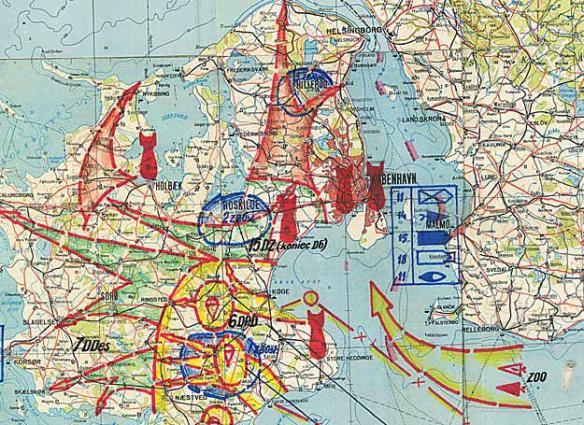
This Is How the World Could Have Ended

‘This is a plan for the end of the world, dated 1970.

The arrows are armies and the red vertical symbols are nuclear bombs, all part of a part of Cold War contingency plan crafted by the Soviet Union and its Warsaw Pact allies in case of war.

War that would have destroyed civilization…’ (Medium).

Why ‘Her’ Is the Best Movie Ever Made About the Singularity

‘The pop-culture tuning fork known as the Academy Awards will reveal its film nominations on Thursday, and if the recent Golden Globes win by Her on Sunday for best screenplay is any indication, the film’s writer and director, Spike Jonze, may score his first-ever Oscar win.

But the film, which depicts a man in the not-too-distant future who falls in love with his computer operating system, may be less important as an epic love story and far more relevant as the best and most widely accessible film we’ve seen about … the Singularity…’ (Mashable)

Atomic scientists: We’re still dangerously close to the apocalypse

‘ Each year since 1945, the Bulletin of the Atomic Scientists sends a letter to the UN Security Council in which they tell them how close we are from nuclear holocaust using a Doomsday Clock. In 1960 we were two minutes from midnight. Their new 2014 report says we\’re still five minutes from the Apocalypse. “Five minutes is too close,” they say.

The organization—which was founded by some of the researchers who participated in the Manhattan Project—counts with the collaboration of a board of sponsors that includes 18 Nobel laureates to analyze current data to give this estimate. They always give good reasons:

“Speaking at Berlin’s historic Brandenburg Gate in mid-June, President Obama proposed a reduction in the limit on US and Russian deployed strategic nuclear warheads from the current New START level—1,550 warheads on each side—to 1,000.

Obama’s speech came just days after Iran elected a new president, Hassan Rouhani, who quickly changed the tone of the country’s foreign policy, clearing the path for the first direct talks between the United States and Iran in 35 years.

[…]

Around the world, much nuclear material remains unsecured.

Soon after Obama’s Brandenburg Gate speech, Russia offered political asylum to Edward Snowden, the former National Security Agency contractor who leaked US classified documents, creating an international media sensation, and Obama called off a planned summit with Russian leader Vladimir Putin. There appears to have been little movement since on nuclear agreements between the United States and Russia.

China is reported to be modernizing and quantitatively increasing its nuclear arsenal, albeit at a slow pace. India and Pakistan continue to expand their arsenals and stockpiles of fissile materials. Both countries are developing and testing new missiles, many nuclear-capable. India plans to build a nuclear submarine fleet and to develop a ballistic missile-defense system, the deployment of which could destabilize the subcontinent.

Despite authoritative reports that it has a nuclear weapons arsenal, Israel continues a policy of nuclear ambiguity while strenuously trying to scuttle talks on Iran\’s nuclear efforts. In February 2013, North Korea conducted yet another nuclear weapon test, the first under its new leader, Kim Jong-un, and issued a series of military threats, some involving the use of nuclear weapons.” ‘ (Sploid)


Most failed stars have clouds and rain, says NASA

‘The scene seems like a storm over a sea of lava somewhere in Mordor, but you are looking at the surface of a failed star—the weather on a brown dwarf based on new data from the Spitzer Space Telescope. It\’s spectacular. Even more so when you think that\’s not water falling from the sky.

Published in a NASA article titled Stormy Stars? NASA\’s Spitzer Probes Weather on Brown Dwarfs, this artist rendering is based on the findings of a study of “44 brown dwarfs as they rotated on their axis for up to 20 hours.” The artists did a great job because the storms must be really spectacular, according to their description:

“Scientists think that the cloudy regions on brown dwarfs take the form of torrential storms, accompanied by winds and, possibly, lightning more violent than that at Jupiter or any other planet in our solar system. However, the brown dwarfs studied so far are too hot for water rain; instead, astronomers believe the rain in these storms, like the clouds themselves, is made of hot sand, molten iron or salts.” ‘ (Sploid)

The Men Guarding Our Nuclear Arsenal Are High and Dumb

‘The Air Force announced this afternoon that 37 nuclear missile officers have been implicated in academic cheating scandals and drug rings, and the ongoing investigation may turn up more misdeeds soon.

So far, 11 Air Force on six different bases have been implicated in the drug ring. Three of them are missile launch officers at Minot Air Force Base in North Dakota and Malmstrom Air Force Base in Montana, according to the Washington Post. Those are two of the three U.S. bases that house America’s 450 intercontinental ballistic missiles.

In addition, nearly 20 percent of all the launch officers in charge of ICBMs at Malmstrom cheated or allowed cheating on a job-related certification test, the investigation showed. An estimated 200 officers have had their certifications yanked and will be forced to retake the exam, though it isn’t clear how many officers might lose their jobs.

…The revelations come just weeks after the top general in charge of all U.S.-based nuclear missiles was fired for going on a drunken bender and carousing with foreign women on a mission to Russia. The Air Force has had to push back against that incident, and additional reports that its nuclear missileers are burned out, cynical, and suffering historically low levels of morale. ‘ (Gawker).

West Virginia Chemical Spill Poses Unknown Threat to the Environment

West Virginia Chemical Spill Poses Unknown Threat to the Environment

‘Although the tap-water ban was lifted in the wake of West Virginia\’s Elk River chemical leak, the long-term ecological impacts of the spill remain uncertain.

On Monday, the 300,000 residents of nine counties in West Virginia were told that they could resume drinking and using their tap water, five days after an estimated 5,000 gallons of the chemical 4-methylcyclohexane methanol (MCMH) leaked into the Elk River near Charleston.

As National Geographic previously reported, MCMH is used as a foaming agent to wash certain types of coal before it is sent to market. The chemical leaked from a 48,000-gallon storage tank owned by Freedom Industries, located about a mile upriver from a drinking water treatment plant operated by West Virginia American Water, affecting the central and southwestern parts of the state. ‘ (National Geographic)

Men Anger Opponents on Purpose

_Emotions 02

‘ From a wheedling teenager to a road-rager on your tail, most people have been pushed into bad decisions by another’s emotions. Confirming some long-held suspicions, scientists now report a new twist on emotional manipulation: Experiments suggest that men do indeed deliberately anger each other to get what they want…’ (National Geographic)

Rhino Hunt Auction Stirs Controversy

Rhino Hunt Auction Stirs More Controversy

‘ A controversial auction for a hunting permit in Africa concluded this past weekend in Texas. On Saturday evening the Dallas Safari Club (DSC) awarded the permit—which allows a hunter to kill one black rhinoceros, an endangered species, in Namibia—to the auction’s anonymous winner for a reported $350,000. The club had said it hoped to raise between $250,000 and $1 million… A minister from Namibia was reportedly “jumping up and down in elation at the result because the funds go to conservation efforts in the country.” ‘  (National Geographic)

World’s Space Agencies Plan Future Joint Manned Mars Mission

‘The world’s leading space agencies kicked off this year with a bold new plan to put humans on Mars in the coming decades.

At a Jan. 9 meeting of the International Space Exploration Forum in Washington, D.C., countries including the U.S., Japan, China and Russia, as well as the European Union, agreed that putting humans on the red planet should be a longterm joint priority…’ (Mashable)

Post- traumatic stress disorder in murdered people and its consequences to public health

Ghost

Abstract: The aims of this paper are to narrate and analyze some psychological phenomena that I have perceived in dead people, including evidence of post-traumatic stress disorder (PTSD) in murdered people. The methodology adopted was \”projection of consciousness\” (i.e., a non-ordinary state of consciousness), which allowed me to observe, interact, and interview dead people directly as a social psychologist. This investigation was based on Cartesian skepticism, which allowed me a more critical analysis of my experiences during projection of consciousness. There is strong evidence that a dead person: (i) continues living, thinking, behaving after death as if he/she still has his/her body because consciousness continues in an embodied state as \’postmortem embodied experiences\’; (ii) may not realize for a considerable time that he/she is already dead since consciousness continues to be embodied after death (i.e., \’postmortem perturbation\’ – the duration of this perturbation can vary from person to person, in principle according to the type of death, and the level of conformation), and (iii) does not like to talk, remember, and/or explain things related to his/her own death because there is evidence that many events related to death are repressed in his/her unconscious (\’postmortem cognitive repression\’). In addition, there is evidence that dying can be very traumatic to consciousness, especially to the murdered, and PTSD may even develop.’ (Australian Journal of Parapsychology)

Why is Geel so successful at ‘treating’ the ‘mentally ill’?

(OR: Why is Geel so successful at helping those with ‘problems of living’?)

“For more than 700 years its inhabitants have taken the mentally ill and disabled into their homes as guests or ‘boarders’. At times, these guests have numbered in the thousands, and arrived from all over Europe. There are several hundred in residence today, sharing their lives with their host families for years, decades or even a lifetime. One boarder recently celebrated 50 years in the Flemish town, arranging a surprise party at the family home. Friends and neighbours were joined by the mayor and a full brass band.

Among the people of Geel, the term ‘mentally ill’ is never heard: even words such as ‘psychiatric’ and ‘patient’ are carefully hedged with finger-waggling and scare quotes. The family care system, as it’s known, is resolutely non-medical. When boarders meet their new families, they do so, as they always have, without a backstory or clinical diagnosis. If a word is needed to describe them, it’s often a positive one such as ‘special’, or at worst, ‘different’. This might in fact be more accurate than ‘mentally ill’, since the boarders have always included some who would today be diagnosed with learning difficulties or special needs. But the most common collective term is simply ‘boarders’, which defines them at the most pragmatic level by their social, not mental, condition. These are people who, whatever their diagnosis, have come here because they’re unable to cope on their own, and because they have no family or friends who can look after them.” (Aeon).

The Far Future of our Solar System

I recently created an image that shows some of the important events in our natural history…: what our history would look like if, instead of our 13.81 billion years, we simply scaled everything down to fit in just one calendar year. The results are stunning, and do a tremendous job of putting our entire past history into a time perspective that we can relate to.

The funny thing is, that only explains how we got here. What about the other side of the coin: where we’re headed? (Medium).

You Have to Play This 1,600-Year-Old Viking War Game

“At first glance, Hnefatafl (pronounced “nef-ah-tah-fel”) might just look like a knock-off version of chess with Norse helms and impressive beards, but the game is at least 600 years older—already well-known by 400 A.D.—and is perhaps a lot more relevant to the conflicts of the 21st century.” (Medium).

Kim Jong Un Gave Out Hitler’s Mein Kampf To Senior Officials In Honor Of Birthday

‘The North Korean leader reportedly gave out copies of Hitler’s ideological tome Mein Kampf to select senior officials recently, according to North Korean watchdog news site New Focus International.

The so-called Nazi bible, written by Hitler while in prison in 1924, was given out in honor of Kim’s birthday in January, the site claims.

“Kim Jong-un gave a lecture to high-ranking officials, stressing that we must pursue the policy of Byungjin (Korean for ‘in tandem’) in terms of nuclear and economic development,” an anonymous source told New Focus International by phone. “Mentioning that Hitler managed to rebuild Germany in a short time following its defeat in WWI, Kim Jong-un issued an order for the Third Reich to be studied in depth and asked that practical applications be drawn from it.”

The gift might be part of a campaign to create a more intimidating persona for the young leader, Shirley Lee, New Focus’s international editor, told the Washington Post. The Post also noted that leadership and nation-building — not anti-Semitism — seemed to be the intended significance of the gift.

Many books are banned in North Korea, according to the Washington Post, and the consequences for owning a banned book can be quite severe. In 2009, a Christian woman who was accused of distributing copies of the Bible was allegedly executed, according to the Associated Press.

While possibly startling to Western countries that opposed Hitler’s actions during World War II, North Korea is not the first country that maintains a healthy appreciation of the German’s leadership skills.

In India for example, Mein Kampf is printed by multiple publishers and is popular among business school students, according to Bloomberg Businessweek.’ (Huffington Post).

R.I.P. Amiri Baraka


Tooting on His Sideways Horn: Amiri Baraka died today at seventy-nine; The Paris Review had the pleasure of publishing several of his poems. Baraka wrote “Pres Spoke a Language” to celebrate the jazz saxophonist Lester Young, but one could just as easily apply its eulogy to the poet himself:

Pres
had a language
and a life, like,
all his own,
but in the teeming whole of us he lived
toooting on his sideways horn

(Paris Review)

Harvard psychiatrist Grinspoon on David Brooks


English: David Brooks
David Brooks

“His ignorance about this subject is vast”:‘ “I hope he’s on more solid ground with the other things he writes about in the New York Times,” says Dr. Lester Grinspoon of NYT columnist David Brooks. Grinspoon is a Harvard psychiatrist and author of the 1971 book, Marijuana Reconsidered.

Joe Dolce interviewed the 85-year-old Harvard professor emeritus about David Brooks’ widely-ridiculed NYT opinion piece in which Brooks wrote that he’d had fun smoking pot as a youth but believes other people should be punished for smoking pot. ‘ (Boing Boing).

Northern Lights: Coming to a Sky Near You?

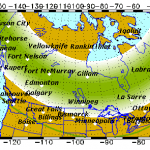
‘The massive flare that erupted from the sun on Tuesday could bring beautiful displays of the Northern Lights as far south as Colorado late on Thursday night and early Friday morning. It was associated with a huge eruption of material called a coronal mass ejection. Now, that material is racing toward Earth and is expected to trigger a strong geomagnetic storm — a disturbance to Earth’s protective magnetic bubble called the magnetosphere. It’s that kind of disturbance that triggers the Northern Lights.

The University of Alaska’s Geophysical Institute predicts that auroral activity will be high on Thursday:Weather permitting, highly active auroral displays will be visible overhead from Inuvik, Yellowknife, Rankin and Igaluit to Juneau, Edmonton, Winnipeg, Thunder Bay and Sept-Iles, and visible low on the horizon from Seattle, Des Moines, Chicago, Cleveland, Boston, and Halifax… There are no guarantees, of course. Clouds could obscure the view, city lights could wash it out, the solar material could arrive earlier or later than forecast, affecting visibility, etc. For the latest updates on what might happen, check the Space Weather Prediction Center...’  (DiscoverMagazine.com). Barring an overcast night, I’m going to be outside tonight, somewhere I can get a dark sky away from city lights, watching and waiting…

Laverne Cox flawlessly shuts down Katie Couric’s invasive questions about transgender people

PRIDE Lecture featuring Laverne Cox

“The preoccupation with transition and surgery objectifies trans people. And then we don’t get to really deal with the real lived experiences. The reality of trans people’s lives is that so often we are targets of violence. We experience discrimination disproportionately to the rest of the community. Our unemployment rate is twice the national average; if you are a trans person of color, that rate is four times the national average. The homicide rate is highest among trans women. If we focus on transition, we don’t actually get to talk about those things.” (Salon)

When life support sets a dangerous precedent

‘Jahi McMath is dead. The 13-year-old was declared brain dead on Dec. 12, three days after a tonsillectomy and adenoidectomy to treat her sleep apnea resulted in “heavy bleeding, cardiac arrest and whole brain death.” The Alameda County coroner’s office issued a death certificate for her. And the New Beginnings Community Center says she “has been defined as a deceased person.” Yet there is no funeral planned for the girl, no memorials in her name. Instead, she has been moved to a facility where she receives “nutritional support, hormones and antibiotics to combat infections,” a place where family attorney Christopher Dolan says she is “going to be treated like the innocent little girl that she is, and not like a deceased body.” But while the recent battle over what to do with what remains of the once vibrant teen has for now been settled, the ethical questions over her case – and of what constitutes life and death – remain.’ (Salon).

Robert Reich: The Year of the Great Redistribution

‘ One of the worst epithets that can be leveled at a politician these days is to call him a “redistributionist.” Yet 2013 marked one of the biggest redistributions in recent American history. It was a redistribution upward, from average working people to the owners of America.

The stock market ended 2013 at an all-time high—giving stockholders their biggest annual gain in almost two decades. Most Americans didn’t share in those gains, however, because most people haven’t been able to save enough to invest in the stock market. More than two-thirds of Americans live from paycheck to paycheck. ‘ (Guernica / A Magazine of Art & Politics)

US freeze is nothing to do with a ‘polar vortex’

‘As temperatures fell, some blamed a mysterious polar vortex, but this is a system of winds in the stratosphere that spins around the Arctic and Antarctic during their respective winters, many kilometres above the weather. There is nothing unusual about the polar vortex, according to the UK Met Office. Instead, cold Arctic air has reached North America thanks to a weakened jet stream.’ (New Scientist).

UK legal proposal: authorities can prevent anyone from doing anything for any reason

‘ The UK’s proposed new Antisocial Behaviour, Crime and Policing Bill creates a new kind of injunction, the Ipnas (“injunctions to prevent nuisance and annoyance”), which judges can hand down without proof of wrongdoing to anyone over ten, and send them to jail to violate them (kids go to young offenders centres for up to three months). Along with the Ipnas comes “dispersal orders,” which police can use to order anyone to leave any public place for any length of time, for any reason, on their own say-so. As George Monbiot writes in the Guardian “The new injunctions and the new dispersal orders create a system in which the authorities can prevent anyone from doing more or less anything.” ‘ (Boing Boing).

Extraordinary earthquake lights explained — they’re not UFOs

‘On an April day in 2009, bizarre four-inch flames of light were seen hovering above a stone-paved road in the historical city center of L’Aquila, Italy. Shortly after, a cataclysmic magnitude 6.3 earthquake devastated the area reportedly leaving about 300 people dead.

At the time, these light-filled flashes were thought to be a coincidental phenomenon, but now researchers believe they had a direct correlation to the earthquake.

A new study published in Seismological Research Letters says these flashes of light rarely seen before or during earthquakes are caused by naturally occurring electrical processes in certain types of rock.

L’Aquila was one of several places to see such lights before an earthquake. Other instances include the 1906 earthquake in San Francisco, Calif., where locals witnessed a rainbowed light beam above a street right before the temblor, and the 1988 earthquake in Quebec, Canada, where people saw a purplish glowing sphere near the St. Lawrence River 11 days before the quake, according to National Geographic.

The lights can come in “many different shapes, forms, and colors,” study coauthor Friedemann Freund, an adjunct professor of physics at San Jose State University and a senior researcher at NASA’s Ames Research Center, told National Geographic. Not only are there globes of light and flickering flames, but some earthquake lights look like quick bursts of lightning coming straight out of the ground.

Past explanations for these strange colorful lights that preceded earthquakes were UFOs, birds, and planes. The phenomena is rare — it only happens in less than 0.5 percent of earthquakes — which would explain why some witnesses have claimed they were caused by aliens.’ (CNET News).

Finally, a practical test for string theory?

‘Scientists at Towson University in Towson, Maryland, have identified a practical, yet overlooked, test of string theory based on the motions of planets, moons and asteroids, reminiscent of Galileo\’s famed test of gravity by dropping balls from the Tower of Pisa.

String theory is infamous as an eloquent theoretical framework to understand all forces in the universe —- a so-called \”theory of everything\” —- that can\’t be tested with current instrumentation because the energy level and size scale to see the effects of string theory are too extreme.

Yet inspired by Galileo Galilei and Isaac Newton, Towson University scientists say that precise measurements of the positions of solar-system bodies could reveal very slight discrepancies in what is predicted by the theory of general relativity and the equivalence principle, or establish new upper limits for measuring the effects of string theory.’ (phys.org).

It Was So Cold in Canada, the Ground Exploded

‘Even before the polar vortex put large swathes of the US into a deep freeze, subzero temperatures in Canada were causing frost quakes. A few nights ago, residents around Ontario woke up to mysterious booms—like an explosion or falling tree. Turns it was just the cold.

Like a glass jar of water in the freezer, the ground can crack as liquid water expands while freezing into ice. Frost quakes, or cryoseisms, require a sharp temperature drop: It must be warm enough for water to first saturate the ground and then suddenly cold enough for a quick freeze. The explosions are so loud because frost quakes happen so close to the surface. And as disruptive as they sound, they\’re unlikely to be dangerous.

Frost quakes have also been reported in the midwest and New England, but they are generally quite rare. Environment Canada meteorologist Geoff Coulson told the Toronto Star it was the first he experienced in 30 years.’ (Gizmodo).