Via New York Times: ‘No one, clearly, has ever told Mitchell that the novel is dead. He writes with a furious intensity and slapped-awake vitality, with a delight in language and all the rabbit holes of experience, that no new media could begin to rival. (It’s no coincidence that it was the makers of “The Matrix” who brought his previous epic, “Cloud Atlas,” to the screen, in 2012, with limited success.) Mitchell sees the everyday with the startled freshness of a creature newly arrived from Epsilon Eridani, but amid all the glorious physical description — “The wood sounds like waves, with rooks tumbling about like black socks in a dryer” — there’s always a trace of something metaphysical that lifts the roof off the contemporary novel and suggests there are many more things in heaven and earth than are dreamed of in our philosophies. You may not believe in telepathy, second sight or reincarnation, but if you enter Mitchell’s universe you can’t not believe in them either.’
Author Archives: FmH
Experiment Set to Test Whether the Universe Is a Hologram
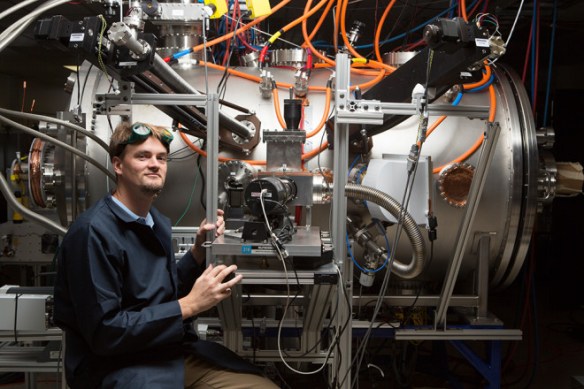
Via Big Think: ‘In a field in Illinois sits a shed. In that shed sits a machine that is gathering data to determine whether the universe is a hologram. Created by physicists at the Fermi National Accelerator Laboratory near Chicago, a machine called the Holometer will determine if the universe is merely a series of bits, similar to how newspaper photos are composed of colored dots, or if a more substantial material reality exists…’
Scientists have “unexpectedly” found a vaccine that completely blocks HIV infection in monkeys
Via Science Alert: ‘Human trials of the surprisingly simple vaccine are now planned. If successful, it could be taken as a probiotic-like drink.’
Most Zen Cat Ever
Via Jezebel: ‘The next time you are at your yoga class and the instructor asks you to take a moment to clear your mind for some peaceful meditation, instead of focusing on that tabletop water fountain she bought at Ross, I want you to think about this cat with a tiny frog on its head.’
States That Legalize Medical Marijuana See Fewer Painkiller Overdoses
Via io9: ‘As the number of patients who receive opioid prescriptions to treat non-cancer pain has increased in the past decade, so too have the number of overdoses. A new study, however, finds that states that legalized medical marijuana between 1999 and 2010 had 25% fewer annual overdose deaths than the rest of the U.S.
More specifically, the research, published in the Journal of the American Medical Association Internal Medicine, found that overdose deaths from opioids decreased by an average of 20% one year after the laws implementation, 25% by two years, and up to 33% by years five and six.
The study comes at a time when the CDC has warned that opioid overdoses are “skyrocketing.” Since 1999, deaths from prescription painkillers have increased 400% among women and 265% among men…‘
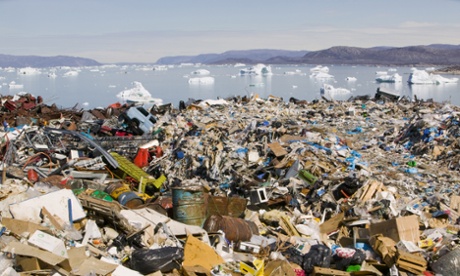
Icelands Seabird Colonies Are Vanishing, With “Massive” Chick Deaths
Via National Geographic: ‘Climate and ocean changes blamed for huge losses of puffins, kittiwakes, and terns.’
Mob Rule
via Futility Closet: ‘Eugene Graves and William Brown patented this grim game in 1902. A row of effigies stand on blocks under a gibbet. Each effigy is fitted with a noose, and the players take turns shooting balls at the blocks, “representing summary punishment meted out to the victim.”
In the patent abstract, the effigies are described only as “notorious criminals and persons opposed to law and order”; Graves and Brown note that these can be varied to suit the “location, place or country for which the game is especially designed.”
“A flag may be provided for each figure to designate the character or nationality of the effigy.” We’re lucky this didn’t catch on.’
Radical New Theory Could Kill the Multiverse Hypothesis
Via WIRED: ‘Though galaxies look larger than atoms and elephants appear to outweigh ants, some physicists have begun to suspect that size differences are illusory. Perhaps the fundamental description of the universe does not include the concepts of “mass” and “length,” implying that at its core, nature lacks a sense of scale.
This little-explored idea, known as scale symmetry, constitutes a radical departure from long-standing assumptions about how elementary particles acquire their properties. But it has recently emerged as a common theme of numerous talks and papers by respected particle physicists. With their field stuck at a nasty impasse, the researchers have returned to the master equations that describe the known particles and their interactions, and are asking: What happens when you erase the terms in the equations having to do with mass and length?’
It would be stupid to ignore a drop in human intellect
Via New Scientist: ‘In some countries, the long rise in IQ scores has come to a halt, and there are even signs of a decline. The reason, according to a few researchers, is that improving social conditions have obscured an underlying decline in our genetic potential. Perhaps we are evolving to be stupid after all.’
The surprising everyday ingredient that can reduce pot paranoia
Via Salon.com: ‘‘According to a recent report by Marijuana.com, sniffing black peppercorns could be the simple answer to reducing the paranoia effects sometimes felt after smoking pot. By simply smelling or chewing on peppercorns after lighting up, smokers can mitigate these effects, writes Jay Arthur.

Owen Smith writes in Canada’s Cannabis Digest that while at Victoria Cannabis Buyers Club, he witnessed the impact pepper had on pot. “Most patients who have tried this simply took a few sniffs of the black pepper to receive an almost immediate effect,” he wrote. “Others have reported that after chewing on pepper corns they felt relief within an hour, but that may be a delay most would seek to avoid.”
Why would this work? In a scientific review published by the British Journal of Pharmacology, author Ethan Russo writes of a “phytocannabinoid-terpenoid entourage effect” that can help with “pain, inflammation, depression, anxiety, addiction, epilepsy, cancer, fungal and bacterial infections.” ‘
How the Current Mass Extinction of Animals Threatens Humans
Via National Geographic: ‘We seem indifferent to the mass extinction were causing, yet we lose a part of ourselves when another animal dies out.’
Successful Marburg Virus Treatment Offers Hope for Ebola Patients
Via National Geographic: ‘A new approach, similar to one previously tested on Ebola, saved monkeys up to three days after infection with Marburg virus.’
Watch This Giant Fish Tackle a Shark in One Quick Move
Via io9: ‘Sportfishers off the coast of Bonita Springs Florida captured the footage earlier this month. The shark caught on the line is a blacktip shark, the big fella an appropriately named goliath grouper.’
Cities Are Making Spiders Grow Bigger and Multiply Faster
Via WIRED: ‘Something about city life appears to be causing spiders to grow larger than their rural counterparts. And if that’s not enough to give you nightmares, these bigger urban spiders are also multiplying faster.
A new study published today in PLOS One shows that golden orb weaver spiders living near heavily urbanized areas in Sydney, Australia tend to be bigger, better fed, and have more babies than those living in places less touched by human hands.’
Does indie film have a future?
Via Salon.com: ‘Imagine a world where a filmmaker could go to a studio and say, “My team has five million followers. Through crowd-funding, we’ve done 25,000 preorders for the video that we haven’t begun to shoot, and I want to be your partner in the producing and marketing of this movie.” How could that not be enticing? And we’re almost at that point. This is the beginning of the third way. And you can already see it peeking out from under the horizon. Each day, it grows larger, better, and, perhaps for some, more threatening.’
Why Virtual Therapy Could Be Better than the Real Thing
Via Big Think: ‘Thanks to advantages in facial recognition technology and natural language analysis, virtual therapists can “understand” humans better than ever before. Developed by the Institute for Creative Technologies in Los Angeles, one virtual therapist named Ellie can measure your smile whether its ironic or sincere, spot a nervous tic, and determine the meaning of your tone of voice and your posture. She will also analyze speech patterns to determine how forthcoming you are about your true thoughts and feelings.
Were humans always willing to level with their professional caretakers about their psychological state, there might not be a need for virtual therapists. Those most in need of therapy, however, such as soldiers returning home from war, are also the most likely to avoid it. But when therapy is virtual, people are more likely to divulge information that can be useful in developing treatment. In a experiment of 239 individuals who were given sessions with virtual counselor Ellie, those were told the truth that Ellie was a computer expressed more personal information than those told a human was controlling what Ellie said.’
There Is A Man In Texas Who Has Been Imprisoned 34 Years Without A Conviction
Via ThinkProgress: ‘In 1977, a Texas man named Jerry Hartfield was convicted of murder. His conviction was tossed out three years later because the process used to select his jury was unconstitutional. Yet Hartfield was neither freed from prison nor given a new trial. Last April, a Texas trial judge held that he must remain in prison, despite the fact that the sole legal basis for his detention was overturned nearly 34 years ago, because Hartfield did not actively seek a new trial. Hartfield is intellectually disabled. His IQ is estimated to be only 51. On Thursday, Hartfield’s case grew even more similar to a Franz Kafka novel with a Texas Court of Appeals decision refusing to grant him relief.’
War in the Womb
Via Aeon: ‘A ferocious biological struggle between mother and baby belies any sentimental ideas we might have about pregnancy…’
Things To Stop Being Distracted By When A Black Person Gets Murdered By Police
Via BlackGirlDangerous: ‘A Black person is murdered by cops, security guards or self-appointed vigilantes every 28 hours in the U.S. The killing of an unarmed Black teenager named Mike Brown in Ferguson, MO, which has resulted in protests in that town and harsh police push-back and brutality against even more of its citizens, and which, via social media, has gotten the attention of people around the world, probably isn’t even the latest occurrence, at just three days old.
Talking to people on Twitter about Mike Brown and what’s happening in Ferguson right now, I’ve noticed again how easily folks get distracted when Black people are murdered by the police. It seems as though every detail is more interesting, more important, more significant—including looting of a Walmart in Ferguson, which a local Fox news station focused its entire coverage on—than the actual life that was taken by police.
So, to get folks back on track to focus on what matters most here—the killing of yet another unarmed Black teenager—I’ve compiled this list of 6 Things To Stop Being Distracted By When A Black Person Gets Murdered By the Police.’
ISIS: A Short History
Via The Atlantic: ‘The Sunni militants who now threaten to take over Iraq seemed to spring from nowhere when they stormed Mosul in early June. But the group that recently renamed itself simply “the Islamic State” has existed under various names and in various shapes since the early 1990s. And its story is the story of how modern terrorism has evolved, from a political and religious ideal into a death cult.’
Gun nuts’ alcohol debacle:
Via Salon.com: ‘It would appear that Texas gun owners want to expand their rights yet again. And you won’t believe what new right their creator endowed them with this time: the right to sell alcohol at gun shows. What could go wrong?’
Groucho Marx:
Via Boing Boing: ‘ “Im sure most of you have heard the story of the man who, desperately ill, goes to an analyst and tells the doctor that he has lost his desire to live and that he is seriously considering suicide. The doctor listens to this tale of melancholia and then tells the patient that what he needs is a good belly laugh. He advises the unhappy man to go to the circus that night and spend the evening laughing at Grock, the worlds funniest clown. The doctor sums it up, After you have seen Grock, I am sure you will be much happier. The patient rises to his feet, looks sadly at the doctor, turns and ambles to the door. As he starts to leave, the doctor says, By the way what is your name? The man turns and regards the analyst with sorrowful eyes. I am Grock.” ‘
Every single Alfred Hitchcock cameo in one video
Via Gizmodo: ‘Alfred Hitchcock appeared briefly in the majority of his movies, making that his signature. Morgan T. Rhys edited all those cameos together in a video so all Hitchcocks fans can enjoy it. His cameos became so popular that Hitchcock decided to make his appearances more obvious and earlier in the film, so people wouldn’t get distracted from the movie trying to spot him.’
The Difficulties of Concocting a Lethal Injection
Via The Wire: ‘Jay Chapman is the creator of the most commonly used lethal injection protocol, which he concocted in the late 1970s. This lethal recipe was adopted by 37 states. Chapman’s protocol called for three drugs: sodium thiopental, a sedative; pancuronium bromide, a paralytic agent; and to stop the heart, potassium chloride. However, in the last few years, manufacturers have pulled away from selling these drugs to states for the purpose of lethal injection. Sodium thiopental, the key sedative in the protocol, has become virtually unavailable. The last manufacturer of sodium thiopental in the United States stopped producing it in 2011. The European Union banned export of it all together, and India has banned its sale. While some states attempted to stockpile the drug before the bans, sodium thiopental has a shelf life of only four years, with expirations fast approaching in 2015.
Suddenly, states were left with prisoners on death row, and no way to kill them. They had to reinvent the lethal injection. On July 23, convicted murdered Joseph Wood was executed by the state of Arizona. His execution took almost two hours, involving fifteen doses of an experimental drug combination. Witnesses watched as he gagged and choked for the majority of the two hours, his opioid receptors filling with hydromorphone and midazolam.
An …official told the judge working to find an acceptable lethal injection protocol that “You’re not entitled to a pain-free execution.” This mentality is a point of contention on both sides of the execution battle. While some believe a painful execution qualifies as cruel and unusual punishment, others believe that with murderers who are guilty of terrible crimes against humanity, the end is more important than the means.’
These Fish Keep People Awake With Their Weird Mating Calls
Via io9s: ‘The midshipman fish has, all things considered, one of the more pleasant mating rituals in nature. Rather than fighting among themselves or biting the hell out of their prospective mates – as sharks do – they try to out-sing each other. The males get together in groups and start a low humming sound. He who hums best gets the girl.The group of fish humming together gets the attention of the local townspeople. Low-frequency humming carries over large distances, traveling through the ground, penetrating walls, and rattling windows. This is why we hear the bass when cars playing loud music come by the house, rather than the higher notes. It’s also why people close to the ocean hear a humming at night loud enough to keep them up. Just as a bonus, the fish are nocturnal. These people did not know where the humming was coming from, which is why power lines and local highways got a lot of complaints until someone turned their eyes on the ocean.’
Eyewitness to Michael Brown killing says teen held up hands, pled for life before being shot
Via Salon.com: ‘One of the last things Brown said, according to a witness: “I don’t have a gun! Stop shooting!” ‘
I Liked Everything I Saw on Facebook for Two Days. Here’s What It Did to Me
Via WIRED: ‘I like everything. Or at least I did, for 48 hours. Literally everything Facebook sent my way, I liked—even if I hated it. I decided to embark on a campaign of conscious liking, to see how it would affect what Facebook showed me. I know this sounds like a stunt (and it was) but it was also genuinely just an open-ended experiment. I wasn’t sure how long I’d keep it up (48 hours was all I could stand) or what I’d learn (possibly nothing.)…
My News Feed took on an entirely new character in a surprisingly short amount of time. After checking in and liking a bunch of stuff over the course of an hour, there were no human beings in my feed anymore. It became about brands and messaging, rather than humans with messages.Likewise, content mills rose to the top. Nearly my entire feed was given over to Upworthy and the Huffington Post. As I went to bed that first night and scrolled through my News Feed, the updates I saw were in order: Huffington Post, Upworthy, Huffington Post, Upworthy, a Levi’s ad, Space.com, Huffington Post, Upworthy, The Verge, Huffington Post, Space.com, Upworthy, Space.com.
Also, as I went to bed, I remember thinking “Ah, crap. I have to like something about Gaza,” as I hit the Like button on a post with a pro-Israel message.By the next morning, the items in my News Feed had moved very, very far to the right. I’m offered the chance to like the 2nd Amendment and some sort of anti-immigrant page. I like them both. I like Ted Cruz. I like Rick Perry. The Conservative Tribune comes up again, and again, and again in my News Feed.’ (Thanks, RK)
The planet’s most and least peaceful countries
Via Salon.com: ‘ “We are living in the most peaceful century in human history; however the 2014 Global Peace Index shows that the last seven years has shown a notable deterioration in levels of peace.”So begins this year’s peace index, an annual report released by the nonprofit Institute for Economics and Peace. The study ranks 162 countries covering 99.6% of the world’s population according to a complex set of indicators that gauge the absence of violence and political instability. These include a nation’s level of military expenditure, its relations with neighboring countries and the percentage of the population held in prisons.’
In defense of black rage: Michael Brown, police and the American dream
Via Salon.com: ‘The people of Ferguson are angry. Outraged. The officer’s story is dubious. Any black kid with sense knows it is futile to reach into an officer’s vehicle and take his gun. That story is only plausible to people who believe that black people are animals, that black men go looking for cops to pick fights with. Absurdity. Eyewitness accounts like these make far more sense.
It seems far easier to focus on the few looters who have reacted unproductively to this tragedy than to focus on the killing of Michael Brown. Perhaps looting seems like a thing we can control. I refuse. I refuse to condemn the folks engaged in these acts, because I respect black rage. I respect black people’s right to cry out, shout and be mad as hell that another one of our kids is dead at the hands of the police. Moreover I refuse the lie that the opportunism of a few in any way justifies or excuses the murderous opportunism undertaken by this as yet anonymous officer.’ — Brittney Cooper, Rutgers
How to write responsibly on the internet about a famous persons suicide
Via Boing Boing: ‘The “suicide contagion” is a real phenomenon, says the CDC. Heres how journalists, bloggers, and public officials can help avoid spreading it.’
The Question Doctors Cant Ask
Via The Atlantic: ‘Is there a gun in your home? If so, is it secure? A Florida law now prevents physicians from discussing firearm safety with patients.’
Your bottled water is sucked straight from California’s drought
Via Salon.com: ‘Why are companies selling bottled water from the driest part of California? Because were still buying it.’
Researchers investigate what it means to hear voices
Via theguardian.com: ‘Children will often have imaginary friends, the recently bereaved sometimes hear their loved ones and for some people voices in their head can be a horrible, destabilising ordeal.
The full gamut of experiences are to be explored in detail at this years Edinburgh International Book Festival, in a project investigating why and how people hear voices when no one is speaking.
Researchers from Durham Universitys Hearing the Voice project will be at the festival asking both readers and writers what their experiences are. There will also be interviews, panel discussions and workshops delving into what is still a little-talked-about subject.
The projects director, Charles Fernyhough, said: “It is usually considered a troubling symptom of a severe mental illness but is more and more being recognised as something that happens to a lot of people and there are a lot of different contexts.
…”There’s a terrible stigma about it,” he said. “It is something many people who have the experience feel very uncomfortable talking about because they fear the reaction of society, for good reason.
“Having the opportunity to talk to a “captive audience” of writers will be invaluable, said Fernyhough. “They often have to hear the voices of their characters before they can write.”Similarly, for readers, hearing the voices of the people they are reading about is an important part of the process.’
Keep a good thought for Bob Weir
Via Cloud Surfing: ‘ “Circumstances have necessitated that all scheduled tour dates for Bob Weir & RatDog are being cancelled. This applies to all dates on the summer tour starting on Thursday, August 14 in Boston through September 14 in Nashville and also includes the Jamaica event in January of 2015….” ‘
If you know who Bob Weir is, you will likely care…
Perseid Meteor Shower and Full Moon To Occur Together This Year
Via Boston.com: ‘The clear skies of the past couple of nights and the next two would seem to make for ideal viewing for annual Perseid meteor shower. However, this year we have another problem, the moon. The meteor shower will peak on the 12th and the 13th, but you have already been able to see them for nearly 2 weeks. The show will last through the third week of the month.’
Bizarre New Species Of Giant Jellyfish Discovered
Via IFLScience: ‘Australia has a seriously strange entry in its enormous list of creatures that could kill you. Two new species of jellyfish have been discovered, one of which appears to defy everything we know about the invertebrates. The other is just really, really dangerous.’
Hillary Clinton: Failure to Help Syrian Rebels Led to the Rise of ISIS
Via The Atlantic: ‘The former secretary of state, and probable candidate for president, outlines her foreign-policy doctrine. She says this about President Obamas: “Great nations need organizing principles, and Dont do stupid stuff is not an organizing principle.” ‘
Who Are the Yazidis, the Ancient, Persecuted Religious Minority Struggling to Survive in Iraq?
Via National Geographic: ‘For their beliefs, they have been the target of hatred for centuries. Considered heretical devil worshippers by many Muslims—including the advancing militants overrunning Iraq—the Yazidis have faced the possibility of genocide many times over. Now, with the capture of Sinjar and northward thrust of extremists calling themselves the Islamic State of the Levant, or ISIL also known as the Islamic State of Iraq and Syria, or ISIS, Iraq’s estimated 500,000 Yazidis fear the end of their people and their religion. “Sinjar is, hopefully not was, home to the oldest, biggest, and most compact Yazidi community,” explains Khanna Omarkhali, a Yazidi scholar at the University of Göttingen. “Extermination, emigration, and settlement of this community will bring tragic transformations to the Yazidi religion,” she adds.
The Yazidis have inhabited the mountains of northwestern Iraq for centuries, and the region is home to their holy places, shrines, and ancestral villages. Outside of Sinjar, the Yazidis are concentrated in areas north of Mosul, and in the Kurdish-controlled province of Dohuk. For Yazidis, the land holds deep religious significance; adherents from all over the world—remnant communities exist in Turkey, Germany, and elsewhere—make pilgrimages to the holy Iraqi city of Lalesh. The city is now less than 40 miles from the Islamic State front lines.’
Who Owns the Rights to This Selfie?
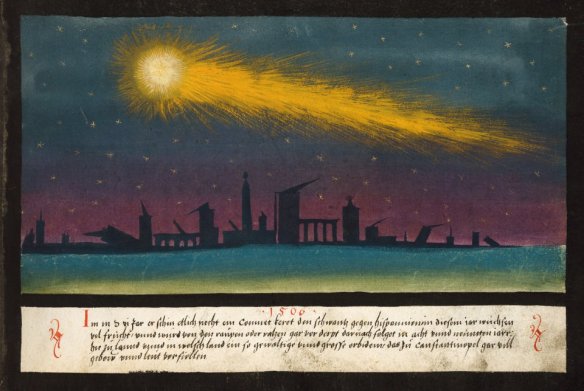
The surface of a comet seen up close for the first time ever
Via Gizmodo: ‘The spacecraft Rosetta is now orbiting the Comet 67P/Churyumov-Gerasimenko. Its taking some amazingly clear images including the one above, the first ever close up of a the surface of a comet in history. Soon we will be landing there.’
The Growing Quandary of Dark Tourism
Via Pacific Standard: ‘The moral quandary with Dark Tourism is rather obvious: Is this an industry that seeks to profit from the suffering of others or educate those still living among us?’
Related: IDTR: ‘Dark tourism as the act of travel to sites of or sites associated with death has gained significant attention with media imaginations and academic scholarship. There is a growing body of literature on the representation and tourist experience of ‘deathscapes’ within contemporary visitor economies. As such, dark tourism is now a recognisable field of academic study, which include interdisciplinary perspectives of the ‘darker side of travel’ in sociology, anthropology, cultural studies, geography, thanatology, and business management.
The Institute for Dark Tourism Research iDTR, based at the University of Central Lancashire UK and led by Dr Philip Stone, is a world-leading academic centre for dark tourism scholarship, research and teaching.
Dark tourism as an academic field of study is where death education and tourism studies collide and, as such, can shine critical light on the social reality of death. Dark tourism can also reveal tensions in cultural memory, interpretation and authenticity, and political and moral dilemmas in remembering our ‘heritage that hurts’. Dark tourism is also a recognised research brand in which scholars around the world can locate and analyse a diverse range of death-tourism related sites and tourist experiences.The iDTR promotes ethical research into the social scientific understanding of tourist sites of death, disaster, and atrocities, and the tourist experience at these places. Dark tourism is not simply a fascination with death or the macabre, but a multi-disciplinary academic lens in which to scrutinise fundamental interrelationships of the contemporary commodification of death with the cultural condition of society.’
Comet rendezvous today, streamed live
Via Spaceweather.com, ‘The European Space Agencys Rosetta probe has reached 67P/Churyumov-Gerasimenko and is maneuvering to go into orbit around the comets core. This is an historic event. After Rosetta goes into orbit, it will follow the comet around the sun, observing its activity from point-blank range for more than a year. Moreover, in November, Rosetta will drop a lander onto the comets strange surface. Today’s events are being streamed live by the ESA.’
What’s The Most Dangerous Place On Earth?
Via IFLScience, ‘Michael Stevens, of Vsauce, walks us through the options.’
Controversial Zen Master Sasaki-Roshi dead at 107
Via Sweeping Zen, ‘Joshu Sasaki Roshi, the Japanese-born Rinzai Zen teacher and founder of Rinzai-ji, died on Sunday at Cedars Sinai Hospital in Los Angeles, California at 107 years old. He was musician Leonard Cohen’s teacher. Sasaki Roshi came to America in 1962 and in 1963 the Rinzai Zen Dojo Association was created, later becoming Rinzai-ji and opening as Cimarron Zen Center in Los Angeles. In 1970 Mount Baldy Zen Center was established, serving as Rinzai-ji’s main training facility for monks and nuns. In more recent years allegations of years of sexual impropriety with some of his female students surfaced online and in print, eventually making it to The New York Times…’
Related articles
Blood Test Predicts Suicide Risk, Study Suggests
Via Discovery News, ‘A new gene linked to suicide risk has been discovered… [R]esearchers scanned the genes of brain tissue samples from people who had died by suicide, and compared these genes with those of people who died of other causes. …A genetic mutation in a gene called SKA2, was more common among the people who died by suicide [and] a chemical change, called anepigenetic change, on that same gene was more common among people who committed suicide than in those who died from other causes…
DCINext, the researchers examined whether these genetic changes could predict a person’s risk of having suicidal thoughts orattempting suicide. Using blood samples from 325 people, the scientists created a model that took into account whether a person had the SKA2 genetic mutation and the epigenetic change… The model correctly identified 80 percent to 96 percent of people who experienced suicidal thoughts or attempted suicide. It was more accurate among people at severe risk for suicide….
If the findings are confirmed and lead to a blood test for suicide risk, such a test might be used to screen people in psychiatric emergency rooms or to determine how closely a person needs to be monitored for suicide risk, the researcher said.’
However, from my perspective as a clinical psychiatrist working with suicidal patients, this is a meaningless finding. From the universe of those who are at “suicide risk” or have “suicidal thoughts” and would be identified by such a test, those who are at imminent risk constitute a vanishingly small proportion. And we can already identify those at theoretical suicide risk on demographic, historic and clinical grounds.
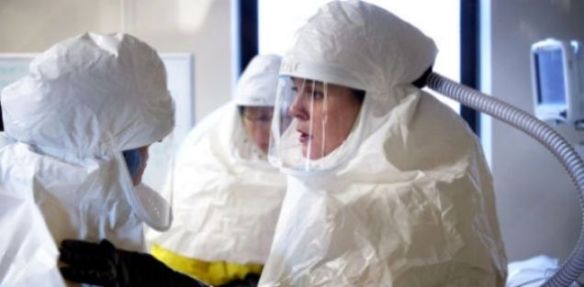
How Ebola works
Via Boing Boing, ‘The MicrobeWiki has a really detailed explanation of the biological mechanisms behind an Ebola infection. It gets a little technical in places, but its a good read if youve ever wondered how the virus creates hemorrhaging and why its hard to treat.’
Related articles
Mysterious holes in Siberia may be craters of climate change explosions
Via Boing Boing, ‘Holes like this one have been appearing in Siberia — at least three are known so far. There are a couple of theories for whats causing them and both are linked to climate change.
First, there’s the idea that the holes are created when mounds of ice, covered with earth, melt. Called pingos, the loss of the ice would leave behind a big hole that collapses in on itself. Given the rising temperatures and melting of permafrost in Siberia, it wouldnt be surprising to find that pingos are melting.
But, other scientists argue, these holes dont really fit the look of a pingo collapse. Which brings us to the other, fairly awesome, possible explanation. Some observers have noted the presence of smoke and flashes of light in the places where the holes appeared. Theres also been some weirdness in the atmospheric science world with spikes of methane turning up in air over Siberia.Thats leading some scientists to speculate that the holes could be forming when methane from melted permafrost builds up in a space left by a melting pingo — eventually leading to an explosion.’
R.I.P. Margot Adler
Journalist and Priestess Dies at 68: ‘Margot Adler, a longtime correspondent for NPR who was also a recognized authority on, and a longtime practitioner of, neo-pagan spiritualism, died on Monday at her home in Manhattan. She was 68.
Her death, from cancer, was announced by NPR.
Ms. Adler joined NPR, then known as National Public Radio, in 1979 and was variously a general-assignment reporter, the New York bureau chief and a political and cultural correspondent.
She was the host of NPR’s “Justice Talking,” a weekly program about public policy broadcast from 1999 to 2008, and was heard often on “All Things Considered” and “Morning Edition.”
She reported on a wide array of subjects, among them the Ku Klux Klan, the AIDS epidemic, the 9/11 attacks, Hurricane Sandy, the Harry Potter phenomenon and the natural world.
Ms. Adler was also a self-described Wiccan high priestess who adhered to the tradition for more than 40 years.’ (NYTimes obituary).
Related articles
These Medical Apps Have Doctors and the FDA Worried
Via WIRED: ‘[The] FDA says it is now working to crack down on questionable healthcare apps, and some app makers may be willing to provide additional disclosures about their software when pushed to do so…’
What happens when lightning hits the sea?
Via BBC News: ‘A man died and several other people were injured in a thunderstorm off the coast of California. What happens when lightning hits the sea, asks Justin Parkinson.’
Simple answer: get out or go deep.
Related articles
7 rogue wave disasters, from Columbus to cruise ships
Via New Scientist: ‘In 2007, Paul Liu at the US National Oceanic and Atmospheric Administration compiled a catalogue of more than 50 historical incidents probably associated with rogue waves. Here are some of the most significant.’
Related articles
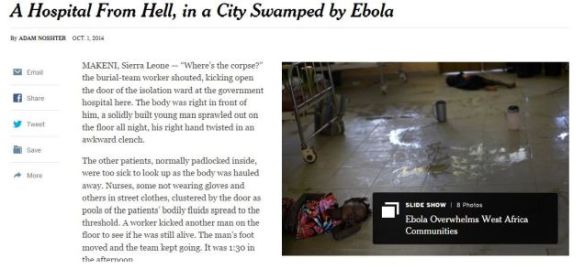
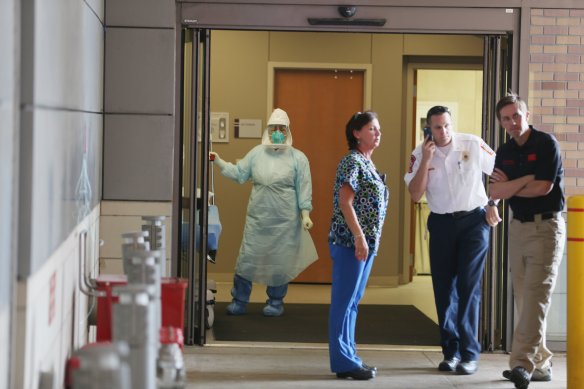
Why Ebola Virus Is Likely to Hit the U.S. But Not Spread
Via National Geographic: ‘There are few direct flights from West Africa to the U.S., so most feverish passengers entering American airports will have something far more routine and less risky than Ebola.
Ebola is contagious only when symptomatic, so someone unknowingly harboring the virus would not pass it on, Monroe said.
Even passengers showing symptoms are unlikely to pass the disease on to fellow travelers, he said.Blood and stool carry the most virus—which is why those at highest risk for Ebola infection are family members who care for sick loved ones and health care workers who treat patients or accidentally stick themselves with infected needles.Theoretically, there could be enough virus in sweat or saliva to pass on the virus through, say, an airplane armrest or a nearby sneeze, said Stephen Morse, an epidemiologist and virologist at the Mailman School of Public Health at Columbia University in New York. But droplets would still need a way to get through the skin.’
Paul Krugman denounces “inversion,” corporate America’s latest “outrageous” scheme
Via Salon.com: ‘In his latest column for the New York Times, leading liberal pundit and celebrated economist Paul Krugman takes on the new trend in the world of corporate tax avoidance, the practice of “inversion,” which is what U.S. corporations call it when they pretend a foreign subsidiary is the real owner of their company as an excuse to shift profits away from America’s higher corporate tax rate.
“The most important thing to understand about inversion,” Krugman writes, “is that it does not in any meaningful sense involve American business ‘moving overseas.’” Inversion, Krugman says, is “a purely paper transaction” but one that “deprive[s] the U.S. government of several billion dollars in revenue that you, the taxpayer … have to make up one way or another.” ‘
The People Who Are Scared of Dogs
Via Pacific Standard: ‘Those who study animal phobias have found that while more people are afraid of spiders or snakes than dogs, living with cynophobia is considerably more challenging—especially today, as dog-wielding humans appropriate more and more public places. [People] living with a fear of dogs [describe] a debilitating phobia that affects where they go and who they see.’
How Wildlife Declines Are Leading to Slavery and Terrorism
Via Pacific Standard: ‘[D]eclining wildlife populations are stoking wildlife crimes as prices for contraband animal bits rise, and as communities are forced to travel farther afield and clash with competing groups to find their dinner.
Those crimes, in turn, are fueling further declines in wildlife populations.
And the whole vicious cycle is triggering a heinous global crime wave, including everything from slavery and terrorism to piracy.’
Overweight Americans Have Low Risk of Premature Death
Via Pacific Standard, ‘Why do we use the term “normal weight” when talking about BMI? What’s presented as normal certainly isn’t the norm, and it may not even be what’s most healthy.’
The Complications With Curing Childhood Cancer
Via Pacific Standard, ‘The majority of American children with cancer will be cured, but it may leave them unable to have children of their own. Should preserving fertility in cancer survivors be a research priority?’
The Geography of U.S. Hate
Via Big Think, ‘The image above maps the location of more than 150,000 geocoded tweets that contained words deemed to be racist, homophobic or that targeted people with disabilities. The project was completed by students at Humboldt State University in California. You can view the zoomable map here.’
‘
Related articles
Powerful and Coldhearted
Via NYTimes.com, ‘Can people in high positions of power — presidents, bosses, celebrities, even dominant spouses — easily empathize with those beneath them? Psychological research suggests the answer is no.’ (thanks, Barbara)
The authors suggest that this is ‘because’ the mirror neuron system of powerful people is less responsive, but this seems to me to be an egregious example of neurological determinism. (You should always see ‘because’ in neurocognitive literature as a red flag, IMHO.) The mirror neuron system may be the neurophysiological basis of empathy, but the observed underactivity in people with power may be a reflection of rather than a reason for their empathic deficits.
New Online Tracking Tool Evades Privacy Settings
Via NPR Science Friday, ‘A new online tracker is snooping on visitors to more than 5,600 popular sites, such as Cancer.org, WhiteHouse.gov and NYDailyNews.com—and its nearly impossible to block. Julia Angwin, author of Dragnet Nation and a senior reporter at ProPublica, talks about “canvas fingerprinting,” as the new technique is called, and what this post-cookie tracker means for privacy online.’ (thanks, Rich)
Related:
Racist and hate-filled remarks finally catch up with Ted Nugent
Via Salon.com, ‘Due to growing complaints over the rock singer’s racist past, an Idaho tribe has canceled a show. More may follow…’
Related articles
It Turns Out Hamas Didn’t Kidnap the Israeli Teens After All
Via NYMag, ‘When the bodies of three Israeli teenagers, kidnapped in the West Bank, were found late last month, Israeli Prime Minister Benjamin Netanyahu did not mince words. “Hamas is responsible, and Hamas will pay,” he said, initiating a campaign that eventually escalated into the present conflict in the region.
But now, officials admit the kidnappings were not Hamass handiwork after all.
BuzzFeed reporter Sheera Frenkel was among the first to suggest that it was unlikely that Hamas was behind the deaths of Gilad Shaar, Naftali Frenkel, and Eyal Yifrach. Citing Palestinian sources and experts the field, Frenkel reported that kidnapping three Israeli teens would be a foolish move for Hamas. International experts told her it was likely the work of a local group, acting without concern for the repercussions… Today, she was proven right…’
New Phenomenon: Euroderision for Politicians with ‘Bad English’
Via CityLab, ‘If you stumble or make mistakes when trying to speak a foreign language, spare a thought for Europe’s hapless politicians. Recently, the continent’s political masters have been slapped by a new form of satirical attack—Bad English Shaming. A viral-video sub-trend, Bad English Shaming sees public figures foolhardy enough to let their rusty English be recorded on camera getting mocked and mauled for their poor foreign language skills.’
What will Putin do next?
Via The Weekly Wonk, ‘…[T]he downing of flight MH17 could lead to a new chapter in the Eastern Europe conflict. If reports that pro-Russian separatists downed the commercial airliner are true, it could lead to more economic sanctions from the United States, and a more unified international response.’
cARTography
Via Huffington Post, ‘In a project titled “Mapping it Out: An Alternative Atlas of Contemporary Cartography,” Obrist asked 130 contemporary artists, architects, scientists and designers to reimagine the concept of the map. From renderings of the physical world to abstract images that attempt to navigate the spaces inside our minds, the stunning visualizations turn scientific data and condensed topography into contemporary artworks.’
Annals of Emerging Disease
Via WIRED, ‘Resistant “Nightmare Bacteria” Increase Five-Fold in Southeastern U.S.: There’s worrisome news here in the southeastern US, buried in a journal that is favorite reading only for superbug geeks like me. The rate at which hospitals are recognizing cases of CRE — the form of antibiotic resistance that is so serious the CDC dubbed it a “nightmare” — rose five times over between 2008 and 2012.
Within that bad news, there are two especially troubling points. First, the hospitals where this resistance factor was identified were what is called “community” hospitals, that is, not academic referral centers… That CRE was found so widely not in academic centers, but rather in community hospitals, is a signal that it is probably moving through what medicine calls “the community,” which is to say, anywhere outside healthcare. Or, you know, everyday life.
A second concern is that the authors of the study, which is in Infection Control and Hospital Epidemiology, assume that their finding is an underestimate of the actual problem.
A little background first on CRE. Archive of posts on it is here. The acronym stands for “carbapenem-resistant Enterobacteriaceae.” Enterobacteriaceae are a large family of bacteria that normally are carted around in your guts without causing illness. When they escape, though — for instance, during ICU treatment — they are a common cause of serious hospital-acquired infections. “Carbapenems” are a small group of very powerful antibiotics that are viewed as drugs of last resort, which work against infections that have become resistant to most other antibiotics. The acronym CRE indicates a group of resistant organisms that go by other acronyms — NDM, OXA, VIM and KPC, for instance — and that have been spreading across the globe for more than 10 years.
CREs are serious stuff: On average, at least half of those who contract CRE infections die. There are only a few antibiotics — sometimes one, sometimes two, depending on the organism — that work against them at all, and those drugs have significant problems and side effects. Broadly speaking, the emergence of CREs brings us several steps closer to the end of the antibiotic era…’
Do No Harm
‘We seem to be living in a world that is getting less hospitable every day. Look closely at any endeavor our species has engaged in and it appears we are unaware of the harm we do, we ignore the harm we do, we intentionally do harm for our own gain, or sadly in some cases we do harm for our own pleasure and enjoyment.Has no one taught us to do no harm?‘…If you think you are a member of this nonprofit non-organization, you are.
Not Nothing
Via Aeon, ‘The death of a fly is utterly insignificant – or it’s a catastrophe. How much should we worry about what we squash?’
The Feminist Horror Author You Need to Read Now
Via Vulture, ‘The best horror writer of the 20th century youve probably never heard of was a British woman who looked like a benign but mildly dotty Hogwarts teacher.
But do not miss the occult mischief behind those 1980s mom-glasses; in a fairly standard Angela Carter story, Harry Potter would be mauled to death by a werewolf before a pan-species initiation of Hermione’s pubescent sexual power.
She made things weird like that, which is why she was great. Carter, however, was not a horror writer in the same sense as Anne Rice or Stephen King; the bulk of her work is classified as magical realism a made-up, jerk-off genre that permits English departments to acknowledge the existence of the human imagination, but her most celebrated book is a high gothic collection of short stories called The Bloody Chamber that you should read immediately if the genre holds any appeal for you.
Or even if it doesn’t — though Carter never broke into the mainstream, an incomplete list of her devotees includes Salman Rushdie, Joyce Carol Oates, Jonathan Lethem, Neil Gaiman, Margaret Atwood, Jeannette Winterson, Tea Obreht, Rick Moody, and Ian McEwan…’
I’ve been reading her all along, and I agree.
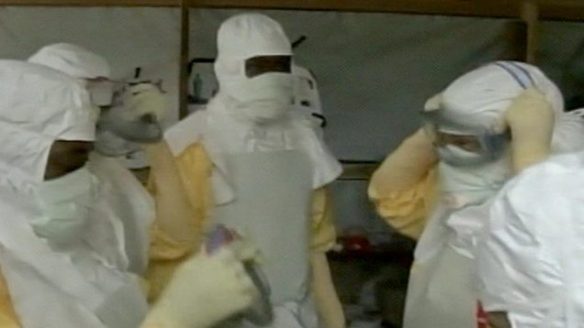
Ebola Outbreak Update
Via Boing Boing, news that a (highly contagious) infected woman in Sierra Leone fled her quarantine with the assistance of her family. She is at large, presumably among the million-plus people living in Sierra Leone’s capital city, Freetown Authorities are asking for assistance in tracking her down. In other news, the first death in the Nigerian capital Lagos means that the outbreak, already the largest in history, has reached Africa’s most populous nation and one of its biggest cities (with an estimated 17.5 million people).
Related articles
Dogs Feel Jealousy
Via IFLScience, ‘While many dog owners will tell you that their canine companion gets jealous if attention is diverted away from them, given the complex cognitions thought to be involved in this emotion many have assumed that jealousy is in fact unique to humans. Some have even proposed that jealousy requires self-reflection and the ability to understand conscious intentions. However, much research into this area has primarily focused on jealousy within romantic relationships over infidelity, neglecting to investigate other forms of this emotion, especially in other species.
Published in the journal PLOS ONE, researchers describe the first experimental test of jealousy in dogs which found that these animals displayed jealous behaviors when attention from owners was directed towards a fake pooch. This suggests that a form of this emotion exists in at least one other social species alongside humans.’
Fukushima Monkeys Affected by Irradiation
Via IFLScience, ‘Monkeys living in forests near Fukushima have levels of radioactive caesium in their muscles that may be dangerous. The monkeys were also found to have lower counts of both red and white blood cells than monkeys living further north, which may indicate health effects to come.
The doses detected in the monkeys are far short of those that would cause radiation sickness, and any influence on cancer rates can be hard to pick out from other factors.
The affected monkeys also had decreased counts of both red and white blood cells, consistent with results in people living near Chernobyl. Immature monkeys appeared to have been more affected than adults. No signs of ill health were observed, but healthy white blood cells are essential to protect against infections.’
Related articles
The 5 Massive New Telescopes That Will Change Astronomy Forever
Via Gizmodo, ‘The biggest building boom in the history of astronomy is upon us. In Chile and Hawaii and in space, astronomers are getting powerful telescopes that dwarf the current state-of-the-art instruments. When the mountain blasting and the mirror polishing are all done, we will have the clearest and most detailed views of outer space ever.’
Outing the Death-Drug Distributors
Via Pacific Standard, ‘Calling all hackers: It’s time to go Assange on capital punishment.’
We Need to Start Tracking Patient Harm Now
Via Pacific Standard, ‘The health care community is not doing enough to track and prevent widespread harm to patients, and preventable deaths and injuries in hospitals and other settings will continue unless Congress takes action, medical experts said last week on Capitol Hill.’
Learn How to Open a Door
Via The Atlantic, ‘If Seinfeld was a show about nothing, the National Geographic Channel’s new show Going Deep With David Rees raises existential questions about what is less than nothing. There are episodes that teach the best way to do such thrilling stunts as open a door, climb a tree, dig a hole, tie your shoes, and make ice. But Rees, the creator of the comic strips “Get Your War On” and “My New Fighting Technique Is Unstoppable” and author of How To Sharpen Pencils, takes deadly dull themes and makes them both extraordinary and instructive.
It may sound like watching paint dry. But were Rees to ever film a segment on paint drying, I guarantee it would live up to the show’s motto: “DEFAMILIARIZING THE UBIQUITOUS SO AS TO INCREASE OUR APPRECIATION AND WONDER THEREBY.”The show extends the concept of Ree’s hilariously deadpan book about artisanal pencil sharpening, which he has also performed before live audiences. Rees, a native of Chapel Hill, North Carolina who hails from a family of academics, liked the idea of his weird how-to series airing under the august National Geographic banner. .. Rees acknowledges that his most significant influence in making this show was Mr. Rogers Neighborhood.Rees is a kind of a Mr. Wizard anti-hero for millennials…’
I’ve watched the first couple of episodes and I’m hooked. It’s funny and I’ve learned something.
Related articles
What Is Hezbollah Doing in Europe?
Via The Atlantic, ‘Two years after bombing a Bulgarian airport, the group remains as strong as ever on the continent.’
The Latest Grotesquerie from the Man We Love to Hate
Via Salon.com, ‘The good news in Paul Ryan’s newly released anti-poverty proposal is that, for the first time in as long as anyone can remember, Ryan is not advocating the wholesale destruction of the social safety net. His past budgets – including the most recent – have envisioned catastrophic cuts to social programs all in the service of boosting military spending and alleviating the tax burden on the wealthy. At least for now, he’s transitioned from “destroy the safety net” to “grudgingly accept its continued existence.” So hooray for progress!
The bad news is that Paul Ryan’s view of that safety net is still largely detached from reality. Also, his approach to curing poverty seems to be to treat the poor in as paternalistic and insulting a way as possible by proposing that they sign “contracts” to remain eligible for public assistance. For real. “Contracts.” ‘
The Tyrannosaurus Rex just got way more terrifying
Via Salon.com, ‘Researchers now have more evidence that these carnivorous dinosaurs hunted in packs.’
Gabriel the angel, illuminated in Manhattan
Via Boing Boing, ‘BB pal Scott Matthews snapped this sublime photo of Gabriel on the roof of the Cathedral of St. John the Divine in Manhattan. Scott says, “Twice a year the sun rises aligned behind the statue, its kind of my personal Manhattanhenge.” ‘
Upcycled t-shirts with patched-over logos
Via Boing Boing, ‘Logo Removal Service takes discarded gimme shirts bedecked with sponsor logos, and carefully patches over them with new fabric, transforming them into amazing and abstract new one-of-a-kind garments.’
I’ve long been vehemently opposed to being a free advertising billboard for corporate America. I rarely buy items that are conspicuously branded unless I can remove the labels or logos. I should’ve been the one to start a Logo Removal Service!
Anti-Surveillance Camouflage for Your Face
Via The Atlantic, ‘The idea behind CV dazzle is simple. Facial recognition algorithms look for certain patterns when they analyze images: patterns of light and dark in the cheekbones, or the way color is distributed on the nose bridge—a baseline amount of symmetry. These hallmarks all betray the uniqueness of a human visage. If you obstruct them, the algorithm can’t separate a face from any other swath of pixels.
CV dazzle is ostentatious and kind of rad-looking, in a joyful, dystopic way. The first time I saw it, three years ago, I found it charismatic and captivating. Here was a technology that confounded computers with light and color. Since then, more and more people have learned about the technology. Harvey has contributed op-art about dazzle to The New York Times and enthusiasts have held facial dazzle parties. After documents from the Snowden tranche revealed the NSA had harvested an enormous database of faces from images on the web, CV dazzle seemed all the more urgent.
No one I could find, though, had undertaken the real challenge: wearing the dazzle for days while going about everyday life. That final hurdle had been left for me to surmount.’
Another ‘Botched Execution’
Via NBC News.com, ‘An Arizona execution took nearly two hours on Wednesday, and witnesses said the inmate gasped and snorted for well over an hour after the lethal injection. The execution of double-murderer Joseph Wood — which Arizona carried out with a two-drug combination it had never before tried — is certain to fan the debate over how U.S. states carry out the death penalty.’
The Biggest Man-Made Hole on Earth
Via Gizmodo: ‘The land where Bingham Canyon Mine sits was settled by Mormon 166 years ago, but it didn’t emerge as a powerhouse producer until the turn of the 20th century. Today, the mine is 2.5 miles wide and more than half a mile deep. It’s so big, it can be seen from the naked eye aboard the ISS.
Last year, Bingham became the site of the largest landslide thats ever taken place in North America outside of volcanos. But because Rio Tinto, the company that owns the mine, keeps an incredibly close watch on the pit—including using an interferometric radar system to monitor stability—the extraordinary events of April 23, 2013, were predicated long in advance. There was even time to issue a press release.
That night, a landslide shook the area around the mine so hard, it registered as a 5.1 earthquake. Upwards of 70 million cubic meters thundered down into the open pit, creating a huge swath of debris and rock that cascaded down the mines neat, striated walls. No one was hurt, remarkably—except for Rio Tinto, the mines owner, which reported that the “rock avalanche” would cut production by 100,000 tons.
All the most amazing supernovas ever photographed
Via Sploid, ‘NASA has revealed spectacular, newly reprocessed images of four of the most amazing supernovas ever captured by a human science instrument—the Crab Nebula, Tycho, G292.0+1.8, and 3C58—to celebrate the 15th anniversary of the Chandra observatory. I decided to go one step further and collect them all…
What you can see here are the complete collection of most important ever captured by humankinds instruments, starting with the rest of the new Chandra series…’
It’s Time for England to Ask: Should Prince George Step Down?
Via Gawker, ‘Prince George, heir to the British throne, turned one human year old on Tuesday. An occasion for celebration, perhaps, and yet we find ourselves troubled: If one thing has become clear over the last year, it is that George Alexander Louis of Cambridge is far from ready to serve as the solemn figurehead of a commonwealth of nations whose combined population numbers in the hundred millions.
Even with a restrained British press, palace media offices have been unable to quell the yearlong deluge of photographs of Prince George at official events crying, screaming, sneering, leering, pouting, shouting, squirming, flailing, grabbing a boob, eating his moms hair, and looking on with chilling coolness as the world around him descends into godless chaos.’
This Molecule Can Prove Youre a Supertaster… Or a Caffeine Junkie
Via io9, ‘Some patients found the drug to be unbearably bitter. Some found it only slightly bitter. Some didnt notice a flavor at all. With a little research, scientists found that those who could taste the bitterness in PROP tended to have more taste receptors, and that this ability seemed to run in families. Now PROP is used in one of tests that determines if someone is a supertaster. Patients swish a cup of liquid, with some PROP mixed in, around in their mouths, or they put a paper saturated with PROP on their tongue. If theyre supertasters, they wont want to be tasting long. Supertasters find PROP overwhelmingly bitter and unpleasant. People with slightly heightened senses of taste find it only slightly bitter. Everyone else tastes only the water or the paper.
Supertasters arent only repulsed by the bitterness in PROP. They can also taste the bitterness in alcohol, and in caffeinated drinks. Adding a lot of sugar to the drinks can mitigate the taste, and supertasters, like everyone else, love the taste of sugared-up coffees. Still, for the most part, people who respond badly to PROP tend to be the sort of people who only go into coffee shops for the pastries, and sit hollowed-eyed in bars, wondering why they never serve cake. Lifes bitter enough already.
An interesting side note – PROP is the first test for a supertaster. The next one? A peppermint LifeSaver. If Wrigley announced on the wrapper that peppermint LifeSavers were medical-strength candy, Id start buying them.’
This Tree Is Growing 40 Different Kinds Of Fruit At Once
Via io9, ‘This single and quite colorfully blossoming tree grows 40 different varieties of peaches, plums, apricots, nectarines, cherries, and even almonds… After sculptor Sam Van Aken bought a failing orchard in upstate New York full of hundreds of different fruit trees, he began the painstaking process of grafting several of the different varieties together into one tree. Six years later, the result is this 40-fruit bearing tree, which includes some heirloom varieties that are centuries old.’
New Poll Reveals The U.S. Is Number One In Climate Change Denial
Via io9, ‘54% of Americans agreed with the statement, “The climate change we are currently seeing is largely the result of human activity.” While thats a slight majority, it ranks last compared to the other countries polled, including France 80%, Brazil 79%, South Korea 77% and Great Britain 64%. That result could help explain why the U.S. also ranked last on whether “we are heading for environmental disaster unless we change our habits quickly.” On that question, 57.3% of Americans agreed, compared to France 74.7%, Brazil 78.4%, South Korea 77.2% and Great Britain 58.8%.’
Want to Be a Better Person? Take a Walk in the Park
Via Pacific Standard, ‘Plenty of research has suggested immersing yourself in nature has significant mental and physical health benefits. But can it also make you a better person? New research from France suggests it just might.’
Worlds largest aquatic insect discovered in China
Via Gizmodo, ‘A new specimen of an insect was found this month in a mountain in Chengdu, Sichuan province, China. The insect belongs to the order of Megaloptera and has a wingspan of 21 centimeters—8.3 inches.’

Why No One Bothers Putting Apostrophes in “Dont Walk” Signs
21 July, 2014 13:55
White holes: Hunting the other side of a black hole
Via New Scientist, ‘Black holes suck – but do they have mirror twins that blow? A far-flung space telescope is peering into galactic nuclei to spot one for the first time…’

[Hmmm… What about that mysterious white hole in Siberia?]
Related?
Free Arturo
via Telegraph.UK, ‘More than 200,000 people have signed an online petition calling for a polar bear living in ‘deplorable’ conditions in an Argentinian zoo to be moved.Supporters of the online appeal want to transfer Arturo, who has been dubbed the ‘world’s saddest animal’, to Assiniboine Park Zoo in Winnipeg, Canada.’
Stop calling soldiers “heroes”
Via Salon.com: ‘It stops us from seeing them as human — and dismisses their experience. “Hero” sounds like praise, but its not: It glosses over the human cost of war, and keeps us from helping our vets. ‘ — CARA HOFFMAN

[In fact, mightn’t it be more appropriate to refer to many of them as “victims”?]
I’m Presumably in this Database. How About You?
Via Boing Boing, ‘US “suspected terrorist” database had 1.5M names added to it in past 5 years: The scale of the secret blacklist was revealed in a civil suit over the Terrorist Screening Database, and it shocked the judge.99 percent of the names submitted to the list are accepted; the court called this “wildly loose.” The database has grown from 227,932 names in 2009 to its current stratospheric heights. There is no official, public procedure for having your name removed from the list.’


Related articles
HIV Undetectable In Two Patients Following Bone Marrow Transplants
Via IFLScience, ‘The two men, ages 47 and 53, respectively received bone marrow transplants three and four years ago to treat lymphoma and leukemia. Though the HIV virus is no longer detectable in either of them, they are still undergoing antiretroviral therapy ART as a precaution, and Cooper refuses to say that the men have been “cured” due to the possibility of relapse, as witnessed in other patients whose viral loads had dropped to undetected levels only to reappear later.’
An Experimental Stem Cell Treatment Lead To A Woman Accidentally Growing A Nose On Her Spine
Via IFLScience, ‘Who knows where a nose grows? Here’s a curious case. An 18-year-old woman sustained a spinal cord injury that left her legs paralyzed. Three years later, stem cells from her nose were transplanted into the injury site. She developed back pain eight years afterwards, and imaging revealed a mass at the implantation site. The 3-centimeter-long spinal cord mass was mostly nasal tissue and contained large amounts of thick, mucus-like material.’
Annals of Emerging Disease
‘It’s only a matter of time before the chikungunya virus spreads in the U.S. When the name of a virus translates as “to become contorted” as in, with joint pain you know it is not something you want to catch. Unfortunately, your chances of encountering chikungunya are increasing.Chikungunya is a mosquito-borne illness that has no cure. On the plus side, its unlikely to kill you. On the downside, if you catch it, treatment is about easing the discomfort of symptoms and waiting for it to pass.’ Via Boing Boing.


Via