‘…[S]tep by step, all the things that made writing at the Times worthwhile for me were taken away. The Times eliminated the blog at the end of 2017. Here’s my last substantive blog post, which gives a good idea of the kind of thing I was no longer able to do once it was eliminated.
For a while I tried to make up for the loss of the blog with threads on Twitter. But even before Elon Musk Nazified the site, tweet threads were an awkward, inferior substitute for blog posts. So in 2021 I opened a Substack account, as a place to put technical material I couldn’t publish in the Times. Times management became very upset. When I explained to them that I really, really needed an outlet where I could publish more analytical writing with charts etc., they agreed to allow me to have a Times newsletter (twice a week), where I could publish the kind of work I had previously posted on my blog.
In September 2024 my newsletter was suddenly suspended by the Times. The only reason I was given was “a problem of cadence”: according to the Times, I was writing too often. I don’t know why this was considered a problem, since my newsletter was never intended to be published as part of the regular paper. Moreover, it had proved to be popular with a number of readers.
Also in 2024, the editing of my regular columns went from light touch to extremely intrusive. I went from one level of editing to three, with an immediate editor and his superior both weighing in on the column, and sometimes doing substantial rewrites before it went to copy. These rewrites almost invariably involved toning down, introducing unnecessary qualifiers, and, as I saw it, false equivalence. I would rewrite the rewrites to restore the essence of my original argument. But as I told Charles Kaiser, I began to feel that I was putting more effort—especially emotional energy—into fixing editorial damage than I was into writing the original articles. And the end result of the back and forth often felt flat and colorless.
One more thing: I faced attempts from others to dictate what I could (and could not) write about, usually in the form, “You’ve already written about that,” as if it never takes more than one column to effectively cover a subject….’ (– via Contrarian)
‘Google Maps, the most popular mapping software in the world, said on Monday evening that it will begin using new names for two prominent geographical features in North America, the Gulf of Mexico and Mount Denali. As soon as “they have been updated in official government sources,” Google said on the social media site X, it would change the names of these features to the Gulf of America and Mount McKinley.
The announcement comes a little less than a week after President Donald Trump signed an executive order to, in his words, “promote the extraordinary heritage of our Nation and ensure future generations of American citizens celebrate the legacy of our American heroes.” This included renaming the Gulf and the highest mountain in North America….’ (via Ars Technica)
‘For the past 48 hours, thousands of TikTok users have been posting and sharing videos ostensibly about “cute winter boots.”
“I see a lot of people on this app right now making plans to buy cute winter boots,” one TikToker posted on Thursday, “…but there’s a lot of things that you guys are missing.”
“Here’s some safety tips for going out in your cute winter boots,” another user posted, “you’re going to memorize your first amendment rights, because those are the rights you’re exercising when you’re out in your cute winter boots.”
The phrase “cute winter boots” is not about footwear. It’s a code phrase being used to discuss resistance to Trump and how to fight back against the draconian immigration policies his administration is enacting. Users talking about “cute winter boots” keeping people safe from “ice,” are referencing U.S. Immigration and Customs Enforcement. “Cute winter boots” is just the latest example of algospeak, coded phrases and words aimed at subverting algorithmic filters.
As the U.S. government seeks to enact stricter controls over speech online, TikTok users are adopting more coded language specifically aimed at criticizing the government and alerting others to government surveillance of online spaces. For instance, the phrase “Senator, I’m Singaporean,” a quote uttered by TikTok’s CEO Shou Chew in response to Sen. Tom Cotton’s racist line of questioning implying that Chew was a Chinese government agent, is now frequently posted in the comments of videos by users seeking to warn others about the content they’re posting. The phrase “Senator, I’m Singaporean,” has come to mean that a video is not something that the government wants, or that they’re going to show this type of video to congress, a creator explained.
The videos discussing “cute winter boots” leverage the TikTok algorithm’s preference for product-focused content to amplify their reach. “What the algorithm likes is products,” said Diana, the admin of @/citiesbydiana, a TikTok account about urban planning. “It’s a way to talk about resisting the federal government in a way that will actually reach people.”
Many “cute winter boots” videos also include links to TikTok shop, but instead of selling boots they’re selling things like Night by Elie Wiesel, a book about the Holocaust, or items that may be useful to have in a protest, like protective gear. Some are promoting the date January 29th as a day of protest….’ (via TikTok)
‘TOKYO (AP) — A solitary sunfish at an aquarium in southwestern Japan lost its appetite, began banging into the side of the fish tank and appeared unwell days after the facility closed last month for renovations. As a last-ditch measure to save the popular fish, its keepers hung their uniforms and set up human cutouts outside the tank.
‘Ninety-two years ago this month, on Monday morning, January 30, 1933, Adolf Hitler was appointed the 15th chancellor of the Weimar Republic. In one of the most astonishing political transformations in the history of democracy, Hitler set about destroying a constitutional republic through constitutional means. What follows is a step-by-step account of how Hitler systematically disabled and then dismantled his country’s democratic structures and processes in less than two months’ time—specifically, one month, three weeks, two days, eight hours, and 40 minutes. The minutes, as we will see, mattered….’ (Timothy W. Ryback via The Atlantic)
Please note: For awhile now, my typographic convention has been to spell the Orange Menace’s name in all lower case, reflecting the extent to which I feel he does not warrant the respect indicated when we capitalize proper names. Henceforth, I am shifting to referring to him as “Tr*mp”, because he is quite simply an obscenity. (Thanks to Tananarive Due)
‘In light of Tr*mp II’s predictably cruel and bonkers beginning, many people are asking: “What can I do now?” Here are 10 recommendations.
1. Protect the decent and hardworking members of your communities who are undocumented or whose parents are undocumented This is an urgent moral call to action. As Donald Tr*mp’s Ice begins roundups and deportations, many good people are endangered and understandably frightened.
One of Tr*mp’s new executive orders allows Ice to arrest undocumented immigrants at or near schools, places of worship, healthcare sites, shelters and relief centers – thereby deterring them from sending their kids to school or getting help they need.
If you trust your mayor or city manager, check in with their offices to see what they are doing to protect vulnerable families in your community. Join others in voluntary efforts to keep Ice away from schools, hospitals and shelters.
Organize and mobilize your community to support it as a sanctuary city, and to support your state as a sanctuary state. Tr*mp’s justice department is already launching investigations of cities and states that go against federal immigration orders, laying the groundwork for legal challenges to local laws and forcing compliance with the executive branch. Your voice and organizing could be helpful in fighting back.
I recommend you order these red cards from Immigrant Legal Resource Center and make them available in and around your community: Red Cards / Tarjetas Rojas | Immigrant Legal Resource Center | ILRC. You might also find these of use: Immigration Preparedness Toolkit | Immigrant Legal Resource Center | ILRC.
2. Protect LGBTQ+ members of your community Tr*mp may make life far more difficult for those who are lesbian, gay, bisexual, transgender, queer and of other expansive identities through executive orders, changes in laws, alterations in civil rights laws or changes in how such laws are enforced.
His election and his rhetoric might also unleash hatefulness by bigoted people in your community.
I urge you to work with others in being vigilant against prejudice and bigotry, wherever it might break out. When you see or hear it, call it out. Join with others to stop it. If you trust your local city officials, get them involved. If you trust your local police, alert them as well.
3. Help protect officials in your community or state whom Tr*mp and his administration are targeting for vengeance Some may be low-level officials, such as election workers. If they do not have the means to legally defend themselves, you might help them or consider a GoFundMe campaign. If you hear of anyone who seeks to harm them, immediately alert law-enforcement officials.
4. Participate or organize boycotts of companies that are enabling the Tr*mp regime, starting with Elon Musk’s X and Tesla, and any companies that advertise on X or on Fox News Don’t underestimate the effectiveness of consumer boycotts. Corporations invest heavily in their brand names and the goodwill associated with them. Loud, boisterous, attention-getting boycotts can harm brand names and reduce the prices of corporations’ shares of stock.
5. To the extent you are able, fund groups that are litigating against Tr*mp Much of the action over the next months and years will be in the federal courts. The groups initiating legislation that I know and trust include the American Civil Liberties Union, Citizens for Responsibility and Ethics in Washington, the Center for Biological Diversity, the Environmental Defense Fund and Common Cause.
6. Spread the truth
Get news through reliable sources, and spread it. If you hear anyone spreading lies and Tr*mp propaganda, including local media, contradict them with facts and their sources.
7. Urge friends, relatives and acquaintances to avoid Tr*mp propaganda outlets such as Fox News, Newsmax, X and, increasingly, Facebook and Instagram They are increasingly filled with hateful bigotry and toxic and dangerous lies. For some people, these propaganda sources can also be addictive; help the people you know wean themselves off them.
8. Push for progressive measures in your community and state Local and state governments have significant power. Join groups that are moving your city or state forward, in contrast to regressive moves at the federal level. Lobby, instigate, organize and fundraise for progressive legislators. Support progressive leaders.
9. Encourage worker action Most labor unions are on the right side – seeking to build worker power and resist repression. You can support them by joining picket lines and boycotts, and encouraging employees to organize in places you patronize.
10. Keep the faith. Do not give up on America Remember, Tr*mp won the popular vote by only one and a half points. By any historical measure, this was a squeaker. In the House, the Republicans’ five-seat lead is the smallest since the Great Depression. In the Senate, Republicans lost half of 2024’s competitive Senate races, including in four states Tr*mp won.
America has deep problems, to be sure. Which is why we can’t give up on it – or give up the fights for social justice, equal political rights, equal opportunity and the rule of law. The forces of Tr*mpian repression and neofascism would like nothing better than for us to give up. Then they’d win it all. But we cannot allow them to.
We will never give up….’ (Robert Reich via The Guardian)
‘We’ve talked about viruses as being an outlier that strains the definition of life. Viruses do not have the ability to reproduce on their own, but must harness a host cell of another species to replicate. But now there’s a new type of life form that is even more primitive than viruses called obelisks. Obelisks consist of a viroid-like disc of RNA, but they do not have the protein shell that viruses have. Their genetic information is completely distinct from any known species, putting them into a unique phylogenic group. They reproduce by infecting another cell, like viruses do. They haven’t yet been classified into the Tree of Life because scientists aren’t really sure where they belong. But obelisks have been found in the microbiome of humans, in the digestive tract. One type of obelisks studied infects the bacteria Streptococcus sanguinis, found in human mouths. The impact of obelisks in the human biome has not been determined, but they’ve been there all this time and just haven’t been found until recently….’ (via Neatorama)
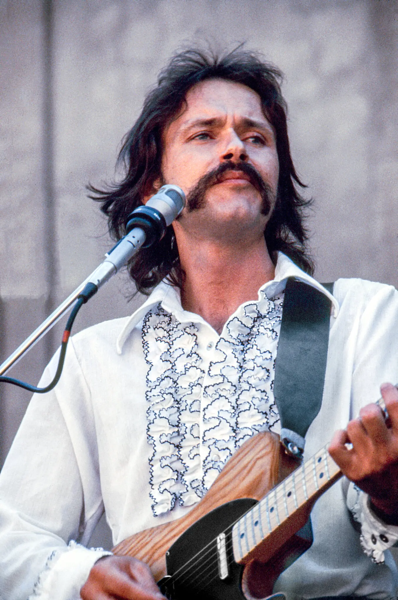
Master instrumentalist and last surviving member of The Band
’A rustic figure with an expansive forehead and sprawling beard, Hudson was a classically trained performer and self-educated Greek chorus who spoke through piano, synthesizers, horns and his favored Lowrey organ. No matter the song, Hudson summoned just the right feeling or shading, whether the tipsy clavinet and wah-wah pedal on “Up on Cripple Creek,” the galloping piano on “Rag Mama Rag” or the melancholy saxophone on “It Makes No Difference.”…’ (via Boston Globe obituary)
‘Many in Europe avoid describing Russia’s sabotage campaign outside Ukraine as war because they’d rather not have to do anything in response….’ ( Phillips Payson O’Brien via The Atlantic)
‘The US military debates possible deployment on US soil under trump. trump has said he wants to use active duty U.S. troops to quell protests and round up immigrants. Will the military comply? (via POLITICO)
‘2024 was the year in which benchmark after benchmark for AI capabilities became as saturated as thePacific Ocean. We used to test AIs against a physics, biology, and chemistry benchmark called GPQA that was so difficult that even PhD students in the corresponding fields would generally score less than 70 percent. But the AIs now perform better than humans with relevant PhDs, so it’s not a good way to measure further progress.
On the Math Olympiad qualifier, too, the models now perform among top humans. A benchmark called the MMLU was meant to measure language understanding with questions across many different domains. The best models have saturated that one, too. A benchmark called ARC-AGI was meant to be really, really difficult and measure general humanlike intelligence — but o3 (when tuned for the task) achieves a bombshell 88 percent on it.
We can always create more benchmarks. (We are doing so — ARC-AGI-2 will be announced soon, and is supposed to be much harder.) But at the rate AIs are progressing, each new benchmark only lasts a few years, at best. And perhaps more importantly for those of us who aren’t machine learning researchers, benchmarks increasingly have to measure AI performance on tasks that humans couldn’t do themselves in order to describe what they are and aren’t capable of.
Yes, AIs still make stupid and annoying mistakes. But if it’s been six months since you were paying attention, or if you’ve mostly only playing around with the free versions of language models available online, which are well behind the frontier, you are overestimating how many stupid and annoying mistakes they make, and underestimating how capable they are on hard, intellectually demanding tasks…'(Kelsey Piper via Vox)
‘Facebook, Instagram, and Threads are ditching third-party fact-checkers in favor of a Community Notes program inspired by X, according to an announcement penned by Meta’s new Trump-friendly policy chief Joel Kaplan. Meta is also moving its trust and safety teams from California to Texas…
…Zuckerberg said he was inspired by X, where Musk has championed this approach since taking over….’ (Jess Weatherbed via The Verge)
I don’t think this actually has a whole lot to do with Zuckerberg’s or Meta’s commitment to free speech. What Zuckerberg and Meta have realized is the value, demonstrated by Trump, Musk, and MAGA antagonists, of saying that you’re “protecting free speech” and using it as cover for almost anything you want to do. For Meta, that means increasing engagement, decreasing government oversight and interference, and lowering their labor costs (through cutting their workforce and strengthening their bargaining position vs labor) — all things that will make their stock price go up and increase the wealth of their shareholders.
‘Pine needle tea is made from white pine needles chopped, added to boiling water, steeped, and strained. The drink can be enjoyed hot, iced, or blended with other herbal teas, notes registered dietitian nutritionist Kate Spurgin.
The Ohio Department of Natural Resources reports that the tea is rich in antioxidants, vitamin A, and vitamin C, which can boost immunity and soothe colds.
WebMD also notes that certain molecules in pine needles can bind to a specific receptor in the body that plays an important role in regulating metabolism….’ (Meredith Kile via Vice)
‘Greenland is not small. We would never disrespect Greenland by calling it small. But it’s not as big as it looks, flattened out, on the Mercator projection. It is not roughly the same size as Africa. It is my belief, however, that trump does not know this and believes that it is the size of Africa, which makes him fixated on it enough to threaten war—trade war or shooting war—with a NATO ally over its control.
The same applies to Canada, which trump also says he wants, and which also appears enormous on the Mercator projection….’ (Jim Newelll via Slate)
‘First, to keep in full view what I wrote earlier in “Is This What Democracy Looks Like?” – that trump’s candidacy was only viable because the justices he appointed to the Supreme Court: (1) disabled the insurrection clause of the 14th Amendment (which should otherwise have barred him from holding office again) and (2) shielded him from standing trial before the election for trying to overturn the 2020 results or for hoarding classified documents (which would have kept his criminality in full view of the electorate, and possibly rendered his candidacy a non-starter due to a jail sentence or loss of support). In any other country, we would understand that as part of an autocratic takeover, not a democratic victory.
Second, as this post will show, the results are best understood as a vote of no confidence in Democrats, not an embrace of trump or MAGA….’ (Michael Podhorzer via Weekend Reading)
‘Shame is what keeps us in check, or at least it should. It certainly used to. Trump, devoid of shame, has gone to great lengths to eviscerate that societal check….’ (Rex Huppke via USAToday Opinion)
‘Justice Juan Merchan, in an 18-page opinion and order, rejected a number of trump’s arguments against his sentencing, including that a president-elect is entitled to the same immunity as a president. He also rejected a motion to dismiss trump’s case in the interest of justice. Among the factors the court found weighing against dismissal was trump’s character: “Defendant’s disdain for the Third Branch of government, whether state or federal, in New York or elsewhere, is a matter of public record. Indeed, Defendant has gone to great lengths to broadcast on social media and other forums his lack of respect for judges, juries, grand juries and the justice system as a whole.” In a related scathing footnote, Merchan accused trump’s lawyers of engaging in “dangerous rhetoric” in attacking the integrity of the court.
The footnote might also signal something about the peculiar timing of the ruling, so close to trump’s reascent to the presidency and with no time left for any sentence to be carried out. In it, Merchan all but accuses trump’s attorneys, led by trump’s nominee for deputy attorney general, Todd Blanche, of attempting to intimidate the judge in their recent pleadings. The implication could be that Merchan is laying down a marker that he will go ahead with the sentencing at this late date to demonstrate that the judiciary will not be intimidated by the incoming president.
Merchan notes specifically that trump’s filings “accuse … this Court of engaging in ‘unlawful’ and ‘unconstitutional’ conduct,” adding that such terms are synonymous with “criminally punishable.” Merchan then cited Chief Justice John Roberts’ recent paean to the sanctity of judicial independence. “Attempts to intimidate judges for their rulings in cases are inappropriate and should be vigorously opposed.”…’ (Richard Hasen and Jeremy Stahl via Slate)
‘The business of measuring big waves is a tricky one. There’s multiple entities with their own calculation methods, there’s debate about where waves bottom out and where they peak, and there’s the endless stream of keyboard warriors speculating, arguing, and offering armchair analyses.
Unlike other, more objective world records, computing wave size is a byzantine science.
Nevertheless, there’s a new contender for the Guinness World Record of “Largest Wave Surfed,” as tossed into the ring by Alessandro “Alo” Slebir with his monster ride at Maverick’s from December 23rd, 2024. It’s speculated, potentially, that Alo’s wave measured 108 feet. And that would smash the current record held by Sebastian Steudtner and his 86-footer at Nazaré, Portugal in 2020….’ (via surfer.com.)
‘donald trump’s admirers are losing what remains of their minds because the President-elect said something that wasn’t cruel or insulting. On Sunday, trump posted an uncharacteristically presidential-sounding tribute to the late Jimmy Carter — one so well-written and lacking in ALL CAPS that it clearly came from someone else’s keyboard. The giveaways? Complete sentences, zero exclamation points, and not a single “WITCH HUNT!!!”…’ (Ellsworth Toohey via Boing Boing)
‘…[A] conviction still matters, even if a politician erases it. It’s a reality that says a lot about the meaning of a pardoned Jan. 6 conviction, not so much in the law books as in Washington’s public memory.
And it also explains why the ongoing Jan. 6 prosecutions aren’t the fool’s errand that some may think….’ (Michael Schaeffer via POLITICO)
This is my annual New Year’s post, a longstanding tradition here at FmH. Please let me know if you come across any broken links.
A while ago, I came across a Boston Globe article from January 1st that compiled various folkloric beliefs about what to do, eat, and avoid on New Year’s Day to bring good fortune for the year ahead. I’ve regretted not clipping and saving it ever since—though I tend to think about it around this time every year (grin). As a parent now, I’m especially interested in traditions that go beyond the typical New Year’s activities like binge drinking, watching bowl games, and making resolutions.
A web search brought me this, less elaborate than what I recall from the Globe but to the same point. It focuses on food-related traditions, which is interesting because, unlike most major holidays, New Year’s Day in 21st-century America doesn’t seem to revolve much around special foods (except, perhaps, the inevitable New Year’s resolution to lose weight). But…
Traditional New Year’s Foods
In many parts of the world, certain foods are considered good luck for the coming year. Many cultures believe that anything shaped like a ring is auspicious because it symbolizes the completion of a cycle. For example, in the Netherlands, eating donuts on New Year’s Day is thought to bring good fortune.
Black-Eyed Peas and Other Good Luck Foods
In the United States, a traditional New Year’s meal often includes black-eyed peas, sometimes served with hog jowls or ham. These peas are believed to bring prosperity, and the hog symbolizes abundance because of its forward-moving nature. Cabbage, another lucky food, is consumed on New Year’s Day in many cultures, symbolizing paper currency. Some regions also consider rice a lucky food for the new year.
In Scotland, New Year’s celebrations (Hogmanay) focus heavily on warmth, hospitality, and making a fresh start. Special foods enjoyed during Hogmanay include shortbread, oatcakes, ginger cordial, currant loaf, and scones. Another tradition involves “First Footing,” where the first person to cross your threshold at midnight should be a tall, dark-haired man, ideally bearing gifts like coal or whiskey to ensure prosperity for the coming year.
Here’s why we clink our glasses when we drink our New Year’s toasts, no matter where we are. Of course, sometimes the midnight cacophony is louder than just clinking glassware, to create a ‘devil-chasing din’.
New Year’s Traditions Around the World
Georgia (USA): Eating black-eyed peas and turnip greens on New Year’s Day symbolizes prosperity and wealth. The Southern dish Hoppin’ John, made with black-eyed peas, bacon, and rice, is also a popular New Year’s tradition.
Greece: On New Year’s Day, a sweetbread called Vasilopita is traditionally served with a silver coin baked inside. The person who receives the slice with the coin is thought to be blessed with good fortune.
Italy: Lentils, oranges, and olives are commonly served. Lentils represent wealth (because they resemble coins), oranges symbolize love, and olives are associated with prosperity.
Norway: In Norway, a traditional New Year’s meal might include lutefisk (dried cod), while in Pennsylvania, sauerkraut is said to bring good fortune.
Spain: At midnight, Spaniards eat twelve grapes—one for each stroke of the clock, each grape bringing luck for a specific month of the year.
Denmark: Jumping off a chair at midnight symbolizes leaping into the new year.
Brazil: People in Rio celebrate by receiving blessings from the “Mother-saints” of the Macumba and Candomblé religions. Afterward, they dive into the ocean, jumping over seven waves to ensure good luck for the year ahead.
Unlucky Foods and Rituals
There are also foods to avoid on New Year’s Day. Lobster, chicken, and cows are considered unlucky because of how they move—lobsters crawl backward, chickens scratch the ground, and cows move slowly, symbolizing setbacks. Read on for more foods superstitious people try to avoid on the holiday. (Mental Floss)
The crescent-shaped Copacabana beach… is the scene of an unusual New Year’s Eve ritual: mass public blessings by the mother-saints of the Macumba and Candomble sects. More than 1 million people gather to watch colorful fireworks displays before plunging into the ocean at midnight after receiving the blessing from the mother-saints, who set up mini-temples on the beach.
When taking the plunge, revelers are supposed to jump over seven waves, one for each day of the week.
This is all meant to honor Lamanjá, known as the “Mother of Waters” or “Goddess of the Sea.” Lamanjá protects fishermen and survivors of shipwrecks. Believers also like to throw rice, jewelry and other gifts into the water, or float them out into the sea in intimately crafted miniature boats, to please Lamanjá in the new year.
Ecuadorian families make scarecrows stuffed with newspaper and firecrackers and place them outside their homes. The dummies represent misfortunes of the prior year, which are then burned in effigy at the stroke of midnight to forget the old year. Bolivian families make beautiful little wood or straw dolls to hang outside their homes on New Year’s Eve to bring good luck.
China: People clean their homes to appease the Kitchen God and scare away evil spirits. Red paper cuttings are displayed in windows for good luck, and during the Dragon Dance, families open their doors to welcome in fortune.
India (Diwali): The festival of lights is celebrated with thousands of small clay lamps (dipa), attracting good fortune for the year.
Thailand: On New Year’s Day, people pour fragrant water over the hands of their elders as a mark of respect.
France: Eating a stack of pancakes is a New Year’s breakfast tradition.
Denmark: banging on friends’ doors to “smash in” the New Year, where it is also a good sign to find your doorstep heaped with broken dishes on New Year’s morning. Old dishes are saved all years to throw at your friends’ homes on New Year’s Eve. The more broken pieces you have, the greater the number of new friends you will have in the forthcoming twelve months.
Japan: In Japan, people cleanse their souls by listening to a gong toll 108 times—one for each sin.
Puerto Rico: At midnight, people throw water out of their windows to rid the house of evil spirits.In China, homes are cleaned spotless to appease the Kitchen God, and papercuttings of red paper are hung in the windows to scare away evil spirits who might enter the house and bring misfortune. Large papier mache dragon heads with long fabric bodies are maneuvered through the streets during the Dragon Dance festival, and families open their front doors to let the dragon bring good luck into their homes.
going in the front door and out the back door at midnight in Ireland.
making sure the First Footer, the first person through your door in the New Year in Scotland, is a tall dark haired visitor.
water out the window at midnight in Puerto Rico rids the home of evil spirits.
cleanse your soul in Japan at the New Year by listening to a gong tolling 108 times, one for every sin
it is Swiss good luck to let a drop of cream fall on the floor on New Year’s Day.
Belgian farmers wish their animals a Happy New Year for blessings.
In Germany and Austria, lead pouring” (das Bleigießen) is an old divining practice using molten lead like tea leaves. A small amount of lead is melted in a tablespoon (by holding a flame under the spoon) and then poured into a bowl or bucket of water. The resulting pattern is interpreted to predict the coming year. For instance, if the lead forms a ball (der Ball), that means luck will roll your way. The shape of an anchor (der Anker) means help in need. But a cross (das Kreuz) signifies death. This is also a practice in parts of Finland, apparently.
El Salvadoreans crack an egg in a glass at midnight and leave it on the windowsill overnight; whatever figure it has made in the morning is indicative of one’s fortune for the year.
Some Italians like to take part in throwing pots, pans, and old furniture from their windows when the clock strikes midnight. This is done as a way for residents to rid of the old and welcome in the new. It also allows them to let go of negativity. This custom is also practiced in parts of South Africa, the Houston Press adds.
In Colombia, walk around with an empty suitcase on New Year’s Day for a year full of travel.
In the Philippines, all the lights in the house are turned on at midnight, and previously opened windows, doors and cabinets throughout the house are suddenly slammed shut, to ward off evil spirits for the new year.
In Russia a wish is written down on a piece of paper. It is burned and the ash dissolved in a glass of champagne, which should be downed before 12:01 am if the wish is to come true.
Romanians celebrate the new year by wearing bear costumes and dancing around to ward off evil
In Turkey, pomegranates are thrown down from the balconies at midnight for good luck.
is a famous cult classic in Germany and several other European countries, it is virtually unknown in the English-speaking world, including Britain, its birthplace.” (Watch on Youtube, 11 min.)
The early Christian Church was initially opposed to New Year’s celebrations, viewing them as pagan rituals. It wasn’t until the Middle Ages that the tradition of celebrating January 1st as the start of the new year became more widely accepted. Documentation of observance of the new year dates back at least 4000 years to the Babylonians, who also made the first new year’s resolutions (reportedly voews to return borrowed farm equipment were very popular), although their holiday was observed at the vernal equinox. The Babylonian festivities lasted eleven days, each day with its own particular mode of celebration. The traditional Persian Norouz festival of spring continues to be considered the advent of the new year among Persians, Kurds and other peoples throughout Central Asia, and dates back at least 3000 years, deeply rooted in Zooastrian traditions.Modern Bahá’í’s celebrate Norouz (”Naw Ruz”) as the end of a Nineteen Day Fast. Rosh Hashanah (”head of the year”), the Jewish New Year, the first day of the lunar month of Tishri, falls between September and early October. Muslim New Year is the first day of Muharram, and Chinese New Year falls between Jan. 10th and Feb. 19th of the Gregorian calendar.
The classical Roman New Year’s celebration was also in the spring although the calendar went out of synchrony with the sun. January 1st became the first day of the year by proclamation of the Roman Senate in 153 BC, reinforced even more strongly when Julius Caesar established what came to be known as the Julian calendar in 46 BC. The early Christian Church condemned new year’s festivities as pagan but created parallel festivities concurrently. New Year’s Day is still observed as the Feast of Christ’s Circumcision in some denominations. Church opposition to a new year’s observance reasserted itself during the Middle Ages, and Western nations have only celebrated January 1 as a holidy for about the last 400 years. The custom of New Year’s gift exchange among Druidic pagans in 7th century Flanders was deplored by Saint Eligius, who warned them, “[Do not] make vetulas, [little figures of the Old Woman], little deer or iotticos or set tables [for the house-elf] at night or exchange New Year gifts or supply superfluous drinks [another Yule custom].” (Wikipedia)
The tradition of the New Year’s Baby signifying the new year began with the Greek tradition of parading a baby in a basket during the Dionysian rites celebrating the annual rebirth of that god as a symbol of fertility. The baby was also a symbol of rebirth among early Egyptians. Again, the Church was forced to modify its denunciation of the practice as pagan because of the popularity of the rebirth symbolism, finally allowing its members to cellebrate the new year with a baby although assimilating it to a celebration of the birth of the baby Jesus. The addition of Father Time (the “Old Year”) wearing a sash across his chest with the previous year on it, and the banner carried or worn by the New Year’s Baby, immigrated from Germany. Interestingly, January 1st is not a legal holiday in Israel, officially because of its historic origins as a Christian feast day.
Auld Lang Syne
Auld Lang Syne (literally ‘old long ago’ in the Scottish dialect) is sung or played at the stroke of midnight throughout the English-speaking world (and then there is George Harrison’s “Ring Out the Old”). Versions of the song have been part of the New Year’s festivities since the 17th century but Robert Burns was inspired to compose a modern rendition, which was published after his death in 1796. Its lyrics, asking whether old friends should be forgotten, have become synonymous with New Year’s celebrations. (It took Guy Lombardo, however, to make it popular…)
Brazilian: Boas Festas e Feliz Ano Novo means “Good Parties and Happy New Year”
Chinese: Chu Shen Tan Xin Nian Kuai Le (thanks, Jeff)
Czechoslavakia: Scastny Novy Rok
Dutch: Gullukkig Niuw Jaar
Finnish: Onnellista Uutta Vuotta
French: Bonne Annee
German: Prosit Neujahr
Greek: Eftecheezmaenos o Kaenooryos hronos
Hebrew: L’Shannah Tovah Tikatevu
Hindi: Niya Saa Moobaarak
Irish (Gaelic): Bliain nua fe mhaise dhuit
Italian: Buon Capodanno
Khmer: Sua Sdei tfnam tmei
Laotian: Sabai dee pee mai
Polish: Szczesliwego Nowego Roku
Portuguese: Feliz Ano Novo
Russian: S Novim Godom
Serbo-Croatian: Scecna nova godina
Spanish: Feliz Ano Nuevo
Swedish: Ha ett gott nytt år
Turkish: Yeni Yiliniz Kutlu Olsun
Vietnamese: Cung-Chuc Tan-Xuan
If you speak any other languages, feel free to share a New Year’s greeting in the comments!
Which of these customs appeal to you? Are they done in your family, or will you try to adopt any of them? However you’re going to celebrate, my warmest wishes for the year to come… and eat hearty!
[thanks to Bruce Umbaugh (here or here) for original assistance]
‘Congratulations to our nation’s most prestigious media outlets, who are currently locked in a thrilling race to see who can normalize trump’s fascism with the most cowardly headlines!…’ (Ellsworth Toohey via Boing Boing)
‘On the clear, cold morning of December 29, 1890, on the Pine Ridge Reservation in South Dakota, three U.S. soldiers tried to wrench a valuable Winchester away from a young Lakota man. He refused to give up his hunting weapon. It was the only thing standing between his family and starvation, and he had no faith it would be returned to him as the officer promised: he had watched as soldiers had marked other confiscated valuable weapons for themselves.
As the men struggled, the gun fired into the sky.
Before the echoes died, troops fired a volley that brought down half of the Lakota men and boys the soldiers had captured the night before, as well as a number of soldiers surrounding the Lakotas. The uninjured Lakota men attacked the soldiers with knives, guns they snatched from wounded soldiers, and their fists.
As the men fought hand to hand, the Lakota women who had been hitching their horses to wagons for the day’s travel tried to flee along the nearby road or up a dry ravine behind the camp. Stationed on a slight rise above the camp, soldiers turned rapid-fire mountain guns on them. Then, over the next two hours, troops on horseback hunted down and slaughtered all the Lakotas they could find: about 250 men, women, and children.
Fifteen years ago, I wrote a book about the Wounded Knee Massacre, and what I learned still keeps me up at night. But it is not December 29 that haunts me.
‘Unsolvable problems, many-dimensional wheels and new prime numbers are among new mathematical discoveries this year…’ (Clara Moskowitz via Scientific American)
‘With President-elect donald trump once again making noise about seizing Greenland from Denmark, MSNBC columnist Hayes Brown decided to examine the origins of trump’s years-long fixation on buying the large ice-covered territory.
After reviewing past reports on trump national security officials’ interactions with him during his first term about Greenland, Hayes finds that trump seems to simply covet Greenland because it’s a large piece of land.
In fact, trump is directly quoted by reporters Susan Glasser and Peter Baker as saying of Greenland, “I love maps. And I always said: ‘Look at the size of this. It’s massive. That should be part of the United States.’”
Taking stock of this, Hayes comes away unimpressed with trump’s geopolitical acumen. “As tends to be the case with trump, the real donald trump answer is both entirely on-brand and deeply weird,” writes Brown. “Even if trump really did come up with the idea of buying Greenland himself as he claimed, the motivation of ‘it’s massive’ doesn’t speak highly of his strategic vision for the United States — or his own business sense as a developer.”
Hayes then adds that, were trump to get serious about taking Greenland for the United States, it would likely not end well for him.
“It’s especially fitting that a real estate developer whose properties have declared bankruptcy multiple times is besotted with this particular landmass,” he writes. “Greenland is one of the oldest bait-and-switch real estate cons in the book, named to encourage settlement on what is a mostly barren expanse of ice. And, as any cartography fan would tell you, the way Greenland looks on most common maps is extremely misleading thanks to the distortion needed to make a globe flat. Instead, the island — while still huge — isn’t quite as massive as trump seems to think.”…’ (Brad Reed via Raw Story)
‘Five years ago, the science fiction writer Cory Doctorow published a short story whose plot might seem eerily similar to followers of the past few weeks’ news.
In Radicalized, one of four novellas comprising a science fiction novel of the same name, Doctorow charts the journey of a man who joins an online forum for fathers whose partners or children have been denied healthcare coverage by their insurers after his wife is diagnosed with breast cancer and denied coverage for an experimental treatment. Slowly, over the course of the story, the men of the forum become radicalized by their grief and begin plotting – and executing – murders of health insurance executives and politicians who vote against universal healthcare….’ ( Cecilia Nowell via The Guardian)
‘Dec. 21 marks the winter solstice in the Northern Hemisphere. It’s the shortest day of the year, and it’s rooted in astronomical and religious significance.
Many early cultures celebrated this as the day the sun “came back,” commencing a period of longer days. Here are five things to know about the winter solstice….’ (Kathryn Whitbourne via HowStuffWorks)
The Shortest Day
So the Shortest Day came and the year died
And everywhere down the centuries of the snow‐white world
‘Democrats may be in the minority, but they are not yet an opposition.
What’s the difference?
An opposition would use every opportunity it had to demonstrate its resolute stance against the incoming administration. It would do everything in its power to try to seize the public’s attention and make hay of the president-elect’s efforts to put lawlessness at the center of American government….’ (Janelle Bouie via New York Times)
‘The startling photo [above] was reportedly taken between Cornfields and Greasewood, Arizona on the Navajo Nation. After generating a buzz in the cryptozoology community, an individual named Lottie came forward to report that her aunt snapped the photo two years ago….’ (via (Boing Boing)
Reporter finds GOP-led states are hiding abortion ban death toll
‘Some Republican-led states that passed near-total abortion bans have mysteriously stopped collecting statistics on maternal mortality over the last couple of years — and some observers suspect it’s not a coincidence, wrote Susan Rinkunas for MSNBC.
This comes as reports begin to trickle in of cases of women who have died after being denied abortion care in dangerous pregnancies, despite every state with an abortion ban ostensibly having exceptions for the life of the mother — women of color being the bulk of these cases….’ (via Raw Story)
‘Educator Arum Natzorkhang quite seamlessly pronounced every iteration of certain English swear words as they evolved from 5000 BCE to 2024 CE into the words we know today….’ (via Laughing Squid)
‘A group of the world’s leading biologists have called for an immediate halt on a technology you’ve probably never even heard of — but is so dangerous, they say, that it could upend the order life itself on this planet, if not wipe it out.
In a nearly three-hundred page technical report published this month, the scientists describe the horrifyingly existential risks posed by what’s known as mirror life: synthetic organisms whose DNA structures are a mirror image to that of all known natural organisms….’ (Frank Landymore via Futurism)
‘The Geminid meteor shower, one of the brightest and most prolific meteor showers of the year, peaks overnight on December 13 and 14. As the winter nights grow longer and colder, the celestial phenomenon is just the excuse we needed to bundle up and get outside.
But this year, an almost full moon will compete with the annual spectacle of shooting stars. Called the “Cold Moon” or “Long Night Moon,” December’s full moon inconveniently falls on the 15th of the month—meaning the bright light will make it harder to see the Geminids, and making it all the more important to plan ahead and find a slice of darkness near you.
With an unobscured dark sky, you could typically see between 100 and 120 shooting stars per hour as Earth passes through the densest part of the Geminids debris trail. While visibility becomes more difficult with city lights or a full moon, you can still expect to see 10 to 20 per hour this year….'(via Condé Nast Traveler)
Culture is humanity’s way of making sense of the world, expressed through language, traditions, and beliefs. Ancient customs—like the Pirahã people living without past or future tense, or the Inca communities risking their lives to rebuild a grass bridge—reflect the beauty and diversity of human creativity. Yet, globalization and economic pressures threaten these traditions. As languages vanish, villages depopulate, and artisans abandon their crafts, we lose not just skills but unique ways of understanding life.
The custodians of these traditions—whether a night watchman in Sweden, a soy sauce brewer in Japan, or a pasta maker in Sardinia—are inseparable from their crafts. Their quiet devotion reminds us of the profound value in dedicating oneself to something enduring. In a homogenizing world, their stories rekindle wonder and show us that humanity is defined by its beliefs, and the richness of life lies in the diversity of its expression.
By preserving these cultural wonders, we honor not just the past but the whimsical, soulful essence of what makes us human. (viaThe Next Big Idea Club)
‘MeMind has connected 10,000 at-risk people with mental health treatment, contributing to a 9% drop in suicides….’ (Lillian Perlmutter via Rest of World)
‘The rate of medical assistance in dying – also known as euthanasia – has grown in Canada for the fifth straight year, albeit at a slower pace.
The country released its fifth annual report since legalising assisted dying in 2016, which for the first time included data on the ethnicity of those seeking euthanasia.
Around 15,300 people underwent assisted dying last year, accounting for 4.7% of deaths in the country. Canada lawmakers are currently seeking to expand access to euthanasia to cover people with mental illnesses by 2027….’ (via BBC)
‘The renowned poet Nikki Giovanni has died. Giovanni died on Monday, Dec. 9, following her third cancer diagnosis, according to a statement from friend and author Renée Watson. She was 81. “We will forever be grateful for the unconditional time she gave to us, to all her literary children across the writerly world,” said poet Kwame Alexander in the statement.
Giovanni published her first poetry collection, Black Feeling Black Talk, in 1968. It established her as an emerging figure out of the Black Arts Movement. In it, Giovanni writes about the intersections of love, politics, loneliness and race. Her language is sometimes spare and longing, other times dense and righteous. The final lines in “Word Poem” read, “let’s build / what we become /when we dream.”…’ (Andrew Limbong via NPR)
‘Google on Monday announced Willow, its latest, greatest quantum computing chip. The speed and reliability performance claims Google’s made about this chip were newsworthy in themselves, but what really caught the tech industry’s attention was an even wilder claim tucked into the blog post about the chip.
Google Quantum AI founder Hartmut Neven wrote in his blog post that this chip was so mind-boggling fast that it must have borrowed computational power from other universes.
Ergo the chip’s performance indicates that parallel universes exist and “we live in a multiverse.”…’ (Julie Bort via TechCrunch)
‘Given the degeneration of the Republican Party into a cult of personality, it is not at all unthinkable that if trump is still physically fit in 2028 that he and JD Vance could switch places on the GOP ticket, with the goal of having Vance elected and then stepping down to allow trump to return to the helm. There is nothing unconstitutional on its face about such a scheme. And there is no reason to think trump’s MAGA base would raise any objections to keeping their dear leader in power….’ (Bill Blum via Alternet.org)
‘It’s impossible to get catchy songs out of your head. That’s why we brought together music psychologist Dr. Kelly Jakubowski and audio engineers to create the Earworm Eraser – a scientifically-engineered track designed to get rid of earworms for good.The Earworm Eraser audio track works by incorporating scientific principles of music and the brain to disrupt the neural patterns that keep a catchy tune stuck in one’s head. The track features a series of audio patterns and rhythmic structures that are carefully designed to break the loop of the song in the listener’s mind.
‘Journalists who’ve lived through freedom-of-the-press-hating dictators who have some words of warning for us here in Murica: with trump in office.
The Nieman Foundation at Harvard asked journalists from places like Hungary, the Philippines, and other spots where democracy’s taken a few kicks to the teeth what they think about our current situation.
Remember when trump sued CBS News for $10 billion because he was mad about how they edited a Kamala Harris interview? Or when he threatened to yank broadcast licenses from media outlets that hurt his feelings? Our international journalist friends say these are the early warning signs:
“American colleagues, prepare for the worst,” writes Glenda Gloria, editor of Rappler, a news site in the Philippines whose staff endured years of personal attack and legal torment from the Rodrigo Duterte administration. “If it doesn’t happen, you’ll be happy to be proven wrong. If it happens, it could happen fast.”
And when trump’s out there at rallies saying things like, “Somebody would have to shoot through the fake news to get to me,” journalists who’ve seen their colleagues actually get murdered think it’s smart to take him at his word…’ (via Boing Boing)
‘Over and over again during the first reign of donald trump, weary students of strongman corruption and late imperial decline warned that “there is no bottom.” They were proven right, of course, and we’re about to experience an accelerated lurch into authoritarian chaos that makes the whole notion of a bottom seem quaint. Yet, with all those provisos fixed clearly in mind, it’s also safe to say that Kash Patel, hurriedly tapped over Thanksgiving weekend via the president-elect’s Truth Social account as the incoming director of the FBI, represents a significant signpost in the direction of the deeper chasms of the bottom….’ (Chris Lehmann via The Nation)
‘Joe Biden has now provided every Republican—and especially those running for Congress in 2026—with a ready-made heat shield against any criticism about trump’s pardons, past or present. Biden has effectively neutralized pardons as a political issue, and even worse, he has inadvertently given power to trump’s narrative about the unreliability of American institutions. …’ ( Tom Nichols via The Atlantic)
This morning, I awakened realizing that Follow Me Here is a quarter-century old. I misremembered and thought it was actually twenty-five years to the day since my first post, but looking back I actually opened the blog on November 15, 1999. Too bad, it would have been fitting if the anniversary were Thanksgiving Day! It has been a tumultuous quarter-century and also a third of my life. My career has grown and deepened as has my marriage. We have raised two children, the younger of whom was born just the year before, 1998. (Neither my wife, my son, or my daughter seem to be very interested in this pet project of mine although they certainly do not resent it and FmH has never been an intrusion or an interference in our family life, I would venture to say.) I am still in the same home I lived in when I started FmH, and it is still the same home on the web.
I don’t have the time right now to go back and read through the twenty-five years of posts but you can dive in if you like. Best is by simply going to the URL https://followmehere.com/yyyy/mm/, for any year yyyy and month mm. Or, in the righthand sidebar, navigate back month by month by the calendar, more painstakingly. I started out using the Blogger platform and migrated several years later to WordPress, which I still use. The Blogger posts, with a lot more hardcoded HTML, were imported into the WordPress corpus so I am not sure exactly when the transition occurred. I have played not so much with design tweaks through the years, changing the style of the attribution of each post and varying the page themes. But, in WordPress, whenever I change the theme it applies the change retroactively to the entire body of posts, so you won’t see the actual historical appearance of old pages, if you care. Maybe the Wayback Machine could help, I haven’t looked.
I have played a little more with the succinctness of the posts. Once in awhile but not too often, posts like this one have reflected on the meaning and purpose of blogging in a meta- sort of way. As you can tell by the name of the blog, Follow Me Here has always been mostly a chronicle of my reading on the web. I make no claims that it is anything more than a ‘weblog’, which is the original nomenclature for ‘blog’ if you weren’t aware. For a long time I insisted on using the full term but long ago ceded that battle to popular culture. Sometimes I have simply posted links to interesting content although it has usually been more than a tumblelog or microblog. At other times I have written original reactions or done a brain dump prompted by a link. Most often recently, as I am sure you have noticed, it has been mostly curating blockquotes, perhaps with a pithy comment at the bottom. While some readers over the years have pressed me to do more commentary, I am really more interested in trusting you to have your own reactions to things I point you to.
Especially with my attention to the deterioration in American political life after bearing witness to 9/11, the Bush Jr administration and its risible War on Terror, and of course the current Orange Menace and Orange Menace Resurgent, I have more than had my fill of self-important punditry and have no intention to add to that cacophony, although I am certainly opinionated and you probably do not read FmH unless your your worldview and mine intersect well. There have been times when posts have been more conflictual and provoked dismissive or hostile comments. I have always delighted in keeping comments turned on for all posts, although reader responses are few and far between these days… but always welcome and encouraged. (It is good that the WordPress commenting system is so functional that the moderator can readily eliminate imbecilic spam, I would add!)
The weblogging phenomenon has had its ebbs and flows, of course, over these years. It hasn’t mattered to me, since I haven’t cared about being faddish and haven’t been overly insecure about an audience’s flagging attention or size. I honestly don’t know what makes the difference about how much attention a blog attracts. It has been the furthest thing from my mind to do any search engine optimization, for example, and I have never had the slightest intention to monetize this site. This is pure and simple a ‘hobby’. As such, I cannot even take tax deductions for the associated expenses.
As weblogging has waxed and waned as a cultural phenomenon, I have been honored to be a peer to other thoughtful blogs over the years, few of which (with the notable exception of Kottke, around about as long but far more widely read) are active anymore. I think it was a site called Wood S Lot, with whom I had a friendly rivalry although he was far more erudite than I have been, that I felt the most kinship. And I felt close to another blogging pioneer, Rebecca Blood, who wrote an early book about the history of blogging and the cadre of ancestral sites that included FmH. I would also like to give a nod to another blogger for the ages, John Gruber and his Daring Fireball. The world of tech blogging that he inhabits (dominates?) rarely casts its shadow on FmH’s content, although, Mac geek in me, I do follow the field in my spare time.
Apart from the wild ride of the last quarter-century’s politics, FmH posts reflect other areas that grab me in my reading and thinking. At times I have tried to examine and explain new developments in my areas of professional interest, psychiatry and neuropsychiatry, although that is sort of a busman’s holiday, since that is what consumes me during my professional activities. I am a clinician, administrator, participate a little in research, but at this stage in my career I increasingly enjoy my teaching — students in mental health fields, younger colleagues, my patients, their families, and the lay public who (I am sure you will not disagree) need to understand human psychology and mental health problems better so we can remove impediments to addressing human suffering as best we can on an interpersonal and societal level. Over the FmH years, largely coinciding with the arc of my career, I have been so pained to see the decreasing dominance of dedicating oneself to service and the alleviation of suffering in my field. As Allen Ginsburg said, “And what’s the work? To ease the pain of living. Everything else, drunken dumbshow.” I have always believed in living a value-driven life as my way of addressing the problem of being, and like to bring others along for the ride. One of the most cherished compliments bestowed on my work at FmH was the late writer (and later friend) Steve Silberman‘s comment that he found me to be the “Oliver Sacks of blogging”, which I accepted with gratitude although I am too humble to accept that mantle. So, at least every once in awhile, I will probably go off on a fascinating psychological topic. On the other hand, this is anything but a psychiatric blog. I have read a few of these and they seem far to lackluster, narrow and constrained for my taste. And, of course, sometimes self-serving.
Before it became a kitschy term, I also aspired to posting “edgy” topics here, In the sidebar, I have always proclaimed, “You can only tell the shapes of things by looking at their edges…” In 20th and 21st century hubris, we have tended to think we know what’s what, no matter the topic, which strikes me as limited and pitiful at times. Some of my posts simply point to the mysterious events or phenomena in the world that we do not understand. It is as if I am simply saying, “Anomalous events happen. Get used to it. Don’t filter them out.” This is also in the service of a mindful approach to life, without simply trying to impose too much meaning. Even though I have always thought of myself as intellectually curious. On the other hand, another type of blog this emphatically is not, as you know by reading it, is one of the credulous sites that explore paranormal, supernatural, or cryptozoological topics exclusively. That’s just the spicing here.
As far as cultural criticism goes, I am an inveterate cultural consumer, although I am stuck way in the past, as befitting my age. The blog may at times reflect my love of the Beat poets, outsider art, and musical trends hearkening back to the counterculture of the ’60’s and ’70’s, as well as jazz and classical music. Apart from the reading I do in my professional field, I go for lowbrow and contemporary fiction. Some of that creeps into the things I log on FmH, I think. Cultural experiences for me are a nuanced balance between challenge and reverence for the past, so sometimes if I take note of a new, more disruptive, cultural trend, you can feel me rolling my eyes or shaking my head between the lines. Old fuddy duddy, maybe? But proud of it, and, yes, decrying the decline of western civilization. Also, when I am politically dispirited and particularly now as the authoritarian threat looms, I am more attracted to expressing resistance and rebellion in broader cultural terms.
Certainly, the frequency and intensity of my posting has fallen off. So, probably, has my readership, although I do not follow the statistics with any regularity. I think I am getting at most dozens, rarely hundreds, of visitors per day. But you few can count on continuing to find my awed, cynical, irreverent, enraged, wondering tone here, and I am immensely grateful you are following me here. To the next twenty-five years?
A special nod to my lifelong friend abby, who has enthusiastically supported my effort and dedicatedly read Follow Me Here since day one, as well as pointing me toward numerous pertinent items to post. (Hmmm, especially now that he is retired from his career, should I make him a co-author of Follow me Here?)
‘The word “kakistocracy” is trending as Trump makes cabinet picks – but it’s not the first time it’s been used to describe lousy leadership…’ ( Matthew Cantor via The Guardian)
‘Demure’, as used in a novel and divergent way, is apparently dictionary.com’s word of the year. Sorry, but this seems to me to be another sign of the decline of western civilization. (via CNN)
‘Some of the orcas off North America’s west coast have taken to wearing dead salmon on their heads, resurrecting a curious trend that was first reported in the 1980s.
Local photographers noticed the salmon-wearing orcas last month – and so did researchers. Deborah Giles, science and research director for the non-profit organisation Wild Orca, was observing the marine mammals in South Puget Sound in south-west Washington a few weeks ago. “We saw one with a fish on its head,” she says. “So that was fun – it’s been a while since I’ve personally seen it.”
We still don’t understand why the orcas – or killer whales – behave this way. “Honestly, your guess is as good as mine,” says Giles. But that doesn’t mean we will never find an explanation.
This trend seems to be specific to the west coast orcas, and given their long lifespan, it could have spread through the same whales that wore fish as hats decades earlier. “It does seem possible that some individuals that experienced [the behaviour the] first time around may have started it again,” says Andrew Foote at the University of Oslo, Norway….’ (Colin Barras via New Scientist)
‘trump hasn’t been sworn into office yet but, as one U.S. senator recently said, he’s already delaying his legal responsibilities when it comes to signing an ethics agreement that has to be on file before a presidential transition takes place.
The trump transition’s “unprecedented delay” is causing an issue with access to government records and even cybersecurity assistance, according to Politico.
For example, according to Politico, trump’s pick to head the Department of Health and Human Services has been “rebuffed” in efforts to communicate with outgoing government officials.
“Advisers to Robert F. Kennedy Jr. reached out to the Health and Human Services Department multiple times after donald trump tapped him to lead the massive agency, hoping to jumpstart coordination before his takeover in late January. They were rebuffed,” according to the report. “Kennedy’s inability to communicate with the agency he may soon manage, confirmed by an administration official with knowledge of the episodes granted anonymity to describe internal deliberations, is just one consequence of the president-elect’s continued foot-dragging on signing the standard trio of ethics and transparency agreements with the federal government — something h donald trump is team pledged to do shortly after the election.”
That’s not the only thing that’s being held up by the “standoff,” the report states.
“It also means they can’t access cybersecurity support or secure email servers for transition-related work, or request FBI background checks for their nominees,” it says. “Amid an uptick in hacking this year — including breaches of trump’s own team as recently as August — experts are alarmed that the transition is eschewing federal cybersecurity support, particularly as they begin to receive intelligence briefings.”
The report further states that, “until the standoff is resolved, trump’s Cabinet nominees will gain no more insight than the general public into the workings of the departments they’re supposed to run.”…’ (David McAfee via Raw Story)
‘It’s thought that 4 per cent of the global population is plagued by a persistent, rumbling sound in their ears – the source of which is a total enigma. Ellie Harrison speaks to the people who’ve been trying to get to the bottom of a noise that has been wreaking havoc for many years…
The earliest reliable reports of the Hum date from the Seventies, when numerous Bristol residents wrote letters to the Bristol Evening Post to complain about hearing the noise, which has since been compared to the sound of an idling truck or thunder – and is different from tinnitus. Some Bristolians still hear it to this day, and it’s been reported in places around the world, from the suburbs of Tokyo to Taos in New Mexico and Largs in Scotland. It’s left many “hearers” anxious and depressed, and has been linked to several suicides. Over the years, many theories have been posed and investigations conducted, but there is no clear consensus on the cause…’ ( Ellie Harrison via The Independent)
‘Rep. Jamie Raskin (D-Md.), a former constitutional law professor, said he suspects trump doesn’t actually want a constitutional crisis ― but also doesn’t care if he triggers one if that’s what it takes to get a loyalist like Gaetz running the Department of Justice. “He wants what he wants, and he’s not going to allow the Constitution to stand in the way,” Raskin told HuffPost. “But you know, he has happened upon, really, one of the Senate’s core functions.”
Raskin is optimistic that Republican senators, who this week elected Sen. John Thune of South Dakota as their incoming majority leader, will stand up for their institutional prerogatives. Thune has said he wouldn’t discard the filibuster, for example, and offered only a half-hearted endorsement of allowing recess appointments. “I don’t think, in the final analysis, that members of Congress are going to surrender our essential constitutional functions,” Raskin said.
Former Democratic House Speaker Nancy Pelosi, meanwhile, could see no good outcome if the choice is between installing the likes of Gaetz into the top law enforcement job in the country or bringing on a constitutional crisis. “I don’t even know what the difference is, what you just described. They both sound like the same thing,” Pelosi said.
For his part, Thune suggested Thursday evening in a Fox News interview that if trump did not have the votes to get someone like Gaetz through the Senate, then he also did not have the votes he would need to have the chamber agree to an adjournment.
“The same Republicans… that might have a problem voting for somebody under regular order probably also have a problem voting to put the Senate into recess,” Thune said….’ (via HuffPost Latest News)
‘What will you do if men in uniforms arrive in your neighborhood, and an immigrant neighbor gets a knock on the door and is led away in handcuffs? Or if the uniforms are not police uniforms, and there is not even a knock?…’ ( Rick Perlstein via The American Prospect)
‘Long-term zinc creep-induced failure in the 57-year-old telescope’s cable spelter sockets was the root cause of the telescope’s collapse, the report says. Sockets filled with zinc held in place a set of cables suspending the telescope’s main platform over the reflector dish. Gradually the zinc lost its hold on the cables and allowed several of them to pull out, leading to the collapse of the platform into the reflector. …’ (via National Academies)
in The New York Times Magazine. Russell did not endorse any specific political party or economic system. Instead, he advocated for an intellectual mindset characterized by humility, openness to evidence, and tolerance for dissenting viewpoints. He perceived this approach as humanity’s most effective defense against fanaticism and authoritarianism.
The article concludes with Russell’s “New Decalogue”—ten principles for a free mind:
Refrain from absolute certainty in any belief.
Refrain from concealing evidence in the pursuit of belief, as it is inevitable to be discovered.
Refrain from attempting to suppress thought, as it is likely to be successful.
When confronted with opposition, even from family members, strive to overcome it through argument rather than relying solely on authority. A victory contingent upon authority is ephemeral and illusory.
Disregard the authority of others, as there are always alternative authorities to be found.
Refrain from using power to suppress opinions deemed pernicious, as such opinions may ultimately suppress you.
Embrace eccentricity in your opinions, as every currently accepted opinion was once considered unconventional.
Find greater pleasure in intelligent dissent than in passive agreement. If you value intelligence as you should, intelligent dissent implies a deeper level of agreement than passive conformity.
Be meticulously truthful, even when truth is inconvenient, as concealment is more disruptive than candidness.
Refrain from harboring envy towards the contentment of those who reside in a state of naivety, as only a fool can perceive it as happiness.
‘… The now-president-elect, according to that NBC survey, posted his biggest margin of 53%-27% among voters who don’t follow any news. trump’s win was a triumph of the ill-informed…’ (via Philadelphia Inquirer)
‘Now that trump is headed back to the White House, with X’s Elon Musk in tow, there is not even a pretense of hope on that platform for anyone who voted against trump. It’s better late than never, but it’s well and truly time to cut X loose….’ (Nitish Pahwa *via Slate*)
‘donald trump has vowed to deport millions and jail his enemies. To carry out that agenda, his administration will exploit America’s digital surveillance machine. Here are some steps you can take to evade it….’ ( Andy Greenberg via WIRED)
Don’t think this pertains to you? (a) Don’t be so sure. (b) Pass it on to someone who you know is not so lucky.
‘If changes to the social media site formerly known as Twitter have you thinking of ditching X, here’s how to completely leave the service behind….
1. Sign in to your X account and tap your profile icon.
2. In the side menu, scroll down and tap Settings and Support, then select Settings and privacy.
3. Select Your account > Deactivate your account.
4. Tap Deactivate.
5. You’ll be prompted to enter your password and tap Deactivate to confirm.
If you change your mind, you can restore your account for up to 30 days after you deactivate it. However, deactivating your account is not deleting your account. If you want to delete your account, you simply need to not access your account within the 30-day deactivation period. After the 30 days, your account will be deleted and your username will no longer be associated with your account…’ (via CNET)
‘Paradoxically, however, trump’s reckless venality is a reason for hope.
trump has the soul of a fascist but the mind of a disordered child. He will likely be surrounded by terrible but incompetent people. All of them can be beaten: in court, in Congress, in statehouses around the nation, and in the public arena. America is a federal republic, and the states—at least those in the union that will still care about democracy—have ways to protect their citizens from a rogue president. Nothing is inevitable, and democracy will not fall overnight.
Do not misunderstand me. I am not counseling complacency: trump’s reelection is a national emergency. If we have learned anything from the past several years, it’s that feel-good, performative politics can’t win elections, but if there was ever a time to exercise the American right of free assembly, it is now—not least because trump is determined to end such rights and silence his opponents. Americans must stay engaged and make their voices heard at every turn. They should find and support organizations and institutions committed to American democracy, and especially those determined to fight trump in the courts. They must encourage candidates in the coming 2026 elections who will oppose trump’s plans and challenge his legislative enablers….
The kinds of actions that will stop trump from destroying America in 2025 are the same ones that stopped many of his plans the first time around. They are not flashy, and they will require sustained attention, because the next battles for democracy will be fought by lawyers and legislators, in Washington and in every state capitol. They will be fought by citizens banding together in associations and movements to rouse others from the sleepwalk that has led America into this moment.
trump’s victory is a grim day for the United States and for democracies around the world. You have every right to be appalled, saddened, shocked, and frightened. Soon, however, you should dust yourself off, square your shoulders, and take a deep breath. Americans who care about democracy have work to do….’ (Tom Nicholsvia The Atlantic)
‘The American people have made a disastrous choice. And they have done so decisively, and with their eyes wide open.
donald trump will be our next president, elected with a majority of the popular vote, likely winning both more votes and more states than he did in his two previous elections. After everything—after his chaotic presidency, after January 6th, after the last year in which the mask was increasingly off, and no attempt was made to hide the extremism of the agenda or the ugliness of the appeal—the American people liked what they saw. At a minimum, they were willing to accept what they saw.
And trump was running against a competent candidate who ran a good campaign to the center and bested him in a debate, with a strong economy. Yet trump prevailed, pulling off one of the most remarkable comebacks in American political history. trump boasted last night, “We’ve achieved the most incredible political thing,” and he’s not altogether wrong.
Certainly, even before he once again assumes the reins of power, trump has cemented his status as the most consequential American politician of this century.
And when he assumes the reins of power, he’ll start off as a powerful and emboldened president. He’ll have extraordinary momentum from his victory. He’ll be able to claim a mandate for an agenda that the public has approved. He’ll have willing apparatchiks and politicians at his disposal, under the guidance of JD Vance and Elon Musk and Tucker Carlson and Stephen Miller, eager to help him advance that agenda. He’ll have a compliant Republican majority in the Senate. And it looks as if Republicans may narrowly hold the House.
It’s hard to imagine a worse outcome.
If you think, as I do, that trump’s agenda could do great damage to the country and to the world, if you think of deportations of immigrants at home and the betrayal of brave Ukrainians abroad and you shudder, if you think that turning our health policy over to Robert Kennedy Jr. will cause real harm, you’re right to feel real foreboding for the future.
And of course there is no guarantee that the American people will turn against trump and his agenda. They knew fully well who it was they were choosing this time. Their support may well be more stubborn than one would like. It certainly has been over the last four years.
So: We can lament our situation. We can analyze how we got here. We can try to learn lessons from what has happened. We have to do all these things.
But we can’t only do those things. As Churchill put it: “In Defeat: Defiance.” We’ll have to keep our nerve and our principles against all the pressure to abandon them. We’ll have to fight politically and to resist lawfully. We’ll have to do our best to limit the damage from trump. And we’ll have to lay the groundwork for future recovery.
To do all this, we’ll have to constitute a strong opposition and a loyal opposition, loyal to the Declaration and the Constitution, loyal to the past achievements and future promise of this nation, loyal to what America has been and should be.
And we’ll have to have the fortitude to say, ‘Yes, at times a majority of the American people can be wrong.’ That they were wrong on November 5, 2024. That vox populi is not vox Dei.
I’ve sometimes quoted John McCain’s wonderful comment, something he used to say with deadpan irony: It’s always darkest . . . before it turns pitch black.
But the real McCain was cheerful about life and hopeful about America.
So as I write this before dawn Wednesday morning, and as I contemplate the dark and difficult period ahead, I’ll instead invoke, as he would in this circumstance, the original sentiment that he was using as his foil. As the mid-nineteenth century Irish writer Samuel Lover remarked:
There is a beautiful saying amongst the Irish peasantry to inspire hope under adverse circumstances: “Remember,” they say, “that the darkest hour of all, is the hour before day.”
“Hope under adverse circumstances.” That’s what we need. Hope followed by thought and action, all to help bring about a new day for a great nation which has, for now, made a terrible mistake….’ (William Kristol and Andrew Eggervia The Bulwark)
‘Hunter S. Thompson, writing in September 1972, a little over one month ahead of Nixon’s landslide reelection:
The polls also indicate that Nixon will get a comfortable majority of the Youth Vote. And that he might carry all fifty states.
Well … maybe so. This may be the year when we finally come face to face with ourselves: finally just lay back and say it — that we are really just a nation of 220 million used car salesmen with all the money we need to buy guns, and no qualms at all about killing anybody else in the world who tries to make us uncomfortable.
The tragedy of all this is that George McGovern, for all his mistakes and all his imprecise talk about “new politics” and “honesty in government”, is one of the few men who’ve run for President of the United States in this century who really understands what a fantastic monument to all the best instincts of the human race this country might have been, if we could have kept it out of the hands of greedy little hustlers like Richard Nixon.
McGovern made some stupid mistakes, but in context they seem almost frivolous compared to the things Richard Nixon does every day of his life, on purpose, as a matter of policy and a perfect expression of everything he stands for.
Jesus! Where will it end?
If every damn word of that doesn’t ring true to you today, you’re deaf….’ (John Gruber via Daring Fireballl)
‘Since Jane Goodall’s famous observations of stick tool use by chimpanzees, animal tool use has been observed in numerous species, including many primates, dolphins, and birds. Some animals, such as New Caledonian crows, even craft tools. Elephants frequently use tools4 and also modify them.
We studied water-hose tool use in Asian zoo elephants. Flexibility, extension, and water flow make hoses exceptionally complex tools. Individual elephants differed markedly in their water-hose handling.
Female elephant Mary displayed sophisticated hose-showering behaviors. She showed lateralized hose handling, systematically showered her body, and coordinated the trunk-held water hose with limb behaviors. Mary usually grasped the hose behind the tip, using it as a stiff shower head. To reach her back, however, she grasped the hose further from the tip and swung it on her back, using hose flexibility and ballistics.
Aggressive interactions between Mary and the younger female elephant, Anchali, ensued around Mary’s showering time. At some point, Anchali started pulling the water hose toward herself, lifting and kinking it, then regrasping and compressing the kink. This kink-and-clamp behavior disrupted water flow and was repeated in several sessions as a strict sequence of maneuvers. The efficacy of water flow disruption increased over time. In control experiments with multiple hoses, it was not clear whether Anchali specifically targeted Mary’s showering hose. We also observed Anchali pressing down on the water hose, performing an on-hose trunk stand, which also disrupted water flow.
We conclude that elephants show sophisticated hose tool use and manipulation….’ (via Current Biology)
‘Law enforcement believe the activity, which makes it harder to then unlock phones (seized for evidence), may be due to a potential update in iOS 18 which tells nearby iPhones to reboot if they have not been in contact with a cellular network for some time, according to a document obtained by 404 Media….’ ( Joseph Cox via 404 Media)
So if you are worried that police may seize your phone, hack in, and have access to sensitive information, perhaps make it a bit harder by setting up an auto reboot schedule. Unless Tim Cook, given his new bromance with donald trump, closes that loophole.

‘…[T]he right’s restrictions on abortion might just have been the beginning of a larger assault on personal freedoms, and not for the first time in history… We should remember one of the first things that Hitler did when he was elected—and he did get elected—was to declare abortion a crime against the state…’ ( Jane Mayer via The New Yorker)
‘The morning after donald trump won the presidential election this week, I stumbled out of bed and searched my bookshelf for a slim volume I hadn’t looked at in years: Man’s Search for Meaning by Viktor Frankl.
Frankl knew a thing or two about living through a time of rising authoritarianism. A Viennese Jew born in the early 20th century, he was a budding psychiatrist and philosopher when he was sent to the Nazi concentration camps just months after he got married. His wife and other family members died in the camps — but he survived.
We are not, thank goodness, facing a situation even remotely as grave as Frankl’s. But trump has given us every reason to fear that he plans to hollow out American democracy and aspires to authoritarian rule. A big part of what makes that scary is the sense that our agency will be severely constrained — that, for example, even more of us will become unfree to make decisions about our own bodies. And that can lead to despair.
This is exactly where Frankl can help us: He argued that human beings always have agency, even when we’re facing a horrible reality that it’s too late to undo. “When we are no longer able to change a situation,” he wrote, “we are challenged to change ourselves.”…’ (via Vox)
Harris is significantly more popular, and the more favorable candidate has won the White House in 16 out ofthe last 17 recent elections, showcasing a trend that many analysts eagerly watch as election cycles progress. Pollsters have an incentive to err on the side of overestimating trump, especially after being embarrassed to have consistently underestimated him over the past eight years, leading to questions about the reliability of these polls. In contrast, they may be underestimating Harris, whose appeal is increasingly resonating with a broad section of the electorate. This is the likely explanation for why all the polls are neck-and-neck, creating a climate of uncertainty and excitement that could influence voter turnout significantly. Furthermore, the Democrats’ two biggest liabilities, inflation and immigration, have become less salient in recent months, as economic recovery and discussions around immigration reform take center stage, shifting focus away from these issues. And late deciders, who often play a pivotal role in elections, are breaking toward Harris in what seems to be an alignment with her vision for the future. Finally, although not discussed in the article, I think voters in some constituencies are concealing their preference for Harris because peer pressure may be significant, inhibiting open discussions about political choices in their communities. This dynamic could lead to a surprising outcome as the election date approaches, reflecting deeper shifts in public sentiment that may not yet be fully captured by current polling methods. (via Vox)
Addendum, in 20/20 hindsight: How deluded of me! Harris was not significantly more popular, pollsters did not overestimate trump, inflation and immigration appear not to have been deprecated as issues, and late deciders (like virtually every other demographic) did not break Blue.
‘In Japan’s stormy summer of 1983, Ikuo Ishiyama couldn’t stop thinking about a chilling pattern among his patients. They were dead, but that wasn’t what troubled him. As a specialist in forensic medicine at Tokyo University, Ishiyama was accustomed to seeing dead bodies. However, these victims—numbering in the hundreds—shared a similar demise. “The symptoms are the same,” he told the Los Angeles Times. “Young men without medical problems are essentially dying in the same way, without warning.” What way was that? That may be the most mysterious detail: All of the victims died in their sleep.
Ishiyama’s concern grew when he heard about similar deaths halfway around the world, in the Midwestern and Western United States. There, they called it “nocturnal death syndrome,” but the circumstances were just as unsettling. “They passed away in the early hours of the morning,” the science journalist Alice Robb wrote in her book Why We Dream, “lying on their backs, with looks of horror in their eyes.” To this day, their exact cause of death is a mystery. But one University of Arizona anthropologist, who spent a decade studying the phenomenon, argued the victims suffered cardiac arrest due to what Robb describes as “stress, biology, and sheer terror.”
Were they victims of their nightmares?…’ (via Atlas Obscura)
‘There are certain things you can say that can be a blessing or a curse at the same time, like when I would tell my kids, “May you have children just like you!” usually when I was angry. It’s the same with the phrase “May you live in interesting times.” I hadn’t thought much of it, but in the back of my mind I thought that was something Mr. Spock said on Star Trek. In that I may have been a victim of the Mandela effect. It was said in the Star Trek Universe, but by Harry Kim on the show Voyager, in the episode “The Cloud” from 1995. So where did I know it from, and where did the saying originally come from?
Robert F. Kennedy used the phrase in a speech in 1966, and attributed it to an old Chinese curse. From there, it was quoted by many memorable people. But Kennedy was not the first documented use of the phrase, and it may be much older -and it’s not an old Chinese curse. Read what we know about the history of “May you live in interesting times” at Mental Floss….’ (via Neatorama)
‘Hopefully you’re all recovering from the candy comas you might have slipped into after eating too much candy on Halloween. Judging from your (or your kids’) candy hauls, do you think you could guess the most popular candy in your state? …Innerbody analyzed Google Trends search data over a year to identify the most popular candy in each state….
Here are some highlights from their findings:
Dubble Bubble Gum was the least popular candy in the U.S. by far in 44 states.
28 states showed no interest in Dubble Bubble Gum and at least one other type of candy.
Charms Blow Pops and Jolly Ranchers were tied for the type of candy of greatest interest to the most states (seven).
In second place was Starburst (six states), Kit Kat (five states) stole third place, and Almond Joy (four states) was our runner-up.
With the highest combined search value (1,508), Utah is the most candy-loving state.
Alaska, with the lowest combined search value (616), loved (or at least searched for) candy the least…’ (via Boing Boing)
Is it possible to have a psychedelic experience from a placebo alone? Most psychedelic studies find few effects in the placebo control group, yet these effects may have been obscured by the study design, setting, or analysis decisions.
Objective
We examined individual variation in placebo effects in a naturalistic environment resembling a typical psychedelic party.
Methods
Thirty-three students completed a single-arm study ostensibly examining how a psychedelic drug affects creativity. The 4-h study took place in a group setting with music, paintings, coloured lights, and visual projections. Participants consumed a placebo that we described as a drug resembling psilocybin, which is found in psychedelic mushrooms. To boost expectations, confederates subtly acted out the stated effects of the drug and participants were led to believe that there was no placebo control group. The participants later completed the 5-Dimensional Altered States of Consciousness Rating Scale, which measures changes in conscious experience.
Results
There was considerable individual variation in the placebo effects; many participants reported no changes while others showed effects with magnitudes typically associated with moderate or high doses of psilocybin. In addition, the majority (61%) of participants verbally reported some effect of the drug. Several stated that they saw the paintings on the walls “move” or “reshape” themselves, others felt “heavy… as if gravity [had] a stronger hold”, and one had a “come down” before another “wave” hit her.
Conclusion
Understanding how context and expectations promote psychedelic-like effects, even without the drug, will help researchers to isolate drug effects and clinicians to maximise their therapeutic potential….’ (Jay Olson et al, via Psychopharmacology [2020] 237:1371-1382)
‘Over the past three days, the streets of Toulouse, France, hosted an urban opera titled The Guardian of the Temple—The Gates of Darkness, in which three massive robotic puppets of mythological creatures—Lilith the scorpion woman, Asterion the Minotaur, and Ariane the spider—performed in several locations around the city. The show, put on by the French street-theater company La Machine, was directed by François Delarozière….’ (via The Atlantic)
‘The “secret” almost certainly involves a plan to install Trump in the White House if he loses the election—but this plan could be even worse than you think….’ ( via The Nation)
A reprise of my traditional Hallowe’en post of past years:
It is that time of year again. What has become a time of disinhibited hijinx and mayhem, and a growing marketing bonanza for the kitsch-manufacturers and -importers, has primeval origins as the Celtic New Year’s Eve, Samhain (pronounced “sow-en”). The harvest is over, summer ends and winter begins, the Old God dies and returns to the Land of the Dead to await his rebirth at Yule, and the land is cast into darkness. The veil separating the worlds of the living and the dead becomes frayed and thin, and dispossessed dead mingle with the living, perhaps seeking a body to possess for the next year as their only chance to remain connected with the living, who hope to scare them away with ghoulish costumes and behavior, escape their menace by masquerading as one of them, or placate them with offerings of food, in hopes that they will go away before the new year comes. For those prepared, a journey to the other side could be made at this time.
With Christianity, perhaps because with calendar reform it was no longer the last day of the year, All Hallows’ Eve became decathected, a day for innocent masquerading and fun, taking its name Hallowe’en as a contraction and corruption of All Hallows’ Eve.
All Saints’ Day may have originated in its modern form with the 8th century Pope Gregory III. Hallowe’en customs reputedly came to the New World with the Irish immigrants of the 1840’s. The prominence of trick-or-treating has a slightly different origin, however.
The custom of trick-or-treating is thought to have originated not with the Irish Celts, but with a ninth-century European custom called souling. On November 2, All Souls Day, early Christians would walk from village to village begging for “soul cakes,” made out of square pieces of bread with currants. The more soul cakes the beggars would receive, the more prayers they would promise to say on behalf of the dead relatives of the donors. At the time, it was believed that the dead remained in limbo for a time after death, and that prayer, even by strangers, could expedite a soul’s passage to heaven.
English: A traditional Irish turnip Jack-o’-lantern from the early 20th century.
Jack-o’-lanterns were reportedly originally turnips; the Irish began using pumpkins after they immigrated to North America, given how plentiful they were here. The Jack-o-lantern custom probably comes from Irish folklore. As the tale is told, a man named Jack, who was notorious as a drunkard and trickster, tricked Satan into climbing a tree. Jack then carved an image of a cross in the tree’s trunk, trapping the devil up the tree. Jack made a deal with the devil that, if he would never tempt him again, he would promise to let him down the tree.
According to the folk tale, after Jack died, he was denied entrance to Heaven because of his evil ways, but he was also denied access to Hell because he had tricked the devil. Instead, the devil gave him a single ember to light his way through the frigid darkness. The ember was placed inside a hollowed-out turnip to keep it glowing longer.
Nowadays, a reported 99% of cultivated pumpkin sales in the US go for jack-o-lanterns.
Folk traditions that were in the past associated with All Hallows’ Eve took much of their power, as with the New Year’s customs about which I write here every Dec. 31st, from the magic of boundary states, transition, and liminality.
The idea behind ducking, dooking or bobbing for apples seems to have been that snatching a bite from the apple enables the person to grasp good fortune. Samhain is a time for getting rid of weakness, as pagans once slaughtered weak animals which were unlikely to survive the winter. A common ritual calls for writing down weaknesses on a piece of paper or parchment, and tossing it into the fire. There used to be a custom of placing a stone in the hot ashes of the bonfire. If in the morning a person found that the stone had been removed or had cracked, it was a sign of bad fortune. Nuts have been used for divination: whether they burned quietly or exploded indicated good or bad luck. Peeling an apple and throwing the peel over one’s shoulder was supposed to reveal the initial of one’s future spouse. One way of looking for omens of death was for peope to visit churchyards
The Witches’ Sabbath aspect of Hallowe’en seems to result from Germanic influence and fusion with the notion of Walpurgisnacht. (You may be familiar with the magnificent musical evocation of this, Mussorgsky’s Night on Bald Mountain.)
Although probably not yet in a position to shape mainstream American Hallowe’en traditions, Mexican Dia de los Muertos observances have started to contribute some delightful and whimsical iconography to our encounter with the eerie and unearthly as well. As this article in The Smithsonian reviews, ‘In the United States, Halloween is mostly about candy, but elsewhere in the world celebrations honoring the departed have a spiritual meaning…’
Reportedly, more than 80% of American families decorate their homes, at least minimally, for Hallowe’en. What was the holiday like forty or fifty years ago in the U.S. when, bastardized as it has now become with respect to its pagan origins, it retained a much more traditional flair? Before the era of the pay-per-view ’spooky-world’ type haunted attractions and its Martha Stewart yuppification with, as this irreverent Salon article from several years ago [via walker] put it, monogrammed jack-o’-lanterns and the like? One issue may be that, as NPR observed,
‘”Adults have hijacked Halloween… Two in three adults feel Halloween is a holiday for them and not just kids,” Forbes opined in 2012, citing a public relations survey. True that when the holiday was imported from Celtic nations in the mid-19th century — along with a wave of immigrants fleeing Irelands potato famine — it was essentially a younger persons’ game. But a little research reveals that adults have long enjoyed Halloween — right alongside young spooks and spirits.’
Is that necessarily a bad thing? A 1984 essay by Richard Seltzer, frequently referenced in other sources, entitled “Why Bother to Save Hallowe’en?”, argues as I do that reverence for Hallowe’en is good for the soul, young or old.
“Maybe at one time Hallowe’en helped exorcise fears of death and ghosts and goblins by making fun of them. Maybe, too, in a time of rigidly prescribed social behavior, Hallowe’en was the occasion for socially condoned mischief — a time for misrule and letting loose. Although such elements still remain, the emphasis has shifted and the importance of the day and its rituals has actually grown.…(D)on’t just abandon a tradition that you yourself loved as a child, that your own children look forward to months in advance, and that helps preserve our sense of fellowship and community with our neighbors in the midst of all this madness.”
That would be anathema to certain segments of society, however. Hallowe’en certainly inspires a backlash by fundamentalists who consider it a blasphemous abomination. ‘Amateur scholar’ Isaac Bonewits details academically the Hallowe’en errors and lies he feels contribute to its being reviled. Some of the panic over Hallowe’en is akin to the hysteria, fortunately now debunked, over the supposed epidemic of ‘ritual Satanic abuse’ that swept the Western world in the ’90’s.
The horror film has become inextricably linked to Hallowe’en tradition, although the holiday itself did not figure in the movies until John Carpenter took the slasher genre singlehandedly by storm. Googling “scariest films”, you will, grimly, reap a mother lode of opinions about how to pierce the veil to journey to the netherworld and reconnect with that magical, eerie creepiness in the dark (if not the over-the-top blood and gore that has largely replaced the subtlety of earlier horror films).
The Carfax Abbey Horror Films and Movies Database includes best-ever-horror-films lists from Entertainment Weekly, Mr. Showbiz and Hollywood.com. I’ve seen most of these; some of their choices are not that scary, some are just plain silly, and they give extremely short shrift to my real favorites, the evocative classics of the ’30’s and ’40’s when most eeriness was allusive and not explicit. And here’s what claims to be a compilation of links to the darkest and most gruesome sites on the web. “Hours and hours of fun for morbidity lovers.”
Boing Boing does homage to a morbid masterpiece of wretched existential horror, two of the tensest, scariest hours of my life repeated every time I watch it:
‘…The Thing starts. It had been 9 years since The Exorcist scared the living shit out of audiences in New York and sent people fleeing into the street. Really … up the aisle and out the door at full gallop. You would think that people had calmed down a bit since then. No…
The tone of The Thing is one of isolation and dread from the moment it starts. By the time our guys go to the Norwegian outpost and find a monstrous steaming corpse with two merged faces pulling in opposite directions the audience is shifting in their seats. Next comes the dog that splits open with bloody tentacles flying in all directions. The women are covering their eyes….’
Meanwhile, what could be creepier in the movies than the phenomenon of evil children? Gawker knows what shadows lurk in the hearts of the cinematic young:
‘In celebration of Halloween, we took a shallow dive into the horror subgenre of evil-child horror movies. Weird-kid cinema stretches back at least to 1956’s The Bad Seed, and has experienced a resurgence recently via movies like The Babadook, Goodnight Mommy, and Cooties. You could look at this trend as a natural extension of the focus on domesticity seen in horror via the wave of haunted-house movies that 2009’s Paranormal Activity helped usher in. Or maybe we’re just wizening up as a culture and realizing that children are evil and that film is a great way to warn people of this truth. Happy Halloween. Hope you don’t get killed by trick-or-treaters.’
In any case: trick or treat! …And may your Hallowe’en soothe your soul.
‘Happy Jimi Halloween to everyone who celebrates. It’s that wonderful time of year when our favorite Japanese festival, Jimi Halloween, is on full display. Mundane Halloween, as we coined it back in 2018, is when people dress up in costumes so mundane they have to be explained….’ ( Johnny via Spoon & Tamago)
‘Iran, which created Hezbollah around 1982, might cut off support to the group, a decision that could reconfigure the politics of the Middle East….’ ( Robert F. Worth via The Atlantic)
‘It is reasonable to hope that moderates and independents will have had enough of trump in November, emulating British and French voters who rebuffed right-wing candidates earlier this year. A clear rejection of trumpism might deflate the maga movement for a while. But if trump loses narrowly and declares himself the winner, rallying dispersed local groups prone to violent resistance to install him in office, orderly de-escalation could prove impossible. If he wins, his march to autocratic coercion may be unstoppable, and it would inspire burgeoning resistance from the left. The historian David Blight has observed that tipping points can only be determined in retrospect, and he isolates Dred Scott v. Sandford, decided by the Supreme Court in 1857, as the point of no return in the run-up to the Civil War. When historians look back on this traumatic era of American politics, they will probably assess the 2024 election—not January 6—as the event that foreswore or foretold the collapse of the American republic….’ (Steven Simon and Jonathan Stevenson via The New York Review of Books)
‘The web’s biggest AI-powered search engines are featuring the widely debunked idea that white people are genetically superior to other races….’ (via WIRED)
‘Key to the dynamic of The Dead was the way Mr. Lesh used the bass to provide ever-shifting counterpoints to the dancing lines of the lead guitarist Jerry Garcia, the curt riffs of the rhythm guitarist Bob Weir, the bold rhythms of the drummers Mickey Hart and Bill Kreutzmann, and, in the band’s first eight years, the warm organ work of Ron McKernan, known as Pigpen….’ (via The New York Times)
‘Look, I’m not advocating betting money on the election, especially if you are heavily invested emotionally in the outcome. But there is a classic strategy for linking those two things in a productive way: hedge your political preferences with bets. Just ask yourself: how much money would I pay for my candidate to win? Then take that amount of money and put it on the other candidate. Now you either “buy” a victory in the election for what you already said you would pay, or you get a pile of cash you can use to mop up your tears on election night…’ (Matt Glassman via Matt Glassman)
‘For millions of the GOP faithful, …trump’s daily attempts to breach new frontiers of hideousness are not offensive but reassuring. They want trump to be awful—precisely because the people they view as their political foes will be so appalled if he wins….’ ( Tom Nichols via The Atlantic)