
’When you open a packet of a synthetic cannabinoid like K2 or Spice and pour the dried vegetation into your hand, it looks like marijuana. These dried leaves and stems can be inert or come from psychoactive plants like Wild Dagga. Some of these plants are contaminated with heavy metals, pesticides, mold or salmonella.
However, synthetic cannabinoids are anything but natural. They are mass-produced overseas and then shipped in bulk to the U.S., where they are dissolved and then mixed with dried vegetation, which absorbs the liquid. This process is very imprecise, so the dose in one packet can differ greatly within or between batches.
There are several hundred synthetic cannabinoids in existence, and they all stimulate cannabinoid type 1 receptors (CB1), just like the active component in natural marijuana, THC, that provides the high. But they do so with different intensities and for differing periods of time. Some incorporate the central ring structure of the THC molecule before laboratory modification, but many others do not. More problems arise because some of the synthetic cannabinoids stimulate non-cannabinoid receptors and can cause unanticipated effects as well. There is no way to know which synthetic cannabinoids are actually in the product you purchased.
The molecular structure of THC, the active component of marijuana. Many chemists producing synthetic cannabinoids in the lab use the three hexagonal rings as the scaffold to generate new molecules that produce a similar high. Lifestyle discover/Shutterstock.com Natural marijuana does not comprise only THC. The other constituents in natural marijuana such as cannabidiol actually help to temper the negative impact of THC but are absent in synthetic cannabinoids. In addition to these myriad risks, there is also a risk that synthetic cannabinoids can be adulterated with other chemicals, ranging from opioids to rat poison.…’
Via The Conversation
 Katie Heaney writes:
 ’How is this even possible? You can barely move in the United States of America but for all the flags. Flags on the walls, on posters and books. Flags on poles outside schools, like the one he had to walk past to get to this classroom.
 ’The awful news that all but two penguin chicks have starved to death out of a colony of almost 40,000 birds is a grim illustration of the enormous pressure Antarctic wildlife is under. …’
 ’On Thursday, T-Mobile confirmed that some of its customer data was breached in an attack the company discovered on Monday. It’s a snappy disclosure timeframe, and the carrier said that no financial data or Social Security numbers were compromised in the breach. A relief, right? The problem is the customer data that was potentially exposed: name, billing zip code, email address, some hashed passwords, account number, account type, and phone number. Pay close attention to that last one.…’
 Meghan Flaherty at The Paris Review:
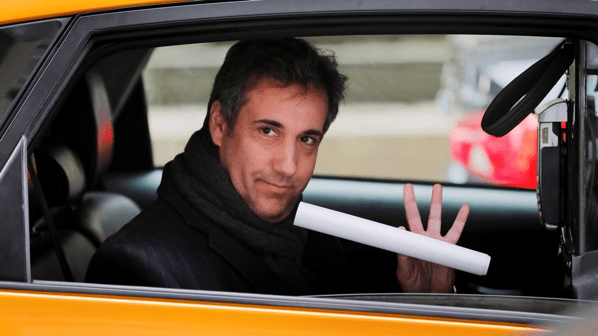 Michael Cohen has already flipped on Donald Trump:
 ’Recent research suggests that experiencing not-so-happy feelings actually promotes psychological wellbeing.…’
 ’According to this research, the more intelligent we are in our late teens and early 20s, the younger we will feel in our 70s – and this may also be reflected in various markers of biological ageing.…’







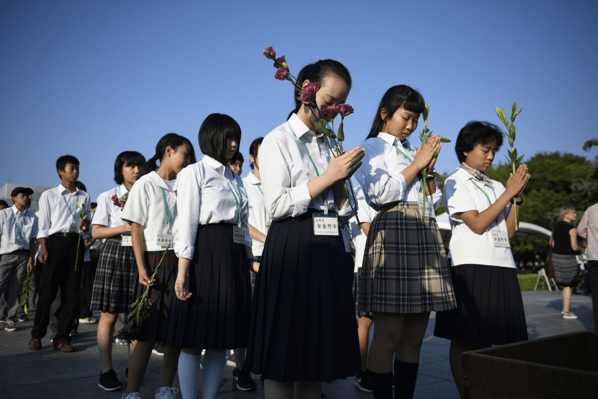 The Hiroshima anniversary:

 ‘Sometimes thinking is a bad idea. Ian Leslie draws on Dylan, Djokovic and academic research to put the case for unthinking…’
 Church’s support for abolition of the death penalty will be par of the Catholic Catechism: