
‘A new study reveals all five fundamental nucleobases—the molecular “letters” of life—have been detected in samples from the asteroid Ryugu.…’ (via Phys.org)

‘A new study reveals all five fundamental nucleobases—the molecular “letters” of life—have been detected in samples from the asteroid Ryugu.…’ (via Phys.org)

‘Some tax resisters withhold a symbolic amount, but those who willfully refuse to file or pay could face civil or criminal penalties.
Most Americans comply with the tax laws, routinely paying their obligations. But this tax season, an increasingly vocal number say they are struggling to pay their federal income taxes in good conscience.
Eileen O’Farrell Smith, a retired chaplain in Sonoma, Calif., said she saw a budget as a moral document.
“How can I pay taxes when I don’t want to pay for things I abhor, while neglecting things I care about?” asked Ms. Smith, who objects to paying for immigration detention camps and the U.S. war on Iran. “Is there a monetary conscientious objector program?”
Conscientious objection to military service may be legally recognized, but nothing similar exists for tax filers. That hasn’t stopped some people from refusing to pay over the decades — or at least inquiring about their options today…’ (via The New York Times)
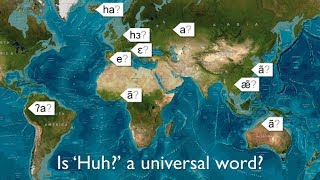
‘A word like ‘Huh?’ —used when one has not caught what someone just said—appears to be universal: it is found to have very similar form and function in spoken languages across the globe. This is one of the findings of a major cross-linguistic study by researchers Mark Dingemanse, Francisco Torreira and Nick Enfield, at the Max Planck Institute for Psycholinguistics in Nijmegen, the Netherlands. The study was published in the journal PLOS ONE .…’ ( via Menu)
Project Hail Mary is enjoyable, if a bit schematic in plot, but by far the most jarring aspect of watching it—at least for me, having not read the book—was the insistent need to suspend scientific disbelief. Even if reflecting a sophistication around such areas as orbital mechanics and astrophysical constraints, most implausible was the ease with which Grace and Rocky are able to communicate. This illuminating conversation between Lee Hutchinson and a linguist, published via Ars Technica, brings the problem into sharper focus: from a linguistic standpoint, first contact between two beings lacking shared biology, environment, perceptual systems, and basic forms of life would be extraordinarily difficult, perhaps impossible.
In reality, effective communication is hard enough even among humans with ostensibly shared language and culture. As a psychiatrist, I am regularly reminded that even between people who inhabit roughly the same symbolic world, mutual understanding is often partial, effortful, and fragile. Once one imagines contact across radically different forms of embodiment and cognition, the difficulty multiplies almost beyond measure. The problem is not merely vocabulary or grammar. It extends to perception, salience, categorization, reference, ontology, and the very terms in which experience is organized.
Of course, Project Hail Mary relaxes rigor here for an understandable reason. If it did not, the story would stall. The film depends on the rapid emergence of intelligible cooperation in order to deliver its satisfying buddy-film structure: two unlike minds confronting extreme circumstances through ingenuity, trust, and shared problem-solving. That narrative payoff requires a major concession. Despite the film’s artful attempt to depict the strangeness of alien life, Grace and Rocky must have been very similar to be able to communicate so easily.
Compare this with Denis Villeneuve’s critically acclaimed and immensely satisfying Arrival (2016), adapted from Ted Chiang’s “Story of Your Life.” That film operates on an entirely different level. It treats language and communication not as a narrative hurdle to be cleared, but as a profound scientific and philosophical problem. Linguistic analysis is presented as slow, tentative, and deeply imperfect. The film does not evade the fact of radical unsharedness—of perception, temporality, ontology, and classification—but makes that difficulty the substance of the drama. In Arrival, understanding is not a shortcut to the plot. It is the plot.
Briefly, some other first contact sci-fi novels grappling with the challenge of communication that come to mind include the work of Stanislaw Lem, the immensely satisfying Blindsight by Peter Watts, Mary Doria Russell’s The Sparrow, and Ender’s Game by Orson Scott Card.
