‘Greenlanders intervened to stop a man who tried to raise a US flag in Nuuk, with Denmark’s TV2 news showing video of the incident in the island’s capital city. As translated by Google:
A person attempted to raise the American flag in Nuuk on Wednesday, the Greenland Police confirmed to TV 2. The police are still investigating the case, and everything went smoothly as people at the scene stopped the perpetrator before he could raise the flag. Officers only arrived at the scene, which was at a cultural center in Nuuk, later.…’ (Rob Beschizza via Boing Boing)
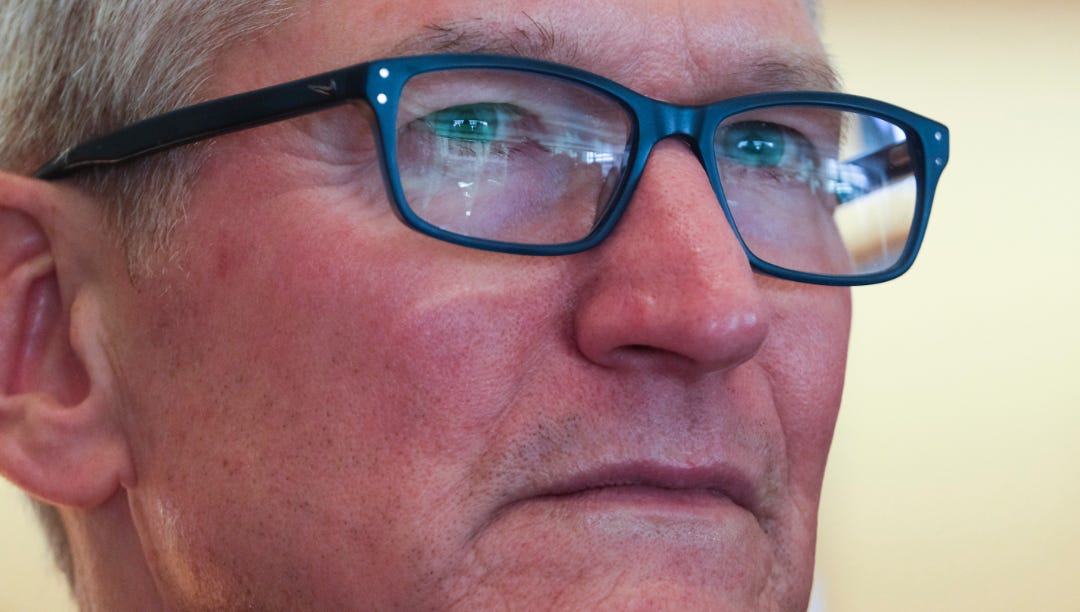
‘Tim Cook has been giving Apple a bad look for some time. The typically charming CEO’s public image as an intelligent, well-spoken leader who keeps customers front of mind and never misses a chance to speak out for representation has taken a beating. Bowing to the wishes of the Chinese government by disallowing VPNs in the App Store that serves China.
Not a dreamer like his predecessor, Cook is a managerial genius who can squeeze money out of a supply chain like no one else. But to keep that profit from dipping in these bat-shit crazy times, he’s had to do a few things that I’m hoping keep him awake at night.
At a press event where Cook and his new bestie, President Trump, announced a $100 million investment in American manufacturing, he gave Trump a 24-karat gold iPad stand and the tablet to go with it. He’s on the list of donors to the construction of the Epstein Memorial Ballroom, complicit in the destruction of a historic property owned by the American people. And, driving his head even further up the Orangefarbenführer’s ample ass, he attended the premiere of the Melania Trump documentary.…’ (Séamus Bellamy via Boing Boingi)
‘White House officials sought to rapidly distance Donald Trump and top officials from their initial portrayals of the man fatally shot by federal officials in Minnesota as a gunman, as they faced a deepening backlash after video footage was widely seen to undercut their assertions.
The move came as Trump advisers appeared to realize that the caustic portrayals of the man, Alex Pretti, who was reportedly licensed to carry a gun, had turned the killing into an even larger political liability for the president.
Over the weekend, senior administration officials including Stephen Miller, the deputy chief of staff, called the victim “a domestic terrorist who tried to assassinate law enforcement”, while Kristi Noem, the homeland security secretary, accused him of perpetrating “the definition of domestic terrorism”.
The characterizations were undercut by video footage that showed Pretti was shot in the back roughly 10 times after being tackled to the ground by a group of US border patrol agents whom he had been filming, and disarmed of his gun.…’ ( via The Guardian)
‘The European Union has launched a wide-reaching investigation into Elon Musk’s Grok chatbot on X following global outrage over its ability to generate sexually explicit images, including of children.
The scandal erupted at the end of last year when the AI chatbot churned out a barrage of digitally undressed images of women and children in response to requests from users.…’ (via CNN)
‘To cover the Republican Party in the age of President Donald Trump requires a grasp of cryptology.
Because of the unflinching personal loyalty he demands, and punishment he’ll administer on public dissenters, leading GOP officials speak in rhetorical code.…’ (via POLITICO)
‘In the history of human parenting, childcare has often been treated as maternal by default, paternal by exception. When mothers do it, it’s duty. When fathers do it, it’s help. A father’s love has been tallied as optional in the child’s development.
But decades of research have begun to redraw this map: Scientists are finding that consistent paternal care can help to shape everything from language development and social competence to academic persistence and mental health. And the benefits of dad’s involvement aren’t interchangeable with the ones kids get from mom.
And now, a new study shows a father’s early emotional engagement with his infant may stabilize the whole family system in ways that quietly protect a child’s long-term physical health. The scientists, from Penn State College of Health and Human Development, published their findings in Health Psychology. …’ (Kristen French via Nautilus)
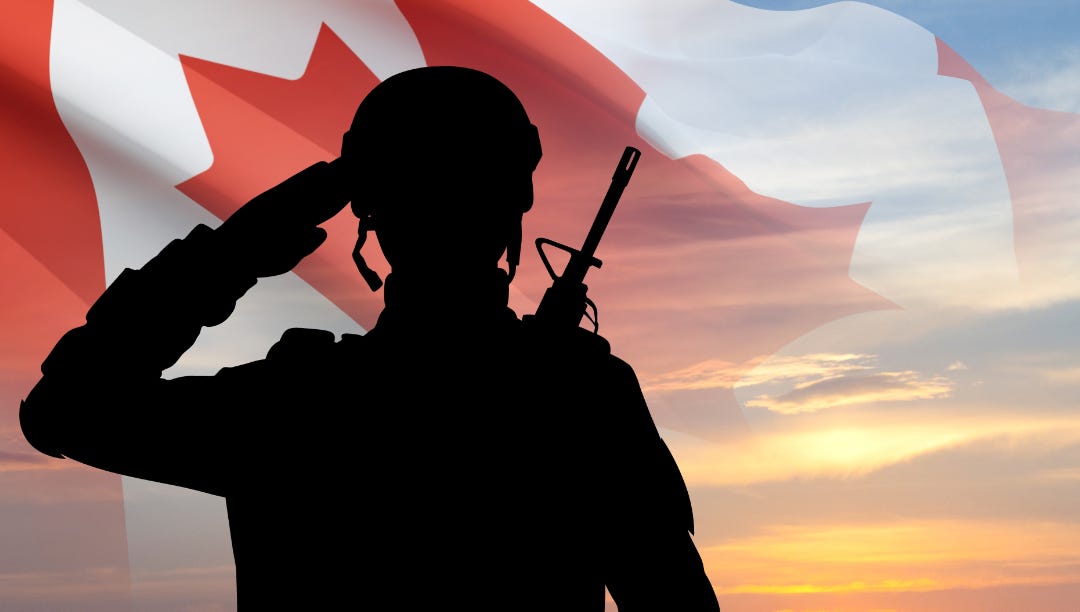
‘The Globe & Mail uncovered that the Canadian military has been modeling what an American invasion might look like… So, what are the broad strokes of Canada stopping a southern invasion? We can’t. Within hours, American military superiority would crush any resistance.
However, occupying Canada becomes the real problem. Canada is massive. No nation has the numbers to dominate and hold it sustainably. Even if the government surrendered, military and civilian resistance could disappear into the wilderness or rural areas where hunting them down would prove difficult. The CAF model suggests Canadian forces could continue fighting using ‘unconventional warfare in which small groups of irregular military or armed civilians would resort to ambushes, sabotage, drone warfare or hit-and-run tactics.’ Sound familiar? Think Taliban in Afghanistan or Vietcong in the 1960s and 1970s. Hit-and-run attacks, IEDs, blending into the civilian population—tactics that proved nightmarish to counter. You can’t measure success or predict where the next ambush comes from.
With NATO countries sending troops to Greenland to counter Trump’s annexation threats, other formerly friendly nations are reconsidering what to do if America comes knocking.…’ (Séamus Bellamy via Boing Boing)
Here’s a cool website you should check out if you love astronomy and want to see what the Hubble and Webb Space Telescopes are looking at right now (or close enough). “Space Telescope Live“ is a web application originally developed in 2016 for Hubble updates. It now includes images from both telescopes, giving us access to their past, current, and upcoming observations.…’ (Jennifer Sandlin via Boing Boing)
Interview with Henry Farrell, a professor of international affairs at Johns Hopkins University, who recently wrote an op-ed for the New York Times titled “Europe Has a Bazooka. Time to Use It:”
‘…Clearly there has been some real sense that there is a coalition which is engaging against this measure, and that coalition is sufficiently credible that the United States has something to worry about… It really does look like a climbdown disguised as a declaration of enormous victory. The fact that this is happening through Rutte and through NATO rather than, for example, through direct negotiations with Denmark, suggests that what is going to happen is that we’re going to get some kind of agreement on security in the Arctic region, which everybody is more or less on the same page on and Trump will declare this a glorious victory over Greenland and then move on.…’ (via Vox)
‘Across Minnesota, ICE continues to stop, harass, and detain people regardless of their citizenship status. Normal life in Minnesota has been interrupted, as schools have been forced to close or go virtual, as people live in fear of leaving their homes or going to work. Minnesotans are organized and activated to respond to this violence. But they need our help.
This directory of places to donate to all comes from activists on the ground, plugged into the situation. Everything is vetted, with the exception of individual GoFundMes (not everyone is in our networks, and we don’t want to pick and choose who is worthy of help.)…’ ( via
‘trump prosecutes his political opponents; deports immigrants, including some here legally, to foreign prisons without due process; solicits tribute payments from corporations and foreign governments; deploys soldiers to American cities that are not, in fact, in civil-war-level chaos; and puts his name and image on government buildings that quite obviously don’t belong to him.
So, a question: What do you call this form of government? Authoritarian? Kleptocratic? Totalitarian? Fascist?…’ (Marc Novicoff via The Atlantic)
Whatever you call it, he only governs you if you let him.
‘I have a proposal to make: 2026 should be the year that you spend more time doing what you want. The new year should be the moment we commit to dedicating more of our finite hours on the planet to things we genuinely, deeply enjoy doing – to the activities that seize our interest, and that make us feel vibrantly alive. This should be the year you stop trying so hard to turn yourself into a better person, and focus instead on actually leading a more absorbing life. …’ (Oliver Burkeman via
‘Where does one start in summarizing such a speech? The straightforward racism? The economic illiteracy? The determination to alienate allies? The many moments where the president said things that were blatantly, provably false? And because he rambled through more than an hour, he covered a lot of ground. …’ (David A. Graham via The Atlantic)
Eclectic Guitarist With the Ensemble Oregon Dies at 85
‘A composer and pianist as well, he was a prolific recording artist who integrated jazz, classical and world music traditions in a career that spanned seven decades.…’ (via New York Times)
Towner’s work with the Paul Winter Consort, Oregon, and a variety of collaborations with other ECM artists has thrilled and comforted me for decades. He will be missed.
‘Denmark, Finland, France, Germany, the Netherlands, Norway, Sweden and the United Kingdom in a joint statement: “We will continue to stand united and coordinated in our response. We are committed to upholding our sovereignty.” I remember when this is how the world would respond to Russia and China’s actions, not the United States’.…’ (via Birchtree)
‘Nebraska congressman Don Bacon told the Omaha World-Herald: “If he went through with the threats, I think it would be the end of his presidency. And he needs to know: the off-ramp is realizing Republicans aren’t going to tolerate this and he’s going to have to back off. He hates being told no, but in this case, I think Republicans need to be firm.” …’ (Chris Stein via The Guardian)
‘These designers found a clever way to keep the president’s mug off their America the Beautiful entry passes…In the wake of the DOI’s new sticker ban, she adapted the design to guarantee that users won’t be penalized. Instead of adding the sticker directly to their passes, customers can now purchase a $2 plastic card sleeve from Dirt Roads Project to keep their cards completely unaltered while still obscuring the president’s face.’ (via Fast Company)
””I was tackled by ice agents and surrounded by about 50 border police. Just for taking photos. I tossed my camera to another Photographer to make sure it wouldn’t be confiscated.…’ (John Abernathy via Instagram)
‘On Friday, Russia attacked Lviv, a major Ukrainian city near the Polish border, using Oreshnik: an intermediate-range, nuclear-capable ballistic missile. Security-camera footage captured brief flashes in the sky, the missile’s multiple warheads entering the atmosphere at 10 times the speed of sound, and then—impact. The missile that struck Lviv did not carry a nuclear payload, but it did carry a political one, at a moment when Vladimir Putin appears to be cornered and Donald Trump is more belligerent than ever.…’ (Andrew Ryvkin via The Atlantic)
‘Verizon is offering customers a $20 account credit following a massive outage that brought down service across the US on Wednesday. In an update on X, Verizon says you’ll receive a text message when the credit is available, which you can redeem by logging into the myVerizon app and accepting it.…’ (Emma Roth via The Verge)
‘Today, Donald Trump announced that he is considering using the Insurrection Act to send the U.S. military to Minneapolis if state officials do not quell anti-ICE protests there. Deploying federal troops on American soil against the objections of state and local officials is an extreme measure––and seems likelier to inflame than to extinguish unrest there, given that needlessly provocative actions by ICE officers helped create conditions on the ground. Yet the president seems eager to suppress the actions of people he calls “professional agitators and insurrectionists.” For months, members of his administration have laid the rhetorical groundwork for a martial crackdown.…’ (Conor Friedersdorf via The Atlantic)
‘Attend a public event in Canada and you will likely hear it open with a land acknowledgment. In the city of Vancouver, for example, the script might read:
“This place is the unceded and ancestral territory of the hən̓q̓əmin̓əm̓ and Sḵwx̱wú7mesh speaking peoples, the xʷməθkʷəy̓əm (Musqueam), Sḵwx̱wú7mesh (Squamish), and səlilwətaɬ (Tsleil-Waututh) Nations, and has been stewarded by them since time immemorial.”
I’ve been present for many of these recitations, which are common in liberal areas of the United States too. They are usually received by their audiences as a Christian invocation might once have been: a socially required ritual in which only some believe, but at which it would be rude to scoff. After all, what harm does it do?
In the past few months, Canadians have learned that these well-meaning pronouncements are not, in fact, harmless. Far from it. Canadian courts are reinterpreting these rote confessions of historical guilt as legally enforceable admissions of wrongful possession.…’ (David Frum via The Atlantic)
Jason Weisberger, via Boing Boing, explains that pedestrian crossing buttons aren’t a scam, but they’re widely misunderstood. They don’t make the light change faster or reduce waiting time. Their real function is simpler: they tell the traffic system that a pedestrian is present and should be included in the signal cycle. A clear technical walkthrough of the wiring and logic shows that the buttons matter, just not in the way most people assume—they register demand, not impatience. (
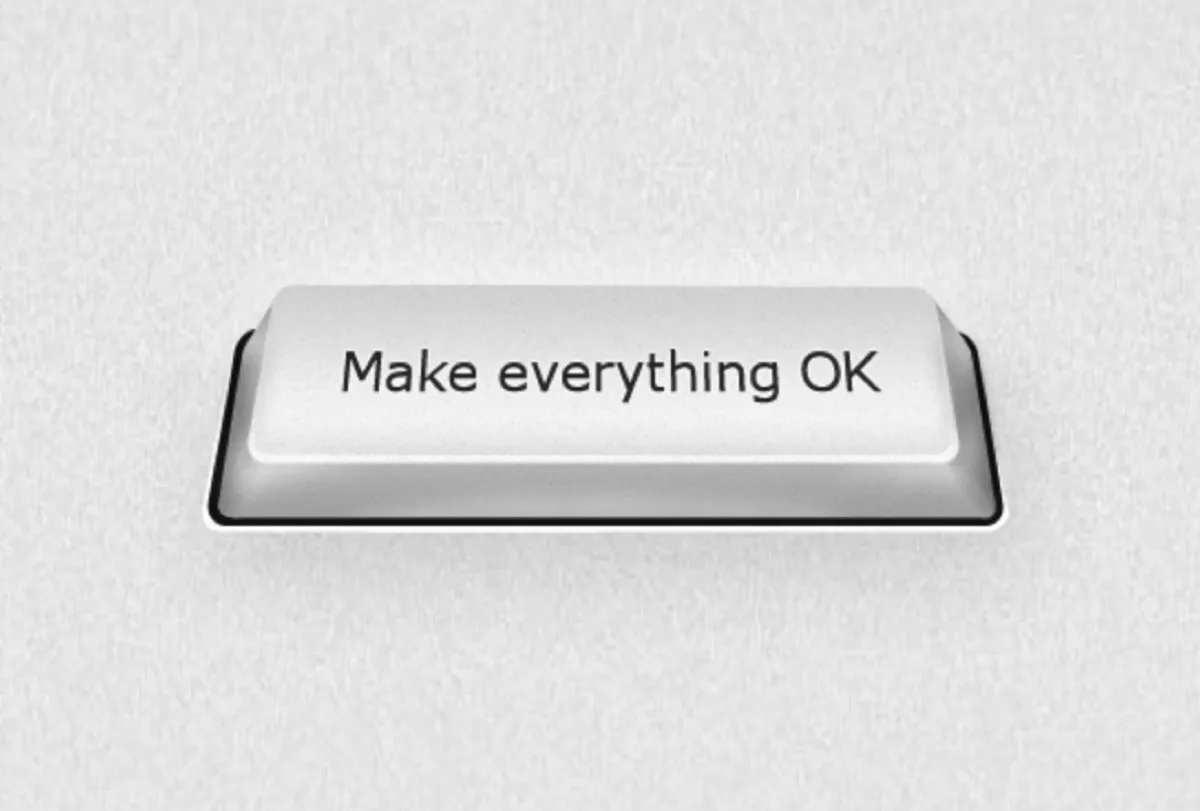
‘The “Make Everything OK” button is a website containing nothing but a single button. Press it, and after a moment of processing, you’re informed: “Everything is OK now. If everything is still not OK, try checking your settings of perception of objective reality.”…’ (Popkin via Boing Boing)
‘Former Trump White House adviser Steve Bannon is laying the groundwork for a 2028 run for president, two people familiar with his thinking tell Axios.
Why it matters: The MAGA godfather isn’t serious about becoming president — that’s not the point. Instead, he’s told allies he wants to shape the debate and pressure Republican candidates to embrace an “America First” agenda — including a non-interventionist foreign policy, economic populism and opposition to Big Tech.…’ (Alex Isenstadt viaAxios)
‘Grateful Dead co-founding guitarist Bob Weir has died at age 78. Weir’s death was confirmed through a statement issued by his family on the guitarist’s social feeds.
Bobby Weir succumbed to underlying lung issues after a courageous battle with cancer. Weir was diagnosed with cancer last July and began treatment shortly after taking the stage for what would be his final shows: Dead & Company’s concerts at Golden Gate Park in San Francisco August 1 – 3, 2025 celebrating 60 years of Grateful Dead music.…’ (Andy Kahn via Jambase)
‘History suggests that regimes collapse not from single failures but from a fatal confluence of stressors. One of us, Jack, has written at length about the five specific conditions necessary for a revolution to succeed: a fiscal crisis, divided elites, a diverse oppositional coalition, a convincing narrative of resistance, and a favorable international environment. This winter, for the first time since 1979, Iran checks nearly all five boxes.…’ (Karim Sadjadpour and Jack A. Goldstone viaThe Atlantic)
Is the Trump regime coming close to checking these boxes too? (One can hope.)
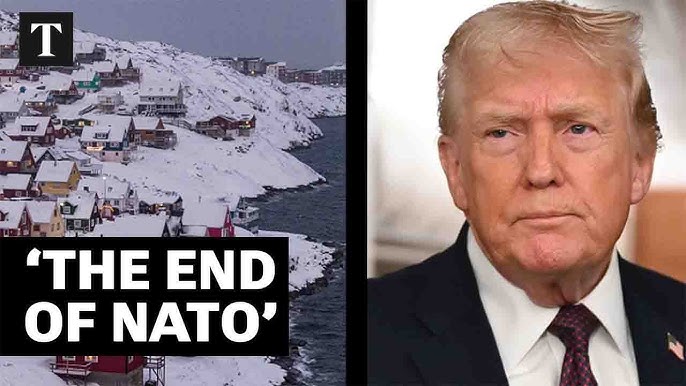
Donald Trump’s renewed talk of seizing Greenland—once dismissed as bluster—is now being taken seriously after the “gunboat diplomacy” in Venezuela. Because Greenland is part of Denmark, a NATO member, any U.S. attempt to annex or coerce it would amount to an attack on an ally and could effectively collapse NATO. European leaders are pushing back forcefully, framing the issue as a test of whether postwar norms, alliance commitments, and international law still restrain great-power ambition.(Shane Harris, Isaac Stanley-Becker, Jonathan Lemire via The Atlantic)
‘If Trump understood what he was saying, he was violating all concepts of checks-and-balances. If he didn’t understand, he is incapacitated.
It’s bad enough for Trump to disrupt the entire world trading system, at his whim, with one-man decisions to raise and lower tariffs. (As the Supreme Court might eventually get around to recognizing.) What he announced today is one man (plus his enablers) violating the Constitution of 1787, the War Powers Act of 1973, and the Intelligence Oversight Act of 1980, all of which require a president to involve the Congress in war-and-peace decisions. …’ (James Fallows via James Fallows)
‘…(T)here’s lots of chest pounding and grand standing from various politicians and the big names have all issued statements which seem mostly upset that they weren’t notified ahead of time. There’s also a lot of people proclaiming this is illegal which is an almost laughable claim at this point because first of all, what is the basis for what is legal or isn’t?
The US only cites international law when it benefits, and ignores it (or outright rejects it) when they or their allies are implicated. If international law mattered to the US, Netanyahu wouldn’t be basking in the afterglow of his 5th US visit since Trump was reelected and ICC Judge Kimberly Prost would still be able to ask her Amazon Echo to turn on the livingroom lights.
Even federally the claim is a joke because thanks to 2001’s AUMF a president has an almost blank check to order strikes without telling anyone as long as they slap “terrorism” on the after the fact justification.
And this isn’t a left/right thing either, the 2001 joint resolution passed almost unanimously (only one vote against) and since then both D and R presidents have taken full advantage of it for any number of different actions.
…So if you see a politician saying this action is illegal check to see if they’ve called for the AUMF to be repealed or if they were in office then how they voted at the time. Because the sad fact is most US politicians are very much opposed to many policies when their opponents use them, but very much in favor of those same policies when they get to use them. …’ ( via SEAN BONNER)
‘In a landmark study, scientists at Washington University School of Medicine in St. Louis (WashU) have shown for the first time that stimulant medications mainly act on the brain’s reward and wakefulness centers, rather than on its attention circuitry. This upends traditional thought on how drugs like Adderall and Ritalin work.…’ (via New Atlas)
‘A massive global genetics study is reshaping how we understand mental illness—and why diagnoses so often pile up. By analyzing genetic data from more than six million people, researchers uncovered deep genetic connections across 14 psychiatric conditions, showing that many disorders share common biological roots. Instead of existing in isolation, these conditions fall into five overlapping families, helping explain why depression, anxiety, PTSD, bipolar disorder, schizophrenia, and substance use disorders so frequently occur together.…’ (via ScienceDaily)
Findings such as these resonate strongly with the stance of diagnostic skepticism that I have held throughout my career as a clinical and academic psychiatrist. Psychiatry has repeatedly taught us that its categories are provisional tools rather than natural kinds, and that our confidence in them often outpaces the solidity of the underlying science. The recurrent experience of patients accumulating diagnoses over time—sometimes within a single hospitalization, sometimes across decades—has always suggested that something more fundamental than discrete disease entities is at work.
Historically, this tension is not new. Psychiatric classification has oscillated for more than a century between lumping and splitting. At certain moments, the field has favored broad, integrative constructs—neurosis, psychosis, affective illness—emphasizing shared phenomenology and presumed common mechanisms. At other times, it has moved toward increasingly fine-grained distinctions, carving syndromes into narrower subtypes in the hope of diagnostic precision, prognostic clarity, and targeted treatment. Each swing has been accompanied by a sense that the current framework finally “gets it right,” only to be followed by revision as anomalies accumulate.
Large-scale genetic findings like these offer a compelling biological explanation for why neither extreme has ever fully succeeded. If multiple psychiatric syndromes share substantial genetic architecture, then comorbidity is not an artifact of poor interviewing or diagnostic sloppiness, but an expected consequence of overlapping vulnerability systems expressing themselves differently across development, context, and stress. The apparent neatness of our diagnostic manuals may therefore obscure a far messier underlying reality.
Importantly, this does not invalidate diagnosis itself, nor does it imply that all conditions should be collapsed into a single undifferentiated category. Lumping and splitting are not opposing dogmas so much as complementary lenses. Lumping has value when the goal is to understand shared mechanisms, reduce artificial boundaries, recognize common trajectories, and avoid reifying distinctions that lack biological or clinical robustness. Splitting, by contrast, becomes indispensable when precise phenomenology matters—when predicting course, tailoring treatment, communicating risk, or conducting focused research on well-defined clinical problems.
In practice, good psychiatry has always involved knowing when to do each. A clinician may need to lump in order to see the larger pattern of vulnerability, suffering, and adaptation in a patient’s life, while simultaneously splitting enough to recognize specific syndromes that carry distinct risks or treatment implications. The emerging genetic evidence does not demand allegiance to one approach over the other; rather, it reinforces the wisdom of holding our categories lightly, using them pragmatically, and remaining open to revision as our understanding deepens.
Seen this way, the enduring oscillation between lumping and splitting is not a failure of the field, but a reflection of the complexity of the phenomena it seeks to describe.
‘The shift in this scenario is from today’s highly polarized but still shared world — where groups interpret events differently — to a fractured reality in which the events themselves cannot be verified, origins cannot be traced, and no authoritative source can prove what is real. Instead of opposing political narratives and conspiracy theories, society enters a state of psychosocial freefall where AI creates a series of parallel realities. It will mark a transition not from disagreement to deeper disagreement, but from disagreement to the collapse of a shared reality altogether.…’ (via POLITICO)
‘By going around Congress, the president is showing contempt for the will of the public… The probable illegality of Trump’s actions does not foreclose the possibility that his approach will improve life for Venezuelans. Like too many world leaders, Maduro is a brutal thug, and opposition figures have good reason to insist he isn’t the country’s legitimate leader. I hope and pray his ouster yields peace and prosperity, not blood-soaked anarchy or years of grinding factional violence.…’ (Conor Friedersdorf via The Atlantic)
New York Times Editorial: Attack on Venezuela Is Illegal and Unwise
‘If there is an overriding lesson of American foreign affairs in the past century, however, it is that attempting to oust even the most deplorable regime can make matters worse.…’ (via New York Times)
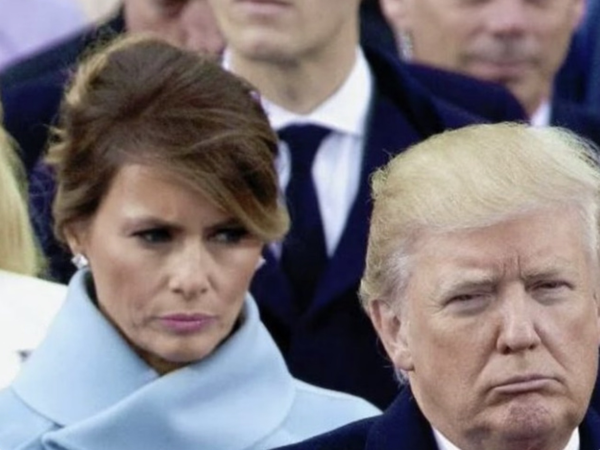
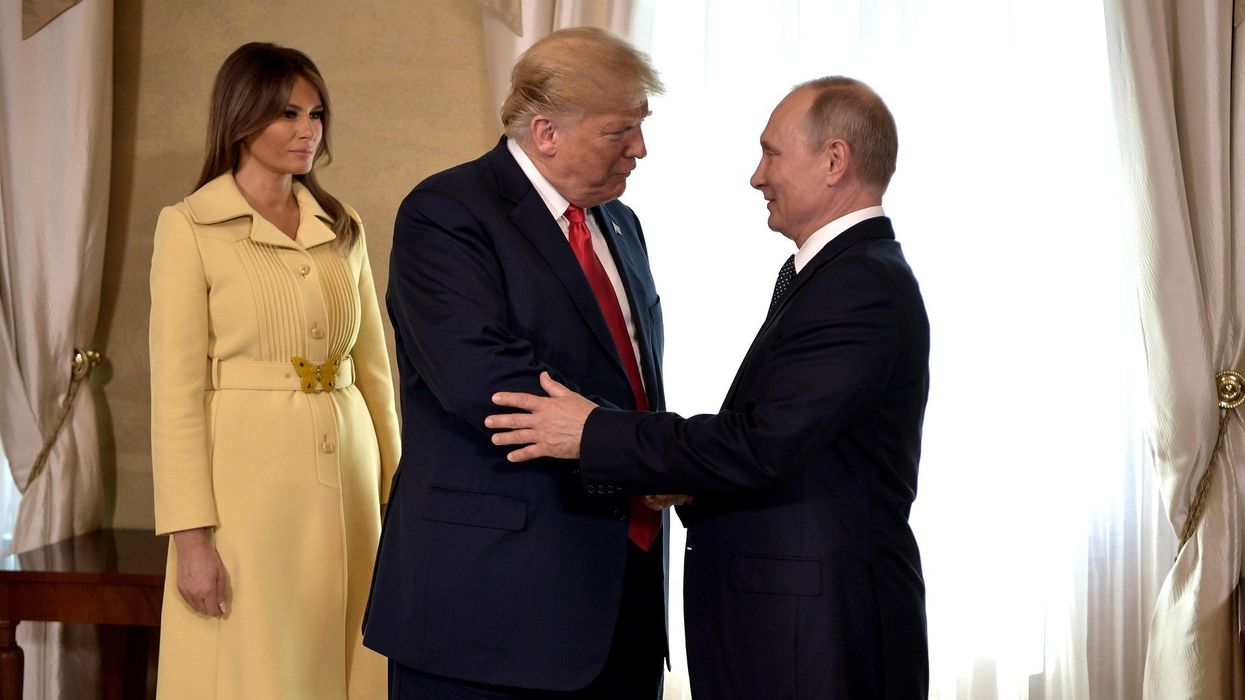
‘“Wow, she hates him more than I even imagined. They never look at each other. They never touch each other. I guess he didn’t pay her enough for the night.”…’ (Patrick Penrose via TVovermind)
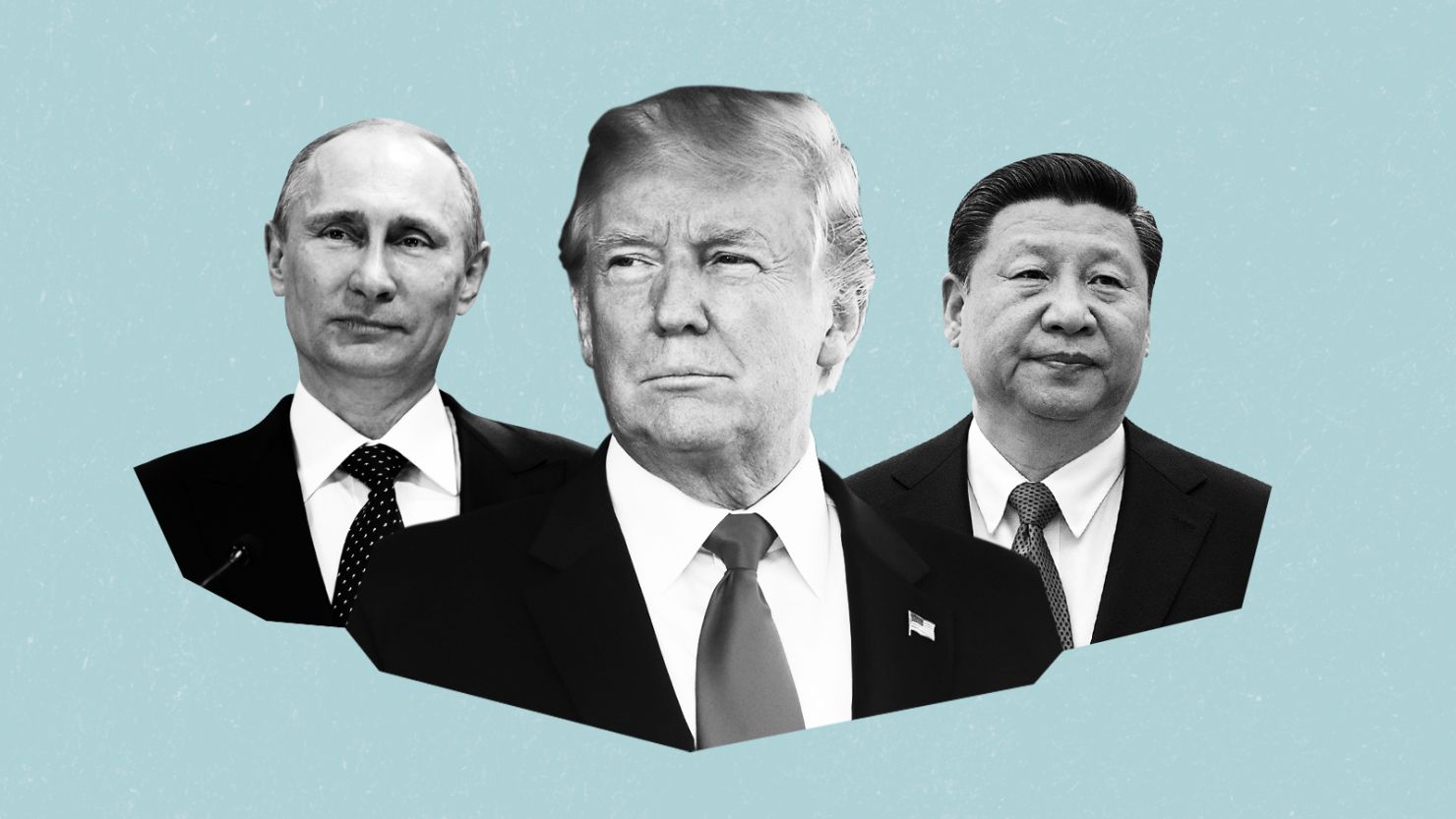
‘Trump’s ego, Rob Dannenberg argues, is a vulnerability that Putin knows how to exploit —and Trump, the CIA veteran fears, is “incredibly naïve” where the Russian president is concerned.
Danneberg told the iPaper, “Putin looks at Trump and sees a weak guy, vain, with huge ego…. He’s being manipulated in the way that a good case officer like Putin would manipulate this guy. He’s not monogamous, he’s greedy, he’s fascinated by gold — all these are things that, if I were a case officer, I would be leveraging to get this guy to do what I want him to do. When that happens to align with Trump’s ambition to get a Nobel Peace Prize, so much the easier, right? You’re pushing on an open door.”…’ (Alex Henderson via Alternet.org)