‘For some, Trump’s answer wasn’t just inappropriate — it confirmed their fear that he no longer understands the gravity of anything outside his own ego.
“Everything is about him,” one person wrote on Threads. “Despite his clear decline, which is difficult to assess because he has always been intellectually challenged, his narcissism remains intact.”
“Hey, monster, the subject is a young woman who has died because you need to be macho man,” another Threads user wrote. “Not you and your inflated sense of self.”
“No brains left,” one commenter wrote. “He definitely has mentally left the building.”
Another viewer noted that the question required nothing complicated, “The right answer was the simplest. ‘Yes.’”
“He is socially bankrupt,” one viewer wrote. “The words ‘I’m sorry for your loss’ are not in his vocabulary.”…’ (via Atlanta Black Star)
‘A rhino horn is worth up to £76,000 on the black market. Each rhino is effectively carrying a death sentence on its head, with an estimated 1,900 poached in the last three years across the African continent.
The demand for rhino horn is driven by their use in traditional Asian medicine, and their scarcity only increases prices, fuelling the illegal trade. Rhinos have become the face of extinction, with only around 22,540 left in Africa. The population is at risk from drought, not only because it reduces the amount of food available but because it pushes people already experiencing poverty to take desperate measures to try and support themselves.
But no rhinos were poached in Kenya over that three-year period. A new documentary, Rhino, narrated by Tom Hardy, takes us to Borana Conservancy in central Kenya where the success of the species shows there is hope for its survival.…’ (via Big Issue)
‘What began as rare encounters off the Iberian coast now shows up in captain’s logs from Galicia to the Strait of Gibraltar, and in wary chatter on VHF. Experts say it looks learned, even coordinated. Insurers are watching. Mariners are changing habits mid-season.
It started like a shiver through the deck plates. A coastal freighter off Cape Finisterre rolled on a glassy swell, the night bridge lit soft blue, an ordinary watch with the engine ticking steady, when the helm shuddered as if from a hidden hand. The bow kept true, but the autopilot clicked off and the rudder felt heavy, like someone leaning against it from below. A deckhand ran aft and froze. Black-and-white shapes ghosted the wake, three, then five, their dorsal fins cutting the oil-slick moonlight. The ship wasn’t alone out there. Then the rudder stopped answering.…’ (via Jefferson.electric.co.uk)
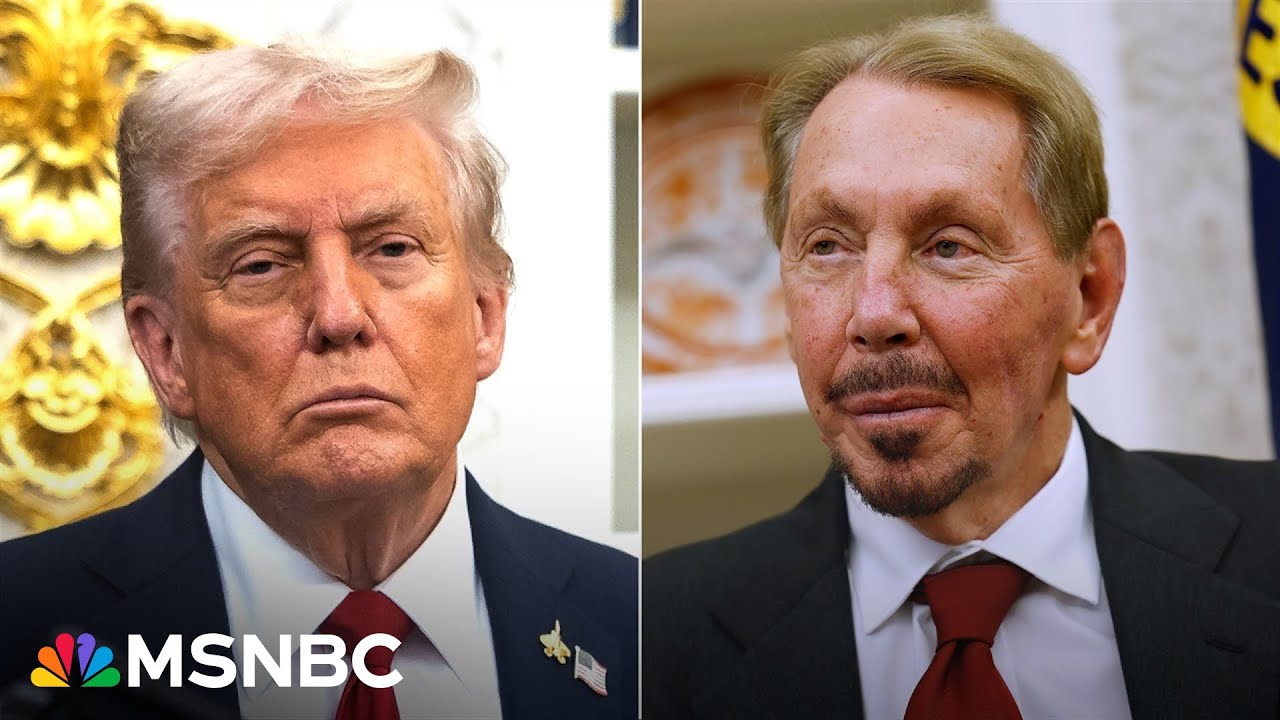
‘Trump’s right wing billionaire friend Larry Ellison (and his nepobaby son, David) recently acquired CBS and likely co-ownership of TikTok. Like Elon Musk’s acquisition of Twitter, the goal isn’t really subtle: rich, thin-skinned right wingers want to own the entirety of U.S. new and old media, then convert it into a giant propaganda and lazy infotainment bullhorn that blows smoke up their asses.
The Ellisons have since set their sights on Warner Brothers, CNN, and HBO. It won’t be cheap; it’s estimated that Larry and company will have to pay upwards of $60 billion for the acquisition. The Trump administration has openly signaled that they’d very much like the Ellisons to succeed here, in part to force a dying cable news channel (CNN) to be even friendlier to Trump than it already is.
While Ellison has some competing suitors with names like Comcast NBC Universal and Netflix, the winning bidder will need approval from the Trump DOJ and FCC. Knowing that they likely have a distinct tactical advantage via corruption, Ellison and Trump appear to be already measuring the drapes, discussing programming changes (and CNN hirings and firings) that will please the president:…’ (via Techdirt)
Nov 15, 2025: Follow Me Here turned 26. Here’s the first page. (Somehow, when I imported into WordPress years ago, the earlier Blogger posts got duplicated.)
‘His Oscar-winning 1965 film “The War Game” depicted a post-nuclear-attack England, one of his many fictionalized docudramas against war and repression.…’ (via The New York Times)
In the long history of cinematic shock tactics meant to rouse us from our stupor about nuclear war — notably the 1983 American television film The Day After and more recently the 2025 apocalyptic thriller House of Dynamite—none has been more disturbing, direct, or effective than The War Game. Stripped of Hollywood’s emotional pacing, Watkins’ quasi-documentary avoided melodrama and instead presented nuclear catastrophe with the matter-of-fact tone of reportage. Its stark depiction of civil-defense futility and the predictable, overwhelming human suffering of a nuclear exchange pierced the collective denial of the subliminal existential dread permeating daily life. The film helped mobilize a generation struggling to articulate the scale of the nuclear threat, shifting public conversation away from abstract statistics, strategic doctrines, and sanitized civil-defense pamphlets. It became a cinematic touchstone for the antinuclear movement.
The BBC’s 20-year suppression of the film — deeming it too disturbing but also seen by the British government as too effective in serving the interests of those opposed to its nuclear arsenal — only amplified its impact. The ban became emblematic of establishment fear and denial, further exposing the absurdity of the nuclear arms race. Circulating clandestinely, the film acquired a charged mystique, reinforcing for many, myself included, the moral urgency at the heart of the antinuclear movement.
He would be the first to acknowledge that he was a propagandist and provocateur:
“Is not the serious filmmaker in a double-bind situation, given the inevitable indoctrinating effect of his or her work?” Mr. Watkins asked [in a late-1970s film course he taught at Columbia University]. “Does the filmmaker have the right to subject a captive audience to his or her vision, especially if there is no potential for a return dialogue? Is there a difference between propaganda for the ‘good’ and for the ‘bad’?”
‘“After placing Laika in the container and before closing the hatch,” recalled Soviet engineer Yevgeniy Shabarov, “we kissed her nose and wished her bon voyage, knowing that she would not survive the flight.”…’ (via Vox)
‘Continent’s leaders suspect Russia of being behind barrage of increasingly disruptive attacks …’ (Bertrand Benoit in Berlin and Daniel Michaels in Brussels via WSJ)
As large-language models become central to how information is processed, writers are increasingly creating work not just for human readers but for AI itself—the “baby shoggoth” quietly listening, learning, and shaping future interpretations of culture. In this emerging landscape, writing becomes partly an act of training the machine: crafting text with clarity, structure, and signals that AI systems can absorb. Thinkers like Tyler Cowen and Gwern already admit to writing with algorithms in mind, anticipating a world where machines may be the dominant readers, intermediating how humans encounter ideas.
This shift raises deeper cultural and existential questions. If AI becomes the primary reader and interpreter of human writing, the traditional writer–reader relationship changes, potentially diminishing human reading as a central cultural act. Yet it may also imbue writing with new urgency—what we produce now could influence how future intelligences “understand” us or even reconstruct aspects of our minds. How may authorship, creativity, and legacy transform in a world where machines, not humans, are increasingly the ones paying the closest attention? (Dan Kagan-Kans via The American Scholar)
‘Headphone listening—the act of playing a highly personalized soundtrack wherever we go—is a surprisingly radical invention, and we’re only beginning to contend with its implications. The visible barrier it creates between the listener and everyone else is obvious. Less obvious is the invisible barrier: The more time we spend in our own musical echo chambers, the less likely we are to share a collective cultural experience. The power of music has long been its ability to soundtrack a generation—to evoke emotion, as well as summon a specific time and place. Headphone listening not only isolates the listener; it shrinks music’s cultural footprint. …’ (Jonathan Garrett via The Atlantic)
‘…a bunch of rich guys who have been comically out of touch with normal people for many decades, and more recently have blowtorched their brains into a smoking pile of ash on Twitter…’ (Ryan Cooper via The American Prospect)
‘New York is quietly preparing for a Donald Trump takeover of the country’s largest city.
A wide range of New York’s most prominent civic leaders have for weeks been meeting behind the scenes to plan for the possibility of Trump sending in the National Guard or any other federal agents into New York City, according to multiple top elected officials.
Alarmed at what Trump may do in response to Zohran Mamdani’s election as New York City mayor, Gov. Kathy Hochul has devised a virtual war room and convened a series of conversations with law enforcement, business officials and activist groups to stop or at least mitigate any federal incursion. More meetings are being scheduled, including with New York’s leading clergy and veterans groups, some of whom will be gathering around Veterans Day next week.…’ (Jonathan Martin via POLITICO)
‘For decades, people around the world have been fascinated with the legend of bigfoot, sasquatch, yeti, or whatever you choose to call it. Sightings of a furry, upright biped and reports of beastly footprints have been reported from as far afield as the Himalayas. Although no definitive proof exists, the (often questionable) reports continue adding up. Outside plunged into the deep, dark corners of this subculture to compile the most famous—perhaps most convincing—bigfoot photos ever captured. Here’s the evidence. Is bigfoot real? You be the judge. …’ (Lauren Kent via Outside)
‘In 1970, she moved to San Francisco, where many younger people were flocking to restart. As first, she was skeptical of her friends’ ravings about the Dead.
“That ragged sound?” Ms. Godchaux-MacKay recalled in a 2007 interview with The Baltimore Sun. “I didn’t think they could play. I figured, ‘These guys must be good-looking.’ So I checked the back of one of their album covers and went, ‘Nope, that’s not it.’”
But soon after arriving, she caught a performance by the Dead at the Winterland Ballroom in San Francisco.
“To them, music was an adventure, like something spiritual,” she told The Sun. “I’d never heard anything like that. I thought, This is what I want to do.”
She was married to a jazz pianist, Keith Godchaux, who found out that Jerry Garcia, the band’s frontman, was playing at a nightclub. The couple approached Mr. Garcia, who gave them his phone number.
Image
The Grateful Dead performing on “Saturday Night Live” in 1978. From left, Bob Weir, Phil Lesh, Ms. Godchaux-MacKay and Jerry Garcia.Credit…Fred Hermansky/NBC/NBCU Photo Bank
“I can’t believe the chutzpah we had,” Ms. Godchaux-MacKay told The Sun. “I didn’t know people did that to him all the time. But Jerry just always had his antennas up.”
Within days, they were in the band, forging a relationship that would last the rest of the decade. Ms. Godchaux-MacKay helped shape several of the Dead’s most famous songs, including “Eyes of the World” and “Playing in the Band”…’ (Sopan Deb via The New York Times)
Donna and Keith were in what I consider the greatest configuration of the Dead. Her style was controversial and divisive for Deadheads of the era, with some cringing when she would cut loose and others feeling she goaded the mix to new heights.
‘Sunday (Nov. 2) marked the 25th anniversary of continuous human occupation of the International Space Station (ISS), which has carved out a spot in the history books as one of our species’ grandest (and most expensive) technological achievements.
Don’t save any confetti for a semicentennial celebration, however — the ISS is in its home stretch. NASA and its partners plan to deorbit the aging outpost toward the end of 2030, using a modified, extra-burly version of SpaceX’s Dragon cargo capsule to bring it down over an uninhabited stretch of ocean.
And not just any stretch — the “spacecraft cemetery,” a patch of the Pacific centered on Point Nemo, which is named after the famous submarine captain in Jules Verne’s 1871 novel “Twenty Thousand Leagues Under the Sea.”
“This remote oceanic location is located at coordinates 48°52.6′S 123°23.6′W, about 2,688 kilometers [1,670 miles] from the nearest land — Ducie Island, part of the Pitcairn Islands, to the north; Motu Nui, one of the Easter Islands, to the northeast; and Maher Island, part of Antarctica, to the south,” officials with the U.S. National Oceanic and Atmospheric Administration wrote in a brief Point Nemo explainer …’ (Mike Wall via Space)
‘The United States is now a nation run by public servants who behave no better than internet trolls, deflecting criticism with crassness and obscenity. The White House press secretary answers a question from a member of the free press—a serious question about who planned a meeting between the American and Russian presidents—by saying, “Your mom did.” The secretary of defense cancels DEI and other policies by saying, “We are done with that shit.” The vice president calls an interlocutor on social media a “dipshit.” The president of the United States, during mass protests against his policies, responds by posting an AI-generated video of himself flying a jet fighter over his fellow citizens and dumping feces on their heads.
These are not the actions of mature adults. They are examples of crude people displaying their incompetence as they flail about in jobs—including the presidency—for which they are not qualified …’ (Tom Nichols via The Atlantic)