‘Comet Lemmon is brightening and moving into morning northern skies. … Comet C/2025 A6 (Lemmon) is now the third comet currently visible with binoculars and on long camera exposures. Comet Lemmon was discovered early this year and is still headed into the inner Solar System. The comet will round the Sun on November 8, but first it will pass its nearest to the Earth — at about half the Earth-Sun distance — on October 21. Although the brightnesses of comets are notoriously hard to predict, optimistic estimates have Comet Lemmon then becoming visible to the unaided eye. The comet should be best seen in predawn skies until mid-October, when it also becomes visible in evening skies.…’ ( via APOD)
Talk of coups in America has usually focused on a president who refuses to yield power, with military support. Less often considered is the converse: could senior military leaders move against a sitting president whom they judge to be acting unlawfully? Recent, highly unusual orders summoning hundreds of commanding officers to a central meeting make that hypothetical feel less abstract. Could there be a leap from “uncomfortable emergency” to “military takeover”?
Start with the constitutional reality. Members of the U.S. armed forces swear an oath to the Constitution, not to an individual. That oath undergirds a crucial legal principle: soldiers must follow lawful orders and resist manifestly unlawful ones. In extremis, a commander who is clearly and repeatedly flouting law could present military leaders with a choice between obedience and dereliction.
Yet institutions and norms matter. The United States is not a polity where the military habitually substitutes judgment for civilian authority. A tradition of apolitical professionalism, a sprawling, decentralized force presence, independent courts, an elected legislature, and fifty state governments all act as redundant brakes on unilateral action. Historically, when a president and generals have clashed, the result has been dismissals, resignations, legal fights, or quiet hedging — not generals marching into Washington.
So an overt military coup against a president has been considered exceedingly unlikely. For such a move to occur would require an extraordinary confluence: blatant, sustained constitutional violations by the White House; near-unanimity among senior military commanders that civilian channels cannot or will not resolve the crisis; coordination across disparate forces and agencies; and either tacit elite agreement or a legitimizing narrative the public accepts. The U.S. has been structurally resistant to that set of conditions, but is Trump’s governance rapidly setting the stage?
What is far more plausible, and more urgent to watch for, is the politicization and instrumentalization of the military and security institutions. The rapid convening of top commanders can be read in more than one way. It might be an innocuous doctrinal briefing; it might be an optics-driven display of control; or it may be precisely the kind of centralized gathering that a leader uses to map loyalties and to make dissent costly. Could the Administration be trying to nip coup possibilities in the bud? Authoritarian governments the world over have followed this playbook: start with culture and discipline, then ratchet expectations and purge or sideline those who refuse to conform.
Why does that matter? Because slow, incremental erosion of institutional norms is how democracies die most often. You don’t always see tanks on the streets before you lose key liberties; you see personnel moves, standards redefined, and a professional ethic quietly replaced by one of political fidelity. Once loyalty tests replace meritocratic standards, the force’s role shifts profoundly from national defense to regime defense.
What should concerned citizens and institutions do? Remain vigilant. Independent oversight, congressional scrutiny, a free press, and public attention are the proper counterweights. Resignations offered in protest should be publicized and debated, judicial reviews should be sought for overbroad directives, and legislators should use hearings and appropriations to assert civilian control. Is it too late to redouble the strength of the constitutional mechanisms that diffuse dictatorial power?
Convening senior commanders, especially at short notice and on an unusual scale, deserves scrutiny because it is the sort of institutional maneuver one sees on the first page of authoritarian playbooks. We should neither be complacent nor indulge in fevered speculation. The health of a democracy is held less by heroic last stands than by the cumulative strength of its norms, but we may fast be reaching the point where the former is necessary.
‘I know the title of this particular newsletter, ‘Let’s All Remember When We Saved The World’, is the kind that will attract clap-backs like “oh stop with the sensationalising, the ‘world’ will be fine, it’s just humans who will find it harder, I hate you climate-change clickbait people.”
To pre-empt a bit of that, let’s look at our world without its ozone layer, which was exactly what Rowland and Molina’s work seemed to predict.’ (Mike Sowden via Everything is Amazing).
‘Twice a year, day and night reach a perfect balance of 12 hours each, creating a little-known event called the equilux.
The equilux brings equal hours of day and night.
Many of us think that an even balance of day to night happens during an equinox. After all, the word translates as “equal night.”
So, a little confusion is understandable. But there’s a subtle time difference between an equinox and an equilux.…’ (via Time and Date)
Two surprising facts learned from this article — that the point of equal day and night is not on the equinox but depends on my latitude; and that, because the sun is a disc and not a point, there are no days of exactly equal lengths of day and night on the equator.
‘WHILE THERE’S GROWING evidence that psychedelic drugs can effectively treat severe mental health conditions, especially in cases where traditional treatments have failed, they still come with downsides.
Their hallucinogenic effects can be scary and overwhelming, with dosing sessions lasting several hours. Good treatment is heavily reliant on the individual’s mindset going into a session and the environment in which they receive it. And though it’s rare, psychedelics can sometimes worsen existing mental illness.
Mindstate Design Labs is one of a slate of new companies aiming to make safer psychedelics by removing the classic “trip” associated with them. The company is using AI to help design psychedelic-like drugs that induce specific mental states without hallucinations, and its first compound looks promising.
“We created the least psychedelic psychedelic that’s psychoactive,” says CEO Dillan DiNardo. “It is quite psychoactive, but there are no hallucinations.”…’ —Emily Mullin via WIRED
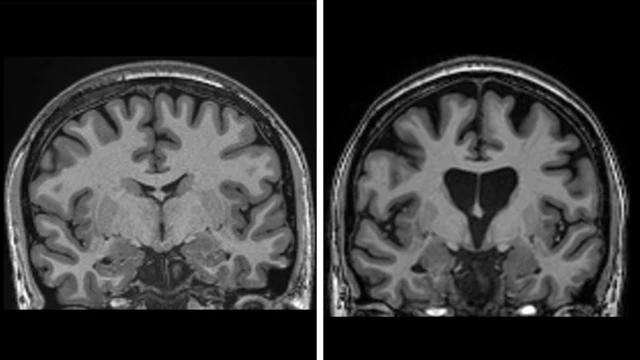
‘One of the cruellest and most devastating diseases – Huntington’s – has been successfully treated for the first time, say doctors.
The disease runs through families, relentlessly kills brain cells and resembles a combination of dementia, Parkinson’s and motor neurone disease.
An emotional research team became tearful as they described how data shows the disease was slowed by 75% in patients.
It means the decline you would normally expect in one year would take four years after treatment, giving patients decades of “good quality life”, Prof Sarah Tabrizi told BBC News.
The new treatment is a type of gene therapy given during 12 to 18 hours of delicate brain surgery.…’ — via BBC
This was the disease that Woody Guthrie, among others, succumbed to. The cases of Huntington’s I have seen have been terrifying, relentless, and uncontrollable. This is momentous exciting news.
‘A celestial meal is taking place, and only the Hubble Space Telescope caught the feast in action. Just 260 light-years away — close in cosmic terms — a burned-out star called a white dwarf is snacking on a fragment of a Pluto-like object. The Pluto analog came from the system’s own version of the Kuiper Belt, an icy ring of debris that encircles our solar system. As the exo-Pluto wandered too close to the star, the white dwarf tore it apart and began snacking on it.
Thanks to its unique ultraviolet vision, only Hubble could identify this event. Scientists using Hubble analyzed the chemical composition of the doomed object as its pieces fell onto the white dwarf. They were surprised to find water and other icy content indicating that the object came from far out in the system’s Kuiper Belt analog.…’ — via STScI
‘The weapons of fascism—the masked secret police, the corruption, the crackdowns on civil society, the mocking disregard for law—are but the emboldened physical manifestations of Getting Yelled at By Dumbasses. You may object that this takes things too lightly. Isn’t it absurd, even grotesque, to draw a line from idiots typing out enraged and error-riddled arguments to the profound real-world oppression we are now experiencing? Yes! Oh, yes it is! This absurdity, in fact, is at the very heart of fascist violence. It is the final twist of the knife, the head-shaking feeling of disbelief right before you are tossed in the prison van. It’s not just that we are being destroyed, it’s that we are being destroyed for incredibly stupid reasons. There lies the ultimate triumph of the dumbasses!
Stalin. Hitler. Mussolini. Trump. All sort of buffoonish men, genuinely disturbed and disturbing men whose own lack of human empathy was capitalized upon by surrounding hordes of enablers, grifters, and sociopaths. The authoritarian strongman figure at the heart of awful regimes may possess some unique and interesting, if horrifying, characteristics, but the regimes themselves are built, always, of mean and damaged dumbasses who see in the breakdown of society a chance to finally let their own stupid voices be heard.…’ — via Hamilton Nolan
‘If a Democratic lawmaker and her husband are gunned down, it’s an isolated incident carried out by a lone wolf.
If a right-wing activist is gunned down, it’s part of a coordinated effort by the radical left to incite violence.…’ — Carlos Greaves via McSweeney’s Internet Tendency
‘The corporate role isn’t dying in some dramatic collapse. It’s dying like religion died for many people—slowly, through diminishing belief rather than disappearing churches.
The structures remain. The offices still gleam. The meetings still happen. The emails still flow. But the faith that this activity means something, that it’s building towards something worthwhile, that it justifies the life hours it consumes—that faith is evaporating.
What replaces it isn’t clear yet. Maybe it’s this parallel economy of people using corporate jobs as platforms. Maybe it’s something we haven’t seen yet. But the transition period—where we all pretend to believe in something we know is hollow—is unsustainable.…’ — Alex via Still Wandering
On the surface, it has been hard to understand what’s so much worse about Trump’s behavior with regard to Epstein than all his other longstanding morally bankrupt, execrable and clownishly stupid behavior that has not impacted his appeal with the MAGA wingnuts. Aligning with conspiracy theorists, House Speaker Mike Johnson (R-LA) recently told reporters that Donald Trump was “an FBI informant” against Jeffrey Epstein. Michael Wolff has reported that Epstein himself suspected Trump tipped off authorities, but if true, it would implicate Trump in knowing about Epstein’s abuse.
Wolff [links this](https://substack.com/redirect/7f63b8b7-8af2-4840-8478-2bea752b2d9e?j=eyJ1IjoiMWc2YWMifQ.Yfw835XmjiEPjhuf8oYm2SSqYmUUcmTlzkQqaMq8SXA) to a 2004 falling-out between the two men, when Trump bought a Florida estate Epstein wanted. Epstein allegedly threatened to expose Trump’s financial dealings (he was nearly bankrupt at the time and the purchase appears to have been money-laundering for a Russian oligarch to whom he indeed later flipped the property for a huge profit, after which the Epstein investigation began.
Trump’s circle seemingly fears what the files may reveal, Republican loyalty may be wavering, and Trump’s increasingly panic-stricken and pitiful moves to project strength (such as putting troops on the streets) reflect his growing vulnerability.
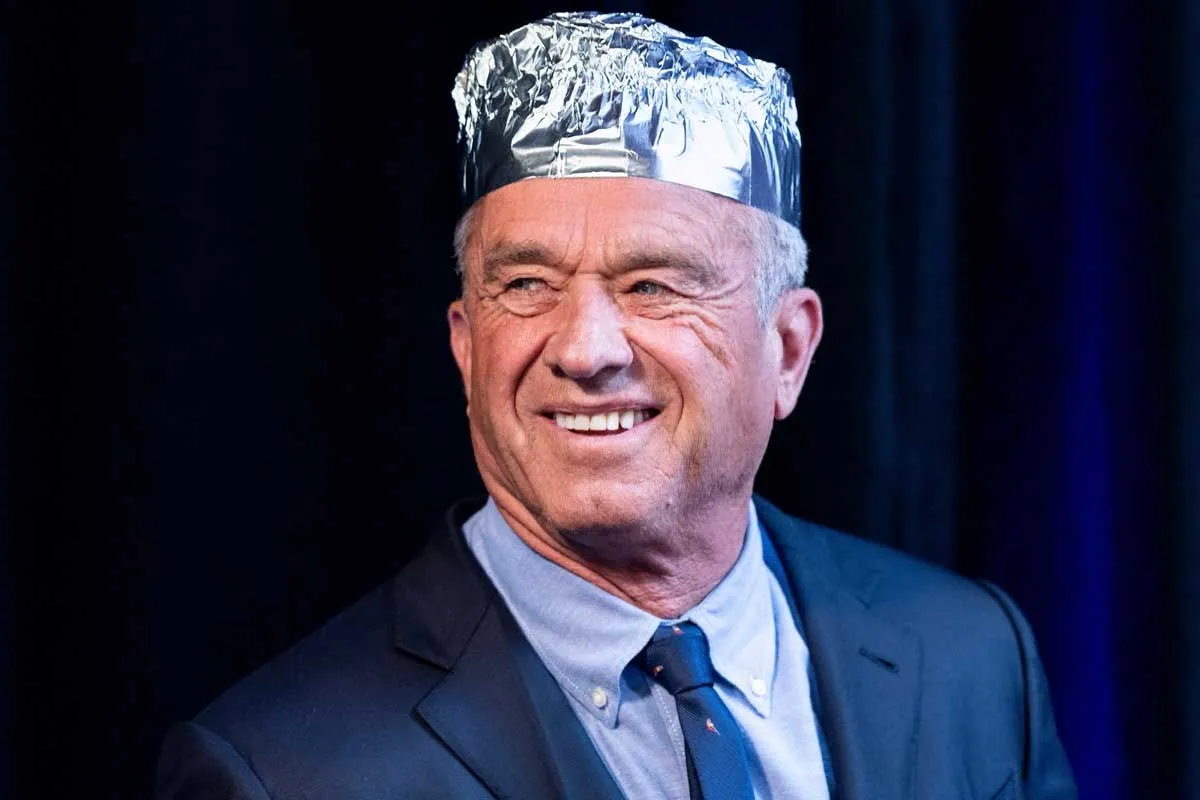
‘Remember when the CDC was about preventing diseases instead of promoting them? Three West Coast states do, and they’re taking charge.
As reported in a California government press release, the states are forming their own Health Alliance because they think medical decisions should be based on actual medicine rather than whatever Robert F. Kennedy Jr.’s brain worm thinks after binge-watching conspiracy theory TikToks.
The timing couldn’t be better, considering Kennedy just fired all 17 members of the CDC’s vaccine advisory committee.
“When federal agencies abandon evidence-based recommendations in favor of ideology, we cannot continue down that same path,” says Washington’s Health Secretary Dennis Worsham.
The Alliance promises to maintain those radical, controversial policies like “listening to doctors” and “preventing unnecessary deaths.”…’ — Ellsworth Toohey via Boing Boing
‘The first seven months of Trump’s Oval Office do-over have been, with occasional exception, a tale of ruthless domination. The Democratic opposition is feeble and fumbling, the federal bureaucracy traumatized and neutered. Corporate leaders come bearing gifts, the Republican Party has been scrubbed of dissent, and the street protests are diminished in size. Even the news media, a major check on Trump’s power in his first term, have faded from their 2017 ferocity, hobbled by budget cuts, diminished ratings, and owners wary of crossing the president.
One exception has stood out: A legal resistance led by a patchwork coalition of lawyers, public-interest groups, Democratic state attorneys general, and unions has frustrated Trump’s ambitions. Hundreds of attorneys and plaintiffs have stood up to him, feeding a steady assembly line of setbacks and judicial reprimands for a president who has systematically sought to break down limits on his own power.…’ — Michael Scherer via The Atlantic