‘Educator Arum Natzorkhang quite seamlessly pronounced every iteration of certain English swear words as they evolved from 5000 BCE to 2024 CE into the words we know today….’ (via Laughing Squid)
(What is ‘trump’ in Proto-Germanic?)


‘Educator Arum Natzorkhang quite seamlessly pronounced every iteration of certain English swear words as they evolved from 5000 BCE to 2024 CE into the words we know today….’ (via Laughing Squid)
(What is ‘trump’ in Proto-Germanic?)

(via Reddit r/pics)
‘A group of the world’s leading biologists have called for an immediate halt on a technology you’ve probably never even heard of — but is so dangerous, they say, that it could upend the order life itself on this planet, if not wipe it out.
In a nearly three-hundred page technical report published this month, the scientists describe the horrifyingly existential risks posed by what’s known as mirror life: synthetic organisms whose DNA structures are a mirror image to that of all known natural organisms….’ (Frank Landymore via Futurism)
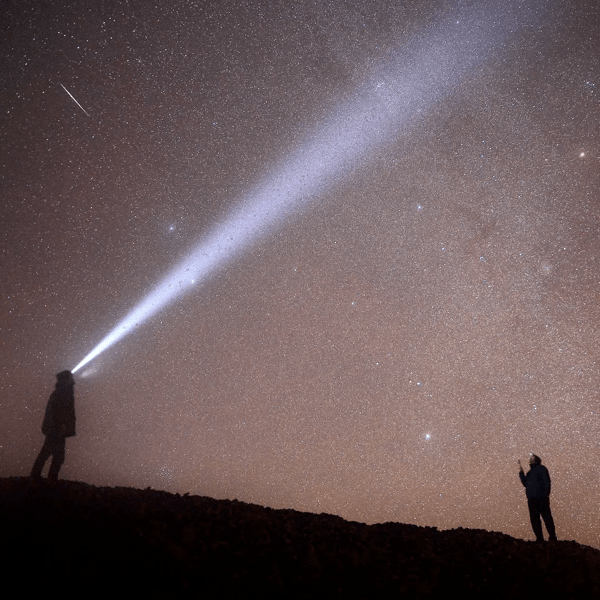
‘The Geminid meteor shower, one of the brightest and most prolific meteor showers of the year, peaks overnight on December 13 and 14. As the winter nights grow longer and colder, the celestial phenomenon is just the excuse we needed to bundle up and get outside.
But this year, an almost full moon will compete with the annual spectacle of shooting stars. Called the “Cold Moon” or “Long Night Moon,” December’s full moon inconveniently falls on the 15th of the month—meaning the bright light will make it harder to see the Geminids, and making it all the more important to plan ahead and find a slice of darkness near you.
With an unobscured dark sky, you could typically see between 100 and 120 shooting stars per hour as Earth passes through the densest part of the Geminids debris trail. While visibility becomes more difficult with city lights or a full moon, you can still expect to see 10 to 20 per hour this year….'(via Condé Nast Traveler)
 Culture is humanity’s way of making sense of the world, expressed through language, traditions, and beliefs. Ancient customs—like the Pirahã people living without past or future tense, or the Inca communities risking their lives to rebuild a grass bridge—reflect the beauty and diversity of human creativity. Yet, globalization and economic pressures threaten these traditions. As languages vanish, villages depopulate, and artisans abandon their crafts, we lose not just skills but unique ways of understanding life.
The custodians of these traditions—whether a night watchman in Sweden, a soy sauce brewer in Japan, or a pasta maker in Sardinia—are inseparable from their crafts. Their quiet devotion reminds us of the profound value in dedicating oneself to something enduring. In a homogenizing world, their stories rekindle wonder and show us that humanity is defined by its beliefs, and the richness of life lies in the diversity of its expression.
By preserving these cultural wonders, we honor not just the past but the whimsical, soulful essence of what makes us human. (via The Next Big Idea Club)
