A reprise of my traditional Hallowe’en post of past years:
It is that time of year again. What has become a time of disinhibited hijinx and mayhem, and a growing marketing bonanza for the kitsch-manufacturers and -importers, has primeval origins as the Celtic New Year’s Eve, Samhain (pronounced “sow-en”). The harvest is over, summer ends and winter begins, the Old God dies and returns to the Land of the Dead to await his rebirth at Yule, and the land is cast into darkness. The veil separating the worlds of the living and the dead becomes frayed and thin, and dispossessed dead mingle with the living, perhaps seeking a body to possess for the next year as their only chance to remain connected with the living, who hope to scare them away with ghoulish costumes and behavior, escape their menace by masquerading as one of them, or placate them with offerings of food, in hopes that they will go away before the new year comes. For those prepared, a journey to the other side could be made at this time.
With Christianity, perhaps because with calendar reform it was no longer the last day of the year, All Hallows’ Eve became decathected, a day for innocent masquerading and fun, taking its name Hallowe’en as a contraction and corruption of All Hallows’ Eve.
All Saints’ Day may have originated in its modern form with the 8th century Pope Gregory III. Hallowe’en customs reputedly came to the New World with the Irish immigrants of the 1840’s. The prominence of trick-or-treating has a slightly different origin, however.
The custom of trick-or-treating is thought to have originated not with the Irish Celts, but with a ninth-century European custom called souling. On November 2, All Souls Day, early Christians would walk from village to village begging for “soul cakes,” made out of square pieces of bread with currants. The more soul cakes the beggars would receive, the more prayers they would promise to say on behalf of the dead relatives of the donors. At the time, it was believed that the dead remained in limbo for a time after death, and that prayer, even by strangers, could expedite a soul’s passage to heaven.
English: A traditional Irish turnip Jack-o’-lantern from the early 20th century.
Jack-o’-lanterns were reportedly originally turnips; the Irish began using pumpkins after they immigrated to North America, given how plentiful they were here. The Jack-o-lantern custom probably comes from Irish folklore. As the tale is told, a man named Jack, who was notorious as a drunkard and trickster, tricked Satan into climbing a tree. Jack then carved an image of a cross in the tree’s trunk, trapping the devil up the tree. Jack made a deal with the devil that, if he would never tempt him again, he would promise to let him down the tree.
According to the folk tale, after Jack died, he was denied entrance to Heaven because of his evil ways, but he was also denied access to Hell because he had tricked the devil. Instead, the devil gave him a single ember to light his way through the frigid darkness. The ember was placed inside a hollowed-out turnip to keep it glowing longer.
Nowadays, a reported 99% of cultivated pumpkin sales in the US go for jack-o-lanterns.
Folk traditions that were in the past associated with All Hallows’ Eve took much of their power, as with the New Year’s customs about which I write here every Dec. 31st, from the magic of boundary states, transition, and liminality.
The idea behind ducking, dooking or bobbing for apples seems to have been that snatching a bite from the apple enables the person to grasp good fortune. Samhain is a time for getting rid of weakness, as pagans once slaughtered weak animals which were unlikely to survive the winter. A common ritual calls for writing down weaknesses on a piece of paper or parchment, and tossing it into the fire. There used to be a custom of placing a stone in the hot ashes of the bonfire. If in the morning a person found that the stone had been removed or had cracked, it was a sign of bad fortune. Nuts have been used for divination: whether they burned quietly or exploded indicated good or bad luck. Peeling an apple and throwing the peel over one’s shoulder was supposed to reveal the initial of one’s future spouse. One way of looking for omens of death was for peope to visit churchyards
The Witches’ Sabbath aspect of Hallowe’en seems to result from Germanic influence and fusion with the notion of Walpurgisnacht. (You may be familiar with the magnificent musical evocation of this, Mussorgsky’s Night on Bald Mountain.)
Although probably not yet in a position to shape mainstream American Hallowe’en traditions, Mexican Dia de los Muertos observances have started to contribute some delightful and whimsical iconography to our encounter with the eerie and unearthly as well. As this article in The Smithsonian reviews, ‘In the United States, Halloween is mostly about candy, but elsewhere in the world celebrations honoring the departed have a spiritual meaning…’
Reportedly, more than 80% of American families decorate their homes, at least minimally, for Hallowe’en. What was the holiday like forty or fifty years ago in the U.S. when, bastardized as it has now become with respect to its pagan origins, it retained a much more traditional flair? Before the era of the pay-per-view ’spooky-world’ type haunted attractions and its Martha Stewart yuppification with, as this irreverent Salon article from several years ago [via walker] put it, monogrammed jack-o’-lanterns and the like? One issue may be that, as NPR observed,
‘”Adults have hijacked Halloween… Two in three adults feel Halloween is a holiday for them and not just kids,” Forbes opined in 2012, citing a public relations survey. True that when the holiday was imported from Celtic nations in the mid-19th century — along with a wave of immigrants fleeing Irelands potato famine — it was essentially a younger persons’ game. But a little research reveals that adults have long enjoyed Halloween — right alongside young spooks and spirits.’
Is that necessarily a bad thing? A 1984 essay by Richard Seltzer, frequently referenced in other sources, entitled “Why Bother to Save Hallowe’en?”, argues as I do that reverence for Hallowe’en is good for the soul, young or old.
“Maybe at one time Hallowe’en helped exorcise fears of death and ghosts and goblins by making fun of them. Maybe, too, in a time of rigidly prescribed social behavior, Hallowe’en was the occasion for socially condoned mischief — a time for misrule and letting loose. Although such elements still remain, the emphasis has shifted and the importance of the day and its rituals has actually grown.…(D)on’t just abandon a tradition that you yourself loved as a child, that your own children look forward to months in advance, and that helps preserve our sense of fellowship and community with our neighbors in the midst of all this madness.”
That would be anathema to certain segments of society, however. Hallowe’en certainly inspires a backlash by fundamentalists who consider it a blasphemous abomination. ‘Amateur scholar’ Isaac Bonewits details academically the Hallowe’en errors and lies he feels contribute to its being reviled. Some of the panic over Hallowe’en is akin to the hysteria, fortunately now debunked, over the supposed epidemic of ‘ritual Satanic abuse’ that swept the Western world in the ’90’s.
The horror film has become inextricably linked to Hallowe’en tradition, although the holiday itself did not figure in the movies until John Carpenter took the slasher genre singlehandedly by storm. Googling “scariest films”, you will, grimly, reap a mother lode of opinions about how to pierce the veil to journey to the netherworld and reconnect with that magical, eerie creepiness in the dark (if not the over-the-top blood and gore that has largely replaced the subtlety of earlier horror films).
The Carfax Abbey Horror Films and Movies Database includes best-ever-horror-films lists from Entertainment Weekly, Mr. Showbiz and Hollywood.com. I’ve seen most of these; some of their choices are not that scary, some are just plain silly, and they give extremely short shrift to my real favorites, the evocative classics of the ’30’s and ’40’s when most eeriness was allusive and not explicit. And here’s what claims to be a compilation of links to the darkest and most gruesome sites on the web. “Hours and hours of fun for morbidity lovers.”
Boing Boing does homage to a morbid masterpiece of wretched existential horror, two of the tensest, scariest hours of my life repeated every time I watch it:
‘…The Thing starts. It had been 9 years since The Exorcist scared the living shit out of audiences in New York and sent people fleeing into the street. Really … up the aisle and out the door at full gallop. You would think that people had calmed down a bit since then. No…
The tone of The Thing is one of isolation and dread from the moment it starts. By the time our guys go to the Norwegian outpost and find a monstrous steaming corpse with two merged faces pulling in opposite directions the audience is shifting in their seats. Next comes the dog that splits open with bloody tentacles flying in all directions. The women are covering their eyes….’
Meanwhile, what could be creepier in the movies than the phenomenon of evil children? Gawker knows what shadows lurk in the hearts of the cinematic young:
‘In celebration of Halloween, we took a shallow dive into the horror subgenre of evil-child horror movies. Weird-kid cinema stretches back at least to 1956’s The Bad Seed, and has experienced a resurgence recently via movies like The Babadook, Goodnight Mommy, and Cooties. You could look at this trend as a natural extension of the focus on domesticity seen in horror via the wave of haunted-house movies that 2009’s Paranormal Activity helped usher in. Or maybe we’re just wizening up as a culture and realizing that children are evil and that film is a great way to warn people of this truth. Happy Halloween. Hope you don’t get killed by trick-or-treaters.’
In any case: trick or treat! …And may your Hallowe’en soothe your soul.
‘Happy Jimi Halloween to everyone who celebrates. It’s that wonderful time of year when our favorite Japanese festival, Jimi Halloween, is on full display. Mundane Halloween, as we coined it back in 2018, is when people dress up in costumes so mundane they have to be explained….’ ( Johnny via Spoon & Tamago)
‘Iran, which created Hezbollah around 1982, might cut off support to the group, a decision that could reconfigure the politics of the Middle East….’ ( Robert F. Worth via The Atlantic)
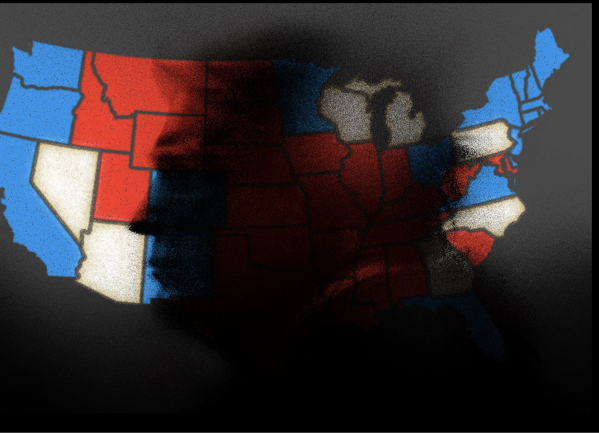
‘It is reasonable to hope that moderates and independents will have had enough of trump in November, emulating British and French voters who rebuffed right-wing candidates earlier this year. A clear rejection of trumpism might deflate the maga movement for a while. But if trump loses narrowly and declares himself the winner, rallying dispersed local groups prone to violent resistance to install him in office, orderly de-escalation could prove impossible. If he wins, his march to autocratic coercion may be unstoppable, and it would inspire burgeoning resistance from the left. The historian David Blight has observed that tipping points can only be determined in retrospect, and he isolates Dred Scott v. Sandford, decided by the Supreme Court in 1857, as the point of no return in the run-up to the Civil War. When historians look back on this traumatic era of American politics, they will probably assess the 2024 election—not January 6—as the event that foreswore or foretold the collapse of the American republic….’ (Steven Simon and Jonathan Stevenson via The New York Review of Books)
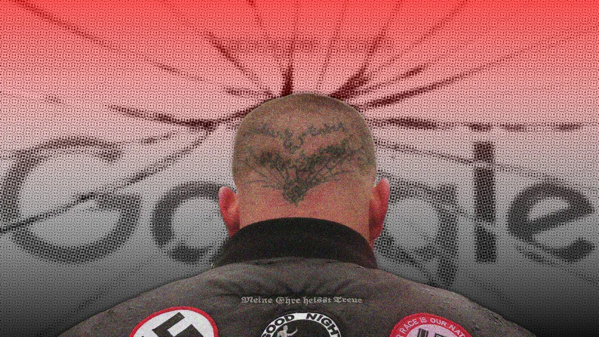
‘The web’s biggest AI-powered search engines are featuring the widely debunked idea that white people are genetically superior to other races….’ (via WIRED)
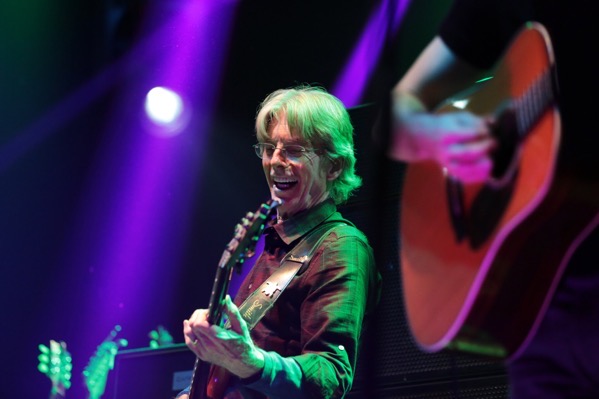
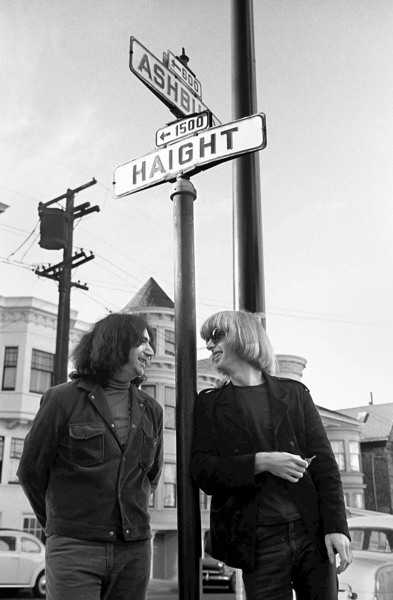
‘Key to the dynamic of The Dead was the way Mr. Lesh used the bass to provide ever-shifting counterpoints to the dancing lines of the lead guitarist Jerry Garcia, the curt riffs of the rhythm guitarist Bob Weir, the bold rhythms of the drummers Mickey Hart and Bill Kreutzmann, and, in the band’s first eight years, the warm organ work of Ron McKernan, known as Pigpen….’ (via The New York Times)
‘Look, I’m not advocating betting money on the election, especially if you are heavily invested emotionally in the outcome. But there is a classic strategy for linking those two things in a productive way: hedge your political preferences with bets. Just ask yourself: how much money would I pay for my candidate to win? Then take that amount of money and put it on the other candidate. Now you either “buy” a victory in the election for what you already said you would pay, or you get a pile of cash you can use to mop up your tears on election night…’ (Matt Glassman via Matt Glassman)
‘For millions of the GOP faithful, …trump’s daily attempts to breach new frontiers of hideousness are not offensive but reassuring. They want trump to be awful—precisely because the people they view as their political foes will be so appalled if he wins….’ ( Tom Nichols via The Atlantic)
‘There’s no such thing as privacy anymore: Whatever you’re up to, someone, somewhere has all the details. Even if you take heroic steps to mask your online activity and scrupulously protect your privacy in real-life situations you’re still not totally anonymous. We all know that your credit history is pretty easy to access—and is increasingly used in just about every aspect of your life, from getting a job to renting an apartment. If you’re paying attention, you probably froze your credit report long ago.
But there’s another report that is just as invasive and just as important—and just as necessary to lock down so that it can’t be used against you without your knowledge. It’s called The Work Number, and you really need to start paying attention to it—and freezing it….’ ( via Lifehacker)
‘There’s been a feature lately on the New York Times website that invites readers to stare at a painting for 10 minutes and do nothing else.
I tried it, I got bored. Also, I really don’t need another reason to stare at my laptop screen. Still, it’s a good idea, as an exercise in focus, and Wednesday morning, eight a.m., I wondered, why not try the same thing at the coffeeshop around the corner from my office? Ten minutes of listening, looking, studying myself in that situation, with a notebook in hand.
Turns out, I enjoyed it so much, I stayed an an hour….’ ( Rosecrans Baldwin via Substack)
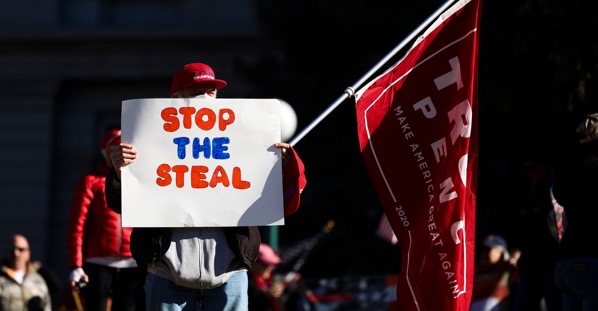
‘Dozens of interviews with people deeply familiar or involved with the election process point to a clear consensus: Not only could trump make a second attempt at overturning an election he loses, he and his allies are already laying the groundwork.
…2024 is not 2020. trump’s path to pulling it off this time is even narrower and more extreme. For one thing, trump lacks some of the tools he threatened to wield four years ago to upend the transfer of power; today, the military and Justice Department answer to Joe Biden. trump also needs allies to win elections that would put them in a position to reverse a defeat: Overturning a Kamala Harris victory would require an enormous amount of help from Republican power brokers in statehouses and Congress, some of whom spurned him four years ago.
trump’s first attempt to exploit the neglected machinery of American democracy also spurred real action by congressional Democrats. Updates to the Electoral Count Act in the wake of trump’s 2020 gambit aimed to bind vote counters, election officials and even Congress to the results certified by state governments, all of which makes it tougher, in theory, to steal an election.
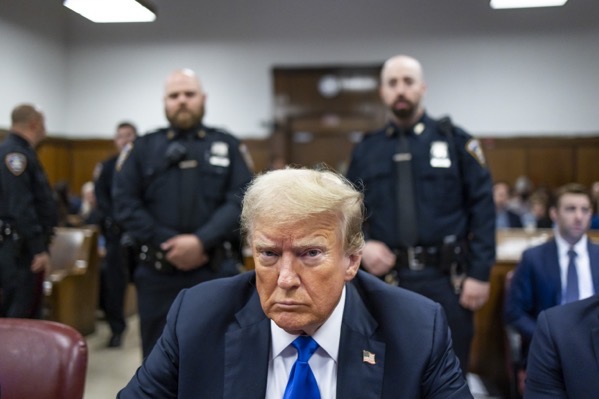
But trump is heading into the 2024 election informed by his failure to overturn the results four years earlier. And his incentive to obtain the powers and protections of the White House is likely stronger than ever: If he loses, trump will face an avalanche of criminal proceedings that could last the rest of his life. If he wins, they are likely to go away.
“No one knows exactly what trump’s attack on the electoral system will be in 2024,” said Rep. Jamie Raskin (D-Md.), a member of the Jan. 6 select committee. “What will he do this time?”
The answer, according to lawmakers, congressional investigators, party operatives, election officials and constitutional law experts, goes something like this:
— He will deepen distrust in the election results by making unsupported or hyperbolic claims of widespread voter fraud and mounting longshot lawsuits challenging enough ballots to flip the outcome in key states.
— He will lean on friendly county and state officials to resist certifying election results — a futile errand that would nevertheless fuel a campaign to put pressure on elected Republican legislators in statehouses and Congress.
— He will call on allies in GOP-controlled swing-state legislatures to appoint “alternate” presidential electors.
— He will rely on congressional Republicans to endorse these alternate electors — or at least reject Democratic electors — when they convene to certify the outcome.
— He will try to ensure Harris is denied 270 votes in the Electoral College, sending the election to the House, where Republicans are likely to have the numbers to choose trump as the next president….’ (via POLITICO)
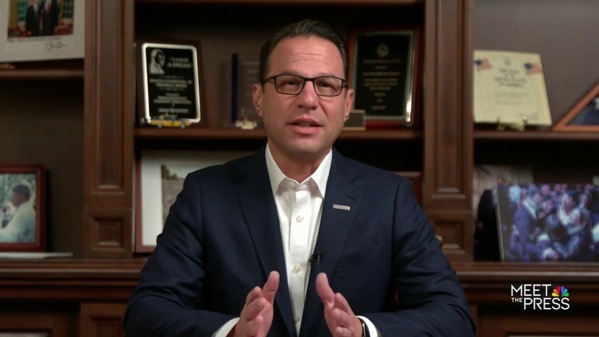
‘During an interview with Meet the Press, Gov. Josh Shapiro (D-Pa.) questions the legality of Elon Musk promising $1 million giveaways to voters who sign his super PAC’s petition “in favor of free speech and the right to bear arms.”…’ (via NBC)
‘Two big things baffle me about this election. The first is: Why are the polls so immobile? In mid-June the race between President Biden and Donald Trump was neck and neck. Since then, we’ve had a blizzard of big events, and still the race is basically where it was in June. It started out tied and has only gotten closer.
We supposedly live in a country in which a plurality of voters are independents. You’d think they’d behave, well, independently and get swayed by events. But no. In our era the polling numbers barely move.
The second thing that baffles me is: Why has politics been 50-50 for over a decade? We’ve had big shifts in the electorate, college-educated voters going left and non-college-educated voters going right. But still, the two parties are almost exactly evenly matched….’ (David Brooks via The New York Times)
‘In 2020, when donald trump questioned the results of the election, the courts decisively rejected his efforts, over and over again. In 2024, the judicial branch may be unable to save our democracy.
The rogues are no longer amateurs. They have spent the last four years going pro, meticulously devising a strategy across multiple fronts — state legislatures, Congress, executive branches and elected judges — to overturn any close election.
The new challenges will take place in forums that have increasingly purged officials who put country over party. They may take place against the backdrop of razor-thin election margins in key swing states, meaning that any successful challenge could change the election.
We have just a few short weeks to understand these challenges so that we can be vigilant about them….’ (Neal Katyal, professor at Georgetown University Law Center, via The New York Times)
‘Here is a short and incomplete list of things that former president donald trump has done this week:
Sunday: trump says the US military should be deployed against “the enemy within” on Election Day. It’s unclear who exactly he’s talking about, but he does refer to Rep. Adam Schiff (D-CA) as an example of a domestic enemy later in the interview.
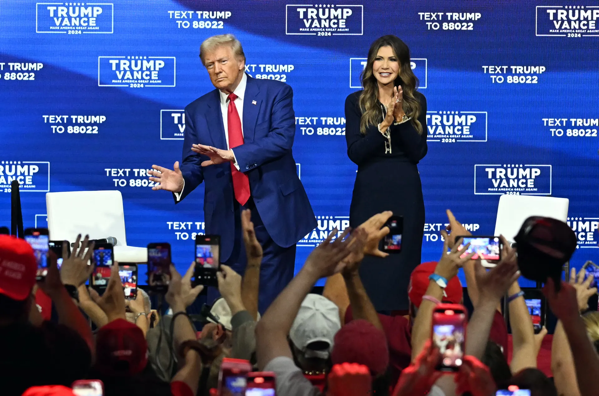
Monday: trump stops a town hall to conduct a 40-minute impromptu dance party, where he plays songs like “YMCA” and “Hallelujah” on stage with an obviously confused South Dakota Gov. Kristi Noem (R).
Tuesday: When asked during a Bloomberg interview about his policy toward Google, trump responds with an extended riff on an election lawsuit in Virginia. When prompted to actually answer the question, trump launches into a rant about critical stories appearing on Google News, said he’d called “the head of Google” to complain, and then threatened to “do something” to the company in response.
Also Tuesday: trump warns that “hydrogen is the new car,” and tells a story about a man who died in a hydrogen car explosion near a tree and could not be identified by his wife. Hydrogen-fueled cars are in fact a 10-year-old technology with a small and declining global market share. There is no evidence that they can explode like the Hindenburg, as a car with hydrogen fuel cells is not the same thing as a dirigible inflated with hydrogen gas.
Wednesday: Asked about the “enemy within” comments from Sunday, trump doubles down — saying Democrats like Schiff are indeed such an enemy, that they are “Marxists” and “fascists” who are “so evil” and “dangerous for our country.”
Throughout these events, trump has come off as (alternately) a buffoon and a would-be dictator. One minute, you’re laughing at his campy dance moves and Hindenburg car rants, the next you’re worrying that he really might try to send troops after American citizens.
Yet the two trumps, the clown and the menace, are intimately tied together: The absurdity helps normalize his dangerousness….’ (via Vox)
‘Psilocybin—the hallucinogen in magic mushrooms—continues to show promise as an anti-depressant, especially when combined with psychotherapy. Meanwhile though, it’s being explored for treating anxiety, OCD, irritable bowel syndrome, and other disorders. Two phase 2 clinical trials showing its efficacy in helping with hostility, somatization (the physical expression of psychological distress), and interpersonal sensitivity (heightened awareness of others’ perceptions and reactions) led to University of Toronto researchers to call for a broader reframing of psilocybin-based treatments. In a new Nature Mental Health scientific paper, hey suggest calling psilocybin an “anti-distressant.”…’ (via Boing Boing)
‘…[W]hen there’s a knock at the door or a pleading figure suddenly at your car window, it’s best to get a good look at their eyes before letting them in….’ (via Atlas Obscura)
‘> Sometimes the dog whistle of racism is an air horn. But you wouldn’t know it from looking at the paper. Late last week, trump’s rants about immigrants polluting the country with “bad genes” were paraphrased by The New York Times as a “long-held fascination with genes and genetics.”
In the article referenced above, the Times was very clearly trying to address the eugenics behind trump’s rhetoric, but it failed. The reporter neglected to use the word “racist” or “racism” at any point. This tiptoeing approach also hides the larger threat of what it means for a national leader to embrace this language, and the danger to a country in which he remains a leading candidate for the presidency. In the news cycle that followed, only Politico seemed to reflect the full measure of trump’s clear descent into apocalyptic race-baiting in its headline “We watched 20 trump rallies. His racist, anti-immigrant messaging is getting darker.”…’ ( Andrea Pitzervia Trapped in a Company Town)
In bizarre town hall episode, sways and bops for nearly 40 min instead of answering questions.
‘Is donald trump well enough to serve as president?
The question is not temperamental or philosophical fitness—he made clear long ago that the answer to both is no—but something more fundamental.
The election is in three weeks, and Pennsylvania is a must-win state for both trump and Kamala Harris, but during a rally last night in Montgomery County, northwest of Philadelphia, trump got bored with the event, billed as a “town hall,” and just played music for almost 40 minutes, scowling, smirking, and swaying onstage. trump is no stranger to surreal moments, yet this was one of the oddest of his political career….’ (David Graham via The Atlantic)
Related:
‘The scene comes as Vice President Kamala Harris has called trump, 78, unstable and called into question his mental acuity…’ ( Marianne LeVine via The Washington Post)
‘Go outside at sunset tonight and see a comet! C/2023 A3 (Tsuchinshan–ATLAS) has become visible in the early evening sky in northern locations to the unaided eye. To see the comet, look west through a sky with a low horizon. If the sky is clear and dark enough, you will not even need binoculars — the faint tail of the comet should be visible just above the horizon for about an hour….’
‘Bop Spotter is a real-time collector of songs played by passersby in San Francisco’s Mission District. Installed inside a box high up on a pole, a phone runs Shazam nonstop. The music discovery app allows users to look up an artist and song title by simply recording a few seconds of sound.
Solar powered with a microphone pointing down on the street, the phone pings every few minutes, detecting music and automatically integrating the tunes into a diverse and ever-growing playlist on the Bop Spotter site. So far, more than 1,400 songs have been collected, ranging from rock to hip top to meditation sounds…’ (Kate Mothes via Colossal)
‘The New York Times reports that Bob Wordward’s new book War includes a few stories about donald trump being Putin’s stooge.
When the world, including the United States, was suffering a dire shortage of COVID-19 tests, trump was sending tests to his pal Putin for “personal use.” After leaving office, there are stories of donald rushing aides out of his way to take a private call with his good buddy, Vladimir. Campaign spokespeople do a terrible job denying the calls have happened or may be ongoing….’
‘This systematic review examines empirical evidence supporting the anecdotal assumption, that dogs look like and behave like their owners. To this end, we investigated 15 studies with the aim of testing that: (1) Owners and their dogs resemble each other in appearance and (2) owners and their dogs have similar personalities. Aggregation of the results supports evidence for both hypotheses. …’ (via ScienceDirect)
‘Unless you’re a die-hard trump supporter, a journalist, or an obsessive political hobbyist, you’re likely not getting that regular glimpse into the Republican candidate’s brain. But … maybe you should be?
Last Friday, I received an email with a link to a website created by a Washington, D.C.–based web developer named Chris Herbert. The site, trump’s Truth, is a searchable database collecting all of trump’s Truth Social posts, even those that have been deleted. Herbert has also helpfully transcribed every speech and video trump has posted on the platform, in part so that they can be indexed more easily by search engines such as Google. Thus, trump’s ravings are more visible….’ (Charlie Warzel via The Atlantic)




 ‘Psilocybin—the hallucinogen in magic mushrooms—continues to show promise as an anti-depressant, especially when combined with psychotherapy. Meanwhile though, it’s being explored for treating anxiety, OCD, irritable bowel syndrome, and other disorders. Two phase 2 clinical trials showing its efficacy in helping with hostility, somatization (the physical expression of psychological distress), and interpersonal sensitivity (heightened awareness of others’ perceptions and reactions) led to University of Toronto researchers to call for a broader reframing of psilocybin-based treatments. In a new Nature Mental Health scientific paper, hey suggest calling psilocybin an “anti-distressant.”…’ (via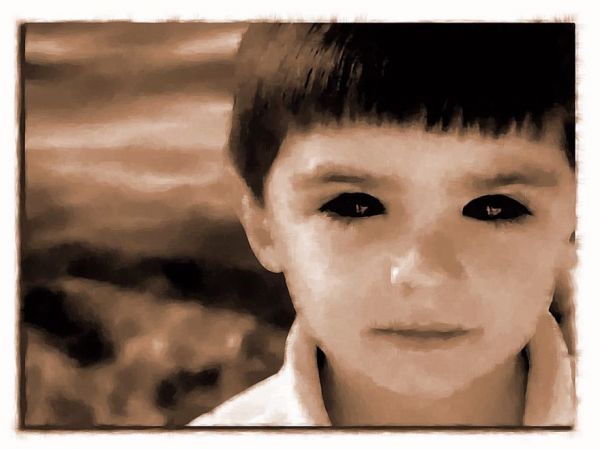


 ‘
‘ ‘The New York Times reports that Bob Wordward’s new book War includes a few stories about donald trump being Putin’s stooge.
 ‘This systematic review examines empirical evidence supporting the anecdotal assumption, that dogs look like and behave like their owners. To this end, we investigated 15 studies with the aim of testing that: (1) Owners and their dogs resemble each other in appearance and (2) owners and their dogs have similar personalities. Aggregation of the results supports evidence for both hypotheses. …’ (via
