A reprise of my traditional Hallowe’en post of past years:
It is that time of year again. What has become a time of disinhibited hijinx and mayhem, and a growing marketing bonanza for the kitsch-manufacturers and -importers, has primeval origins as the Celtic New Year’s Eve, Samhain (pronounced “sow-en”). The harvest is over, summer ends and winter begins, the Old God dies and returns to the Land of the Dead to await his rebirth at Yule, and the land is cast into darkness. The veil separating the worlds of the living and the dead becomes frayed and thin, and dispossessed dead mingle with the living, perhaps seeking a body to possess for the next year as their only chance to remain connected with the living, who hope to scare them away with ghoulish costumes and behavior, escape their menace by masquerading as one of them, or placate them with offerings of food, in hopes that they will go away before the new year comes. For those prepared, a journey to the other side could be made at this time.
With Christianity, perhaps because with calendar reform it was no longer the last day of the year, All Hallows’ Eve became decathected, a day for innocent masquerading and fun, taking its name Hallowe’en as a contraction and corruption of All Hallows’ Eve.
All Saints’ Day may have originated in its modern form with the 8th century Pope Gregory III. Hallowe’en customs reputedly came to the New World with the Irish immigrants of the 1840’s. The prominence of trick-or-treating has a slightly different origin, however.
The custom of trick-or-treating is thought to have originated not with the Irish Celts, but with a ninth-century European custom called souling. On November 2, All Souls Day, early Christians would walk from village to village begging for “soul cakes,” made out of square pieces of bread with currants. The more soul cakes the beggars would receive, the more prayers they would promise to say on behalf of the dead relatives of the donors. At the time, it was believed that the dead remained in limbo for a time after death, and that prayer, even by strangers, could expedite a soul’s passage to heaven.
English: A traditional Irish turnip Jack-o’-lantern from the early 20th century.
Jack-o’-lanterns were reportedly originally turnips; the Irish began using pumpkins after they immigrated to North America, given how plentiful they were here. The Jack-o-lantern custom probably comes from Irish folklore. As the tale is told, a man named Jack, who was notorious as a drunkard and trickster, tricked Satan into climbing a tree. Jack then carved an image of a cross in the tree’s trunk, trapping the devil up the tree. Jack made a deal with the devil that, if he would never tempt him again, he would promise to let him down the tree.
According to the folk tale, after Jack died, he was denied entrance to Heaven because of his evil ways, but he was also denied access to Hell because he had tricked the devil. Instead, the devil gave him a single ember to light his way through the frigid darkness. The ember was placed inside a hollowed-out turnip to keep it glowing longer.
Nowadays, a reported 99% of cultivated pumpkin sales in the US go for jack-o-lanterns.
Folk traditions that were in the past associated with All Hallows’ Eve took much of their power, as with the New Year’s customs about which I write here every Dec. 31st, from the magic of boundary states, transition, and liminality.
The idea behind ducking, dooking or bobbing for apples seems to have been that snatching a bite from the apple enables the person to grasp good fortune. Samhain is a time for getting rid of weakness, as pagans once slaughtered weak animals which were unlikely to survive the winter. A common ritual calls for writing down weaknesses on a piece of paper or parchment, and tossing it into the fire. There used to be a custom of placing a stone in the hot ashes of the bonfire. If in the morning a person found that the stone had been removed or had cracked, it was a sign of bad fortune. Nuts have been used for divination: whether they burned quietly or exploded indicated good or bad luck. Peeling an apple and throwing the peel over one’s shoulder was supposed to reveal the initial of one’s future spouse. One way of looking for omens of death was for peope to visit churchyards
The Witches’ Sabbath aspect of Hallowe’en seems to result from Germanic influence and fusion with the notion of Walpurgisnacht. (You may be familiar with the magnificent musical evocation of this, Mussorgsky’s Night on Bald Mountain.)
Although probably not yet in a position to shape mainstream American Hallowe’en traditions, Mexican Dia de los Muertos observances have started to contribute some delightful and whimsical iconography to our encounter with the eerie and unearthly as well. As this article in The Smithsonian reviews, ‘In the United States, Halloween is mostly about candy, but elsewhere in the world celebrations honoring the departed have a spiritual meaning…’
Reportedly, more than 80% of American families decorate their homes, at least minimally, for Hallowe’en. What was the holiday like forty or fifty years ago in the U.S. when, bastardized as it has now become with respect to its pagan origins, it retained a much more traditional flair? Before the era of the pay-per-view ’spooky-world’ type haunted attractions and its Martha Stewart yuppification with, as this irreverent Salon article from several years ago [via walker] put it, monogrammed jack-o’-lanterns and the like? One issue may be that, as NPR observed,
‘”Adults have hijacked Halloween… Two in three adults feel Halloween is a holiday for them and not just kids,” Forbes opined in 2012, citing a public relations survey. True that when the holiday was imported from Celtic nations in the mid-19th century — along with a wave of immigrants fleeing Irelands potato famine — it was essentially a younger persons’ game. But a little research reveals that adults have long enjoyed Halloween — right alongside young spooks and spirits.’
Is that necessarily a bad thing? A 1984 essay by Richard Seltzer, frequently referenced in other sources, entitled “Why Bother to Save Hallowe’en?”, argues as I do that reverence for Hallowe’en is good for the soul, young or old.
“Maybe at one time Hallowe’en helped exorcise fears of death and ghosts and goblins by making fun of them. Maybe, too, in a time of rigidly prescribed social behavior, Hallowe’en was the occasion for socially condoned mischief — a time for misrule and letting loose. Although such elements still remain, the emphasis has shifted and the importance of the day and its rituals has actually grown.…(D)on’t just abandon a tradition that you yourself loved as a child, that your own children look forward to months in advance, and that helps preserve our sense of fellowship and community with our neighbors in the midst of all this madness.”
That would be anathema to certain segments of society, however. Hallowe’en certainly inspires a backlash by fundamentalists who consider it a blasphemous abomination. ‘Amateur scholar’ Isaac Bonewits details academically the Hallowe’en errors and lies he feels contribute to its being reviled. Some of the panic over Hallowe’en is akin to the hysteria, fortunately now debunked, over the supposed epidemic of ‘ritual Satanic abuse’ that swept the Western world in the ’90’s.
The horror film has become inextricably linked to Hallowe’en tradition, although the holiday itself did not figure in the movies until John Carpenter took the slasher genre singlehandedly by storm. Googling “scariest films”, you will, grimly, reap a mother lode of opinions about how to pierce the veil to journey to the netherworld and reconnect with that magical, eerie creepiness in the dark (if not the over-the-top blood and gore that has largely replaced the subtlety of earlier horror films).
The Carfax Abbey Horror Films and Movies Database includes best-ever-horror-films lists from Entertainment Weekly, Mr. Showbiz and Hollywood.com. I’ve seen most of these; some of their choices are not that scary, some are just plain silly, and they give extremely short shrift to my real favorites, the evocative classics of the ’30’s and ’40’s when most eeriness was allusive and not explicit. And here’s what claims to be a compilation of links to the darkest and most gruesome sites on the web. “Hours and hours of fun for morbidity lovers.”
Boing Boing does homage to a morbid masterpiece of wretched existential horror, two of the tensest, scariest hours of my life repeated every time I watch it:
‘…The Thing starts. It had been 9 years since The Exorcist scared the living shit out of audiences in New York and sent people fleeing into the street. Really … up the aisle and out the door at full gallop. You would think that people had calmed down a bit since then. No…
The tone of The Thing is one of isolation and dread from the moment it starts. By the time our guys go to the Norwegian outpost and find a monstrous steaming corpse with two merged faces pulling in opposite directions the audience is shifting in their seats. Next comes the dog that splits open with bloody tentacles flying in all directions. The women are covering their eyes….’
Meanwhile, what could be creepier in the movies than the phenomenon of evil children? Gawker knows what shadows lurk in the hearts of the cinematic young:
‘In celebration of Halloween, we took a shallow dive into the horror subgenre of evil-child horror movies. Weird-kid cinema stretches back at least to 1956’s The Bad Seed, and has experienced a resurgence recently via movies like The Babadook, Goodnight Mommy, and Cooties. You could look at this trend as a natural extension of the focus on domesticity seen in horror via the wave of haunted-house movies that 2009’s Paranormal Activity helped usher in. Or maybe we’re just wizening up as a culture and realizing that children are evil and that film is a great way to warn people of this truth. Happy Halloween. Hope you don’t get killed by trick-or-treaters.’
In any case: trick or treat! …And may your Hallowe’en soothe your soul.
‘There’s a theory I like that suggests why the nineteenth century is so rich in ghost stories and hauntings. Carbon monoxide poisoning from gas lamps.
Street lighting and indoor lighting burned coal gas, which is sooty and noxious. It gives off methane and carbon monoxide. Outdoors, the flickering flames of the gas lamps pumped carbon monoxide into the air—air that was often trapped low down in the narrow streets and cramped courtyards of industrial cities and towns. Indoors, windows closed against the chilly weather prevented fresh oxygen from reaching those sitting up late by lamplight.
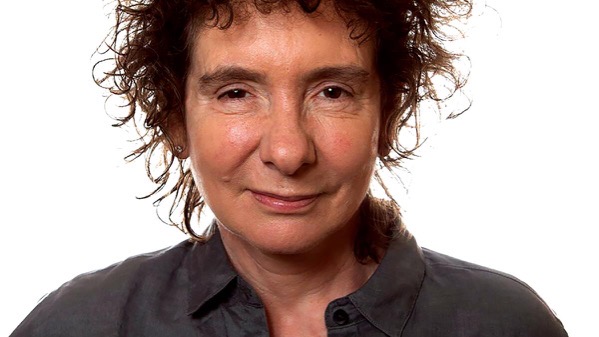
Low-level carbon monoxide poisoning produces symptoms of choking, dizziness, paranoia, including feelings of dread, and hallucinations. Where better to hallucinate than in the already dark and shadowy streets of Victorian London? Or in the muffled and stifling interiors of New England?…’ ( Jeanette Winterson via The Paris Review)
‘‘I want to start a group to go to breakfast, 10 of us, and we each bring $100 to tip the waiter,’ Richard Brooks wrote on Facebook…’ ( via Washington Post)
‘Last week, Delta Air Lines announced changes to its SkyMiles program that will make accruing status and taking advantage of perks much harder. Instead of relying on a combination of dollars spent and miles traveled in the air, Delta will grant status based on a single metric—dollars spent—and raise the amount of spending required to get it. In short, SkyMiles is no longer a frequent-flier program; it’s a big-spender program. These changes are so drastic that one of the reporters at the preeminent travel-rewards website The Points Guy declared that he’s going to “stop chasing airline status.”
When even the points insiders are sick of playing the mileage game, something has clearly gone wrong. In fact, frequent-flier programs are a symptom of a much deeper rot in the American air-travel industry. And although getting mad at airlines is perfectly reasonable, the blame ultimately lies with Congress….’ (The Atlantic)
‘donald trump has never been shy with his language, but recently, the Times editor Alex Kingsbury argues, his violent speech has escalated. In the past few weeks alone, trump suggested that his own former general was treasonous, said that shoplifters should be shot and exhorted his followers to “go after” New York’s attorney general. Alex says he understands why voters tune trump out but stresses the need to pay attention and take action for the sake of American democracy….’ (Opinion – The New York Times)
‘Public fascination with dissociation and its disorders has endured for many years — examples include the books “Sybil” and “The Three Faces of Eve,” both adapted into wildly popular feature films, each about a woman with “multiple personalities.” …Now people are capturing their experiences with dissociation and posting them on social media. …as conversations about mental health continue to migrate into public forums. But research suggests that much of this content isn’t providing reliable information. We asked several mental health providers to explain more about dissociation….’ (The New York Times)
One of my colleagues and mentors, Dr Judith Herman, psychiatric pioneer in trauma studies, is quoted as opining that dissociation is “way under diagnosed.” There is a sense in which she and others with similar views are right. I am constantly diagnosing dissociative disorders that have not been recognized by mental health professionals not familiar enough with their recognition, often resulting in years or decades of unsuccessful treatment and needless distress for patients whose difficulties have been misdiagnosed.
But the opposite problem is also emerging. Fueled by the easy online dissemination of psychiatric information both accurate and inaccurate, dissociation and dissociative identity disorder have joined a series of faddish diagnoses with which people self-label themselves. These have included chronic fatigue, fibromyalgia, ADD and ADHD, bipolar disorder, and OCD. Encouraging patients to seek responsible diagnosis by trained and experienced professionals rather than doing the research themselves often leads to dismissive claims that we want to maintain a monopoly on esoteric knowledge that should be democratized and freely available. Self-diagnosis has come to be seen as a virtue, but it is anything but. It should not be seen in terms of the issue of access to the information. The old adage in the field, “A physician who treats themself has a fool for a patient” is truer still for a non-physician, and especially so in mental health care.
Sometimes a patient presenting with an insistence on having a particular diagnosis represents wishful thinking. The aphorism “You see what you want to see and you hear what you want to hear” is pervasive, but someone discerning pointed out that the “second ‘you’ in each clause is not actually ‘you’.” The important thing to figure out in their treatment is what part of them is longing to construe things that way and why. Sometimes you might simply assume that the insistence, for example, on having a dissociative disorder is because explaining things that way represents a hopeful move in the direction of applying the effective treatment. But many of us feel that there are no treatment approaches found to be of established specificity and effectiveness for dissociative experiences. This is different from the situation in, say, insisting that your life struggles are explained by having ADHD, when a request for treatment with a stimulant like Adderail is often not far behind. Or, sometimes, a patient’s investment in having a given disorder may represent a wish to be let ‘off the hook,’ in this age of rampant medicalization of behaviors and behavioral disorders and deflection of personal responsibility.
I think it is no surprise that the therapeutic advances in psychiatry creating the most excitement these days — ketamine, TMS, and psychedelic treatment — all to some degree share one appeal, that of being relatively ‘quick fixes’ in contrast to the preexisting modalities of treatment we have offered. Do they represent true exciting advances or simply what needs to be offered to appeal in times of changing political, economic, social and cultural conditions?
Related: New Study Evaluates Quality of Information on YouTube, TikTok About Dissociative Identity Disorder (American Psychiatric Association)
‘Not only are vaccine cards no longer necessary to track your shots or to prove your vaccination status, the CDC has stopped issuing them. So if you can’t find yours, no worries. And if you do still have it handy, tuck it away to pass on to your grandchildren, as a souvenir of that time you lived through a pandemic….’
‘When two ions passed by each other without colliding, some of their virtual photons interacted and turned into real photons with very high energy. These photons then collided with each other and produced electron-positron pairs, which were detected by the STAR detector at RHIC. The scientists analyzed more than 6,000 such pairs and found that their angular distribution matched the theoretical prediction for matter creation from light….’ ( science and space via rightnes)
‘America has begun to treat Covid-19 like just any other disease — boosters are now arriving on an annual fall cycle, on the flu model, with large portions of the country not bothering with them, also on the flu model.
But, objectively, Covid is not just another disease — not yet. Last year, it was the only infectious disease among the country’s top 10 causes of death. We are obviously on an off-ramp from the pandemic emergency, since even though many more Americans have gotten Covid over the last year, many fewer are dying than did in the first two years of Covid-19. But while the worst is behind us, it’s also not quite right to see the disease as epidemiological wallpaper.
This is precisely the long transition from emergency to normality that the immunologist and epidemiologist Michael Mina has predicted since almost the beginning of the pandemic. Beginning in 2020, Mina took pains to describe Covid-19 as a “textbook virus,” with features that may have startled lay people — long Covid and post-acute sequelae, waning immunity and reinfection — but were, in his view, simply what could be expected from a new pathogen spreading through a global population with no immunity….’ (The New York Times)
‘On Wednesday, October 4 in the U.S., the Federal Emergency Management Agency (FEMA) will test its Wireless Emergency Alerts (WEA) system. At 2:20 p.m. Eastern, people will receive a message on their mobile phones that reads, “THIS IS A TEST of the National Wireless Emergency Alert System. No action is needed.” In addition to the message, your iPhone will vibrate and play “a special sound that’s similar to an alarm” even if your iPhone is on silent. The alert will appear in Spanish for users who set their devices for that language.
FEMA says that the test will run for 30 minutes, so if your phone is off at the start of the test but then turned on during the 30-minute window, you will get a test message. The test message should be sent only once and you can delete the message after it is received. If a person subscribes to a wireless provider that does not participate in WEA, they will not receive the test….’ (Macworld)


 ‘There’s a theory I like that suggests why the nineteenth century is so rich in ghost stories and hauntings. Carbon monoxide poisoning from gas lamps.
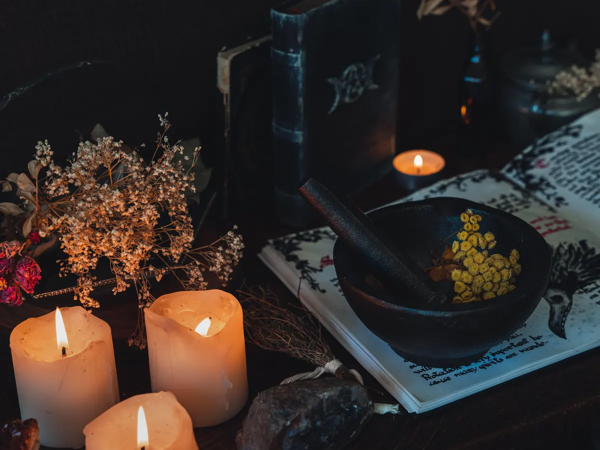 ‘Course exploring impact of magic and witchcraft on society comes amid growing interest in folklore…’ ( Rachel Hall via
  ‘According to Pennsylvania law, fortune-telling is a crime….’ ( Zoe Greenberg via
 ‘‘I want to start a group to go to breakfast, 10 of us, and we each bring $100 to tip the waiter,’ Richard Brooks wrote on Facebook…’ ( via





 ‘When two ions passed by each other without colliding, some of their virtual photons interacted and turned into real photons with very high energy. These photons then collided with each other and produced electron-positron pairs, which were detected by the STAR detector at RHIC. The scientists analyzed more than 6,000 such pairs and found that their angular distribution matched the theoretical prediction for matter creation from light….’ ( science and space via