
Via National Geographic: ‘A new study makes the case for building a supersize space telescope that would create images five times sharper than Hubble’s….’
Daily Archives: 13 Jul 15


Study Finds Large Health Benefits To Living Near Trees

The U.S. Military Once Tested Biological Warfare On The Whole Of San Francisco
Via IFLScience: ‘In the wake of World War II, the United Sates military was suddenly worried about and keen to test out the threats posed by biological warfare. They started experiments looking into how bacteria and their harmful toxins might spread, only using harmless stand-in microbes. They tested these on military bases, infecting soldiers and their families who lived with them, but eventually they stepped things up a notch. Disclosed in 1977, it turns out that the U.S. military carried out 239 secret open-air tests on its own citizens….’

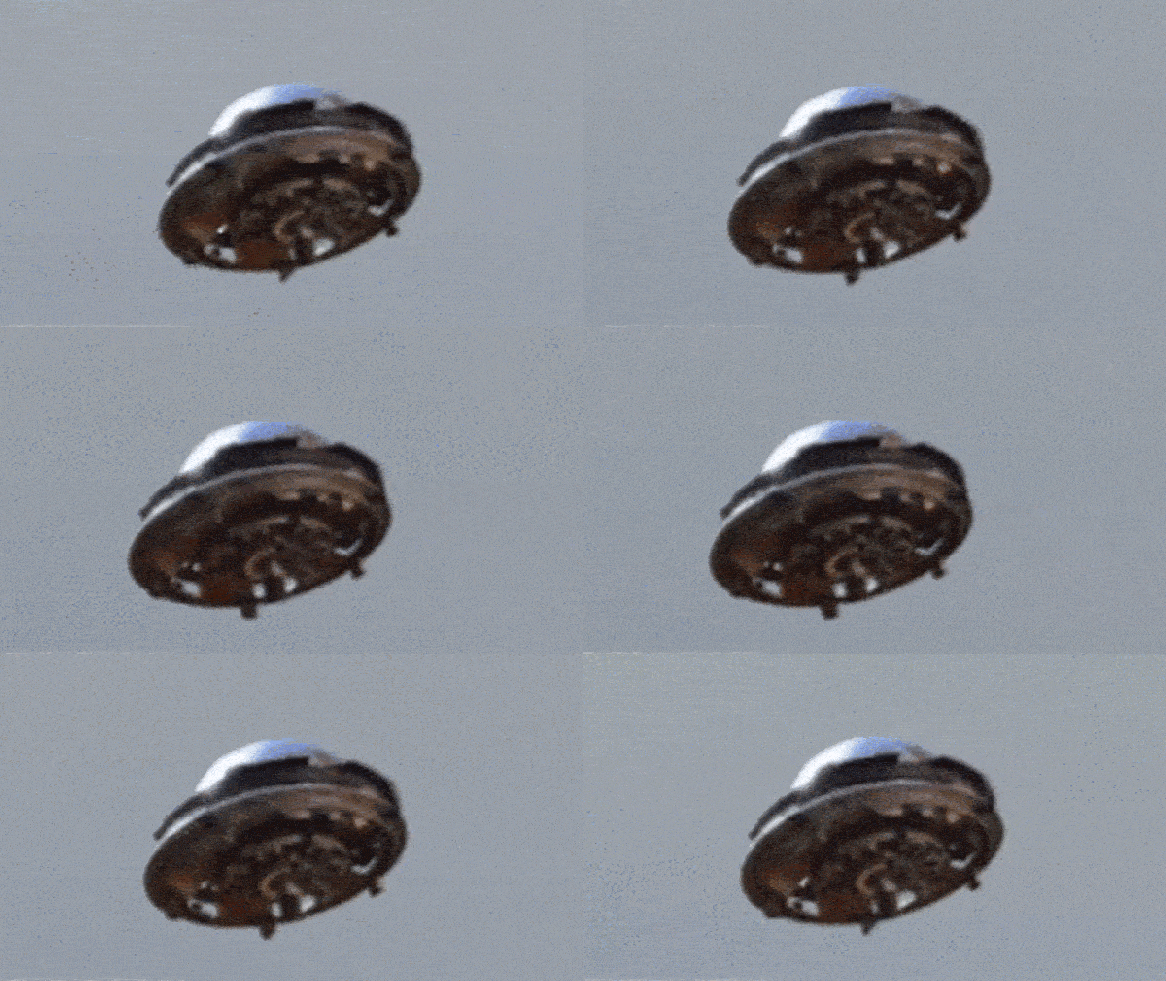
Amazing “drone footage” probably just a UFO
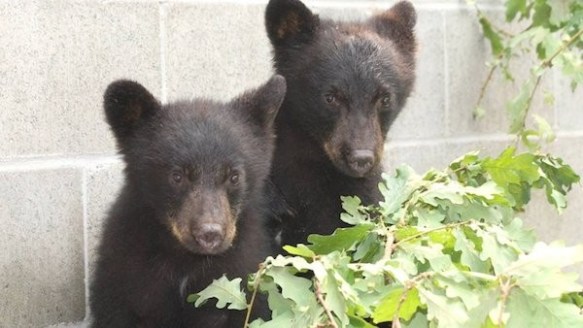
Officer suspended after refusing to kill baby bears
Via Boing Boing: ‘A mama bear with two cubs made a habit of sneaking into a mobile home in British Columbia, Canada and raiding the freezer. On one of these visits, conservation officer Bryan Casavant was ordered to kill all three bears. But after putting down the mama bear, he didn’t have the heart to kill the babies.
For his good deed, Casavant is now suspended from his job and under investigation. Fortunately, he’s got a lot of public support for his heroic act….’
Donald Trump joked about dating his own daughter

Trump threatens to “kick El Chapo’s ass,” then calls FBI when El Chapo returns threat

What It’s Like to Be Profoundly Face-Blind
Via 3quarksdaily: ‘Prosopagnosia is a neuropsychological condition that impairs the sufferer’s ability to recognize faces. It’s also known as face-blindness, and those who are afflicted lack a skill that comes naturally to most humans, forcing them to find ways to work around this deficit….’
The First Time Ever I Saw Your Face

US Coastlines Will Change Dramatically When Earth Warms by 2°C
Via Gizmodo: ‘At a UNESCO climate conference last week, scientists declared (once again) that climate change is already happening. The evidence is our wacky weather—even Paris, where the conference was held, was broiling in a historic heatwave. But the biggest red flag is the rise in peak global mean temperatures: Which means rising sea levels will almost certainly be a reality, too.
As a lead up to the bigger UN climate conference this fall, scientists are now modeling two different warming scenarios to help humans plot a roadmap for how to avoid these futures. Status quo—or even going back to “preindustrial levels”—is no longer an option, even if we ceased all carbon-emitting activity right now. One scenario is if the planet will warm by 2 degrees Celsius by the end of the century, which would be very bad. The other is if the planet will warm by 4 degrees Celsius, which would be very, very bad.
In this month’s Science, a study looked at these warming trends and made some estimates for how these temperature increases would help to accelerate the melting of polar ice sheets. Two or three degrees Celsius would see a rise in sea levels of at least six meters. That’s about 20 feet.
So say we manage to only raise temperatures by 2 degrees Celsius—the best-case scenario. A map made by Climate Central allows you to visit any city to see exactly how much coastlines will change. While there are plenty of usual suspects in this list—Miami would be totally underwater, of course, and we got previews of how rising ocean levels would affect New York City and New Orleans during Hurricanes Sandy and Katrina—there are also some areas that will see a surprising loss of land….’
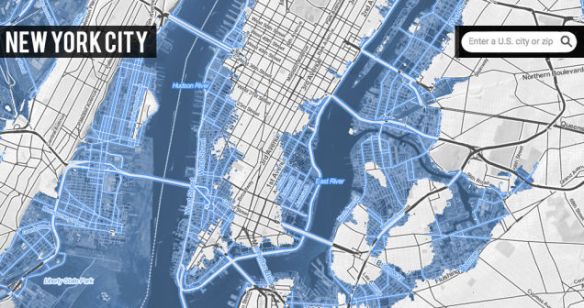
Of course, I went right to my home city, Boston. The results were quite scary… and that’s only 2 degrees.
This is What We’ve Learned About Pluto in the Past 24 Hours
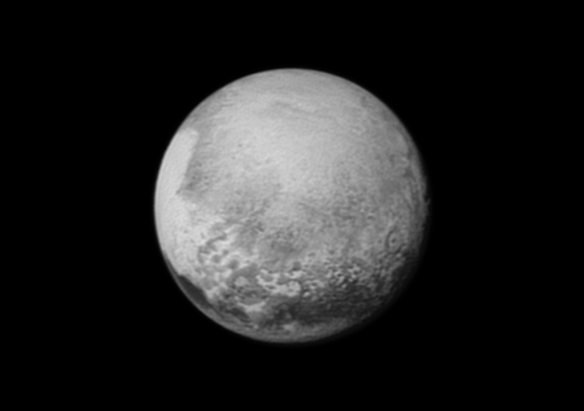
Via io9: ‘New Horizons is racing to Pluto so quickly, we’re literally learning new things every single day. Exploration is a true planet-wide “Today I learned…” moment: we now know what makes up Pluto’s atmosphere, what makes up its ice cap, and exactly how big it is….’

Follow New Horizons on its journey to Pluto and beyond
What Americans will sound like in 2050
Via The Week: ‘You might think that TV and movies and the general mobility of the population would mean accents are getting more and more similar across the country. This turns out not to be the case. Kids don’t learn their accents from TV; they learn them from the people around them. And different regions are in some ways becoming more different from each other….’

