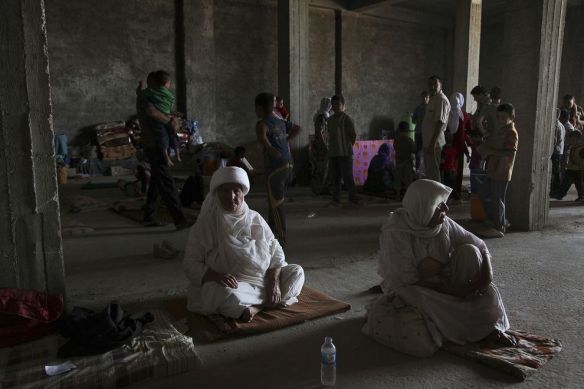
Via National Geographic: ‘For their beliefs, they have been the target of hatred for centuries. Considered heretical devil worshippers by many Muslims—including the advancing militants overrunning Iraq—the Yazidis have faced the possibility of genocide many times over. Now, with the capture of Sinjar and northward thrust of extremists calling themselves the Islamic State of the Levant, or ISIL also known as the Islamic State of Iraq and Syria, or ISIS, Iraq’s estimated 500,000 Yazidis fear the end of their people and their religion. “Sinjar is, hopefully not was, home to the oldest, biggest, and most compact Yazidi community,” explains Khanna Omarkhali, a Yazidi scholar at the University of Göttingen. “Extermination, emigration, and settlement of this community will bring tragic transformations to the Yazidi religion,” she adds.
The Yazidis have inhabited the mountains of northwestern Iraq for centuries, and the region is home to their holy places, shrines, and ancestral villages. Outside of Sinjar, the Yazidis are concentrated in areas north of Mosul, and in the Kurdish-controlled province of Dohuk. For Yazidis, the land holds deep religious significance; adherents from all over the world—remnant communities exist in Turkey, Germany, and elsewhere—make pilgrimages to the holy Iraqi city of Lalesh. The city is now less than 40 miles from the Islamic State front lines.’
Follow Me Here…
“I am the world crier, & this is my dangerous career… I am the one to call your bluff, & this is my climate.” —Kenneth Patchen (1911-1972)