The ‘race paradox in mental health’

Despite inarguably vast stress levels, multiple measures since the mid-’90s have shown that African Americans are psychologically healthier than Caucasian Americans. The phenomenon is formally described as the “race paradox in mental health”.

And it is not simply a matter of lower rates of diagnosis or detection. More credible speculations have pointed to more supportive family relationships or what are called “fictive kin” relationships, the unofficial family structures that develop in communities not dominated by standard nuclear family structures.

But, in an investigation published last week, Dawne Mouzon, a Rutgers sociologist, dispensed with much of the received wisdom, writing that “neither the quality nor quality of family relationships can explain the race paradox in mental health.” Instead,  “it is plausible that African Americans possess other resilience mechanisms (e.g., other social relationships, different types of coping strategies) that I was unable to consider here.” (The Last Word On Nothing).
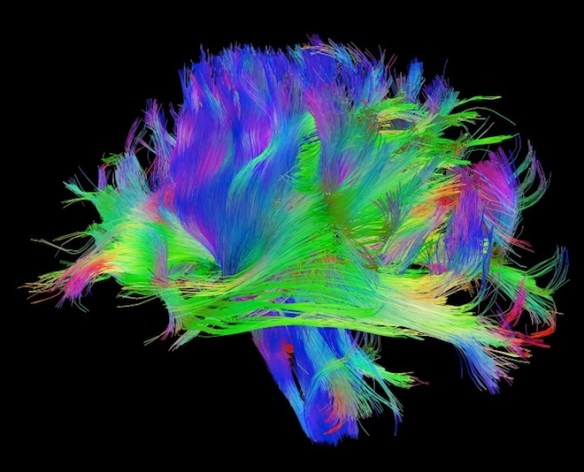
A Neuroscientist’s Radical Theory of How Networks Become Conscious

‘It’s a question that’s perplexed philosophers for centuries and scientists for decades: Where does consciousness come from? We know it exists, at least in ourselves. But how it arises from chemistry and electricity in our brains is an unsolved mystery.

Neuroscientist Christof Koch, chief scientific officer at the Allen Institute for Brain Science, thinks he might know the answer. According to Koch, consciousness arises within any sufficiently complex, information-processing system. All animals, from humans on down to earthworms, are conscious; even the internet could be. That’s just the way the universe works.’ (Wired Science).

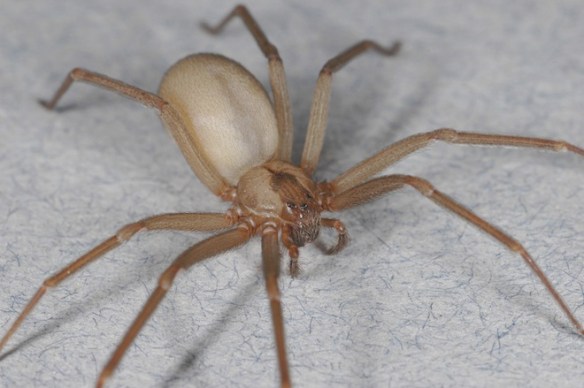
Why You Need Not Fear the Poor, Misunderstood Brown Recluse Spider

‘It’s hard to think of a critter that inspires as much hyperbolic hysteria as the brown recluse spider. They’re pretty much universally hated. If you believe the tales, these small arachnids are biting people all day, every day, producing massive, stinking flesh-craters that require months of intensive care and perhaps a prosthetic appendage. Sometimes, it seems these spiders have nothing better to do than hunker down in dark corners throughout North America, waiting for tender human skin to present itself.

Though there are strands of truth in the hype, on the whole, it’s bunk.’ (Wired Science).