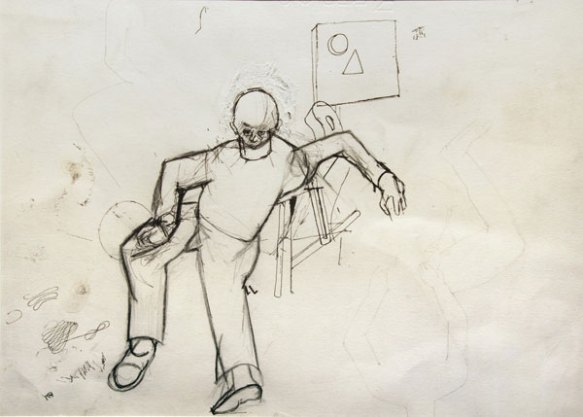
‘Most of us can gather, process and synthesise stimuli from the world around us. Walk into a gallery, admire a painting, and we’re able to observe and respond to it, then share our reactions with others in a way they understand.
But that simply isn’t true for a minority of people who suffer from neurological conditions. Be it dementia, synaesthesia or something incredibly rare like agnosia – where the brain can’t tie physical stimuli to concepts – some people experience the world in ways that most of us can’t begin to appreciate.
With that lack of understanding, sadly, comes a natural, but nonetheless damaging, stigma. “There’s a coarse level of understanding of neuropsychology outside of academia, which means people are sometimes scared of neurological conditions,” points out Glyn Humphreys of the University of Oxford, who’s been involved with the organisation of Affecting Perception, an exhibition of work by artists who suffer from a variety of neurological conditions.’ (New Scientist CultureLab)
Follow Me Here…
“I am the world crier, & this is my dangerous career… I am the one to call your bluff, & this is my climate.” —Kenneth Patchen (1911-1972)